The right preparation can turn an interview into an opportunity to showcase your expertise. This guide to Ground Fault Troubleshooting interview questions is your ultimate resource, providing key insights and tips to help you ace your responses and stand out as a top candidate.
Questions Asked in Ground Fault Troubleshooting Interview
Q 1. Explain the principle of ground fault detection.
Ground fault detection relies on the principle of current balance. In a properly functioning circuit, the current flowing out from the source should equal the current returning to the source. A ground fault occurs when a portion of this current finds an unintended path to ground, bypassing the normal return path. Ground fault detection systems measure this imbalance. If the outgoing and returning currents differ significantly, it signals a ground fault.
Imagine a river flowing from a source to a destination. Normally, all the water flows through the riverbed. A ground fault is like a leak in the riverbed – some water escapes into the surrounding ground, reducing the amount of water reaching the destination. The difference in water volume signifies the leak – just like the current imbalance signals a ground fault.
Q 2. Describe different types of ground faults.
Ground faults can be categorized in several ways. One common classification is based on their impedance:
- High-impedance ground faults: These are difficult to detect because the fault current is relatively small. They often manifest as intermittent problems, leading to unpredictable equipment malfunctions.
- Low-impedance ground faults: These produce a larger fault current, which is easier to detect. They often result in blown fuses or tripped circuit breakers.
Another way to classify them is by their location:
- Line-to-ground faults: One conductor comes into contact with the ground.
- Double line-to-ground faults: Two conductors come into contact with the ground.
- Three-phase-to-ground faults: All three conductors contact the ground simultaneously.
Understanding the type of ground fault helps in effective troubleshooting.
Q 3. What are the safety hazards associated with ground faults?
Ground faults pose several significant safety hazards:
- Electric shock: A ground fault creates a pathway for current to flow through a person touching the faulty equipment, potentially causing serious injury or death.
- Fire hazard: The high current flowing through the ground fault can generate significant heat, potentially igniting nearby flammable materials.
- Equipment damage: The high fault current can damage electrical equipment and appliances, leading to costly repairs or replacements.
Protecting against these hazards is crucial, and that’s why ground fault protection devices are essential in electrical systems.
Q 4. How does a Ground Fault Circuit Interrupter (GFCI) work?
A Ground Fault Circuit Interrupter (GFCI) continuously monitors the current flowing through the hot and neutral conductors. It uses a current transformer to detect any imbalance. If the difference exceeds a small threshold (typically 5 mA), it rapidly trips the circuit, interrupting the power flow and preventing a dangerous shock or fire.
Think of it as a highly sensitive scale: If even a tiny amount of current ‘leaks’ to ground, the scale detects the imbalance and immediately shuts off the circuit. This quick response is critical for safety.
Q 5. Explain the difference between a GFCI and an AFCI.
Both GFCIs and Arc Fault Circuit Interrupters (AFCIs) are safety devices, but they protect against different hazards:
- GFCI (Ground Fault Circuit Interrupter): Protects against ground faults, where current leaks to ground. It detects current imbalances between the hot and neutral conductors.
- AFCI (Arc Fault Circuit Interrupter): Protects against arc faults, which are electrical arcs that can ignite fires. It detects the unique electrical signature of an arc fault.
While both enhance safety, they address distinct failure modes in electrical circuits. A GFCI won’t necessarily protect against an arc fault, and vice versa.
Q 6. What are the common causes of ground faults?
Ground faults can stem from various sources:
- Damaged insulation: Worn or deteriorated insulation on wires can allow current to leak to ground.
- Water intrusion: Moisture can compromise insulation, creating a conductive path to ground.
- Faulty appliances: Defective appliances may have internal shorts that cause current to leak to the ground.
- Improper wiring: Incorrectly installed or wired equipment can increase the risk of ground faults.
- Rodent damage: Rodents chewing on wires can create a pathway for current to escape.
Regular inspection and maintenance can help minimize these risks.
Q 7. How do you troubleshoot a ground fault in a simple circuit?
Troubleshooting a ground fault in a simple circuit requires a systematic approach:
- Safety First: Always de-energize the circuit before starting any troubleshooting. This is crucial to prevent electric shock.
- Visual Inspection: Carefully examine all wiring, connections, and equipment for any visible signs of damage, such as exposed wires, burn marks, or water damage.
- Testing with a multimeter: Use a multimeter to check for continuity to ground at various points in the circuit. This helps identify the location of the fault.
- Isolate the faulty component: Once the faulty component or wiring is identified, replace or repair it.
- Retest the circuit: After making repairs, retest the circuit to ensure the ground fault is resolved.
Remember, if you’re not comfortable working with electricity, it’s always best to call a qualified electrician.
Q 8. Describe the steps involved in troubleshooting a ground fault in a complex system.
Troubleshooting a ground fault in a complex system requires a systematic approach. Think of it like detective work – you need to gather clues, eliminate possibilities, and ultimately find the culprit. The process generally starts with isolating the affected area. This might involve checking circuit breakers, fuses, and monitoring equipment readings. Once the area is narrowed down, we can start using specialized tools.
- Visual Inspection: Look for obvious signs of damage, such as burned wires, loose connections, or water intrusion. These are often the easiest to spot and fix.
- Testing with a Ground Fault Locator: This device helps pinpoint the exact location of the fault within the system by measuring the impedance between the ground and the energized conductors. This is particularly useful in large or complex systems.
- Tracing the Circuit: Follow the circuit from the source to the point of the fault, carefully checking every connection along the way. This often involves using a multimeter to test voltage and continuity.
- Specialized Equipment: For more advanced scenarios, tools like clamp meters and insulation resistance testers may be needed to help diagnose the problem.
- Documentation: Throughout the process, meticulously document all readings, observations, and actions taken. This is crucial for future reference and to aid in pinpointing the fault effectively.
For example, in a large industrial plant, isolating a ground fault might involve sequentially shutting down sections of the electrical system until the fault disappears. Once isolated, a thorough inspection and testing of each component within the section allows us to identify the exact faulty component.
Q 9. What testing equipment do you use to identify ground faults?
Identifying ground faults requires a range of testing equipment. The choice depends on the complexity of the system and the nature of the fault.
- Multimeter: This is the workhorse of electrical testing. It measures voltage, current, and resistance, allowing us to check for voltage imbalances and determine if there’s a short to ground.
- Ground Fault Circuit Interrupter (GFCI) Testers: These testers verify the proper operation of GFCIs, ensuring they trip correctly when a ground fault occurs.
- Clamp Meters: These measure current without needing direct connection to the wire, useful for high-current circuits where disconnecting wires is dangerous or difficult.
- Ground Fault Loop Impedance Tester: Measures the impedance of the grounding system. This helps to understand the overall effectiveness of the ground and can pinpoint weaknesses.
- Insulation Resistance Testers (Meggers): Measure the insulation resistance of cables and equipment. A low insulation resistance indicates a potential ground fault.
- Ground Fault Locators: These sophisticated tools help pinpoint the precise location of a fault along a cable, saving time and effort during troubleshooting.
Each device has its particular application, and a proficient technician needs to choose the right tools for the job.
Q 10. How do you interpret the readings from a ground fault testing device?
Interpreting readings from a ground fault testing device requires a strong understanding of electrical theory. Let’s take the example of a ground fault loop impedance tester. A low impedance reading indicates a good ground connection—in other words, the electricity has a clear and safe path to ground. However, this should fall within the specified limits. If the impedance is excessively high, it suggests a poor ground connection, which increases the risk of voltage buildup and shocks.
Similarly, a multimeter can show a voltage reading where it shouldn’t be (e.g., on a metal casing). This clear indication of a ground fault is easily interpreted. A significantly high resistance reading using a megger indicates insulation breakdown and a potential ground fault. Remember, proper calibration and understanding the device’s specifications are vital for accurate interpretation.
In short, the readings should be evaluated against the expected values for the system. Any deviation from the norm, whether it’s too high or too low, usually indicates a problem that needs addressing. Safety is paramount; if there’s any uncertainty about the readings, it’s best to consult with a more experienced colleague.
Q 11. Explain the importance of grounding in electrical systems.
Grounding in electrical systems is absolutely critical for safety and proper operation. Think of it as a safety net. It provides a low-resistance path for fault currents to flow to the earth, preventing dangerous voltage buildup on exposed metal parts. This is crucial because without it, even small faults could result in lethal shocks.
- Safety: The primary reason is safety. Grounding prevents electrical shocks by providing a safe return path for fault currents. This protects both people and equipment.
- Equipment Protection: Grounding helps protect equipment from damage caused by surges, lightning strikes, or other electrical anomalies. The fault current takes the path of least resistance to ground, preventing damage to sensitive components.
- System Stability: Proper grounding enhances the stability of the electrical system, reducing the likelihood of voltage fluctuations and ensuring consistent operation.
- Noise Reduction: Grounding helps reduce electrical noise and interference, improving the performance of sensitive electronic equipment.
For instance, imagine a faulty appliance with a live wire touching the metal casing. Without a ground connection, that casing would become energized, posing a severe shock hazard. With grounding, the fault current flows safely to earth, preventing this hazard.
Q 12. Describe different grounding methods.
Several grounding methods exist, each suitable for different applications. The choice depends on factors like soil resistivity, system size, and safety requirements.
- Ground Rods: These are driven into the earth, providing a direct path to ground. They are commonly used in residential and smaller installations.
- Ground Plates: Larger metal plates buried in the ground offer a larger surface area for better conductivity, particularly useful in areas with high soil resistance.
- Water Pipes (not always recommended): Historically, water pipes were used as grounding electrodes. However, plastic pipes have become common, and relying on water pipes is less reliable and may not be code-compliant in many regions.
- Building Steel Structure: In large structures, the steel framework itself can be utilized as a ground electrode. This requires careful design and testing to ensure sufficient conductivity.
- Grounding Grids: Extensive systems may use a network of interconnected ground rods or plates to provide a distributed grounding system for better performance.
The selection of a suitable grounding method is a critical part of the electrical design, and requires a thorough understanding of local codes and regulations.
Q 13. What are the limitations of ground fault detection methods?
Ground fault detection methods, while valuable, do have limitations. No method is foolproof.
- High Impedance Faults: Some ground faults have high impedance, making them difficult to detect with conventional methods. These are often intermittent and hard to find, requiring more advanced techniques and extensive testing.
- Difficult-to-Access Locations: Ground faults in buried cables or hard-to-reach locations can be challenging to locate and require specialized equipment and expertise.
- Ground Loop Issues: Complex systems may suffer from ground loops, where multiple ground paths create circulating currents, masking the actual fault location.
- Intermittent Faults: Faults that occur only occasionally can be difficult to diagnose because they are not always present during testing. These require patience and possibly monitoring equipment.
- Environmental Factors: High soil resistivity or corrosive environments can impact the effectiveness of grounding systems and complicate fault detection.
Understanding these limitations is vital. For example, a high-impedance fault might only manifest as intermittent tripping of circuit breakers, making it hard to pinpoint the location until the circumstances that trigger the fault are repeated or closely examined.
Q 14. How do you ensure your own safety when troubleshooting ground faults?
Safety is paramount when troubleshooting ground faults. It’s never worth risking your life to fix a problem. Always follow these safety precautions:
- Lockout/Tagout Procedures: Before starting any work, always de-energize the affected circuit using proper lockout/tagout procedures to prevent accidental energization.
- Personal Protective Equipment (PPE): Wear appropriate PPE, including insulated gloves, safety glasses, and non-conductive footwear. Never work on energized equipment without appropriate PPE.
- Use Insulated Tools: Use insulated tools designed for electrical work to avoid accidental shocks. Visually inspect tools for damage before use.
- Follow Safety Regulations: Adhere to all relevant safety regulations and company procedures. Never deviate from these rules, even if you think there is a shortcut that can be taken.
- Never Work Alone: Always have a qualified person present to assist you or call for help if necessary. Another set of eyes or additional helping hands are always valuable during any kind of electrical troubleshooting work.
- Assume Everything is Energized: Treat all circuits as if they are live and potentially dangerous. Never assume a circuit is dead until you have personally verified it with appropriate testing equipment.
Remember, taking shortcuts with safety can have devastating consequences. A moment’s lapse in concentration can result in serious injury or even death. Safety should be your number one priority.
Q 15. What are the common symptoms of a ground fault?
Ground faults, essentially, are situations where current unexpectedly flows to ground. Think of it like a leak in your electrical system – electricity is escaping where it shouldn’t be. This often happens due to damaged insulation, faulty wiring, or water ingress. Common symptoms include:
- Tripped circuit breakers or blown fuses: This is a frequent sign, indicating the system has detected an excessive current flow.
- Warm or hot outlets or switches: Excess current flowing through a faulty component generates heat, potentially posing a fire hazard.
- Buzzing or humming sounds from electrical equipment: This points to arcing or a fault within the system.
- Flickering lights: Indicates a fluctuating current flow, often associated with a partial ground fault.
- Electric shock: This is the most dangerous symptom, and immediate action must be taken. A ground fault can make a normally insulated component suddenly live.
Any of these symptoms warrant immediate investigation and professional attention. Never attempt to troubleshoot a suspected ground fault yourself unless you’re qualified to do so.
Career Expert Tips:
- Ace those interviews! Prepare effectively by reviewing the Top 50 Most Common Interview Questions on ResumeGemini.
- Navigate your job search with confidence! Explore a wide range of Career Tips on ResumeGemini. Learn about common challenges and recommendations to overcome them.
- Craft the perfect resume! Master the Art of Resume Writing with ResumeGemini’s guide. Showcase your unique qualifications and achievements effectively.
- Don’t miss out on holiday savings! Build your dream resume with ResumeGemini’s ATS optimized templates.
Q 16. How do you differentiate between a ground fault and a short circuit?
Both ground faults and short circuits involve unintended current flow, but they differ significantly in their paths. A short circuit is a direct, low-impedance connection between two points of different potential (usually hot and neutral). Imagine a direct bridge between two wires carrying opposite polarities. The current flow is extremely high, often resulting in immediate blown fuses or tripped breakers.
A ground fault, on the other hand, involves current flowing to earth ground instead of completing the circuit through the intended path (hot to neutral). Think of it as the current taking a ‘shortcut’ to the ground. The current flow might be lower than in a short circuit, leading to less immediate tripping but creating a potential shock hazard.
The key difference lies in the current’s destination. Short circuits happen between conductors; ground faults involve a connection to ground.
Q 17. Explain the role of residual current devices (RCDs) in ground fault protection.
Residual Current Devices (RCDs), also known as Ground Fault Circuit Interrupters (GFCIs), are safety devices designed to detect and quickly interrupt ground faults. They work by comparing the current flowing into a circuit with the current flowing out. Even a small imbalance, indicating current leakage to ground, triggers the RCD to trip the circuit.
Imagine a water pipe with a small leak. The RCD acts like a sensitive flow meter; it detects even a tiny discrepancy between the inflow and outflow, instantly shutting off the water supply (electricity) to prevent further leakage and protect you from potential shock.
RCDs significantly reduce the risk of electric shock and are crucial in protecting people and equipment, especially in areas with potential water exposure, such as bathrooms and kitchens.
Q 18. How do you troubleshoot a ground fault in a three-phase system?
Troubleshooting a ground fault in a three-phase system requires a systematic approach. It’s crucial to prioritize safety and use appropriate safety equipment, including insulated tools and personal protective equipment (PPE). Here’s a typical process:
- Isolate the faulty circuit: Carefully isolate the affected circuit breaker or section of the three-phase system.
- Inspect visually: Thoroughly check for obvious signs of damage, such as burned wiring, loose connections, or water damage.
- Use a multimeter: Measure insulation resistance to earth ground on each phase and neutral. Low insulation resistance indicates a potential ground fault.
- Use a clamp meter: Measure the current in each phase and neutral. A significant imbalance may point to the faulty phase.
- Ground fault locator: Specialized equipment like ground fault locators can pinpoint the exact location of the fault along a cable run.
- Systematic elimination: If the problem isn’t immediately apparent, systematically check components one by one until the fault is located.
Remember, troubleshooting three-phase systems requires advanced electrical knowledge. It’s strongly recommended to consult with a qualified electrician if you are not experienced in this area.
Q 19. What is the difference between a Class A, B, and C GFCI?
GFCI (Ground Fault Circuit Interrupter) classes refer to their operating characteristics and the types of ground faults they can detect. The classification primarily centers around the frequency response of the GFCI to different types of ground faults:
- Class A: Responds primarily to sinusoidal ground faults (common in standard electrical installations).
- Class B: Responds to both sinusoidal and high-frequency ground faults (important in installations with harmonic-rich loads, such as variable frequency drives).
- Class C: Responds to ground faults in DC and high-frequency AC circuits (suitable for applications with DC power supplies or high-frequency equipment).
Choosing the right class depends on the specific application. While Class A GFCIs are suitable for most residential and commercial applications, Class B and C are necessary in environments with special electrical characteristics.
Q 20. Explain the concept of impedance in ground fault detection.
Impedance plays a critical role in ground fault detection. It’s the opposition to current flow in a circuit, encompassing resistance and reactance. A high impedance path makes it harder for a fault current to flow, reducing the severity of the ground fault and potentially hindering its detection. A low impedance path facilitates a large fault current, causing the circuit to trip rapidly.
The impedance of the grounding system is a critical factor. A high impedance ground path may allow a dangerous current to flow without tripping the protection device, leading to a prolonged hazardous condition. This highlights the importance of maintaining low impedance grounding systems.
Q 21. Describe the use of insulation resistance testing in ground fault diagnosis.
Insulation resistance testing is a fundamental diagnostic tool in ground fault identification. It measures the resistance of the insulation between the conductive parts of a circuit and the ground. A low insulation resistance reading indicates a degradation of insulation, creating a pathway for leakage current and potentially leading to a ground fault.
Imagine an electrical cable’s insulation as a barrier protecting the wires. Insulation resistance testing assesses the integrity of this barrier. A low resistance means the barrier is compromised, allowing current to leak out and possibly cause a fault.
The test typically involves applying a DC voltage between the conductors and the earth ground and measuring the resulting current. The higher the resistance, the better the insulation’s condition. This test helps identify potential ground fault locations before they cause a larger problem.
Q 22. How do you document your troubleshooting process for ground faults?
Thorough documentation is crucial for efficient troubleshooting and future reference. My process begins with a detailed description of the observed fault – when it occurred, the symptoms (e.g., tripped breaker, equipment malfunction), and any preceding events. I then meticulously record all testing procedures used. This includes the specific test equipment (model numbers are helpful), the test points, and the measured values. Diagrams, photos, and even short videos documenting the physical location of components and the testing process are invaluable. Finally, I clearly outline the identified fault, the corrective actions taken, and the verification steps confirming the repair. This entire process is documented in a standardized format, often using a digital log for easy retrieval and sharing.
For instance, if a ground fault occurred in a server room, my documentation would include a floor plan showing the exact location of the affected equipment, a description of the tripped breaker, the results of resistance tests on the grounding system, and the replacement of a faulty power strip. This makes future troubleshooting far simpler and reduces downtime.
Q 23. What are some preventative measures to reduce ground faults?
Preventing ground faults relies on proactive measures, focusing on equipment maintenance, proper installation, and environmental considerations. Regular inspection of wiring, insulation, and equipment for any signs of damage or deterioration is fundamental. This includes checking for loose connections, frayed wires, and corrosion. Using appropriate sized wiring and circuit breakers is vital; overloading a circuit is a major contributor to ground faults. Proper grounding and bonding, as discussed later, form the backbone of any preventative strategy. Ensuring the work environment is dry and free from moisture minimizes the risk of insulation breakdown. Finally, using surge protection devices (SPDs) can protect against voltage spikes that can damage equipment and lead to ground faults.
For example, in a manufacturing facility, we’d implement a regular schedule for inspecting all motor control circuits, checking for wear and tear on the cables and connectors, and cleaning the terminals to prevent corrosion. This proactive approach significantly reduces the frequency of ground faults.
Q 24. Explain the importance of proper earthing and bonding in preventing ground faults.
Proper earthing (grounding) and bonding are essential for creating a safe electrical system and preventing ground faults. Earthing provides a low-resistance path for fault currents to flow to the earth, preventing dangerous voltage buildup on exposed conductive surfaces. Bonding connects metal parts of the electrical system together, ensuring they are at the same electrical potential. This prevents voltage differences that could lead to arcing and ground faults. A properly earthed and bonded system ensures that in case of a fault, the current will safely flow to ground, tripping the breaker and preventing shock or fire hazards.
Imagine a scenario where a faulty appliance has a short circuit to its metal casing. Without proper earthing, this casing could become energized, posing a significant shock hazard. However, if the casing is properly earthed and bonded to the system, the fault current will flow through the earth connection, immediately tripping the circuit breaker and protecting users.
Q 25. How would you approach troubleshooting a ground fault in a motor control circuit?
Troubleshooting a ground fault in a motor control circuit requires a systematic approach. I would start by isolating the circuit and de-energizing it completely for safety. Then, using a multimeter, I’d check the continuity of the grounding wire from the motor to the main ground bus. A high resistance reading indicates a problem in the grounding path. Next, I’d inspect the motor windings for insulation breakdown using a megohmmeter. High leakage current indicates a fault within the motor itself. The motor’s enclosure and connections would be carefully checked for any signs of damage or loose connections. Finally, I’d investigate the control circuit components like contactors and overload relays for any signs of overheating, damage, or internal shorts. If the problem is not immediately apparent, I would use a clamp meter to trace the path of the fault current to pinpoint the source. This methodical approach, combined with careful observation and testing, generally isolates the faulty component.
For example, I once diagnosed a ground fault in a motor control circuit where a corroded connection on the motor’s grounding lug was creating a high resistance path. Cleaning and tightening the connection resolved the fault.
Q 26. Describe your experience with different types of grounding electrodes.
My experience encompasses various grounding electrode types, each with its own application and advantages. Rod electrodes are commonly used and are driven into the earth. They are suitable for many applications, but their effectiveness depends on soil conductivity. Plate electrodes provide a larger surface area for better contact with the earth, ideal for highly resistive soil conditions. Pipe electrodes, usually made of galvanized steel, can be very effective, particularly in areas with a high water table. Mesh grounding systems are employed in large facilities to provide extensive coverage and low impedance. The selection of the appropriate electrode depends on factors like soil resistivity, the size and type of facility, and regulatory requirements.
I’ve worked on projects where we used a combination of rod and plate electrodes to achieve optimal grounding in areas with varying soil composition. The choice of electrode always hinges on ensuring a low-impedance path to earth for optimal safety.
Q 27. How do you handle a situation where a ground fault cannot be readily identified?
When a ground fault remains elusive, a more comprehensive approach is necessary. This includes systematically testing each component in the circuit using advanced techniques. For instance, employing specialized testing equipment like a ground fault loop impedance tester helps assess the integrity of the entire grounding system. Thermal imaging cameras can help detect heat signatures indicating potential faults that may not manifest through standard electrical tests. In complex systems, isolating sections of the circuit and performing thorough testing is crucial. Consulting with specialists or referring to the equipment’s manufacturer for detailed diagrams and troubleshooting guides is also essential. Sometimes, the fault is intermittent, requiring observation over a longer period or employing data logging equipment to capture transient events.
In one case, a seemingly inexplicable ground fault turned out to be caused by a hairline crack in a porcelain insulator within a high-voltage switchgear. This was only discovered after meticulous visual inspection with magnification and specialized testing.
Q 28. What are some common mistakes to avoid when troubleshooting ground faults?
Several common mistakes can hinder effective ground fault troubleshooting. Working on a live circuit is extremely dangerous and should never be attempted. Always de-energize and lock out the circuit before commencing any troubleshooting. Another mistake is assuming the problem is solely in one area without a thorough investigation of the entire system. Relying solely on visual inspections without employing appropriate electrical tests is another pitfall. Failure to properly document the troubleshooting process leads to inefficiencies and repeated issues. Finally, neglecting safety precautions, such as using proper personal protective equipment (PPE) like insulated tools and rubber gloves, can lead to serious injury or fatalities.
Remember safety is paramount. A methodical, well-documented approach combined with thorough testing is key to successful ground fault troubleshooting.
Key Topics to Learn for Ground Fault Troubleshooting Interview
- Understanding Ground Fault Currents: Explore the fundamental principles behind ground fault currents, including their causes and effects on electrical systems.
- Ground Fault Detection Methods: Learn about various methods used to detect ground faults, such as ground fault circuit interrupters (GFCIs), residual current devices (RCDs), and other protective devices. Understand their operating principles and limitations.
- Troubleshooting Techniques: Master practical troubleshooting techniques, including systematic approaches to isolating and resolving ground faults in different electrical systems (residential, industrial, etc.). This includes the use of multimeters, clamp meters, and other diagnostic tools.
- Safety Procedures: Familiarize yourself with essential safety procedures and regulations related to working with electricity and troubleshooting ground faults. Prioritize personal safety and adherence to industry best practices.
- Interpreting Electrical Drawings and Schematics: Develop the ability to effectively read and interpret electrical drawings and schematics to identify potential ground fault locations and understand system configurations.
- Ohm’s Law and Circuit Analysis: Reinforce your understanding of Ohm’s Law and its application in analyzing electrical circuits to identify potential ground fault scenarios.
- Common Ground Fault Causes and Solutions: Study typical causes of ground faults, such as insulation breakdown, damaged wiring, and equipment malfunctions, and understand practical solutions for each.
- Preventive Maintenance and Inspection: Learn about preventive maintenance strategies and regular inspection procedures to minimize the risk of ground faults and ensure system reliability.
Next Steps
Mastering ground fault troubleshooting is crucial for career advancement in the electrical field, opening doors to specialized roles and higher earning potential. A strong understanding of these concepts demonstrates valuable expertise and problem-solving skills to potential employers. To significantly increase your chances of landing your dream job, create an ATS-friendly resume that highlights your skills and experience effectively. We highly recommend using ResumeGemini to build a professional and impactful resume. ResumeGemini provides helpful tools and resources, including examples of resumes tailored to Ground Fault Troubleshooting, to help you present your qualifications in the best possible light.

Maintenance Supervisor Resume Sample

Electrical Engineer Resume Sample

Automation Technician Resume Sample
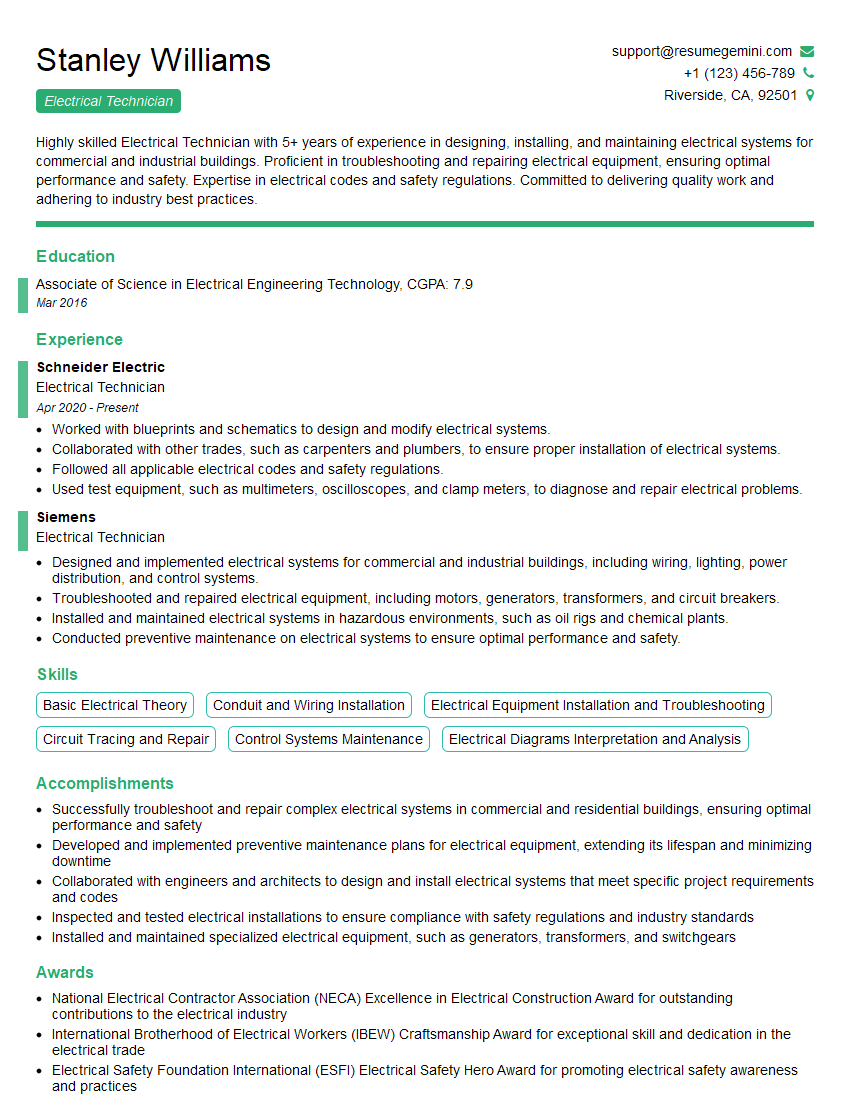
Electrical Technician Resume Sample

Field Service Technician Resume Sample

Building Maintenance Technician Resume Sample
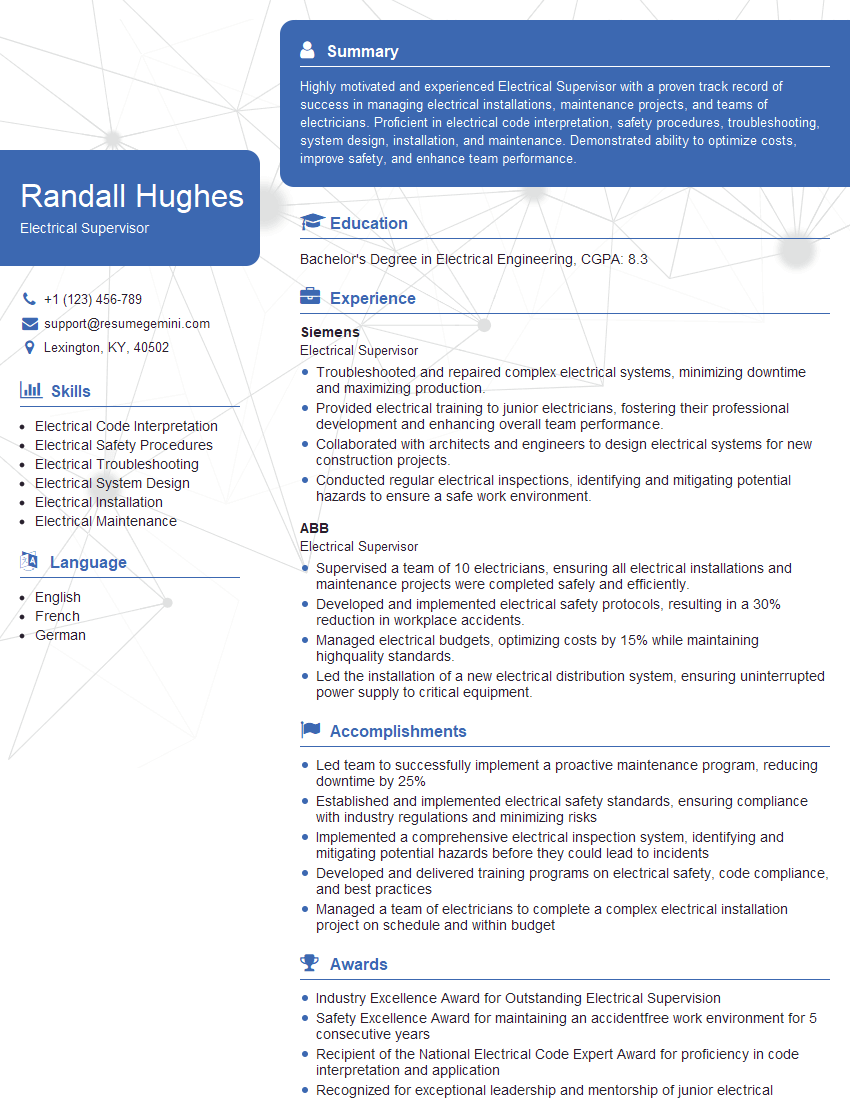
Electrical Supervisor Resume Sample
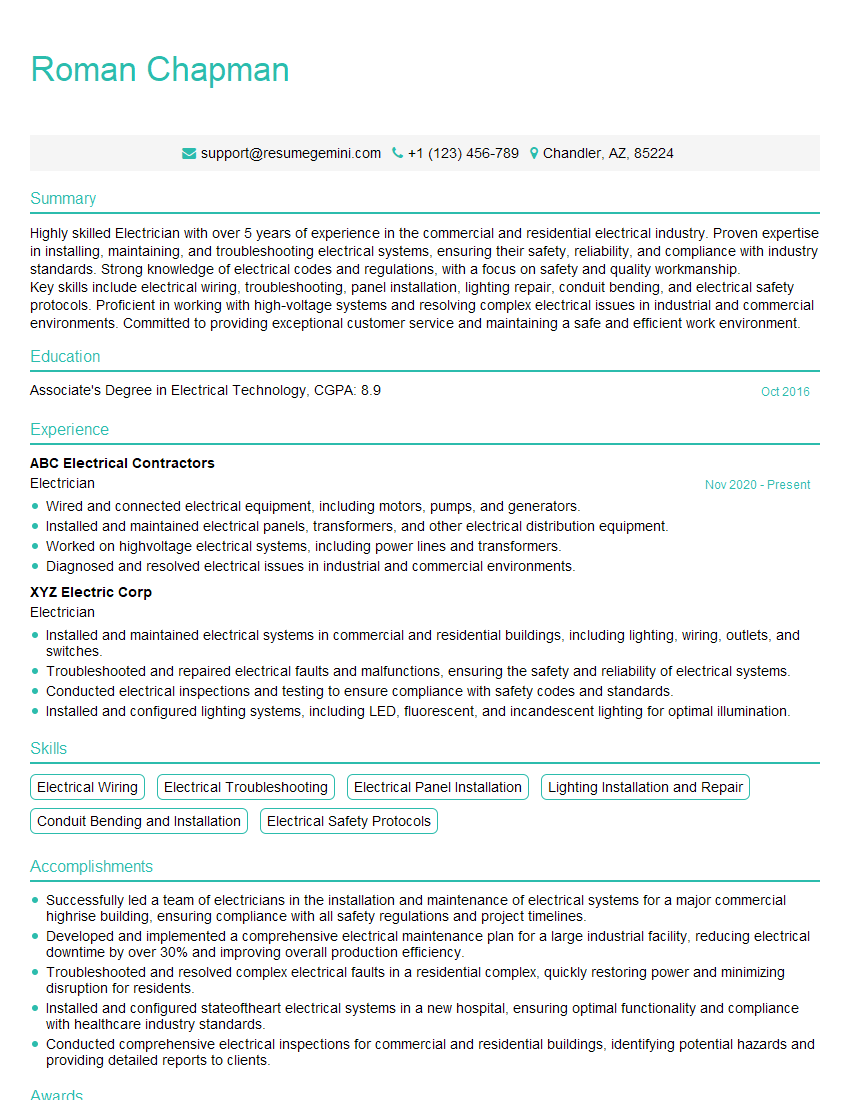
Electrician Resume Sample
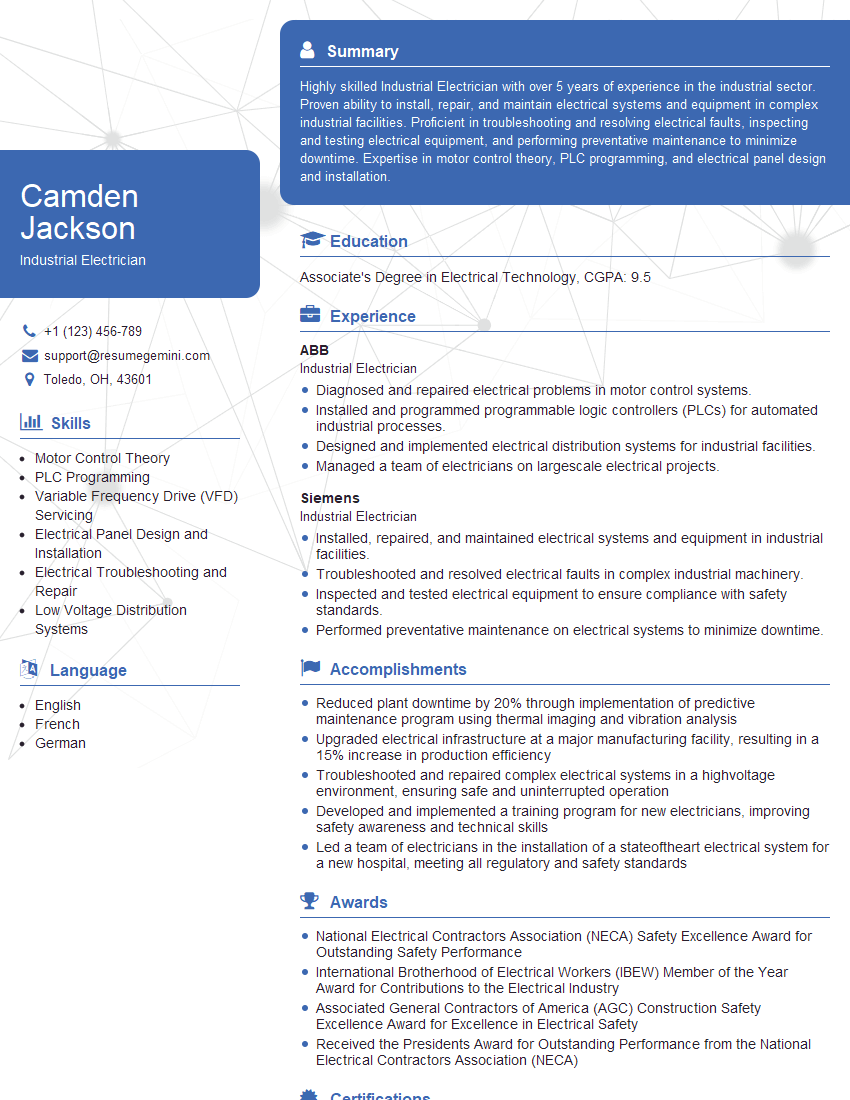
Industrial Electrician Resume Sample

Maintenance Electrician Resume Sample
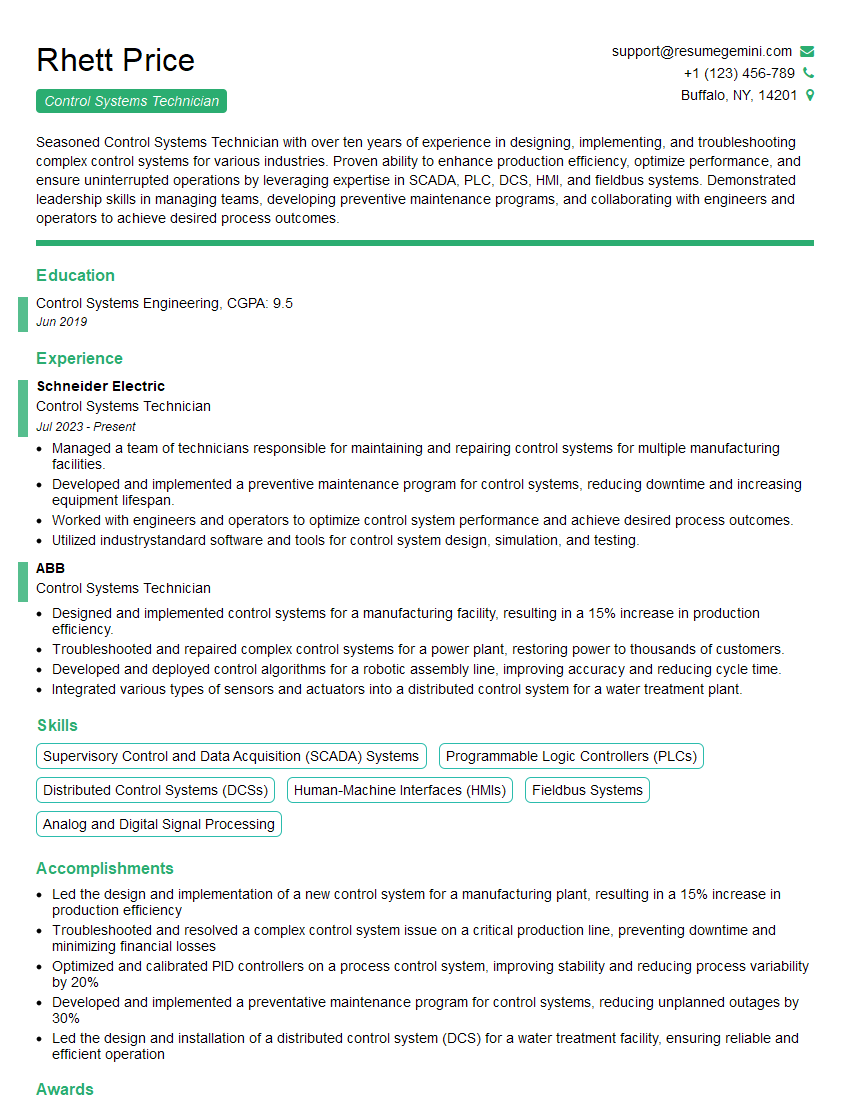
Control Systems Technician Resume Sample

Electrical Maintenance Technician Resume Sample

Facilities Maintenance Technician Resume Sample
- Maintenance Supervisor
- Electrical Engineer
- Automation Technician
- Electrical Technician
- Field Service Technician
- Building Maintenance Technician
- Electrical Supervisor
- Electrician
- Industrial Electrician
- Maintenance Electrician
- Control Systems Technician
- Electrical Maintenance Technician
- Facilities Maintenance Technician
Explore more articles
Users Rating of Our Blogs
Share Your Experience
We value your feedback! Please rate our content and share your thoughts (optional).
What Readers Say About Our Blog
To the interviewgemini.com Webmaster.
Very helpful and content specific questions to help prepare me for my interview!
Thank you
To the interviewgemini.com Webmaster.
This was kind of a unique content I found around the specialized skills. Very helpful questions and good detailed answers.
Very Helpful blog, thank you Interviewgemini team.