Are you ready to stand out in your next interview? Understanding and preparing for ArcGIS Pro or QGIS interview questions is a game-changer. In this blog, we’ve compiled key questions and expert advice to help you showcase your skills with confidence and precision. Let’s get started on your journey to acing the interview.
Questions Asked in ArcGIS Pro or QGIS Interview
Q 1. Explain the difference between vector and raster data.
Vector and raster data are two fundamental ways to represent geographic features in GIS. Think of it like this: raster data is like a photograph – a continuous grid of pixels, each with a value representing something like temperature or elevation. Vector data, on the other hand, is like a detailed drawing – it uses points, lines, and polygons to represent discrete features, such as buildings, roads, or river boundaries.
- Raster Data: Represented as a grid of cells (pixels). Each cell has a single value. Examples include satellite imagery, aerial photographs, and digital elevation models (DEMs). Advantages include ease of visualization and processing for continuous phenomena. Disadvantages include large file sizes and loss of detail when zoomed in.
- Vector Data: Represented by points, lines, and polygons. Each feature has specific attributes. Examples include points representing well locations, lines representing roads, and polygons representing parcels of land. Advantages include precision and accurate representation of features, smaller file sizes, and better scalability for detailed maps. Disadvantages include complexity in processing and visualizing continuous phenomena.
Choosing between raster and vector depends on the nature of the data and the analysis you need to perform. For example, analyzing land cover using satellite imagery requires raster data, while mapping infrastructure using precise coordinates would call for vector data.
Q 2. Describe the various data projections used in GIS.
Data projections are essential in GIS because the Earth is a sphere, and we need to represent its features on a flat map. This inevitably introduces distortion. Various projections address this distortion in different ways, optimizing for specific needs.
- Geographic Coordinate Systems (GCS): Use latitude and longitude to define locations on the Earth’s surface. It’s a spherical coordinate system, meaning no distortion on the globe, but distortion is introduced when projecting to a 2D plane.
- Projected Coordinate Systems (PCS): Transform the spherical coordinates of a GCS to a 2D plane using mathematical formulas. Different projections minimize different types of distortion: area, shape, distance, or direction. Examples include:
- Mercator: Preserves direction and shape at the expense of area distortion – commonly used in navigation.
- Albers Equal Area: Preserves area, but distorts shape and distance – useful for thematic mapping.
- UTM (Universal Transverse Mercator): Divides the Earth into zones and minimizes distortion within each zone – widely used for large-scale mapping.
- State Plane Coordinate Systems: Similar to UTM but tailored to individual states or regions.
Selecting the appropriate projection is crucial for accurate analysis. Using an inappropriate projection can lead to significant errors in measurements and calculations. For example, calculating distances using a Mercator projection near the poles will produce highly inaccurate results due to significant distortion.
Q 3. How do you handle spatial data errors and inconsistencies?
Handling spatial data errors and inconsistencies is a critical part of GIS work, ensuring the reliability of analyses and outputs. Errors can range from simple typos in attribute tables to more complex issues with geometry.
- Data Cleaning: This involves identifying and correcting errors. This can involve automated checks for things like self-intersecting polygons or sliver polygons using tools like the ArcGIS Pro ‘Check Geometry’ tool or QGIS’ ‘Check Validity’ function.
- Topology: Building and maintaining topological relationships (e.g., ensuring polygons share edges correctly) ensures data integrity and helps identify spatial inconsistencies.
- Data Editing: Using GIS software tools, you can manually edit geometry. Examples include fixing misaligned polygons or snapping lines to a shared edge. For complex edits, more advanced techniques may be necessary, such as rubber sheeting, in which points are shifted according to a control point adjustment.
- Data Validation: Checking data against external sources such as higher-accuracy datasets or field observations to confirm accuracy. Comparing land cover classifications to known land uses, for example.
A systematic approach is vital. I typically begin with automated checks, then move to visual inspection and manual editing, and finally validate the corrected data. This iterative process improves data quality and builds confidence in the results of any spatial analysis.
Q 4. What are the common file formats used in ArcGIS Pro and QGIS?
ArcGIS Pro and QGIS support a wide range of file formats. Common ones include:
- Shapefiles (.shp): A popular vector format, storing geometry and attributes in multiple files. While widely used, they have limitations, such as being limited to a single geometry type per file.
- Geodatabases (.gdb): ArcGIS’s native format, capable of storing both vector and raster data, managing complex datasets with improved efficiency compared to shapefiles.
- GeoPackage (.gpkg): A modern, open-standard format storing both vector and raster data in a single file, making data exchange easier across platforms and offering better performance for large datasets.
- GeoTIFF (.tif): A widely used raster format, often incorporating geographic coordinates directly into the file.
- Raster formats such as ERDAS Imagine (.img) or JPEG (.jpg): Are frequently used for imagery, though may require georeferencing to be spatially accurate.
- Comma Separated Values (.csv): Often used for attribute data, but requires a spatial join to be useful for GIS analysis.
The choice of format depends on the project’s requirements, the software used, and data sharing needs. For example, GeoPackages are excellent for sharing datasets across platforms, while Geodatabases are ideal for managing large and complex projects within the ArcGIS environment.
Q 5. Explain the concept of georeferencing.
Georeferencing is the process of assigning geographic coordinates (latitude and longitude) to points on an image or map that lacks spatial referencing. Think of it like pinning a map to a globe. Imagine you have an old scanned map; georeferencing links it to a known coordinate system.
This is done by identifying control points – locations on the image with known coordinates in a coordinate system. The software then uses these control points to transform the image, aligning it to a coordinate system. The more control points, and the better distributed they are, the more accurate the georeferencing will be.
In ArcGIS Pro and QGIS, this is done by identifying control points on the image and inputting their known coordinates. The software uses transformation algorithms (like polynomial transformations) to map the image to a coordinate system. This is crucial for integrating scanned maps, aerial photographs, or other images into a GIS.
Q 6. How do you perform spatial analysis using ArcGIS Pro or QGIS?
Spatial analysis in ArcGIS Pro and QGIS involves performing operations on spatial data to extract meaningful information. This ranges from simple calculations to complex models.
- Buffering: Creating zones around features. Example: A buffer around a river to identify flood-prone areas.
- Overlay Analysis: Combining multiple datasets. Example: Intersecting land-use data with soil-type data to identify suitable locations for agriculture.
- Proximity Analysis: Measuring distances between features. Example: Determining the distance of houses from a school.
- Network Analysis: Analyzing networks like roads or pipelines. Example: Finding the shortest route between two points or optimizing delivery routes.
- Spatial Statistics: Performing statistical analysis on spatially referenced data. Example: Identifying clusters of high crime rates.
The specific tools and techniques used depend on the research question. For instance, in analyzing traffic flow, network analysis is crucial, while assessing habitat suitability might involve overlay analysis and suitability modeling.
Q 7. Describe your experience with spatial joins and overlays.
Spatial joins and overlays are powerful tools for integrating information from different datasets.
- Spatial Joins: Append attributes from one layer to another based on spatial relationships. For example, joining points representing schools to polygons representing census tracts, thus adding census data to each school location.
- Overlays: Combine the geometries of two or more layers to create a new layer. This encompasses various operations:
- Intersect: Creates a new layer containing only the areas where features from both input layers overlap. Example: Finding areas where a proposed road intersects wetlands.
- Union: Creates a new layer containing all features from both input layers, with attributes from both layers included.
- Erase: Removes portions of one layer that overlap with another. Example: Removing areas of forest cover that overlap with a proposed development.
- Clip: Extracts the features of one layer that fall within the boundaries of another. Example: Extracting only the portions of a DEM that fall within a study area.
I’ve extensively used these techniques in projects such as analyzing habitat fragmentation (using overlay analysis to assess the impact of road networks on wildlife corridors), or evaluating the proximity of residential areas to hazardous waste sites (using spatial joins and buffering).
Q 8. What are the different types of map projections and when would you use each?
Map projections are mathematical transformations that translate the three-dimensional Earth’s surface onto a two-dimensional map. Choosing the right projection is crucial because all projections inherently distort properties like distance, area, shape, or direction. The best choice depends entirely on the purpose of the map.
- Equidistant Projections: Preserve accurate distances from one or more central points. Useful for navigation or measuring distances along specific lines. Example: Azimuthal equidistant projection is excellent for showing distances from a single point, like a city’s distances to surrounding areas.
- Conformal Projections: Maintain accurate shapes and angles, particularly at small scales. Ideal for navigation charts or maps emphasizing local detail. The Mercator projection is a classic example, though its area distortion at higher latitudes is well-known.
- Equal-Area Projections: Preserve the relative areas of features. These are necessary for thematic maps showing population density, resource distribution, or other quantitative data based on area. Albers Equal-Area Conic projection is often used for large areas with east-west orientation, like the contiguous United States.
- Compromise Projections: Balance several properties, accepting some distortion in each to minimize overall error. These are often used for world maps because perfectly preserving all properties is impossible globally. Robinson projection is a common compromise projection, used for its aesthetically pleasing representation of the world.
In my work, I frequently select projections based on the project’s specific requirements. For instance, when analyzing the spread of a disease, an equal-area projection helps accurately reflect the affected area’s proportion relative to other regions. Conversely, if I’m creating a navigational map for a specific region, a conformal projection is preferable.
Q 9. How do you create and manage geodatabases in ArcGIS Pro?
Geodatabases in ArcGIS Pro are powerful data management systems. They’re fundamentally different from shapefiles, offering better organization, data integrity, and relationship management. There are several types: file geodatabases (single .gdb file), personal geodatabases (.mdb – older format), and enterprise geodatabases (connected to a database server).
Creating a file geodatabase is straightforward: In ArcGIS Pro, you simply navigate to the ‘Create’ tab in the ‘Geodatabase’ section of the ‘Data’ ribbon and specify a location and name for your new geodatabase.
Managing geodatabases involves numerous aspects including:
- Data Organization: Features (points, lines, polygons) are organized into feature classes within feature datasets (grouping related feature classes). This improves data structure and promotes logical management.
- Relationship Classes: Establish relationships between feature classes (e.g., one-to-many, many-to-many) for complex data structures like linking parcels to owners.
- Domains: Enforce data integrity by defining allowed values for attributes (e.g., only allowing certain land use types).
- Versioning: Manages multiple users editing the same data concurrently and track changes effectively, particularly useful in collaborative projects.
In a recent project involving land use change analysis, the ability to create and manage relationships between different feature classes (land use types at different time points) within the geodatabase was critical for efficient data analysis and report generation.
Q 10. Explain the process of creating a thematic map in QGIS.
Creating a thematic map in QGIS involves visualizing attribute data spatially. The process generally follows these steps:
- Data Preparation: Ensure your vector layer has the attribute data you want to map (e.g., population, income levels, land cover types).
- Symbology Selection: Open the Layer Properties dialog. Under the ‘Symbology’ tab, choose a suitable rendering style based on your data. Options include:
- Categorized: Different categories of the attribute get unique symbols (e.g., color-coded land use types).
- Graduated: Values are represented by a range of colors or sizes reflecting the attribute’s magnitude (e.g., population density with progressively darker shades).
- Rule-based: Provides finer control, allowing custom symbol assignment based on complex attribute conditions.
- Classification Method: For graduated symbology, you choose a classification method (e.g., equal interval, quantile, natural breaks) to categorize the data range into classes, ensuring meaningful visual representation of the data distribution.
- Map Composition: Arrange the map elements (title, legend, scale bar, north arrow) using QGIS’s composer to enhance readability and visual appeal.
For example, I recently created a thematic map in QGIS displaying air quality index (AQI) values across a city. I utilized a graduated symbology with a diverging color scheme (e.g., green for good air quality to red for hazardous) to clearly visualize the spatial patterns of air quality based on different AQI levels.
Q 11. How do you perform buffer analysis in ArcGIS Pro or QGIS?
Buffer analysis creates zones around features at a specified distance. This is useful for proximity analysis. Both ArcGIS Pro and QGIS offer tools for this.
ArcGIS Pro: You can find the buffer tool within the ‘Analysis’ toolbox. Specify the input features (points, lines, or polygons), the buffer distance, and output location. ArcGIS Pro allows for multiple buffer distances and various shape options (e.g., circular, geodesic for curved surfaces).
QGIS: The ‘Vector geometry’ toolbox contains a ‘Buffer’ tool. Similar parameters (input layer, distance, segments for curve approximation) need to be set. QGIS offers similar options for buffer shape.
Example: To identify properties within a 1km radius of a proposed highway, you’d perform a buffer analysis on the highway lines with a 1km buffer distance. The resulting polygon shows the area impacted. This is crucial for environmental impact assessments or urban planning.
Q 12. Describe your experience with network analysis.
Network analysis involves analyzing networks (roads, pipelines, river systems) to solve problems like finding the shortest route, optimal paths for delivery, or identifying service areas. I have extensive experience using network analysis tools in both ArcGIS Pro and QGIS.
ArcGIS Pro: ArcGIS Pro’s Network Analyst extension offers a powerful suite of tools, including solving route, service area, closest facility, and location-allocation problems. The extension requires creating a network dataset from road data, specifying network attributes (e.g., travel time, speed limits), then setting up and solving the analysis problem.
QGIS: QGIS’s Processing Toolbox (or plugins like ‘pgRouting’) provides network analysis capabilities. While not as extensive as ArcGIS Pro’s Network Analyst, it offers functions like shortest path analysis and other routing algorithms. You typically need to prepare your network data and define cost attributes.
In a recent project, I used ArcGIS Pro’s Network Analyst to optimize delivery routes for a logistics company, minimizing travel time and distance while considering time windows and traffic conditions. This involved creating a network dataset from road network data, adding attributes representing traffic speed and restrictions, and then running a route analysis.
Q 13. What are your experiences with data visualization techniques in GIS?
Effective data visualization is paramount in GIS. My experience encompasses various techniques to communicate spatial information clearly and concisely:
- Choropleth Maps: Use color shading to represent attribute values across geographic areas (e.g., population density, election results). Careful color scheme selection is critical for accurate interpretation.
- Proportional Symbol Maps: Vary symbol sizes to reflect attribute values (e.g., city populations represented by circles of varying sizes). Symbol size selection needs to balance visual clarity with accurate representation.
- Isoline Maps: Connect points of equal value (e.g., elevation contours, temperature isopleths) to show continuous spatial variation. Understanding data density for appropriate contour interval is important.
- Dot Density Maps: Represent data values with dots, where the concentration of dots reflects attribute density. Choosing the right dot value is critical for accuracy and visual appeal.
- 3D Visualization: Utilize 3D surface modeling or draping imagery over 3D terrain models to showcase spatial patterns more effectively, especially for complex terrain analysis.
For example, in a presentation on climate change impacts, I used a combination of choropleth maps (showing temperature changes) and 3D visualization (to represent sea level rise) to effectively communicate the findings to a non-technical audience.
Q 14. Explain your experience with different spatial interpolation methods.
Spatial interpolation estimates values at unsampled locations based on known values at sampled locations. Several methods exist, each with strengths and weaknesses:
- Inverse Distance Weighting (IDW): Simple method assigning weights inversely proportional to distance. Nearby points influence the estimate more. Sensitive to outliers.
- Kriging: Geostatistical method modeling spatial autocorrelation. Offers uncertainty estimates. More complex but often provides more accurate results for data with spatial patterns.
- Spline Interpolation: Creates a smooth surface minimizing curvature. Suitable for surfaces with smooth variations. Can overshoot or undershoot extreme values.
- Natural Neighbor: Considers the nearest neighbors, weighting based on their spatial proximity. Preserves local features well.
The choice of method depends on the data characteristics and the application. For instance, IDW is a quick and easy option suitable for preliminary analysis, while Kriging might be preferable when accuracy and uncertainty quantification are crucial, particularly in environmental modeling, where precise estimation of pollutant concentrations is paramount.
In a recent project involving soil contamination analysis, I used Kriging to interpolate pollutant concentrations across the study area. The result provided not only the interpolated values but also uncertainty maps, aiding in the decision-making process for remediation.
Q 15. How do you handle large datasets in ArcGIS Pro or QGIS?
Handling large datasets in GIS software like ArcGIS Pro and QGIS requires strategic approaches to avoid performance bottlenecks. Think of it like managing a massive library – you wouldn’t try to search every book individually! Instead, you’d use a cataloging system.
Data Management Techniques: Employing file geodatabases or spatial databases (PostGIS, for example) provides better organization and optimized querying compared to working with numerous individual shapefiles. This is like having books organized by subject and author, allowing for efficient searching.
Feature Classes and Feature Datasets: In ArcGIS Pro, structuring data into feature datasets further enhances performance by allowing for shared spatial referencing and metadata. This is like organizing the library into dedicated sections for fiction, non-fiction, etc.
Data Subsetting: Instead of loading the entire dataset, extract only the necessary area or features for analysis. This is like only pulling the books you need for a particular research project from the shelves, instead of loading the entire library.
Spatial Indexing: Ensure spatial indexes are built on your data. This significantly speeds up queries, similar to using a detailed library index to locate specific books quickly. ArcGIS Pro and QGIS have tools to build these indexes automatically.
Data Compression: Consider using compression techniques (e.g., using a geodatabase or optimized file formats like GeoPackage) to reduce file sizes and improve processing speed.
Multiprocessing: For computationally intensive tasks, leverage parallel processing capabilities to distribute the workload across multiple cores. This is akin to having multiple library assistants working concurrently on different tasks.
For example, I once worked on a project involving a country-wide dataset of land parcels. Instead of attempting to load everything at once, I used Python scripting to subset the data based on administrative boundaries, analyzing each region separately and then merging the results. This made processing manageable and efficient.
Career Expert Tips:
- Ace those interviews! Prepare effectively by reviewing the Top 50 Most Common Interview Questions on ResumeGemini.
- Navigate your job search with confidence! Explore a wide range of Career Tips on ResumeGemini. Learn about common challenges and recommendations to overcome them.
- Craft the perfect resume! Master the Art of Resume Writing with ResumeGemini’s guide. Showcase your unique qualifications and achievements effectively.
- Don’t miss out on holiday savings! Build your dream resume with ResumeGemini’s ATS optimized templates.
Q 16. Describe your experience with scripting or automation in GIS (Python, etc.)
Scripting and automation are fundamental to my GIS workflow, especially with Python. I use it to streamline repetitive tasks, automate complex processes, and extend the functionality of ArcGIS Pro and QGIS. Imagine building a robotic library assistant!
ArcPy (ArcGIS Pro): I’ve extensively used ArcPy for automating geoprocessing tasks such as batch converting file formats, creating custom tools, and performing spatial analysis on large datasets. For instance, I’ve automated the generation of monthly reports by creating a script that processes satellite imagery, extracts relevant data, and generates maps and charts automatically.
Processing Framework (QGIS): Within QGIS, the Processing Framework provides an excellent environment for creating custom algorithms using Python. This offers great flexibility in building customized workflows similar to creating custom rules for the robotic library assistant.
Data Cleaning and Preprocessing: I frequently use Python to clean and prepare data, including tasks like identifying and correcting spatial inconsistencies and automating attribute updates. This ensures data integrity and efficiency.
Example (Python – cleaning field names):
import arcpy
fc = r'path/to/your/featureclass'
fields = arcpy.ListFields(fc)
for field in fields:
    new_name = field.name.replace(' ', '_').lower()
    arcpy.AlterField_management(fc, field.name, new_name)
This code snippet, written in Python using the ArcPy library, shows how easily you can standardize field names. This is crucial for data consistency and easier collaboration.
Q 17. What is your experience with remote sensing data and its processing?
My experience with remote sensing data processing is extensive. I’m proficient in handling various data formats (GeoTIFF, NITF, etc.) from different sensors (Landsat, Sentinel, MODIS, etc.). I see this as decoding the messages hidden within satellite imagery to reveal valuable insights about the Earth.
Data Preprocessing: This includes atmospheric correction, geometric correction, orthorectification, and mosaicking. Imagine clearing away clouds and dust to get a clear view of the land.
Image Classification: I’m skilled in supervised and unsupervised classification techniques, using software like ArcGIS Pro or ENVI. This is like sorting a huge pile of pictures into meaningful categories, identifying patterns and themes within the imagery.
Change Detection: I’ve used remote sensing data for change detection analyses, including deforestation monitoring and urban growth assessment. This helps understand how landscapes evolve over time.
Data Integration: Combining remote sensing data with other GIS datasets (e.g., elevation models, vector data) enhances analysis and interpretation. It’s like adding context and detail to the picture, understanding the relationship of the imagery to other information.
In a recent project, I used Landsat imagery to monitor changes in glacier extent over 20 years. Through preprocessing and change detection, I generated visualizations demonstrating the impact of climate change on glacial retreat.
Q 18. How do you ensure data quality and accuracy in your GIS projects?
Data quality and accuracy are paramount in GIS. Ensuring this requires a multi-faceted approach throughout the project lifecycle – think of it as quality control for your geographic information.
Source Data Evaluation: Critically assess the reliability and accuracy of source data, considering metadata, spatial resolution, and potential errors. Similar to choosing trustworthy books from different libraries.
Data Cleaning and Validation: Identify and correct inconsistencies, errors, and outliers in attribute data and geometry. This involves employing tools like ArcGIS Pro’s Data Reviewer or QGIS’s processing tools to check for spatial and attribute errors.
Spatial Accuracy Assessment: Regularly check the accuracy of spatial data by comparing it to known ground truth data or other high-accuracy datasets. This involves performing root-mean-square error (RMSE) calculations or other statistical analyses.
Metadata Management: Document the sources, processing steps, and limitations of the data to ensure transparency and traceability. This includes documenting your methodology and creating comprehensive metadata records.
Version Control: Implementing a version control system allows for managing changes over time, enhancing collaboration, and ensuring traceability of updates.
For example, in a cadastral mapping project, I used a combination of GPS measurements, existing maps, and aerial photography. The data was rigorously checked and validated against known boundaries to ensure accuracy and prevent conflicts.
Q 19. Explain the difference between topology and geometry.
Geometry and topology are fundamental concepts in GIS, but they represent different aspects of spatial data. Geometry refers to the shape and location of a geographic feature, while topology describes the spatial relationships between those features.
Geometry: This defines the physical characteristics of a feature, such as its coordinates, shape (point, line, polygon), and size. Think of geometry as the ‘what’ – the actual shape and location of a feature like a building or a road.
Topology: This describes the spatial relationships among features, regardless of their precise coordinates. Examples include adjacency, connectivity, and containment. Think of topology as the ‘where’ in relation to other features – such as which parcels are adjacent to each other, or how different road segments connect.
For example, two polygons can have slightly different coordinates (different geometries), but they might still share a common boundary (topological relationship). Topology is crucial for many GIS operations, including network analysis and data editing, as it ensures data integrity and consistency.
Q 20. Describe your experience with database management systems (e.g., PostGIS).
My experience with database management systems, particularly PostGIS, is significant. PostGIS extends the capabilities of PostgreSQL by adding support for spatial data types and functions. It’s like having a supercharged library catalog system that understands spatial relationships.
Data Storage and Management: I use PostGIS to store and manage large volumes of spatial data efficiently, providing powerful querying capabilities. This means managing spatial data and associated attributes within a relational database system.
Spatial Queries: PostGIS allows for complex spatial queries, such as finding all points within a certain distance of a polygon, or intersecting lines with polygons. This is like performing sophisticated searches within the library, finding all books on a particular topic within a specific section.
Data Integration: Integrating data from various sources into a PostGIS database simplifies analysis and data sharing. It’s like merging data from different libraries into a single, centralized system.
Web GIS Applications: I’ve used PostGIS as a backend for web mapping applications, providing a robust and scalable platform for serving spatial data.
In one project, I migrated a large dataset of census data from shapefiles into a PostGIS database, allowing for much faster spatial queries and enabling the development of interactive web maps for data visualization and analysis. The performance improvement was dramatic.
Q 21. How do you manage and share GIS data effectively within a team?
Effective data management and sharing within a team are crucial for project success. This involves establishing clear protocols and using collaborative tools.
Centralized Data Repository: Use a shared network drive or cloud storage (e.g., ArcGIS Online, a cloud-based server) to store and manage all project data. This ensures everyone has access to the latest version and prevents data duplication.
Version Control: Utilize a version control system (e.g., Git) to track changes to data and scripts. This allows team members to work concurrently, making changes independently, and merging them with minimal conflict.
Data Standardization: Establish clear standards for data formats, naming conventions, and metadata to maintain consistency and interoperability. This ensures everyone speaks the same language.
Collaborative Software: Employ GIS software with collaborative features that allow for simultaneous editing and data sharing, such as ArcGIS Pro’s collaborative editing capabilities.
Regular Communication: Maintain clear and frequent communication within the team to ensure everyone is on the same page.
In past projects, I’ve used a combination of a central file server, a version control system, and weekly team meetings to manage project data effectively. This ensured transparency, avoided conflicts, and maintained data quality.
Q 22. What are some common challenges encountered in GIS projects?
GIS projects, while powerful tools for spatial analysis, often face several challenges. These can broadly be categorized into data, technology, and project management issues.
- Data Quality Issues: Inconsistent data formats, missing values, errors in attribute data, and inaccuracies in spatial location are very common. Imagine trying to analyze crime rates with incomplete address data – the results would be unreliable.
- Data Integration: Combining data from various sources (e.g., different databases, surveys, remote sensing) often presents difficulties due to differences in projections, datums, and attribute schemas. This is like trying to fit puzzle pieces from different sets together – it requires careful preparation and matching.
- Technological Limitations: Software limitations, processing power constraints, and incompatibility between different GIS software can hinder project progress. This can manifest as slow processing times or inability to use certain advanced functionalities.
- Project Management Challenges: Defining clear project objectives, managing timelines, coordinating with stakeholders, and ensuring data security are crucial for success but are often challenging. Think of it as building a house – you need a well-defined plan, skilled workers, and proper material management.
- Budgetary Constraints: Obtaining funding, managing expenses, and ensuring cost-effectiveness are often pressing concerns.
Q 23. How would you approach a problem of inconsistent data attributes?
Inconsistent data attributes are a major hurdle in GIS. My approach would involve a multi-step process focusing on identification, correction, and standardization:
- Identify Inconsistent Attributes: I would start by using data profiling tools within ArcGIS Pro or QGIS to identify inconsistencies. This might include checking for different spelling variations in attribute fields (e.g., ‘Street’, ‘St’, ‘STREET’), different data types within the same field (e.g., mixing numbers and text), or inconsistent units of measure.
- Data Cleaning and Correction: I would utilize tools such as ‘Find and Replace’ or regular expressions to standardize attribute values. For example, I might use a field calculator to automatically replace all variations of ‘Street’ with ‘ST’. For more complex issues, scripting (Python in ArcGIS Pro or Processing scripts in QGIS) would be a powerful solution to automate this process.
- Develop a Data Standardization Protocol: A crucial step would be creating a clear set of guidelines for data entry and attribute naming conventions. This document would be used throughout the project to ensure consistency, making future data maintenance much easier. This would include defining acceptable values for each attribute and enforcing consistent units of measure.
- Data Validation: Finally, I would implement data validation rules within the GIS software to prevent future inconsistencies. This would ensure that only standardized values are entered, reducing errors and improving data quality.
For example, if I were working on a dataset with inconsistent land use classifications (e.g., ‘residential’, ‘Residential’, ‘RESIDENTIAL’), I would create a lookup table to standardize these values and use a field calculator or model builder to apply the changes.
Q 24. Describe your experience with versioning and editing in a geodatabase.
I have extensive experience with versioning and editing in geodatabases, primarily using ArcGIS Pro. Versioning is crucial for managing concurrent edits by multiple users and tracking changes over time. It allows for a collaborative and controlled workflow while minimizing data conflicts.
In ArcGIS Pro, I’m proficient in using both geodatabase versioning (traditional and branch versioning) and its accompanying tools. I understand how to create different versions, reconcile edits, post edits, and manage conflicts. For instance, in a large-scale project, branch versioning is essential for allowing different teams to work on specific tasks simultaneously without affecting the main database.
My experience includes using versioning in various contexts. I’ve worked on projects where versioning allowed us to:
- Track changes made by different editors, pinpointing responsibility for edits.
- Compare different versions of the data to identify discrepancies and analyze data changes over time.
- Revert to previous versions if errors were introduced or if needed to examine past states of the data.
- Support collaborative workflows where multiple users modify the same geodatabase concurrently.
Understanding the intricacies of reconciliation and conflict resolution are paramount in ensuring data integrity and accuracy.
Q 25. What are your experiences with web map services (WMS, WFS)?
Web Map Services (WMS and WFS) are fundamental to sharing and accessing geospatial data online. I have considerable experience working with both, primarily through QGIS but also with ArcGIS Pro.
WMS (Web Map Service): I use WMS to access and display map imagery and other layers from various servers. This is invaluable for incorporating data from other organizations or accessing base maps without needing to download large datasets. For example, I regularly incorporate WMS layers from government agencies, providing access to up-to-date aerial imagery or topographic maps.
WFS (Web Feature Service): WFS allows for the retrieval and editing of geospatial features. This is significantly different from WMS as it provides access to the actual feature data, not just an image representation. I use WFS when needing to integrate datasets into my projects for analysis or editing. This could involve accessing vector data such as points, lines, and polygons, which I might then incorporate into my local GIS project for further processing.
My experience includes adding WMS/WFS layers to GIS projects, configuring the parameters to access specific data subsets, and troubleshooting connectivity issues. Understanding the capabilities and limitations of both services is crucial for effective data integration and visualization.
Q 26. How familiar are you with the different coordinate reference systems?
Coordinate Reference Systems (CRS), also known as spatial reference systems, are fundamental to GIS. A CRS defines how locations are represented on a map, including the datum, projection, and units of measurement. I possess a strong understanding of different CRS and their implications.
My familiarity includes:
- Geographic Coordinate Systems (GCS): Based on latitude and longitude, using a spheroid (approximation of the Earth’s shape) as a reference. WGS 84 is a widely used GCS.
- Projected Coordinate Systems (PCS): These transform the curved Earth’s surface onto a flat plane, introducing distortions. Common projections include UTM, State Plane, and Albers Equal Area. The choice of projection depends on the application; some minimize area distortion, others distance.
- Datums: A datum defines the reference surface used for a CRS. Different datums can lead to positional inaccuracies if not properly considered (e.g., NAD83 vs. NAD27).
- Understanding Projections and their distortions: I am aware of the various types of projections (cylindrical, conical, azimuthal) and their strengths and weaknesses with regards to scale, shape, area, and direction preservation. I’d select the best projection considering the study area and analysis requirements.
I regularly use QGIS and ArcGIS Pro’s tools for defining, transforming, and managing CRS. I’m comfortable with on-the-fly projection and re-projecting datasets as needed to ensure consistency and accuracy in my analysis.
Q 27. Explain your knowledge of spatial statistics and their applications.
Spatial statistics are crucial for extracting meaningful insights from geospatial data. I’m proficient in applying a range of spatial statistical techniques to solve real-world problems. My knowledge encompasses:
- Spatial autocorrelation: Analyzing the degree to which nearby features are similar or dissimilar (e.g., using Moran’s I to detect spatial clustering of disease cases).
- Point pattern analysis: Investigating the distribution of points in space (e.g., using K-functions to assess whether points are randomly distributed or clustered).
- Spatial interpolation: Estimating values at unsampled locations based on known values (e.g., using kriging to interpolate rainfall amounts).
- Geostatistics: Analyzing spatial variability and uncertainty, focusing on spatial dependence (e.g., variogram analysis for characterizing spatial correlation).
- Spatial regression models: Modeling the relationship between a dependent variable and several independent variables, accounting for spatial autocorrelation (e.g., geographically weighted regression (GWR)).
I utilize both the spatial statistics tools available within ArcGIS Pro and QGIS (and external libraries like GeoDa or R) to perform these analyses. The selection of the appropriate technique is strongly guided by the research question and data characteristics. For example, I’ve used spatial autocorrelation analysis to understand the spatial distribution of air pollution, while spatial regression has been used to model the impact of proximity to green spaces on property values.
Q 28. Describe a project where you utilized GIS to solve a complex problem.
In a recent project, I used GIS to analyze the optimal location for new community health clinics in a rapidly growing urban area. The problem was complex due to multiple conflicting factors.
The existing clinics were inadequately serving the expanding population, especially in underserved neighborhoods. We had to consider multiple criteria such as population density, proximity to public transport, accessibility for disabled individuals, proximity to existing healthcare facilities (to avoid redundancy), and land availability. The dataset included demographic data, road networks, land-use maps, and existing clinic locations.
My approach involved:
- Data integration: Combining all the relevant datasets into a single GIS environment.
- Spatial analysis: Calculating proximity measures (e.g., buffer analysis) to assess accessibility.
- Weighted overlay analysis: Assigning weights to each factor based on its relative importance and combining them to create a suitability map. This was iterative, refining weights based on stakeholder input.
- Network analysis: Simulating travel times to assess accessibility by public transport.
- Site suitability ranking: Identifying optimal locations based on the combined suitability map and network analysis results.
The final output was a ranked list of potential locations for new clinics, supported by maps visualizing the suitability criteria. This analysis was instrumental in informing policy decisions and leading to improved healthcare access in the area. The project demonstrated not only technical proficiency but also the ability to integrate spatial analysis with policy considerations to achieve real-world impact.
Key Topics to Learn for ArcGIS Pro or QGIS Interview
- Data Management: Importing, exporting, and managing various spatial data formats (shapefiles, geodatabases, rasters). Understanding data projections and coordinate systems.
- Spatial Analysis: Performing buffer analysis, overlay analysis (union, intersect, clip), proximity analysis, and other spatial operations. Practical application: Analyzing proximity of infrastructure to environmental features.
- Geoprocessing: Utilizing model builder or similar tools to automate repetitive tasks. Understanding scripting (Python) for greater efficiency and customization.
- Data Visualization: Creating effective maps and visualizations using various symbology, labeling, and cartographic principles. Communicating insights clearly through visual representations.
- Cartography & Map Design: Applying map design principles to create clear, concise, and aesthetically pleasing maps for different audiences and purposes. Understanding map scales and projections.
- Geodatabase Administration (ArcGIS Pro): Understanding geodatabase structure, schema design, and data versioning (if applicable to the role).
- QGIS Processing Toolbox (QGIS): Familiarity with the processing toolbox and its algorithms for various geoprocessing tasks. Understanding how to use and modify algorithms.
- Problem-Solving & Case Studies: Be prepared to discuss how you’ve used ArcGIS Pro or QGIS to solve real-world problems. Prepare examples illustrating your analytical and problem-solving skills.
Next Steps
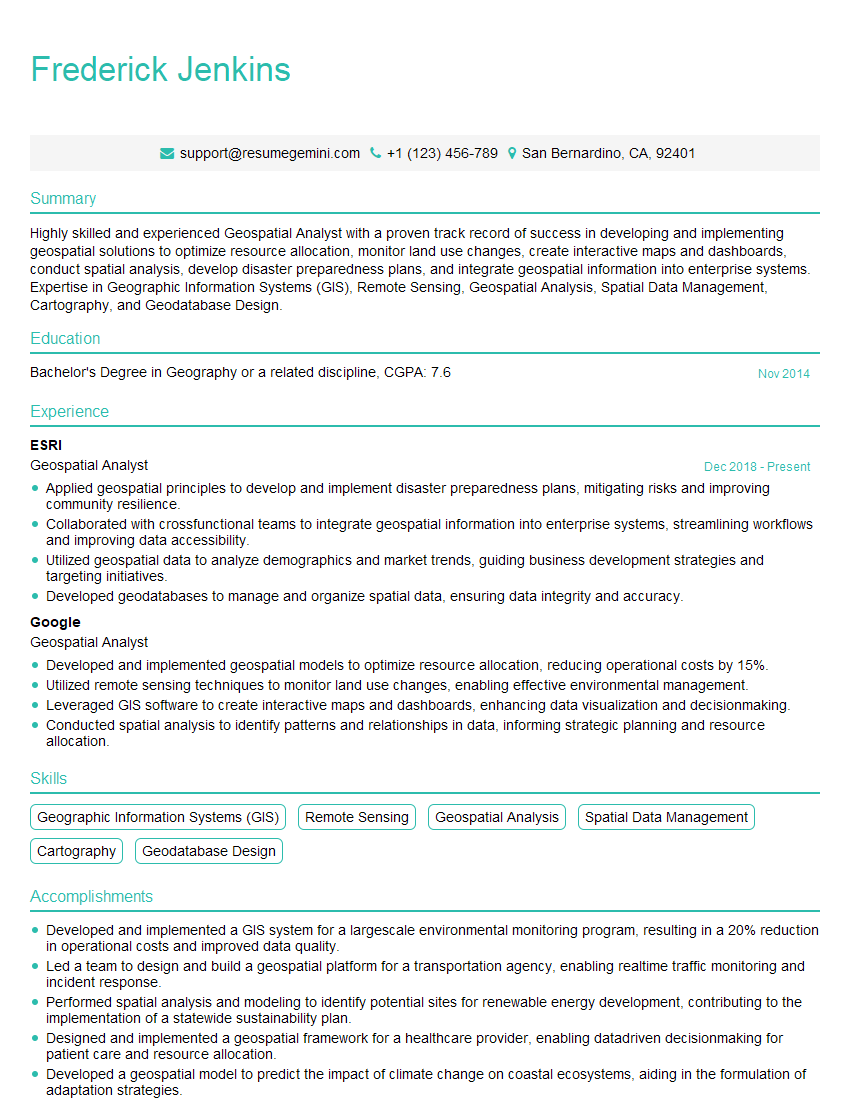
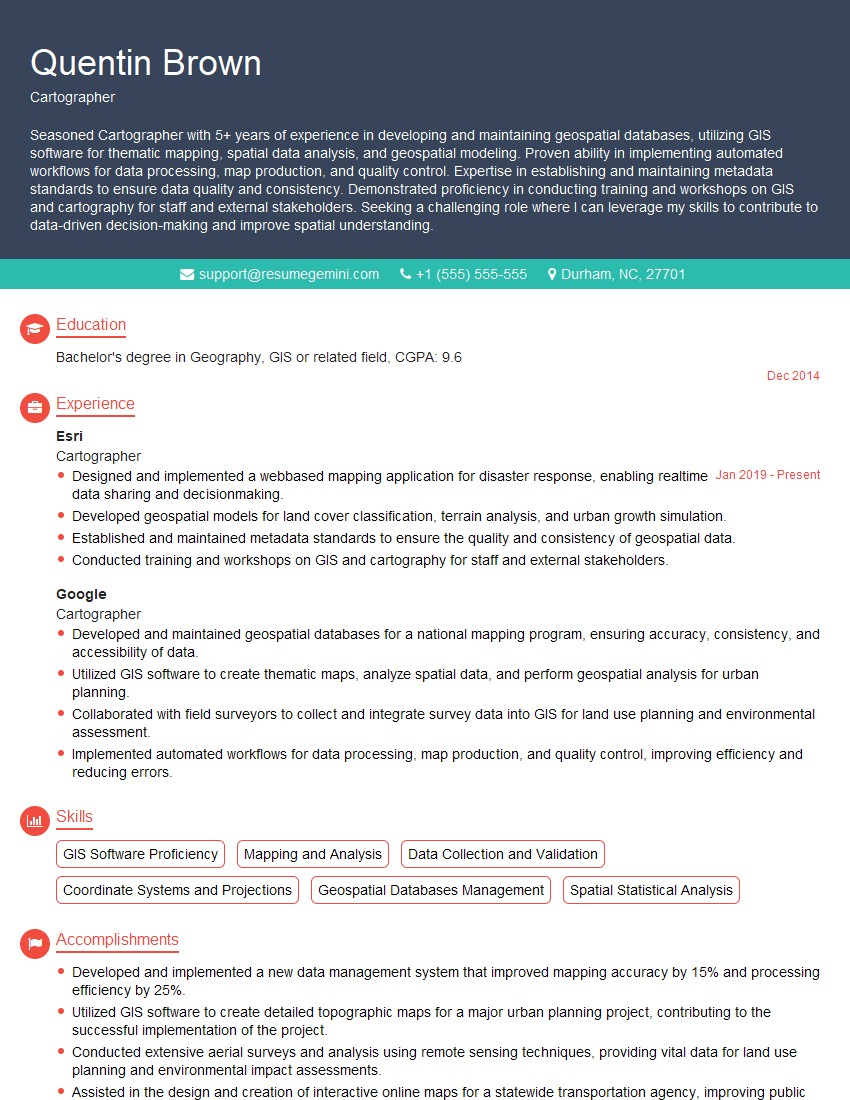
Mastering ArcGIS Pro or QGIS opens doors to exciting careers in GIS, offering opportunities for innovation and impactful contributions across various industries. A strong resume is crucial for showcasing your skills to potential employers. To maximize your chances, creating an ATS-friendly resume is essential. ResumeGemini is a trusted resource that can help you build a professional and effective resume, ensuring your qualifications shine through. Examples of resumes tailored to ArcGIS Pro and QGIS professionals are available within ResumeGemini to guide your creation process.
Explore more articles
Users Rating of Our Blogs
Share Your Experience
We value your feedback! Please rate our content and share your thoughts (optional).
What Readers Say About Our Blog
To the interviewgemini.com Webmaster.
Very helpful and content specific questions to help prepare me for my interview!
Thank you
To the interviewgemini.com Webmaster.
This was kind of a unique content I found around the specialized skills. Very helpful questions and good detailed answers.
Very Helpful blog, thank you Interviewgemini team.