Preparation is the key to success in any interview. In this post, we’ll explore crucial Conductor SPLICING interview questions and equip you with strategies to craft impactful answers. Whether you’re a beginner or a pro, these tips will elevate your preparation.
Questions Asked in Conductor SPLICING Interview
Q 1. Explain the different types of conductor splicing techniques.
Conductor splicing techniques vary depending on the conductor type (copper, aluminum, ACSR), size, and application. Here are some common methods:
- Compression Splicing: This involves using a specialized compression connector that crimps the conductors together, creating a strong mechanical bond. This is popular for its speed and relative ease of use, especially with smaller conductors. It’s important to ensure the correct die is used for the specific conductor size and type to avoid damage.
- Mechanical Splicing: These methods use various mechanical devices to join conductors, often involving clamps, sleeves, or connectors that are tightened or bolted to secure the splice. Examples include bolted connectors and parallel groove connectors, often seen in larger conductors. Proper torque is crucial for ensuring a secure connection.
- Solder Splicing: This involves melting solder around the joined conductors to create a highly conductive bond. This method is effective for smaller conductors but requires more skill and careful temperature control to prevent damage to the conductor and ensure a proper bond. Flux is essential to aid in the soldering process.
- Welding Splicing: This method uses heat (electric arc or gas) to melt the conductors together, creating a solid metallurgical bond. This is suitable for large conductors requiring extremely high current-carrying capacity but requires specialized equipment and trained personnel.
- Exothermic Welding: A very robust method where a chemical reaction produces molten metal to create a strong, corrosion-resistant weld. It is used for high-reliability applications, such as grounding connections.
The choice of splicing method depends on several factors which will be discussed later.
Q 2. Describe the safety precautions necessary when splicing conductors.
Safety is paramount when splicing conductors. Always follow these precautions:
- Lockout/Tagout (LOTO): Before working on any energized conductors, always ensure that the power is completely disconnected and locked out. Never trust a switch alone; verify the absence of voltage with a reliable voltage tester.
- Personal Protective Equipment (PPE): Always wear appropriate PPE, including safety glasses, insulating gloves, and arc flash protection if working near energized equipment. Safety footwear is also essential.
- Grounding: Ground all conductors and equipment to prevent accidental contact with energized sources. Use properly sized and maintained grounding clamps.
- Awareness of Surroundings: Be mindful of the surrounding environment; avoid working near moving machinery or in hazardous areas. Ensure there’s sufficient space and lighting.
- Proper Training: Only qualified and trained personnel should perform splicing work. Improper techniques can lead to serious injury or equipment damage.
- Working at Heights Safety: If working at heights, use proper fall protection equipment and follow safety regulations.
Remember, complacency is the enemy of safety. Always double-check your work and adhere strictly to safety regulations.
Q 3. What are the common causes of conductor splicing failures?
Conductor splicing failures can stem from various issues:
- Improper Splice Technique: Incorrect crimping, inadequate tightening, or poor soldering can lead to loose connections, increased resistance, and potential overheating.
- Corrosion: Exposure to moisture or chemicals can cause corrosion at the splice point, increasing resistance and potentially leading to failure.
- li>Mechanical Stress: Excessive vibration, tension, or bending can weaken the splice, causing it to fail over time.
- Overheating: If the splice carries more current than it’s designed for, it can overheat, leading to melting, degradation of materials, or even fire.
- Poor Material Selection: Using the wrong type of connector, solder, or other materials for the conductor type or size can result in a weak or unreliable splice.
- Insufficient Preparation: Not properly cleaning or preparing the conductor ends before splicing can compromise the connection’s strength and integrity.
Regular inspection and maintenance are crucial to identify and address potential problems before they lead to failure.
Q 4. How do you determine the appropriate splicing method for a given conductor?
Selecting the right splicing method depends on several factors:
- Conductor Type and Size: Different splicing methods are suitable for various conductor types (copper, aluminum, ACSR) and sizes. Large conductors may require mechanical or welding techniques, while smaller conductors might be suitable for compression or solder splicing.
- Current Capacity: The splice must be able to safely handle the expected current load without overheating. Welding provides the highest current-carrying capacity.
- Environmental Conditions: The splice must be able to withstand environmental factors like moisture, temperature extremes, and corrosion. Exothermic welding is excellent in harsh environments.
- Accessibility: Some splicing methods are more suitable for locations with limited access than others. Compression splicing is often faster and easier to do in tight spaces.
- Cost and Availability of Equipment: The cost and availability of tools and equipment should also be considered when selecting a splicing method.
Think of it like choosing the right tool for a job; a screwdriver won’t replace a hammer.
Q 5. Explain the process of preparing a conductor for splicing.
Proper conductor preparation is vital for a secure splice. The steps typically include:
- Cleaning: Thoroughly clean the conductor ends to remove dirt, grease, oxides, and other contaminants. Use appropriate cleaning agents and abrasives to ensure a clean, shiny surface.
- Cutting: Cut the conductor ends squarely and neatly with a sharp tool, avoiding any burrs or irregularities. A clean cut is crucial for a good connection.
- Tinning (for solder splicing): For solder splicing, apply a thin layer of solder to the conductor ends to improve the solder’s adherence and create a smoother connection.
- Stranding (if necessary): For stranded conductors, carefully untwist the strands to ensure they are properly aligned and secured within the connector or during the welding process.
- Measuring: Accurately measure the required length of the conductor ends to ensure a proper fit for the chosen connector or splice.
Imagine trying to connect two frayed ropes – proper preparation is as important as the method itself.
Q 6. What tools and equipment are required for conductor splicing?
The tools and equipment required for conductor splicing depend on the chosen method. However, some common tools include:
- Wire Strippers/Cutters: For removing insulation and cutting conductors to the correct length.
- Crimping Tool: For compression splicing, this tool is essential to apply the correct amount of pressure for a secure connection.
- Bolting Tools: For mechanical splicing using bolted connectors, wrenches or torque wrenches are needed.
- Soldering Iron and Solder: For solder splicing, a suitable soldering iron with appropriate solder and flux are required.
- Welding Equipment: For welding, this could include an arc welder, gas welder, or exothermic welding kit.
- Voltage Tester: A must-have for safety, to verify the absence of voltage before commencing work.
- Grounding Clamps: To safely ground the conductors during the splicing process.
- Measuring Tape: To accurately measure conductor lengths.
- Safety Equipment (PPE): Gloves, safety glasses, arc flash protection, etc.
Always ensure your tools are in good working order and appropriate for the task at hand.
Q 7. How do you ensure a proper and secure conductor splice?
Ensuring a proper and secure conductor splice involves several steps:
- Thorough Preparation: Adhere to all the conductor preparation steps mentioned earlier. A solid foundation is critical for a good splice.
- Correct Connector or Method: Choose the appropriate splicing method and connector based on the conductor type, size, and current capacity.
- Proper Technique: Follow the manufacturer’s instructions carefully for the chosen splicing method. Pay attention to details, such as crimping force, torque settings, or solder temperature.
- Visual Inspection: After completing the splice, thoroughly inspect it for any signs of damage, looseness, or irregularities. Check for gaps, unevenness, or signs of overheating.
- Testing (where applicable): Depending on the application, you may need to perform tests to verify the splice’s electrical continuity and resistance.
- Documentation: Document the splicing process, including the method used, date, and personnel involved. This is essential for maintenance and troubleshooting.
A well-executed splice should be mechanically strong, electrically sound, and resistant to environmental factors. Think of it as building a bridge; every step is crucial for lasting strength and reliability.
Q 8. Describe the steps involved in testing a conductor splice.
Testing a conductor splice is crucial to ensure its integrity and prevent future failures. The process involves several steps, starting with a visual inspection for any obvious damage or irregularities. This includes checking for proper alignment, secure connections, and the absence of loose strands or exposed conductors. Then, we move to more rigorous testing methods.
Continuity Test: This verifies the electrical continuity across the splice, ensuring a continuous current path. A multimeter is used to measure resistance; a low resistance reading indicates a good connection, while a high or infinite reading points to a break in the connection. For example, a reading of 0.1 ohms for a short length of copper wire is typical and acceptable. Anything significantly higher indicates a problem.
Insulation Resistance Test: This test measures the insulation’s ability to prevent current leakage. A high insulation resistance value is desired. We apply a voltage to the conductor and measure the leakage current. A low leakage current confirms good insulation integrity.
Tensile Strength Test (if applicable): Depending on the splice type and the application’s mechanical stresses, a tensile strength test may be necessary. This assesses the splice’s ability to withstand pulling forces. This is especially important for overhead lines subjected to wind or ice loading.
Visual Inspection Post-Test: After any electrical testing, we perform another visual inspection to rule out any damage that might have occurred during the testing process.
Remember, safety is paramount. Always de-energize the conductors before any testing or work. The specific testing procedures and acceptable limits will vary based on the standards and specifications applicable to the project.
Q 9. What are the common types of connectors used in conductor splicing?
The choice of connector depends on factors like conductor size, material, application requirements, and budget. Common types include:
Compression Connectors: These use a crimping tool to compress a sleeve or lug onto the conductors, forming a secure mechanical bond. They’re widely used due to their relatively quick installation and reliability.
Mechanical Connectors: This broad category includes various types that use clamps, bolts, or other mechanical means to connect conductors. These are often preferred in high-current applications or where superior tensile strength is needed.
Solderless Connectors: These connectors rely on pressure and sometimes specialized tooling to connect the conductors without the need for soldering. This eliminates the need for heat, reducing potential damage to the cable. A good example is the split-bolt connector used for smaller wires.
Soldered Connectors: While less common in many modern applications due to the time involved and skill required, soldered connectors offer high conductivity and reliability in some circumstances. It requires skilled technicians to handle it properly.
Heat-Shrink Tubing and Splices: This is often used to insulate and protect the splice after connection, offering environmental protection.
Selecting the appropriate connector is a critical step; the wrong connector can compromise the splice’s performance and safety.
Q 10. How do you handle different conductor sizes and materials during splicing?
Handling different conductor sizes and materials requires careful attention to detail. For example, splicing a small gauge aluminum wire to a much larger copper conductor necessitates the use of appropriate connectors and techniques designed for dissimilar metals.
Size Differences: If conductors are significantly different in size, we use connectors that can accommodate the size difference, such as those with tapered sleeves or multiple clamping points. We often use specialized tools such as hydraulic crimpers or specialized crimping dies tailored for the specific conductor size and type.
Material Differences: Splicing dissimilar metals, such as aluminum and copper, requires special considerations. Oxidation issues may cause corrosion or high resistance if not handled correctly. Using an anti-oxidation paste or compound and appropriately designed connectors is essential to prevent corrosion and ensure a reliable connection.
Stranded vs. Solid Conductors: Stranded conductors, commonly used for flexibility, require different splicing techniques than solid conductors. For stranded conductors, we usually avoid cutting individual strands to prevent weakening the connection.
Understanding the material properties and using the correct connectors and techniques ensures a lasting, safe, and electrically sound splice. Improper handling can lead to increased resistance, overheating, and potential fire hazards. Always refer to the manufacturer’s specifications and instructions for the particular connectors being used.
Q 11. What are the differences between mechanical and compression splicing?
Mechanical and compression splicing are two common methods, but they differ significantly in their approach.
Mechanical Splicing: This involves using mechanical devices like clamps, bolts, or compression sleeves to physically hold the conductors together. Think of it as a physical grip, using mechanical force to create the connection. Examples include bolted connectors or wire nuts used in low-voltage applications. Mechanical splices often rely on a strong grip but may have slightly higher resistance.
Compression Splicing: This technique uses a crimping tool to compress a specialized connector onto the conductors. The crimping process deforms the connector, creating a tight, low-resistance connection. Compression connectors are known for their high conductivity and reliability, as well as relative ease of use with suitable crimping tools.
The choice depends on the application. Mechanical splicing may be preferred where high tensile strength is paramount, while compression splicing often offers greater convenience and lower resistance.
Q 12. Explain the importance of proper insulation and sealing in conductor splicing.
Proper insulation and sealing are critical for safety and longevity. A poorly insulated splice is a significant safety hazard, creating a risk of electric shock, fire, or damage to equipment.
Insulation: Insulation protects the splice from moisture, physical damage, and environmental factors, preventing short circuits. The insulation material must be rated for the operating voltage and environmental conditions. We typically use heat-shrink tubing, electrical tape, or specialized insulating materials that conform to applicable standards.
Sealing: Sealing prevents moisture from entering the splice, protecting the conductors and connectors from corrosion. This is particularly important in outdoor environments. Sealing compounds or waterproof heat-shrink tubing are often used to maintain the splice’s integrity over its lifespan. Proper sealing helps maintain the electrical properties and mechanical strength over time, thereby prolonging the splice’s operational life.
Neglecting proper insulation and sealing can lead to premature splice failure, costly repairs, and serious safety risks.
Q 13. How do you troubleshoot common conductor splicing problems?
Troubleshooting conductor splicing problems often involves a systematic approach:
Visual Inspection: Begin with a thorough visual inspection for any obvious issues such as loose connections, damaged insulation, or corrosion.
Continuity Test: Use a multimeter to check the continuity of the splice. Low resistance indicates a good connection, while high or infinite resistance points to a break in the conductor.
Insulation Resistance Test: Measure the insulation resistance to detect any leakage current. A low insulation resistance indicates potential insulation failure.
Temperature Check: Excessive heat near a splice might indicate a high-resistance connection, loose connection, or an overload.
Check Connector Integrity: Inspect the connectors for any signs of damage, poor crimping, or loosening. If a crimp is found to be inadequate, the splice needs to be redone.
By systematically following these steps, we can usually isolate the source of the problem and implement the necessary repairs. In some cases, the entire splice may require replacement if the damage is significant.
Q 14. What are the relevant safety standards and regulations for conductor splicing?
Conductor splicing must comply with relevant safety standards and regulations to ensure safe and reliable electrical installations. These standards vary by location and application. Some common ones include:
National Electrical Code (NEC) (USA): Specifies requirements for electrical installations, including conductor splicing.
International Electrotechnical Commission (IEC) Standards: Provides international standards for electrical installations and equipment, with relevant standards for splicing techniques and materials.
Occupational Safety and Health Administration (OSHA) Regulations (USA): Covers workplace safety, including electrical safety requirements, relevant to conductor splicing work.
Local Regulations: Many local jurisdictions may have additional regulations pertaining to electrical work, often supplementing national standards.
Adherence to these standards is critical for preventing accidents, ensuring the quality of the work, and preventing potential legal issues. Always consult the relevant standards and regulations applicable to your location and the specific application before commencing any splicing work.
Q 15. Describe your experience with various splicing techniques (e.g., Western Union, Britannia, etc.).
My experience encompasses a wide range of conductor splicing techniques, focusing primarily on ensuring reliable and safe electrical connections. I’m proficient in several methods, including Western Union, Britannia, and various compression techniques. The Western Union splice, for example, is a very reliable method, particularly suited for smaller conductors, where its meticulous steps ensure a secure, low-resistance connection. It involves carefully wrapping the conductors around each other in a specific pattern, ensuring complete metallic contact. The Britannia splice, on the other hand, is more robust and ideal for larger conductors, offering exceptional tensile strength. It involves a series of tightly interlocked twists and folds that create a mechanically strong connection, suitable for high-tension applications. I also have extensive experience with different compression connectors, which are often preferred for their speed and efficiency in modern applications. Choosing the right splice depends heavily on the conductor type, size, and the environmental conditions where the connection will be installed.
For instance, on a recent project involving overhead lines in a challenging, high-wind area, we opted for Britannia splices due to their superior strength and resistance to vibration. In contrast, for smaller gauge conductors within a control cabinet, the speed and simplicity of a compression connector proved more efficient.
Career Expert Tips:
- Ace those interviews! Prepare effectively by reviewing the Top 50 Most Common Interview Questions on ResumeGemini.
- Navigate your job search with confidence! Explore a wide range of Career Tips on ResumeGemini. Learn about common challenges and recommendations to overcome them.
- Craft the perfect resume! Master the Art of Resume Writing with ResumeGemini’s guide. Showcase your unique qualifications and achievements effectively.
- Don’t miss out on holiday savings! Build your dream resume with ResumeGemini’s ATS optimized templates.
Q 16. How do you maintain accurate records and documentation of splicing work?
Maintaining accurate records is crucial for ensuring the long-term reliability and safety of the electrical network. Every splicing job I undertake is meticulously documented. This includes detailed photographs of each step of the process, from conductor preparation to the final connection. A comprehensive log is created, detailing the location of the splice, the type of splice used, the conductor material and gauge, the date and time of the work, and the names of the personnel involved. Additionally, test results such as resistance measurements across the splice are carefully recorded to verify the integrity of the connection. All this information is stored securely in a digital database, which allows for easy retrieval and audit trails.
Think of it like a medical chart – every detail matters. A clearly documented splice ensures we can easily track maintenance requirements, diagnose potential problems, and ensure future repairs can be executed efficiently and safely.
Q 17. What are your skills in working at heights and using fall protection equipment?
Safety is paramount in my line of work. I hold a valid certification in working at heights and am fully trained in the use of all relevant fall protection equipment, including harnesses, lanyards, and anchor points. I’m proficient in various fall arrest systems and understand the critical importance of regular inspections and maintenance of this equipment. I always follow all relevant safety regulations and protocols before, during, and after every job. This includes completing a thorough risk assessment for each assignment and implementing the appropriate safety measures.
For example, before commencing work on a transmission tower, I meticulously check all my equipment, inspect the anchors, and double-check the harness fit before ascending. Safe working practices aren’t just a checklist; they’re a mindset. My goal is always to come home safely, and that involves adhering to stringent safety procedures without exception.
Q 18. Explain your understanding of different types of conductor materials (e.g., copper, aluminum).
Understanding the properties of different conductor materials is essential for selecting the appropriate splicing technique and ensuring a reliable connection. Copper, for instance, is a highly conductive material with excellent ductility, making it easy to work with. However, its higher cost and susceptibility to corrosion compared to aluminum often make aluminum a more practical choice in many applications. Aluminum is lighter and less expensive than copper, making it ideal for long spans of overhead lines where weight is a critical factor. However, aluminum is not as conductive as copper and requires specific splicing techniques due to its tendency to creep and cold flow.
The difference in properties necessitates different approaches. A splice designed for copper might not be suitable for aluminum and vice-versa. Knowing this distinction helps me choose the correct connectors, techniques, and preparation methods to achieve optimal performance and durability.
Q 19. How do you ensure the integrity of the splice after installation?
Ensuring the integrity of a splice post-installation is a multi-step process. Following the completion of a splice, I perform a series of checks. First, a visual inspection ensures the connection is mechanically sound and free from any visible defects. Then, I use a specialized testing instrument to measure the resistance across the splice. A low resistance reading indicates a secure, low-loss connection. Any significant deviation from the expected value warrants further investigation and potential rework. Beyond resistance, I also consider the mechanical integrity of the connection, particularly if it’s exposed to environmental stressors like wind or vibration. In some cases, I’ll use specialized tools to measure the tensile strength of the splice to ensure it can handle the expected mechanical loads.
Consider this as a quality control check: a low resistance reading is like getting a good report card. It confirms that the connection is electrically sound. But then you also need to inspect the construction to ensure its durability and resilience. This multi-faceted approach ensures that the splice performs its job reliably and safely for years to come.
Q 20. How do you handle emergency situations related to conductor splicing?
Emergency situations related to conductor splicing are rare but require swift and decisive action. My training includes protocols for handling various scenarios, such as electrical shocks, falls, or equipment malfunctions. In the event of an electrical shock, immediate action is vital – shutting down the power source, ensuring the safety of myself and colleagues, and providing first aid if necessary. For falls, the primary focus is on preventing further injury and summoning emergency medical services. If a piece of equipment malfunctions, I follow safety procedures to isolate the problem and prevent further hazards. Communication is key – I always ensure clear communication with my team and any relevant authorities in such situations.
Preparedness is crucial, much like a firefighter constantly drills for various emergency scenarios. We don’t hope for emergencies, we plan for them. Through training and rigorous safety protocols, we are better equipped to handle any unforeseen incidents.
Q 21. Describe your experience with splicing in different environmental conditions.
My experience encompasses splicing in various environmental conditions, ranging from scorching desert heat to freezing winter temperatures. Different environmental conditions present unique challenges. Extreme heat can affect the properties of the conductor materials and the adhesives used, requiring modifications to the splicing techniques and material choices. In freezing temperatures, ensuring proper handling of materials to prevent brittleness and ensuring adequate protection against moisture is crucial. High humidity can exacerbate corrosion, especially in aluminum conductors, while strong winds can put additional strain on splices. To combat these challenges, I use appropriate materials, follow specific work procedures, and employ additional safety precautions.
Each environment requires adaptation. For example, working in extreme cold necessitates the use of specialized gloves and heating elements to ensure the correct handling and installation of materials. Each scenario calls for careful planning and precise execution to guarantee the safety and quality of the splice.
Q 22. How do you identify and address potential hazards during conductor splicing?
Identifying and addressing hazards during conductor splicing is paramount for safety and project success. It’s a multi-step process starting with a thorough pre-job risk assessment. This involves identifying potential hazards such as:
- Electrical hazards: Working with energized conductors requires strict adherence to lockout/tagout procedures and the use of appropriate personal protective equipment (PPE) like insulated gloves and tools.
- Height hazards: Splicing often occurs at heights, demanding the use of fall protection systems like harnesses and safety lines.
- Environmental hazards: Weather conditions like rain, wind, or extreme temperatures can significantly impact safety and the quality of the splice. Proper planning and potentially postponement are crucial.
- Mechanical hazards: Improper use of tools or equipment can lead to injuries. Regular equipment inspection and training on its safe operation are vital.
Addressing these hazards involves implementing control measures. These may include:
- Lockout/Tagout procedures: Ensuring the conductor is de-energized and locked out before any work commences.
- Fall protection: Using appropriate harnesses, safety lines, and anchor points.
- Weather monitoring: Monitoring weather conditions and adjusting work schedules accordingly.
- Tool safety: Using appropriate tools in good condition and following safe work practices.
- Emergency preparedness: Having a clear emergency plan in place, including communication protocols and access to emergency services.
For instance, during a recent project involving high-voltage lines, we employed a dedicated spotter to monitor the work from the ground, ensuring the safety of the team working at height and facilitating immediate communication in case of any emergencies.
Q 23. Explain your experience with different types of splicing tools and equipment.
My experience encompasses a wide range of splicing tools and equipment for various conductor types and sizes. I’m proficient with:
- Mechanical splicing tools: These include various types of compression connectors, hydraulic crimping tools, and hand tools for making various mechanical splices. I’m familiar with the specifics of using different tools for different conductor materials like copper, aluminum, and ACSR (Aluminum Conductor Steel-Reinforced).
- Welding equipment: I have experience with both exothermic welding and thermite welding, which are crucial for achieving high-quality and durable splices in critical applications.
- Specialized tools for specific splice types: This includes tools specific to making various types of compression splices, bolted connectors, and other specialized connections.
- Testing equipment: I’m experienced with using pull testers to ensure sufficient mechanical strength in the splice and various other electrical testing equipment to verify the splice’s electrical integrity.
For example, when working with large ACSR conductors, I prefer using hydraulic crimping tools for their precision and efficiency in creating strong, reliable connections. For smaller conductors, hand tools might suffice, but the choice always depends on project-specific requirements and safety considerations.
Q 24. Describe your experience with quality control procedures for conductor splicing.
Quality control in conductor splicing is non-negotiable. It starts with meticulous preparation and continues throughout the entire process. Our procedures include:
- Pre-splice inspection: Thorough inspection of the conductors to check for damage or defects before splicing begins.
- Proper tool use: Ensuring that tools are correctly calibrated and used according to manufacturer’s instructions. This includes regular maintenance and calibration checks.
- Adherence to splicing standards: Strictly following established industry standards and company specifications for splice design and construction.
- Visual inspection: A thorough visual inspection of the completed splice to check for any irregularities or imperfections.
- Mechanical testing: Using pull testers to verify the tensile strength of the splice, confirming it meets the required standards.
- Electrical testing: Using specialized equipment to test the splice’s electrical resistance, ensuring there are no significant losses or potential safety hazards.
- Documentation: Maintaining detailed records of all inspections, tests, and the materials used. This is vital for traceability and accountability.
We use a checklist-based system that ensures every step is documented and verified. Failure to meet any of the quality control checks results in the splice being reworked or rejected.
Q 25. How do you comply with company safety procedures and regulations?
Compliance with company safety procedures and regulations is fundamental to my work. This includes:
- Following lockout/tagout procedures religiously: Never working on energized conductors without proper de-energization and lockout procedures.
- Wearing appropriate PPE: Always utilizing the necessary personal protective equipment, including insulated gloves, safety glasses, hard hats, and other required gear.
- Regular safety training: Actively participating in and completing all required safety training courses and refresher programs.
- Reporting near misses and incidents promptly: Immediately reporting any near misses or incidents, no matter how minor, to ensure prompt investigation and preventative measures.
- Understanding and adhering to all relevant safety regulations and standards: Staying updated on the latest safety guidelines and applying them consistently.
I view safety not just as a set of rules, but as a personal responsibility. A strong safety culture is crucial, and I actively contribute to fostering a safe working environment for myself and my colleagues.
Q 26. Describe your problem-solving approach when encountering unexpected splicing challenges.
Encountering unexpected splicing challenges is part of the job. My approach involves a systematic problem-solving method:
- Identify the problem: Carefully assess the situation to understand the exact nature of the challenge. This involves documenting observations and measurements.
- Gather information: Collect all relevant information, including the type of conductor, splice type, tools used, and any unusual circumstances.
- Analyze the problem: Determine the potential root causes. This might involve consulting technical manuals, contacting experts, or using troubleshooting guides.
- Develop solutions: Brainstorm potential solutions, weighing the pros and cons of each. This often requires considering alternative splicing techniques or modifying existing procedures.
- Implement the solution: Carefully execute the chosen solution, following all safety precautions.
- Verify the solution: Perform thorough testing to ensure the splice meets all quality and safety requirements.
- Document the process: Maintain a detailed record of the problem, solution, and results for future reference.
For example, I once encountered unexpected corrosion on a conductor during splicing. After careful analysis, I decided to clean the affected area, apply corrosion inhibitor, and use a larger compression connector to compensate for the loss of conductor material. The solution was documented and the final splice passed all required tests.
Q 27. What are your career goals regarding conductor splicing and related technologies?
My career goals center around continuous improvement in conductor splicing and related technologies. I aim to:
- Become a certified expert in advanced splicing techniques: Pursue advanced certifications and training to expand my expertise in new and emerging technologies.
- Stay current with industry advancements: Keep abreast of the latest developments in splicing tools, techniques, and materials to enhance efficiency and quality.
- Contribute to improving safety standards: Actively participate in improving safety protocols and practices within the industry.
- Develop leadership skills: Aspire to a leadership role where I can mentor and train others in safe and efficient splicing techniques.
- Explore innovative solutions: Investigate and contribute to the development of innovative splicing solutions for challenging environments and conductor types.
Ultimately, I strive to be a highly skilled and respected professional, consistently contributing to the advancement of safe and reliable conductor splicing practices.
Key Topics to Learn for Conductor SPLICING Interview
- Understanding Splicing Fundamentals: Grasp the core principles behind conductor splicing, including various techniques and their applications in different scenarios.
- Types of Splices: Become familiar with different types of conductor splices (e.g., Western Union, Britannia, etc.), their strengths, weaknesses, and appropriate use cases. Understand the factors influencing splice selection.
- Safety Procedures and Regulations: Thoroughly understand safety protocols, industry standards, and regulatory compliance related to conductor splicing, including proper personal protective equipment (PPE) and safe work practices.
- Tools and Equipment: Demonstrate knowledge of the various tools and equipment used in conductor splicing, their proper use, and maintenance. Be prepared to discuss troubleshooting common equipment issues.
- Material Properties and Selection: Understand the properties of different conductor materials (e.g., copper, aluminum) and their impact on splice design and performance. Be able to justify material selection for a given application.
- Testing and Inspection: Learn the methods for testing and inspecting conductor splices to ensure their integrity and compliance with standards. Understand the importance of documentation.
- Troubleshooting and Problem-Solving: Develop your ability to diagnose and solve common problems encountered during conductor splicing, such as faulty connections or material defects.
- Practical Application and Case Studies: Prepare to discuss real-world examples of conductor splicing in various contexts (e.g., power transmission, telecommunications).
Next Steps
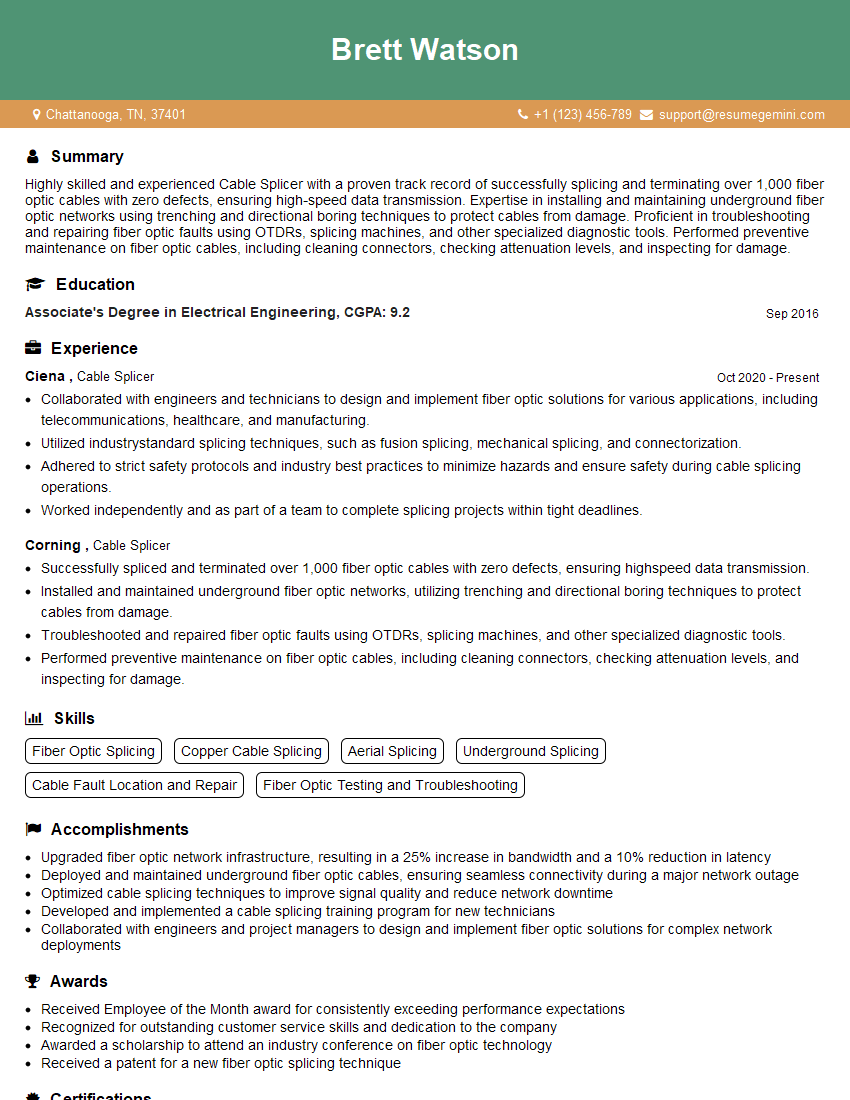
Mastering conductor splicing techniques opens doors to exciting career opportunities in the electrical and telecommunications industries. A strong understanding of this critical skill demonstrates your technical proficiency and commitment to safety. To maximize your job prospects, create an ATS-friendly resume that highlights your skills and experience effectively. ResumeGemini is a trusted resource that can help you build a professional and impactful resume. Examples of resumes tailored to Conductor SPLICING are available to help you create a compelling application.
Explore more articles
Users Rating of Our Blogs
Share Your Experience
We value your feedback! Please rate our content and share your thoughts (optional).
What Readers Say About Our Blog
To the interviewgemini.com Webmaster.
Very helpful and content specific questions to help prepare me for my interview!
Thank you
To the interviewgemini.com Webmaster.
This was kind of a unique content I found around the specialized skills. Very helpful questions and good detailed answers.
Very Helpful blog, thank you Interviewgemini team.