Unlock your full potential by mastering the most common Tributary Influent Sampling and Analysis interview questions. This blog offers a deep dive into the critical topics, ensuring you’re not only prepared to answer but to excel. With these insights, you’ll approach your interview with clarity and confidence.
Questions Asked in Tributary Influent Sampling and Analysis Interview
Q 1. Explain the importance of proper tributary influent sampling techniques.
Proper tributary influent sampling is crucial for accurate assessment of water quality and the impact of various sources on receiving waters. Think of it like taking a patient’s vital signs – you need reliable data to diagnose and treat potential problems. Without proper techniques, the data collected is unreliable, potentially leading to flawed conclusions and ineffective management strategies for water resources. This can have significant environmental and economic consequences, impacting ecosystems and potentially leading to costly remediation efforts down the line.
Q 2. Describe different methods for collecting tributary influent samples.
Several methods exist for collecting tributary influent samples, each with its own advantages and disadvantages. The choice depends on factors like the size of the tributary, accessibility, and the nature of the pollutants being investigated.
- Grab sampling: This involves collecting a single sample at a specific point in time. It’s simple and cost-effective but may not represent the overall water quality over a longer period.
- Composite sampling: This involves collecting multiple grab samples over a specific time period (e.g., 24 hours) and combining them into a single composite sample. This provides a more representative average of water quality over the sampling period.
- Integrated sampling: A device like an isokinetic sampler is used to collect a sample that is representative of the entire flow profile across the tributary’s cross-section. This method is particularly important for streams and rivers with variable flow velocities.
- Automatic samplers: These devices are programmed to collect samples at pre-determined intervals and volumes. They are useful for long-term monitoring studies and can reduce the need for frequent manual sampling trips.
For example, a small, easily accessible tributary might only require grab sampling, while a large river with fluctuating flow would benefit from an integrated or composite approach using an automated sampler.
Q 3. What are the potential sources of error in tributary influent sampling?
Many factors can introduce errors during tributary influent sampling. It’s like baking a cake – if your ingredients are off, the cake won’t turn out right! Some key sources of error include:
- Improper sample preservation: Failure to preserve samples according to established protocols can lead to degradation of analytes before analysis, resulting in inaccurate results.
- Contamination: Samples can be contaminated by the sampling equipment, the sampler’s hands, or surrounding environmental factors. Using clean equipment and following proper procedures are vital.
- Non-representative sampling: Failure to collect samples from appropriate locations or at appropriate times can lead to samples that do not accurately reflect the overall water quality of the tributary.
- Incomplete mixing: Stratification in the water column can lead to samples not being representative of the entire water body. Proper mixing before sampling is crucial.
- Calibration issues: Problems with the calibration of sampling equipment (e.g., flow meters, volume measuring devices) will also impact data quality.
Q 4. How do you ensure the chain of custody is maintained during sample collection and transport?
Maintaining chain of custody is paramount to ensuring the integrity of the samples. Imagine a legal investigation – every step in the evidence handling process must be meticulously documented. This involves:
- Unique sample identification: Each sample should be clearly identified with a unique label containing information such as date, time, location, and sampler’s name.
- Proper labeling and packaging: Samples must be stored in appropriate containers to prevent leakage or contamination, and sealed securely.
- Detailed documentation: A chain of custody form should be completed, tracking the location and handling of the samples at each stage, including collection, transport, and analysis. Signatures are required at every handover.
- Secure transport: Samples should be transported in a secure manner to prevent tampering or loss.
- Temperature control: Samples requiring temperature control (refrigeration or freezing) should be maintained at the specified temperature throughout the process.
Breaking the chain of custody compromises the data’s admissibility and reliability, especially in regulatory settings.
Q 5. What are the common parameters analyzed in tributary influent samples?
The specific parameters analyzed depend on the objectives of the study and regulatory requirements, but common parameters include:
- Physical parameters: Temperature, pH, turbidity, conductivity, dissolved oxygen.
- Chemical parameters: Nutrients (nitrogen, phosphorus), heavy metals (lead, mercury, cadmium), pesticides, herbicides, organic compounds (e.g., PCBs, PAHs).
- Biological parameters: Bacteria (e.g., E. coli), algae, macroinvertebrates (as indicators of water quality).
Q 6. Explain the significance of each parameter analyzed in tributary influent samples.
Each parameter provides valuable insights into different aspects of water quality and potential pollution sources:
- Temperature: Affects dissolved oxygen levels and biological activity.
- pH: Influences the toxicity of certain pollutants and the availability of nutrients.
- Turbidity: Indicates suspended sediment load and can affect light penetration, impacting aquatic life.
- Dissolved oxygen: Essential for aquatic life; low levels indicate pollution or eutrophication.
- Nutrients: Excessive nutrients can cause eutrophication, leading to algal blooms and oxygen depletion.
- Heavy metals: Toxic pollutants that can bioaccumulate in the food chain.
- Pesticides and herbicides: Can have adverse effects on aquatic organisms.
- Organic compounds: Can be persistent pollutants with toxic effects.
- Bacteria and algae: Indicate potential fecal contamination and eutrophication.
- Macroinvertebrates: Sensitive to water quality changes; their presence or absence can be an indicator of ecosystem health.
Q 7. What are the regulatory requirements for tributary influent sampling and analysis?
Regulatory requirements for tributary influent sampling and analysis vary significantly depending on the location and specific regulations in place. These are often governed by national or regional environmental agencies (e.g., EPA in the US, Environment Agency in the UK). These regulations typically specify:
- Sampling frequency: How often samples should be collected (e.g., daily, weekly, monthly).
- Sampling locations: Where samples should be collected within the tributary.
- Sampling methods: Prescribed methods for sample collection and preservation.
- Analytical methods: Approved laboratory methods for analyzing specific parameters.
- Reporting requirements: How the results should be reported and to whom.
- Data quality objectives: Acceptable levels of error and uncertainty in the data.
- Permitting requirements: Permits may be required to discharge into the waterway, with associated water quality monitoring obligations.
It’s critical to consult the relevant regulatory documents to ensure compliance. Failure to adhere to these regulations can result in significant penalties.
Q 8. How do you interpret the results of tributary influent analysis?
Interpreting tributary influent analysis results involves understanding the concentrations of various pollutants and parameters within the water sample. This isn’t just about the numbers; it’s about assessing the context of those numbers. We look at the data in relation to regulatory limits (e.g., permitted discharge limits), historical trends for that specific tributary, and potential sources of pollution upstream. For example, a high concentration of nitrates might indicate agricultural runoff, while elevated levels of heavy metals could suggest industrial discharge. We compare our findings against established water quality standards to determine if the water is safe for its intended use (e.g., drinking water, aquatic life support). Further, statistical analysis helps determine if observed variations are significant or just natural fluctuations. A key part of the interpretation is communicating our findings clearly and concisely to stakeholders, ensuring they understand the implications of the data for environmental management decisions.
For instance, if we find consistently high levels of E. coli exceeding safe limits, this indicates a potential fecal contamination source requiring immediate investigation and remediation efforts, possibly involving tracing the source to failing septic systems or livestock operations.
Q 9. Describe the process of sample preservation and storage for tributary influent samples.
Sample preservation and storage are crucial for maintaining the integrity of tributary influent samples. The preservation method depends on the analytes of interest. For example:
- pH adjustment: Adjusting the pH to a specific value (e.g., lowering pH for metals analysis) prevents precipitation or oxidation/reduction reactions.
- Addition of preservatives: Chemicals like sulfuric acid are added to preserve certain parameters. The choice of preservative depends on the specific analysis. For example, HgCl2 might be used as a biocide to prevent bacterial growth impacting nutrient measurements.
- Refrigeration: Most samples are refrigerated at 4°C to slow down microbial activity and prevent degradation of analytes. This is especially important for samples containing organic compounds or biological indicators.
- Freezing: Some samples may require freezing at -20°C or lower, for longer term storage. However, freezing can lead to analyte loss in some cases, and must be considered carefully.
Samples are stored in appropriate containers, typically glass or high-density polyethylene (HDPE) depending on the analyte. Clear and detailed labeling is essential: sample location, date, time, and any preservatives added. A chain of custody is meticulously maintained to track the sample throughout its lifecycle. Proper handling helps to ensure the accuracy and reliability of subsequent analytical results.
Q 10. What quality control measures are essential in tributary influent analysis?
Quality control (QC) measures are essential for ensuring the accuracy and reliability of tributary influent analysis. These measures should be built into every stage of the process, from sampling to reporting. Key QC steps include:
- Blank samples: These contain only the preservative and are run to detect contamination in reagents or equipment.
- Duplicate samples: Two samples are collected from the same location to assess the precision of the sampling and analytical methods. High variation indicates potential problems.
- Spiked samples: Known amounts of analytes are added to a sample to assess the accuracy (recovery) of the analytical method.
- Standard reference materials (SRMs): Samples with known concentrations are used to calibrate equipment and verify the accuracy of the analysis.
- Instrument calibration and maintenance: Regular calibration and maintenance of analytical instruments are crucial for consistent and accurate results. This often involves using certified standards and performing regular checks of instrument performance.
Documentation of all QC measures, including results, is mandatory. Out-of-control QC data flags potential problems that need immediate attention and correction.
Q 11. How do you handle discrepancies in analytical results?
Discrepancies in analytical results require a systematic investigation. First, I’d review the entire analytical process, looking for possible errors at any stage: sample collection, preservation, handling, analysis, and data entry. This includes checking the chain of custody, examining QC data (e.g., blanks, duplicates, spikes), and verifying instrument calibration records. If the discrepancy is within acceptable limits (based on QC data), it might simply be random variation. However, significant discrepancies require further action. This might involve re-analyzing the sample using different methods, or collecting a new sample for comparison.
For example, if a duplicate sample shows significant deviation from the original, we need to determine the source of the error: was there an issue with sample homogeneity, was there an error in the lab analysis? Documenting these investigations thoroughly is important, not only for resolving the discrepancy, but also for improving future procedures.
Q 12. Explain the use of standard operating procedures (SOPs) in tributary influent sampling and analysis.
Standard Operating Procedures (SOPs) are crucial in tributary influent sampling and analysis, acting as a documented framework to ensure consistency, accuracy, and safety. SOPs clearly outline every step of the process, from field sampling techniques and sample preservation to laboratory procedures and data analysis. They specify the equipment, reagents, and methods to be used, minimizing variability between different analysts or over time. SOPs also incorporate quality control measures, providing clear instructions on how to perform and document QC checks. Following SOPs ensures the quality and reliability of the results, allowing for comparisons of data over time and across locations.
Think of SOPs as a recipe for consistent, reliable results. Without them, we’d have a chaotic and unreliable system. A well-written SOP can significantly reduce errors and improve the efficiency of the entire process.
Q 13. Describe your experience with different analytical instruments used in water quality analysis.
My experience encompasses a wide range of analytical instruments used in water quality analysis. I’m proficient in using:
- Spectrophotometers: For determining the concentration of various substances based on their light absorption or transmission properties.
- Ion chromatographs (IC): To analyze anions and cations in water samples, providing detailed information on ionic composition.
- Inductively coupled plasma mass spectrometry (ICP-MS): For precise measurement of trace metals in water samples.
- Gas chromatographs (GC) and High-Performance Liquid Chromatographs (HPLC): For separating and quantifying organic compounds in water. GC is often used for volatile compounds while HPLC is suited for non-volatile compounds.
- Turbidimeters: To measure water turbidity, an indicator of suspended solids.
- Auto-analyzers: To automate several analytical steps increasing throughput and reducing manual labor.
Each instrument requires specific training and understanding of its capabilities and limitations. I’m familiar with the proper techniques for operating, maintaining, and troubleshooting these instruments. My expertise lies not only in operating them but interpreting the data they generate in the context of water quality assessment.
Q 14. How do you calibrate and maintain laboratory equipment used in water analysis?
Calibration and maintenance of laboratory equipment are critical for accurate and reliable water analysis. Each instrument has its own specific calibration procedures, typically involving the use of certified standards with known concentrations. These standards are used to create a calibration curve that relates instrument response to analyte concentration. Calibration should be performed regularly, according to manufacturer recommendations and/or internal SOPs (at minimum before each use and/or daily), and documented thoroughly. Maintenance includes regular cleaning, preventative servicing, and replacement of parts as needed. This ensures that the instrument is functioning correctly and producing accurate results.
For example, an ICP-MS requires regular cleaning of the torch and other components to prevent buildup of salts and other residues which can affect its sensitivity and accuracy. Failing to properly calibrate and maintain instruments can lead to significant errors in analytical results.
Q 15. What safety precautions are necessary during tributary influent sampling and analysis?
Safety is paramount during tributary influent sampling and analysis. We’re dealing with potentially hazardous materials, variable weather conditions, and often remote locations. My approach incorporates a layered safety plan.
- Personal Protective Equipment (PPE): This is the first line of defense. I always wear appropriate PPE, including waterproof boots, gloves (nitrile for most situations, but potentially more specialized gloves for specific contaminants), safety glasses, and high-visibility clothing. In areas with potential for insect bites, I would also use insect repellent.
- Site Assessment and Risk Evaluation: Before heading to a sampling site, I thoroughly assess potential hazards like unstable terrain, wildlife, strong currents, and the presence of known contaminants. I’ll create a site-specific safety plan incorporating these risks.
- Emergency Preparedness: I always carry a well-stocked first-aid kit, a communication device (satellite phone in remote locations), and know the emergency contact information for local authorities and my team. A buddy system is also crucial, especially in remote or dangerous locations. I never work alone unless the location is inherently very safe.
- Proper Handling of Samples: Samples are treated with the utmost care to prevent spills and contamination. This includes appropriate labeling, secure transportation, and following established chain-of-custody procedures.
- Waste Disposal: All waste, including used PPE and contaminated materials, is disposed of according to regulations and using appropriate methods to minimize environmental impact.
For example, during a sampling event near a suspected industrial discharge, I’d wear additional protective gear like a respirator and chemical-resistant suit, based on the potential contaminants.
Career Expert Tips:
- Ace those interviews! Prepare effectively by reviewing the Top 50 Most Common Interview Questions on ResumeGemini.
- Navigate your job search with confidence! Explore a wide range of Career Tips on ResumeGemini. Learn about common challenges and recommendations to overcome them.
- Craft the perfect resume! Master the Art of Resume Writing with ResumeGemini’s guide. Showcase your unique qualifications and achievements effectively.
- Don’t miss out on holiday savings! Build your dream resume with ResumeGemini’s ATS optimized templates.
Q 16. How do you deal with unexpected events or challenges during sampling?
Unexpected events are a reality in field work. My approach is to remain calm, assess the situation, and implement a systematic solution.
- Equipment Malfunction: If equipment fails (e.g., a sampler malfunctions), I have backup equipment readily available. I’d also document the malfunction, attempt troubleshooting if feasible, and report it immediately to the team.
- Adverse Weather Conditions: In case of sudden storms or hazardous weather, I’d immediately halt sampling and seek safe shelter. Rescheduling the sampling would be the next logical step after ensuring my safety.
- Unexpected Contamination: If I suspect contamination of a sample, I’d take extra precautions in collecting a new sample. The suspected contamination would be documented along with the steps taken to mitigate the issue. I may even collect multiple samples from different points to corroborate my findings.
- Safety Incident: In the event of a safety incident, immediate first aid would be administered. Emergency services would be contacted as necessary, and a full incident report would be completed afterwards.
For instance, if I encountered a flash flood while sampling, I’d prioritize my safety by moving to high ground and contacting my team to inform them of the situation. The integrity of the collected samples would be assessed after the event.
Q 17. Explain your proficiency in data management and analysis related to water quality.
My data management skills are a critical part of my workflow. I’m proficient in maintaining detailed records, ensuring data quality, and performing rigorous analysis.
- Data Collection: I employ standardized procedures to collect water quality data, including using calibrated instruments and following established protocols. Each sample is meticulously documented with relevant metadata (location, date, time, sampler, etc.).
- Data Entry and Verification: Data is entered into a database system, which usually involves a spreadsheet program and is double-checked for errors. Data validation checks are performed to flag improbable values or inconsistencies.
- Data Cleaning and Preprocessing: This involves identifying and handling missing data, outliers, and data transformation as needed (e.g., log transformation for skewed data). Quality control measures are consistently applied at each step.
- Data Organization and Storage: Data is stored in a well-organized manner, adhering to established standards and ensuring long-term accessibility and retrieval. Secure cloud-based storage is often preferable to ensure data backups and collaboration.
For example, I’ve used R and Python extensively for data cleaning and analysis, writing scripts to automate tasks and handle large datasets effectively.
Q 18. Describe your experience with data reporting and presentation.
Effective data reporting and presentation is key to communicating findings clearly and concisely.
- Report Writing: I’m experienced in writing comprehensive technical reports that include clear summaries, methods, results, and conclusions. Reports adhere to established standards and incorporate relevant visuals to enhance understanding.
- Data Visualization: I use various software packages (e.g., Excel, R, Tableau) to create informative visualizations, such as graphs, charts, and maps, to communicate key findings effectively. Appropriate graph selection is crucial for the type of data being presented.
- Presentation Skills: I’m confident in delivering clear and concise presentations to both technical and non-technical audiences. This includes tailoring the presentation to the audience’s level of understanding.
- Interactive Dashboards: For complex datasets, I can create interactive dashboards using tools like Tableau, which allow for exploring and manipulating the data dynamically.
For instance, I recently created an interactive dashboard to visualize nutrient levels in a river system over several years, allowing stakeholders to understand trends and patterns easily.
Q 19. What software and tools are you familiar with for data analysis in water quality?
I’m proficient in several software packages and tools for water quality data analysis.
- Spreadsheet Software (Excel, Google Sheets): Essential for basic data management, calculations, and visualization.
- Statistical Software (R, Python): Powerful tools for advanced statistical analysis, data manipulation, and modeling. I’m familiar with packages like
ggplot2(R) andmatplotlib(Python) for data visualization, and statistical packages for hypothesis testing and regression analysis. - Database Management Systems (SQL): Used for managing and querying large water quality databases.
- Geographic Information Systems (GIS) Software (ArcGIS, QGIS): Used for spatial analysis and mapping of water quality data.
- Data Visualization Tools (Tableau, Power BI): Excellent for creating interactive dashboards and reports to present findings effectively.
For example, I often use R to perform time series analysis on water quality parameters to identify trends and seasonal patterns.
Q 20. How do you assess the accuracy and precision of analytical results?
Assessing the accuracy and precision of analytical results is crucial for ensuring the reliability of our findings.
- Quality Control (QC) Samples: We routinely include QC samples (blanks, duplicates, spikes) in our analysis to check for contamination, precision, and accuracy.
- Method Validation: The analytical methods used are validated to ensure their reliability and adherence to quality standards. This often involves comparing results to a certified reference material.
- Calibration Checks: Instruments are regularly calibrated to ensure accuracy and precision of measurements. Calibration records are meticulously maintained.
- Statistical Analysis: Statistical methods like calculating standard deviations, relative standard deviations, and recovery rates are used to evaluate the precision and accuracy of the results. Control charts are often employed to monitor data over time.
- Inter-laboratory Comparisons: Participating in inter-laboratory comparison studies provides an independent assessment of analytical performance.
For example, if the recovery rate of a spiked sample falls outside an acceptable range, it indicates a potential problem with the analytical method or procedure that needs to be investigated and corrected.
Q 21. Describe your understanding of statistical methods used in water quality data analysis.
My understanding of statistical methods in water quality data analysis is extensive.
- Descriptive Statistics: I regularly use descriptive statistics (mean, median, standard deviation, percentiles) to summarize and describe water quality data.
- Inferential Statistics: I employ inferential statistics (t-tests, ANOVA, regression analysis) to test hypotheses, identify relationships between variables, and make predictions.
- Time Series Analysis: This is crucial for analyzing trends and patterns in water quality data over time. Methods include moving averages, ARIMA models, and seasonal decomposition.
- Correlation and Regression: Used to determine relationships between different water quality parameters or between water quality and environmental factors.
- Principal Component Analysis (PCA): A dimensionality reduction technique useful for handling large datasets with many correlated variables.
- Non-parametric statistics: Used when the assumptions of parametric tests are violated.
For example, I might use regression analysis to model the relationship between rainfall and nutrient levels in a tributary, allowing for predictions of nutrient levels under different rainfall scenarios.
Q 22. How do you ensure the compliance with relevant environmental regulations?
Ensuring compliance with environmental regulations in tributary influent sampling and analysis is paramount. It involves meticulous adherence to established protocols and guidelines, often dictated by agencies like the EPA (Environmental Protection Agency) or equivalent local authorities. This begins with understanding the specific regulations applicable to the location and the type of pollutants being monitored. For example, the Clean Water Act in the US sets stringent standards for discharge permits, requiring regular monitoring and reporting of specific parameters.
My approach involves:
- Thorough knowledge of relevant legislation: Staying updated on changes and amendments to regulations is crucial. I regularly review relevant legal documents and attend industry workshops to maintain my expertise.
- Strict adherence to sampling protocols: This includes using calibrated equipment, following precise chain-of-custody procedures, and accurately recording sample locations, times, and environmental conditions. Any deviation must be meticulously documented.
- Accurate analytical techniques: Using validated laboratory methods ensures reliable and defensible data. Regular instrument calibration and quality control measures are essential. Participation in proficiency testing programs provides objective validation of our lab’s performance.
- Detailed record-keeping: Maintaining complete and auditable records of every step, from sample collection to data analysis and reporting, allows for seamless compliance audits. This includes documenting any corrective actions taken to address any deviations from established protocols.
- Regular internal audits: Conducting internal audits helps identify potential weaknesses in our compliance procedures, proactively addressing issues before they become violations.
Imagine a scenario where a permitted discharge exceeds the allowed level of nitrates. Our rigorous procedures would ensure the anomaly is detected quickly, allowing for investigation into the cause and implementation of corrective measures, preventing further environmental harm and avoiding penalties.
Q 23. Explain the importance of proper documentation in tributary influent sampling and analysis.
Proper documentation is the cornerstone of reliable tributary influent sampling and analysis, serving as the foundation for data integrity, accountability, and legal defensibility. Think of it as the detailed record of a detective’s investigation—every piece of evidence must be documented.
The importance manifests in several ways:
- Data Traceability: Comprehensive documentation allows for tracing the origin and handling of each sample, preventing confusion or ambiguity. This is crucial for validating results and identifying potential sources of error.
- Compliance Demonstrations: Regulatory agencies rely heavily on documentation to verify compliance with discharge permits or water quality standards. Incomplete or inaccurate records can lead to non-compliance findings and penalties.
- Quality Control and Assurance: Documentation facilitates internal quality control reviews and external audits, helping identify areas for improvement and ensuring the validity and reliability of the data. For example, meticulously documenting calibration procedures for our analytical instruments is crucial for the accuracy of our measurements.
- Legal Protection: In case of disputes or legal challenges, thorough documentation serves as crucial evidence to support the accuracy and integrity of the data, protecting both the organization and the environment.
- Data Analysis and Interpretation: Complete documentation supports long-term trend analysis, helping identify patterns and contributing to better water quality management decisions.
Imagine a scenario involving a legal dispute over water quality data. Thorough, meticulously kept records—including chain-of-custody documentation, calibration logs, and detailed analytical reports—provide irrefutable evidence, supporting our claims and protecting against potential liabilities.
Q 24. What are your troubleshooting skills related to analytical problems?
Troubleshooting analytical problems requires a systematic approach, combining technical expertise with problem-solving skills. It’s akin to being a scientific detective, carefully examining evidence to pinpoint the root cause.
My approach involves:
- Identifying the Problem: Begin by clearly defining the issue. Is it unexpectedly high or low results? Inconsistent data? Failure of an instrument?
- Reviewing the Analytical Process: Trace back through every step of the analytical process, from sample collection to data analysis. Check for errors in sampling, sample preparation, instrument calibration, or data processing.
- Instrument Calibration and Maintenance: Verify the calibration of instruments and ensure they are functioning correctly. Regular maintenance is crucial to prevent malfunctions.
- Quality Control Checks: Examine quality control samples (blanks, duplicates, spikes) to assess the precision and accuracy of the analysis. Discrepancies in these samples often pinpoint the problem’s location.
- Method Validation: If necessary, review the chosen analytical method to ensure it’s appropriate for the matrix and the analytes of interest. Perhaps a different method needs to be considered.
- External Expertise: If necessary, consult with external experts or manufacturers for assistance in diagnosing and resolving complex instrument issues.
For example, if we consistently get abnormally high results for a particular pollutant, I’d systematically check the sampling technique, the instrument calibration, the analytical method, and even the possibility of contamination. This methodical approach helps us pinpoint the source of error and prevent it from recurring.
Q 25. How do you handle non-compliance issues with water quality regulations?
Handling non-compliance issues requires a proactive and responsible approach, focusing on remediation and preventing future occurrences. It’s about learning from mistakes and improving procedures.
My approach involves:
- Immediate Investigation: A thorough investigation is initiated to understand the root cause of the non-compliance, meticulously documenting the findings.
- Corrective Actions: Implement appropriate corrective actions to address the problem and prevent recurrence. This might involve retraining personnel, upgrading equipment, or refining sampling and analytical protocols.
- Reporting and Communication: Prompt and transparent communication with regulatory agencies is essential. This involves submitting a detailed report outlining the non-compliance, the root cause, the corrective actions taken, and a plan to prevent future occurrences.
- Documentation: All steps of the investigation, corrective actions, and communication are meticulously documented. This detailed record is crucial for demonstrating compliance and preventing similar incidents.
- Prevention Strategies: Implementing preventative measures is paramount. This might involve additional training, enhanced quality control procedures, or process improvements to prevent future non-compliance incidents.
Imagine a scenario where a sample analysis shows a violation of a discharge permit. We’d immediately investigate, identify the cause (perhaps a malfunctioning treatment system), implement repairs, notify the regulatory agency, and implement preventative measures (e.g., more frequent system checks) to prevent future violations.
Q 26. Describe your experience with different types of water bodies and their unique characteristics.
My experience encompasses diverse water bodies, each with unique characteristics that influence sampling and analysis. Each environment requires tailored approaches.
- Rivers and Streams: These dynamic systems exhibit spatial and temporal variations in water quality, requiring multiple sampling points and careful consideration of hydrological factors (flow rate, rainfall).
- Lakes and Reservoirs: Stratification (layering) in lakes influences water quality, requiring sampling at different depths. Seasonal changes in temperature and mixing affect pollutant distribution.
- Estuaries: These transitional zones between freshwater and saltwater display salinity gradients, influencing the behavior of pollutants and requiring special considerations during sampling and analysis.
- Groundwater: Sampling groundwater requires specialized techniques to avoid contamination, often involving well purging and careful sample handling to maintain integrity.
For instance, sampling in a fast-flowing river requires different techniques than sampling in a stratified lake. In a river, the grab sample needs to represent the average flow. In a lake, we’d need to sample at different depths to account for stratification and potential anoxic zones.
Q 27. Explain the influence of seasonal variations on tributary influent characteristics.
Seasonal variations significantly influence tributary influent characteristics, impacting water quality and necessitating adjustments in sampling and analysis strategies. It’s like observing the changing seasons in a forest—the flora and fauna change, and so do the water quality parameters.
Key influences include:
- Rainfall and Runoff: Increased rainfall leads to higher runoff, transporting pollutants (sediments, nutrients, pesticides) into tributaries. This can significantly impact pollutant concentrations.
- Temperature: Temperature fluctuations influence biological activity, affecting the decomposition of organic matter and the release of nutrients. Warmer temperatures can accelerate these processes, while colder temperatures slow them down.
- Snowmelt: Snowmelt in colder climates can lead to significant increases in flow and the release of accumulated pollutants. This requires careful consideration of sampling timing and location.
- Algal Blooms: Increased sunlight and nutrient availability during warmer months can cause algal blooms, impacting dissolved oxygen levels and potentially producing toxins. The sampling frequency might need to be increased during peak bloom periods.
For example, during heavy rainfall, we might observe a sudden spike in turbidity and sediment load. In contrast, during dry periods, we might see increased concentrations of certain pollutants due to lower dilution rates.
Q 28. How do you utilize your knowledge to contribute to environmental protection?
My knowledge of tributary influent sampling and analysis directly contributes to environmental protection by providing crucial data for informed decision-making. It’s about using science to protect our natural resources.
My contributions include:
- Monitoring Water Quality: Providing accurate and timely data on water quality parameters allows for the identification of pollution sources and the assessment of their impacts. This is essential for implementing effective pollution control measures.
- Supporting Regulatory Compliance: Ensuring compliance with water quality regulations protects the environment and human health by preventing excessive pollutant discharge into water bodies. My work directly supports this objective.
- Informing Remediation Efforts: Accurate data helps identify the extent and nature of water pollution, guiding the development and implementation of effective remediation strategies.
- Protecting Aquatic Ecosystems: Monitoring water quality helps assess the health of aquatic ecosystems, allowing for proactive measures to protect vulnerable species and habitats.
- Improving Water Resource Management: Long-term water quality data helps in developing sustainable water resource management strategies, ensuring the availability of clean water for present and future generations.
For example, by identifying elevated levels of heavy metals in a tributary, we can initiate an investigation to identify the source and implement corrective measures, preventing further pollution and protecting aquatic life.
Key Topics to Learn for Tributary Influent Sampling and Analysis Interview
- Sampling Techniques: Understanding various sampling methods (grab, composite, automated), their applications, and limitations in the context of tributary influent analysis. Consider factors influencing sample representativeness and the avoidance of contamination.
- Sample Preservation and Handling: Mastering proper preservation techniques to maintain sample integrity and prevent degradation of analytes before analysis. This includes understanding the importance of chain of custody documentation.
- Analytical Methods: Familiarize yourself with common analytical techniques used for water quality parameters relevant to tributary influent, such as spectrophotometry, chromatography (HPLC, GC), and titrations. Be prepared to discuss the principles behind these methods and their limitations.
- Quality Control and Assurance (QA/QC): Understand the importance of QA/QC procedures in ensuring accurate and reliable results. This includes calibration, blanks, duplicates, and spike recovery analyses. Be ready to discuss how to identify and troubleshoot issues arising from QA/QC data.
- Data Interpretation and Reporting: Learn how to interpret analytical results, identify trends, and prepare concise and accurate reports. Understand the significance of reporting limits and uncertainties.
- Regulatory Compliance: Familiarize yourself with relevant environmental regulations and guidelines pertaining to water quality monitoring and reporting. Understanding compliance requirements is crucial for this field.
- Problem-Solving and Troubleshooting: Practice identifying potential sources of error in sampling and analysis. Be ready to discuss approaches to resolving common issues and ensuring data reliability.
- Health and Safety Procedures: Demonstrate knowledge of appropriate safety protocols and personal protective equipment (PPE) required when handling potentially hazardous materials and working in various field settings.
Next Steps
Mastering Tributary Influent Sampling and Analysis significantly enhances your career prospects in environmental science, water resources management, and related fields. It demonstrates a crucial skillset highly valued by employers. To maximize your job search success, focus on creating an ATS-friendly resume that effectively highlights your qualifications. We strongly recommend using ResumeGemini to build a professional and impactful resume. ResumeGemini offers a user-friendly platform and provides examples of resumes tailored to Tributary Influent Sampling and Analysis, ensuring your application stands out from the competition.
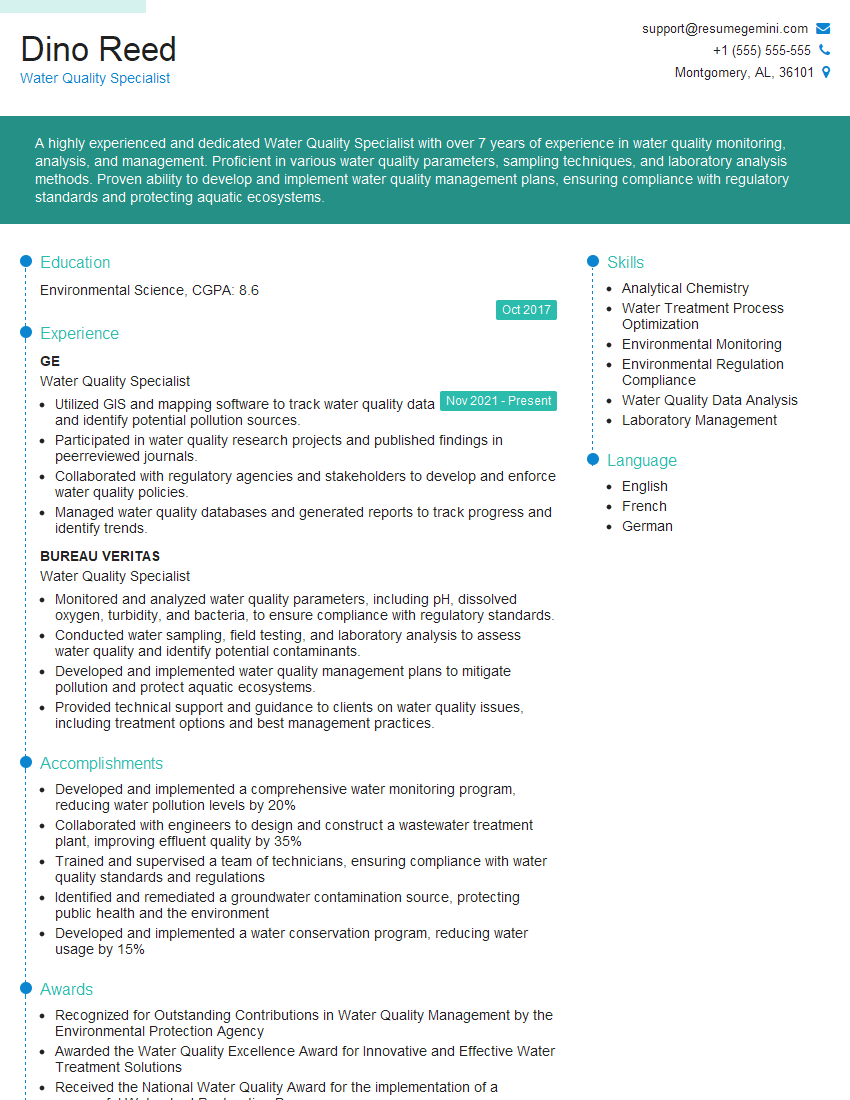
Water Quality Specialist Resume Sample
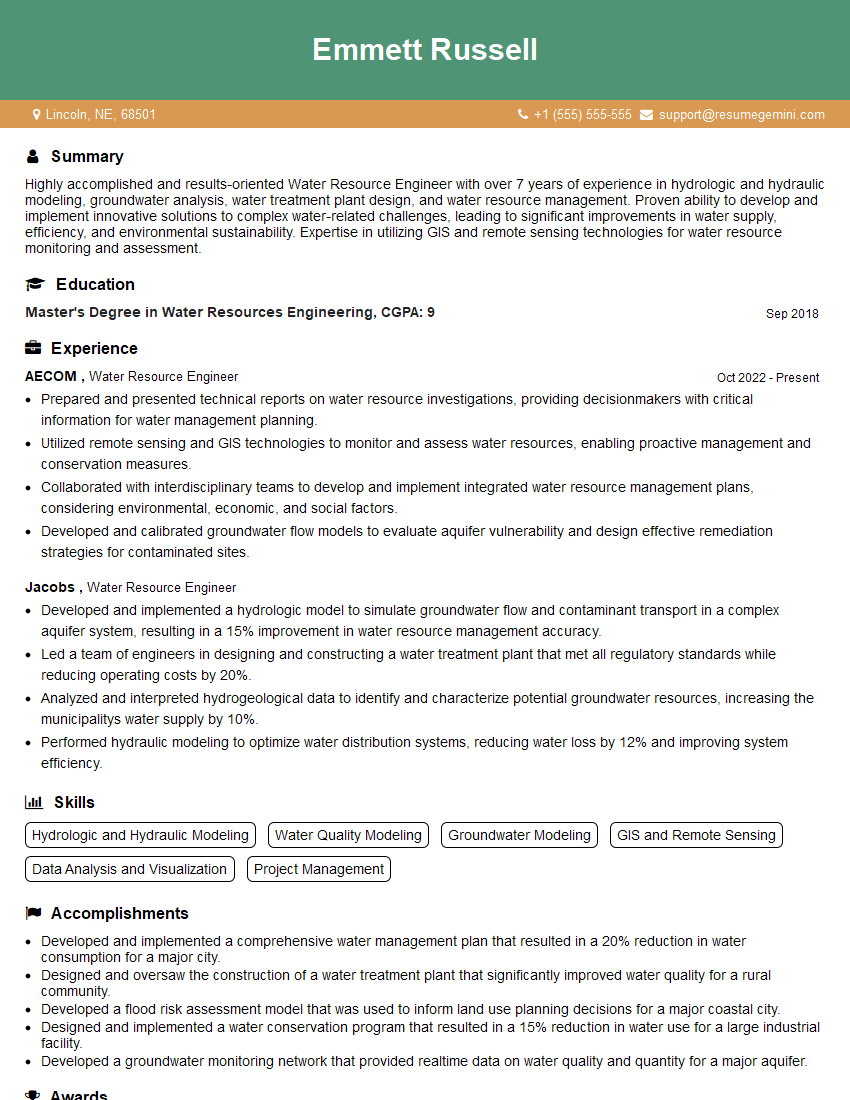
Water Resource Engineer Resume Sample
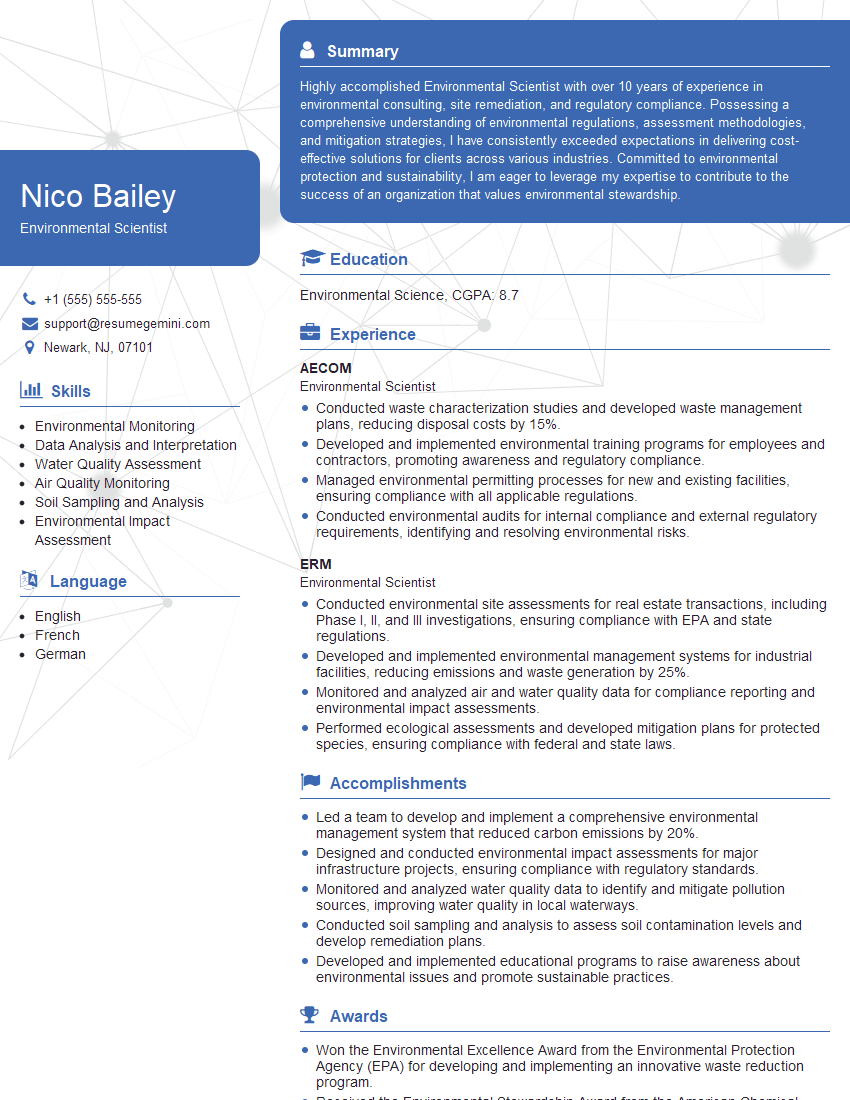
Environmental Scientist Resume Sample
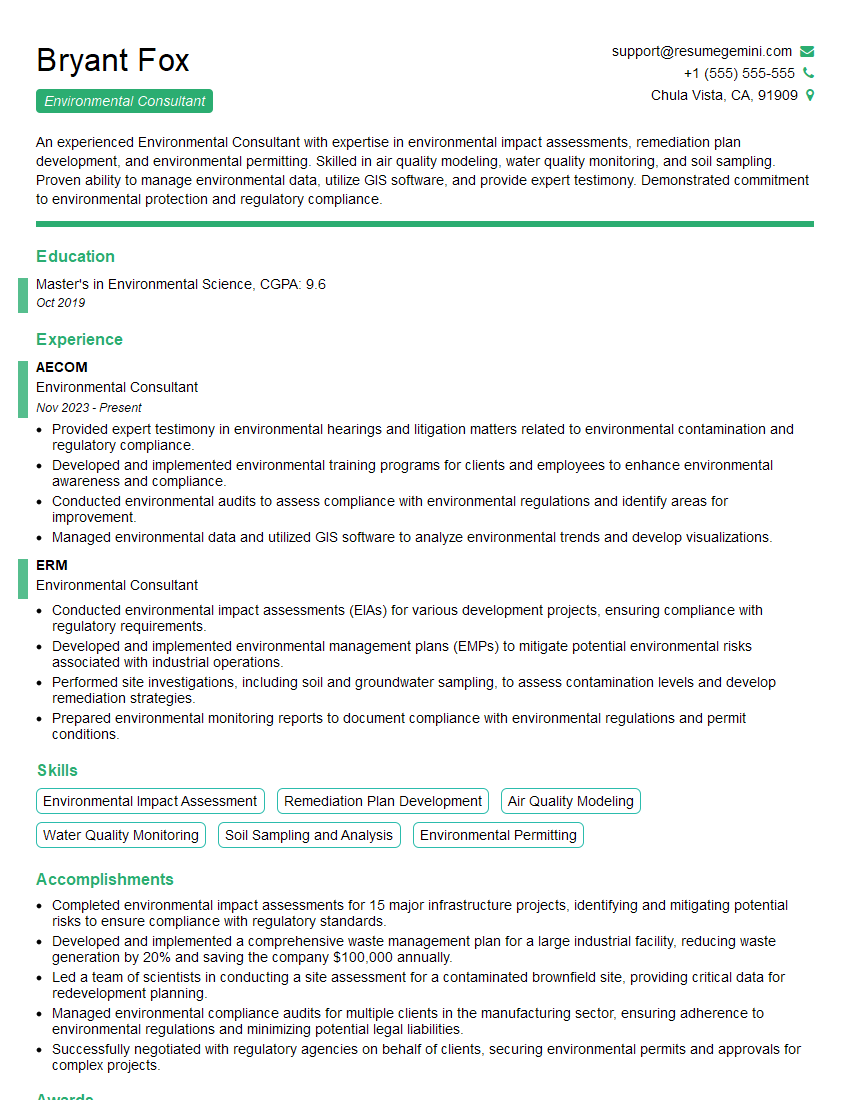
Environmental Consultant Resume Sample

Environmental Project Manager Resume Sample

Senior Environmental Scientist Resume Sample
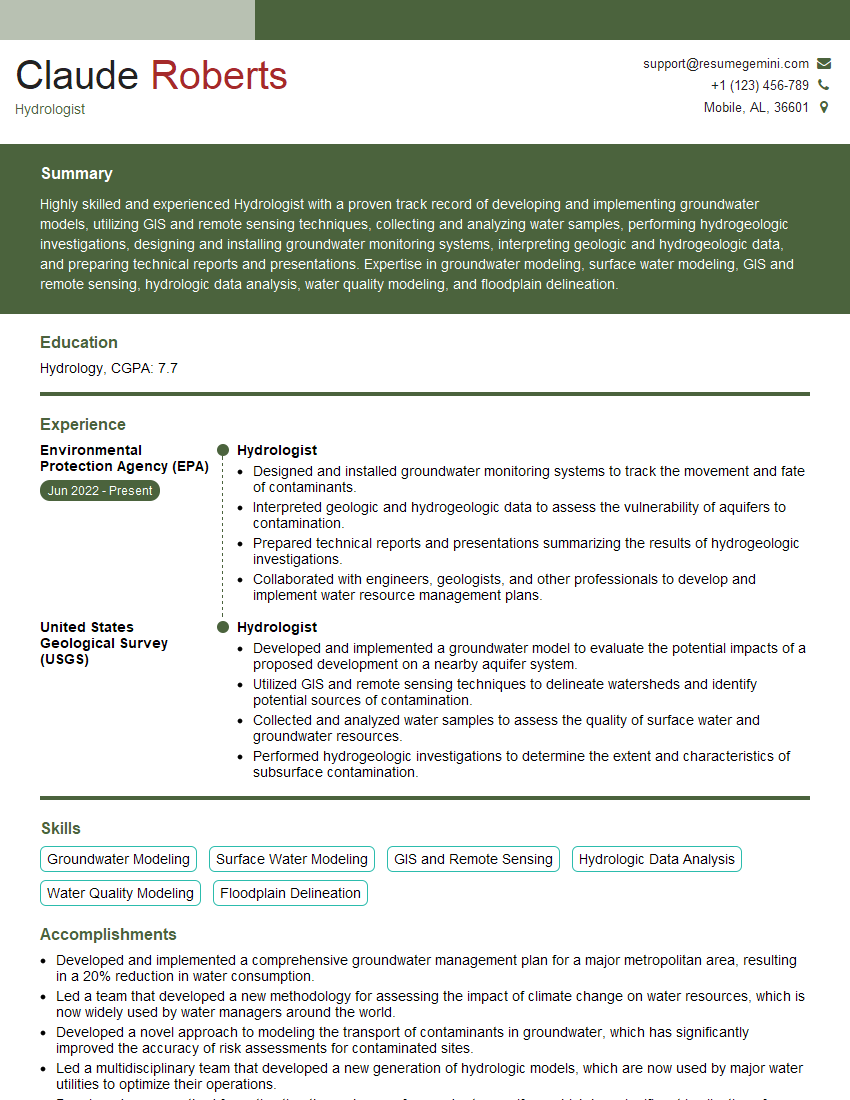
Hydrologist Resume Sample

Wastewater Treatment Operator Resume Sample
Explore more articles
Users Rating of Our Blogs
Share Your Experience
We value your feedback! Please rate our content and share your thoughts (optional).
What Readers Say About Our Blog
To the interviewgemini.com Webmaster.
Very helpful and content specific questions to help prepare me for my interview!
Thank you
To the interviewgemini.com Webmaster.
This was kind of a unique content I found around the specialized skills. Very helpful questions and good detailed answers.
Very Helpful blog, thank you Interviewgemini team.