Preparation is the key to success in any interview. In this post, we’ll explore crucial Environmental Sustainability and Waste Reduction interview questions and equip you with strategies to craft impactful answers. Whether you’re a beginner or a pro, these tips will elevate your preparation.
Questions Asked in Environmental Sustainability and Waste Reduction Interview
Q 1. Explain the three pillars of sustainability.
The three pillars of sustainability – environmental, social, and economic – represent a holistic approach to development. They are interconnected and interdependent, meaning progress in one area shouldn’t come at the expense of the others.
- Environmental Sustainability: This focuses on protecting our planet’s natural resources and ecosystems. It involves minimizing pollution, conserving biodiversity, and mitigating climate change. Think of it as ensuring the Earth can support life for generations to come. Examples include reducing carbon emissions, transitioning to renewable energy, and implementing responsible waste management practices.
- Social Sustainability: This pillar emphasizes creating equitable and just societies. It focuses on improving people’s well-being, promoting human rights, and fostering strong communities. This includes ensuring access to education, healthcare, and decent work, as well as promoting social justice and reducing inequalities.
- Economic Sustainability: This pillar deals with creating an economically viable system that supports long-term growth and prosperity without compromising the environment or social equity. It involves responsible resource management, promoting innovation and technological advancements, and creating fair and competitive markets. A strong economy allows for investment in environmental protection and social programs.
Imagine a stool: You need all three legs (environmental, social, and economic) to have a stable and balanced stool (sustainable development). If one leg is weak, the whole stool collapses.
Q 2. Describe your experience with Life Cycle Assessment (LCA).
Life Cycle Assessment (LCA) is a crucial tool for evaluating the environmental impacts of a product or service throughout its entire lifespan, from raw material extraction to disposal. My experience with LCA includes conducting numerous assessments for various industries, such as manufacturing and packaging. I’ve used LCA software such as SimaPro and Gabi to model various scenarios. For example, I assessed the environmental impact of different packaging materials for a food company, comparing the greenhouse gas emissions, water usage, and waste generation of plastic, paper, and biodegradable options. This led to a recommendation for switching to a more sustainable packaging material, significantly reducing the company’s environmental footprint. In another project, I conducted an LCA for a new product line, identifying potential environmental hotspots in the manufacturing process, and proposing design changes to minimize negative impacts. The LCA findings were critical in gaining stakeholder buy-in for implementing sustainable practices.
Q 3. What are the key metrics used to measure waste reduction success?
Measuring waste reduction success requires a multifaceted approach, focusing on several key metrics.
- Waste Diversion Rate: This represents the percentage of waste that is diverted from landfills through recycling, composting, or other recovery methods. A higher diversion rate signifies greater success. For example, a diversion rate of 70% means 70% of the waste generated was recycled or composted.
- Waste Generation per Unit of Production: This metric tracks the amount of waste produced per unit of output, such as kilograms of waste per ton of product. A reduction in this metric showcases improved efficiency and waste minimization efforts.
- Recycling Rate: This specifically measures the percentage of recyclable materials that are actually recycled. It helps pinpoint areas for improvement in recycling programs.
- Landfill Diversion Rate: Similar to waste diversion rate but specifically focuses on the amount of waste diverted from landfills.
- Cost Savings from Waste Reduction: This metric quantifies the financial benefits of waste reduction initiatives, including reduced disposal fees, material savings, and increased efficiency.
Monitoring these metrics over time allows for a comprehensive evaluation of waste reduction programs and identification of areas for further improvement.
Q 4. How would you implement a zero-waste program in a manufacturing facility?
Implementing a zero-waste program in a manufacturing facility requires a systematic and phased approach. It’s not a quick fix but a continuous improvement process.
- Assessment and Planning: Conduct a thorough waste audit to identify the types, quantities, and sources of waste generated. This forms the baseline for setting reduction targets.
- Waste Hierarchy Implementation: Prioritize waste reduction strategies based on the waste hierarchy: Prevention, Reduction, Reuse, Recycling, Recovery, and Disposal. Focus on preventing waste generation in the first place.
- Employee Engagement and Training: Educate and engage employees at all levels. Provide training on proper waste sorting, recycling procedures, and best practices for waste reduction.
- Process Optimization: Analyze manufacturing processes to identify and eliminate waste sources, such as material defects, inefficient processes, or excessive packaging. Lean manufacturing principles can be very effective here.
- Material Selection: Choose sustainable and recyclable materials whenever possible. Consider the entire lifecycle of the materials.
- Recycling and Composting Programs: Establish robust recycling and composting programs to manage waste that cannot be prevented or reduced. This includes proper sorting bins, clear labeling, and efficient collection systems.
- Continuous Monitoring and Improvement: Regularly track key metrics (as mentioned in the previous question) to monitor progress and identify areas for improvement. Use data to inform decisions and refine the zero-waste program.
Remember, zero waste is a journey, not a destination. Continuous improvement and adaptation are key to success.
Q 5. What are the different types of recycling processes?
Recycling processes vary depending on the material being recycled. Generally, they involve several stages:
- Collection and Sorting: Recyclable materials are collected from households, businesses, or recycling centers and then sorted by material type (e.g., paper, plastic, metal, glass).
- Processing: This stage involves cleaning, shredding, or other treatments to prepare the materials for recycling. For example, plastic might be washed and shredded into flakes.
- Manufacturing: The processed materials are then used to manufacture new products. For example, recycled aluminum cans are melted down and reformed into new cans.
Different materials have different recycling processes. For example:
- Paper Recycling: Paper is pulped, cleaned, and then used to make new paper products.
- Plastic Recycling: Depending on the type of plastic, it might be mechanically recycled (reprocessed into new plastic products) or chemically recycled (broken down into its basic building blocks and used to make new materials).
- Metal Recycling: Metals are melted down and reformed into new products. Aluminum recycling is particularly efficient, requiring significantly less energy than producing aluminum from raw materials.
- Glass Recycling: Glass is crushed and melted down to make new glass products.
The effectiveness of recycling depends on the quality of the materials collected and the availability of recycling infrastructure.
Q 6. Explain the concept of circular economy and its benefits.
A circular economy is an economic model aimed at eliminating waste and the continual use of resources. Instead of a linear ‘take-make-dispose’ model, it focuses on keeping materials in use for as long as possible, extracting maximum value from them, then recovering and regenerating products and materials at the end of each service life.
Key principles include:
- Design out waste and pollution: Products are designed for durability, repairability, and recyclability.
- Keep products and materials in use: Through reuse, repair, refurbishment, and sharing initiatives.
- Regenerate natural systems: By using renewable energy sources and promoting biodiversity.
Benefits of a circular economy include:
- Reduced environmental impact: Less waste, reduced pollution, and lower resource consumption.
- Economic growth: Creation of new jobs and business opportunities in resource recovery and reuse.
- Enhanced resource security: Reduced dependence on raw materials and increased resource efficiency.
- Improved social equity: Creation of more sustainable and inclusive economies.
Examples of circular economy initiatives include product-as-a-service models (e.g., leasing instead of owning), repairing and refurbishing products instead of replacing them, and using recycled materials in manufacturing.
Q 7. What are some common barriers to implementing sustainable practices?
Implementing sustainable practices often faces several barriers:
- High upfront costs: Switching to sustainable technologies or implementing new processes can be expensive in the short term.
- Lack of awareness and knowledge: Many individuals and businesses lack awareness of sustainable practices or the benefits they offer.
- Lack of regulation and incentives: Without clear regulations and incentives, businesses may not be motivated to adopt sustainable practices.
- Technological limitations: Some sustainable technologies are still under development and may not be readily available or cost-effective.
- Consumer behavior: Consumer demand for sustainable products and services is essential for driving change. Sometimes, consumers prioritize cost over sustainability.
- Resistance to change: Implementing new practices can disrupt existing processes and require changes in organizational culture and behavior.
- Measurement and reporting challenges: Measuring and reporting the environmental impact of sustainability initiatives can be complex and require specialized expertise.
Addressing these barriers requires a collaborative effort involving governments, businesses, and individuals. This might include providing financial incentives, developing effective regulations, raising awareness, fostering innovation, and encouraging consumer demand for sustainable products.
Q 8. How do you measure the environmental impact of a product or service?
Measuring a product or service’s environmental impact involves a comprehensive Life Cycle Assessment (LCA). This method analyzes the environmental burdens associated with a product from cradle to grave – from raw material extraction and manufacturing to distribution, use, and eventual disposal or recycling.
LCAs typically quantify impacts across various categories like:
- Global Warming Potential (GWP): Measured in CO2e (carbon dioxide equivalent), it assesses the contribution to climate change.
- Ozone Depletion Potential (ODP): Quantifies the impact on the ozone layer.
- Acidification Potential: Measures the contribution to acid rain.
- Eutrophication Potential: Assesses nutrient pollution and algal blooms.
- Water Depletion: Calculates the amount of water used and its impact on water resources.
For example, a LCA of a plastic bottle would consider the energy used in plastic production, transportation, its use and disposal (landfill or recycling) and their associated impacts. Data collection involves gathering information on energy consumption, material usage, emissions, and waste generation at each stage. The results are usually presented as a comparative analysis, helping identify ‘hotspots’ for improvement. Tools and software facilitate this complex process, providing a structured approach to data collection, calculation and analysis.
Q 9. What are some effective strategies for reducing food waste?
Reducing food waste requires a multi-pronged approach targeting various stages of the food supply chain. Effective strategies include:
- Improved Planning and Storage: Meal planning, proper food storage techniques (using appropriate containers and temperatures), and understanding ‘best before’ and ‘use by’ dates.
- Smart Shopping: Buying only what’s needed, avoiding impulse purchases, and utilizing shopping lists.
- Creative Cooking and Preservation: Using leftovers creatively (e.g., soup, casseroles), freezing excess produce, and employing preservation techniques like canning or pickling.
- Composting: Composting food scraps reduces landfill waste and creates nutrient-rich soil amendment.
- Supporting Food Banks and Donation Programs: Donating surplus food to local food banks or charities helps redistribute edible food to those in need.
- Policy and Infrastructure Changes: Government policies promoting waste reduction, improved infrastructure for food waste collection and processing are crucial at a larger scale.
Imagine a restaurant implementing a ‘first-in, first-out’ (FIFO) system for storing ingredients, minimizing spoilage and maximizing use of older products. Similarly, households can effectively use apps to track inventory and plan meals.
Q 10. Describe your experience with different waste sorting and processing technologies.
My experience encompasses various waste sorting and processing technologies, including:
- Mechanical Biological Treatment (MBT): This process involves shredding and screening waste to separate recyclables and organic materials from non-recyclables. The organic fraction is then composted or used for anaerobic digestion.
- Anaerobic Digestion: This biological process breaks down organic waste in the absence of oxygen, producing biogas (a renewable energy source) and digestate (a fertilizer).
- Incineration with Energy Recovery: Waste is burned at high temperatures, generating heat used for electricity generation. Advanced systems minimize harmful emissions.
- Automated Sorting Systems: Using technologies like near-infrared (NIR) spectroscopy, these systems identify and sort recyclables with high accuracy, improving recycling rates and reducing contamination.
- Material Recovery Facilities (MRFs): MRFs are large-scale facilities that process recyclables, separating them into various streams (e.g., paper, plastic, glass, metals). They play a crucial role in maximizing recycling efficiency.
I’ve been involved in projects assessing the efficiency and environmental impacts of these different technologies, focusing on optimizing their performance and integration into existing waste management infrastructure. For instance, I helped design an improved MRF layout that increased the efficiency of sorting by 15%, reducing the amount of material sent to landfill.
Q 11. What are the key environmental regulations related to waste management in your region?
(Note: This answer requires specifying a region. The following is a generalized example for illustrative purposes. Specific regulations vary significantly by location.)
In many jurisdictions, key environmental regulations related to waste management include:
- Waste Reduction and Recycling Targets: Regulations often set mandatory targets for reducing waste generation and increasing recycling rates.
- Hazardous Waste Management Regulations: Strict regulations govern the handling, storage, transportation, treatment, and disposal of hazardous waste to minimize environmental and human health risks. This includes licensing requirements, manifest systems, and specific treatment standards.
- Landfill Regulations: These regulations specify design standards, liner requirements, leachate management, and gas collection to prevent pollution of groundwater and soil.
- Extended Producer Responsibility (EPR): Programs that hold producers responsible for the end-of-life management of their products, encouraging eco-design and promoting recycling or reuse.
- Waste Characterization and Reporting: Regulations often require businesses and municipalities to characterize their waste streams and report waste generation and management data.
Non-compliance can lead to significant penalties, highlighting the importance of understanding and adhering to these regulations.
Q 12. How do you prioritize different sustainability initiatives?
Prioritizing sustainability initiatives requires a structured approach. I typically use a framework that considers:
- Materiality Assessment: Identify the environmental and social issues most significant to the organization and its stakeholders.
- Impact Assessment: Evaluate the potential environmental and social impact of each initiative, considering factors like GWP, resource consumption, and social equity.
- Feasibility Assessment: Evaluate the technical, economic, and operational feasibility of implementing each initiative.
- Resource Availability: Assess the availability of resources (financial, human, technological) needed to support each initiative.
- Stakeholder Engagement: Consult with stakeholders (employees, customers, community members) to gain their input and ensure alignment.
This allows for a data-driven approach, ensuring that resources are focused on initiatives with the greatest potential impact and feasibility. For example, if a company is facing water scarcity, water conservation initiatives would be prioritized over others.
Q 13. Explain your understanding of carbon footprint and its reduction strategies.
A carbon footprint represents the total amount of greenhouse gases (GHGs) generated by our actions, expressed as carbon dioxide equivalent (CO2e). It encompasses direct emissions (e.g., from burning fossil fuels) and indirect emissions (e.g., from electricity consumption).
Reducing a carbon footprint involves strategies like:
- Energy Efficiency: Improving energy efficiency in buildings, transportation, and industrial processes.
- Renewable Energy Transition: Switching to renewable energy sources (solar, wind, hydro) to power homes and businesses.
- Sustainable Transportation: Promoting walking, cycling, public transport, and electric vehicles.
- Sustainable Consumption and Production: Reducing consumption, choosing sustainable products, and supporting circular economy principles.
- Carbon Offset Programs: Investing in projects that remove or reduce GHG emissions (e.g., reforestation, renewable energy development).
Imagine a company analyzing its operations and identifying opportunities to reduce energy use in its manufacturing processes and transition to renewable energy sources. By adopting these strategies, they can significantly reduce their carbon footprint and contribute to mitigating climate change.
Q 14. What are the challenges in managing hazardous waste?
Managing hazardous waste presents significant challenges due to its potential for environmental contamination and harm to human health. These challenges include:
- Toxicity and Risk Assessment: Accurately identifying and characterizing the hazards associated with different types of hazardous waste is crucial for safe handling.
- Treatment and Disposal: Many hazardous wastes require specialized treatment methods (e.g., incineration, chemical treatment) before disposal to minimize environmental impact. Finding suitable disposal sites is often difficult and expensive.
- Regulatory Compliance: Adhering to stringent regulations related to hazardous waste management can be complex and costly.
- Illegal Dumping and Improper Handling: Preventing illegal dumping and ensuring proper handling and transportation of hazardous waste requires robust enforcement and awareness campaigns.
- Long-Term Liability: The potential for long-term environmental contamination and liability associated with hazardous waste management requires careful planning and risk management.
For example, managing spent nuclear fuel requires specialized facilities and long-term storage solutions due to its radioactivity and long half-life. This underscores the need for strict safety protocols and meticulous management throughout the entire lifecycle.
Q 15. Describe your experience with developing and implementing sustainability policies.
Developing and implementing sustainability policies requires a multifaceted approach, encompassing strategic planning, stakeholder engagement, and rigorous monitoring. My experience involves collaborating with cross-functional teams to assess environmental impacts, identify areas for improvement, and translate these findings into actionable policies. This includes everything from crafting waste reduction strategies, implementing energy efficiency programs, and developing sustainable sourcing guidelines for procurement.
For instance, in a previous role at a manufacturing company, I led the development of a comprehensive waste management policy. This involved a thorough audit of waste streams, identifying recyclable materials, negotiating contracts with recycling facilities, and training employees on proper waste segregation techniques. The policy resulted in a 30% reduction in landfill waste within the first year, exceeding our initial target. We also incorporated a circular economy principle, repurposing some waste materials as raw materials in other production lines.
Another example involved creating a corporate sustainability report, encompassing environmental, social, and governance (ESG) factors. This required a robust data collection system and the development of key performance indicators (KPIs) to track progress towards our sustainability goals.
Career Expert Tips:
- Ace those interviews! Prepare effectively by reviewing the Top 50 Most Common Interview Questions on ResumeGemini.
- Navigate your job search with confidence! Explore a wide range of Career Tips on ResumeGemini. Learn about common challenges and recommendations to overcome them.
- Craft the perfect resume! Master the Art of Resume Writing with ResumeGemini’s guide. Showcase your unique qualifications and achievements effectively.
- Don’t miss out on holiday savings! Build your dream resume with ResumeGemini’s ATS optimized templates.
Q 16. How do you communicate sustainability initiatives to different stakeholders?
Communicating sustainability initiatives effectively requires tailoring your message to the specific audience. Think of it like this: you wouldn’t explain quantum physics to a five-year-old in the same way you would to a physicist. Different stakeholders have varying levels of understanding and different priorities.
- Employees: Internal communication should focus on the benefits to them – improved working conditions, opportunities for professional development, and a sense of pride in working for a responsible company.
- Investors: This group is primarily concerned with financial implications. Highlight the cost savings associated with sustainability initiatives, the potential for new revenue streams (e.g., selling carbon credits), and the enhanced reputation that attracts investors.
- Customers: Communicate the environmental and social benefits of your products and services, emphasizing ethical sourcing and sustainable practices. Transparency is crucial here – customers are increasingly demanding information about a company’s sustainability performance.
- Government and Regulators: Focus on compliance with relevant regulations and your company’s contribution to national sustainability goals. Provide clear, concise data and reports.
- Local Communities: Highlight the positive local impacts, such as job creation, improved air and water quality, and community engagement initiatives.
Effective communication tools include internal newsletters, training sessions, sustainability reports, social media, and community outreach programs.
Q 17. How do you measure the success of a sustainability program?
Measuring the success of a sustainability program requires a combination of quantitative and qualitative metrics. We need to track both the environmental impact and the broader business outcomes.
- Quantitative Metrics: These involve numerical data such as reductions in energy consumption, water usage, waste generation, greenhouse gas emissions, and cost savings. These should be tracked against baseline data and targets. For example, a reduction in carbon footprint by 20% compared to the previous year.
- Qualitative Metrics: These assess the less tangible aspects, such as employee engagement, stakeholder satisfaction, and brand reputation. Surveys, interviews, and focus groups can be used to collect qualitative data. For example, measuring employee satisfaction with the company’s sustainability initiatives through a survey.
Key Performance Indicators (KPIs) are vital. These are specific, measurable, achievable, relevant, and time-bound (SMART) goals that allow us to monitor progress. Regular reporting and analysis of these KPIs is crucial to identify areas for improvement and ensure the program remains on track. A balanced scorecard approach, considering environmental, social, and economic aspects, offers a holistic view of success.
Q 18. What are some innovative technologies for waste management?
Innovative technologies are revolutionizing waste management, moving us towards a more circular economy. These technologies focus on reducing waste generation, improving recycling efficiency, and recovering valuable resources.
- Advanced Recycling Technologies: Chemical recycling and pyrolysis can break down plastics that are difficult to recycle using traditional methods, recovering valuable monomers or fuels.
- AI-powered Waste Sorting: Artificial intelligence and machine learning are being used to improve the accuracy and efficiency of waste sorting facilities, increasing the amount of material that can be recycled.
- Anaerobic Digestion: This process breaks down organic waste in the absence of oxygen, producing biogas (a renewable energy source) and digestate (a valuable fertilizer).
- Waste-to-Energy Technologies: Incineration with energy recovery converts non-recyclable waste into energy, reducing landfill burden. However, careful consideration of emissions is crucial.
- Smart Bins: Sensors in waste bins monitor fill levels, optimizing collection routes and reducing transportation costs and emissions.
The selection of appropriate technology depends on various factors, including the type and quantity of waste, local regulations, and cost-effectiveness.
Q 19. What is your experience with sustainable procurement practices?
Sustainable procurement focuses on selecting goods and services that minimize environmental impact and promote social responsibility throughout their lifecycle. My experience involves integrating sustainability criteria into the procurement process, from sourcing materials to vendor selection and contract management. This includes:
- Developing sustainable procurement policies: These policies define criteria for selecting suppliers based on their environmental and social performance.
- Life Cycle Assessment (LCA): Evaluating the environmental impacts of products and services from cradle to grave to identify the most sustainable options.
- Supplier Engagement: Collaborating with suppliers to improve their sustainability performance through training, technical assistance, and collaborative projects.
- Green Certifications: Prioritizing products and services with recognized environmental certifications, like LEED or FSC.
- Data Tracking and Reporting: Monitoring procurement data to measure the effectiveness of sustainable practices and report on progress.
For example, I helped a company transition to using recycled materials in their packaging, resulting in significant cost savings and reduced environmental impact. This involved working closely with suppliers to identify suitable recycled materials and ensure the quality of the final product.
Q 20. Describe your experience with developing sustainability reports.
Developing sustainability reports involves a systematic process of data collection, analysis, and reporting. These reports provide transparency and accountability, demonstrating a company’s commitment to sustainability. My experience includes:
- Defining Scope and Objectives: Identifying the key environmental, social, and governance (ESG) aspects to be reported on, aligned with relevant standards and frameworks (like GRI or SASB).
- Data Collection and Verification: Establishing robust data collection systems to gather accurate and reliable data on key performance indicators (KPIs).
- Materiality Assessment: Identifying the most significant sustainability issues for the company and its stakeholders.
- Reporting Framework Selection: Choosing a suitable reporting framework to ensure consistency and comparability.
- Report Writing and Design: Creating a clear, concise, and engaging report that effectively communicates the company’s sustainability performance.
- External Assurance: Seeking independent verification of the data to enhance credibility.
A well-structured sustainability report utilizes clear visuals, charts, and graphs to make complex data easily understandable. It should highlight both successes and areas for improvement, showcasing the company’s ongoing commitment to sustainability.
Q 21. How do you handle conflicting sustainability goals?
Conflicting sustainability goals are common. For example, maximizing production might conflict with minimizing waste generation, or using renewable energy might increase costs. Addressing these conflicts requires a balanced approach.
- Prioritization: Using a materiality assessment to identify the most significant sustainability issues and prioritize actions based on their impact and feasibility.
- Trade-off Analysis: Evaluating the potential benefits and drawbacks of different options, considering both environmental and economic factors. This may involve using cost-benefit analysis or multi-criteria decision analysis.
- Innovation and Technology: Exploring innovative technologies and practices that can help achieve multiple goals simultaneously, such as using closed-loop systems to minimize waste and maximize resource recovery.
- Stakeholder Engagement: Involving key stakeholders in the decision-making process to ensure that all perspectives are considered and to build consensus.
- Long-term Perspective: Considering the long-term implications of decisions, balancing short-term gains with long-term sustainability benefits.
Often, the solution involves finding creative compromises, setting realistic targets, and continuously monitoring progress to adapt strategies as needed. It’s about finding synergies rather than viewing goals as strictly competing.
Q 22. How do you identify and mitigate environmental risks?
Identifying and mitigating environmental risks involves a systematic approach combining risk assessment, management, and mitigation strategies. It begins with understanding the potential environmental impacts associated with an organization’s activities, products, or services. This includes assessing potential pollution, resource depletion, climate change contributions, and biodiversity loss.
For instance, a manufacturing company might assess the risk of air pollution from its emissions or water contamination from its wastewater discharge. To mitigate these risks, they could invest in cleaner technologies, implement better waste management practices, and adhere to environmental regulations. The process often involves:
- Hazard Identification: Identifying potential sources of environmental harm (e.g., chemical spills, greenhouse gas emissions).
- Risk Assessment: Evaluating the likelihood and severity of these hazards, considering factors like proximity to sensitive ecosystems and potential impacts on human health.
- Risk Management: Developing and implementing control measures to reduce or eliminate the identified risks. This might include installing pollution control equipment, implementing stricter operating procedures, or obtaining environmental permits.
- Monitoring and Review: Regularly monitoring environmental performance and reviewing the effectiveness of risk management strategies. Adjusting plans as needed based on data and new information.
A practical example: During a construction project, the risk of soil erosion could be mitigated by implementing erosion and sediment control measures, such as silt fences and vegetation.
Q 23. What is your experience with environmental auditing?
My experience with environmental auditing spans over eight years, encompassing various sectors including manufacturing, energy, and agriculture. I’ve conducted numerous audits, focusing on compliance with environmental regulations (like Clean Air Act, Clean Water Act, and others), internal management systems (e.g., ISO 14001), and identifying areas for improvement in environmental performance.
In one project for a large manufacturing plant, I conducted an audit that uncovered inefficiencies in their wastewater treatment process. This resulted in the identification of a significant cost savings opportunity and a reduction in their water footprint. Another project involved a comprehensive review of a renewable energy company’s sustainability reports, ensuring transparency and accuracy in their environmental claims. My audits involve:
- Documentation Review: Examining permits, reports, and other relevant documentation.
- On-site Inspections: Visually inspecting facilities and equipment to verify compliance.
- Data Analysis: Analyzing environmental data, such as emissions and waste generation data.
- Interviewing Personnel: Gathering information from employees about their practices and procedures.
- Reporting: Presenting findings and recommendations in a comprehensive report.
Q 24. How do you stay current with the latest trends in environmental sustainability?
Staying current in environmental sustainability requires a multi-faceted approach. I actively participate in professional organizations such as the Environmental Protection Agency (EPA) and subscribe to leading environmental journals like Environmental Science & Technology and Nature Climate Change. I also regularly attend conferences and webinars on topics such as circular economy, sustainable supply chain management, and climate change adaptation.
Furthermore, I leverage online resources such as reputable government agencies, academic institutions, and industry reports to track the latest research, policy changes, and best practices. Following key influencers and thought leaders in the field on platforms like LinkedIn and Twitter also helps in gathering insights into emerging trends. For example, I recently learned about the growing interest in using blockchain technology to improve transparency and traceability in supply chains, enhancing sustainability efforts.
Q 25. Describe your experience with designing sustainable packaging.
My experience in designing sustainable packaging focuses on minimizing environmental impact throughout the product’s lifecycle. This includes material selection, design optimization, and end-of-life management. I’ve worked on projects that involved transitioning from traditional materials like plastic to more sustainable alternatives, such as biodegradable or compostable materials.
For example, I collaborated with a food company to develop a fully compostable packaging solution for their snacks, reducing reliance on non-renewable plastics. Key considerations include:
- Material Selection: Choosing materials with low environmental impact, considering factors like recyclability, biodegradability, and renewable resource use.
- Design Optimization: Minimizing material usage while ensuring product protection and consumer appeal. Techniques such as lightweighting and optimized packaging design are crucial.
- End-of-Life Management: Designing packaging for easy recycling, composting, or other sustainable end-of-life solutions. Clearly marked recycling symbols and instructions are essential.
- Life Cycle Assessment (LCA): Conducting a LCA to analyze the environmental impacts of the packaging throughout its lifecycle, from raw material extraction to disposal.
A successful design considers the entire value chain, from sourcing to disposal, prioritizing minimal environmental impact without compromising functionality or appeal.
Q 26. Explain your understanding of ISO 14001 or other relevant environmental management systems.
ISO 14001 is an internationally recognized standard for environmental management systems (EMS). It provides a framework for organizations to identify, manage, and improve their environmental performance. The standard emphasizes a Plan-Do-Check-Act (PDCA) cycle, emphasizing continuous improvement.
My understanding extends beyond just ISO 14001; I’m also familiar with other relevant standards like ISO 50001 (Energy Management) and the Global Reporting Initiative (GRI) Standards for sustainability reporting. Implementing an EMS based on ISO 14001 involves:
- Environmental Policy: Defining a clear environmental policy that reflects the organization’s commitment to environmental protection.
- Environmental Aspects and Impacts: Identifying and assessing the environmental aspects and impacts of the organization’s activities.
- Legal and Other Requirements: Ensuring compliance with all applicable environmental regulations and other requirements.
- Objectives and Targets: Establishing measurable objectives and targets for environmental improvement.
- Operational Control: Implementing and maintaining systems to control environmental aspects and impacts.
- Emergency Preparedness and Response: Developing and maintaining procedures for responding to environmental emergencies.
- Monitoring and Measurement: Monitoring and measuring environmental performance against established objectives and targets.
- Management Review: Regularly reviewing the EMS to ensure its effectiveness and identify areas for improvement.
Implementing these standards contributes to better environmental performance, reduces risks, and improves an organization’s reputation.
Q 27. How do you engage employees in sustainability initiatives?
Engaging employees in sustainability initiatives is crucial for their success. It’s not just about compliance but fostering a culture of environmental responsibility. I use a multi-pronged approach:
- Communication and Education: Providing clear and regular communication about the organization’s sustainability goals and initiatives. Training programs and workshops help employees understand their roles and responsibilities.
- Recognition and Rewards: Recognizing and rewarding employees who contribute to sustainability efforts, whether through innovative ideas or consistent engagement.
- Employee Involvement: Creating opportunities for employees to participate in sustainability initiatives, such as green teams or environmental committees. Their input is valuable in shaping successful strategies.
- Leadership Commitment: Visible support from leadership is key. If leaders demonstrate commitment, it encourages employees to participate more actively.
- Setting Realistic Goals: Establishing achievable and measurable goals helps maintain motivation and celebrate successes along the way.
- Making it Relevant: Linking sustainability initiatives to employee’s daily work. Show how their actions contribute to larger goals.
For instance, in a previous role, we established a ‘Green Team’ that spearheaded several successful waste reduction initiatives, boosting employee morale and reducing environmental impact. The key is to make sustainability a shared value and integrate it into the organizational culture.
Q 28. What are your salary expectations for this role?
My salary expectations for this role are in the range of $120,000 to $150,000 per year. This is based on my extensive experience, proven track record, and the specific responsibilities and requirements of this position. I’m open to discussing this further based on the complete compensation package and the specifics of the role.
Key Topics to Learn for Environmental Sustainability and Waste Reduction Interview
- Life Cycle Assessment (LCA): Understanding the environmental impacts of products and services from cradle to grave. Practical application: Analyzing the carbon footprint of different packaging materials.
- Waste Management Hierarchy: Prioritizing waste reduction, reuse, recycling, and responsible disposal. Practical application: Designing a waste management plan for a manufacturing facility.
- Circular Economy Principles: Designing out waste and pollution, keeping products and materials in use, and regenerating natural systems. Practical application: Developing a closed-loop system for plastic waste.
- Sustainable Supply Chain Management: Integrating environmental considerations throughout the supply chain. Practical application: Evaluating the sustainability of different suppliers.
- Environmental Regulations and Compliance: Understanding relevant legislation and standards (e.g., ISO 14001). Practical application: Implementing a compliance program for a company.
- Renewable Energy Sources and Energy Efficiency: Exploring options for reducing reliance on fossil fuels and improving energy efficiency. Practical application: Proposing energy-saving measures for a building.
- Waste Reduction Strategies: Implementing practical techniques to minimize waste generation at the source. Practical application: Designing a program to reduce food waste in a cafeteria.
- Data Analysis and Reporting: Collecting, analyzing, and reporting environmental performance data. Practical application: Creating environmental dashboards to track progress towards sustainability goals.
- Stakeholder Engagement and Communication: Effectively communicating sustainability initiatives to various stakeholders. Practical application: Developing a communication plan for a sustainability project.
- Emerging Technologies in Waste Management: Exploring innovative solutions like advanced recycling technologies and waste-to-energy solutions. Practical application: Researching and evaluating new technologies for waste reduction.
Next Steps
Mastering Environmental Sustainability and Waste Reduction is crucial for a thriving career in a rapidly evolving field. Demonstrating your expertise through a strong resume is paramount. An ATS-friendly resume significantly increases your chances of getting noticed by recruiters. To create a compelling and effective resume, leverage the power of ResumeGemini. ResumeGemini provides a trusted platform to build professional resumes, and we offer examples tailored specifically to Environmental Sustainability and Waste Reduction to help you showcase your skills and experience effectively. Invest in your future – build a standout resume with ResumeGemini today.
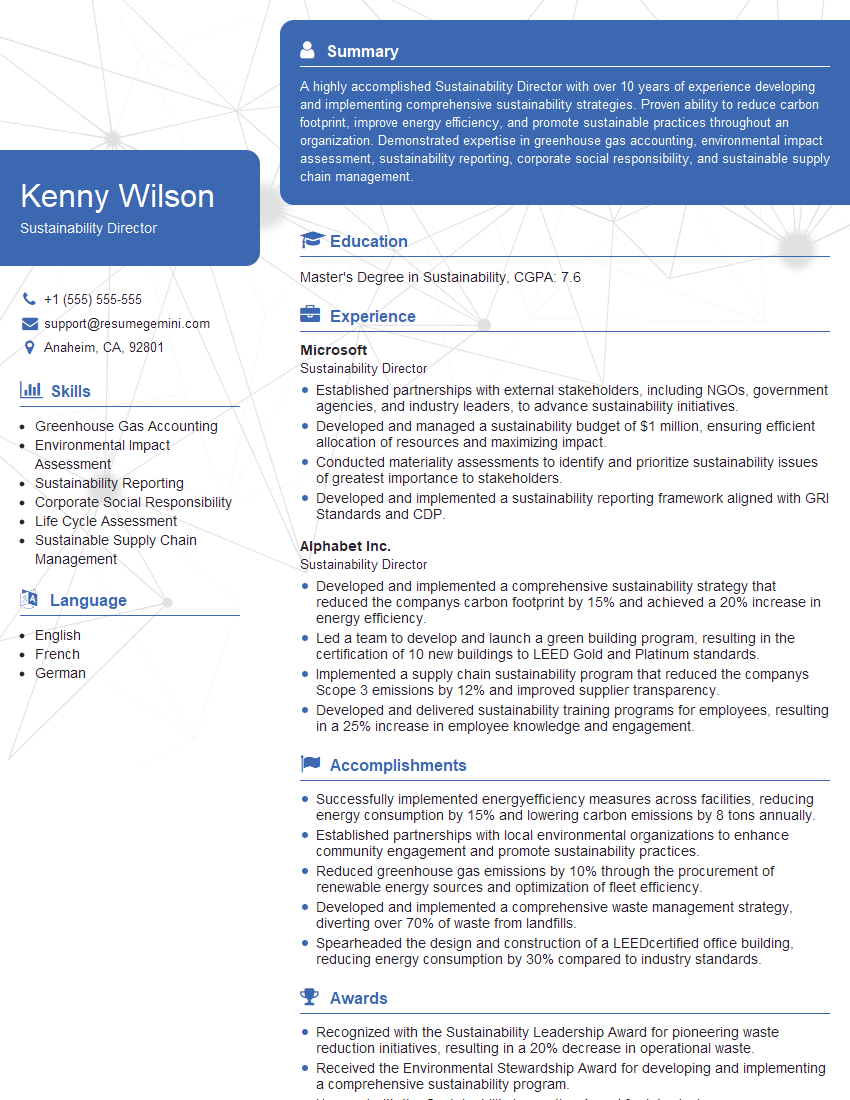
Sustainability Director Resume Sample
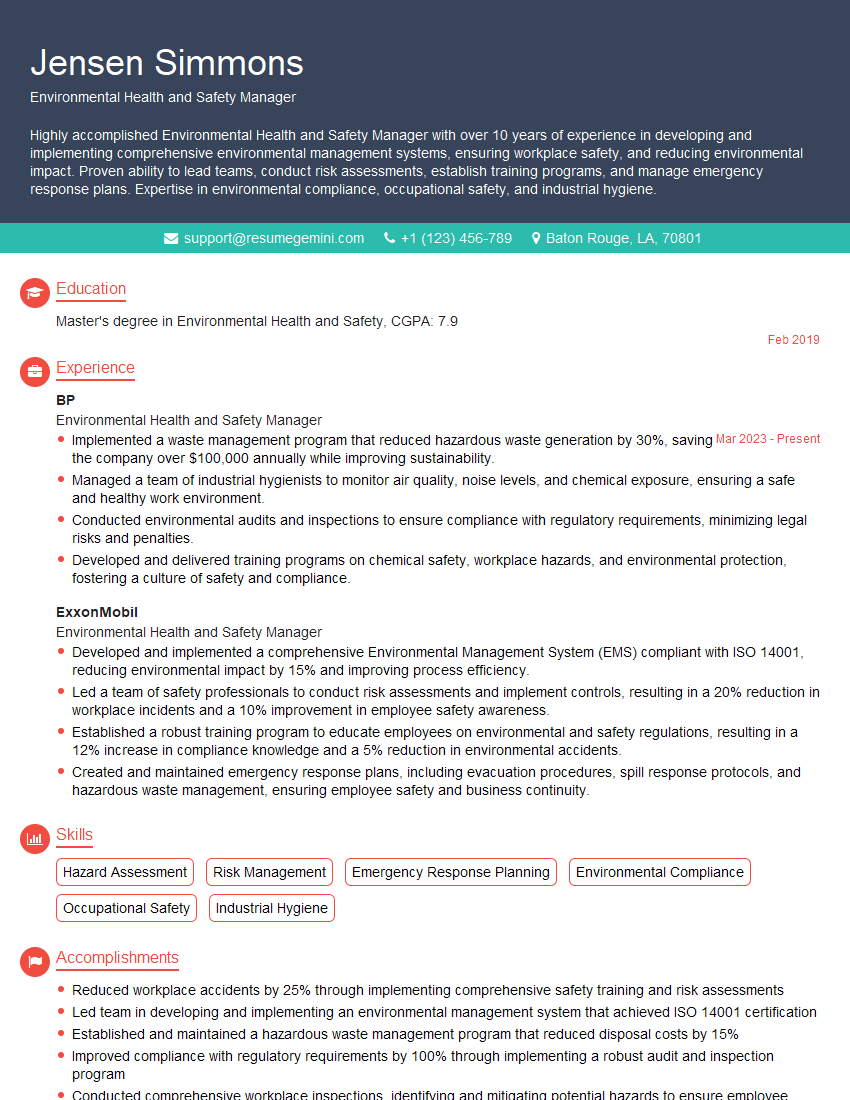
Environmental Health and Safety Manager Resume Sample
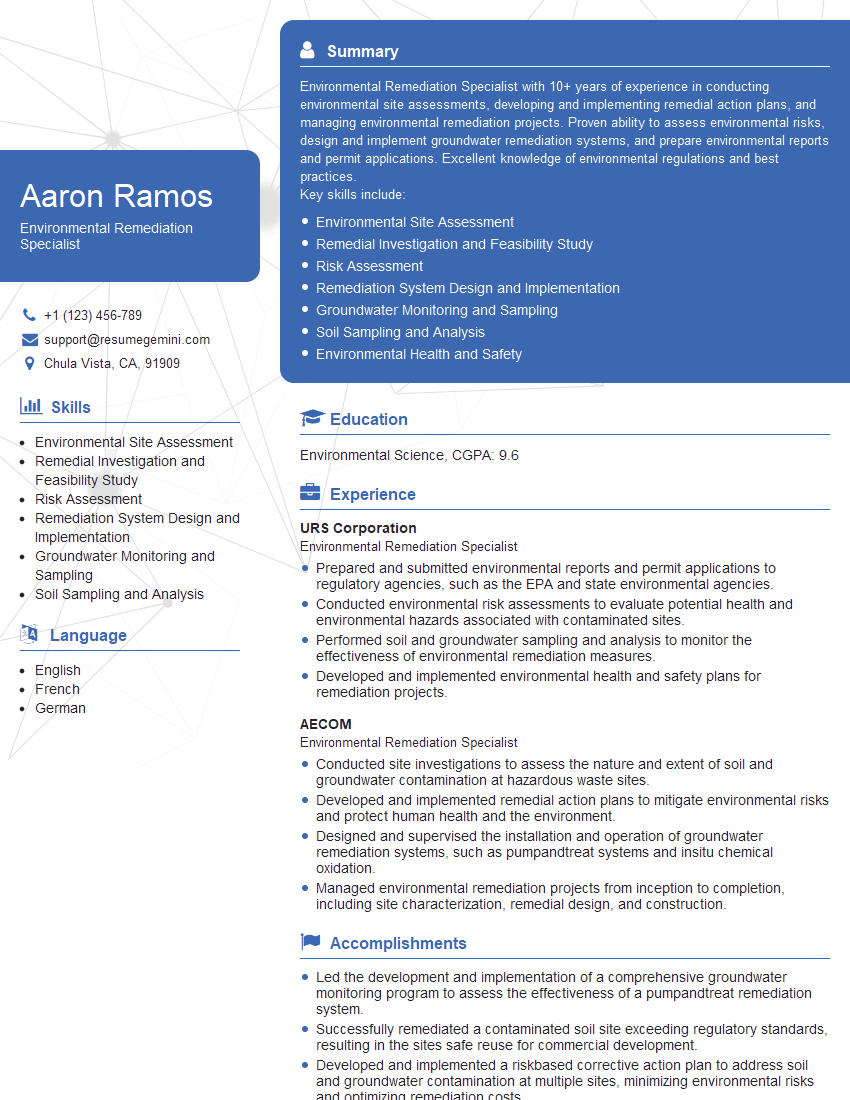
Environmental Remediation Specialist Resume Sample
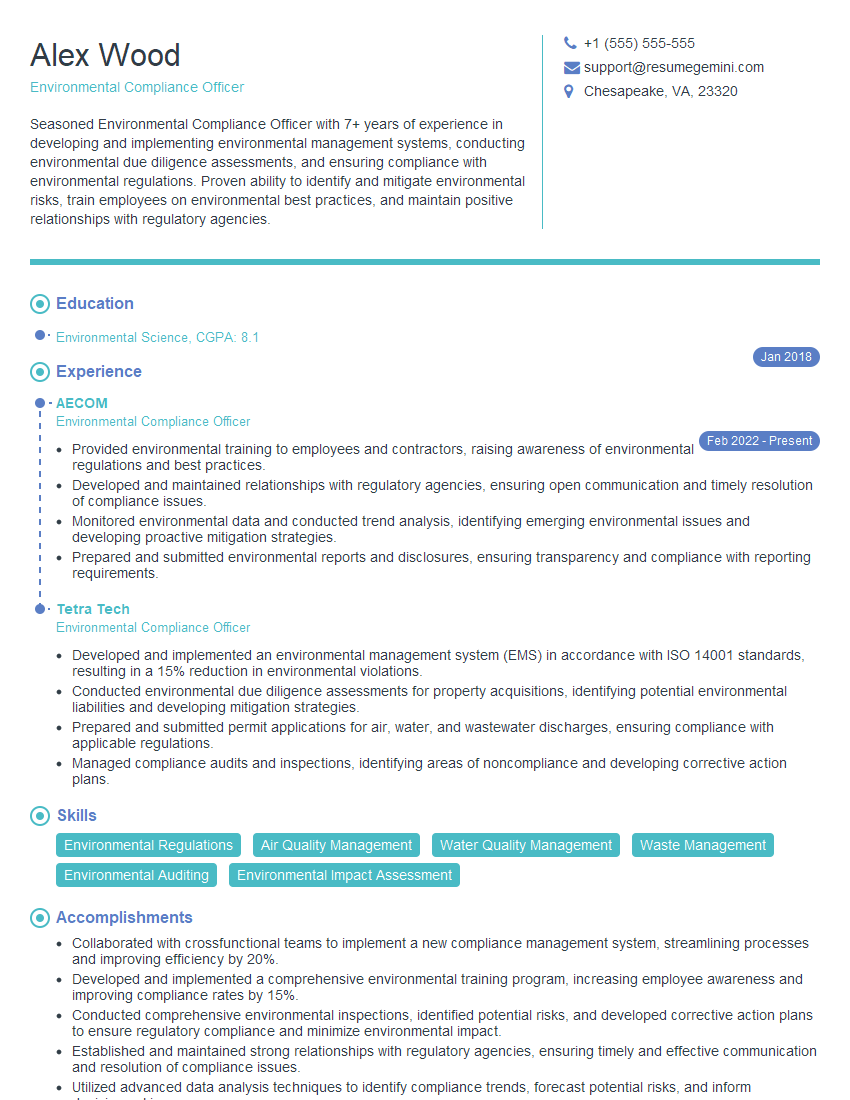
Environmental Compliance Officer Resume Sample
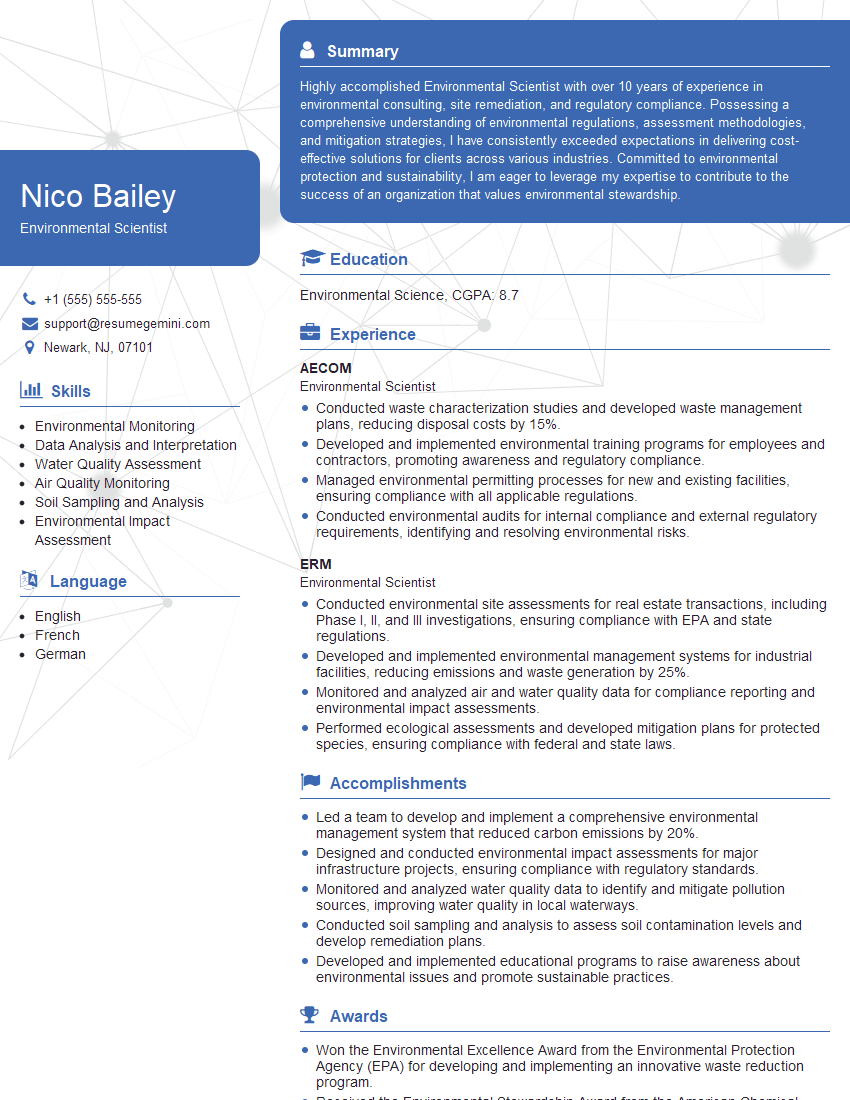
Environmental Scientist Resume Sample
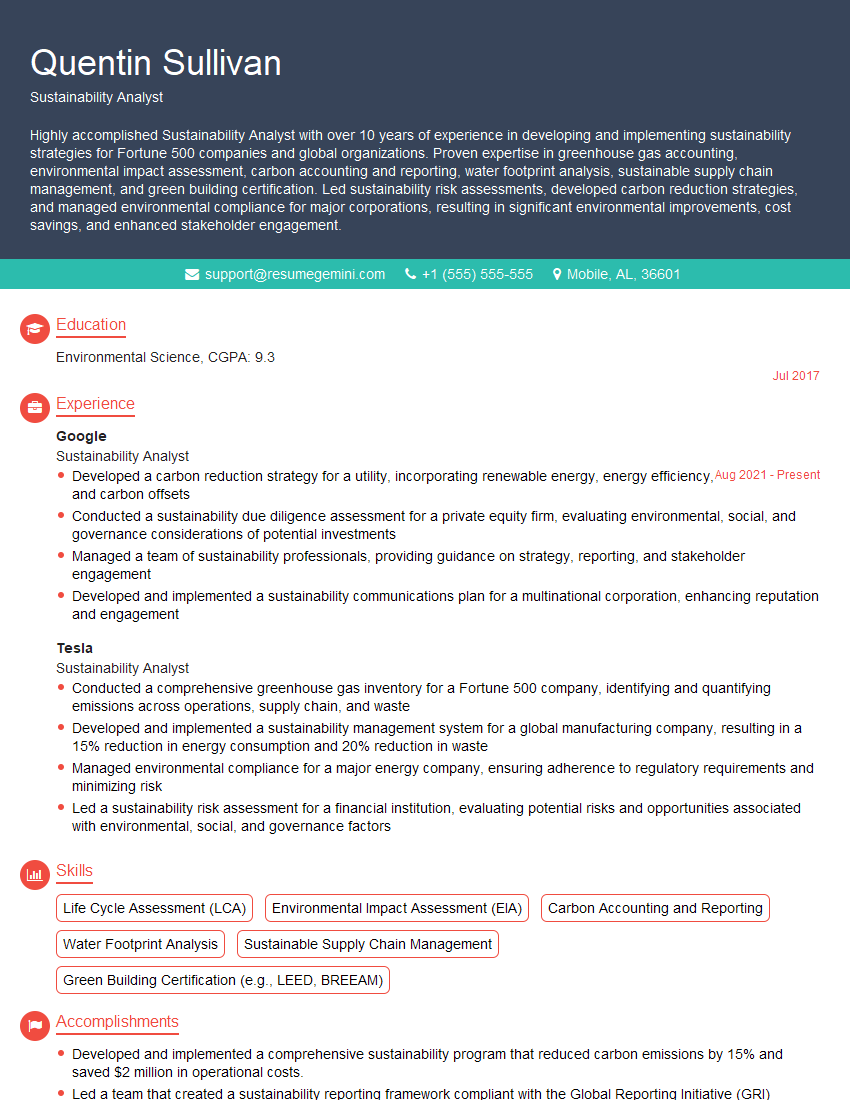
Sustainability Analyst Resume Sample

Sustainability Consultant Resume Sample
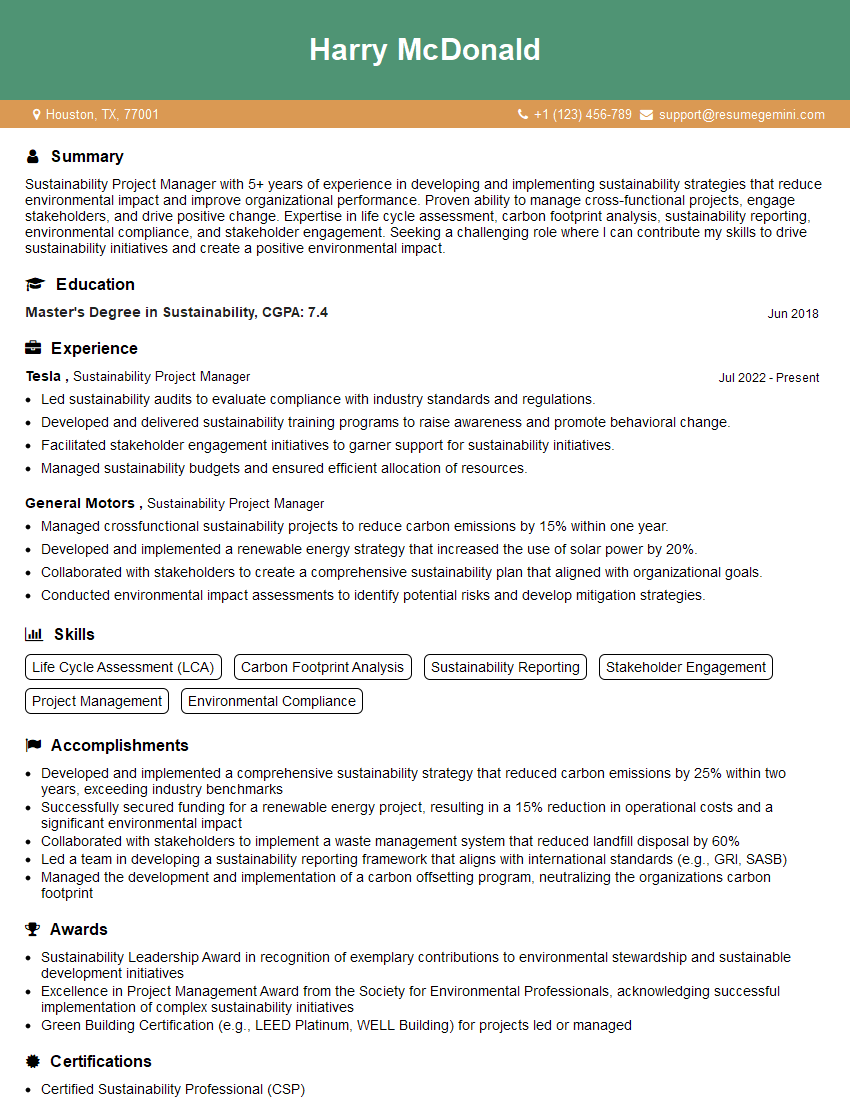
Sustainability Project Manager Resume Sample
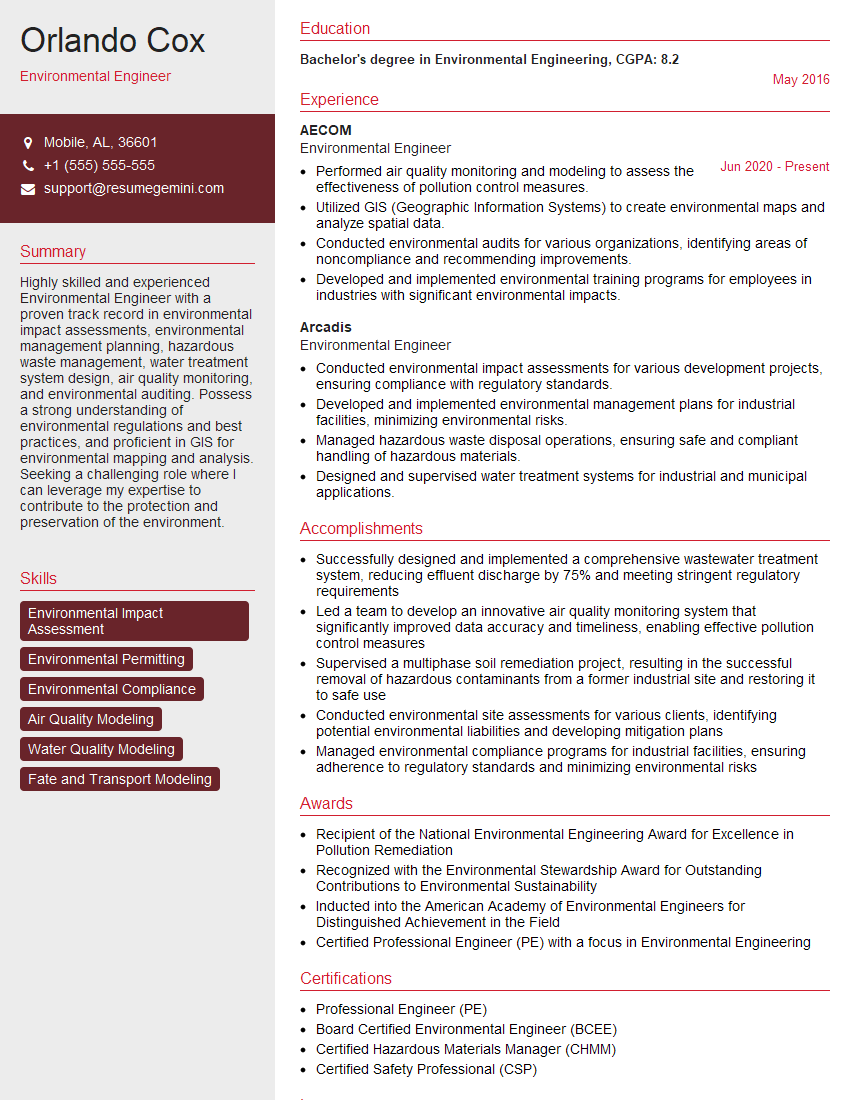
Environmental Engineer Resume Sample
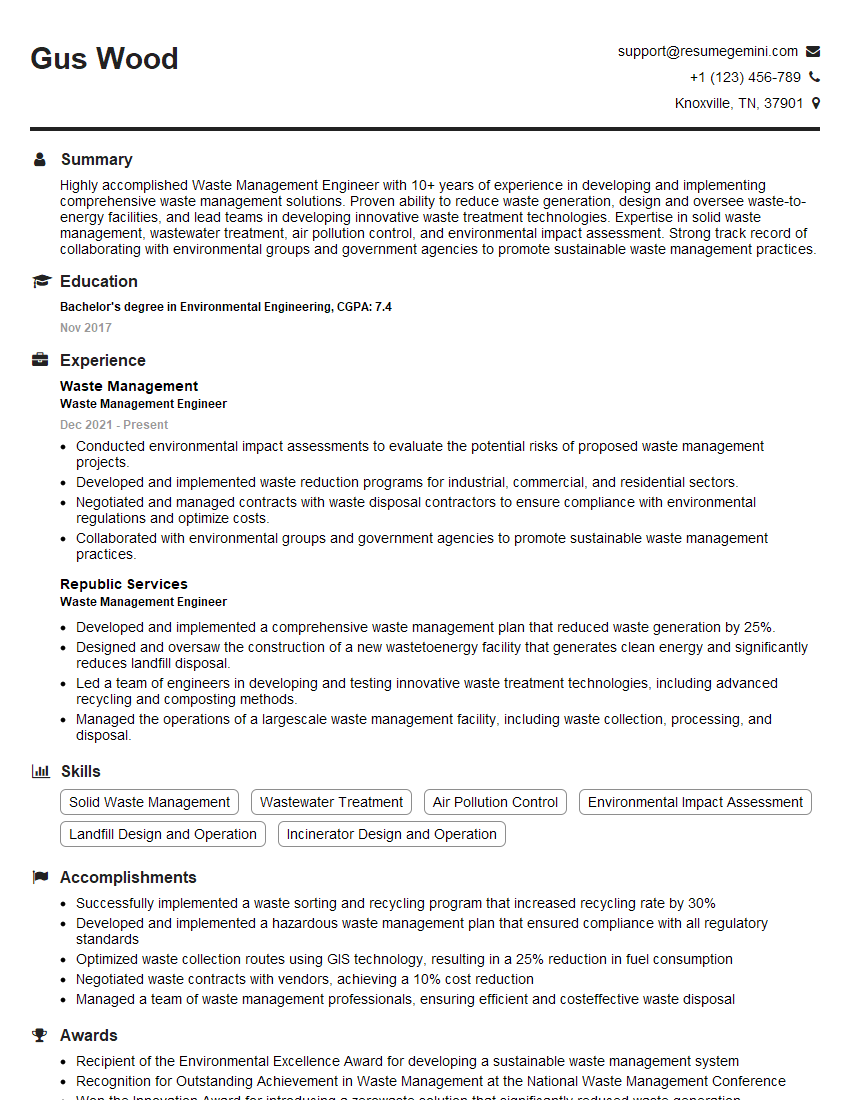
Waste Management Engineer Resume Sample

Environmental Sustainability Manager Resume Sample
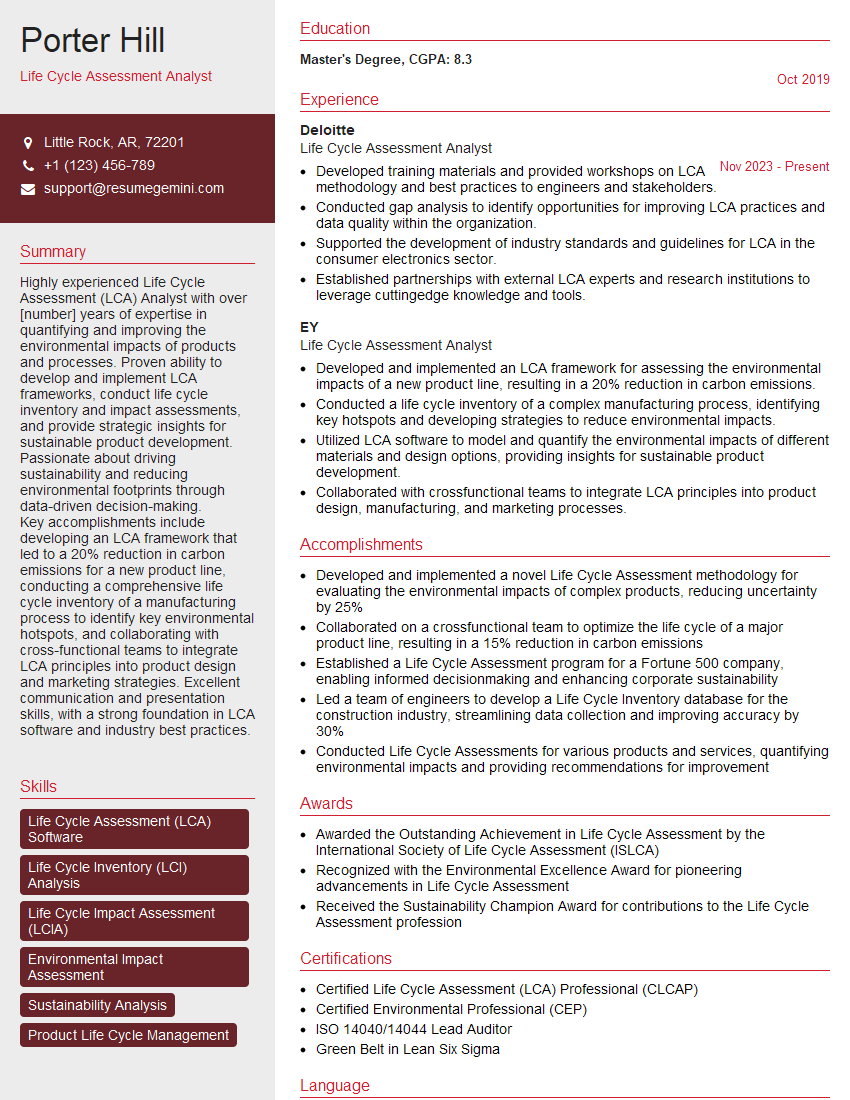
Life Cycle Assessment Analyst Resume Sample
- Sustainability Director
- Environmental Health and Safety Manager
- Environmental Remediation Specialist
- Environmental Compliance Officer
- Environmental Scientist
- Sustainability Analyst
- Sustainability Consultant
- Sustainability Project Manager
- Environmental Engineer
- Waste Management Engineer
- Environmental Sustainability Manager
- Life Cycle Assessment Analyst
Explore more articles
Users Rating of Our Blogs
Share Your Experience
We value your feedback! Please rate our content and share your thoughts (optional).
What Readers Say About Our Blog
To the interviewgemini.com Webmaster.
Very helpful and content specific questions to help prepare me for my interview!
Thank you
To the interviewgemini.com Webmaster.
This was kind of a unique content I found around the specialized skills. Very helpful questions and good detailed answers.
Very Helpful blog, thank you Interviewgemini team.