Preparation is the key to success in any interview. In this post, we’ll explore crucial Radiation Protection Protocol Development interview questions and equip you with strategies to craft impactful answers. Whether you’re a beginner or a pro, these tips will elevate your preparation.
Questions Asked in Radiation Protection Protocol Development Interview
Q 1. Explain the ALARA principle and its application in radiation protection.
The ALARA principle, short for “As Low As Reasonably Achievable,” is a fundamental cornerstone of radiation protection. It dictates that all radiation exposures should be kept as far below regulatory limits as is reasonably achievable, taking into account economic and social factors. It’s not about eliminating all radiation exposure, which is practically impossible, but rather minimizing it to the extent feasible. This is achieved through a multi-pronged approach.
- Time: Reducing the time spent near a radiation source significantly lowers exposure. For example, a radiographer might use rapid exposure techniques to minimize patient and their own exposure time.
- Distance: Increasing the distance from a radiation source dramatically reduces exposure. The inverse square law dictates that doubling the distance reduces the exposure to one-quarter. This is why handling radioactive materials should be done from a safe distance using tools.
- Shielding: Employing shielding materials, such as lead, concrete, or specialized plastics, between the radiation source and personnel effectively absorbs radiation. Lead aprons and protective barriers in X-ray rooms are prime examples.
ALARA is not just a guideline; it’s a philosophy embedded in every decision-making process involving radiation. It necessitates a constant evaluation of procedures and technologies to optimize radiation safety practices.
Q 2. Describe different types of radiation and their potential health effects.
Radiation encompasses various forms, each with unique properties and health effects:
- Alpha particles: These are relatively large, positively charged particles. They have high ionizing power but low penetration, meaning they can be stopped by a sheet of paper or even skin. Internal exposure, however, is a significant hazard.
- Beta particles: These are smaller, negatively charged particles with higher penetration than alpha particles. They can penetrate several millimeters of tissue and require thicker shielding, like aluminum or plastic.
- Gamma rays and X-rays: These are electromagnetic waves with high penetration power. They can penetrate through significant amounts of matter and require dense shielding like lead or concrete. They are extremely dangerous because they can deeply penetrate body tissues.
- Neutrons: These are electrically neutral particles with high penetrating power, requiring specialized shielding like water, polyethylene, or concrete.
The health effects of radiation depend on the type and amount of radiation received, as well as the duration and area of exposure. Short-term effects can range from skin burns (acute radiation syndrome) to severe radiation sickness, while long-term effects include increased cancer risk, genetic mutations, and cataracts. The severity increases with dose.
Q 3. What are the key components of a comprehensive radiation protection program?
A comprehensive radiation protection program is multifaceted and should include:
- Radiation Safety Officer (RSO): A qualified individual responsible for overseeing the program and ensuring compliance.
- Radiation Safety Committee: A group of experts providing guidance and oversight.
- Written Procedures: Detailed operating procedures for all radiation-related activities.
- Training Program: Regular training for all personnel involved in radiation work.
- Monitoring and Measurement: Regular monitoring of radiation levels and personnel exposure.
- Emergency Preparedness: Plans for handling radiation accidents or emergencies.
- Waste Management: Safe disposal of radioactive waste according to regulations.
- Record Keeping: Detailed records of radiation levels, personnel exposure, and all safety activities.
The program must be tailored to the specific risks presented by the use of radiation within the institution or facility. Regular reviews and updates are crucial to maintaining efficacy.
Q 4. How do you calculate radiation dose and exposure?
Radiation dose and exposure calculations involve various factors and units. Exposure is measured in air using units like Roentgen (R), while absorbed dose is the energy absorbed per unit mass of tissue, measured in Gray (Gy) or rad (radiation absorbed dose).
Absorbed Dose Calculation: The absorbed dose is calculated by the energy absorbed (Joules) divided by the mass of the absorbing material (kilograms). Absorbed Dose (Gy) = Energy Absorbed (J) / Mass (kg)
Exposure Calculation: Determining exposure (in air) often relies on calibrated instruments. The actual calculation is complex and depends on the radiation type and energy.
Effective Dose: The effective dose, explained further in the next answer, accounts for the type of radiation and the sensitivity of different organs, making it a more comprehensive measure of overall biological risk.
For accurate calculations, specialized dosimeters and software are used, particularly in complex scenarios like nuclear medicine or industrial radiation applications.
Q 5. Explain the concept of effective dose equivalent.
Effective dose equivalent (often simply called effective dose) takes into account the type of radiation and the sensitivity of different organs and tissues to radiation. It’s expressed in Sieverts (Sv) or rem (roentgen equivalent man). It’s a weighted average of the doses received by different organs, accounting for their varying radiosensitivity. For example, the lens of the eye is more sensitive to radiation-induced cataracts compared to the skin. This weighting allows for a more accurate assessment of the overall health risk associated with a given radiation exposure.
Effective Dose (Sv) = ∑ [wT x DT]
Where:
wTis the tissue weighting factor for tissue or organ T.DTis the average absorbed dose in tissue or organ T.
This calculation results in a single number representing the total biological impact of the radiation exposure, making it a much more useful metric for radiation protection purposes than just absorbed dose alone. The effective dose is crucial in determining regulatory limits and managing radiation risk effectively.
Q 6. What are the regulatory requirements for radiation protection in your region?
(This answer will vary depending on the region. Replace the following with the specific regulatory requirements for your chosen region. Examples are given below)
Example: Hypothetical Region X
In Region X, radiation protection is governed by the National Radiation Protection Act of 20XX. Key aspects include:
- Licensing: All facilities using ionizing radiation require licenses, subject to regular inspections and audits.
- Dose Limits: Stringent dose limits are established for radiation workers and members of the public, with lower limits for specific organs. These limits are typically based on recommendations from international organizations like the ICRP (International Commission on Radiological Protection).
- Record Keeping: Detailed records of radiation exposure, safety procedures, and incident reports must be meticulously maintained.
- Emergency Response Plans: Comprehensive emergency plans must be in place to handle radiation accidents or incidents.
- Enforcement: A designated regulatory body ensures compliance, investigating incidents and imposing penalties for violations.
It’s crucial to stay updated on the latest regulations and amendments as they frequently evolve.
Q 7. Describe various radiation detection and monitoring instruments and their applications.
A variety of instruments are employed for radiation detection and monitoring. The choice depends on the type of radiation, the energy levels, and the intended application.
- Geiger-Müller Counters: These are portable devices commonly used for detecting beta and gamma radiation. They provide a quick indication of radiation levels but are less precise in measuring dose.
- Scintillation Detectors: These detectors use scintillating crystals to convert radiation into light pulses, which are then measured. They offer better energy resolution and sensitivity than Geiger counters and are used in various applications, including nuclear medicine and environmental monitoring.
- Ionization Chambers: These instruments measure the ionization produced by radiation in a gas-filled chamber. They are often used for high-dose-rate measurements and calibration.
- Thermoluminescent Dosimeters (TLDs): These are passive dosimeters that store radiation energy in a crystal. The stored energy is released as light when heated, allowing for the determination of the accumulated dose. They are widely used for personnel monitoring.
- Film Badges: These are photographic films that darken when exposed to radiation. The degree of darkening is proportional to the radiation dose received. They provide a historical record of exposure but are less precise than other methods.
More specialized instruments exist for specific applications, such as neutron detectors, alpha spectrometers, and survey meters designed for specific radiation types or energy ranges.
Q 8. How do you assess and manage radiation risks in different work environments?
Assessing and managing radiation risks involves a multi-faceted approach that begins with a thorough understanding of the work environment. We need to identify all potential radiation sources, whether it’s X-ray equipment in a hospital, radioactive materials in a research lab, or naturally occurring radiation in a mining operation. Next, we quantify the radiation levels using various instruments like Geiger counters and dosimeters. This data allows us to calculate the potential dose received by workers and the public.
Risk management strategies are then tailored to the specific environment. This might involve implementing strict access controls, using shielding materials (as discussed in the next question), enforcing time limits for exposure, and providing personal protective equipment (PPE) like lead aprons or respirators. Regular monitoring of radiation levels and worker doses is crucial for ongoing risk management. For example, in a nuclear power plant, we might use a combination of distance, shielding, and time limits to minimize worker exposure during maintenance activities. In a hospital, we would focus on optimizing X-ray techniques to minimize patient dose while ensuring diagnostic quality. Finally, regular audits and inspections (discussed later) help maintain a safe and controlled radiation environment.
Q 9. What are the different types of radiation shielding materials and their effectiveness?
Various shielding materials are used to attenuate (reduce) radiation, depending on the type of radiation. The effectiveness depends on the material’s density and atomic number. For example:
- Lead: Highly effective against gamma rays and X-rays due to its high atomic number. It’s commonly used in lead aprons and shielding for X-ray machines.
- Concrete: A cost-effective shielding option for gamma rays and neutrons, especially high-density concrete. The thickness required depends on the energy of the radiation source.
- Water: Excellent for shielding neutrons and gamma rays. Used extensively in nuclear reactors and spent fuel pools.
- Steel: Provides shielding against beta particles and X-rays. Often used in combination with other materials.
- Beryllium: Useful for shielding neutrons. It is lightweight compared to other neutron shielding materials.
The selection of the most appropriate shielding material is dictated by the type and energy of the radiation, the level of protection required, and cost considerations. For instance, a dentist might use a lead apron for patients undergoing X-rays, while a nuclear facility would require much thicker and more specialized concrete or water shielding.
Q 10. Explain the importance of radiation safety training and education.
Radiation safety training and education are paramount because radiation is invisible and its effects are not immediately apparent. Comprehensive training programs are essential to ensure that workers understand the risks, recognize hazards, and know how to protect themselves and others. These programs must cover:
- Radiation physics: Basic understanding of different types of radiation and their interactions with matter.
- Radiation biology: Effects of radiation on human health, including both short-term and long-term consequences.
- Radiation protection principles: ALARA (As Low As Reasonably Achievable) principle, time, distance, and shielding.
- Emergency procedures: Actions to take in case of a radiation spill or accident.
- Use of radiation monitoring equipment: Proper handling and interpretation of radiation detection instruments.
- Regulatory compliance: Understanding and adhering to national and international radiation protection regulations.
Regular refresher courses and practical exercises are also important to reinforce knowledge and ensure proficiency. Think of it as learning how to safely handle a hazardous chemical – you need comprehensive training and constant reinforcement to maintain a safe working environment. Effective training programs significantly reduce the likelihood of accidents and improve overall radiation safety culture.
Q 11. How do you develop and implement emergency response plans for radiation incidents?
Emergency response plans for radiation incidents are crucial and must be tailored to the specific facility and potential hazards. They should be comprehensive, well-rehearsed, and regularly reviewed. The plan should clearly define roles and responsibilities, evacuation procedures, communication protocols, and post-incident actions.
A typical emergency response plan would include:
- Immediate actions: Containing the source of radiation, evacuating personnel, establishing a safety perimeter.
- Personnel monitoring: Assessing radiation levels and worker exposure using dosimeters.
- Decontamination procedures: Cleaning and decontaminating affected areas and personnel.
- Medical response: Providing immediate medical attention to those affected.
- Notification and communication: Informing relevant authorities and the public.
- Post-incident investigation: Determining the cause of the incident and identifying areas for improvement.
Regular drills and simulations are essential to ensure that everyone knows their roles and that the plan is effective. For example, a hospital might have an emergency response plan for a radiation therapy machine malfunction, while a nuclear power plant would have a much more elaborate plan to deal with various types of accidents.
Q 12. Describe your experience with radiation safety audits and inspections.
My experience in radiation safety audits and inspections involves a systematic review of all aspects of radiation protection practices. I assess the adequacy of radiation safety programs, review radiation safety procedures, and evaluate the effectiveness of controls. This involves:
- Review of documentation: Examination of radiation safety manuals, training records, radiation surveys, and dose records.
- Site inspections: Visual inspection of the facilities, equipment, and work practices.
- Radiation monitoring measurements: Verification of radiation levels using calibrated instruments.
- Interviews with personnel: Assessing the knowledge and understanding of radiation safety procedures.
- Assessment of emergency preparedness: Evaluating the effectiveness of emergency response plans and procedures.
Based on the findings, I provide recommendations for improvement, ensuring that any deficiencies are addressed promptly to maintain compliance with regulations. This process is similar to a building inspection – we systematically check everything to ensure it meets safety standards. A typical audit might reveal missing shielding, inadequately trained personnel, or a flawed emergency plan, and the audit report would provide specific actions to rectify these issues.
Q 13. What are the common causes of radiation accidents and how can they be prevented?
Radiation accidents can stem from a variety of causes, often related to human error or equipment malfunction. Common causes include:
- Improper handling of radioactive materials: Spills, leaks, or contamination due to inadequate procedures or lack of training.
- Equipment malfunction: Failure of radiation-producing equipment, such as X-ray machines or particle accelerators.
- Lack of adequate shielding: Insufficient shielding leading to excessive exposure.
- Poor work practices: Failure to follow established safety procedures.
- Inadequate emergency response: Lack of preparedness for handling radiation accidents.
Prevention involves multiple layers of protection: rigorous training programs, implementation of strict safety procedures, regular equipment maintenance, robust emergency response plans, and adherence to ALARA principles. For instance, a spill of radioactive material can be prevented through proper labeling, secure storage, and careful handling. Equipment malfunctions can be reduced through regular maintenance and safety checks. Implementing a culture of safety, where every worker feels empowered to raise safety concerns, plays a crucial role in accident prevention.
Q 14. How do you ensure compliance with radiation protection regulations?
Ensuring compliance with radiation protection regulations requires a multifaceted approach, beginning with a thorough understanding of the relevant national and international standards. This involves:
- Developing comprehensive radiation safety programs: These programs should cover all aspects of radiation protection, including personnel training, equipment maintenance, emergency response, and monitoring.
- Implementing robust radiation monitoring and dose assessment programs: Regular surveys to measure radiation levels and assess worker exposures are essential.
- Maintaining detailed records: Accurate documentation of radiation levels, worker exposures, equipment maintenance, and training is crucial for regulatory compliance.
- Conducting regular audits and inspections: Independent reviews to verify compliance with regulations and identify areas for improvement.
- Prompt reporting of incidents: Any radiation incidents or exposures must be reported promptly to the appropriate authorities.
- Staying updated on regulatory changes: Regular review of updates and modifications to radiation protection regulations is necessary.
By adhering to these practices, we ensure that we maintain a safe working environment, protect workers and the public, and remain compliant with the relevant legal and regulatory framework. Non-compliance can lead to severe penalties, including fines and potential legal action.
Q 15. Describe your experience with radiation dosimetry and interpretation of results.
Radiation dosimetry is the measurement of radiation dose received by individuals or objects. My experience encompasses a wide range of dosimetry techniques, including thermoluminescent dosimetry (TLD), optically stimulated luminescence dosimetry (OSL), and electronic personal dosimeters (EPDs). Interpretation of results involves carefully analyzing the readings, taking into account factors like the type and energy of the radiation, the duration of exposure, and the individual’s work activities. For instance, a consistently high reading from a TLD badge worn by a nuclear medicine technician might indicate a need to review their shielding practices or procedural techniques. I’m proficient in identifying anomalies, determining if readings are within regulatory limits, and generating reports to support ongoing safety improvements. I’ve been involved in investigations of unusual radiation events, helping to reconstruct exposure scenarios and assess potential risks to personnel.
For example, in one case involving an unexpectedly high reading on an OSL dosimeter, we discovered a procedural lapse that led to prolonged exposure to a specific source. Through careful analysis of the dosimeter data and interviews with the involved personnel, we identified the procedural flaw and implemented corrective actions to prevent future occurrences. This also involved reviewing operational procedures and providing refresher training to prevent this type of incident from reoccurring.
Career Expert Tips:
- Ace those interviews! Prepare effectively by reviewing the Top 50 Most Common Interview Questions on ResumeGemini.
- Navigate your job search with confidence! Explore a wide range of Career Tips on ResumeGemini. Learn about common challenges and recommendations to overcome them.
- Craft the perfect resume! Master the Art of Resume Writing with ResumeGemini’s guide. Showcase your unique qualifications and achievements effectively.
- Don’t miss out on holiday savings! Build your dream resume with ResumeGemini’s ATS optimized templates.
Q 16. Explain the process of developing and implementing radiation protection protocols.
Developing and implementing radiation protection protocols is a multi-step process crucial for ensuring the safety of workers and the public. It begins with a thorough radiation risk assessment, identifying potential sources of radiation exposure, the types and levels of radiation involved, and the individuals at risk. This assessment forms the basis of the protocol. Then, we create the protocol itself, outlining specific procedures to mitigate identified risks. This includes defining radiation exposure limits, specifying required personal protective equipment (PPE), establishing detailed work practices, and outlining emergency procedures. Implementing the protocol involves providing comprehensive training to all personnel, monitoring adherence to procedures, and regularly reviewing and updating the protocol as new information or technology becomes available. This might include regular audits, incident reviews, and performance-based feedback loops.
For example, in developing a protocol for a new medical imaging facility, we considered the types of equipment, the procedures used, and the potential exposure pathways to staff and patients. This involved specifying appropriate shielding, radiation safety procedures for each modality, and outlining the requirements for regular equipment calibration and safety testing. Regular monitoring and training sessions are then incorporated to ensure ongoing compliance.
Q 17. How do you manage and dispose of radioactive waste in compliance with regulations?
Managing and disposing of radioactive waste is a highly regulated process that requires strict adherence to local, national, and international standards. The process begins with segregation of waste based on its activity level (e.g., low-level, intermediate-level, high-level waste). Low-level waste, such as contaminated clothing or tools, often undergoes decontamination to reduce its radioactivity before disposal in designated landfills. Intermediate and high-level waste usually needs more specialized treatment, such as solidification, encapsulation, and storage in specifically designed facilities. All processes must be meticulously documented, with precise tracking of waste throughout its lifecycle to meet regulatory requirements. Proper documentation includes comprehensive chain-of-custody records, disposal manifests, and radiation level monitoring reports.
We employ various techniques, including volume reduction, to minimize disposal volumes and costs. For example, we might use incinerators for combustible waste, reducing the final volume before disposal. Throughout the entire process, radiation safety measures are strictly enforced, minimizing personnel exposure. Regular audits ensure compliance with all regulations and best practices. The exact methods and regulatory compliance are highly dependent on the specific type of radioactive waste and the location of the facility, adhering to guidelines set by organizations like the NRC (Nuclear Regulatory Commission) in the US.
Q 18. Explain the concept of internal and external radiation exposure.
Internal radiation exposure occurs when radioactive material enters the body through inhalation, ingestion, or absorption through the skin. Once inside, the radioactive material emits ionizing radiation, damaging cells and tissues. The severity of the exposure depends on the type and amount of radioactive material, the route of entry, and the length of time it remains in the body. External radiation exposure, on the other hand, occurs when a person is exposed to ionizing radiation from an external source, such as X-rays, gamma rays, or beta particles. The radiation passes through the body, interacting with tissues and depositing energy. The extent of the damage depends on the type and intensity of the radiation, the duration of exposure, and the distance from the source. Protecting against internal exposure often involves using respiratory protection, preventing ingestion, and minimizing skin contact with radioactive materials. Shielding, distance, and time are the main principles for mitigating external radiation exposure.
Think of it like this: internal exposure is like having a radioactive seed planted inside you, constantly emitting radiation, while external exposure is like standing near a bonfire – you feel the heat (radiation) from outside your body, but you don’t ingest the flames.
Q 19. What are the different types of personnel monitoring devices?
Several types of personnel monitoring devices are used to measure radiation exposure. These devices are worn by individuals who may be exposed to ionizing radiation to monitor their dose. The most common types include:
- Thermoluminescent Dosimeters (TLDs): These use crystals that store energy when exposed to radiation; the stored energy is released as light when heated, allowing for dose measurement.
- Optically Stimulated Luminescence Dosimeters (OSLs): Similar to TLDs, but use a different stimulation method (light) to measure the stored energy, allowing for more precise measurements and reusability.
- Electronic Personal Dosimeters (EPDs): These use electronic sensors to measure radiation dose in real-time, providing immediate feedback on exposure levels.
- Film Badges: While less common now, these utilize photographic film that darkens when exposed to radiation; the darkness is proportional to the radiation dose received.
The choice of device depends on factors like the type and energy of the radiation being monitored and the desired accuracy.
Q 20. How do you conduct a radiation survey and what information does it provide?
A radiation survey is a systematic measurement of radiation levels in a given area. It’s conducted using various instruments, such as Geiger-Müller counters, scintillation detectors, or survey meters, to identify the presence and levels of ionizing radiation. The purpose is to assess the radiation environment, identify potential hazards, and ensure that radiation levels are within acceptable limits. The information obtained from a radiation survey includes:
- Radiation levels: The measured dose rate in units like microsieverts per hour (µSv/h).
- Location of radiation sources: Identifying the spatial distribution of radiation.
- Type of radiation: Determining the type of ionizing radiation present (alpha, beta, gamma, X-rays).
- Contamination levels: Measuring the presence of radioactive material on surfaces.
The results of the survey are crucial for developing and implementing appropriate radiation protection measures, such as shielding, work practices, or decontamination procedures. For instance, a survey might reveal a higher-than-expected radiation level near a specific piece of equipment, prompting investigation and corrective actions, perhaps recalibration or improved shielding.
Q 21. Describe your experience with using radiation safety software.
I have extensive experience using various radiation safety software packages. These software applications provide essential tools for managing radiation safety programs, from dose tracking and reporting to risk assessment and regulatory compliance. The software I’m most proficient with includes [mention specific software names if comfortable, otherwise describe functionalities]. These programs typically allow for electronic dosimeter data management, simplifying the process of tracking individual doses and generating reports for regulatory compliance. They also help with dose record keeping, facilitating the creation of reports and alerts for exceeding exposure limits. Risk assessment tools within these software often include calculating effective dose, simulating scenarios, and generating reports that help in risk mitigation strategies. Beyond data management, they provide valuable tools for planning radiation safety programs, managing radioactive materials, and ensuring compliance with applicable regulations.
For example, using these software applications has helped streamline our dose reporting process, reducing manual effort and improving the accuracy of our regulatory submissions. The software’s risk assessment tools have been instrumental in evaluating potential exposure scenarios and optimizing our safety protocols. The ability to manage personnel dosimetry data electronically has significantly improved efficiency and reduced administrative burdens.
Q 22. How do you ensure the accuracy and reliability of radiation monitoring data?
Ensuring the accuracy and reliability of radiation monitoring data is paramount in radiation protection. It hinges on a multi-faceted approach encompassing instrument calibration, quality control, and data analysis.
Instrument Calibration: Radiation monitoring instruments, like Geiger counters or dosimeters, require regular calibration against traceable standards. This ensures their readings accurately reflect actual radiation levels. We use a calibration lab accredited to ISO 17025 for this crucial step, and maintain meticulous records of all calibration events.
Quality Control (QC): A robust QC program includes regular checks on instrument performance using known radiation sources, as well as inter-comparison exercises with other monitoring systems. This helps identify potential drift or malfunctions early on. For example, we periodically expose our dosimeters to a known radiation source to verify their response and accuracy.
Data Analysis: Raw data needs thorough analysis to detect anomalies, outliers, and trends. This involves statistical methods and quality assurance checks. For instance, we use statistical process control (SPC) charts to monitor the ongoing performance of our radiation monitoring network. Any deviation outside the control limits triggers immediate investigation.
By implementing these procedures, we establish confidence in the data’s integrity, which forms the foundation for effective radiation protection decisions.
Q 23. Explain the importance of record-keeping in radiation protection.
Record-keeping in radiation protection is not merely a bureaucratic requirement; it’s fundamental to ensuring worker safety and legal compliance. Detailed records provide a comprehensive history of radiation exposure, allowing for trend analysis, identification of potential hazards, and effective dose management.
Individual Monitoring: Accurate records of individual radiation dose are crucial. This includes personal dosimeter readings, work history, and any exposure incidents. This data is essential for assessing long-term health impacts and determining the need for medical surveillance.
Area Monitoring: Records of area radiation levels, including location, date, time, and measured values, are essential for identifying high-exposure areas and implementing appropriate controls. These records help in optimizing radiation shielding and work practices.
Incident Reporting: Thorough documentation of any radiation incidents or spills is crucial for investigation, remediation, and preventing future occurrences. This includes details of the event, personnel involved, and corrective actions taken.
Regulatory Compliance: Maintaining detailed records demonstrates compliance with relevant regulations and standards, facilitating audits and inspections.
Think of radiation record-keeping as a critical element of a safety net, ensuring accountability and providing valuable information for continuous improvement in radiation protection.
Q 24. Describe your experience with risk assessment methodologies related to radiation safety.
My experience with risk assessment methodologies in radiation safety involves applying both qualitative and quantitative approaches. We employ ALARA (As Low As Reasonably Achievable) principles as a guiding framework.
Qualitative Risk Assessment: This involves identifying potential radiation hazards through site surveys, process reviews, and hazard identification checklists. For instance, in a recent project involving a medical isotope production facility, we conducted a thorough walk-down assessment to pinpoint potential radiation sources and pathways.
Quantitative Risk Assessment: This involves using models and calculations to estimate the likelihood and consequences of radiation exposure. Techniques like probabilistic risk assessment (PRA) and fault tree analysis (FTA) help to quantify the risks associated with specific scenarios. In the same medical isotope facility project, we used Monte Carlo simulations to estimate radiation doses to workers under various operational scenarios.
ALARA Implementation: The risk assessments feed into the development of ALARA control strategies. This includes engineering controls (shielding, containment), administrative controls (work procedures, training), and personal protective equipment (PPE). We work closely with facility operators to implement cost-effective solutions that minimize radiation exposure while maintaining operational efficiency.
These risk assessment methods enable informed decision-making, ensuring that radiation protection measures are proportionate to the level of risk involved.
Q 25. How do you communicate radiation safety information to workers and the public?
Effective communication is the cornerstone of a successful radiation protection program. We tailor our communication strategies to the audience, using clear, concise language and avoiding technical jargon whenever possible.
Workers: We conduct regular training sessions, incorporating both theoretical knowledge and practical demonstrations. We use interactive methods, including simulations and case studies, to engage workers and reinforce learning. Clear communication channels are established for reporting radiation exposure incidents and seeking clarification on safety procedures.
Public: Public communication focuses on transparency and building trust. We use accessible language in brochures, website content, and public forums. We emphasize the benefits of radiation technology while addressing public concerns about radiation risks. For example, during a public forum on a new medical imaging facility, we explained the radiation safety protocols in simple terms and answered questions in an approachable manner.
Clear and consistent communication is critical in maintaining a safety culture and fostering public confidence in our radiation protection program.
Q 26. What are the ethical considerations in radiation protection?
Ethical considerations in radiation protection are paramount. They revolve around the principles of beneficence (doing good), non-maleficence (avoiding harm), justice (fairness), and autonomy (respecting individual choices).
Beneficence: We must always strive to maximize the benefits of radiation technologies while minimizing any potential harms. This requires careful risk assessment and implementation of effective radiation protection measures.
Non-Maleficence: Our actions should always prioritize preventing harm to workers and the public. This includes adhering to safety regulations and promoting a safety-conscious work environment.
Justice: Ensuring equitable access to radiation protection benefits, regardless of social status or economic background, is a key ethical consideration. This also includes ensuring that radiation risks are fairly distributed amongst individuals and communities.
Autonomy: Respecting individuals’ right to make informed decisions about their radiation exposure, especially in research or medical contexts, is crucial. This involves providing individuals with adequate information and supporting their autonomy in decision-making.
Ethical considerations guide our professional conduct and ensure that our actions align with the highest moral standards of the profession.
Q 27. Describe a situation where you had to solve a challenging radiation safety problem.
In a previous role, we encountered a challenging situation involving a malfunctioning radiation shielding door at a nuclear medicine facility. The door failed to close properly, creating a potential radiation exposure hazard for staff.
Problem-Solving Steps:
Immediate Action: We immediately restricted access to the area, alerting relevant personnel and evacuating non-essential staff. This prioritized worker safety.
Investigation: A thorough investigation determined the cause of the malfunction—a faulty motor. We reviewed maintenance logs and interviewed staff to gather information.
Temporary Solution: We implemented a temporary solution by using additional shielding materials to reduce radiation leakage while the door was repaired.
Permanent Solution: The faulty motor was replaced, and the door was thoroughly tested to ensure its proper functionality. We implemented a comprehensive maintenance schedule to prevent future occurrences.
Dose Assessment: We conducted a radiation dose assessment to determine if any staff had received significant exposure. Medical surveillance was provided if needed.
Documentation: The entire incident, including corrective actions and dose assessment results, was thoroughly documented.
This incident highlighted the importance of proactive maintenance, robust emergency response procedures, and meticulous record-keeping in ensuring radiation safety.
Q 28. How do you stay updated on changes in radiation protection regulations and best practices?
Staying updated on changes in radiation protection regulations and best practices is crucial. I actively engage in several strategies to maintain my professional knowledge.
Professional Organizations: I am a member of several professional organizations, such as the Health Physics Society and the International Atomic Energy Agency (IAEA), which provide access to publications, conferences, and training opportunities. These organizations regularly update their guidance documents and offer continuing education courses.
Regulatory Websites: I regularly monitor the websites of relevant regulatory bodies, such as the Nuclear Regulatory Commission (NRC) in the US or equivalent agencies in other countries. These websites provide updates on regulatory changes, guidance documents, and compliance requirements.
Scientific Literature: I regularly review scientific literature, including peer-reviewed journals and technical reports, to stay abreast of the latest research and developments in radiation protection. This helps in adopting the most effective and evidence-based practices.
Conferences and Workshops: Attending professional conferences and workshops provides valuable opportunities to network with colleagues, learn about emerging technologies, and stay current on the latest advancements in radiation protection.
Continuous professional development is a lifelong commitment for those working in radiation protection. This ensures we can apply the best available knowledge and techniques to protect workers and the public from the harmful effects of radiation.
Key Topics to Learn for Radiation Protection Protocol Development Interview
- Regulatory Compliance: Understanding relevant national and international regulations (e.g., ALARA principle, ICRP recommendations) and their practical application in protocol design.
- Risk Assessment & Mitigation: Performing thorough risk assessments to identify potential radiation hazards, and developing strategies for minimizing exposure through engineering controls, administrative controls, and personal protective equipment (PPE).
- Radiation Measurement & Monitoring: Familiarity with various radiation detection instruments, data analysis techniques, and the implementation of effective monitoring programs.
- Dosimetry & Personnel Monitoring: Understanding different dosimetry methods, interpreting dosimetry reports, and ensuring compliance with personnel monitoring regulations.
- Emergency Preparedness & Response: Developing and implementing emergency response plans for radiation incidents, including procedures for evacuation, contamination control, and medical treatment.
- Protocol Documentation & Communication: Creating clear, concise, and comprehensive documentation for radiation protection protocols, including training materials and communication strategies for stakeholders.
- Quality Assurance & Quality Control: Implementing quality assurance and quality control measures to ensure the effectiveness and reliability of radiation protection protocols.
- Ethical Considerations: Understanding the ethical implications of radiation protection and incorporating ethical principles into protocol development and implementation.
- Practical Application: Discuss real-world scenarios and case studies demonstrating your ability to apply theoretical knowledge to solve practical problems in radiation protection.
Next Steps
Mastering Radiation Protection Protocol Development is crucial for career advancement in the nuclear industry, medical physics, and other related fields. A strong understanding of these principles demonstrates your commitment to safety and opens doors to leadership roles and specialized projects. To enhance your job prospects, create an ATS-friendly resume that highlights your skills and experience effectively. ResumeGemini is a trusted resource that can help you build a professional and impactful resume. Examples of resumes tailored to Radiation Protection Protocol Development are provided to help guide you. Invest in your future – craft a compelling resume that showcases your expertise and lands you the interview you deserve.
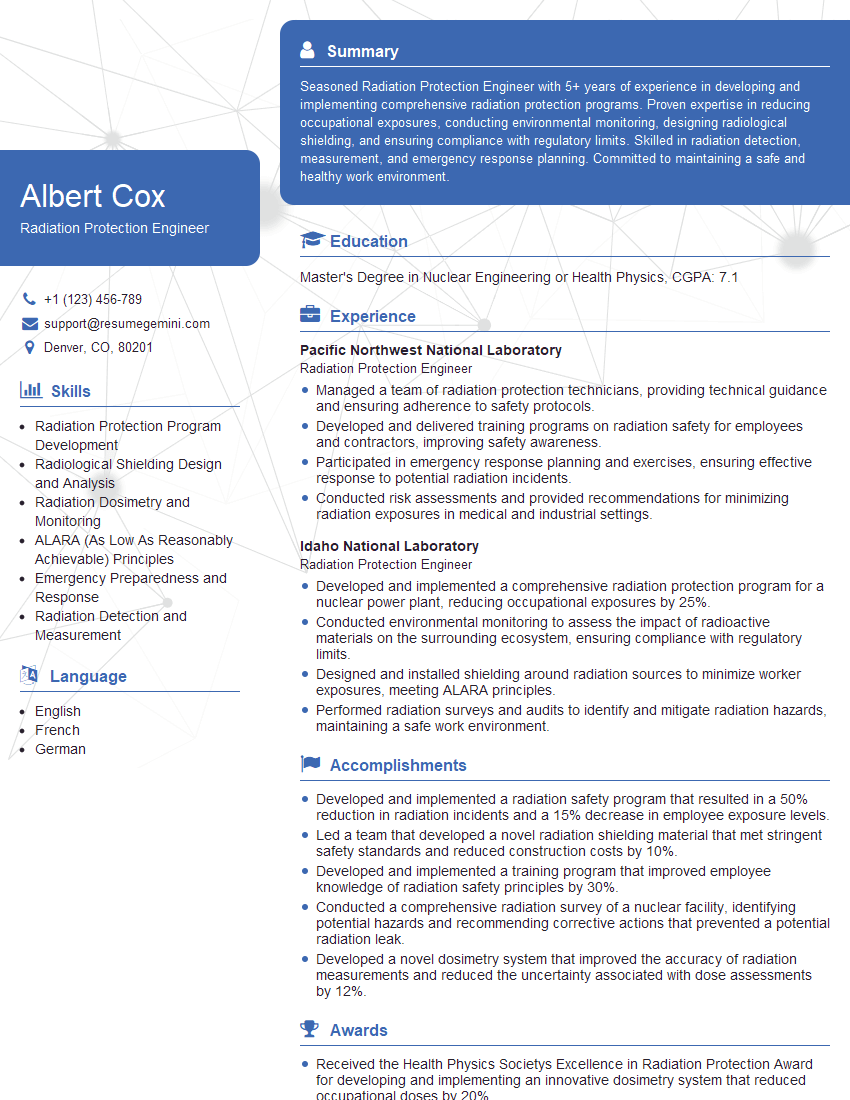
Radiation Protection Engineer Resume Sample
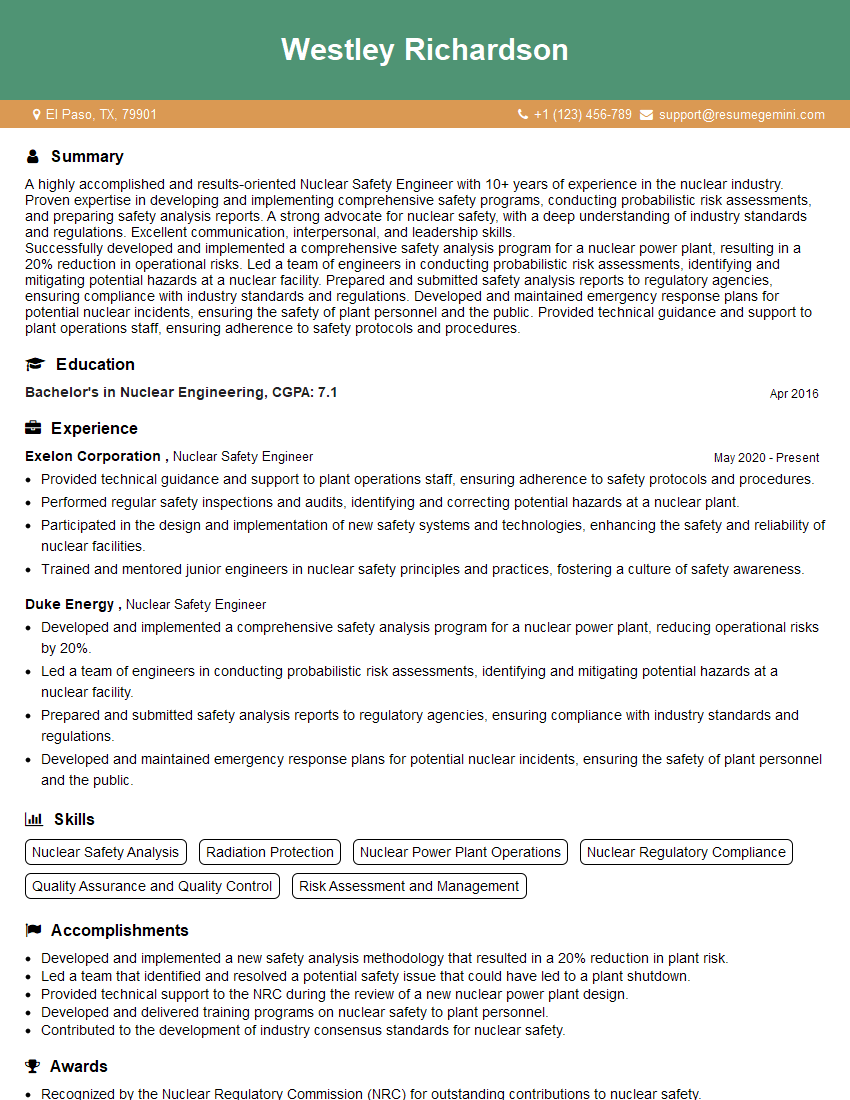
Nuclear Safety Engineer Resume Sample
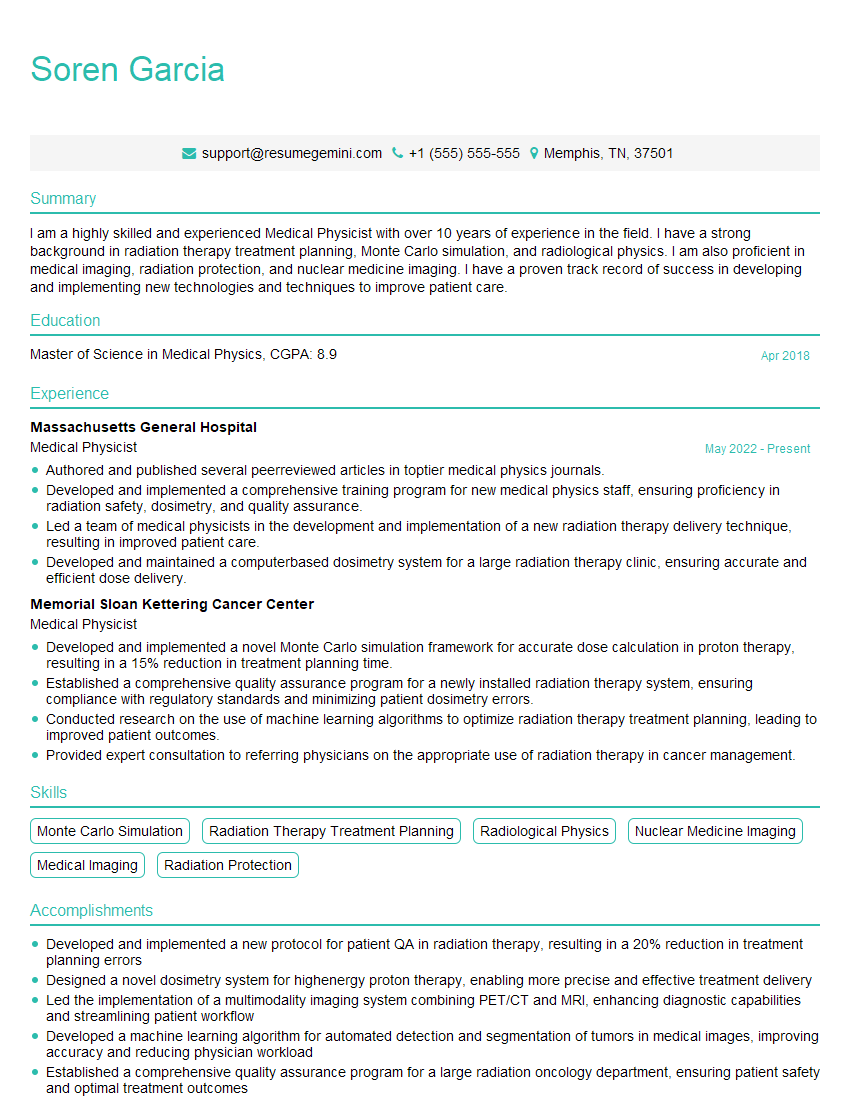
Medical Physicist Resume Sample
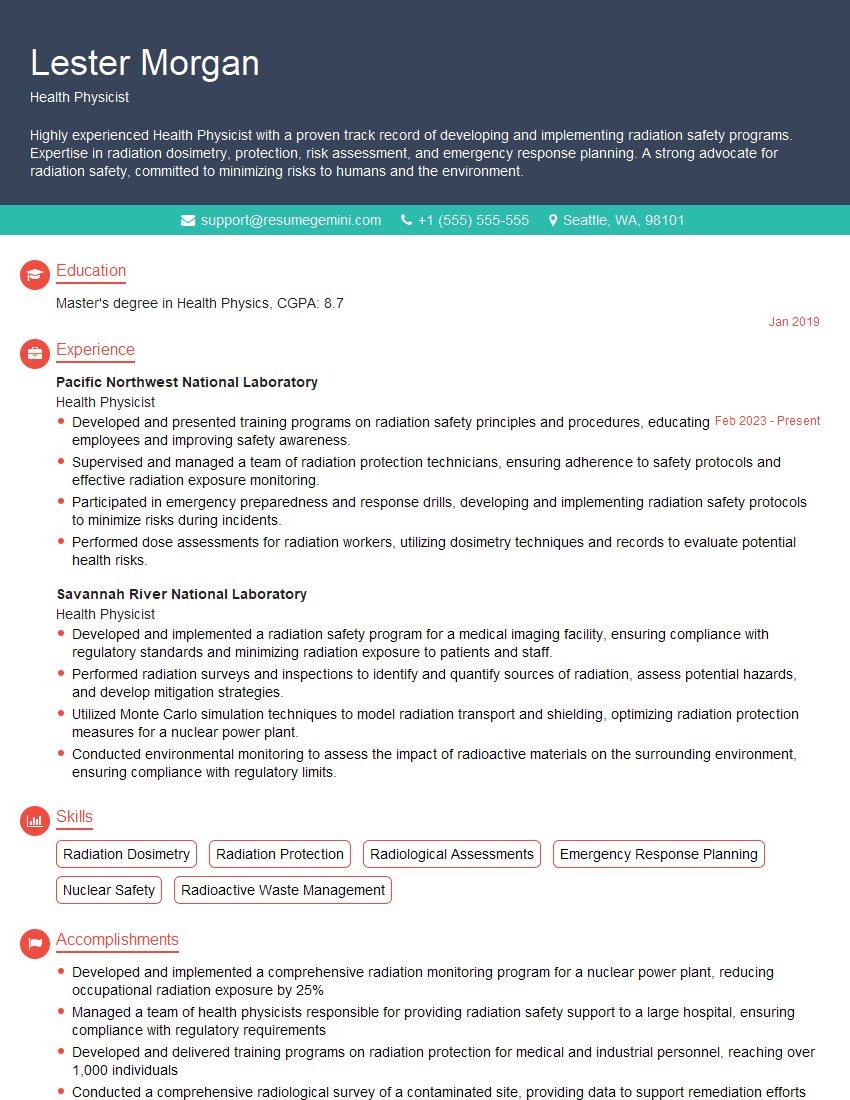
Health Physicist Resume Sample

Dosimetrist Resume Sample
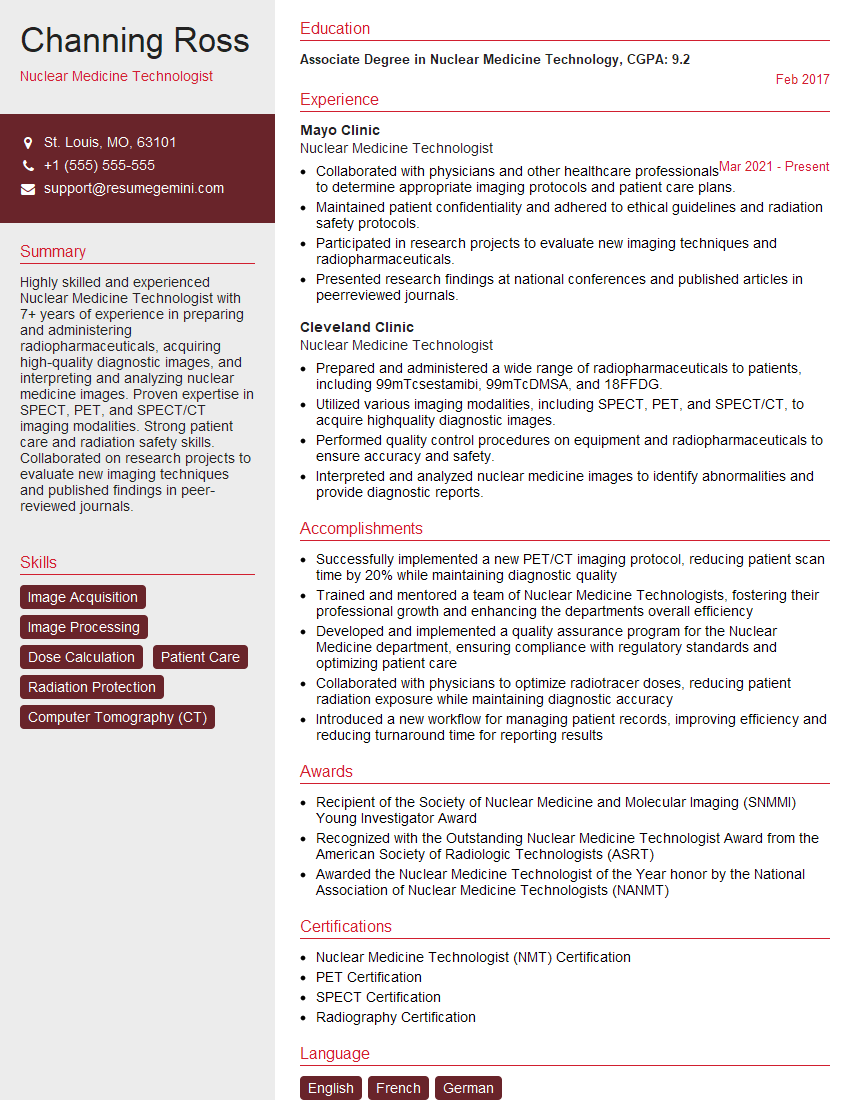
Nuclear Medicine Technologist Resume Sample

Radiation Safety Officer Resume Sample
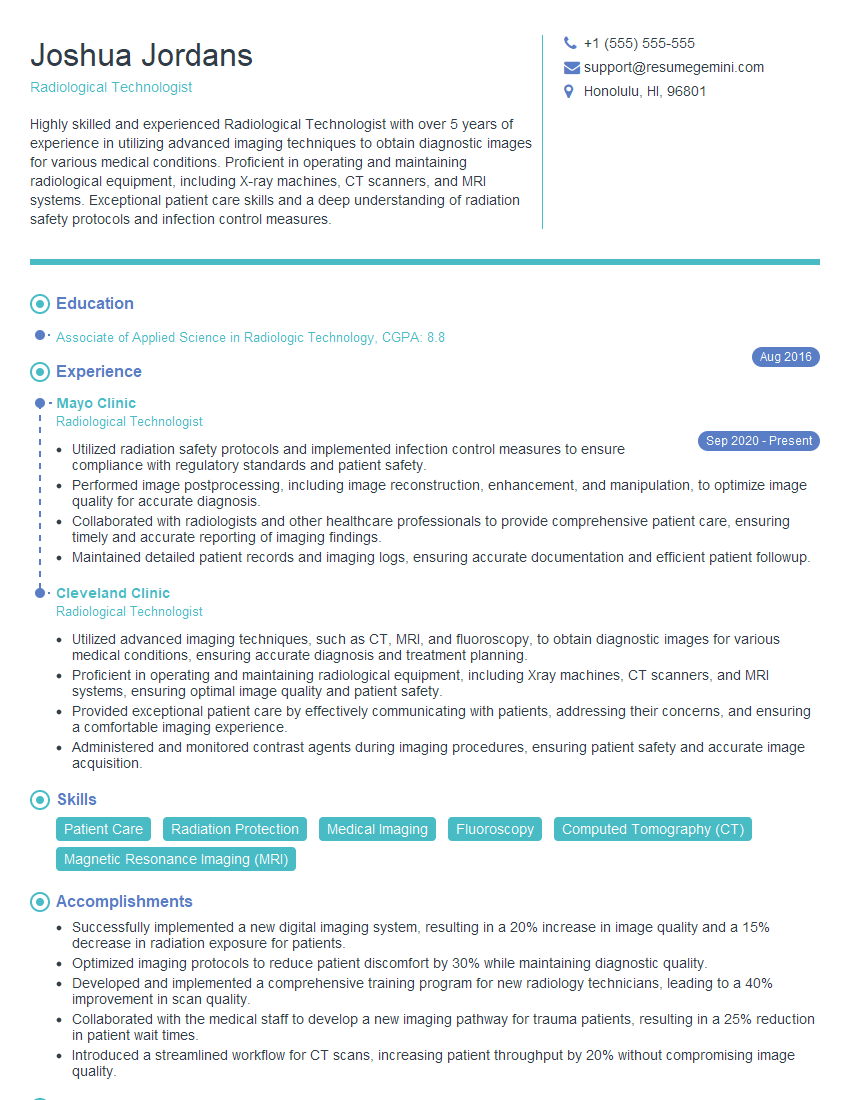
Radiological Technologist Resume Sample
Explore more articles
Users Rating of Our Blogs
Share Your Experience
We value your feedback! Please rate our content and share your thoughts (optional).
What Readers Say About Our Blog
To the interviewgemini.com Webmaster.
Very helpful and content specific questions to help prepare me for my interview!
Thank you
To the interviewgemini.com Webmaster.
This was kind of a unique content I found around the specialized skills. Very helpful questions and good detailed answers.
Very Helpful blog, thank you Interviewgemini team.