Unlock your full potential by mastering the most common Knowledge of legal and ethical issues in psychology interview questions. This blog offers a deep dive into the critical topics, ensuring you’re not only prepared to answer but to excel. With these insights, you’ll approach your interview with clarity and confidence.
Questions Asked in Knowledge of legal and ethical issues in psychology Interview
Q 1. Describe the difference between confidentiality and privileged communication in a therapeutic setting.
Confidentiality and privileged communication are both crucial in protecting client information, but they differ significantly. Confidentiality is a broad ethical principle encompassing the psychologist’s obligation to protect client information. It’s a promise to keep client disclosures private. Privileged communication, on the other hand, is a legal right. It’s a legally protected communication between a client and a therapist, preventing disclosure in court or other legal proceedings unless specific exceptions apply (e.g., imminent harm to self or others).
Think of it this way: confidentiality is the ethical promise, while privileged communication is the legal shield. A psychologist might choose to maintain confidentiality even in situations where privileged communication doesn’t fully apply, reflecting a higher ethical standard. However, privileged communication offers stronger legal protection.
- Example: A client discloses infidelity in therapy. Confidentiality dictates the therapist keeps this information private. If the case goes to court, privileged communication would protect the therapist from being compelled to testify about this disclosure (unless there are exceptions).
Q 2. Explain the Tarasoff duty to warn and its implications.
The Tarasoff duty to warn (or duty to protect) is a legal and ethical obligation requiring mental health professionals to warn identifiable potential victims of a client’s credible threats of harm. This duty supersedes confidentiality. It’s not simply about warning the intended victim; it also includes taking reasonable steps to protect the potential victim, which might include notifying law enforcement.
Implications are significant: It creates a delicate balance between protecting client confidentiality and ensuring public safety. Psychologists must carefully assess the credibility of threats and the potential for harm. Failure to uphold this duty can lead to serious legal consequences. The exact steps involved vary by jurisdiction, emphasizing the importance of consulting legal counsel if faced with a situation involving potential harm.
Example: If a client explicitly threatens to kill their spouse, the psychologist has a duty to warn the spouse and potentially take further steps, such as contacting the police, depending on the perceived threat’s severity and immediacy.
Q 3. How would you handle a situation where a client discloses illegal activity?
Handling a client’s disclosure of illegal activity requires a careful and nuanced approach. The first step is to thoroughly assess the situation. Is the activity ongoing? Does it pose an immediate threat to the client or others? The psychologist’s ethical obligations are primarily focused on protecting others from harm.
Generally, the psychologist is not obligated to report all illegal activity. However, there are exceptions, particularly involving child abuse, elder abuse, and certain other mandated reporting situations. Additionally, if the psychologist believes the client is in immediate danger or poses an immediate danger to others, they may be obligated to take steps to protect them, which may include contacting law enforcement. It’s crucial to consult with a supervisor and, potentially, legal counsel for guidance.
Step-by-step approach:
- Assess the situation: Determine the nature and severity of the illegal activity, its ongoing status, and any immediate threats involved.
- Consider mandated reporting laws: Determine if the activity falls under mandated reporting requirements in the relevant jurisdiction.
- Consult with a supervisor: Seek guidance from a supervisor or other experienced professional.
- Consult legal counsel (if necessary): Legal counsel can provide advice on ethical and legal obligations.
- Document everything: Maintain thorough and accurate records of all interactions and decisions.
Example: A client confesses to tax evasion. This isn’t usually mandated reporting. However, if they also disclose plans to harm a tax auditor, that changes the situation drastically, requiring action to protect the auditor and potentially involving law enforcement.
Q 4. What are the ethical considerations surrounding the use of psychological assessments?
Ethical considerations surrounding psychological assessments are multifaceted. Key concerns include:
- Test Selection: Choosing the appropriate assessment instrument for the client’s specific needs, considering factors like age, cultural background, language proficiency, and the purpose of the assessment. Using an inappropriate test can lead to inaccurate and misleading results.
- Test Administration: Following standardized procedures for administration, scoring, and interpretation. Any deviation from these procedures can compromise the validity and reliability of the results.
- Test Interpretation: Avoiding overinterpretation or misinterpretation of test data. Results should be interpreted in the context of other relevant information, such as the client’s history and presenting issues.
- Confidentiality and Security: Maintaining the confidentiality and security of test results. Protecting the client’s privacy is paramount, and test data should be stored securely to prevent unauthorized access.
- Competence: Only using assessments for which the psychologist has adequate training and expertise. Improper use can lead to inaccurate results and potential harm to the client.
- Informed Consent: Ensuring clients understand the purpose, procedures, and limitations of the assessment before it’s administered.
Example: Administering an intelligence test designed for adults to a child would be unethical due to the lack of validity and reliability in this context. Similarly, misinterpreting a test score without considering the client’s background could lead to inaccurate conclusions and inappropriate interventions.
Q 5. Discuss the ethical issues related to cultural competence in psychological practice.
Cultural competence in psychology involves understanding and appreciating the diverse cultural backgrounds of clients, recognizing how cultural factors might influence their behavior and experiences, and adapting therapeutic approaches accordingly. Failure to address cultural factors can lead to misdiagnosis, ineffective treatment, and even harm to the client.
Ethical issues arise when psychologists fail to consider cultural factors. For instance, imposing Western therapeutic models on clients from different cultural backgrounds may be inappropriate or ineffective. Cultural biases can influence assessment choices and interpretation, leading to inaccurate diagnoses and interventions. Understanding and addressing issues of power dynamics and potential cultural misunderstandings is also crucial.
Example: A therapist unfamiliar with a client’s cultural beliefs about mental illness might misinterpret the client’s symptoms or fail to engage them effectively in the therapeutic process. A therapist might mistakenly label behaviors common in some cultures as pathological without considering cultural context.
Addressing these issues requires:
- Self-reflection: Acknowledging and addressing personal biases.
- Continuing education: Staying updated on culturally relevant research and approaches.
- Collaboration: Consulting with colleagues or cultural experts when needed.
- Adaptation: Modifying therapeutic techniques to fit the client’s cultural context.
Q 6. How do you ensure informed consent in your therapeutic work?
Informed consent is an essential ethical principle requiring that clients have adequate information to make voluntary decisions about their treatment. It’s not just a form to sign; it’s an ongoing process of communication and understanding.
Ensuring informed consent involves:
- Clearly explaining the therapeutic process: Describing the nature of therapy, its goals, techniques, and potential risks and benefits in language the client understands.
- Discussing confidentiality limitations: Clearly stating the limits of confidentiality, including exceptions like mandated reporting.
- Addressing client questions: Answering client questions fully and honestly.
- Documenting the process: Maintaining records of the informed consent process, including any questions or concerns raised by the client.
- Assessing comprehension: Making sure the client understands the information provided before proceeding.
- Obtaining consent: Obtaining written or verbal consent from the client (depending on the setting and local regulations).
Example: Before starting therapy, a therapist explains their approach, fees, confidentiality, and possible risks and benefits to a client. They answer the client’s questions and ensure the client understands before proceeding with treatment.
Q 7. Explain the concept of dual relationships and how to avoid them.
A dual relationship occurs when a psychologist has more than one type of relationship with a client. This can include, but isn’t limited to, professional and social, professional and business, or professional and family relationships. These can create ethical conflicts of interest and potentially compromise the therapeutic relationship.
Examples of dual relationships could be:
- A therapist socializing with a client outside of therapy.
- A therapist entering into a business relationship with a client.
- A therapist treating a family member of a client.
Avoiding dual relationships:
- Careful boundary setting: Establishing and maintaining clear professional boundaries from the outset of the therapeutic relationship.
- Self-reflection: Regularly reflecting on potential conflicts of interest and how personal relationships might impact the therapeutic relationship.
- Seeking supervision: Consulting with colleagues or supervisors when unsure about potential boundary issues.
- Referral when necessary: Referring clients to another professional if a dual relationship cannot be avoided ethically.
- Transparency and disclosure: When appropriate, disclosing potential conflicts of interest to clients and discussing the implications.
Example: A therapist who is friends with a client’s spouse might struggle to maintain objectivity and impartiality in therapy. The best practice would be for the therapist to refer the client to another therapist to avoid this potential conflict.
Q 8. Describe a situation where you had to navigate a conflict of interest.
Navigating conflicts of interest is crucial for maintaining ethical practice in psychology. A conflict of interest arises when a psychologist’s personal interests, relationships, or obligations interfere with their professional judgment or the well-being of their clients. For example, I once had a client who also happened to be a close friend of a family member. While I initially didn’t see this as a conflict, I realized it could compromise my objectivity and potentially impact my ability to provide unbiased therapy. I addressed this by carefully considering the potential for bias, meticulously documenting my concerns, and prioritizing my client’s welfare. I ensured all decisions were made solely based on their best interests, and I regularly reflected on my own potential biases. If the conflict became unmanageable, I would have referred the client to another professional to maintain the highest ethical standards.
The key is proactive identification and management. This includes: transparency with the client; obtaining informed consent about the potential conflict; establishing clear boundaries; and, if necessary, seeking supervision or consulting with a colleague.
Q 9. How would you respond to a subpoena for a client’s records?
Responding to a subpoena for a client’s records requires careful consideration of legal and ethical obligations. Confidentiality is paramount in the therapeutic relationship, protected by legal privileges. However, there are exceptions. I would first examine the subpoena carefully to ensure it is legally valid and complies with all procedural requirements. Then, I would consult with legal counsel to understand my obligations under the law and to explore any potential legal defenses. I might attempt to limit the scope of the disclosure, requesting a protective order to minimize the release of sensitive information if possible. If the subpoena is valid and no legal basis exists to prevent disclosure, I would release only the information specifically requested, making sure to protect the client’s privacy to the maximum extent permitted by law.
It is essential to inform the client of the subpoena and my intended actions, allowing them to seek their own legal counsel if they choose. This process requires a careful balancing of legal requirements and ethical responsibilities to protect both the client’s privacy and the integrity of the therapeutic relationship.
Q 10. What are the ethical considerations of conducting research with vulnerable populations?
Research involving vulnerable populations – children, individuals with cognitive impairments, the elderly, or those experiencing mental health crises – requires heightened ethical sensitivity. The increased risk of harm demands stricter safeguards. Key considerations include:
- Informed consent: This process must be adapted to the individual’s capacity to understand the research, possibly requiring assent from the participant and consent from a legal guardian.
- Minimizing risks and maximizing benefits: The research design must prioritize the participant’s well-being, ensuring minimal risk of physical or psychological harm. The potential benefits must clearly outweigh the risks.
- Protecting privacy and confidentiality: Anonymity and data security are critical. De-identification procedures must be robust.
- Justice and equity: Research should not exploit vulnerable populations. The benefits of the research should accrue to the community from which participants are drawn.
- Vulnerability-specific considerations: Additional safeguards may be necessary, such as independent oversight committees or specific training for researchers.
For example, research involving children must involve parental or guardian consent and may need modifications in data collection methods to be age-appropriate and minimize stress.
Q 11. Explain the ethical guidelines surrounding the use of technology in therapy.
The use of technology in therapy, while offering increased access and flexibility, introduces unique ethical challenges. Ethical guidelines emphasize:
- Confidentiality and security: Using HIPAA-compliant platforms and secure communication methods is crucial. Data encryption and password protection are essential.
- Informed consent: Clients must be fully informed about the risks and benefits of using technology in therapy, including potential security breaches and the limitations of online communication.
- Competence and training: Therapists must have adequate training in using technology for therapy and understand the ethical and technical implications.
- Client suitability: Technology isn’t appropriate for all clients. Therapists must assess clients’ technological proficiency and ability to engage in virtual therapy effectively.
- Emergency preparedness: Having plans for handling emergencies when using technology in therapy is important. This includes procedures for crisis intervention and client safety.
- Jurisdictional issues: Providing services across state lines requires awareness of licensing and legal requirements.
For instance, a therapist using videoconferencing must ensure a private and secure setting, free from interruptions or potential breaches of confidentiality.
Q 12. Describe your understanding of the Health Insurance Portability and Accountability Act (HIPAA).
The Health Insurance Portability and Accountability Act (HIPAA) is a US federal law designed to protect the privacy and security of individuals’ health information. It establishes national standards for electronic health care transactions and protects the confidentiality, integrity, and availability of health information. Key components include:
- Privacy Rule: This regulates the use and disclosure of protected health information (PHI).
- Security Rule: This establishes safeguards for the security of electronic PHI.
- Breach Notification Rule: This requires covered entities to notify individuals and regulatory bodies in the event of a data breach.
As a psychologist, adhering to HIPAA is vital. This means using appropriate safeguards to protect client records, obtaining proper authorization before releasing information, and implementing security measures to prevent data breaches. Failure to comply can result in significant penalties and legal repercussions.
Q 13. Discuss the ethical challenges of providing psychological services via telehealth.
Providing psychological services via telehealth presents several ethical challenges, including:
- Confidentiality and privacy: Ensuring the security of telehealth communication and protecting client information in a virtual setting requires stringent measures. Background noise, family members present, or insecure internet connections pose risks.
- Informed consent: Clients need a clear understanding of the limitations and risks associated with telehealth, including technical issues, potential breaches of confidentiality, and emergency response protocols.
- Competence and training: Clinicians must possess the necessary skills to effectively deliver services through telehealth modalities.
- Client suitability: Telehealth may not be appropriate for all clients, especially those with acute mental health crises or limited technological access.
- Cultural considerations: Telehealth needs to be culturally sensitive and appropriate for diverse clients.
- Jurisdictional issues: Providing services across state lines requires awareness of licensing requirements.
For example, a therapist utilizing telehealth needs a robust plan for handling emergencies, considering the delays and challenges in responding to a crisis remotely.
Q 14. How would you address boundary violations in a therapeutic relationship?
Addressing boundary violations in a therapeutic relationship is crucial for maintaining ethical practice and protecting the client’s well-being. Boundary violations can range from minor slips to serious breaches of professional conduct. Immediate action is necessary.
My approach involves:
- Self-reflection and supervision: I would first engage in self-reflection to analyze the situation and identify any contributing factors. I’d seek supervision from a colleague or mentor to discuss the situation and gain an objective perspective.
- Documentation: I would meticulously document the events, including the nature of the violation, the steps taken to address it, and the client’s reaction.
- Addressing the violation with the client (if appropriate): If the violation is not too severe, I might discuss the issue with the client, clarifying the professional boundaries and seeking their input and understanding. The focus would be on repairing the therapeutic relationship.
- Referral: If the violation is significant, or if the therapeutic relationship has been severely damaged, I would refer the client to another therapist.
- Seeking consultation: Seeking advice from ethics committees or legal professionals might be necessary, especially in complex cases.
- Self-care: Addressing boundary violations can be emotionally draining. Prioritizing self-care is important to avoid burnout.
Prevention is key. Clear boundaries established from the outset of therapy are crucial. These include appropriate professional attire, maintaining professional communication, adhering to scheduled sessions, avoiding dual relationships, and always prioritizing the client’s best interests. Regular supervision is a powerful tool for preventing boundary crossings.
Q 15. Explain the role of informed consent in conducting psychological assessments.
Informed consent is the cornerstone of ethical psychological assessment. It ensures that individuals understand the purpose, procedures, risks, and benefits of the assessment before agreeing to participate. This isn’t simply a signature on a form; it’s an ongoing process of open communication and shared understanding.
Elements of Informed Consent:
- Nature and purpose of the assessment: Clearly explaining what will be assessed and why.
- Procedures involved: Detailing the methods used, such as tests, interviews, or observations.
- Risks and benefits: Identifying potential downsides (e.g., feeling anxious, revealing sensitive information) and upsides (e.g., gaining self-understanding, receiving appropriate treatment).
- Confidentiality and limits of confidentiality: Explaining how information will be protected and exceptions (e.g., mandated reporting of child abuse).
- Right to refuse or withdraw: Emphasizing that participation is voluntary and can be stopped at any time without penalty.
- Alternatives to assessment: Discussing other options, if applicable.
- Questions and answers: Encouraging the individual to ask questions and providing thorough explanations.
Example: Before administering an IQ test, a psychologist would explain the test’s purpose (measuring cognitive abilities), the process (types of questions, time involved), the potential benefits (understanding learning strengths and weaknesses), and the limits of confidentiality (sharing results only with authorized parties).
Career Expert Tips:
- Ace those interviews! Prepare effectively by reviewing the Top 50 Most Common Interview Questions on ResumeGemini.
- Navigate your job search with confidence! Explore a wide range of Career Tips on ResumeGemini. Learn about common challenges and recommendations to overcome them.
- Craft the perfect resume! Master the Art of Resume Writing with ResumeGemini’s guide. Showcase your unique qualifications and achievements effectively.
- Don’t miss out on holiday savings! Build your dream resume with ResumeGemini’s ATS optimized templates.
Q 16. What are the ethical implications of using social media in your professional practice?
Using social media in professional practice presents significant ethical challenges. The primary concern is maintaining client confidentiality and avoiding boundary violations. A psychologist’s online presence needs careful consideration to ensure professionalism and avoid jeopardizing the therapeutic relationship.
Ethical Implications:
- Confidentiality breaches: Even seemingly innocuous posts can inadvertently reveal information about clients, violating confidentiality. For instance, mentioning a client’s profession or relationship issues, even without naming them, can be a breach.
- Boundary violations: Friending or connecting with clients on social media blurs professional boundaries, potentially compromising objectivity and the therapeutic relationship. It can create an unequal power dynamic.
- Professionalism: Posts that are unprofessional, offensive, or controversial can damage a psychologist’s reputation and undermine public trust.
- Dual relationships: Engaging with clients online outside of therapy sessions can lead to dual relationships, creating conflict of interest.
Best Practices:
- Maintain strict privacy settings: Limit access to personal information and posts to trusted individuals.
- Avoid posting about clients: Never mention clients, even indirectly, on any social media platform.
- Review professional conduct guidelines: Familiarize yourself with your state’s ethical codes regarding online presence.
- Separate personal and professional accounts: Maintain distinct profiles to avoid blurring lines between personal and professional life.
Q 17. Describe the process of reporting suspected child abuse or neglect.
Reporting suspected child abuse or neglect is a legal and ethical obligation for psychologists. This responsibility overrides client confidentiality, as the well-being of the child is paramount. The process involves several steps:
Steps Involved:
- Assessment and documentation: Carefully document any suspicions based on observations, client disclosures, or other evidence. Be specific and detailed.
- Contacting Child Protective Services (CPS) or the appropriate authorities: Each jurisdiction has specific reporting procedures; it is crucial to know your local laws and regulations. Usually a phone call is the initial step, followed by a written report.
- Providing relevant information: Offer all pertinent information to CPS, such as client’s identity, nature of the suspected abuse, and supporting evidence.
- Following up as needed: Follow any guidelines or requests from CPS. This might involve providing additional information or consulting with them.
- Documenting the reporting process: Meticulously record all actions taken, including dates, times, individuals contacted, and information shared.
Example: If a psychologist learns from a client about physical abuse inflicted on their child, they are obligated to report it to the designated child protective services immediately, even if the client requests confidentiality.
Q 18. Explain the ethical considerations related to the diagnosis and treatment of personality disorders.
Diagnosing and treating personality disorders presents several ethical considerations. The complexities of personality disorders, along with the potential for stigma and difficulty in treatment, necessitate a cautious and ethical approach.
Ethical Considerations:
- Accuracy of diagnosis: Personality disorders are complex, and misdiagnosis can have significant consequences. Thorough assessment, including multiple methods, is crucial.
- Stigma and labeling: The very act of diagnosing a personality disorder can be stigmatizing. Psychologists should use diagnostic labels cautiously and focus on individual strengths and needs rather than reducing the person to a diagnostic label.
- Treatment limitations: Treatment for personality disorders can be challenging and may have limited success in some cases. Psychologists need to manage client expectations and have open discussions about the treatment process.
- Cultural competence: Understanding how cultural factors may influence both the presentation of personality disorders and the response to treatment is crucial. Avoid bias.
- Informed consent: Clearly explaining the diagnosis, treatment options, potential risks and benefits, and the prognosis is essential.
Example: When working with a client exhibiting characteristics of borderline personality disorder, a psychologist would explain the diagnosis while emphasizing that this does not define the person entirely, outline the strengths and challenges associated with the diagnosis, and discuss treatment plans and their limitations, ensuring informed consent throughout.
Q 19. Discuss the ethical dilemmas related to the use of psychotropic medication.
The use of psychotropic medication in psychological practice raises a number of ethical dilemmas. These concerns primarily revolve around informed consent, potential side effects, and the overall therapeutic alliance.
Ethical Dilemmas:
- Informed consent: Clients need to be fully informed about the medication’s purpose, potential side effects (both short-term and long-term), benefits, alternatives, and the risks associated with both taking and not taking the medication. This requires a nuanced understanding of the client’s capacity to make decisions.
- Medication management: While psychologists may not prescribe medication, they play a crucial role in collaborating with prescribing physicians, monitoring clients’ response to medication, and addressing potential side effects. They must maintain accurate records of this collaboration.
- Potential conflicts of interest: A psychologist should not prescribe medication themselves, avoiding potential conflicts of interest.
- Over-reliance on medication: Medication should be part of a comprehensive treatment plan, and not the sole treatment. Psychologists must avoid the temptation to simply rely on medication to manage symptoms and address underlying issues with therapy.
- Cultural competency: Cultural factors can affect both how individuals experience mental health symptoms and how they respond to medication. Psychologists must remain sensitive to this.
Example: A psychologist working with a client experiencing depression should discuss medication as one option among others (therapy, lifestyle changes), ensuring the client understands the potential risks and benefits, collaborates with the psychiatrist, and monitors the client’s overall well-being.
Q 20. How would you handle a situation where a client is exhibiting suicidal ideation?
Suicidal ideation is a serious issue requiring immediate and decisive action. A psychologist’s response should be swift, thorough, and prioritize the client’s safety.
Handling Suicidal Ideation:
- Assess the level of risk: Determine the immediacy and severity of the risk. Consider factors such as the client’s plan, access to means, and level of hopelessness.
- Ensure safety: If there is an immediate risk of harm, take necessary steps to ensure the client’s safety. This may involve contacting emergency services or hospitalizing the client.
- Collaborate with others: Work with family members, other healthcare providers, or emergency services as needed. This is often a team effort.
- Develop a safety plan: Collaborate with the client to create a safety plan, including identifying warning signs, coping mechanisms, and emergency contacts.
- Provide support and resources: Offer immediate support and connect the client with appropriate resources, such as crisis hotlines, support groups, and mental health services.
- Document the intervention: Thoroughly document all communications, assessments, interventions, and contacts made.
Example: If a client expresses a detailed suicide plan, the psychologist should immediately contact emergency services, assess the client’s immediate needs for safety, potentially hospitalizing the client, and then begin collaboratively constructing a comprehensive safety plan.
Q 21. What are the ethical implications of conducting forensic psychological evaluations?
Forensic psychological evaluations involve applying psychological principles within the legal system. Ethical considerations are heightened due to the significant consequences these evaluations can have on individuals’ lives and the justice system.
Ethical Implications:
- Objectivity and impartiality: Maintaining objectivity and avoiding bias is paramount. Evaluators must ensure their evaluations are based on evidence and not influenced by personal beliefs or external pressures. The evaluator’s role is to provide objective data.
- Competence: Evaluators must possess the necessary expertise to conduct the specific evaluation. If a case requires specialized knowledge, the evaluator should acknowledge any limitations.
- Confidentiality: While confidentiality is important, it is often limited in forensic evaluations. The evaluator needs to understand and respect legal requirements regarding disclosure of information.
- Informed consent: While legal constraints can limit the extent of informed consent, evaluators should strive to inform the individual about the purpose, procedures, and potential implications of the evaluation to the fullest extent possible.
- Avoiding conflicts of interest: Forensic psychologists must avoid situations that could compromise their objectivity or create conflicts of interest.
- Appropriate use of tests: Forensic evaluations must only use tests that are scientifically sound, valid, and reliable for the purposes of the evaluation.
Example: In a child custody evaluation, the psychologist must remain unbiased, avoid forming relationships with the family members, follow proper ethical standards in testing, and clearly communicate the limitations and potential impact of the findings within the context of the legal proceedings.
Q 22. Explain the ethical considerations of providing expert witness testimony.
Providing expert witness testimony involves a unique set of ethical considerations, distinct from typical clinical practice. The core principle is maintaining objectivity and independence. As an expert, my role is to provide the court with my professional opinion based on my expertise, not to advocate for a particular party. This means carefully evaluating the data presented, ensuring my testimony is based on established scientific evidence, and acknowledging any limitations in my assessment. For instance, if presented with incomplete data, I have an ethical obligation to disclose that limitation in my testimony, rather than speculating or drawing conclusions based on insufficient information. I would also avoid expressing personal opinions or biases, focusing strictly on the relevant facts and established research in my field.
Another critical aspect is confidentiality. I must ensure I do not disclose any information protected by client confidentiality unless legally compelled to do so, even if it means declining a case where the required testimony might infringe on this. Maintaining professional integrity is paramount; therefore, I must ensure I’m qualified to offer expert testimony in the specific area of the case. Offering opinions outside my area of expertise would be a breach of ethics and potentially detrimental to the legal process.
Q 23. How do you manage ethical conflicts with colleagues or supervisors?
Ethical conflicts with colleagues or supervisors are unfortunately a reality in any professional field. My approach involves open and honest communication as the first step. I would attempt to resolve the conflict directly with the involved individual, focusing on the specific ethical concern. This conversation should be professional, respectful, and aim at finding a mutually acceptable solution that aligns with ethical guidelines. I’d start by clearly articulating my concerns, citing relevant ethical codes to support my position. This is crucial to maintain a professional tone.
If a direct approach fails to resolve the conflict, I would consider involving a more senior colleague or a designated mediator within the organization. In extreme cases, where the ethical violation is serious and poses a risk to clients or the integrity of the profession, I might need to escalate the matter to the relevant ethics committee or regulatory body. This is a last resort, but it’s essential to protect clients and uphold ethical standards. For instance, if I observed a colleague falsifying data in a research project, I’d attempt to discuss it with them directly first. If that failed, I’d report the issue to the appropriate authority within my institution to prevent harm.
Q 24. Discuss the importance of maintaining accurate and complete clinical records.
Maintaining accurate and complete clinical records is fundamental to ethical and legal compliance in psychology. These records serve multiple purposes: they are essential for providing high-quality care to clients, ensuring continuity of treatment, supporting clinical decision-making, and providing legal protection for both the client and the practitioner. Inaccurate or incomplete records could lead to misdiagnosis, inappropriate treatment, and potential legal liability.
Accuracy involves ensuring all entries are factual, reflecting the client’s presentation, diagnosis, treatment plans, and progress. Completeness means documenting all relevant information, including sessions attended, assessments administered, treatment interventions implemented, and client responses. For example, if a client misses a session, the reason for the missed session, if known, should be recorded. Similarly, if there’s a change in the treatment plan, a detailed record outlining the reason and rationale should be documented. Regular review and updating of the records are crucial to maintaining their accuracy and relevance.
Beyond factual accuracy, it’s crucial to maintain confidentiality in record-keeping, adhering to all applicable privacy laws and regulations, such as HIPAA. Records should be securely stored and accessed only by authorized personnel.
Q 25. Explain the role of ethics committees in addressing ethical dilemmas.
Ethics committees play a vital role in navigating ethical dilemmas in psychology. These committees typically consist of experienced professionals who provide guidance and support to practitioners facing challenging ethical situations. They offer a structured and confidential forum for discussing complex cases, reviewing relevant ethical codes, and proposing solutions that prioritize the well-being of clients and the integrity of the profession.
Their process usually involves a formal review of the presented dilemma, consideration of relevant ethical guidelines, and a thorough examination of the facts of the case. The committee then deliberates and provides recommendations for addressing the issue, often offering alternative courses of action and their potential consequences. This provides the practitioner with a balanced and informed perspective, facilitating a responsible decision-making process. For example, a committee might help a therapist navigate the ethical complexities of a client’s request for information about a past session with a previous therapist when faced with confidentiality concerns.
Q 26. How would you handle a complaint about your professional conduct?
Handling a complaint about my professional conduct requires a calm, professional, and ethical approach. The first step is acknowledging the complaint seriously and understanding its details. I would carefully review the complaint to identify the specific issues raised. Then, I would gather any relevant documentation, such as clinical records, correspondence, or other supporting materials, to thoroughly understand the situation from all perspectives.
Following this, I would respond to the complaint promptly and professionally, either directly to the complainant or through the appropriate channels, depending on the nature of the complaint and the relevant regulatory body. My response would be factual, avoiding defensiveness, and would address each specific allegation directly. If the complaint involves a potential ethical violation, I might seek guidance from my professional organization or an ethics committee to ensure my response adheres to ethical and legal standards. Ultimately, cooperation and transparency are crucial in addressing complaints effectively and maintaining professional integrity.
Q 27. Describe your understanding of malpractice and negligence in the context of psychological practice.
Malpractice and negligence in psychological practice refer to professional misconduct that results in harm to a client. Malpractice implies a breach of professional standards of care, while negligence involves a failure to act with reasonable care and skill. In essence, both constitute a failure to provide the level of care that a reasonably competent professional would provide under similar circumstances.
Examples of malpractice might include misdiagnosis leading to ineffective treatment, unauthorized disclosure of confidential information causing significant harm, or engaging in a dual relationship (e.g., therapist-client and business partner) that compromises the therapeutic relationship. Negligence might involve failing to adequately assess a client’s risk of self-harm or neglecting to obtain informed consent before initiating treatment. The key element in both is demonstrable harm to the client as a result of the practitioner’s actions (or lack thereof).
Establishing malpractice or negligence typically requires demonstrating that a duty of care existed between the practitioner and the client, that the duty was breached, that the breach caused harm, and that the harm is compensable. This often involves expert testimony from other professionals to establish the standard of care and whether it was breached.
Q 28. What steps would you take to ensure your professional practice aligns with relevant ethical codes?
Aligning my professional practice with relevant ethical codes is an ongoing process, not a one-time event. I regularly review the ethical codes of my professional organizations, such as the American Psychological Association (APA) Ethical Principles of Psychologists and Code of Conduct. This review helps me stay current on best practices and address any potential ethical challenges proactively. I participate in continuing education activities that specifically address ethical issues in psychology to update my knowledge of emerging concerns and ethical dilemmas. This allows for a deeper understanding of ethical considerations in various clinical scenarios.
Moreover, I seek supervision or consultation from experienced colleagues when facing ethically challenging situations. This provides an opportunity for critical discussion, alternative perspectives, and development of an ethical decision-making process. Regularly reflecting on my practice and seeking feedback from colleagues and supervisors allows for early identification and correction of any potential deviations from ethical standards. A commitment to ongoing professional development is vital to ensuring ethical practice.
Key Topics to Learn for Knowledge of Legal and Ethical Issues in Psychology Interview
- Ethical Principles: Understanding the core principles of the APA Ethical Code (e.g., beneficence, nonmaleficence, fidelity, responsibility, integrity, justice, respect for people’s rights and dignity). Consider how these principles apply in diverse clinical settings.
- Confidentiality and Privilege: Mastering the nuances of client confidentiality, exceptions to confidentiality (e.g., mandated reporting), and the difference between confidentiality and privileged communication. Be prepared to discuss scenarios requiring careful ethical judgment regarding disclosure.
- Informed Consent: Delve into the components of informed consent, including capacity, voluntariness, and comprehension. Explore challenges in obtaining informed consent in various populations and situations.
- Dual Relationships and Boundaries: Analyze the potential risks and ethical considerations involved in dual relationships (e.g., therapist-client, supervisor-supervisee). Understand strategies for establishing and maintaining professional boundaries.
- Competence and Scope of Practice: Discuss the importance of practicing within one’s area of competence and understanding the limitations of one’s expertise. Be prepared to address scenarios where referrals are necessary.
- Legal Issues: Familiarize yourself with relevant legislation, such as HIPAA, and how it impacts the practice of psychology. Understand the implications of malpractice and liability.
- Cultural Competence and Ethical Considerations: Explore the ethical challenges of working with diverse populations and the importance of cultural sensitivity in clinical practice. Consider how cultural factors influence decision-making and ethical considerations.
- Problem-Solving Approaches: Develop your ability to analyze ethical dilemmas using established frameworks (e.g., the ethical decision-making model). Practice applying these frameworks to real-world case studies.
Next Steps
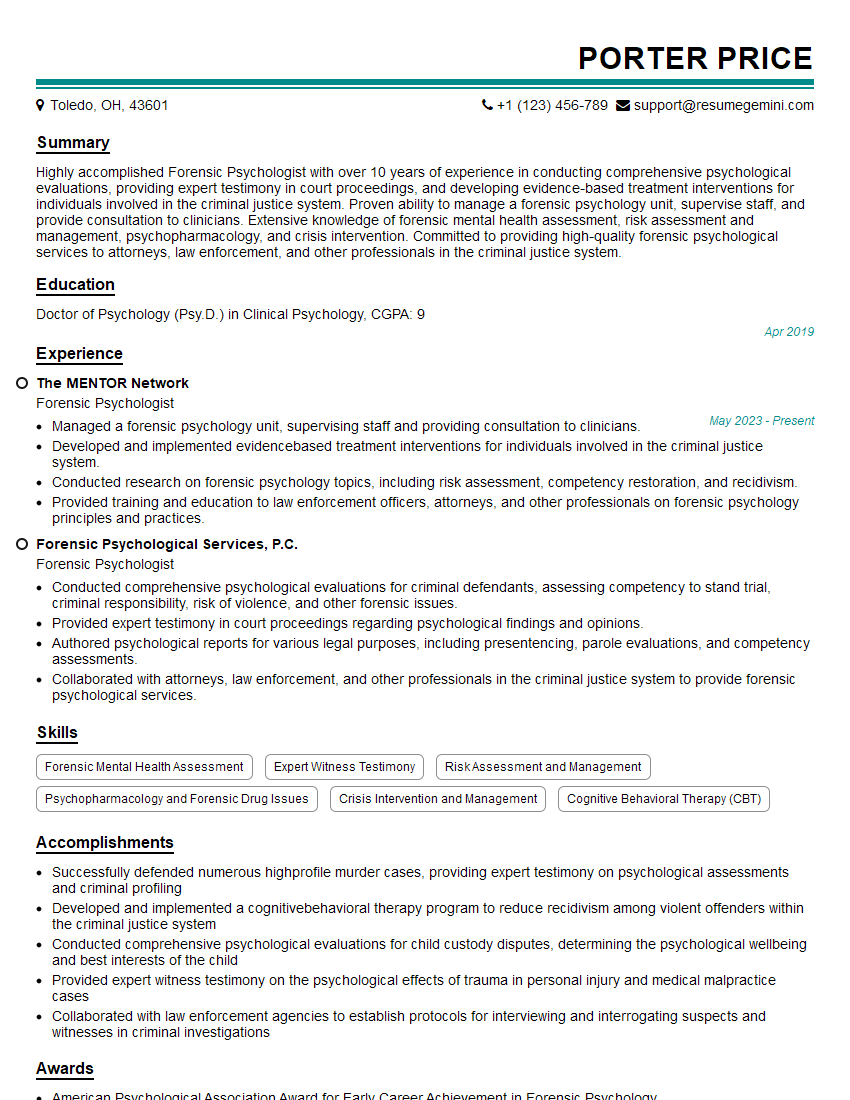
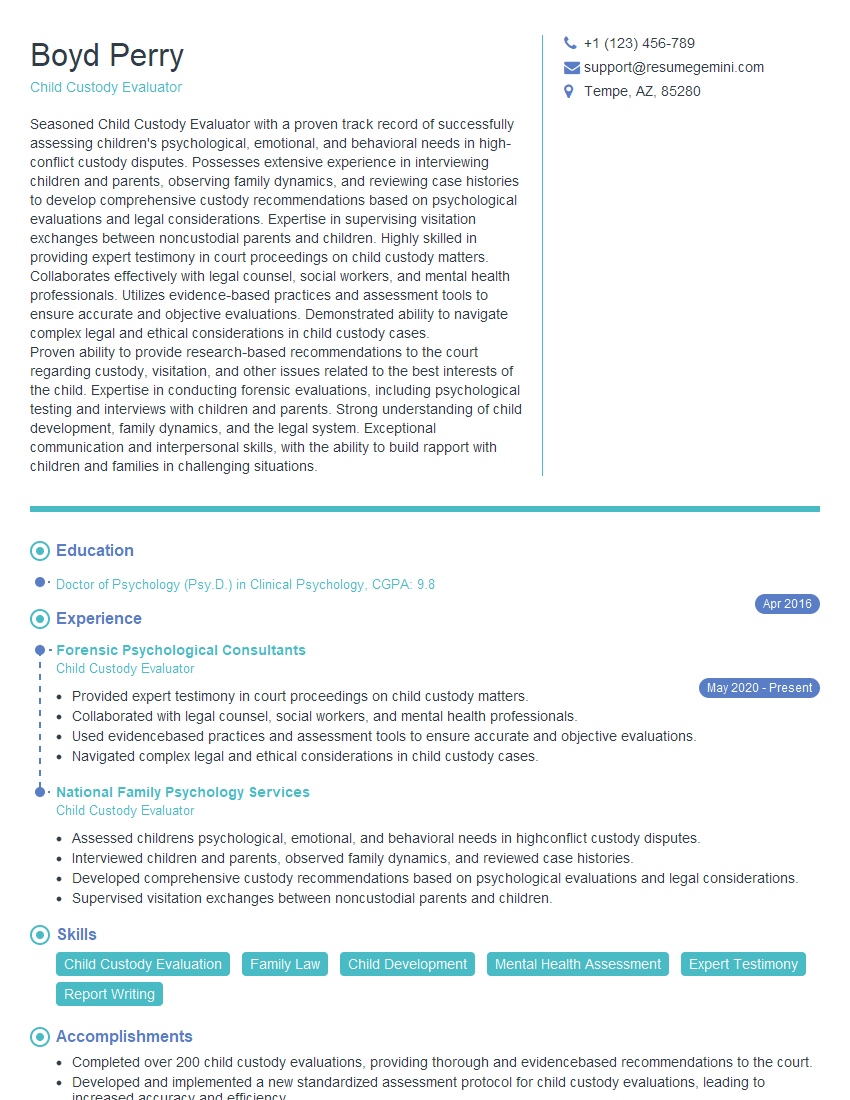
Mastering legal and ethical issues in psychology is crucial for building a successful and ethical career. A strong understanding of these principles demonstrates professionalism, competence, and commitment to client well-being, significantly enhancing your appeal to employers. To maximize your job prospects, it’s essential to have an ATS-friendly resume that highlights your skills and experience effectively. ResumeGemini is a trusted resource to help you craft a compelling resume tailored to the specific requirements of the job market. Examples of resumes specifically designed for candidates with expertise in legal and ethical issues in psychology are available to help you get started.

Explore more articles
Users Rating of Our Blogs
Share Your Experience
We value your feedback! Please rate our content and share your thoughts (optional).
What Readers Say About Our Blog
To the interviewgemini.com Webmaster.
Very helpful and content specific questions to help prepare me for my interview!
Thank you
To the interviewgemini.com Webmaster.
This was kind of a unique content I found around the specialized skills. Very helpful questions and good detailed answers.
Very Helpful blog, thank you Interviewgemini team.