Are you ready to stand out in your next interview? Understanding and preparing for Glass Carpentry and Joinery interview questions is a game-changer. In this blog, we’ve compiled key questions and expert advice to help you showcase your skills with confidence and precision. Let’s get started on your journey to acing the interview.
Questions Asked in Glass Carpentry and Joinery Interview
Q 1. Describe your experience with different types of glass (laminated, tempered, insulated).
My experience encompasses a wide range of glass types, each with unique properties impacting its application in glass carpentry and joinery. Let’s look at three key examples:
- Laminated Glass: This is created by bonding two or more layers of glass with a layer of polyvinyl butyral (PVB) interlayer. The PVB adds significant strength and safety. If broken, the glass fragments adhere to the interlayer, preventing shattering and reducing the risk of injury. I’ve used laminated glass extensively in applications requiring high security, such as storefront windows and skylights where impact resistance is crucial. For instance, I recently installed a large laminated glass panel in a museum, ensuring the protection of valuable artifacts.
- Tempered Glass (or toughened glass): This undergoes a heat treatment process, making it significantly stronger than annealed glass. When broken, it shatters into small, relatively harmless, granular pieces. This makes it ideal for applications where safety is paramount, such as shower enclosures, balustrades, and tabletops. I’ve worked with tempered glass of varying thicknesses, choosing the appropriate thickness based on the specific load and size requirements of the project. For example, I used 12mm tempered glass for a large, free-standing glass partition in a commercial building.
- Insulated Glass Units (IGUs): These consist of two or more glass panes separated by a hermetically sealed air or gas-filled spacer. This design significantly improves energy efficiency by reducing heat transfer. IGUs are commonly used in windows and doors to enhance thermal performance and sound insulation. I’ve incorporated IGUs with various gas fills (argon, krypton) depending on the client’s needs for optimal energy savings. In a recent residential project, I used argon-filled IGUs to significantly reduce energy loss through the windows.
Q 2. Explain the process of measuring and cutting glass for a custom installation.
Precise measurement and cutting are fundamental to successful glass installation. The process typically involves these steps:
- Careful Measurement: I use a variety of tools, including precision tape measures and laser levels, to take multiple, accurate measurements of the opening where the glass will be installed. This includes accounting for any framing tolerances.
- Pattern Making (if needed): For complex shapes or intricate designs, I create a full-scale pattern from cardboard or plywood, ensuring a perfect fit. This allows for precise glass cutting.
- Glass Cutting: I use a glass cutter, scoring the glass precisely along the marked lines with consistent pressure. The score line creates a weak point, facilitating a clean break.
- Snapping: Once scored, the glass is carefully snapped along the score line using a pair of pliers or a snapping tool. This requires a steady hand and precision to avoid chipping or cracking.
- Grinding and Polishing (if necessary): After snapping, I use a grinding wheel to smooth any rough edges and then a polishing wheel to achieve a smooth, safe finish. This is crucial to prevent injuries and ensure a high-quality finish.
- Verification: Before installation, I perform a final check against the original measurements and pattern to confirm a perfect fit.
Accurate measurement is paramount to avoid costly mistakes and ensure a flawless installation. For example, a millimeter off in a large glass panel can create significant problems.
Q 3. What safety precautions do you take when working with glass?
Safety is my top priority when working with glass. I consistently employ the following precautions:
- Protective Gear: I always wear safety glasses, gloves, and closed-toe shoes to protect against cuts and flying debris.
- Proper Handling: Glass sheets are always handled with care, using suction cups or appropriate lifting devices to avoid dropping or breaking the glass.
- Clean Workspace: I maintain a clean and organized workspace to prevent accidental trips or falls, as well as to protect the glass from damage.
- Appropriate Tools: I ensure that all tools are in good working order and are used correctly. Dull or damaged tools increase the risk of accidents.
- Disposal of Waste: Glass fragments are disposed of responsibly, often using specific containers to prevent injuries during cleanup.
- Awareness of Surroundings: I remain acutely aware of my surroundings, ensuring that no one is in the vicinity when cutting or handling glass.
I’ve developed a robust safety culture throughout my years of experience and strictly adhere to all applicable safety regulations.
Q 4. How do you handle difficult glass cuts or intricate designs?
Difficult glass cuts and intricate designs require precision and patience. My approach involves:
- Template Creation: For complex shapes, I create accurate paper or cardboard templates to guide the cutting process. This ensures consistency and accuracy.
- Multiple Score Lines: On curved cuts, multiple, closely spaced score lines are made to facilitate a smoother, controlled break.
- Use of Specialized Tools: I utilize specialized tools like wet saws or CNC routers for exceptionally precise cuts, particularly for intricate designs.
- Incremental Cutting: Large or complex cuts are often approached incrementally, making several smaller cuts to create the desired shape. This helps in maintaining control and avoiding breakage.
- Practice and Experience: Years of experience have honed my skills in handling challenging cuts. I have learned to anticipate and address potential issues proactively.
For example, I recently completed a project involving a highly intricate, curved glass panel for a custom staircase. The process required careful planning, meticulous cutting, and the use of specialized tools to achieve the desired outcome.
Q 5. Describe your experience with different glazing systems (e.g., silicone, putty).
My experience includes working with various glazing systems, each suited to specific applications:
- Silicone Sealants: These are versatile and widely used for their excellent adhesion and flexibility. They are particularly suitable for exterior applications where weather resistance is critical. I often use silicone for framing glass in windows and doors, ensuring a watertight seal.
- Glazing Putty: A more traditional method, glazing putty is still used for certain applications, particularly for historical restorations or where a more traditional aesthetic is desired. It offers a durable seal but requires more skill and time to apply correctly.
- Other Glazing Systems: My expertise also extends to other systems like butyl tape, which offers a superior airtight and watertight seal, often used in insulated glass units (IGUs).
The choice of glazing system depends on several factors, including the type of glass, the environmental conditions, and the aesthetic requirements. I always select the most appropriate system for the specific project to ensure longevity and performance.
Q 6. What tools and equipment are you proficient in using?
Proficiency in using a wide range of tools is essential in glass carpentry and joinery. My skillset includes:
- Glass Cutters: Various types, including oil-fed and dry cutters for different thicknesses and types of glass.
- Grinding and Polishing Wheels: For smoothing and finishing glass edges to a high standard.
- Suction Cups and Lifting Devices: For safe handling of glass sheets of various sizes and weights.
- Measuring Tools: Precision tape measures, laser levels, and calipers for accurate measurements.
- Glazing Tools: Spatulas, knives, and applicators for applying sealants and putty.
- Power Tools: Drills, routers (especially CNC routers for intricate designs), and saws for working with the framing material.
Keeping my tools in top condition is crucial. Regular maintenance and calibration ensure accuracy and safety.
Q 7. How do you ensure the structural integrity of a glass installation?
Structural integrity is paramount in any glass installation. I ensure this through several key strategies:
- Proper Support System: The glass must be supported adequately using appropriate framing or support structures. The design and construction of these systems are crucial for load bearing and distribution.
- Correct Glass Selection: Choosing the right type and thickness of glass is essential to withstand anticipated loads and environmental stresses (wind, snow, etc.).
- Secure Fastening: All fastenings, whether mechanical or adhesive, must be secure and correctly installed according to manufacturer’s specifications.
- Accurate Measurements: Precise measurements and cuts prevent stress concentration points, which can lead to breakage.
- Load Calculations: For larger or more complex installations, I often perform load calculations to determine the appropriate support systems and glass thickness.
- Adherence to Codes: I always adhere to relevant building codes and safety regulations, ensuring compliance with all standards.
Ignoring any of these factors can result in structural failure, potentially causing injury or property damage. I prioritize careful planning and execution to ensure a safe and structurally sound installation.
Q 8. Explain your experience with installing curtain walls or facades.
My experience with curtain wall and facade installation spans over 15 years, encompassing a wide range of projects from high-rise commercial buildings to smaller architectural features. I’ve worked extensively with various systems, including stick-built curtain walls (where individual components are assembled on-site), unitized curtain walls (pre-assembled modules installed as units), and structural silicone glazing systems. A recent project involved installing a complex unitized curtain wall system on a 20-story office building. This required meticulous planning, precise measurements, and a deep understanding of the building’s structural integrity. Another project highlighted my proficiency in troubleshooting challenges mid-installation, where a design flaw necessitated on-site modifications to ensure a seamless, watertight installation.
- Experience with different materials: I’m proficient in working with aluminum, steel, and composite materials for framing, and I’m familiar with various types of glass including laminated, insulated, and tempered glass.
- Project Management: I’ve managed teams of up to 10 individuals on large-scale projects, ensuring adherence to schedules and safety regulations.
- Problem-solving: I am skilled at identifying and resolving issues related to alignment, sealing, and structural stability during the installation process.
Q 9. How do you troubleshoot common glass installation problems?
Troubleshooting glass installation problems often involves a systematic approach. For example, if you encounter leaks, the process starts with a careful inspection of the sealant, looking for gaps or deterioration. A common problem is improper alignment of glass panels, which might cause stress points leading to cracks. I address this by rechecking measurements and adjusting components as needed. Using a laser level is crucial to ensure accurate alignment. Another frequent issue is bowing or warping of the glass, sometimes due to temperature fluctuations during installation or inherent flaws in the glass itself. This requires careful assessment and might involve replacement of the affected panel.
- Systematic approach: I always start by visually inspecting the problem area, then systematically check all components—sealants, frames, glass—for any defects or misalignments.
- Testing: I might conduct water tests to pinpoint the source of leaks, and use specialized tools to measure glass tension and warping.
- Documentation: Thorough documentation of findings and solutions is crucial for future reference and to avoid recurrence.
Q 10. Describe your experience working with different types of glass frames (e.g., aluminum, wood).
My experience extends to various glass framing materials. Aluminum is popular for its lightweight strength and corrosion resistance, particularly in curtain walls. Wood frames offer an aesthetically pleasing alternative, often used in traditional or modern designs where the frame itself is a design element. I’ve worked extensively with both, understanding their respective strengths and limitations. Aluminum frames often require specialized tools and techniques for precise assembly and sealing. Wood frames necessitate attention to detail to ensure proper moisture control and prevent warping or rotting, often using specialized sealants and coatings.
- Aluminum frames: I’m adept at working with different types of aluminum extrusions, utilizing specialized fasteners and ensuring proper thermal breaks for energy efficiency.
- Wood frames: I have experience selecting appropriate wood species that can withstand outdoor conditions, employing proper joinery techniques and protecting them with protective coatings.
- Steel frames: While less common in my recent projects, I possess experience working with steel frames, understanding the necessary safety measures for handling and installation.
Q 11. How do you ensure a watertight seal in glass installations?
Ensuring a watertight seal is paramount in glass installations. This involves a multi-layered approach. First, proper preparation is key. The surfaces must be clean and free of dust or debris. Secondly, I use high-quality sealants specifically designed for exterior applications. These sealants must be compatible with the framing material and the type of glass used. The correct application technique is also crucial, ensuring a full and consistent bead of sealant along all joints. Finally, it’s important to properly prepare and seal any penetrations through the glazing system, for example, for ventilation or drainage. Regular inspections during and after installation are crucial to confirm the integrity of the seals.
- Sealant selection: Choosing a sealant that is appropriate for the climate conditions and material compatibility is vital.
- Application technique: Consistent, even application is important, using appropriate tools and techniques.
- Inspection and testing: Regular inspections during the construction phase and post-installation water testing are critical for preventing leaks.
Q 12. Explain your understanding of building codes and regulations related to glass installation.
I have a thorough understanding of building codes and regulations related to glass installation, including those regarding safety, energy efficiency, and structural integrity. I’m familiar with International Building Code (IBC) requirements, local codes and accessibility standards, and I stay updated on the latest revisions. I always ensure our work complies with these regulations, utilizing approved materials and construction methods. This involves carefully reviewing the project specifications and ensuring compliance with all relevant standards during all stages of the installation process.
- IBC compliance: Familiarity with the International Building Code’s requirements for glass installations.
- Local code compliance: Understanding and adhering to all local building codes and regulations.
- Safety standards: Ensuring all work conforms to relevant safety standards, including fall protection and proper handling of glass.
Q 13. Describe your experience with the installation of specialized glass products (e.g., bulletproof glass).
While less frequent than standard glass installation, I have experience working with specialized glass products such as bulletproof glass and laminated glass with interlayers for enhanced safety and security. These installations require specialized handling and tools, and stringent safety protocols. Proper preparation and rigorous adherence to manufacturer guidelines are crucial, because these materials are more expensive and require more precision during installation. For example, working with bulletproof glass often involves specific procedures for handling and installation to avoid damage to the material.
- Specialized handling techniques: Understanding and using the appropriate handling techniques for delicate specialized glasses.
- Manufacturer guidelines: Adhering strictly to the manufacturer’s guidelines for installation and maintenance.
- Safety protocols: Implementing stringent safety protocols to ensure worker safety and prevent damage to the glass.
Q 14. How do you manage your time and prioritize tasks on a project?
Effective time management and task prioritization are essential in glass installation projects, often involving tight deadlines and complex schedules. I utilize project management software to track tasks, deadlines, and resources. I break down large projects into smaller, manageable tasks, assigning priorities based on dependencies and deadlines. Regular team meetings help track progress, identify potential roadblocks, and adjust the schedule as needed. A crucial element is proactive communication with clients and other contractors to ensure coordination and avoid delays.
- Project management software: Using software to track tasks, deadlines, and resources.
- Task breakdown: Dividing large projects into smaller, manageable tasks.
- Proactive communication: Maintaining open communication with clients and other contractors.
Q 15. Explain your experience with reading and interpreting blueprints.
Reading and interpreting blueprints is fundamental to glass carpentry. It’s like deciphering a map to build a structure, ensuring everything fits perfectly. My experience spans over 10 years, working with various architectural styles and complexities. I’m proficient in understanding scales, elevations, sections, and detailed specifications for glass types, thicknesses, and hardware. For instance, I recently worked on a project with intricate curved glass panels. The blueprint detailed not only the panel’s curvature but also the precise location of support brackets and the type of sealant required. This level of detail is critical to prevent issues during installation.
I’m comfortable with both hand-drawn and CAD blueprints. I can identify potential conflicts or ambiguities early on, preventing costly mistakes during construction. This proactive approach ensures the project proceeds smoothly and efficiently, adhering to both the design and budget.
Career Expert Tips:
- Ace those interviews! Prepare effectively by reviewing the Top 50 Most Common Interview Questions on ResumeGemini.
- Navigate your job search with confidence! Explore a wide range of Career Tips on ResumeGemini. Learn about common challenges and recommendations to overcome them.
- Craft the perfect resume! Master the Art of Resume Writing with ResumeGemini’s guide. Showcase your unique qualifications and achievements effectively.
- Don’t miss out on holiday savings! Build your dream resume with ResumeGemini’s ATS optimized templates.
Q 16. Describe your experience with working at heights.
Working at heights is an inherent part of glass installation. Safety is my utmost priority. I’m fully trained and certified in fall protection techniques, including the use of harnesses, lifelines, and safety nets. I’ve completed extensive training on proper rigging techniques for lifting and maneuvering glass panels, which can weigh hundreds of pounds. On a recent high-rise project, we meticulously planned each lift, ensuring secure points of attachment and clear communication among the crew. We even used specialized suction cups for certain delicate glass pieces to reduce risk and improve speed.
Beyond the technical aspects, I believe in fostering a safety-conscious work environment. This includes regular safety briefings, tool inspections, and consistent adherence to safety protocols. My experience allows me to anticipate potential hazards and implement preventative measures before they become problems.
Q 17. How do you maintain quality control throughout a glass installation project?
Maintaining quality control is paramount. Think of it as a multi-layered approach. It starts with thorough planning and preparation—carefully reviewing blueprints, ordering the correct materials, and prefabricating components wherever possible. During installation, we rigorously inspect each component for defects before it’s used. We meticulously measure and cut glass to the precise dimensions specified in the blueprints. This precision prevents errors that compromise the aesthetic and structural integrity of the project.
- Regular Inspections: We perform routine inspections at various stages, from material arrival to final installation.
- Quality Checks: This involves checking for any scratches, chips, or cracks in the glass, and making sure all sealant applications are neat and consistent.
- Documentation: We maintain detailed records of all inspections and any corrective actions taken.
Finally, a thorough final inspection ensures everything meets specifications before handover. This approach guarantees a long-lasting, high-quality installation.
Q 18. How do you handle difficult clients or challenging project requirements?
Handling difficult clients or challenging project requirements involves clear communication and a problem-solving mindset. I approach these situations with empathy and professionalism, actively listening to concerns and offering practical solutions. For example, I once worked on a project where the client requested a last-minute change to the glass design. Although this presented a challenge, I calmly explained the implications and worked collaboratively with the client and the design team to find an agreeable solution that maintained the project’s integrity without significant delays or cost overruns.
Effective communication is crucial. I keep clients informed throughout the project, promptly addressing any questions or concerns. When facing unforeseen challenges, I proactively suggest alternative solutions, emphasizing transparency and collaboration to achieve a positive outcome. My goal is always to build trust and exceed client expectations.
Q 19. What is your experience with different types of glass sealants and their applications?
My experience encompasses a wide range of glass sealants, each with specific applications and properties. Think of sealants as the glue that holds everything together, ensuring a watertight and structurally sound installation. Silicone sealants are common for their versatility and adhesion to various surfaces. They’re ideal for general glazing, but the choice depends on factors such as temperature exposure and the type of glass. Urethane sealants offer superior strength and durability, often preferred for structural glazing applications or in harsh environments. Polyurethane sealants are also excellent for exterior applications and have good UV resistance. I’m proficient in applying sealants using proper techniques, ensuring a neat and effective bond.
I consider factors like environmental conditions (UV exposure, temperature fluctuations), the type of glass, and the intended purpose of the installation when selecting the appropriate sealant. This detailed understanding ensures longevity and prevents leaks or structural failure.
Q 20. Describe your problem-solving skills related to glass installation issues.
Problem-solving is central to glass installation. Issues can range from minor misalignments to more complex structural problems. My approach is systematic: I start by carefully identifying the problem, analyzing its root cause, and then developing a solution. For instance, I once encountered a situation where a glass panel was slightly warped, affecting its proper installation. Instead of replacing the entire panel (a costly solution), I carefully analyzed the warp and created a custom shim to adjust the panel’s position, ensuring a perfect fit and avoiding unnecessary waste.
This meticulous approach involves critical thinking, attention to detail, and a good understanding of glass properties and structural mechanics. I always prioritize safe and effective solutions, ensuring the integrity of the installation.
Q 21. What software or technology are you familiar with in the context of glass carpentry?
While traditional methods remain essential, I’m also proficient in using various software and technology. I’m familiar with CAD software like AutoCAD and Revit for reviewing blueprints and generating shop drawings. I understand laser measurement tools for accurate dimensioning and digital leveling systems for precise alignment during installation. I’m also comfortable using project management software to track progress, manage materials, and communicate with clients and colleagues. These technological tools enhance efficiency, accuracy, and communication throughout the project lifecycle.
Q 22. How do you calculate the materials needed for a glass installation project?
Calculating material needs for a glass installation project requires meticulous planning. It’s not just about the glass itself; it involves all the supporting components. My approach is systematic:
Detailed Drawings & Specifications: I begin by thoroughly reviewing architectural plans and specifications. This clarifies the type, size, and quantity of glass needed, along with the details of any custom cuts or shapes.
Glass Type & Thickness: Different applications demand different glass types (e.g., annealed, tempered, laminated, insulated glass units (IGUs)). The thickness is crucial for structural integrity and thermal performance. I carefully select the appropriate glass based on these factors, ensuring adherence to building codes and client specifications. For example, a storefront window might use thicker, tempered glass for safety, while an interior partition might use thinner annealed glass.
Frame Material & Hardware: The type of frame (aluminum, wood, steel) influences the choice of fasteners, sealants, and other hardware. Accurate measurements are paramount to ensure the correct quantity of framing materials and associated hardware. I always add a small percentage (typically 5-10%) for potential waste or unforeseen issues.
Supporting Components: This includes sealants (silicone, butyl), spacers (for IGUs), glazing beads, and any other necessary components for secure and weatherproof installation. I prepare a comprehensive list to avoid delays during the installation process.
Waste Factor: I always incorporate a waste factor, typically 10-15%, to account for cutting errors, breakage, or unexpected variations. Experience has taught me that it’s better to have a little extra than to run short on materials mid-project.
For example, if I need 10 square meters of tempered glass, I’d order 11-11.5 square meters to account for waste. This minimizes delays and ensures project completion on time and within budget.
Q 23. Explain your understanding of thermal performance in glass installations.
Thermal performance in glass installations is critical for energy efficiency and occupant comfort. It refers to a glass’s ability to reduce heat transfer. Key factors include:
U-Value: This measures the rate of heat transfer through the glass. Lower U-values indicate better insulation. A lower U-value means less heat loss in winter and less heat gain in summer, leading to lower energy bills.
Solar Heat Gain Coefficient (SHGC): This represents the fraction of solar radiation admitted through the glass. A lower SHGC reduces solar heat gain, decreasing the cooling load, particularly important in hot climates.
Visible Light Transmittance (VLT): This measures the amount of visible light passing through the glass. A higher VLT provides better natural daylighting, reducing the need for artificial lighting.
Insulated Glass Units (IGUs): IGUs are the most effective way to enhance thermal performance. They consist of two or more panes of glass separated by a gas-filled spacer, significantly reducing heat transfer compared to single-pane glass. Argon or krypton gas is often used as they have lower thermal conductivity than air.
Choosing the right glass with optimal U-value, SHGC, and VLT is crucial to achieve desired thermal performance, aligning with building codes and client expectations for energy efficiency. For instance, in a cold climate, prioritizing low U-values is essential, whereas in a hot climate, a low SHGC becomes more critical.
Q 24. How do you ensure the safety of yourself and others on the job site?
Safety is paramount in glass carpentry and joinery. My approach to job site safety is proactive and comprehensive:
Personal Protective Equipment (PPE): I always use appropriate PPE, including safety glasses, gloves, cut-resistant clothing, and sturdy footwear. This protects me from cuts, punctures, and other injuries.
Proper Handling of Glass: Glass sheets are handled carefully to prevent breakage. I use suction cups, glass carriers, and appropriate lifting techniques. This minimizes the risk of injury to myself and others.
Work Area Safety: The work area is kept clean, organized, and free of obstructions. Appropriate signage is used to warn others of potential hazards. I ensure adequate lighting and ventilation.
Tool Safety: Power tools are maintained in good working order and used according to manufacturer’s instructions. I regularly inspect tools for damage and report any deficiencies immediately.
Fall Protection: When working at heights, I utilize appropriate fall protection measures such as harnesses and safety lines, complying with all safety regulations.
Emergency Procedures: I am familiar with emergency procedures and know how to respond to various situations. First aid training is also crucial to handle minor accidents efficiently.
Safety isn’t just a checklist; it’s an ingrained part of my work ethic. A safe work environment ensures project success and protects everyone involved.
Q 25. Describe your experience with different types of glass hardware.
My experience with glass hardware is extensive, encompassing a wide range of types for various applications:
Hinges: From standard butt hinges to specialized concealed hinges designed for glass-to-glass or glass-to-frame applications. I’ve worked with various materials, including stainless steel, brass, and zinc.
Clamps & Spigots: These are used for securing glass panels within frames. Different types are suited for different frame materials and thicknesses. I have experience with various clamp designs, ensuring appropriate strength and aesthetics.
Handles & Pulls: I’ve installed various handles and pulls, selecting options that enhance both functionality and design. This often involves choosing materials that are both durable and visually appealing to match the overall aesthetic.
Channel Systems: These provide a sleek, minimalist way to secure glass panels, frequently used in modern architectural designs. My experience includes installation and adjustment of various channel systems. Precise alignment and tensioning are key here.
Locking Mechanisms: From simple latches to sophisticated multi-point locking systems for increased security, I’ve worked with a variety of locking mechanisms ensuring a safe and secure installation for different applications like doors and windows.
Choosing the right hardware is crucial not only for functionality but also for aesthetics and longevity. My experience allows me to select and install hardware that meets the specific needs of each project, guaranteeing both strength and visual appeal.
Q 26. How do you handle waste disposal during a glass installation project?
Waste disposal during a glass installation project is crucial for environmental responsibility and compliance with regulations. My process involves:
Material Separation: I meticulously separate different types of waste: glass, metal, wood, packaging materials, etc. This simplifies recycling and proper disposal.
Glass Recycling: Broken or excess glass is carefully collected and taken to designated recycling facilities. This reduces landfill waste and conserves resources.
Proper Disposal of Other Materials: Other materials are disposed of according to local regulations. I ensure that hazardous materials (like certain sealants) are handled correctly to avoid environmental contamination.
Waste Minimization Strategies: I implement strategies to minimize waste generation from the outset, such as precise measurements and careful cutting techniques. This demonstrates responsible resource management.
Documentation: I maintain detailed records of waste generated and its disposal method, ensuring compliance with environmental regulations. This provides accountability and transparency throughout the project.
Responsible waste disposal isn’t just environmentally sound, it’s a mark of professionalism. I am committed to minimizing my environmental impact throughout every project.
Q 27. What are your salary expectations for this role?
My salary expectations are commensurate with my experience, skills, and the demands of this role. I am open to discussing a competitive compensation package that reflects the value I bring to your organization. I am more interested in a position that offers professional development opportunities and a chance to contribute to challenging projects than in a specific salary figure.
Q 28. Do you have any questions for me?
Yes, I have a few questions. First, could you elaborate on the types of projects I would be working on? Second, what are the company’s professional development opportunities for employees? And finally, what is the company’s approach to fostering innovation and improvement in its processes?
Key Topics to Learn for Glass Carpentry and Joinery Interview
- Glass Cutting and Fabrication Techniques: Understanding different glass types (laminated, tempered, etc.), cutting methods, and safety procedures. Practical application: Explaining your experience with various cutting tools and achieving precise cuts for specific projects.
- Glazing Techniques and Methods: Knowledge of various glazing systems (e.g., beads, silicone, putty), installation procedures, and troubleshooting common glazing issues. Practical application: Describing your experience with different glazing systems and your approach to ensuring a watertight and secure installation.
- Frame Construction and Assembly: Understanding the construction of different types of frames (wood, aluminum, composite), joinery techniques, and the importance of accurate measurements and assembly. Practical application: Illustrating your understanding of different joinery methods and how they relate to the structural integrity of the finished product.
- Glass Handling and Safety Procedures: Demonstrating knowledge of safe handling practices for different types of glass, understanding potential hazards, and adhering to safety regulations. Practical application: Describing your experience with safe glass handling and your commitment to workplace safety.
- Measuring and Estimating: Accurately measuring spaces, calculating glass requirements, and creating detailed estimates for projects. Practical application: Explaining your process for accurately measuring and estimating materials for complex projects.
- Troubleshooting and Problem-Solving: Identifying and resolving common problems encountered during glass carpentry and joinery projects. Practical application: Describing a challenging project and how you overcame obstacles to successfully complete it.
- Tools and Equipment: Familiarity with various hand tools and power tools used in glass carpentry and joinery. Practical application: Demonstrating your knowledge of specific tools and their proper usage.
- Building Codes and Regulations: Understanding relevant building codes and regulations pertaining to glass installation and safety. Practical application: Explaining how you ensure compliance with building codes in your work.
Next Steps
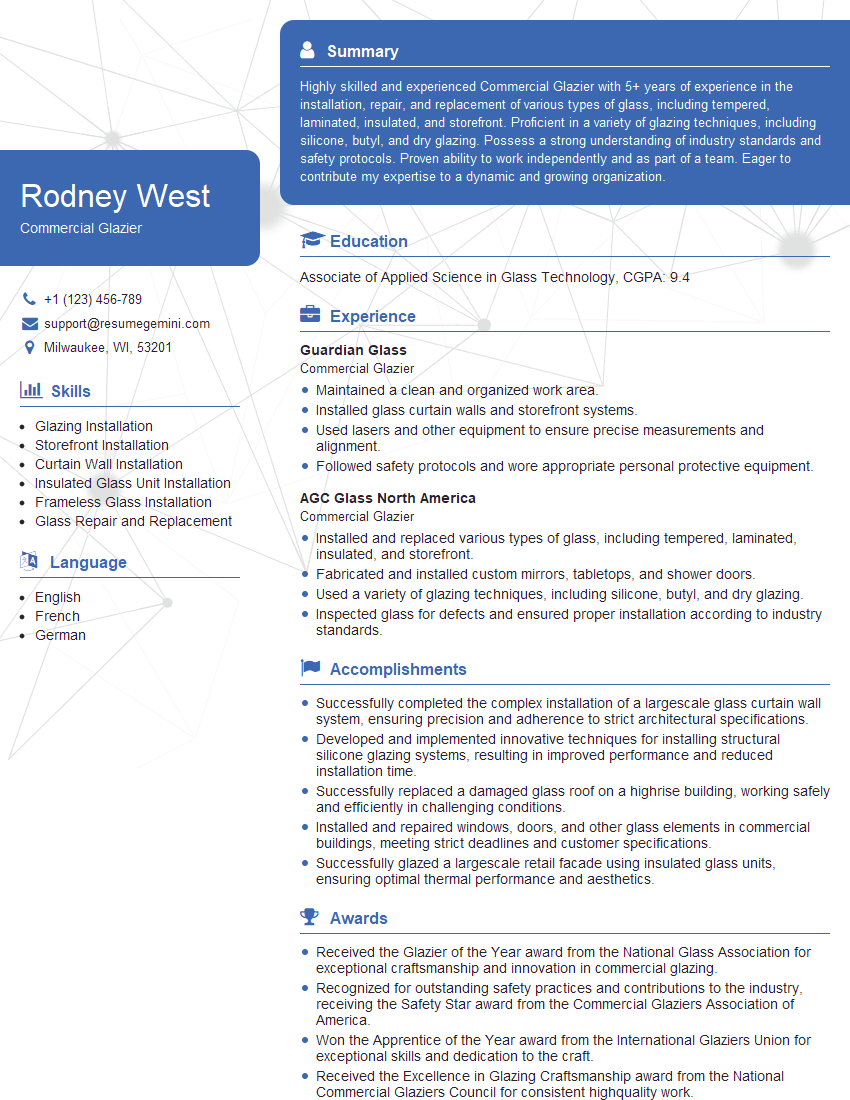
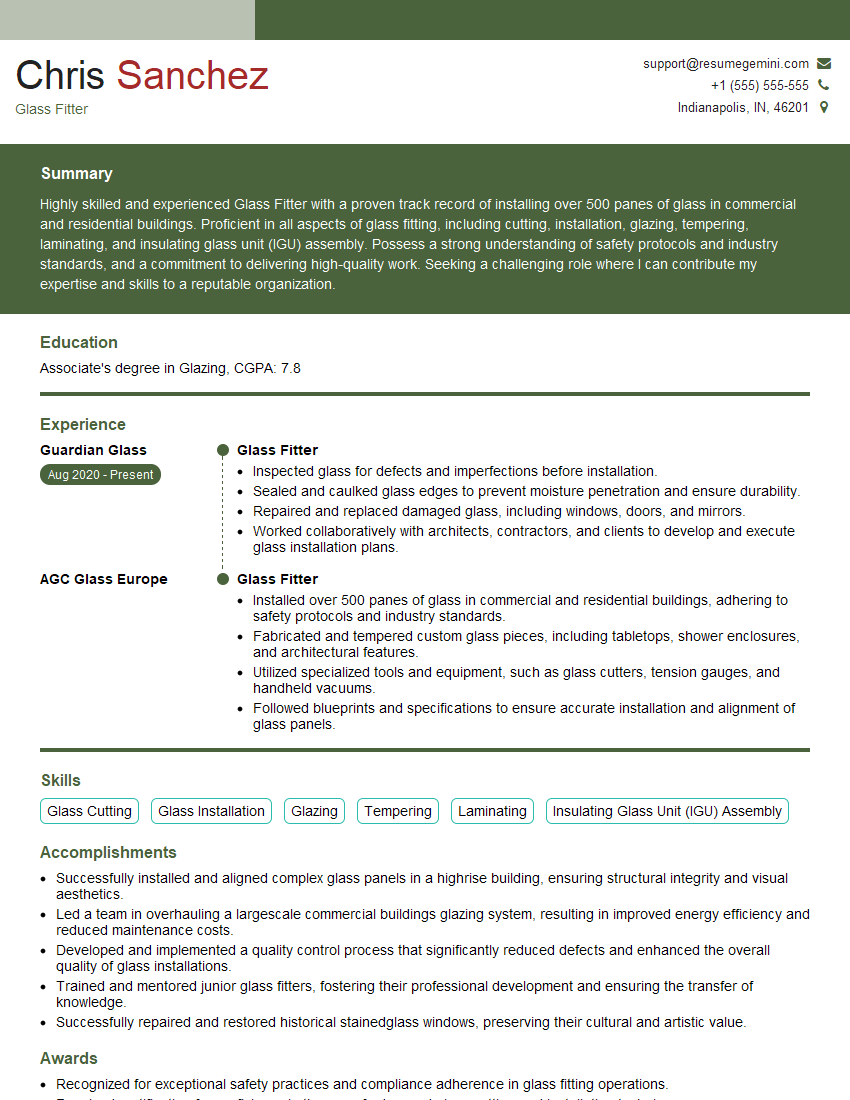
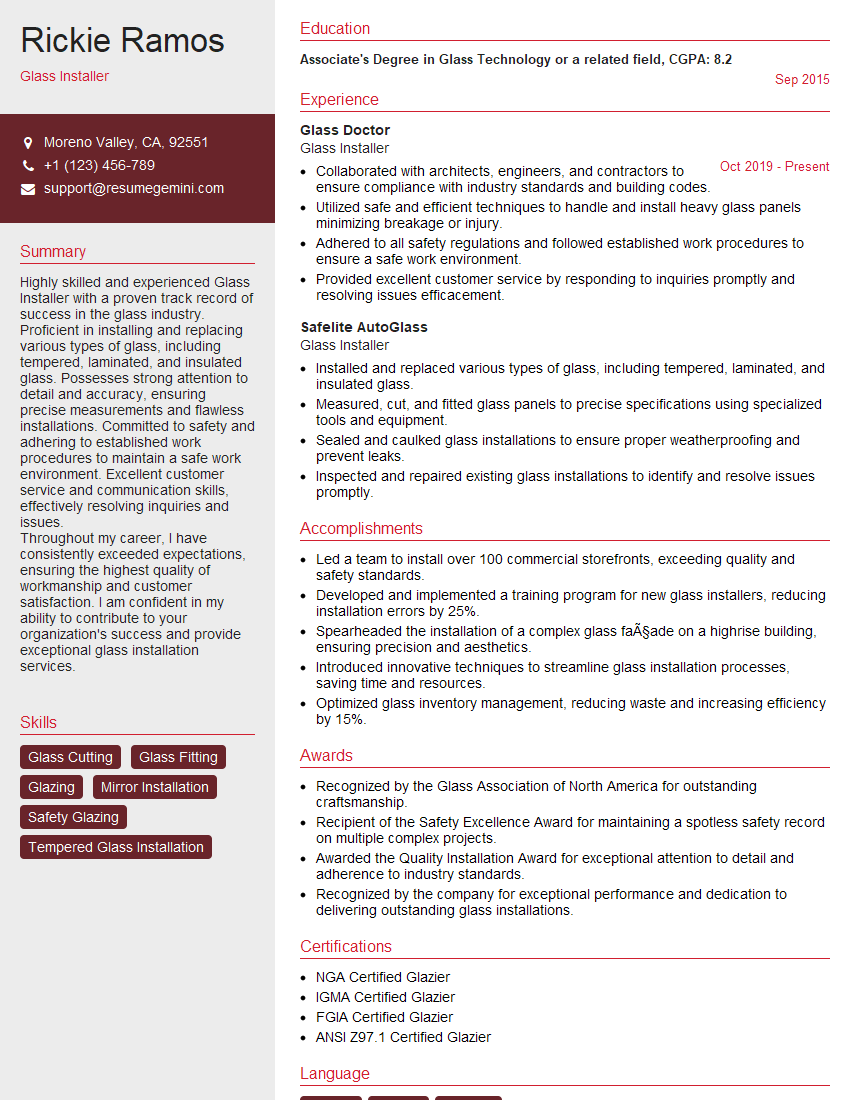
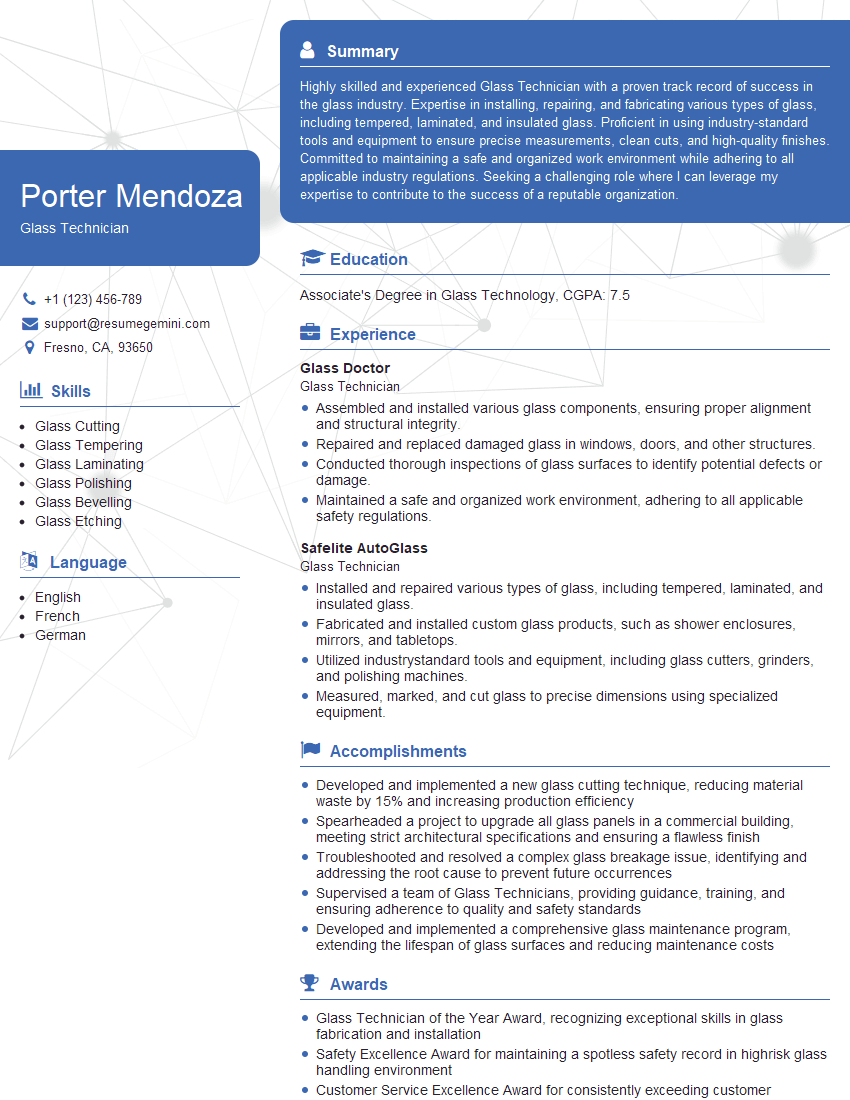
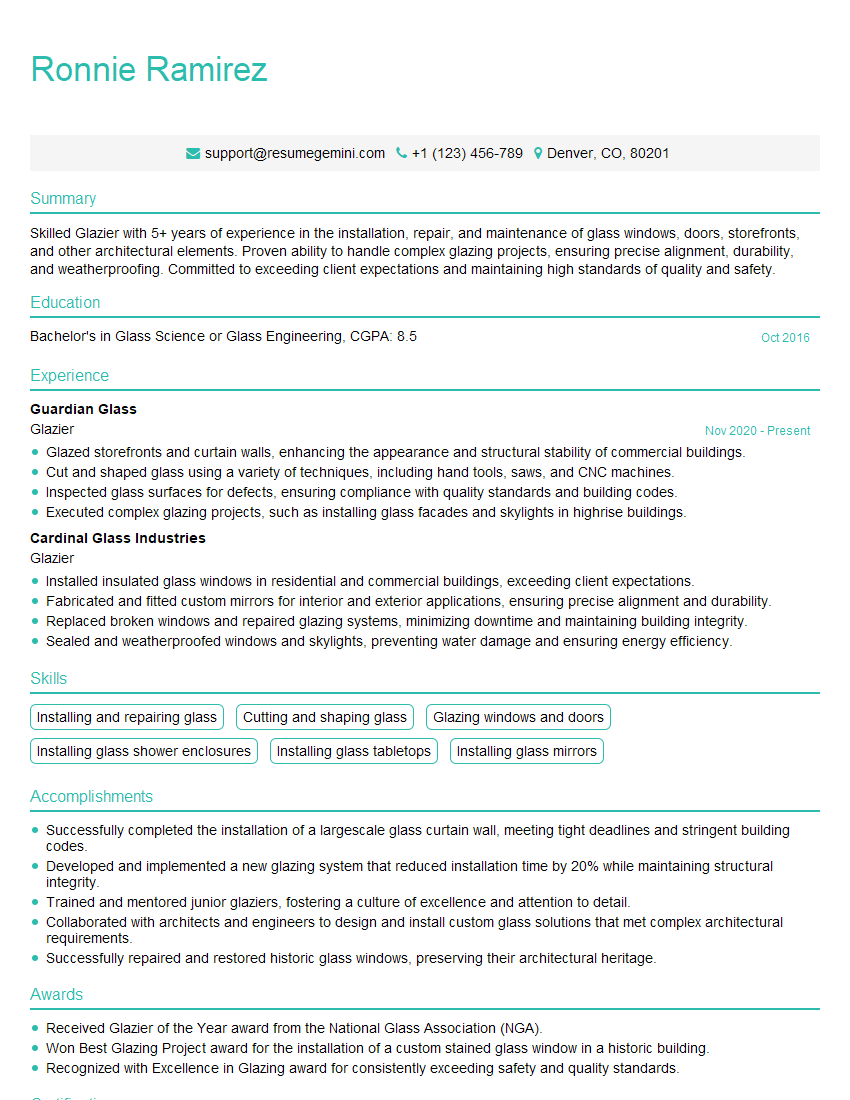
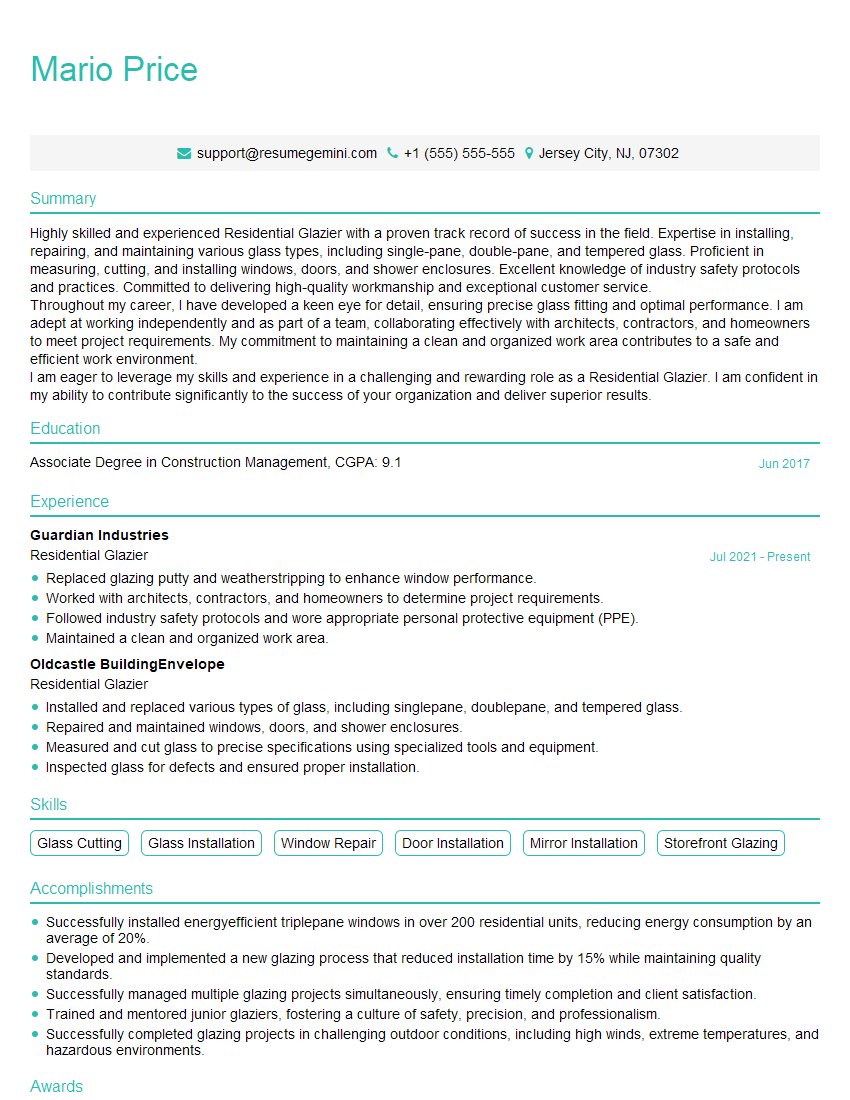
Mastering Glass Carpentry and Joinery opens doors to a rewarding career with excellent growth potential. Demand for skilled professionals in this field is consistently high, offering diverse opportunities and competitive salaries. To maximize your job prospects, it’s crucial to create an ATS-friendly resume that effectively highlights your skills and experience. ResumeGemini is a trusted resource to help you build a professional and impactful resume. They offer examples of resumes tailored to the Glass Carpentry and Joinery industry, providing you with a head-start in crafting a compelling application.
Explore more articles
Users Rating of Our Blogs
Share Your Experience
We value your feedback! Please rate our content and share your thoughts (optional).
What Readers Say About Our Blog
To the interviewgemini.com Webmaster.
Very helpful and content specific questions to help prepare me for my interview!
Thank you
To the interviewgemini.com Webmaster.
This was kind of a unique content I found around the specialized skills. Very helpful questions and good detailed answers.
Very Helpful blog, thank you Interviewgemini team.