The right preparation can turn an interview into an opportunity to showcase your expertise. This guide to Ultrafiltration Membrane System Maintenance interview questions is your ultimate resource, providing key insights and tips to help you ace your responses and stand out as a top candidate.
Questions Asked in Ultrafiltration Membrane System Maintenance Interview
Q 1. Explain the principle of ultrafiltration membrane separation.
Ultrafiltration (UF) membrane separation relies on a pressure-driven process to remove dissolved and suspended solids from a liquid stream. Imagine a sieve with incredibly tiny holes – that’s essentially what a UF membrane is. It uses a semi-permeable membrane with pore sizes typically ranging from 0.01 to 0.1 microns. When pressure is applied to the feed solution, the smaller molecules (like water and small salts) pass through the membrane, while larger molecules (like proteins, colloids, and bacteria) are retained, creating a concentrated retentate and a purified permeate.
This size-based separation is crucial in various industries, from water treatment to biopharmaceutical manufacturing, allowing for targeted purification and concentration of valuable components.
Q 2. Describe different types of ultrafiltration membranes and their applications.
Ultrafiltration membranes come in various materials and configurations, each suited for specific applications. Common types include:
- Polyethersulfone (PES): Known for high flux and good chemical resistance, often used in water treatment and food processing.
- Polyvinylidene fluoride (PVDF): Offers excellent chemical and thermal resistance, suitable for harsh environments and applications involving aggressive chemicals.
- Regenerated cellulose (RC): Biocompatible and cost-effective, frequently used in biopharmaceutical processes and sterile filtration.
- Ceramic membranes: Highly durable and resistant to cleaning agents, ideal for high-temperature applications and wastewater treatment.
The choice of membrane depends on factors like the feed solution’s characteristics (pH, temperature, chemical composition), the desired level of purification, and the overall system’s operating conditions. For example, a pharmaceutical company might choose a biocompatible RC membrane to ensure product purity, while a wastewater treatment plant might opt for a robust ceramic membrane to withstand the challenging conditions of industrial effluent.
Q 3. What are the common causes of membrane fouling and how are they addressed?
Membrane fouling is a significant challenge in UF systems, reducing efficiency and lifespan. It occurs when substances from the feed solution accumulate on the membrane surface or within its pores, hindering permeate flow. Common causes include:
- Organic fouling: Proteins, polysaccharides, and other organic macromolecules adhering to the membrane surface.
- Inorganic fouling: Scaling from minerals (calcium carbonate, silica) precipitating on the membrane.
- Biological fouling: Bacteria, algae, and other microorganisms colonizing the membrane.
- Colloidal fouling: Fine particles clogging the membrane pores.
Addressing these issues involves a multifaceted approach. Careful feed pretreatment (e.g., clarification, filtration) minimizes fouling potential. Regular cleaning and sanitization protocols (discussed further below) are essential to remove accumulated foulants. Optimization of operating parameters, such as transmembrane pressure and cross-flow velocity, can also reduce fouling by minimizing cake layer formation.
Q 4. Explain the process of membrane cleaning and sanitization.
Membrane cleaning and sanitization are crucial for maintaining system performance and preventing microbial contamination. Cleaning typically involves a stepwise process:
- Pre-rinse: Removing loose solids with clean water.
- Chemical cleaning: Using cleaning agents (acids, bases, or detergents) tailored to the specific type of fouling. The choice of cleaning agent depends on the dominant foulants. For instance, acidic cleaning solutions might be used to remove mineral scaling, while alkaline solutions are effective against organic fouling.
- Post-rinse: Thoroughly rinsing the membrane with clean water to remove residual cleaning agents.
- Sanitization: Using a disinfectant (e.g., sodium hypochlorite) to eliminate microorganisms and prevent biofouling.
- Final rinse: A final rinse with purified water ensures no residual disinfectant remains.
The frequency of cleaning depends on factors like feed water quality and the observed flux decline. A regular cleaning schedule (e.g., daily, weekly) is crucial to maintain optimal system performance. Improper cleaning can damage the membrane, while insufficient cleaning leads to reduced efficiency and potential contamination.
Q 5. How do you monitor membrane performance and identify potential issues?
Monitoring membrane performance is critical for proactive maintenance and preventing unexpected downtime. Key parameters include:
- Permeate flux: The volume of permeate produced per unit area per unit time (e.g., L/m²/h). A significant decline indicates fouling.
- Transmembrane pressure (TMP): The pressure difference across the membrane. A gradual increase indicates fouling or membrane compaction.
- Rejection rate: The percentage of target solutes retained by the membrane. Changes in rejection indicate membrane damage or fouling.
- Chemical cleaning efficiency: Comparing flux before and after cleaning to assess the effectiveness of the cleaning procedure.
Regular monitoring of these parameters allows for early detection of fouling or membrane degradation. Automated systems often collect this data continuously, triggering alerts if pre-defined thresholds are exceeded. Trend analysis provides insights into the fouling mechanisms and the effectiveness of cleaning procedures.
Q 6. Describe different membrane cleaning techniques (CIP, chemical cleaning).
Membrane cleaning techniques broadly fall into two categories:
- CIP (Clean-in-Place): This automated system uses chemicals and water to clean the membrane module without disassembly. CIP offers convenience, efficiency, and reduced downtime but requires specialized equipment.
- Chemical cleaning (manual): This involves dismantling the membrane module and cleaning the membranes individually. It provides more direct control but is time-consuming and labor-intensive. The choice between CIP and manual chemical cleaning depends on system size, complexity, and frequency of cleaning.
The choice of cleaning chemicals depends heavily on the type of fouling. For example, citric acid might be used to remove calcium carbonate scaling, while sodium hypochlorite can be used for sanitization. The concentration and contact time of the cleaning agents must be carefully controlled to avoid membrane damage.
Q 7. How do you interpret flux data and identify trends?
Flux data is fundamental to understanding membrane performance. Plotting flux over time reveals trends and provides valuable insights. A steadily decreasing flux indicates ongoing fouling. A sudden drop might indicate a severe fouling event or even membrane damage. Comparing flux before and after cleaning helps assess cleaning effectiveness. If the flux doesn’t recover to its initial level, it suggests irreversible fouling or membrane deterioration.
Trend analysis involves identifying patterns in flux data. For instance, seasonal variations might reflect changes in feed water quality. Recurring dips in flux might highlight the need for more frequent cleaning or adjustments to operating parameters. Careful analysis of flux data allows for proactive maintenance decisions, optimization of cleaning protocols, and ultimately, maximizes membrane lifespan and system efficiency.
Q 8. What are the key performance indicators (KPIs) for an ultrafiltration system?
Key Performance Indicators (KPIs) for an ultrafiltration (UF) system are crucial for monitoring its efficiency and identifying potential problems. They essentially tell us how well the system is performing its job of separating solids from liquids. Think of them as the vital signs of your UF system.
- Permeate Flux: This measures the volume of treated water (permeate) produced per unit area of membrane per unit time (e.g., LMH – liters per square meter per hour). A decreasing flux is a major warning sign.
- Transmembrane Pressure (TMP): This is the pressure difference across the membrane. A steadily increasing TMP indicates membrane fouling.
- Rejection Rate: This measures the system’s effectiveness in removing specific contaminants. For example, a 95% rejection rate for turbidity means 95% of the turbidity is removed. This will vary depending on the specific membrane and contaminants.
- Cleaning Cycle Frequency: How often the system requires cleaning reflects the level of fouling and the effectiveness of pretreatment.
- Energy Consumption: Monitoring the power used per unit of permeate produced helps optimize energy efficiency and reduce operating costs. A sudden spike in energy usage could indicate a problem like increased pressure or pump malfunction.
- Membrane Life and Condition: The lifespan and integrity of the membrane affect overall performance. Regularly inspecting for damage or degradation is crucial.
Regularly tracking these KPIs allows for proactive maintenance, optimized operation, and early detection of potential issues, minimizing downtime and ensuring consistent performance.
Q 9. How do you troubleshoot a decrease in permeate flux?
A decrease in permeate flux is a common problem in UF systems, often indicating membrane fouling – a buildup of materials on the membrane surface, reducing its permeability. Troubleshooting involves a systematic approach:
- Check the Pre-treatment System: Ensure your pre-treatment steps (filtration, coagulation, etc.) are functioning correctly. Insufficient pre-treatment is a primary cause of rapid fouling.
- Inspect the Membrane: Look for visible signs of fouling, such as discoloration or scaling. A clogged membrane significantly reduces flux.
- Monitor Transmembrane Pressure (TMP): A significant increase in TMP directly correlates with increased fouling. A small increase might be normal due to concentration polarization.
- Analyze the Feed Water Quality: Changes in feed water characteristics (e.g., increased turbidity, suspended solids) can drastically affect flux.
- Perform a Cleaning Cycle: Use appropriate chemical cleaning agents (following manufacturer’s recommendations) to remove foulants. Different types of fouling require different cleaning agents (e.g., chemical cleaning for organic fouling, acid cleaning for inorganic scaling).
- Check the System’s Operating Parameters: Verify that the operating pressure, temperature, and flow rate are within the optimal range.
- Inspect Pumps and Valves: Ensure that pumps are functioning correctly and that there are no blockages or leaks in the system’s piping.
If the flux doesn’t recover after these steps, you might need professional assistance or membrane replacement. Always meticulously document your findings and actions for future reference and troubleshooting.
Q 10. Explain the importance of pre-treatment in an ultrafiltration system.
Pre-treatment in an ultrafiltration system is absolutely crucial. It’s like preparing the ingredients before cooking – without it, your main course (UF filtration) is likely to fail. Its primary purpose is to protect the expensive and delicate ultrafiltration membranes from damage and premature failure by removing or reducing large particles and substances that can cause fouling.
Effective pre-treatment extends the life of your membranes, reduces cleaning frequency, improves permeate flux, and ensures consistent product quality. Without it, membranes clog quickly, leading to increased operating costs, decreased efficiency, and ultimately, premature membrane replacement.
Imagine trying to filter muddy water directly through a fine sieve; the sieve would quickly clog. Pre-treatment is the step that cleans the mud out first, allowing the sieve to effectively filter the remaining water.
Q 11. Describe the different types of pre-treatment methods used.
Several pre-treatment methods are used, often in combination, depending on the feed water quality:
- Screening: Removes large debris, such as sticks and leaves, protecting downstream equipment.
- Coagulation/Flocculation: Uses chemicals to destabilize suspended particles, causing them to clump together into larger flocs that are easier to remove.
- Sedimentation: Allows larger particles to settle out of the water by gravity. This is often used in conjunction with coagulation/flocculation.
- Clarification/Sediment Filtration: Uses sand, gravel, or other media to remove suspended solids. This is a common and effective method.
- Microfiltration (MF): A type of membrane filtration that removes even smaller particles than screening or sedimentation. It’s often used as a pre-treatment step for UF.
The choice of pre-treatment method depends on factors such as the nature and concentration of contaminants in the feed water, the desired level of treatment, and the overall budget and space constraints.
Q 12. How do you maintain optimal operating pressure in an ultrafiltration system?
Maintaining optimal operating pressure in a UF system is vital for efficient and sustainable operation. Too low, and the flux will be insufficient; too high, and it can damage the membranes and increase energy consumption.
Maintaining Optimal Pressure Involves:
- Regular Monitoring: Use pressure gauges at various points in the system to constantly check the pressure.
- Proper Pump Selection and Maintenance: Ensure that the pumps are sized correctly for the system’s capacity and that they are regularly maintained to ensure efficient operation.
- Regular Cleaning: Fouling increases pressure drop across the membranes, so regular cleaning is essential.
- Pressure Control Valves: Employing pressure control valves to regulate the system pressure ensures the pressure remains within the optimal range.
- Backwashing: Periodically reversing the flow of water through the membranes helps remove accumulated foulants and maintain lower pressure.
The optimal pressure range is typically specified by the membrane manufacturer and needs to be adjusted based on various factors like feed water quality and desired permeate flux.
Q 13. What are the safety procedures associated with handling ultrafiltration membranes?
Safety procedures when handling ultrafiltration membranes are crucial because of potential health hazards from cleaning chemicals and the risk of physical injury. Always follow these guidelines:
- Personal Protective Equipment (PPE): Wear appropriate PPE, including gloves, safety glasses, and lab coats, when handling membranes, cleaning solutions, and system components.
- Chemical Handling: Always follow the manufacturer’s instructions and safety data sheets (SDS) for all cleaning chemicals. Use appropriate ventilation to avoid inhalation of fumes.
- Membrane Handling: Handle membranes carefully to avoid damage. Use clean tools and procedures when installing or removing membranes.
- Pressure Relief: Always ensure proper pressure relief before performing any maintenance tasks on the system.
- Proper Training: All personnel involved in the operation and maintenance of the UF system should receive proper training on safety procedures.
- Emergency Procedures: Establish emergency procedures and ensure personnel are trained in responding to potential spills or equipment malfunctions.
Safety is paramount in this field, and thorough training and adherence to safety procedures are not optional.
Q 14. How do you handle membrane replacement and disposal?
Membrane replacement and disposal are important aspects of UF system maintenance. The process should be conducted safely and responsibly.
Membrane Replacement:
- Inspection: Before replacement, carefully inspect the membranes for damage, fouling, or any other signs of degradation. Document your findings.
- Preparation: Follow the manufacturer’s instructions for proper membrane removal and installation. Ensure the system is depressurized before removing membranes.
- Installation: Install the new membranes carefully, ensuring they are correctly seated and free of any defects.
Membrane Disposal:
- Regulations: Consult local and national regulations regarding the disposal of used membranes. Some membranes may contain hazardous materials.
- Cleaning: If necessary, carefully clean the used membranes before disposal to remove any residual chemicals or foulants.
- Proper Disposal Methods: Follow the recommended disposal methods outlined by the manufacturer and relevant environmental agencies. This could involve incineration, specialized waste disposal facilities, or other methods.
Responsible membrane disposal minimizes environmental impact and ensures compliance with regulations.
Q 15. Explain the importance of regular maintenance schedules for ultrafiltration systems.
Regular maintenance is paramount for ultrafiltration (UF) systems to ensure optimal performance, prolong membrane lifespan, and maintain consistent water quality. Think of it like servicing your car – regular checks prevent major breakdowns and costly repairs. Without regular maintenance, fouling (accumulation of solids on the membrane surface) becomes severe, leading to reduced permeate flux (water flow), increased energy consumption, and ultimately, system failure.
A well-defined maintenance schedule includes tasks such as:
- Regular inspections: Checking for leaks, pressure drops, and signs of fouling.
- Cleaning cycles: Implementing chemical cleaning to remove accumulated foulants.
- Backwashing: Periodically reversing the flow to dislodge loosely bound materials.
- Membrane replacement: Replacing membranes when their performance degrades beyond acceptable limits.
A proactive maintenance approach minimizes downtime, reduces operational costs, and ensures the consistent delivery of high-quality treated water.
Career Expert Tips:
- Ace those interviews! Prepare effectively by reviewing the Top 50 Most Common Interview Questions on ResumeGemini.
- Navigate your job search with confidence! Explore a wide range of Career Tips on ResumeGemini. Learn about common challenges and recommendations to overcome them.
- Craft the perfect resume! Master the Art of Resume Writing with ResumeGemini’s guide. Showcase your unique qualifications and achievements effectively.
- Don’t miss out on holiday savings! Build your dream resume with ResumeGemini’s ATS optimized templates.
Q 16. What are the common types of membrane failures and their causes?
Membrane failure in UF systems can stem from various causes, often leading to different types of damage. Imagine the membrane as a delicate filter; even small problems can drastically impact its effectiveness. Common failures include:
- Fouling: This is the most prevalent issue, where organic matter, inorganic minerals, or microorganisms accumulate on the membrane surface, reducing permeability. This is like clogging a drainpipe slowly until the flow stops.
- Chemical attack: Exposure to incompatible chemicals can degrade the membrane material, leading to irreversible damage. Think of strong acids dissolving a piece of metal.
- Physical damage: Mechanical stress, such as excessive pressure or improper handling, can cause tears or punctures in the membrane. This is similar to puncturing a balloon.
- Biological degradation: Microbial growth within the membrane structure can weaken the material and compromise its integrity. This is analogous to wood rotting from prolonged exposure to moisture.
Understanding the cause of failure is crucial for implementing preventative measures and selecting appropriate cleaning or replacement strategies.
Q 17. How do you determine the optimal cleaning cycle for your ultrafiltration system?
Determining the optimal cleaning cycle requires a careful balance of factors. It’s a bit like deciding how often to wash your clothes – too often and it’s wasteful, too infrequently and they get too dirty. Key parameters include:
- Permeate flux decline: Monitor the water flow rate through the membrane. A significant decrease indicates increasing fouling and necessitates cleaning.
- Transmembrane pressure (TMP) increase: Increased pressure required to maintain the same flow rate signifies membrane resistance due to fouling.
- Water quality parameters: Analyze the quality of the treated water to ensure it meets regulatory standards.
- Type of feed water: The composition of the feedwater greatly influences the fouling rate. For example, high levels of suspended solids would necessitate more frequent cleaning.
Establishing a baseline for these parameters and monitoring changes will guide decisions about cleaning frequency. Regular cleaning before excessive fouling minimizes the need for aggressive cleaning agents and reduces the risk of membrane damage.
Q 18. Describe the process of selecting the appropriate membrane for a specific application.
Membrane selection is crucial for successful UF operation. It’s like choosing the right tool for a job. Factors to consider include:
- Feedwater characteristics: The type and concentration of suspended solids, organic matter, and chemicals in the feedwater determine the appropriate membrane material and pore size. For instance, treating wastewater would require different membrane properties than treating surface water.
- Desired permeate quality: The required level of purification dictates the membrane’s rejection capabilities. A membrane with higher rejection would be chosen for applications needing very pure water.
- Operating conditions: Factors like temperature, pressure, and pH influence membrane performance and lifespan. Choosing a membrane with good chemical and thermal stability is essential under harsh conditions.
- Cost considerations: Membrane cost, cleaning frequency, and lifespan need to be balanced against the overall cost of ownership.
Careful assessment of these factors ensures the selection of a membrane that is efficient, durable, and cost-effective for the specific application.
Q 19. What are the environmental considerations related to ultrafiltration membrane systems?
Environmental considerations are integral to UF system design and operation. Sustainability isn’t just a buzzword – it’s a core element. Key aspects include:
- Water consumption: The amount of water used for backwashing and cleaning needs to be minimized.
- Energy consumption: Efficient pumping and operation reduce the overall energy footprint of the system.
- Chemical usage: Minimizing the use of cleaning chemicals and selecting environmentally friendly alternatives is essential.
- Wastewater management: Proper disposal or treatment of cleaning chemicals and wastewater is crucial to prevent environmental pollution.
- Membrane disposal: At the end of their lifespan, membranes must be disposed of in an environmentally responsible manner.
Designing and operating a UF system with a focus on minimizing environmental impact is becoming increasingly important.
Q 20. How do you ensure compliance with regulatory standards for water treatment?
Ensuring compliance with regulatory standards for water treatment involves adhering to specific guidelines dictated by local, regional, and national authorities. These vary based on the application and intended use of the treated water. It’s akin to following a strict recipe for a perfect outcome. Key steps include:
- Regular monitoring and testing: Monitoring parameters such as turbidity, pH, and microbial levels ensures the treated water meets the required quality standards.
- Record keeping: Maintaining detailed records of operations, maintenance activities, and water quality test results is crucial for demonstrating compliance.
- Calibration of instruments: Ensuring that all measuring instruments are properly calibrated is critical for accurate and reliable data.
- Operator training: Properly trained operators are essential to ensure that the system is operated and maintained according to regulations.
- Compliance audits: Undergoing regular compliance audits helps identify areas for improvement and ensures ongoing adherence to the standards.
Failure to comply with regulations can result in penalties, legal actions, and operational disruptions.
Q 21. Explain the role of backwashing in maintaining membrane integrity.
Backwashing is a crucial step in maintaining membrane integrity. It’s like rinsing your clothes after use to prevent them from getting too dirty. The process involves reversing the flow of water through the membrane, effectively dislodging loosely bound foulants before they accumulate and cause irreversible damage. Benefits include:
- Reduced fouling: Regular backwashing prevents the build-up of foulants, increasing membrane permeability and extending lifespan.
- Improved permeate flux: By removing foulants, backwashing improves water flow through the membrane.
- Reduced cleaning frequency: By removing loose foulants, backwashing lessens the need for chemical cleaning.
- Lower energy consumption: Maintaining high permeate flux minimizes the energy required for pumping.
The backwashing parameters, such as flow rate, pressure, and duration, need to be optimized based on the feedwater characteristics and membrane type to avoid membrane damage.
Q 22. How do you diagnose and resolve problems related to membrane integrity?
Diagnosing membrane integrity issues in an ultrafiltration system starts with observing performance indicators like permeate flux and transmembrane pressure (TMP). A significant drop in flux with a simultaneous rise in TMP is a strong indicator of membrane fouling or damage.
Troubleshooting Steps:
- Visual Inspection: A physical inspection of the membrane modules can reveal obvious damage like cracks or punctures. I’ve seen instances where a small tear, barely visible to the naked eye, drastically impacted performance.
- Integrity Testing: More sophisticated methods include integrity testing using air or water bubble point tests. These tests determine the pore size distribution and identify potential leaks within the membrane. A bubble point test involves applying increasing pressure to the membrane; a sudden increase in air passage indicates a flaw.
- Flux Decline Analysis: Tracking flux decline over time helps determine the type of fouling (reversible or irreversible). Sharp flux drops suggest severe fouling, while gradual declines might indicate cake layer formation. This data informs cleaning strategies.
- Chemical Cleaning: If fouling is the culprit, we implement a cleaning-in-place (CIP) process using various chemicals depending on the type of fouling. For example, acid cleaning addresses inorganic scaling, while enzymatic cleaning targets organic matter. Careful selection of cleaning agents prevents membrane damage.
- Membrane Replacement: In cases of irreversible damage, as indicated by consistently low flux despite thorough cleaning, membrane replacement becomes necessary. This is a cost factor but crucial for maintaining system efficiency.
For example, in one project, we diagnosed a sudden flux drop using a combination of TMP monitoring and integrity testing. The bubble point test revealed multiple leaks in a specific module. Replacing that module restored the system to optimal performance.
Q 23. What are the common instrumentation and controls used in ultrafiltration systems?
Ultrafiltration systems rely on a suite of instrumentation and controls to maintain optimal operation. These are crucial for monitoring and controlling the process parameters.
- Flow Meters: Measure feed and permeate flow rates, essential for calculating flux and identifying flow restrictions.
- Pressure Transducers: Monitor transmembrane pressure (TMP), feed pressure, and permeate pressure. Changes in these pressures indicate fouling or other problems.
- pH and Conductivity Meters: Monitor the pH and conductivity of both the feed and permeate streams. These measurements are critical for evaluating cleaning effectiveness and identifying potential chemical imbalances.
- Turbidity Meters: Measure the turbidity of the feed and permeate to assess the effectiveness of the filtration process.
- Temperature Sensors: Monitor temperature at various points in the system; temperature fluctuations can influence membrane performance and chemical reactions during cleaning.
- Level Sensors: Maintain consistent liquid levels in the system to prevent dry-running and ensure efficient operation.
- Programmable Logic Controllers (PLCs): Control and automate the system operation, including CIP cycles, valve actuation, and data acquisition.
- Supervisory Control and Data Acquisition (SCADA) Systems: Integrate and monitor data from all instrumentation, providing a centralized overview of the system’s performance.
For example, a PLC can automatically initiate a CIP cycle based on preset TMP thresholds, reducing manual intervention and ensuring timely cleaning.
Q 24. How do you interpret data from these instruments to optimize system performance?
Interpreting data from these instruments is key to optimizing performance. I use a combination of trending, statistical process control (SPC), and root cause analysis.
- Trending: Graphically visualizing data over time reveals patterns and trends. For example, a gradual decline in flux over several weeks suggests a slow fouling build-up, necessitating less aggressive cleaning.
- Statistical Process Control (SPC): SPC charts like control charts help identify deviations from normal operating parameters. Early detection of abnormalities allows for prompt intervention, preventing major issues.
- Root Cause Analysis: When problems arise, I use tools like Fishbone diagrams to identify the root cause, not just the symptoms. This might involve reviewing operating logs, maintenance records, and chemical analysis.
For instance, if the SPC chart shows a sudden increase in TMP, I investigate if it is related to changes in feed characteristics, membrane fouling, or a pump malfunction. By correlating data from various instruments, we pinpoint the source and implement corrective actions.
Q 25. Describe your experience with different types of ultrafiltration membrane modules.
My experience encompasses various ultrafiltration membrane modules, including:
- Spiral Wound Modules: These are widely used due to their high packing density and relatively low cost. I’ve worked extensively with these, optimizing their cleaning protocols to prevent irreversible fouling.
- Hollow Fiber Modules: Offer high surface area to volume ratio, ideal for high-flux applications. However, they are more prone to clogging, necessitating careful pre-treatment of the feed stream.
- Plate and Frame Modules: Offer easy access for cleaning and inspection, making them suitable for applications with high fouling potential. However, they require more space compared to spiral wound or hollow fiber modules.
- Tubular Modules: Robust and resistant to fouling, these are ideal for processing difficult-to-filter streams. However, they have lower packing density compared to other module types.
The choice of module type depends on factors like feed characteristics, desired flux, cleaning requirements, and available space.
Q 26. How do you manage and interpret data from online monitoring systems?
Online monitoring systems provide real-time data on key performance indicators. I use this data for:
- Real-time Performance Monitoring: Detecting abnormalities immediately, allowing for prompt intervention to prevent larger issues. For instance, a sudden rise in TMP triggers an automatic alarm and alerts the operator to potential fouling.
- Predictive Maintenance: Analyzing trends and patterns to predict potential failures. This data assists in scheduling preventative maintenance, reducing downtime and extending the lifespan of the system.
- Process Optimization: Fine-tuning operating parameters, such as flow rate and pressure, to maximize permeate flux and minimize energy consumption. This data-driven approach continuously enhances efficiency.
- Data Logging and Reporting: Generating detailed reports for compliance and process improvement. These reports can also track cleaning effectiveness and identify areas for optimization.
Efficient data interpretation from these systems relies on establishing clear baselines, setting appropriate thresholds for alarms, and analyzing historical trends.
Q 27. What are your experiences with different membrane materials (e.g., polysulfone, ceramic)?
My experience covers various membrane materials, each with its own strengths and weaknesses:
- Polysulfone (PS): A common and cost-effective material with good chemical resistance. However, it has a lower tolerance to high temperatures and strong chemicals.
- Ceramic Membranes: Offer superior chemical resistance and high thermal stability. They are suitable for aggressive cleaning agents and high-temperature applications but are usually more expensive than polymeric membranes.
- Polyvinylidene fluoride (PVDF): Combines excellent chemical and thermal resistance with good mechanical strength. It’s a versatile choice for many applications but is more expensive than polysulfone.
Material selection involves considering the chemical composition and operating conditions of the feed stream, the desired cleaning protocol, and the overall budget. For example, in processing a highly acidic stream, ceramic membranes would be preferred for their superior chemical stability.
Q 28. Explain your experience with automated cleaning systems and their maintenance.
Automated cleaning systems (CIP) are crucial for efficient and consistent membrane cleaning. My experience includes designing, implementing, and maintaining various CIP systems.
- CIP System Design: Proper design involves selecting appropriate cleaning agents, optimizing cleaning cycles, and ensuring adequate flow distribution across the membrane modules. Careful consideration of chemical compatibility with membrane material is vital.
- CIP Cycle Optimization: Regular monitoring of cleaning effectiveness, adjusting parameters such as chemical concentration, temperature, and cycle duration for optimal cleaning without membrane damage. I often use experimental design methods to systematically optimize the cleaning protocols.
- CIP System Maintenance: Preventive maintenance includes regular inspection of pumps, valves, and piping for wear and tear. This includes checking for leaks, cleaning chemical tanks, and calibrating instruments.
- Troubleshooting CIP System Problems: This can involve identifying the cause of poor cleaning performance, troubleshooting pump or valve failures, and addressing issues with chemical delivery.
I once optimized a CIP system by implementing a more effective cleaning cycle, reducing cleaning time by 20% while maintaining excellent cleaning performance. This reduced operational costs and downtime.
Key Topics to Learn for Ultrafiltration Membrane System Maintenance Interview
- Membrane Fouling and Cleaning: Understanding the different types of fouling (organic, inorganic, biological), their impact on system performance, and effective cleaning strategies (chemical, physical, backwashing).
- Flux Decline and Recovery: Analyzing the causes of flux decline (membrane fouling, compaction, concentration polarization), implementing strategies for flux recovery, and interpreting performance data.
- Membrane Integrity Testing: Mastering various integrity testing methods (bubble point, diffusion, pressure decay), interpreting test results, and identifying potential membrane damage or leaks.
- System Operation and Control: Understanding the operational parameters (pressure, flow rate, permeate quality), troubleshooting common operational issues, and utilizing automated control systems.
- Preventive Maintenance Schedules: Developing and implementing effective preventive maintenance plans, including regular inspections, cleaning cycles, and component replacements.
- Troubleshooting and Repair: Diagnosing system malfunctions, identifying the root causes of failures, and performing necessary repairs or replacements of components (pumps, valves, sensors).
- Safety Procedures and Regulations: Adhering to safety protocols, handling hazardous chemicals safely, and understanding relevant industry regulations and compliance requirements.
- Data Analysis and Reporting: Collecting and analyzing system performance data, creating reports, and using data-driven decision-making to optimize system operation and maintenance.
- Advanced Membrane Technologies: Familiarizing yourself with different membrane types (e.g., ceramic, polymeric), their properties and applications, and emerging technologies in ultrafiltration.
Next Steps
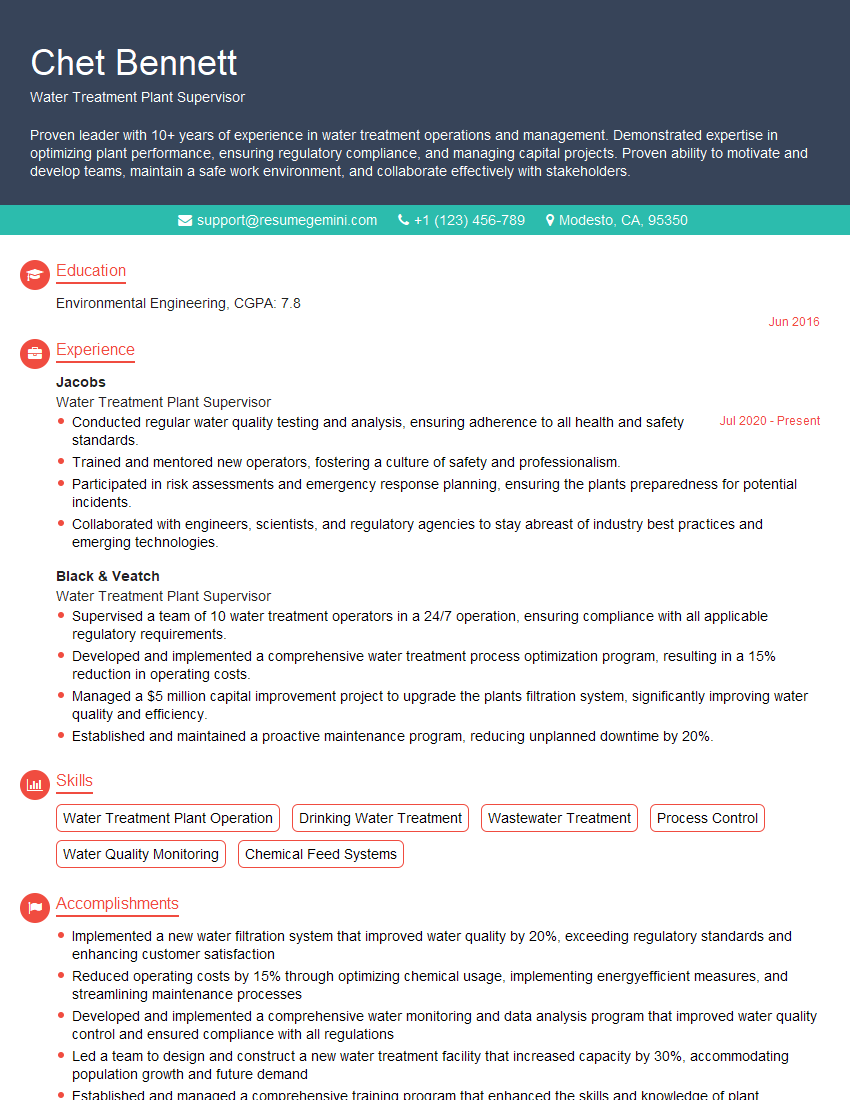
Mastering Ultrafiltration Membrane System Maintenance is crucial for career advancement in this growing field. A strong understanding of these concepts will significantly improve your interview performance and open doors to exciting opportunities. To maximize your job prospects, creating a professional and ATS-friendly resume is essential. ResumeGemini is a trusted resource that can help you build a compelling resume tailored to your skills and experience. We provide examples of resumes specifically designed for candidates in Ultrafiltration Membrane System Maintenance to help you showcase your expertise effectively. Take the next step towards your dream job – create a winning resume with ResumeGemini today!
Explore more articles
Users Rating of Our Blogs
Share Your Experience
We value your feedback! Please rate our content and share your thoughts (optional).
What Readers Say About Our Blog
To the interviewgemini.com Webmaster.
Very helpful and content specific questions to help prepare me for my interview!
Thank you
To the interviewgemini.com Webmaster.
This was kind of a unique content I found around the specialized skills. Very helpful questions and good detailed answers.
Very Helpful blog, thank you Interviewgemini team.