Preparation is the key to success in any interview. In this post, we’ll explore crucial Skill in developing and implementing training programs interview questions and equip you with strategies to craft impactful answers. Whether you’re a beginner or a pro, these tips will elevate your preparation.
Questions Asked in Skill in developing and implementing training programs Interview
Q 1. Describe your experience in needs analysis for training programs.
Needs analysis is the cornerstone of any effective training program. It’s the process of systematically identifying and documenting the performance gaps that training can address. I approach this systematically, using a blend of methods to ensure a comprehensive understanding. This typically includes:
- Performance data analysis: Reviewing key performance indicators (KPIs) to pinpoint areas where employees are underperforming. For example, if sales conversion rates are low, I might look at sales call recordings and data on sales techniques used to identify weaknesses.
- Surveys and questionnaires: Gathering feedback directly from employees, managers, and customers to understand their perspectives on skill gaps and training needs. This can involve using tools like SurveyMonkey or Qualtrics to create and distribute tailored questionnaires.
- Interviews: Conducting one-on-one interviews with key stakeholders to gain deeper insights into specific challenges and training requirements. These provide a richer understanding that surveys alone may miss.
- Observation: Directly observing employees in their work environment to identify areas for improvement. This might include shadowing employees to see firsthand how they perform tasks and identify bottlenecks or areas of uncertainty.
- Document review: Examining existing job descriptions, performance reviews, and other relevant documentation to understand the required knowledge, skills, and abilities (KSAs) for each role.
By combining these methods, I develop a clear picture of the training needs, prioritizing the most impactful areas for improvement and ensuring the program directly addresses organizational objectives. For instance, in a recent project for a customer service team, a needs analysis revealed a lack of understanding of new software features, leading to longer call handling times. This information then directly informed the curriculum design.
Q 2. Explain your process for designing a training curriculum.
Designing a training curriculum is a structured process that ensures the learning objectives are met effectively. My approach involves several key steps:
- Defining learning objectives: Clearly stating what participants should know, understand, and be able to do after completing the training. These objectives use the SMART criteria (Specific, Measurable, Achievable, Relevant, Time-bound).
- Content development: Creating engaging and relevant learning materials, including presentations, activities, case studies, and assessments. I strive for a variety of delivery methods to cater to different learning styles.
- Curriculum sequencing: Structuring the content logically, ensuring that simpler concepts are taught before more complex ones. This facilitates a gradual build-up of knowledge and skill.
- Assessment planning: Developing methods to measure the effectiveness of the training, including pre- and post-tests, quizzes, role-playing exercises, and practical application assessments. This ensures learners have internalized the knowledge.
- Technology integration: Strategically incorporating technology where appropriate, whether through LMS platforms, online simulations, or interactive learning tools.
- Pilot testing: Before full deployment, I conduct a pilot test with a small group of participants to identify any areas for improvement in the curriculum before its wider release.
For example, in a leadership development program, I structured the curriculum to progress from foundational leadership concepts to advanced topics like strategic decision-making, including practical exercises like case study analysis and leadership simulations at each level.
Q 3. What are the key principles of adult learning theory you apply in your work?
Adult learning theory, also known as andragogy, significantly influences my approach. Key principles I apply include:
- Self-concept: Adults are self-directed learners; I empower participants by giving them choices and control over their learning experience. For example, offering different learning paths or allowing them to apply concepts to their own work projects.
- Prior experience: Adults bring rich life and work experience to the learning environment; I incorporate their existing knowledge and build upon it, making learning relevant to their real-world situations.
- Readiness to learn: Adults are most likely to learn when they perceive a need to learn; I focus on clearly demonstrating the relevance of the training to participants’ roles and goals.
- Orientation to learning: Adults prefer to learn by problem-solving and applying what they learn; I design interactive activities, simulations, and real-world case studies to encourage active participation and application of knowledge.
- Motivation to learn: Adults are motivated by internal factors and the relevance of the learning to their professional needs; I clearly articulate the benefits of the training and create a supportive learning environment that fosters confidence.
For example, in a technical skills training, I incorporated real-world case studies and problem-solving scenarios relevant to their job functions, rather than focusing solely on theoretical lectures. This ensured the training’s relevance and fostered engagement.
Q 4. How do you assess the effectiveness of a training program?
Assessing training effectiveness is crucial to demonstrate its ROI and ensure continuous improvement. I use a multi-faceted approach involving:
- Kirkpatrick’s Four Levels of Evaluation: This framework provides a structured approach to evaluating training effectiveness. Level 1 (Reaction) measures learner satisfaction; Level 2 (Learning) assesses knowledge gain; Level 3 (Behavior) examines changes in on-the-job performance; and Level 4 (Results) evaluates the overall impact on organizational goals.
- Pre- and post-tests: Measuring knowledge and skill levels before and after the training to quantify learning gains. These tests should directly correlate with the training objectives.
- Performance data: Tracking key performance indicators (KPIs) before, during, and after the training to assess its impact on performance. This could involve analyzing sales figures, customer satisfaction ratings, or error rates.
- Feedback surveys: Gathering feedback from learners, managers, and other stakeholders to understand their perspectives on the training’s effectiveness and identify areas for improvement. This can be through surveys or focus groups.
- Return on investment (ROI) analysis: Calculating the return on investment of the training program, comparing the costs of the program against the benefits achieved.
For instance, in a sales training program, I tracked sales figures and customer satisfaction scores before and after the training, demonstrating a significant increase in both and justifying the program’s cost.
Q 5. What methods do you use to deliver training (e.g., online, in-person, blended)?
I leverage a variety of training delivery methods depending on the specific training objectives, learner preferences, and available resources. These include:
- In-person training: This method is ideal for interactive sessions, hands-on activities, and collaborative learning. It fosters strong interpersonal connections and immediate feedback.
- Online training: This approach allows for accessibility, flexibility, and scalability. I use platforms like e-learning modules, webinars, and virtual classrooms for delivering content asynchronously or synchronously.
- Blended learning: This combines the strengths of both in-person and online training, offering a comprehensive and engaging learning experience. This may involve online modules supplemented by face-to-face workshops or coaching sessions.
- Microlearning: Delivering short, focused learning modules that are easily accessible and digestible. This is ideal for delivering just-in-time learning or reinforcing specific skills.
- Gamification: Incorporating game-like elements to make learning more engaging and motivating. This can include points, badges, leaderboards, and challenges.
The choice of method is always carefully considered based on the unique needs of the training program. For example, a technical training program might benefit from hands-on workshops, while a compliance training program might be best delivered online using microlearning modules.
Q 6. What experience do you have with learning management systems (LMS)?
I have extensive experience working with Learning Management Systems (LMS). My expertise encompasses various aspects, including:
- Content uploading and management: Uploading and organizing course materials, assessments, and other resources within the LMS. This includes ensuring ease of access and navigation for learners.
- Course design and development within LMS platforms: Creating engaging and effective online courses using the features and tools available within the LMS, including interactive elements, quizzes, and progress tracking.
- Learner management: Managing learner accounts, tracking progress, and providing support to learners throughout the training process.
- Reporting and analytics: Utilizing LMS reporting features to track learner progress, identify areas for improvement, and measure the effectiveness of the training program. This provides data-driven insights for optimizing future programs.
- Integration with other systems: Integrating the LMS with other HR systems or business intelligence tools to streamline data management and reporting.
I’ve worked with various LMS platforms including Moodle, Canvas, and Cornerstone OnDemand, adapting my approach to best leverage the features of each platform to create an effective and engaging learning environment. For instance, in a recent project, I used the reporting features in Cornerstone OnDemand to track learner progress and identify those requiring additional support, ultimately improving completion rates.
Q 7. How do you handle unexpected challenges during training delivery?
Unexpected challenges during training delivery are inevitable. My approach to handling them emphasizes flexibility, resourcefulness, and a focus on learner needs. This includes:
- Proactive planning: Anticipating potential issues and developing contingency plans. This might involve having backup materials, alternative delivery methods, or a support team on standby.
- Open communication: Maintaining open communication with learners and stakeholders, addressing concerns promptly and transparently. This helps manage expectations and prevent minor issues from escalating.
- Adaptability and flexibility: Being willing to adjust the training plan as needed to accommodate unexpected events or learner needs. This might involve adjusting the pace, content, or delivery method.
- Problem-solving skills: Using critical thinking and problem-solving skills to address unforeseen issues effectively and efficiently. This could involve troubleshooting technical problems, resolving conflicts, or adapting the training to unforeseen circumstances.
- Seeking support: Knowing when to seek assistance from colleagues or supervisors to handle situations that are beyond my expertise or capacity.
For example, during an in-person training session, a technical issue with the projector occurred. I quickly switched to a backup plan, using a shared screen via laptop and seamlessly continuing the session, minimizing disruption to the learners. The situation reinforced the importance of having a robust backup plan and underscores the need for adaptability in training delivery.
Q 8. Describe your experience developing training materials (e.g., presentations, handouts, online modules).
Developing effective training materials is a multi-faceted process requiring careful planning and execution. My experience encompasses creating a wide range of materials, from engaging presentations using tools like PowerPoint and Google Slides, incorporating visuals, interactive elements, and concise bullet points, to detailed handouts summarizing key concepts and providing actionable takeaways. I’ve also built numerous online modules using platforms such as Articulate Storyline and Moodle, leveraging interactive simulations, quizzes, and progress tracking to enhance learner engagement and knowledge retention. For example, I once developed an online module for a sales team focusing on negotiation techniques. This module included interactive scenarios where users practiced negotiation strategies and received immediate feedback, resulting in a significant improvement in their closing rates. Another example involved creating a series of presentation slides and handouts for a technical training session on a new software update, ensuring the information was easy to understand and could be referenced later.
Q 9. How do you ensure training content is engaging and relevant?
Engaging and relevant training content is crucial for effective learning. I achieve this by focusing on several key aspects. Firstly, I tailor the content to the specific audience’s needs and learning objectives. I conduct thorough needs assessments to understand their existing knowledge, learning styles, and professional goals. Secondly, I use a variety of formats to cater to diverse learning preferences, including videos, interactive exercises, real-world case studies, and group discussions. For instance, instead of simply lecturing on customer service techniques, I incorporate role-playing exercises to allow participants to practice their skills in a safe environment. Finally, I incorporate storytelling and real-world examples to make the material more relatable and memorable. This approach makes the training more practical and avoids the pitfall of dry, theoretical information that quickly loses the audience’s attention.
Q 10. What strategies do you use to motivate and engage learners?
Motivating and engaging learners involves creating a positive and supportive learning environment. I use several strategies to achieve this. One key approach is to clearly communicate the value and relevance of the training to the learners’ jobs and career aspirations. I emphasize how the skills they acquire will directly benefit them, both professionally and personally. Another strategy is to foster a sense of community and collaboration among learners through group activities, peer-to-peer learning, and discussions. I also incorporate gamification elements such as points, badges, and leaderboards to boost motivation and create a sense of healthy competition. For example, I’ve successfully used a points-based system in a product training program, awarding points for completing modules, answering quiz questions correctly, and participating in discussions. This created a fun and competitive atmosphere that significantly improved engagement and knowledge retention.
Q 11. What experience do you have with different training methodologies (e.g., experiential learning, gamification)?
My experience spans various training methodologies, ensuring adaptability to different learning styles and objectives. I’ve extensively used experiential learning, which involves hands-on activities and simulations to deepen understanding. For example, I designed a workshop for project managers where they simulated managing a complex project using a project management software. This allowed them to practice their skills and learn from their mistakes in a risk-free environment. Gamification, as mentioned previously, has also been a powerful tool in my arsenal. I’ve incorporated game mechanics into online modules to enhance learner engagement and knowledge retention. Beyond these, I’ve utilized other methods like blended learning (combining online and in-person training), microlearning (short, focused training modules), and coaching/mentoring to deliver tailored learning experiences.
Q 12. How do you adapt training materials for different learning styles?
Adapting training materials to different learning styles is paramount for inclusive and effective learning. I acknowledge that learners process information differently – some are visual learners, others auditory, and some kinesthetic. To cater to this diversity, I employ a multi-sensory approach in my training designs. I incorporate visual aids like diagrams, charts, and videos for visual learners. I include audio components such as podcasts or narrated presentations for auditory learners. And for kinesthetic learners, I incorporate hands-on activities, simulations, and role-playing exercises. For instance, in a customer service training program, I might provide a visual flowchart for handling complaints, a script for effective communication, and a role-playing exercise where participants practice dealing with challenging customers.
Q 13. Describe your experience with creating assessments for training programs.
Assessment is a critical component of evaluating training effectiveness. My experience includes developing a variety of assessment methods, tailored to the specific training objectives. These include knowledge checks in the form of quizzes and tests (both online and paper-based), practical assessments such as simulations and role-plays, and performance evaluations based on on-the-job observations. For example, in a leadership training program, I used a combination of multiple-choice quizzes to test knowledge of leadership theories, role-playing exercises to evaluate participants’ ability to handle challenging situations, and 360-degree feedback to assess their leadership skills from multiple perspectives. The choice of assessment method depends on the learning objectives and the nature of the skills being taught. I always ensure the assessments are aligned with the training content and are fair, reliable, and valid.
Q 14. How do you measure the return on investment (ROI) of a training program?
Measuring the ROI of a training program requires a systematic approach. I begin by defining clear, measurable learning objectives before the training commences. Then, I collect data on key performance indicators (KPIs) both before and after the training to demonstrate the impact. These KPIs can vary depending on the training goals but might include improvements in employee performance, increased productivity, reduced errors, improved customer satisfaction, or enhanced employee retention. I utilize a variety of data collection methods, including pre- and post-training assessments, performance reviews, surveys, and observation. For example, if the training aimed to improve sales conversion rates, I would track the conversion rate before and after the training to quantify the improvement. By analyzing this data, I can demonstrate the financial benefits of the training program, justifying its investment and showcasing its positive impact on the organization.
Q 15. How do you stay up-to-date on current training and development trends?
Staying current in the dynamic field of training and development requires a multi-faceted approach. I actively engage in several strategies to ensure my knowledge remains relevant and cutting-edge.
- Professional Development: I regularly attend conferences, webinars, and workshops focused on learning technologies, instructional design, and adult learning principles. For example, I recently attended the ATD International Conference & Exposition, which provided invaluable insights into the latest trends in microlearning and gamification.
- Industry Publications and Research: I subscribe to leading journals like Training & Development and follow influential thought leaders on platforms like LinkedIn and Twitter. This keeps me informed about emerging best practices and research findings in areas like learning analytics and personalized learning.
- Online Courses and Certifications: Continuous learning is vital, and I supplement my knowledge by completing online courses and pursuing relevant certifications. For instance, I recently completed a course on designing effective e-learning experiences using Articulate Storyline.
- Networking: I actively participate in professional networks and communities, engaging in discussions and exchanging ideas with other training professionals. This collaborative environment provides diverse perspectives and keeps me abreast of innovative approaches.
This combination of formal and informal learning ensures I’m not just aware of trends, but can critically evaluate and adapt them to create impactful training programs.
Career Expert Tips:
- Ace those interviews! Prepare effectively by reviewing the Top 50 Most Common Interview Questions on ResumeGemini.
- Navigate your job search with confidence! Explore a wide range of Career Tips on ResumeGemini. Learn about common challenges and recommendations to overcome them.
- Craft the perfect resume! Master the Art of Resume Writing with ResumeGemini’s guide. Showcase your unique qualifications and achievements effectively.
- Don’t miss out on holiday savings! Build your dream resume with ResumeGemini’s ATS optimized templates.
Q 16. What is your experience with instructional design models (e.g., ADDIE, Agile)?
I have extensive experience with various instructional design models, including ADDIE and Agile methodologies. My choice of model depends heavily on the project’s scope, complexity, and client needs.
- ADDIE (Analysis, Design, Development, Implementation, Evaluation): This is a structured, linear model ideal for large-scale projects with well-defined requirements. I’ve used ADDIE extensively to develop comprehensive training programs for corporate clients, where a detailed, sequential approach is necessary to ensure quality and consistency. For example, I used ADDIE to develop a multi-module leadership development program for a Fortune 500 company. The rigorous analysis phase helped us pinpoint specific skill gaps, while the evaluation phase allowed for iterative improvements based on participant feedback.
- Agile: This iterative approach is particularly useful for projects requiring flexibility and rapid prototyping. I’ve employed Agile to develop shorter, more focused training modules, often incorporating feedback throughout the development cycle. A recent example involved creating a series of short, engaging video tutorials for a new software application. The Agile approach allowed us to quickly adapt to changing user requirements and deploy updates rapidly.
While I’m proficient in both, I often blend elements of these models to create a customized approach best suited for the specific project. For example, I might use Agile principles for the development phase within a broader ADDIE framework.
Q 17. How do you incorporate feedback from learners to improve training programs?
Learner feedback is integral to improving training effectiveness. I employ a multi-pronged strategy to gather and act upon this crucial information.
- Pre-training Needs Assessment: Even before training begins, I conduct thorough needs assessments to understand learner expectations and existing knowledge. This sets a baseline for measuring impact and identifies areas for targeted improvement.
- During-Training Feedback: I incorporate opportunities for real-time feedback, such as quick polls, short surveys, or informal discussions during training sessions. This helps identify immediate areas for clarification or adjustment.
- Post-Training Evaluation: I use a combination of methods, including Kirkpatrick’s four levels of evaluation (reaction, learning, behavior, results) to gauge the training’s overall impact. This might include post-training quizzes, surveys, on-the-job observations, and performance data.
- Focus Groups and Interviews: For more in-depth feedback, I conduct focus groups or individual interviews with learners to gain insights into their learning experience and identify areas for improvement. This qualitative data often reveals valuable nuances that quantitative data might miss.
The feedback is then systematically analyzed, and improvements are incorporated into future iterations of the training program. This iterative process ensures continuous enhancement and maximizes the program’s effectiveness.
Q 18. Describe your experience using technology to enhance training delivery.
Technology plays a crucial role in enhancing training delivery, and I have significant experience integrating various technologies to create engaging and effective learning experiences.
- Learning Management Systems (LMS): I’m proficient in using various LMS platforms (e.g., Moodle, Canvas, Blackboard) to manage course content, track learner progress, and deliver assessments. This ensures efficient administration and provides valuable data for program evaluation.
- Authoring Tools: I am skilled in using authoring tools such as Articulate Storyline and Adobe Captivate to create interactive e-learning modules, simulations, and virtual training environments. These tools allow me to develop visually engaging and highly effective online training content.
- Video Conferencing and Webinars: I utilize platforms like Zoom and WebEx for conducting live online training sessions, webinars, and virtual workshops. This facilitates interactive learning and allows for real-time feedback and engagement.
- Mobile Learning: I design responsive learning materials compatible with various devices (smartphones, tablets). This ensures accessibility and convenience for learners, fostering consistent engagement.
- Gamification and Simulations: I incorporate game mechanics (points, badges, leaderboards) and realistic simulations into training to enhance learner motivation and engagement. This makes learning more enjoyable and helps reinforce key concepts.
My goal is to leverage technology strategically, ensuring it enhances the learning experience and supports effective knowledge transfer, rather than simply replacing traditional methods.
Q 19. How do you manage the budget for a training program?
Budget management is critical for successful training program implementation. My approach involves a detailed, phased process:
- Needs Assessment and Cost Estimation: Before developing the budget, I conduct a thorough needs assessment to determine the specific training requirements and associated costs. This includes costs for materials, technology, instructor fees, and venue rental (if applicable).
- Budget Development: Based on the needs assessment, I create a comprehensive budget that includes all anticipated expenses, broken down into categories. This budget is then reviewed and approved by relevant stakeholders.
- Cost-Effective Strategies: I actively seek opportunities to maximize cost-effectiveness without compromising quality. This might involve exploring open-source resources, leveraging existing technology, or negotiating favorable rates with vendors.
- Budget Tracking and Monitoring: Throughout the project lifecycle, I meticulously track actual expenses against the allocated budget. Any significant variations are immediately addressed to prevent overspending.
- Post-Project Analysis: After the training program concludes, I perform a post-project analysis to evaluate the budget’s effectiveness and identify areas for improvement in future projects.
This systematic approach ensures responsible resource allocation and maximizes the return on investment for training initiatives.
Q 20. How do you collaborate with subject matter experts (SMEs) to develop training content?
Collaboration with Subject Matter Experts (SMEs) is essential for creating accurate, relevant, and engaging training content. I employ a collaborative approach that fosters mutual respect and effective communication.
- Initial Consultation: I begin by meeting with the SMEs to understand their expertise and obtain their input on the training objectives, target audience, and content requirements.
- Content Development: I work closely with the SMEs throughout the content development process, utilizing various methods such as interviews, document reviews, and workshops. I take detailed notes and actively seek clarification to ensure accuracy and completeness.
- Review and Feedback: I regularly share drafts of the training materials with the SMEs for review and feedback. Their expertise ensures that the content is both accurate and relevant to the specific industry or topic.
- Iterative Refinement: The process is iterative, with multiple rounds of review and feedback until the SMEs are satisfied with the final product. This ensures a high-quality and highly accurate training program.
- Ongoing Collaboration: Even after the initial training program is completed, I maintain an ongoing relationship with the SMEs to ensure that the training remains current and aligned with evolving industry trends.
This collaborative approach ensures that the training materials are credible, effective, and relevant, reflecting the SMEs’ deep understanding and expertise.
Q 21. Describe your experience with project management in a training context.
Project management is crucial for delivering training programs on time and within budget. My approach incorporates key project management principles throughout the training development lifecycle.
- Project Planning: I start with a detailed project plan that outlines the scope, objectives, timelines, and resources required. This plan serves as a roadmap for the entire project.
- Task Management: I break down the project into manageable tasks, assigning responsibilities and establishing clear deadlines. I utilize project management tools (e.g., Trello, Asana) to track progress and manage tasks effectively.
- Risk Management: I proactively identify potential risks and develop mitigation strategies. This ensures that potential problems are addressed before they escalate.
- Communication: Clear and consistent communication with stakeholders is vital. I utilize regular updates, meetings, and reports to keep everyone informed of progress and any potential issues.
- Monitoring and Evaluation: I continuously monitor the project’s progress against the plan, making adjustments as needed. Regular evaluations ensure that the project stays on track and meets its objectives.
My experience with various project management methodologies, combined with my understanding of training principles, allows me to effectively manage the complexities of training program development, ensuring successful implementation and positive learner outcomes.
Q 22. What is your experience with performance improvement strategies?
Performance improvement strategies are crucial for boosting individual and organizational effectiveness. My approach involves a multi-faceted strategy that begins with a thorough needs analysis to pinpoint performance gaps. This involves data gathering – analyzing performance metrics, conducting interviews, and using surveys – to understand the root causes of underperformance. Once the gaps are identified, I design targeted interventions, which could include coaching, mentoring, on-the-job training, or revised processes. Crucially, I build in mechanisms for ongoing monitoring and evaluation to track progress and make adjustments as needed. For example, in a previous role, we identified low sales conversion rates. Through analysis, we found a lack of effective sales techniques training. We implemented a customized training program focusing on active listening, objection handling, and closing techniques. Post-training, we saw a 15% increase in sales conversion within three months, clearly demonstrating the effectiveness of our strategy.
Q 23. How do you measure the impact of training on business outcomes?
Measuring the impact of training on business outcomes is critical to demonstrating its ROI. My approach goes beyond simple satisfaction surveys. I utilize a Kirkpatrick model-based approach, moving beyond reaction (how participants felt) to learning (what they learned), behavior (how they changed their on-the-job actions), and results (the impact on business metrics). For example, if we’re training staff on a new CRM system, reaction might involve a post-training survey. Learning could be assessed through a knowledge test. Behavior might be measured by observing their use of the new system and tracking their efficiency. Finally, results could be measured by examining improvements in sales lead conversion rates or customer service response times. I also use control groups where possible, comparing trained participants’ performance against those who didn’t receive the training. This helps isolate the impact of the training itself.
Q 24. How do you handle difficult participants in training sessions?
Handling difficult participants requires tact, empathy, and a clear understanding of adult learning principles. My approach begins with proactive classroom management: creating a safe and respectful learning environment. If a participant is disruptive, I address the issue privately and respectfully, trying to understand the root cause. Is it a lack of understanding, boredom, or something else? I tailor my response accordingly; sometimes re-engaging them with a different learning activity or providing additional support is all that’s needed. For persistent issues, involving HR or a supervisor may be necessary to ensure a productive learning environment for everyone. For instance, I once had a participant who consistently interrupted the class. After a private conversation, I discovered they felt the material wasn’t relevant to their role. I addressed their concerns by tailoring future activities to their specific needs, ultimately turning them into a valuable contributor to the session.
Q 25. What is your experience with training needs analysis tools and techniques?
Training needs analysis is the foundation of any effective training program. I’ve used a variety of tools and techniques, including interviews, surveys, focus groups, observation, and performance data analysis. For example, when assessing the need for sales training, I might use a combination of approaches: Interviews with sales managers to understand their perceptions of training needs; surveys with sales representatives to gauge their own needs and skill gaps; and an analysis of sales data to identify areas where performance could be improved. This multi-faceted approach helps to ensure a comprehensive understanding of the need. I’m also proficient in using various software tools to analyze performance data and to support the creation of training materials and assessments.
Q 26. Describe your experience in developing eLearning courses using authoring tools.
I have extensive experience developing eLearning courses using various authoring tools, including Articulate Storyline, Adobe Captivate, and Lectora. My process involves a structured approach: starting with a clear learning objective, designing engaging content, incorporating interactive elements like quizzes and simulations, and ensuring accessibility. For example, in a recent project, I developed an eLearning module on cybersecurity awareness using Articulate Storyline. I used branching scenarios to allow learners to make decisions and see the consequences of those choices, gamified elements to enhance engagement, and incorporated videos and interactive diagrams to improve comprehension. Accessibility was ensured by providing captions for videos, using alt text for images, and adhering to WCAG guidelines.
Q 27. How do you ensure accessibility in your training programs?
Ensuring accessibility in training programs is critical to inclusivity. I adhere to WCAG (Web Content Accessibility Guidelines) standards throughout the design and development process. This involves using alt text for images, providing captions and transcripts for videos, using sufficient color contrast, and designing content that is navigable using keyboard only. I also ensure that materials are available in multiple formats, such as screen reader compatible PDFs or large print versions. For example, when creating a presentation, I use high-contrast color schemes, simple fonts, and clear headings. For online courses, I use authoring tools with built-in accessibility features and incorporate alternative text descriptions for all images and multimedia.
Key Topics to Learn for Skill in developing and implementing training programs Interview
- Needs Assessment: Understanding the learning objectives, target audience, and existing skill gaps to design effective training programs. Practical application: Describe a time you conducted a needs assessment and how you used the results to inform your training design.
- Curriculum Design & Development: Creating engaging and effective learning materials, including selecting appropriate delivery methods (e.g., online, in-person, blended learning). Practical application: Outline the steps you’d take to develop a training program on a specific topic, considering different learning styles.
- Instructional Design Principles: Applying theories of learning and instructional design to create impactful training. Practical application: Explain how you would incorporate adult learning principles (e.g., experience-based learning, self-directed learning) into a training program.
- Training Delivery & Facilitation: Effectively delivering training to diverse audiences, managing participant engagement, and adapting to different learning styles. Practical application: Describe your experience facilitating training sessions and how you addressed challenges like participant disengagement or differing learning paces.
- Evaluation & Measurement: Designing and implementing methods to evaluate the effectiveness of training programs, measuring learning outcomes, and making improvements. Practical application: Explain different methods for assessing training effectiveness (e.g., pre- and post-tests, surveys, observation) and how to interpret the results.
- Technology Integration: Utilizing technology (LMS, e-learning platforms, simulations) to enhance training effectiveness and reach. Practical application: Describe your experience using technology to deliver or support training programs.
- Budget Management & Resource Allocation: Developing and managing training budgets, securing necessary resources, and optimizing costs. Practical application: Explain how you would approach budgeting for a new training program.
- Stakeholder Management: Effectively communicating with stakeholders (management, trainees, subject matter experts) throughout the training development and implementation process. Practical application: Describe a situation where you had to manage expectations or negotiate with stakeholders regarding a training program.
Next Steps
Mastering the skill of developing and implementing training programs significantly enhances your career prospects, opening doors to leadership roles and demonstrating your ability to drive organizational growth and improve employee performance. To maximize your job search success, focus on creating an ATS-friendly resume that highlights your relevant skills and experience. ResumeGemini is a trusted resource that can help you build a professional and impactful resume. We provide examples of resumes tailored to this specific skillset to further assist you in showcasing your expertise.
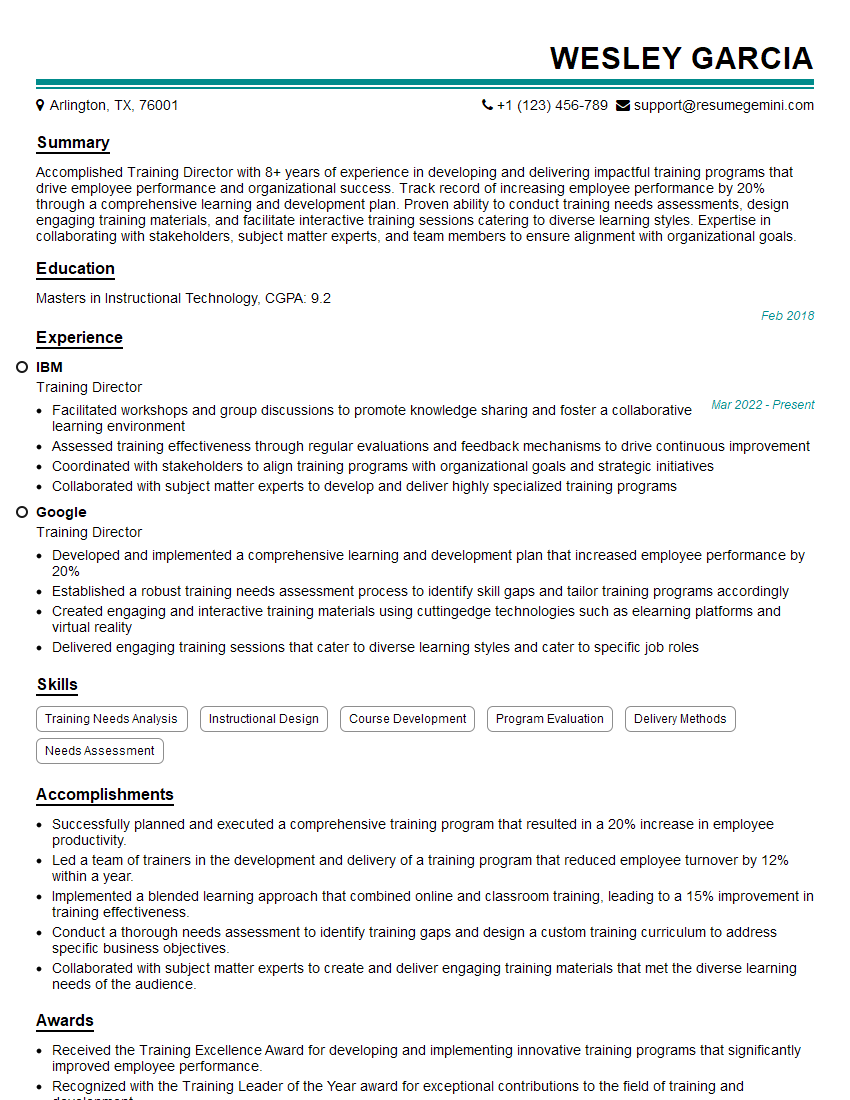
Training Director Resume Sample
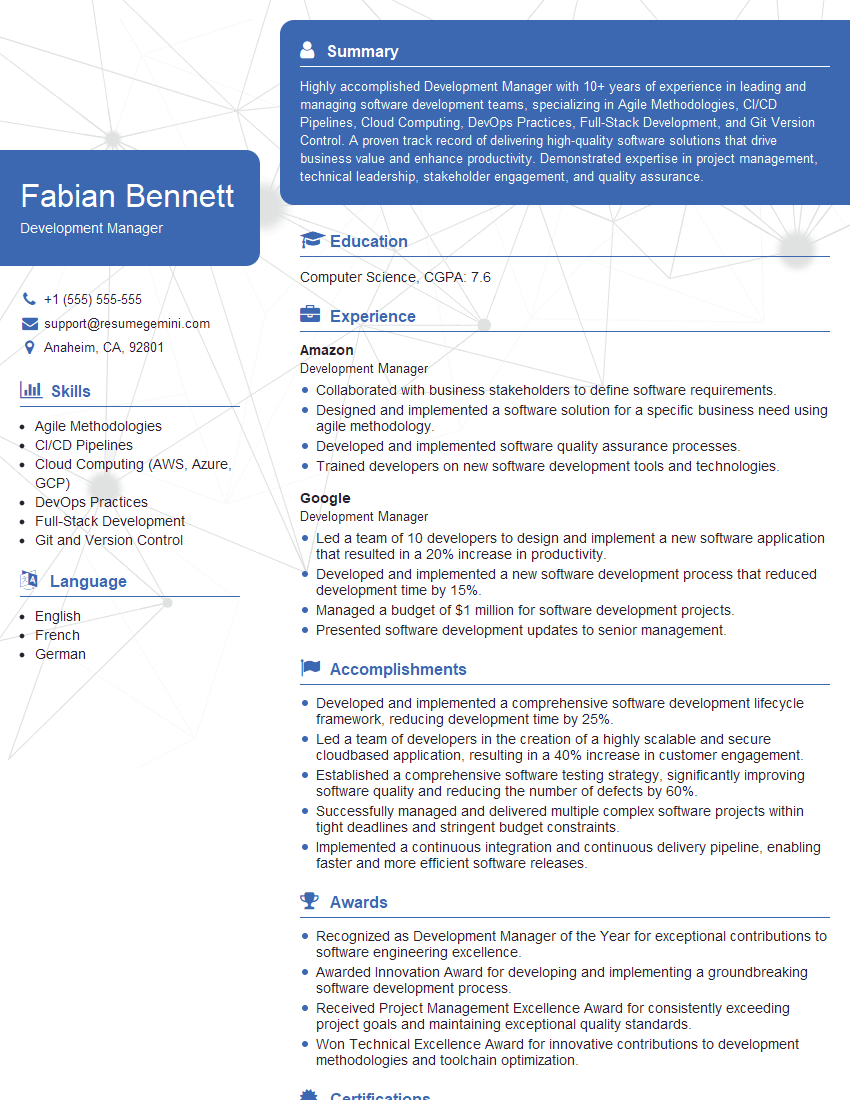
Development Manager Resume Sample
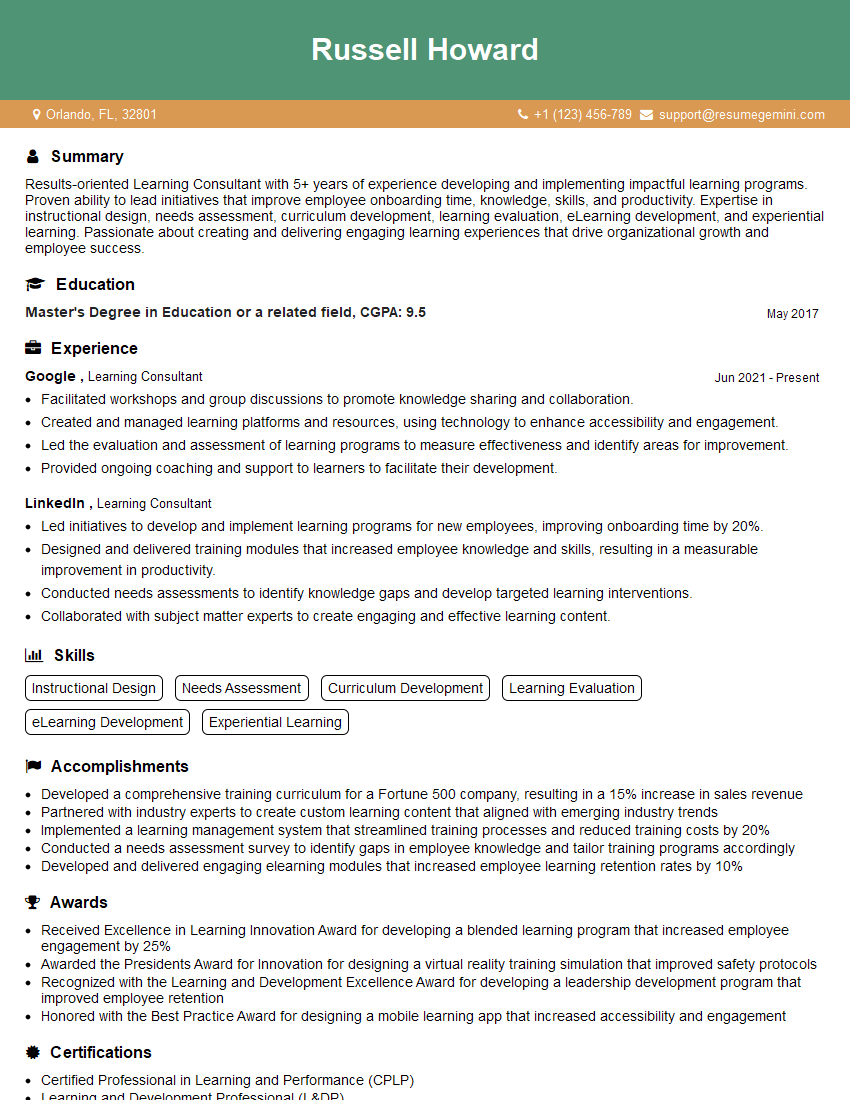
Learning Consultant Resume Sample
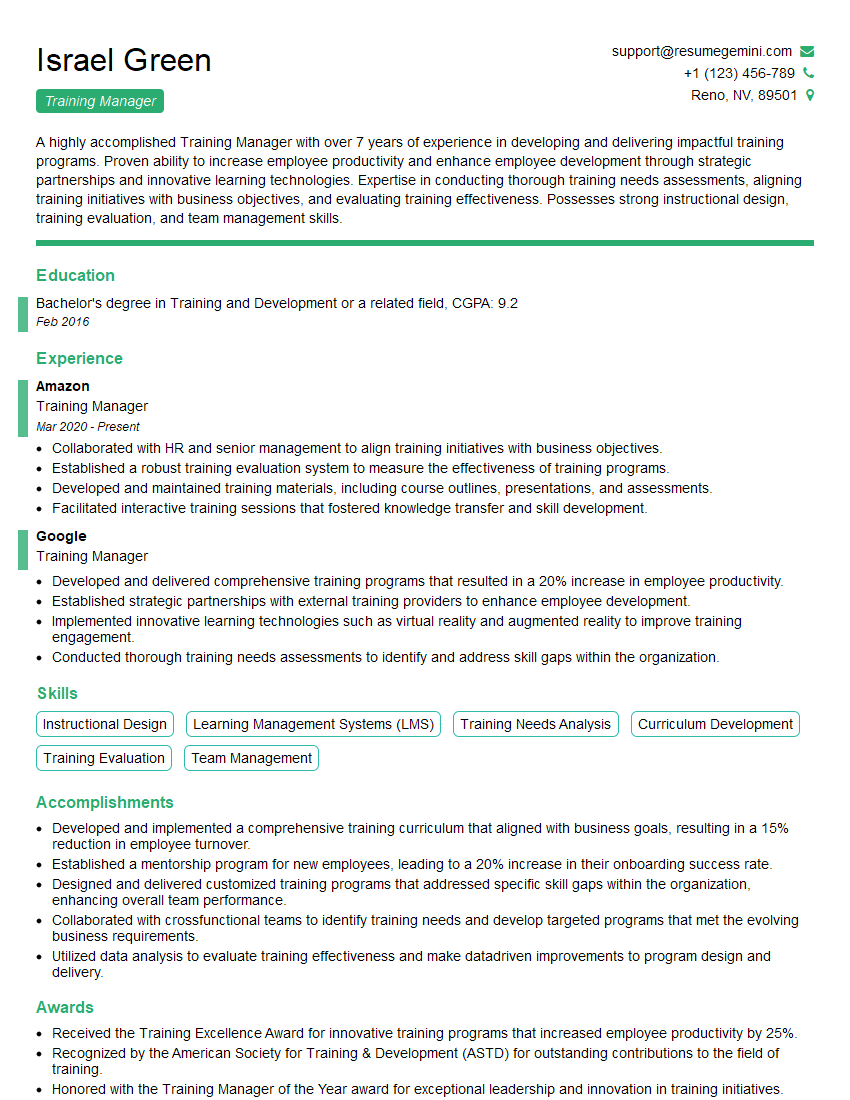
Training Manager Resume Sample
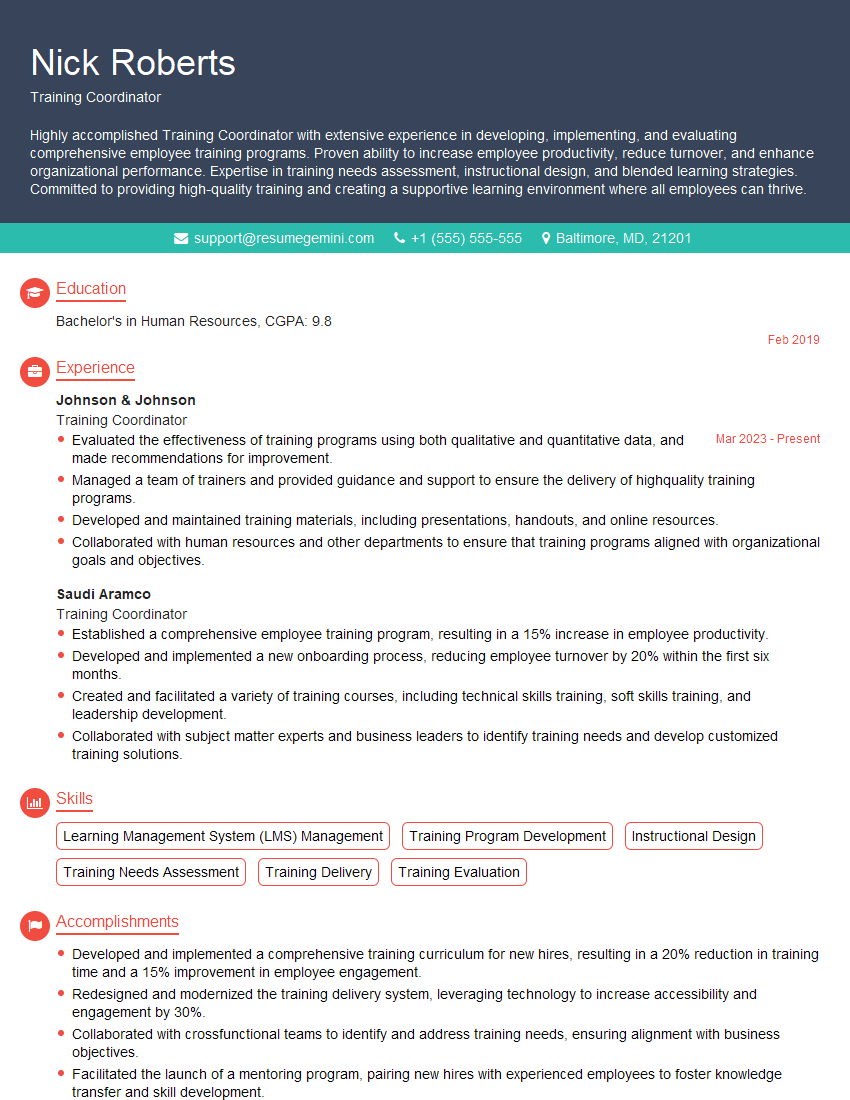
Training Coordinator Resume Sample
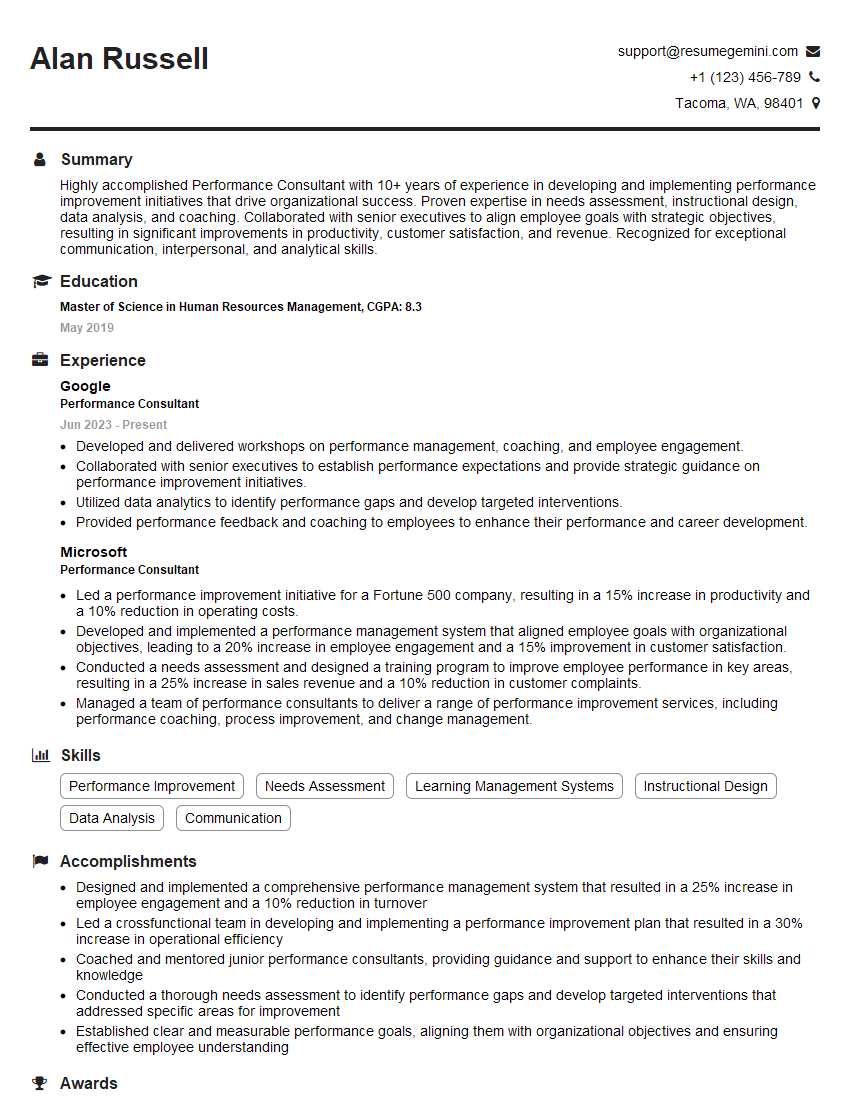
Performance Consultant Resume Sample
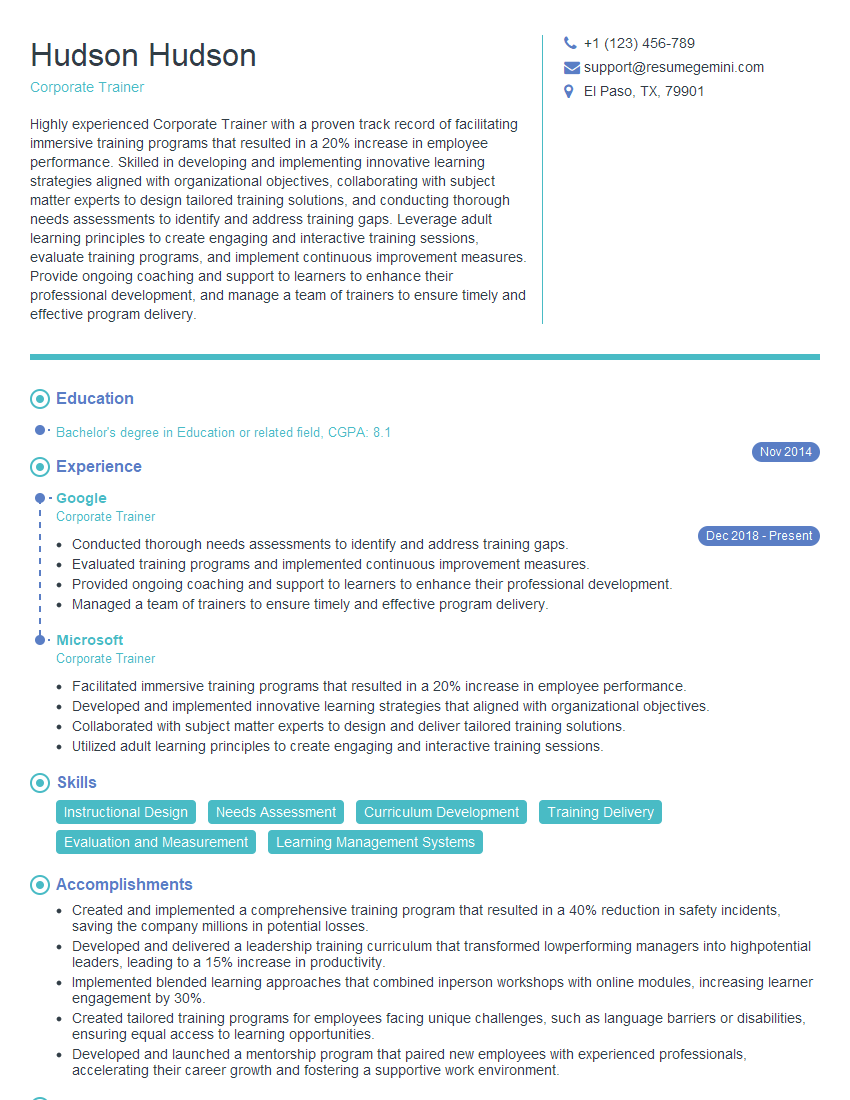
Corporate Trainer Resume Sample

Curriculum Developer Resume Sample

Training Specialist Resume Sample
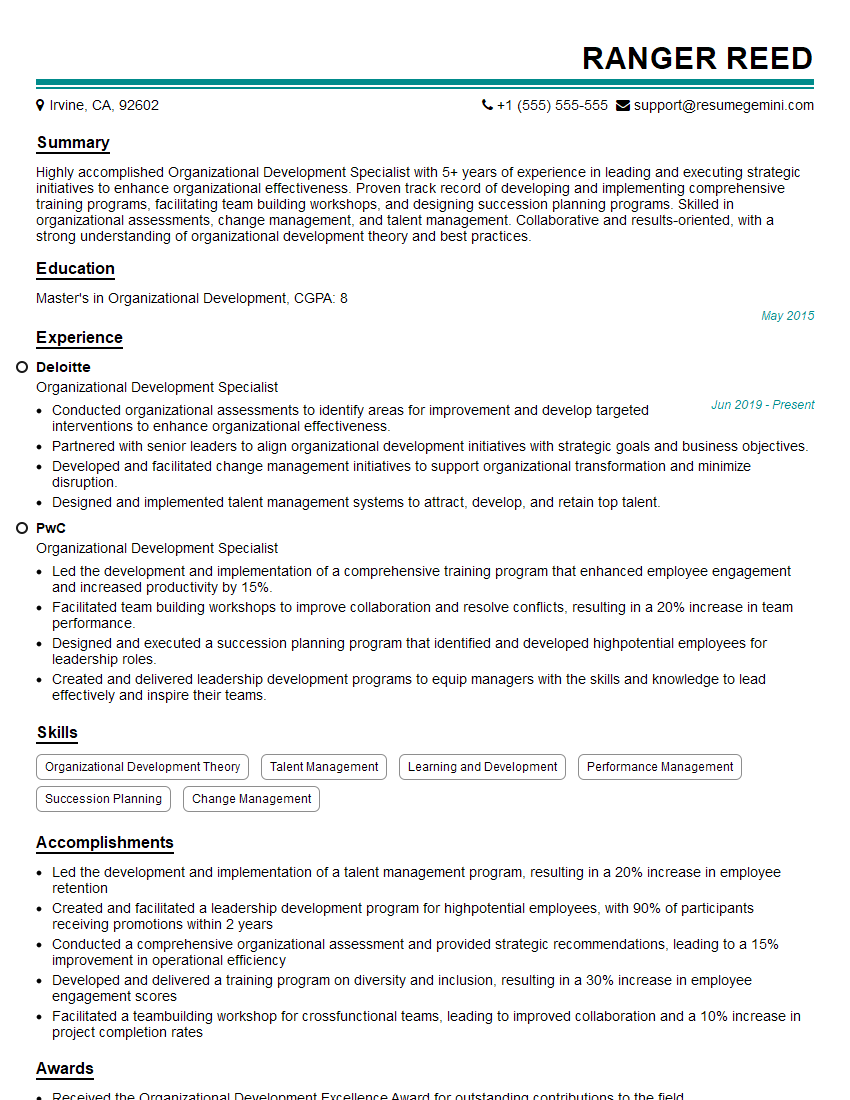
Organizational Development Specialist Resume Sample
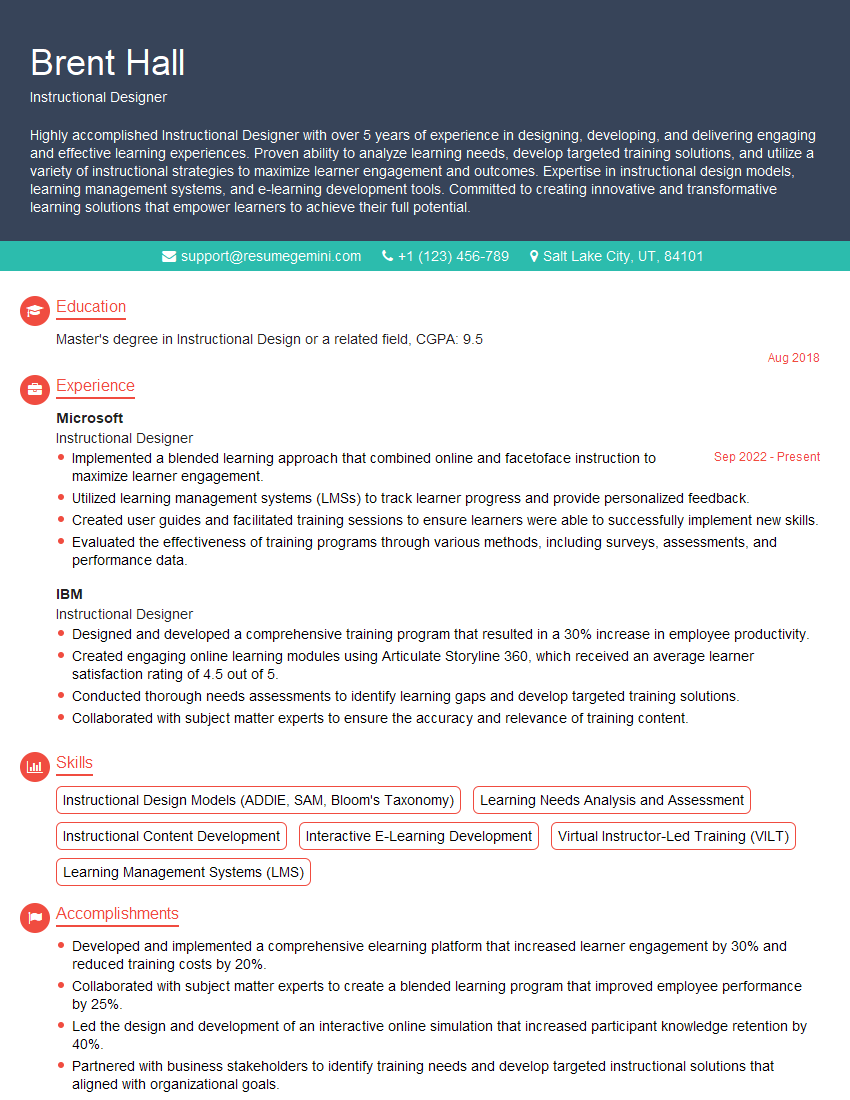
Instructional Designer Resume Sample
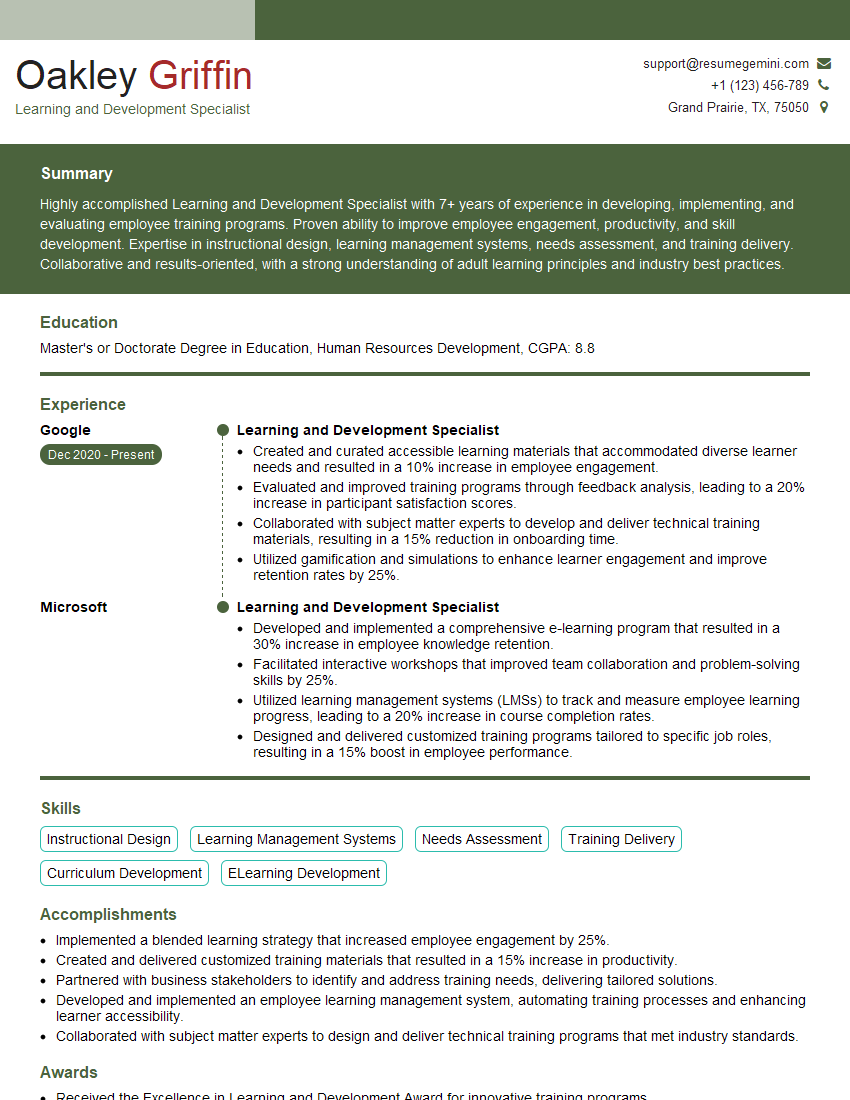
Learning and Development Specialist Resume Sample
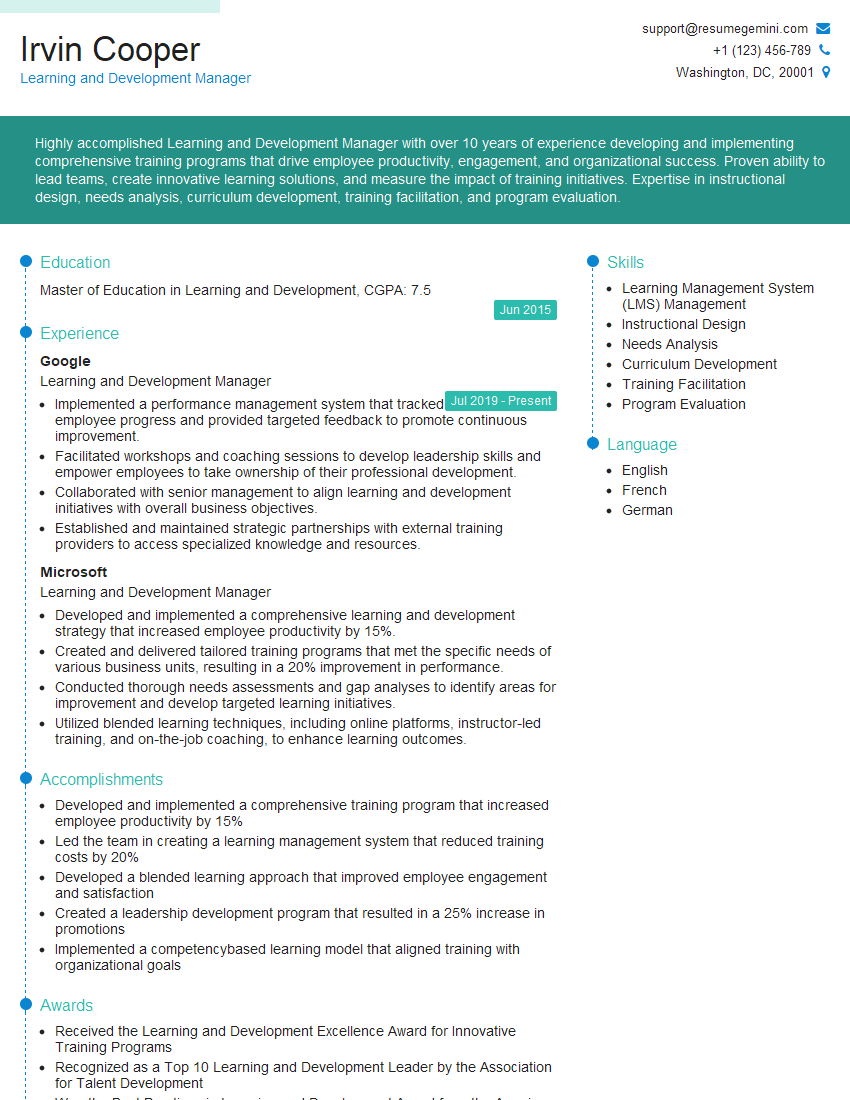
Learning and Development Manager Resume Sample
- Training Director
- Development Manager
- Learning Consultant
- Training Manager
- Training Coordinator
- Performance Consultant
- Corporate Trainer
- Curriculum Developer
- Training Specialist
- Organizational Development Specialist
- Instructional Designer
- Learning and Development Specialist
- Learning and Development Manager
Explore more articles
Users Rating of Our Blogs
Share Your Experience
We value your feedback! Please rate our content and share your thoughts (optional).
What Readers Say About Our Blog
To the interviewgemini.com Webmaster.
Very helpful and content specific questions to help prepare me for my interview!
Thank you
To the interviewgemini.com Webmaster.
This was kind of a unique content I found around the specialized skills. Very helpful questions and good detailed answers.
Very Helpful blog, thank you Interviewgemini team.