Feeling uncertain about what to expect in your upcoming interview? We’ve got you covered! This blog highlights the most important Drug Allergy Diagnosis and Management interview questions and provides actionable advice to help you stand out as the ideal candidate. Let’s pave the way for your success.
Questions Asked in Drug Allergy Diagnosis and Management Interview
Q 1. Describe the different types of drug hypersensitivity reactions.
Drug hypersensitivity reactions are classified into four main types, based on the Gell and Coombs classification, although the mechanisms are often complex and can overlap. These types differ in their underlying immunological mechanisms and clinical presentations.
- Type I (Immediate): This is an IgE-mediated reaction, typically occurring within minutes of drug exposure. It involves mast cell and basophil degranulation, releasing histamine and other mediators, leading to symptoms like urticaria, angioedema, and anaphylaxis. Think of it like a rapid-fire allergic response.
- Type II (Cytotoxic): This involves antibody-mediated destruction of cells. Drugs can bind to cell surfaces, making them targets for IgG or IgM antibodies, leading to complement activation and cell lysis. Hemolytic anemia from penicillin is a classic example.
- Type III (Immune Complex): This occurs when drug-antibody complexes deposit in tissues, triggering inflammation. Serum sickness is a prototypical example, characterized by fever, rash, arthralgia, and sometimes nephritis. This reaction takes longer to develop, usually days to weeks after drug exposure.
- Type IV (Delayed): This is a cell-mediated reaction involving T lymphocytes. It typically develops 24-72 hours after drug exposure and manifests as contact dermatitis, characterized by redness, swelling, and itching at the site of contact. Reactions to topical medications are often of this type.
It’s crucial to remember that these types aren’t mutually exclusive. A patient might exhibit features of more than one type of hypersensitivity reaction.
Q 2. Explain the mechanism of IgE-mediated drug allergy.
IgE-mediated drug allergy, a type I hypersensitivity reaction, is triggered when a drug acts as a hapten. A hapten is a small molecule that, on its own, doesn’t elicit an immune response. However, when it binds to a larger carrier protein (e.g., a protein in the body), it becomes immunogenic. This drug-protein complex is then presented to the immune system, leading to the production of IgE antibodies specific to this complex.
Upon subsequent exposure to the drug, the IgE antibodies already bound to mast cells and basophils recognize the drug-protein complex. This cross-linking of IgE antibodies triggers degranulation of these cells, releasing histamine, tryptase, and other inflammatory mediators. These mediators cause the characteristic symptoms of an allergic reaction, ranging from mild urticaria (hives) to life-threatening anaphylaxis.
For example, penicillin can act as a hapten, binding to proteins in the body. The resulting complex stimulates IgE production. When the patient is re-exposed to penicillin, the pre-formed IgE antibodies bind to the penicillin-protein complex, leading to mast cell degranulation and allergic symptoms. This explains why a patient can have a severe reaction upon a second or subsequent exposure to a drug they were previously tolerant to.
Q 3. What are the diagnostic tests used in drug allergy evaluation?
Diagnosing drug allergy involves a combination of approaches, starting with a thorough history and physical examination. This is crucial in determining the likelihood of a true allergy versus other adverse drug reactions. Then, a combination of tests is used to support the clinical diagnosis:
- Skin prick test (SPT): This is the cornerstone test for IgE-mediated allergies. It involves placing a small amount of the drug on the skin and pricking the skin to introduce the allergen. A positive reaction (wheal and flare) indicates IgE-mediated sensitization.
- Intradermal test: This is a more sensitive but also riskier test. A diluted drug solution is injected intradermally, and a reaction is observed.
- Specific IgE testing (SEROLOGY): This blood test measures the level of IgE antibodies specific to the suspected drug. However, its sensitivity and specificity vary depending on the drug.
- Lymphocyte transformation test (LTT): This in vitro test assesses the T-cell response to the drug. It’s used for suspected delayed-type hypersensitivity reactions (Type IV).
- Drug provocation test (DPT): This is the gold standard for confirming a drug allergy. The patient is challenged with increasing doses of the drug under close medical supervision. This test is performed in specialized settings due to the risk of severe reactions.
The choice of tests depends on the clinical suspicion, the severity of the previous reaction, and the availability of resources. It is imperative to discuss the benefits and risks of each test thoroughly with the patient before proceeding.
Q 4. How do you interpret a skin prick test for drug allergy?
Interpreting a skin prick test (SPT) for drug allergy involves looking for a wheal and flare reaction. A wheal is a raised, pale, itchy area at the injection site, and a flare is an area of redness surrounding the wheal.
A positive SPT is indicated by a wheal of a certain size (varies depending on the facility but often ≥3 mm) that is significantly larger than the control wheal. The size of the wheal correlates with the level of IgE sensitization. A larger wheal generally indicates a stronger reaction. A negative test shows no or minimal wheal formation.
It’s essential to note that a negative SPT does not definitively rule out a drug allergy. A negative test can occur in patients with delayed hypersensitivity or non-IgE-mediated reactions. Moreover, false-positive results can be seen occasionally, highlighting the importance of correlating the test results with the clinical history.
Example: A patient suspected of penicillin allergy undergoes an SPT. A wheal of 5mm is observed at the penicillin site, whereas the control wheal is only 1mm. This suggests a positive reaction, implying IgE sensitization to penicillin.
Q 5. Discuss the limitations of in vitro tests for drug allergy.
In vitro tests, such as specific IgE testing (sIgE) and lymphocyte transformation tests (LTT), provide valuable information in drug allergy evaluation but have several limitations:
- Lack of Sensitivity and Specificity: sIgE tests may yield false-negative results in patients with true allergies, particularly for non-IgE mediated reactions. False positives are also possible.
- Limited Information on the Mechanism: These tests don’t always clarify the underlying mechanism of the allergic reaction, making it difficult to assess the clinical significance of the findings.
- Drug Formulation Dependent: The results can vary depending on the drug formulation used in the test. For example, different formulations may have different allergenic components.
- Cross-reactivity: Some drugs share common structures and may cross-react. A positive test for one drug does not necessarily predict a reaction to another structurally similar drug.
- Cost and Availability: These tests can be expensive and not widely available.
It is important to consider the limitations of in vitro tests and not rely solely on them for diagnosis, particularly in situations where the clinical implications are high. In such cases, a thorough clinical evaluation, including a possible drug provocation test (under strict medical supervision) is recommended.
Q 6. Describe your approach to managing a patient with anaphylaxis after drug exposure.
Managing a patient experiencing anaphylaxis after drug exposure requires a rapid and coordinated response. Anaphylaxis is a life-threatening emergency. The management strategy follows the ABCDE approach:
- Airway: Assess the patient’s airway for patency. If compromised, immediately establish an airway using adjuncts like an endotracheal tube.
- Breathing: Assess the patient’s respiratory status. Provide oxygen therapy and support ventilation if necessary.
- Circulation: Evaluate blood pressure and heart rate. Initiate intravenous fluid resuscitation with crystalloid solutions and administer vasopressors (e.g., epinephrine) if needed to maintain adequate blood pressure. Cardiac monitoring is essential.
- Disability: Assess neurological status, including level of consciousness. Consider the administration of other drugs, based on the severity of symptoms. This may include antihistamines (e.g., diphenhydramine) and corticosteroids (e.g., methylprednisolone).
- Exposure: Identify and remove the offending agent (the drug). This might involve discontinuing infusions or removing a medication patch.
After initial stabilization, the patient requires close monitoring in an intensive care unit (ICU). Long-term management involves the avoidance of the offending drug and development of an anaphylaxis emergency plan, including carrying an epinephrine auto-injector and education on how to use it. Specific allergy testing might be considered later when the patient has fully recovered.
Q 7. What is the role of desensitization in drug allergy management?
Desensitization is a process that allows patients with IgE-mediated drug allergies to receive necessary medications that they are otherwise allergic to. It involves gradually increasing doses of the drug while closely monitoring the patient for allergic reactions. The goal is to induce tolerance by gradually increasing the threshold of reaction, enabling the patient to receive therapeutic doses of the drug without a severe allergic reaction.
Desensitization is usually performed in an inpatient setting with strict medical supervision. It’s primarily used for drugs essential for patient survival or for treating life-threatening conditions for which there aren’t suitable alternatives. It’s not a cure; it only allows safe administration of the drug while the individual remains sensitized.
The process typically involves administering escalating doses of the drug intravenously, starting with very low concentrations. Each dose is given slowly, allowing the patient to tolerate the subsequent increments. The procedure can take several hours or even days. During desensitization, the patient is closely monitored for any signs of allergic reactions, including urticaria, angioedema, and hypotension. Supportive measures like antihistamines and corticosteroids might be given.
It’s crucial to consider the potential benefits and risks carefully before undertaking desensitization. Not all patients are candidates for this procedure. The success rate varies depending on various factors, including the drug, the patient’s clinical status, and the experience of the healthcare provider.
Q 8. Explain the concept of cross-reactivity in drug allergy.
Cross-reactivity in drug allergy refers to the phenomenon where an allergic reaction to one drug can trigger a reaction to another, structurally similar drug. This occurs because the immune system, having developed antibodies or sensitized T cells against a specific drug molecule (or a part of it – a hapten), mistakenly recognizes and reacts to similar structures in other drugs. Imagine it like having a key that fits multiple locks – the antibodies are the keys, and the similar drug structures are the locks.
For example, someone allergic to penicillin might also react to cephalosporins, as they share a similar beta-lactam ring structure. Similarly, allergies to one sulfonamide antibiotic might extend to other drugs containing sulfonamide groups, such as certain diuretics or hypoglycemics. The degree of cross-reactivity varies depending on the shared structural components and the individual’s immune response.
- Understanding the chemical structures of drugs is crucial in predicting cross-reactivity.
- Careful history-taking helps identify prior reactions and potential cross-reactivity.
- Allergy testing can sometimes confirm or refute suspected cross-reactivity, but it’s not always definitive.
Q 9. How do you counsel patients about avoiding future drug reactions?
Counseling patients about avoiding future drug reactions involves a multi-faceted approach. It’s crucial to empower patients to actively participate in their own safety. This includes:
- Detailed explanation of the allergy: Patients need to understand the specific drug(s) they are allergic to, the type of reaction experienced (e.g., mild rash versus anaphylaxis), and the potential severity of future reactions.
- Medication list and identification: Patients should maintain a current list of all their medications (prescription and over-the-counter), including any supplements or herbal remedies. They should be able to readily identify drugs that contain the allergenic components.
- Medical alert bracelet or necklace: Strongly recommended for individuals with severe allergies, these provide immediate notification in case of an emergency.
- Pharmacist collaboration: Pharmacists are crucial in identifying potential cross-reactivity when dispensing new medications. I always emphasize the importance of discussing any new medication with their pharmacist and doctor.
- Emergency plan: For individuals with severe allergies (e.g., anaphylaxis), an emergency plan should be developed, including instructions on how to administer epinephrine (if prescribed) and when to seek immediate medical attention.
- Patient education materials: Providing written information reinforces the verbal counseling and allows patients to review important details at their leisure.
For example, I would counsel a patient allergic to penicillin to always inform healthcare providers about this allergy and carry an epinephrine auto-injector if advised by their physician, and avoid all medications containing penicillin or similar beta-lactam antibiotics.
Q 10. What are the challenges in diagnosing delayed-type drug hypersensitivity reactions?
Diagnosing delayed-type hypersensitivity reactions poses several challenges because the symptoms may appear days or even weeks after drug exposure. This makes it difficult to establish a definitive cause-and-effect relationship.
- Temporal association: The time lag between drug intake and symptom onset can be significant, making it challenging to definitively link the drug to the reaction. Other factors could easily coincide.
- Symptom overlap: Many delayed reactions manifest with non-specific symptoms like fever, fatigue, or organ dysfunction, overlapping with numerous other conditions.
- Lack of specific diagnostic tests: Unlike immediate reactions, there aren’t readily available and universally accepted diagnostic tests for delayed hypersensitivity. Patch testing is sometimes used, but its sensitivity and specificity are limited.
- Patient recall: Patients might not accurately recall all medications taken, especially if the symptoms arise weeks after ingestion.
Establishing a diagnosis often relies heavily on a detailed medical history, temporal association, and exclusion of other possible causes. It’s a process of elimination, relying on clinical judgment and sometimes specialist consultation.
Q 11. Describe different drug allergy management strategies for different hypersensitivity types.
Drug allergy management strategies vary considerably depending on the type of hypersensitivity reaction. The Gell and Coombs classification system is commonly used to categorize these reactions.
- Type I (Immediate): Anaphylaxis, urticaria. Management involves immediate cessation of the drug, epinephrine administration for anaphylaxis, antihistamines, and corticosteroids. Future avoidance of the culprit drug and cross-reactive agents is essential. In some cases, desensitization may be considered.
- Type II (Cytotoxic): Drug-induced hemolytic anemia. Management focuses on stopping the offending medication and supportive care, possibly including blood transfusions. Future avoidance is paramount.
- Type III (Immune complex-mediated): Serum sickness. Management includes stopping the drug, corticosteroids to suppress the immune response, and supportive care to manage symptoms such as fever and rash.
- Type IV (Delayed): Contact dermatitis, drug-induced liver injury. Management involves stopping the drug. Topical corticosteroids might be used for contact dermatitis, while management of organ damage involves specific treatment according to the affected organ.
It’s important to note that some reactions might exhibit features of multiple types of hypersensitivity. Individualized management plans are crucial, tailored to the patient’s specific clinical presentation and the severity of the reaction.
Q 12. How do you differentiate between a drug allergy and a side effect?
Differentiating a drug allergy from a side effect is crucial for appropriate management. A side effect is a predictable pharmacologic effect, often dose-dependent, that occurs in a significant proportion of patients. It is generally not immunologically mediated. A drug allergy, on the other hand, is an immunologically mediated adverse reaction to a drug. It is unpredictable and not dose-dependent, meaning a small dose can trigger a severe reaction.
Consider these key differences:
- Mechanism: Side effects are usually due to the drug’s direct pharmacological action; allergies are immune system reactions.
- Predictability: Side effects are predictable and occur in a certain percentage of patients; allergies are unpredictable and occur in a small percentage.
- Dose-dependence: Side effects are typically dose-dependent; allergies are generally not dose-dependent.
- Symptom onset: Side effects might develop shortly after starting medication or over a longer period of use, whereas allergic reactions can occur immediately or after a delay.
For example, nausea is a common side effect of many medications, while hives or anaphylaxis after taking penicillin is an allergic reaction.
Q 13. What is the role of medication reconciliation in preventing drug allergies?
Medication reconciliation is the process of creating the most accurate list possible of all medications a patient is currently taking. It’s a critical step in preventing drug allergies and adverse drug events (ADEs) in general.
By comparing a patient’s medication list with current prescriptions and those prescribed elsewhere (e.g., a different hospital, specialist), potential discrepancies, duplications, and interactions are identified. This process is important because:
- Identifying potential drug-drug interactions: This minimizes the risk of reactions from combining drugs that have negative interactions. Some interactions may trigger allergic reactions in susceptible patients.
- Confirming and updating allergy information: Medication reconciliation provides an opportunity to review and update a patient’s allergy information, ensuring accuracy and consistency across different healthcare settings.
- Avoiding duplicate medications: Avoiding giving a patient multiple medications that are similar, which can lead to adverse effects.
A thorough medication reconciliation, ideally performed at each transition point in care (hospital admission, transfer between units, discharge), can significantly reduce the risk of drug allergies and other medication-related harm.
Q 14. How do you document drug allergy information in patient charts?
Documenting drug allergy information accurately and clearly is paramount. This information should be easily accessible to all healthcare providers involved in the patient’s care. Here’s how I approach it:
- Clear and concise language: Avoid ambiguous terms. Instead of “allergy to penicillin,” specify the reaction (e.g., “penicillin allergy: anaphylaxis,” “penicillin allergy: maculopapular rash”).
- Specific drug name: Avoid generic terms. For example, instead of “sulfa drugs,” specify the exact drug (e.g., sulfamethoxazole-trimethoprim).
- Reaction description: Document the type of reaction (rash, hives, swelling, shortness of breath, anaphylaxis, etc.) and the severity.
- Date of reaction: Record the date the allergic reaction occurred.
- Cross-reactivity notes: If there’s evidence of cross-reactivity, it should be clearly stated.
- Standardized allergy documentation: Use a standardized allergy documentation system within the electronic health record (EHR) if available. Many EHR systems have designated fields for allergies.
- Prominent placement: Ensure allergy information is prominently displayed on the patient’s chart, ideally with alert flags to draw immediate attention.
For example, a well-documented allergy would read: “Amoxicillin allergy: Anaphylaxis (2023-03-15). Cross-reactivity with other penicillin-type antibiotics suspected.”
Q 15. Discuss the importance of reporting suspected drug allergies.
Accurate reporting of suspected drug allergies is crucial for patient safety and improving healthcare practices. Underreporting significantly hinders our ability to identify high-risk drugs and individuals, leading to potentially life-threatening reactions in the future. When a suspected allergic reaction occurs, detailed information—including the specific drug, the reaction’s nature, timing, and severity—should be documented thoroughly in the patient’s medical record. This information is vital for healthcare professionals to make informed decisions about future medication choices and helps build a comprehensive database that contributes to a safer medication environment for everyone.
For example, imagine a patient experiences hives after taking penicillin. While seemingly minor, this needs reporting. Failure to report this seemingly minor reaction could lead to a potentially fatal anaphylactic reaction in the future if penicillin or a related drug is prescribed without acknowledging the prior event. Reliable reporting systems, like those within electronic health records (EHRs), significantly improve data capture and allow for better analysis and prevention strategies.
Career Expert Tips:
- Ace those interviews! Prepare effectively by reviewing the Top 50 Most Common Interview Questions on ResumeGemini.
- Navigate your job search with confidence! Explore a wide range of Career Tips on ResumeGemini. Learn about common challenges and recommendations to overcome them.
- Craft the perfect resume! Master the Art of Resume Writing with ResumeGemini’s guide. Showcase your unique qualifications and achievements effectively.
- Don’t miss out on holiday savings! Build your dream resume with ResumeGemini’s ATS optimized templates.
Q 16. What are some common challenges in managing drug allergies in hospitalized patients?
Managing drug allergies in hospitalized patients presents unique challenges. The acute care setting often necessitates the use of medications that may interact with existing allergies or trigger new ones. The presence of multiple co-morbidities and the need for rapid decision-making adds complexity. Accurate identification of true allergies versus adverse drug reactions is paramount to avoid unnecessary restrictions on treatment. For instance, distinguishing between a true penicillin allergy and a non-allergic reaction, like a mild rash, is crucial. Furthermore, medication reconciliation in hospitalized patients is sometimes incomplete, requiring dedicated effort to identify potential allergy triggers. The risk of cross-reactivity between drugs, especially in patients with multiple allergies, needs careful consideration. Finally, communication among medical personnel and accurate documentation to prevent medication errors is essential.
Q 17. How do you manage a patient with a history of multiple drug allergies?
Managing patients with multiple drug allergies requires a multi-faceted approach. Firstly, a thorough review of the patient’s allergy history is vital, carefully differentiating between true allergic reactions and other adverse effects. Second, we employ allergy testing when appropriate and feasible, using skin tests and/or in-vitro tests to confirm or refute suspected allergies. Third, we utilize the available literature and resources to identify potential cross-reactivity between different drug classes. For example, a patient allergic to penicillin may also have cross-reactivity with other beta-lactam antibiotics like cephalosporins. Fourth, an individualized medication plan is carefully constructed, opting for drugs outside of the patient’s allergy profile. When no safe alternatives exist, careful risk-benefit assessment is performed, perhaps under close monitoring. Collaboration with allergy specialists is crucial in these complex cases.
Q 18. Explain your approach to diagnosing drug allergy in a patient with a complex medical history.
Diagnosing drug allergy in a patient with a complex medical history demands a systematic approach. We start by conducting a detailed medication history, including over-the-counter medications, herbal supplements, and any recent vaccinations. We also gather information about the timing and nature of all previous adverse drug reactions. This is followed by a thorough physical examination and the assessment of the patient’s current symptoms. It’s crucial to distinguish between true allergies and non-allergic reactions that can mimic allergies, such as adverse drug reactions or intolerances. When appropriate, laboratory tests, such as complete blood count (CBC), liver function tests (LFTs), and other relevant tests, are conducted to assess for organ involvement. Allergy testing, such as skin prick tests or in-vitro tests (e.g., IgE testing), may be employed to confirm or refute specific allergies. Finally, case review with colleagues, particularly allergists, is important for complex scenarios to ensure optimal diagnostic accuracy.
Q 19. Describe the use of corticosteroids in managing severe allergic reactions.
Corticosteroids are cornerstone medications in managing severe allergic reactions, particularly anaphylaxis. They work by suppressing the inflammatory response, reducing the release of histamine and other inflammatory mediators responsible for the symptoms. In anaphylaxis, intravenous corticosteroids, like methylprednisolone or hydrocortisone, are usually administered to reduce the severity and duration of symptoms, such as bronchospasm, hypotension, and angioedema. They are not a primary treatment for anaphylaxis (epinephrine is the first-line treatment), but provide important adjunctive therapy by mitigating the inflammatory cascade and preventing late-phase reactions. The dose and duration of corticosteroids depend on the severity of the reaction and the clinical response. They aren’t given routinely for mild allergic reactions, as their benefits would be outweighed by potential side effects.
Q 20. What is your approach to managing patients with suspected DRESS syndrome?
DRESS syndrome (Drug Reaction with Eosinophilia and Systemic Symptoms) is a severe, potentially life-threatening condition characterized by a delayed hypersensitivity reaction to certain medications. Management involves immediate discontinuation of the offending drug. Supportive care is crucial, focusing on managing organ dysfunction. This might include medications to treat skin manifestations, respiratory issues, liver involvement, or other organ-specific complications. Corticosteroids are often used to manage the inflammation, although there is some debate about their optimal role and dose. Close monitoring of organ function through laboratory tests and imaging is essential. The length of hospital stay and recovery time can be significant depending on the severity of organ involvement. In severe cases, consultation with a dermatologist, hepatologist, or other specialists might be required for appropriate management of organ-specific complications.
Q 21. How do you assess the risk of drug-induced liver injury?
Assessing the risk of drug-induced liver injury (DILI) involves considering various factors. A patient’s pre-existing liver disease significantly increases their susceptibility. The drug itself poses a risk; some medications are known to be hepatotoxic. The dose and duration of medication exposure are crucial considerations; higher doses and prolonged use increase the risk. Age and genetics also play a role, with older individuals often having higher susceptibility. The presence of concomitant medication use, potentially through drug interactions, needs assessment. We usually look for clinical signs and symptoms such as jaundice, elevated liver enzymes (ALT, AST) in liver function tests, and abnormal bilirubin levels. Liver biopsy might be considered in ambiguous cases to confirm DILI and ascertain the extent of liver injury. Regular monitoring of liver function tests is essential, especially during and after drug exposure for high-risk patients. It’s important to remember that not all elevated liver enzymes indicate DILI; other factors must be considered.
Q 22. What are the clinical manifestations of drug-induced nephritis?
Drug-induced nephritis, or drug-induced kidney injury, manifests in various ways, depending on the drug and the individual’s response. Symptoms can range from subtle changes in urine output to life-threatening kidney failure. Common clinical manifestations include:
- Changes in urine: This can involve hematuria (blood in the urine), proteinuria (protein in the urine), or oliguria (reduced urine output).
- Kidney function abnormalities: Elevated serum creatinine and blood urea nitrogen (BUN) levels indicate impaired kidney function. These are crucial lab markers we monitor closely.
- Fluid retention: The kidneys’ inability to effectively filter waste can lead to edema (swelling), particularly in the legs and ankles, or even more serious pulmonary edema (fluid in the lungs).
- Hypertension: Fluid retention can contribute to a rise in blood pressure.
- Other systemic symptoms: Fever, rash, and malaise (general feeling of discomfort) can also accompany drug-induced nephritis, indicating a more generalized inflammatory response.
It’s vital to remember that these symptoms aren’t specific to drug-induced nephritis and can be caused by various other kidney conditions. A thorough history, physical examination, and laboratory testing are necessary for accurate diagnosis.
For instance, I once encountered a patient presenting with edema and elevated creatinine levels. Upon reviewing her medication history, we discovered she was taking a nonsteroidal anti-inflammatory drug (NSAID) known to cause nephritis. Discontinuing the NSAID and initiating supportive care led to a significant improvement in her condition.
Q 23. How do you differentiate between drug allergies and other causes of similar symptoms?
Differentiating drug allergies from other conditions mimicking similar symptoms requires a meticulous approach. Drug allergies are hypersensitivity reactions triggered by the immune system, while other causes may stem from direct drug toxicity or other unrelated illnesses. Key differences lie in:
- Timing of symptom onset: Drug allergies usually appear after prior exposure to the drug, often within minutes to hours, whereas other reactions might be delayed.
- Symptom profile: While some allergies can mimic other conditions, the presentation of specific symptoms (like a characteristic rash, angioedema, or anaphylaxis) can be quite indicative. Direct drug toxicity often involves different organ systems. For example, an NSAID could cause stomach upset without an immune response.
- Prior exposure and dechallenge/rechallenge: A history of similar symptoms after previous exposure to the same drug strongly suggests an allergy. A dechallenge (stopping the medication) followed by rechallenge (reintroducing the medication under strict observation) can provide definitive confirmation (though this should be done cautiously and in a controlled setting).
- Laboratory testing: Blood tests such as serum IgE levels and specific drug allergy tests (e.g., basophil activation test) can assist in diagnosis, though these are not always conclusive.
Consider this: A patient presents with fever and a rash after starting a new antibiotic. While this could be a drug allergy, it also needs to be considered in the context of other potential infections. A comprehensive assessment, including blood cultures and detailed history, would be crucial.
Q 24. Discuss your experience with conducting drug challenge testing.
Drug challenge testing is a crucial procedure for confirming suspected drug allergies, particularly when the history isn’t entirely clear or when alternative medications are limited. This procedure involves carefully re-exposing the patient to the suspected allergen under strict medical supervision. It should only be performed in a setting equipped to manage potential severe reactions, such as anaphylaxis. My approach involves:
- Thorough pre-test assessment: This includes a complete history, physical examination, and assessment of the patient’s risk profile.
- Careful titration of the drug: We start with a very low dose, gradually increasing it over time, while closely monitoring for any adverse reactions.
- Continuous monitoring of vital signs and symptoms: Continuous monitoring of heart rate, blood pressure, respiratory rate, and oxygen saturation is critical.
- Ready access to emergency treatment: We must have emergency medications, including epinephrine, readily available.
- Documentation: Meticulous documentation of the entire process, including the dose administered, the time, and any observed reactions, is vital.
I remember a case where a patient had a suspected penicillin allergy. A carefully conducted challenge test under close supervision confirmed that the allergy was no longer present, allowing us to use penicillin for a later infection. This highlights the importance of this controlled procedure when there’s a doubt about the diagnosis.
Q 25. Explain the process of developing a personalized allergy management plan.
Developing a personalized allergy management plan is crucial for ensuring patient safety and optimizing treatment outcomes. This is a collaborative process involving the patient, their physician, and sometimes other specialists like allergists or immunologists. Key steps include:
- Detailed history taking: A thorough review of past allergic reactions, including the medications involved, the symptoms experienced, and the severity of the reaction is essential.
- Physical examination and laboratory tests: These help to confirm the diagnosis and rule out other conditions.
- Risk assessment: This involves evaluating the patient’s risk factors for severe allergic reactions.
- Identification of safe alternative medications: If a drug allergy is confirmed, we identify alternative medications with similar therapeutic effects but a lower risk of allergic reactions.
- Education and patient empowerment: Educating the patient about their allergies, their symptoms, and how to manage them is a crucial part of the process.
- Development of an action plan for future exposures: This includes instructions on how to recognize and respond to allergic reactions, including emergency contacts.
An example of a personalized plan might include a list of safe medications, instructions on what to do if an allergic reaction occurs, an emergency contact list, and a plan for when to seek medical help.
Q 26. What are some emerging strategies for the prevention and treatment of drug allergies?
Emerging strategies for the prevention and treatment of drug allergies are constantly evolving. These include:
- Improved drug design: Designing drugs with less allergenic properties is a key area of research.
- Biologics and targeted therapies: These therapies offer potential for reducing the inflammatory response associated with allergies.
- Immunotherapy: This approach is being investigated to desensitize patients to specific drugs.
- Early identification and prevention: More focused research on identifying those at risk of developing drug allergies allows us to potentially intervene before an allergy develops.
- Improved diagnostic tools: Advances in diagnostic technology, including more sensitive and specific allergy tests, can facilitate more accurate and timely diagnoses.
One promising area involves the development of novel therapies targeting specific immune pathways, potentially leading to more effective treatments for drug allergies. This research is opening up possibilities for more personalized and effective allergy management.
Q 27. Describe your experience using electronic health records to manage drug allergy information.
Electronic health records (EHRs) are indispensable tools in managing drug allergy information. Effective use of EHRs requires careful attention to:
- Standardized allergy documentation: Using standardized terminology and clear documentation ensures that allergy information is consistently recorded and easily accessible to all healthcare providers.
- Alert systems: EHRs can be configured to generate alerts when a patient with a known allergy is prescribed a potentially allergenic medication. This helps prevent adverse events.
- Integration with other healthcare systems: Seamless integration with other healthcare systems ensures that drug allergy information is available across various settings (e.g., hospitals, clinics).
- Data analytics: EHR data can be used to identify trends and patterns in drug allergies, which can inform clinical practice and public health initiatives.
In my practice, the EHR system allows me to instantly access a patient’s complete medication history, including details of previous allergic reactions. This has significantly enhanced the safety and efficiency of medication management.
Q 28. How do you stay updated on current best practices in drug allergy diagnosis and management?
Staying updated on the latest best practices in drug allergy diagnosis and management is a continuous process. I employ several strategies:
- Regular review of medical literature: I regularly read peer-reviewed journals and publications specializing in allergy and immunology.
- Participation in professional organizations: Membership in professional societies like the American Academy of Allergy, Asthma & Immunology (AAAAI) provides access to conferences, continuing education materials, and networking opportunities.
- Continuing medical education (CME) courses: I actively participate in CME courses and workshops focused on drug allergy management.
- Collaboration with colleagues: I maintain close communication with colleagues specializing in allergy and immunology.
- Use of online resources: Reputable online resources and databases offer updated guidelines and information on drug allergy management.
This ongoing learning ensures I’m equipped to provide the most current and effective care to my patients, and it is crucial for responsible and safe medical practice.
Key Topics to Learn for Drug Allergy Diagnosis and Management Interview
- Allergic vs. Non-allergic Drug Reactions: Differentiating between true allergic reactions (IgE-mediated, non-IgE-mediated) and other adverse drug reactions (ADR). Understanding clinical presentation and diagnostic challenges.
- Diagnostic Testing: Skin prick tests, intradermal tests, specific IgE antibody testing (e.g., ImmunoCAP), and the interpretation of results. Knowing the limitations and appropriate use of each method.
- Clinical History Taking and Physical Examination: Gathering comprehensive patient histories, identifying risk factors, and conducting thorough physical examinations to assess the severity and nature of drug reactions.
- Management Strategies: Acute management of anaphylaxis and other severe allergic reactions. Developing personalized desensitization protocols and long-term management plans for patients with drug allergies.
- Pharmacotherapy in Drug Allergy: Understanding alternative medications and strategies to avoid cross-reactivity. Knowledge of medication interactions and their impact on drug allergy management.
- Patient Education and Counseling: Effective communication strategies for educating patients and their families about drug allergies, risk management, and emergency preparedness. The importance of patient adherence to treatment plans.
- Legal and Ethical Considerations: Understanding legal aspects related to medication errors, informed consent, and documentation in drug allergy management.
- Case Studies and Problem Solving: Analyzing complex case scenarios involving drug allergy diagnosis and management, demonstrating critical thinking and problem-solving skills.
Next Steps
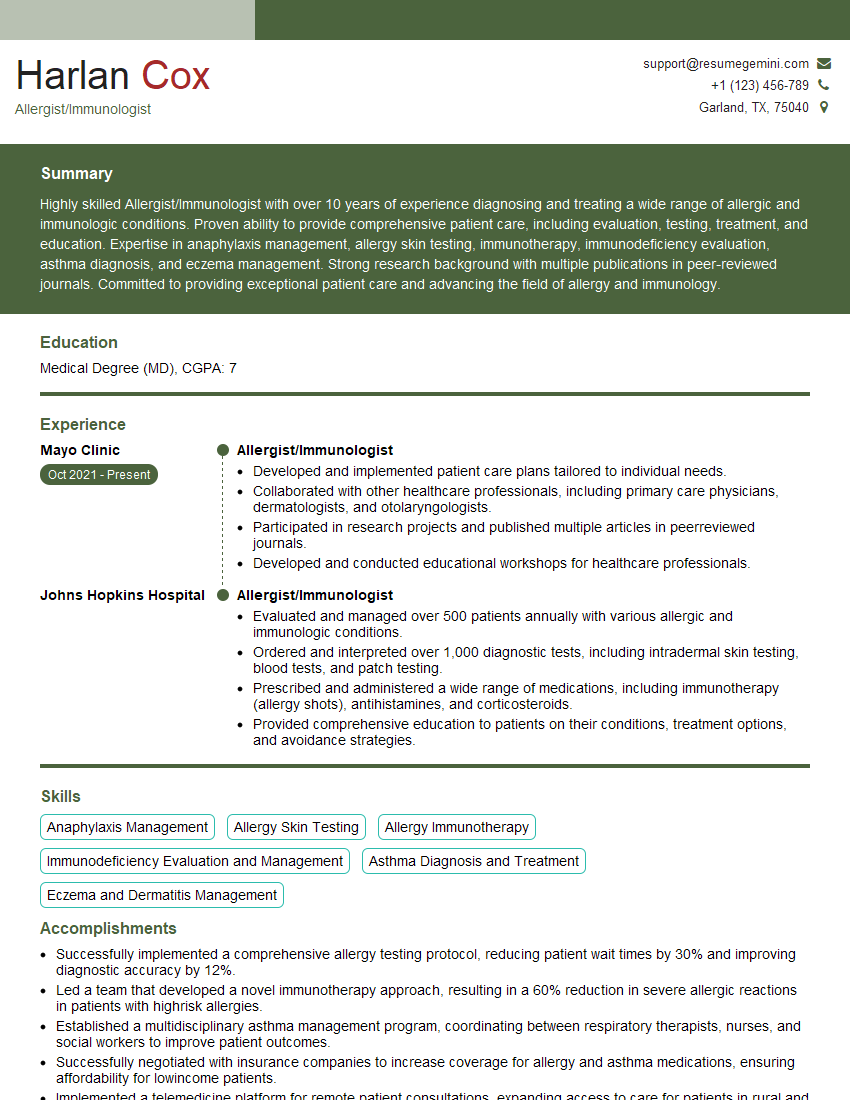
Mastering Drug Allergy Diagnosis and Management is crucial for career advancement in the field of allergy and immunology, offering rewarding opportunities in clinical practice, research, or pharmaceutical development. To significantly enhance your job prospects, crafting an ATS-friendly resume is essential. ResumeGemini is a trusted resource to help you build a professional and impactful resume that highlights your skills and experience. Examples of resumes tailored specifically to Drug Allergy Diagnosis and Management are available to help you get started. Invest in presenting yourself effectively – a well-structured resume is your first step towards your ideal career.
Explore more articles
Users Rating of Our Blogs
Share Your Experience
We value your feedback! Please rate our content and share your thoughts (optional).
What Readers Say About Our Blog
To the interviewgemini.com Webmaster.
Very helpful and content specific questions to help prepare me for my interview!
Thank you
To the interviewgemini.com Webmaster.
This was kind of a unique content I found around the specialized skills. Very helpful questions and good detailed answers.
Very Helpful blog, thank you Interviewgemini team.