Every successful interview starts with knowing what to expect. In this blog, we’ll take you through the top College Admissions Counseling interview questions, breaking them down with expert tips to help you deliver impactful answers. Step into your next interview fully prepared and ready to succeed.
Questions Asked in College Admissions Counseling Interview
Q 1. Explain the holistic review process in college admissions.
Holistic review in college admissions means evaluating applicants based on a wide range of factors, not just grades and test scores. It’s like assembling a puzzle – each piece (academic record, extracurricular activities, essays, recommendations, etc.) contributes to a complete picture of the applicant. Admissions committees aim to understand the individual student, their potential, and how they might contribute to the college community.
- Academic Record: GPA, course rigor (AP, IB, Honors), upward trend in grades.
- Standardized Test Scores: SAT or ACT scores, although their importance varies among colleges.
- Extracurricular Activities: Demonstrated commitment, leadership roles, impact on the community.
- Essays and Personal Statements: Insight into the student’s personality, values, and experiences.
- Letters of Recommendation: Perspectives from teachers, counselors, or other mentors who know the student well.
- Background and Context: Socioeconomic status, family circumstances, overcoming challenges, etc. This considers the unique circumstances impacting an applicant’s academic journey.
For instance, a student with a slightly lower GPA but a compelling story of overcoming adversity and exceptional leadership in extracurriculars might be a stronger candidate than a student with a higher GPA but limited involvement outside the classroom.
Q 2. Describe the key components of a strong college application.
A strong college application is a compelling narrative that showcases the applicant’s strengths and potential. It’s a balanced presentation of academic achievements, extracurricular involvement, and personal qualities.
- Strong Academic Record: Demonstrating consistent effort and achievement in challenging coursework.
- High-Quality Essays and Personal Statements: These should be well-written, reflective, and insightful, revealing the student’s personality, values, and aspirations.
- Meaningful Extracurricular Activities: Showcasing commitment, leadership, and contributions to a team or community. Quantity matters less than quality and impact.
- Compelling Letters of Recommendation: Strong recommendations from teachers or counselors who can attest to the student’s abilities and character.
- Appropriate College Choice: Selecting colleges that are a good fit academically, socially, and culturally.
Think of it like crafting a resume for your future. Each component shows a different aspect of who you are and what you can bring to the table.
Q 3. What are the common pitfalls students make during the application process?
Many students fall into common traps during the application process. These can significantly impact their chances of admission.
- Procrastination: Failing to start the application process early, leading to rushed and poorly prepared applications.
- Generic Essays: Submitting essays that lack personal reflection and fail to showcase unique qualities.
- Overemphasis on Grades and Test Scores: Neglecting other crucial aspects of the application, such as extracurricular activities and essays.
- Applying to Too Few or Too Many Colleges: Applying to too few colleges limits options, while applying to too many can lead to superficial applications.
- Ignoring Application Deadlines: Missing deadlines can eliminate opportunities entirely.
- Lack of Research on Colleges: Applying to colleges without understanding their academic programs, culture, and values.
I often advise students to plan a timeline, seek feedback on their essays, and treat each application as a unique opportunity to tell their story.
Q 4. How do you assess a student’s suitability for a particular college?
Assessing a student’s suitability involves a thorough review of their application and a comparison to the college’s profile. I consider several factors:
- Academic Fit: Comparing the student’s academic record (GPA, course rigor, test scores) to the college’s average applicant profile.
- Extracurricular Fit: Assessing how the student’s extracurricular activities align with the college’s values and opportunities.
- Personal Fit: Evaluating the student’s personality, interests, and values to determine if they would thrive in the college’s environment.
- Contribution to the College Community: Assessing the student’s potential to contribute positively to the campus community.
For example, a student passionate about environmental science might be a great fit for a college with a strong environmental studies program and active environmental clubs. It’s about finding the right match – the college that is the right environment for the student to flourish.
Q 5. How do you counsel students on selecting appropriate colleges?
College selection is a crucial step. I guide students through a process focusing on:
- Self-Reflection: Understanding the student’s academic interests, career aspirations, and preferred learning environment.
- Research: Exploring colleges that align with the student’s goals and preferences, considering academic programs, campus culture, location, and size.
- Visit Campuses (if possible): Experiencing the college firsthand to get a feel for the atmosphere and community.
- List Creation: Developing a list of target, reach, and safety schools based on the student’s profile and the colleges’ admissions data.
- Financial Considerations: Assessing the affordability of each college and exploring financial aid options.
I often use a matrix or spreadsheet to help students compare and contrast different colleges, making the decision-making process more manageable and less overwhelming.
Q 6. Describe your experience working with students from diverse backgrounds.
I’ve had the privilege of working with students from diverse backgrounds, including different socioeconomic statuses, ethnicities, nationalities, and religious beliefs. This diversity enriches the counseling experience and provides unique perspectives. I believe that understanding each student’s unique context is paramount in helping them navigate the college application process successfully. For example, I’ve helped first-generation college students understand the complexities of financial aid and the college application process, providing them with the necessary resources and support. I’ve also worked with international students, navigating visa requirements and cultural adjustments alongside the academic application aspects.
My approach involves creating a safe and inclusive environment where every student feels comfortable sharing their experiences and challenges. I tailor my strategies to meet the specific needs and circumstances of each student, ensuring an equitable and supportive journey.
Q 7. How do you address financial aid concerns with prospective students?
Financial aid is a significant concern for many students and families. I address these concerns by:
- Educating Students on Financial Aid Options: Explaining different types of aid, including grants, scholarships, loans, and work-study programs.
- Helping Students Complete the FAFSA (Free Application for Federal Student Aid): Guiding students through the application process and ensuring they submit accurate and complete information.
- Researching College-Specific Financial Aid Opportunities: Exploring scholarships and grants offered by individual colleges.
- Connecting Students with Financial Aid Professionals: Referrals to college financial aid offices or independent financial aid consultants.
- Discussing Realistic Budget Expectations: Assisting students in developing a realistic budget to cover college expenses.
I emphasize that planning for college expenses should begin early, and transparency about family finances is crucial for making informed decisions about college affordability. The goal is to find the right balance – a college that is a good fit academically and financially.
Q 8. How do you handle difficult or challenging student situations?
Handling challenging student situations requires empathy, patience, and a structured approach. It’s crucial to remember that each student’s journey is unique, and their anxieties are valid. My first step is always active listening. I create a safe space for them to express their concerns without judgment. I then collaboratively identify the root cause of their difficulty. This could range from academic concerns about grades or test scores, to emotional struggles related to self-doubt or family pressures, or even logistical issues regarding the application process.
For example, I recently worked with a student who was struggling with a significant drop in grades due to a family emergency. Instead of simply focusing on the academic impact, we explored strategies to manage stress, prioritize tasks, and communicate effectively with their teachers. We also discussed options for explaining the situation in their college applications. The result was a revised study plan and a compelling narrative for their application essays, leading to successful acceptance at their target universities.
I also utilize various coping mechanisms, such as encouraging mindfulness techniques or suggesting resources like school counselors or therapists, when appropriate. Ultimately, I aim to empower students to problem-solve independently while providing consistent support throughout the process.
Q 9. How familiar are you with the Common Application and Coalition Application?
I am extremely familiar with both the Common Application and the Coalition Application. I understand their nuances, strengths, and limitations, and I regularly guide students in choosing the best platform for their needs. The Common Application, with its widespread acceptance, offers convenience and efficiency. However, the Coalition Application, with its focus on student-led digital portfolios, offers a unique opportunity to showcase creativity and individual passions.
My knowledge extends beyond simply completing the forms. I understand the subtle differences in essay prompts, supplemental questions, and recommendation requirements. I help students strategize which application best reflects their individual profile and goals. For instance, a student passionate about visual arts might benefit more from the Coalition Application’s portfolio feature, while a student with a broad range of interests might find the Common Application more suitable.
Q 10. Explain your understanding of different standardized testing requirements.
Standardized testing requirements vary significantly across colleges and universities. Some institutions require the SAT or ACT, others are test-optional, and some are test-blind. Understanding these differences is paramount. Test-optional means submitting scores is not mandatory, while test-blind means scores are not considered at all during the admissions process. Furthermore, the specific requirements may vary within a university; for example, certain programs within a university might require tests while others don’t.
I work with students to assess their individual profiles and academic goals to develop a tailored testing strategy. This involves considering their strengths and weaknesses, time constraints, and the specific requirements of their target colleges. For a student aiming for highly selective universities that are test-optional, we might carefully analyze the value of taking the test based on their overall application profile. For students targeting test-blind institutions, we eliminate the need for test preparation entirely. This personalized approach ensures that students allocate their time and resources effectively.
Q 11. How do you stay updated on changes in college admissions policies and trends?
Staying current with college admissions policies and trends is a continuous process. I regularly subscribe to and actively read publications such as the National Association for College Admission Counseling (NACAC) journal and other reputable sources covering higher education news. I also attend professional development workshops and conferences, both in-person and virtual, hosted by organizations like NACAC and other relevant associations.
Moreover, I maintain a network of colleagues in the field and frequently engage in discussions about emerging trends and best practices. Staying connected with college admissions officers at various institutions is also vital. This helps me understand shifts in application preferences and institutional priorities directly from the source. Finally, I utilize online resources and databases that track policy changes and provide updates on admissions trends at colleges and universities.
Q 12. Describe your experience with college essay review and guidance.
My experience with college essay review and guidance is extensive. I guide students through a multi-stage process, starting with brainstorming and idea generation, moving to outlining and drafting, and finally to polishing and editing. I don’t simply correct grammar and spelling; I work with students to craft compelling narratives that authentically represent their personalities, experiences, and aspirations.
For example, I recently helped a student who initially struggled to find a suitable topic for their essay. We worked together to uncover compelling anecdotes from their life that reflected their values and maturity. We refined their story, focusing on a specific event and its impact, resulting in a powerful and memorable essay that ultimately became a crucial part of their successful application.
I believe in providing iterative feedback, allowing students to revise and improve their essays through multiple rounds of review. This iterative process enables students to develop their writing skills and ultimately create an essay that truly shines.
Q 13. How do you help students navigate the college application timeline?
Navigating the college application timeline can be daunting. I help students develop a personalized timeline, broken down into manageable tasks, ensuring they meet all deadlines. This involves creating a detailed schedule that incorporates research, test preparation, essay writing, transcript requests, letter of recommendation requests, and application submissions.
We begin by identifying target schools and outlining their application requirements, which often differ across institutions. Then, I work with each student to set realistic goals and milestones. Regular check-ins and progress reports help track progress and address any potential delays. This proactive approach ensures that students stay organized and avoid last-minute rushes, reducing stress and maximizing their chances of success.
Q 14. How do you build rapport and trust with prospective students and their families?
Building rapport and trust is fundamental to my approach. I start by actively listening to students and their families, demonstrating genuine interest in their individual circumstances and aspirations. I create a collaborative environment where they feel comfortable sharing their concerns, anxieties, and hopes without fear of judgment.
I am transparent and honest in my communication, clearly outlining the process, expectations, and potential challenges. This openness fosters trust and allows for open dialogue. Building relationships with families involves regular updates and open communication channels. By demonstrating empathy, respect, and a genuine commitment to their success, I establish a strong foundation for a positive and productive working relationship.
Q 15. What strategies do you use to increase student applications and enrollment?
Increasing student applications and enrollment requires a multifaceted approach focusing on both attracting prospective students and converting inquiries into applications and ultimately, enrollment. It’s like building a funnel – you need a wide top to capture many potential students, and a narrow, efficient bottom to guide them to the final step.
- Strategic Marketing and Outreach: This involves targeted advertising campaigns on social media, partnerships with high schools and community organizations, and participation in college fairs. We analyze demographic data to identify our ideal student profile and tailor messaging accordingly. For example, we might create specific marketing materials highlighting the strengths of our programs that appeal to students interested in STEM versus humanities.
- Strengthening College Brand and Reputation: This involves showcasing student success stories, faculty achievements, and campus life improvements through compelling website content, videos, and social media engagement. Positive online reviews and rankings also play a vital role.
- Effective Communication and Recruitment: Personalized email campaigns, virtual campus tours, and informative webinars can significantly enhance engagement. We actively respond to inquiries promptly and provide helpful information about the admissions process.
- Building Relationships with High School Counselors: This is crucial. We regularly attend counselor meetings, provide relevant information about our programs, and offer support to students throughout the application process. Strong relationships ensure that we are top-of-mind when students are considering their college options.
- Streamlining the Application Process: A simple and user-friendly application process is essential. We aim to minimize bureaucratic hurdles and provide clear instructions. For instance, creating a robust FAQ section on our website can significantly reduce the number of queries we receive.
Career Expert Tips:
- Ace those interviews! Prepare effectively by reviewing the Top 50 Most Common Interview Questions on ResumeGemini.
- Navigate your job search with confidence! Explore a wide range of Career Tips on ResumeGemini. Learn about common challenges and recommendations to overcome them.
- Craft the perfect resume! Master the Art of Resume Writing with ResumeGemini’s guide. Showcase your unique qualifications and achievements effectively.
- Don’t miss out on holiday savings! Build your dream resume with ResumeGemini’s ATS optimized templates.
Q 16. How do you evaluate the effectiveness of your advising strategies?
Evaluating the effectiveness of advising strategies is an ongoing process that involves collecting and analyzing both quantitative and qualitative data. We track several key metrics:
- Application and Enrollment Numbers: We monitor the number of applications received and the yield rate (the percentage of accepted students who enroll). Trends in these numbers can indicate the success or failure of specific outreach strategies.
- Student Feedback: We regularly solicit feedback from students through surveys, focus groups, and individual consultations. This qualitative data helps us understand student satisfaction and identify areas for improvement.
- Graduation Rates and Career Outcomes: This long-term data helps us gauge the long-term impact of our advising and ensures we are effectively guiding students towards successful academic and professional pathways. For example, if the graduation rate for students we advised is significantly higher than the college average, it’s a positive indicator.
- A/B Testing Marketing Materials: We experiment with different marketing messages and outreach methods and track their effectiveness. This helps us to optimize our approach over time.
By combining these different data points, we build a comprehensive picture of our advising effectiveness and can make data-driven adjustments to our strategies. This cyclical process of evaluation and improvement is vital for our continued success.
Q 17. Describe your experience working with international students.
My experience with international students is extensive. I understand that the college application process presents unique challenges for international applicants, including navigating visa requirements, standardized testing, and cultural differences. I have:
- Guided students through the visa application process: I provide detailed information about visa requirements, assist with the application process, and connect them with appropriate resources.
- Helped students understand and prepare for standardized tests: I help students choose the appropriate tests (like the TOEFL or IELTS), and provide guidance on test preparation strategies. I also advise on how best to address any language barrier challenges during the process.
- Provided cultural sensitivity training and support: I understand the importance of cultural sensitivity and adapt my approach to address the diverse backgrounds of my international students. This includes being mindful of cultural nuances in communication styles and expectations.
- Assisted with financial aid and scholarship applications: I help international students explore various funding opportunities, including scholarships and grants available specifically to international students. This involves understanding the unique eligibility requirements for these funding sources.
- Built a network of professionals who can support international students: This network could include immigration lawyers, financial aid specialists, and mentors who have a similar cultural background.
I have successfully helped many international students gain admission to their dream colleges, demonstrating my ability to navigate the complexities of the international application process. For example, I worked with a student from China who wanted to study engineering. He faced challenges with the English proficiency test, but through targeted preparation and support, he successfully achieved the required score and gained admission to a top engineering program.
Q 18. What are some ethical considerations in college admissions counseling?
Ethical considerations are paramount in college admissions counseling. Maintaining integrity and transparency is vital. Key ethical considerations include:
- Honesty and Transparency: It is crucial to provide accurate and truthful information to students and their families. This includes being upfront about the challenges and complexities of the application process.
- Avoiding Misrepresentation: Counseling services should accurately represent their capabilities and not make false promises about admissions outcomes. We should never guarantee admission to any specific institution.
- Confidentiality: Maintaining the confidentiality of student information is crucial. This information should never be shared without the student’s explicit consent.
- Fairness and Equity: We must treat all students fairly and equitably, regardless of their background or socioeconomic status. This means providing equal access to resources and guidance.
- Avoiding Conflicts of Interest: We must avoid any situations that could create conflicts of interest, such as receiving commissions from colleges or universities.
- Following Legal and Regulatory Requirements: Counselors must adhere to all relevant laws and regulations regarding college admissions.
Maintaining ethical standards builds trust with students and their families, fostering long-term positive relationships. For instance, if a student expresses interest in a college that is not a good fit academically or financially, it is ethically responsible to explain that honestly and guide them towards more appropriate options.
Q 19. How do you handle situations where students are not meeting their academic goals?
When a student isn’t meeting their academic goals, a proactive and supportive approach is vital. It’s important to understand the root causes of the academic struggles. We use a structured approach:
- Open Communication: We initiate a conversation with the student to understand the challenges they are facing. This often involves discussing their study habits, time management skills, and any personal issues affecting their academic performance.
- Academic Assessment: This step involves evaluating the student’s academic performance, identifying areas of weakness, and determining the specific academic skills needing improvement. Sometimes this may involve collaborative work with school guidance counselors.
- Developing an Action Plan: We work collaboratively with the student to develop a personalized plan to address the identified issues. This might involve strategies such as improved time management, study skills workshops, tutoring, or seeking additional support from the school.
- Progress Monitoring: We regularly monitor the student’s progress to assess the effectiveness of the action plan. This allows for adjustments and modifications as needed, ensuring a dynamic and responsive approach.
- Exploring Alternative Pathways: If academic struggles persist despite interventions, we explore alternative pathways such as gap years, community college, or vocational training programs. It’s crucial to ensure the student has a path forward that aligns with their abilities and aspirations.
For instance, I once worked with a student struggling with math. Through collaborative discussions, we identified procrastination as a key issue. By implementing a structured study schedule and incorporating regular check-ins, the student improved their performance dramatically.
Q 20. How do you advocate for students with learning differences or disabilities?
Advocating for students with learning differences or disabilities requires a deep understanding of the individual student’s needs and the available resources. My approach involves:
- Understanding the Student’s Needs: The first step is to understand the specific learning differences or disabilities the student has, and how these impact their academic performance. This may involve reviewing educational assessments and collaborating with professionals familiar with the student’s situation.
- Connecting with College Disability Services: We work closely with college disability services offices to ensure that the student receives the appropriate accommodations and support. This may involve assisting the student with the documentation needed to request accommodations.
- Advocating for Accommodations: We advocate for the student’s needs throughout the admissions process, including providing support in communicating with college admissions staff.
- Supporting Students with the Application Process: This might involve helping students modify application processes to accommodate learning needs. For example, if a student has dysgraphia and struggles with handwriting, we may explore ways to submit written materials in a digital format.
- Preparing the Student for College Life: We help the student prepare for the college environment, including assisting them with self-advocacy skills and strategies to manage their learning differences effectively.
It’s important to remember that this advocacy is not about lowering expectations but about providing equal opportunities for success. For example, I helped a student with ADHD secure accommodations, including extended time on tests and a quiet study space. This ensured he could perform to his full potential.
Q 21. What is your experience with college scholarship searches and applications?
My experience with college scholarship searches and applications is extensive. This involves helping students identify potential scholarships, navigate the application process, and craft compelling scholarship essays. My approach is structured:
- Comprehensive Scholarship Search: I use a variety of resources to identify potential scholarships, including online databases, college websites, and professional organizations. I personalize the search based on the student’s academic profile, extracurricular activities, and financial need.
- Essay Development and Review: I work with students to develop strong and persuasive scholarship essays that highlight their achievements, experiences, and future goals. I provide constructive feedback and assist with editing and proofreading.
- Application Completion and Submission: I assist students with the completion of the scholarship applications, ensuring that all required documents are submitted accurately and on time. This involves carefully reviewing all instructions and deadlines.
- Tracking Applications and Follow-up: I track the status of the applications and follow up with organizations as necessary. I also help the students prepare for possible interviews.
- Financial Aid Optimization: I help students understand their financial aid options and strategies to maximize their financial aid award. This may involve completing the FAFSA (Free Application for Federal Student Aid) and exploring private loan options.
I have a track record of helping students secure significant financial aid through scholarships, reducing their overall educational expenses. One notable example was a student who, with my assistance, secured a full-ride scholarship, enabling them to attend their dream university without incurring any debt.
Q 22. How familiar are you with different college financial aid programs?
My familiarity with college financial aid programs is extensive. I understand the complexities of federal, state, and institutional aid, including the Free Application for Federal Student Aid (FAFSA), CSS Profile, merit-based scholarships, and grants. I can effectively guide students and families through the process of identifying, applying for, and maximizing their financial aid opportunities.
For example, I’ve helped numerous students navigate the nuances of the FAFSA, ensuring they accurately report their financial information to receive the maximum Pell Grant and other federal aid they qualify for. I also have experience with institutional scholarships, often requiring separate applications and essays, and I’m adept at helping students strategically target these opportunities based on their academic achievements and extracurricular involvement. I understand the impact of Expected Family Contribution (EFC) and how different financial aid packages can affect a family’s overall cost of college.
- FAFSA: The Free Application for Federal Student Aid is the primary application for federal student aid.
- CSS Profile: A more detailed application often required by private colleges and universities.
- Merit-based Scholarships: Scholarships awarded based on academic achievement, talent, or other criteria, not solely financial need.
- Grants: Forms of financial aid that do not need to be repaid.
Q 23. Describe your experience utilizing college admissions software/databases.
I’m proficient in using several college admissions software and databases, including Naviance, Common App, and various college-specific portals. My experience encompasses data entry, student profile creation, application tracking, and generating reports to monitor student progress and identify trends.
For instance, I use Naviance to track student progress on college applications, deadlines, and scholarship opportunities. The software allows me to provide personalized feedback and support to each student, ensuring their applications are completed thoroughly and submitted on time. I’m also skilled in leveraging these databases to research colleges that are a good fit for my students’ academic profiles, extracurricular activities, and career aspirations. This allows me to proactively strategize and provide tailored advice.
Q 24. How do you maintain confidentiality in your work with students?
Maintaining student confidentiality is paramount in my work. I adhere to strict ethical guidelines and legal regulations, including FERPA (Family Educational Rights and Privacy Act). All student information, including academic records, test scores, financial data, and personal details, is treated as strictly confidential.
I never discuss student information with anyone outside the immediate counseling team without the student’s explicit permission. I ensure all electronic records are securely stored and accessed using password-protected systems. Physical files are kept in locked cabinets. I emphasize to students the importance of protecting their own privacy online and on social media platforms.
Q 25. Explain your approach to working collaboratively with other admissions professionals.
I believe in a collaborative approach to working with other admissions professionals. Effective communication and a shared understanding of student needs are key. I actively participate in team meetings, share best practices, and contribute to a supportive environment.
For example, I collaborate with school counselors to ensure a holistic approach to college planning. I also regularly communicate with college admissions officers to understand application requirements and trends. By fostering strong relationships, we can better serve our students and enhance their college application outcomes.
Q 26. Describe a successful outcome you achieved in your previous role.
In my previous role, I successfully helped a first-generation college student from a low-income background gain admission to a highly selective university with a generous financial aid package. This student faced numerous challenges, including limited access to resources and a lack of familiarity with the college application process.
My approach involved providing comprehensive guidance, from brainstorming college options to crafting compelling essays and navigating the financial aid process. This included regular meetings, feedback on drafts, and helping her locate and secure scholarships. Her success not only demonstrated the impact of personalized support but also showcased the importance of accessibility and equity in college admissions. The student’s acceptance and substantial financial aid package were a testament to the effectiveness of a collaborative and supportive approach to college counseling.
Q 27. How do you manage your time effectively when working with multiple students?
Managing my time effectively with multiple students requires a systematic approach. I utilize project management tools and calendars to schedule appointments, track deadlines, and prioritize tasks. I also employ time-blocking techniques, allocating specific time slots for different activities such as client meetings, research, and administrative tasks.
Regular communication with students is crucial. I keep them informed about progress, deadlines, and any changes in plans. This proactive approach reduces misunderstandings and helps maintain a smooth workflow. I also delegate tasks when possible and seek assistance from colleagues when needed to ensure efficient workload management.
Q 28. What are your career goals within the field of college admissions?
My career goals involve becoming a highly respected and sought-after college admissions counselor. I aspire to lead workshops and provide training to other professionals in the field. My ultimate aim is to expand access to higher education for underprivileged and underrepresented students. I want to contribute to systemic changes in the college admissions landscape, making it more equitable and accessible for all.
I plan to continue developing my expertise in various areas of college counseling, such as financial aid, essay writing, and scholarship application strategies. I’m committed to staying updated on trends and best practices within the field to ensure I can effectively guide students throughout their college journey.
Key Topics to Learn for College Admissions Counseling Interview
- Understanding the College Application Process: A deep understanding of the entire application process, from initial research to acceptance, including deadlines, requirements, and common challenges students face.
- Student Needs Assessment and Goal Setting: Practical application involves assessing a student’s academic profile, extracurricular activities, and personal aspirations to define realistic college goals and create a tailored strategy.
- Test Preparation Strategies (SAT/ACT, etc.): Explore different test preparation approaches, resources, and how to advise students on effective study techniques and test-taking strategies.
- Essay Guidance and Personal Statement Development: Mastering the art of guiding students through the essay writing process, focusing on compelling narratives, impactful storytelling, and showcasing unique qualities.
- Financial Aid and Scholarship Applications: Understanding the complexities of financial aid, scholarship opportunities, and effective strategies for maximizing financial support for college.
- College Selection and Matching: Develop skills in helping students identify colleges that are a good fit based on their academic profile, interests, and career aspirations. This includes understanding different college types and their unique characteristics.
- Communication and Client Management: Effective communication with students and parents, building rapport, managing expectations, and providing consistent support throughout the application process.
- Ethical Considerations in College Admissions Counseling: Understanding and adhering to professional ethical standards and best practices in the field.
- Data Analysis and Trend Identification: Analyzing application data to identify trends and inform strategic decision-making for students. This may include using data to predict acceptance chances.
Next Steps
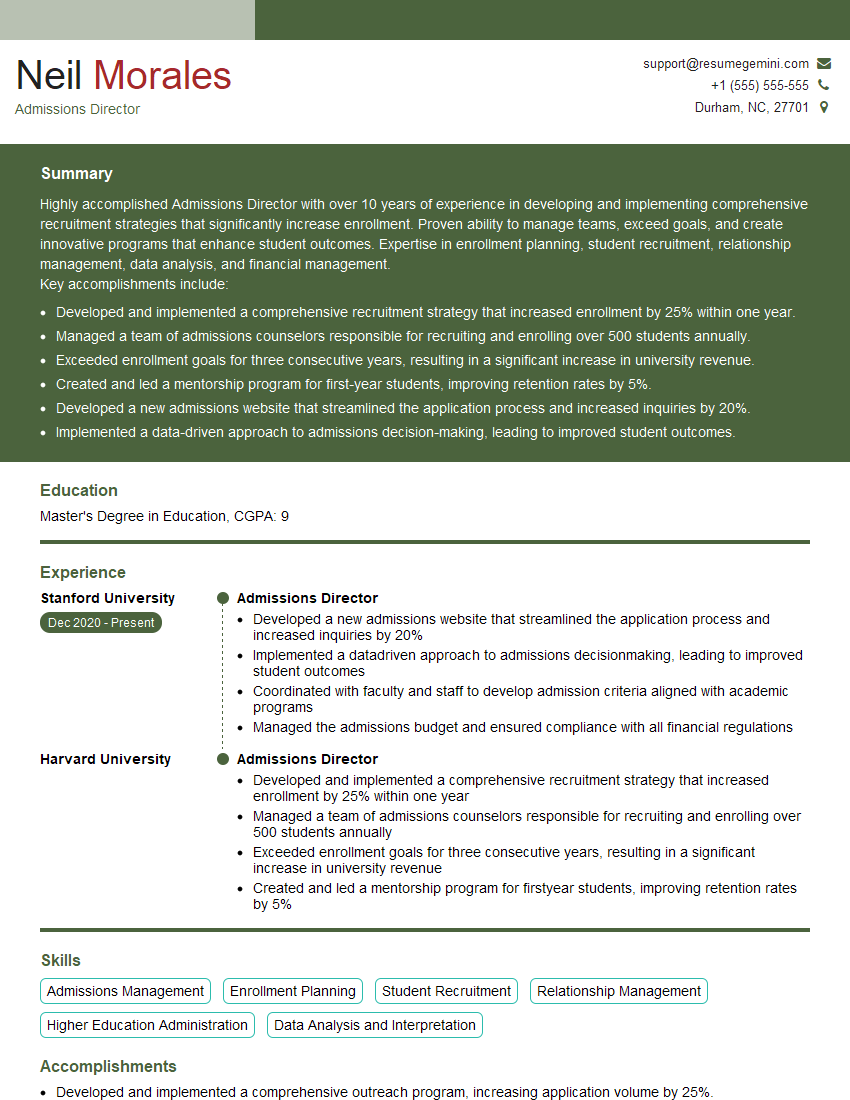
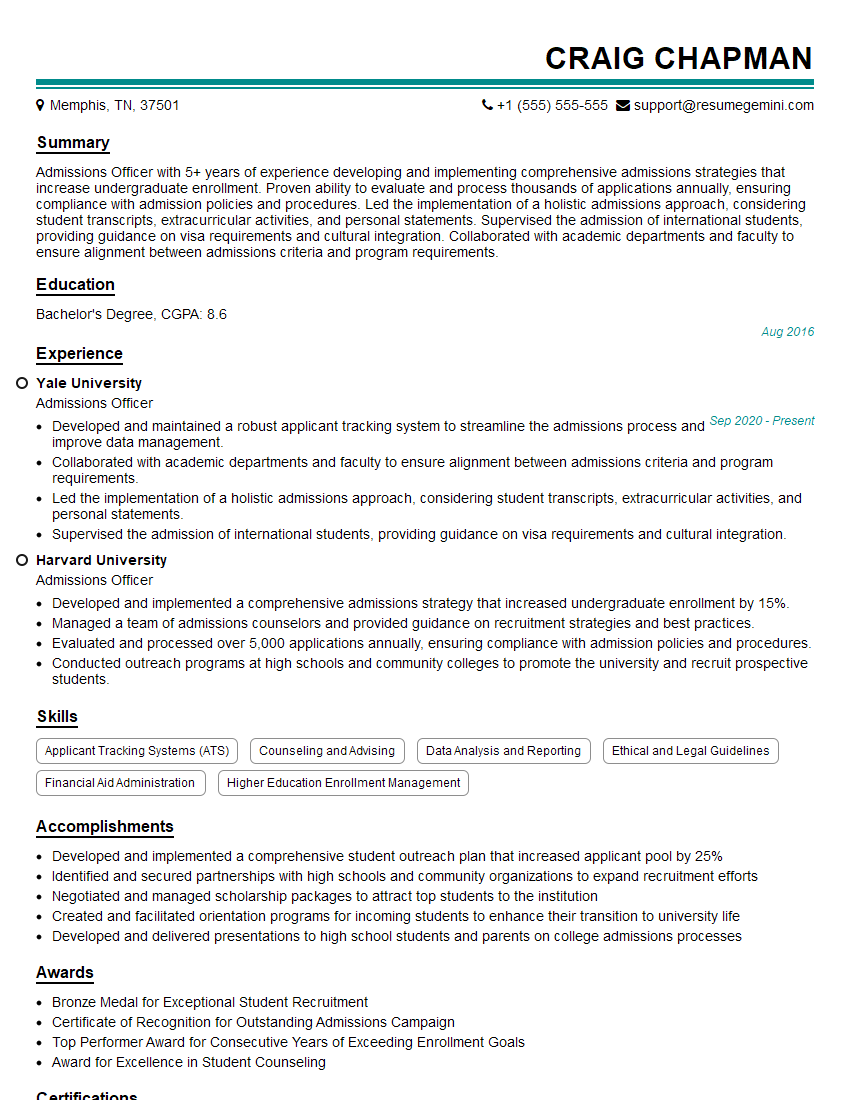
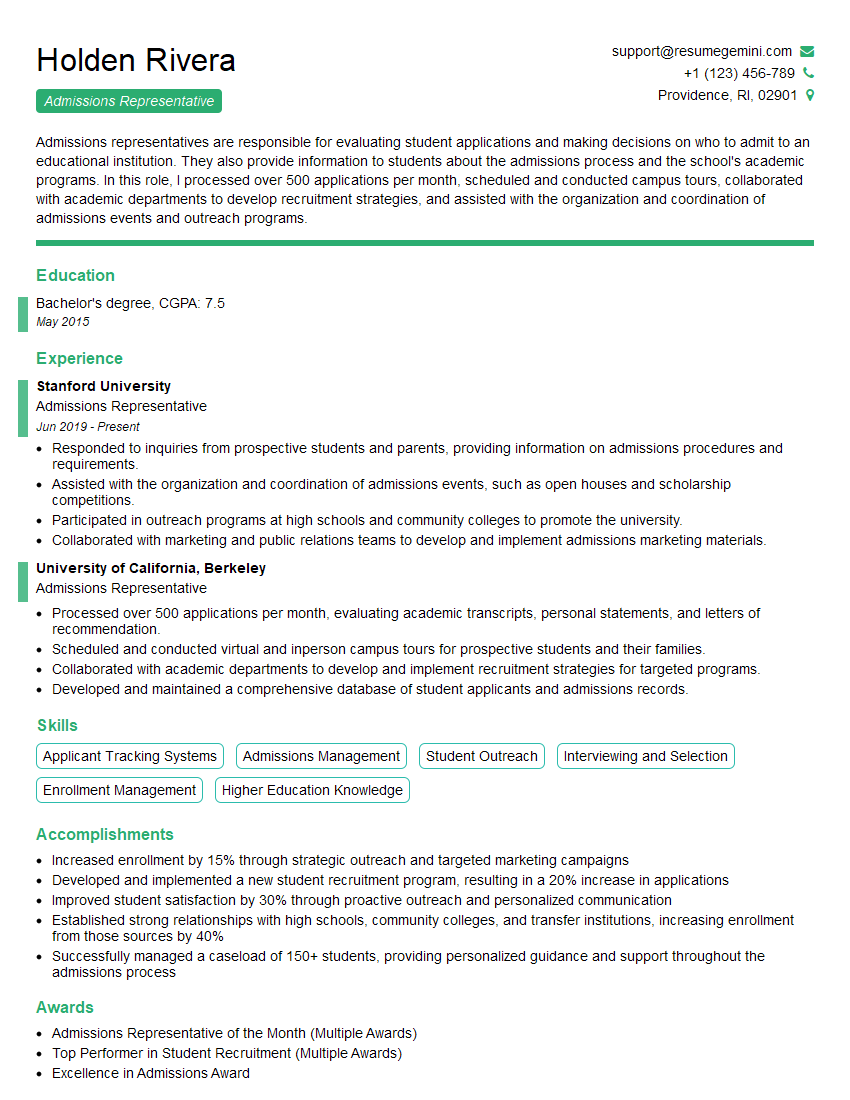
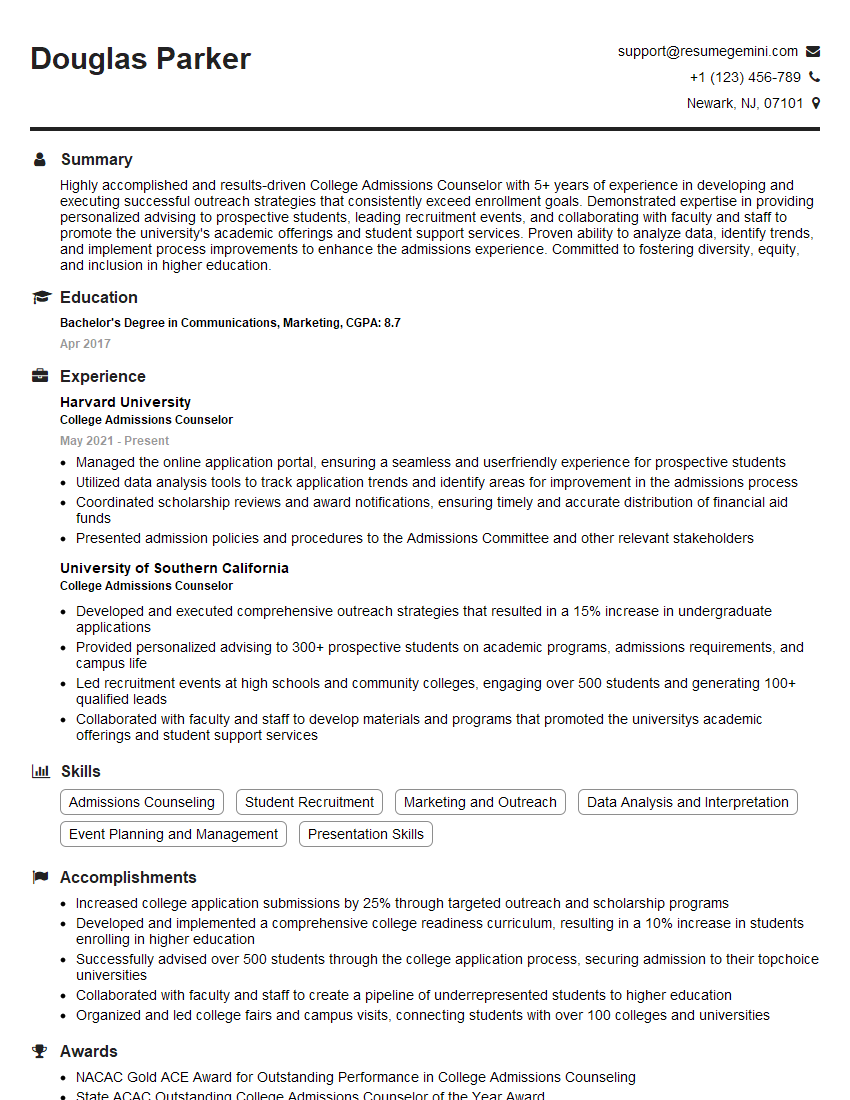
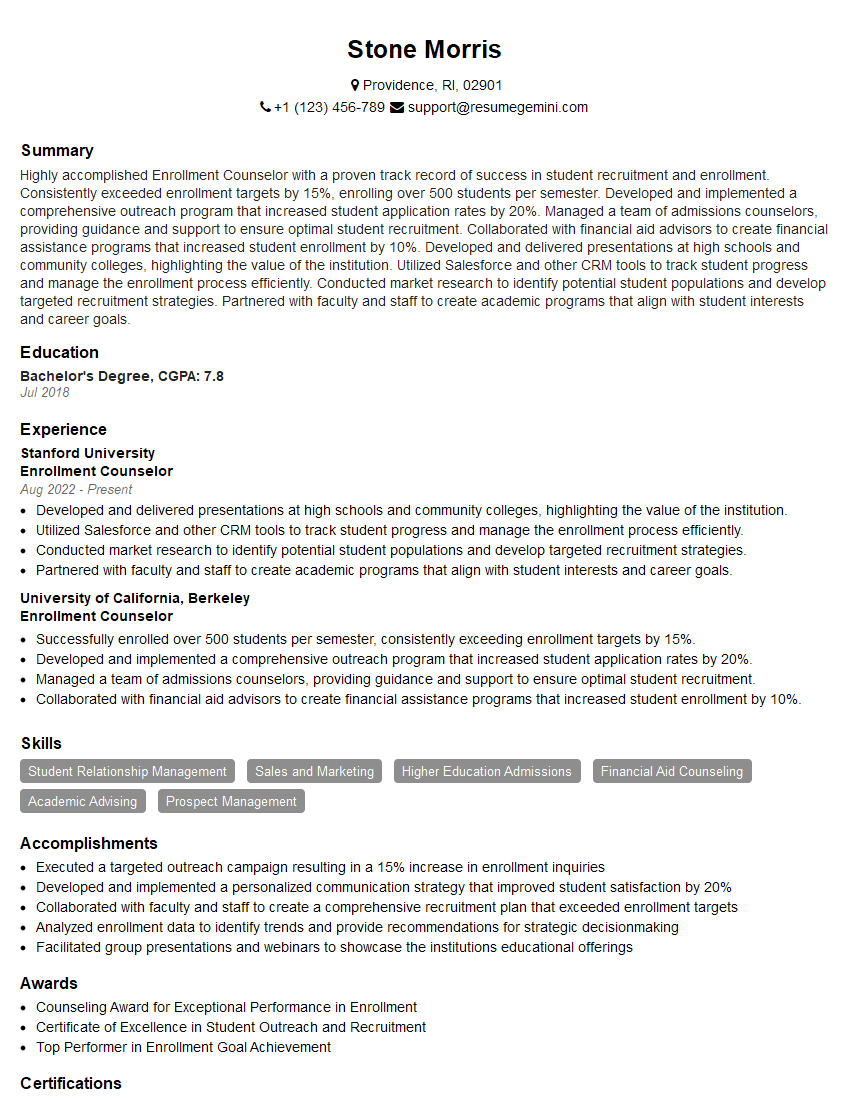
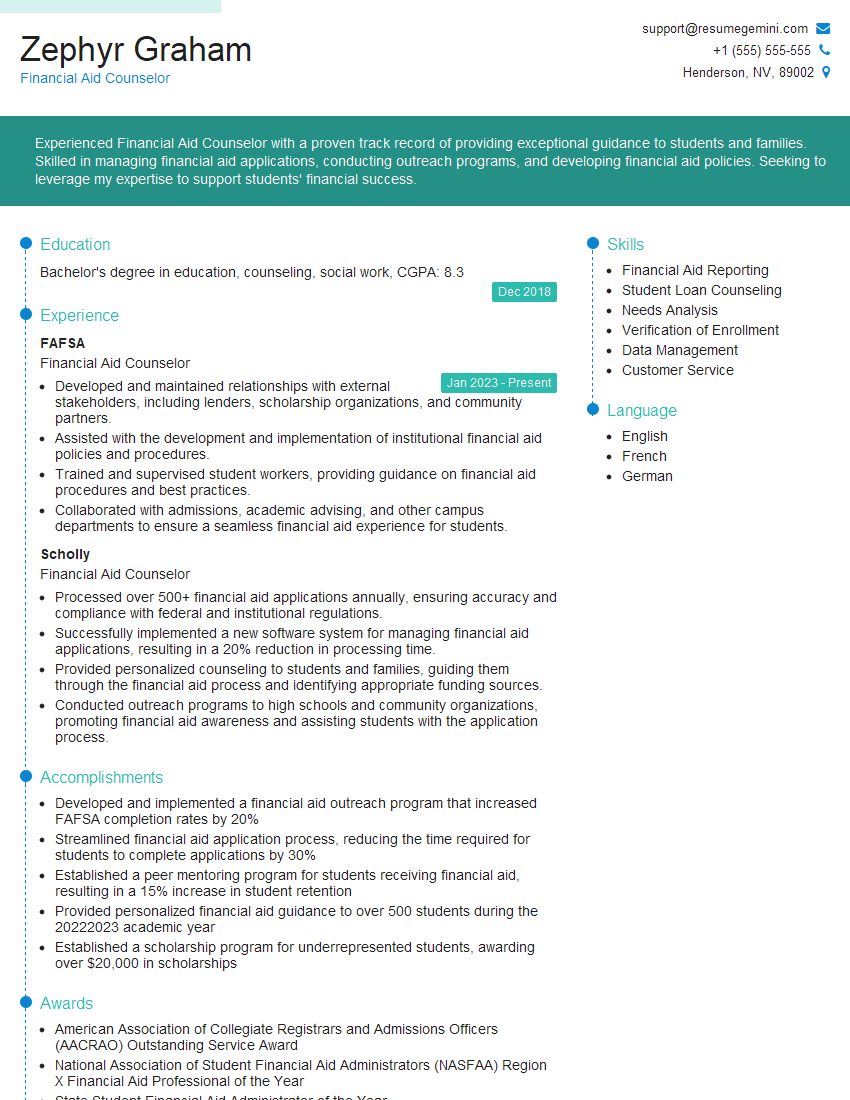
Mastering College Admissions Counseling opens doors to a rewarding career helping students achieve their higher education dreams. To stand out in today’s competitive job market, a strong, ATS-friendly resume is crucial. ResumeGemini is a trusted resource that can help you build a compelling resume tailored to highlight your skills and experience. We provide examples of resumes specifically designed for College Admissions Counselors to help you showcase your expertise effectively and secure your dream position. Take the next step and build your best resume with ResumeGemini!
Explore more articles
Users Rating of Our Blogs
Share Your Experience
We value your feedback! Please rate our content and share your thoughts (optional).
What Readers Say About Our Blog
To the interviewgemini.com Webmaster.
Very helpful and content specific questions to help prepare me for my interview!
Thank you
To the interviewgemini.com Webmaster.
This was kind of a unique content I found around the specialized skills. Very helpful questions and good detailed answers.
Very Helpful blog, thank you Interviewgemini team.