Unlock your full potential by mastering the most common Kiln work interview questions. This blog offers a deep dive into the critical topics, ensuring you’re not only prepared to answer but to excel. With these insights, you’ll approach your interview with clarity and confidence.
Questions Asked in Kiln work Interview
Q 1. Describe the different types of kilns and their applications.
Kilns come in various types, each suited for specific applications. The choice depends largely on the material being fired and the desired outcome. Here are a few common examples:
- Electric Kilns: These are popular for their precise temperature control and ease of use. They’re commonly found in studios and schools because they are relatively easy to operate and maintain. They are ideal for ceramics, glass, and low-fire applications.
- Gas Kilns: Offering rapid firing rates and high temperatures, gas kilns are favoured for large-scale production or for achieving specific effects in high-fire ceramics. They require more technical expertise to operate safely and efficiently.
- Wood-fired Kilns: These traditional kilns offer a unique aesthetic, imparting distinctive colours and textures to the fired pieces through the interaction of smoke and flames. They require significant skill and experience to manage, involving careful control of airflow and fuel. They are often used for raku firing or creating specific wood-fired effects.
- Raku Kilns: These are low-fire kilns specifically designed for the raku technique. Raku involves removing hot pottery from the kiln and placing it in combustible materials to create dramatic surface effects. They require specialized handling due to the high temperatures and rapid firing and cooling.
- Bottle Kilns: These are smaller, often electric, kilns designed for firing smaller items or for experimental work. Their compact size makes them ideal for home studios.
The choice of kiln depends heavily on the scale of operation, the type of work being undertaken, the budget, and the available space and resources.
Q 2. Explain the firing process in a typical kiln.
The firing process is a crucial stage in kiln work, transforming raw materials into finished products. A typical firing process involves several key steps:
- Loading: Carefully place the ware (the pieces being fired) inside the kiln, ensuring sufficient space for even heat distribution. Proper placement prevents pieces from touching and cracking during firing.
- Slow Ramp Up: The temperature is gradually increased at a controlled rate to prevent thermal shock and cracking. This slow heating allows the water within the clay to escape gradually.
- Soaking: Once the target temperature is reached, the kiln is held at that temperature for a specified period—the soak time. This allows the chemical reactions within the clay and glazes to complete, resulting in proper vitrification (the process of turning clay into a hard, glass-like material).
- Cooling Down: After the soaking period, the kiln is slowly cooled down to prevent thermal shock and cracking, mirroring the slow ramp-up process. This is a critical step, as rapid cooling can cause the piece to shatter.
- Unloading: Once the kiln has cooled completely, carefully remove the ware. The pieces are then inspected for any damage or defects.
The precise parameters – ramp rates, soak times, and peak temperature – will vary depending on the type of clay, glaze, and the desired final outcome. These parameters are often provided by the clay supplier or are the result of experience-based decisions.
Q 3. What are the key safety precautions when operating a kiln?
Safety is paramount when operating a kiln. High temperatures and potential hazards require strict adherence to safety precautions:
- Never leave a kiln unattended during firing or cooling: Kilns can malfunction, requiring immediate attention.
- Wear appropriate safety gear: This includes gloves, safety glasses, and long sleeves to protect against burns and flying debris.
- Ensure adequate ventilation: Kilns produce gases, particularly those fired with gas or wood, which can be harmful if inhaled. Ensure proper ventilation in the workspace.
- Follow manufacturer’s instructions: Each kiln has specific operational guidelines; adhering to these instructions is crucial.
- Never touch the kiln while it’s hot: Obvious, but an extremely important reminder.
- Properly dispose of waste materials: Some glazes contain heavy metals; consult local regulations for safe disposal.
- Be aware of fire safety procedures: Have a fire extinguisher readily available.
Regular safety checks and training are essential for maintaining a safe working environment.
Q 4. How do you monitor kiln temperature and pressure?
Kiln temperature and pressure are monitored using various instruments depending on the kiln type:
- Pyrometers: These measure the temperature inside the kiln, often with multiple sensors for different locations within the chamber for even heating.
- Pressure Gauges (for gas kilns): These monitor the gas pressure to ensure consistent and safe combustion. Improper pressure can lead to inconsistent firing and potential hazards.
- Kiln Controllers: These are electronic devices that regulate temperature and often allow for programmable firing schedules, providing precise control over the firing process.
- Temperature Recorders: These devices record the temperature throughout the firing process, providing a record for analysis and troubleshooting.
The specific monitoring methods will vary depending on the kiln’s features and the complexity of the firing process. Regular calibration of monitoring equipment is vital to ensure accuracy.
Q 5. What are the common causes of kiln malfunctions?
Kiln malfunctions can be caused by a variety of factors:
- Element failure (electric kilns): Heating elements can burn out due to age or overloading.
- Gas leaks or burner problems (gas kilns): These can lead to inconsistent firing or even fire hazards.
- Power surges or electrical faults: These can damage the kiln’s control system or heating elements.
- Controller malfunctions: The electronic controllers that regulate temperature can fail, leading to incorrect firing cycles.
- Insulation damage: Damaged insulation can lead to uneven heating or excessive energy consumption.
- Overloading: Packing too much ware into the kiln can prevent even heat distribution.
Regular maintenance and inspections can help prevent many of these issues. Keeping detailed records of firing schedules and kiln performance can also aid in identifying potential problems before they become major issues.
Q 6. How do you troubleshoot kiln problems?
Troubleshooting kiln problems involves a systematic approach:
- Identify the problem: Observe the symptoms; is the temperature erratic? Is there a burning smell? Is there a display error?
- Check the obvious: Ensure power supply, gas supply (if applicable), and proper ventilation.
- Consult the manual: The manufacturer’s manual often includes troubleshooting guides.
- Inspect the kiln: Look for damaged elements, insulation issues, or leaks.
- Test components: If you have the expertise, test the individual components (e.g., heating elements, thermocouples) using appropriate testing equipment.
- Contact a qualified technician: If the problem persists or you lack the necessary skills, contact a qualified technician to diagnose and repair the kiln.
Keeping a detailed log of the kiln’s operation and any observed issues can be invaluable during troubleshooting.
Q 7. Describe your experience with kiln maintenance and repairs.
My experience with kiln maintenance and repairs spans over [Number] years, working with a range of kiln types including electric, gas, and wood-fired kilns. I have performed routine maintenance tasks such as cleaning the kiln interior, inspecting heating elements, replacing damaged insulation bricks, and calibrating temperature sensors. I’ve also undertaken more complex repairs, including replacing faulty controllers, troubleshooting electrical problems, and repairing gas burners.
For example, I once diagnosed a problem in an electric kiln where the temperature fluctuated erratically during firing. After checking the obvious such as the power supply, I traced the problem to a faulty thermocouple. By replacing the thermocouple, the kiln’s operation was restored to its proper function. Another time, I repaired a gas kiln’s burner assembly, correctly reassembling the components and adjusting the gas flow to ensure efficient and safe combustion. Regular, proactive maintenance is key to preventing costly and time-consuming repairs down the line. This prevents many issues and increases the lifespan of the equipment.
Q 8. Explain the importance of kiln efficiency.
Kiln efficiency is paramount in ceramic production, impacting both profitability and environmental sustainability. It refers to the kiln’s ability to maximize energy use for firing while minimizing waste. A highly efficient kiln translates to lower fuel costs, reduced emissions, and a smaller environmental footprint. Think of it like driving a fuel-efficient car – you get more miles per gallon (or BTU per fired piece in this case!).
Factors influencing efficiency include:
- Kiln design: Well-insulated kilns with optimized airflow minimize heat loss.
- Firing schedule: A carefully designed firing schedule ensures even heating and minimizes overfiring or underfiring, reducing energy waste.
- Load optimization: Efficiently packing the kiln with bisque ware maximizes space utilization and minimizes wasted space and heat.
- Fuel type and combustion: Using a fuel source with high energy density and ensuring complete combustion are critical. Natural gas is often preferred for its clean burning properties, while electric kilns offer precise control.
For example, in my experience at [Previous Company Name], we implemented a new firing schedule that reduced energy consumption by 15% without compromising product quality, leading to significant cost savings.
Q 9. How do you ensure the quality control of products fired in a kiln?
Quality control in kiln firing is a multifaceted process starting long before the firing process itself. It ensures the final product meets the desired aesthetic and functional standards. It’s like baking a cake – if you don’t have the right ingredients or follow the recipe, the cake won’t turn out as expected.
Key aspects include:
- Raw material selection and preparation: Consistent raw materials are essential for predictable firing results. Impurities can lead to defects.
- Bisque firing: Monitoring the bisque firing temperature and duration ensures proper drying and prevents cracking.
- Glazing techniques: Consistent application of glaze is crucial for uniform color and finish. Any imperfections in glazing can be greatly amplified during the final firing process.
- Firing process monitoring: Precise temperature control and monitoring during the firing cycle (using pyrometers and data loggers) prevents defects such as warping, cracking, or color inconsistencies.
- Post-firing inspection: Careful inspection of the fired ware for any defects is essential. This may involve visual inspection, checking for warping, cracks, or imperfections in the glaze, as well as evaluating physical properties like strength.
In my previous role, I implemented a statistical process control (SPC) system that reduced the rate of defective pieces by 10% by identifying and addressing subtle variations in the firing process.
Q 10. What are the environmental considerations related to kiln operation?
Environmental considerations are increasingly critical in kiln operation. Emissions from kilns, especially those using fossil fuels, can contribute to air pollution. We have a responsibility to minimize our impact.
Key considerations include:
- Emission control: Implementing technologies such as scrubbers or catalytic converters can reduce harmful emissions. For instance, I’ve worked with kilns using low-NOX burners to minimize nitrogen oxide emissions.
- Fuel selection: Utilizing cleaner fuels like natural gas or exploring alternative energy sources such as electricity or biomass reduces greenhouse gas emissions.
- Energy efficiency: Improving kiln efficiency directly reduces energy consumption and lowers the carbon footprint.
- Waste management: Proper disposal of kiln waste, such as dust and broken pieces, is important to prevent environmental contamination.
A successful example was my involvement in a project that transitioned a kiln from oil to natural gas, resulting in a significant decrease in particulate matter emissions.
Q 11. Explain the role of kiln automation systems.
Kiln automation systems enhance efficiency, safety, and product quality. They involve sophisticated control systems that automate various aspects of the firing process.
Key roles include:
- Precise temperature control: Automated systems ensure consistent and accurate temperature profiles, reducing variations and defects.
- Optimized firing schedules: Automated systems can execute complex firing schedules precisely, improving efficiency and reducing energy consumption.
- Safety features: Automation systems can incorporate safety features like emergency shut-offs and alarms, minimizing risks to personnel.
- Data logging and monitoring: Automated systems record critical parameters such as temperature, airflow, and fuel consumption, allowing for analysis and process improvement.
For example, at [Previous Company Name], I oversaw the implementation of a Programmable Logic Controller (PLC)-based system, which resulted in a significant reduction in firing inconsistencies and improved overall efficiency.
Q 12. Describe your experience with different kiln control systems.
My experience encompasses various kiln control systems, from simple manual systems to advanced computerized controllers.
I have worked with:
- Analog controllers: These offer basic temperature control using thermocouples and PID (Proportional-Integral-Derivative) controllers. They provide a foundational understanding of kiln control.
- Programmable Logic Controllers (PLCs): These provide more sophisticated control capabilities with automated firing schedules, data logging, and safety features. I’ve utilized Allen-Bradley and Siemens PLCs extensively.
- Computer-based systems: These systems, often incorporating SCADA (Supervisory Control and Data Acquisition) software, provide advanced control, monitoring, and data analysis capabilities. I’m proficient with systems utilizing software like Wonderware InTouch.
Each system has its strengths and weaknesses, and the best choice depends on the kiln size, complexity, and production requirements. My expertise allows me to adapt to and optimize different control systems effectively.
Q 13. How do you handle emergency situations involving a kiln?
Emergency situations involving kilns require immediate and decisive action to mitigate potential hazards. Safety is paramount.
Procedures I’ve implemented include:
- Emergency shut-off procedures: Understanding and practicing emergency shut-off procedures for fuel supply, power, and ventilation systems is critical.
- Fire safety protocols: Having a clear fire safety plan, including evacuation routes and fire extinguisher access, is crucial.
- Temperature monitoring: Continuously monitoring kiln temperatures for unexpected fluctuations can help prevent thermal runaway or other issues. Early detection is key.
- Fault detection systems: Implementing sensors and alarms that detect potential problems, such as high temperatures or fuel leaks, can help prevent accidents.
- Post-incident analysis: After an emergency, a thorough analysis helps determine the cause and implement corrective measures to prevent future incidents.
For instance, during a power outage, I successfully implemented the backup generator system, ensuring a safe and controlled cool-down, minimizing damage to the kiln and its contents.
Q 14. What is your experience with different types of kiln fuels?
My experience extends across multiple kiln fuel types, each with its advantages and disadvantages.
I have worked with:
- Natural gas: This is a widely used fuel, offering relatively clean combustion and easy control. It’s cost-effective and readily available in many regions.
- Propane: Propane is a good alternative where natural gas is unavailable, though typically more expensive.
- Electricity: Electric kilns offer precise temperature control and are environmentally friendly as they produce no direct combustion emissions. However, they can be more expensive to operate.
- Oil: Oil-fired kilns are less common now due to environmental concerns and higher maintenance requirements. The fuel itself can be quite dirty.
- Wood: Wood firing offers a unique aesthetic, but it requires significant skill and experience for consistent results and presents challenges in emission control.
The optimal fuel type depends on factors such as cost, availability, environmental regulations, and desired firing characteristics. My experience allows me to assess and recommend the most suitable fuel for specific applications.
Q 15. Explain the process of loading and unloading a kiln.
Loading and unloading a kiln is a crucial process demanding precision and safety. It involves carefully placing the ware (the items being fired) inside the kiln, ensuring proper spacing for even heat distribution, and then carefully removing them once the firing cycle is complete.
Loading: We begin by meticulously cleaning the kiln shelves to prevent contamination. Then, we strategically place the ware, considering factors like size, weight, and fragility. For example, delicate porcelain pieces would be placed carefully on the upper shelves away from heavier items, which might be situated on lower shelves closer to the kiln’s heat source. We use kiln furniture, like saggars and stilts, to support the ware and prevent warping or sticking. Careful spacing allows for air circulation, ensuring uniform heating.
Unloading: Once the firing cycle is finished and the kiln has cooled sufficiently (often over several hours or even days), we carefully extract the ware. We use appropriate tools like gloves and tongs to handle hot items and prevent burns. The order of unloading often mirrors the loading process, removing the upper shelves first to avoid damaging pieces below. Each piece is then inspected for any defects.
Safety is paramount throughout both processes. Proper personal protective equipment (PPE) like heat-resistant gloves and eye protection are always used.
Career Expert Tips:
- Ace those interviews! Prepare effectively by reviewing the Top 50 Most Common Interview Questions on ResumeGemini.
- Navigate your job search with confidence! Explore a wide range of Career Tips on ResumeGemini. Learn about common challenges and recommendations to overcome them.
- Craft the perfect resume! Master the Art of Resume Writing with ResumeGemini’s guide. Showcase your unique qualifications and achievements effectively.
- Don’t miss out on holiday savings! Build your dream resume with ResumeGemini’s ATS optimized templates.
Q 16. How do you manage kiln schedules and production targets?
Managing kiln schedules and production targets involves meticulous planning and coordination. It’s like orchestrating a complex symphony – each instrument (kiln) must play its part at the right time and in perfect harmony with the others to meet the overall production goals. We use sophisticated software systems to plan kiln cycles, considering factors like firing temperature profiles, dwell times, and cooling rates for different types of ware.
We typically use a Kanban-style system to visualize the workload and track progress. This allows us to anticipate potential bottlenecks and proactively adjust schedules to meet deadlines. For instance, if one type of ware requires a longer firing cycle, we’ll allocate that kiln accordingly and adjust the schedule for other kilns to compensate for any potential delays. Regular monitoring of the production process via real-time data from kiln sensors helps identify and correct any deviations from the planned schedule.
Production targets are set based on market demand, material availability, and kiln capacity. We use historical data and forecasting models to predict future demand and optimize production accordingly. Regular review meetings help assess the effectiveness of our scheduling and make any necessary adjustments to improve efficiency and meet targets.
Q 17. Describe your experience with kiln data logging and analysis.
Kiln data logging and analysis are critical for optimizing kiln performance and ensuring consistent product quality. Modern kilns are equipped with sensors that continuously monitor various parameters such as temperature, pressure, and atmosphere within the kiln chamber. This data is logged digitally, providing a detailed record of each firing cycle.
I’m experienced in using specialized software to analyze this data. We look for trends and patterns to identify potential issues such as uneven heating, leaks, or problems with the burner system. For example, a sudden drop in temperature might indicate a burner malfunction, while consistently high energy consumption could point to inefficiencies in the insulation. Data analysis helps us predict potential maintenance needs and optimize firing profiles to minimize energy consumption and improve product quality.
We also use this data for quality control, comparing the firing parameters for successful and unsuccessful firings to pinpoint factors contributing to defects. This data-driven approach allows for continuous improvement in our processes.
Q 18. How do you ensure the safety of kiln operators and surrounding personnel?
Ensuring the safety of kiln operators and surrounding personnel is our utmost priority. This involves implementing stringent safety protocols and providing comprehensive training. We emphasize the importance of personal protective equipment (PPE) such as heat-resistant gloves, eye protection, and safety footwear.
Our safety protocols cover every aspect of kiln operation, from loading and unloading to maintenance and emergency procedures. Regular safety inspections are conducted to identify and address potential hazards. We also provide regular training sessions covering safe operating procedures, emergency response, and hazard identification. This includes hands-on training on the proper use of safety equipment and emergency shutdown procedures.
For instance, clear signage indicating hot surfaces and restricted areas is present throughout the kiln area. Emergency shut-off switches are easily accessible, and emergency response plans are clearly documented and regularly practiced. We also conduct regular safety drills to ensure everyone is prepared to respond effectively in emergency situations.
Q 19. Explain your understanding of kiln refractory materials.
Kiln refractory materials are essential for withstanding the extreme temperatures and harsh chemical environments within a kiln. They form a protective barrier between the high-temperature furnace and the kiln shell. These materials must possess excellent thermal shock resistance, high melting points, and low thermal conductivity to minimize heat loss.
Common refractory materials include various types of bricks made from materials like fireclay, alumina, zirconia, and silicon carbide. The choice of refractory material depends on the type of kiln and the temperatures involved. For example, kilns used for high-temperature firing of ceramics might utilize zirconia bricks, while lower-temperature kilns might use fireclay bricks.
Understanding the properties of these materials is crucial for selecting the right ones for a specific application and ensuring the longevity and efficiency of the kiln. Regular inspection and maintenance of the refractory lining are essential to identify and address any damage or deterioration before it compromises the kiln’s performance or safety. Failure to do so can lead to costly repairs or even catastrophic failure.
Q 20. How do you maintain accurate kiln records and documentation?
Maintaining accurate kiln records and documentation is vital for tracking performance, ensuring quality control, and meeting regulatory requirements. We utilize a combination of digital and paper-based systems to maintain a comprehensive record of all kiln operations.
Each firing cycle is meticulously documented, including details like the date, time, ware type, firing profile (temperature and time), energy consumption, and any observations during the process. We use specialized software to capture and store this data electronically, allowing for easy retrieval and analysis. Paper records are also maintained for regulatory compliance and as a backup in case of system failure.
Detailed maintenance logs are kept for all kiln components, including dates of inspections, repairs, and replacements. This information is crucial for predicting potential maintenance needs and scheduling preventative maintenance to minimize downtime and extend the life of the kiln. Proper documentation is key to ensuring the traceability and accountability of every aspect of the kiln operation.
Q 21. What are the key performance indicators (KPIs) for kiln operation?
Key Performance Indicators (KPIs) for kiln operation are essential for measuring efficiency, productivity, and product quality. They provide valuable insights into areas for improvement and help optimize the entire process.
Some critical KPIs include:
- Firing cycle time: The total time required for a complete firing cycle, including heating, dwell, and cooling.
- Energy consumption per firing: Measures the efficiency of the kiln in terms of energy utilization.
- First-pass yield: The percentage of ware that passes quality control without defects after the first firing.
- Downtime: The percentage of time the kiln is not operational due to maintenance, repairs, or other reasons.
- Refractory lifespan: The length of time before the kiln’s refractory lining requires replacement or repair.
- Defect rate: Percentage of defective products produced.
Regular monitoring and analysis of these KPIs allow us to identify areas for improvement and implement strategies to optimize kiln performance and reduce costs. For example, if the defect rate is high, we might need to investigate the cause and adjust the firing profile or make improvements to the loading process.
Q 22. How do you interpret kiln performance data?
Interpreting kiln performance data involves a holistic approach, examining multiple parameters to understand the kiln’s efficiency and identify potential problems. We’re not just looking at numbers; we’re looking for trends and patterns.
Key metrics include fuel consumption (per unit of product), thermal efficiency (heat utilized versus heat lost), production rate (output per hour), and product quality (uniformity, strength, etc.). We analyze these data points against historical records and benchmarks to spot deviations. For instance, a sudden spike in fuel consumption with no corresponding increase in production immediately suggests an inefficiency, perhaps a leak in the kiln shell or an issue with the burner system. Similarly, a decline in product quality could indicate temperature inconsistencies within the kiln.
Statistical process control (SPC) charts are invaluable tools. These charts visually represent data over time, highlighting trends and variations. Control limits help identify when a process drifts outside acceptable ranges, enabling prompt intervention. For example, an SPC chart tracking kiln temperature would clearly show any sustained deviations from the setpoint, signaling a need for adjustments to the burner or insulation.
Software packages designed for kiln monitoring and control are also crucial for efficient data interpretation. They can automate data collection, analysis, and reporting, providing detailed insights that would be impossible to manage manually. The software can also produce predictive maintenance alerts based on identified patterns in the data.
Q 23. How do you identify and address kiln energy inefficiencies?
Identifying and addressing kiln energy inefficiencies requires a systematic approach, combining data analysis with practical on-site investigation. The goal is to minimize energy consumption without compromising production quality or safety.
- Improve Insulation: Heat loss through the kiln shell is a significant source of inefficiency. Regular inspection and repair of insulation, including replacement where necessary, is crucial. Think of it like wrapping your house in better insulation to keep the heat in.
- Optimize Combustion: Proper air-fuel ratio is paramount. Too much air leads to heat loss; too little results in incomplete combustion and reduced efficiency. We use specialized instruments to measure and adjust these parameters precisely. Imagine fine-tuning a car engine for optimal fuel economy.
- Prevent Air Infiltration: Leaks in the kiln structure allow hot air to escape, wasting energy. Regular inspections and sealing of cracks and joints are vital. It’s like fixing a leaky window to prevent heat from escaping your home.
- Recover Waste Heat: Heat recovery systems, such as waste heat boilers, can capture heat from exhaust gases and use it to preheat air or generate steam, significantly reducing fuel consumption. Think of it as recycling the heat that would otherwise be lost.
- Upgrade Burners: Modern, high-efficiency burners can offer substantial improvements in combustion control and reduce fuel consumption. This is like upgrading your car engine to a more fuel-efficient model.
The approach involves regular monitoring of key performance indicators (KPIs), trend analysis, and implementing improvements iteratively. We constantly strive for optimization, aiming for small incremental gains that cumulatively result in substantial energy savings.
Q 24. What are the different types of kiln sensors and their functions?
Various sensors are employed to monitor critical parameters within a kiln, providing real-time data for process control and performance evaluation. The specific sensors used depend on the type of kiln and the material being fired.
- Thermocouples: These measure temperature at various points within the kiln. They are crucial for controlling the firing process and ensuring uniform heating. Different types exist, such as K-type or R-type, selected for their suitability to the temperature range.
- Pressure Transducers: Measure pressure in different parts of the kiln, such as the combustion chamber or exhaust system. This data is crucial for monitoring the combustion process and detecting leaks.
- Oxygen Sensors (Lambda Probes): Measure the oxygen concentration in the exhaust gases, providing insights into the combustion efficiency. They aid in optimizing the air-fuel ratio.
- Flow Meters: Measure the flow rate of fuel and combustion air, ensuring accurate metering and efficient combustion.
- Level Sensors: In kilns with a material feed system, these sensors monitor the level of material inside the kiln, ensuring consistent material flow and preventing overfilling.
- Infrared (IR) Cameras: Provide thermal imaging of the kiln’s exterior, identifying areas of excessive heat loss due to inadequate insulation or cracks.
The data from these sensors is typically integrated into a central control system that allows for automated monitoring and control of the kiln process.
Q 25. Describe your experience working with different kiln designs.
My experience encompasses a range of kiln designs, including rotary kilns, shaft kilns, and tunnel kilns. Each design presents unique operational characteristics and challenges.
Rotary Kilns: I’ve worked extensively with rotary kilns used for cement production and other high-temperature processes. My focus has been on optimizing the rotation speed, inclination angle, and burner configuration to enhance efficiency and product quality. Troubleshooting issues like liner wear and material bridging has been a significant part of this experience.
Shaft Kilns: These are often used for the production of lime or ceramics. My work with shaft kilns involved optimizing the fuel distribution and airflow to achieve uniform heating and minimize energy consumption. I have also addressed issues like refractory wear and maintaining stable operating temperatures.
Tunnel Kilns: These are particularly suited for continuous firing processes. My experience with tunnel kilns includes optimizing the temperature profile along the length of the kiln to match the needs of the material. Maintaining the temperature zones and regulating the speed of the carts are crucial aspects.
This diverse experience allows me to adapt to different kiln technologies and leverage best practices across various applications.
Q 26. How do you comply with relevant safety and environmental regulations?
Compliance with safety and environmental regulations is paramount in kiln operations. This involves a multi-faceted approach ensuring worker safety and minimizing environmental impact.
- Safety Procedures: We adhere to strict safety protocols, including lockout/tagout procedures, personal protective equipment (PPE) requirements, and regular safety training for all personnel. We frequently conduct safety audits to ensure compliance and identify potential hazards.
- Emission Monitoring: We continuously monitor emissions, including particulate matter, sulfur oxides, and nitrogen oxides, using stack monitoring equipment. We ensure that our emissions meet or exceed all regulatory limits, maintaining detailed records for compliance audits.
- Waste Management: We follow strict protocols for the proper handling, storage, and disposal of hazardous waste materials generated during operations. This includes the secure storage of spent refractories and other waste streams.
- Permitting and Reporting: We diligently maintain all permits and licenses required for operation and submit regular reports to the relevant regulatory authorities.
- Emergency Response Plan: A comprehensive emergency response plan is in place, addressing various scenarios such as equipment malfunctions, fires, or spills. Regular drills are conducted to ensure preparedness.
Proactive compliance measures, coupled with meticulous record-keeping, are critical for maintaining a safe and environmentally responsible operation.
Q 27. Explain your understanding of kiln emissions and control strategies.
Kiln emissions are a major environmental concern, primarily consisting of particulate matter, NOx (nitrogen oxides), SOx (sulfur oxides), and CO (carbon monoxide). Understanding these emissions and employing effective control strategies is essential for environmental compliance and minimizing the environmental footprint.
Particulate Matter (PM): PM emissions result from incomplete combustion and the carryover of fine particles. Control strategies include the use of baghouses or electrostatic precipitators (ESPs) for particulate removal from exhaust gases.
NOx: NOx emissions form during high-temperature combustion. Control strategies include using low-NOx burners, optimizing combustion air, and implementing selective catalytic reduction (SCR) or selective non-catalytic reduction (SNCR) systems.
SOx: SOx emissions arise from the sulfur content in fuels. Control strategies focus on using low-sulfur fuels or implementing flue-gas desulfurization (FGD) systems.
CO: CO emissions are a result of incomplete combustion. Optimizing combustion parameters and ensuring adequate air supply minimize CO emissions.
The choice of control strategy depends on the type of kiln, the fuel used, and the specific regulatory requirements. Often, a combination of measures is employed to achieve the desired emission reduction targets.
Q 28. Describe your experience with kiln modernization or upgrade projects.
I have extensive experience with kiln modernization and upgrade projects, aiming to improve efficiency, reduce emissions, and enhance safety.
One project involved the retrofitting of an old rotary kiln with a new burner system and advanced control system. This resulted in a significant reduction in fuel consumption (around 15%) and improved product quality. The upgrade included the implementation of a modern PLC-based control system with automated data logging and process optimization capabilities. This allowed for precise control of the kiln temperature, feed rate, and air-fuel ratio, significantly improving operational efficiency.
Another project focused on emission reduction. We integrated an SCR system into the exhaust gas stream to significantly reduce NOx emissions, bringing them into compliance with stricter environmental regulations. This required careful consideration of the system design, integration with existing equipment, and rigorous testing to ensure proper performance.
These projects highlight my ability to manage complex upgrades, integrate new technologies with existing infrastructure, and deliver tangible improvements in efficiency, emission control, and safety. Each project followed a structured methodology: assessment of needs, detailed design, procurement, installation, commissioning, and performance evaluation.
Key Topics to Learn for Kiln Work Interview
- Kiln Types and Their Applications: Understanding the different types of kilns (e.g., electric, gas, wood-fired) and their suitability for various ceramic processes.
- Kiln Loading and Placement Techniques: Mastering efficient and safe loading practices to ensure even firing and prevent damage to pieces.
- Firing Schedules and Temperature Control: Knowledge of creating and interpreting firing schedules, understanding the impact of temperature ramps and holds on the final product.
- Kiln Maintenance and Troubleshooting: Familiarity with routine maintenance tasks, identifying common issues (e.g., burner problems, element failures), and implementing effective solutions.
- Safety Procedures and Regulations: Understanding and adhering to all safety protocols related to kiln operation and high-temperature environments.
- Glaze Chemistry and Firing Effects: Knowledge of how different glazes react at various temperatures and the effect of kiln atmosphere on the final glaze.
- Energy Efficiency and Sustainability in Kiln Operation: Understanding techniques for optimizing energy consumption and minimizing environmental impact.
- Troubleshooting Kiln Problems: Practical experience in diagnosing and resolving common kiln issues such as uneven firing, cracking, or damage to pieces.
Next Steps
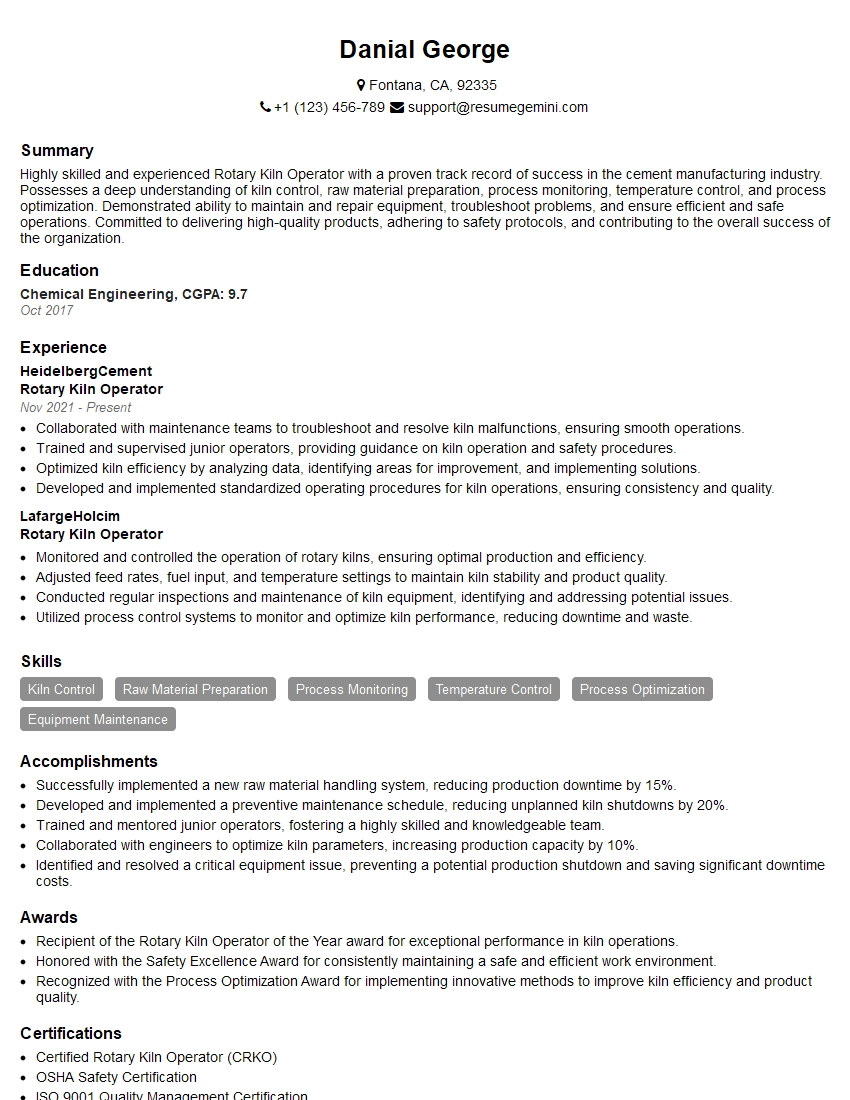
Mastering kiln work opens doors to exciting opportunities in the ceramics industry, offering diverse roles with excellent growth potential. A strong resume is crucial to showcasing your skills and experience effectively to potential employers. To maximize your job prospects, create an ATS-friendly resume that highlights your relevant skills and accomplishments. ResumeGemini is a trusted resource to help you build a professional and impactful resume. Examples of resumes tailored to Kiln work are available to help guide you.
Explore more articles
Users Rating of Our Blogs
Share Your Experience
We value your feedback! Please rate our content and share your thoughts (optional).
What Readers Say About Our Blog
To the interviewgemini.com Webmaster.
Very helpful and content specific questions to help prepare me for my interview!
Thank you
To the interviewgemini.com Webmaster.
This was kind of a unique content I found around the specialized skills. Very helpful questions and good detailed answers.
Very Helpful blog, thank you Interviewgemini team.