Are you ready to stand out in your next interview? Understanding and preparing for Ethical Practice and Legal Compliance interview questions is a game-changer. In this blog, we’ve compiled key questions and expert advice to help you showcase your skills with confidence and precision. Let’s get started on your journey to acing the interview.
Questions Asked in Ethical Practice and Legal Compliance Interview
Q 1. Describe your understanding of the Sarbanes-Oxley Act (SOX).
The Sarbanes-Oxley Act of 2002 (SOX) is a US federal law enacted in response to major corporate accounting scandals. Its primary goal is to protect investors by improving the accuracy and reliability of corporate disclosures. It achieves this through several key provisions.
- Increased Corporate Responsibility: SOX holds senior executives directly accountable for the accuracy of financial reporting. The CEO and CFO must personally certify the accuracy of financial statements.
- Enhanced Financial Disclosures: The act mandates more transparent and detailed financial reporting, including internal controls over financial reporting.
- Independent Audits: SOX strengthens the independence of auditors and requires rotation of audit partners to prevent conflicts of interest.
- Whistleblower Protection: It protects employees who report potential violations of SOX or other financial fraud, encouraging internal reporting of wrongdoing.
- Increased Penalties for Non-Compliance: SOX establishes significant penalties for violations, deterring fraudulent activities.
Imagine a scenario where a company is manipulating its revenue figures to meet investor expectations. Under SOX, the CEO and CFO would be personally liable for this fraudulent activity, facing severe penalties including jail time. This act fundamentally changed the landscape of corporate governance and financial reporting in the US.
Q 2. Explain the difference between ethical dilemmas and legal violations.
While both ethical dilemmas and legal violations involve actions that are not ideal, they differ significantly. A legal violation is an act that breaks a specific law or regulation and carries a defined legal penalty. Think of it as a clear line in the sand: you either cross it or you don’t. Examples include fraud, theft, or violating contract terms.
An ethical dilemma, on the other hand, involves a conflict between two or more ethical principles. There might not be a clear legal violation, but the action raises concerns about fairness, honesty, or integrity. For instance, accepting a gift from a supplier might not be illegal, but it could be considered ethically questionable if it compromises objectivity or creates a conflict of interest. Ethical dilemmas often require careful consideration of multiple factors and a nuanced understanding of ethical principles.
The key difference lies in enforceability. Legal violations are addressed through the legal system, while ethical dilemmas are usually handled through internal policies, codes of conduct, and professional standards.
Q 3. How would you handle a situation where a colleague is violating company policy?
Handling a situation where a colleague is violating company policy requires a carefully considered approach, prioritizing both the well-being of the company and the colleague. My first step would be to gather all the facts, ensuring I have a clear understanding of the situation before taking action.
- Private Conversation: I would initiate a private conversation with my colleague, expressing my concerns and explaining why their actions violate company policy. This approach allows for a direct and informal resolution, potentially addressing the issue without escalating it.
- Documentation: Thorough documentation of the conversation, including the date, time, individuals involved, and the agreed-upon actions is crucial. This safeguards both the colleague and the company.
- Escalation: If the private conversation doesn’t resolve the issue, I would escalate the matter to the appropriate manager or HR department, outlining the situation and my attempts to resolve it internally. This ensures a fair and impartial investigation.
- Company Policy adherence: I would strictly adhere to the company’s established policies and procedures throughout the process, safeguarding both my interests and the company’s.
It’s important to remember that this process is not about retribution, but about maintaining compliance and protecting the company’s reputation. A supportive approach, while upholding company standards, can help prevent future violations.
Q 4. What is your experience with conducting internal investigations?
I have extensive experience conducting internal investigations, focusing on ensuring objectivity, fairness, and adherence to legal and ethical standards. My approach typically involves several key phases:
- Defining the Scope: Clearly defining the issue under investigation, specifying the timeline, and identifying key individuals involved are crucial initial steps.
- Data Collection: Gathering relevant information through interviews, document reviews, and data analysis ensures a comprehensive understanding of the situation. This step requires careful consideration of legal privileges and data privacy.
- Witness Interviews: Conducting interviews with relevant individuals, taking detailed notes, and ensuring fairness and impartiality are essential for obtaining accurate and reliable information.
- Analysis and Reporting: Analyzing collected data, identifying patterns, and drawing conclusions while meticulously documenting the entire process is critical. A well-structured report summarizing findings and recommending actions is prepared.
- Follow-up: Ensuring appropriate actions are taken based on the findings of the investigation and monitoring the situation to prevent recurrence is critical.
In one instance, I led an investigation into a potential data breach. Through meticulous data collection and analysis, we were able to identify the source of the breach, mitigate its impact, and implement preventative measures. This experience highlighted the importance of a methodical approach and strong communication throughout the investigation process.
Q 5. Describe your experience with developing and implementing compliance programs.
I have extensive experience developing and implementing compliance programs, ranging from creating policies and procedures to conducting training and monitoring effectiveness. My approach is grounded in a risk-based framework, identifying potential compliance issues and designing targeted solutions.
- Risk Assessment: Conducting a thorough risk assessment to identify potential compliance vulnerabilities is the foundation of any effective compliance program.
- Policy Development: Developing clear, concise, and easily accessible policies and procedures that reflect relevant laws, regulations, and ethical standards is paramount.
- Training and Awareness: Implementing comprehensive training programs for employees to ensure understanding and adherence to established policies and procedures.
- Monitoring and Auditing: Establishing a system for ongoing monitoring and periodic audits to identify potential compliance gaps and ensure program effectiveness.
- Reporting and Remediation: Establishing a system for reporting non-compliance, addressing identified issues, and implementing corrective actions to prevent recurrence.
For example, I developed a comprehensive compliance program for a healthcare organization, encompassing HIPAA regulations and other relevant laws. This involved not only creating new policies but also redesigning existing processes to ensure effective implementation and ongoing monitoring of compliance.
Q 6. How familiar are you with HIPAA regulations?
I am very familiar with the Health Insurance Portability and Accountability Act of 1996 (HIPAA). HIPAA is a US federal law designed to protect the privacy and security of protected health information (PHI). It sets strict standards for the handling, storage, and transmission of PHI, covering everything from patient records to billing information.
Key aspects of HIPAA include:
- Privacy Rule: Governs the use and disclosure of PHI.
- Security Rule: Sets standards for the security of electronic PHI.
- Breach Notification Rule: Mandates notification in the event of a data breach involving PHI.
Non-compliance with HIPAA can result in severe penalties, including hefty fines and legal action. Understanding and adhering to HIPAA is crucial for any organization handling patient data. I’ve worked extensively with organizations to ensure compliance, implementing robust security measures and training programs to protect sensitive patient information.
Q 7. Explain your understanding of GDPR and its implications.
The General Data Protection Regulation (GDPR) is a comprehensive European Union regulation that protects the personal data of individuals within the EU. It’s a landmark piece of legislation with far-reaching implications for organizations worldwide that process the personal data of EU citizens.
Key aspects of GDPR include:
- Data Minimization and Purpose Limitation: Organizations should only collect and process the minimum amount of personal data necessary for specified, explicit, and legitimate purposes.
- Consent: Individuals must give freely given, specific, informed, and unambiguous consent for the processing of their personal data.
- Data Subject Rights: Individuals have several rights regarding their data, including the right to access, rectify, erase, and restrict processing of their data.
- Data Security: Organizations have a responsibility to implement appropriate technical and organizational measures to protect personal data against unauthorized or unlawful processing and accidental loss, destruction, or damage.
- Accountability: Organizations are responsible for demonstrating compliance with GDPR.
Non-compliance with GDPR can result in significant fines, impacting even organizations outside the EU if they process data of EU citizens. Understanding and complying with GDPR requires a proactive and comprehensive approach to data protection and privacy.
Q 8. How do you ensure compliance with anti-bribery and anti-corruption laws?
Ensuring compliance with anti-bribery and anti-corruption laws requires a multi-faceted approach. It’s not just about avoiding illegal acts; it’s about fostering a culture of ethical conduct. This starts with a robust compliance program that includes:
- Clear policies and procedures: A comprehensive code of conduct explicitly prohibiting bribery and corruption, detailing acceptable and unacceptable business practices, and outlining reporting mechanisms. For example, a policy might explicitly state that offering gifts exceeding a certain value requires prior approval.
- Risk assessment and mitigation: Identifying areas of the business vulnerable to bribery and corruption, such as interactions with government officials or high-risk third parties. This might involve mapping out all business interactions and assigning risk levels based on factors like the country’s corruption perception index.
- Due diligence on third parties: Thoroughly vetting business partners and suppliers to ensure they share the same commitment to ethical conduct. This could include background checks and reviewing their own anti-corruption policies.
- Training and awareness: Regular training programs for all employees, covering the relevant laws, company policies, and potential scenarios. Interactive scenarios and case studies can make the training more engaging and memorable.
- Internal controls and monitoring: Implementing systems to monitor transactions and identify potential red flags. This might involve regular audits and employing robust financial controls.
- Whistleblower protection: Establishing a confidential and secure reporting mechanism for employees to raise concerns without fear of retaliation. This is crucial to fostering a culture of transparency and accountability.
- Disciplinary measures: Clear consequences for violations, ranging from warnings to termination, depending on the severity of the offense. This reinforces the importance of compliance.
Imagine a scenario where a sales representative is pressured to offer a substantial gift to secure a contract with a government agency. A well-defined anti-bribery policy, coupled with adequate training, would equip the representative to refuse the request and report it through the appropriate channels, avoiding potential legal and reputational damage for the company.
Q 9. What is your approach to risk assessment and mitigation in a compliance context?
My approach to risk assessment and mitigation in a compliance context follows a structured methodology. It begins with identifying potential risks, analyzing their likelihood and impact, developing mitigation strategies, implementing those strategies, and continually monitoring and reviewing the effectiveness of the controls in place. This can be visualized as a cycle:
- Identify Risks: This involves brainstorming potential compliance issues relevant to the organization, such as data breaches, regulatory violations, or ethical lapses. Techniques like SWOT analysis and stakeholder mapping can be utilized.
- Analyze Risks: Assessing the likelihood and potential impact of each identified risk. For instance, a data breach could be high-impact, low-likelihood, while a minor accounting error might be low-impact, high-likelihood.
- Develop Mitigation Strategies: Creating strategies to reduce the likelihood or impact of each risk. Examples include implementing stronger cybersecurity measures for data breaches or improved internal controls for accounting errors.
- Implement Mitigation Strategies: Putting the strategies into action, ensuring sufficient resources and training are available.
- Monitor and Review: Regularly reviewing the effectiveness of the mitigation strategies through audits, key performance indicators (KPIs), and periodic risk assessments. This allows for adaptation and improvement over time.
For example, if a risk assessment identifies a high likelihood of data breaches due to outdated technology, a mitigation strategy might involve investing in new security systems and training employees on cybersecurity best practices. Regular monitoring of security logs and penetration testing would then help evaluate the effectiveness of this investment.
Q 10. Describe your experience with data privacy and protection.
My experience with data privacy and protection is extensive, encompassing both practical application and theoretical understanding. I’m familiar with regulations like GDPR (General Data Protection Regulation) and CCPA (California Consumer Privacy Act), and I understand the importance of implementing robust data protection measures. This includes:
- Data Minimization: Only collecting and processing the data that is strictly necessary for specified, explicit, and legitimate purposes.
- Data Security: Implementing appropriate technical and organizational measures to protect personal data against unauthorized or unlawful processing and against accidental loss, destruction or damage. This involves firewalls, encryption, access controls, and regular security audits.
- Data Subject Rights: Understanding and facilitating individuals’ rights to access, rectify, erase, and restrict the processing of their personal data.
- Data Breach Response: Developing and implementing a plan for responding to data breaches, including notification procedures, data recovery, and remediation efforts. This should include prompt reporting to regulatory authorities where required.
- Privacy by Design: Incorporating privacy considerations into the design and development of systems and processes from the outset.
In a past role, I was instrumental in developing a comprehensive data privacy policy and implementing encryption protocols across our entire data infrastructure, greatly enhancing our ability to comply with GDPR regulations and protect sensitive customer data. We also established a clear incident response plan to address any potential data breaches effectively and efficiently.
Q 11. How would you respond to a whistleblower report?
Responding to a whistleblower report requires a careful and confidential approach. My response would involve:
- Immediate Acknowledgment: Confirming receipt of the report and assuring confidentiality. This is crucial to build trust and encourage further communication.
- Assessment and Investigation: Conducting a thorough and impartial investigation to determine the validity of the allegations. This might involve interviewing witnesses, reviewing documents, and engaging external experts if necessary.
- Protection of the Whistleblower: Taking steps to protect the whistleblower from retaliation, which may include confidentiality agreements and internal relocation.
- Appropriate Action: Taking appropriate disciplinary action if the investigation confirms wrongdoing, and implementing corrective measures to prevent similar incidents in the future. This could range from remedial training to termination of employment, depending on the severity of the violation.
- Documentation: Maintaining detailed records of the entire process, including the report itself, the investigation findings, and any actions taken.
I would handle the report with the utmost discretion, understanding the potential risks and sensitivities involved. The goal is to ensure a fair and thorough investigation while protecting both the whistleblower and the organization’s reputation.
Q 12. How do you stay up-to-date with changes in relevant laws and regulations?
Staying current with changes in relevant laws and regulations is critical in my field. I utilize several strategies:
- Subscription to Legal Updates: Subscribing to legal newsletters and journals that cover areas such as data privacy, anti-corruption, and employment law.
- Professional Development: Attending conferences, webinars, and workshops to stay abreast of current trends and best practices.
- Networking with Professionals: Engaging with other compliance professionals through industry associations and networking events to exchange knowledge and learn from others’ experiences.
- Monitoring Regulatory Websites: Regularly checking the websites of relevant regulatory bodies (such as the SEC, FTC, etc.) for updates, announcements, and guidance documents.
- Legal Research Databases: Utilizing legal research databases like LexisNexis or Westlaw for in-depth information on specific laws and regulations.
For example, I regularly check the website of the Information Commissioner’s Office (ICO) in the UK for updates on GDPR compliance or follow the updates on the Federal Trade Commission’s (FTC) website for changes to data privacy regulations in the US.
Q 13. Explain your understanding of conflict of interest policies.
Conflict of interest policies are designed to prevent situations where personal interests, or those of close relatives or associates, could compromise an individual’s ability to act impartially and in the best interests of the organization. A strong policy will:
- Define Conflicts of Interest: Clearly define what constitutes a conflict of interest, including financial interests, family relationships, personal relationships, and outside employment or activities.
- Disclosure Requirements: Require employees to disclose any potential conflicts of interest, including financial holdings, personal investments, or business relationships that could affect their objectivity.
- Mitigation Strategies: Outline procedures for managing or mitigating identified conflicts of interest, such as recusal from decision-making processes, independent review, or seeking approval from a designated authority.
- Consequences of Non-Compliance: Specify the consequences of failing to disclose or appropriately manage a conflict of interest, which could include disciplinary action or termination.
For instance, an employee involved in a procurement process might have a close family member who owns a company bidding on the contract. A strong conflict of interest policy would require the employee to disclose this relationship, and potentially recuse themselves from the procurement decision to avoid any bias.
Q 14. What is your approach to training employees on ethical conduct and compliance?
Training employees on ethical conduct and compliance is crucial for fostering a culture of integrity. My approach is to deliver engaging and effective training that is relevant, accessible, and memorable. This would involve:
- Needs Assessment: Conducting a needs assessment to determine the specific training requirements of different employee groups based on their roles and responsibilities.
- Multi-Modal Training: Utilizing a variety of training methods, such as online modules, interactive workshops, case studies, and role-playing exercises, to cater to different learning styles and keep the training engaging.
- Regular Refreshers: Providing regular refresher training to reinforce key concepts and address changes in laws and regulations. This is essential to maintain awareness and prevent complacency.
- Interactive Content: Developing interactive training materials that encourage active participation and critical thinking, such as scenarios where employees have to make ethical decisions.
- Assessment and Feedback: Including assessments and feedback mechanisms to ensure that employees understand the material and can apply it in practice.
- Accessible Formats: Making training materials available in accessible formats, catering to employees with disabilities.
For example, I might design a scenario-based training module for sales representatives that focuses on avoiding bribery and corruption, testing their understanding of the company’s code of conduct and demonstrating the consequences of unethical behavior. This would make the training more relevant and memorable than a simple lecture on compliance guidelines.
Q 15. Describe a time you had to make a difficult ethical decision. What was the outcome?
Ethical dilemmas are unfortunately a common occurrence in professional life. One particularly challenging situation involved a project where a key supplier was consistently missing deadlines. While this caused significant delays and cost overruns, I uncovered evidence suggesting the supplier was engaging in unethical labor practices to meet our original deadlines. Reporting this could damage our project timeline and budget, impacting stakeholders, while ignoring it would be condoning unethical behavior.
My approach involved a multi-step process. First, I documented all evidence meticulously. Second, I engaged with my team to brainstorm solutions, balancing the urgency of the project with our ethical obligations. We explored alternative suppliers, renegotiated contracts with stricter timelines and ethical clauses, and implemented more stringent monitoring of our supply chain. Third, I reported the potential ethical breach to upper management, who initiated an internal investigation, ultimately leading to a change in our supplier and a revised, more ethically sound, sourcing strategy. The outcome was a longer project timeline but ultimately, a more sustainable and ethically compliant supply chain, demonstrating that prioritizing ethical conduct has long-term positive impacts, even if it necessitates short-term sacrifices.
Career Expert Tips:
- Ace those interviews! Prepare effectively by reviewing the Top 50 Most Common Interview Questions on ResumeGemini.
- Navigate your job search with confidence! Explore a wide range of Career Tips on ResumeGemini. Learn about common challenges and recommendations to overcome them.
- Craft the perfect resume! Master the Art of Resume Writing with ResumeGemini’s guide. Showcase your unique qualifications and achievements effectively.
- Don’t miss out on holiday savings! Build your dream resume with ResumeGemini’s ATS optimized templates.
Q 16. How familiar are you with the Foreign Corrupt Practices Act (FCPA)?
The Foreign Corrupt Practices Act (FCPA) is incredibly important to me, and I have extensive familiarity with it. The FCPA is a US law that prohibits bribery of foreign officials to obtain or retain business. It applies to US companies and individuals, as well as foreign companies listed on US stock exchanges. I understand its key provisions, including the accounting provisions requiring accurate books and records, and the anti-bribery provisions prohibiting corrupt payments. I understand the nuances of ‘facilitating payments’ – small payments permitted to expedite routine government actions – and how easily these can cross the line into illegal bribery. My expertise extends to understanding the extraterritorial reach of the FCPA, meaning that it can apply even if the bribery doesn’t occur on US soil. I’m well-versed in the penalties for violations, which can include significant fines and imprisonment.
Understanding the FCPA is not just about legal compliance; it’s about building trust and integrity within the organization and among stakeholders globally. The reputational damage from an FCPA violation can far outweigh the financial penalties.
Q 17. What are the key elements of a successful compliance program?
A successful compliance program is built on several key pillars. Think of it as a sturdy house with a strong foundation. First, you need a strong foundation of leadership commitment: Top management must visibly champion compliance, integrating it into the company’s culture and values. This commitment translates into a clear, written compliance policy that’s accessible and understood by all employees.
- Risk Assessment: Identifying potential compliance risks is critical. Regular risk assessments help prioritize areas needing the most attention.
- Training and Education: Ongoing, effective training that’s tailored to employee roles and responsibilities ensures understanding and compliance.
- Communication and Reporting Channels: Employees need clear, accessible mechanisms for raising concerns, reporting violations, and asking questions without fear of retaliation (a robust whistleblower protection program is essential).
- Monitoring and Auditing: Regular monitoring and internal audits help assess the effectiveness of the program and identify areas needing improvement.
- Enforcement and Remediation: Consequences for violations must be clearly defined and consistently applied. A remediation plan must be in place to address any identified weaknesses.
Finally, the program needs to be dynamic and adaptive, constantly evolving to address new risks and regulatory changes. It’s not a static document; it’s a living system.
Q 18. How do you measure the effectiveness of a compliance program?
Measuring the effectiveness of a compliance program isn’t just about ticking boxes. It requires a multifaceted approach. We need both quantitative and qualitative data.
- Quantitative Measures: This includes tracking the number of reported violations, the number of employee training completions, the number of audits conducted, and the overall cost of compliance. Metrics like these show compliance program activity.
- Qualitative Measures: This is where the true understanding of program effectiveness lies. We can use employee surveys to assess their understanding of compliance policies, their confidence in reporting mechanisms, and their perceptions of the company’s commitment to ethics. Conducting interviews and focus groups can also give valuable qualitative insight.
- Incident Response: How quickly and effectively does the organization respond to reported violations? A swift and appropriate response speaks volumes about the effectiveness of the compliance program.
By combining quantitative and qualitative data, we gain a holistic view of program effectiveness. This allows for data-driven improvements and ensures the compliance program remains a valuable asset to the organization. The key isn’t just measuring activity, but ensuring the activity contributes to a robust ethical culture.
Q 19. Describe your experience with conducting compliance audits.
I have extensive experience in conducting compliance audits, utilizing various methodologies depending on the specific regulatory environment and the organization’s needs. My approach typically involves a combination of risk-based testing, which focuses on areas with the highest potential for violations, and a more comprehensive review of key controls. This ensures thoroughness without being unnecessarily time-consuming or disruptive.
The process includes:
- Planning: Defining the scope, objectives, and methodology of the audit.
- Data Collection: Gathering relevant documentation, interviewing key personnel, and reviewing records. This might involve analyzing financial statements, contracts, and employee training records.
- Analysis: Evaluating the evidence gathered against relevant regulations and internal policies.
- Reporting: Documenting findings, identifying any gaps or weaknesses, and making recommendations for improvement. The report typically includes the audit scope, methodology, findings, conclusions, and recommendations for corrective action.
- Follow-up: Monitoring the implementation of corrective actions and conducting a follow-up audit to ensure effectiveness.
I’ve worked on audits across various industries, always adapting my methodology to reflect the specific regulatory landscape and industry best practices. For example, audits in the financial services industry require a more rigorous approach to regulatory compliance than in other sectors. I am skilled at interpreting the results of my audits and reporting them clearly and concisely to both management and regulatory bodies.
Q 20. How do you handle situations involving conflicting ethical and legal obligations?
Conflicts between ethical and legal obligations are unfortunately not uncommon. When faced with such a conflict, my approach is methodical and prioritizes a thorough understanding of the situation.
My steps include:
- Document Everything: Thoroughly document all relevant facts and circumstances. This documentation forms the foundation for decision-making and potential future justification.
- Seek Advice: Consult with legal counsel and ethical experts. It’s critical to receive objective legal and ethical opinions to weigh the various considerations.
- Consider the Stakeholders: Identify all stakeholders impacted by the situation and consider how the decision will affect each of them.
- Weigh the Options: Evaluate the potential consequences of different courses of action, considering both legal and ethical implications.
- Transparency: Act transparently, communicating the decision-making process and the rationale behind the chosen course of action to all relevant stakeholders. Transparency minimizes future repercussions and demonstrates ethical leadership.
- Document the Decision: Document the final decision, the rationale behind it, and the steps taken to mitigate potential risks. This ensures accountability and allows for a learning experience.
In the unlikely event that a situation requires choosing between breaking a law and adhering to a deeply held ethical principle, I would consult with legal counsel and weigh the potential consequences of each course of action. In such circumstances, prioritizing the protection of human life or fundamental human rights, if possible, should be prioritized. It’s imperative to seek advice before making any decision and fully document every aspect of the situation.
Q 21. What is your understanding of corporate social responsibility (CSR)?
Corporate Social Responsibility (CSR) is more than just a buzzword; it’s about a company’s commitment to operating ethically and sustainably, considering its impact on society, the environment, and its stakeholders. It’s not just about philanthropy; it’s integrating social and environmental concerns into the core business strategy.
A strong CSR program addresses areas such as:
- Environmental Sustainability: Reducing the company’s carbon footprint, minimizing waste, and promoting sustainable practices.
- Social Equity: Promoting diversity and inclusion in the workplace, ensuring fair labor practices, and supporting community initiatives.
- Ethical Sourcing: Ensuring that the company’s supply chain operates ethically and sustainably.
- Governance and Transparency: Operating transparently and ethically, adhering to high standards of corporate governance.
- Community Engagement: Investing in local communities through philanthropic activities and partnerships.
Implementing a successful CSR program involves setting clear goals, measuring progress, reporting on results, and continually improving. It should align with the company’s overall business strategy and integrate into all aspects of its operations. A well-executed CSR program builds a positive reputation, enhances brand loyalty, attracts talent, and improves overall business performance, making it a fundamental aspect of any responsible and long-term successful organization.
Q 22. How would you address a potential compliance violation?
Addressing a potential compliance violation requires a systematic and thorough approach. My first step would be to gather all relevant facts and information. This includes reviewing documentation, interviewing witnesses, and analyzing any available data. Once a clear understanding of the situation is established, I would assess the severity of the violation and its potential impact on the organization.
Then, I’d follow established internal procedures, often involving reporting the violation through the appropriate channels, such as a compliance hotline or internal audit department. Depending on the nature and gravity of the violation, I might need to engage legal counsel. A crucial aspect is to document every step of the process meticulously. This detailed record ensures transparency and accountability. Finally, I would implement corrective actions to prevent future occurrences, which might involve updating policies, providing additional training, or implementing new controls.
For instance, if I discovered employees were using company resources for personal gain, I’d initiate an investigation, interview those involved, review company policies, and potentially implement stricter access controls and revised training on acceptable use of company resources. The objective is not just to punish but to improve the system to prevent future transgressions.
Q 23. Explain your experience with using compliance management software.
I have extensive experience with various compliance management software platforms, including [mention specific software names, e.g., Archer, ServiceNow GRC, MetricStream]. My experience spans from implementation and configuration to day-to-day usage and reporting. I’m proficient in using these platforms to track compliance obligations, manage risks, conduct audits, and generate reports for regulatory bodies.
For example, in my previous role, I was instrumental in implementing a new GRC (Governance, Risk, and Compliance) platform. This involved customizing workflows to match our specific regulatory needs, mapping our existing compliance processes onto the new system, and providing training to staff on its use. The result was a significant improvement in our efficiency and visibility into our compliance posture. I’m comfortable working with diverse data types and extracting meaningful insights from the data to inform strategic decision-making.
Q 24. How do you prioritize compliance tasks and manage competing demands?
Prioritizing compliance tasks and managing competing demands requires a strategic approach. I typically use a risk-based prioritization framework. This involves identifying the most critical compliance obligations and risks, considering factors such as the potential severity of non-compliance and the likelihood of occurrence. I utilize project management methodologies, such as Agile or Kanban, to manage multiple tasks and deadlines effectively.
I’ll often create a prioritized task list based on deadlines and potential impact. For example, impending regulatory deadlines will take precedence over less urgent tasks. Using tools like project management software to visually track progress and dependencies ensures that everything is completed efficiently and on schedule. Open communication and collaboration with stakeholders are key to managing competing demands and ensuring everyone is aware of priorities and deadlines.
Q 25. Describe your experience with regulatory reporting and filings.
My experience with regulatory reporting and filings includes [mention specific regulations, e.g., SOX, HIPAA, GDPR]. I’m familiar with the processes involved in gathering data, validating its accuracy, preparing reports according to specified formats, and submitting them to regulatory bodies. This involves understanding the specific requirements of each regulation and ensuring complete and accurate compliance.
In a past role, I was responsible for the annual SOX compliance reporting. This involved coordinating with various departments to gather the necessary data, validating its accuracy, and working with external auditors to complete the audit and file the report on time. I’m well-versed in the nuances of different regulatory frameworks and am meticulous in ensuring all filings meet the required standards, deadlines, and formats.
Q 26. How do you maintain confidentiality in compliance investigations?
Maintaining confidentiality in compliance investigations is paramount. I strictly adhere to all relevant privacy laws and regulations, such as HIPAA and GDPR, and internal policies on data security and confidentiality. This includes limiting access to sensitive information on a need-to-know basis, using secure communication channels, and properly disposing of sensitive documents.
For example, during an investigation, I would only share information with individuals directly involved and those authorized to access it. I’d utilize secure data storage and encryption methods to protect sensitive information. I also ensure all communications related to the investigation are documented and appropriately secured. Confidentiality is maintained throughout the entire process, from initial investigation to final report.
Q 27. What are your strengths and weaknesses in relation to ethical practice and legal compliance?
My strengths in ethical practice and legal compliance include strong analytical skills, attention to detail, a commitment to thoroughness, and a proactive approach to risk management. I am highly organized, able to manage multiple projects simultaneously, and possess excellent communication and interpersonal skills. I’m comfortable working independently and as part of a team.
An area for continuous improvement is expanding my knowledge of emerging regulations and technologies in a rapidly evolving landscape. I actively participate in professional development activities and stay updated on best practices to mitigate this. This ensures that I maintain my expertise and adapt to new challenges effectively.
Q 28. How do you foster a culture of ethical conduct within an organization?
Fostering a culture of ethical conduct requires a multifaceted approach. It starts with leadership setting a clear tone at the top, demonstrating a strong commitment to ethical principles through actions and decisions. This includes establishing clear ethical guidelines, policies, and procedures, and ensuring that they are effectively communicated and understood by all employees. Regular ethics training, providing examples of ethical dilemmas and proper conduct, plays a vital role.
Furthermore, creating a safe and open environment where employees feel comfortable reporting ethical concerns without fear of retaliation is crucial. This involves establishing a confidential reporting mechanism, such as a hotline or anonymous reporting system. Regular audits and assessments, coupled with effective communication of findings and implemented improvements, can strengthen the ethical culture. A robust ethics program combined with strong leadership support ensures a sustainable culture of ethical conduct within an organization.
Key Topics to Learn for Ethical Practice and Legal Compliance Interview
- Ethical Frameworks: Understanding different ethical theories (e.g., utilitarianism, deontology, virtue ethics) and their application in professional settings. Consider how these frameworks guide decision-making in ambiguous situations.
- Legal Compliance: Familiarize yourself with relevant laws and regulations pertaining to your industry. Practice analyzing scenarios to identify potential legal risks and compliance issues.
- Conflict of Interest Management: Learn to recognize, analyze, and mitigate potential conflicts of interest. Develop strategies for transparently disclosing and addressing conflicts.
- Data Privacy and Security: Understand the importance of data protection and the legal and ethical obligations related to handling sensitive information. Explore practical applications of data privacy regulations (e.g., GDPR, CCPA).
- Whistleblowing and Reporting Mechanisms: Become familiar with ethical and legal considerations surrounding reporting misconduct. Understand the importance of safe and effective reporting channels.
- Professional Codes of Conduct: Review and understand the professional codes of conduct relevant to your field. Practice applying these codes to hypothetical scenarios.
- Case Studies & Problem-Solving: Practice analyzing real-world ethical dilemmas and legal challenges. Develop a structured approach to problem-solving that considers both ethical and legal implications.
Next Steps
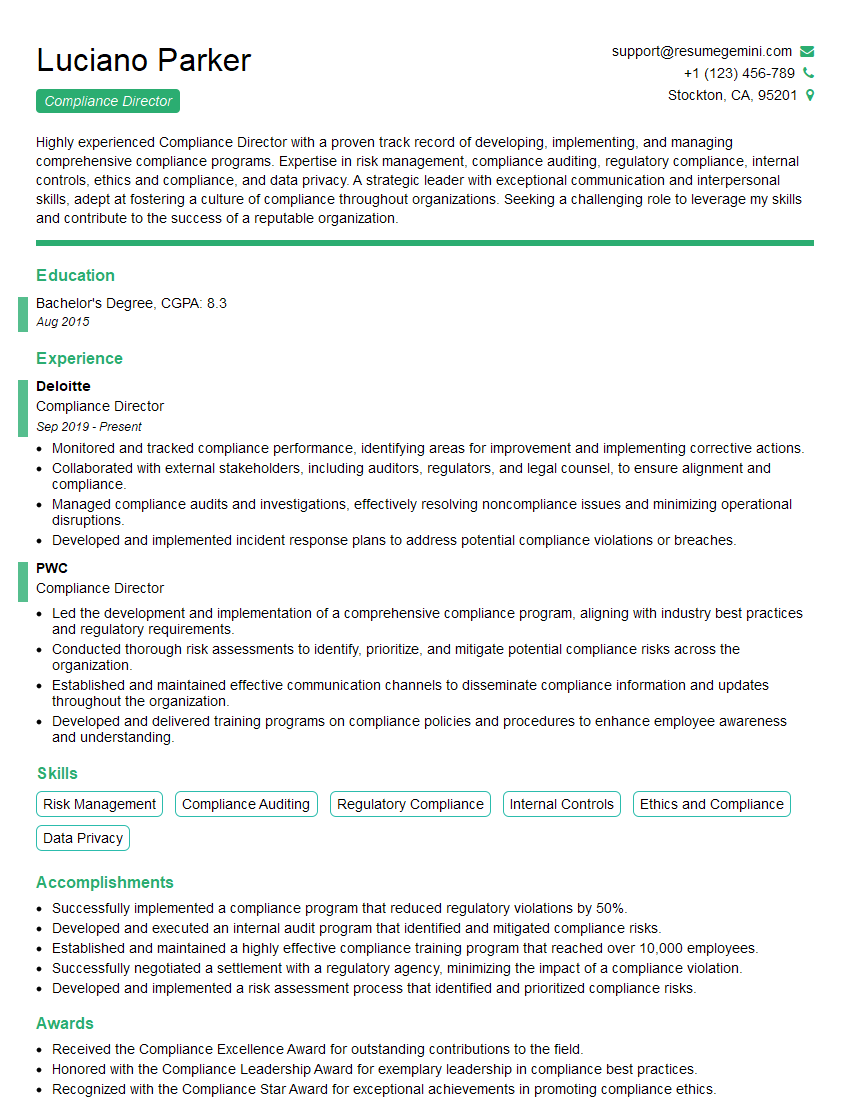
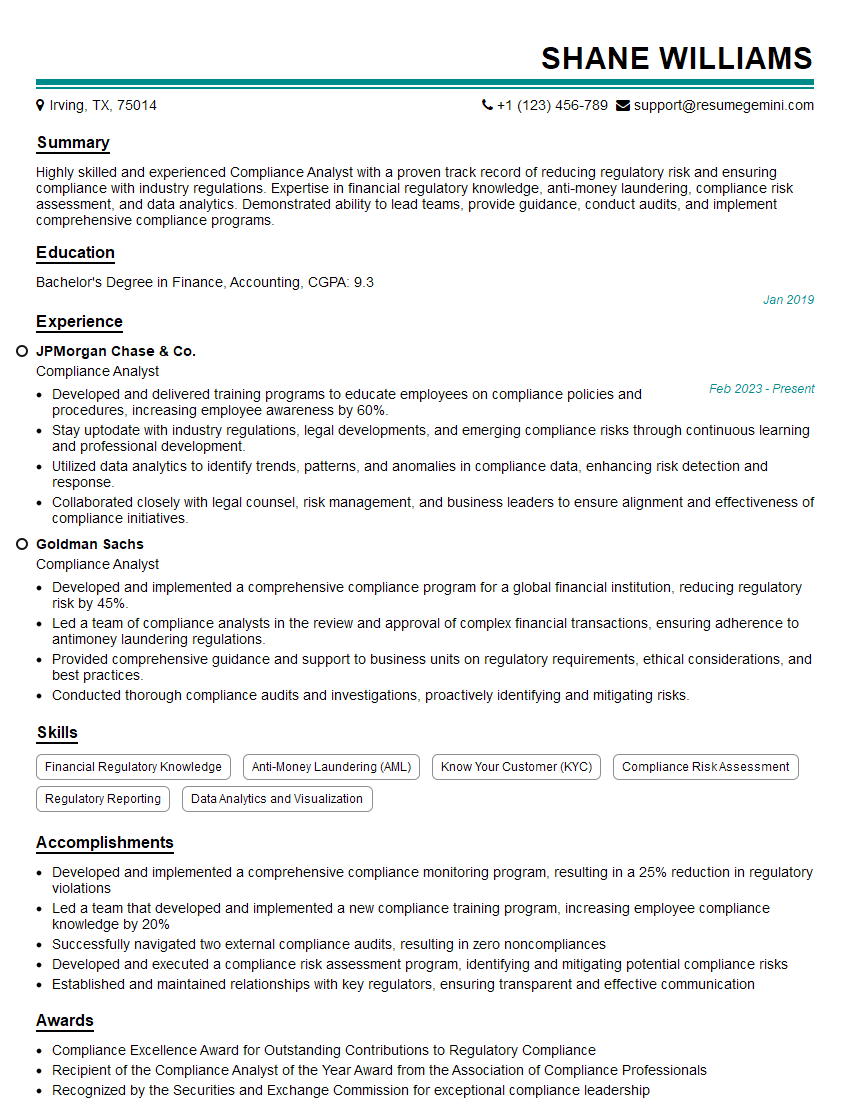
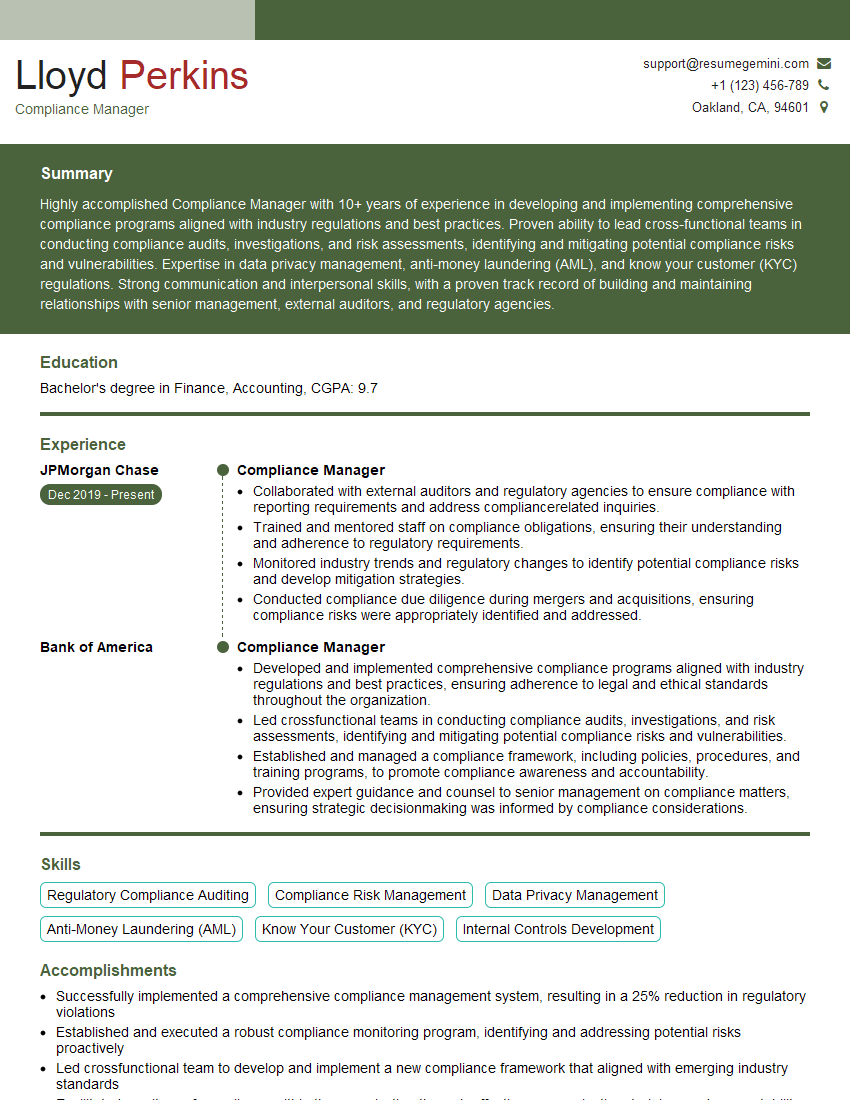
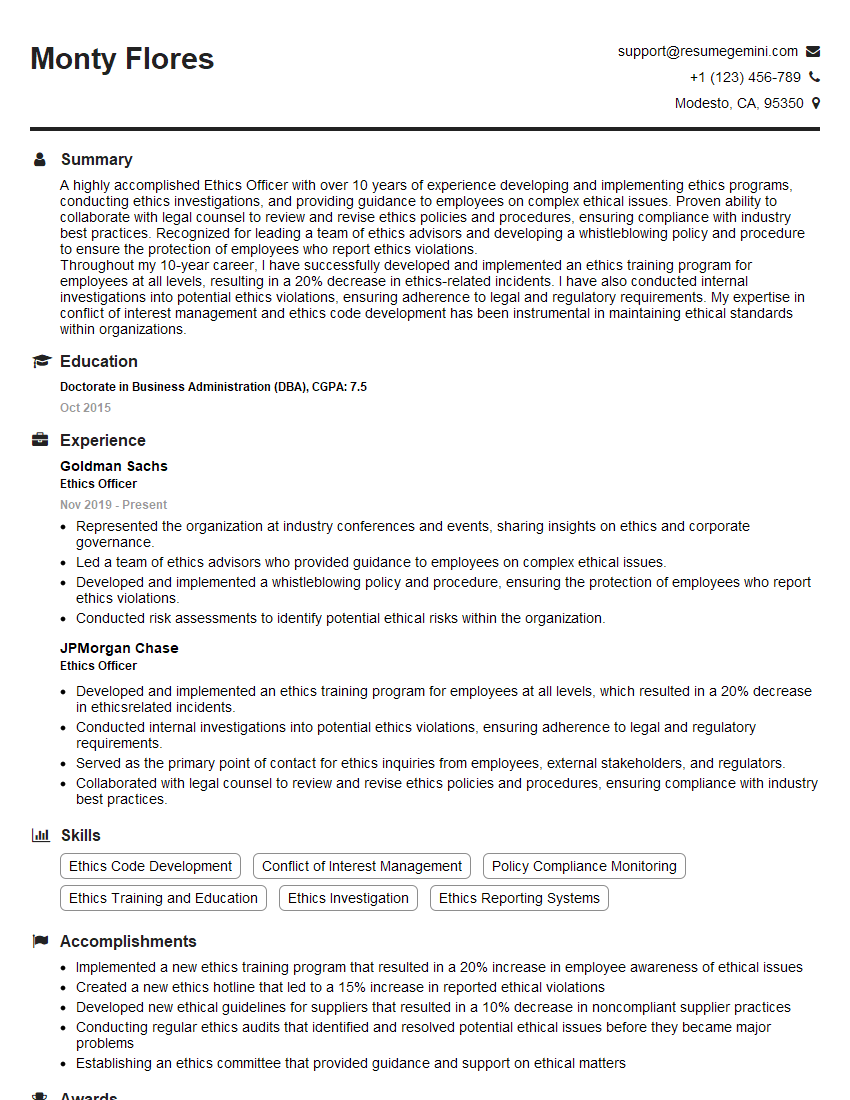
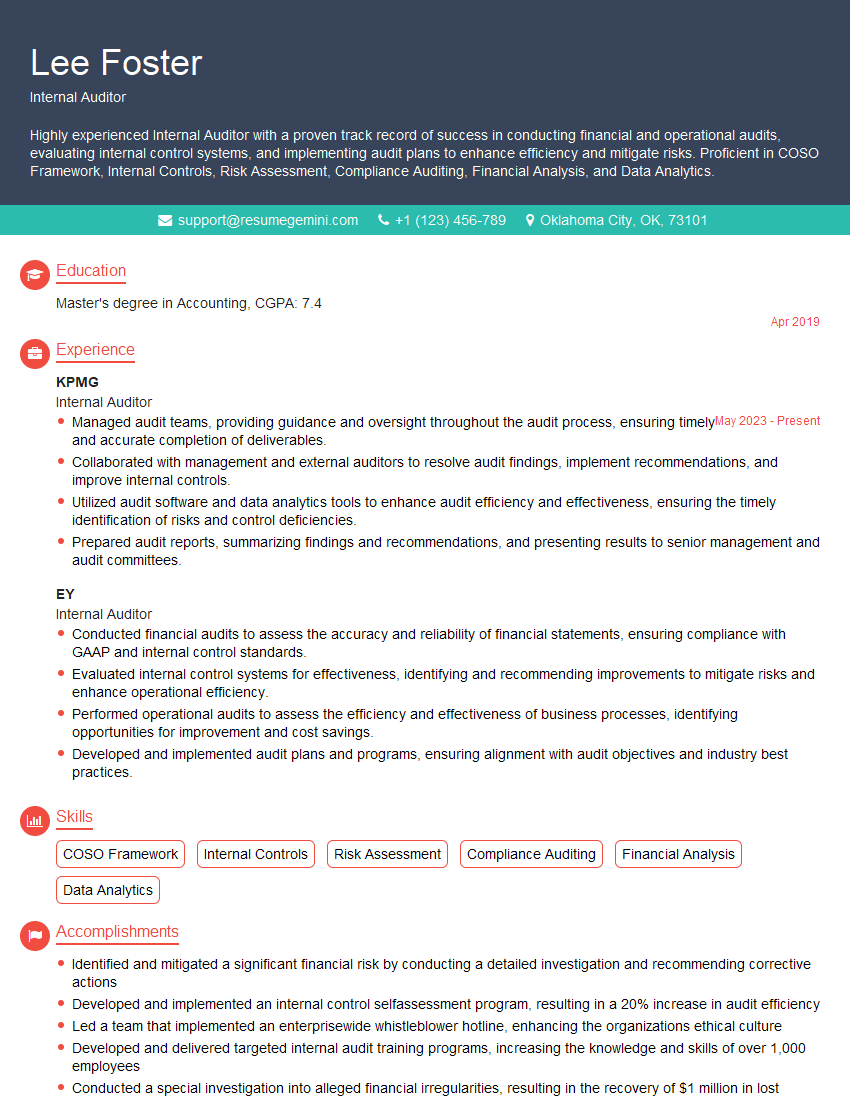
Mastering Ethical Practice and Legal Compliance is crucial for career advancement. It demonstrates your commitment to integrity, professionalism, and responsible conduct – qualities highly valued by employers. To significantly boost your job prospects, creating a strong, ATS-friendly resume is essential. ResumeGemini can help you craft a compelling resume that highlights your skills and experience in Ethical Practice and Legal Compliance. We provide examples of resumes tailored to this field to help guide you. Take the next step in your career journey and build a resume that makes a lasting impression.
Explore more articles
Users Rating of Our Blogs
Share Your Experience
We value your feedback! Please rate our content and share your thoughts (optional).
What Readers Say About Our Blog
To the interviewgemini.com Webmaster.
Very helpful and content specific questions to help prepare me for my interview!
Thank you
To the interviewgemini.com Webmaster.
This was kind of a unique content I found around the specialized skills. Very helpful questions and good detailed answers.
Very Helpful blog, thank you Interviewgemini team.