The right preparation can turn an interview into an opportunity to showcase your expertise. This guide to Eczema Treatment interview questions is your ultimate resource, providing key insights and tips to help you ace your responses and stand out as a top candidate.
Questions Asked in Eczema Treatment Interview
Q 1. Explain the pathogenesis of atopic dermatitis.
Atopic dermatitis, or eczema, is a chronic inflammatory skin condition stemming from a complex interplay of genetic predisposition and environmental triggers. Its pathogenesis isn’t fully understood, but it involves a dysfunctional skin barrier, leading to increased permeability and water loss. This compromised barrier allows allergens and irritants to penetrate the skin more easily, triggering an immune response.
This immune response is characterized by an overactive type 2 helper T cell (Th2) response. Th2 cells release cytokines like interleukin-4 (IL-4) and interleukin-13 (IL-13), which promote inflammation and the production of IgE antibodies. This IgE binds to mast cells in the skin, leading to the release of histamine and other inflammatory mediators, resulting in the characteristic itching, inflammation, and skin lesions of eczema. Furthermore, filaggrin, a protein crucial for skin barrier function, is often deficient in individuals with atopic dermatitis, exacerbating the problem. Think of it like this: a leaky faucet (compromised skin barrier) allows water (allergens and irritants) to damage the house (skin), leading to a major renovation (inflammatory response) to repair the damage.
Q 2. Differentiate between different types of eczema.
While atopic dermatitis is the most common type of eczema, several other forms exist, each with unique characteristics. These include:
- Atopic dermatitis (eczema): Characterized by chronic, itchy, inflamed skin, often with a genetic predisposition and association with allergies.
- Contact dermatitis: An inflammatory reaction resulting from direct contact with an allergen (allergic contact dermatitis) or irritant (irritant contact dermatitis). Poison ivy is a classic example of allergic contact dermatitis, while harsh soaps can cause irritant contact dermatitis.
- Dyshidrotic eczema: This presents with small, itchy blisters on the palms and soles of the feet.
- Nummular eczema: Characterized by coin-shaped patches of inflamed, scaly skin.
- Stasis dermatitis: Often seen in individuals with venous insufficiency, resulting in inflammation and discoloration of the lower legs.
- Seborrheic dermatitis: Affects areas with high sebum production, such as the scalp, face, and chest, resulting in scaly, flaky skin.
The key differences lie in the triggers, location, and appearance of the rash. Proper diagnosis requires a thorough examination and understanding of the patient’s history.
Q 3. Describe the various topical corticosteroids used in eczema treatment and their potency.
Topical corticosteroids are the mainstay of eczema treatment, reducing inflammation and itching. They’re categorized by potency, ranging from low to very high.
- Low-potency corticosteroids (e.g., hydrocortisone 1%) are suitable for mild eczema on less sensitive areas like the face and groin. They are generally safer for long-term use.
- Mid-potency corticosteroids (e.g., fluocinolone acetonide 0.025%) are effective for moderate eczema and can be used on most body areas.
- High-potency corticosteroids (e.g., betamethasone dipropionate 0.05%) are reserved for severe eczema affecting thicker skin or areas where less potent corticosteroids have failed. These should be used for shorter periods and sparingly on sensitive areas to minimize side effects like skin thinning.
- Very high-potency corticosteroids (e.g., clobetasol propionate 0.05%) are the strongest and should be used only in specific cases of very severe eczema under strict medical supervision, and for short periods of time, due to the high risk of side effects.
The choice of corticosteroid depends on the severity and location of the eczema, patient age, and duration of treatment needed. It’s crucial to follow a physician’s instructions carefully regarding application, duration, and potential side effects.
Q 4. What are the non-pharmacological management strategies for eczema?
Non-pharmacological strategies are crucial for managing eczema, complementing topical treatments. These include:
- Skin hydration: Regular application of emollients to prevent dryness and maintain the skin barrier.
- Trigger avoidance: Identifying and minimizing exposure to irritants (e.g., harsh soaps, detergents) and allergens (e.g., pet dander, pollen). Keeping the environment humid can help as well.
- Cool compresses: To soothe itching and reduce inflammation.
- Lukewarm baths (avoid hot water): Short baths with gentle cleansers can help. Avoid long, hot showers.
- Loose-fitting clothing: To minimize friction and irritation.
- Stress management: Stress can exacerbate eczema, making techniques like yoga, meditation, or deep breathing exercises helpful.
- Wet wraps: Applying cool, wet bandages to affected skin can be particularly effective in reducing inflammation.
These strategies are not merely supplemental but integral parts of a holistic approach to eczema management.
Q 5. Discuss the role of emollients in eczema management.
Emollients are crucial in eczema management. They are moisturizing creams or ointments that help restore and maintain the skin’s barrier function. They work by hydrating the skin, reducing dryness, and preventing transepidermal water loss (TEWL) – the loss of moisture from the skin. This helps alleviate itching, reduces inflammation, and prevents flare-ups. Think of emollients as building a stronger roof on a leaky house (skin barrier).
Emollients should be applied frequently, often two to three times daily, even during periods of remission to prevent dryness and maintain skin hydration. Choosing the right emollient can be a trial and error process. Some people prefer creams, while others find ointments more effective. Ointments generally offer better hydration. Always choose fragrance-free and hypoallergenic emollients to minimize the risk of irritation.
Q 6. How do you assess the severity of eczema?
Assessing eczema severity involves considering several factors. A common tool is the Eczema Area and Severity Index (EASI) score. This involves evaluating:
- Extent of involvement: The percentage of the body surface area affected.
- Erythema (redness): Rated on a scale based on the intensity of redness.
- Papules and vesicles (raised bumps and blisters): The number and size of these lesions.
- Excoriations and lichenification (skin thickening): The presence and severity of these changes.
- Itching: The intensity of itching experienced by the patient.
Using a scoring system like EASI allows for objective measurement, tracking disease progression, and evaluating treatment response. Clinical photographs can also aid in assessment, providing visual documentation of the eczema’s severity and changes over time.
Q 7. What are the common complications associated with eczema?
Eczema can lead to several complications, including:
- Skin infections: The compromised skin barrier makes individuals more susceptible to bacterial, viral, or fungal infections (e.g., impetigo, herpes simplex). These often require specific antibiotic or antiviral treatment.
- Sleep disturbances: Intense itching can disrupt sleep, leading to fatigue and reduced quality of life.
- Psychological impact: Chronic itching and visible skin lesions can lead to low self-esteem, anxiety, and depression.
- Asthma and allergic rhinitis: Atopic dermatitis is often part of the atopic march, a progression of allergic diseases.
- Xeroderma (dry skin): This can lead to further irritation and cracking of the skin.
- Secondary lichenification (thickening of the skin): Due to chronic scratching, which increases the risk for infections.
Managing these complications is vital for improving the overall quality of life for patients with eczema. Proactive strategies to prevent infections and providing psychological support are crucial aspects of holistic eczema management.
Q 8. When would you consider referral to a specialist for eczema management?
Referral to a specialist, such as a dermatologist or allergist, for eczema management is considered when several factors come into play. Firstly, if the eczema is severe, widespread, or unresponsive to first-line treatments like topical corticosteroids, a specialist’s expertise is invaluable. This often includes cases with significant skin thickening (lichenification), secondary infections, or significant impact on the patient’s quality of life. Secondly, if complications arise, such as suspected allergic contact dermatitis or a secondary bacterial or viral infection, specialist consultation is crucial for accurate diagnosis and appropriate management. Finally, if the patient has tried various over-the-counter or prescribed treatments without success, a specialist can offer more advanced options and develop a personalized treatment plan. For example, a child with severe eczema affecting their sleep and daily activities would definitely warrant a referral to optimize their care.
Q 9. Describe the use of topical calcineurin inhibitors in eczema.
Topical calcineurin inhibitors (TCIs), such as pimecrolimus and tacrolimus, are non-steroidal topical medications used to treat eczema. They work by inhibiting calcineurin, an enzyme involved in the inflammatory process of eczema. This reduces inflammation and itching, improving the appearance and feel of the skin. TCIs are particularly useful for patients who cannot tolerate or have contraindications to long-term topical corticosteroid use. They are often used for mild to moderate eczema, especially on the face and sensitive areas where corticosteroids can cause more side effects. However, it’s important to remember that TCIs are not a first-line treatment, and their use should always be under the guidance of a healthcare professional. For instance, a patient with sensitive facial eczema might benefit from TCI application to avoid the potential risks associated with prolonged corticosteroid use in this area.
Q 10. Explain the role of systemic therapies (e.g., biologics) in severe eczema.
Systemic therapies, including biologics, are reserved for patients with severe eczema that is refractory to other treatments. These are usually individuals with widespread, debilitating eczema that significantly impacts their quality of life. Biologics, such as dupilumab, lebrikizumab, and tralokinumab, target specific inflammatory pathways involved in eczema pathogenesis, offering a powerful alternative when topical and even systemic non-biologic therapies have failed. They typically reduce inflammation and itching significantly, improving skin condition and overall well-being. Before initiating these therapies, careful consideration of potential side effects and patient suitability is paramount. A good example is an adult with chronic, severe eczema impacting their sleep, work, and social life who has not responded to other treatments might benefit from a biologic therapy.
Q 11. How do you manage eczema in infants and children?
Managing eczema in infants and children requires a gentle, patient approach, focusing on minimizing irritation and preventing flare-ups. Daily emollients are crucial for maintaining skin hydration. Mild topical corticosteroids are often used for flare-ups, but their use should be carefully monitored and limited, especially on the face. Parents need thorough education on skin care practices, including avoiding harsh soaps and irritants. Wet wraps may be used to enhance topical medication efficacy. In severe cases, systemic therapies may be considered, but always under close medical supervision. For example, regular bathing with lukewarm water and gentle cleansers, followed by immediate application of a thick emollient, is a cornerstone of managing infant eczema. If a flare-up occurs, a doctor might prescribe a mild topical corticosteroid cream to be used sparingly and under their guidance.
Q 12. How do you counsel patients on eczema triggers and avoidance?
Counseling patients on eczema triggers and avoidance is a key aspect of long-term management. This involves a detailed discussion to identify potential triggers specific to the individual. Common culprits include allergens (e.g., pollen, pet dander, dust mites), irritants (e.g., harsh soaps, detergents, fragrances), and environmental factors (e.g., extreme temperatures, low humidity). We explore lifestyle factors, diet, and stress levels that could play a role. Practical strategies for avoidance are discussed, tailored to the patient’s lifestyle and work environment. For example, we might recommend using hypoallergenic detergents, avoiding certain fabrics, or implementing strategies for dust mite control at home. A patient diary can be extremely helpful in tracking potential triggers and their correlation with flare-ups.
Q 13. What are the potential side effects of topical corticosteroids?
Topical corticosteroids, while highly effective in controlling eczema inflammation, can have side effects, especially with prolonged or high-potency use. These can include skin thinning (atrophy), telangiectasia (visible blood vessels), striae (stretch marks), purpura (bruising), and even skin infections. Long-term use on the face can cause perioral dermatitis. The risk of these side effects is higher with potent corticosteroids and prolonged usage. Therefore, careful monitoring and judicious use are crucial. It’s essential to educate patients about proper application techniques, the importance of using the lowest effective potency for the shortest duration, and the need for regular follow-up to monitor for side effects. We might recommend alternating between different topical treatments to prevent side effect buildup.
Q 14. Describe your approach to managing eczema flare-ups.
Managing eczema flare-ups involves a multi-pronged approach focused on rapidly controlling inflammation and restoring skin barrier function. This usually starts with increasing the frequency of emollient application, along with the introduction or escalation of topical corticosteroids (selecting the appropriate potency based on the severity and location of the flare-up). We might add wet wraps to enhance penetration of the topical medications. For severe flare-ups, short courses of oral corticosteroids or other systemic treatments might be considered. In cases of secondary infection, appropriate antibiotics or antivirals are necessary. The key is to act promptly to reduce the intensity and duration of the flare-up. Patient education and support are essential to enable self-management and empower the individual to prevent future flares. For example, a patient experiencing a sudden flare-up might be instructed to apply a higher potency topical steroid cream more frequently in addition to their usual emollient, along with a short-course of oral antihistamines for itching relief.
Q 15. How do you distinguish eczema from other skin conditions?
Distinguishing eczema from other skin conditions requires a careful clinical examination and sometimes further investigations. Eczema, or atopic dermatitis, is characterized by its intensely itchy, inflamed rash that often appears in patches. The rash can be dry, scaly, or weepy and crusted, depending on the severity and stage. It frequently presents in flexural areas (the inside of elbows and knees, behind the knees and neck) in children, and more variably in adults.
Key differences from other conditions include:
- Psoriasis: While both can be itchy and scaly, psoriasis typically presents with well-defined, silvery-white plaques, often on the scalp, elbows, knees, and lower back. It’s less often widespread than severe eczema.
- Contact Dermatitis: This is an allergic reaction to a specific substance, resulting in a localized rash. Eczema, in contrast, is a systemic condition affecting larger areas of skin.
- Seborrheic Dermatitis: This involves oily, yellowish scales often found on the scalp, face, and chest, with less intense itching than eczema.
A detailed history (family history of atopic conditions, known allergies) combined with a physical examination is crucial. In ambiguous cases, a skin biopsy might be necessary to reach a definitive diagnosis.
Career Expert Tips:
- Ace those interviews! Prepare effectively by reviewing the Top 50 Most Common Interview Questions on ResumeGemini.
- Navigate your job search with confidence! Explore a wide range of Career Tips on ResumeGemini. Learn about common challenges and recommendations to overcome them.
- Craft the perfect resume! Master the Art of Resume Writing with ResumeGemini’s guide. Showcase your unique qualifications and achievements effectively.
- Don’t miss out on holiday savings! Build your dream resume with ResumeGemini’s ATS optimized templates.
Q 16. What are the latest advancements in eczema treatment?
Eczema treatment has seen significant advancements. Beyond traditional topical corticosteroids and emollients, we now have:
- Biologics: These targeted therapies, such as dupilumab and lebrikizumab, have revolutionized severe eczema management. They work by inhibiting specific immune pathways driving inflammation, leading to significant improvements in skin clearing and itch reduction. They are particularly beneficial for patients unresponsive to other treatments.
- Topical Calcineurin Inhibitors (TCIs): These drugs, like tacrolimus and pimecrolimus, offer an alternative to corticosteroids for mild to moderate eczema, particularly in areas like the face where long-term corticosteroid use may have side effects.
- Improved Emollients: The development of emollients with advanced formulations, containing ingredients such as ceramides and hyaluronic acid, improves skin barrier function, reducing dryness and itching.
- New Topical Corticosteroids: Formulations with enhanced efficacy and reduced side effects continue to be developed.
These advancements offer more personalized treatment options, catering to individual patient needs and disease severity.
Q 17. Explain the role of phototherapy in eczema treatment.
Phototherapy, or light therapy, uses ultraviolet (UV) light to treat eczema. It works by reducing inflammation and suppressing the immune response driving the disease. Different types of UV light are used:
- Narrowband UVB (NB-UVB): This is the most commonly used type, delivering a specific wavelength of UV light that’s effective against eczema with minimal side effects.
- UVA1 phototherapy: This is a longer wavelength of UV light which also has anti-inflammatory effects and is increasingly utilized.
Phototherapy is usually administered multiple times a week for several weeks. It’s typically used for moderate to severe eczema that hasn’t responded well to topical treatments. Careful monitoring is essential to avoid sunburn or other side effects. This is usually done by experienced dermatologists.
Q 18. How do you address patient concerns and adherence to treatment plans?
Addressing patient concerns and ensuring adherence is crucial. I start by building a strong doctor-patient relationship based on trust and open communication. I explain the condition clearly, answering all their questions thoroughly. I use clear language and visual aids when necessary to explain complex concepts like treatment mechanisms and potential side effects.
For treatment adherence, I tailor the plan to the patient’s lifestyle and preferences. We discuss potential challenges, such as side effects and inconvenience, and create strategies to overcome them. Regular follow-up appointments allow me to track progress, address concerns promptly, and make any necessary adjustments to the treatment plan. Sometimes involving family members or caregivers in discussions adds another layer of support.
For example, if a patient struggles with applying topical treatments regularly, we might explore different application techniques or discuss using reminder systems. If side effects are concerning, I may prescribe gentler alternatives or offer strategies to mitigate those effects.
Q 19. Describe your experience with different types of eczema diagnostic tools.
Diagnosis of eczema relies primarily on a thorough clinical evaluation, which is usually sufficient. However, additional tools can aid in diagnosis and management:
- Skin Biopsy: In cases where the diagnosis is uncertain or other conditions need to be ruled out, a skin biopsy can be taken to examine the skin under a microscope. This helps distinguish eczema from psoriasis, other inflammatory skin disorders, or infections.
- Patch Testing: This test helps identify contact allergens that may trigger or exacerbate eczema. Small amounts of suspected allergens are applied to the skin, and the area is monitored for a reaction.
- Scratches/Prick Test: Helps identify common environmental allergens which might aggravate eczema. Performed for those with allergies or suspected allergy.
My experience encompasses all these tools. The choice depends on the clinical presentation and the need to exclude alternative diagnoses. Usually, a careful clinical history and examination are sufficient.
Q 20. Explain the role of allergy testing in eczema management.
Allergy testing plays a significant role in eczema management, particularly in identifying potential triggers that worsen symptoms. Common allergens include food allergens (milk, eggs, peanuts, soy, wheat), environmental allergens (dust mites, pet dander, pollen), and contact allergens (nickel, fragrances).
Identifying these allergens through skin prick tests, patch tests, or blood tests helps patients modify their environment and diet to minimize exposure. Managing these allergens alongside other eczema treatments can improve symptom control and quality of life. For example, knowing a patient is allergic to dust mites allows us to recommend strategies like using dust-mite proof covers for bedding and regularly washing bedding in hot water. This type of targeted avoidance often provides significant symptomatic improvement.
Q 21. How do you monitor treatment effectiveness in eczema?
Monitoring treatment effectiveness in eczema involves a multifaceted approach. I regularly assess patients using a combination of:
- Clinical Examination: Evaluating the extent and severity of the rash, including its appearance, redness, scaling, and presence of weeping lesions. I use scoring systems to objectively quantify changes in disease severity.
- Patient-Reported Outcomes: Tracking the patient’s experience, including the severity of itching, sleep disturbances, and overall quality of life. Validated questionnaires provide structured ways to assess these aspects.
- Laboratory Tests (if indicated): In specific cases, allergy testing or blood tests might be used to assess the effectiveness of systemic treatments.
- Photography: Regular photographs can document the progression of the disease and the response to treatment. This is an objective measure of improvement.
By combining these methods, I can accurately assess treatment efficacy and adjust the plan accordingly. This approach helps ensure patients receive optimal care and achieve the best possible outcomes.
Q 22. What are the long-term implications of poorly managed eczema?
Poorly managed eczema can have significant long-term implications, impacting both physical and mental well-being. Chronically inflamed skin can lead to skin thickening (lichenification), increased susceptibility to skin infections (superinfections), and permanent scarring. The constant itch and discomfort can severely disrupt sleep, leading to fatigue and impacting daily life. Furthermore, the emotional toll of persistent eczema is substantial, potentially contributing to anxiety, depression, and reduced quality of life. For example, a child with poorly managed eczema might struggle with social interaction due to visible skin lesions and the associated discomfort, while an adult might face challenges in their professional life due to persistent itching and sleep deprivation.
- Physical Implications: Lichenification, scarring, skin infections, sleep disturbances.
- Mental Health Implications: Anxiety, depression, low self-esteem, social isolation.
Q 23. Discuss the importance of patient education in eczema care.
Patient education is absolutely crucial in eczema care. It empowers individuals to actively participate in managing their condition and achieving better outcomes. Effective education equips patients with the knowledge to recognize triggers, implement preventative measures, and correctly administer prescribed treatments. For instance, understanding the importance of moisturizing regularly and avoiding harsh soaps can significantly improve symptoms. We also need to educate patients on recognizing signs of infection, like increased redness, swelling, pus, or fever, prompting them to seek timely medical attention. This collaborative approach fosters adherence to treatment plans and improves overall disease management. A patient who understands their condition is far more likely to follow their prescribed regimen and actively participate in their care. I often use visual aids, simple explanations and written materials tailored to the patient’s literacy level to ensure understanding.
Q 24. How do you manage superinfections in eczema patients?
Superinfections, where a bacterial or viral infection complicates eczema, are a serious concern. Management involves a multi-pronged approach. First, we identify the causative organism through skin swab cultures. Based on the results, we prescribe appropriate antibiotics (for bacterial infections) or antiviral medications (for viral infections). Simultaneously, we need to control the eczema flare-up using topical corticosteroids or other anti-inflammatory treatments. In severe cases, systemic antibiotics or other medications may be necessary. Careful monitoring is vital to ensure the infection resolves completely and to prevent recurrence. For example, a patient with a bacterial superinfection might receive a course of oral antibiotics alongside topical steroid creams to reduce inflammation and clear the infection. Regular follow-up appointments are essential to assess treatment efficacy and manage potential complications.
Q 25. Describe your approach to managing eczema in patients with other comorbidities.
Managing eczema in patients with other comorbidities requires a holistic approach. For example, a patient with both eczema and asthma might require coordinated management of both conditions, as similar triggers can exacerbate both. Careful consideration is needed when choosing medications, as some drugs may interact negatively or worsen existing conditions. We might need to adjust the eczema treatment plan based on other medical conditions, considering potential drug interactions and overall patient health. This requires excellent communication with other specialists involved in the patient’s care. For example, a patient with eczema and diabetes might need to modify their skincare regimen to avoid impairing skin integrity, and a patient with eczema and psoriasis might require tailored treatment plans addressing both conditions simultaneously.
Q 26. What are your experiences with different types of eczema support groups?
My experience with eczema support groups has been overwhelmingly positive. These groups provide a valuable platform for patients to connect, share experiences, coping strategies, and learn from each other. Support groups foster a sense of community, reducing feelings of isolation and loneliness often associated with chronic skin conditions. They also offer peer support and emotional validation. I have seen firsthand the positive impact on patients’ adherence to treatment, self-confidence, and overall well-being. The opportunity to share and learn from other patients with similar challenges can be truly transformative. Different groups cater to specific needs, with some focusing on pediatric eczema, adult eczema, or specific treatment approaches. It’s crucial to find a group that suits the individual’s specific needs and preferences.
Q 27. How do you tailor your treatment plan based on the patient’s age and skin type?
Tailoring treatment based on age and skin type is crucial for effective eczema management. Infants and young children have more delicate skin, requiring milder formulations of corticosteroids and emollients. Older adults might have more fragile skin, necessitating gentle application techniques to avoid adverse reactions. Skin type – dry, oily, or sensitive – also dictates the choice of topical treatments and emollients. For example, a patient with very dry skin would benefit from heavy, occlusive moisturizers, while a patient with oily skin might benefit from lighter lotions. We also consider the patient’s overall health and medication history when developing a personalized treatment plan. This careful approach minimizes side effects and maximizes efficacy. A holistic approach is vital, particularly for pediatric patients, focusing on education and parental involvement.
Q 28. Explain your approach to managing chronic eczema in adults.
Managing chronic eczema in adults often involves a long-term strategy focusing on preventing flares and minimizing symptom severity. This frequently includes regular use of emollients to maintain skin hydration, topical corticosteroids to control inflammation during flare-ups, and potentially topical calcineurin inhibitors or other medications as needed. Lifestyle modifications, such as identifying and avoiding triggers, are also important. For some adults, systemic therapies like immunosuppressants or biologics may be considered for severe, refractory cases. Regular follow-up appointments are critical for monitoring disease activity, adjusting treatments, and addressing any emerging complications. The goal is to improve quality of life through disease control, minimizing the impact on daily activities and emotional well-being. Collaboration between the patient and healthcare provider is essential for successful long-term management.
Key Topics to Learn for Eczema Treatment Interview
- Atopic Dermatitis Pathophysiology: Understand the underlying inflammatory mechanisms and immune dysregulation involved in eczema development.
- Topical Corticosteroid Therapy: Learn about different potencies, application techniques, and potential side effects. Be prepared to discuss patient education strategies regarding proper use and adherence.
- Non-Steroidal Topical Therapies: Familiarize yourself with calcineurin inhibitors (e.g., tacrolimus, pimecrolimus), their mechanisms of action, and appropriate patient selection.
- Wet Wrap Therapy: Understand the principles and practical application of this effective treatment modality for severe eczema.
- Systemic Therapies: Gain knowledge of biologic therapies (e.g., dupilumab, lebrikizumab) and their role in managing moderate-to-severe atopic dermatitis. Be ready to discuss patient selection criteria and monitoring strategies.
- Eczema Management in Specific Populations: Explore the unique challenges and treatment considerations for eczema in infants, children, and adults.
- Allergen Avoidance and Environmental Control: Discuss strategies for identifying and minimizing exposure to common eczema triggers.
- Patient Education and Counseling: Understand the importance of comprehensive patient education in managing eczema effectively and improving patient outcomes.
- Complications of Eczema: Be prepared to discuss potential complications such as skin infections, lichenification, and psychological impact.
- Current Research and Future Directions: Stay updated on the latest research and advancements in eczema treatment and management.
Next Steps
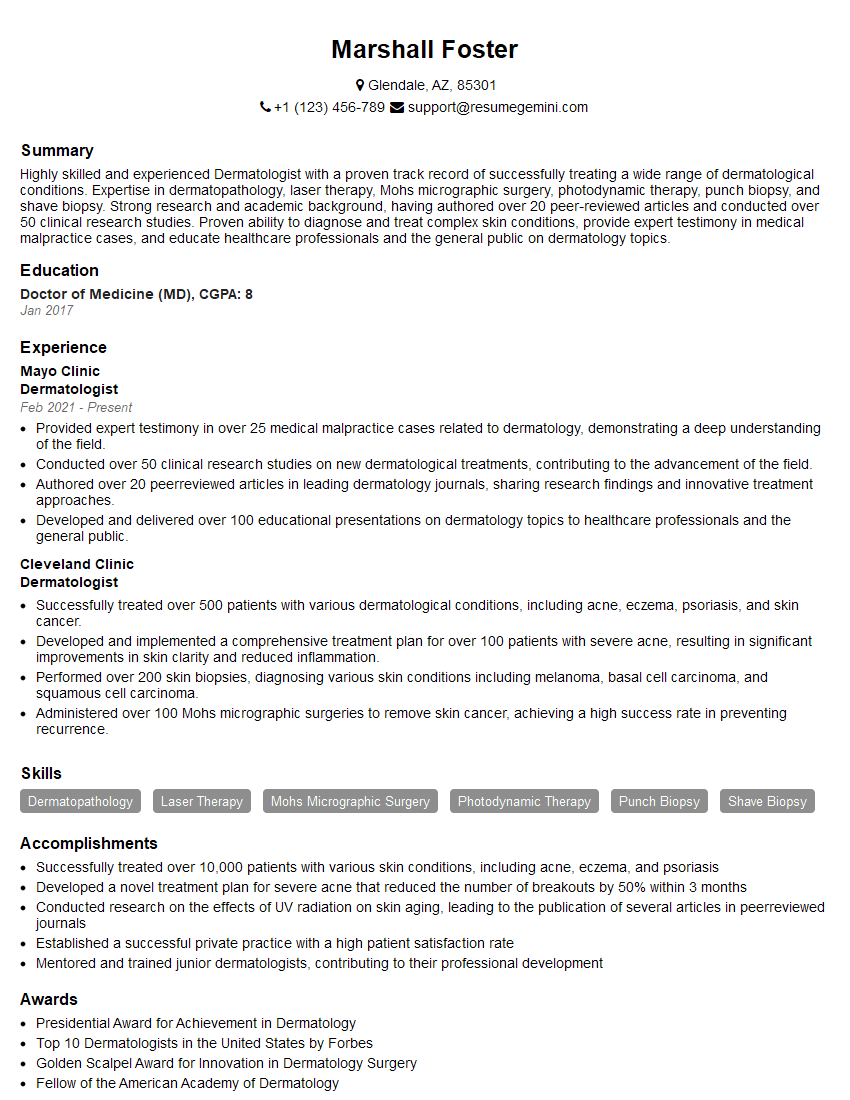
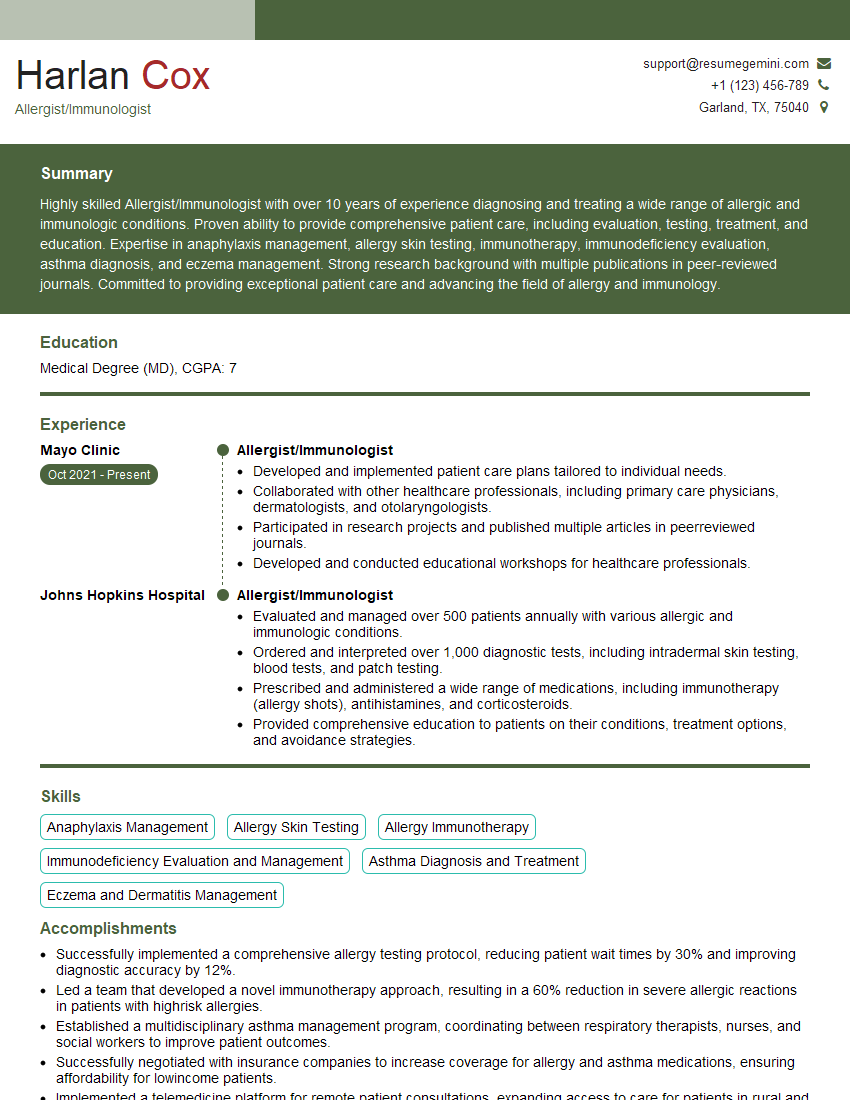
Mastering eczema treatment knowledge significantly enhances your career prospects in dermatology and related fields. A strong understanding of both theoretical concepts and practical applications will set you apart from other candidates. To maximize your chances of landing your dream job, create an ATS-friendly resume that highlights your skills and experience effectively. ResumeGemini is a trusted resource to help you build a professional and impactful resume. Examples of resumes tailored specifically to Eczema Treatment professionals are available to guide you. Invest the time to craft a compelling resume – it’s your first impression to potential employers.
Explore more articles
Users Rating of Our Blogs
Share Your Experience
We value your feedback! Please rate our content and share your thoughts (optional).
What Readers Say About Our Blog
To the interviewgemini.com Webmaster.
Very helpful and content specific questions to help prepare me for my interview!
Thank you
To the interviewgemini.com Webmaster.
This was kind of a unique content I found around the specialized skills. Very helpful questions and good detailed answers.
Very Helpful blog, thank you Interviewgemini team.