Preparation is the key to success in any interview. In this post, we’ll explore crucial Beveled glass installation interview questions and equip you with strategies to craft impactful answers. Whether you’re a beginner or a pro, these tips will elevate your preparation.
Questions Asked in Beveled glass installation Interview
Q 1. Describe your experience with various types of beveled glass.
My experience with beveled glass encompasses a wide range of types, from simple, single-bevel pieces to complex, multi-faceted designs. I’ve worked with various colors, thicknesses, and textures of glass, including clear, colored, textured, and even iridescent options. I’m familiar with different bevel profiles, such as flat bevels, pencil bevels, and ogee bevels, each requiring a unique approach to installation for optimal results. For example, I recently completed a project involving antique beveled glass, which demanded extra care due to its age and fragility. The project required meticulous cleaning, careful handling, and specific adhesive selection to ensure its longevity.
- Clear Beveled Glass: Commonly used for its clarity and ability to enhance light transmission.
- Colored Beveled Glass: Offers a vast palette of colors to match any design aesthetic, from subtle tints to vibrant hues.
- Textured Beveled Glass: Adds depth and visual interest with patterns like ribbed, frosted, or seeded glass.
- Iridescent Beveled Glass: Creates a shimmering, rainbow-like effect, ideal for adding a touch of elegance.
Q 2. Explain the process of measuring and cutting beveled glass.
Precise measuring and cutting are crucial for a successful beveled glass installation. I begin by creating a detailed template of the area where the glass will be installed. This template acts as a blueprint, ensuring each piece is cut to the exact dimensions. Then, using a glass cutter and precision scoring techniques, I carefully cut the glass according to the template. This process requires steady hands and a keen eye for detail to avoid chipping or cracking. Once cut, the edges are ground and polished to remove any sharp points and achieve the desired bevel profile, typically using a glass grinder. This ensures safety and a refined, professional finish. Think of it like tailoring a fine suit – each piece needs to be perfectly measured and cut to fit seamlessly.
For example, if I’m installing a beveled glass window pane, I’ll use a laser measuring tool to ensure accuracy down to the millimeter. This level of precision eliminates potential gaps or overlaps during installation.
Q 3. What safety precautions do you take when working with beveled glass?
Safety is paramount when working with beveled glass. The sharp edges pose a significant risk of cuts, so I always wear safety glasses and heavy-duty gloves. I work in a well-lit area to enhance visibility and minimize accidents. Broken glass is handled with extreme care using a dustpan and brush, or specialized glass cleanup tools, to prevent further injury. Additionally, I use protective coverings for surrounding areas to prevent damage from stray glass shards or adhesive spills. I also ensure proper ventilation when working with any solvents or adhesives, following all manufacturer’s safety guidelines.
I remember one instance where a large piece of beveled glass unexpectedly cracked. My immediate response was to shut down the work area, clear away the debris carefully, and assess the situation before proceeding. Safety procedures always take precedence.
Q 4. How do you ensure the proper alignment and fit of beveled glass pieces?
Achieving proper alignment and fit is essential for a visually appealing and structurally sound installation. I use precision measuring tools, such as calipers and rulers, to ensure each piece is perfectly positioned. Temporary supports, like spacers or shims, are used to maintain alignment during the adhesive curing process. Dry-fitting is a crucial step, allowing me to visualize the final product and make any necessary adjustments before applying adhesive. I meticulously check for any gaps or misalignments, ensuring a smooth, seamless appearance. For intricate designs, I often use a laser level to confirm vertical and horizontal alignment.
Imagine building a jigsaw puzzle – each piece needs to interlock perfectly. The same principle applies to beveled glass installation; careful planning and precise execution are key.
Q 5. What are the different methods for securing beveled glass?
Several methods exist for securing beveled glass, each chosen based on the project’s specific requirements and the type of glass involved. Common methods include using strong structural adhesives, glazing compounds, or even custom-fabricated metal frames or channels. For smaller projects, strong adhesives like epoxy are often sufficient. Larger installations, especially those involving significant weight or stress, might necessitate the use of glazing compounds, which provide superior structural support. For certain designs, metal frames are incorporated to provide added stability and security. The choice depends on factors such as the size of the glass, the weight, and the intended application.
- Structural Adhesives (Epoxy): Ideal for smaller, lighter pieces.
- Glazing Compounds: Suitable for larger, heavier installations requiring increased structural integrity.
- Metal Frames/Channels: Offer added support and stability, often used in larger projects or when securing glass to a frame.
Q 6. Describe your experience with different types of glass adhesives.
My experience includes working with various types of glass adhesives, each with unique properties and suitability for specific applications. I frequently use epoxy resins for their high strength and excellent bonding capabilities. For applications requiring UV resistance and long-term durability, UV-curable adhesives are preferred. I also use silicone-based sealants for applications requiring flexibility and weather resistance. The selection process involves considering factors such as the glass type, the substrate material, and the environmental conditions. Each adhesive has a specific curing time and requires appropriate surface preparation for optimal bonding.
For instance, in a recent project involving outdoor installation, I opted for a UV-resistant silicone sealant to ensure the longevity and weather resistance of the beveled glass.
Q 7. How do you handle damaged or broken beveled glass during installation?
Handling damaged or broken beveled glass during installation requires immediate action and careful procedures. First, I assess the extent of the damage. If only minor chips or cracks are present, they may be addressed using specialized repair techniques, depending on the severity and location of the damage. For more significant damage, the affected piece needs to be replaced. Safety is paramount; I always wear protective gear and carefully remove the broken fragments, avoiding further damage. The replacement piece needs to be precisely measured and cut to fit seamlessly, ensuring alignment with the surrounding pieces. The installation process is then repeated, taking extra precautions to prevent similar incidents from recurring.
This highlights the importance of careful handling and inspection of beveled glass throughout the process. Prevention is always better than cure!
Q 8. What are the common challenges faced during beveled glass installation?
Beveled glass installation, while aesthetically stunning, presents several challenges. One major hurdle is the fragility of the glass itself; beveled edges are inherently thinner and more susceptible to chipping or cracking during handling and installation. Precise measurements are critical, as even minor errors can lead to gaps or misalignments that compromise the overall look and structural integrity. Another significant challenge involves working with different types of glass – some are more difficult to cut and polish than others, requiring specialized tools and techniques. Finally, proper sealant application is crucial to prevent water leakage and maintain a long-lasting installation. For instance, on a recent project involving a large beveled glass window, we encountered difficulties aligning the pieces perfectly due to slight variations in the bevel angles of the individual panes. This required painstaking adjustments and extra time to ensure a seamless finish.
Q 9. How do you troubleshoot issues during the installation process?
Troubleshooting during beveled glass installation often involves a systematic approach. First, I visually inspect the problem area to pinpoint the exact issue. Is it a misalignment? A crack? A leak? Then, I review the installation process to identify potential sources of error. Was there a mistake in cutting, grinding, or polishing? Were the measurements accurate? Was the sealant applied correctly? For example, if I find a small crack, I might try to repair it using specialized glass adhesive, but if the damage is extensive, the piece needs to be replaced. Similarly, leaks usually point to improper sealant application or gaps in the installation, requiring resealing or readjustment. This problem-solving approach, coupled with experience, allows me to efficiently address most issues that arise.
Q 10. Explain your experience with various types of glass cutting tools.
My experience encompasses a wide array of glass cutting tools, each with its strengths and weaknesses. I’m proficient with both manual and automated glass cutters. Manual cutters, like oil-fed glass cutters, require precision and a steady hand, ideal for intricate designs, while automated tools offer speed and consistency for larger projects. I’ve used various types of scoring wheels, each suited for different glass thicknesses and types. For instance, a diamond-tipped scoring wheel is excellent for cutting tough, tempered glass, while a carbide wheel might be more suitable for softer, annealed glass. Choosing the right tool for the specific job significantly impacts the outcome, preventing unnecessary breakage and ensuring clean, accurate cuts.
Q 11. Describe your experience with different types of glass grinding equipment.
My experience with glass grinding equipment ranges from hand-held grinders for fine detail work to larger, automated machines for mass production. Hand-held grinders, with various grits of diamond wheels, allow for precise shaping and smoothing of beveled edges. These are crucial for achieving specific bevel profiles. Automated grinders, on the other hand, offer efficiency and consistency, particularly helpful in projects involving many identical pieces. Safety is paramount when using any grinding equipment; proper eye and respiratory protection are always employed. I’ve also worked with specialized equipment like edge grinders for creating consistent bevels across multiple pieces and polishing machines for final finishing. The choice of equipment depends on the project’s scale, complexity, and the desired level of precision.
Q 12. What are the different types of polishing techniques for beveled glass?
Polishing beveled glass involves several techniques to achieve a flawless finish. The most common method involves using progressively finer grits of polishing compounds – starting with coarser grits to remove scratches and imperfections and ending with finer grits for a high gloss. This is often done with polishing wheels or pads on specialized machines. Another technique is hand polishing, using felt or other polishing materials with abrasive compounds. This is essential for intricate designs or when reaching hard-to-access areas. For achieving a truly exceptional sheen, I sometimes incorporate chemical polishing techniques, which can deliver a mirror-like finish. The choice of technique depends on factors such as the type of glass, the desired finish, and the size and complexity of the project.
Q 13. How do you ensure the longevity and durability of beveled glass installations?
Ensuring the longevity and durability of beveled glass installations hinges on several key factors. Proper installation techniques, as discussed earlier, are paramount. Using high-quality sealants, specifically designed for glass applications, prevents water ingress, a major cause of damage. Regular cleaning and maintenance, avoiding harsh chemicals, also contribute to long-term durability. Protecting the glass from impacts and thermal shock is critical. For instance, installing protective films can mitigate damage from accidental impacts, and carefully considering thermal expansion differences during installation minimizes the risk of cracking caused by temperature fluctuations. Furthermore, proper structural support prevents stress on the glass, adding to its lifespan. A well-planned and meticulously executed installation is the foundation for a long-lasting, beautiful beveled glass feature.
Q 14. What are the key factors to consider when selecting the right type of beveled glass for a project?
Selecting the right type of beveled glass depends on several factors. The aesthetic appeal of the project dictates the type of glass, its color, and the bevel profile. Durability considerations include the type of glass (e.g., annealed, tempered, laminated) and its intended use. Budget constraints also play a significant role. For instance, tempered glass, while more durable and safer, is more expensive than annealed glass. The thickness of the glass is crucial for structural integrity, particularly in larger installations or where significant stress may be applied. Considering all these factors, I work closely with clients to choose the perfect beveled glass for their needs, balancing aesthetics with functionality and budget. A recent project for a high-end residential building required the use of ultra-clear, laminated glass with a specific bevel profile to achieve a certain aesthetic, while its laminated nature ensured safety and durability.
Q 15. How do you maintain the quality of beveled glass during transportation and storage?
Maintaining the quality of beveled glass during transportation and storage is paramount to prevent damage and ensure a successful installation. Think of it like handling a delicate piece of art – it requires care and attention.
Protective Packaging: Each piece is individually wrapped in protective materials, such as foam or bubble wrap, to cushion it against impacts. We often use custom-fit crates for larger or more intricate pieces to provide maximum protection during transit. For example, on a recent project involving a large, ornate beveled glass window, we employed a three-layer system of foam padding, corrugated cardboard, and a wood crate to safeguard it during shipment across the country.
Climate Control: Extreme temperatures and humidity can affect the glass, causing warping or cracking. Therefore, storage areas need to maintain a stable temperature and humidity level. This is especially critical for longer-term storage projects.
Proper Handling: Trained personnel handle the glass with utmost care, using appropriate lifting techniques and equipment to prevent breakage. Gloves are always worn to avoid fingerprints or oil transfer. This involves careful planning and coordination throughout the entire process, from the manufacturer to the final installation site.
Secure Transportation: For transportation, we use vehicles equipped to handle fragile cargo, and the glass is always secured to prevent movement during transit. We often use specialized shock-absorbing materials and secure straps or bracing to further minimize the risk of damage.
Career Expert Tips:
- Ace those interviews! Prepare effectively by reviewing the Top 50 Most Common Interview Questions on ResumeGemini.
- Navigate your job search with confidence! Explore a wide range of Career Tips on ResumeGemini. Learn about common challenges and recommendations to overcome them.
- Craft the perfect resume! Master the Art of Resume Writing with ResumeGemini’s guide. Showcase your unique qualifications and achievements effectively.
- Don’t miss out on holiday savings! Build your dream resume with ResumeGemini’s ATS optimized templates.
Q 16. Describe your experience with working on large-scale beveled glass projects.
I’ve been fortunate to work on several large-scale beveled glass projects, each presenting unique challenges and rewarding experiences. One notable project involved the installation of a stunning beveled glass atrium for a corporate headquarters. It included hundreds of individual beveled glass panels, each meticulously crafted and requiring precise placement.
The success of such a project depends on meticulous planning. This includes detailed coordination with other trades, precise measurements, and a robust system for tracking and managing the large number of components. We used a digital inventory system to keep track of every piece, ensuring accurate placement and minimizing the potential for mistakes. The project involved close collaboration with architects, engineers, and other contractors to ensure a seamless integration into the overall building design. The final result was a breathtaking space, showcasing the beauty and elegance of beveled glass.
Q 17. How do you work effectively as part of a team during installation?
Effective teamwork is essential for successful beveled glass installation. We operate as a well-oiled machine, each member understanding their role and responsibilities. Communication is key – we use daily briefings to discuss the day’s tasks, potential challenges, and safety procedures.
Clear Roles and Responsibilities: Each team member has clearly defined roles (e.g., installers, material handlers, safety personnel) promoting efficiency and accountability. For instance, one team member might specialize in precise cutting and fitting, while another excels in sealant application.
Open Communication: Regular communication channels, such as daily check-ins and visual aids (like detailed diagrams), prevent misunderstandings and ensure everyone is on the same page.
Problem-Solving Collaboration: We foster a collaborative environment where everyone feels comfortable voicing concerns or suggesting solutions. When faced with unexpected problems, we brainstorm and find the best solution collectively.
Q 18. Explain your experience with reading and interpreting architectural plans and specifications.
Reading and interpreting architectural plans and specifications is a fundamental skill. It’s like deciphering a blueprint for a masterpiece. I am proficient in reading and understanding various architectural drawings, including floor plans, elevations, and details. I can identify critical dimensions, material specifications, and installation requirements.
For example, I recently worked on a project where the architectural plans specified the use of a specific type of sealant and the precise placement of each beveled glass piece. My ability to accurately interpret these specifications ensured the flawless execution of the project, leading to a stunning result that precisely met the client’s vision and the architect’s design.
Q 19. What software programs are you proficient in for designing or estimating beveled glass installations?
While I don’t directly use design software for creating beveled glass designs (that’s typically handled by specialized glass studios), I am proficient in software used for estimating and project management. I utilize software like AutoCAD for reviewing plans and measuring quantities, and project management software such as Microsoft Project for scheduling and tracking project progress. These tools are critical for managing the complexities of large-scale projects and ensuring accurate costing and timely completion.
Q 20. Describe your experience with different types of glass sealants and their application.
My experience encompasses various glass sealants, each with its own properties and applications. The choice of sealant depends on factors such as the type of glass, the environment (indoor vs. outdoor), and the required aesthetic. Think of it like choosing the right glue for different materials – you wouldn’t use superglue on a delicate painting.
Silicone Sealants: These are commonly used for their flexibility, durability, and resistance to weathering, making them ideal for exterior applications. Different grades are available depending on the project’s needs.
Polyurethane Sealants: These offer excellent adhesion and strength but require more precise application. They are a good choice for structural applications where high strength is required.
Acrylic Sealants: These are often used for interior applications due to their ease of cleanup and ability to be painted over.
Proper sealant application is critical to prevent leaks and maintain the integrity of the glass installation. It requires experience to ensure proper bead size, consistency, and curing time.
Q 21. How do you ensure compliance with building codes and safety regulations during installation?
Compliance with building codes and safety regulations is non-negotiable. We meticulously follow all local, state, and national regulations related to glass installation. This is paramount for ensuring the safety and structural integrity of the building.
Permitting: We always obtain the necessary permits before starting any installation, ensuring compliance with local building codes.
Safety Training: All our team members undergo rigorous safety training, including proper lifting techniques, fall protection, and the use of personal protective equipment (PPE).
Inspection: We schedule inspections with building inspectors throughout the project to ensure that the work is done according to code.
Documentation: We maintain detailed records of all work performed, including materials used, inspections conducted, and any corrective actions taken, for future reference.
For example, in one project, we had to comply with specific safety regulations regarding glass breakage, requiring the use of laminated glass and shatter-resistant films. Our adherence to these regulations guaranteed a safe and legally compliant installation.
Q 22. Explain your experience with different types of glass cleaning and maintenance techniques.
Proper glass cleaning is paramount for maintaining the beauty and longevity of beveled glass installations. Different glass types and soiling require tailored approaches. My experience encompasses several techniques:
Routine Cleaning: For everyday dust and smudges, I use a soft microfiber cloth dampened with distilled water (to avoid mineral deposits). A gentle, non-abrasive glass cleaner can be used sparingly, always testing it in an inconspicuous area first. I avoid harsh chemicals or abrasive cleaners that could scratch the delicate beveling.
Stubborn Stains: For tougher stains, I might use a specialized glass cleaner designed for removing grease or hard water deposits. For particularly persistent marks, a paste of baking soda and water can be gently applied and scrubbed with a soft sponge. Again, thorough rinsing and careful drying are crucial.
Specialized Cleaning: For intricate designs or heavily textured beveled glass, I sometimes use a low-pressure water spray with a soft brush to reach hard-to-access areas, followed by thorough drying with a lint-free cloth. This prevents water spots and streaks.
Regular, gentle cleaning prevents buildup and keeps the glass sparkling. Ignoring maintenance can lead to irreversible damage or dulling of the glass.
Q 23. Describe your process for quality control during and after beveled glass installations.
Quality control is an integral part of my process, starting even before the installation. I meticulously inspect the beveled glass pieces for any flaws or imperfections. During installation, I ensure:
Precise Measurements and Cuts: Accurate measurements and precise cuts are essential to ensure a perfect fit and avoid any gaps or misalignments. This is double-checked before any adhesive is applied.
Proper Adhesive Application: The correct type and amount of adhesive are crucial for a secure and long-lasting bond. I use high-quality adhesives suited for glass and the specific application, following the manufacturer’s instructions precisely.
Consistent Grouting (if applicable): If grouting is part of the installation, I pay close attention to the color consistency and proper application to ensure a seamless and aesthetically pleasing finish.
Post-Installation Inspection: After the installation, I conduct a thorough inspection checking for any gaps, unevenness, or damage to the glass or frame. This includes checking for proper sealant application and functionality of any moving parts (like doors or windows).
This multi-stage quality control process ensures that the final product meets the highest standards of quality and craftsmanship.
Q 24. What is your experience working with different types of frames or supporting structures for beveled glass?
My experience spans various frame and support structures, each requiring a different approach to installation. I’ve worked with:
Metal Frames: Aluminum, steel, and brass frames require careful handling to avoid scratching the glass during installation. Specialized clamps and padding are often necessary.
Wooden Frames: Wood frames require precise measurements and careful preparation to ensure a snug and secure fit. The wood must be properly sealed to prevent moisture damage.
Custom Frames: I have experience installing beveled glass into unique, custom-designed frames, often requiring creative problem-solving and adapting techniques to suit the specific design and materials.
Lead Came: Working with lead came requires specialized knowledge and tools. Precision and careful handling are vital to prevent damage to the delicate lead and glass.
Understanding the properties of different frame materials and employing the appropriate techniques ensures a secure and aesthetically pleasing installation regardless of the framing choice.
Q 25. How do you handle customer concerns or complaints regarding beveled glass installations?
Addressing customer concerns is a crucial aspect of my work. My approach prioritizes clear communication, active listening, and finding solutions. I start by patiently listening to the customer’s concerns, asking clarifying questions to fully understand the problem. Then, I:
Inspect the Installation: I carefully examine the installation to identify the source of the problem. This might involve taking photos or measurements.
Explain the Issue: I explain the problem in clear, non-technical terms, providing context and possible causes. This builds trust and transparency.
Offer Solutions: I propose realistic and effective solutions, ranging from minor adjustments to more extensive repairs. I always prioritize the customer’s satisfaction.
Follow-Up: After implementing the solution, I follow up with the customer to ensure they are satisfied with the outcome. I value building long-term relationships based on trust and reliability.
My goal is to not only resolve the immediate issue but also to leave the customer feeling valued and confident in my expertise.
Q 26. Describe a time you had to troubleshoot a challenging beveled glass installation issue. What was the solution?
One challenging installation involved a large, intricate beveled glass piece for a custom-designed entryway. The piece was exceptionally heavy and the frame, a unique curved design, presented difficulty in ensuring even support. The initial attempt resulted in slight bowing of the glass due to uneven weight distribution.
The solution involved a three-step process:
Reinforced Support Structure: I redesigned the support structure by adding internal bracing to the frame to evenly distribute the weight of the glass.
Precision Adjustment: Using shims and additional adhesive, I carefully adjusted the glass placement, eliminating the bowing.
Reinforced Securing: I implemented stronger securing mechanisms at multiple points along the frame to prevent future movement or bowing.
This involved careful planning, attention to detail, and adapting my techniques to solve a unique problem. The final result was a perfectly installed piece that met the client’s expectations.
Q 27. What are your salary expectations for this position?
My salary expectations are commensurate with my experience and skill level in beveled glass installation. Considering my expertise, proven track record, and the specific requirements of this position, I am seeking a salary range of [Insert Salary Range Here]. I am open to discussing this further based on the comprehensive details of the role.
Q 28. What are your career goals related to beveled glass installation?
My career goals focus on continued growth and mastery within the field of beveled glass installation. I aim to enhance my skills in more complex designs and techniques, potentially specializing in historical restoration projects or unique artistic installations. I am also interested in sharing my knowledge and expertise through mentoring or training new professionals.
Key Topics to Learn for Beveled Glass Installation Interview
- Understanding Beveled Glass: Types of bevels (e.g., flat, pencil, ogee), glass thicknesses, and their properties. Explore the aesthetic and structural implications of different bevel choices.
- Measurement and Planning: Accurate measuring techniques for beveled glass projects, including accounting for bevel angles and tolerances. Understanding project blueprints and specifications.
- Cutting and Shaping: Safe and efficient methods for cutting and shaping beveled glass, including the use of specialized tools and equipment. Understanding the importance of precision and minimizing waste.
- Installation Techniques: Various methods for installing beveled glass, such as setting in epoxy, using glazing compounds, or incorporating into frames. Understanding the nuances of each technique and their suitability for different applications.
- Troubleshooting and Problem-Solving: Identifying and resolving common issues during installation, such as chipping, cracking, and improper sealing. Demonstrating practical solutions to unforeseen challenges.
- Safety Procedures: Proper handling of glass, use of personal protective equipment (PPE), and adherence to safety regulations. Understanding risk assessment and mitigation strategies.
- Tools and Equipment: Familiarity with industry-standard tools and equipment used in beveled glass installation. Demonstrating knowledge of their proper use and maintenance.
- Industry Standards and Codes: Adherence to relevant building codes and industry best practices for glass installation. Understanding quality control and inspection procedures.
Next Steps
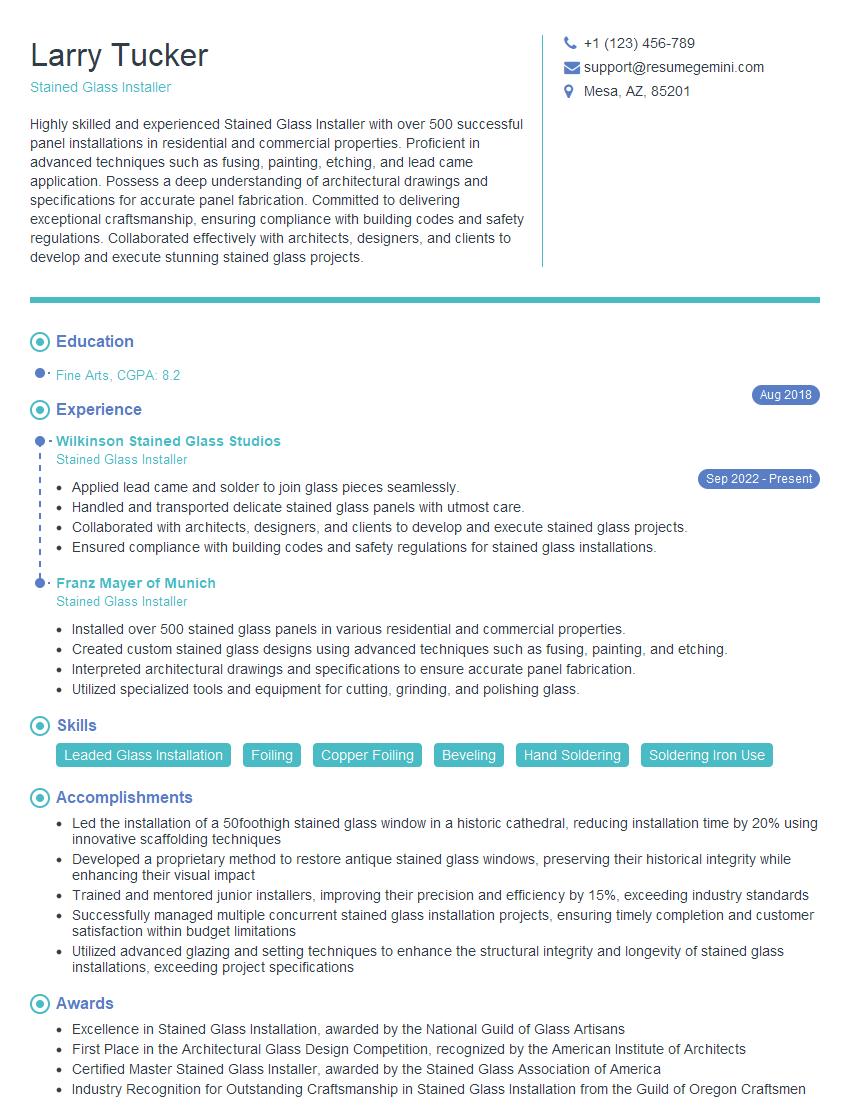
Mastering beveled glass installation opens doors to exciting career opportunities in the construction, restoration, and design industries. A strong understanding of these techniques positions you for advancement and higher earning potential. To increase your chances of landing your dream job, crafting an ATS-friendly resume is crucial. ResumeGemini is a trusted resource for building professional resumes that highlight your skills and experience effectively. Examples of resumes tailored to beveled glass installation are available to help you showcase your expertise. Invest time in creating a compelling resume to present yourself as the ideal candidate.



Explore more articles
Users Rating of Our Blogs
Share Your Experience
We value your feedback! Please rate our content and share your thoughts (optional).
What Readers Say About Our Blog
To the interviewgemini.com Webmaster.
Very helpful and content specific questions to help prepare me for my interview!
Thank you
To the interviewgemini.com Webmaster.
This was kind of a unique content I found around the specialized skills. Very helpful questions and good detailed answers.
Very Helpful blog, thank you Interviewgemini team.