Are you ready to stand out in your next interview? Understanding and preparing for Elder Law and Policy interview questions is a game-changer. In this blog, we’ve compiled key questions and expert advice to help you showcase your skills with confidence and precision. Let’s get started on your journey to acing the interview.
Questions Asked in Elder Law and Policy Interview
Q 1. Explain the differences between a Durable Power of Attorney and a Healthcare Power of Attorney.
Both Durable Powers of Attorney (DPOA) and Healthcare Powers of Attorney (HCPOA) allow you to designate someone to make decisions on your behalf if you become incapacitated, but they cover different areas. Think of it like this: a DPOA handles your financial affairs, while an HCPOA handles your healthcare decisions.
- Durable Power of Attorney (DPOA): This document allows you to appoint someone (your agent) to manage your finances, property, and other legal affairs if you become unable to do so yourself. This could include paying bills, managing your bank accounts, selling property, or even making investments. The ‘durable’ aspect means it remains in effect even if you become incapacitated. For example, if you are diagnosed with dementia, your agent can continue managing your finances according to your wishes.
- Healthcare Power of Attorney (HCPOA): This document lets you name someone to make healthcare decisions for you if you can no longer make them yourself. This includes decisions about medical treatment, hospitalization, life support, and end-of-life care. For instance, if you’re in a coma, your agent can make decisions about your treatment based on what you previously expressed to them, or your best interests if unclear.
The key difference lies in the scope of authority. A DPOA deals with financial and legal matters, while an HCPOA focuses solely on healthcare decisions. It’s common, and often recommended, to have both documents in place to ensure comprehensive planning.
Q 2. Describe the process of applying for Medicaid benefits.
Applying for Medicaid benefits is a complex process that varies by state, but generally involves these steps:
- Determine Eligibility: Medicaid eligibility is based on income and resource limits. These limits are significantly lower than those for Medicare. You’ll need to gather financial documentation, such as bank statements, tax returns, and pay stubs.
- Complete the Application: The application itself is extensive, requiring detailed information about your income, assets, and medical expenses. Many states offer online applications. Assistance is available from state agencies or elder law attorneys.
- Gather Supporting Documents: You’ll need to provide considerable documentation to support your application, including proof of identity, residency, income, and assets. Missing documentation can significantly delay the process.
- Submit the Application: Once you’ve compiled all the necessary documents, submit your completed application to your state’s Medicaid agency.
- Interview and Verification: Medicaid workers will likely interview you and verify the information you provided. They might request additional documentation.
- Approval or Denial: After review, you will receive notification of approval or denial. If denied, you can appeal the decision.
Navigating the Medicaid application process can be challenging. Seeking assistance from a qualified elder law attorney or a Medicaid planning specialist is highly recommended to ensure a smooth and successful application.
Q 3. What are the key considerations in estate planning for elderly clients?
Estate planning for elderly clients requires careful consideration of several key factors:
- Healthcare Directives: This includes creating a living will (outlining end-of-life wishes) and a healthcare power of attorney (appointing someone to make healthcare decisions).
- Financial Planning: This involves assessing assets, managing debts, planning for long-term care expenses, and considering strategies to minimize estate taxes.
- Asset Protection: Strategies may include establishing trusts or utilizing other legal tools to protect assets from potential creditors or long-term care costs.
- Will or Trust: Determining whether a will or trust is most appropriate for the client’s circumstances, considering factors like asset complexity and tax implications.
- Power of Attorney: Designating someone to manage finances and legal matters if the client becomes incapacitated. This is crucial to ensure financial continuity and appropriate care.
- Beneficiary Designations: Reviewing and updating beneficiary designations on retirement accounts, life insurance policies, and other assets to align with the client’s current wishes.
- Guardianship and Conservatorship Planning: Planning for potential future needs for guardianship or conservatorship in case of incapacitation.
It’s crucial to work with an estate planning attorney to tailor a plan that meets the specific needs and goals of each client.
Q 4. Explain the legal implications of guardianship and conservatorship.
Guardianship and conservatorship are legal processes that involve the court appointing someone to manage the affairs of an individual deemed incapable of managing them themselves. The key difference lies in what is being managed.
- Guardianship: This relates to the person’s personal well-being and care. A guardian makes decisions about the individual’s living arrangements, healthcare, and personal care. Imagine a situation where someone with dementia needs help with daily living tasks and medical decisions; a guardian would be appointed to make those decisions in their best interest.
- Conservatorship: This focuses on the individual’s finances and property. A conservator manages the person’s financial assets, pays bills, and makes investment decisions. For instance, if someone loses the ability to manage their finances due to cognitive impairment, a conservator would step in to oversee their financial affairs.
The legal implications include a significant loss of personal autonomy for the individual placed under guardianship or conservatorship. The court appoints a guardian or conservator, and their actions are subject to court oversight. Regular reports are often required. The process can be challenging emotionally for both the individual and their family.
Q 5. How does the Affordable Care Act impact elder care?
The Affordable Care Act (ACA) has significantly impacted elder care, primarily through:
- Medicare Expansion: While not directly expanding Medicare benefits, the ACA helped slow the growth of Medicare costs and prevented cuts to existing benefits. It also improved the quality of care for seniors in Medicare Advantage programs.
- Medicaid Expansion (in participating states): The ACA encouraged states to expand Medicaid eligibility to more low-income adults, indirectly benefitting some seniors who rely on Medicaid for long-term care. The impact varies depending on whether a state expanded Medicaid coverage.
- Prescription Drug Costs: Although not directly impacting senior drug coverage, some argue the ACA put pressure on the pharmaceutical industry, ultimately potentially influencing prescription drug prices and impacting overall healthcare expenses.
- Preventive Care Services: The ACA emphasizes preventive care, potentially reducing the need for more costly future interventions for older adults.
The ACA’s overall effect on elder care is complex and multifaceted, with its impact varying depending on individual circumstances and state-level policies.
Q 6. What are the ethical considerations involved in representing elderly clients?
Ethical considerations when representing elderly clients are paramount. Several key aspects need careful attention:
- Confidentiality: Protecting the client’s sensitive information is crucial. This includes medical, financial, and personal information. All communications must be kept confidential unless legally required to disclose.
- Competence: Ensuring the client’s capacity to make informed decisions is essential. If concerns arise about their capacity, a thorough assessment might be needed. This could lead to the need for legal intervention, such as appointing a guardian or conservator.
- Avoiding Conflicts of Interest: Attorneys must disclose and avoid any potential conflicts of interest that could compromise their representation of the client. This could involve family members with conflicting interests or personal financial ties to the case.
- Undue Influence: Attorneys must be vigilant in detecting and preventing undue influence by others on the client’s decision-making. This is particularly important with vulnerable elders.
- Fiduciary Duty: Attorneys have a fiduciary duty to act in the best interests of their elderly clients, putting their clients’ needs above their own. This includes acting with honesty, integrity, and loyalty.
Navigating these ethical considerations requires careful judgment, adherence to professional ethical rules, and a commitment to protecting the vulnerable elderly client.
Q 7. Describe the different types of trusts used in elder law.
Several types of trusts are commonly used in elder law, each serving a specific purpose:
- Revocable Living Trust: This trust allows the grantor (the person creating the trust) to retain control over the assets and change the terms of the trust during their lifetime. It avoids probate, simplifying asset transfer after death. It is important to note that creditors still have access to assets held in a revocable trust.
- Irrevocable Living Trust: Once created, this trust cannot be changed or revoked by the grantor. This is often used for asset protection and estate tax planning. Assets are removed from the grantor’s estate, protecting them from potential creditors or Medicaid spend-down requirements.
- Special Needs Trust: This trust is designed to protect the assets of a disabled individual while still allowing them to qualify for government benefits like Medicaid or Supplemental Security Income (SSI). It pays for expenses not covered by the benefits program.
- Qualified Personal Residence Trust (QPRT): This trust is used to remove the value of a person’s home from their taxable estate. The home is placed in the trust, and the grantor pays rent or receives a reduced value of the home in exchange. The benefits of this trust are impacted by life expectancy.
The choice of trust depends on the client’s specific needs, financial situation, and estate planning goals. It’s crucial to consult with an experienced elder law attorney to determine the most appropriate type of trust.
Q 8. What are the common challenges faced by elderly individuals in accessing healthcare?
Accessing healthcare presents significant challenges for many elderly individuals. These hurdles often stem from a combination of factors, including financial constraints, transportation difficulties, and complex healthcare systems.
- Financial Barriers: Medicare and supplemental insurance might not cover all medical expenses, leaving seniors with substantial out-of-pocket costs for medications, treatments, and long-term care. This can be particularly difficult for those living on fixed incomes.
- Transportation Issues: Limited mobility, lack of access to reliable transportation, and the inability to drive independently can make it difficult to reach doctor’s appointments, hospitals, and pharmacies.
- Navigating the System: The complexity of the healthcare system, including insurance paperwork, referrals, and understanding various treatment options, can be overwhelming for seniors and their families. This can lead to delayed or inadequate care.
- Cognitive Impairment: Conditions like dementia or Alzheimer’s can impact a senior’s ability to understand and advocate for their healthcare needs.
For example, an elderly woman with limited mobility might struggle to get to a specialist appointment despite having adequate insurance coverage, simply because she lacks access to reliable transportation. This highlights the interconnected nature of the challenges faced by seniors in accessing healthcare.
Q 9. Explain the process of probate and its implications for beneficiaries.
Probate is the legal process of administering a deceased person’s estate. It involves identifying assets, paying debts, and distributing the remaining assets to beneficiaries according to the terms of a will (or, if there’s no will, according to the rules of intestacy – laws governing distribution without a will).
The process typically begins with the filing of a petition with the probate court. The court appoints an executor (as named in the will) or administrator (if there’s no will), who is responsible for managing the estate. The executor/administrator then gathers the deceased’s assets, pays outstanding debts and taxes, and files an inventory with the court.
Implications for beneficiaries include:
- Time Delay: Probate can be a lengthy process, sometimes lasting months or even years, before beneficiaries receive their inheritance.
- Legal Fees and Costs: Probate involves court fees, legal fees for the executor/administrator, and other administrative expenses, which reduce the estate’s value before distribution to beneficiaries.
- Public Record: Probate proceedings are generally public record, meaning anyone can access information about the deceased’s assets and beneficiaries.
For instance, if a will leaves an estate to multiple heirs, the probate court oversees the equitable distribution of assets. Without probate, this fair division might be difficult to achieve.
Q 10. How does Medicare differ from Medicaid?
Medicare and Medicaid are both government health insurance programs in the United States, but they serve different populations and have distinct eligibility requirements.
- Medicare: A federal health insurance program primarily for individuals age 65 and older and certain younger people with disabilities. It covers a portion of healthcare costs, but beneficiaries often need supplemental insurance (Medigap) to cover co-pays, deductibles, and other gaps in coverage. Medicare has different parts (A, B, C, and D) that cover various services like hospitalization, doctor visits, and prescription drugs.
- Medicaid: A joint federal and state program providing healthcare coverage to low-income individuals and families, including some elderly and disabled individuals. Eligibility depends on income and asset levels, which are determined by state regulations. Medicaid generally covers a broader range of services than Medicare, but the services available vary by state.
The key difference lies in who’s eligible. Medicare is primarily age-based, while Medicaid is income and asset-based. Many seniors qualify for both programs; Medicare might be their primary insurance, with Medicaid helping to cover gaps in Medicare coverage.
Q 11. What are the legal ramifications of elder abuse and neglect?
Elder abuse and neglect carry significant legal ramifications, varying by jurisdiction but generally involving civil and/or criminal penalties. These offenses can include physical, emotional, financial, and neglectful actions against an elderly person.
- Criminal Charges: Depending on the severity and nature of the abuse, perpetrators can face criminal charges, such as assault, battery, theft, fraud, or even homicide in cases of neglect leading to death. These charges can result in imprisonment and fines.
- Civil Lawsuits: Victims or their families can file civil lawsuits to recover damages for medical expenses, pain and suffering, and lost wages. These lawsuits can result in significant monetary awards against abusers.
- Protective Orders: Courts can issue protective orders to prevent abusers from contacting or harming the elderly victim. This might include restricting access to the victim’s home or finances.
- Guardianship/Conservatorship: If an elderly person is deemed incapacitated due to abuse or neglect, the court may appoint a guardian or conservator to manage their personal care and finances.
For example, a caregiver who misappropriates a senior’s funds can face both criminal charges for theft and a civil lawsuit from the victim’s family to recover the stolen money.
Q 12. Discuss the role of long-term care insurance in planning for elder care.
Long-term care insurance is a type of insurance policy designed to help cover the costs of long-term care services, such as nursing home care, assisted living facilities, or in-home care. It’s a crucial component of elder care planning because these services can be extremely expensive.
Policies typically provide a daily or monthly benefit for a specific period, often with limitations on the total amount paid. The specific benefits and costs vary significantly depending on the policy’s terms and the insured’s age and health at the time of purchase.
The role of long-term care insurance in planning for elder care is to:
- Mitigate Financial Risk: It protects seniors and their families from the potentially devastating financial impact of long-term care expenses.
- Provide Choice and Flexibility: Having this insurance allows individuals to choose the type and location of care that best suits their needs, rather than being constrained by financial limitations.
- Preserve Assets: By covering long-term care expenses, it helps preserve the senior’s assets for their family’s inheritance.
It’s important to note that long-term care insurance is often purchased well in advance of needing care, as premiums increase significantly with age and health deterioration.
Q 13. Explain the process of obtaining veterans benefits for elderly veterans.
Elderly veterans can access a range of benefits through the Department of Veterans Affairs (VA). The process of obtaining these benefits involves applying to the VA and providing necessary documentation.
The specific benefits available depend on the veteran’s service history, disability rating, and financial situation. Key benefits include:
- Pension: A needs-based monthly payment to veterans with limited income and assets.
- Compensation: Monthly payments for service-connected disabilities.
- Healthcare: Access to VA healthcare facilities and services.
- Home Loan Guaranty: Assistance with obtaining home loans.
- Burial Benefits: Assistance with burial and interment expenses.
The application process usually involves gathering documents such as military discharge papers (DD-214), medical records, and financial statements. Veterans can apply online through the VA website or in person at a VA office. The VA will review the application and supporting documents to determine eligibility for benefits.
Many veterans may not realize the full breadth of the benefits available to them; utilizing resources such as VA benefits counselors or veterans’ organizations can significantly simplify the process.
Q 14. What is the significance of the Americans with Disabilities Act (ADA) in elder care?
The Americans with Disabilities Act (ADA) plays a significant role in elder care by ensuring that individuals with disabilities, a large proportion of whom are elderly, have equal access to services and facilities. The ADA mandates reasonable accommodations and prohibits discrimination based on disability in various settings.
The significance of the ADA in elder care includes:
- Accessibility of Healthcare Facilities: Healthcare facilities must meet ADA standards regarding accessibility, including features like ramps, elevators, accessible restrooms, and appropriate signage. This ensures that elderly individuals with mobility impairments can access healthcare services.
- Accessible Transportation: Public transportation providers must comply with ADA requirements for accessibility, enabling elderly individuals with disabilities to travel to appointments and other destinations.
- Communication Access: Healthcare providers must provide appropriate communication aids, such as large-print materials, sign language interpreters, and assistive listening devices, ensuring effective communication with elderly individuals with hearing or vision impairments.
- Prohibition of Discrimination: The ADA prevents discrimination against elderly individuals with disabilities in employment, housing, and other areas, ensuring equal opportunities and preventing exclusion from societal participation.
For instance, a nursing home must ensure that its facilities are wheelchair accessible and provide assistive devices as needed to comply with ADA requirements, thereby improving the quality of life and care for elderly residents with disabilities.
Q 15. How does the Patient Self-Determination Act (PSDA) impact healthcare decisions for elderly clients?
The Patient Self-Determination Act (PSDA) is a federal law that ensures individuals have the right to make decisions about their healthcare, including the right to accept or refuse medical treatment. For elderly clients, this means they have the power to create advance directives, such as living wills and durable powers of attorney for healthcare. These documents allow them to communicate their wishes regarding medical care should they become incapacitated and unable to make decisions for themselves. The PSDA requires healthcare providers to inform patients of their rights under the Act and to provide them with information about advance directives. This empowers elderly individuals to maintain control over their end-of-life care, aligning their treatment with their values and preferences even when they are no longer capable of expressing them directly.
For example, an elderly client with Alzheimer’s disease could have a living will specifying that they do not wish to be kept alive by artificial means if their condition deteriorates to a certain point. This ensures their wishes are respected, preventing unwanted prolonging of suffering.
Career Expert Tips:
- Ace those interviews! Prepare effectively by reviewing the Top 50 Most Common Interview Questions on ResumeGemini.
- Navigate your job search with confidence! Explore a wide range of Career Tips on ResumeGemini. Learn about common challenges and recommendations to overcome them.
- Craft the perfect resume! Master the Art of Resume Writing with ResumeGemini’s guide. Showcase your unique qualifications and achievements effectively.
- Don’t miss out on holiday savings! Build your dream resume with ResumeGemini’s ATS optimized templates.
Q 16. Explain the concept of capacity and its assessment in elderly clients.
Capacity, in the context of elder law, refers to a person’s ability to understand information relevant to a decision, appreciate the consequences of that decision, and reason through the options available. It’s not a simple yes or no answer; it’s context-specific and fluctuates. An individual might have capacity to make one decision but lack it for another. For example, someone might understand the need to take medication (capacity for medication management) but lack the capacity to manage their finances due to cognitive impairment.
Assessing capacity is a complex process that usually involves a physician or psychologist. They may consider factors like the individual’s cognitive function, emotional state, and communication skills. There’s no single test; the assessment is tailored to the specific decision at hand. For instance, assessing capacity for signing a will requires a different approach than assessing capacity for consenting to a surgery. Legal professionals often rely on medical evaluations to determine capacity and ensure the legality and validity of decisions made by elderly clients.
Think of it like this: A person might be able to have a conversation and seem perfectly lucid, but still lack the capacity to understand the complex legal implications of a contract or a power of attorney.
Q 17. Discuss the different types of elder care facilities and their implications.
Elder care facilities range widely in their level of care and services provided. The choice of facility depends heavily on the individual’s needs and financial resources.
- Independent Living Facilities: These provide housing and amenities for seniors who are relatively independent but want a supportive community and access to services. They typically don’t offer medical care.
- Assisted Living Facilities: Offer assistance with daily living activities like bathing, dressing, and medication management. They may provide some health-related services, but don’t typically handle complex medical needs.
- Skilled Nursing Facilities (Nursing Homes): Provide 24-hour nursing care and medical services for individuals with significant health problems. They are the most intensive level of care.
- Memory Care Units: Specialized units within assisted living or skilled nursing facilities designed for residents with dementia or Alzheimer’s disease. They offer a secure and supportive environment tailored to the unique needs of these individuals.
- Continuing Care Retirement Communities (CCRCs): Offer a continuum of care, allowing residents to transition between levels of care as their needs change without having to move to a different facility.
The implications of choosing a particular facility are significant. Costs vary greatly, impacting the family’s financial resources. The level of care provided affects the resident’s quality of life and their overall well-being. Therefore, carefully assessing the individual’s needs and available resources is crucial when selecting an appropriate elder care facility.
Q 18. What are the legal implications of undue influence in estate planning?
Undue influence in estate planning refers to a situation where someone improperly pressures or coerces another person into making a will, trust, or other estate planning document that doesn’t reflect the testator’s (the person making the will) true wishes. This coercion could involve manipulation, threats, or emotional abuse. It undermines the testator’s autonomy and results in an unfair or illegitimate distribution of assets.
The legal implications are serious. If a court finds that undue influence was exerted, the challenged estate planning document can be declared invalid. This means the assets would be distributed according to the laws of intestacy (dying without a valid will) or a previous, unchallenged will. Proving undue influence requires demonstrating a relationship of trust and dependency between the testator and the alleged influencer, along with evidence of inappropriate pressure that directly resulted in the questionable document.
For instance, a caregiver who isolates an elderly client from family and friends while simultaneously benefiting handsomely from the client’s will could be accused of undue influence. This is why it’s crucial for elderly individuals to have independent legal counsel when creating or updating their estate plans.
Q 19. Describe the key provisions of the Older Americans Act.
The Older Americans Act (OAA) is a federal law that provides a range of services to older adults to promote their independence and well-being. Key provisions include:
- Nutrition Services: Funding for congregate and home-delivered meals to combat senior hunger and malnutrition.
- Senior Centers: Supporting the establishment and operation of senior centers that provide social activities, meals, and other services.
- Home and Community-Based Services: Funding for services that allow seniors to remain in their homes, avoiding the need for more expensive institutional care. This includes home health care, personal care, and transportation assistance.
- Legal Assistance: Providing legal assistance to seniors on issues such as elder abuse, consumer protection, and estate planning.
- Disease Prevention and Health Promotion: Supporting programs that promote the health and well-being of older adults through health screenings and educational initiatives.
- Long-Term Care Ombudsman Program: Advocating for the rights and interests of residents in long-term care facilities.
The OAA doesn’t offer direct benefits like Social Security; rather, it funds state and local programs that provide services to seniors. The specific services available vary by location and funding levels.
Q 20. How does the Age Discrimination in Employment Act (ADEA) protect elderly workers?
The Age Discrimination in Employment Act (ADEA) protects individuals 40 years of age or older from employment discrimination based on their age. This means employers cannot refuse to hire, fire, demote, or otherwise discriminate against someone solely because of their age. The ADEA applies to employers with 20 or more employees.
The ADEA doesn’t prevent employers from making employment decisions based on legitimate, non-age-related factors such as qualifications, performance, or business needs. However, if an employer’s actions have a disparate impact on older workers and cannot be justified by business necessity, it could be considered age discrimination. For example, an employer cannot mandate retirement at a specific age, except in very limited circumstances like mandatory retirement for high-ranking executives. Older workers must be given the same opportunities for training, advancement, and promotion as younger workers.
If an elderly worker believes they have experienced age discrimination, they can file a complaint with the Equal Employment Opportunity Commission (EEOC).
Q 21. What are the requirements for qualifying for Supplemental Security Income (SSI)?
Supplemental Security Income (SSI) is a needs-based federal program that provides cash assistance to elderly, blind, and disabled individuals with limited income and resources. To qualify, an applicant must meet three criteria:
- Age, Blindness, or Disability: The applicant must be at least 65 years old, blind, or disabled.
- Income: The applicant’s income must be below a certain limit. These limits are adjusted periodically and vary by the applicant’s living situation (living alone or with others).
- Resources: The applicant’s resources (assets such as cash, savings accounts, and stocks) must be below a specified limit. This is also adjusted periodically and considers the individual’s living situation.
The application process involves submitting extensive documentation proving income, resources, and age, blindness or disability status. The Social Security Administration (SSA) will assess the application based on the applicant’s financial situation and medical evidence to determine eligibility. It is advisable to seek assistance from a qualified elder law attorney or social worker to navigate the often complex application process.
Q 22. Explain the process of contesting a will.
Contesting a will, also known as a will challenge, is a legal process where someone disputes the validity of a will. This typically occurs when a beneficiary believes they’ve been unfairly excluded, or that the will itself was improperly executed or influenced by undue pressure. The process can be complex and varies by jurisdiction, but generally involves several steps.
- Grounds for contesting: Common grounds include lack of testamentary capacity (the testator lacked the mental capacity to understand their actions), undue influence (someone coerced the testator into making the will), fraud (the will was created through deception), or lack of proper execution (the will doesn’t meet the legal requirements for validity).
- Filing a lawsuit: The challenge begins with filing a lawsuit in the appropriate probate court. This involves presenting evidence supporting the claim of invalidity.
- Discovery process: Both sides gather evidence through depositions, interrogatories, and document requests. This phase aims to uncover all relevant facts.
- Trial (if necessary): If the parties can’t reach a settlement, the case proceeds to trial where a judge or jury decides the outcome. Expert witnesses, such as handwriting analysts or medical professionals, may be called to testify.
- Appeals: Either party can appeal the court’s decision to a higher court.
Example: Imagine a family where the testator’s spouse was excluded from the will and believes the testator was unduly influenced by a caregiver. The spouse would need to gather evidence such as medical records indicating a decline in the testator’s mental capacity, and testimony from witnesses who observed the caregiver’s undue influence.
Q 23. Discuss the different types of elder abuse.
Elder abuse encompasses a range of harmful actions directed towards older adults. It’s a serious issue with devastating consequences. The types of elder abuse are broadly categorized as follows:
- Physical abuse: This includes hitting, slapping, pushing, or any other form of physical harm.
- Emotional or psychological abuse: This involves verbal harassment, threats, intimidation, humiliation, or isolation.
- Financial exploitation: This is the illegal or improper use of an older person’s funds, assets, or property. This can range from outright theft to subtle manipulation.
- Neglect: This occurs when a caregiver fails to provide adequate care, such as neglecting medical needs, hygiene, or basic necessities. This can be either intentional or unintentional.
- Sexual abuse: This involves any unwanted sexual contact.
- Abandonment: This is the desertion of an elderly person by someone who has a responsibility for their care.
Example: A caregiver who steals an elder’s life savings is committing financial exploitation. A family member who constantly belittles and insults an elderly parent is engaging in emotional abuse. A nursing home that fails to provide adequate medical attention to a resident is involved in neglect.
Q 24. What are the key legal considerations in handling a client’s financial affairs?
Handling a client’s financial affairs requires careful attention to legal considerations, including:
- Power of Attorney (POA): This legal document grants someone the authority to manage the client’s financial affairs. It’s crucial to ensure the POA is properly executed and that the agent acts in the client’s best interest.
- Guardianship/Conservatorship: If a client lacks the capacity to manage their finances, a court may appoint a guardian or conservator to do so. This process involves a legal hearing and ongoing court oversight.
- Trusts: Trusts can be used to manage assets for the client’s benefit, providing protection and tax advantages. Selecting the appropriate type of trust is important.
- Estate planning: This involves creating a comprehensive plan to manage the client’s assets during their lifetime and after their death. This includes wills, trusts, and other estate planning documents.
- Financial record-keeping: Meticulous record-keeping is essential to demonstrate responsible management of the client’s funds and avoid accusations of wrongdoing.
- Compliance with relevant laws: Staying informed about and adhering to federal and state laws related to elder financial management is vital.
Example: Before establishing a Power of Attorney, we would ensure the client has the capacity to understand the document and its implications. We would carefully document this process and obtain the client’s informed consent.
Q 25. How do you navigate ethical dilemmas related to client confidentiality?
Client confidentiality is paramount in elder law. Ethical dilemmas can arise, requiring careful consideration and adherence to professional guidelines. I address these by:
- Prioritizing client interests: My primary obligation is to act in my client’s best interest, even if it means disclosing information in limited circumstances.
- Understanding exceptions to confidentiality: There are exceptions to confidentiality, such as suspected elder abuse or neglect. In such cases, mandatory reporting laws often require disclosure to the appropriate authorities. I’m very familiar with these reporting requirements.
- Seeking legal counsel: When facing a difficult ethical dilemma, I consult with experienced legal counsel to ensure I’m making the right decisions and protecting my client’s interests while complying with the law.
- Documenting decisions: I carefully document all decisions related to confidentiality, including consultations and any disclosures made, to maintain a clear record of my actions.
Example: If I suspect a client is being financially exploited by a family member, I would need to report the suspicion to the appropriate authorities, even though it breaches confidentiality. This is a necessary step to protect the client from harm.
Q 26. Describe your experience working with diverse elderly populations.
My experience encompasses working with a diverse range of elderly populations, including those from various cultural backgrounds, socioeconomic levels, and health conditions. This experience has taught me the importance of:
- Cultural sensitivity: Recognizing and respecting the unique cultural beliefs and practices of different groups is essential when providing elder care services.
- Adaptability: I’ve had to adapt my communication styles and care plans to meet the specific needs of clients with diverse backgrounds and health situations.
- Resourcefulness: I’ve built relationships with a network of community organizations and support services to provide my clients with a comprehensive range of support.
- Empathy: Developing strong rapport and genuine understanding of each client’s individual circumstances is critical for effective and culturally competent service delivery.
Example: I recently worked with a client from a Hispanic background who preferred to communicate with family members present. I adjusted my communication style accordingly, ensuring everyone understood the legal processes and their implications. This involved working with interpreters when necessary.
Q 27. How do you stay current on changes in elder law and policy?
Keeping up with the ever-changing landscape of elder law and policy requires a multifaceted approach. I utilize several methods:
- Professional development: I regularly attend seminars, conferences, and workshops on current legal issues affecting older adults.
- Professional organizations: I actively participate in professional organizations, such as the National Academy of Elder Law Attorneys (NAELA), which provide continuing education opportunities and networking.
- Legal publications and journals: I regularly read journals, law review articles, and legal news sources to stay abreast of legislative changes and case law.
- Continuing legal education (CLE) courses: I complete required CLE courses each year, focusing on relevant updates in elder law and policy.
- Networking with colleagues: I maintain close connections with other elder law attorneys and professionals in related fields to discuss emerging trends and challenges.
Example: I recently participated in a NAELA conference focusing on the implications of new Medicaid regulations, allowing me to stay informed and provide my clients with up-to-date advice.
Q 28. Explain your experience with using technology to support elder care clients.
Technology plays an increasingly important role in supporting elder care clients. My experience involves using technology to:
- Improve communication: Video conferencing tools facilitate remote consultations and family meetings, enhancing access to care, particularly for clients in geographically isolated areas.
- Enhance record-keeping: Secure cloud-based systems facilitate efficient storage and access to client documents, promoting better organization and compliance.
- Monitor client well-being: Remote monitoring devices can be used to track vital signs and alert caregivers to potential health issues, contributing to proactive care.
- Provide telehealth services: Telehealth platforms allow for virtual consultations with healthcare providers, improving access to care for clients with mobility challenges.
- Facilitate financial management: Secure online banking platforms and financial management tools improve accessibility and oversight of client finances.
Example: I used video conferencing to conduct a virtual meeting with a client’s family living in a different state, allowing for seamless communication about the client’s estate plan. This eliminated the need for expensive and time-consuming travel.
Key Topics to Learn for Your Elder Law and Policy Interview
- Advance Directives: Understanding living wills, durable powers of attorney, and healthcare proxies; practical application in client consultations and document drafting.
- Estate Planning for Seniors: Exploring wills, trusts, probate avoidance strategies; problem-solving scenarios involving complex family dynamics and asset distribution.
- Long-Term Care Planning: Medicaid and Medicare eligibility requirements, nursing home admissions, and asset protection strategies; analyzing case studies to determine optimal care solutions.
- Guardianship and Conservatorship: Legal processes, eligibility criteria, and ethical considerations; role-playing scenarios to practice advocating for clients’ best interests.
- Elder Abuse and Neglect: Legal definitions, reporting procedures, and preventative measures; case analysis and ethical considerations in identifying and responding to abuse.
- Age Discrimination in Employment: Legal frameworks, protections for older workers, and effective advocacy strategies; applying legal knowledge to real-world scenarios.
- Public Policy and Advocacy: Understanding relevant legislation, regulations, and policy debates; developing policy recommendations to improve elder care and support services.
Next Steps: Unlock Your Career Potential
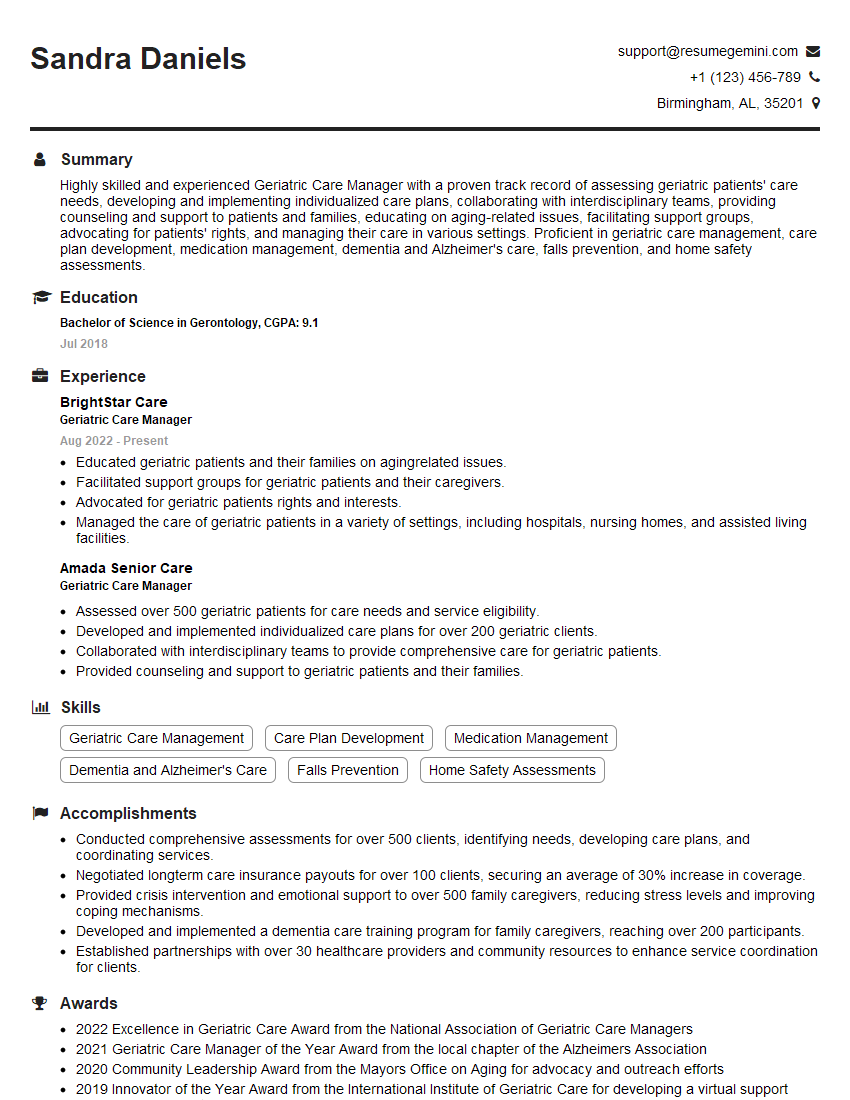
Mastering Elder Law and Policy opens doors to impactful and rewarding careers. A strong understanding of these areas demonstrates your commitment to client well-being and positions you for leadership roles. To maximize your job prospects, creating an Applicant Tracking System (ATS)-friendly resume is crucial. ResumeGemini is a trusted resource to help you build a professional and effective resume that highlights your skills and experience. We provide examples of resumes tailored specifically to Elder Law and Policy to give you a head start. Take the next step towards your dream career today!
Explore more articles
Users Rating of Our Blogs
Share Your Experience
We value your feedback! Please rate our content and share your thoughts (optional).
What Readers Say About Our Blog
To the interviewgemini.com Webmaster.
Very helpful and content specific questions to help prepare me for my interview!
Thank you
To the interviewgemini.com Webmaster.
This was kind of a unique content I found around the specialized skills. Very helpful questions and good detailed answers.
Very Helpful blog, thank you Interviewgemini team.