Every successful interview starts with knowing what to expect. In this blog, we’ll take you through the top Air Conditioning Duct Fabrication interview questions, breaking them down with expert tips to help you deliver impactful answers. Step into your next interview fully prepared and ready to succeed.
Questions Asked in Air Conditioning Duct Fabrication Interview
Q 1. Explain the different types of HVAC duct materials and their applications.
HVAC duct materials vary widely, each suited to different applications based on factors like cost, durability, and airflow requirements. The most common include:
- Galvanized Steel: This is a workhorse material, strong, durable, and relatively inexpensive. It’s ideal for most commercial and industrial applications, and frequently used in residential systems as well. Its strength makes it suitable for larger ducts and complex systems.
- Aluminum: Lighter and more corrosion-resistant than steel, aluminum is a popular choice for residential applications where weight is a concern. It’s often used in areas with high humidity because of its corrosion resistance.
- Fiber Glass: Lightweight and easily formable, fiberglass ductwork is commonly found in residential systems. It offers good insulation properties but can be more susceptible to damage compared to metal.
- Flexible Duct (typically aluminum foil lined): Used primarily for short runs, connecting components or reaching hard-to-reach areas. While convenient, it’s less efficient than rigid ductwork due to increased friction and potential for leakage.
- Plastic (PVC, HDPE): Suitable for applications where corrosion resistance is paramount, such as in corrosive environments or applications handling corrosive materials. However, they may not be as strong as metal alternatives.
The choice of material depends heavily on the specific project requirements. A large commercial system might utilize galvanized steel for its durability, while a residential retrofit might opt for flexible ductwork for ease of installation in tight spaces.
Q 2. Describe the process of designing a duct system layout.
Designing a duct system layout is a crucial step, impacting efficiency and comfort. It’s a balancing act between several factors:
- Building Plans: The layout must integrate seamlessly with the building’s structure, considering ceiling heights, wall penetrations, and existing obstacles.
- Airflow Requirements: The system must deliver sufficient airflow to each room or zone, calculated based on factors like room size, occupancy, and desired temperature.
- Pressure Drop: The design minimizes pressure drop across the ductwork, reducing energy consumption and ensuring uniform airflow. This involves careful selection of duct sizes and minimizing bends and fittings.
- Accessibility: The system needs to be easily accessible for maintenance and cleaning, with ample space around components.
- Noise Considerations: Proper design minimizes noise generated by air movement, selecting appropriate duct materials and dampening techniques where necessary.
Software tools are often employed to model airflow, pressure drop, and noise levels. Experienced designers will use this data to create an optimized layout minimizing energy use and maximizing comfort.
For example, a large office building might require zoned HVAC, with separate duct runs to various sections of the building to allow for individualized temperature control. In contrast, a small home might use a simpler system with a central air handler and fewer branches.
Q 3. How do you calculate the airflow requirements for a duct system?
Calculating airflow requirements involves considering several factors. The most common method uses the Cooling Load Calculation which determines the amount of heat that needs to be removed from each space. This is then converted to CFM (Cubic Feet per Minute) which represents the amount of air needed to remove that heat.
The calculation considers factors such as:
- Room size and volume: Larger rooms require more airflow.
- Occupancy: The number of people in a space increases the heat load.
- Appliances and equipment: Heat-generating appliances (computers, ovens, etc.) add to the load.
- Insulation and windows: The building’s insulation and window efficiency impact heat gain and loss.
- Desired temperature difference: The larger the difference between inside and outside temperatures, the greater the cooling load.
Specialized software or manual calculation methods using industry standards (like ASHRAE handbooks) are used to determine these requirements. These calculations are critical to ensure the HVAC system is appropriately sized to meet the cooling load and provide efficient operation.
Q 4. What are the common methods for joining duct sections?
Joining duct sections involves various methods, each with advantages and disadvantages:
- Screws and Sheet Metal: For rectangular ducts, this common method offers a strong and relatively airtight seal. However, it can be time-consuming.
- Crimping: This fast method is used with flexible ducts or certain types of rigid duct. It’s less labor-intensive but may not be as airtight as other methods.
- Welding: Often used with galvanized steel, welding creates a very strong and airtight seal, particularly crucial in high-pressure systems. Specialized equipment and expertise are required.
- Flanges and Bolts: Used frequently with larger or heavier duct sections, offering a secure, reusable connection. This method provides good sealing but is more complex.
- Adhesives (sealants): Used in conjunction with other methods, sealants improve airtightness. They are not a primary method for joining but enhance the overall system integrity.
The chosen method depends on the material, duct size, and pressure requirements of the system. For instance, smaller residential systems might use screws and sealant, while larger commercial systems might utilize welding or flanges and bolts.
Q 5. Explain the importance of proper insulation and sealing in ductwork.
Proper insulation and sealing are crucial for energy efficiency and occupant comfort. Inadequate insulation and sealing lead to significant energy loss and reduced system performance.
- Energy Savings: Insulation minimizes heat transfer between the ductwork and the surrounding environment. In warm climates, insulation prevents conditioned air from heating up as it travels through the duct system, reducing energy consumption needed to maintain the desired temperature. In colder climates, it prevents heat loss.
- Improved Air Quality: Proper sealing eliminates air leaks, preventing the infiltration of dust, pollen, and other contaminants into the ductwork. It also prevents the loss of conditioned air which reduces the system’s load.
- Comfort: Air leaks cause temperature inconsistencies throughout the building. A well-sealed and insulated system ensures uniform temperature distribution, improving comfort for occupants.
- Increased System Efficiency: A well-sealed system reduces the load on the HVAC equipment, leading to increased efficiency and longer equipment life.
Common insulation materials include fiberglass, foam, and mineral wool. Sealants like mastic or foil tape are used to seal joints and connections.
Q 6. Describe your experience with different types of duct fittings (elbows, transitions, etc.).
I have extensive experience working with a variety of duct fittings. Each plays a specific role in directing airflow efficiently.
- Elbows: These change the direction of airflow. The tighter the bend radius, the greater the pressure drop, so careful selection based on the design is critical. Different elbow types (long radius, short radius) have varying degrees of friction loss.
- Transitions: These smoothly change the cross-sectional area of the duct. This is essential for transitioning from larger to smaller ducts or vice-versa, minimizing pressure loss and ensuring smooth airflow.
- Dampers: These are used to control airflow to individual zones or sections of the system, allowing for precise temperature regulation. They are crucial for maintaining proper airflow balance.
- Registers and Grilles: These are the outlets of the duct system and allow for the dispersion of air into the occupied space. Various designs of registers and grilles are used to control the direction and velocity of the air stream.
- Access Doors: Installed in strategic locations for easy access to the ductwork during maintenance and inspection.
Properly specifying and installing these fittings is crucial for efficient system performance. For instance, using a long-radius elbow instead of a short-radius elbow will reduce pressure loss and noise in the system.
Q 7. How do you ensure proper airflow balance in a duct system?
Ensuring proper airflow balance is critical for uniform temperature distribution and efficient operation. It involves several steps:
- Accurate Load Calculations: Begin with precise calculations of the cooling and heating load for each zone or room. This forms the basis for determining the required airflow.
- Proper Duct Sizing: Ensure that the ductwork is appropriately sized to deliver the required airflow to each zone while minimizing pressure drop.
- Balancing Dampers: These are adjusted to equalize airflow across different branches of the duct system. Professional balancing is often required to achieve optimal airflow.
- Airflow Measurement: Utilize specialized equipment (e.g., pressure gauges, anemometers) to measure the actual airflow at each register or grille. This verifies that the system is balanced.
- System Commissioning: This comprehensive process verifies that the ductwork and the entire HVAC system are operating as designed, including balancing the airflow.
Imagine a system where one room receives too much air while another receives too little. Balancing ensures that all rooms receive the proper airflow, maximizing efficiency and comfort. Imbalances can lead to hot or cold spots, wasted energy, and uncomfortable living conditions.
Q 8. What are some common problems encountered during duct fabrication and installation?
Common problems during duct fabrication and installation often stem from design flaws, material selection issues, or improper installation techniques. Let’s break it down:
- Design Flaws: Inadequate sizing of ducts leading to insufficient airflow or excessive pressure drop. Incorrectly calculated duct lengths causing noise issues or energy loss. Poorly designed transitions between different duct sizes resulting in turbulence and reduced efficiency. For instance, a sharp bend in a duct can significantly reduce airflow.
- Material Selection Issues: Using inappropriate materials for the application. For example, using lightweight galvanized steel in high-humidity environments may lead to corrosion and leakage. Selecting insufficiently insulated ducts can result in significant heat loss or gain, affecting system efficiency.
- Improper Installation: Loose connections causing air leaks. Incorrect sealing techniques resulting in poor air tightness. Improper support of the ductwork, causing sagging and potential damage. Failing to properly account for thermal expansion and contraction can lead to stress on the system. I’ve seen instances where improperly fastened hangers led to ductwork failure and a costly repair.
Addressing these issues requires careful planning, adherence to industry standards (like SMACNA), and diligent quality control throughout the entire process. This includes thorough inspections at each stage of the project.
Q 9. How do you troubleshoot airflow problems in an existing duct system?
Troubleshooting airflow problems in an existing duct system requires a systematic approach. It’s like detective work! We start by identifying the symptoms, such as low airflow in certain areas, uneven temperatures, or excessive noise. Then we utilize several methods:
- Visual Inspection: Checking for visible leaks, damaged sections, or obstructions within the ductwork. A simple flashlight can reveal a surprising amount.
- Pressure Testing: Using specialized equipment to measure the air pressure across different sections of the system. Significant pressure drops indicate restrictions or leaks.
- Airflow Measurement: Utilizing anemometers to measure airflow velocity at various points in the system. This helps to identify bottlenecks or areas with insufficient airflow. For instance, a significantly lower airflow reading at a register indicates a problem upstream.
- Thermographic Imaging: Employing thermal cameras to detect temperature anomalies. Significant temperature differences along a duct section could indicate air leaks.
Once the problem is identified, the solution could range from simple repairs like sealing leaks to more involved tasks such as replacing damaged sections or rebalancing the system. Careful documentation throughout the process is vital to ensure that the problem is correctly diagnosed and effectively resolved.
Q 10. What safety precautions do you follow when working with HVAC ductwork?
Safety is paramount in HVAC ductwork. We follow a strict set of safety protocols including:
- Personal Protective Equipment (PPE): Always wearing safety glasses, gloves, and appropriate respiratory protection, especially when working with fiberglass insulation or cutting metal.
- Fall Protection: Utilizing harnesses and fall arrest systems when working at heights. This is especially crucial when installing ductwork on roofs or elevated areas.
- Lockout/Tagout Procedures: Following strict procedures to de-energize and lock out electrical systems before working near them. This prevents accidental electrocution.
- Proper Lifting Techniques: Using hoists, cranes, or other lifting equipment safely and correctly to avoid injuries. Proper teamwork and communication is essential.
- Confined Space Entry Procedures: Following established protocols when working in confined spaces like crawl spaces or attics, ensuring adequate ventilation and monitoring of air quality.
Regular safety training and adherence to OSHA regulations are critical. We conduct toolbox talks before each job to reiterate safety procedures and address potential hazards specific to that project.
Q 11. Explain your experience with different types of HVAC systems (residential, commercial).
My experience encompasses both residential and commercial HVAC systems. Residential projects often involve smaller-scale ductwork, typically using lighter gauge galvanized steel or flexible duct. The focus is often on cost-effectiveness and ease of installation. I’ve worked on numerous projects, from small additions to whole-house replacements, gaining expertise in navigating existing structures and working within tight spaces.
Commercial projects are significantly different, often involving larger, more complex systems with higher airflow demands. These projects may utilize heavier gauge steel, specialized insulation, and advanced design considerations. I’ve been involved in projects ranging from office buildings to industrial facilities. A recent project involved designing a custom ductwork system for a large-scale data center, requiring meticulous attention to detail and precision fabrication.
The key difference lies in the scale, complexity, and material selection. However, the core principles of proper airflow, airtightness, and safety remain consistent regardless of project size.
Q 12. What software or tools do you use for duct design and fabrication?
For duct design and fabrication, I utilize a combination of software and tools. My preferred software includes:
- AutoCAD: For creating detailed 2D and 3D models of the ductwork, ensuring accurate dimensions and layouts. This allows for precise fabrication and minimizes on-site adjustments.
- Ductulator Software: For performing complex airflow calculations, ensuring the duct system is properly sized and balanced to meet the required airflow demands. This software is crucial for optimizing system efficiency.
- Fabrication Software: Software integrated with our shop’s CNC cutting and bending equipment, allowing for automated cutting and forming of duct sections based on the CAD models. This enhances precision and speeds up the fabrication process.
In addition to software, we employ various hand tools for fabrication, including shears, brakes, and welding equipment, alongside power tools for fastening and installation.
Q 13. Describe your experience with reading and interpreting blueprints.
Reading and interpreting blueprints is fundamental to my work. I’m proficient in understanding architectural drawings, mechanical plans, and HVAC schematics. My experience spans various blueprint styles and levels of detail.
I begin by reviewing the overall layout to understand the building’s structure and the location of HVAC equipment. Then, I focus on the detailed mechanical plans, identifying duct sizes, locations, and connections. I pay close attention to symbols, annotations, and specifications to ensure I accurately understand the design intent. Any ambiguities are clarified with the project engineers before fabrication begins.
My experience includes working with both hand-drawn and computer-generated blueprints. I’m adept at identifying potential conflicts or inconsistencies early in the process, preventing costly errors later on. For example, I once identified a conflict between the duct routing and a structural beam, which we resolved collaboratively with the architects before construction began.
Q 14. How do you handle unexpected challenges or changes on a project?
Handling unexpected challenges is a routine part of this profession. My approach is structured and proactive. When unexpected issues arise, such as changes in building design, material unavailability, or unforeseen obstructions, I follow these steps:
- Assess the Situation: Thoroughly evaluate the nature and extent of the change or challenge. This involves a careful review of the impact on the existing design and schedule.
- Communicate Effectively: Immediately inform the project manager and relevant stakeholders, providing them with a clear understanding of the situation and potential solutions.
- Develop Solutions: Explore various alternatives and solutions, considering their impact on cost, schedule, and system performance. I often involve the project team in brainstorming sessions to find the most efficient and effective solution.
- Document Everything: Meticulously document all changes, decisions, and solutions. This ensures transparency and accountability. This also helps to avoid similar problems in the future.
For example, during a recent project, an unexpected beam was discovered. By swiftly communicating this to the design team, we collaboratively adjusted the duct routing, minimizing delays and extra cost. Flexibility and strong communication skills are key to handling these situations effectively.
Q 15. Explain your experience with different types of sheet metal gauges and their uses.
Sheet metal gauge refers to the thickness of the metal, with lower numbers indicating thicker, more durable sheets. Choosing the right gauge is crucial for the structural integrity and longevity of the ductwork. My experience encompasses working with a range of gauges, from the heavier 24-gauge and 22-gauge commonly used for main ducts and areas requiring high strength, to lighter 20-gauge and 18-gauge for smaller branches where weight and flexibility are prioritized. For example, in a large commercial building, we’d use 22-gauge or even heavier for the main trunk lines to withstand higher air pressure and prevent sagging. In a residential setting, 24-gauge might suffice for most applications. The selection also depends on the type of climate; more robust gauges are preferred in areas with extreme weather conditions or potential for vibration.
- 26-gauge and lighter: Often used for decorative elements or less demanding applications.
- 24-gauge: A common choice for residential ductwork.
- 22-gauge: Suitable for higher-pressure systems and commercial applications.
- 18-gauge and heavier: Used for applications demanding extreme durability and strength.
Career Expert Tips:
- Ace those interviews! Prepare effectively by reviewing the Top 50 Most Common Interview Questions on ResumeGemini.
- Navigate your job search with confidence! Explore a wide range of Career Tips on ResumeGemini. Learn about common challenges and recommendations to overcome them.
- Craft the perfect resume! Master the Art of Resume Writing with ResumeGemini’s guide. Showcase your unique qualifications and achievements effectively.
- Don’t miss out on holiday savings! Build your dream resume with ResumeGemini’s ATS optimized templates.
Q 16. What are the key considerations for designing ductwork in different climates?
Climate significantly influences ductwork design. In hot, humid climates, insulation is critical to prevent condensation and energy loss. We might use thicker insulation and potentially even vapor barriers to maintain efficient cooling and avoid moisture buildup within the duct system. This is crucial to prevent mold growth and maintain air quality. In cold climates, preventing heat loss becomes the priority. We’d focus on appropriately insulating the ducts to reduce energy consumption and ensure consistent heating throughout the building. Furthermore, we need to account for potential snow loads or extreme temperature fluctuations that could impact ductwork installation and structural integrity. For instance, a duct system in a desert environment needs to handle extreme temperature differentials, while one in a snowy region needs to be robust enough to withstand potential snow accumulation.
Additionally, altitude plays a role; air density changes at higher elevations, affecting airflow calculations and requiring adjustments to the duct size and design.
Q 17. How do you maintain proper quality control during the duct fabrication process?
Quality control is paramount in duct fabrication. Our process starts with meticulous material selection, ensuring the sheet metal meets the specified gauge and quality standards. During fabrication, we use precision cutting and forming equipment, regularly checking for dimensional accuracy using templates and measuring tools. We adhere strictly to pre-designed plans and check for any deviations before assembly. Regular inspections of welds and seams are performed to verify structural integrity and prevent leaks. After fabrication, the completed duct sections undergo a thorough pressure testing to identify any leaks. A well-maintained and calibrated equipment inventory contributes to overall consistency and accuracy in our workmanship. This ensures each piece of ductwork meets the required specifications and provides optimal performance.
Documentation at each stage, including material certifications, fabrication records, and inspection reports, serves as a verifiable audit trail for quality.
Q 18. Describe your experience with different types of ductwork fabrication tools and equipment.
My experience involves proficiency in a wide array of duct fabrication tools and equipment. This includes:
- Sheet metal shears and brakes: For precise cutting and bending of sheet metal.
- Roll forming machines: To create cylindrical duct sections.
- Welding equipment (MIG, TIG): To join duct sections securely and ensure airtight seals.
- Soldering equipment: For precise sealing of smaller joints and seams.
- Measuring tools (tape measures, squares, levels): Ensuring precise dimensions and alignment.
- Power tools (drills, rivet guns): For fastening components and accessories.
Modern CAD/CAM systems are also used for precise design and fabrication plans, minimizing errors and optimizing material usage. I’m also familiar with automated duct fabrication systems that greatly enhance efficiency and accuracy in high-volume projects.
Q 19. How do you ensure the structural integrity of the ductwork?
Ensuring structural integrity involves several key steps. Proper gauge selection is fundamental; heavier gauges are used in areas of high pressure or stress. Reinforcements such as structural supports or bracing may be added to large duct sections to prevent sagging or deformation. Secure fastening of joints and seams through welding, riveting, or crimping is crucial. Proper alignment of duct sections and components is also vital to maintain structural soundness and prevent stresses that may lead to damage over time. Regular inspections during and after installation are a critical part of this process.
In situations with high-velocity airflow, we might incorporate additional supports or stiffeners to prevent vibrations and potential damage to the ductwork. For long runs of ductwork, expansion joints are critical to account for thermal expansion and contraction.
Q 20. What are the regulations and codes you follow when fabricating and installing ductwork?
We strictly adhere to all applicable local, state, and national building codes and regulations. This includes codes related to HVAC system design, material specifications, installation practices, and safety standards. In the US, this often includes adherence to the International Mechanical Code (IMC) and relevant standards established by ASHRAE (American Society of Heating, Refrigerating and Air-Conditioning Engineers). We meticulously document all aspects of the fabrication and installation process, including materials used, inspection records, and compliance certifications. This documentation ensures traceability and helps maintain compliance with all relevant codes and regulations.
Staying updated with the latest codes and regulations is an ongoing process, and professional development courses help us stay proficient in this area.
Q 21. Explain your experience with the different methods of ductwork sealing and their effectiveness.
Effective duct sealing is vital to prevent air leaks and maintain the efficiency of the HVAC system. Different methods are employed based on the application and materials used. Common methods include:
- Mastic sealant: A commonly used sealant for gaps and joints, applied manually or using specialized caulking guns.
- Metal tape: Used for sealing seams and joints on sheet metal ducts.
- Foil tape: Used with insulated ducts, providing both a seal and vapor barrier.
- Welding: A highly effective method for creating robust and airtight seals on sheet metal.
- Mechanical fasteners and sealant combinations: Used on joints, to provide both mechanical support and an airtight seal.
The effectiveness of each method depends on various factors, including the type of ductwork, the material used, and the pressure within the system. For instance, welding is exceptionally effective, offering superior durability compared to mastic, which may require more frequent maintenance. Proper application and selection of materials are paramount to ensure long-lasting, airtight seals.
Q 22. How do you calculate static pressure and its impact on the ductwork system?
Static pressure is the resistance to airflow within a duct system. It’s measured in inches of water column (in. wg) and represents the pressure difference between two points in the system. Calculating it is crucial for proper system design and ensures adequate airflow to all areas. We use a combination of methods, including manufacturer’s data for components like fans and registers, and specialized software that considers duct length, diameter, bends, and fittings. The software often uses formulas based on the Darcy-Weisbach equation, which considers friction losses.
For example, a longer duct run with many bends will have higher static pressure than a shorter, straighter run of the same diameter. High static pressure can lead to inefficient operation, requiring a more powerful (and expensive) fan to overcome the resistance. Conversely, low static pressure may result in insufficient airflow, leading to poor climate control. Therefore, accurate calculation is vital for optimizing energy efficiency and system performance.
We typically break down the static pressure calculation into several components:
- Friction Losses: Pressure drop due to friction between air and the duct walls.
- Fitting Losses: Pressure drop caused by bends, elbows, and other fittings which disrupt airflow.
- Velocity Pressure: Pressure related to the speed of the air moving through the ducts.
- External Static Pressure: Pressure difference between the duct system and the outside environment.
By carefully summing these components, we determine the total static pressure, ensuring the fan is appropriately sized and the system operates efficiently.
Q 23. Explain your understanding of dampers and their function in duct systems.
Dampers are essentially adjustable valves within the ductwork system, used to regulate airflow. They’re like faucets for air, controlling the volume of air reaching specific zones or vents. They’re vital for balancing airflow throughout the system, ensuring each area receives the correct amount of conditioned air. Different types of dampers exist, such as:
- Volume dampers: These control the amount of air flowing through a duct section, often manually operated using a handle or automated using motorized actuators.
- Balancing dampers: Precisely adjusted during system commissioning to balance airflow to individual zones.
- Fire dampers: These automatically close in case of fire, preventing the spread of flames and smoke through the ductwork. This is a critical safety feature.
For example, in a large building with multiple zones, dampers allow us to control the air distribution, directing more airflow to areas requiring more cooling or heating. This improves energy efficiency by preventing overcooling or overheating in individual zones. Inaccessible dampers can sometimes make balancing a nightmare. Proper installation and accessibility are paramount.
Q 24. How do you assess the need for and install ductwork access panels?
Ductwork access panels are crucial for maintenance and inspection. We determine their need based on the size and complexity of the system, the location of the ductwork (e.g., within walls or ceilings), and the ease of access for future maintenance. Accessibility is a key consideration for long-term cost-effectiveness.
The panels are typically installed at strategic locations – bends, long straight sections, and points where the duct changes size or direction. This provides access points for cleaning the interior, inspecting for leaks or damage, and making any necessary repairs. We use panels made from sheet metal matching the duct material and ensure a tight seal to prevent air leakage. Their size depends on the accessibility requirements. Too small, and maintenance is difficult; too large, and it can compromise the integrity of the system.
Installation involves cutting an appropriately sized hole in the duct, inserting the access panel, and securing it using appropriate fasteners – screws and sealant for durability.
Q 25. What is your experience with different types of ductwork hangers and supports?
My experience encompasses a wide range of ductwork hangers and supports, chosen based on the duct size, material, weight, and location. This is crucial for ensuring the system’s structural integrity and preventing sagging or vibrations. The different types include:
- Strap Hangers: Simple and economical, suitable for lighter-weight ducts.
- Trapeze Hangers: Provide more support for heavier ducts, distributing the weight evenly.
- Channel Supports: Used for long duct runs, providing continuous support.
- Rigid Rod Hangers: Offer adjustable support and are often used for heavier or longer runs.
Selection is driven by several factors. For instance, in seismic zones, we would use heavier-duty hangers designed to withstand earthquakes. In areas with high humidity, we may select corrosion-resistant materials. Incorrect installation can result in costly repairs or even system failure. Properly sized and installed supports are critical to ensuring the longevity and operational efficiency of the system.
Q 26. Describe your experience with prefabricated vs. on-site fabricated ductwork.
Both prefabricated and on-site fabricated ductwork have their advantages. Prefabricated ductwork is manufactured off-site in controlled environments, often resulting in higher precision, better quality control, and faster installation. However, it can be more expensive and less adaptable to unexpected site conditions.
On-site fabrication, conversely, offers greater flexibility. We can readily adjust the ductwork to accommodate unforeseen changes or site-specific constraints. However, it is more labor-intensive, requiring skilled technicians and potentially leading to inconsistencies in quality if not properly managed. The choice depends on project specifics – larger projects where precision and speed are critical may benefit from prefabrication, while smaller projects with unique constraints may favor on-site fabrication.
I’ve successfully managed both. For a recent large hospital project, prefabrication of the main ductwork significantly expedited the installation timeline. For a smaller renovation project, on-site fabrication allowed us to seamlessly integrate the new ductwork with the existing infrastructure.
Q 27. How do you ensure a clean and organized workspace during duct fabrication?
Maintaining a clean and organized workspace is paramount for safety, efficiency, and quality. We follow strict procedures to ensure that our workspace is organized throughout the fabrication process. This starts with a thorough pre-planning phase, where we lay out materials, tools, and equipment in a logical manner.
During fabrication, we use designated areas for different tasks – cutting, bending, and assembly. Materials are organized, and waste materials are disposed of properly and promptly. Regular cleanup is essential, especially before moving to another area or at the end of the workday. This prevents accidents, improves workflow, and assures a quality end product. Safety is also a primary concern, with proper personal protective equipment (PPE) being a must-have. Clear communication among team members is also critical, ensuring everyone understands their responsibilities in maintaining cleanliness.
Q 28. Describe a time you had to solve a challenging ductwork problem. What was your solution?
During the construction of a high-rise office building, we encountered a challenging situation involving a large, complex duct section that needed to be installed around a newly discovered pipe that wasn’t shown on the original blueprints. The pre-fabricated duct section wouldn’t fit, and we were under pressure to meet the tight deadline.
My solution involved a collaborative effort. First, I carefully assessed the situation, taking precise measurements of the pipe’s dimensions and position. Then, I assembled a team, and we developed three alternative solutions, including slightly modifying the pipe (with approval), fabricating a custom section on-site, or using a combination of pre-fabricated and custom components. We carefully evaluated the cost, time implications, and structural integrity of each option.
The chosen solution was a combination of on-site and pre-fabricated sections. The pre-fabricated section was cut and adjusted, and then a custom section was carefully fabricated on site to accommodate the pipe. The custom section was meticulously integrated, ensuring proper airflow and structural integrity. This required skilled welding and precise measurements. By working effectively as a team, we were able to resolve the issue efficiently without compromising quality or safety, and we successfully met the project deadline.
Key Topics to Learn for Air Conditioning Duct Fabrication Interview
- Blueprint Reading and Interpretation: Understanding HVAC schematics, interpreting dimensions, and identifying materials.
- Material Selection and Properties: Knowledge of different duct materials (galvanized steel, aluminum, fiberglass), their applications, and limitations. This includes understanding gauge thickness and its implications for structural integrity.
- Fabrication Techniques: Mastering skills in cutting, forming, joining (e.g., seaming, welding, riveting), and finishing ductwork. Practical experience with various tools and equipment is crucial.
- Duct Design Principles: Understanding airflow dynamics, pressure drop calculations, and the impact of duct size and shape on system efficiency. This includes familiarity with different duct configurations (round, rectangular).
- Installation Practices: Safe and efficient installation methods, including proper support systems, insulation techniques, and adherence to relevant building codes.
- Troubleshooting and Problem Solving: Identifying and resolving common issues such as leaks, poor airflow, and noise problems. This includes practical knowledge of diagnostic techniques.
- Safety Regulations and Procedures: Familiarity with OSHA standards, proper handling of tools and materials, and maintaining a safe work environment.
- Estimating and Costing: Experience with material takeoffs, labor calculations, and developing accurate project estimates.
Next Steps
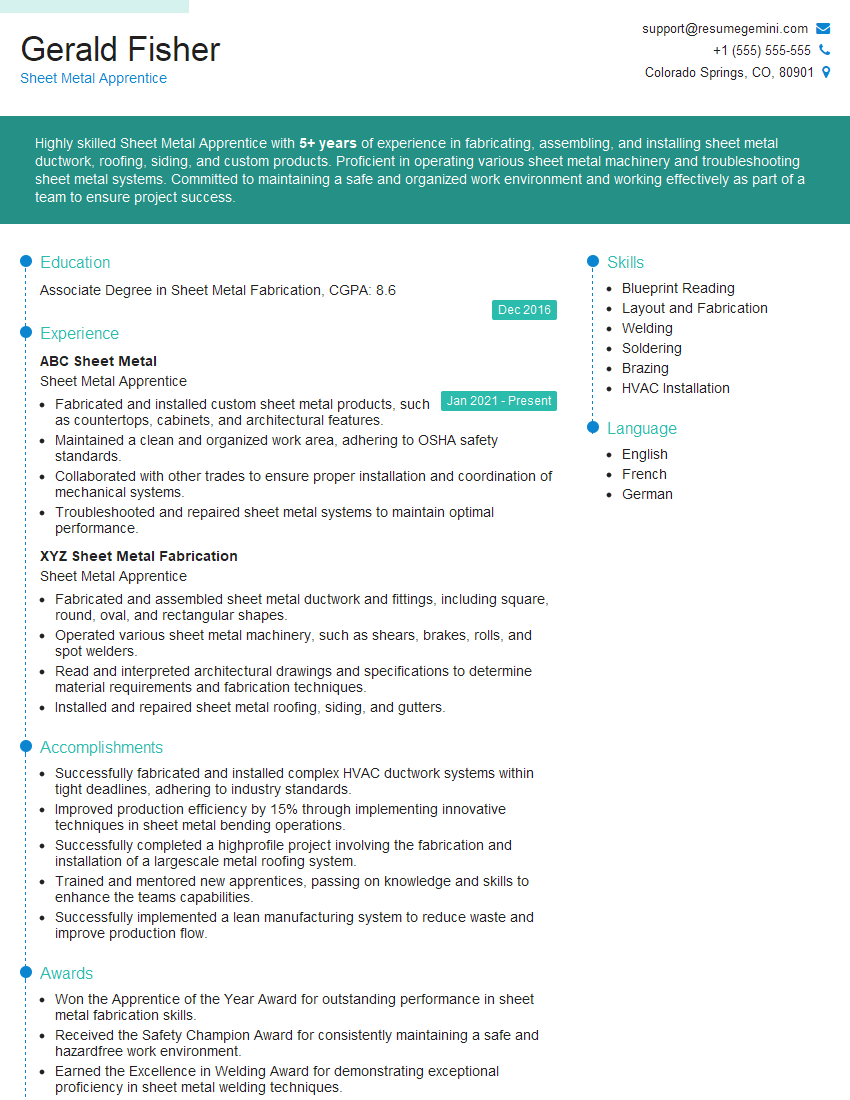
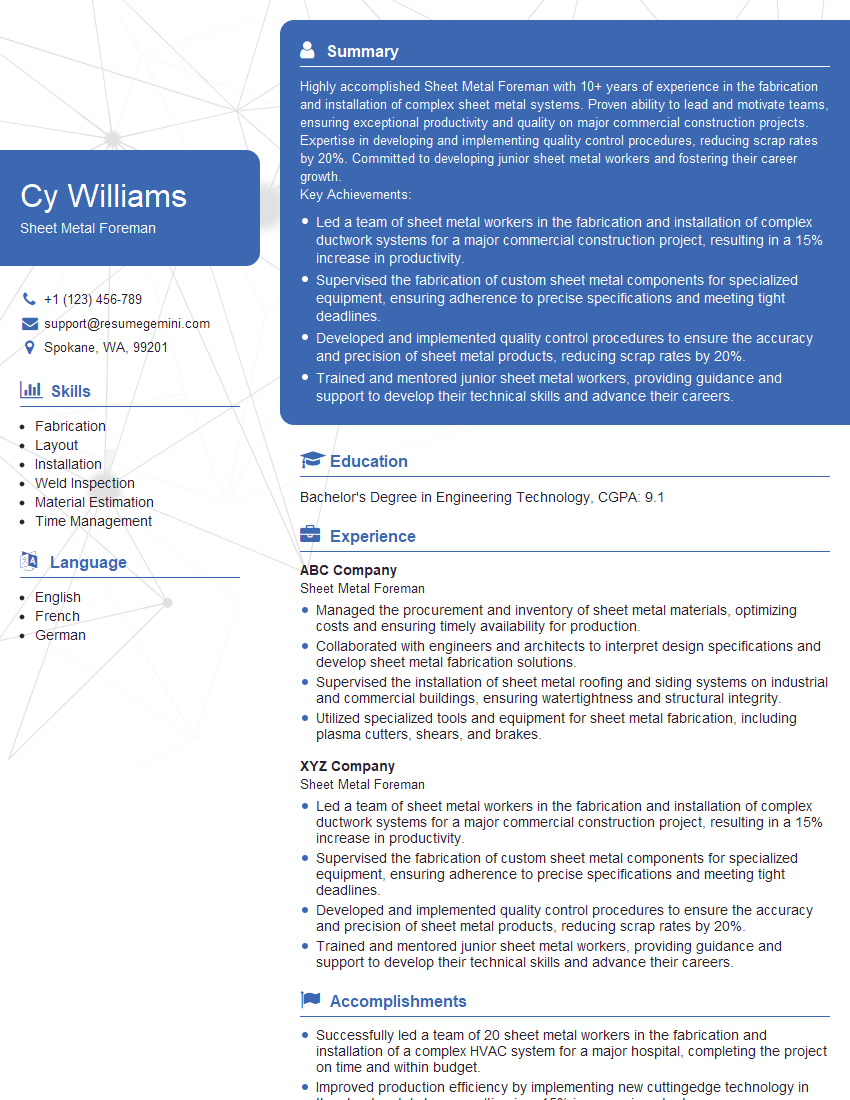
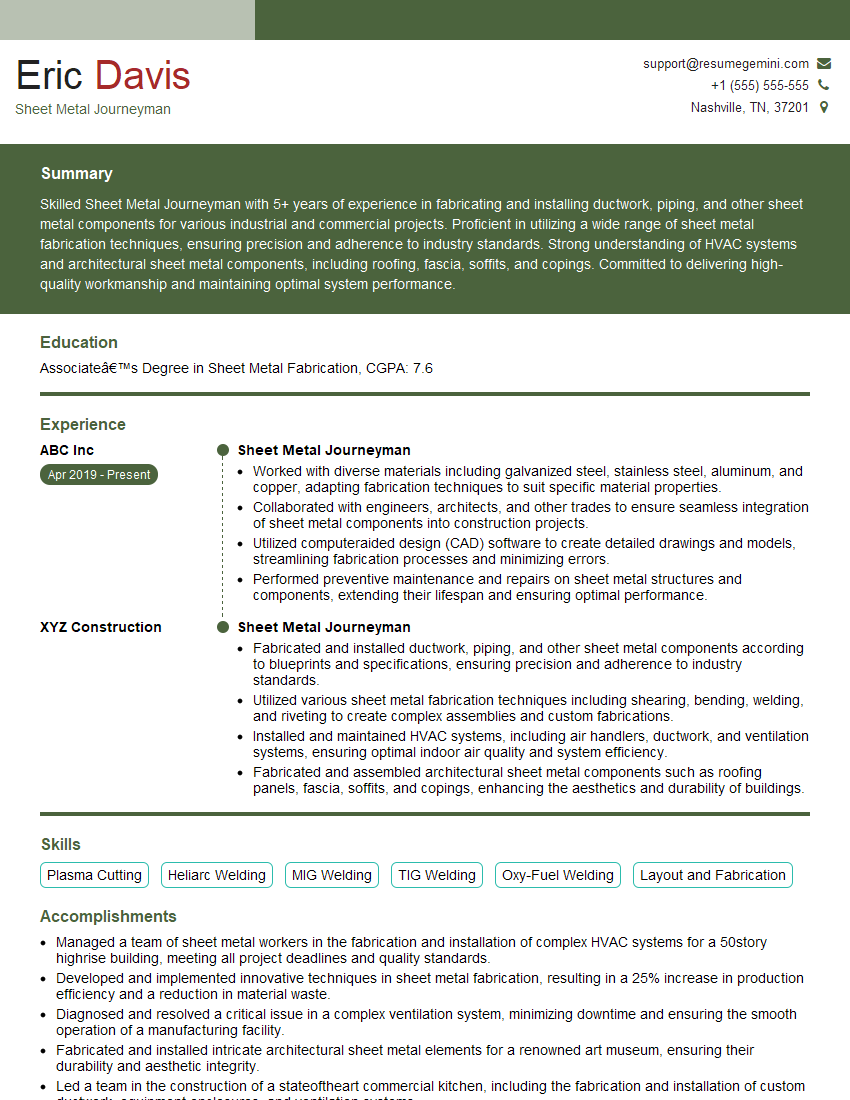
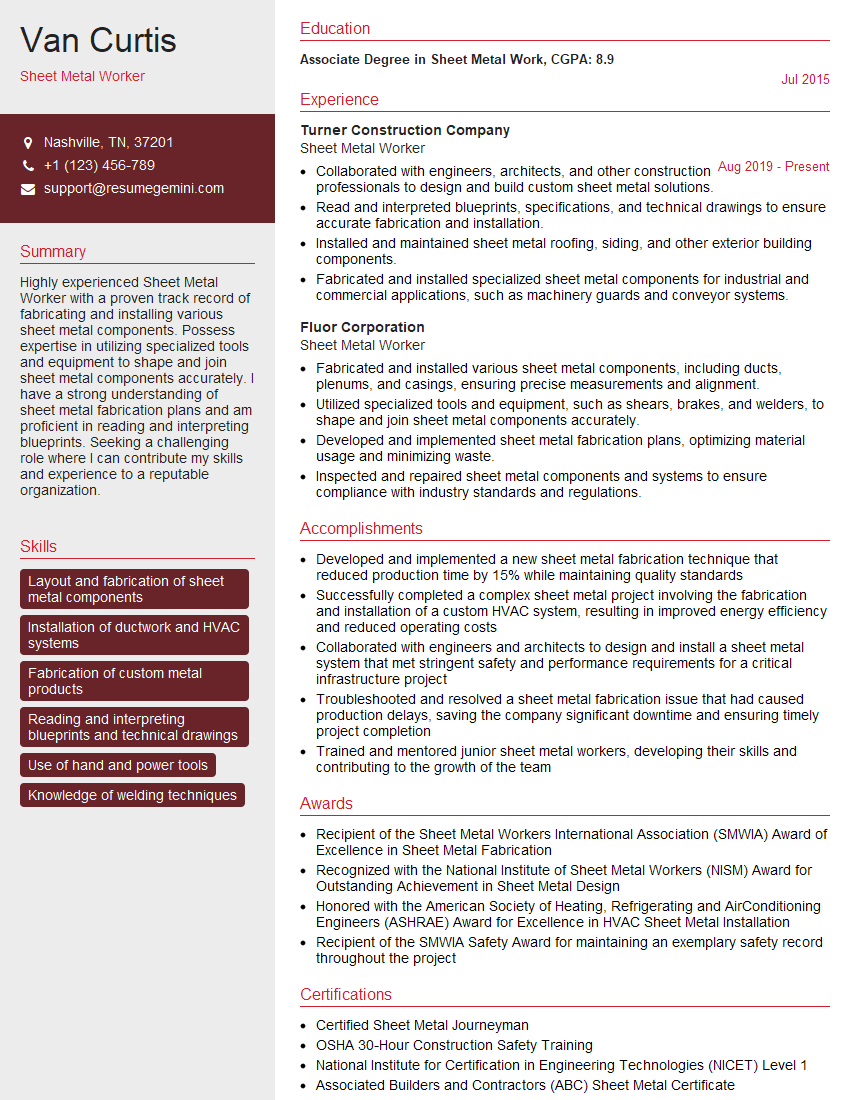
Mastering Air Conditioning Duct Fabrication opens doors to a rewarding career with excellent growth potential. The demand for skilled technicians is consistently high, offering opportunities for advancement and specialization. To maximize your job prospects, crafting a strong, ATS-friendly resume is essential. ResumeGemini is a trusted resource that can help you build a professional and impactful resume, showcasing your skills and experience effectively. Examples of resumes tailored to the Air Conditioning Duct Fabrication field are available to help guide your resume creation process. Invest time in building a compelling resume; it’s your first impression with potential employers.

Explore more articles
Users Rating of Our Blogs
Share Your Experience
We value your feedback! Please rate our content and share your thoughts (optional).
What Readers Say About Our Blog
To the interviewgemini.com Webmaster.
Very helpful and content specific questions to help prepare me for my interview!
Thank you
To the interviewgemini.com Webmaster.
This was kind of a unique content I found around the specialized skills. Very helpful questions and good detailed answers.
Very Helpful blog, thank you Interviewgemini team.