Interviews are more than just a Q&A session—they’re a chance to prove your worth. This blog dives into essential Dermatitis and Eczema Diagnosis and Treatment interview questions and expert tips to help you align your answers with what hiring managers are looking for. Start preparing to shine!
Questions Asked in Dermatitis and Eczema Diagnosis and Treatment Interview
Q 1. Explain the different types of dermatitis and their clinical presentations.
Dermatitis is an umbrella term encompassing various inflammatory skin conditions. The key differentiator lies in the cause and clinical presentation. Let’s explore some common types:
- Atopic Dermatitis (Eczema): This chronic inflammatory condition is characterized by intensely itchy, inflamed skin. It often presents with redness, scaling, and lichenification (thickening of the skin) in characteristic patterns, such as flexural creases (inside elbows and knees) in adults. In infants, it’s often seen on the face and scalp. It has a strong genetic component and is associated with other allergic conditions like asthma and hay fever.
- Contact Dermatitis: This is an inflammatory reaction triggered by direct skin contact with an allergen (allergic contact dermatitis) or irritant (irritant contact dermatitis). Allergic contact dermatitis shows a delayed hypersensitivity reaction, often manifesting as intensely itchy, erythematous (red) and vesicular (blistering) rash in the area of contact. Irritant contact dermatitis presents with inflammation and irritation in the exposed area, often appearing dry, cracked and painful. A common example is a rash from wearing nickel jewelry (allergic) or from harsh cleaning solutions (irritant).
- Seborrheic Dermatitis: This condition affects areas rich in sebaceous glands, like the scalp, face, and chest. It’s characterized by yellowish, greasy scales and redness. It’s often associated with dandruff and can be more prevalent in infants (cradle cap) and adults with underlying medical conditions.
- Nummular Eczema: This type presents as coin-shaped patches of inflamed, dry, and scaly skin. It is often chronic and can be itchy and painful. It is common in adults.
The clinical presentation can vary significantly depending on the type of dermatitis, the severity of the inflammation, and the individual’s response. Proper diagnosis requires a thorough history and physical examination.
Q 2. Describe the diagnostic approach for atopic dermatitis in an adult patient.
Diagnosing atopic dermatitis in adults relies heavily on a combination of clinical findings and the patient’s history. There aren’t specific blood tests or imaging studies to confirm the diagnosis.
- Detailed History: We delve into the patient’s personal and family history of atopic diseases (asthma, hay fever, eczema), the age of onset, and the distribution and characteristics of the rash. The characteristic itch is crucial.
- Physical Examination: A careful examination of the skin focuses on the location, morphology (appearance), and distribution of the lesions. We look for the classic features: eczema involves intense itching, dry, scaly skin, redness and often lichenification (thickening of the skin) particularly in flexural areas.
- Exclusion of Other Conditions: It’s vital to rule out other skin conditions that mimic atopic dermatitis, such as psoriasis, contact dermatitis, and fungal infections. This may involve patch testing for allergic contact dermatitis or scraping for fungal elements.
- SCORAD Scoring (optional): The SCORAD index is a validated scoring system that helps assess the severity of atopic dermatitis based on the extent and intensity of the rash and the level of itching. This can help guide treatment decisions and monitor response to therapy.
In summary, diagnosing atopic dermatitis relies on a thorough clinical evaluation. While there is no single definitive test, the combination of history, physical examination, and exclusion of other possibilities allows for confident diagnosis.
Q 3. What are the key features differentiating atopic dermatitis from psoriasis?
Atopic dermatitis and psoriasis are both common inflammatory skin conditions, but they differ significantly in their presentation and underlying mechanisms. Differentiating between them is crucial for appropriate management.
- Location: Atopic dermatitis typically involves flexural areas (inside elbows, knees, neck), while psoriasis often affects the extensor surfaces (elbows, knees, scalp).
- Appearance: Atopic dermatitis lesions are often erythematous (red), weepy (exuding fluid), and scaly, with a significant itch. Psoriasis lesions are typically well-demarcated, salmon-pink plaques covered with silvery-white scales. The itch is often less prominent in psoriasis than in atopic dermatitis.
- Distribution: Atopic dermatitis may show a more widespread distribution, while psoriasis can be localized to specific areas.
- Koebner Phenomenon: Psoriasis displays the Koebner phenomenon, where new lesions form at sites of trauma. This is not usually seen in atopic dermatitis.
- Auspitz Sign: Scraping a psoriatic scale reveals pinpoint bleeding (Auspitz sign), which is not typical of atopic dermatitis.
In some cases, differentiating between these conditions can be challenging. A thorough history, physical examination, and possibly a skin biopsy can aid in the diagnosis.
Q 4. Discuss the management strategies for acute and chronic atopic dermatitis.
Managing atopic dermatitis requires a multifaceted approach tailored to the severity and chronicity of the condition. Treatment differs significantly between acute flares and chronic maintenance.
- Acute Atopic Dermatitis Management: Focuses on rapidly controlling inflammation and itching. This often includes high-potency topical corticosteroids (short courses), wet wraps, and antihistamines for itching. Emollients are crucial to maintain skin hydration.
- Chronic Atopic Dermatitis Management: Aims to minimize flares, maintain skin barrier function, and improve quality of life. This typically involves regular use of emollients, intermittent use of topical corticosteroids (lower potency), and possibly other topical therapies like calcineurin inhibitors (e.g., tacrolimus, pimecrolimus) or biologics (e.g., dupilumab) for severe cases. Phototherapy (UVB light) can also be effective.
Patient education is essential. This involves understanding triggers, proper skincare practices (frequent bathing with mild cleansers, avoiding harsh soaps and irritants), and when to contact their healthcare provider. Lifestyle modifications, including stress management and appropriate clothing choices, can also be beneficial.
Q 5. What topical corticosteroids are commonly used in eczema treatment and how do they differ?
Topical corticosteroids are the mainstay of eczema treatment, but their potency varies significantly. The choice depends on the severity, location, and extent of the inflammation. They reduce inflammation by suppressing the immune response in the skin.
- Low-potency corticosteroids (hydrocortisone) are suitable for mild inflammation and large surface areas. They are generally well-tolerated but might not be effective enough for severe flares.
- Medium-potency corticosteroids (fluocinolone acetonide, triamcinolone acetonide) are effective for moderate inflammation and are commonly used for chronic management.
- High-potency corticosteroids (clobetasol propionate, halobetasol propionate) are reserved for severe flares, localized areas, and short courses to avoid side effects like skin thinning (atrophy) and striae (stretch marks).
- Super-high-potency corticosteroids (betamethasone dipropionate) are used only in exceptional circumstances and under strict medical supervision because they have a significant risk of side effects.
Important Note: Prolonged use of potent topical corticosteroids should be avoided. Always follow your dermatologist’s instructions on application frequency and duration.
Q 6. Explain the role of immunomodulators in atopic dermatitis management.
Immunomodulators play a crucial role in managing moderate to severe atopic dermatitis, especially when topical corticosteroids alone are inadequate. They work by modulating the immune response involved in the inflammation.
- Topical Calcineurin Inhibitors (TCIs): Tacrolimus and pimecrolimus are non-steroidal immunomodulators that suppress the production of inflammatory cytokines. They are effective in reducing inflammation and itching but can have potential side effects, including skin burning and stinging. They are not suitable for all patients.
- Biologic Therapies: These are newer targeted therapies that specifically inhibit key components of the immune system implicated in atopic dermatitis. Examples include dupilumab, which blocks the IL-4 and IL-13 pathways, and other more recently developed biologics. These are usually reserved for severe cases that do not respond to other therapies. They are administered by injection or infusion.
The choice of immunomodulator depends on the severity of the disease, patient factors, and potential side effects. They are typically prescribed and monitored by dermatologists or allergists.
Q 7. Describe the role of allergen avoidance in managing atopic dermatitis.
Allergen avoidance is a crucial component of atopic dermatitis management, especially in patients with identified allergens. However, complete avoidance is often challenging and may not always be feasible.
- Identify Allergens: Allergy testing (skin prick test or blood test) can identify specific allergens (e.g., pollen, dust mites, pet dander, food allergens) that trigger flares.
- Environmental Control: Measures include using dust mite-proof covers for mattresses and pillows, regularly washing bedding in hot water, and keeping pets out of bedrooms. Regular vacuuming with HEPA filters can reduce airborne allergens.
- Dietary Modifications: For patients with food allergies, eliminating the offending allergen is crucial. This needs to be done in collaboration with a nutritionist or allergist.
- Clothing and Cosmetics: Wearing loose-fitting, soft clothing and avoiding harsh soaps, detergents, and fragrances can minimize skin irritation.
While allergen avoidance may not completely eliminate atopic dermatitis, it can significantly reduce the frequency and severity of flares, improving the patient’s quality of life. The effectiveness of allergen avoidance varies from patient to patient.
Q 8. Discuss the potential complications of chronic atopic dermatitis.
Chronic atopic dermatitis, if left unmanaged, can lead to a range of complications impacting a patient’s physical and mental well-being. Imagine the skin as a protective barrier; when it’s constantly inflamed and compromised, it’s susceptible to various issues.
- Skin Infections: The compromised skin barrier is more vulnerable to bacterial (like Staphylococcus aureus), viral (herpes simplex), and fungal (Candida) infections, leading to secondary infections that require specific treatment.
- Sleep Disturbances: The intense itching associated with eczema often disrupts sleep, leading to fatigue and impacting daily life. This is especially true in infants and young children.
- Psychological Impact: Chronic eczema can affect self-esteem and body image, particularly in adolescents and adults. It can lead to anxiety, depression, and social isolation due to the visible nature of the condition and the constant itching.
- Long-term Skin Damage: Severe, long-standing eczema can result in skin thickening (lichenification), hyperpigmentation (darkening of the skin), and hypo-pigmentation (lightening of the skin), leaving lasting marks on the skin.
- Asthma and Allergic Rhinitis: Atopic dermatitis often coexists with other atopic conditions like asthma and allergic rhinitis, exacerbating symptoms and requiring a holistic approach to management.
Effective management of chronic atopic dermatitis aims to minimize these complications by controlling inflammation, preventing infections, and addressing the psychological impact through appropriate treatment strategies and patient education.
Q 9. How do you assess the severity of atopic dermatitis?
Assessing atopic dermatitis severity involves considering multiple factors, not just the extent of the rash. Think of it like a multifaceted assessment, not just a visual one. We use tools like the SCORAD (Scoring Atopic Dermatitis) index, which combines clinical findings and patient-reported symptoms.
Key factors include:
- Extent of involvement: How much of the body surface area is affected? We might use body surface area (BSA) charts to quantify this.
- Erythema (redness): How intense is the redness?
- Excoriation (scratching): Is there evidence of significant scratching leading to broken skin?
- Lichenification (thickening): Has the skin thickened due to chronic scratching?
- Vesiculation (blisters): Are there any blisters present?
- Patient’s subjective experience: This is crucial! How much itching and discomfort does the patient experience? How is it affecting their daily activities, sleep, and quality of life?
By integrating these factors, we can create a comprehensive picture of the disease severity, guiding treatment decisions from mild topical therapies to more intensive approaches like systemic medications or phototherapy.
Q 10. What are the indications for referral to a specialist for atopic dermatitis?
Referral to a specialist, like a dermatologist or allergist, is indicated for atopic dermatitis when simpler measures fail or when complications arise. Think of it like this: if the primary care physician can’t manage the condition effectively, it’s time to consult a specialist.
- Severe or recalcitrant disease: If topical treatments aren’t providing adequate control despite diligent use, a specialist can consider more potent therapies like systemic medications, phototherapy, or biologic agents.
- Secondary skin infections: If a bacterial, viral, or fungal infection develops, a dermatologist can prescribe appropriate antibiotics, antivirals, or antifungals.
- Suspected contact dermatitis: If there’s a suspicion that a specific allergen or irritant is triggering the eczema, patch testing performed by an allergist can help identify the culprit.
- Complications: When complications arise, such as significant sleep disruption, psychological distress, or significant skin damage, referral is warranted for additional support and management strategies.
- Response to treatment failure: If the patient is not responding as expected to treatments, referral is necessary to re-evaluate the diagnosis and adjust the treatment strategy.
Early referral can often prevent chronic complications and improve the patient’s quality of life.
Q 11. Explain the use of phototherapy in the treatment of eczema.
Phototherapy uses ultraviolet (UV) light to treat eczema. Imagine it as a controlled dose of sunlight, but specifically targeting the inflammation. It’s a valuable tool for moderate-to-severe eczema that doesn’t respond well to topical treatments alone.
There are two main types:
- Narrowband UVB (NB-UVB): This is the most commonly used type, delivering a specific wavelength of UV light that’s effective in reducing inflammation. It’s generally well-tolerated but requires regular sessions over several weeks.
- UVA1 phototherapy: This uses longer wavelengths of UV light, often in conjunction with a photosensitizing medication (psoralen). This combined approach (PUVA) is typically reserved for more severe cases.
Before starting phototherapy, a thorough assessment is crucial to determine suitability and manage potential side effects like sunburn or increased risk of skin cancer. Careful monitoring of treatment response and potential adverse effects is essential throughout the course of therapy.
Q 12. Describe the process for diagnosing contact dermatitis.
Diagnosing contact dermatitis relies heavily on identifying the causative agent. It’s like detective work, pinpointing the specific substance triggering the allergic reaction or irritation.
The process typically involves:
- Detailed history: A thorough history, including details about recent exposures to new products, plants, materials, or environments, is crucial. This might uncover a new detergent, jewelry, or plant exposure as the possible culprit.
- Physical examination: Examining the rash’s location and pattern often provides clues. Contact dermatitis usually appears in areas directly contacting the allergen or irritant, with a distinct border in most cases.
- Patch testing: This is the gold standard for diagnosing allergic contact dermatitis. Small amounts of suspected allergens are applied to the skin under occlusive patches for 48 hours. The reaction is then assessed after patch removal. A positive reaction indicates an allergy to the specific substance.
- Elimination of potential triggers: Once a potential culprit is identified, removal or avoidance of that substance is paramount.
Effective diagnosis allows for targeted treatment and avoidance measures, preventing future flare-ups.
Q 13. How would you manage a patient with severe, recalcitrant atopic dermatitis?
Managing severe, recalcitrant atopic dermatitis requires a multi-pronged approach. Imagine it like a carefully orchestrated symphony, involving different instruments playing together in harmony. It’s not a one-size-fits-all approach.
Strategies include:
- High-potency topical corticosteroids: These are used judiciously under medical supervision to control severe inflammation. They’re not for long-term use but rather to bring the flare-up under control.
- Calcineurin inhibitors: Topical medications like tacrolimus and pimecrolimus offer an alternative for long-term maintenance of less inflamed areas, reducing reliance on corticosteroids.
- Systemic therapy: In severe, unresponsive cases, systemic medications such as oral corticosteroids (short courses), cyclosporine, azathioprine, or biologics (e.g., dupilumab) may be considered. These are often used under the supervision of a specialist.
- Phototherapy: NB-UVB or PUVA therapy can significantly reduce inflammation.
- Wet wrap therapy: This involves applying topical medication and wrapping the affected area in wet bandages to enhance penetration and hydration.
- Supportive care: This addresses quality of life impacts, which include emollients for skin hydration, managing sleep disturbances, addressing psychological distress and social impact through counseling, or referral to a support group.
Close monitoring, adjusting treatment based on response and tolerability, and a collaborative partnership with the patient are essential for effective management.
Q 14. What are the common triggers for eczema flare-ups?
Eczema flare-ups are often triggered by a complex interplay of internal and external factors. Think of it as a delicate balance that can easily be disrupted.
Common triggers include:
- Allergens: Substances that trigger an allergic reaction, such as pollen, pet dander, dust mites, or certain foods.
- Irritants: Substances that directly irritate the skin, like harsh soaps, detergents, perfumes, or certain fabrics (e.g., wool).
- Infections: Skin infections, especially with Staphylococcus aureus, can worsen eczema.
- Stress: Emotional stress can trigger or exacerbate eczema.
- Climate changes: Extreme temperatures, humidity, or dryness can disrupt the skin barrier.
- Sweat: Excessive sweating can also irritate the skin.
- Certain foods: Although less commonly recognized as a major trigger in older children and adults, certain foods can trigger flare-ups in some individuals, with eggs, milk, peanuts and soy being the most commonly studied.
Identifying and avoiding these triggers is crucial in preventing or minimizing flare-ups. Keeping a diary to track triggers and their association with eczema flares can be exceptionally helpful.
Q 15. Explain the difference between irritant and allergic contact dermatitis.
Irritant contact dermatitis and allergic contact dermatitis are both types of eczema, but they differ significantly in their cause and mechanism. Irritant contact dermatitis is caused by direct damage to the skin from a substance, like strong soaps, detergents, or solvents. Think of it like a burn – the skin is irritated because it’s been physically attacked. The severity depends on the irritant’s potency and the length of exposure. For example, repeatedly washing hands with harsh soap can cause redness, dryness, and cracking. Allergic contact dermatitis, on the other hand, is an immune response triggered by a specific substance acting as an allergen. This is akin to a more targeted allergic reaction. Common allergens include nickel (in jewelry), poison ivy, fragrances, and certain preservatives in cosmetics. Exposure first sensitizes the immune system, and subsequent contact leads to an allergic reaction, typically delayed by a few days, with symptoms like itching, redness, blistering, and intense inflammation.
The key difference lies in the mechanism: irritation is a direct physical injury, while allergy is an immune-mediated reaction. Diagnosis involves careful history-taking identifying the offending agent and recognizing the characteristic rash. Patch testing is crucial for confirming allergic contact dermatitis, allowing us to pinpoint specific allergens.
Career Expert Tips:
- Ace those interviews! Prepare effectively by reviewing the Top 50 Most Common Interview Questions on ResumeGemini.
- Navigate your job search with confidence! Explore a wide range of Career Tips on ResumeGemini. Learn about common challenges and recommendations to overcome them.
- Craft the perfect resume! Master the Art of Resume Writing with ResumeGemini’s guide. Showcase your unique qualifications and achievements effectively.
- Don’t miss out on holiday savings! Build your dream resume with ResumeGemini’s ATS optimized templates.
Q 16. Discuss the management of eczema in infants and children.
Managing eczema in infants and children requires a gentle, multi-pronged approach focused on minimizing inflammation and protecting the delicate skin barrier. Emollients, such as fragrance-free creams and ointments, are cornerstone therapy, used liberally and frequently to hydrate the skin. We often recommend applying them after every bath to trap moisture. Mild topical corticosteroids, applied sparingly and for short durations, can effectively control flare-ups. We usually opt for low-potency corticosteroids for young children to minimize potential side effects. It’s essential to educate parents about proper application techniques and the importance of avoiding over-use. Wet wraps, where damp bandages are applied over emollient, can enhance treatment in severe cases, promoting hydration and reducing inflammation. We also emphasize identifying and avoiding triggers, which may include certain clothing fabrics, environmental allergens, and irritants like harsh soaps.
For infants, frequent bathing should be avoided, and lukewarm water is preferred. Long baths can strip the skin of its natural oils, worsening dryness. We always discuss the importance of careful nail trimming to prevent scratching, which can lead to secondary infections. In severe cases, systemic therapies like oral corticosteroids might be used under strict medical supervision, but always considering the side effects in a growing child.
Q 17. What are the common side effects of topical corticosteroids?
Topical corticosteroids are highly effective in treating eczema, but they aren’t without potential side effects, especially with prolonged or high-potency use. Common side effects include skin thinning (atrophy), striae (stretch marks), telangiectasia (visible blood vessels), and purpura (purple discoloration). These are most likely to occur with high-potency corticosteroids used on sensitive areas like the face or over extended periods. Other potential side effects include skin burning or itching at the application site, and in rare instances, systemic absorption with potential impact on other body systems. Therefore, careful monitoring is crucial. We always educate patients about proper application techniques and the importance of using the lowest effective potency for the shortest duration. We emphasize using short courses of treatment, followed by periods of emollient-only therapy to allow the skin to recover. We also monitor for any signs of skin thinning or other adverse reactions. For children, we favor low-potency corticosteroids and always use the least amount necessary for effective control.
Q 18. How do you counsel patients on self-management of atopic dermatitis?
Counseling patients on self-management is pivotal in successful atopic dermatitis management. The cornerstone is educating the patient about their condition – how it affects the skin barrier, and what triggers exacerbate their symptoms. This builds confidence and responsibility. We then work together to create a personalized action plan incorporating several key aspects:
- Skincare routine: Regularly applying emollients to hydrate the skin, choosing gentle, fragrance-free cleansers, and avoiding hot water. We teach patients about proper application techniques and to keep nails trimmed short.
- Trigger identification and avoidance: We conduct a thorough assessment of potential environmental triggers, such as allergens (pollens, pet dander), irritants (soaps, detergents), and stress. We guide patients on keeping a diary to identify personal triggers.
- Medication management: We explain the proper use of topical corticosteroids, emphasizing their role and potential side effects. Patients are educated about the importance of using them only as directed, alternating with emollient use to prevent long-term consequences. We explore the use of other topical therapies, such as calcineurin inhibitors.
- Lifestyle modifications: This might include managing stress, exercising regularly, and adopting a healthy diet, and prioritizing sleep hygiene. We advise patients about maintaining a comfortable bedroom environment.
- Regular follow-up: Scheduled appointments allow ongoing monitoring of symptoms, adjustments to treatment plans, and addressing any concerns. We encourage patients to contact us anytime they have questions or concerns.
By empowering patients with knowledge and a personalized action plan, we equip them to effectively manage their atopic dermatitis and improve their quality of life.
Q 19. What are the limitations of current treatment options for eczema?
While current treatment options for eczema have significantly improved, limitations still exist. One major limitation is the lack of a cure. Treatment focuses on managing symptoms and preventing flare-ups. Many patients experience variable response to treatment, needing adjustments to their regimens. Even with effective therapies, some individuals experience persistent itch and inflammation, impacting their quality of life. Some treatments, such as topical corticosteroids, have potential long-term side effects, especially with prolonged use. The cost of some medications, particularly biologics, can also be a barrier to access for some patients. Moreover, some individuals are refractory to standard therapies, requiring exploration of more novel therapeutic options. Finally, comprehensive management requires a multidisciplinary approach including dermatologists, allergists, and even psychologists, making it challenging for some patients to access the comprehensive care needed.
Q 20. Discuss the use of biologic therapies in severe atopic dermatitis.
Biologic therapies represent a significant advancement in severe atopic dermatitis management, offering targeted treatment for individuals who haven’t responded adequately to other therapies. These medications, such as dupilumab, lebrikizumab, and tralokinumab, target specific components of the inflammatory pathway, reducing inflammation and improving symptoms like itch, dryness, and rash. They are typically reserved for moderate-to-severe atopic dermatitis patients who have failed to achieve adequate control with topical therapies and systemic treatments. They are administered via subcutaneous injections, typically every two to four weeks. While highly effective for many patients, they aren’t without potential side effects, including injection site reactions, conjunctivitis, and an increased risk of herpes zoster. Careful monitoring is essential, and patients need to be well-informed about potential risks and benefits before initiating therapy.
The decision to use biologics is made on a case-by-case basis, considering factors such as disease severity, patient preference, and other medical conditions. They represent a valuable addition to our treatment arsenal but are usually part of a comprehensive approach, which may also include topical therapies and other supportive measures.
Q 21. Explain the role of skin barrier repair in eczema management.
The skin barrier plays a crucial role in eczema pathogenesis and management. In atopic dermatitis, the skin barrier is compromised, leading to increased transepidermal water loss (TEWL), making the skin dry, irritated, and susceptible to allergens and irritants. This impaired barrier function is a central feature of eczema. Therefore, restoring and maintaining skin barrier integrity is a critical aspect of eczema management. Emollients are the cornerstone of this strategy, working by hydrating the skin and replenishing lipids, thus strengthening the barrier. Regular application of emollients can significantly reduce TEWL, improve skin hydration, and decrease inflammation. We often recommend using emollients liberally and frequently, including after every bath to trap moisture. Besides emollients, certain topical treatments may aid in barrier repair, and avoiding harsh soaps and frequent bathing further protects the skin barrier. A healthy skin barrier is essential in reducing eczema symptoms and preventing flare-ups.
Q 22. How would you differentiate between eczema and other skin conditions like seborrheic dermatitis?
Differentiating between eczema (atopic dermatitis) and other skin conditions like seborrheic dermatitis requires careful clinical observation. Both present with inflammation, but their location, appearance, and response to treatment differ significantly.
- Location: Atopic dermatitis often affects flexural surfaces (inside of elbows and knees) and the face in infants, while seborrheic dermatitis commonly involves the scalp (cradle cap in infants), eyebrows, and nasolabial folds.
- Appearance: Atopic dermatitis shows intensely itchy, erythematous (red) patches with weeping and crusting, often accompanied by lichenification (thickening of the skin) with chronic scratching. Seborrheic dermatitis tends to present with yellowish, greasy scales and plaques, often less intensely itchy than atopic dermatitis.
- Response to Treatment: Emollients are the cornerstone of atopic dermatitis management, significantly improving symptoms. While emollients can be helpful in seborrheic dermatitis, they alone are often insufficient. Antifungal treatments are often more effective for seborrheic dermatitis, targeting the yeast Malassezia often involved in the condition.
For example, an infant with scaly, yellowish patches on their scalp and eyebrows is more likely to have seborrheic dermatitis than an infant with intensely itchy, red, weeping patches on their cheeks and elbow creases, which would be suggestive of atopic dermatitis.
Q 23. Describe the use of emollients in atopic dermatitis management.
Emollients are crucial in atopic dermatitis management. They work by replenishing the skin’s moisture barrier, reducing dryness, and alleviating itching. This is vital because a compromised skin barrier is a hallmark of atopic dermatitis. Think of emollients as ‘skin moisturizers on steroids.’
- Mechanism of Action: Emollients create a protective layer on the skin, preventing water loss and reducing inflammation. They also improve skin texture and suppleness.
- Types: Various emollients are available, including creams, ointments, and lotions. Ointments are generally more effective in drier skin than creams or lotions.
- Application: Emollients should be applied liberally and frequently, even when the skin appears clear, to maintain the skin barrier’s integrity. A daily regimen is often recommended.
For instance, a patient with atopic dermatitis might be advised to use a thick ointment like petroleum jelly several times daily, especially after showering, to prevent dryness and itching.
Q 24. What are the key considerations when prescribing topical medications for eczema?
Prescribing topical medications for eczema requires careful consideration of several factors. The choice of medication depends on the severity of the eczema, the age of the patient, and the presence of any secondary infections.
- Severity: Mild eczema may only require emollients. Moderate to severe eczema may necessitate topical corticosteroids of varying potencies, with stronger ones reserved for more severe flares.
- Age: Infants and young children are more sensitive to topical corticosteroids. Therefore, weaker, less potent corticosteroids and shorter courses of treatment are preferred in this population.
- Secondary Infection: If a secondary bacterial infection (e.g., impetigo) is present, antibiotic treatment is essential before initiating or continuing corticosteroid therapy. Fungal infections necessitate antifungal therapy.
- Potential Side Effects: Topical corticosteroids, while effective, can cause skin thinning (atrophy), striae (stretch marks), and telangiectasia (small dilated blood vessels) with prolonged use or high potency.
For example, a young child with mild eczema might receive a low-potency corticosteroid cream for a short period, while an adult with severe eczema might require a higher potency corticosteroid ointment for a longer duration, but under strict medical supervision to minimize the risk of side effects.
Q 25. Explain the role of patient education in the successful management of eczema.
Patient education is paramount in successful eczema management. Empowering patients with knowledge allows them to actively participate in their treatment and improve outcomes.
- Understanding the Disease: Patients need to understand the chronic and relapsing nature of eczema.
- Trigger Identification: Identifying and avoiding triggers such as allergens, irritants, and stressors is crucial. This might involve keeping a diary to note symptom flares.
- Proper Skin Care: Patients must learn about appropriate skin care practices, including the use of emollients, avoiding harsh soaps and perfumes, and choosing appropriate clothing.
- Medication Use: Patients need clear instructions on applying topical medications correctly and understanding potential side effects.
- Coping Mechanisms: Eczema can be emotionally challenging. Educating patients about stress management techniques and support groups can significantly impact their overall well-being.
A well-informed patient is more likely to adhere to their treatment plan, recognize early signs of flares, and seek timely medical attention, improving their overall quality of life.
Q 26. Discuss the potential impact of psychological factors on eczema severity.
Psychological factors can significantly impact eczema severity. The interplay between the mind and skin is complex and well-established. Stress, anxiety, and depression can worsen eczema symptoms through various mechanisms.
- Neuroendocrine Axis: Stress triggers the release of stress hormones like cortisol, which can indirectly influence inflammation and skin barrier function.
- Scratch-Itch Cycle: Psychological distress can exacerbate the itch-scratch cycle, leading to further skin damage and inflammation.
- Sleep Disturbances: Eczema often disrupts sleep, leading to increased stress and further inflammation, creating a vicious cycle.
For instance, a patient experiencing significant stress in their life might notice a worsening of their eczema symptoms. Addressing these underlying psychological factors, perhaps through therapy or stress-reduction techniques, could be as important as the topical treatment of their skin lesions.
Q 27. How would you assess for secondary infections in a patient with eczema?
Assessing for secondary infections in a patient with eczema involves a thorough clinical examination.
- Visual Inspection: Look for signs of infection, such as increased redness, swelling, warmth, purulent discharge (pus), crusting, and lymphadenopathy (swollen lymph nodes).
- Culture: A bacterial culture might be necessary to identify the specific organism causing the infection and guide antibiotic selection.
- Clinical Presentation: The presence of honey-colored crusts is characteristic of impetigo, while vesicles (small blisters) filled with clear fluid may suggest herpes simplex infection.
If there are signs of secondary infection, treatment should be promptly initiated with appropriate antibiotics or antifungals, potentially alongside adjustments to the eczema treatment plan.
Q 28. What are the long-term implications of untreated or poorly managed atopic dermatitis?
Untreated or poorly managed atopic dermatitis can lead to several long-term implications.
- Chronic Itching and Discomfort: Persistent itching can significantly impact quality of life, leading to sleep disturbances, anxiety, and depression.
- Skin Damage and Lichenification: Chronic scratching can cause skin thickening, hyperpigmentation, and scarring, leading to cosmetic concerns.
- Increased Risk of Infection: Damaged skin is more susceptible to bacterial, viral, and fungal infections.
- Asthma and Allergic Rhinitis: Atopic dermatitis is often associated with other atopic diseases, increasing the risk of asthma and allergic rhinitis.
- Impact on Sleep: Sleep deprivation can lead to several medical and psychological problems.
Effective management of atopic dermatitis from an early stage is crucial to mitigate these long-term consequences and improve the patient’s quality of life.
Key Topics to Learn for Dermatitis and Eczema Diagnosis and Treatment Interview
- Differential Diagnosis: Understanding the key distinctions between various types of dermatitis (atopic, contact, seborrheic, etc.) and eczema, including their clinical presentations and underlying pathophysiology.
- Patient History and Physical Examination: Mastering the art of taking a thorough patient history to identify triggers, assess disease severity, and perform a focused physical examination to differentiate between various dermatitis presentations.
- Diagnostic Testing: Knowing when and how to utilize patch testing, allergy testing, and other relevant diagnostic tools to confirm diagnoses and identify causative agents.
- Treatment Modalities: Developing a comprehensive understanding of topical corticosteroids, calcineurin inhibitors, biologics, and other systemic therapies used in managing dermatitis and eczema. This includes knowing their indications, contraindications, and potential side effects.
- Practical Application of Treatment Guidelines: Ability to apply evidence-based guidelines to create individualized treatment plans for patients with varying disease severity and comorbidities.
- Disease Management and Patient Education: Understanding the importance of patient education in managing chronic conditions like eczema and dermatitis. This includes strategies for trigger avoidance, skincare routines, and adherence to treatment plans.
- Complicated Cases and Management Strategies: Developing problem-solving skills to manage challenging cases, such as severe eczema, unresponsive dermatitis, or patients with co-morbidities.
- Current Research and Advances: Staying updated on the latest research and therapeutic advancements in the field of dermatitis and eczema diagnosis and treatment.
Next Steps
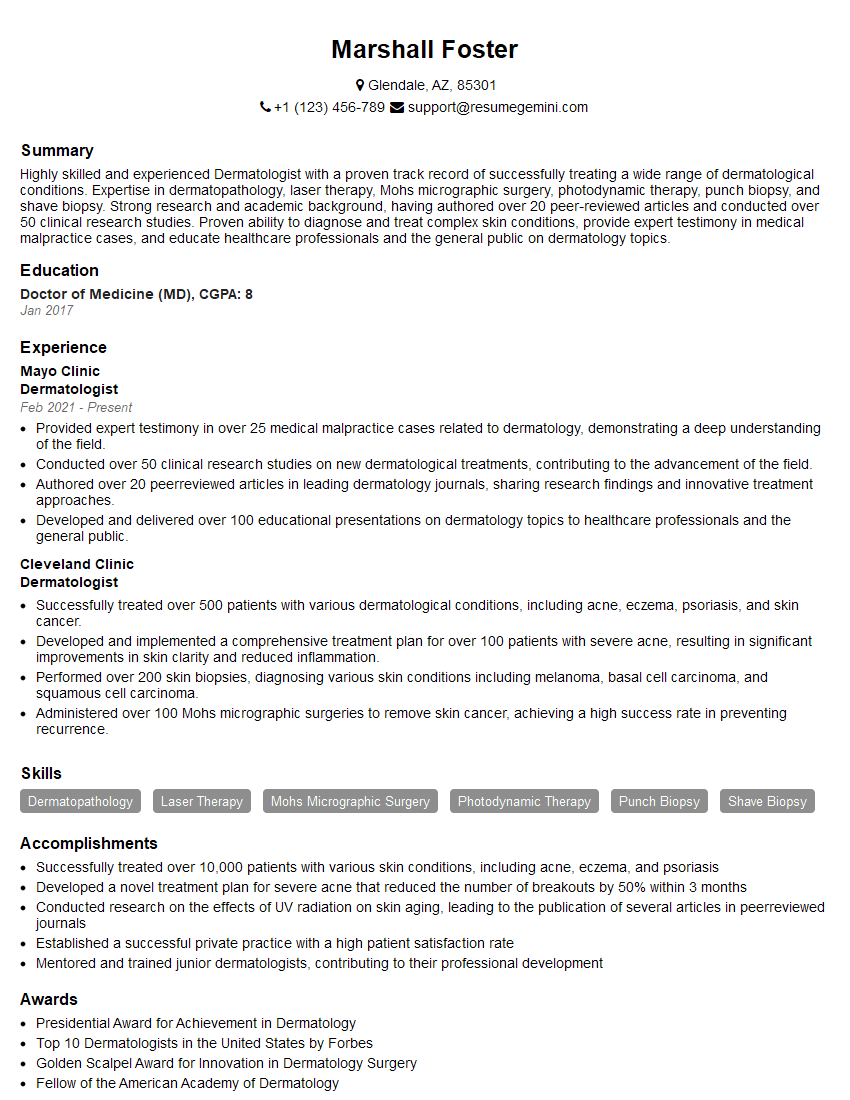
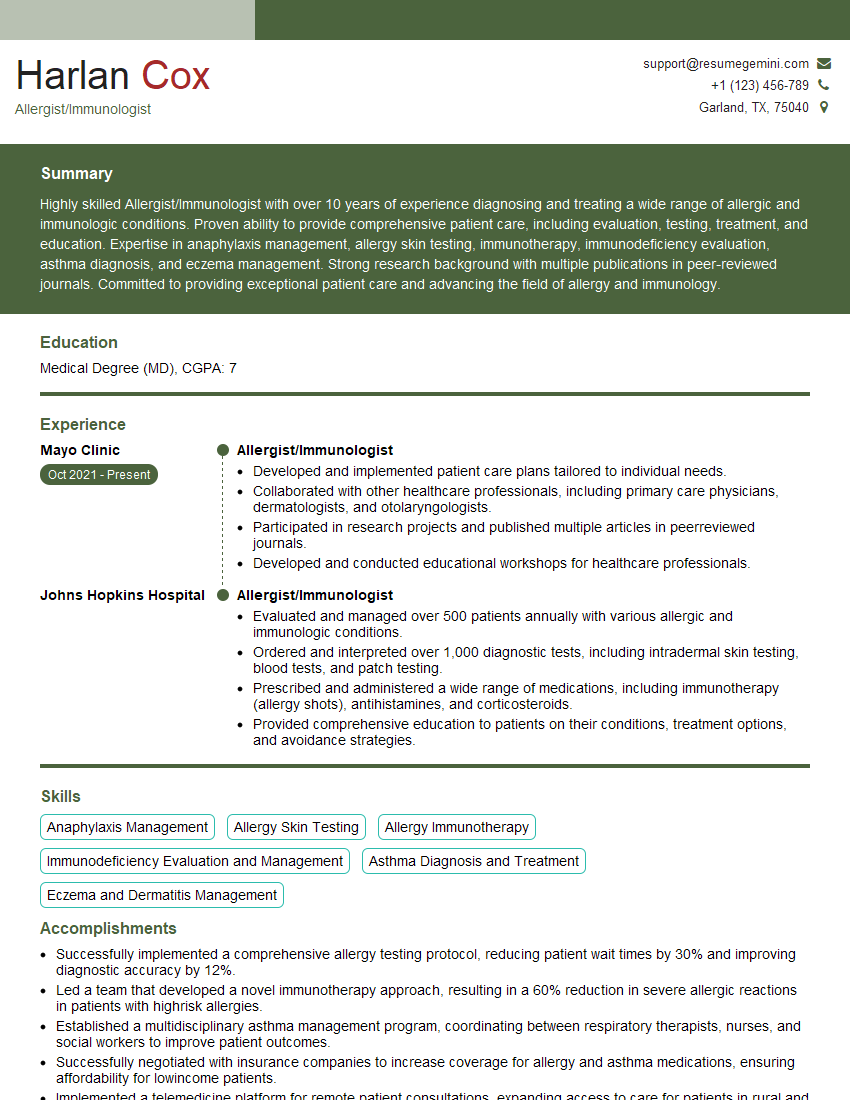
Mastering Dermatitis and Eczema Diagnosis and Treatment is crucial for career advancement in dermatology and related fields. A strong understanding of these concepts will significantly enhance your interview performance and job prospects. To maximize your chances of landing your dream role, focus on building an ATS-friendly resume that effectively showcases your skills and experience. ResumeGemini is a trusted resource to help you craft a professional and impactful resume. We offer examples of resumes tailored to Dermatitis and Eczema Diagnosis and Treatment to guide you in creating a winning application.
Explore more articles
Users Rating of Our Blogs
Share Your Experience
We value your feedback! Please rate our content and share your thoughts (optional).
What Readers Say About Our Blog
To the interviewgemini.com Webmaster.
Very helpful and content specific questions to help prepare me for my interview!
Thank you
To the interviewgemini.com Webmaster.
This was kind of a unique content I found around the specialized skills. Very helpful questions and good detailed answers.
Very Helpful blog, thank you Interviewgemini team.