Interviews are opportunities to demonstrate your expertise, and this guide is here to help you shine. Explore the essential Preventive Maintenance of Equipment interview questions that employers frequently ask, paired with strategies for crafting responses that set you apart from the competition.
Questions Asked in Preventive Maintenance of Equipment Interview
Q 1. Describe your experience with different types of preventive maintenance schedules (e.g., time-based, condition-based, predictive).
Preventive maintenance schedules are crucial for maximizing equipment lifespan and minimizing downtime. I’ve extensive experience with three primary types: time-based, condition-based, and predictive.
- Time-based maintenance: This involves performing maintenance at predetermined intervals (e.g., lubricating a machine every 100 operating hours or changing a filter every month). It’s simple to implement but can lead to unnecessary maintenance if the equipment is in good condition or insufficient maintenance if it deteriorates rapidly.
- Condition-based maintenance: This approach uses sensor data and real-time monitoring to determine when maintenance is needed. For example, vibration sensors on a motor can detect developing problems before they cause a failure. This is more efficient than time-based, reducing unnecessary interventions.
- Predictive maintenance: This is the most sophisticated method, utilizing advanced analytics and machine learning to predict when maintenance is truly required. This allows for proactive intervention, minimizing disruptions and optimizing resource allocation. I have worked extensively with predictive models utilizing data from vibration sensors, temperature sensors, and oil analysis to predict bearing failures in critical machinery.
In practice, I often find a blend of these approaches works best. For example, a time-based lubrication schedule might be combined with condition-based monitoring of vibration to ensure optimal maintenance strategy.
Q 2. How do you prioritize preventive maintenance tasks?
Prioritizing preventive maintenance tasks is critical for maximizing efficiency. My approach involves a multi-faceted strategy:
- Criticality Analysis: I assess each piece of equipment based on its criticality to overall operations. A critical piece of equipment that impacts a major production line will be prioritized over a less important piece of equipment. This involves considering the potential consequences of failure (production downtime, safety hazards, financial losses).
- Risk Assessment: I evaluate the potential risk of failure for each piece of equipment. This considers factors such as age, operating conditions, and previous maintenance history. Equipment with a higher risk of failure is prioritized.
- Cost-Benefit Analysis: I compare the cost of preventive maintenance with the potential cost of equipment failure. This helps justify the expense of preventative maintenance.
- Maintenance Backlog: I use a CMMS (more details below) to effectively manage a backlog of tasks and prioritize based on criticality and urgency. This may involve a weighted scoring system.
For example, if we have two pieces of equipment requiring maintenance – a conveyor belt crucial to our production line, and a small office printer – the conveyor belt will always take priority due to the impact on production.
Q 3. Explain your experience with Computerized Maintenance Management Systems (CMMS).
I have extensive experience with Computerized Maintenance Management Systems (CMMS). These software systems are indispensable for effective preventive maintenance. I’ve worked with various CMMS platforms including [mention specific CMMS platforms you’ve used], and am proficient in utilizing their features such as:
- Work Order Management: Scheduling, assigning, tracking, and closing work orders efficiently.
- Inventory Management: Tracking spare parts, ensuring adequate stock levels, and minimizing waste.
- Preventive Maintenance Scheduling: Creating and managing preventive maintenance schedules based on various criteria.
- Reporting and Analytics: Generating reports on maintenance costs, downtime, and equipment performance, allowing for data-driven decision making.
- Data Visualization: Using dashboards to monitor key performance indicators (KPIs) in real-time.
For instance, in a previous role, we implemented a new CMMS to streamline our maintenance process. This resulted in a 15% reduction in downtime and a 10% reduction in maintenance costs within the first year.
Q 4. What are the key performance indicators (KPIs) you use to measure the effectiveness of a preventive maintenance program?
Key Performance Indicators (KPIs) are essential for evaluating the effectiveness of any preventive maintenance program. The KPIs I routinely utilize include:
- Mean Time Between Failures (MTBF): Measures the average time between equipment failures. A higher MTBF indicates a more effective maintenance program.
- Mean Time To Repair (MTTR): Measures the average time it takes to repair a piece of equipment. A lower MTTR demonstrates efficient repair processes.
- Maintenance Costs per Unit Produced: Shows the cost of maintenance relative to production output, helping optimize maintenance spending.
- Downtime: The total time equipment is unavailable due to failure. Reduced downtime is a major goal of effective preventive maintenance.
- Overall Equipment Effectiveness (OEE): A holistic measure of equipment performance considering availability, performance, and quality.
Regularly monitoring these KPIs allows for proactive adjustments to the maintenance strategy, ensuring optimal resource allocation and minimizing disruptions.
Q 5. How do you identify and address equipment malfunctions during preventive maintenance?
During preventive maintenance, identifying and addressing malfunctions is crucial. My approach involves a systematic process:
- Visual Inspection: Thoroughly inspecting equipment for signs of wear, damage, leaks, or unusual noises. This is the first step in identifying potential issues.
- Functional Testing: Testing equipment functionality to ensure it’s operating within specified parameters. This might involve running diagnostics or performance tests.
- Data Analysis: Reviewing sensor data (vibration, temperature, pressure) to identify anomalies indicative of developing problems. Trends in the data can be early warnings.
- Troubleshooting: Using established troubleshooting procedures and diagnostic tools to pinpoint the root cause of any malfunction identified.
- Corrective Action: Implementing the necessary repairs or adjustments to restore the equipment to proper operating condition.
For example, during a routine inspection of a pump, we might notice unusual vibration. This leads to further investigation, possibly revealing a worn bearing. Replacing the bearing prevents a potential catastrophic failure.
Q 6. Describe your experience with root cause analysis techniques.
Root cause analysis (RCA) is critical for preventing future equipment failures. I’m experienced in several RCA techniques, including the ‘5 Whys’ method, Fishbone diagrams (Ishikawa diagrams), and Fault Tree Analysis (FTA).
- 5 Whys: A simple but effective technique involving repeatedly asking ‘why’ to uncover the root cause of a problem. This helps drill down beyond the immediate symptoms.
- Fishbone Diagram: A visual tool for brainstorming potential causes of a problem, categorized by different factors (materials, methods, manpower, machinery, etc.).
- Fault Tree Analysis: A more complex technique used for analyzing complex systems, identifying potential failure points and their contributing factors.
After identifying the root cause, I recommend implementing corrective actions to prevent recurrence. This might involve modifying procedures, upgrading components, or providing additional training to personnel.
Q 7. How do you ensure compliance with safety regulations during preventive maintenance?
Safety is paramount during preventive maintenance. I ensure compliance with safety regulations through a multi-layered approach:
- Lockout/Tagout (LOTO) Procedures: Strictly adhering to LOTO procedures to isolate equipment from power sources before any maintenance work commences, preventing accidental energization.
- Personal Protective Equipment (PPE): Ensuring that all personnel involved in maintenance activities wear appropriate PPE, such as safety glasses, gloves, hearing protection, and steel-toe boots.
- Safety Training: Providing regular safety training to maintenance personnel, covering topics such as hazard identification, safe work practices, and emergency procedures.
- Risk Assessments: Conducting thorough risk assessments before starting any maintenance task to identify potential hazards and implement appropriate control measures.
- Permit-to-Work Systems: Utilizing permit-to-work systems for high-risk tasks, requiring authorization and verification before commencing work.
Safety is not an option but a non-negotiable requirement, integral to everything we do. We conduct regular safety audits and toolbox talks to reinforce these procedures and foster a safety-conscious culture.
Q 8. Explain your understanding of lubrication techniques and their importance.
Lubrication is the process of applying a lubricant to reduce friction and wear between moving parts of equipment. It’s crucial for preventing premature failure and extending the lifespan of machinery. Effective lubrication techniques involve selecting the right lubricant (oil, grease, etc.) based on the equipment’s operating conditions, using the correct application method (grease gun, oil can, centralized lubrication system), and maintaining a regular lubrication schedule.
- Type of Lubricant: Choosing the right viscosity and type of lubricant is critical. Using a lubricant too thin might lead to insufficient lubrication and increased wear, while one that’s too thick could hinder movement and create unnecessary pressure.
- Application Method: Proper application ensures lubricant reaches all contact points. For example, a grease gun is ideal for hard-to-reach bearings, while a centralized system is efficient for large equipment with multiple lubrication points.
- Frequency: Lubrication schedules are determined by factors such as operating conditions (temperature, load), lubricant type, and manufacturer’s recommendations. Over-lubrication can be as detrimental as under-lubrication, leading to contamination and seal damage.
For example, in a manufacturing plant, we regularly lubricate conveyor belts using a specific grease recommended by the manufacturer. Failure to do so could result in excessive friction, leading to belt slippage, damage, and costly downtime.
Q 9. How do you manage spare parts inventory for preventive maintenance?
Managing spare parts inventory for preventive maintenance requires a strategic approach to balance cost and availability. We employ a combination of techniques, including:
- Criticality Analysis: We categorize spare parts based on their criticality to operations. High-criticality parts, which cause significant downtime if unavailable, are stocked at higher levels. Low-criticality parts are stocked at lower levels or even ordered on demand.
- Just-in-Time (JIT) Inventory: For less critical parts, we utilize JIT inventory management to minimize storage costs. Parts are ordered only when needed, reducing the risk of obsolescence.
- Minimum-Maximum Levels: We set minimum and maximum stock levels for each part. When the stock falls below the minimum level, an automatic reorder is triggered. The maximum level prevents overstocking.
- Regular Inventory Audits: Regular physical inventory checks ensure accuracy and identify any discrepancies. This prevents stock-outs or the discovery of expired parts.
- Vendor Relationships: Strong relationships with reliable vendors are crucial for timely delivery of parts.
For instance, we might maintain a large stock of critical motor bearings but order less commonly needed seals only when needed. This ensures we have critical parts available immediately while minimizing storage costs for less critical items. Using a computerized maintenance management system (CMMS) helps automate the inventory tracking and reorder process.
Q 10. What is your experience with predictive maintenance technologies (e.g., vibration analysis, infrared thermography)?
I have extensive experience with predictive maintenance technologies, particularly vibration analysis and infrared thermography. These technologies enable proactive identification of potential equipment failures before they escalate into costly downtime.
- Vibration Analysis: This involves using sensors to measure the vibrations produced by equipment. Abnormal vibration patterns can indicate issues such as imbalance, misalignment, bearing wear, or looseness. Using specialized software, we can analyze these patterns to diagnose the problem and plan for corrective maintenance.
- Infrared Thermography: This technique uses infrared cameras to detect temperature variations in equipment. Hot spots can reveal overheating components, such as faulty electrical connections, bearing problems, or insulation issues, allowing for timely intervention.
For example, during a routine inspection using infrared thermography, we detected an unusually hot motor winding. This early detection prevented a complete motor failure and a costly production halt. We then planned for a motor replacement during a scheduled maintenance window.
Q 11. Describe a time you identified a potential failure before it occurred.
During a routine inspection of a large industrial chiller, I noticed a slight increase in vibration and a subtle high-pitched squeal from one of the bearings. While the chiller was still operational, these subtle anomalies weren’t typical.
Based on my experience, I suspected an impending bearing failure. I recommended immediate replacement of the bearing, even though the chiller appeared to be functioning normally. The analysis was confirmed by vibration analysis later on. Replacing the bearing proactively prevented an unexpected, expensive and lengthy downtime during peak operation later in the week.
Q 12. How do you handle unexpected equipment downtime during a preventive maintenance schedule?
Unexpected equipment downtime during a preventive maintenance schedule requires a swift and organized response. Our approach prioritizes minimizing downtime and preventing further damage.
- Immediate Assessment: The first step is to quickly assess the situation, determine the cause of the failure, and its impact on operations.
- Prioritization: We prioritize repairs based on the equipment’s criticality and impact on production. Critical equipment requiring immediate repair takes precedence.
- Resource Allocation: We allocate the necessary resources, including personnel, spare parts, and tools, to address the problem effectively.
- Communication: Clear communication is vital. We keep stakeholders informed of the situation, progress, and estimated time to resolution.
- Root Cause Analysis: After resolving the issue, a thorough root cause analysis is conducted to prevent similar incidents in the future. This often involves reviewing maintenance records, operation logs, and potentially engaging external experts.
For example, if a critical pump fails during scheduled maintenance, we immediately mobilize our on-call team, prioritize the repair over other tasks, and work to get the pump back online as quickly as possible. The root cause analysis might reveal a need to adjust the preventive maintenance schedule for the pump or upgrade a related component.
Q 13. Explain your experience with different types of maintenance documentation.
I’m experienced with various maintenance documentation, including work orders, preventive maintenance schedules, inspection reports, repair reports, and equipment history records. These are vital for tracking maintenance activities, analyzing equipment performance, and ensuring compliance.
- Work Orders: These detail tasks to be performed during maintenance, including the required parts, tools, and estimated time.
- Preventive Maintenance Schedules: These outline the routine tasks and their frequency to keep equipment functioning optimally.
- Inspection Reports: These document the findings of equipment inspections, highlighting any defects or potential problems.
- Repair Reports: These describe the repairs performed, the parts used, and the time spent on the repair.
- Equipment History Records: These maintain a comprehensive history of each piece of equipment, including all maintenance activities, repairs, and replacements. A well-maintained equipment history record is invaluable for predicting future maintenance needs and improving overall equipment reliability.
We use a CMMS to manage and generate all this documentation, ensuring accuracy, accessibility, and consistency. This allows us to effectively track maintenance costs and identify trends that can improve maintenance strategies.
Q 14. How do you train other technicians on preventive maintenance procedures?
Training other technicians is crucial for maintaining a skilled workforce and ensuring consistency in preventive maintenance procedures. My training approach involves a combination of:
- On-the-Job Training: I work alongside technicians, guiding them through various maintenance procedures and providing real-time feedback. This hands-on approach is particularly effective for developing practical skills.
- Classroom Training: We conduct classroom sessions covering theoretical aspects of preventive maintenance, equipment operation, safety protocols, and the use of maintenance documentation.
- Formal Training Programs: We encourage technicians to participate in formal training programs offered by equipment manufacturers or industry associations to enhance their expertise.
- Mentorship Program: More experienced technicians mentor newer ones, providing guidance and support. This fosters a culture of continuous learning and knowledge sharing.
- Documentation and Manuals: We provide technicians with access to comprehensive documentation, including equipment manuals, maintenance procedures, and safety guidelines.
Regular quizzes and practical assessments ensure that technicians retain the necessary knowledge and skills. I also utilize case studies and real-world examples to enhance understanding and demonstrate the importance of proper procedures.
Q 15. What are the benefits of implementing a robust preventive maintenance program?
A robust preventive maintenance (PM) program offers significant advantages, ultimately leading to increased operational efficiency and reduced costs. Think of it like regular check-ups for your car – it’s much cheaper to catch a small problem early than to deal with a major breakdown later.
- Increased Equipment Lifespan: Regular inspections and minor repairs prevent small issues from escalating into catastrophic failures, extending the useful life of your equipment.
- Reduced Downtime: By proactively addressing potential problems, you minimize unexpected breakdowns and the costly downtime they cause. This is crucial for maintaining production schedules and meeting deadlines.
- Lower Repair Costs: Fixing small problems during PM is far less expensive than emergency repairs. A loose bolt costing $5 to tighten during a PM could translate to thousands of dollars in damages if left unattended.
- Improved Safety: PM ensures equipment operates within safety standards, reducing the risk of accidents and injuries to personnel.
- Enhanced Production Efficiency: Well-maintained equipment operates at peak performance, leading to increased productivity and output.
- Better Inventory Management: PM allows for better forecasting of spare parts needs, preventing stockouts and delays.
For example, in a manufacturing plant, a PM program might involve regular lubrication of machinery, inspections of electrical connections, and scheduled filter replacements. This approach ensures smooth operation and avoids costly production halts due to equipment failure.
Career Expert Tips:
- Ace those interviews! Prepare effectively by reviewing the Top 50 Most Common Interview Questions on ResumeGemini.
- Navigate your job search with confidence! Explore a wide range of Career Tips on ResumeGemini. Learn about common challenges and recommendations to overcome them.
- Craft the perfect resume! Master the Art of Resume Writing with ResumeGemini’s guide. Showcase your unique qualifications and achievements effectively.
- Don’t miss out on holiday savings! Build your dream resume with ResumeGemini’s ATS optimized templates.
Q 16. Describe your experience with developing and implementing preventive maintenance plans.
I have extensive experience in developing and implementing PM plans across diverse industrial settings. My approach typically involves a five-step process:
- Equipment Assessment: Thorough analysis of all equipment, identifying critical components and potential failure points. This often includes reviewing historical maintenance records, manufacturer’s recommendations, and conducting on-site inspections.
- PM Schedule Development: Creating a detailed PM schedule based on the assessment, specifying tasks, frequencies, and responsible parties. This often utilizes computerized maintenance management systems (CMMS) to track and manage tasks.
- Resource Allocation: Determining the necessary resources – personnel, tools, spare parts – to execute the PM plan effectively. This may involve training technicians or negotiating contracts with external maintenance providers.
- Implementation and Monitoring: Implementing the PM schedule and closely monitoring its effectiveness. This includes tracking completed tasks, identifying areas for improvement, and adjusting the plan as needed.
- Documentation and Reporting: Maintaining meticulous records of all PM activities, including task completion dates, parts used, and any identified issues. Regular reporting to management on PM performance and cost-effectiveness is crucial.
In one project, I implemented a PM program for a large food processing plant. This involved analyzing their existing equipment, developing a detailed PM schedule using a CMMS, and training their maintenance staff. The result was a significant reduction in downtime and a considerable decrease in repair costs.
Q 17. How do you communicate with other departments regarding preventive maintenance activities?
Effective communication is paramount to a successful PM program. I utilize various methods to keep all relevant departments informed and engaged:
- Regular Meetings: Scheduling regular meetings with production, operations, and engineering teams to discuss upcoming PM activities, potential disruptions, and any arising concerns.
- Email and Internal Communication Platforms: Using email and internal communication systems to share updates, schedule changes, and critical information related to PM tasks.
- CMMS System Access: Providing relevant departments with access to the CMMS system, enabling them to monitor PM schedules, view work orders, and track task completion.
- Visual Management Tools: Employing visual aids, such as dashboards and reports, to clearly communicate PM status and key performance indicators.
- Feedback Mechanisms: Establishing channels for receiving feedback from different departments, allowing for continuous improvement of the PM program.
For instance, I might use a dashboard to visually show the status of preventative maintenance tasks on a specific production line, allowing the production manager to anticipate any potential workflow disruptions.
Q 18. How do you manage the cost-effectiveness of preventive maintenance activities?
Cost-effectiveness is a central consideration in PM. My approach focuses on balancing the cost of PM activities with the potential cost of equipment failure. I employ several strategies:
- Prioritization of Critical Equipment: Focusing PM efforts on critical equipment that has the greatest impact on production, maximizing return on investment.
- Optimizing PM Schedules: Carefully determining the optimal frequency of PM tasks to minimize costs while ensuring adequate protection against equipment failures. Over-maintenance can be as costly as under-maintenance.
- Negotiating with Suppliers: Obtaining competitive pricing on spare parts and maintenance services.
- Utilizing Predictive Maintenance Techniques: Incorporating predictive maintenance technologies, such as vibration analysis and thermal imaging, to identify potential problems before they lead to major failures, reducing unnecessary PM tasks.
- Data Analysis and Reporting: Analyzing PM data to identify trends, optimize maintenance schedules, and justify the cost-effectiveness of the program.
For example, by analyzing historical data, I might discover that a specific component fails frequently after a certain number of operating hours, allowing us to adjust the PM schedule and avoid premature failures.
Q 19. What is your experience with different types of equipment (e.g., hydraulics, pneumatics, electrical systems)?
My experience encompasses a wide range of equipment types, including hydraulic, pneumatic, and electrical systems. I’m comfortable working with:
- Hydraulic Systems: I have experience maintaining and troubleshooting hydraulic pumps, valves, cylinders, and associated components. This involves understanding hydraulic schematics, pressure testing, fluid analysis, and leak detection.
- Pneumatic Systems: My experience includes maintaining pneumatic actuators, valves, and air compressors. This requires understanding pneumatic circuits, pressure regulation, and leak detection in compressed air systems.
- Electrical Systems: I am proficient in maintaining electrical motors, control systems, and instrumentation. This involves working with electrical schematics, performing voltage and current measurements, troubleshooting electrical faults, and ensuring electrical safety procedures are adhered to.
In a recent project involving a packaging machine with both hydraulic and electrical components, I was able to identify and rectify a recurring fault in the hydraulic system, preventing significant production downtime.
Q 20. How do you stay up-to-date with the latest advancements in preventive maintenance technologies?
Staying current with advancements in PM technologies is crucial. I achieve this through several avenues:
- Professional Development: Attending industry conferences, workshops, and training courses focused on the latest PM techniques and technologies.
- Industry Publications and Journals: Regularly reading industry publications and journals to stay informed about new developments in the field.
- Online Resources: Utilizing online resources, such as professional organizations’ websites and technical publications, to access the latest information.
- Vendor Collaboration: Engaging with equipment manufacturers and maintenance service providers to learn about their latest products and services.
- Networking: Actively participating in professional networks and forums to exchange knowledge and best practices with other PM professionals.
For example, I recently completed a course on implementing predictive maintenance using vibration analysis, which has already helped me identify and resolve several potential equipment failures proactively in the field.
Q 21. Explain your experience with developing and updating standard operating procedures (SOPs) for preventive maintenance.
Developing and updating SOPs for PM is essential for ensuring consistency and efficiency. My approach to this includes:
- Needs Assessment: Identifying the need for new or revised SOPs based on equipment changes, new technologies, or identified shortcomings in existing procedures.
- Content Development: Creating clear, concise, and step-by-step instructions for each PM task, including safety precautions, necessary tools, and acceptance criteria.
- Review and Approval: Obtaining input and approval from relevant stakeholders, including maintenance personnel, engineers, and safety officers.
- Implementation and Training: Implementing the updated SOPs and providing training to maintenance personnel to ensure they understand and can follow the procedures correctly.
- Continuous Improvement: Regularly reviewing and updating SOPs based on feedback from maintenance personnel, performance data, and industry best practices.
For instance, when introducing a new piece of equipment, I would develop comprehensive SOPs for its preventative maintenance. This includes detailed instructions for lubrication, cleaning, and safety protocols specific to that equipment, ensuring all technicians follow the same standard procedure.
Q 22. How do you ensure the accuracy and reliability of maintenance records?
Accuracy and reliability in maintenance records are paramount for effective preventive maintenance. Think of them as the bedrock of your entire program; without them, you’re operating blind. We achieve this through a multi-pronged approach.
- Standardized Data Entry: We use a Computerized Maintenance Management System (CMMS) with pre-defined fields and dropdown menus to minimize human error. This ensures consistency and reduces ambiguity in recording data like equipment ID, date, task performed, parts used, and time spent.
- Regular Audits and Reconciliation: Periodic audits are conducted to cross-check physical inspections against the digital records. This helps identify discrepancies and ensures data integrity. We also reconcile CMMS data with inventory records to track parts consumption accurately.
- Training and SOPs: All maintenance personnel receive thorough training on the CMMS and standard operating procedures (SOPs) for data entry. Clear SOPs ensure everyone follows the same protocol.
- Digital Signatures and Verification: Implementing digital signatures for completed work orders adds another layer of accountability and verification. This improves traceability and prevents unauthorized modifications.
- Data Backup and Recovery: Regular backups of the CMMS database are crucial to protect against data loss due to hardware failure or other unforeseen circumstances.
For example, if a technician forgets to record the specific lubricant used during an oil change, the next maintenance cycle might use the wrong type, leading to equipment damage. Our system prevents this through structured data entry and clear guidelines.
Q 23. Describe a challenging preventive maintenance project you completed and the outcome.
One particularly challenging project involved the preventive maintenance of a critical conveyor belt system in a large manufacturing plant. The system was outdated, lacked proper documentation, and had a history of frequent breakdowns, resulting in significant production losses.
Our approach was systematic:
- Comprehensive Assessment: We started with a thorough assessment of the entire system, including detailed inspections of each component, identifying wear points, and analyzing historical maintenance data (where available).
- Developing a Customized PM Plan: Based on the assessment, we created a customized preventive maintenance plan that addressed specific wear points and failure modes. This included lubrication schedules, belt alignment checks, tension adjustments, and component replacements based on predictive analytics.
- Training and Empowerment: We trained the plant’s maintenance team on the new PM plan and empowered them to take ownership of the process. This ensured long-term success and sustainability of the maintenance program.
- Implementation and Monitoring: We implemented the plan and closely monitored its effectiveness, tracking key metrics like downtime, maintenance costs, and equipment performance. We used this data to refine the plan and identify areas for further improvement.
The outcome was a significant reduction in conveyor belt system downtime, leading to a considerable increase in overall production efficiency. The plant saw a 70% decrease in breakdowns and a 35% reduction in maintenance costs within the first year. It was a testament to the power of a well-planned and executed preventive maintenance program.
Q 24. How do you utilize data analytics to improve the effectiveness of preventive maintenance?
Data analytics plays a crucial role in enhancing the effectiveness of preventive maintenance. Think of it as moving from reactive firefighting to proactive prevention. We leverage data to gain insights and make informed decisions.
- Predictive Maintenance: We analyze sensor data from equipment (vibration, temperature, pressure) to predict potential failures before they occur. This allows for timely interventions and minimizes downtime. For instance, an increase in vibration in a motor might predict bearing failure, prompting us to schedule a replacement before a catastrophic breakdown.
- Optimized Maintenance Schedules: By analyzing historical maintenance data, we can optimize PM schedules. We identify patterns and trends to determine the ideal frequency of maintenance tasks, avoiding unnecessary interventions and maximizing efficiency.
- Resource Allocation: Data analytics helps optimize resource allocation. By identifying equipment with a higher risk of failure, we can prioritize maintenance efforts to high-value assets, ensuring maximum return on investment.
- Root Cause Analysis: Analyzing maintenance data helps identify root causes of equipment failures. This allows us to implement corrective actions to prevent future occurrences and improve the overall reliability of the equipment.
For example, by analyzing vibration data from a pump over several months, we can detect a gradual increase indicating potential bearing wear, allowing us to schedule a preventative replacement before a failure leads to costly downtime. This allows for scheduled maintenance during less critical operational periods.
Q 25. Explain your understanding of total productive maintenance (TPM).
Total Productive Maintenance (TPM) is a holistic approach to equipment maintenance that goes beyond traditional preventive maintenance. It involves all employees, not just the maintenance team, in the process of keeping equipment running optimally. Think of it as a culture shift, where everyone takes ownership of equipment care.
Key elements of TPM include:
- Autonomous Maintenance: Empowering operators to perform basic maintenance tasks on their own equipment, fostering ownership and early detection of potential problems.
- Planned Maintenance: Implementing structured preventive maintenance schedules to minimize unexpected breakdowns.
- Quality Maintenance: Ensuring that all maintenance activities are performed to the highest standards to prevent defects and improve quality.
- Early Detection of Failures: Implementing systems for early detection of equipment failures, such as vibration analysis or oil analysis.
- Continuous Improvement: Regularly evaluating and improving maintenance processes to achieve greater efficiency and effectiveness.
In essence, TPM aims to maximize the productive life of equipment by involving everyone in its care, creating a culture of continuous improvement and minimizing downtime.
Q 26. Describe your experience with different types of failure modes and their impact on equipment.
I’ve encountered various failure modes throughout my career, each with unique impacts. Understanding these is crucial for effective preventive maintenance.
- Wear and Tear: This is the most common failure mode, caused by the gradual deterioration of equipment components due to friction, corrosion, or fatigue. This can be addressed through regular lubrication, inspections, and timely component replacements. For example, a worn-out bearing in a motor can lead to increased vibration and eventual failure.
- Sudden Failures: These are unexpected and often catastrophic failures caused by events like electrical surges, overloads, or material defects. Redundancy, surge protection, and rigorous quality control during procurement can mitigate such risks.
- Creep Failures: These are gradual, progressive failures that occur over time due to sustained stress or environmental factors. Regular inspections, stress testing, and material selection are critical in preventing creep failures.
- Environmental Failures: These are caused by external factors such as extreme temperatures, humidity, or corrosive substances. Protective coatings, appropriate housing, and environmental controls are essential.
The impact of failures can range from minor inconveniences (e.g., a minor leak) to significant production disruptions and safety hazards (e.g., a catastrophic component failure). Preventive maintenance focuses on mitigating all these failure modes to prevent major issues and ensure safety.
Q 27. How do you handle conflicts or disagreements with other technicians or supervisors during preventive maintenance activities?
Conflicts are inevitable in any team environment. My approach to resolving disagreements during preventive maintenance activities is collaborative and focuses on finding solutions that benefit the overall project.
My strategy includes:
- Open Communication: I encourage open and respectful dialogue to understand everyone’s perspectives and concerns.
- Focus on Shared Goals: I remind the team of our shared goal: to safely and efficiently complete the preventive maintenance tasks. This helps shift the focus from individual differences to shared objectives.
- Data-Driven Discussions: Whenever possible, I utilize data and technical specifications to support my arguments or to validate others’ concerns.
- Seek Mediation if Needed: If the conflict persists despite attempts at direct resolution, I involve a supervisor or manager to facilitate a more formal mediation process.
- Document Everything: Maintaining detailed records of the discussions, decisions, and any agreed-upon solutions ensures clarity and accountability.
By fostering a collaborative environment and prioritizing clear communication, I strive to address conflicts constructively and efficiently, ensuring that preventive maintenance activities are completed effectively.
Q 28. How do you measure the return on investment (ROI) of preventive maintenance activities?
Measuring the ROI of preventive maintenance isn’t simply about tracking costs; it’s about evaluating the value gained by avoiding costly breakdowns. We calculate this by comparing the costs of preventive maintenance to the costs of corrective maintenance and downtime.
Here’s how we approach this:
- Calculate Preventive Maintenance Costs: This includes labor, parts, materials, and any other expenses directly related to preventive maintenance activities.
- Calculate Corrective Maintenance Costs: This involves the costs associated with repairing equipment after a failure, including emergency labor, expedited parts, production downtime, and potential loss of revenue.
- Quantify Downtime Costs: We estimate the cost of production downtime resulting from equipment failures. This includes lost production, labor costs, and potential penalties for missed deadlines.
- Compare Costs: We compare the total costs of preventive maintenance to the sum of corrective maintenance and downtime costs. A reduction in the latter signifies a positive ROI.
- Track Key Metrics: We monitor metrics such as Mean Time Between Failures (MTBF), Mean Time To Repair (MTTR), and Overall Equipment Effectiveness (OEE) to measure the impact of preventive maintenance on equipment reliability and productivity.
For example, if preventive maintenance costs $10,000 annually but prevents a $50,000 repair and $100,000 in lost production due to downtime, the ROI is significantly positive ($140,000 – $10,000 = $130,000).
Key Topics to Learn for Preventive Maintenance of Equipment Interview
- Understanding Preventive Maintenance Schedules: Learn to interpret and implement various maintenance schedules (e.g., time-based, condition-based, predictive). Discuss the importance of choosing the right schedule for different equipment types.
- Equipment Inspection and Diagnosis: Master the techniques for visually inspecting equipment, identifying potential problems, and using diagnostic tools to pinpoint issues before they escalate. Be prepared to discuss practical examples from your experience.
- Lubrication and Fluid Management: Explain the importance of proper lubrication and fluid management for equipment longevity and efficiency. Discuss different lubrication techniques and the consequences of improper lubrication.
- Root Cause Analysis (RCA): Demonstrate your understanding of RCA methodologies and how they are applied to prevent recurring equipment failures. Be prepared to explain how you’ve used RCA in past experiences.
- Safety Procedures and Regulations: Highlight your knowledge of relevant safety protocols and regulations concerning preventive maintenance. This includes lockout/tagout procedures and the use of personal protective equipment (PPE).
- Record Keeping and Documentation: Discuss the importance of maintaining accurate and detailed records of maintenance activities. Explain how this data informs future maintenance strategies and helps track equipment performance.
- Cost-Benefit Analysis of Preventive Maintenance: Be prepared to discuss the economic benefits of preventive maintenance versus reactive repair. Show your ability to justify the investment in preventive maintenance strategies.
- Implementing and Improving Maintenance Programs: Discuss strategies for creating and improving preventive maintenance programs, including identifying key performance indicators (KPIs) and using data to drive improvements.
Next Steps
Mastering Preventive Maintenance of Equipment is crucial for career advancement in many industries. A strong understanding of these concepts will significantly improve your job prospects and open doors to higher-level positions with increased responsibility and compensation. To maximize your chances of landing your dream job, invest time in creating an ATS-friendly resume that effectively showcases your skills and experience. ResumeGemini is a trusted resource that can help you build a professional and impactful resume. They provide examples of resumes tailored to Preventive Maintenance of Equipment to help guide you through the process. Take the next step towards your career success today!
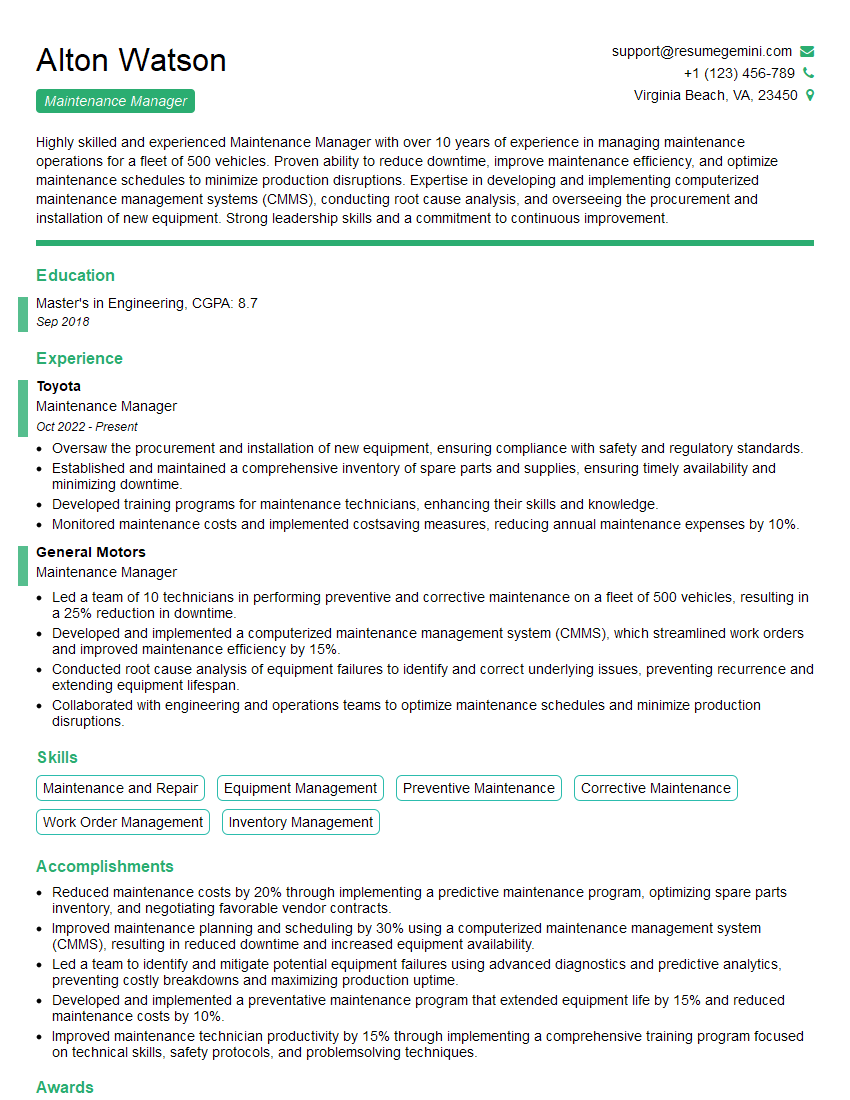
Maintenance Manager Resume Sample
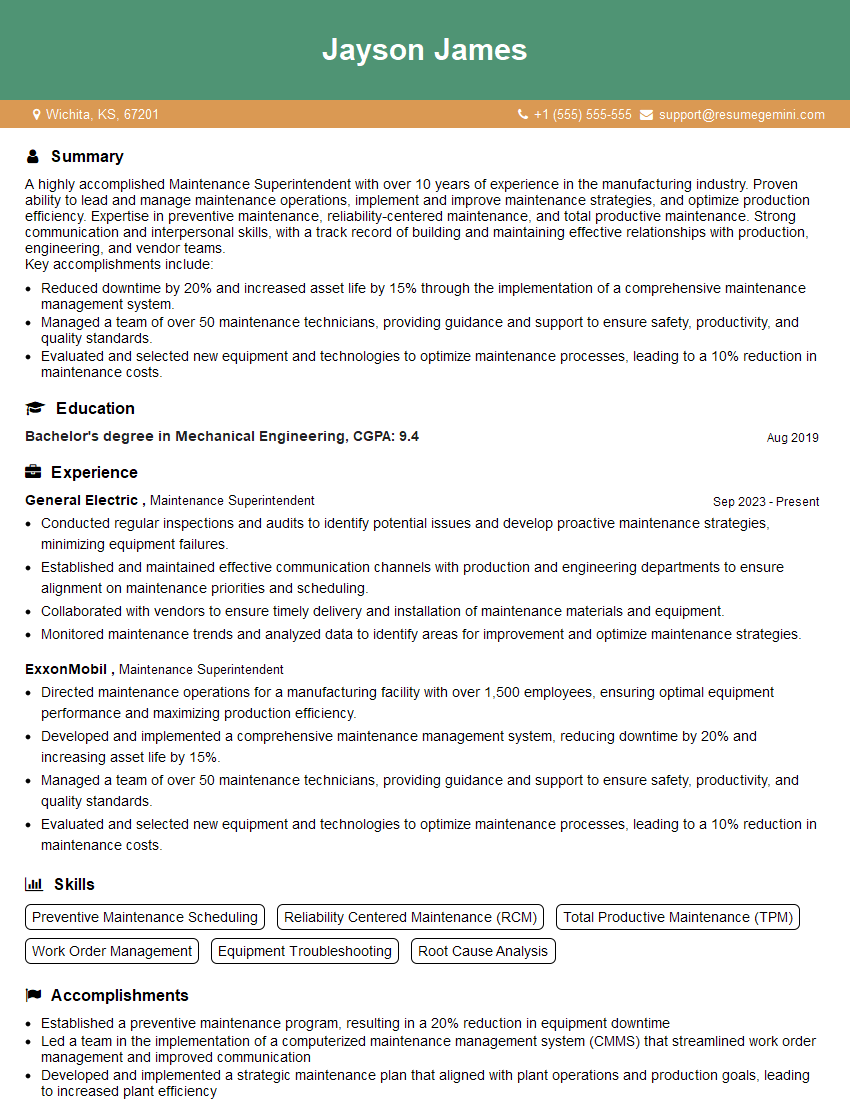
Maintenance Superintendent Resume Sample
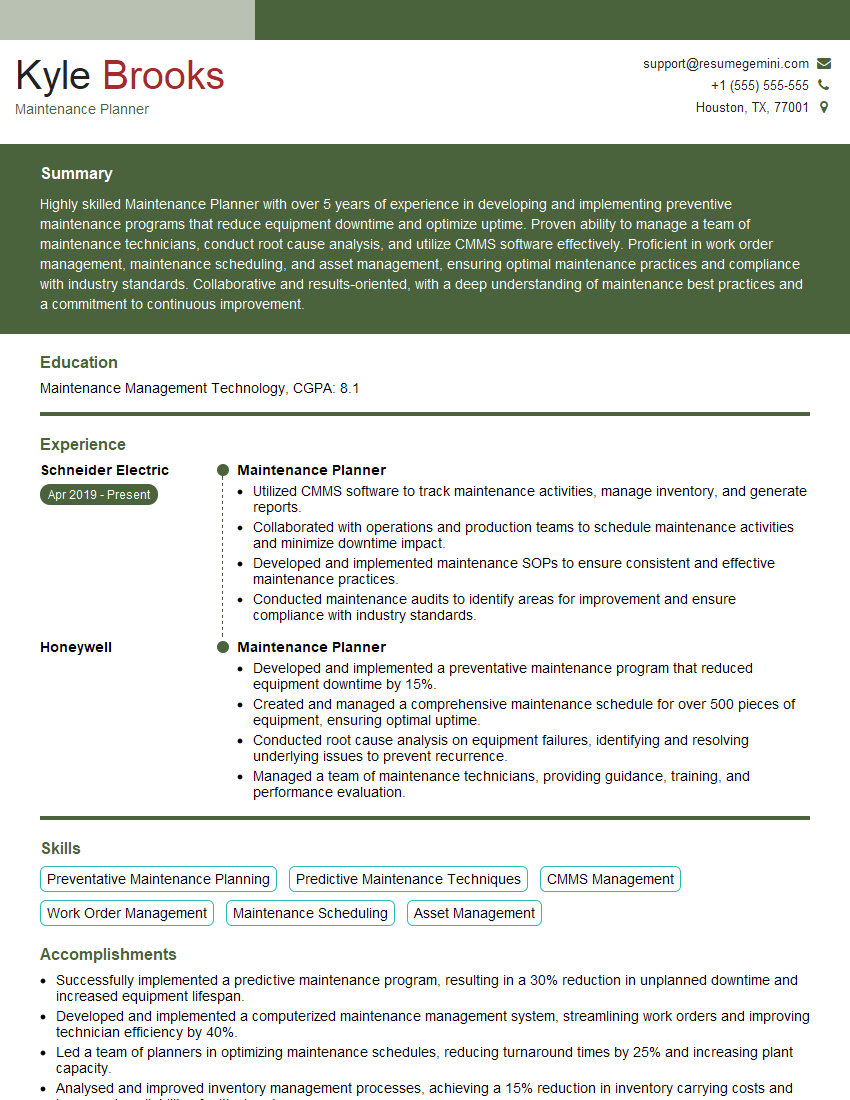
Maintenance Planner Resume Sample
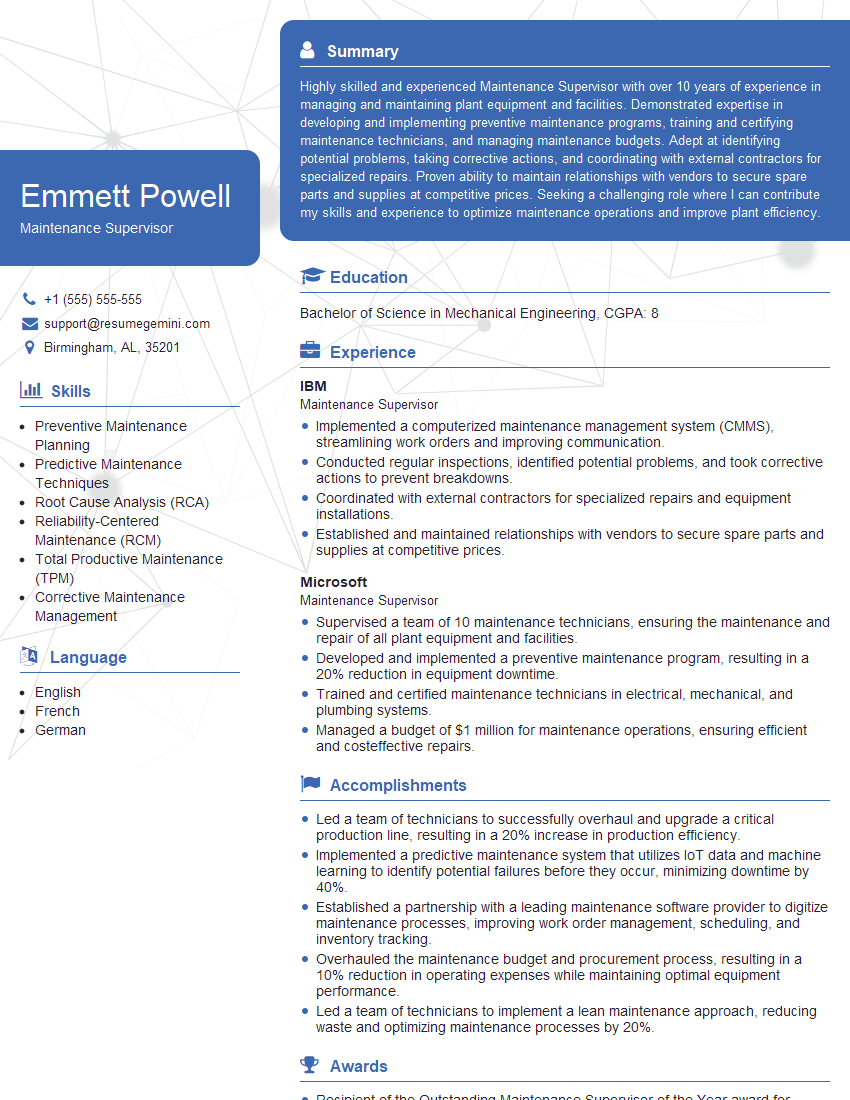
Maintenance Supervisor Resume Sample
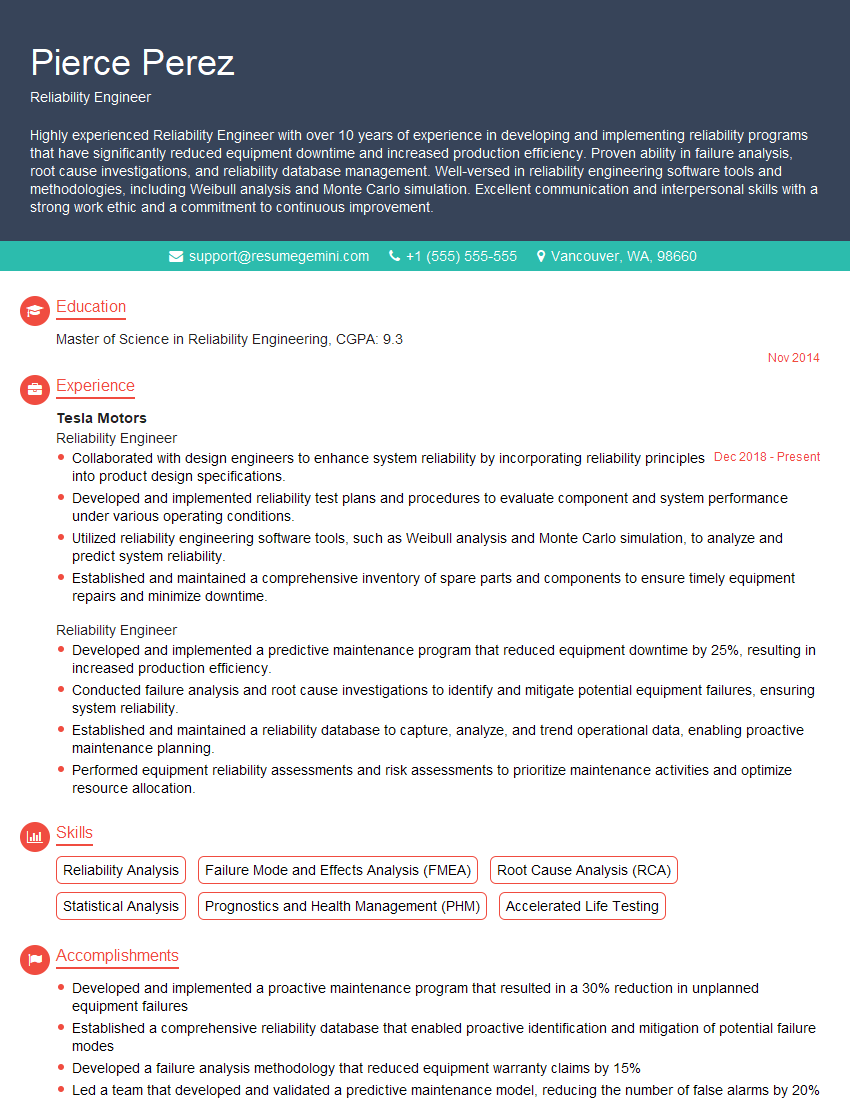
Reliability Engineer Resume Sample
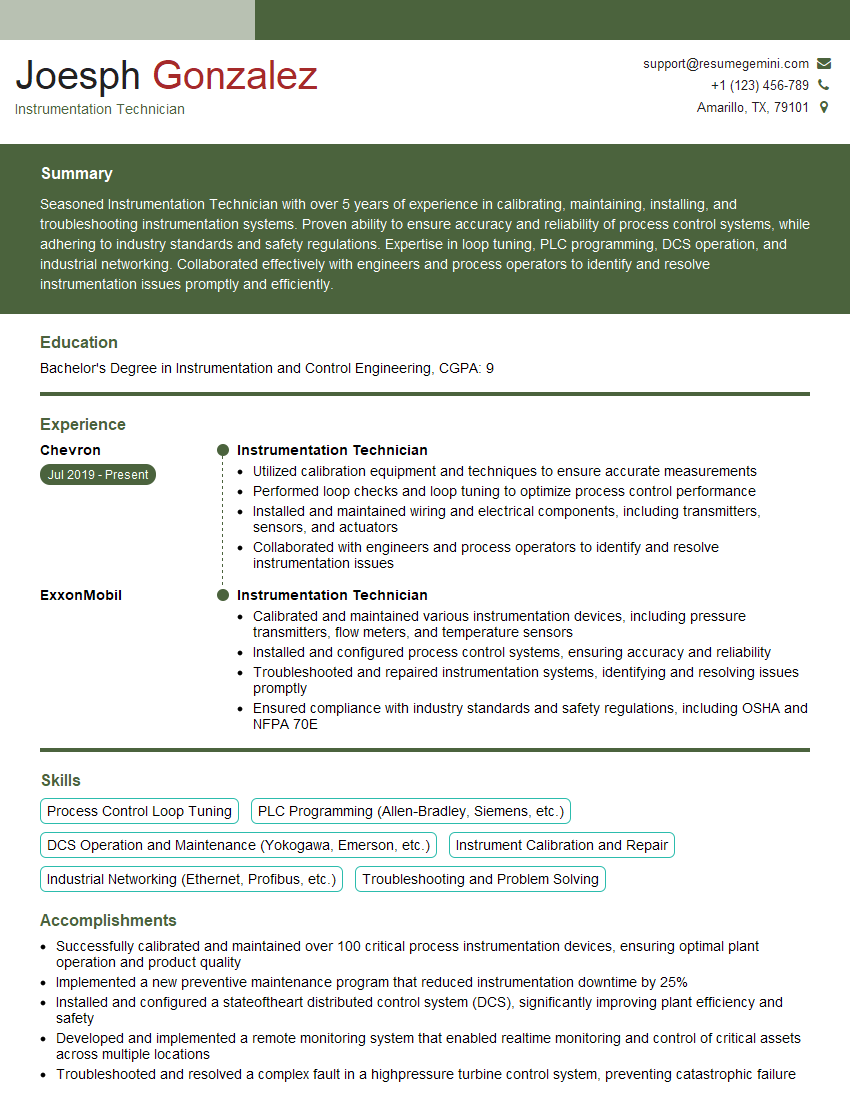
Instrumentation Technician Resume Sample
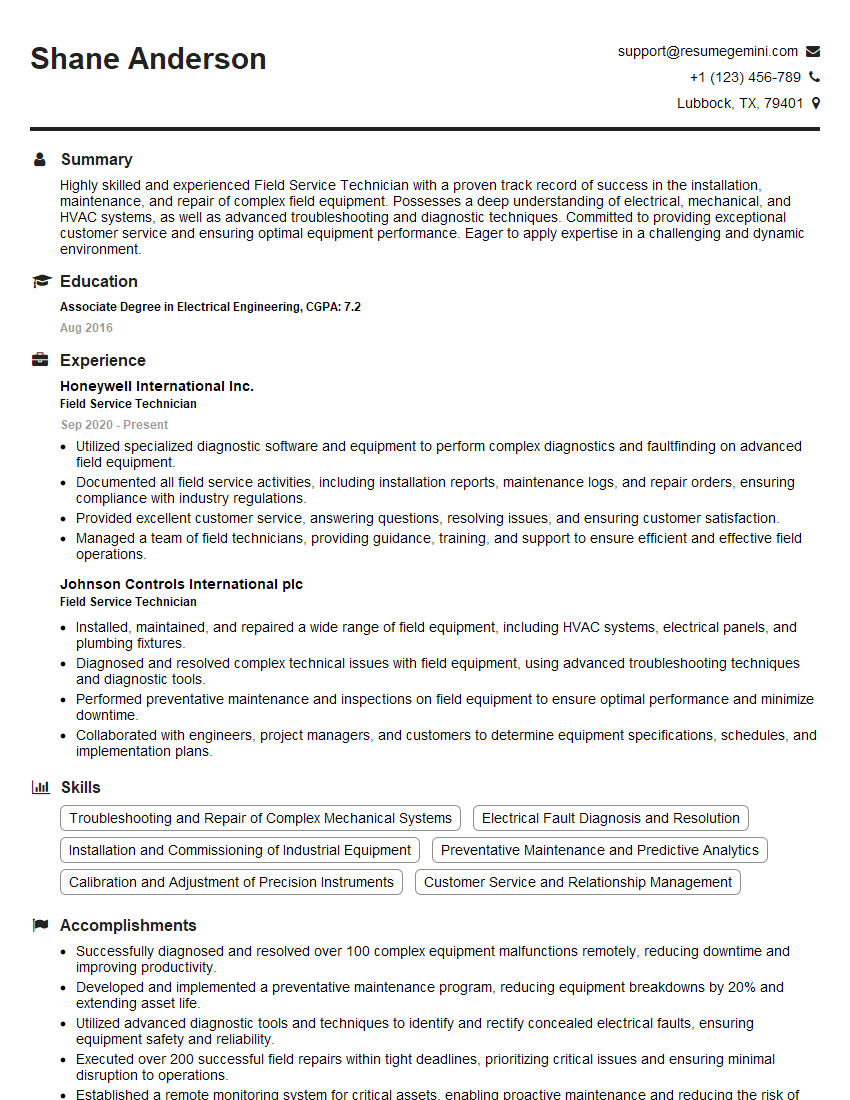
Field Service Technician Resume Sample
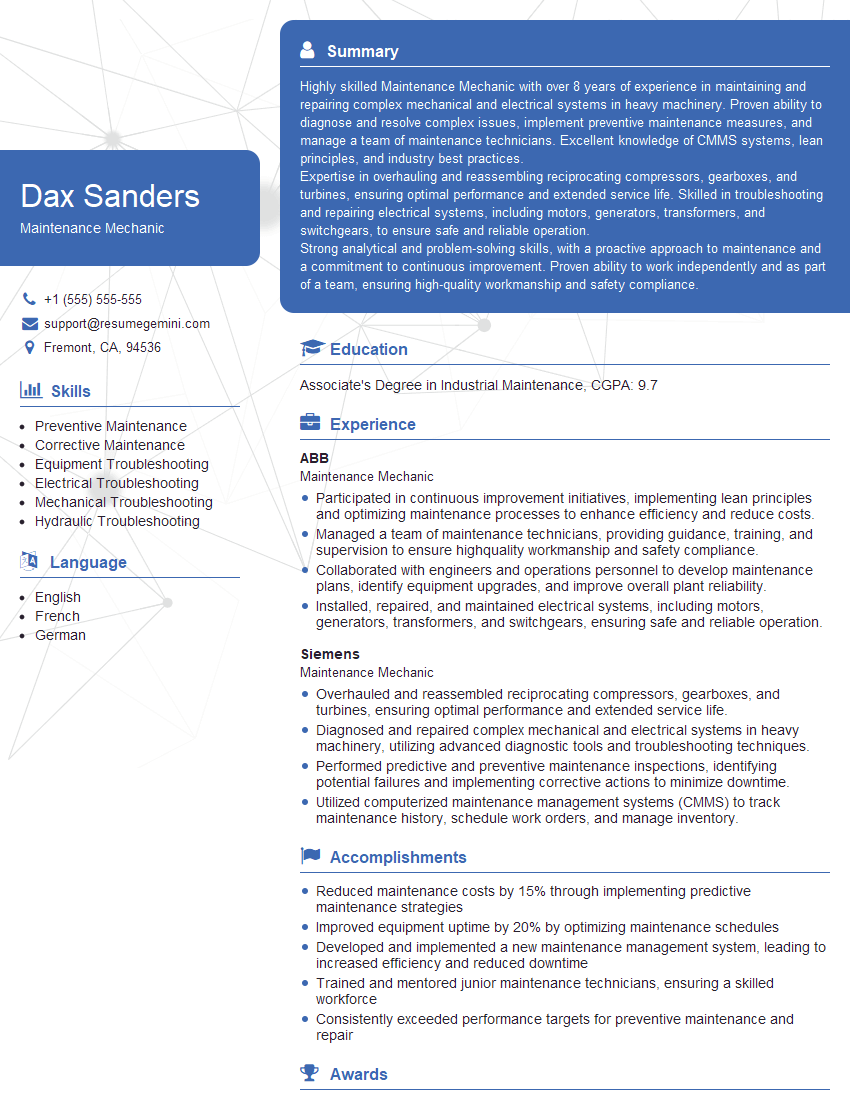
Maintenance Mechanic Resume Sample
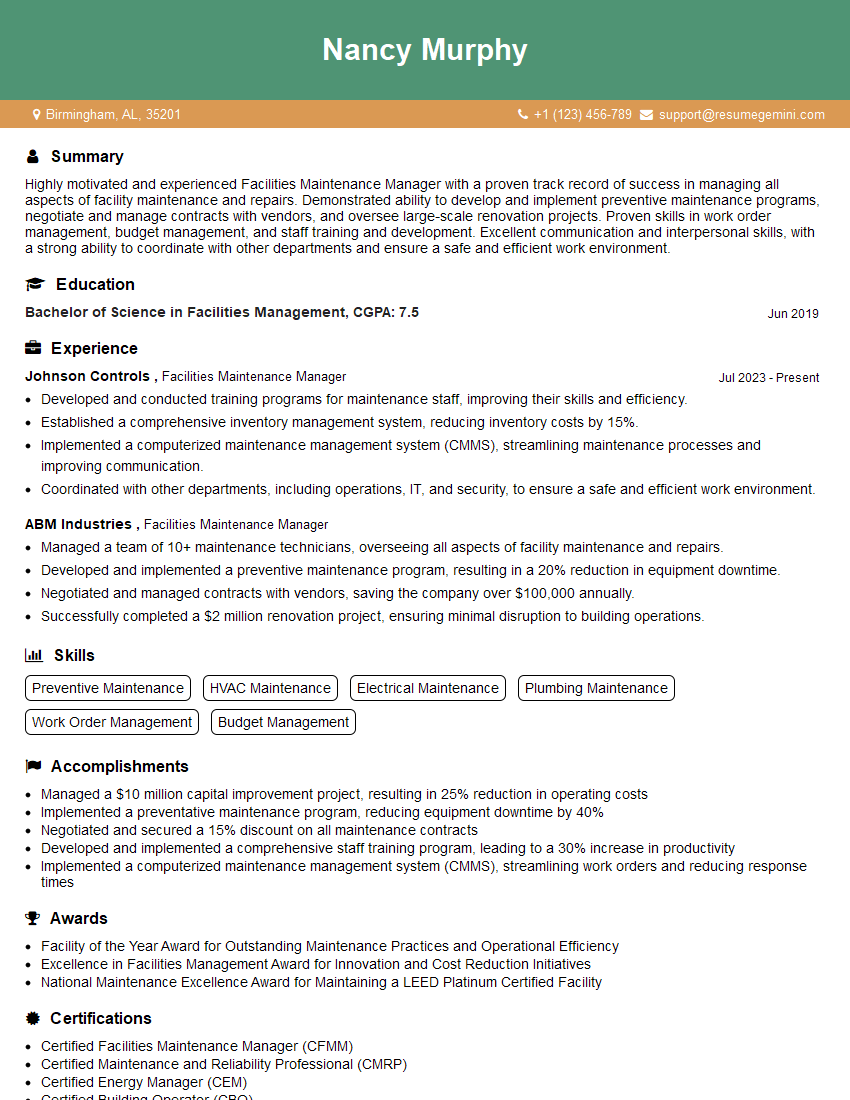
Facilities Maintenance Manager Resume Sample
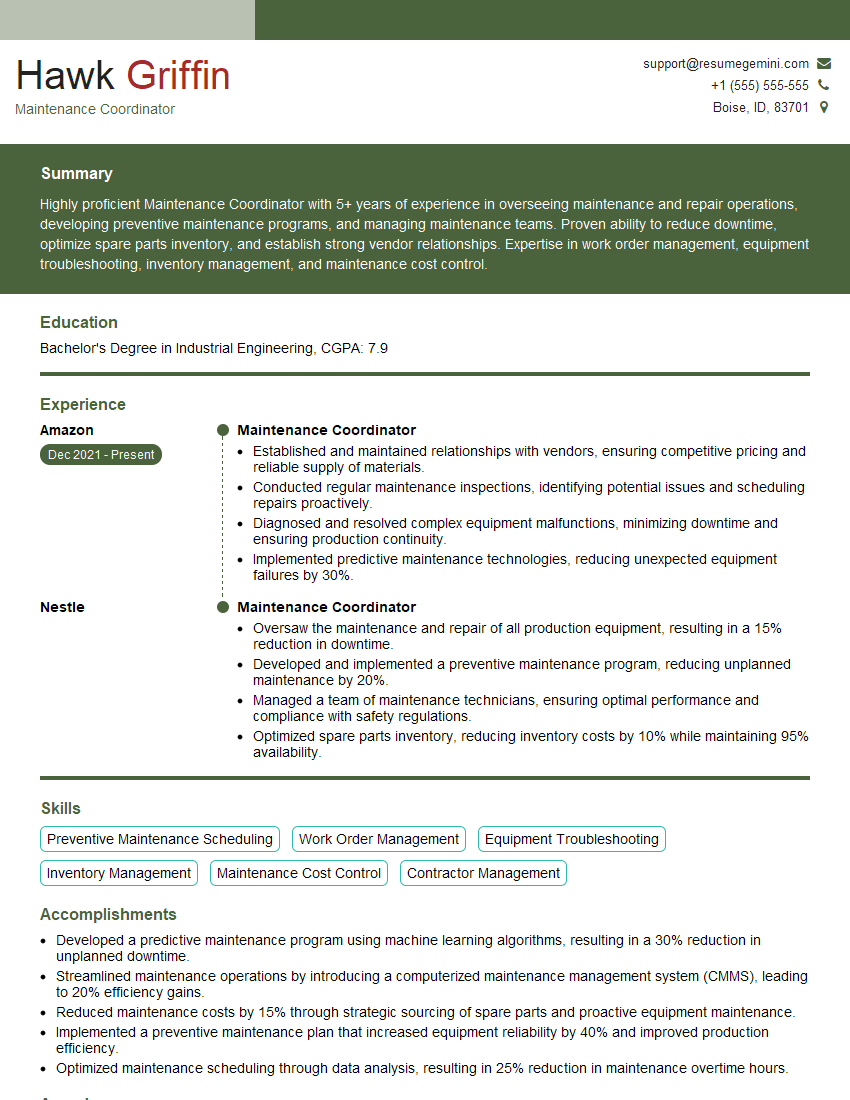
Maintenance Coordinator Resume Sample

Electrical Maintenance Technician Resume Sample
Explore more articles
Users Rating of Our Blogs
Share Your Experience
We value your feedback! Please rate our content and share your thoughts (optional).
What Readers Say About Our Blog
To the interviewgemini.com Webmaster.
Very helpful and content specific questions to help prepare me for my interview!
Thank you
To the interviewgemini.com Webmaster.
This was kind of a unique content I found around the specialized skills. Very helpful questions and good detailed answers.
Very Helpful blog, thank you Interviewgemini team.