Interviews are more than just a Q&A session—they’re a chance to prove your worth. This blog dives into essential Training and Skill Development interview questions and expert tips to help you align your answers with what hiring managers are looking for. Start preparing to shine!
Questions Asked in Training and Skill Development Interview
Q 1. Describe your experience designing and delivering training programs.
Designing and delivering training programs is a multifaceted process that requires a deep understanding of adult learning principles, instructional design, and the specific needs of the target audience. My experience spans various industries, including technology, healthcare, and finance, and encompasses the entire lifecycle – from initial needs assessment to post-training evaluation.
For example, in a recent project for a tech company, I designed a comprehensive training program on a new software platform. This involved creating engaging learning modules, incorporating hands-on exercises, and developing a robust assessment strategy to ensure knowledge transfer. The program utilized a blended learning approach, combining online modules with in-person workshops to cater to different learning styles. The result was a significant increase in employee proficiency and a measurable improvement in productivity.
In another instance, I developed a leadership development program for a healthcare organization. This involved a much more nuanced approach, focusing on building soft skills like communication and emotional intelligence alongside technical expertise. This required designing interactive simulations and incorporating role-playing activities to enhance engagement and practical application.
Q 2. Explain your process for needs analysis in a training context.
Needs analysis is the cornerstone of effective training program design. It’s a systematic process to identify the gap between current performance and desired performance. I use a multi-pronged approach:
- Performance Gap Analysis: This involves comparing current performance data (e.g., sales figures, error rates, customer feedback) against performance goals to pinpoint areas needing improvement.
- Stakeholder Interviews: I conduct interviews with managers, employees, and other stakeholders to gather insights into training needs, challenges, and expectations. This ensures the program addresses real-world issues.
- Surveys and Questionnaires: These tools provide a broader perspective on training needs and preferences, allowing for quantitative data collection alongside qualitative feedback.
- Observation: Direct observation of employees in their work environment helps identify performance bottlenecks and areas where training can enhance productivity.
- Document Review: Examining existing job descriptions, performance reviews, and organizational documents provides valuable context and helps identify skill gaps.
By combining these methods, I create a comprehensive profile of training needs that forms the foundation for a targeted and effective training program.
Q 3. How do you assess the effectiveness of a training program?
Assessing training effectiveness is crucial to ensure return on investment (ROI) and continuous improvement. I employ a multi-faceted approach that combines quantitative and qualitative methods:
- Pre- and Post-Training Assessments: These measure knowledge and skill levels before and after training, demonstrating the impact of the program. I often use tests, quizzes, and simulations.
- On-the-Job Performance Observation: Monitoring employees’ performance after training in their actual work environment provides real-world evidence of skill transfer.
- Surveys and Feedback Forms: Gathering participant feedback on the training experience and its impact on their work helps identify areas for improvement.
- Return on Investment (ROI) Analysis: This measures the financial impact of the training program, considering factors like increased productivity, reduced errors, and improved employee retention.
- Knowledge Retention Tests: Conducted several weeks or months after training to assess long-term knowledge retention and skill application.
For example, in evaluating a sales training program, we would track sales figures before and after the training, compare customer satisfaction scores, and analyze sales representatives’ performance feedback. This holistic approach provides a comprehensive picture of the program’s effectiveness.
Q 4. What methodologies do you utilize for adult learning?
Adult learning differs significantly from child learning. Adults are self-directed, experience-based learners who bring a wealth of prior knowledge and life experience. Therefore, my methodologies emphasize:
- Andragogy: I apply principles of andragogy, which focuses on adult learning styles and preferences, including self-concept, experience, readiness to learn, and orientation to learning.
- Experiential Learning: I prioritize hands-on activities, simulations, case studies, and problem-solving exercises to engage learners and foster practical application of knowledge.
- Collaborative Learning: I incorporate group discussions, peer learning, and team projects to promote interaction, knowledge sharing, and a sense of community.
- Self-Paced Learning: Where appropriate, I offer self-paced modules and resources to accommodate individual learning styles and preferences.
- Relevance and Application: I ensure the training content is directly relevant to learners’ jobs and everyday challenges. This improves engagement and demonstrates the practical value of the training.
For instance, instead of simply lecturing on project management, I’d use a real-world case study to allow participants to collaboratively solve a project management challenge, fostering active learning and application of concepts.
Q 5. Discuss your experience with different training delivery methods (e.g., online, in-person, blended).
I have extensive experience across various training delivery methods, tailoring the approach to the specific needs of the program and the audience. Each method has its strengths and weaknesses:
- In-Person Training: Effective for hands-on training, team building, and fostering interaction. However, it can be costly and logistically challenging for large or geographically dispersed audiences.
- Online Training (eLearning): Cost-effective, accessible, and scalable. Ideal for self-paced learning and delivering consistent training to a large audience. However, it can lack the personal interaction and immediate feedback of in-person training.
- Blended Learning: Combines the strengths of online and in-person training, offering a flexible and engaging learning experience. This often involves using online modules for self-paced learning supplemented by in-person workshops for interactive sessions and practical application.
For example, a technical skills training program might benefit from a blended learning approach, using online modules for foundational knowledge and in-person workshops for hands-on practice and troubleshooting sessions.
Q 6. How do you handle challenging learners or those resistant to training?
Handling challenging learners or those resistant to training requires a sensitive and adaptable approach. I focus on:
- Understanding the Root Cause: Identifying the reasons for resistance, which could include lack of interest, fear of change, previous negative training experiences, or workload pressures.
- Building Rapport: Establishing a positive relationship with the learner, fostering trust and creating a safe learning environment.
- Tailoring the Approach: Adapting the training methodology and content to address the learner’s specific needs and learning style.
- Active Listening and Empathy: Actively listening to the learner’s concerns and validating their feelings.
- Positive Reinforcement and Recognition: Celebrating successes and acknowledging effort to boost motivation and confidence.
- Collaboration with Management: Working with management to address any underlying organizational factors contributing to resistance.
For example, a learner resistant to a new software might be addressed through one-on-one coaching, focusing on practical applications relevant to their role and providing ongoing support and encouragement.
Q 7. Describe your experience creating training materials (e.g., presentations, manuals, eLearning modules).
Creating engaging and effective training materials is crucial for successful knowledge transfer. My experience includes developing various materials:
- Presentations: I use visually appealing and interactive presentations, incorporating multimedia elements like videos, images, and animations to enhance engagement. I focus on clear, concise messaging and avoid overwhelming learners with too much information.
- Manuals and Handbooks: I create well-structured and easy-to-navigate manuals, using clear language, logical flow, and visual aids to make information accessible and easy to understand. I ensure they are regularly updated to reflect changes in procedures or systems.
- eLearning Modules: I design interactive eLearning modules using authoring tools, incorporating various interactive elements such as quizzes, simulations, and branching scenarios. I ensure accessibility and compatibility across different devices.
For example, when creating eLearning modules on a new compliance policy, I would incorporate interactive scenarios that simulate real-world situations, allowing learners to apply the policy in a risk-free environment.
Q 8. How do you incorporate feedback into your training programs?
Feedback is the lifeblood of effective training. I incorporate it throughout the training process, not just at the end. This involves a multi-faceted approach:
- Ongoing formative feedback: During training sessions, I use techniques like interactive exercises, mini-quizzes, and open discussions to gauge understanding and address misconceptions in real-time. For example, after explaining a complex software feature, I might ask participants to apply it in a short scenario, observing their approach and providing immediate guidance.
- Summative feedback: At the end of a module or the entire program, I use various methods to collect feedback. This might include post-training surveys, assessments (tests or practical exercises), and 360-degree feedback (if appropriate) to gather comprehensive insights.
- Actionable feedback loops: The most important aspect isn’t just gathering feedback, but using it to improve. I analyze the feedback data to identify trends, pinpoint areas needing improvement in the training content or delivery, and make specific adjustments for future iterations of the program. For instance, if post-training surveys reveal confusion about a specific topic, I’ll revise that section of the material, perhaps adding visual aids or real-world examples.
This iterative process ensures the training remains relevant, engaging, and effective, constantly adapting to the learners’ needs and feedback.
Q 9. What are some common challenges in training and development, and how have you overcome them?
Common challenges in training and development include:
- Lack of engagement: Learners can find training monotonous if it’s not interactive or relevant to their daily tasks. I counteract this by incorporating diverse learning methods – gamification, simulations, case studies – and aligning the training with immediate job needs.
- Time constraints: Busy schedules often limit the time available for training. To overcome this, I focus on delivering concise, impactful training, using microlearning techniques (short, focused modules) and providing access to self-paced learning materials.
- Measuring ROI: Demonstrating the value of training can be difficult. I address this by implementing clear learning objectives and using metrics like improved performance, increased productivity, or reduced error rates to demonstrate the program’s impact.
- Transfer of learning: Learners may fail to apply new knowledge and skills on the job. I mitigate this by designing training programs that incorporate opportunities for practice and application in realistic work scenarios, providing coaching and mentorship, and ensuring ongoing support.
For instance, when facing time constraints in a recent project, I used microlearning modules and blended learning (combining online and in-person sessions) to maximize learner engagement and efficiency while ensuring the content remained comprehensive.
Q 10. How do you ensure training aligns with organizational goals?
Aligning training with organizational goals is crucial for its success. My approach involves:
- Needs analysis: I start with a thorough needs analysis to identify the skills gaps that hinder the organization from achieving its strategic objectives. This might involve surveys, interviews, and performance data analysis.
- Strategic alignment: Once the needs are identified, I develop training programs that directly address them, ensuring the skills taught directly contribute to the achievement of key business goals. For example, if the company aims to improve customer satisfaction, I would design training that enhances employee communication and customer service skills.
- Performance metrics: I build in metrics to track the impact of training on organizational outcomes. These could include improved sales figures, customer satisfaction scores, or reduced production costs, directly tying training success to business results.
- Continuous improvement: Regularly reviewing the training programs against the organization’s evolving goals ensures the training remains relevant and effective.
For example, in a previous role, we aligned training with a company-wide initiative to improve operational efficiency. The training program focused on lean manufacturing principles, and we measured its effectiveness by tracking improvements in production times and reduced waste.
Q 11. Explain your experience using Learning Management Systems (LMS).
I have extensive experience using Learning Management Systems (LMS) like Moodle and Cornerstone OnDemand. My experience encompasses:
- Course development and deployment: I’ve created and uploaded various training courses, including e-learning modules, videos, and documents, ensuring seamless access for learners.
- Content management: I’m proficient in managing course content, updating materials, and tracking learner progress within the LMS.
- Learner engagement and interaction: I utilize the LMS features to enhance learner interaction, using tools like discussion forums, quizzes, and collaborative projects to create engaging learning experiences.
- Data analysis and reporting: I leverage the LMS’s reporting capabilities to track learner progress, completion rates, and identify areas needing improvement in the training materials. This data informs decisions about future training and curriculum updates.
In one project, I used an LMS to deliver a large-scale compliance training program. The LMS allowed us to track completion rates, administer assessments, and provide customized feedback to each participant, leading to a much higher level of compliance compared to previous methods.
Q 12. How do you measure the return on investment (ROI) of a training program?
Measuring the ROI of a training program requires a structured approach. I use a combination of quantitative and qualitative methods:
- Pre- and post-training assessments: These measure changes in knowledge, skills, and attitudes after the training. I compare performance metrics before and after the training intervention, such as error rates or sales performance.
- Surveys and feedback: Collecting feedback from participants and managers helps to assess the program’s perceived value and impact on job performance.
- Cost-benefit analysis: I calculate the total cost of the training program (development, delivery, materials, etc.) and compare it to the benefits, such as increased productivity, reduced errors, or improved employee retention. This allows me to determine the return on investment.
- Business impact metrics: The most compelling ROI data comes from directly linking the training to measurable business outcomes. For example, if training in sales techniques results in a demonstrable increase in sales revenue, this provides strong evidence of ROI.
For example, in a past project focused on improving customer service, I tracked improvements in customer satisfaction scores, which demonstrated a positive ROI through increased customer retention and positive word-of-mouth referrals.
Q 13. Describe your experience with different training evaluation methods (e.g., pre/post-tests, surveys, observations).
I employ a variety of training evaluation methods to ensure a comprehensive understanding of the effectiveness of our programs. These include:
- Pre- and post-tests: These measure knowledge acquisition and retention. A pre-test assesses baseline knowledge, while the post-test measures the increase in knowledge after the training.
- Surveys (e.g., Kirkpatrick’s four levels): These gather feedback on different aspects of the training, including learner satisfaction (Level 1), knowledge gained (Level 2), behavioral changes (Level 3), and business impact (Level 4). Using a well-structured survey allows for collection of both quantitative (e.g., rating scales) and qualitative (e.g., open-ended questions) data.
- Observations: Direct observation in the workplace allows for assessment of whether participants are applying learned skills. This method helps to bridge the gap between the training environment and the real work setting.
- Performance appraisals: Incorporating performance data from employee reviews allows for evaluating the long-term impact of the training on overall job performance and contributes to assessing the overall ROI.
The choice of method depends on the specific training objectives and available resources. Often, a combination of methods provides the most complete picture of training effectiveness.
Q 14. What are your preferred learning theories and how do you apply them?
My preferred learning theories are:
- Andragogy: This theory emphasizes the self-concept, prior experience, readiness to learn, and orientation to learning of adult learners. I apply this by designing training programs that are participatory, relevant to learners’ prior experience, and problem-centered.
- Experiential learning: This approach focuses on learning through doing. I incorporate hands-on activities, simulations, and case studies to allow learners to actively engage with the material. This approach enhances knowledge retention and skill application.
- Social constructivism: This theory highlights the importance of social interaction and collaboration in learning. I use group work, discussions, and peer feedback to foster a collaborative learning environment.
For example, in a recent leadership development program, I combined andragogy and experiential learning by designing a simulation where participants had to solve a complex organizational problem collaboratively, using their prior leadership experiences to guide their decision-making process. This approach maximized engagement and fostered knowledge sharing.
Q 15. How do you stay current with best practices in training and development?
Staying current in the dynamic field of training and development requires a multi-pronged approach. It’s not enough to rely solely on past knowledge; continuous learning is paramount.
- Professional Organizations: Active membership in organizations like ATD (Association for Talent Development) provides access to webinars, conferences, research, and a network of peers. I regularly attend webinars and conferences to learn about emerging trends and best practices.
- Industry Publications and Journals: I subscribe to leading journals and publications focusing on training, learning technologies, and human resources. This allows me to stay abreast of the latest research and innovations in the field. For example, I recently read an article on the application of microlearning in corporate training and its effectiveness in boosting employee engagement.
- Online Courses and Certifications: I dedicate time to taking online courses and pursuing relevant certifications to enhance my skills and knowledge in areas like instructional design, learning technologies, and leadership development. I recently completed a course on creating engaging eLearning experiences.
- Networking: I actively participate in online forums and communities where professionals share knowledge and experiences. This collaborative learning environment is invaluable for uncovering new strategies and solutions.
- Experimentation and Reflection: I believe in practical application and reflection. After implementing a new training method, I meticulously evaluate its effectiveness and identify areas for improvement. This continuous cycle of learning and refinement is key to staying ahead of the curve.
Career Expert Tips:
- Ace those interviews! Prepare effectively by reviewing the Top 50 Most Common Interview Questions on ResumeGemini.
- Navigate your job search with confidence! Explore a wide range of Career Tips on ResumeGemini. Learn about common challenges and recommendations to overcome them.
- Craft the perfect resume! Master the Art of Resume Writing with ResumeGemini’s guide. Showcase your unique qualifications and achievements effectively.
- Don’t miss out on holiday savings! Build your dream resume with ResumeGemini’s ATS optimized templates.
Q 16. Explain your experience with creating a training budget.
Developing a training budget requires a strategic approach that balances needs with available resources. It involves a careful assessment of training goals, potential costs, and available funding.
My experience includes developing budgets ranging from small-scale departmental training to large-scale enterprise-wide initiatives. I start by defining clear learning objectives. Once the learning objectives are established, I identify the specific training methods needed (e.g., instructor-led training, e-learning, simulations) and estimate their associated costs. These costs might include instructor fees, course materials, technology licenses, venue rentals, travel expenses, and evaluation tools.
I then prioritize training needs based on business objectives and ROI (Return on Investment). For example, if improving sales performance is a key objective, sales training would likely receive a larger budget allocation compared to less critical areas. I also explore cost-effective solutions, such as using free or low-cost online resources, creating in-house training materials, or leveraging existing technologies. I present the budget to stakeholders, justifying each expense and emphasizing the anticipated return on investment. Finally, I track expenses diligently throughout the training process, making adjustments as needed to stay within budget.
Q 17. How do you adapt training to different learning styles?
Catering to diverse learning styles is crucial for maximizing training effectiveness. Learners process information differently; some are visual, others auditory or kinesthetic. Ignoring these differences can lead to lower engagement and knowledge retention.
- Needs Assessment: I begin by conducting a thorough needs assessment to understand the learners’ preferred learning styles and any learning disabilities. This could involve surveys, interviews, or observations.
- Multimodal Approach: I design training programs that use a variety of methods to cater to different learning styles. This could include visual aids (PowerPoint presentations, videos), auditory elements (audio recordings, discussions), and kinesthetic activities (role-playing, simulations, hands-on exercises).
- Personalized Learning Paths: When feasible, I offer personalized learning paths, allowing learners to choose the methods that best suit their learning style. For example, some learners might prefer to complete online modules, while others may benefit more from instructor-led workshops.
- Flexibility and Accessibility: I ensure that the training is accessible to all learners, regardless of their learning styles or disabilities. This might include providing alternative formats (e.g., audio versions of text materials) and using assistive technologies.
- Example: In a recent project training sales staff, I incorporated a variety of methods – interactive video modules for visual learners, audio podcasts for auditory learners, and role-playing exercises for kinesthetic learners.
Q 18. Describe your experience with creating engaging and interactive training.
Creating engaging and interactive training is key to boosting learner participation and knowledge retention. Passive learning methods, such as lectures, are often less effective than active learning approaches.
My approach focuses on incorporating various interactive elements throughout the training. This includes:
- Gamification: Incorporating game mechanics like points, badges, leaderboards, and challenges increases engagement and motivation.
- Simulations and Role-Playing: These allow learners to practice skills in a safe environment and receive immediate feedback.
- Group Activities and Discussions: Encourage collaboration and peer learning.
- Interactive Exercises and Quizzes: Regularly assessing understanding through quizzes and interactive exercises reinforces learning and provides immediate feedback.
- Use of Technology: Leveraging technology such as e-learning platforms, virtual reality, and augmented reality creates immersive and engaging learning experiences. For instance, using a virtual reality simulator can significantly enhance practical skills training.
- Storytelling: Weaving compelling narratives into the training content makes the information more relatable and memorable.
For example, I recently designed a training program using a game-based platform, where employees learned compliance procedures by completing missions and challenges. This resulted in a 25% increase in knowledge retention compared to previous training methods.
Q 19. How do you manage multiple projects simultaneously in a training environment?
Managing multiple training projects simultaneously requires strong organizational skills, effective time management, and clear communication. It’s essential to maintain a structured approach.
- Prioritization: I prioritize projects based on urgency and importance. I use tools like project management software (e.g., Asana, Trello) to track tasks, deadlines, and progress. A clear understanding of deadlines and stakeholder expectations is crucial.
- Delegation: When possible, I delegate tasks to team members based on their skills and experience. Effective delegation frees up my time to focus on higher-level tasks and strategic planning.
- Communication: I maintain clear and consistent communication with stakeholders and team members, providing regular updates on progress and addressing any challenges promptly. I utilize regular project meetings to track progress, discuss obstacles, and make necessary adjustments.
- Time Management Techniques: I employ time management techniques such as time blocking, prioritizing tasks based on the Eisenhower Matrix (urgent/important), and setting realistic deadlines. I also regularly review my schedule to ensure I am on track to meet all deadlines.
- Project Management Methodologies: I often leverage project management methodologies like Agile to adapt to changing priorities and ensure flexibility in managing multiple projects.
For instance, I recently managed three concurrent projects: a new employee onboarding program, a leadership development program, and a compliance training program. By applying these strategies, I successfully delivered all three projects on time and within budget.
Q 20. Describe your experience with coaching and mentoring.
Coaching and mentoring are essential elements of my role. Coaching involves providing guidance and support to help individuals improve their performance, while mentoring focuses on broader career development.
My approach to coaching is collaborative and goal-oriented. I start by establishing a clear understanding of the individual’s goals and identifying areas for improvement. I then work with them to develop a plan to achieve those goals, providing regular feedback and support along the way. I utilize active listening, questioning techniques, and constructive feedback to help the individual identify solutions and overcome challenges. The process is highly personalized, tailoring my approach to the individual’s learning style and needs.
Mentoring involves a longer-term relationship where I share my experience and knowledge to help individuals grow their careers. This includes providing guidance on career paths, networking opportunities, and personal development. I’ve mentored several junior training professionals, helping them develop their skills and navigate their careers within the field. I focus on creating a supportive and trusting relationship, providing constructive feedback and guidance, and fostering their professional growth.
Q 21. How do you use technology to enhance training effectiveness?
Technology plays a vital role in enhancing training effectiveness. It provides opportunities for creating engaging, scalable, and accessible learning experiences.
- Learning Management Systems (LMS): I utilize LMS platforms to deliver and manage online training courses, track learner progress, and provide personalized feedback. This ensures easy access to training materials and allows for effective tracking of course completion and performance.
- E-learning Authoring Tools: I use e-learning authoring tools to create interactive and engaging online courses. These tools allow me to incorporate multimedia elements, simulations, and assessments to cater to different learning styles.
- Virtual Reality (VR) and Augmented Reality (AR): For certain types of training, I leverage VR and AR technologies to create immersive and engaging experiences that enhance practical skill development and knowledge retention. For example, I used a VR simulator to train technicians on complex equipment repair procedures.
- Mobile Learning: I design training that is accessible through mobile devices, making learning more convenient and flexible for learners.
- Data Analytics: I use data analytics to track learner progress and identify areas for improvement in the training program. This allows for continuous refinement and optimization of the training content and delivery methods.
By strategically employing these technologies, I consistently enhance the effectiveness and engagement of our training initiatives, resulting in improved knowledge retention and skills development among our employees.
Q 22. What are some key performance indicators (KPIs) you track in training?
Key Performance Indicators (KPIs) in training are crucial for measuring the effectiveness and impact of our programs. They allow us to track progress, identify areas for improvement, and demonstrate the return on investment (ROI) of training initiatives. I typically track a combination of leading and lagging indicators.
- Leading Indicators (predict future performance): These focus on the training process itself. Examples include:
- Participant satisfaction scores: Measured through post-training surveys, gauging trainee engagement and learning experience.
- Training completion rates: Tracking the percentage of trainees who complete the entire program, indicating engagement and commitment.
- Time to competency: This measures how long it takes trainees to achieve proficiency after training.
- Lagging Indicators (reflect past performance): These measure the impact of training on actual on-the-job performance. Examples include:
- Improved employee performance: Measured through performance reviews, increased productivity, or reduced errors.
- Increased sales or revenue: If the training is aimed at sales skills, tracking revenue generated after training is a key metric.
- Reduced employee turnover: Well-designed training can boost employee satisfaction and retention, leading to lower turnover rates.
- Improved customer satisfaction: Training improvements can lead to better customer service, reflected in positive customer feedback.
By analyzing both leading and lagging indicators, I can get a holistic view of training effectiveness and make data-driven improvements.
Q 23. How do you build rapport with trainees?
Building rapport with trainees is essential for creating a positive and effective learning environment. It fosters trust, encourages participation, and enhances knowledge retention. I achieve this through several strategies:
- Active listening: I pay close attention to trainees’ comments and questions, demonstrating genuine interest in their perspectives.
- Empathy and understanding: I create a safe space where trainees feel comfortable sharing their experiences and concerns, acknowledging their individual learning styles and paces.
- Personalization: I tailor my teaching style and examples to the audience, using relatable scenarios and language.
- Humor (appropriately): Adding humor where appropriate can help create a relaxed and engaging atmosphere.
- Open communication: I encourage questions and feedback throughout the training, fostering a two-way dialogue.
- Early introductions and icebreakers: Starting with icebreaker activities helps trainees get to know each other and me, creating a more comfortable setting.
For example, I once started a session on conflict resolution with a brief story about a misunderstanding I had with a colleague, demonstrating vulnerability and making the topic more relatable. This fostered a sense of trust and open communication among the participants.
Q 24. Describe your experience with onboarding new employees.
My experience with onboarding new employees involves creating a structured and engaging program designed to help them quickly integrate into the company culture and become productive members of the team. The program typically includes:
- Pre-boarding: Before the first day, I send welcome packages with information about the company, their team, and what to expect during their first week.
- Orientation: The first day usually includes an overview of the company’s mission, values, and organizational structure, as well as introductions to key personnel.
- Role-specific training: This involves detailed training on job responsibilities, tools, and processes.
- Mentorship or buddy system: Pairing new hires with experienced employees for guidance and support.
- Regular check-ins: I conduct regular check-ins during the first few months to answer questions, offer support, and track progress.
- Feedback mechanisms: I encourage open communication and provide opportunities for new hires to provide feedback on the onboarding experience.
In a recent onboarding program, we implemented a gamified approach to the training modules, which resulted in improved engagement and faster learning. Trainees were more likely to complete the modules and demonstrated better knowledge retention.
Q 25. How do you ensure the accessibility of your training materials?
Ensuring accessibility of training materials is crucial for inclusivity and legal compliance. My approach focuses on creating materials that cater to diverse learners with varying abilities. This includes:
- Using plain language: Avoiding jargon and complex sentence structures makes the materials easier to understand for everyone.
- Providing alternative formats: Offering materials in formats like audio, video, and text ensures accessibility for people with visual or auditory impairments.
- Using clear visuals: Using high-contrast images and appropriate alt text for images improves accessibility for visually impaired users.
- Designing for keyboard navigation: Ensuring materials can be accessed using only a keyboard supports users with motor impairments.
- Adhering to WCAG guidelines: Following Web Content Accessibility Guidelines (WCAG) ensures that materials meet accessibility standards.
- Captioning and transcripts: Providing captions and transcripts for videos enhances accessibility for deaf and hard-of-hearing individuals.
For example, I recently created a training video with closed captions, a transcript, and a downloadable PDF version of the script. This ensured that the training was accessible to everyone, regardless of their learning preferences or abilities.
Q 26. How would you handle a situation where a training program is not meeting its objectives?
If a training program isn’t meeting its objectives, a systematic approach is needed to identify the problem and implement corrective actions. My process would include:
- Data analysis: I’d start by analyzing the KPIs to pinpoint specific areas of underperformance. This might involve looking at completion rates, satisfaction scores, and post-training performance data.
- Feedback gathering: I’d gather feedback from trainees, managers, and subject matter experts to understand their perspectives on the program’s strengths and weaknesses.
- Needs assessment review: I’d review the initial needs assessment to ensure the training program still aligns with the identified learning objectives and organizational goals. Have the needs changed?
- Curriculum revision: Based on the data analysis and feedback, I’d revise the training curriculum. This might involve updating content, adjusting the delivery method, or adding interactive elements.
- Implementation of revised program: I’d implement the revised training program and monitor its effectiveness using the same KPIs as before.
- Ongoing evaluation: Regular evaluation and adjustments are crucial to ensure that the training program continues to meet its objectives.
For instance, if low participant engagement was identified, I might revamp the training methodology, incorporating more interactive activities, gamification, or smaller group discussions to improve participation and knowledge retention.
Q 27. What is your experience with different adult learning theories (e.g., Andragogy, Knowles)?
Andragogy, the art and science of helping adults learn, significantly influences my approach to training. Developed by Malcolm Knowles, it contrasts with pedagogy (teaching children). Key principles of andragogy I integrate include:
- Self-concept: Adults are self-directed learners. I foster this by providing choices and opportunities for active participation in the learning process. I avoid overly directive methods.
- Prior experience: Adults bring a wealth of experience to the learning process. I leverage this by using their experiences as case studies and examples in training, rather than treating their prior knowledge as a limitation.
- Readiness to learn: Adults are most ready to learn when they see the relevance to their lives and work. I emphasize the practical applications of the training and show how it addresses their immediate needs and challenges.
- Orientation to learning: Adults are task-oriented. I structure training programs around practical problems and real-world situations. Instead of solely theoretical lectures, I use simulations, role-plays, and case studies.
- Motivation to learn: Adults are internally motivated. I nurture motivation by fostering a supportive and engaging learning environment where trainees feel valued and respected.
For example, in a leadership training program, I used real-life case studies of leadership challenges faced by participants within their own organizations to illustrate concepts and techniques. This proved significantly more engaging and effective than simply presenting theoretical frameworks.
Q 28. Explain your experience with developing competency-based training programs.
Competency-based training focuses on developing specific skills and knowledge needed to perform a particular job effectively. My experience in developing these programs involves:
- Competency identification: This crucial first step involves identifying the key competencies needed for a specific role. This is often done by analyzing job descriptions, interviewing subject matter experts, and conducting task analyses.
- Learning objectives definition: Clear, measurable, achievable, relevant, and time-bound (SMART) learning objectives are established for each competency.
- Curriculum design: The curriculum is designed to address each learning objective using appropriate training methods such as presentations, simulations, role-playing, on-the-job training, and mentoring.
- Assessment development: Assessments are designed to measure whether trainees have achieved the learning objectives and demonstrate the required competencies. These can include tests, practical exercises, observations, and performance reviews.
- Program delivery: The training program is delivered using the chosen methods and is tailored to the needs and learning styles of the participants.
- Evaluation and feedback: The program is evaluated to determine its effectiveness in developing the required competencies. Trainees and managers provide feedback to improve future iterations.
In a recent project, I developed a competency-based training program for customer service representatives focusing on communication skills and problem-solving. We used role-playing exercises, simulated customer calls, and on-the-job coaching to develop these competencies. Post-training assessments showed a significant improvement in customer satisfaction scores.
Key Topics to Learn for Training and Skill Development Interview
- Needs Analysis & Curriculum Design: Understanding how to identify training needs, develop engaging learning objectives, and create effective training curricula. Consider practical applications like designing a workshop for improving communication skills or a training program for new software.
- Instructional Design & Delivery Methods: Exploring various teaching methodologies (e.g., blended learning, gamification, microlearning) and their application in different learning contexts. Think about the pros and cons of each method and how to choose the most appropriate one for a specific audience and learning outcome.
- Learning Technologies & Tools: Familiarity with Learning Management Systems (LMS), authoring tools, and other technologies used in delivering and tracking training programs. Be prepared to discuss your experience with specific tools or your ability to quickly learn new ones.
- Training Evaluation & Measurement: Understanding different methods of evaluating training effectiveness (e.g., pre/post-tests, surveys, performance metrics). Consider how to design evaluations that accurately measure the impact of training on individual and organizational performance.
- Adult Learning Principles & Theories: Applying theories of adult learning (e.g., andragogy) to create engaging and effective training experiences. Discuss how you adapt your training style to accommodate the unique characteristics of adult learners.
- Diversity, Equity, and Inclusion in Training: Understanding how to create inclusive and equitable training programs that cater to diverse learners and address potential biases. Be prepared to discuss strategies for creating accessible and culturally sensitive training materials.
- Budget Management & Resource Allocation: Demonstrating an understanding of how to manage training budgets effectively and allocate resources strategically. This includes considering costs associated with materials, instructor fees, and technology.
Next Steps
Mastering Training and Skill Development is crucial for career advancement, opening doors to leadership roles and impactful contributions within organizations. A strong resume is your key to unlocking these opportunities. To make a lasting impression on potential employers, it’s essential to create an ATS-friendly resume that highlights your skills and experience effectively. ResumeGemini is a trusted resource that can help you build a professional and impactful resume. We offer examples of resumes tailored to Training and Skill Development to guide you in crafting your own compelling application.
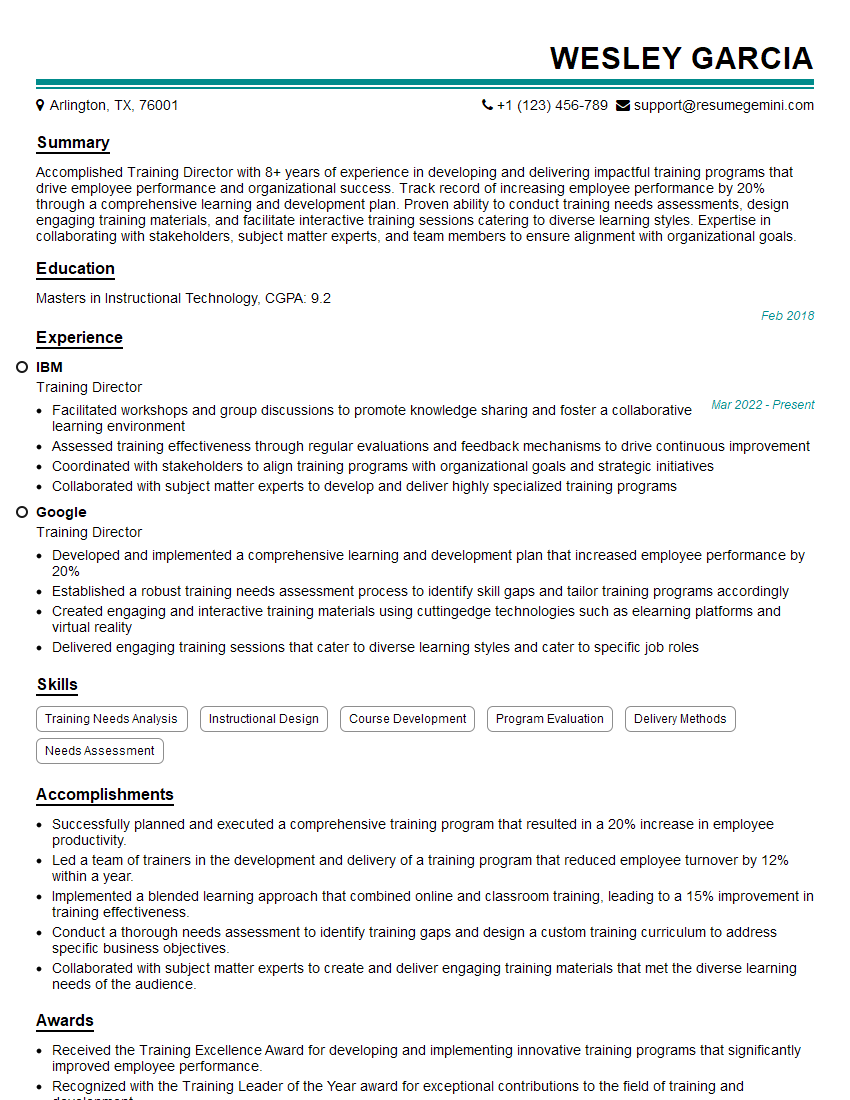
Training Director Resume Sample
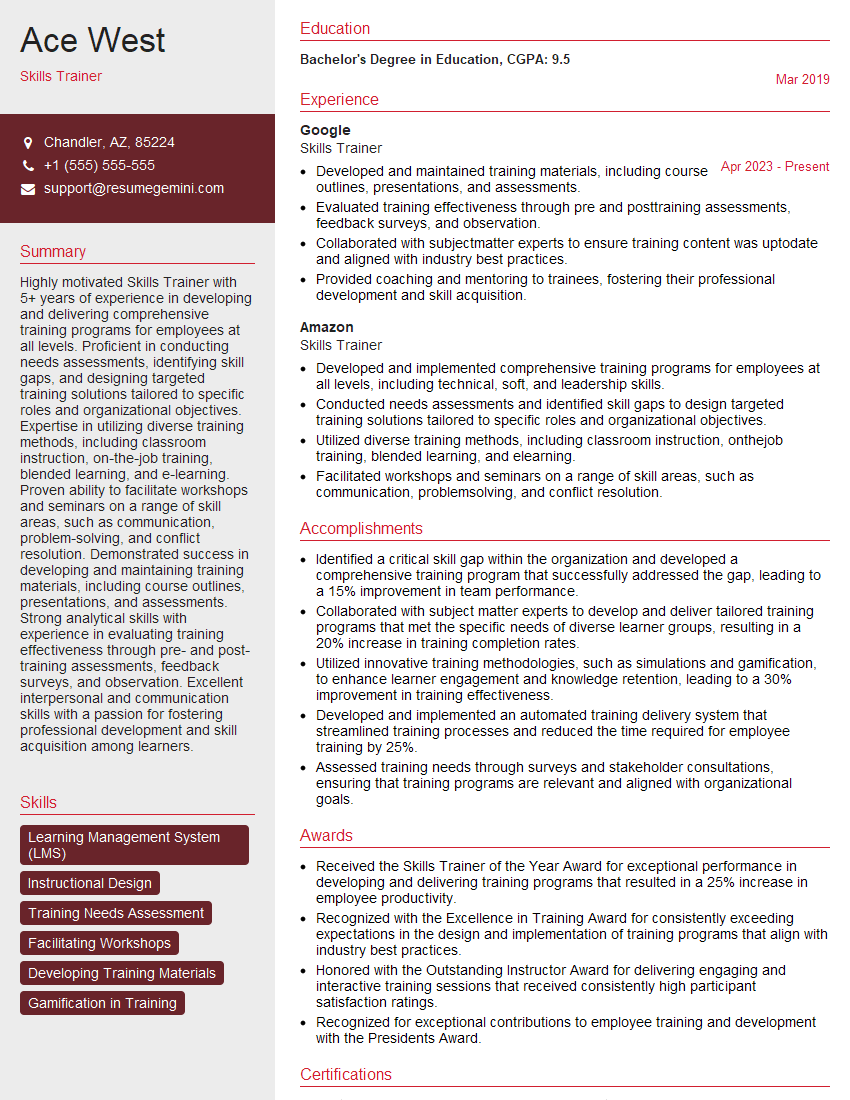
Skills Trainer Resume Sample
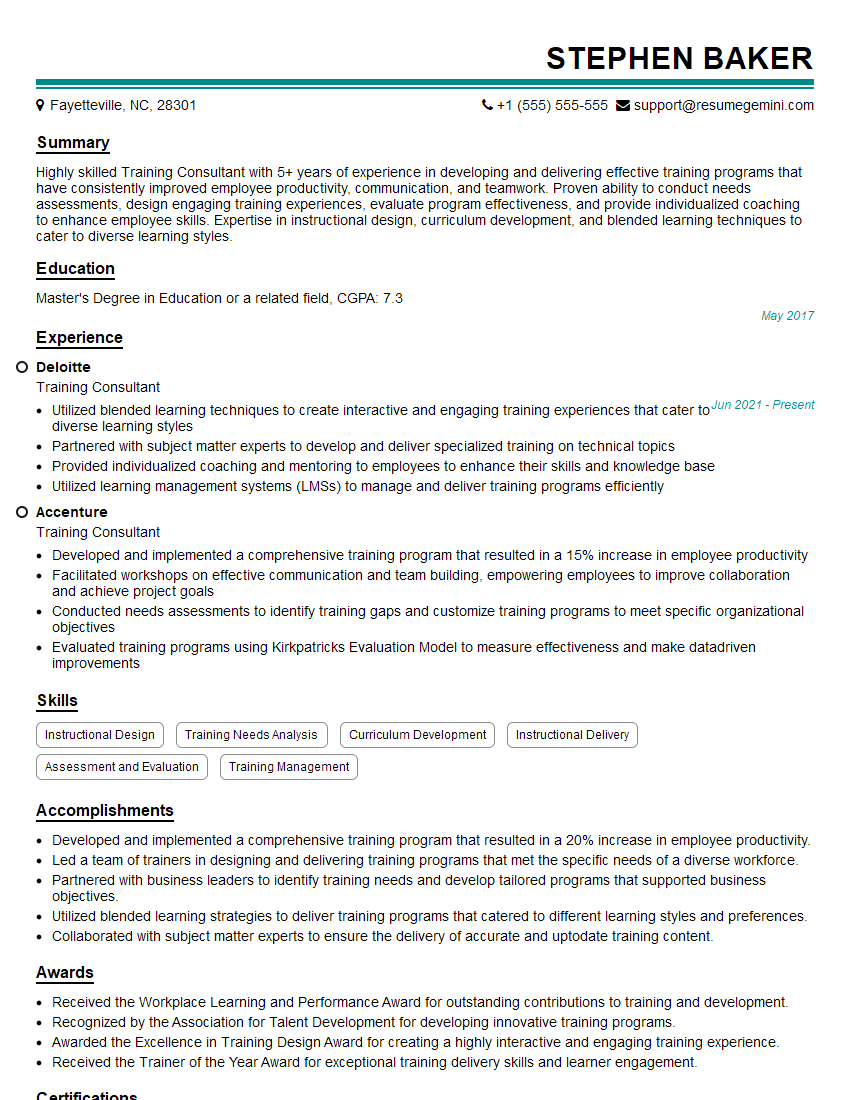
Training Consultant Resume Sample
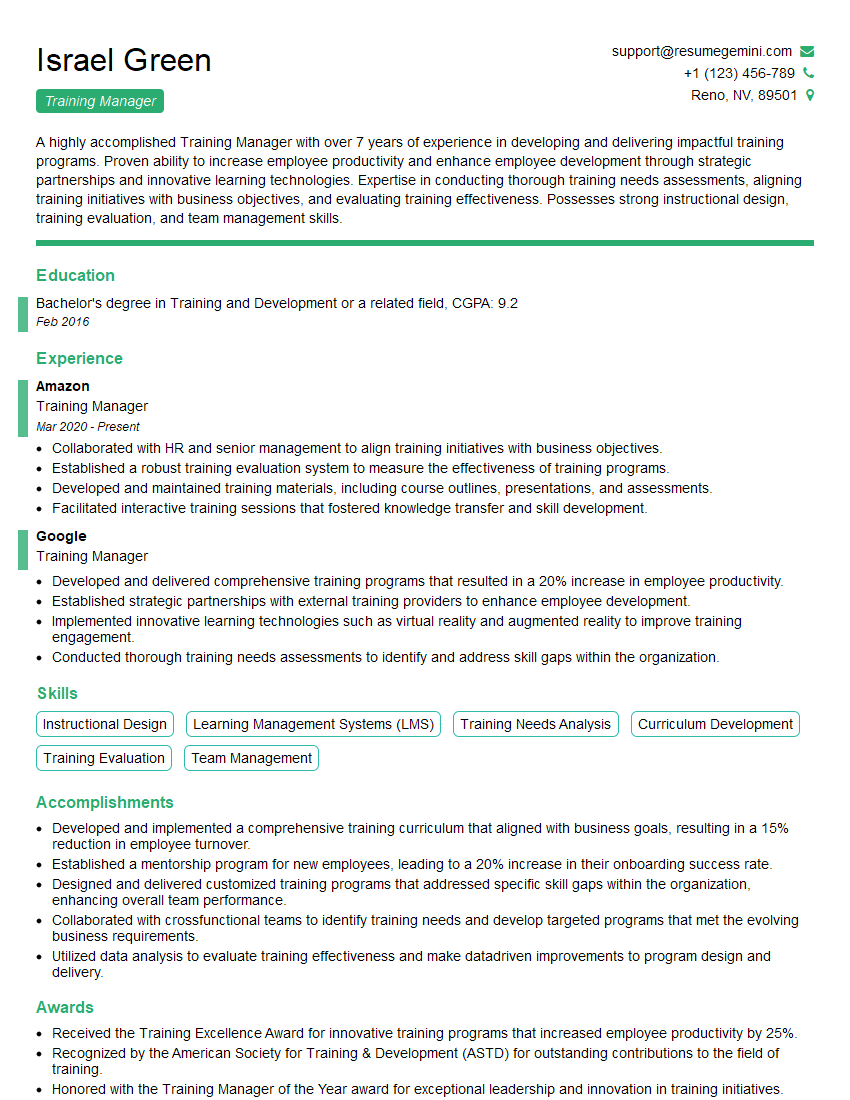
Training Manager Resume Sample
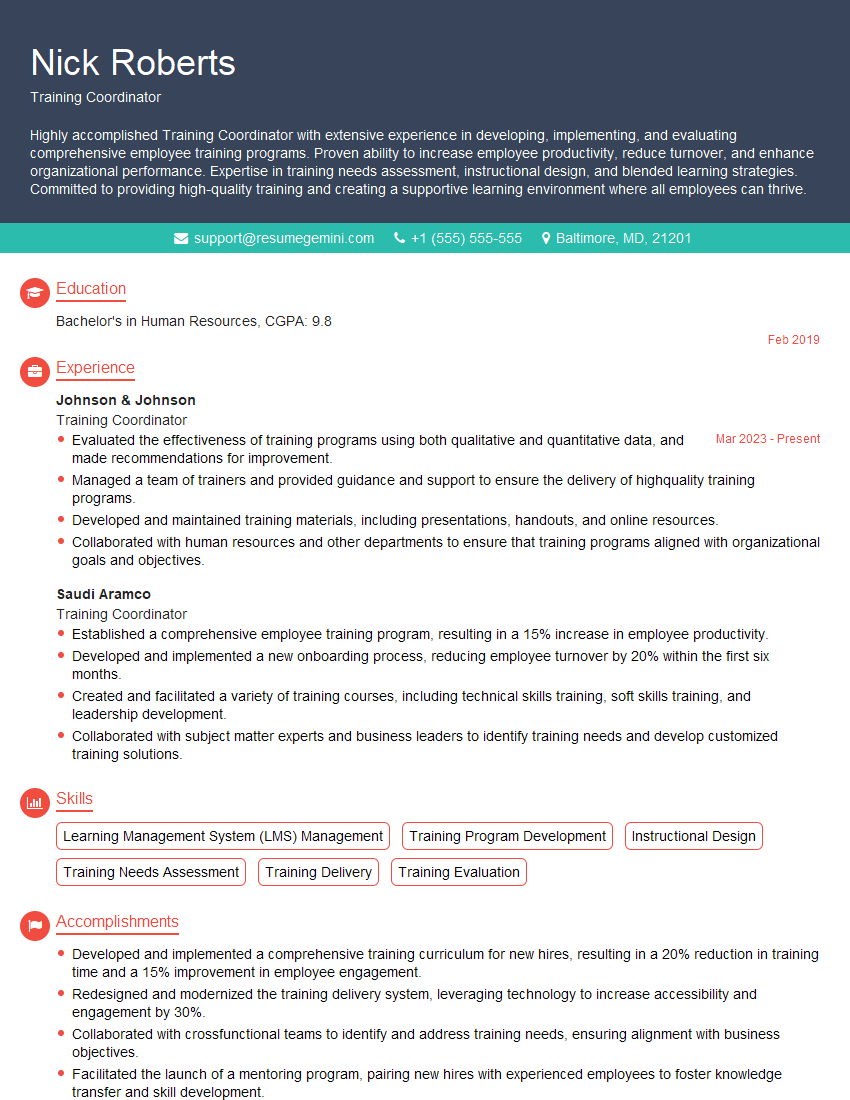
Training Coordinator Resume Sample
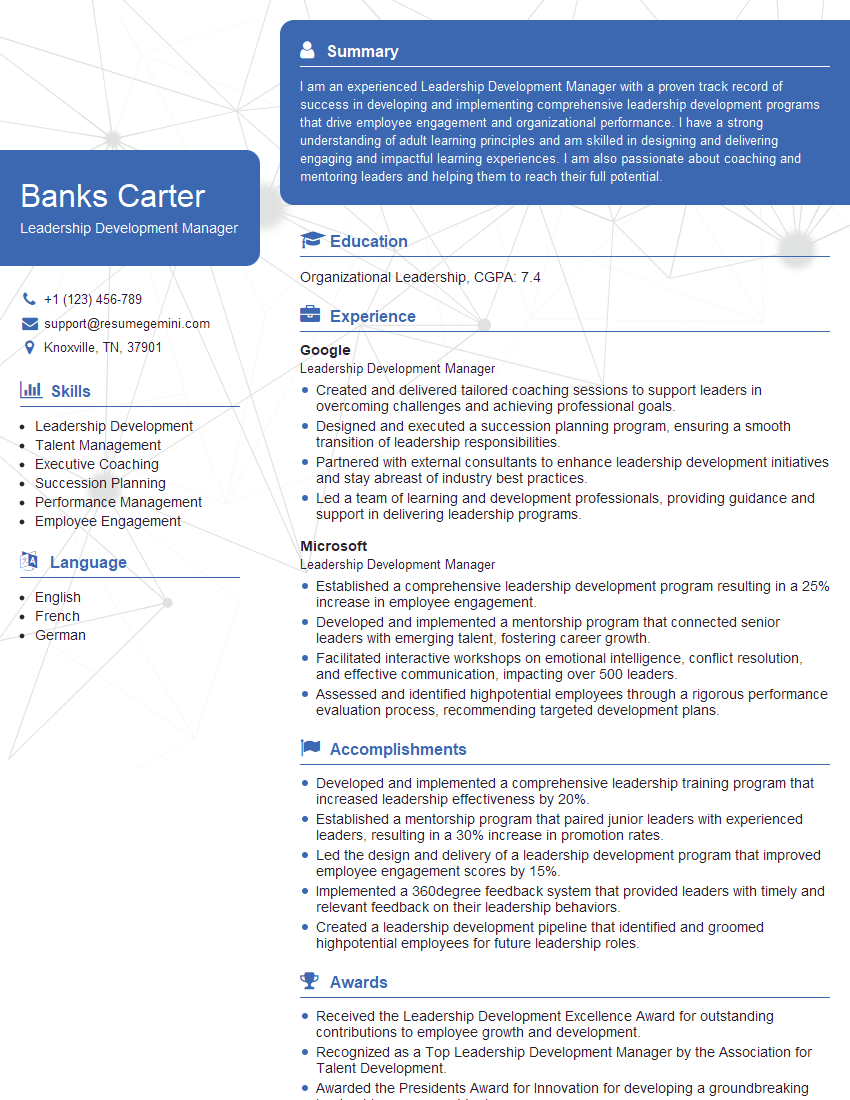
Leadership Development Manager Resume Sample
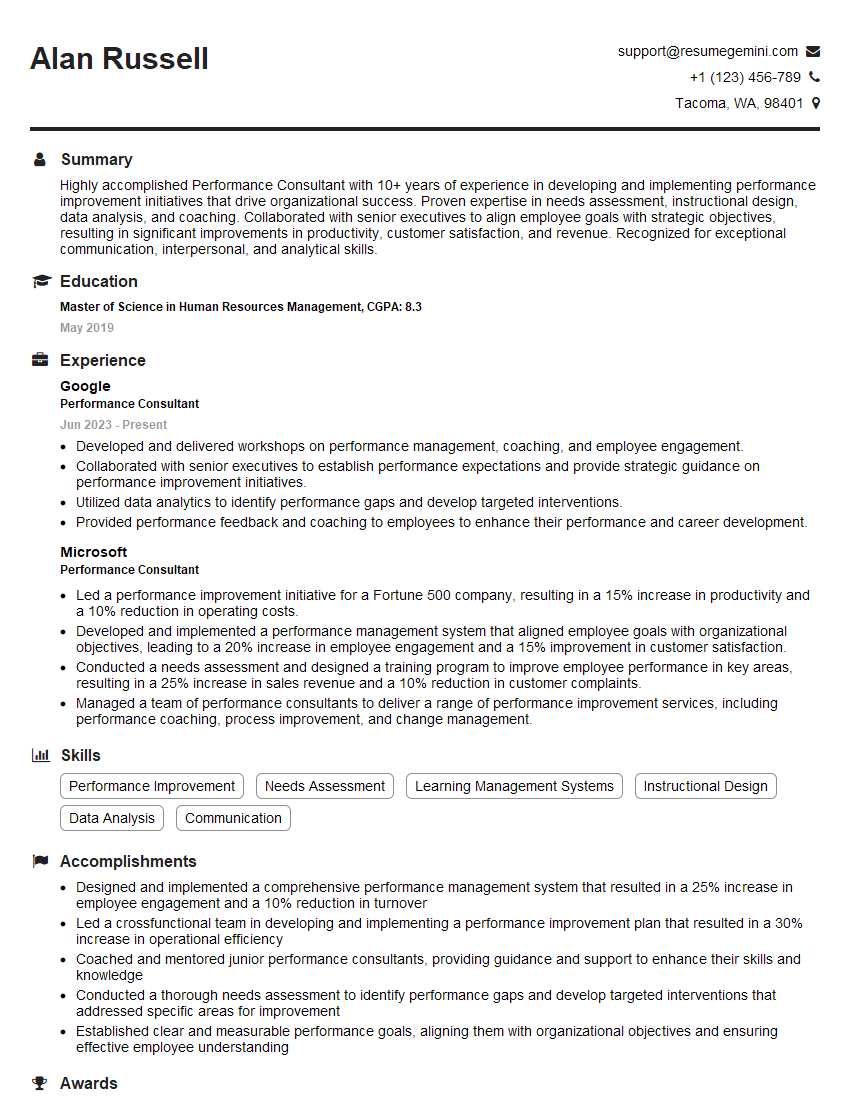
Performance Consultant Resume Sample
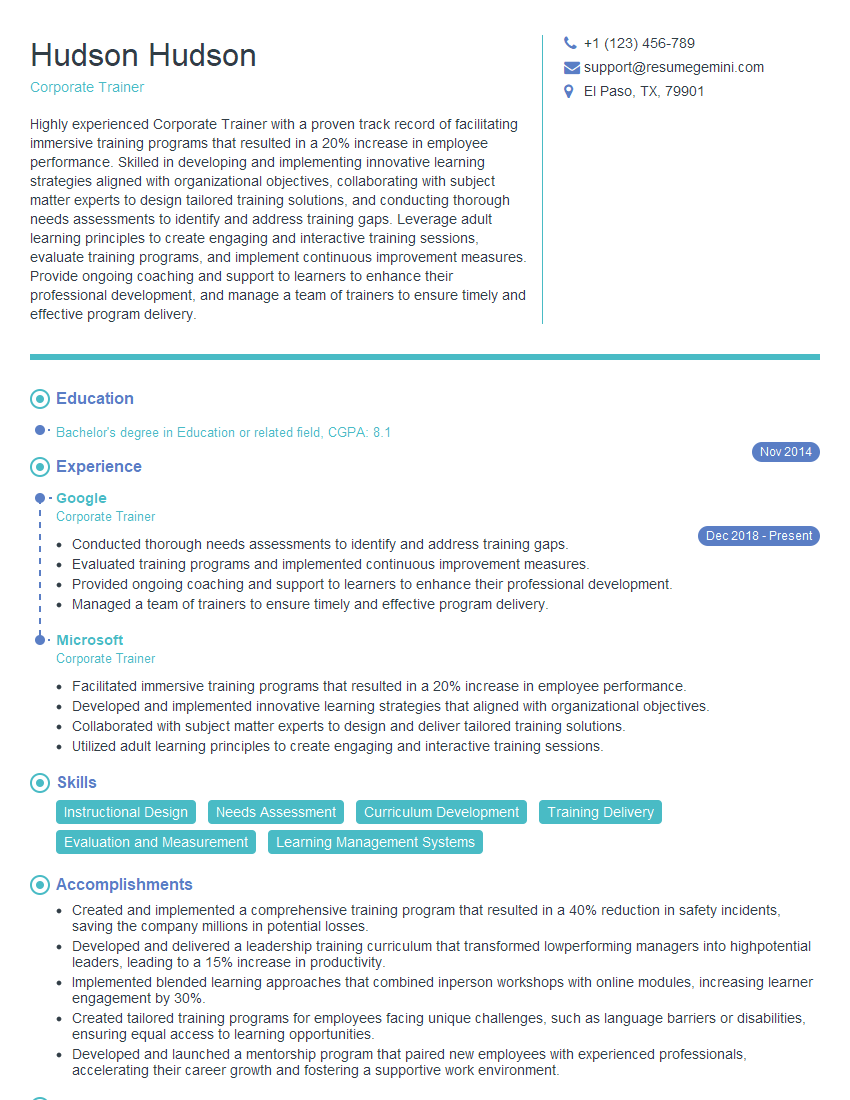
Corporate Trainer Resume Sample

Curriculum Developer Resume Sample
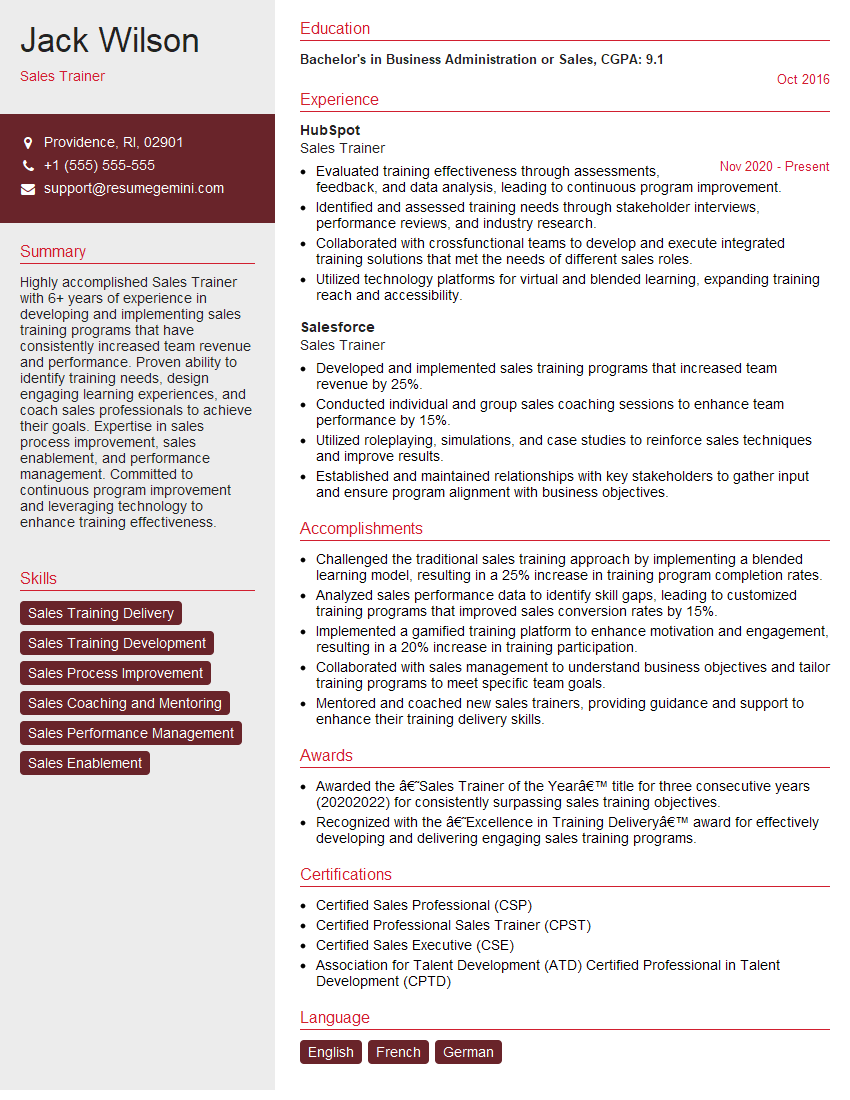
Sales Trainer Resume Sample
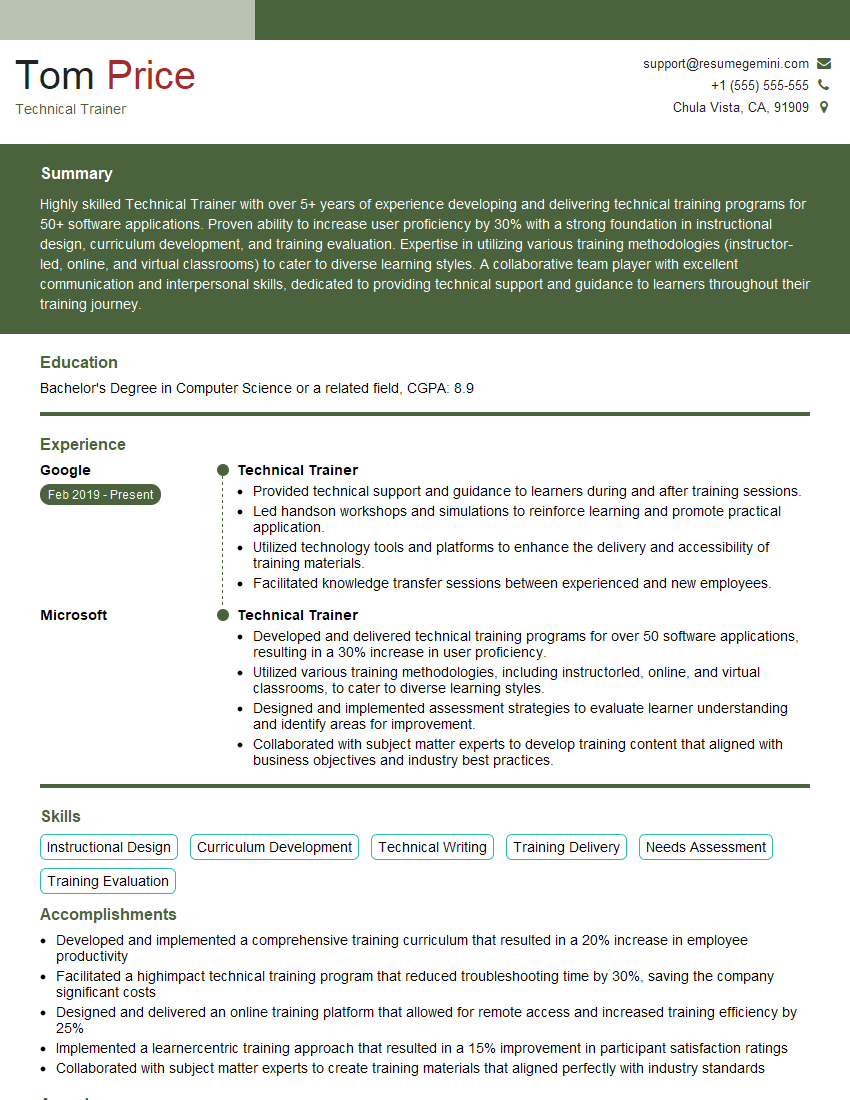
Technical Trainer Resume Sample

Training Specialist Resume Sample
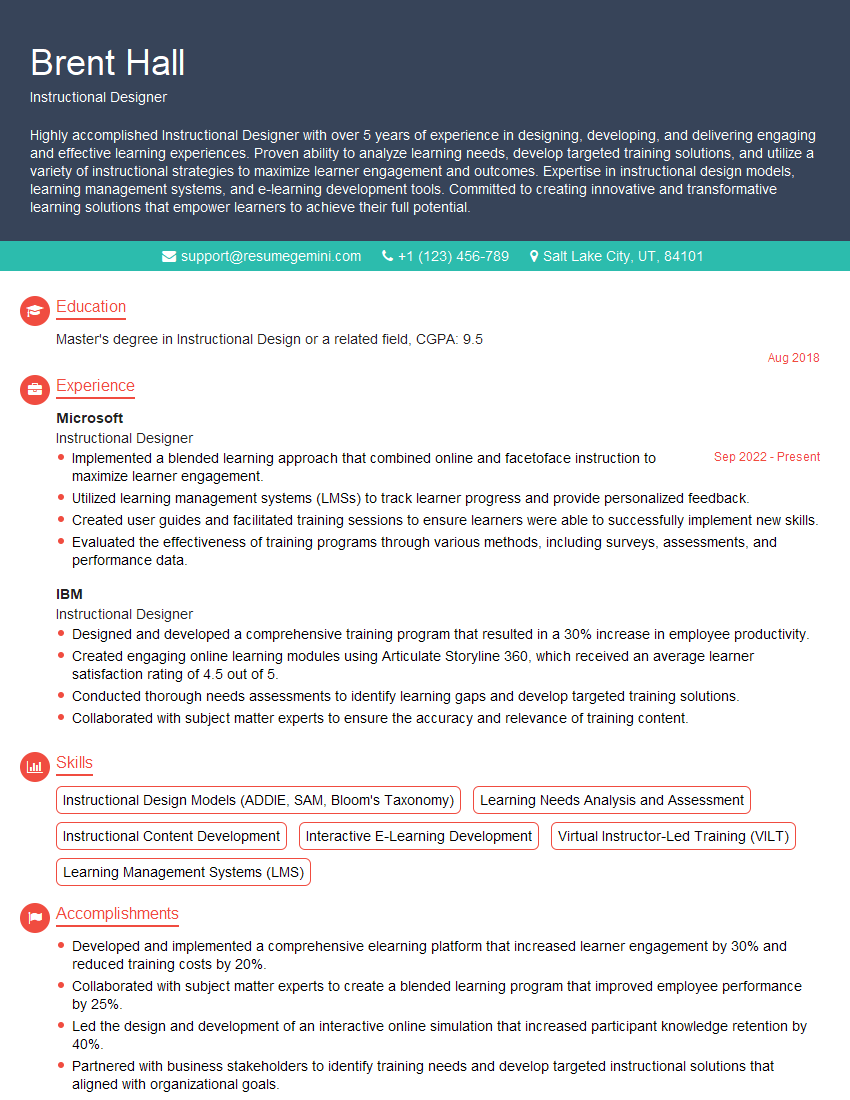
Instructional Designer Resume Sample
Explore more articles
Users Rating of Our Blogs
Share Your Experience
We value your feedback! Please rate our content and share your thoughts (optional).
What Readers Say About Our Blog
To the interviewgemini.com Webmaster.
Very helpful and content specific questions to help prepare me for my interview!
Thank you
To the interviewgemini.com Webmaster.
This was kind of a unique content I found around the specialized skills. Very helpful questions and good detailed answers.
Very Helpful blog, thank you Interviewgemini team.