The thought of an interview can be nerve-wracking, but the right preparation can make all the difference. Explore this comprehensive guide to Roofing and Wall Insulation interview questions and gain the confidence you need to showcase your abilities and secure the role.
Questions Asked in Roofing and Wall Insulation Interview
Q 1. What are the different types of roofing materials and their respective applications?
Roofing materials vary widely, each with its own strengths and weaknesses. The choice depends on factors like climate, budget, aesthetic preferences, and the building’s style. Here are some common types:
- Asphalt Shingles: The most popular choice due to affordability and ease of installation. They come in various styles and colors, offering decent durability and weather resistance. However, they have a shorter lifespan than other options.
- Tile Roofing (Clay or Concrete): Known for exceptional durability, longevity, and fire resistance. They’re more expensive initially but offer a significant return on investment over time. Their weight requires stronger roof structures.
- Metal Roofing (Steel, Aluminum, Copper): Incredibly durable and long-lasting, offering excellent protection against extreme weather conditions. They’re more expensive than asphalt shingles but are highly energy-efficient.
- Slate Roofing: A premium option known for its elegance, durability, and longevity. Slate roofs are extremely heavy and require specialized installation, making them a costly choice.
- Wood Shingles or Shakes: Offer a rustic aesthetic appeal. They require regular maintenance and are susceptible to fire and insect damage, limiting their lifespan.
For instance, in a coastal area prone to high winds and salt spray, a metal roof would be a superior choice to asphalt shingles due to its superior durability and resistance to corrosion. In contrast, a historic building might benefit from the aesthetic appeal and longevity of a slate roof, despite its high cost.
Q 2. Explain the R-value and its significance in insulation.
The R-value measures a material’s resistance to heat flow. A higher R-value indicates better insulation. Think of it like this: the higher the R-value, the more effectively the material prevents heat from escaping in winter and entering in summer. It’s crucial for energy efficiency and maintaining comfortable indoor temperatures.
For example, an R-13 wall insulation will resist heat flow less effectively than an R-21 wall insulation. Building codes often specify minimum R-values required for different climate zones to ensure adequate thermal performance. This helps reduce energy consumption and lower heating and cooling costs.
Q 3. Describe the process of installing fiberglass insulation in a wall cavity.
Installing fiberglass insulation in a wall cavity involves several steps:
- Preparation: Ensure the wall cavity is clean and free of debris. Protective gear, including gloves, eye protection, and a respirator, should be worn.
- Cutting the Insulation: Measure the cavity depth and cut fiberglass batts to fit snugly. It’s best to slightly compress the batts to ensure a tight fit.
- Insertion: Carefully insert the fiberglass batts into the wall cavity, ensuring complete coverage and minimizing gaps. For larger cavities, multiple layers may be required.
- Air Sealing: Seal any gaps or cracks around windows, doors, and electrical outlets to prevent air leakage. Caulk or spray foam are commonly used.
- Finishing: Depending on the application, additional layers of drywall or other finishes may be required.
It’s essential to follow manufacturer’s instructions and local building codes. Proper installation ensures maximum thermal performance and avoids compromising the building’s structural integrity. Improperly installed insulation can lead to reduced effectiveness and potentially increase energy bills.
Q 4. How do you ensure proper ventilation in a roof system?
Proper roof ventilation is crucial for preventing moisture buildup, extending the lifespan of roofing materials, and improving energy efficiency. It involves creating pathways for air to enter and exit the attic space. This can be achieved through:
- Soffit Vents: Located at the eaves (lower edges of the roof), these allow air to enter the attic.
- Ridge Vents: Placed at the peak of the roof, these allow warm, moist air to escape.
- Gable Vents: Located in the gable ends of the roof, providing additional exhaust.
Adequate ventilation is like opening windows in a house – it prevents the buildup of stale, damp air. A balanced system ensures a continuous airflow, preventing condensation and the subsequent growth of mold and mildew. Ignoring ventilation can lead to premature roof failure and costly repairs.
Q 5. What are the common causes of roof leaks and how are they repaired?
Roof leaks can stem from various issues. Identifying the source is key to effective repair.
- Damaged or Missing Shingles: Weather damage, age, or improper installation can lead to cracked or missing shingles, allowing water penetration.
- Flashing Problems: Flashing (metal pieces that seal around chimneys, vents, and other roof penetrations) failure is a common cause of leaks. Improper installation or corrosion can create gaps for water to seep through.
- Valley Leaks: Where two roof slopes meet (valleys), water tends to collect. Improper installation or damage in this area can result in leaks.
- Blocked Gutters and Downspouts: Clogged gutters prevent water from draining properly, leading to overflowing and potential leaks.
Repairs involve addressing the root cause. This might mean replacing damaged shingles, reflashing areas around penetrations, cleaning gutters, or more extensive structural repairs. Always prioritize addressing the source of the leak to prevent further damage.
Q 6. Explain the different types of wall insulation and their thermal properties.
Wall insulation options vary in material, installation method, and thermal performance.
- Fiberglass Batts: Commonly used in wall cavities, offering good thermal resistance at a relatively low cost. They are easy to install but may require careful attention to avoid gaps.
- Spray Foam Insulation: A liquid that expands and hardens to fill all cavities, creating an airtight seal. It offers superior thermal performance and air sealing but is more expensive than fiberglass.
- Rigid Foam Board Insulation: Comes in various thicknesses and R-values and is ideal for exterior wall applications or as a thermal barrier under siding. It provides excellent insulation and structural support.
- Cellulose Insulation: Made from recycled paper, it’s a loose-fill insulation blown into wall cavities. It’s a cost-effective and environmentally friendly option with good thermal properties.
Each material boasts unique thermal properties. Spray foam, for example, offers a much higher R-value per inch compared to fiberglass batts. The best choice depends on factors such as budget, climate, construction type, and desired thermal performance.
Q 7. How do you determine the correct amount of insulation needed for a specific building?
Determining the correct insulation amount involves considering several factors:
- Climate Zone: Colder climates require more insulation than warmer climates. Building codes often dictate minimum R-values for different climate zones.
- Building Design: The size, orientation, and construction of the building all affect its heat loss or gain. A well-insulated building will require less insulation than a poorly designed one.
- Budget: Different insulation materials have different costs, influencing the choice and amount used. A balance between cost and energy efficiency must be struck.
- Energy Efficiency Goals: Setting targets for energy savings can help determine the appropriate level of insulation.
Building codes, energy audits, and energy modeling software can assist in determining the optimum insulation level to meet specific needs and maximize energy efficiency. A professional energy auditor can conduct a thorough assessment to recommend the appropriate insulation amount for a given building.
Q 8. What safety precautions must be taken when working at heights on a roof?
Working at heights on a roof is inherently dangerous. The most crucial safety precaution is always to utilize a proper fall protection system. This typically involves a harness, anchor points securely attached to the structure (not to chimneys or unsecured objects!), and a lifeline to prevent falls. Think of it like climbing a mountain – you wouldn’t go without proper ropes and harnesses.
- Fall Arrest System: This is non-negotiable. It should be inspected regularly and be appropriate for the specific roofing material and conditions.
- Proper Footwear: Wear sturdy, non-slip boots with good ankle support to maintain balance on uneven surfaces.
- Safe Access: Use stable ladders or scaffolding, ensuring they are properly secured and extend at least three feet above the roofline.
- Weather Conditions: Avoid working in high winds, rain, snow, or ice. These conditions significantly increase the risk of slips and falls.
- Teamwork: Never work alone at heights. A spotter can provide crucial support and assistance in case of an emergency.
- Training and Certification: Proper training in fall protection and working at heights is essential. Consider OSHA or similar certifications.
For example, I once worked on a slate roof where each slate was individually secured – the risk of falling was extraordinarily high. We used a complex system of anchors and lifelines, carefully planning each move to ensure the safety of the entire team.
Q 9. What are the different methods for installing spray foam insulation?
Spray foam insulation installation involves dispensing a two-part liquid mixture that expands and hardens to form a continuous insulating layer. There are two main methods:
- Open-Cell Spray Foam: This type expands to about 30 times its original volume, creating a lightweight and flexible insulation layer with good thermal performance but lower R-value compared to closed-cell foam. It’s often used in less demanding applications where air sealing is paramount.
- Closed-Cell Spray Foam: This foam expands less (about 20 times) and creates a denser, more rigid insulation layer with a much higher R-value. It’s excellent for moisture resistance and air sealing, making it suitable for critical applications such as basements and attics exposed to high moisture levels.
The installation process generally involves:
- Surface Preparation: Cleaning and preparing the area to ensure proper adhesion.
- Equipment Setup: Mixing and dispensing the foam using specialized spray equipment.
- Application: Evenly applying the foam to the desired area, ensuring complete coverage. Different nozzle sizes and spray techniques are needed depending on the cavity size and application type.
- Curing: Allowing the foam to fully cure and expand before any further work.
Choosing between open-cell and closed-cell depends on factors like budget, environmental conditions, and the required R-value. For example, in a coastal climate prone to moisture, closed-cell foam would be a better choice due to its superior moisture resistance.
Q 10. Describe the process of inspecting a roof for damage.
Roof inspection is a systematic process that identifies existing and potential problems. A thorough inspection involves a visual assessment and, in some cases, a more in-depth investigation.
- Visual Examination: This begins from the ground, checking for loose or missing shingles, damaged flashing, or signs of sagging. Then, proceed to the roof using safe access methods (see Question 1) and examine the following aspects:
- Shingles: Look for cracks, curling, missing shingles, granule loss, discoloration, and signs of algae growth (black streaks).
- Flashing: Inspect areas around chimneys, vents, skylights, and valleys for any gaps, rust, or damage. These are critical areas where leaks often occur.
- Gutters and Downspouts: Check for clogs, damage, and proper drainage.
- Underlayment: Assess the condition of the underlayment, if visible, for tears or damage.
- Chimneys and Vents: Inspect for cracks, loose mortar, and proper sealing.
- Structural Components: Check for any signs of sagging, rot, or damage to the roof structure itself. This may involve looking at the fascia boards, soffits, and rafters.
- Photography/Documentation: Take detailed photographs or videos to document any damage, aiding in later repairs or insurance claims.
Remember, safety is paramount. If you are uncomfortable or lack experience, it is best to call a qualified roofing professional.
Q 11. How do you identify and address moisture problems in wall insulation?
Moisture problems in wall insulation are a significant concern leading to mold growth, structural damage, and reduced energy efficiency. Identification involves a combination of visual inspection and testing.
- Visual Inspection: Look for signs of water stains, discoloration, or dampness on interior walls. Check for mold growth, particularly in areas with poor ventilation.
- Moisture Meter Testing: Using a moisture meter, measure the moisture content of the wall insulation and surrounding materials. This provides quantitative data to confirm suspicions.
- Thermal Imaging: Thermal imaging can reveal temperature differences indicating areas of heat loss, potentially caused by moisture.
Addressing moisture problems depends on the cause:
- Leaks: Repair any leaks in the roofing, siding, or windows.
- Poor Ventilation: Improve ventilation by installing exhaust fans or ensuring proper attic ventilation.
- Condensation: Address condensation issues by improving air sealing and insulation levels, possibly adding vapor barriers to control moisture flow.
- Water Intrusion: This might require extensive repairs, possibly including wall cavity replacement and the removal of damaged insulation.
For example, a client once experienced persistent wall dampness. We used a moisture meter to pinpoint the area of high moisture content and discovered a hidden leak in the exterior siding. Repairing the leak and replacing the affected insulation resolved the issue.
Q 12. What are the benefits of using reflective insulation?
Reflective insulation works by reflecting radiant heat rather than absorbing it, reducing heat transfer into or out of the building. It’s most effective in climates with significant solar radiation.
- Reduced Energy Costs: By reflecting solar heat in the summer and retaining heat in the winter, reflective insulation can decrease energy costs for heating and cooling.
- Improved Comfort: It helps maintain a more consistent indoor temperature, increasing occupant comfort.
- Easy Installation: Many reflective insulation products are relatively easy to install, often in the form of blankets or foil-faced foam boards.
- Lightweight and Durable: Reflective insulation is lightweight, making it easier to handle during installation. Many products are also quite durable and resistant to moisture damage.
- Environmental Benefits: Because it reduces energy consumption, reflective insulation can contribute to a smaller carbon footprint.
However, reflective insulation alone is not always sufficient for optimal thermal performance and often needs to be used in conjunction with other insulation methods. For instance, using radiant barrier insulation in an attic reduces heat transfer, but it needs to be combined with sufficient batt insulation to effectively control convective and conductive heat transfer.
Q 13. Explain the importance of air sealing in building energy efficiency.
Air sealing is the process of sealing gaps and cracks in a building’s envelope to prevent uncontrolled air leakage. It’s crucial for energy efficiency because air leakage contributes significantly to heat loss in winter and heat gain in summer.
- Reduced Energy Costs: Preventing air infiltration minimizes the work your heating and cooling systems have to do, leading to significant cost savings.
- Improved Indoor Air Quality: Air sealing can reduce the infiltration of outdoor pollutants and allergens, improving indoor air quality.
- Increased Comfort: It helps maintain a more consistent temperature throughout the building, increasing comfort levels.
- Reduced Moisture Problems: Air sealing can help prevent moisture buildup within the building’s walls and insulation, reducing the risk of mold growth and damage.
Air sealing involves identifying and sealing all cracks and gaps using appropriate materials like caulk, spray foam, weatherstripping, and expanding foam sealant. Consider places where pipes, wires, and ducts penetrate the walls, as these areas are often vulnerable points. For example, properly sealing gaps around windows and doors can reduce drafts and increase comfort substantially.
Q 14. What are the different types of roofing underlayment and their functions?
Roofing underlayment is a waterproof or water-resistant layer installed beneath the roofing material to provide additional protection against moisture damage.
- Felt Underlayment: This traditional underlayment is made of asphalt-saturated felt and provides basic water resistance. It’s relatively inexpensive but less durable and protective than newer options. Think of it like a basic raincoat – it offers some protection but not as much as a more advanced system.
- Synthetic Underlayment: Made from polypropylene or other synthetic materials, this type offers superior water resistance, tear strength, and durability. It’s often more expensive but can significantly extend the life of the roof.
- Rubberized Underlayment: These products provide excellent water resistance and puncture resistance. They’re highly durable but can be more costly.
- Ice and Water Shield: This self-adhering membrane is specifically designed for areas vulnerable to ice dams and water penetration, such as valleys, chimneys, and around dormers. It provides an extra layer of protection in critical areas.
The choice of underlayment depends on factors such as budget, climate conditions, roof type, and the overall lifespan desired. For steeper roofs or those in areas with harsh weather, a high-quality synthetic or rubberized underlayment would be a wise investment.
Q 15. How do you calculate the square footage of a roof?
Calculating roof square footage is crucial for accurate material estimations and project budgeting. The process involves breaking down the roof into simpler geometric shapes – typically rectangles and triangles. For a simple rectangular roof, it’s straightforward: length multiplied by width. However, most roofs are more complex.
Step-by-step calculation for a complex roof:
- Divide the roof into simple shapes: Sketch the roof and divide it into rectangles and triangles. Label each section.
- Calculate the area of each section: For rectangles, use Length x Width. For triangles, use (1/2) x Base x Height. Remember to use consistent units (feet or meters).
- Sum the areas: Add the areas of all the individual sections to get the total roof area in square feet (or square meters).
Example: Let’s say a roof has two rectangular sections: one 20ft x 30ft and another 15ft x 25ft. The total area would be (20ft x 30ft) + (15ft x 25ft) = 600 sq ft + 375 sq ft = 975 sq ft. For gabled roofs, you’ll need to carefully measure the lengths and heights of the triangular sections.
Important Note: Always add extra square footage (typically 5-10%) to account for waste and material overlaps.
Career Expert Tips:
- Ace those interviews! Prepare effectively by reviewing the Top 50 Most Common Interview Questions on ResumeGemini.
- Navigate your job search with confidence! Explore a wide range of Career Tips on ResumeGemini. Learn about common challenges and recommendations to overcome them.
- Craft the perfect resume! Master the Art of Resume Writing with ResumeGemini’s guide. Showcase your unique qualifications and achievements effectively.
- Don’t miss out on holiday savings! Build your dream resume with ResumeGemini’s ATS optimized templates.
Q 16. What are the common problems associated with improperly installed insulation?
Improper insulation installation leads to a cascade of problems, impacting energy efficiency, indoor comfort, and even structural integrity. Common issues include:
- Increased energy bills: Gaps and poor installation allow heat to escape in winter and enter in summer, straining your HVAC system and driving up energy consumption.
- Moisture problems: Inadequate vapor barriers can lead to condensation within the wall cavity or attic, causing mold growth, rot, and structural damage. This is especially critical in cold climates.
- Uneven temperatures: Inconsistent insulation leads to temperature variations throughout the house, creating uncomfortable hot and cold spots.
- Reduced indoor air quality: Mold and mildew growth, a consequence of moisture problems, can significantly impact indoor air quality and cause respiratory issues.
- Pest infestations: Gaps and poorly sealed areas can become havens for pests, leading to infestations and further damage.
- Fire hazards: Some insulation materials are flammable, and improper installation can increase the risk of fire spreading.
Imagine trying to keep a cold drink cold without proper insulation – the ice melts quickly, much like heat escapes through improperly insulated walls and roofs. A properly installed insulation system should be continuous and airtight to prevent heat transfer.
Q 17. What are the building codes and regulations related to roofing and insulation in your area?
Building codes and regulations regarding roofing and insulation vary significantly by location (state, county, even city). They’re designed to ensure public safety, energy efficiency, and structural integrity. Generally, these regulations address:
- Roofing materials: Specific requirements may exist for fire resistance, wind resistance, and the type of materials allowed (e.g., asphalt shingles, metal roofing).
- Insulation R-value: Minimum R-values (a measure of thermal resistance) are often specified based on climate zone, building type, and wall/roof assembly.
- Vapor barriers: Regulations may mandate the use and proper installation of vapor barriers to prevent moisture problems.
- Fire safety: Codes often dictate the use of fire-resistant materials in certain areas and the spacing requirements between insulation and electrical wiring.
- Accessibility: Requirements for access to attics and roofs for maintenance and inspections are common.
It’s crucial to check with your local building department to obtain the specific codes and regulations for your area before starting any roofing or insulation project. Failure to comply can result in fines and project delays.
Q 18. Describe your experience working with different types of roofing fasteners.
My experience with roofing fasteners is extensive, encompassing various types suitable for different roofing materials and applications. I’ve worked extensively with:
- Nails: From common galvanized roofing nails to specialized hurricane-resistant nails, the choice depends on the roofing material (e.g., asphalt shingles, metal roofing), wind loads, and local building codes. Proper nail penetration is critical for secure fastening.
- Screws: Self-tapping screws are commonly used with metal roofing for increased durability and resistance to high winds. The selection depends on the gauge of the metal and screw type.
- Staples: Used for attaching underlayment and certain types of roofing felt, staples offer a quick and efficient fastening solution. Proper penetration is essential to prevent blow-offs.
Choosing the right fastener is vital. Using undersized nails with asphalt shingles, for example, can lead to premature shingle failure and leaks. I always ensure that fastener selection aligns with the specific roofing material, local codes, and expected weather conditions, to minimize risk and ensure longevity.
Q 19. How do you manage a roofing or insulation project timeline and budget?
Effective project management for roofing and insulation involves meticulous planning and execution. I use a combination of strategies:
- Detailed Project Scope: A comprehensive scope outlining all tasks, materials, and timelines is essential. This includes contingency planning for unexpected issues.
- Realistic Budgeting: Accurate material costs, labor costs, and potential unforeseen expenses should be factored into the budget. Using established pricing databases and consulting with suppliers helps maintain accuracy.
- Timeline Creation: A detailed timeline that considers weather conditions (crucial for roofing), material delivery times, and worker availability ensures timely project completion.
- Regular Monitoring and Communication: Regular progress checks, open communication with clients, and adjustments as needed are key to keeping the project on track and within budget. I maintain thorough documentation throughout the process.
- Risk Management: Identifying potential risks (e.g., material shortages, weather delays) and developing mitigation plans is essential to avoid cost overruns and delays.
For instance, I recently managed a large commercial roofing project where potential rain delays were factored into the timeline. By securing a weatherproof temporary covering, we avoided significant setbacks, ensuring the project was completed on time and under budget.
Q 20. What are the environmental considerations related to roofing and insulation materials?
Environmental considerations are paramount in roofing and insulation. The impact of material selection and waste management should always be considered.
- Material Selection: Opting for recycled content materials (e.g., recycled fiberglass insulation, reclaimed wood) minimizes environmental impact. Choosing materials with lower embodied carbon helps reduce greenhouse gas emissions.
- Sustainable Practices: Utilizing energy-efficient insulation leads to reduced energy consumption and lower carbon footprints. Proper disposal of hazardous waste (e.g., old asbestos roofing) is crucial to protect the environment.
- Waste Reduction: Implementing strategies to minimize material waste during the construction process, such as precise cutting and reusing scrap materials when possible, reduces landfill waste.
- Life Cycle Assessment: Considering the entire lifecycle of materials – from manufacturing to disposal – allows for informed decisions about the most environmentally responsible choices.
For instance, I frequently recommend using spray foam insulation which provides superior air sealing and reduces energy consumption, lowering the overall carbon footprint of the building. The selection of roofing materials should also reflect environmental concerns; choosing durable options extends the lifespan of the roof reducing landfill waste.
Q 21. Explain the difference between batt insulation and loose-fill insulation.
Batt insulation and loose-fill insulation are both common types but differ significantly in form and application.
- Batt Insulation: Comes in pre-cut rectangular or roll form, typically made from fiberglass, mineral wool, or cellulose. It’s relatively easy to install in standard wall cavities or attics. Think of it like a big blanket for your walls and roof.
- Loose-Fill Insulation: Comes in loose granular form, including blown-in cellulose, fiberglass, or mineral wool. It’s installed using specialized machinery that blows the insulation into wall cavities, attics, or other hard-to-reach spaces. This allows filling irregular spaces and providing a continuous insulation layer.
The choice depends on the application. Batt insulation is ideal for straightforward installations in standard-sized cavities, whereas loose-fill insulation excels in filling irregular spaces, providing better coverage, and addressing air sealing challenges. Loose-fill is often preferred for attics and hard-to-reach areas. Both offer excellent thermal performance but vary in ease of installation and suitability for different applications.
Q 22. How do you handle unexpected challenges or problems on a roofing or insulation job?
Unexpected challenges are inevitable in roofing and insulation. My approach is methodical and focuses on problem-solving, not panic. First, I assess the situation thoroughly, identifying the root cause of the problem. This might involve inspecting the damaged area, checking building plans, or even consulting with the client to understand their expectations.
For example, if we discover unexpected rotted wood during a roofing project, we don’t simply patch it. We fully expose the extent of the damage, determine the cause (water intrusion, pest infestation, etc.), and then propose a solution—which might involve replacing damaged beams and installing improved ventilation—to the client. Transparency is key. We present various options, outlining the costs and long-term implications of each approach. After obtaining client approval, we proceed with the repair, meticulously documenting every step.
Another example: if an insulation installation runs into unforeseen structural complications, we might need to adjust the planned insulation type or add extra support. We’d collaborate with engineers or other specialists as needed to find the optimal solution, ensuring both safety and building code compliance.
Ultimately, my strategy involves clear communication, thorough investigation, and a focus on finding the best solution to address the unexpected problem, minimizing project delays and maintaining client satisfaction.
Q 23. What software or tools do you use to estimate roofing or insulation projects?
Accurate estimating is crucial for successful roofing and insulation projects. I use a combination of software and tools, tailored to the specific project requirements. For initial measurements and site assessment, I use a laser distance meter for precise measurements, and a drone with photogrammetry software for detailed roof surveys, especially on complex or large-scale projects. This helps to avoid costly mistakes associated with manual measurements.
For material estimation and cost calculation, I primarily rely on software such as On-Screen Takeoff or PlanSwift. These programs allow me to import blueprints (typically .pdf or .dwg files), trace the areas needing roofing or insulation, and automatically calculate the required quantities of materials (e.g., shingles, insulation batts, spray foam). The software then integrates these quantities with current material pricing data, generating a detailed cost estimate that includes labor, equipment rental, and profit margins.
Furthermore, I use spreadsheets to track project expenses, monitor progress, and manage budgets. My estimation process isn’t just about numbers; it’s about thorough planning and risk mitigation, ensuring clients get a realistic and accurate project budget before we begin.
Q 24. Describe your experience working with different types of roofing flashings.
Flashing is critical for preventing water damage, and I have extensive experience with various types. These include:
- Step Flashing: Used for intersections where a roof meets a vertical surface (like a wall). It’s crucial for proper water diversion, preventing water from seeping under the shingles and into the structure. I ensure proper overlap and sealing to avoid leaks.
- Counter Flashing: Works in conjunction with step flashing. It’s the portion of flashing embedded within the wall, providing additional protection. I carefully install this to create a watertight seal.
- Valley Flashing: Used at the intersection of two roof slopes (valleys). This requires precise installation, often using specialized metal flashing with overlaps to channel water away from the intersection. Incorrect installation here can lead to significant water damage.
- Chimney Flashing: Protects the gap between a chimney and the roof. I always use a multi-layered system, incorporating apron flashing, counter flashing, and careful sealant application.
- Roof Jack Flashing: Similar to chimney flashing, this protects pipe penetrations in the roof. Correct sealing around pipes and vents is essential to prevent leaks.
My experience encompasses working with different materials, including galvanized steel, aluminum, copper, and rubberized asphalt. The choice of material depends on the project requirements and budget. For example, copper is more durable and aesthetically pleasing but more expensive. I always discuss material options with the client, ensuring they understand the trade-offs between cost and longevity.
Q 25. How do you ensure quality control throughout a roofing or insulation project?
Quality control is paramount. My approach is proactive and systematic, starting with meticulous planning and continuing throughout the project. Before starting any roofing or insulation project, I review the blueprints and specifications to ensure a clear understanding of the scope of work.
During the project, I employ several QC methods:
- Regular inspections: I conduct frequent inspections of the work being done, checking for correct material application, adherence to building codes, and overall workmanship. This allows for early detection and correction of any issues.
- Detailed documentation: I maintain thorough records, including photographs and detailed notes of every stage of the project. This serves as a valuable reference during future inspections or if any issues arise.
- Material checks: I inspect materials upon delivery to ensure quality and correct quantities. This prevents delays and costly rework due to faulty materials.
- Pre-completion inspections: Before project completion, I conduct a comprehensive inspection with the client, addressing any concerns and ensuring their complete satisfaction.
- Post-completion checks: I schedule a follow-up visit after the project completion to check for any unforeseen issues.
My commitment to quality control ensures not just a perfect finish but a durable and long-lasting outcome, preventing costly repairs in the future. This reflects positively on my reputation and builds client trust.
Q 26. What are your strengths and weaknesses related to roofing and insulation?
My strengths lie in my deep understanding of roofing and insulation principles, coupled with my practical experience and attention to detail. I’m proficient in various roofing and insulation techniques, capable of managing multiple projects simultaneously, and adept at problem-solving under pressure. My strong communication skills allow for effective collaboration with clients and team members.
One area where I could improve is in streamlining administrative tasks. While I am efficient, I could implement more advanced project management software to optimize scheduling and resource allocation. I am currently taking online courses to improve my proficiency in these areas.
Q 27. Describe your experience working in a team environment on roofing and insulation projects.
I thrive in team environments. Effective teamwork is essential for successful completion of complex roofing and insulation projects. My experience includes collaboration with various specialists, such as engineers, electricians, and other contractors. I believe in clear communication, respecting each team member’s expertise, and fostering a cooperative atmosphere.
For example, on a recent large-scale commercial roofing project, our team included roofers, insulation installers, and scaffolding experts. I coordinated the work schedule, ensuring seamless transitions between the phases. Regular team meetings helped us troubleshoot potential problems and maintain open lines of communication. The successful completion of that project is a testament to the power of teamwork and effective leadership. I prioritize creating a positive and productive work environment, fostering collaboration, and ensuring every team member feels valued and respected, leading to higher quality work and increased efficiency.
Key Topics to Learn for Roofing and Wall Insulation Interview
- Roofing Materials & Properties: Understanding different roofing materials (asphalt shingles, tile, metal, etc.), their lifespan, installation methods, and thermal properties.
- Roofing System Design & Installation: Knowledge of underlayment, flashing, ventilation, and the importance of proper installation techniques to prevent leaks and ensure longevity.
- Wall Insulation Types & R-Values: Familiarize yourself with various insulation materials (fiberglass, cellulose, spray foam, etc.) and their respective R-values, understanding the impact on energy efficiency.
- Insulation Installation Methods: Learn about different installation techniques for wall insulation, including batts, blown-in insulation, and spray foam application, and their suitability for various wall constructions.
- Moisture Management in Roofing & Walls: Understand the critical role of vapor barriers and proper ventilation in preventing moisture damage and mold growth.
- Building Codes & Regulations: Familiarity with relevant building codes and regulations related to roofing and insulation installation is crucial for safe and compliant work.
- Energy Efficiency & Sustainability: Discuss the importance of energy-efficient roofing and insulation practices in reducing energy consumption and promoting sustainability.
- Troubleshooting & Problem Solving: Prepare to discuss common problems encountered during roofing and insulation installations, such as leaks, air leaks, and moisture issues, and how to effectively troubleshoot and resolve them.
- Safety Procedures & Equipment: Demonstrate understanding of safety protocols and the proper use of tools and equipment in roofing and insulation work.
- Estimating & Project Management: Understanding basic principles of project estimation, scheduling, and material management will be beneficial.
Next Steps
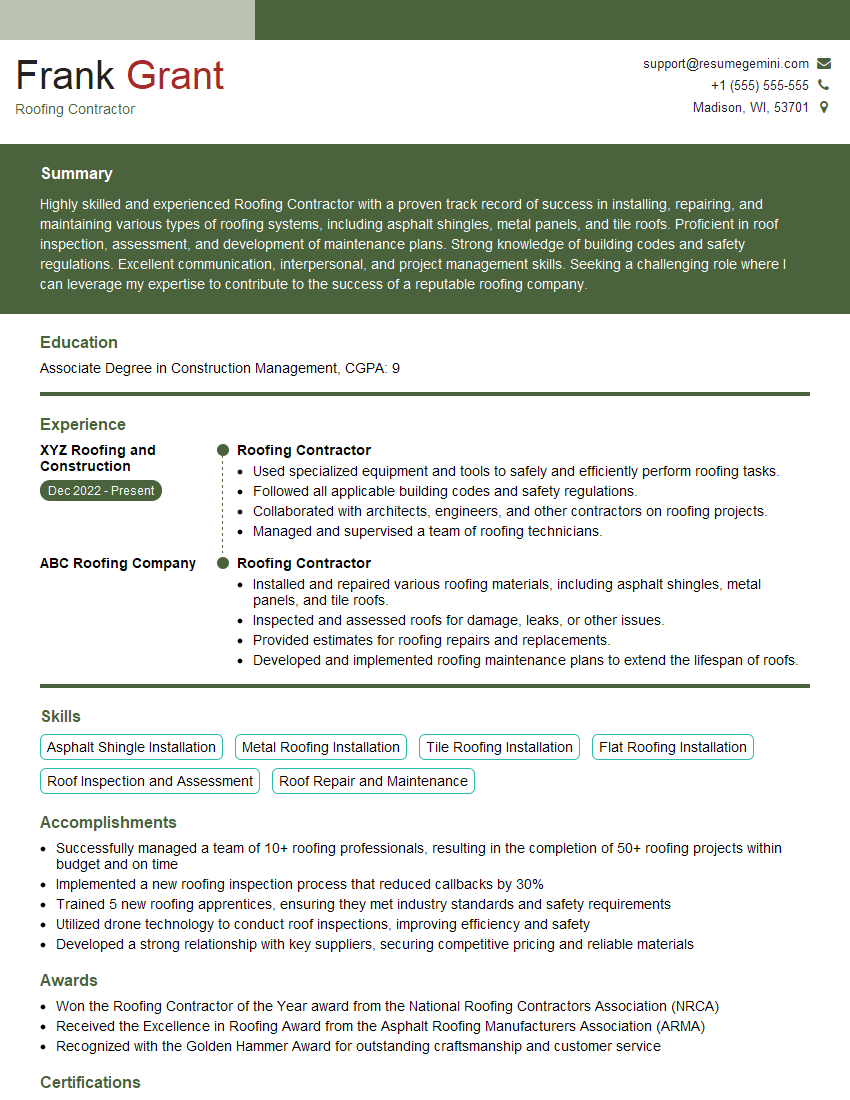
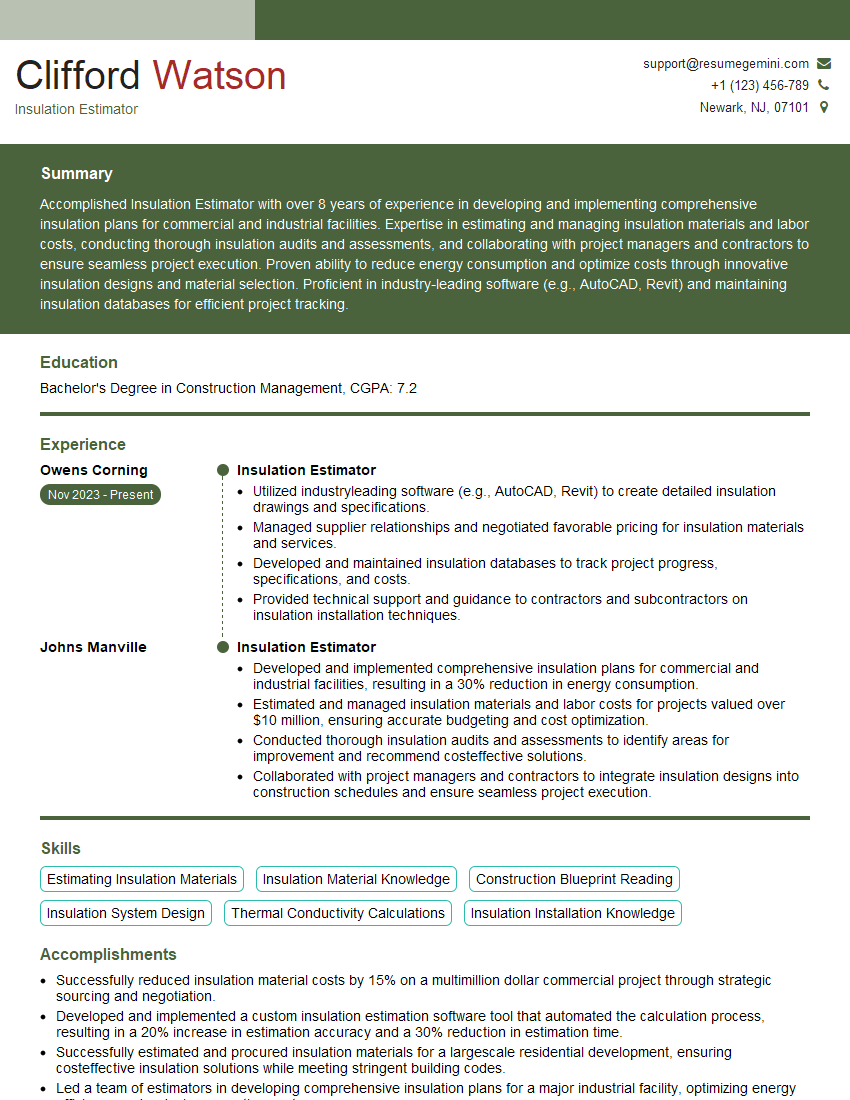
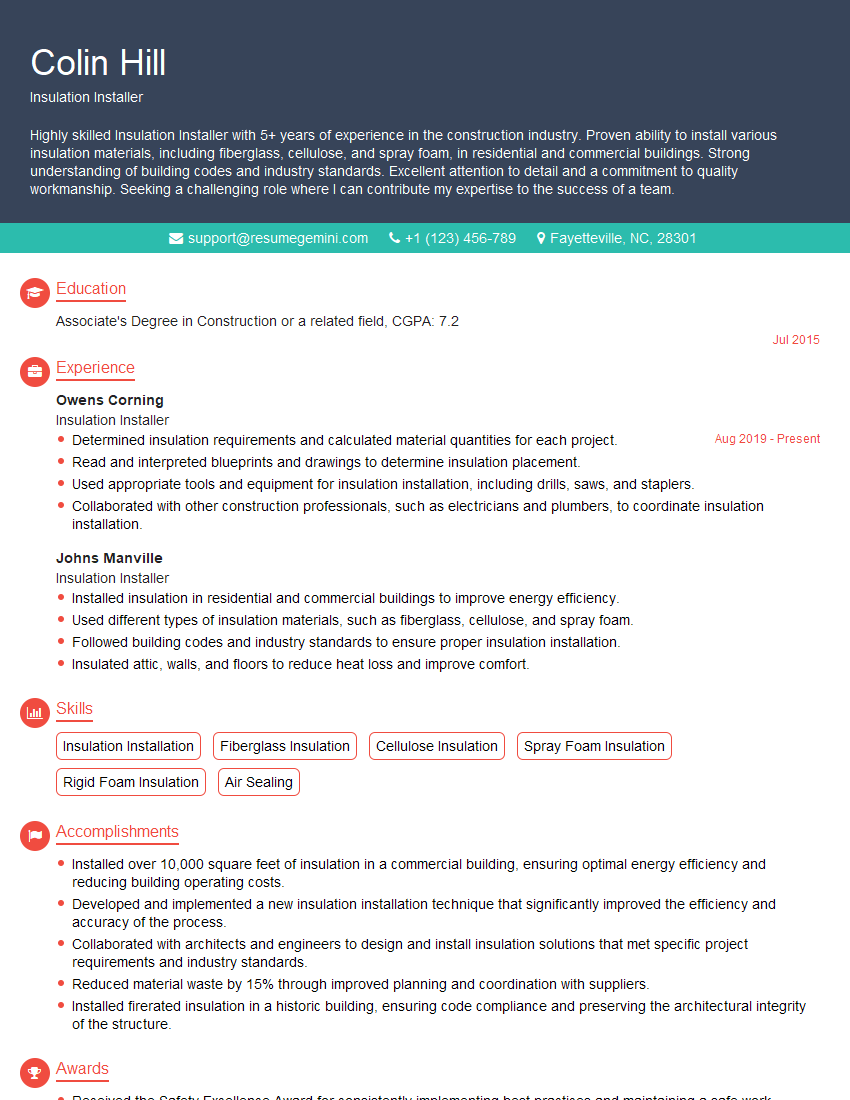
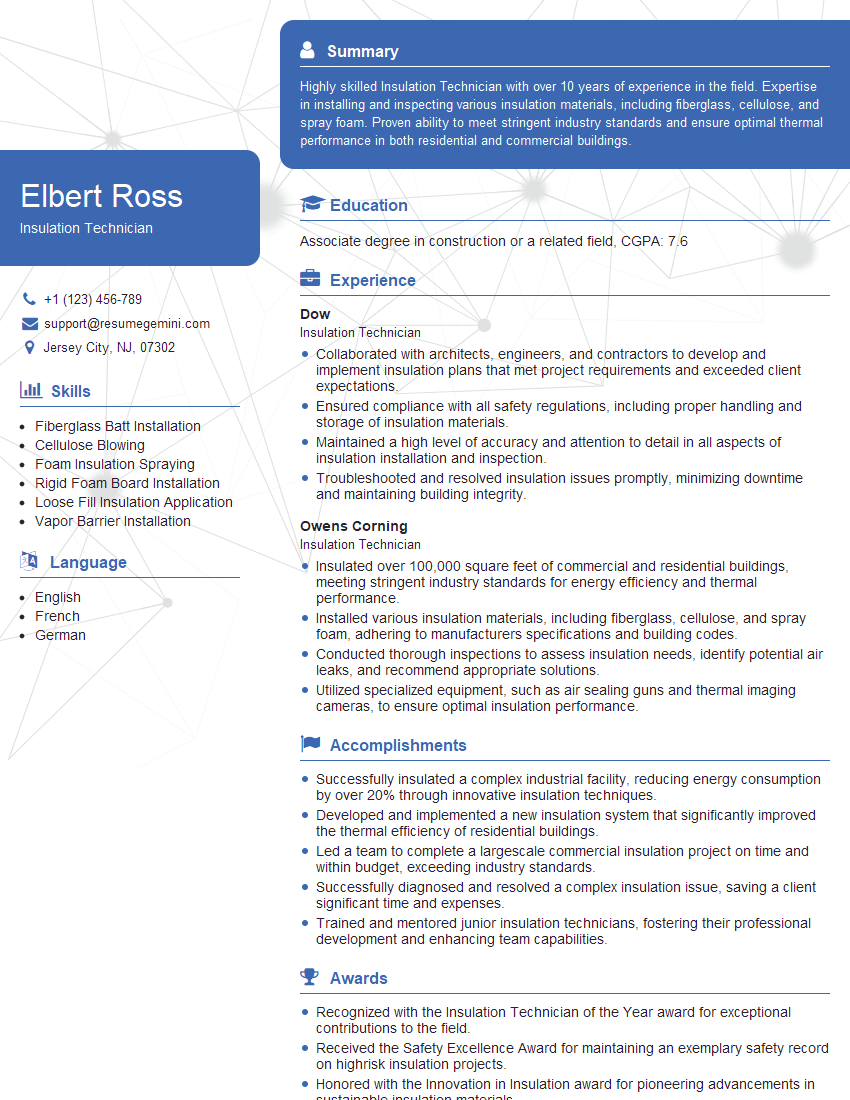
Mastering roofing and wall insulation is key to advancing your career in the construction industry. It opens doors to specialized roles and higher earning potential. To significantly improve your job prospects, create an ATS-friendly resume that highlights your skills and experience effectively. ResumeGemini is a trusted resource that can help you build a professional resume that stands out. We offer examples of resumes tailored to the Roofing and Wall Insulation field to help you get started.
Explore more articles
Users Rating of Our Blogs
Share Your Experience
We value your feedback! Please rate our content and share your thoughts (optional).
What Readers Say About Our Blog
To the interviewgemini.com Webmaster.
Very helpful and content specific questions to help prepare me for my interview!
Thank you
To the interviewgemini.com Webmaster.
This was kind of a unique content I found around the specialized skills. Very helpful questions and good detailed answers.
Very Helpful blog, thank you Interviewgemini team.