Every successful interview starts with knowing what to expect. In this blog, we’ll take you through the top Parent and Family Education interview questions, breaking them down with expert tips to help you deliver impactful answers. Step into your next interview fully prepared and ready to succeed.
Questions Asked in Parent and Family Education Interview
Q 1. Describe your experience designing and delivering parent education programs.
My experience in designing and delivering parent education programs spans over ten years, encompassing a wide range of topics from infant development to adolescent challenges. I’ve developed and facilitated workshops, seminars, and support groups, both in-person and online. My approach prioritizes creating interactive, engaging learning environments. For instance, one program I designed focused on positive discipline strategies for toddlers. We incorporated role-playing exercises, where parents practiced techniques in a safe and supportive setting, leading to significant improvements in their confidence and parenting skills. Another successful program addressed the unique challenges faced by parents of children with special needs, using a collaborative, strengths-based model to empower parents and connect them with relevant resources.
I also have extensive experience tailoring programs to meet the specific needs of diverse populations, including culturally sensitive approaches and utilizing various communication methods to ensure inclusivity and accessibility. Program evaluation is an integral part of my process, using feedback mechanisms to continuously improve the effectiveness and impact of my work.
Q 2. What are the key developmental milestones for children aged 0-3?
The first three years of a child’s life are a period of remarkable growth and development, marked by significant milestones across various domains. Think of it as building the foundation of a house – each stage is crucial for the overall structure.
- Physical Development: This includes gross motor skills like crawling, walking, and running, and fine motor skills such as grasping objects, using utensils, and drawing. For example, most children will start walking independently around 12 months, but the range is wide and perfectly normal.
- Cognitive Development: This involves the development of thinking, problem-solving, and language skills. A child might babble initially and then move on to simple words and eventually sentences. They also begin to understand cause and effect, demonstrated by pushing buttons to make toys light up.
- Social-Emotional Development: This covers the child’s ability to interact with others, manage emotions, and develop a sense of self. For instance, a child learning to share toys or expressing feelings like happiness, sadness, or anger are key milestones.
- Language Development: This involves comprehension and expression of language. Milestones range from babbling and cooing to speaking simple words and phrases to forming sentences. The rate of development varies greatly among children.
It’s important to remember that these are just general guidelines; each child develops at their own pace. Variations are normal, and significant delays should prompt a consultation with a pediatrician or developmental specialist.
Q 3. Explain different parenting styles and their potential impact on child development.
Parenting styles significantly influence child development. While no single style is universally ‘best’, understanding different approaches can help parents find what works best for their family.
- Authoritarian: This style emphasizes obedience and control, with strict rules and little open communication. Children raised in this style might be well-behaved but potentially lack self-esteem and independence.
- Authoritative: This is often considered the most effective style. It balances structure with warmth and responsiveness, involving children in decision-making and encouraging open communication. Children tend to be self-reliant, responsible, and have high self-esteem.
- Permissive: This style involves few rules or expectations, with a focus on leniency and avoiding conflict. Children might struggle with self-discipline and boundaries.
- Uninvolved/Neglectful: This style shows little interest or involvement in the child’s life, lacking both warmth and control. This can have serious negative consequences on a child’s social, emotional, and cognitive development.
For example, an authoritative parent might set clear bedtime rules but also explain the reasons and be open to adjusting the routine if needed. A permissive parent might allow the child to stay up late without consequences, while an authoritarian parent might enforce a strict bedtime without explanation. The impact on the child’s sleep patterns and overall well-being would significantly differ.
Q 4. How would you address a parent struggling with behavioral challenges in their child?
Addressing behavioral challenges requires a collaborative approach focusing on understanding the root cause of the behavior. It’s crucial to avoid judgment and work with the parent to develop strategies that support both the child and the parent.
- Gather Information: Begin by understanding the specific behavior, its frequency, the context in which it occurs, and any triggers. For example, is the child acting out primarily at school, at home, or in social situations?
- Identify Underlying Issues: Behavioral challenges can stem from various sources, including developmental delays, unmet needs (such as attention or sleep), or underlying medical conditions. Rule out medical reasons first.
- Develop Strategies: Collaboratively develop strategies using positive reinforcement techniques, focusing on rewarding positive behavior rather than solely punishing negative behavior. Consistent routines, clear expectations, and age-appropriate consequences are vital.
- Provide Support & Resources: Offer resources such as parenting classes, books, or referrals to therapists or specialists if needed. Creating a supportive environment is vital for parent success.
- Monitor & Adjust: Regular check-ins allow you to monitor the effectiveness of the strategies and adjust as needed. Flexibility and continuous support are key.
For example, if a child is consistently throwing tantrums, we might explore potential triggers, such as hunger or tiredness, and implement strategies such as providing regular snacks and ensuring adequate sleep. We could also teach the child alternative ways to express their frustration.
Q 5. What resources would you recommend to parents facing financial difficulties?
Financial difficulties can significantly impact family well-being and parenting. Connecting parents with relevant resources is crucial.
- Government Assistance Programs: Information on food stamps (SNAP), housing assistance (Section 8), and Medicaid should be readily provided.
- Local Charities and Nonprofits: Many organizations provide financial assistance, food banks, clothing drives, and utility assistance.
- Community Resources: These could include free or low-cost healthcare clinics, parenting support groups, and childcare programs.
- Financial Counseling: Referrals to financial counselors who can help families create budgets and manage debt can be beneficial.
It’s important to make parents aware of these resources and assist them in navigating the application processes. Providing clear and accessible information is key, avoiding overwhelming them with excessive details.
Q 6. Describe your approach to working with diverse families and cultural backgrounds.
Working with diverse families requires cultural sensitivity and humility. My approach is rooted in understanding and respecting the unique values, beliefs, and practices of each family.
- Culturally Responsive Practices: I adapt my communication style and program content to be inclusive of various cultural backgrounds. This includes being mindful of language barriers, using appropriate visual aids, and employing culturally relevant examples.
- Collaboration and Partnership: I view families as partners in the process, actively seeking their input and perspectives. This includes actively listening to their concerns, needs, and preferences.
- Respectful Communication: I ensure clear, respectful, and non-judgmental communication. This involves actively listening, using appropriate language, and acknowledging the family’s expertise in their own lives.
- Building Trust: Establishing trust is fundamental, requiring patience, empathy, and a genuine commitment to understanding their unique experiences and perspectives.
For example, when working with families from a particular cultural background, I would research appropriate communication styles and family dynamics to ensure the best possible outcome.
Q 7. How do you assess a family’s needs and tailor your support accordingly?
Assessing a family’s needs is a crucial first step. I use a holistic approach, considering various factors to tailor my support.
- Initial Assessment: This involves gathering information through interviews, questionnaires, and observations. It’s vital to create a safe and non-judgmental environment where families feel comfortable sharing openly.
- Identifying Strengths and Challenges: The assessment should highlight both the family’s strengths and the challenges they are facing. Understanding their resources and support systems is just as important as identifying their areas of need.
- Collaboration and Goal Setting: Involve families in identifying their goals and developing a plan to address their needs. Collaborative goal setting increases commitment and ownership.
- Tailoring Support: Based on the assessment, I tailor my support to the specific needs of each family. This may include individualized counseling, group workshops, referrals to other services, or a combination of approaches.
- Ongoing Evaluation: Regular follow-ups allow for monitoring progress, making adjustments as needed, and ensuring the effectiveness of the intervention. It’s crucial to remain flexible and responsive to changes in the family’s circumstances.
For instance, a family struggling with sibling rivalry might benefit from workshops on sibling communication and conflict resolution, while a family experiencing financial hardship might need referrals to financial assistance programs and community resources.
Q 8. Explain your understanding of child abuse prevention and reporting procedures.
Child abuse prevention is multifaceted, focusing on strengthening families, educating caregivers, and creating supportive communities. Reporting procedures are crucial for protecting children at risk. My understanding encompasses both proactive and reactive elements.
Prevention involves equipping parents with the skills and knowledge to nurture children effectively. This includes parenting classes that cover stress management, positive discipline techniques, and child development milestones. We also work to identify and support vulnerable families through home visits and community outreach programs. Early intervention is key.
Reporting involves mandatory reporting laws, where professionals like myself are legally obligated to report suspected abuse or neglect to the appropriate child protective services agency. This requires careful assessment, documentation, and a clear understanding of the legal requirements. False reporting can have serious consequences, so a thorough investigation and professional judgement are paramount. For example, if I observe physical signs of abuse or hear a parent describe behavior that suggests neglect, I’m legally and ethically bound to report it. The report includes detailed information about the child, the suspected abuse, and any supporting evidence.
Q 9. What strategies do you employ to foster positive parent-child relationships?
Fostering positive parent-child relationships is the cornerstone of my work. I use a range of strategies, focusing on enhancing communication, building trust, and promoting mutual respect.
- Strengthening Communication: I teach parents active listening skills, encouraging them to truly hear their children’s perspectives. I guide them on expressing their feelings constructively and resolving conflicts calmly. For example, I teach parents ‘I’ statements instead of accusatory language.
- Building Trust: This involves creating a safe and predictable environment for children. Consistency in discipline, and showing empathy towards the child’s feelings are vital. Regular positive interactions – reading together, playing games, sharing quality time – are essential for building bonds.
- Promoting Mutual Respect: Parents learn to treat children as individuals with their own needs and feelings. This includes valuing their opinions, acknowledging their accomplishments, and respecting their boundaries. We address the importance of avoiding power struggles and focusing on collaboration instead.
These strategies are tailored to each family’s unique context and needs. I believe in empowering parents to become confident and capable caregivers.
Q 10. How would you handle conflict between parents during a family education session?
Conflict between parents during a family education session requires a delicate and professional approach. My priority is to maintain a safe and productive learning environment for everyone.
- Neutral Facilitation: I remain neutral and avoid taking sides. I actively listen to both parents’ perspectives, ensuring each feels heard and understood.
- Conflict Resolution Techniques: I guide them towards constructive communication. This may involve teaching active listening skills, reframing statements, and identifying common goals. I might introduce techniques like collaborative problem-solving or compromise.
- Setting Boundaries: If the conflict becomes too intense or disruptive, I might suggest a break or a separate meeting with each parent to address their concerns individually. My role is to facilitate learning, not to mediate intense personal conflicts.
- Referral: If the conflict is severe or ongoing, I would recommend seeking professional help from a therapist or counselor specializing in family dynamics. I would provide referrals to appropriate services.
The goal is to de-escalate the situation and help parents find ways to communicate effectively, prioritizing the well-being of their children. My role is to support their efforts, not to solve their marital issues.
Q 11. What is your experience with group facilitation and discussion techniques?
I have extensive experience facilitating group discussions and utilizing various techniques to maximize engagement and participation. I create a supportive and inclusive environment where everyone feels comfortable sharing their thoughts and experiences.
- Icebreakers and Warm-up Activities: To establish rapport and encourage participation, I use icebreakers that help participants connect with one another.
- Structured Discussions: I use a variety of methods, including brainstorming, round-robin discussions, and small-group activities to ensure everyone has a chance to contribute. I use visual aids like whiteboards or flip charts to enhance engagement.
- Active Listening and Reflective Responses: I actively listen to participants’ comments and provide reflective responses to show that I understand their points. I encourage others to respond to each other respectfully.
- Managing Group Dynamics: I address potential disruptions or conflicts promptly and fairly, ensuring the discussion remains constructive and productive. I am adept at redirecting discussions without shutting down contributions.
I regularly assess the group’s dynamics and adjust my facilitation style as needed to ensure an inclusive and effective learning experience for all.
Q 12. Describe a time you had to adapt your teaching style to meet the needs of a particular parent.
I once worked with a parent who was extremely anxious and hesitant to participate in group discussions. She was clearly overwhelmed by the challenges of parenthood and felt judged by others. My initial approach, which involved open discussions and group activities, wasn’t working for her.
I adapted my teaching style by offering her one-on-one support. I scheduled individual meetings with her to discuss her specific concerns in a private setting. I listened empathetically, validating her feelings and addressing her anxieties. I gradually introduced her to small group activities, ensuring she felt comfortable and supported. I also provided her with additional resources like articles and websites that addressed her specific anxieties related to parenting. Over time, her confidence grew, and she became more actively involved in the group sessions. The key was adapting my approach to meet her individual needs and provide a supportive learning environment tailored specifically to her.
Q 13. How do you incorporate evidence-based practices into your parent education work?
Evidence-based practices are essential in parent education. I integrate research findings from various fields, including psychology, child development, and sociology, to inform my teaching. This ensures the strategies and techniques I use are effective and supported by scientific evidence.
- Positive Discipline: I incorporate evidence-based positive discipline techniques that focus on teaching children appropriate behavior through positive reinforcement and logical consequences, rather than punishment. Research shows these methods are more effective in promoting long-term behavior change.
- Attachment Theory: My work is informed by attachment theory, emphasizing the importance of secure attachment relationships for child development. I help parents understand how their interactions with their children impact their child’s emotional and social well-being.
- Trauma-Informed Practices: For parents who’ve experienced trauma, I utilize trauma-informed approaches that prioritize safety, trust, empowerment, and collaboration. This acknowledges that past experiences can significantly influence parenting styles.
I regularly review current research to stay updated on best practices and adapt my teaching accordingly. I make sure to cite my sources and share relevant information with parents, empowering them to make informed decisions about their parenting.
Q 14. What are the ethical considerations in parent education?
Ethical considerations are paramount in parent education. Maintaining confidentiality, respecting cultural diversity, and upholding professional boundaries are crucial aspects of my work.
- Confidentiality: I emphasize the importance of confidentiality and only share information with relevant authorities, such as child protective services, when mandated by law or when there is a clear and present danger to a child. I obtain informed consent before sharing any information.
- Cultural Sensitivity: I recognize that parenting styles and beliefs vary across cultures. I approach each family with respect and understanding, avoiding judgement and tailoring my approach to meet their cultural norms.
- Professional Boundaries: I maintain professional boundaries in all my interactions with families. This includes avoiding dual relationships, managing potential conflicts of interest, and respecting families’ autonomy in making decisions about their children.
- Objectivity and Non-Judgement: I maintain objectivity and avoid judgment, acknowledging that parents may make mistakes. I approach my role as a supportive educator, providing information and guidance rather than criticism.
Ethical practice is vital to building trust with families and ensuring the success of parent education programs.
Q 15. What strategies would you use to promote effective communication within a family?
Effective family communication is the bedrock of a strong family unit. It’s not just about talking; it’s about truly understanding and being understood. My strategies focus on building skills in active listening, clear expression, and conflict resolution.
Active Listening Workshops: I’d conduct interactive workshops teaching parents how to truly listen, paying attention not just to words but also body language and emotions. We’d practice reflecting back what we hear to ensure understanding (‘So, it sounds like you’re feeling frustrated because…’).
‘Family Meetings’: I’d encourage families to establish regular family meetings, a dedicated time for open communication. This creates a safe space to share concerns, celebrate successes, and make collaborative decisions. Using a structured agenda helps keep these meetings productive.
Communication Skills Training: I’d provide training on assertive communication, teaching parents how to express their needs and opinions respectfully while respecting the perspectives of others. Role-playing scenarios helps translate theory into practice.
Conflict Resolution Techniques: I would teach families strategies like ‘I’ statements (‘I feel hurt when…’), compromising, and finding win-win solutions. Understanding different conflict styles and adapting communication accordingly is vital.
For example, I once worked with a family struggling with constant arguments over screen time. By teaching active listening and collaborative problem-solving, they were able to establish clear boundaries and negotiate a schedule that worked for everyone.
Career Expert Tips:
- Ace those interviews! Prepare effectively by reviewing the Top 50 Most Common Interview Questions on ResumeGemini.
- Navigate your job search with confidence! Explore a wide range of Career Tips on ResumeGemini. Learn about common challenges and recommendations to overcome them.
- Craft the perfect resume! Master the Art of Resume Writing with ResumeGemini’s guide. Showcase your unique qualifications and achievements effectively.
- Don’t miss out on holiday savings! Build your dream resume with ResumeGemini’s ATS optimized templates.
Q 16. How familiar are you with various parenting programs and models (e.g., Triple P, Positive Discipline)?
I’m very familiar with various parenting programs and models, including Triple P – Positive Parenting Program and Positive Discipline. Understanding their strengths and weaknesses allows me to tailor my approach to individual families’ needs.
Triple P: A multi-level program offering evidence-based strategies for managing children’s behavior, ranging from general tips to intensive support for families facing significant challenges. I appreciate its flexibility and tiered approach.
Positive Discipline: This model focuses on teaching children life skills through respectful and effective discipline, emphasizing long-term development over short-term obedience. I find its emphasis on building connection and mutual respect highly valuable.
Other Models: I’m also acquainted with Attachment Parenting, Conscious Discipline, and others. I believe that no single model fits all families, and I select the most appropriate elements based on the specific family’s context and goals.
My experience allows me to integrate best practices from various models, creating a personalized and effective parenting plan for each family I work with. For instance, I might use Triple P’s practical strategies for behavioral management while incorporating Positive Discipline’s focus on long-term character development.
Q 17. How would you create a safe and inclusive environment for parent education groups?
Creating a safe and inclusive environment is paramount for successful parent education groups. This involves fostering trust, respect, and a sense of belonging among participants.
Ground Rules and Confidentiality: We begin by establishing clear ground rules emphasizing respect, active listening, and confidentiality. This sets the tone for open and honest communication.
Diverse Representation: I strive to create groups that reflect the diversity of the community, ensuring representation of various cultural backgrounds, socioeconomic statuses, and parenting styles. This fosters mutual understanding and respect.
Trauma-Informed Approach: I’m trained in trauma-informed practices, recognizing that some parents may have experienced adverse childhood experiences or other traumas that might affect their parenting. Creating a supportive and non-judgmental environment is crucial.
Facilitating Open Dialogue: I use various techniques to encourage active participation and create space for sharing experiences and perspectives, without judgment. This might involve using icebreakers, small group discussions, and anonymous question boxes.
For example, I once facilitated a group where a parent felt uncomfortable sharing their challenges openly. By creating a safe space and using anonymous feedback mechanisms, we were able to address the parent’s concerns effectively, improving their overall experience in the group.
Q 18. Describe your experience with needs assessment tools for parents and families.
Needs assessment is crucial for tailoring parent education programs to the specific needs of the community. I utilize a range of tools, both quantitative and qualitative.
Surveys: I use online or paper-based surveys to gather demographic data, identify parental concerns, and gauge existing knowledge and skills.
Focus Groups: Focus groups allow for in-depth discussions, providing rich qualitative data on parents’ experiences and perspectives. This helps identify the underlying issues driving their concerns.
Interviews: Individual interviews allow for more personalized conversations, providing further insights into specific challenges and needs.
Existing Data Analysis: Analyzing data from schools, community agencies, or previous programs helps to identify trends and prevalent issues.
The data collected through these tools informs the design and content of parent education programs, ensuring they are relevant, engaging, and impactful. For example, a needs assessment might reveal a high need for support in managing children’s screen time or navigating challenging behaviors.
Q 19. How would you address a parent’s concerns regarding their child’s school performance?
Addressing a parent’s concerns regarding their child’s school performance requires a collaborative and empathetic approach. It’s important to understand the parent’s perspective, the child’s experience, and the school’s role.
Active Listening and Empathy: Begin by actively listening to the parent’s concerns without interruption or judgment. Validate their feelings and experiences.
Information Gathering: Gather information from various sources, including the parent, the child (age-appropriate), and the teacher or school counselor. This provides a holistic understanding of the situation.
Collaborative Problem-Solving: Work collaboratively with the parent, school staff, and child to develop a plan to address the performance issues. This might involve academic support, behavioral strategies, or adjustments to the learning environment.
Resource Connection: Connect the family with relevant resources such as tutoring services, after-school programs, or mental health professionals if needed.
For instance, if a parent expresses concern about their child’s poor reading skills, I’d work with the school to assess the child’s reading level, explore potential underlying learning difficulties, and develop a plan that includes individualized reading support and strategies for the parent to support their child at home.
Q 20. What is your approach to parent engagement and building partnerships with schools or community agencies?
Building strong partnerships with schools and community agencies is essential for effective parent engagement. It’s about creating a network of support that benefits both parents and children.
Open Communication: Establish regular communication channels with school staff and community agencies, sharing information, and collaborating on projects.
Joint Workshops and Events: Collaborate on workshops or events that benefit both parents and educators. This could include parenting skills training, workshops on specific child development topics, or family events.
Information Sharing: Share relevant information and resources with parents, schools, and agencies. This might involve newsletters, parent handbooks, or online resources.
Advocacy and Collaboration: Advocate for policies and initiatives that support parents and families. This might involve collaborating on school improvement plans or community-based programs.
For example, I once worked with a school to develop a parent education series on effective communication with teenagers. This collaborative effort increased parent engagement and improved communication between parents and school staff, resulting in a more positive learning environment for the students.
Q 21. How do you measure the effectiveness of your parent education programs?
Measuring the effectiveness of parent education programs is vital to ensure their impact and improve future programs. I utilize a mixed-methods approach, combining quantitative and qualitative data.
Pre- and Post-Program Surveys: These surveys assess changes in parental knowledge, attitudes, and practices. Changes in scores indicate program effectiveness.
Focus Groups or Interviews: These provide qualitative data on the parents’ experiences and perceptions of the program’s impact. This helps understand the “why” behind the quantitative results.
Behavioral Observations: In some cases, observations of parent-child interactions can be used to assess changes in parenting behaviors.
School Data: Where applicable, reviewing school data on student attendance, grades, or behavioral incidents can indirectly assess the program’s influence on children’s outcomes.
For instance, a post-program survey might show increased parental confidence in managing children’s behavior, while focus groups provide detailed insights into how the program facilitated this change. Combining these gives a complete picture of the program’s effectiveness.
Q 22. How would you support a parent grieving the loss of a child?
Supporting a parent grieving the loss of a child is incredibly delicate and requires a deep understanding of the grieving process. It’s not about fixing their pain, but rather providing a safe space for them to express their emotions and navigate their grief at their own pace.
- Active Listening: My primary approach is to listen attentively without judgment, allowing them to share their feelings, memories, and experiences. I would validate their emotions, acknowledging the immense pain of their loss. For example, I might say, “I can only imagine how devastating this must be for you.”
- Empathy and Validation: I would avoid clichés or platitudes and instead focus on empathizing with their unique situation. Grief is intensely personal; what works for one person may not work for another. I would ensure they feel understood and heard.
- Connecting with Resources: I would provide information about support groups for bereaved parents, grief counseling services, and other relevant resources. These resources can provide invaluable support and connection with others who understand their experience.
- Respecting their Timeline: Healing takes time, and there’s no set timeline for grief. I would respect their pace and avoid pressuring them to “move on” or “get over it.”
- Self-Care Emphasis: I would gently encourage self-care practices, such as getting enough sleep, eating nutritious meals, and engaging in activities that bring them a sense of comfort, however small. This could be as simple as a walk in nature or listening to music.
Each parent’s experience is unique. For example, one parent might find solace in talking about their child, while another might prefer quiet companionship. My role is to adapt my approach to meet their individual needs and preferences.
Q 23. Describe your experience using technology to deliver parent education (e.g., online platforms, virtual meetings).
Technology has become an indispensable tool in delivering parent education. I have extensive experience using various online platforms and virtual meeting tools to connect with parents and provide educational resources.
- Online Courses and Modules: I’ve developed and delivered self-paced online courses using platforms like Moodle and Teachable, offering parents flexibility in accessing materials at their convenience. These courses often include videos, interactive exercises, and downloadable resources.
- Virtual Workshops and Webinars: I’ve conducted interactive webinars and virtual workshops using Zoom and Google Meet, fostering real-time engagement with parents. These sessions allow for Q&A, discussion, and a sense of community.
- Social Media Engagement: I’ve utilized platforms like Facebook and Instagram to share informative content, answer questions, and build a community of parents. This strategy creates accessibility and reach.
- Email Communication: I regularly use email to communicate updates, reminders, and supplementary materials to parents enrolled in programs or courses.
For example, during a webinar on child development, I used a screen-sharing feature to show examples of age-appropriate toys and activities. The interactive format allowed parents to ask questions in real-time, fostering a deeper understanding of the concepts presented. The use of technology allows scalability and reaches parents geographically dispersed, overcoming the limitations of traditional in-person settings.
Q 24. What are some common challenges faced by parents and how would you address them?
Parents face a multitude of challenges, and these often intersect and influence one another. Here are some common ones and how I would address them:
- Stress and Burnout: The demands of parenting can be overwhelming. I would guide parents towards stress management techniques such as mindfulness, time management strategies, and seeking support from family and friends or professionals.
- Discipline Challenges: Many parents struggle with effective discipline strategies. I would teach evidence-based strategies like positive reinforcement, setting clear expectations, and consistent consequences, emphasizing the importance of a nurturing and supportive environment.
- Work-Life Balance: Juggling work and family responsibilities can be incredibly difficult. I would help parents develop time management skills, explore flexible work arrangements where possible, and encourage open communication with their partners or family members.
- Communication Issues: Difficulties in communication between parents and children are common. I would teach effective communication skills, active listening techniques, and conflict resolution strategies tailored to the family’s dynamic.
- Relationship Conflicts: Relationship challenges can impact parenting. I would encourage couples counseling or relationship education resources, emphasizing the importance of a healthy parental relationship on children’s well-being.
For instance, when working with parents struggling with bedtime routines, I might introduce a visual schedule or behavior chart and discuss the importance of consistency and positive reinforcement. My approach is always tailored to the family’s unique circumstances and needs.
Q 25. How would you handle a situation where a parent is resistant to your suggestions or advice?
Encountering resistance to suggestions is a common experience in parent education. It’s crucial to approach such situations with empathy, respect, and a non-judgmental attitude.
- Active Listening and Understanding: My first step is to actively listen to the parent’s concerns and understand their perspective. Why are they resistant? Are there underlying fears or beliefs driving their reluctance? For example, a parent might be resistant to a particular parenting technique due to past experiences or cultural beliefs.
- Collaboration and Partnership: I would work collaboratively with the parent, reframing the suggestions as options rather than mandates. I might say, “This is one strategy that has worked well for other families, but let’s explore what might fit best for your family.”
- Respecting Autonomy: Ultimately, the decision rests with the parents. I would respect their autonomy and avoid imposing my views. My role is to provide information and support, not to dictate parenting choices.
- Small Steps and Gradual Change: I might suggest starting with small, manageable changes instead of attempting a complete overhaul of their approach. This makes the process less daunting and increases the likelihood of success.
- Referrals: If the resistance stems from deeper issues, such as mental health concerns or relationship difficulties, I would suggest appropriate referrals to other professionals.
For example, if a parent is resistant to positive reinforcement, I would explore their concerns and possibly introduce the concept gradually, starting with small rewards for desired behaviors. The key is to build trust and rapport.
Q 26. Describe your understanding of child development theories (e.g., Piaget, Erikson, Vygotsky).
A solid understanding of child development theories is foundational to effective parent education. Piaget, Erikson, and Vygotsky offer valuable perspectives on how children learn and grow.
- Piaget’s Cognitive Development Theory: This theory emphasizes the stages of cognitive development, from sensorimotor to formal operational. Understanding these stages helps parents tailor their interactions and expectations to the child’s cognitive abilities. For example, a parent should avoid abstract concepts with preschoolers who are still in the preoperational stage.
- Erikson’s Psychosocial Development Theory: This theory focuses on psychosocial development throughout the lifespan. Each stage presents a unique psychosocial crisis that the child must resolve. Understanding these stages allows parents to support their child’s emotional and social development effectively.
- Vygotsky’s Sociocultural Theory: This theory highlights the role of social interaction and cultural context in cognitive development. The concept of the “zone of proximal development” (ZPD) emphasizes the importance of scaffolding and support from more knowledgeable others, such as parents and teachers.
For example, using Vygotsky’s theory, a parent can provide scaffolding during a child’s learning process by offering support and guidance within the child’s ZPD – the range between what a child can do independently and what they can achieve with assistance. By integrating these theories, I can provide parents with a comprehensive understanding of child development and tailor my education to their child’s age and stage.
Q 27. How do you ensure confidentiality and maintain ethical boundaries with families?
Confidentiality and ethical boundaries are paramount in my work with families. I adhere to strict ethical guidelines to protect the privacy and well-being of families.
- Informed Consent: Before any interaction, I obtain informed consent, clearly explaining the purpose of the services, what information will be collected, and how it will be used and protected.
- Data Security: All records, whether electronic or paper, are stored securely and accessed only by authorized personnel. I comply with all relevant data protection regulations.
- Confidentiality Limits: While confidentiality is a priority, there are legal and ethical limits. I’m mandated to report child abuse or neglect, and in certain situations, I might be required to disclose information to protect the child or others.
- Professional Boundaries: I maintain professional boundaries by avoiding dual relationships (e.g., becoming friends with families) and not offering services beyond my expertise. I prioritize the family’s best interests over any personal gain.
- Ethical Decision-Making: I regularly reflect on my practice and consider ethical implications when making decisions that impact families.
For example, I might anonymize data when presenting case studies or using examples in training sessions to protect the privacy of families. Ethical conduct is fundamental to establishing trust and building productive relationships with families.
Q 28. What are your professional development goals related to Parent & Family Education?
My professional development goals focus on staying at the forefront of parent and family education. I aim to continuously enhance my skills and knowledge to provide the most effective support to families.
- Advanced Training in Specific Areas: I plan to pursue advanced training in areas like trauma-informed care, working with diverse families, and supporting families facing specific challenges like substance abuse or chronic illness.
- Technology Integration: I am committed to staying current with technology trends in parent education, exploring new platforms and tools to enhance the delivery of educational materials.
- Research and Evidence-Based Practices: I aim to stay updated on the latest research and evidence-based practices in child development and parenting, ensuring my work is grounded in best practices.
- Collaboration and Networking: I value collaboration with other professionals and organizations in the field, attending conferences, and participating in professional development networks to broaden my perspectives and learn from others.
- Advocacy and Outreach: I want to expand my work in community outreach and advocacy, promoting parent education and access to resources for families in need.
Ultimately, my goal is to contribute to creating stronger, more resilient families and empowering parents with the knowledge and skills they need to raise thriving children.
Key Topics to Learn for Parent and Family Education Interview
- Child Development Theories: Understand key developmental milestones across different age groups (infancy, childhood, adolescence) and the implications for parenting and family dynamics. Consider theories like Piaget, Erikson, and Vygotsky.
- Parenting Styles and their Impact: Explore various parenting styles (authoritarian, authoritative, permissive, uninvolved) and their effects on child behavior, emotional well-being, and family relationships. Be prepared to discuss the nuances and limitations of each style.
- Family Systems Theory: Grasp the concept of the family as a system, where each member influences and is influenced by others. Understand how family structures, communication patterns, and boundaries impact family functioning and well-being.
- Effective Communication Strategies: Discuss techniques for fostering healthy communication within families, addressing conflict resolution, and building strong parent-child relationships. This includes active listening, assertive communication, and non-violent conflict resolution.
- Program Development and Implementation: Understand the process of designing and implementing parent and family education programs, considering needs assessment, curriculum development, and evaluation methods. Be ready to discuss program sustainability and outreach strategies.
- Cultural Sensitivity and Diversity: Demonstrate awareness of cultural differences in parenting practices and family structures. Discuss the importance of culturally responsive programming and inclusive approaches to parent education.
- Addressing Specific Family Challenges: Be prepared to discuss common family challenges such as discipline issues, sibling rivalry, divorce, grief and loss, and substance abuse. Understand resources and strategies for supporting families facing these difficulties.
- Community Resources and Collaboration: Demonstrate knowledge of local, regional, and national resources available to families. Discuss the importance of collaboration with other professionals and community organizations.
Next Steps
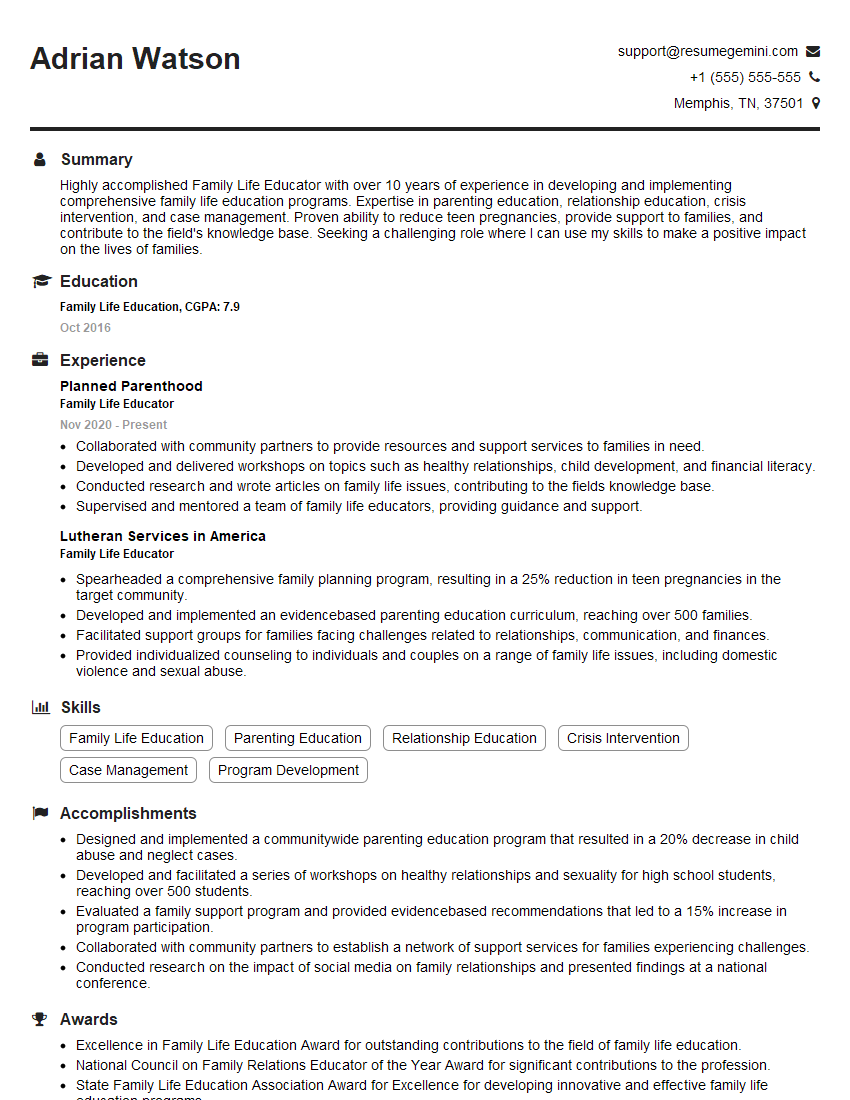
Mastering Parent and Family Education principles significantly enhances your career prospects, opening doors to rewarding roles with a positive impact on families and communities. A well-crafted, ATS-friendly resume is crucial for showcasing your skills and experience to potential employers. To maximize your job search success, leverage ResumeGemini to build a professional resume that highlights your unique qualifications. ResumeGemini provides examples of resumes tailored to Parent and Family Education, offering valuable guidance to create a compelling application.

Explore more articles
Users Rating of Our Blogs
Share Your Experience
We value your feedback! Please rate our content and share your thoughts (optional).
What Readers Say About Our Blog
To the interviewgemini.com Webmaster.
Very helpful and content specific questions to help prepare me for my interview!
Thank you
To the interviewgemini.com Webmaster.
This was kind of a unique content I found around the specialized skills. Very helpful questions and good detailed answers.
Very Helpful blog, thank you Interviewgemini team.