The right preparation can turn an interview into an opportunity to showcase your expertise. This guide to Troubleshooting and Repair of Insulation Systems interview questions is your ultimate resource, providing key insights and tips to help you ace your responses and stand out as a top candidate.
Questions Asked in Troubleshooting and Repair of Insulation Systems Interview
Q 1. Explain the different types of insulation materials and their applications.
Insulation materials are categorized by their composition and thermal properties. The choice depends heavily on the application, budget, and environmental concerns.
- Fiberglass: This is a common and cost-effective option, available in batts, rolls, and loose-fill forms. It’s widely used in residential and commercial buildings for walls, attics, and floors. Think of it as a fluffy, interwoven glass network that traps air – the better the air pockets, the better the insulation.
- Cellulose: Made from recycled paper, cellulose insulation is a sustainable and effective choice. It’s usually blown into walls and attics, providing excellent thermal performance and sound dampening. Its density is key to performance – more dense means more insulation.
- Mineral Wool: This includes rock wool and slag wool, made from molten rock or recycled steel slag. They are durable, fire-resistant, and sound-absorbent. Mineral wool is often used in industrial applications, commercial buildings, and areas requiring high fire safety.
- Spray Foam: This polyurethane-based material is sprayed onto surfaces, creating a seamless air barrier. It offers excellent thermal performance and air sealing capabilities, ideal for preventing drafts and energy loss in attics and hard-to-reach areas. Open-cell and closed-cell foam differ significantly in their properties and are used for different purposes.
- Polyisocyanurate (Polyiso): This rigid foam board insulation provides excellent R-value per inch and is often used in commercial roofing and wall systems. Think of it as a high-performance option when space is limited.
For example, in a historic building restoration, I might choose cellulose for its environmentally friendly nature and ease of application in existing wall cavities. For a new high-rise, spray foam might be selected for its superior air sealing properties and energy efficiency, despite its higher initial cost.
Q 2. Describe the common causes of insulation system failures.
Insulation system failures stem from several common causes. Identifying the root cause is crucial for effective repair. We can categorize these into:
- Moisture Intrusion: This is a major culprit, leading to mold growth, reduced R-value, and structural damage. Water can enter from leaks in the roof, walls, or foundation; condensation; or improper installation.
- Air Leaks: Gaps and cracks in the insulation system allow conditioned air to escape, increasing energy bills and reducing comfort. This can result from poor installation, settling of the building, or damage to the building envelope.
- Pest Infestation: Rodents and insects can nest within insulation, damaging it and compromising its effectiveness. This particularly affects loose-fill insulation like cellulose.
- Improper Installation: Insufficient depth, gaps, compaction, and improper sealing can significantly reduce insulation performance. For example, improperly installed fiberglass batts can leave gaps, allowing heat transfer.
- Age and Degradation: Over time, some insulation materials degrade, losing their insulating properties. This is more common with older materials or those exposed to harsh environmental conditions.
I’ve encountered several instances where seemingly minor air leaks, overlooked during construction, resulted in significant energy loss and ultimately required expensive remediation.
Q 3. How do you identify moisture intrusion in an insulation system?
Identifying moisture intrusion in insulation requires a combination of visual inspection and testing. The telltale signs vary depending on the type of insulation and the extent of the problem.
- Visual Inspection: Look for discoloration, staining, mold growth, or sagging insulation. Damp insulation often feels heavier and may have a musty odor.
- Moisture Meters: These instruments measure the moisture content of the insulation material, providing quantitative data. Different types of meters exist for various insulation materials.
- Thermography: Infrared cameras can detect temperature differences, highlighting areas of moisture intrusion as they will be colder than their surroundings.
- Boroscope Inspection: A boroscope allows visual inspection of hard-to-reach areas within walls or cavities without major demolition.
For example, a dark stain on the drywall, combined with a high moisture reading from a meter, strongly indicates moisture intrusion behind the wall’s insulation.
Q 4. What are the safety precautions when working with insulation materials?
Safety is paramount when working with insulation materials. The specific precautions vary depending on the material, but general guidelines include:
- Respiratory Protection: Many insulation materials, especially fiberglass and cellulose, can irritate the lungs. Always wear a NIOSH-approved respirator designed for particulate matter.
- Eye Protection: Safety glasses or goggles should be worn to protect against irritants and flying debris during installation or removal.
- Skin Protection: Long sleeves, long pants, and gloves should be worn to prevent skin irritation from fiberglass fibers. Protective suits may be required for extensive work.
- Proper Ventilation: Ensure adequate ventilation when working with spray foam or other materials that release fumes. This helps prevent inhalation of harmful chemicals.
- Fall Protection: Working at heights requires appropriate fall protection measures, such as harnesses and safety lines.
- Proper Tool Usage: Utilize appropriate tools for cutting and handling insulation, avoiding sharp objects.
I always emphasize the importance of following the manufacturer’s safety data sheets (SDS) for each material to mitigate any risk associated with the insulation.
Q 5. Explain the process of repairing damaged fiberglass insulation.
Repairing damaged fiberglass insulation depends on the extent of the damage and accessibility. Minor damage can often be addressed with simple patching, while extensive damage may require complete replacement.
- Assessment: Determine the area and extent of the damage. If only a small section is affected, patching might be sufficient. Significant damage often requires replacement.
- Preparation: If patching, remove any loose or damaged fiberglass. Ensure the surrounding area is clean and free of debris.
- Patching: Carefully fit new fiberglass batts or rolls into the damaged area, ensuring snug contact with the surrounding insulation. Secure the patch with staples or adhesive, as appropriate.
- Replacement: For extensive damage, remove the damaged insulation completely and install new insulation to restore the original R-value and coverage.
- Inspection: After patching or replacement, carefully inspect the repair to ensure proper insulation continuity and air sealing.
For example, a small hole in attic insulation can be quickly patched with a piece of fiberglass batting. However, if rodents have severely compromised a large portion, total replacement is necessary.
Q 6. How do you troubleshoot air leaks in an insulated wall assembly?
Troubleshooting air leaks in insulated wall assemblies requires a systematic approach combining visual inspection and specialized tools.
- Visual Inspection: Examine the wall assembly for visible gaps, cracks, or openings around windows, doors, and electrical outlets. Look for gaps between insulation and framing members.
- Infrared Thermography: An infrared camera can detect temperature differences, revealing areas where air is leaking through the wall assembly.
- Blower Door Test: This test pressurizes the building and measures air leakage. The test pinpoints the locations of air leaks, allowing for targeted repairs. This is especially effective for detecting hidden air leaks.
- Smoke Testing: Using a smoke pencil or smoke machine allows visualization of air movement, enabling direct identification of the leak source.
For example, we recently discovered a significant air leak in a newly constructed wall using a blower door test. The test pinpointed gaps around electrical outlets and the tops of the window frames, which were subsequently sealed using caulk and expanding foam.
Q 7. Describe your experience with different insulation installation methods.
My experience encompasses a broad range of insulation installation methods, from traditional batts and rolls to advanced spray foam applications. I’ve worked on numerous projects involving various techniques.
- Batt and Roll Installation: This is a common method involving carefully fitting insulation batts or rolls into wall cavities and attics. Proper fitting, minimizing gaps, and ensuring sufficient insulation depth are key to success. My work has involved various densities of fiberglass and mineral wool.
- Loose-Fill Installation: I have experience with blown-in cellulose and fiberglass insulation. The efficiency relies heavily on proper equipment operation and ensuring even distribution to achieve the desired R-value.
- Spray Foam Installation: I’ve worked extensively with both open-cell and closed-cell spray foam. This involves precise application to achieve a seamless air barrier and requires adherence to strict safety protocols. This is ideal for irregular shapes and hard-to-access areas.
- Rigid Foam Board Installation: I’m proficient in installing rigid foam boards, typically used in exterior wall systems and roofing. Precise cutting and careful adherence to manufacturer instructions are crucial to prevent thermal bridging.
Each method requires different skills and equipment. My experience enables me to adapt to the specific requirements of each project and optimize the installation for optimal thermal performance and air sealing.
Q 8. How do you determine the R-value of existing insulation?
Determining the R-value of existing insulation isn’t always straightforward, as it depends on the type of insulation and its condition. A direct measurement is rarely possible without invasive testing. Instead, we rely on a combination of techniques.
Visual Inspection: This helps identify the type of insulation (fiberglass, cellulose, foam, etc.) and its thickness. Knowing the type allows us to consult manufacturer’s specifications for the R-value per inch. We then measure the thickness to calculate the overall R-value. For example, if we find 6 inches of fiberglass batts with an R-value of R-3.8 per inch, the total R-value would be 6 inches * 3.8 R/inch = R-22.8.
Thermal Imaging: Infrared cameras detect temperature differences, highlighting areas with less insulation. While this doesn’t give a precise R-value, it pinpoints insulation deficiencies that need attention, indicating areas for potential future testing.
Invasive Testing: This involves drilling small holes to take samples of the insulation. While this is destructive, it’s the most accurate method for certain types of insulation and can determine moisture content, which can significantly impact R-value.
Building Plans and Records: Checking original building plans or renovation records can sometimes provide information on the type and thickness of the insulation used, offering an estimate of the R-value.
It’s crucial to remember that these methods provide estimates. The actual R-value can be influenced by factors such as compression, gaps, and moisture content.
Q 9. What are the signs of inadequate insulation in a building?
Inadequate insulation manifests in several ways, impacting both comfort and energy efficiency. Think of it like trying to keep ice cream cold on a hot day with a flimsy container – it won’t last long! Here are some telltale signs:
High Energy Bills: This is a major indicator. If your heating and cooling costs are consistently higher than comparable homes, inadequate insulation is a strong suspect.
Uneven Temperatures: Noticeably colder or warmer areas within rooms suggest insulation gaps or inconsistencies.
Drafts: Feeling cold air coming in around windows, doors, or baseboards is a clear sign of insufficient insulation or air sealing.
Ice Dams on Roofs: In cold climates, ice dams forming at the roof edges can indicate poor attic insulation, causing uneven melting and refreezing of snow.
High Humidity or Condensation: Excessive moisture inside walls or ceilings often points to a lack of proper insulation and vapor barrier, creating a perfect environment for mold growth.
Visible Gaps or Missing Insulation: During inspections, if you can see gaps in the insulation or entire sections missing, then immediate action is needed.
Remember, a thorough inspection by a qualified professional can help accurately diagnose the extent and cause of inadequate insulation.
Q 10. Explain the importance of proper vapor barrier installation.
Proper vapor barrier installation is crucial for preventing moisture buildup within the insulation and wall assembly. Think of it as a raincoat for your home’s insulation – it protects it from the elements. A compromised vapor barrier can lead to significant problems, including:
Mold and Mildew Growth: Moisture trapped in insulation creates a breeding ground for mold, potentially causing health issues and structural damage.
Reduced R-Value: Wet insulation loses a significant portion of its insulating capacity, rendering it much less effective.
Rot and Decay: Excess moisture can cause wood framing and other building materials to rot, leading to expensive repairs.
The key is installing the vapor barrier correctly, ensuring there are no gaps or tears. It should be installed on the warm side of the insulation (usually the interior side in cold climates) to prevent water vapor from diffusing into the insulation. The correct type of vapor barrier also depends on the climate; a perm-rated membrane might be ideal in humid climates.
Failing to address vapor barrier issues can significantly compromise the longevity and effectiveness of the entire insulation system.
Q 11. How do you handle asbestos-containing insulation materials?
Handling asbestos-containing insulation materials requires extreme caution. Asbestos fibers are dangerous when inhaled, and disturbing them can release these fibers into the air, posing serious health risks. Never attempt to remove or disturb asbestos insulation yourself.
Professional Remediation: The only safe approach is to contact a licensed asbestos abatement contractor. These professionals have the training, equipment, and permits to safely remove or encapsulate asbestos-containing materials.
Safety Precautions: If you suspect the presence of asbestos, avoid any contact or disturbance of the material. Keep the area isolated and contact a professional immediately.
Testing: Before any work is done, environmental testing should be conducted to confirm the presence and type of asbestos.
Regulatory Compliance: Asbestos removal is strictly regulated, and the contractor must follow all local, state, and federal guidelines.
Ignoring asbestos can have severe consequences for your health and could lead to hefty fines. Prioritizing safety and following proper protocols is paramount.
Q 12. Describe your experience with spray foam insulation application and repair.
I have extensive experience with spray foam insulation, both in application and repair. It’s a fantastic insulator, but proper technique is essential for success.
Application: I’m proficient in using specialized spray equipment, ensuring even coverage and proper expansion of the foam. This includes preparing the surface, adjusting the foam mixture, and applying the foam in accordance with manufacturer’s instructions to achieve the desired R-value and thickness. Proper preparation is vital to avoid air pockets or gaps.
Repair: Repairing damaged spray foam can range from minor patching to more extensive work. This includes identifying the cause of the damage (e.g., punctures, settling), removing compromised sections, and carefully applying new foam to restore the insulation’s integrity. Achieving a seamless transition between the old and new foam requires skill and attention to detail.
Challenges: Spray foam can be challenging to work with, requiring specific equipment, safety precautions, and experience. Humidity and temperature control are critical for proper curing of the foam. Proper ventilation during application and curing is also very important.
I’ve worked on numerous projects, ranging from small residential repairs to large-scale commercial applications, developing my expertise in troubleshooting and resolving various issues associated with spray foam installation and repair.
Q 13. How do you diagnose and repair thermal bridging in a building envelope?
Thermal bridging occurs when heat readily conducts through materials in the building envelope, bypassing the insulation. Imagine a metal pipe running through a wall; the pipe will transfer heat much more efficiently than the surrounding insulated material. This reduces overall efficiency.
Diagnosis: Thermal imaging is invaluable here. It clearly shows areas of heat loss, pinpointing thermal bridges. A thorough visual inspection can also identify potential culprits like metal studs, concrete sections, or insufficient insulation around penetrations.
Repair: The solution depends on the nature of the bridge. For small bridges, adding additional insulation around the affected area (e.g., using spray foam insulation or rigid foam boards around studs or pipes) helps reduce heat transfer. For larger bridges, more significant interventions might be required, potentially necessitating modifications to the structure, which should only be done by qualified professionals.
Prevention: During construction, careful consideration of materials is key. Using thermally efficient materials, such as insulated metal studs or concrete that incorporates insulating properties, can minimize thermal bridging.
Addressing thermal bridging enhances the building’s energy efficiency and reduces heating and cooling costs.
Q 14. What tools and equipment are essential for insulation repair work?
Essential tools and equipment for insulation repair vary depending on the job, but some common items include:
Safety Equipment: This is paramount. Always include respirators, safety glasses, gloves, and appropriate clothing depending on the insulation type and potential hazards (e.g., asbestos).
Measuring Tools: Tape measures, levels, and moisture meters are necessary for accurate measurements and assessments.
Cutting Tools: Utility knives, scissors, and specialized cutting tools for insulation materials are needed. For example, using a serrated knife is far safer for dense fiberglass insulation.
Installation Tools: This can include spray foam equipment, staple guns, and other tools specific to the type of insulation being installed.
Cleaning Tools: Brushes, vacuums with HEPA filters (especially important when working with dust-generating materials), and dust masks are necessary to maintain cleanliness and prevent potential health hazards.
Thermal Imaging Camera: For diagnosing thermal bridging and other insulation problems, this is an invaluable tool.
Beyond specific tools, a good understanding of safety regulations and the particular insulation type are your most important tools.
Q 15. Explain the process of inspecting and testing insulation systems.
Inspecting and testing insulation systems is a multi-step process crucial for ensuring energy efficiency and building integrity. It begins with a visual inspection, looking for obvious signs of damage like tears, gaps, settling, or water damage. This often involves using thermal imaging cameras to detect areas of heat loss, which can pinpoint insulation deficiencies unseen to the naked eye. Next, we use specialized tools to assess the insulation’s R-value (resistance to heat flow). This might involve a thermal resistance meter or even taking core samples for laboratory testing, especially for older or less understood insulation types. Finally, we document our findings thoroughly with photographs and detailed reports, highlighting problem areas and recommending solutions.
For example, during a recent inspection of an attic, we discovered significant settling of blown-in cellulose insulation, creating large gaps and reducing its effectiveness. Thermal imaging clearly showed these areas of increased heat loss. We then conducted R-value testing in both the settled and undisturbed areas to quantify the performance difference and inform our repair recommendations.
Career Expert Tips:
- Ace those interviews! Prepare effectively by reviewing the Top 50 Most Common Interview Questions on ResumeGemini.
- Navigate your job search with confidence! Explore a wide range of Career Tips on ResumeGemini. Learn about common challenges and recommendations to overcome them.
- Craft the perfect resume! Master the Art of Resume Writing with ResumeGemini’s guide. Showcase your unique qualifications and achievements effectively.
- Don’t miss out on holiday savings! Build your dream resume with ResumeGemini’s ATS optimized templates.
Q 16. How do you ensure the quality of your insulation repair work?
Ensuring quality in insulation repair hinges on several key factors. First, we always use high-quality materials that meet or exceed building codes and energy efficiency standards. This might include specific types of fiberglass batts, spray foam, or cellulose, chosen based on the application and the building’s specific needs. We strictly follow manufacturer’s instructions for installation, ensuring proper density, thickness, and air sealing to prevent thermal bridging. We carefully manage moisture content, addressing any existing issues like water damage before installing new insulation. We also perform thorough quality checks throughout the process, paying close attention to detail and correcting any mistakes immediately. Finally, we provide a detailed report and warranty on our work, demonstrating confidence in its lasting quality.
For instance, in a recent project involving spray foam insulation, we meticulously prepared the surface by cleaning and sealing any gaps to ensure proper adhesion and prevent future problems. We also monitored the curing process carefully, ensuring uniform expansion and density. Post-installation, we performed a visual inspection to confirm the work met the specified requirements.
Q 17. Describe your experience with different types of insulation removal techniques.
My experience encompasses a range of insulation removal techniques, chosen based on the type of insulation and its location. For fiberglass batts, we carefully remove them by hand, taking precautions to avoid fiber inhalation. This involves using appropriate personal protective equipment (PPE) and properly disposing of the waste according to environmental regulations. For blown-in insulation like cellulose or fiberglass, we use specialized vacuum equipment to remove it efficiently and safely. Spray foam requires a different approach, often involving mechanical methods like cutting and chipping, with careful management of the resulting debris. In cases involving asbestos-containing materials, we strictly adhere to EPA regulations, hiring licensed asbestos abatement contractors for safe removal and disposal.
In one case, we successfully removed and replaced vermiculite insulation (potentially containing asbestos) from a residential attic. This required a meticulous plan, including air monitoring, proper containment, and specialized equipment. The removal was carried out by a licensed abatement contractor, and all waste was disposed of in accordance with strict regulations. This highlights our commitment to safety and environmental responsibility.
Q 18. How do you handle difficult or unexpected situations during insulation repair?
Handling unexpected situations requires a combination of experience, problem-solving skills, and a proactive approach. For example, discovering hidden mold or structural damage during an insulation removal project necessitates immediate action. This may involve stopping work, contacting the appropriate professionals (e.g., mold remediation specialists or structural engineers), and developing a revised plan that addresses the new challenges. Similarly, encountering unforeseen obstacles like difficult-to-access areas requires creative solutions, such as using specialized tools or adapting existing techniques. Open communication with the client throughout these processes ensures transparency and avoids surprises. We always prioritize safety and maintain a detailed record of any modifications to the original plan.
In one instance, we discovered extensive water damage behind the insulation in a wall cavity. We stopped the planned insulation replacement, documented the issue, and recommended a thorough assessment by a structural engineer before proceeding with repairs. This prevented potential further damage and ensured the client was informed about the unexpected expenses and delays.
Q 19. Explain your understanding of building codes and regulations related to insulation.
My understanding of building codes and regulations related to insulation is comprehensive. I am familiar with the International Energy Conservation Code (IECC), as well as local building codes that vary by jurisdiction. These codes dictate minimum R-values for different climate zones and construction types, specifications on insulation materials and installation methods, and requirements for fire safety and moisture control. We meticulously follow these regulations during every project, ensuring our work meets or exceeds all applicable standards. This includes proper documentation of materials used and methods employed, as required for permits and inspections.
For example, I’m aware that IECC requires specific R-values for exterior walls depending on climate zone. We always select insulation with sufficient R-value to meet or exceed the requirements of the applicable code for the project’s location.
Q 20. Describe your experience with working at heights or in confined spaces.
I have extensive experience working at heights and in confined spaces, always prioritizing safety. Work at heights involves using appropriate fall protection equipment like harnesses, lifelines, and safety nets. We strictly follow all OSHA regulations and utilize proper scaffolding or other elevated work platforms when necessary. In confined spaces, we implement procedures to ensure proper ventilation, monitor air quality, and have a designated spotter present. We utilize appropriate respiratory protection and take precautions to avoid hazards like equipment entrapment or oxygen deficiency. Before commencing any such work, we conduct thorough risk assessments and develop site-specific safety plans.
For example, during an insulation project in a large cathedral ceiling, we used specialized harnesses and lifelines to ensure worker safety at all times, fully compliant with all applicable safety regulations.
Q 21. How do you estimate the cost of an insulation repair project?
Estimating the cost of an insulation repair project involves a thorough assessment of several factors. This starts with a site visit and a detailed inspection to determine the extent of the damage and the necessary repairs. We then estimate the quantity of materials needed based on the area to be insulated and the required R-value. Labor costs are factored in, considering the complexity of the project, the access challenges, and the required specialized equipment. We also include the cost of disposal of old insulation, permits, and any unforeseen circumstances. We provide a detailed breakdown of these costs to the client, including contingency buffers for unexpected issues. Our pricing is competitive yet reflects our commitment to quality and safety.
For instance, when estimating for a project involving spray foam insulation in a complex attic space, we take into account the extra labor time and material required for proper preparation, application, and finishing. We add additional cost considerations for any potential scaffolding requirements, ensuring the client has a comprehensive understanding of the projected costs.
Q 22. What are your preferred methods for documenting insulation repair work?
My preferred method for documenting insulation repair work involves a multi-faceted approach ensuring thorough record-keeping and clear communication. I begin with detailed pre-repair assessments, including photographic evidence of the damage and measurements of affected areas. This is crucial for insurance claims or future reference. During the repair process, I maintain a daily log documenting materials used, labor hours, and any unforeseen issues encountered. This log is cross-referenced with photographs showing the progress of the repair. Finally, upon completion, I provide a comprehensive report summarizing the work performed, materials used (with quantities and manufacturer details), and a final inspection report with supporting photography. All documentation is digitally stored for easy access and archival purposes and a hard copy is provided to the client. Think of it like a meticulously kept medical chart – every step is recorded for accountability and future reference.
Q 23. Explain the importance of proper ventilation in relation to insulation systems.
Proper ventilation is absolutely critical for the longevity and effectiveness of insulation systems. Without adequate ventilation, moisture can accumulate within the building envelope. This moisture can lead to several serious problems:
- Mold and mildew growth: This poses significant health risks and structural damage.
- Reduced insulation R-value: Wet insulation loses its effectiveness dramatically, increasing energy costs.
- Rot and decay: Wood framing and other structural components can be severely damaged by prolonged exposure to moisture.
- Condensation: Leading to water damage and ice formation in colder climates.
Q 24. How do you communicate effectively with clients and other tradespeople?
Effective communication is the cornerstone of any successful project. With clients, I prioritize clear, concise explanations of the issues, proposed solutions, and associated costs. I use plain language, avoiding technical jargon unless specifically requested and then I always define the terms. I encourage questions and make sure the client completely understands the process before work begins. With other tradespeople, I value open dialogue and collaboration. I utilize email and on-site discussions to clearly communicate the scope of work, deadlines, and any potential conflicts that might arise. For example, before starting a job requiring coordination with electricians, I’ll schedule a pre-job meeting to confirm their work is completed and access points are clear, preventing delays and misunderstandings. Maintaining professional yet friendly interactions is key to smooth project execution.
Q 25. Describe your experience with working on different types of building structures.
My experience spans a variety of building structures, from residential homes and multi-family dwellings to commercial buildings and industrial facilities. I’ve worked on new construction projects, where insulation installation is part of the initial build, and in renovation projects, which often present unique challenges. For example, in older structures, I’ve encountered asbestos abatement needs before insulation work could begin. In modern high-rises, I’ve tackled complex insulation systems requiring specialized equipment and techniques. Each building type requires a unique approach to insulation, taking into account factors like building codes, structural design, and environmental conditions. The experience has enabled me to adapt quickly to different situations and always prioritize safety and efficiency.
Q 26. How do you stay up-to-date with the latest advancements in insulation technology?
Staying current in the rapidly evolving field of insulation technology is crucial. I achieve this through several methods:
- Industry publications and journals: I regularly read trade magazines and online resources to learn about new materials, techniques, and best practices.
- Professional development courses and seminars: Attending industry events and workshops keeps me abreast of the latest advancements.
- Manufacturer training programs: Many insulation manufacturers offer training on their specific products and installation methods.
- Networking with colleagues and industry experts: Exchanging information and experiences with other professionals is invaluable.
Q 27. How would you approach a situation where the insulation repair requires more materials than initially estimated?
If a repair requires more materials than initially estimated, my first step is a thorough re-assessment of the situation. I’d document the reasons for the discrepancy – perhaps hidden damage was uncovered, or the initial assessment was incomplete. Then, I immediately communicate this to the client, explaining the reasons for the change and providing a revised estimate with detailed justification for the additional materials. Transparency and clear communication are key here. I’ll offer various options – we can proceed with the revised estimate, explore alternative solutions to reduce material costs, or postpone the additional work if necessary. The focus is on finding a mutually acceptable solution that maintains the project’s integrity without compromising the client’s trust.
Q 28. Describe your experience with troubleshooting and resolving conflicts related to insulation projects.
Conflicts on insulation projects can arise from various sources: material defects, scheduling issues, or differing expectations. My approach involves a structured problem-solving process:
- Identify the root cause: I thoroughly investigate the conflict, gathering all relevant information from all stakeholders.
- Facilitate open communication: I create a safe space for all parties to express their concerns and perspectives.
- Explore potential solutions: I brainstorm options collaboratively, aiming for a win-win outcome.
- Document the agreement: Once a solution is agreed upon, I document it clearly in writing for all parties involved.
- Implement and monitor: I ensure the agreed solution is implemented effectively and monitor its success.
Key Topics to Learn for Troubleshooting and Repair of Insulation Systems Interview
- Understanding Insulation Types: Explore the properties and applications of various insulation materials (e.g., fiberglass, cellulose, foam, spray foam) including their R-values and limitations.
- Identifying Insulation Defects: Learn to recognize common problems like gaps, air infiltration, moisture damage, settling, and pest infestations through visual inspection and diagnostic tools.
- Moisture Management in Insulation Systems: Understand the critical role of vapor barriers and proper ventilation in preventing moisture buildup and its detrimental effects on insulation performance.
- Repair Techniques: Master various repair methods, including patching, replacing damaged sections, and applying new insulation using appropriate tools and safety procedures.
- Code Compliance and Safety Regulations: Familiarize yourself with relevant building codes and safety regulations pertaining to insulation installation and repair.
- Thermal Imaging and Diagnostic Tools: Learn to interpret thermal imaging scans and utilize other diagnostic tools to pinpoint insulation deficiencies and energy loss.
- Energy Efficiency Calculations: Understand how insulation affects energy efficiency and be prepared to discuss the impact of repairs on energy savings.
- Troubleshooting Common Problems: Develop problem-solving skills to address issues such as air leakage, inadequate insulation levels, and condensation within wall cavities.
- Estimating and Budgeting for Repairs: Learn to accurately assess the scope of work and develop a cost-effective repair plan.
- Communication and Client Interaction: Practice explaining technical concepts clearly and effectively to clients and colleagues.
Next Steps
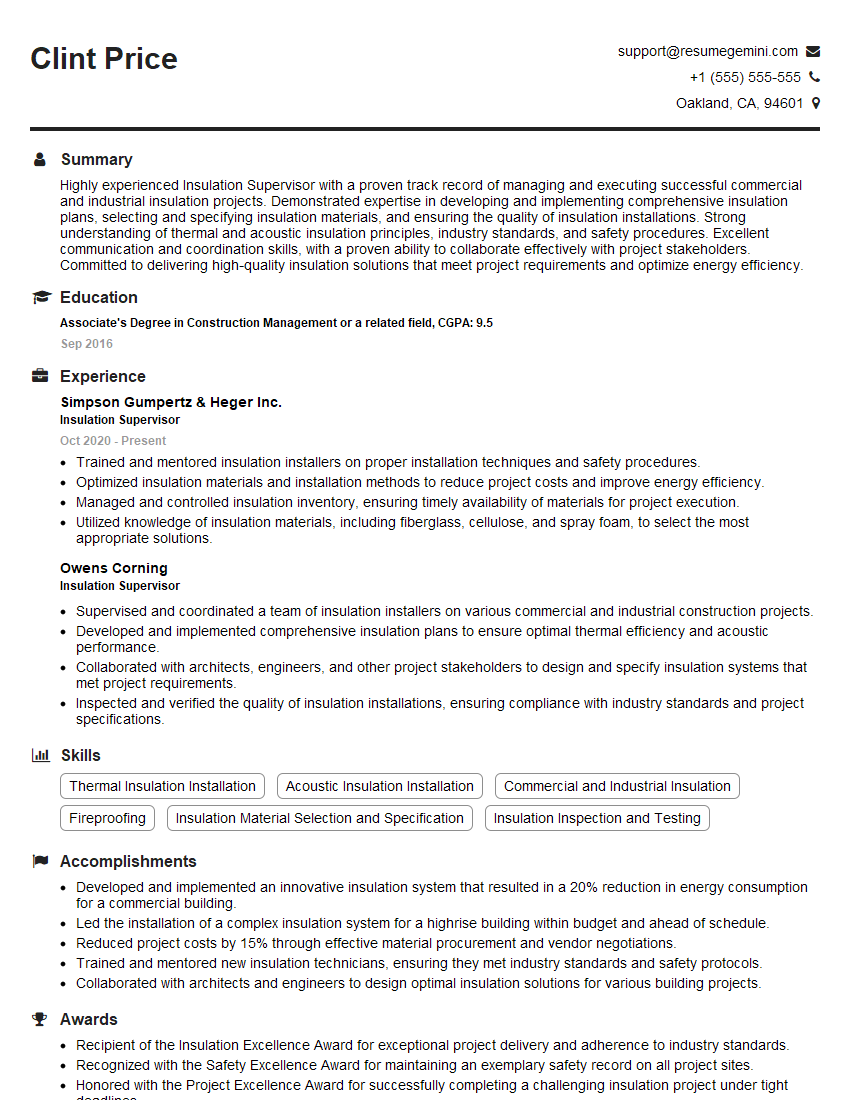
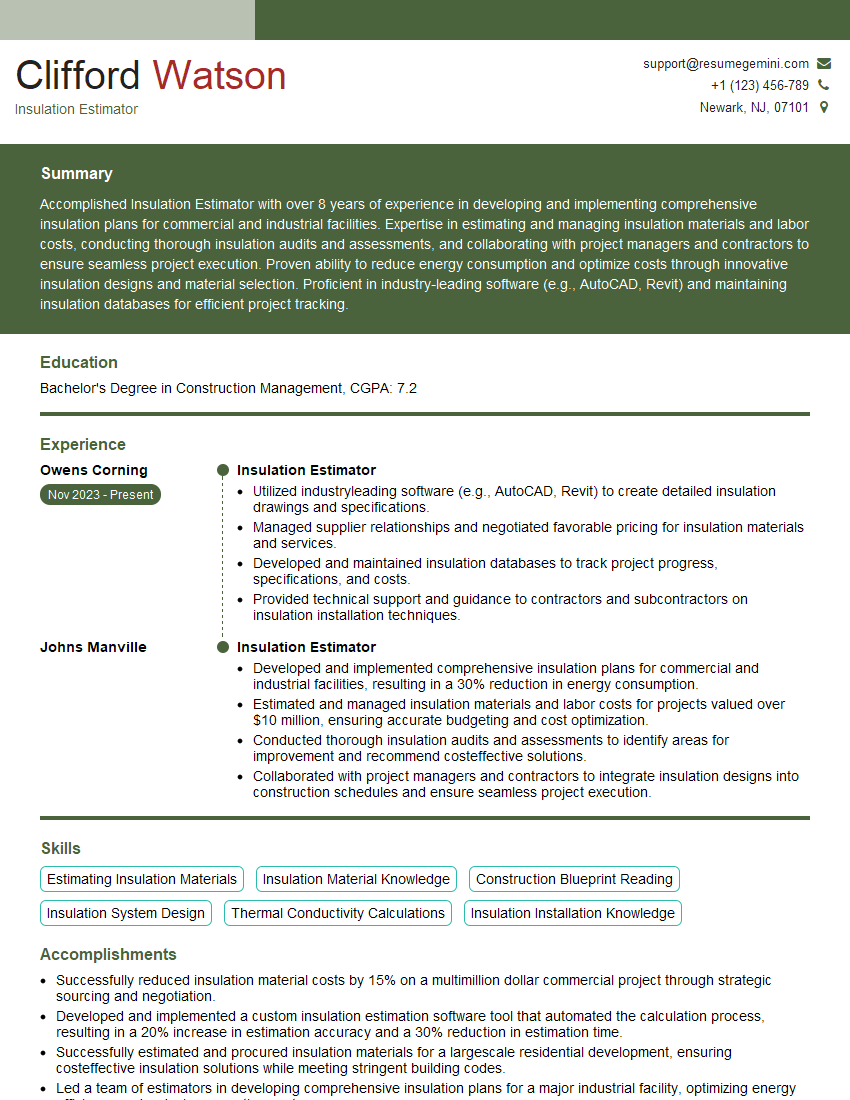
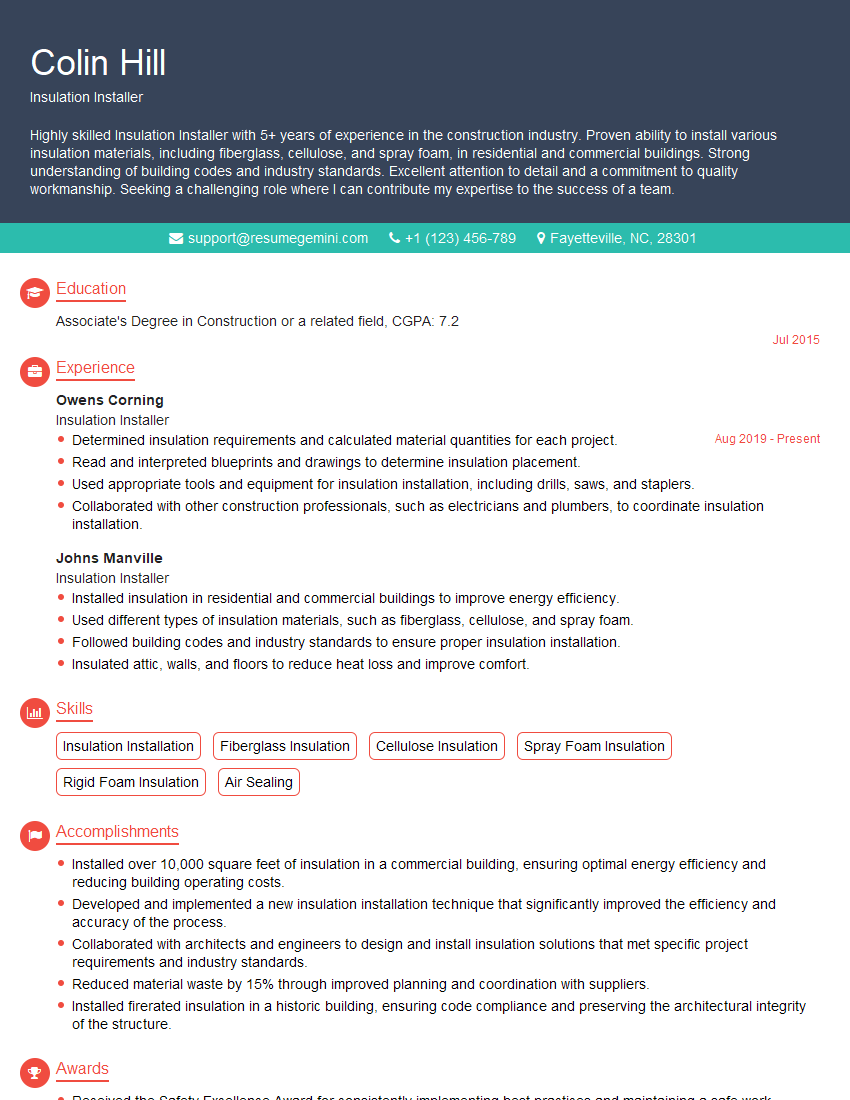
Mastering Troubleshooting and Repair of Insulation Systems opens doors to exciting career opportunities in the construction, energy efficiency, and building maintenance industries. A strong understanding of these skills demonstrates valuable expertise and problem-solving capabilities highly sought after by employers. To enhance your job prospects, create an ATS-friendly resume that effectively highlights your skills and experience. ResumeGemini is a trusted resource that can help you build a professional and impactful resume. We provide examples of resumes tailored to Troubleshooting and Repair of Insulation Systems to help guide your resume creation process. Take the next step toward your dream job today!

Explore more articles
Users Rating of Our Blogs
Share Your Experience
We value your feedback! Please rate our content and share your thoughts (optional).
What Readers Say About Our Blog
To the interviewgemini.com Webmaster.
Very helpful and content specific questions to help prepare me for my interview!
Thank you
To the interviewgemini.com Webmaster.
This was kind of a unique content I found around the specialized skills. Very helpful questions and good detailed answers.
Very Helpful blog, thank you Interviewgemini team.