Unlock your full potential by mastering the most common Energy Efficiency and Sustainability Practices interview questions. This blog offers a deep dive into the critical topics, ensuring you’re not only prepared to answer but to excel. With these insights, you’ll approach your interview with clarity and confidence.
Questions Asked in Energy Efficiency and Sustainability Practices Interview
Q 1. Explain the difference between energy efficiency and energy conservation.
While both energy efficiency and energy conservation aim to reduce energy consumption, they differ significantly in their approach. Energy efficiency focuses on reducing the amount of energy required to provide the same service. Think of it as getting more out of less. For example, replacing an old, inefficient refrigerator with a new, energy-star rated model allows you to keep your food cold while using significantly less electricity. Energy conservation, on the other hand, emphasizes reducing the overall level of energy use by modifying behavior or reducing the demand. This could include turning off lights when leaving a room or reducing the thermostat setting during colder months. Essentially, efficiency is about doing things better, while conservation is about doing things less.
Imagine driving a car: Improving the car’s fuel efficiency (e.g., better aerodynamics) is energy efficiency. Driving less or carpooling is energy conservation.
Q 2. Describe your experience with LEED certification or other green building standards.
I have extensive experience working with LEED (Leadership in Energy and Environmental Design) certification. During my time at [Previous Company Name], I was involved in numerous projects achieving LEED Gold and Platinum certifications. My responsibilities included conducting energy modeling, identifying opportunities for improved energy efficiency, and working with design teams to incorporate sustainable design principles throughout the building lifecycle. For example, one notable project involved the retrofitting of an existing office building. We implemented strategies like high-performance glazing, improved insulation, and a sophisticated building management system to reduce energy consumption by over 40%. This involved meticulous documentation and adherence to the LEED rating system, leading to successful certification. Beyond LEED, I’m also familiar with other green building standards, such as BREEAM (Building Research Establishment Environmental Assessment Method) and Green Globes, understanding their nuances and applicability in different contexts.
Q 3. What are the key principles of sustainable development?
Sustainable development rests on three key pillars: environmental protection, economic viability, and social equity. These pillars are interconnected and interdependent. Environmental protection means ensuring that our actions don’t deplete natural resources or damage ecosystems beyond their capacity to recover. Economic viability emphasizes creating a strong and stable economy that supports environmental and social goals. It’s not about sacrificing economic growth but about pursuing growth in a sustainable way. Social equity ensures that the benefits and burdens of development are shared fairly among all members of society, addressing issues of poverty, inequality, and social justice. Ignoring any one of these pillars undermines the sustainability of the others. For instance, purely economic development without environmental consideration can lead to pollution and resource depletion. Similarly, social equity requires environmental protection and economic stability to thrive.
Q 4. How do you calculate a carbon footprint?
Calculating a carbon footprint involves quantifying all greenhouse gas emissions, primarily carbon dioxide (CO2), associated with an individual, organization, event, or product. It’s typically broken down into different scopes:
- Scope 1: Direct emissions from owned or controlled sources (e.g., emissions from company vehicles).
- Scope 2: Indirect emissions from the generation of purchased energy (e.g., electricity consumption).
- Scope 3: All other indirect emissions, encompassing a wide range of activities in the value chain, such as supply chain emissions, employee commutes, and waste disposal. These are often the most challenging to quantify.
The calculation itself involves collecting data on energy consumption, fuel usage, waste generation, and other relevant activities. These data are then converted into CO2 equivalent (CO2e) emissions using established emission factors. There are various tools and software available to assist with this process, ranging from simple online calculators to sophisticated lifecycle assessment software. The accuracy of the calculation heavily relies on the comprehensiveness and reliability of the data collected.
Q 5. What are some common energy efficiency measures for buildings?
Many energy efficiency measures can be implemented in buildings to significantly reduce energy consumption. These can be categorized into:
- Building Envelope Improvements: This includes upgrading insulation in walls, roofs, and floors; installing high-performance windows and doors; and sealing air leaks to minimize heat loss or gain.
- HVAC System Optimization: This involves upgrading to high-efficiency heating, ventilation, and air conditioning systems; implementing smart thermostats; and regularly maintaining equipment.
- Lighting Upgrades: Switching to energy-efficient LED lighting and implementing daylight harvesting strategies can significantly reduce lighting energy use.
- Water Heating Improvements: Installing high-efficiency water heaters, using low-flow showerheads and faucets, and implementing water conservation measures reduce energy needed for hot water heating.
- Building Management Systems (BMS): Implementing a BMS allows for real-time monitoring and control of building systems, optimizing energy use based on occupancy and weather conditions.
For instance, a simple measure like replacing incandescent bulbs with LEDs can result in a considerable reduction in electricity consumption, minimizing both energy costs and environmental impact.
Q 6. Explain the concept of life cycle assessment (LCA).
Life Cycle Assessment (LCA) is a comprehensive methodology for evaluating the environmental impacts of a product, process, or service throughout its entire life cycle. This spans from raw material extraction and manufacturing to use, maintenance, and ultimately disposal or recycling. The LCA process involves several stages:
- Goal and Scope Definition: Clearly defining the purpose and boundaries of the assessment.
- Inventory Analysis: Quantifying all inputs and outputs associated with the product’s life cycle.
- Impact Assessment: Evaluating the environmental impacts of the identified inputs and outputs, considering various factors such as climate change, resource depletion, and toxicity.
- Interpretation: Analyzing the results and drawing conclusions based on the findings.
LCA is crucial for making informed decisions about product design, material selection, and waste management. For example, by conducting an LCA on different packaging materials, a company can choose the option with the lowest overall environmental impact, considering factors like energy use in manufacturing, transportation, and disposal.
Q 7. What are some renewable energy sources and their advantages/disadvantages?
Several renewable energy sources offer sustainable alternatives to fossil fuels. Some key examples include:
- Solar Power: Harnessing sunlight using photovoltaic (PV) cells to generate electricity. Advantages include abundant resource availability and decreasing costs. Disadvantages include intermittency (sunlight dependence) and land use requirements.
- Wind Power: Utilizing wind turbines to convert wind energy into electricity. Advantages include high energy output in suitable locations and relatively low environmental impact. Disadvantages include visual impacts, noise pollution, and intermittency (wind dependence).
- Hydropower: Generating electricity from the flow of water. Advantages include high efficiency and reliability. Disadvantages include potential environmental impacts on aquatic ecosystems and displacement of communities.
- Geothermal Energy: Harnessing heat from the Earth’s interior. Advantages include consistent energy availability and relatively low emissions. Disadvantages include geographic limitations and high initial investment costs.
- Biomass Energy: Burning organic matter (wood, crops) to generate energy. Advantages include utilizing readily available resources and carbon neutrality (in theory). Disadvantages include potential air pollution and competition with food production.
The best renewable energy source depends on various factors such as geographic location, resource availability, and environmental considerations. Often, a diversified energy portfolio incorporating multiple sources is the most sustainable and resilient approach.
Q 8. How do you identify and prioritize energy efficiency improvement opportunities?
Identifying and prioritizing energy efficiency improvement opportunities requires a systematic approach. Think of it like a doctor diagnosing a patient – you need a thorough examination before prescribing treatment. First, we conduct a comprehensive energy audit, collecting data on energy consumption patterns across different systems and equipment. This involves reviewing utility bills, inspecting equipment, and potentially using specialized tools to measure energy flow. Then, we analyze this data to identify areas with the highest energy consumption and the greatest potential for savings.
Prioritization involves a combination of factors:
- Energy Savings Potential: Opportunities with the largest potential energy reductions are prioritized first. This is often calculated using metrics like kWh saved per year or $/kWh saved.
- Implementation Cost: The cost-effectiveness of each opportunity is crucial. We calculate the simple payback period (the time it takes for the savings to cover the investment cost) and the return on investment (ROI). Opportunities with shorter payback periods and higher ROI are given higher priority.
- Technical Feasibility: Some improvements might be technically challenging or require extensive modifications. We assess the feasibility and the potential disruptions during implementation.
- Regulatory Compliance: We ensure that any proposed improvements meet all relevant environmental regulations and building codes.
For instance, replacing inefficient lighting with LEDs typically offers a high energy savings potential, relatively low implementation cost, and is technically straightforward – making it a high-priority opportunity. On the other hand, a complete HVAC system overhaul might offer substantial savings but comes with higher costs and potentially more complex implementation, requiring careful evaluation and prioritization.
Q 9. Describe your experience with energy audits and building performance analysis.
I have extensive experience conducting energy audits and performing building performance analysis. My approach is always data-driven. I utilize various tools and techniques, from simple walkthroughs and equipment inspections to sophisticated data logging and modeling software.
Energy Audits: These involve a detailed assessment of energy consumption within a building or industrial facility. This includes examining utility bills, identifying energy-intensive equipment, assessing insulation levels, and checking for air leaks. I’ve worked on everything from small commercial buildings to large industrial plants, tailoring the audit scope to the specific needs of each client.
Building Performance Analysis: This goes beyond simply identifying inefficiencies; it involves analyzing how building systems interact and impact overall energy performance. I utilize tools like EnergyPlus or TRNSYS to create detailed models of buildings, simulating their performance under different conditions and evaluating the impact of various energy efficiency measures. I’ve used these models to predict energy savings, optimize system design, and identify potential issues before implementation.
For example, in one project, a building performance analysis revealed that improper HVAC zoning was leading to significant energy waste. By optimizing the zoning and implementing smart controls, we achieved a 15% reduction in energy consumption without major capital investments.
Q 10. What are some common energy-saving technologies for industrial processes?
Industrial processes often present significant opportunities for energy savings. Here are some common energy-saving technologies:
- Variable Frequency Drives (VFDs): VFDs control the speed of motors, reducing energy consumption when full power isn’t needed. This is particularly effective for pumps, fans, and compressors, often resulting in substantial energy savings and reduced wear and tear.
- Heat Recovery Systems: These capture waste heat from one process and use it to preheat materials or provide heating for other processes. For instance, waste heat from a furnace can be used to preheat incoming air, significantly reducing the energy required for the furnace itself.
- High-Efficiency Motors: Replacing older, inefficient motors with high-efficiency motors (often Premium Efficiency motors) can lead to substantial energy savings over their lifespan.
- Process Optimization: Analyzing and optimizing industrial processes can often identify inefficiencies that can be addressed through improved process control, better scheduling, or changes in operational procedures. Simple tweaks in parameters can sometimes lead to significant energy savings.
- Advanced Process Control (APC): APC systems use sophisticated algorithms to monitor and adjust process parameters in real-time, optimizing energy use while maintaining production quality.
Imagine a food processing plant using VFDs on its refrigeration compressors. During off-peak hours, the VFDs can slow down the compressors without compromising food safety, drastically reducing energy usage.
Q 11. How familiar are you with different energy modeling software?
I’m proficient in several energy modeling software packages. My experience includes:
- EnergyPlus: A widely used whole-building energy simulation program that allows for detailed modeling of building systems and energy performance.
- TRNSYS: A powerful transient system simulation tool used for modeling complex energy systems, including solar thermal, HVAC, and renewable energy integration.
- eQUEST: A simpler, more user-friendly energy simulation tool often used for preliminary analysis and quick assessments.
The choice of software depends on the specific project needs and complexity. For example, for a detailed analysis of a complex industrial facility, EnergyPlus might be preferred, whereas for a quick assessment of a small commercial building, eQUEST might suffice. I also have experience using data analysis tools like Python (with libraries like Pandas and NumPy) to process and analyze energy consumption data from these simulations and real-world monitoring systems.
Q 12. What is your understanding of the circular economy and its impact on sustainability?
The circular economy is an economic model aimed at minimizing waste and maximizing the use of resources. It contrasts with the traditional linear “take-make-dispose” model by focusing on keeping materials in use for as long as possible, extracting maximum value from them, and then recovering and regenerating products and materials at the end of each service life.
Its impact on sustainability is profound:
- Reduced Resource Depletion: By reusing and recycling materials, the circular economy significantly reduces the demand for virgin resources, lessening the environmental impact of extraction.
- Waste Reduction: The emphasis on reducing waste at the source and recovering valuable materials minimizes landfill waste and pollution.
- Greenhouse Gas Emission Reduction: Producing new materials from recycled materials often requires less energy than producing them from scratch, thus lowering greenhouse gas emissions.
- Economic Benefits: The circular economy creates new economic opportunities in areas such as recycling, repair, and reuse.
Imagine a scenario where construction waste isn’t sent to a landfill but is deconstructed, with reusable materials salvaged and incorporated into new buildings. This perfectly encapsulates the circular economy’s principle of reducing waste and maximizing resource utilization. This is a key aspect of sustainable development.
Q 13. How do you measure the success of energy efficiency projects?
Measuring the success of energy efficiency projects requires a combination of quantitative and qualitative measures. Key performance indicators (KPIs) are crucial for tracking progress and evaluating effectiveness. These include:
- Energy Savings: The most important KPI is the actual reduction in energy consumption (kWh, therms, etc.), measured against baseline data. This can be calculated using building energy management systems (BEMS), utility bills, and other monitoring systems.
- Cost Savings: The reduction in energy costs (in dollars or other currency) directly resulting from the implemented measures is essential to demonstrate the financial return on investment (ROI).
- Payback Period: The time it takes for the cumulative energy cost savings to equal the initial investment cost.
- Return on Investment (ROI): The ratio of net savings to the initial investment cost, expressed as a percentage.
- Environmental Impact Reduction: Calculating the reduction in greenhouse gas emissions (in tons of CO2e) demonstrates the environmental benefits.
- Operational Improvements: Assessing improvements in operational efficiency, such as reduced maintenance needs or increased system reliability.
For instance, if a project aimed to reduce energy consumption by 20% and achieved a 22% reduction, the project is considered a success and exceeding initial projections. Beyond numbers, user feedback and operational smoothness are important qualitative measures.
Q 14. Describe your experience with data analysis related to energy consumption.
I have significant experience analyzing energy consumption data. My approach typically involves these steps:
- Data Collection: Gathering data from various sources, including utility bills, smart meters, BEMS, and other monitoring systems.
- Data Cleaning and Preprocessing: Cleaning the data to handle missing values, outliers, and inconsistencies, ensuring data accuracy and reliability. This often involves using scripting languages like Python.
- Data Analysis: Utilizing statistical methods and visualization techniques to identify trends, patterns, and anomalies in energy consumption. This can reveal energy waste and areas for improvement.
- Modeling and Forecasting: Developing predictive models to forecast future energy consumption, helping in budgeting and planning energy efficiency projects.
- Reporting and Visualization: Creating clear and concise reports with visualizations (charts, graphs) to communicate findings to stakeholders. This often involves tools like Excel, Tableau, or Power BI.
For example, in a previous project, by analyzing historical energy consumption data using time-series analysis, we identified a recurring pattern of high energy usage during certain hours of the day. This led to the implementation of a smart control system that reduced energy usage during those peak hours, resulting in substantial savings.
Q 15. Explain your understanding of different energy efficiency financing mechanisms.
Energy efficiency financing mechanisms are crucial for bridging the gap between the upfront costs of implementing energy-saving measures and the long-term benefits they provide. These mechanisms help organizations and individuals afford upgrades that reduce their energy consumption and carbon footprint. They can be broadly categorized into several types:
Loans: These are traditional financing options, often offered by banks or specialized lenders, specifically designed for energy efficiency projects. They require repayment with interest over a defined period. For example, a business could secure a loan to install high-efficiency HVAC systems.
Grants: These are non-repayable funds provided by governments, NGOs, or private foundations to support energy efficiency initiatives. Grants typically target projects with significant environmental or social benefits. A community might receive a grant to upgrade streetlights to LED technology.
Rebates: These are incentives offered by utilities or government agencies that reduce the upfront cost of energy-efficient technologies. For example, a homeowner might receive a rebate for installing solar panels.
Tax Credits and Incentives: These are government policies that reduce the amount of tax owed based on investments in energy efficiency. This can significantly decrease the net cost of projects. Businesses investing in energy-efficient machinery might benefit from tax credits.
Performance Contracts: These contracts involve an energy service company (ESCO) that finances, designs, implements, and maintains energy efficiency upgrades. The ESCO is paid based on the realized energy savings. This reduces risk for the client because savings are guaranteed.
Green Bonds: These are debt instruments specifically issued to finance climate-friendly projects, including energy efficiency improvements. Investors purchase these bonds, and the proceeds are used to fund the projects.
The optimal financing mechanism depends on factors like project size, available resources, risk tolerance, and regulatory environment. A thorough financial analysis is essential to determine the most suitable option for any given situation.
Career Expert Tips:
- Ace those interviews! Prepare effectively by reviewing the Top 50 Most Common Interview Questions on ResumeGemini.
- Navigate your job search with confidence! Explore a wide range of Career Tips on ResumeGemini. Learn about common challenges and recommendations to overcome them.
- Craft the perfect resume! Master the Art of Resume Writing with ResumeGemini’s guide. Showcase your unique qualifications and achievements effectively.
- Don’t miss out on holiday savings! Build your dream resume with ResumeGemini’s ATS optimized templates.
Q 16. How would you approach the development of a sustainability strategy for a company?
Developing a comprehensive sustainability strategy involves a structured approach. I would begin by conducting a thorough materiality assessment, identifying the environmental and social issues most relevant to the company’s operations and stakeholders. This is usually done through stakeholder engagement, analyzing industry best practices, and examining the company’s value chain.
Next, I would establish clear, measurable, achievable, relevant, and time-bound (SMART) goals aligned with the materiality assessment. This could involve targets for reducing carbon emissions, improving water efficiency, minimizing waste, or enhancing social equity. A strong sustainability strategy requires robust data collection and monitoring to track progress against these goals.
Following goal setting, I’d develop an action plan with specific initiatives and timelines. This action plan should detail how the goals will be achieved, including resource allocation, responsibilities, and risk mitigation strategies. It’s essential to integrate sustainability into the company’s overall business strategy, aligning it with operational processes and decision-making.
Regular reporting and communication are critical. Progress should be transparently communicated to stakeholders through sustainability reports and other channels. It’s also important to regularly review and update the strategy to adapt to evolving best practices, regulations, and stakeholder expectations.
Finally, continuous improvement is key. Regular audits and assessments should be conducted to identify areas for improvement and to ensure the strategy remains effective in achieving its goals. This iterative approach ensures the sustainability strategy remains dynamic and responsive to changes in the business environment.
Q 17. Describe your experience in implementing energy management systems (EMS).
My experience with implementing Energy Management Systems (EMS) involves a multi-stage process, beginning with a thorough energy audit to identify opportunities for improvement. This involves analyzing energy consumption patterns, equipment performance, and operational practices. We then use this data to establish baselines and prioritize areas for intervention.
Next, we develop an EMS plan that incorporates best practices and aligns with international standards like ISO 50001. This plan typically involves defining roles and responsibilities, establishing energy performance indicators (KPIs), and setting targets for improvement. I then work closely with the organization’s teams to implement the measures outlined in the EMS plan, this could involve upgrading equipment, optimizing operational processes, and providing training to staff.
Regular monitoring and verification are crucial to ensure the EMS is achieving its objectives. Data is continuously collected and analyzed to track energy performance and identify any deviations from targets. We use this data to refine the EMS plan and implement corrective actions. I’ve also been involved in the development of dashboards and reporting mechanisms to communicate energy performance to management and stakeholders. Successful EMS implementation requires strong leadership support, employee engagement, and a culture of continuous improvement. A real-world example is a project I managed where we implemented an EMS in a manufacturing facility, resulting in a 15% reduction in energy consumption within two years.
Q 18. What are some common barriers to implementing sustainability initiatives?
Implementing sustainability initiatives often faces significant barriers, which can be broadly categorized into:
Financial constraints: Upfront investment costs for sustainable technologies and practices can be substantial, acting as a major deterrent for many organizations.
Lack of awareness and understanding: Many stakeholders may not fully grasp the benefits of sustainability or the urgency of climate action, hindering engagement and support.
Lack of skilled personnel: Implementing and managing sustainability programs requires specialized knowledge and skills, which may be lacking within the organization.
Technological limitations: The availability and affordability of suitable sustainable technologies can be a significant barrier, particularly in emerging economies.
Regulatory hurdles: Complex and inconsistent regulations can complicate the implementation process and increase compliance costs.
Resistance to change: Organizational culture and ingrained practices can hinder the adoption of new sustainable methods.
Measuring impact: Quantifying the environmental and social impact of sustainability initiatives can be challenging, making it difficult to demonstrate return on investment.
Overcoming these barriers requires a strategic approach that involves securing adequate financing, raising awareness, developing capacity, adopting appropriate technologies, navigating regulations effectively, engaging stakeholders, and establishing robust monitoring and evaluation systems.
Q 19. How do you communicate complex sustainability information to different audiences?
Communicating complex sustainability information effectively requires tailoring the message to the specific audience. I utilize a variety of approaches:
For technical audiences (e.g., engineers, scientists): I use precise language, data visualizations, and detailed reports showcasing quantitative results and technical analyses.
For management and investors: I focus on the financial implications of sustainability, highlighting cost savings, risk mitigation, and return on investment. I utilize concise reports and presentations with key performance indicators (KPIs).
For the general public and employees: I use plain language, storytelling, visual aids (infographics, videos), and engaging case studies to simplify complex concepts and make them relatable. I focus on the positive impacts of sustainability on the community and the environment.
Regardless of the audience, I ensure the information is clear, concise, credible, and relevant. Active listening and feedback mechanisms are crucial to ensure effective communication and address concerns. I always prioritize transparency and accountability in my communications.
Q 20. What is your understanding of ESG (Environmental, Social, and Governance) factors?
ESG (Environmental, Social, and Governance) factors are becoming increasingly important in assessing a company’s overall performance and sustainability. They encompass a wide range of considerations:
Environmental: This includes a company’s impact on the environment, including greenhouse gas emissions, waste generation, water consumption, biodiversity, and pollution.
Social: This focuses on the company’s relationships with its employees, customers, suppliers, and the wider community. Key aspects include labor practices, human rights, community engagement, product safety, and data privacy.
Governance: This relates to a company’s leadership, ethics, and accountability. It encompasses corporate governance structures, risk management, board diversity, executive compensation, and anti-corruption measures.
Investors and stakeholders are increasingly using ESG factors to evaluate companies’ long-term viability and sustainability. Strong ESG performance can enhance a company’s reputation, attract investors, improve access to capital, and reduce operational risks. Conversely, poor ESG performance can lead to reputational damage, regulatory fines, and investor divestment.
Q 21. Describe your experience working with stakeholders to achieve sustainability goals.
Working with stakeholders to achieve sustainability goals requires strong communication, collaboration, and trust-building. I adopt a participatory approach, actively involving all relevant stakeholders in the process. This includes identifying key stakeholders (employees, customers, suppliers, community members, government agencies), understanding their perspectives and concerns, and establishing clear communication channels.
I often facilitate workshops and meetings to foster collaboration and build consensus around sustainability initiatives. I use data and evidence-based arguments to demonstrate the benefits of collaboration and address any concerns or objections. I emphasize transparency and accountability throughout the process, keeping stakeholders informed about progress and challenges. Building trust is essential to securing buy-in and commitment from all parties.
In one project, I successfully engaged a diverse group of stakeholders, including local communities, government officials, and industrial partners, to develop a sustainable waste management plan for a region. Through collaborative discussions and compromise, we achieved a solution that addressed the needs of all stakeholders and promoted environmental stewardship.
Q 22. How do you stay current with trends and developments in energy efficiency and sustainability?
Staying current in the dynamic fields of energy efficiency and sustainability requires a multi-faceted approach. I actively participate in professional organizations like the Association of Energy Engineers (AEE) and the U.S. Green Building Council (USGBC), attending conferences and webinars to learn about the latest advancements. These events provide invaluable networking opportunities and expose me to cutting-edge research and best practices. I also subscribe to industry-leading journals and publications, such as Energy Efficiency and Environmental Science & Technology, to stay informed on emerging trends and breakthroughs. Furthermore, I regularly monitor online resources like government agency websites (e.g., the Department of Energy) and reputable industry blogs for updates on policy changes, technological innovations, and case studies of successful sustainability initiatives. Finally, I actively seek out continuing education opportunities to deepen my understanding of specific areas, such as renewable energy technologies or advanced building automation systems.
Q 23. Describe your experience with sustainability reporting and compliance requirements.
My experience with sustainability reporting encompasses several key frameworks, including GRI (Global Reporting Initiative) and SASB (Sustainability Accounting Standards Board) standards. I’ve been involved in the entire reporting lifecycle, from data collection and analysis to report writing and verification. For example, I led the sustainability reporting efforts for a large commercial building project, meticulously documenting energy consumption, water usage, waste generation, and greenhouse gas emissions. We used this data to prepare a comprehensive report that met GRI standards, showcasing the building’s environmental performance and compliance with relevant regulations. This involved navigating the complexities of carbon accounting, utilizing tools to calculate emissions, and ensuring accuracy and transparency throughout the process. My understanding of compliance requirements extends to various local, state, and federal regulations related to energy efficiency, waste management, and water conservation. I ensure projects adhere to these regulations, mitigating potential risks and ensuring ongoing compliance.
Q 24. What is your experience with building automation systems (BAS) and their role in energy efficiency?
Building Automation Systems (BAS) are integral to achieving significant energy efficiency gains in buildings. My experience includes designing, implementing, and optimizing BAS for various building types, from office complexes to industrial facilities. I’m proficient in using various BAS platforms, including Honeywell, Siemens, and Johnson Controls systems. For instance, I worked on a project where we integrated a smart thermostat system with the existing BAS to optimize HVAC operations based on occupancy sensors and weather data. This resulted in a 15% reduction in energy consumption for heating and cooling. My expertise extends to utilizing data analytics derived from BAS to identify areas for improvement. We can analyze energy usage patterns to pinpoint inefficiencies, like equipment malfunctions or ineffective scheduling, allowing for targeted interventions. In another project, BAS data analysis revealed an unexpected energy spike during off-peak hours, which we traced to a faulty chiller. This early detection prevented further energy waste and costly repairs.
Q 25. How do you incorporate energy efficiency considerations into building design and construction?
Incorporating energy efficiency into building design and construction requires a holistic approach starting from the initial conceptual phase. This involves selecting energy-efficient building materials, designing for optimal daylighting to reduce reliance on artificial lighting, and implementing high-performance building envelopes to minimize heat loss or gain. For example, we used high-performance glazing to maximize natural light and minimize solar heat gain in a recent project, significantly reducing the need for air conditioning. We also specified high-efficiency HVAC systems with variable-speed drives to optimize energy consumption based on actual demand. Furthermore, we employ advanced modeling techniques like energy modeling software (e.g., EnergyPlus) to simulate building performance and identify potential areas for improvement before construction begins. This allows for cost-effective design adjustments and ensures the final design meets energy efficiency targets. Incorporating renewable energy sources, such as solar panels or geothermal heat pumps, is also a crucial part of the design process. Life-cycle costing analysis is vital – considering operational costs alongside initial construction costs to make informed decisions about the most cost-effective solutions.
Q 26. Explain your understanding of different energy storage technologies.
Energy storage technologies are essential for managing intermittent renewable energy sources and improving grid stability. My understanding encompasses various technologies, including:
- Batteries: Lithium-ion batteries are widely used for their high energy density and relatively fast charging/discharging rates. However, their cost and lifespan can be limiting factors. Other battery chemistries, like flow batteries, are gaining traction due to their longer lifespans and scalability.
- Pumped hydro storage: This mature technology involves pumping water uphill during off-peak hours and releasing it to generate electricity during peak demand. It’s a cost-effective solution for large-scale storage, but requires specific geographical conditions.
- Thermal energy storage: This involves storing energy as heat or cold, often using materials like molten salt or ice. It’s beneficial for applications like solar thermal power plants and building climate control.
- Compressed air energy storage (CAES): This technology stores energy by compressing air, which is then used to drive turbines to generate electricity. It offers long duration storage potential, but requires significant infrastructure investment.
Q 27. What is your experience with smart grids and their impact on energy efficiency?
Smart grids play a vital role in enhancing energy efficiency and grid resilience. My experience includes working on projects that leverage smart grid technologies to optimize energy distribution and consumption. These technologies utilize advanced metering infrastructure (AMI) to monitor energy usage in real-time, enabling better demand-side management. For example, smart meters can provide data on energy consumption patterns, allowing utility companies to implement time-of-use pricing to incentivize energy conservation during peak hours. Furthermore, smart grids facilitate the integration of renewable energy sources by providing the necessary infrastructure to handle intermittent power generation from solar and wind resources. They also enable the development of microgrids, which can operate independently of the main grid, improving reliability and resilience during outages. Advanced grid management systems utilize data analytics and machine learning to optimize energy flow, predict energy demand, and identify potential issues, leading to substantial cost savings and improved grid stability. The ability to incorporate demand response programs, where consumers adjust their energy usage based on real-time pricing signals, also contributes significantly to energy efficiency improvements.
Q 28. How would you evaluate the cost-effectiveness of a proposed energy efficiency project?
Evaluating the cost-effectiveness of an energy efficiency project requires a thorough lifecycle cost analysis (LCCA). This involves comparing the upfront investment costs with the long-term savings in energy consumption. The process usually involves these steps:
- Estimating upfront costs: This includes the cost of equipment, installation, and any necessary modifications.
- Projecting energy savings: This relies on data analysis, energy modeling software, and historical energy consumption data to accurately forecast energy savings.
- Determining the lifetime of the project: This is important for calculating the annualized cost and the return on investment.
- Calculating the net present value (NPV): This metric considers the time value of money, discounting future savings to their present-day value. A positive NPV indicates a cost-effective project.
- Calculating the simple payback period: This is the time it takes for the cumulative energy savings to offset the initial investment. A shorter payback period is generally preferred.
- Considering other factors: This includes factors such as potential maintenance costs, incentives, and the environmental benefits of the project.
Key Topics to Learn for Energy Efficiency and Sustainability Practices Interview
- Energy Audits and Assessments: Understanding methodologies for conducting building energy audits, identifying energy waste areas, and proposing cost-effective solutions. Practical application includes using energy modeling software and interpreting energy consumption data.
- Sustainable Building Design and Construction: Knowledge of green building certifications (LEED, BREEAM), sustainable materials, and construction techniques minimizing environmental impact. Practical application includes evaluating the embodied carbon of building materials and designing for passive solar heating and cooling.
- Renewable Energy Technologies: Familiarity with various renewable energy sources (solar, wind, geothermal), their applications, and integration into energy systems. Practical application includes sizing renewable energy systems and understanding net-zero energy building concepts.
- Energy Management Systems (EMS): Understanding the function and operation of building automation systems (BAS) and their role in optimizing energy consumption. Practical application includes programming and troubleshooting EMS systems and analyzing data for performance improvements.
- Lifecycle Assessment (LCA) and Carbon Footprint Analysis: Ability to conduct LCA studies to evaluate the environmental impact of products, processes, and buildings throughout their lifecycle. Practical application includes using LCA software and reporting on carbon footprint reduction strategies.
- Energy Efficiency Financing and Incentives: Understanding available financing mechanisms and government incentives for energy efficiency projects. Practical application includes developing project proposals and securing funding for energy efficiency upgrades.
- Sustainability Reporting and Standards: Knowledge of various sustainability reporting frameworks (GRI, SASB) and their application in communicating environmental performance. Practical application includes preparing sustainability reports and communicating key environmental metrics.
Next Steps
Mastering Energy Efficiency and Sustainability Practices is crucial for a thriving career in a rapidly evolving field. Demand for professionals with expertise in this area is high, offering exciting opportunities for growth and impact. To maximize your job prospects, creating a strong, ATS-friendly resume is essential. ResumeGemini is a trusted resource to help you build a professional resume that highlights your skills and experience effectively. Take advantage of the examples of resumes tailored to Energy Efficiency and Sustainability Practices available to help you craft a compelling application.
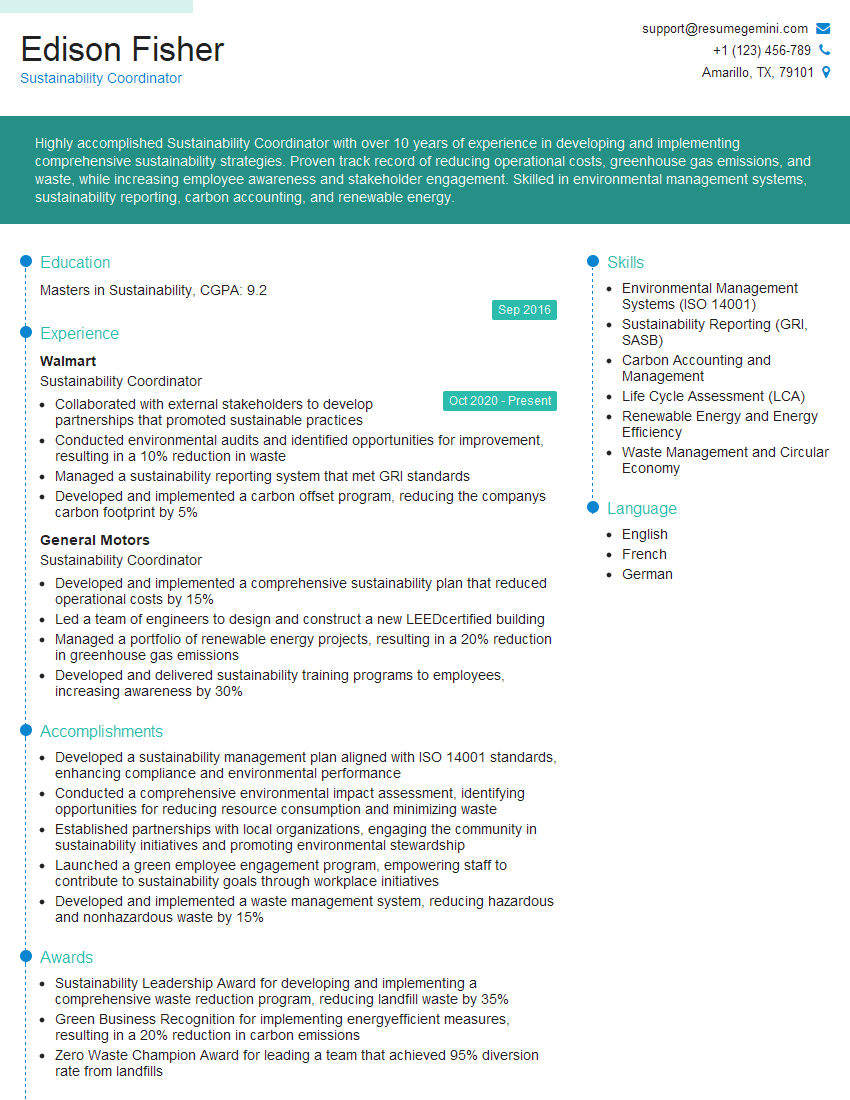
Sustainability Coordinator Resume Sample
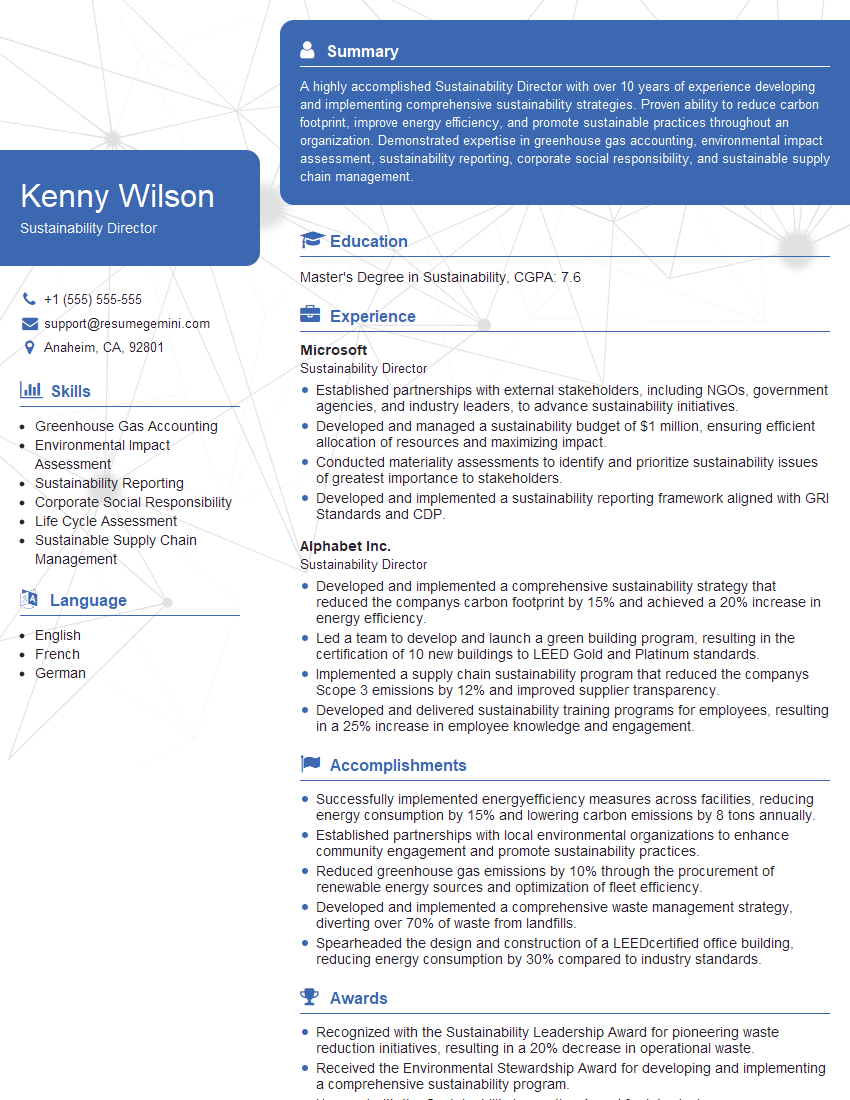
Sustainability Director Resume Sample
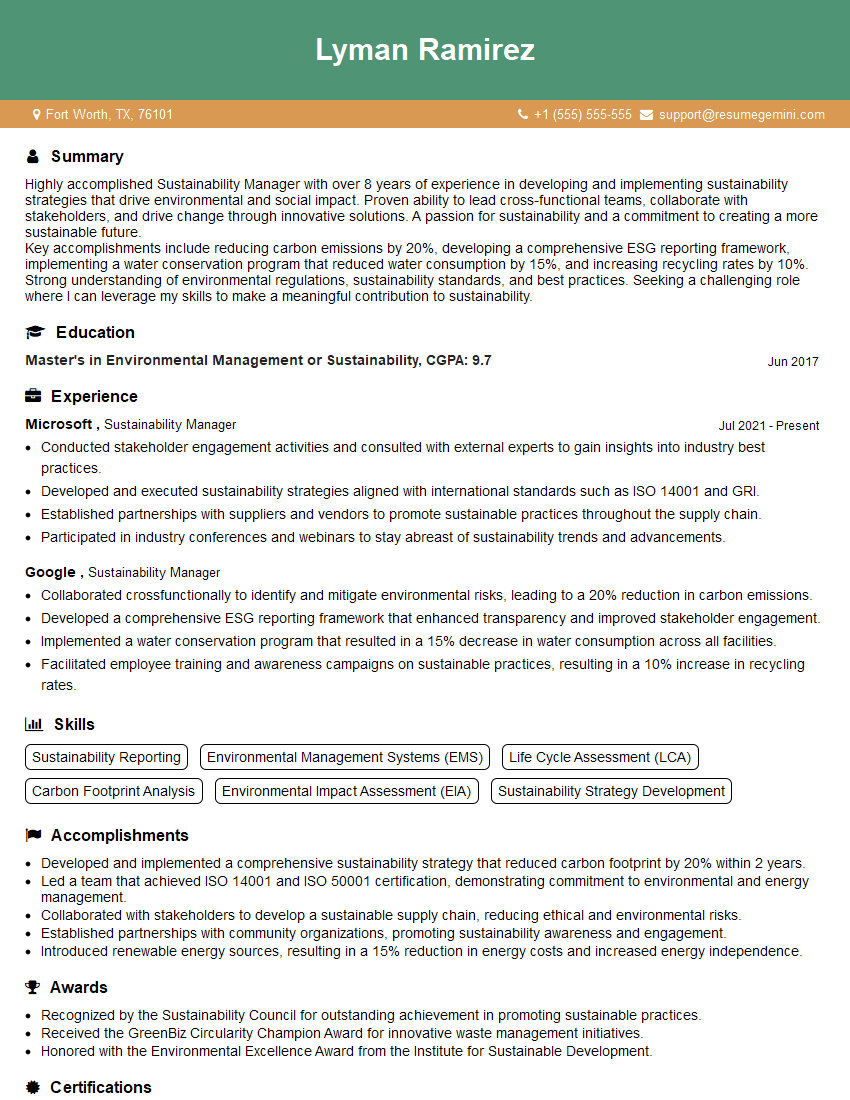
Sustainability Manager Resume Sample
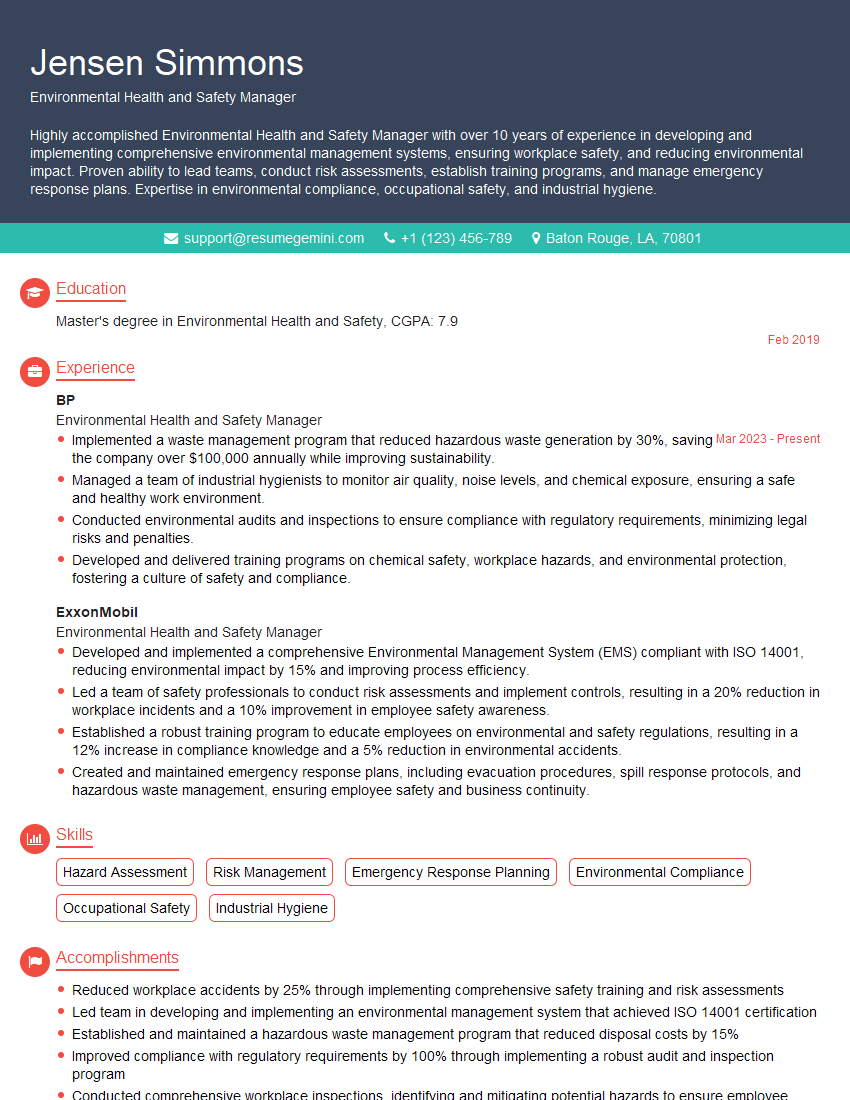
Environmental Health and Safety Manager Resume Sample
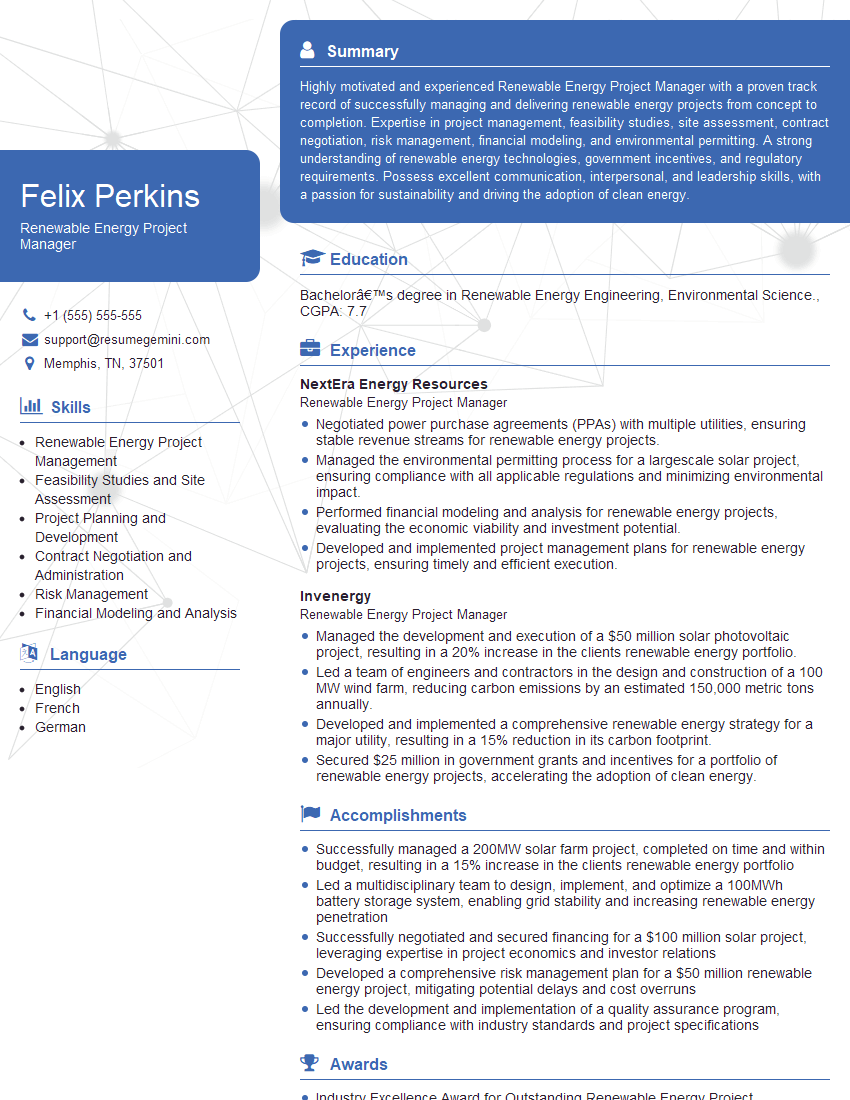
Renewable Energy Project Manager Resume Sample
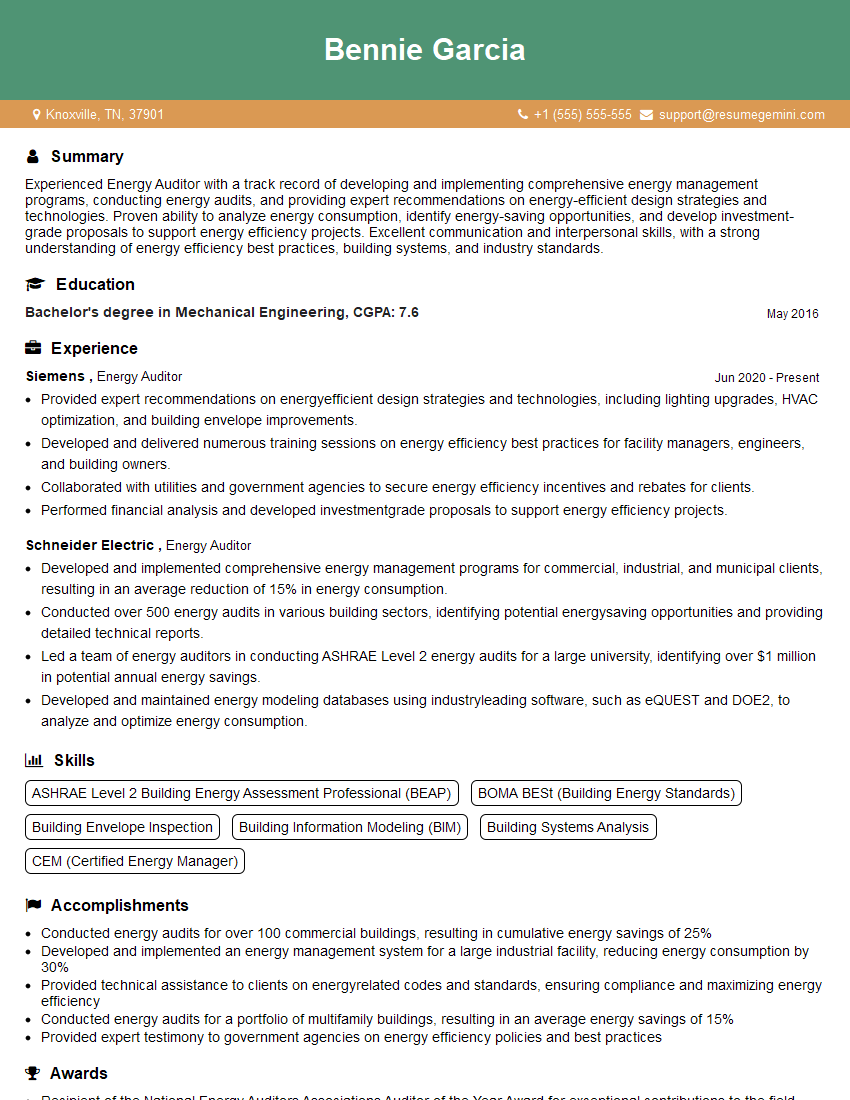
Energy Auditor Resume Sample
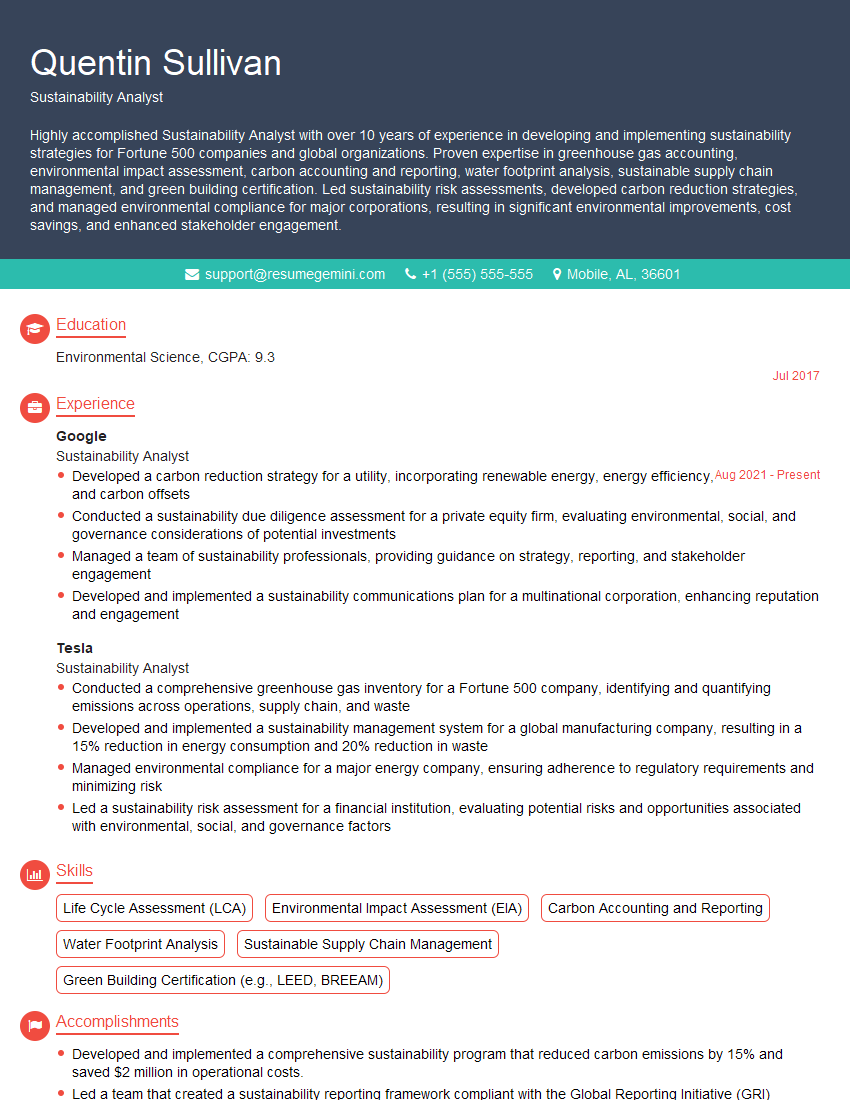
Sustainability Analyst Resume Sample
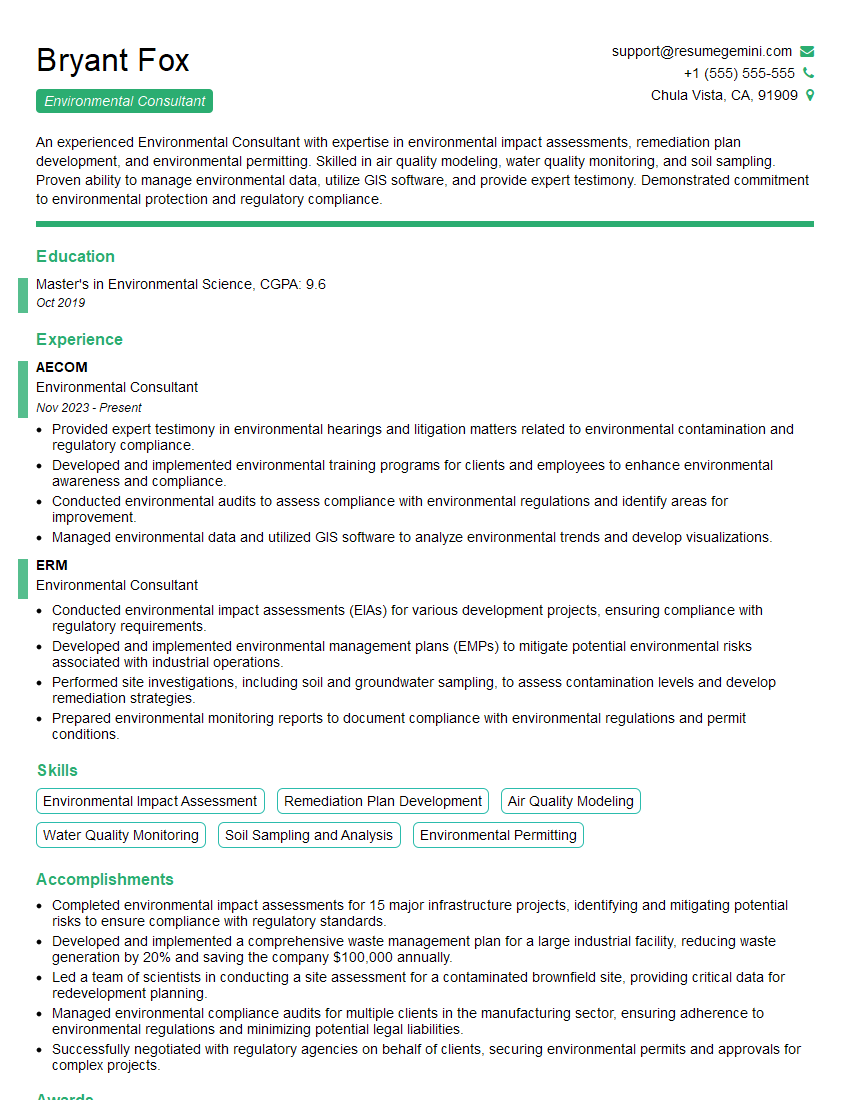
Environmental Consultant Resume Sample
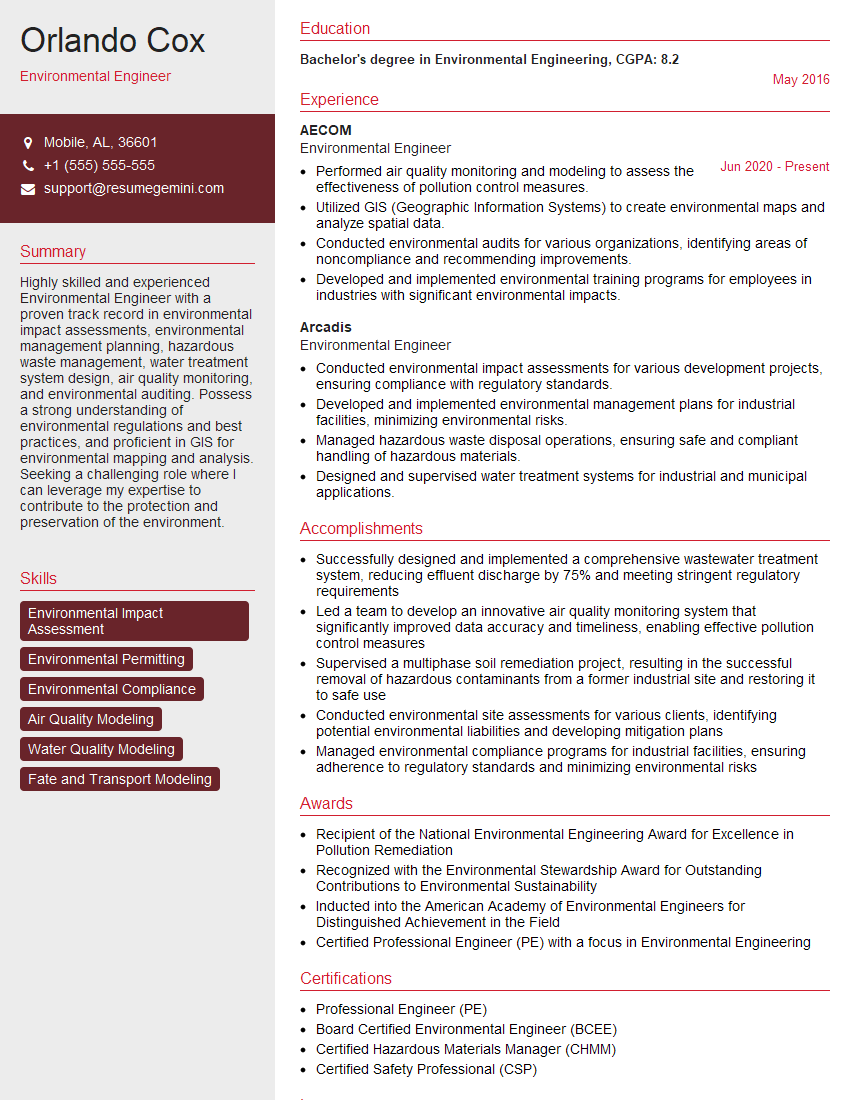
Environmental Engineer Resume Sample
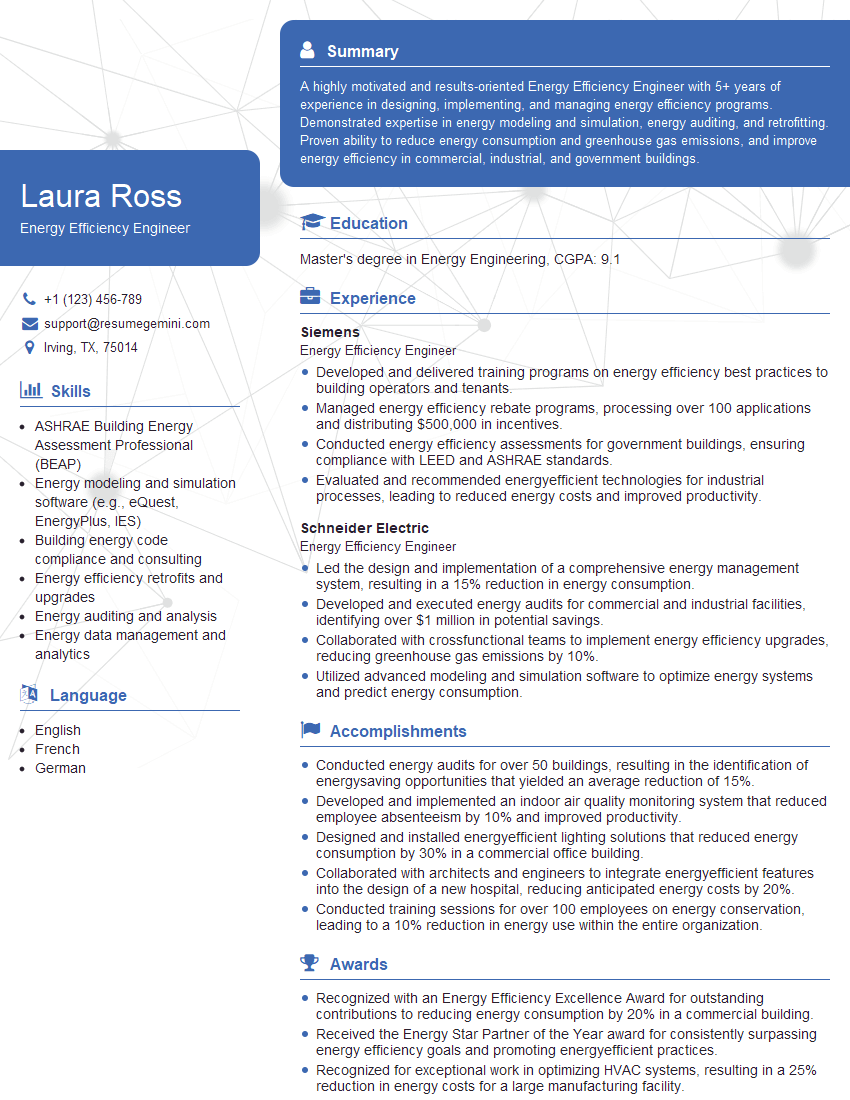
Energy Efficiency Engineer Resume Sample
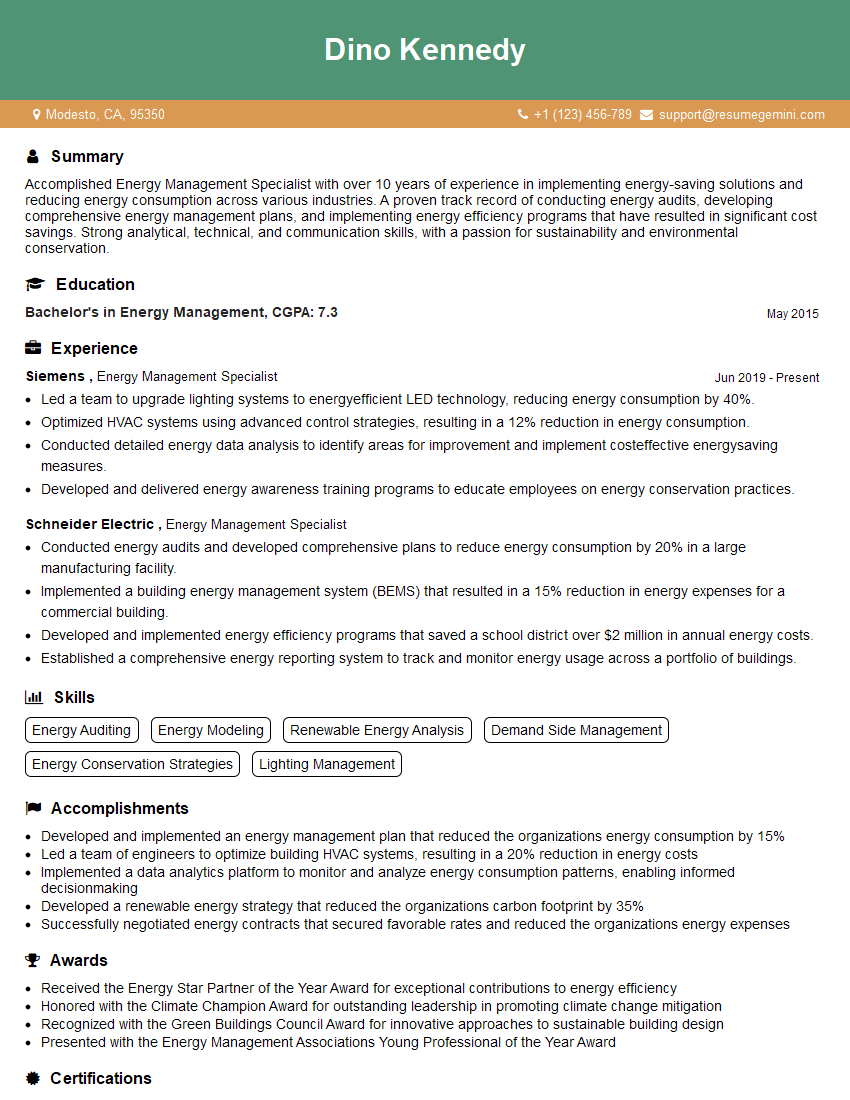
Energy Management Specialist Resume Sample
Explore more articles
Users Rating of Our Blogs
Share Your Experience
We value your feedback! Please rate our content and share your thoughts (optional).
What Readers Say About Our Blog
To the interviewgemini.com Webmaster.
Very helpful and content specific questions to help prepare me for my interview!
Thank you
To the interviewgemini.com Webmaster.
This was kind of a unique content I found around the specialized skills. Very helpful questions and good detailed answers.
Very Helpful blog, thank you Interviewgemini team.