Preparation is the key to success in any interview. In this post, we’ll explore crucial Computerized Neuropsychological Test Interpretation interview questions and equip you with strategies to craft impactful answers. Whether you’re a beginner or a pro, these tips will elevate your preparation.
Questions Asked in Computerized Neuropsychological Test Interpretation Interview
Q 1. Explain the advantages and disadvantages of using computerized neuropsychological tests.
Computerized neuropsychological tests (CNTs) offer several advantages over traditional paper-and-pencil tests, primarily increased efficiency and objectivity. They often automate scoring, reducing human error and allowing for faster test administration and report generation. The standardized administration minimizes variability introduced by the examiner. CNTs can also incorporate adaptive testing, adjusting the difficulty based on the individual’s performance, leading to more precise measurements.
However, CNTs also have limitations. One significant drawback is the potential for technological issues, such as software glitches or hardware malfunctions, disrupting the assessment. The reliance on technology can exclude individuals unfamiliar or uncomfortable with computers, creating accessibility concerns. Furthermore, some argue that the impersonal nature of CNTs may affect the patient’s engagement and performance, potentially compromising the validity of the results. Finally, the interpretation of results still requires clinical expertise and careful consideration of the patient’s context.
- Advantage: Increased efficiency and objectivity in scoring and administration.
- Advantage: Adaptive testing for more precise measurements.
- Disadvantage: Technical issues that can disrupt testing.
- Disadvantage: Accessibility concerns for individuals uncomfortable with technology.
- Disadvantage: Potential for reduced patient engagement compared to traditional methods.
Q 2. Describe the process of selecting appropriate computerized neuropsychological tests for a specific patient population.
Selecting appropriate CNTs involves a multi-step process. First, a thorough clinical interview and review of the patient’s medical history are crucial to establish the referral question and identify potential cognitive domains of concern. For example, a patient presenting with post-traumatic amnesia would require tests assessing memory, while someone with suspected dementia would necessitate tests focusing on executive function and learning abilities.
Next, the clinician considers the patient’s age, education level, cultural background, and premorbid cognitive functioning to ensure test appropriateness. The chosen tests should be validated for the specific patient population and have demonstrable psychometric properties (reliability and validity). Specific tests may be selected based on the availability of normative data for that demographic group. For instance, a CNT normed on elderly populations would be preferred when evaluating cognitive decline in an older adult, rather than a test normed on younger individuals. Finally, the clinician considers the overall clinical picture, factoring in other assessment data to build a comprehensive understanding of the patient’s cognitive status.
Think of it like choosing tools for a specific task: a screwdriver is ideal for screws, but not for hammering nails. Similarly, a CNT designed for assessing attention deficits will not be suitable for measuring verbal fluency.
Q 3. How do you interpret the results of a computerized neuropsychological test, considering the limitations of such tests?
Interpreting CNT results requires a nuanced approach. Raw scores alone are insufficient; they need to be compared against normative data, considering the patient’s demographics and the test’s standardization sample. A score below a certain percentile might indicate impairment, but context is key. A drop in performance on a specific task compared to the patient’s own baseline is more significant than a single low score.
Limitations must be acknowledged. CNTs don’t measure all aspects of cognition, and they may be affected by factors like motivation, fatigue, and anxiety. For example, a patient experiencing test anxiety might perform poorly, even if their underlying cognitive abilities are intact. The results should be integrated with other clinical information—patient history, behavioral observations, and other test data—to avoid overinterpretation or misdiagnosis.
Imagine interpreting a blood test – a single abnormal value needs to be contextualized with other health information and physical examination findings for an accurate diagnosis. Similarly, CNT results require integration with other data for a complete picture of the patient’s cognitive status.
Q 4. What are the ethical considerations involved in administering and interpreting computerized neuropsychological tests?
Ethical considerations are paramount when using CNTs. Informed consent is essential, ensuring the patient understands the purpose, procedure, and potential risks of the assessment. Confidentiality of test results is critical, adhering to all relevant privacy regulations (like HIPAA). The clinician must ensure the test is culturally appropriate and administered fairly, avoiding biases that could compromise results.
Clinicians must also acknowledge their limitations and refer to a specialist if needed. If a clinician is not adequately trained in CNT interpretation, they should not attempt to do so. Misinterpretation can lead to inappropriate diagnoses and treatment plans, potentially causing harm to the patient. For instance, misinterpreting a result might lead to an unnecessary referral to a specialist, causing delays and unnecessary costs for the patient.
Q 5. How do you ensure the validity and reliability of computerized neuropsychological test results?
Ensuring validity and reliability of CNT results hinges on several factors. The test itself must possess established psychometric properties, including high reliability (consistency of scores across multiple administrations) and validity (accuracy in measuring what it intends to measure). Clinicians must ensure the test is administered according to the standardized protocol, minimizing procedural variations that can affect the results.
Regular calibration and maintenance of the testing equipment are essential to minimize technical errors. The clinician’s training and expertise in administering and interpreting the test are crucial. When selecting a test, examine its psychometric properties documented in published research. Look for studies that show good test-retest reliability and validity evidence supporting its use in the intended patient population. This can include information on the size and demographic characteristics of the normative sample.
Q 6. Explain how you would handle discrepancies between computerized and traditional neuropsychological test results.
Discrepancies between computerized and traditional neuropsychological test results warrant a thorough investigation. The first step is to carefully review the administration procedures of both tests to identify any potential sources of error. Factors like patient fatigue, medication effects, or the presence of confounding factors (like anxiety or depression) should be considered.
Further investigation may involve re-administering either or both tests, using different assessment instruments, or incorporating additional clinical data, such as behavioral observations or collateral information from family members or caregivers. It’s crucial to integrate all available information to reach a comprehensive conclusion. The resolution process may involve a reassessment or consultation with other professionals. A possible explanation could be that the test administration conditions were not optimal in one case or that the tests measure slightly different aspects of the same cognitive function.
Q 7. Discuss the impact of technological limitations on the accuracy of computerized neuropsychological tests.
Technological limitations can significantly impact the accuracy of CNTs. Software glitches, hardware malfunctions, and inadequate computer skills on the part of the patient can all lead to inaccurate or incomplete data. The quality of the software, the design of the interface, and the system’s responsiveness are all critical to ensure reliable performance.
For example, a lag in the computer’s response time during a timed task could negatively influence the patient’s performance, resulting in an inaccurate score. Similarly, poor interface design may confuse the patient, leading to errors. It’s crucial to select high-quality, well-validated software and hardware and to provide adequate technical support. Regular updates and maintenance of the system are essential for preventing issues. Furthermore, clinicians must be aware of these potential problems and interpret the results cautiously, taking into account the possibility of technical limitations.
Q 8. How do you address patient concerns or anxieties related to computerized neuropsychological testing?
Addressing patient anxieties about computerized neuropsychological testing is crucial for accurate assessment. I begin by explaining the process in simple, non-technical terms, emphasizing that the tests are designed to help understand their cognitive strengths and weaknesses, not to judge their intelligence or ability. I highlight that the tests are tools, similar to how a doctor uses an X-ray to understand the body, and the results help create a personalized treatment plan. I encourage them to ask questions at any point, creating a safe and comfortable environment. For example, if a patient expresses fear of computers, I might demonstrate the test interface beforehand and allow them to practice a few simple tasks to build confidence. If anxiety persists, I may consider offering breaks or adjusting the testing environment to meet their individual needs. I reassure them that their performance is confidential and that the focus is on collaboration and understanding.
Q 9. What software or platforms are you familiar with for computerized neuropsychological testing?
My experience encompasses a range of software and platforms commonly used in computerized neuropsychological testing. I’m proficient with the following:
- CogState: A comprehensive battery with excellent normative data and various modules assessing attention, memory, and executive functions.
- IMSA (Integrated Multi-System Assessment): Often used in research and clinical settings for its standardized procedures and extensive reporting capabilities.
- Delis-Kaplan Executive Function System (D-KEFS): A widely-used computerized assessment for evaluating various aspects of executive function, including planning, working memory, and cognitive flexibility.
- Cambridge Neuropsychological Test Automated Battery (CANTAB): Known for its sophisticated tasks and sensitive detection of subtle cognitive impairments.
Q 10. Explain your experience with different types of computerized neuropsychological tests (e.g., memory, attention, executive function).
My experience with computerized neuropsychological tests spans diverse cognitive domains. For example, in memory assessment, I frequently use tests measuring verbal and visual memory (e.g., delayed recall tasks within CogState or CANTAB). For attention, I utilize tests evaluating sustained attention, selective attention, and divided attention (e.g., continuous performance tests, often found in CogState and IMSA). In assessing executive functions, I employ tasks measuring inhibitory control, cognitive flexibility, and planning (e.g., the D-KEFS). I carefully select the tests based on the patient’s presenting concerns, clinical history, and the overall assessment goals. For instance, a patient with suspected ADHD might receive tests emphasizing attention and inhibitory control, while someone with a traumatic brain injury might be given a broader battery assessing memory, attention, and executive functions. I understand the strengths and limitations of different test types and tailor my approach accordingly.
Q 11. Describe your experience interpreting computerized test results in different clinical populations (e.g., TBI, stroke, dementia).
Interpreting computerized test results across diverse clinical populations requires a nuanced approach. In traumatic brain injury (TBI), I look for patterns of deficits that correlate with the severity and location of the injury. For example, frontal lobe damage might manifest as impaired executive functions, while temporal lobe damage could affect memory. In stroke patients, the interpretation focuses on identifying cognitive impairments resulting from the specific area of the brain affected by the stroke. For example, a left-hemisphere stroke might impact language and verbal memory, while a right-hemisphere stroke might affect visuospatial abilities. In dementia, the focus is on identifying characteristic patterns of cognitive decline. For instance, Alzheimer’s disease often presents with progressive decline in memory, particularly episodic memory. I carefully consider the patient’s age, education level, and premorbid functioning when comparing results to normative data. Each population presents unique challenges and requires careful consideration of various factors impacting performance.
Q 12. How do you integrate computerized test results with other clinical information (e.g., medical history, behavioral observations)?
Integrating computerized test results with other clinical information is paramount for a comprehensive neuropsychological evaluation. This involves a thorough review of the patient’s medical history, including details about their neurological events, medications, and past medical conditions. I also consider behavioral observations during the testing session, noting factors such as motivation, effort, and any unusual behaviors. This holistic approach allows me to contextualize the computerized test findings. For example, a patient reporting fatigue might show decreased performance on attentional tasks, but this finding must be considered alongside other indicators before making a definitive diagnosis. Similarly, inconsistencies between self-reported symptoms and test performance may point to malingering or other factors. The integration of multiple data sources leads to a more accurate and complete understanding of the patient’s cognitive profile.
Q 13. Explain your understanding of normative data and its importance in computerized neuropsychological test interpretation.
Normative data is the foundation of computerized neuropsychological test interpretation. It consists of the performance scores of a large, representative sample of healthy individuals of similar age, education, and other relevant demographic characteristics. Comparing a patient’s performance to normative data allows us to determine if their scores fall within the normal range or indicate significant impairment. For example, if a patient’s score on a memory test falls below the 5th percentile of the normative data, it suggests a significant memory deficit. The importance of accurate normative data cannot be overstated. Out-of-date or poorly constructed normative data can lead to misinterpretations and potentially incorrect diagnoses. Therefore, I always ensure I’m using the most current and appropriate normative samples for each test and patient demographic.
Q 14. How do you identify and address potential sources of error in computerized neuropsychological testing?
Identifying and addressing potential sources of error is critical for accurate interpretation. These errors can be broadly categorized into:
- Technical errors: These involve issues with the software or hardware used for testing. Regular equipment checks and software updates are crucial. I also ensure the testing environment is free from distractions.
- Performance-related errors: These include factors like patient fatigue, inattention, medication side effects, or deliberate malingering. Careful observation during testing, review of medical history, and use of validity indices within the test software can help identify these issues.
- Interpretation errors: These can arise from misinterpreting the results or failing to consider relevant contextual information. A thorough understanding of the test’s psychometric properties and a multidisciplinary approach minimize interpretation errors.
Q 15. Describe your experience with scoring and reporting computerized neuropsychological tests.
My experience with scoring and reporting computerized neuropsychological tests spans over a decade, encompassing a wide range of assessments. I’m proficient in using various software platforms, including but not limited to, CogState, ImPACT, and CNS Vital Signs. The process begins with ensuring the test data is accurately uploaded and reviewed for any technical issues, such as incomplete responses or equipment malfunctions. I then utilize the software’s automated scoring features, carefully reviewing the generated reports for any discrepancies or unusual patterns. This involves cross-referencing raw scores with normative data, considering age, education, and handedness. My reports are detailed yet concise, presenting the findings in a clear and accessible manner for clinicians. For instance, if a patient shows significant deficits in processing speed, I’ll not only report the raw scores and percentiles but also interpret their clinical implications, relating them to potential cognitive impairments and their impact on daily functioning. I always provide a comprehensive summary of strengths and weaknesses, tailored to the specific referral question, with recommendations for further assessment or intervention.
Career Expert Tips:
- Ace those interviews! Prepare effectively by reviewing the Top 50 Most Common Interview Questions on ResumeGemini.
- Navigate your job search with confidence! Explore a wide range of Career Tips on ResumeGemini. Learn about common challenges and recommendations to overcome them.
- Craft the perfect resume! Master the Art of Resume Writing with ResumeGemini’s guide. Showcase your unique qualifications and achievements effectively.
- Don’t miss out on holiday savings! Build your dream resume with ResumeGemini’s ATS optimized templates.
Q 16. How do you manage and protect patient data obtained through computerized neuropsychological testing?
Patient data security is paramount. I adhere to strict HIPAA guidelines and all relevant privacy regulations. This involves utilizing secure software platforms with robust encryption protocols, limiting access to authorized personnel only, and following strict password management protocols. Data is stored on secure servers with regular backups. All paper-based records are kept in locked cabinets, and I strictly maintain confidentiality throughout the entire process, from test administration to reporting. Imagine it like safeguarding a highly sensitive financial document – the same level of care and attention is given to patient data. Furthermore, I regularly participate in training on data protection and am always updated on new regulations and best practices.
Q 17. How do you stay up-to-date on the latest advancements in computerized neuropsychological testing?
Keeping abreast of advancements in computerized neuropsychological testing is an ongoing process. I actively participate in professional organizations such as the American Academy of Clinical Neuropsychology (AACN) and attend conferences and workshops to learn about new tests, software updates, and research findings. I regularly review peer-reviewed journals, such as the Journal of the International Neuropsychological Society and the Archives of Clinical Neuropsychology. Online resources and continuing education courses also play a critical role in my professional development. Think of it as staying updated on the newest medical equipment and techniques – it’s crucial for providing the most effective and accurate patient care.
Q 18. What are the limitations of computerized neuropsychological testing compared to traditional methods?
While computerized neuropsychological testing offers significant advantages in efficiency, standardization, and objective scoring, limitations do exist compared to traditional methods. Computerized tests may not capture the nuances of human behavior as effectively as a trained clinician administering a traditional paper-and-pencil test, particularly in assessing complex cognitive functions that require verbal interaction and flexible response strategies. For example, subtle symptoms like difficulty with abstract thinking or effortful processing might be overlooked by automated scoring algorithms. Furthermore, there’s the potential for technological issues like software glitches or equipment malfunctions to affect test validity. Finally, access to computers and technological proficiency may introduce bias, particularly in populations with limited digital literacy.
Q 19. What are some specific computerized neuropsychological tests and their clinical applications?
Many computerized neuropsychological tests exist, each with specific clinical applications. For example, the CogState Battery provides a comprehensive assessment of various cognitive domains like attention, memory, and executive functions, useful in detecting mild cognitive impairment (MCI) or early-stage dementia. ImPACT is specifically designed for concussion assessment in athletes, measuring reaction time, visual-motor speed, and cognitive function. CNS Vital Signs focuses on assessing attention and information processing speed, often used in screening for traumatic brain injury (TBI) and other neurological conditions. Choosing the right test depends heavily on the referral question and the clinical context. The choice might be guided by the specific cognitive domains that need to be assessed and the overall clinical presentation of the individual.
Q 20. How would you interpret a pattern of impaired performance across multiple computerized tests?
Interpreting a pattern of impaired performance across multiple computerized tests requires a systematic approach. First, I would carefully review the specific tests involved, noting the nature and severity of impairment in each cognitive domain. A pattern of deficits across attention, memory, and executive functions, for instance, might suggest a diffuse cognitive impairment, potentially linked to conditions such as TBI, dementia, or a severe psychiatric illness. Next, I’d consider demographic factors (age, education, and cultural background) and the patient’s medical history, including any neurological or psychiatric conditions, medications, or substance use. Finally, I’d integrate findings from computerized tests with data from other assessments (e.g., clinical interviews, behavioral observations, neuroimaging) to arrive at a comprehensive interpretation and generate a hypothesis regarding the potential cognitive impairment. A holistic view is crucial to make an informed assessment.
Q 21. How do you account for the influence of factors like age, education, and cultural background on test performance?
Accounting for the influence of age, education, and cultural background is crucial for accurate test interpretation. Most computerized neuropsychological tests provide normative data stratified by age and education levels, allowing for a comparison of an individual’s performance against same-aged and similarly educated peers. However, cultural factors are sometimes less directly accounted for in normative data. This means I use caution when interpreting results from individuals from diverse cultural backgrounds, considering that differences in language proficiency, familiarity with test formats, and cultural values may influence test performance. I would avoid hasty conclusions based solely on impaired performance and try to consult additional data or resources tailored to diverse populations. For example, using tests adapted for specific cultures, or seeking input from clinicians who specialize in neuropsychological assessment of this population.
Q 22. Explain your understanding of the psychometric properties (e.g., sensitivity, specificity) of computerized neuropsychological tests.
Understanding the psychometric properties of computerized neuropsychological tests is crucial for accurate interpretation. These properties ensure the test measures what it intends to measure reliably and validly. Sensitivity refers to the test’s ability to correctly identify individuals with a neurological impairment. A highly sensitive test will have few false negatives (missing people with the condition). Specificity, on the other hand, refers to the test’s ability to correctly identify individuals without a neurological impairment. A highly specific test will have few false positives (incorrectly identifying someone as having the condition). For example, a test with high sensitivity for detecting mild cognitive impairment would be ideal for early detection, even if it might have a lower specificity, leading to some false positives. Conversely, a test with high specificity might be preferred in a legal context where false accusations are critical to avoid, even if it means missing some cases of impairment. Other important psychometric properties include reliability (consistency of results over time and across different raters), validity (the extent to which the test measures what it claims to measure), and norms (comparing scores to a representative population). Considering all these properties together gives a complete picture of the test’s trustworthiness.
Q 23. Discuss the importance of considering test-retest reliability when interpreting computerized neuropsychological test data.
Test-retest reliability is paramount when interpreting computerized neuropsychological test data. It measures the consistency of a test’s results over time when administered to the same individual under similar conditions. A high test-retest reliability indicates that the test is stable and provides consistent scores, minimizing the influence of random fluctuations. Imagine a patient scoring very differently on the same test administered a week apart. This low test-retest reliability raises serious concerns about the validity of the results and might indicate factors like fatigue, practice effects, or even underlying fluctuations in the patient’s condition that need further investigation. For example, in tracking a patient’s recovery post-stroke, inconsistent scores could obscure true progress. We utilize tests with established high test-retest reliability to ensure that any observed changes reflect actual neurological changes, rather than measurement error. We must also consider the time interval between tests; too short an interval might show practice effects, while too long an interval might reflect actual changes in the patient’s condition.
Q 24. How do you communicate complex neuropsychological findings obtained from computerized testing to patients and their families?
Communicating complex neuropsychological findings from computerized testing requires clear, empathetic, and patient-centered communication. I avoid technical jargon and use plain language to explain the results. I use analogies and visual aids, such as graphs or diagrams, to illustrate the findings. For example, if a patient’s memory scores are below average, I might explain it as, “Your test results suggest some challenges in remembering recent events, similar to having difficulty remembering what you had for lunch yesterday.” I emphasize the strengths alongside the weaknesses, offering a balanced perspective. I involve family members in the discussion and answer their questions patiently. The conversation focuses not only on the diagnosis but also on the implications for daily life, available interventions, and realistic expectations for recovery. Finally, I provide written summaries of the results for easy reference and follow-up discussions.
Q 25. Describe your experience in using computerized neuropsychological tests to track the progress of patients undergoing rehabilitation.
I have extensive experience using computerized neuropsychological tests to monitor patient progress during rehabilitation. These tests allow for objective, quantitative assessment of cognitive functions across various domains, such as attention, memory, executive function, and processing speed. By administering the same tests at regular intervals throughout the rehabilitation process, we can track improvement over time. For example, in a patient with traumatic brain injury, we might use a computerized test of attention to assess their ability to focus and sustain attention during therapy sessions. Improvements in these test scores would indicate successful rehabilitation. The data also helps us tailor the rehabilitation program by focusing on areas where the patient shows less improvement, allowing for targeted interventions. Moreover, the computerized nature of the tests allows for efficient data collection and analysis, enabling quick identification of trends and adjustments in the rehabilitation plan.
Q 26. What are your strategies for managing technical difficulties during computerized neuropsychological testing?
Managing technical difficulties during computerized neuropsychological testing is crucial for maintaining the integrity of the assessment. My strategy involves proactive measures like ensuring all equipment is functioning correctly before the session begins. This includes checking internet connectivity, software updates, and hardware functionality. During the testing, I have contingency plans in place, including backup systems or alternative methods to administer parts of the test if a technical problem arises. For instance, we might have paper-and-pencil versions of certain subtests readily available. Detailed documentation of any technical issues encountered is essential, and we maintain regular communication with technical support for assistance in resolving software or hardware glitches. We strive to minimize disruptions to the patient’s testing experience and communicate any necessary adjustments transparently.
Q 27. Explain how you would determine if a patient is malingering on a computerized neuropsychological test.
Detecting malingering (intentional exaggeration or fabrication of symptoms) on computerized neuropsychological tests requires a multi-faceted approach. We use tests that are specifically designed to detect inconsistent responding patterns. These tests often incorporate validity scales that measure the consistency and plausibility of the responses. Significant discrepancies between a patient’s performance on these validity scales and their performance on the main cognitive tests raise concerns about malingering. Additionally, we compare the patient’s performance to known patterns of response associated with malingering. For instance, extremely poor performance on all tests, including easy items, is a red flag. Furthermore, we integrate information from other sources, such as clinical interviews, observations of the patient’s behavior during the testing, and collateral information from family members or other healthcare providers to create a comprehensive picture. It’s important to note that it is not sufficient to rely solely on validity scales for determining malingering; a complete clinical picture needs to be considered.
Q 28. How would you modify or adapt computerized neuropsychological tests for patients with specific physical or cognitive limitations?
Adapting computerized neuropsychological tests for patients with physical or cognitive limitations requires careful consideration. For patients with visual impairments, we can adjust screen settings, such as font size and contrast, or utilize audio-based versions of tests. For patients with motor impairments, we might employ alternative input devices, like voice-activated software or adapted keyboards. Cognitive limitations, such as attention deficits, necessitate modifying testing procedures; this might involve breaking the tests into shorter sessions, providing more frequent breaks, or offering more explicit instructions. In some cases, we might need to substitute a test with a more suitable alternative that better accommodates the patient’s limitations. Collaborating with occupational therapists and other specialists ensures the adaptations are appropriate and effective. The key is to find a balance between accommodating the patient’s needs and maintaining the psychometric properties of the tests.
Key Topics to Learn for Computerized Neuropsychological Test Interpretation Interview
- Test Selection & Administration: Understanding the principles behind choosing appropriate computerized neuropsychological tests based on patient demographics, referral questions, and cognitive domains of interest. This includes familiarity with various test platforms and their strengths/limitations.
- Normative Data & Standardization: Interpreting test results accurately within the context of age, education, and other demographic variables. Understanding the implications of different standardization samples and the limitations of normative data.
- Pattern Analysis & Interpretation: Moving beyond individual test scores to identify meaningful patterns of strengths and weaknesses across multiple cognitive domains. Developing skills in identifying subtle indicators of cognitive impairment or dysfunction.
- Report Writing & Communication: Clearly and concisely communicating complex neuropsychological findings to clinicians, patients, and families. Structuring reports in a way that is both informative and understandable to a non-specialist audience.
- Ethical Considerations: Understanding the ethical implications of neuropsychological testing, including issues of confidentiality, informed consent, and cultural sensitivity. Knowing how to address potential biases in test interpretation.
- Software Proficiency: Demonstrating familiarity with common computerized neuropsychological testing software packages and their functionalities. Understanding data management and reporting features.
- Differential Diagnosis: Using test results to differentiate between various neurological and psychiatric conditions. Understanding the limitations of computerized testing in making definitive diagnoses.
- Validity & Reliability: Critically evaluating the psychometric properties of computerized neuropsychological tests, including their validity and reliability. Understanding the potential impact of test-taking strategies and other confounding factors.
Next Steps
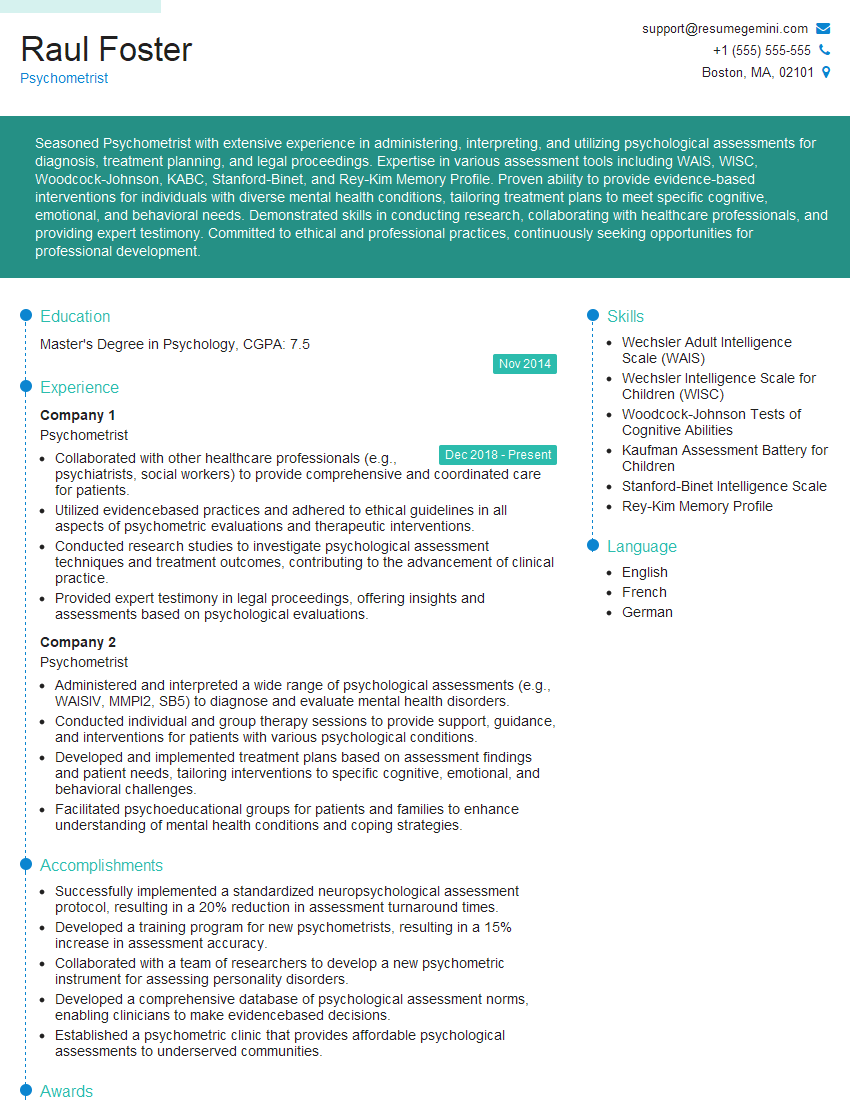
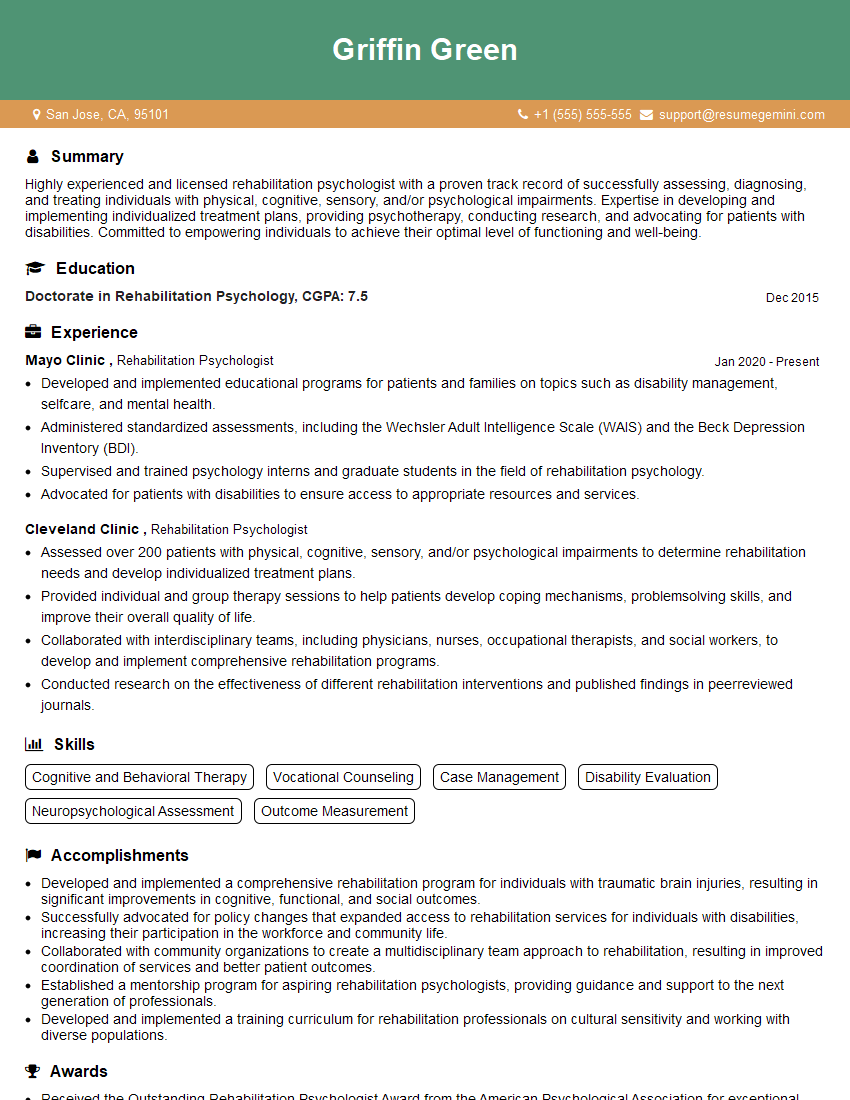
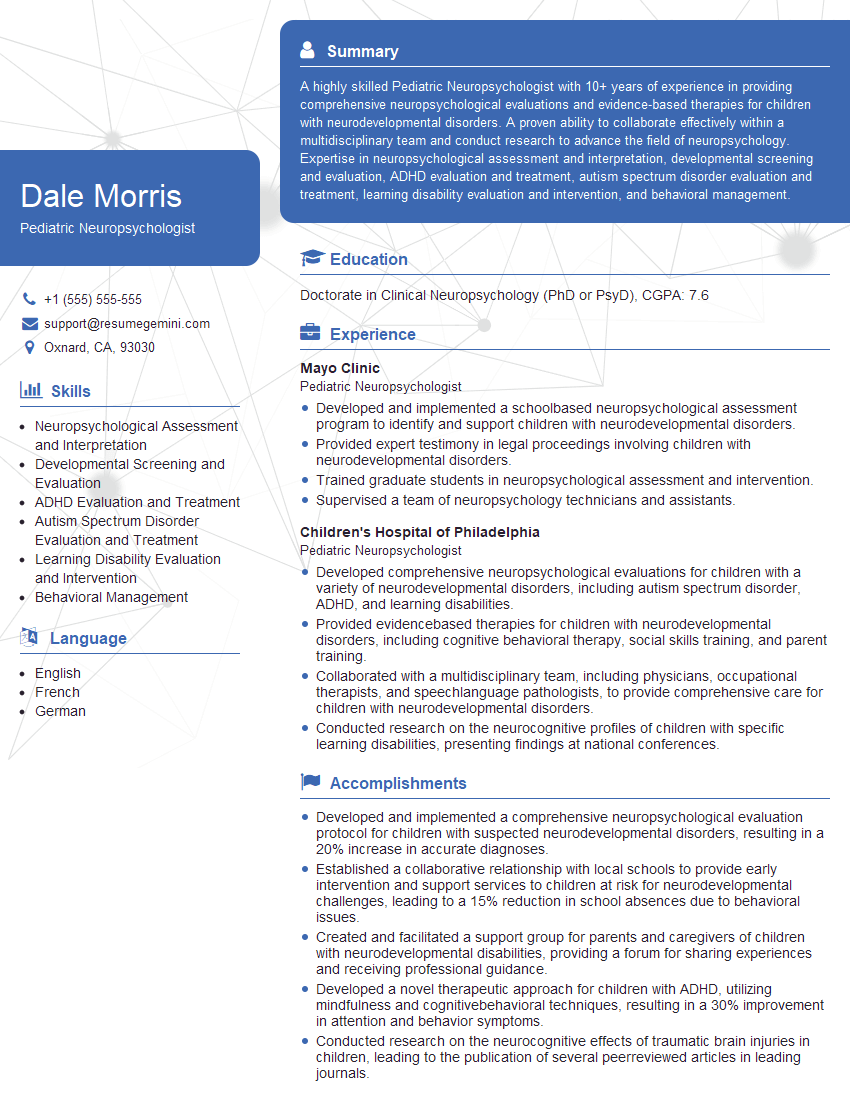
Mastering Computerized Neuropsychological Test Interpretation is crucial for career advancement in neuropsychology and related fields. It opens doors to specialized roles and enhances your credibility as a skilled professional. To maximize your job prospects, invest time in crafting an ATS-friendly resume that highlights your relevant skills and experience. ResumeGemini is a trusted resource that can help you create a professional and impactful resume. Examples of resumes tailored to Computerized Neuropsychological Test Interpretation are available to guide you through this process. Take the next step towards your dream career today!

Explore more articles
Users Rating of Our Blogs
Share Your Experience
We value your feedback! Please rate our content and share your thoughts (optional).
What Readers Say About Our Blog
To the interviewgemini.com Webmaster.
Very helpful and content specific questions to help prepare me for my interview!
Thank you
To the interviewgemini.com Webmaster.
This was kind of a unique content I found around the specialized skills. Very helpful questions and good detailed answers.
Very Helpful blog, thank you Interviewgemini team.