Cracking a skill-specific interview, like one for Learning Disability Evaluation and Intervention, requires understanding the nuances of the role. In this blog, we present the questions you’re most likely to encounter, along with insights into how to answer them effectively. Let’s ensure you’re ready to make a strong impression.
Questions Asked in Learning Disability Evaluation and Intervention Interview
Q 1. Describe the process of conducting a comprehensive learning disability evaluation.
A comprehensive learning disability evaluation is a multi-faceted process aimed at identifying the presence and nature of a learning disability. It’s not a single test, but a series of assessments designed to paint a complete picture of the student’s strengths and weaknesses.
- Referral and Background Information Gathering: The process begins with a referral, often from a teacher, parent, or pediatrician, followed by collecting detailed information about the student’s academic history, developmental milestones, and medical history.
- Cognitive Assessments: These tests measure intelligence (IQ) and cognitive abilities like processing speed, working memory, and attention. Examples include the Wechsler Intelligence Scales (WISC) or Stanford-Binet Intelligence Scales. These provide a baseline understanding of the student’s cognitive potential.
- Achievement Tests: These standardized tests evaluate academic skills in areas like reading, writing, and math. Examples include the Woodcock-Johnson IV Tests of Achievement or the Wechsler Achievement Test (WAT). The results are compared to the student’s cognitive abilities to identify discrepancies – a significant difference between potential and achievement suggests a learning disability.
- Educational Observation and Interviews: Observing the student in their classroom setting provides valuable qualitative data about their learning behaviors, strengths, and challenges. Interviews with teachers, parents, and the student themselves offer crucial perspectives on their learning experiences and strategies.
- Curriculum-Based Measurement (CBM): CBM involves frequent monitoring of the student’s progress in specific academic skills using brief, standardized assessments directly linked to the curriculum. This helps track responsiveness to interventions.
- Integration and Report Writing: All the data gathered – test scores, observations, interviews – are integrated to form a comprehensive profile. A detailed report is then written summarizing the findings, including a diagnosis (if applicable) and recommendations for interventions and accommodations.
For example, a student might score highly on an IQ test but significantly below average on a reading achievement test, pointing towards a possible reading disability like dyslexia. The evaluation wouldn’t stop there; it would delve deeper to understand the specific aspects of reading that are challenging (phonemic awareness, fluency, comprehension).
Q 2. What are the key differences between dyslexia, dysgraphia, and dyscalculia?
Dyslexia, dysgraphia, and dyscalculia are specific types of learning disabilities that affect different academic areas. While they can co-occur, they represent distinct challenges:
- Dyslexia: Primarily affects reading and spelling. Individuals with dyslexia struggle with phonological processing (the ability to manipulate sounds in words), which impacts their ability to decode words accurately and fluently. They may also experience difficulties with reading comprehension, despite normal or above-average intelligence.
- Dysgraphia: Impacts writing abilities. Individuals with dysgraphia may struggle with handwriting legibility, spelling, organization of written work, and the motor skills needed for writing. They may find it difficult to express their thoughts in writing, even though they understand the concepts.
- Dyscalculia: Affects math abilities. Individuals with dyscalculia struggle with number sense, mathematical reasoning, and calculation. They may have difficulty understanding mathematical concepts, remembering math facts, and solving problems, even with adequate instruction.
Think of it this way: dyslexia is like having a glitch in the software that processes sounds; dysgraphia is like having a problem with the hardware that controls writing; and dyscalculia is like having difficulty with the internal operating system for mathematical thinking. Each has its unique challenges that require tailored interventions.
Q 3. Explain the different types of assessments used to identify learning disabilities.
A variety of assessments are used, chosen based on the student’s age, suspected areas of difficulty, and the goals of the evaluation. These can be broadly categorized as:
- Standardized Tests: These are norm-referenced tests, meaning the student’s performance is compared to a larger group of same-age peers. Examples include the WISC, WAT, Woodcock-Johnson IV, and various achievement tests specific to reading, writing, and math.
- Curriculum-Based Measurements (CBM): These are brief, frequent assessments directly tied to the curriculum being taught in the classroom. They offer ongoing progress monitoring and inform instructional decisions.
- Informal Assessments: These are less structured and can include teacher-made tests, observations of student performance in specific tasks, work samples, and portfolio reviews. They provide valuable qualitative information that supplements standardized test results.
- Dynamic Assessments: These assessments focus on the student’s learning potential by evaluating how they respond to instruction and feedback. They look beyond static measures of ability and emphasize the student’s capacity for learning.
- Neuropsychological Assessments: In some cases, more in-depth neuropsychological testing may be conducted to investigate the neurological underpinnings of a suspected learning disability. This might involve tests assessing cognitive processes such as memory, attention, and processing speed in more detail.
The selection of assessment tools is crucial for generating a comprehensive and valid profile. A skilled evaluator considers the strengths and limitations of each assessment to ensure that the results accurately reflect the student’s capabilities and needs.
Q 4. How do you differentiate between a learning disability and a learning difference?
The terms “learning disability” and “learning difference” are often used interchangeably, but there is a subtle distinction. A learning disability is a neurological condition that affects how the brain processes information. It’s a significant, persistent difficulty in one or more specific areas of learning (reading, writing, math) despite adequate instruction and intelligence. It’s a clinically diagnosed condition that impacts a student’s ability to acquire and use academic skills.
A learning difference, on the other hand, is a broader term encompassing any variation in how an individual learns. This could include a learning disability, but it can also include other factors like learning styles, cultural background, motivation, or environmental influences. A learning difference might not necessarily represent a neurological processing deficit.
Think of it like this: a learning disability is a specific neurological condition, while a learning difference is an umbrella term that encompasses various reasons why a student might learn differently. All learning disabilities are learning differences, but not all learning differences are learning disabilities.
Q 5. What are some common accommodations for students with learning disabilities in a classroom setting?
Accommodations for students with learning disabilities aim to create a learning environment that supports their individual needs without altering the curriculum’s essential content. Examples include:
- Instructional Accommodations: These modify how information is presented or taught. Examples include using multi-sensory teaching methods (combining visual, auditory, and kinesthetic approaches), providing explicit and systematic instruction, breaking down tasks into smaller steps, using graphic organizers, and pre-teaching vocabulary.
- Assessment Accommodations: These modify how students demonstrate their learning. Examples include providing extra time, allowing the use of assistive technology (e.g., text-to-speech software), permitting oral responses instead of written ones, and reducing the number of items on a test.
- Environmental Accommodations: These change the learning environment to minimize distractions and promote focus. Examples include preferred seating arrangements, reduced classroom clutter, noise-canceling headphones, and access to quiet areas for breaks.
- Assistive Technology: This includes tools like text-to-speech software, speech-to-text software, graphic organizers, visual timers, and organizational apps. These technologies help students access and process information more effectively.
For instance, a student with dyslexia might benefit from audiobooks, extra time on tests, and preferential seating to minimize distractions, while a student with dysgraphia might use a computer for writing assignments and be provided with graphic organizers for note-taking.
Q 6. Describe your experience with Response to Intervention (RTI) models.
Response to Intervention (RTI) is a multi-tiered framework for providing early intervention and support to struggling learners. It emphasizes prevention through early identification and intervention, reducing the need for special education services. My experience with RTI models includes:
- Tier 1: Universal Screening and Instruction: All students receive high-quality, evidence-based instruction in the general education classroom. Universal screening assessments are used to identify students who are at risk for academic difficulties.
- Tier 2: Targeted Interventions: Students who don’t respond adequately to Tier 1 instruction are provided with more intensive, targeted interventions. These interventions are typically delivered in small groups by trained professionals and are monitored closely for effectiveness.
- Tier 3: Intensive Interventions: Students who continue to struggle despite Tier 2 interventions may need more intensive, individualized support. This may involve individualized education programs (IEPs) and specialized instruction.
In my practice, I’ve worked collaboratively with teachers to implement RTI models, selecting appropriate interventions, monitoring student progress, and making data-driven decisions about intervention intensity and adjustments. I’ve found that RTI models promote early identification, prevent escalation of learning difficulties, and provide a data-based framework for making decisions about support services.
Q 7. How do you collaborate with parents and teachers to develop effective intervention plans?
Collaboration with parents and teachers is essential for developing effective intervention plans. My approach involves:
- Open Communication: Establishing regular communication channels with parents and teachers through meetings, emails, and phone calls. Sharing assessment results and explaining them clearly and concisely.
- Shared Goal Setting: Collaboratively developing goals and objectives for the student’s intervention plan based on the student’s strengths and needs. Ensuring that goals are realistic, measurable, and achievable.
- Strengths-Based Approach: Focusing on the student’s strengths and building upon those strengths to support their learning. Highlighting successful strategies and celebrating progress.
- Shared Decision-Making: Involving parents and teachers in all aspects of the intervention process. Considering their perspectives and suggestions when developing and implementing interventions.
- Ongoing Monitoring and Evaluation: Regularly monitoring the student’s progress, tracking data on intervention effectiveness, making adjustments to the plan as needed, and reporting progress back to parents and teachers.
For instance, I might meet with a parent and teacher to discuss a student’s struggles with reading. Together, we would examine the assessment data, explore the student’s learning profile, and design an intervention plan incorporating specific strategies and accommodations tailored to the student’s needs. We would then meet regularly to discuss progress, make adjustments, and celebrate successes. This collaborative approach ensures a supportive and effective learning environment for the student.
Q 8. What are the legal and ethical considerations in evaluating and diagnosing learning disabilities?
Legal and ethical considerations in learning disability evaluations are paramount. We must adhere to strict guidelines to ensure fairness, accuracy, and respect for the student’s rights. Legally, evaluations must be conducted by qualified professionals using valid and reliable assessment instruments. This means using standardized tests that have been proven to accurately measure what they claim to measure, and interpreting those scores within the context of the student’s overall development and learning environment. The process must also be non-discriminatory, considering cultural and linguistic backgrounds. Ethically, we must maintain confidentiality, obtain informed consent from parents or guardians, and ensure that the evaluation process is comprehensive and unbiased. For instance, we can’t rely solely on one test; we need a multi-faceted approach involving observations, teacher input, and parent interviews to paint a holistic picture. This holistic view safeguards against misdiagnosis and ensures interventions are tailored to the student’s unique needs. A critical aspect is also ensuring that the testing environment is accommodating and reduces any potential bias stemming from the student’s disability, such as providing extra time or alternative formats for testing.
Q 9. What are some evidence-based intervention strategies for students with specific learning disabilities?
Evidence-based interventions for students with specific learning disabilities are crucial for their academic success. These interventions should be individualized based on the student’s specific needs and learning profile. For example, a student with dyslexia might benefit from explicit and systematic phonics instruction, multi-sensory learning techniques, and assistive technologies like text-to-speech software. Students struggling with math might benefit from interventions focusing on number sense, fact fluency, and visual representations of mathematical concepts. Other effective strategies include:
- Direct Instruction: Breaking down skills into smaller, manageable steps and providing explicit, systematic teaching.
- Differentiated Instruction: Adapting the curriculum and instructional methods to meet the unique needs of each student.
- Assistive Technology: Utilizing tools like graphic organizers, text-to-speech software, and speech-to-text software to support learning.
- Cognitive Behavioral Strategies: Teaching students self-regulation and metacognitive skills, helping them become aware of and manage their own learning processes.
Q 10. How do you monitor the progress of students receiving interventions for learning disabilities?
Monitoring the progress of students with learning disabilities is an ongoing process, not a one-time event. We use a variety of methods to track their progress including:
- Curriculum-Based Measurement (CBM): Regularly assessing students’ performance on tasks directly related to the curriculum.
- Progress Monitoring Assessments: Using standardized or informal assessments to track progress towards specific learning goals.
- Observation and Anecdotal Records: Observing students in the classroom and recording observations of their behavior and learning.
- Teacher and Parent Input: Regularly communicating with teachers and parents to gather their perspectives on the student’s progress.
Q 11. Explain your experience using specific assessment tools, such as the Woodcock-Johnson or WISC.
I have extensive experience using the Woodcock-Johnson (WJ) and Wechsler Intelligence Scale for Children (WISC) assessments. The WJ is a comprehensive battery of tests that assess cognitive abilities, achievement, and oral language. I use it to identify specific areas of strength and weakness in a student’s cognitive profile and academic skills. For example, I might use the WJ-IV Tests of Achievement to assess reading fluency, math calculation, and written expression. The WISC, on the other hand, provides a comprehensive measure of a child’s intellectual abilities, including verbal comprehension, perceptual reasoning, working memory, and processing speed. This helps me understand a child’s cognitive strengths and weaknesses. I utilize the results from both assessments, along with other qualitative data, to create a complete picture of the student’s learning abilities and challenges. It’s vital to remember that these are just tools. The interpretation of these test results is crucial, and I always consider the student’s individual context, cultural background, and the overall educational environment. I never rely solely on test scores; rather, I integrate them with observations, teacher reports, and parent input to ensure a comprehensive and accurate assessment.
Q 12. How do you adapt instruction to meet the individual needs of students with diverse learning styles and needs?
Adapting instruction to meet diverse learning styles and needs is central to effective teaching. I use various strategies to differentiate instruction, ensuring that all students have access to the curriculum and can learn at their optimal level. This involves modifying the content, process, and product of learning. For example, a student who is a visual learner might benefit from graphic organizers and visual aids, whereas a student who is a kinesthetic learner might benefit from hands-on activities and movement breaks. I might provide different levels of support for students who need more assistance, such as providing guided notes or breaking down tasks into smaller steps. For students who are advanced, I provide opportunities for enrichment and extension activities. Technology plays a significant role here as well; for example, using audiobooks for students with reading difficulties or providing access to digital manipulatives for math. I focus on creating a flexible learning environment that responds to the individual needs of each student, promotes engagement, and encourages a love for learning. Regular communication with students about their learning preferences and challenges helps me to tailor instruction effectively.
Q 13. Describe your experience working with students with co-occurring disabilities.
Working with students with co-occurring disabilities requires a comprehensive and collaborative approach. Students with learning disabilities often have other conditions, such as ADHD, anxiety, or autism spectrum disorder. The presence of co-occurring conditions can significantly impact a student’s learning and behavior. My approach involves collaborating closely with other professionals, such as psychologists, occupational therapists, and speech-language pathologists, to develop a comprehensive intervention plan. This plan addresses the student’s specific needs related to each disability. For instance, a student with both dyslexia and ADHD might require strategies to manage attention deficits while also receiving targeted reading instruction. It’s crucial to understand the interplay between different disabilities and how they influence each other. A key aspect is effective communication with the student’s family, school staff, and other relevant professionals to ensure a coordinated and supportive learning environment. Consistent monitoring of progress across different domains is also critical to ensure the effectiveness of the interventions and to make necessary adjustments along the way.
Q 14. How do you determine the appropriate level of support needed for a student with a learning disability?
Determining the appropriate level of support for a student with a learning disability is a complex process that involves careful consideration of multiple factors. We assess the student’s individual needs across multiple domains – academic, social-emotional, and behavioral. The severity of the learning disability, the student’s strengths and weaknesses, the presence of any co-occurring disabilities, and the student’s response to previous interventions all play a role. We also consider the student’s learning environment and the resources available within the school. The decision is not based solely on test scores but on a comprehensive evaluation involving observations, teacher input, and parent feedback. The goal is to provide the student with the support they need to access the general education curriculum and achieve their full potential. This might involve individualized instruction, specialized programs, assistive technology, or a combination of these supports. A tiered system of support, with increasingly intensive interventions as needed, is a common approach. Regular review and adjustment of the support plan based on the student’s progress ensures that they receive the appropriate level of support at all times.
Q 15. What are your strategies for addressing the social-emotional needs of students with learning disabilities?
Addressing the social-emotional needs of students with learning disabilities is crucial for their overall well-being and academic success. Many students with learning disabilities face challenges like low self-esteem, anxiety, and difficulty with social interaction, impacting their learning and relationships. My strategies focus on building self-esteem, developing social skills, and managing emotions.
Building Self-Esteem: I emphasize students’ strengths and celebrate their achievements, no matter how small. I use positive reinforcement and focus on effort rather than solely on outcome. For example, I might praise a student for their persistence in tackling a challenging problem, even if they don’t arrive at the correct answer immediately. I also encourage self-reflection and goal setting, helping students identify areas for improvement and track their progress.
Developing Social Skills: I use role-playing and social stories to teach appropriate social behaviors in various situations. For instance, we might role-play how to initiate a conversation with a peer or how to respond to teasing. Social stories help students understand social situations and expectations in a clear and simple way. I also facilitate opportunities for social interaction through group projects and cooperative learning activities, which encourage teamwork and collaboration.
Managing Emotions: I teach students coping mechanisms for managing stress and anxiety. This can include deep breathing exercises, mindfulness techniques, and strategies for identifying and labeling their emotions. I work collaboratively with parents and school counselors to provide a consistent approach to emotional regulation across settings. We might implement a calming corner in the classroom where students can retreat when feeling overwhelmed.
Career Expert Tips:
- Ace those interviews! Prepare effectively by reviewing the Top 50 Most Common Interview Questions on ResumeGemini.
- Navigate your job search with confidence! Explore a wide range of Career Tips on ResumeGemini. Learn about common challenges and recommendations to overcome them.
- Craft the perfect resume! Master the Art of Resume Writing with ResumeGemini’s guide. Showcase your unique qualifications and achievements effectively.
- Don’t miss out on holiday savings! Build your dream resume with ResumeGemini’s ATS optimized templates.
Q 16. What is your experience with assistive technology and how you integrate it into intervention plans?
Assistive technology (AT) is an integral part of my intervention plans. I have extensive experience integrating a wide range of AT tools, from simple organizational aids to sophisticated software programs. My approach is highly individualized and focuses on selecting tools that directly address the student’s specific learning needs and challenges.
Assessment and Selection: I begin by conducting a thorough assessment to identify the student’s strengths and weaknesses. This helps me pinpoint the specific areas where AT can provide the most support. For example, a student with dyslexia might benefit from text-to-speech software, while a student with ADHD might benefit from organizational apps.
Integration and Training: Once appropriate AT is selected, I provide comprehensive training to both the student and their parents on how to use the technology effectively. I also ensure the technology is seamlessly integrated into the classroom and home environments. This might include adjusting the curriculum or teaching methods to accommodate the AT.
Examples of AT Integration: I have successfully integrated various AT tools, including text-to-speech software, speech-to-text software, graphic organizers, visual timers, and mind-mapping software. I’ve also used assistive listening devices and adapted keyboards for students with physical limitations.
Q 17. Explain your understanding of the Individuals with Disabilities Education Act (IDEA).
The Individuals with Disabilities Education Act (IDEA) is a federal law that ensures students with disabilities have access to free and appropriate public education (FAPE). It mandates that schools develop and implement Individualized Education Programs (IEPs) for eligible students. My understanding of IDEA encompasses its key principles, including:
Zero Reject: All children with disabilities, regardless of the severity of their disability, must be provided with a free and appropriate public education.
Nondiscriminatory Evaluation: Evaluations must be comprehensive, fair, and nondiscriminatory, using multiple assessment methods to determine eligibility and special education needs.
Individualized Education Program (IEP): An IEP is a legally binding document that outlines the student’s individualized educational goals, services, and accommodations.
Least Restrictive Environment (LRE): Students with disabilities should be educated in the setting that most closely resembles a general education classroom, with appropriate supports and services.
Parent and Student Participation: Parents and students (when appropriate) are active participants in the IEP process.
Procedural Safeguards: IDEA includes procedures to protect the rights of students and parents, including due process hearings.
Understanding IDEA is fundamental to ensuring that students with learning disabilities receive the appropriate support and services to succeed academically and socially.
Q 18. How do you create a positive and inclusive learning environment for all students?
Creating a positive and inclusive learning environment for all students requires a multifaceted approach that emphasizes respect, collaboration, and differentiation. I believe that every student deserves to feel valued, respected, and empowered to learn.
Universal Design for Learning (UDL): I utilize UDL principles to create flexible learning environments that cater to diverse learning styles and needs. This includes offering multiple means of representation (e.g., visual, auditory, kinesthetic), action and expression (e.g., writing, drawing, speaking), and engagement (e.g., choice, collaboration, challenge).
Differentiated Instruction: I differentiate instruction to meet the individual needs of all students, including those with learning disabilities. This includes adjusting the complexity of tasks, providing varied levels of support, and offering multiple assessment options.
Positive Classroom Management: I establish clear expectations for behavior, and I consistently reinforce positive behaviors through verbal praise, rewards, and positive feedback. I address negative behaviors promptly and fairly, focusing on restorative practices.
Building Relationships: I prioritize building positive relationships with all students, creating a safe and supportive classroom where students feel comfortable taking risks and asking for help.
Collaboration with Parents and Staff: I work collaboratively with parents, specialists, and other school staff to ensure consistency in support and communication across settings.
Q 19. Describe your experience with IEP and 504 plan development and implementation.
I have extensive experience developing and implementing both Individualized Education Programs (IEPs) and 504 plans. The key difference is that IEPs address specific learning disabilities requiring specialized instruction, while 504 plans address needs related to a disability but don’t necessarily require specialized instruction.
IEP Development: My role in IEP development involves collaborating with the IEP team (parents, teachers, specialists, administrators) to assess the student’s needs, set measurable goals, and determine appropriate special education services and accommodations. I participate in writing and reviewing the IEP document, ensuring it’s aligned with the student’s needs and the principles of IDEA. I actively monitor the student’s progress toward the IEP goals and make adjustments as needed.
504 Plan Development: For 504 plans, I work with the 504 team to identify the student’s needs and develop accommodations to ensure their access to the general education curriculum. This might involve adjusting testing procedures, providing preferential seating, or granting extended time on assignments. The 504 plan focuses on removing barriers to learning and ensuring equal access to education.
Implementation: In both cases, effective implementation involves consistent monitoring, documentation, and communication with parents, teachers, and other stakeholders. I regularly review student progress to ensure the plan is meeting the student’s needs. I’m proactive in making adjustments to the IEP or 504 plan, ensuring it remains effective and relevant.
Q 20. What are some strategies for fostering self-advocacy skills in students with learning disabilities?
Fostering self-advocacy skills is essential for students with learning disabilities to become independent learners and participate fully in their education and life. It empowers them to understand their needs and communicate them effectively to others.
Self-Awareness: I begin by helping students understand their own learning styles, strengths, and challenges. We use self-reflection activities, such as keeping learning journals, to identify their areas of strength and weakness.
Communication Skills: I explicitly teach students how to communicate their needs to teachers, peers, and other adults. This includes practicing assertive communication techniques and expressing their needs in a clear and concise manner. Role-playing and simulations are valuable tools in this process.
Problem-Solving Skills: I help students develop problem-solving skills to address challenges they encounter in the learning environment. This includes strategies for identifying problems, generating solutions, and evaluating the effectiveness of those solutions.
Goal Setting: I guide students in setting realistic and achievable goals for their academic and personal lives. This helps them to develop a sense of purpose and direction, reinforcing their self-efficacy.
Self-Monitoring: I teach students self-monitoring strategies, such as tracking their progress on assignments and identifying areas where they need additional support. This helps them take ownership of their learning and become more independent.
Q 21. How do you adapt assessments for students with learning disabilities to ensure accurate results?
Adapting assessments is crucial to obtain accurate results for students with learning disabilities. Standardized tests might not fully reflect a student’s knowledge or abilities due to format or timing constraints. My approach involves a combination of strategies to ensure fairness and accuracy.
Alternative Assessment Formats: I often use alternative assessment formats, such as oral exams, projects, or portfolios, to evaluate students’ understanding in ways that better accommodate their learning styles and needs. This allows me to assess their knowledge without being hindered by format limitations.
Accommodations: I provide appropriate accommodations based on the student’s individual needs, as outlined in their IEP or 504 plan. These accommodations might include extended time, use of assistive technology, or breaks during testing. The accommodations must be carefully selected to support the student without compromising the integrity of the assessment.
Modifications: In some cases, modifications to the assessment content or complexity may be necessary. These should only be used when accommodations are insufficient and when modifications align with the IEP goals. Modifications may involve simplifying the task or reducing the amount of material to be covered.
Multiple Assessment Methods: Using multiple assessment methods, such as observations, informal assessments, and formal tests, provides a more comprehensive picture of the student’s learning. This allows for a more holistic evaluation and helps to avoid biases that might be present in any single assessment type.
The goal is to create assessment experiences that fairly and accurately capture what the student knows and can do.
Q 22. How do you communicate assessment results effectively to parents and teachers?
Communicating assessment results effectively to parents and teachers is crucial for successful intervention. I begin by scheduling a meeting with both parties, creating a safe and collaborative space. I avoid technical jargon, instead using clear, concise language. I start by summarizing the student’s strengths, highlighting their positive attributes before discussing areas needing support. I use visuals like graphs and charts to illustrate assessment data in a way that’s easily understandable. For example, if a student struggles with reading fluency, I might show a graph comparing their reading rate to grade-level expectations. Then, I explain the implications of the assessment results in terms of the student’s learning and development. I collaboratively develop an individualized education program (IEP) or 504 plan, outlining specific, measurable, achievable, relevant, and time-bound (SMART) goals. I make sure to answer all questions and invite ongoing dialogue to ensure everyone understands the plan and feels empowered to participate in its implementation.
I always emphasize the student’s potential for growth and progress. I offer specific examples of strategies and interventions we’ll be using. I provide resources and follow-up support, like sending home written summaries and offering regular check-in meetings to review progress and make necessary adjustments. I see communication not as a one-time event but as an ongoing process built on trust and collaboration.
Q 23. What are some challenges in working with students with learning disabilities and how you overcome them?
Working with students with learning disabilities presents unique challenges. Some students might experience emotional or behavioral difficulties stemming from their academic struggles. Others may have varying levels of motivation or self-esteem impacting their engagement in learning. Difficulties with organization, time management, and executive functioning are also common. One challenge I frequently encounter is adapting instruction to address the diverse learning styles and needs of students within the same classroom.
To overcome these challenges, I utilize a multi-faceted approach. I build strong, positive relationships with students, fostering a sense of trust and understanding. I incorporate strengths-based teaching, focusing on their abilities while providing appropriate scaffolding and support for their weaknesses. I implement strategies to improve organizational skills, time management, and executive functioning. This includes visual schedules, checklists, and the use of technology like organizational apps. I employ various evidence-based teaching techniques, such as differentiated instruction, explicit instruction, and multi-sensory learning, adapting materials and methods based on individual student needs. Collaboration with parents, teachers, and other specialists is crucial to ensure consistency and a supportive learning environment. Regular communication and feedback loops help me stay informed and make timely adjustments to intervention strategies.
Q 24. Describe your experience with data-driven decision making in special education.
Data-driven decision-making is essential in special education. It ensures that interventions are effective and tailored to individual student needs. My approach involves systematically collecting data on student performance across various domains, including academics, behavior, and social-emotional development. This data might come from various sources such as curriculum-based assessments, standardized tests, observations, and teacher-created assessments. I analyze this data regularly using various methods like calculating progress monitoring data, examining trends, and looking for patterns.
For example, if a student’s progress in reading fluency isn’t meeting expectations, I will review the data to identify the specific areas of difficulty. This might reveal a weakness in phonics skills, sight word recognition, or reading comprehension. This analysis informs my intervention decisions. I might decide to adjust the intensity of the intervention, change the instructional strategies, or introduce new supports. Then I use this data to make informed decisions. I closely monitor the impact of any changes, again using data, to ensure the interventions are having a positive effect on the student’s progress. The results are regularly shared with parents and teachers and this cyclical process of data collection, analysis, intervention, and evaluation is crucial for improving student outcomes.
Q 25. What professional development activities have you undertaken to enhance your expertise in LD evaluation and intervention?
I’ve actively pursued many professional development opportunities to enhance my expertise in LD evaluation and intervention. I’ve completed advanced training in administering and interpreting various assessments used for diagnosing learning disabilities, including the Woodcock-Johnson IV and the Wechsler Intelligence Scales. I’ve also participated in workshops and conferences focused on evidence-based instructional strategies for students with learning disabilities, including explicit instruction, differentiated instruction, and multi-sensory learning techniques. I regularly attend webinars and online courses on topics such as assistive technology, co-teaching, and working effectively with diverse learners.
Moreover, I’ve sought out mentoring opportunities with experienced special education professionals to learn best practices and refine my skills. I actively seek opportunities to collaborate with colleagues and share best practices to continuously improve my knowledge and proficiency. This commitment to ongoing professional development ensures that my practice remains current, effective, and aligned with research-based best practices.
Q 26. How do you stay current with research and best practices in the field of learning disabilities?
Staying current with research and best practices in the field of learning disabilities is an ongoing process. I regularly review professional journals such as the Journal of Learning Disabilities and Learning Disability Quarterly. I am a member of professional organizations like the Learning Disabilities Association of America (LDA), which provides access to resources, research updates, and networking opportunities. I attend national and regional conferences to learn about the latest research findings and innovative practices.
I also utilize online resources such as the National Center for Learning Disabilities (NCLD) website and other reputable educational websites to stay informed about new developments in assessment, intervention, and assistive technology. I maintain a network of colleagues with whom I share articles, discuss research findings, and collaborate on professional development initiatives. This multi-pronged approach ensures that my practice stays aligned with the latest advancements in the field, leading to more effective interventions and better outcomes for my students.
Q 27. What is your approach to differentiating instruction based on assessment data?
My approach to differentiating instruction is grounded in data. After conducting thorough assessments, I analyze the results to identify each student’s strengths, weaknesses, and learning styles. This data informs my instructional decisions. I differentiate instruction by adapting the content, process, and products of learning.
For example, if assessment data reveals that a student struggles with reading comprehension, I might provide them with graphic organizers, pre-reading activities to build background knowledge, or access to audiobooks. For students who struggle with writing, I might allow them to use assistive technology or provide them with sentence starters or graphic organizers to structure their thoughts. I might also differentiate the process by providing students with choices in how they demonstrate their learning. Some students might write an essay while others create a presentation or a multimedia project. This flexibility caters to varied learning styles and abilities while ensuring all students are challenged appropriately.
Q 28. Describe a time when you had to adapt your approach to meet the unique needs of a student with a learning disability.
I once worked with a student, let’s call him Alex, who had significant difficulties with written expression due to dysgraphia. Initially, I implemented strategies focusing on improving his handwriting and spelling, but his progress was slow and frustrating. He avoided writing assignments entirely and his self-esteem plummeted. This indicated my initial approach wasn’t effective.
I reevaluated my approach. Through further assessment, I realized his frustration stemmed not just from his motor difficulties but also from the cognitive demands of writing. I discovered he had strong verbal skills and creative thinking abilities. So, I adapted my approach. I incorporated assistive technology like voice-to-text software, allowing him to dictate his ideas. I focused on teaching him strategies for organizing his thoughts before writing, providing visual aids and graphic organizers. Instead of focusing solely on correcting his grammatical errors, I prioritized supporting his idea generation and content development. The use of alternative methods for expressing his knowledge led to a significant improvement in his participation and overall academic performance. His self-esteem improved, as did his willingness to engage with writing-related tasks. This experience highlighted the importance of flexibility and adaptability in meeting the unique needs of students with learning disabilities and not rigidly adhering to a single intervention strategy.
Key Topics to Learn for Learning Disability Evaluation and Intervention Interview
- Assessment Methods: Understanding various assessment tools (e.g., cognitive tests, academic achievement tests, behavioral observations) and their appropriate application for different age groups and disability types.
- Diagnostic Criteria: A thorough grasp of DSM-5 and other relevant diagnostic manuals for identifying specific learning disabilities and related disorders. Practical application includes differentiating between learning disabilities and other conditions presenting with similar symptoms.
- Intervention Strategies: Familiarity with evidence-based instructional strategies and interventions for diverse learning needs, including accommodations, modifications, and assistive technologies. Consider case studies demonstrating successful application of these strategies.
- Individualized Education Programs (IEPs): Knowledge of the IEP process, including participation in IEP meetings, goal setting, and progress monitoring. Explore practical application of legal and ethical considerations within the IEP process.
- Collaboration and Communication: Understanding the importance of effective communication and collaboration with parents, teachers, other professionals, and the student themselves. Consider role-playing scenarios involving challenging communication situations.
- Data Analysis and Interpretation: Ability to analyze assessment data to inform diagnostic decisions and monitor the effectiveness of interventions. Practice interpreting various types of data and drawing meaningful conclusions.
- Ethical and Legal Considerations: Deep understanding of relevant laws (e.g., IDEA) and ethical guidelines pertaining to the evaluation and intervention of learning disabilities. Prepare for potential ethical dilemmas and how to navigate them professionally.
- Technology in Learning Disability Intervention: Familiarity with assistive technologies and digital tools that support learners with learning disabilities. Explore practical examples of how technology can enhance learning outcomes.
Next Steps
Mastering Learning Disability Evaluation and Intervention is crucial for a rewarding and impactful career, opening doors to diverse roles within education, healthcare, and related fields. A strong resume is essential for showcasing your skills and experience effectively to potential employers. Building an ATS-friendly resume maximizes your chances of getting noticed by recruiters. We highly recommend using ResumeGemini, a trusted resource for crafting professional resumes. ResumeGemini provides examples of resumes tailored to Learning Disability Evaluation and Intervention, helping you present your qualifications in the best possible light.

Special Education Director Resume Sample
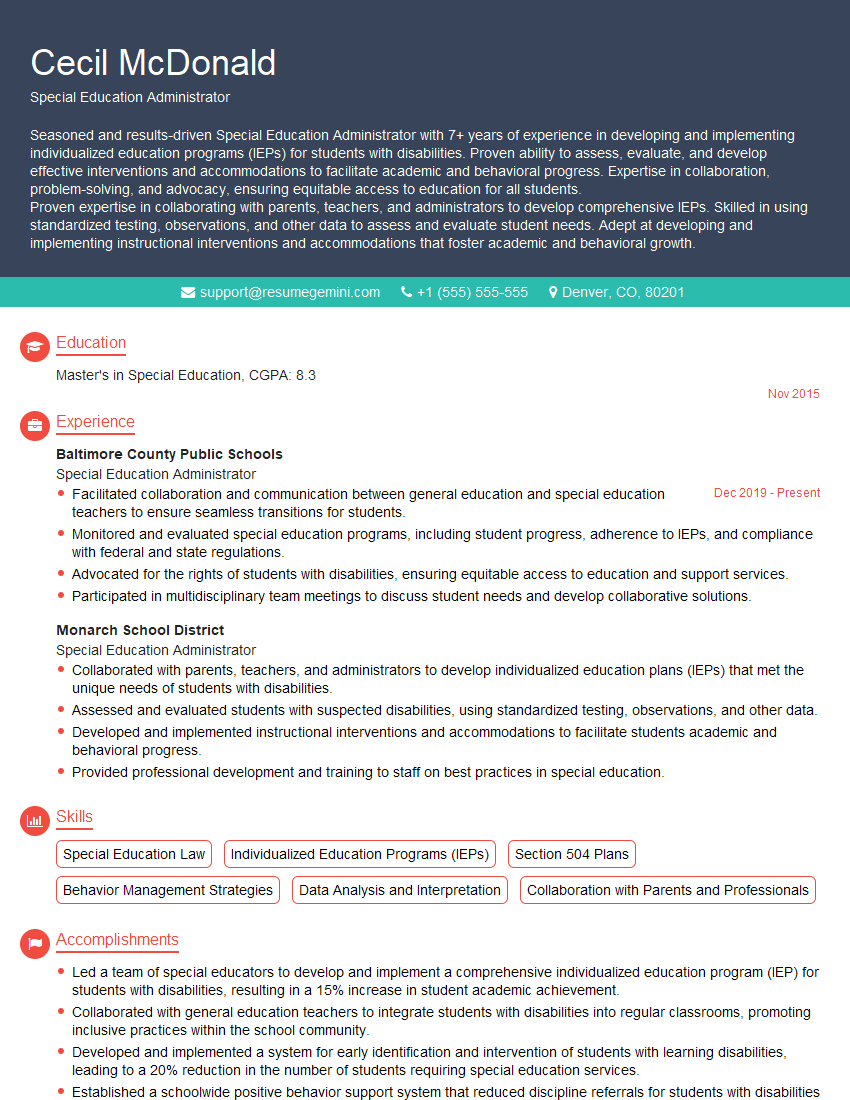
Special Education Administrator Resume Sample
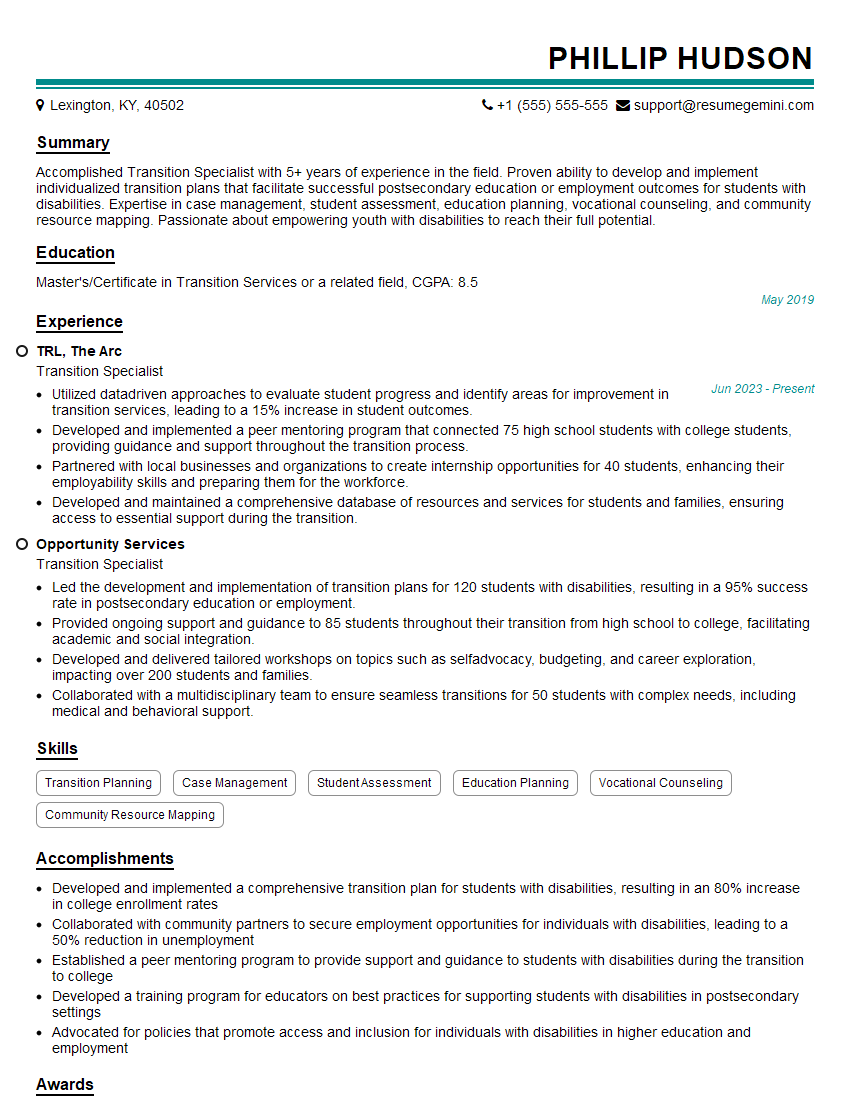
Transition Specialist Resume Sample
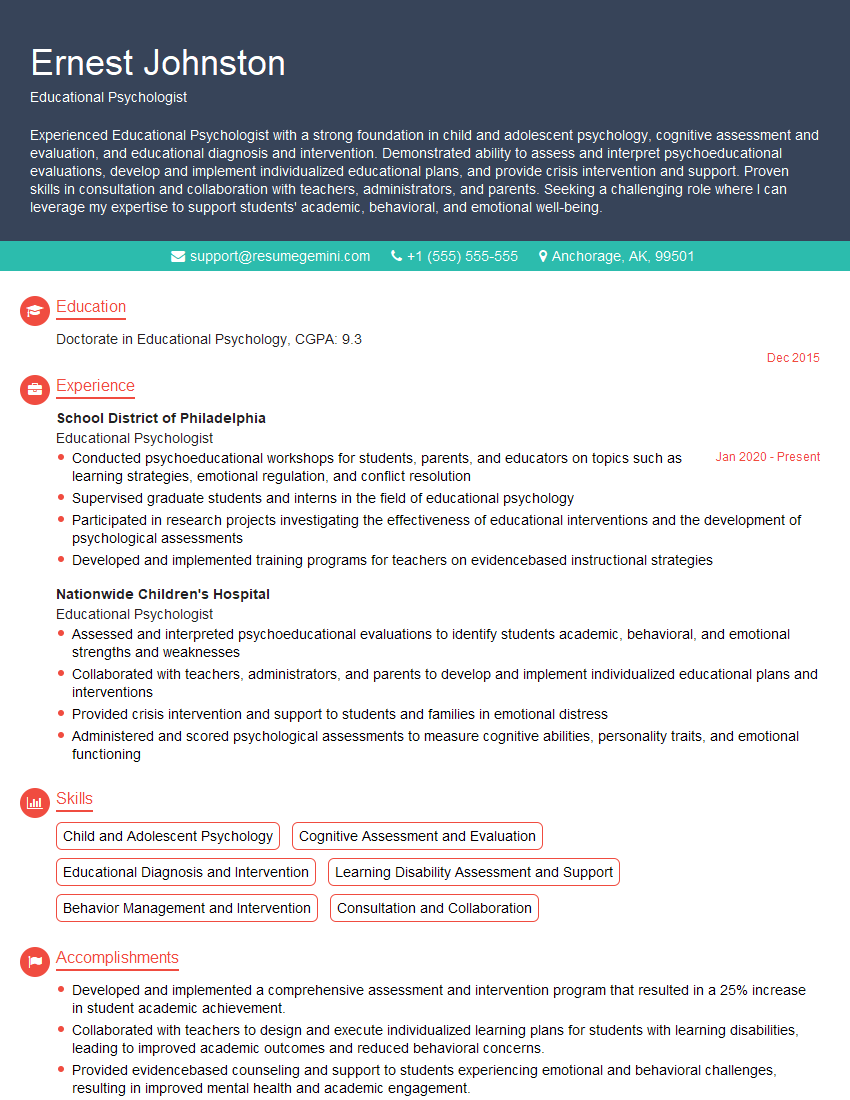
Educational Psychologist Resume Sample
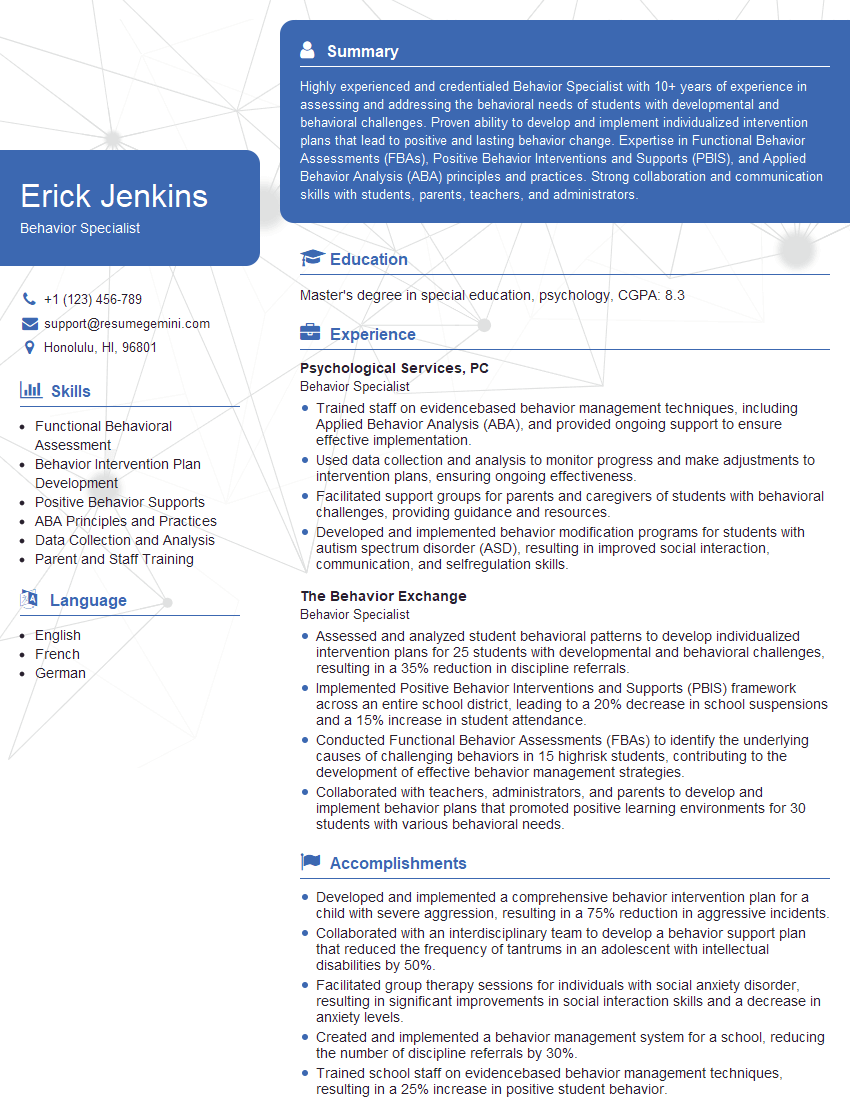
Behavior Specialist Resume Sample
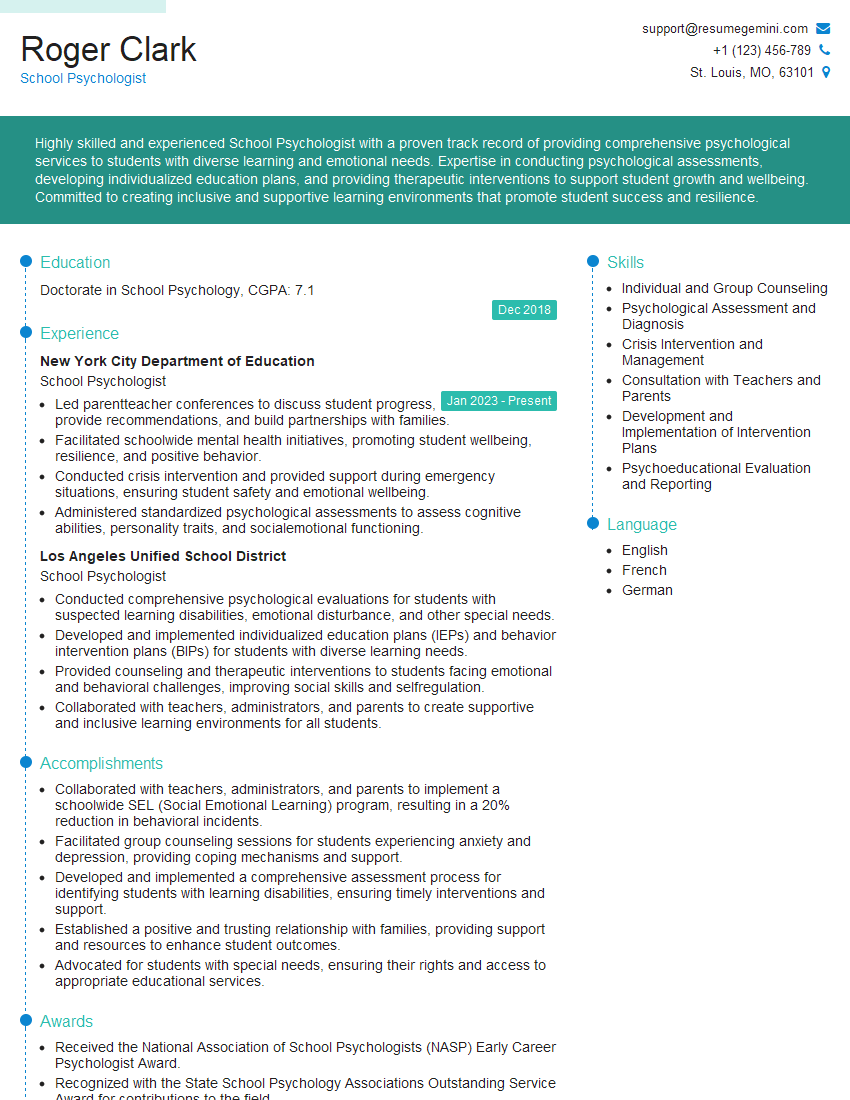
School Psychologist Resume Sample
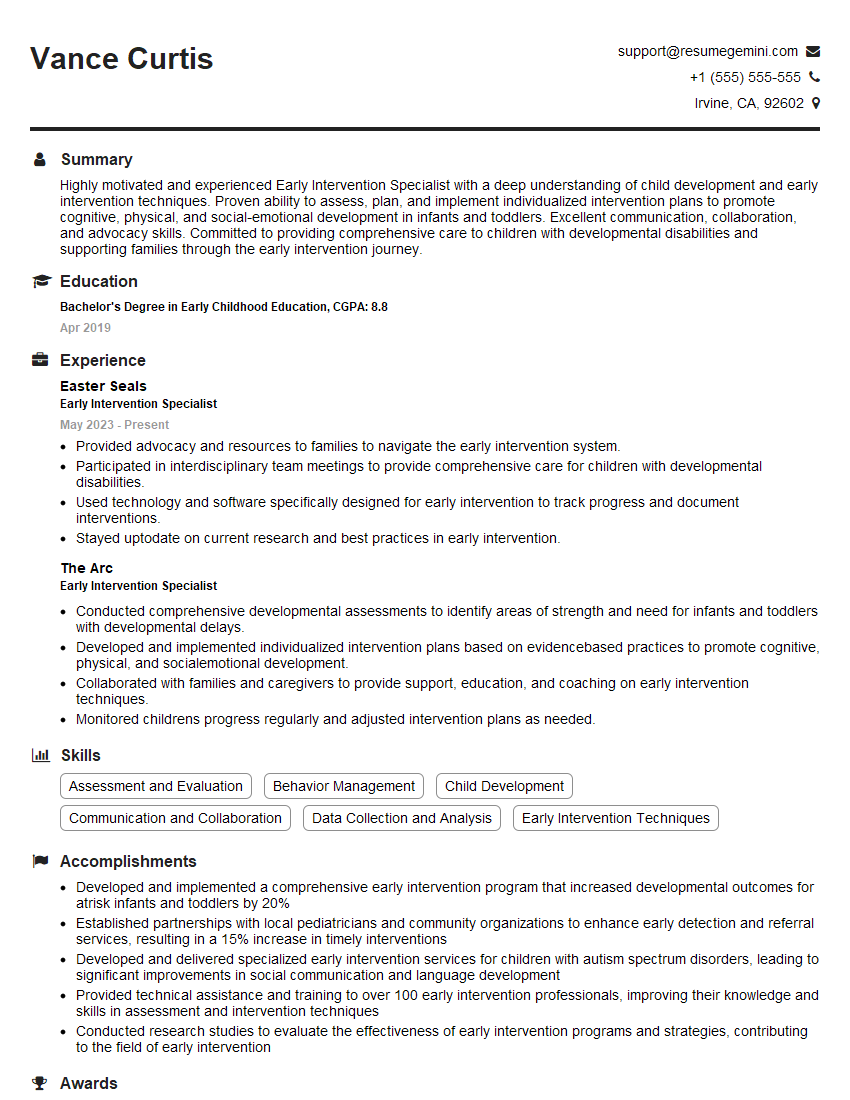
Early Intervention Specialist Resume Sample
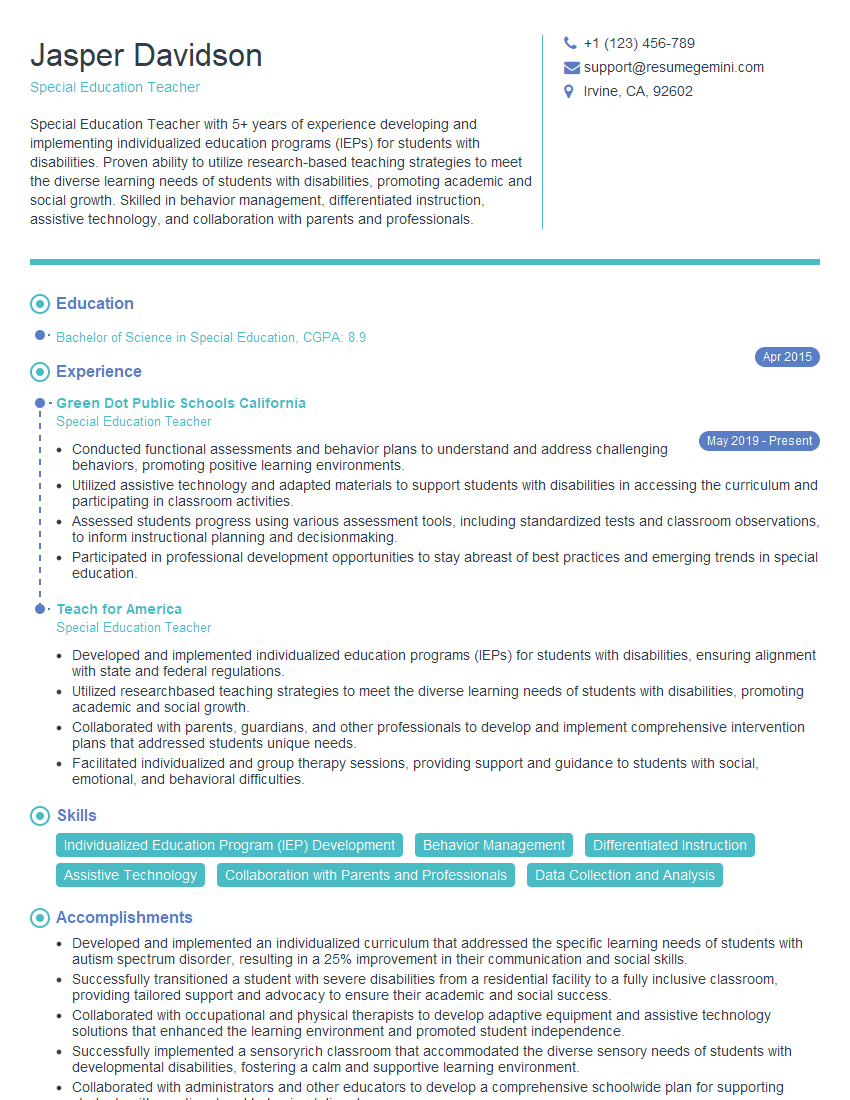
Special Education Teacher Resume Sample
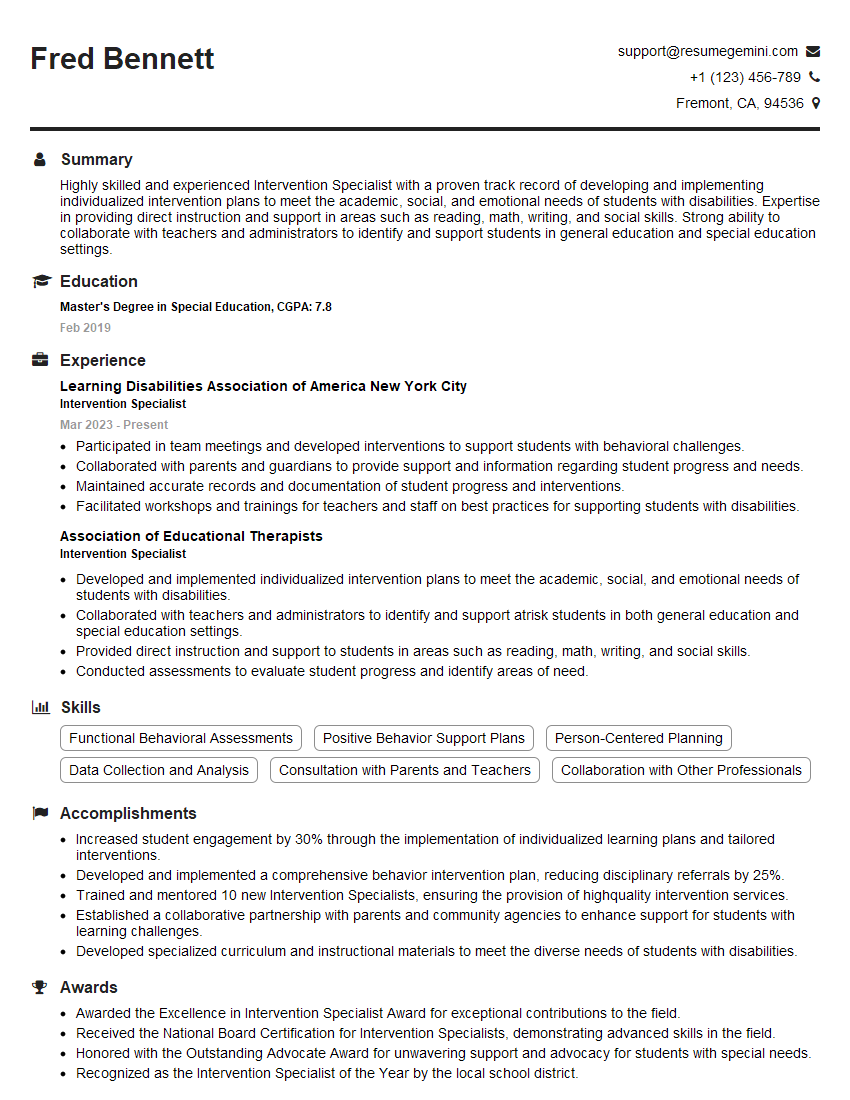
Intervention Specialist Resume Sample
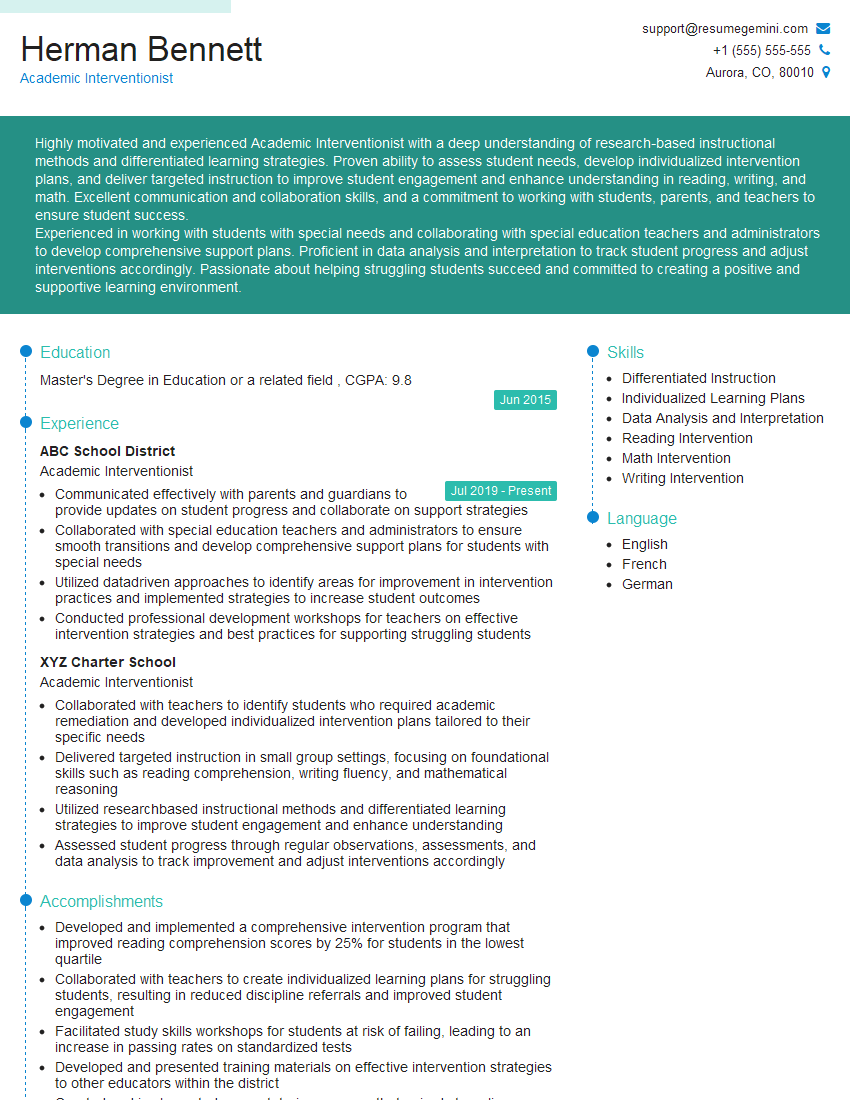
Academic Interventionist Resume Sample
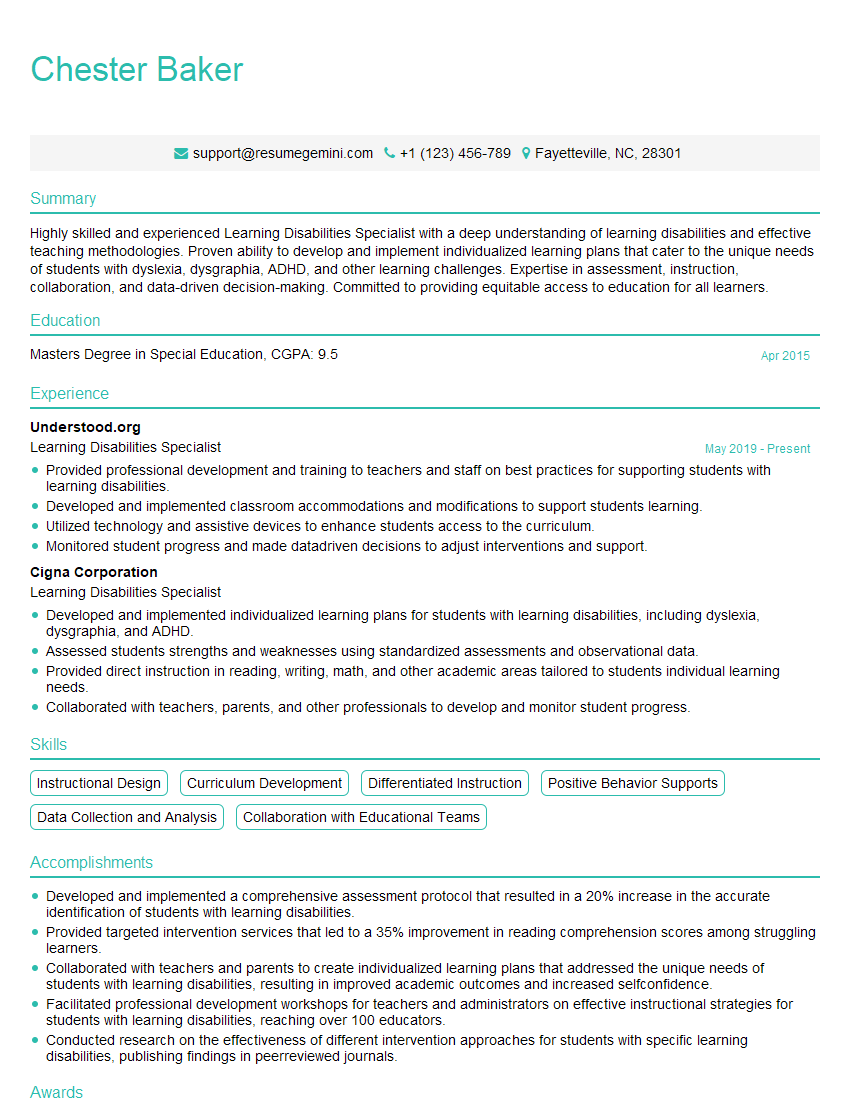
Learning Disabilities Specialist Resume Sample
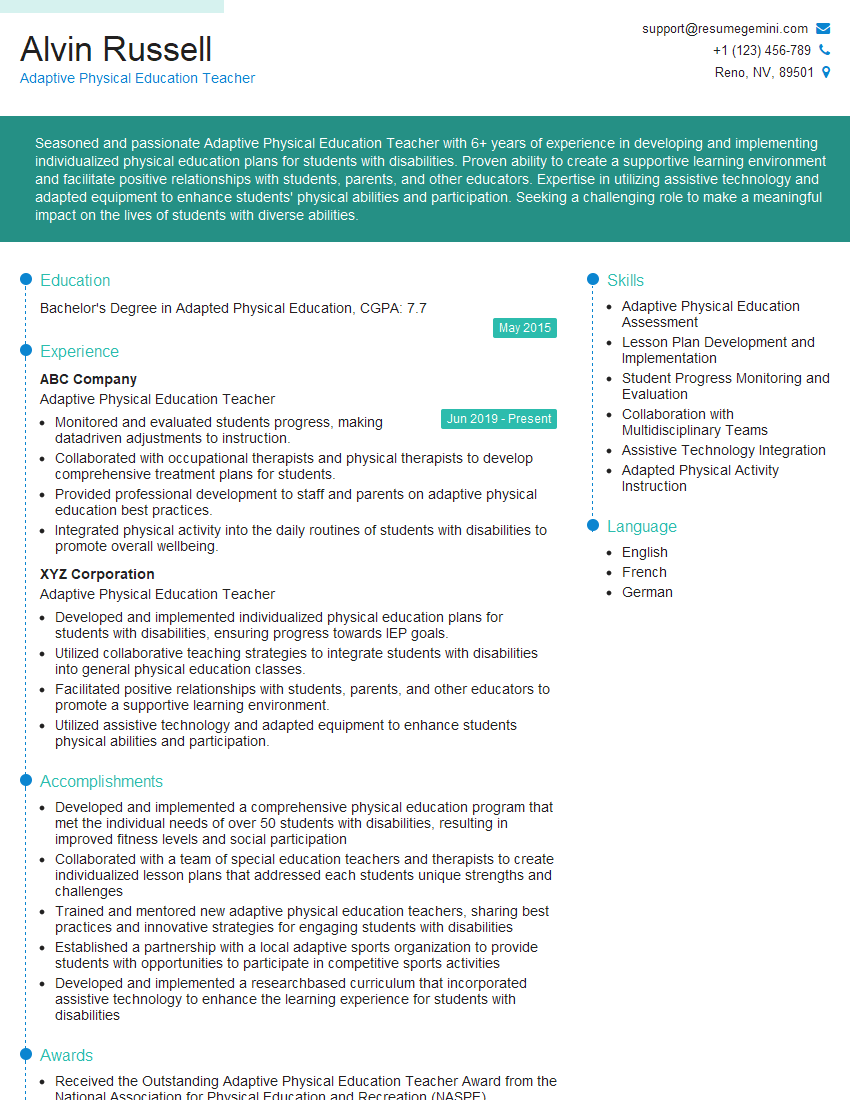
Adaptive Physical Education Teacher Resume Sample
- Special Education Director
- Special Education Administrator
- Transition Specialist
- Educational Psychologist
- Behavior Specialist
- School Psychologist
- Early Intervention Specialist
- Special Education Teacher
- Intervention Specialist
- Academic Interventionist
- Learning Disabilities Specialist
- Adaptive Physical Education Teacher
Explore more articles
Users Rating of Our Blogs
Share Your Experience
We value your feedback! Please rate our content and share your thoughts (optional).
What Readers Say About Our Blog
To the interviewgemini.com Webmaster.
Very helpful and content specific questions to help prepare me for my interview!
Thank you
To the interviewgemini.com Webmaster.
This was kind of a unique content I found around the specialized skills. Very helpful questions and good detailed answers.
Very Helpful blog, thank you Interviewgemini team.