Unlock your full potential by mastering the most common Maintain a professional and positive work environment interview questions. This blog offers a deep dive into the critical topics, ensuring you’re not only prepared to answer but to excel. With these insights, you’ll approach your interview with clarity and confidence.
Questions Asked in Maintain a professional and positive work environment Interview
Q 1. Describe your approach to resolving workplace conflicts.
My approach to resolving workplace conflicts is based on a proactive, empathetic, and solution-oriented framework. I believe in addressing conflicts early, before they escalate. My strategy involves five key steps:
- Active Listening: I begin by actively listening to all parties involved, ensuring each person feels heard and understood. This involves paying attention not only to what is said but also to the underlying emotions and concerns.
- Identifying the Root Cause: Once I’ve understood each perspective, I work to identify the root cause of the conflict. Is it a misunderstanding, a personality clash, or a systemic issue?
- Neutral Facilitation: I act as a neutral facilitator, guiding the conversation towards a mutually agreeable solution. I avoid taking sides and focus on helping the parties find common ground.
- Collaborative Problem-Solving: Together, we brainstorm potential solutions, weighing the pros and cons of each. The goal is to find a solution that addresses the needs and concerns of everyone involved.
- Follow-up and Documentation: Once a solution is agreed upon, I follow up to ensure it’s being implemented effectively. In some cases, documentation of the agreement and the resolution process may be necessary.
For example, if two team members are disagreeing over project timelines, I would facilitate a discussion where each member explains their perspective, identify the reasons behind the conflicting timelines, and collaboratively create a revised schedule that balances both needs and project deadlines.
Q 2. How do you promote teamwork and collaboration within a team?
Promoting teamwork and collaboration requires a multifaceted approach focusing on clear communication, shared goals, and fostering a positive team environment. I utilize several strategies:
- Establish Clear Goals and Roles: Clearly defined goals and individual roles ensure everyone understands their contribution and how it connects to the overall objective. This minimizes confusion and fosters a sense of shared purpose.
- Regular Team Meetings: Regular meetings, both formal and informal, are crucial for open communication and collaboration. These provide opportunities for updates, problem-solving, and team building.
- Encourage Open Communication: I actively encourage open communication by creating a safe space where team members feel comfortable sharing ideas, concerns, and feedback without fear of judgment.
- Collaborative Tools and Technologies: Utilizing project management tools and collaborative platforms (e.g., Slack, Microsoft Teams) facilitates seamless information sharing and task management.
- Team-Building Activities: Engaging in team-building activities helps build camaraderie and trust amongst team members, fostering stronger working relationships.
For instance, I might organize a team lunch or a brainstorming session outside the usual work environment to encourage informal interaction and relationship building.
Q 3. How would you handle a situation where a team member is consistently negative?
Handling a consistently negative team member requires a sensitive and strategic approach. Ignoring the negativity is not an option, as it can affect team morale and productivity. My approach would involve:
- Private Conversation: I would initiate a private conversation with the team member, expressing my concern about their negativity and its impact on the team. I would use ‘I’ statements to avoid accusatory language (e.g., ‘I’ve noticed that…’, ‘I’m concerned that…’).
- Active Listening and Understanding: I would actively listen to their perspective, trying to understand the underlying reasons for their negativity. Are they stressed, overwhelmed, or facing personal challenges?
- Offering Support and Resources: Depending on the cause, I would offer support and resources, such as suggesting stress management techniques, referring them to employee assistance programs (EAPs), or adjusting their workload if necessary.
- Setting Clear Expectations: If the negativity persists despite interventions, I would set clear expectations regarding professional conduct and the importance of maintaining a positive work environment. This might involve performance management procedures if necessary.
- Documentation: Throughout this process, I would maintain thorough documentation of all conversations and actions taken.
For example, if a team member is consistently complaining about workload, I might offer to help them prioritize tasks, delegate responsibilities, or provide additional training to improve their efficiency.
Q 4. Explain your strategy for fostering open communication within a team.
Fostering open communication involves creating an environment where everyone feels comfortable sharing ideas, concerns, and feedback. This requires a proactive and inclusive approach. My strategies include:
- Regular Communication Channels: Establishing clear and consistent communication channels (e.g., regular team meetings, email updates, instant messaging) ensures everyone stays informed.
- Open-Door Policy: I encourage an open-door policy, making myself available to team members for questions, concerns, or feedback at any time.
- Feedback Mechanisms: Implementing regular feedback mechanisms, such as anonymous surveys or one-on-one meetings, allows for the collection of constructive criticism and identification of areas for improvement.
- Transparent Communication: Sharing information openly and honestly builds trust and fosters a sense of inclusivity. This includes both successes and challenges.
- Active Listening: Active listening is paramount. I ensure that I pay close attention to both verbal and non-verbal cues, showing that I value each team member’s input.
For instance, I might start each team meeting with a roundtable where everyone can share updates, concerns or ideas, ensuring everyone has a voice.
Q 5. How do you ensure all team members feel valued and respected?
Ensuring all team members feel valued and respected is crucial for building a positive and productive work environment. My approach focuses on recognizing individual contributions, promoting inclusivity, and creating a supportive atmosphere.
- Regular Recognition and Appreciation: I regularly acknowledge and appreciate individual and team achievements, both big and small. This can involve verbal praise, written acknowledgements, or small gestures of appreciation.
- Fair and Equitable Treatment: I ensure fair and equitable treatment of all team members, regardless of their background, experience, or personality. This includes equal access to opportunities and resources.
- Individualized Support: I provide individualized support and mentorship to team members, recognizing that everyone’s needs are unique. This may involve providing additional training, assigning challenging projects, or offering guidance on career development.
- Promoting Inclusivity: I actively promote an inclusive environment where every team member feels comfortable being themselves and contributing their unique skills and perspectives.
- Open and Honest Feedback: Providing regular, constructive feedback, both positive and critical, helps team members grow and develop, showing that I am invested in their progress.
For example, I might publicly acknowledge a team member’s exceptional work on a project during a team meeting or send a personalized email expressing appreciation for their effort.
Q 6. How do you address workplace bullying or harassment?
Addressing workplace bullying or harassment requires a firm and decisive approach, emphasizing zero tolerance for such behavior. My response would follow these steps:
- Immediate Action: Upon receiving a report of bullying or harassment, I would take immediate action, ensuring the safety and well-being of the victim. This might involve separating the individuals involved.
- Thorough Investigation: I would conduct a thorough and impartial investigation, gathering evidence and interviewing witnesses. This investigation should follow company policies and procedures.
- Disciplinary Action: Based on the findings of the investigation, appropriate disciplinary action would be taken against the perpetrator, ranging from a verbal warning to termination, depending on the severity of the offense.
- Support for the Victim: The victim would receive support and resources, such as counseling or assistance with filing a formal complaint. Confidentiality is paramount.
- Prevention Measures: Implementing preventative measures, such as training programs on workplace bullying and harassment, and strengthening reporting mechanisms, are crucial to prevent future incidents.
It is crucial to follow company policy and legal requirements throughout this process, and it may involve Human Resources or legal counsel.
Q 7. Describe a time you had to mediate a disagreement between colleagues.
In a previous role, two team members were locked in a disagreement over the design specifications for a new software feature. One preferred a more user-friendly interface while the other advocated for a more technically robust design, leading to tension and delays in the project.
I mediated the disagreement by first having each member individually explain their perspective, ensuring I understood their reasoning and concerns. It became clear that neither was entirely wrong; each approach had merits. I then facilitated a joint meeting where we discussed the trade-offs between user experience and technical feasibility. We collaboratively created a compromise that incorporated elements of both designs, addressing each member’s primary concerns. This process involved compromising on both sides but produced a solution that satisfied both parties and significantly advanced the project.
The key to success was active listening, creating a safe space for open communication, and focusing on finding a mutually acceptable solution rather than assigning blame.
Q 8. How do you create a culture of inclusivity and diversity?
Creating a culture of inclusivity and diversity isn’t a one-time project; it’s an ongoing commitment. It requires a multi-pronged approach focusing on both policy and practice. Fundamentally, it’s about fostering a workplace where everyone feels valued, respected, and has equal opportunities, regardless of their background.
- Policy and Procedures: Implement clear, inclusive policies regarding recruitment, promotion, and equal opportunities. This includes blind resume screening to mitigate unconscious bias and ensuring fair compensation practices.
- Diverse Hiring Practices: Actively recruit from diverse sources, such as professional organizations serving underrepresented groups and partnering with diversity recruitment agencies. Expand your talent pool beyond the usual networks.
- Inclusive Leadership Training: Provide training for all managers on unconscious bias, cultural competency, and inclusive leadership styles. This equips them to recognize and address biases in their own decision-making and interactions with team members.
- Employee Resource Groups (ERGs): Establish ERGs that allow employees from similar backgrounds to connect, support each other, and provide feedback to the organization on issues of inclusivity. This creates a sense of belonging and community.
- Open Communication and Feedback Channels: Create a safe space for employees to voice their concerns and provide feedback about inclusivity. This can be done through anonymous surveys, suggestion boxes, or regular feedback sessions.
- Celebrate Diversity: Recognize and celebrate diverse cultures and backgrounds through events and activities that promote understanding and appreciation.
For example, in a previous role, we implemented a blind resume screening process for all entry-level positions. This led to a significant increase in the diversity of our candidate pool and ultimately our hires. We also introduced mandatory unconscious bias training, resulting in a more equitable promotion process.
Q 9. What strategies do you use to improve employee morale?
Boosting employee morale requires a holistic approach that addresses both individual and team needs. It’s about creating a positive and rewarding work environment where employees feel valued, engaged, and motivated.
- Recognition and Rewards: Regularly acknowledge and reward employees’ contributions, both big and small. This can include verbal praise, written thank-you notes, bonuses, promotions, or even small gifts. Public recognition is particularly impactful.
- Open Communication: Foster a culture of open and honest communication, where employees feel comfortable sharing their ideas, concerns, and feedback. Regular team meetings and one-on-one check-ins are crucial.
- Opportunities for Growth and Development: Provide opportunities for professional development, such as training courses, mentorship programs, or job shadowing. This demonstrates investment in employees’ careers and increases their job satisfaction.
- Work-Life Balance: Support a healthy work-life balance by offering flexible working arrangements, generous vacation time, and encouraging employees to take breaks throughout the day. Burnout is a major morale killer.
- Team-Building Activities: Organize team-building activities and social events to foster camaraderie and improve teamwork. This helps create a positive and supportive work environment.
- Employee Feedback Mechanisms: Establish regular feedback channels, such as surveys or focus groups, to gather insights into employee morale and address any concerns promptly.
In a past team, we implemented a ‘Kudos’ system where employees could publicly acknowledge their colleagues’ achievements. This simple initiative significantly improved team morale and fostered a culture of appreciation.
Q 10. How do you handle stress and pressure in a demanding work environment?
Handling stress and pressure in a demanding work environment is a crucial skill for any professional. It requires a combination of proactive strategies and coping mechanisms.
- Prioritization and Time Management: Effectively prioritize tasks based on urgency and importance. Utilize time management techniques, such as the Eisenhower Matrix, to allocate time efficiently.
- Delegation: Delegate tasks appropriately to team members to distribute the workload and avoid overburdening yourself.
- Boundary Setting: Set clear boundaries between work and personal life to prevent burnout. This could involve scheduling specific work hours and disconnecting after work hours.
- Stress Management Techniques: Practice stress reduction techniques, such as mindfulness, deep breathing exercises, yoga, or meditation. Regular physical exercise is also beneficial.
- Seeking Support: Don’t hesitate to seek support from colleagues, supervisors, or mental health professionals when needed. Talking about challenges can help alleviate stress and provide valuable perspectives.
- Self-Care: Prioritize self-care activities, such as getting enough sleep, eating a healthy diet, and engaging in hobbies. These activities help maintain physical and mental well-being.
Personally, I find that incorporating short mindfulness exercises throughout my day helps me stay focused and manage stress effectively. I also ensure I utilize vacation time to recharge and return to work feeling refreshed.
Q 11. How do you build trust and rapport with your team members?
Building trust and rapport with team members is essential for effective teamwork and a positive work environment. It involves demonstrating authenticity, empathy, and respect.
- Open and Honest Communication: Maintain open and honest communication, actively listening to team members’ perspectives and concerns. This builds trust and mutual respect.
- Active Listening: Pay close attention when team members are speaking, show empathy, and ask clarifying questions to demonstrate understanding.
- Fairness and Consistency: Treat all team members fairly and consistently, applying the same rules and expectations to everyone. This builds trust and eliminates feelings of favoritism.
- Showing Vulnerability: Share relevant aspects of your own professional journey to humanize yourself and demonstrate that everyone faces challenges. This fosters a sense of connection and understanding.
- Collaboration and Teamwork: Actively participate in team projects and show appreciation for individual and collective achievements. Celebrate successes together.
- Providing Constructive Feedback: Provide regular, constructive feedback, focusing on both strengths and areas for improvement. Deliver feedback in a positive and supportive manner.
For instance, I make a point of regularly checking in with each team member individually, not just to discuss work but also to inquire about their well-being and any challenges they might be facing. This personal touch has greatly strengthened our relationships.
Q 12. Describe your experience with performance management and addressing underperformance.
Performance management is a continuous process of setting expectations, providing support, monitoring progress, and addressing performance issues. Addressing underperformance requires a structured and supportive approach.
- Clear Expectations: Establish clear and measurable performance goals and expectations from the outset. These should be discussed and agreed upon with the employee.
- Regular Performance Reviews: Conduct regular performance reviews to track progress towards goals and provide feedback. This includes both positive reinforcement and constructive criticism.
- Documentation: Maintain thorough documentation of performance reviews, including goals, feedback, and any improvement plans. This is crucial in case of disciplinary action.
- Performance Improvement Plans (PIPs): If underperformance persists, develop a formal PIP outlining specific goals, timelines, and support mechanisms. This provides a structured path for improvement.
- Coaching and Mentoring: Provide coaching and mentoring to support employees in improving their performance. This can include skill development training or access to resources.
- Disciplinary Action (If Necessary): If underperformance continues despite support and interventions, disciplinary action may be necessary, following company policy and procedures.
In one instance, an employee consistently missed deadlines. Rather than immediate disciplinary action, we created a PIP with specific, measurable goals and regular check-ins. Through coaching and support, the employee significantly improved their performance, demonstrating the effectiveness of a supportive approach.
Q 13. How do you ensure compliance with workplace policies and procedures?
Ensuring compliance with workplace policies and procedures requires a proactive and multifaceted approach.
- Training and Education: Provide thorough training to all employees on relevant policies and procedures. This should include regular updates and refresher courses.
- Clear Communication: Ensure that policies and procedures are clearly communicated and easily accessible to all employees, through employee handbooks, intranet, or other means.
- Regular Audits and Reviews: Conduct regular audits and reviews of compliance to identify any gaps or areas for improvement. This involves checking for adherence to policies and procedures across all departments.
- Reporting Mechanisms: Establish clear reporting mechanisms for employees to raise concerns about non-compliance without fear of reprisal. This promotes a culture of accountability and transparency.
- Disciplinary Action: Enforce disciplinary action for non-compliance, as outlined in company policy. This is important to maintain a fair and consistent approach.
- Ongoing Monitoring: Continuously monitor compliance and adapt policies and procedures as needed to address evolving legal and regulatory requirements.
For example, we implemented a mandatory annual compliance training program for all employees, ensuring everyone understood our policies on data privacy, workplace safety, and harassment prevention.
Q 14. How do you identify and address potential workplace hazards?
Identifying and addressing potential workplace hazards is a critical aspect of maintaining a safe and healthy work environment. This requires a proactive and systematic approach.
- Risk Assessments: Conduct regular risk assessments to identify potential hazards and evaluate their severity and likelihood. This involves considering both physical and psychological hazards.
- Hazard Reporting System: Establish a clear and accessible system for employees to report potential hazards or near-miss incidents without fear of reprisal. This should be easily accessible and tracked effectively.
- Safety Training: Provide comprehensive safety training to all employees on relevant hazards, emergency procedures, and safe working practices. This training should be tailored to the specific tasks and risks associated with each role.
- Personal Protective Equipment (PPE): Provide and ensure the correct use of appropriate PPE, such as safety glasses, gloves, or hearing protection, where necessary. Regular inspection and maintenance of PPE are crucial.
- Emergency Preparedness: Develop and regularly practice emergency procedures, including evacuation plans, fire drills, and first-aid protocols. This ensures everyone knows what to do in an emergency situation.
- Regular Inspections: Conduct regular workplace inspections to identify and address any hazards promptly. This involves systematically checking for issues such as trip hazards, electrical faults, or inadequate ventilation.
In a previous role, we implemented a monthly safety inspection program, where different teams took turns inspecting their work areas and reporting any identified hazards. This proactive approach helped us identify and address potential issues before they led to accidents.
Q 15. What measures do you take to promote work-life balance within your team?
Promoting work-life balance is crucial for a healthy and productive team. It’s not just about giving employees time off; it’s about fostering a culture where healthy boundaries are respected and encouraged. My approach is multifaceted.
Flexible Work Arrangements: I support flexible schedules, remote work options (where applicable), and compressed workweeks, allowing employees to tailor their work around personal commitments. For example, I allowed a team member to work four 10-hour days to accommodate childcare needs.
Open Communication: I encourage open and honest communication about workload and personal responsibilities. If an employee is struggling to manage both, we work together to find solutions, such as re-prioritizing tasks or delegating responsibilities. This requires trust and mutual respect.
Encouraging Breaks and Time Off: I actively encourage employees to take their breaks and utilize their vacation time. I lead by example and make sure to take my own breaks and vacations to demonstrate the importance of disconnecting.
Setting Realistic Expectations: Overwhelming workloads are a major contributor to work-life imbalance. I carefully manage project timelines and workloads, ensuring they are achievable and sustainable. I regularly check in with my team to gauge their capacity and adjust expectations as needed.
Career Expert Tips:
- Ace those interviews! Prepare effectively by reviewing the Top 50 Most Common Interview Questions on ResumeGemini.
- Navigate your job search with confidence! Explore a wide range of Career Tips on ResumeGemini. Learn about common challenges and recommendations to overcome them.
- Craft the perfect resume! Master the Art of Resume Writing with ResumeGemini’s guide. Showcase your unique qualifications and achievements effectively.
- Don’t miss out on holiday savings! Build your dream resume with ResumeGemini’s ATS optimized templates.
Q 16. How do you provide constructive feedback to improve employee performance?
Constructive feedback is about helping employees grow, not criticizing them. My approach emphasizes a supportive and collaborative environment. I use the SBI (Situation-Behavior-Impact) method to provide feedback that’s specific, actionable, and focused on improvement.
Situation: I start by describing the specific situation where the behavior occurred. For example, ‘During the last team meeting…’
Behavior: I then objectively describe the behavior itself, avoiding subjective judgments. For instance, ‘…you interrupted several colleagues during their presentations…’
Impact: I explain the impact of the behavior, both positive and negative. For example, ‘…this disrupted the flow of the meeting and made it difficult for others to fully participate.’
After describing the situation, behavior, and impact, I offer specific suggestions for improvement. I encourage a two-way conversation, allowing the employee to share their perspective and collaboratively develop a plan for improvement. Regular check-ins ensure continued progress and support.
Q 17. How do you motivate and encourage employees to achieve their goals?
Motivation comes from a variety of sources, and it’s crucial to understand what drives each individual team member. My approach involves a combination of strategies:
Recognition and Appreciation: Publicly acknowledging achievements, both big and small, goes a long way in boosting morale and motivation. I regularly use team meetings to highlight individual and team successes.
Empowerment and Ownership: Giving employees ownership of their work and the freedom to make decisions fosters a sense of responsibility and accomplishment. I encourage team members to take initiative and to contribute their ideas.
Goal Setting and Feedback: I work with each team member to set SMART (Specific, Measurable, Achievable, Relevant, Time-bound) goals that align with both their personal aspirations and the team’s objectives. Regular feedback sessions help track progress and make adjustments as needed.
Opportunities for Growth: Providing training, mentoring, or challenging assignments allows employees to expand their skills and advance their careers, keeping them engaged and motivated. This shows investment in their long-term success within the company.
Q 18. Describe a time you had to deal with a difficult or challenging employee.
I once had a team member who consistently missed deadlines and displayed a negative attitude. Instead of resorting to immediate disciplinary action, I opted for a more collaborative approach. First, I held a private meeting to understand the root cause of the problem. It turned out that the employee was dealing with personal issues that were affecting their work. I actively listened, validated their feelings, and offered support.
Next, we worked together to create a performance improvement plan that included clear expectations, achievable goals, and regular check-ins. I also connected them with resources within the company to help address their personal challenges. This involved more frequent check-ins, modified tasks to accommodate their situation, and positive reinforcement when they met even small goals. This approach significantly improved their performance and attitude, transforming them from a difficult employee into a valuable team member. The key was empathy, patience, and a willingness to find solutions together.
Q 19. How do you handle situations where deadlines are missed or projects are delayed?
Missed deadlines and project delays are inevitable sometimes. My approach focuses on proactive problem-solving and minimizing future occurrences.
Understanding the Root Cause: First, I work with the team to identify the reasons behind the delay. Was it due to unforeseen circumstances, unrealistic deadlines, resource constraints, or lack of clarity?
Developing a Mitigation Plan: Once the root cause is identified, we collaboratively develop a plan to address the problem. This might involve re-allocating resources, adjusting the project scope, or seeking additional support. Transparency is key; I keep stakeholders informed about the delay and the mitigation plan.
Preventing Future Delays: After resolving the immediate issue, I work with the team to identify preventative measures. This might involve improving project planning, enhancing communication, or implementing better risk management processes. Regular project reviews help to monitor progress and address any potential issues early on.
Q 20. What methods do you use to recognize and reward employee achievements?
Recognizing and rewarding employee achievements is essential for fostering a positive and motivated workforce. My approach incorporates various methods:
Verbal Praise and Appreciation: I regularly express appreciation for a job well done, both publicly and privately. A simple ‘thank you’ can go a long way.
Public Acknowledgement: Highlighting achievements during team meetings, company newsletters, or email announcements demonstrates appreciation and motivates others.
Employee of the Month/Quarter Awards: Formally recognizing outstanding contributions with awards or bonuses creates a sense of competition and accomplishment.
Gift Cards or other Incentives: Small tokens of appreciation for exceptional performance or exceeding expectations.
Opportunities for Advancement: Promoting high-performing employees or offering opportunities for professional development shows recognition and investment in their future.
The key is to tailor the rewards to individual preferences and the specific achievement.
Q 21. How do you ensure that company values are reflected in daily work practices?
Ensuring company values are reflected in daily work practices requires consistent effort and leadership. My approach involves:
Leading by Example: I actively demonstrate the company values in my own behavior and decision-making. This sets the tone for the team and shows that the values are more than just words on paper.
Integrating Values into Daily Processes: I incorporate the company values into team meetings, performance reviews, and project planning. For example, if teamwork is a core value, I would emphasize collaboration and mutual support in all projects.
Open Communication and Feedback: I regularly discuss company values with my team, seeking their feedback and ensuring that everyone understands their importance and how they are applied in their work.
Recognizing and Rewarding Behavior Aligned with Values: I explicitly acknowledge and reward employees who demonstrate the company values in their work, highlighting their contributions as examples for others to follow.
By consistently integrating company values into all aspects of team operations, a culture of shared principles can be established.
Q 22. Describe your approach to onboarding new employees and integrating them into the team.
My approach to onboarding is multifaceted, focusing on both practical training and fostering a sense of belonging. It begins before the first day with a welcome package containing essential information and a friendly introduction. Day one includes a detailed orientation covering company culture, policies, and expectations. We then implement a structured program combining job-specific training with team introductions and buddy systems. The buddy system pairs the new employee with an experienced colleague who can answer questions and provide support throughout the initial weeks. Regular check-ins are crucial; these aren’t just performance reviews but opportunities to address concerns, provide feedback, and ensure the new employee feels supported and integrated. For example, in my previous role, we introduced a ‘new hire success’ survey two weeks and six months post-onboarding to track satisfaction and identify areas for improvement in the onboarding process. This iterative approach ensures continual refinement.
Q 23. How do you measure the effectiveness of your efforts to create a positive work environment?
Measuring the effectiveness of a positive work environment requires a multi-pronged approach. We use quantitative and qualitative methods. Quantitative metrics include employee satisfaction surveys, absenteeism rates, turnover rates, and productivity levels. A drop in absenteeism or turnover, coupled with increased productivity, suggests a positive environment. However, numbers alone don’t tell the whole story. Qualitative data is crucial. This involves regular pulse checks – informal conversations to gauge team morale, anonymous feedback channels, and focus groups. For instance, in one organization, we held regular ‘open forum’ meetings where employees could voice concerns anonymously, which led to improvements in workplace flexibility and communication channels. The key is to combine data from these diverse sources to paint a complete picture of workplace well-being.
Q 24. How do you adapt your management style to different personality types and work styles?
I believe in adapting my management style to individual needs, rather than applying a ‘one-size-fits-all’ approach. Understanding different personality types (e.g., introverted vs. extroverted, detail-oriented vs. big-picture thinkers) and work styles (e.g., independent vs. collaborative) is crucial. For detail-oriented employees, I provide clear, structured instructions and regular feedback. With those who prefer a broader perspective, I encourage autonomy and collaboration. Open communication is key; I frequently seek feedback on my management style and adjust accordingly. For example, one employee thrived with detailed project breakdowns and frequent check-ins, while another preferred more independent work with only milestone check-ins. This personalized approach fosters trust, strengthens relationships and improves employee engagement.
Q 25. Describe your experience with employee training and development programs.
My experience with employee training and development is extensive. I’ve been involved in designing and implementing programs ranging from basic skills training to leadership development workshops. Effective training programs should be needs-based, utilizing diverse learning methods – online modules, hands-on workshops, mentoring programs, and shadowing opportunities. For example, I once spearheaded a cross-departmental training initiative focused on customer service skills. We used role-playing exercises, online modules, and on-the-job coaching to improve employees’ customer interaction skills. Post-training assessments and ongoing coaching are essential to ensure knowledge retention and skill improvement. Success is measured through performance evaluations, feedback surveys, and observations of improved work quality.
Q 26. How do you address concerns regarding workplace safety and security?
Addressing workplace safety and security involves a proactive, multi-layered approach. This begins with regular safety audits and risk assessments, identifying potential hazards and implementing preventative measures. Employee training is paramount – covering topics such as fire safety, emergency procedures, and security protocols. We establish clear communication channels for reporting safety concerns, ensuring all issues are addressed promptly and thoroughly. Moreover, maintaining secure access controls, implementing robust cybersecurity measures, and providing employees with awareness training on data protection and phishing scams is crucial. For instance, we once conducted a fire drill and reviewed security protocols after implementing a new building access system. This ensured that both employees and procedures were up to par. A safe and secure environment boosts morale and productivity.
Q 27. How do you stay informed about best practices for maintaining a positive work environment?
Staying informed about best practices involves continuous learning. I actively participate in industry conferences, webinars, and professional development programs. I regularly read industry publications and journals focused on workplace management, HR best practices, and employee well-being. Furthermore, I actively network with other professionals in my field, exchanging ideas and learning from their experiences. Following relevant professional organizations and utilizing online resources allows for continued education in current trends, legislative updates, and emerging best practices in creating positive and productive workplaces. Networking and attending conferences are particularly helpful in identifying solutions for unique challenges.
Q 28. How would you address a situation where confidential information was leaked?
Addressing a confidential information leak requires a swift, thorough, and measured response. The first step is to contain the damage – limiting further dissemination of the information. We then launch a comprehensive investigation to determine the source of the leak, adhering to all legal and ethical guidelines. Disciplinary action, up to and including termination, will be taken against anyone found responsible. Furthermore, we conduct a post-incident review to identify vulnerabilities in our systems and processes and implement corrective actions to prevent future leaks. For instance, one organization’s post-incident review revealed weaknesses in access controls, leading to policy updates and better training around secure data handling procedures. This response prioritizes protecting sensitive information and reinforcing the importance of confidentiality within the organization.
Key Topics to Learn for Maintaining a Professional and Positive Work Environment Interview
- Communication & Collaboration: Understanding effective communication styles, active listening techniques, conflict resolution strategies, and fostering teamwork. Practical application: Describe a situation where you successfully mediated a disagreement among colleagues.
- Respectful Workplace Conduct: Defining and demonstrating professionalism, ethical behavior, inclusivity, and sensitivity to diverse perspectives. Practical application: Explain how you would address inappropriate behavior or language in the workplace.
- Problem-Solving & Conflict Management: Identifying and addressing workplace conflicts constructively, using appropriate problem-solving methodologies, and promoting a positive and supportive atmosphere. Practical application: Describe a time you identified and resolved a workplace conflict effectively.
- Stress Management & Work-Life Balance: Strategies for managing stress effectively, promoting work-life balance, and fostering a healthy and supportive work environment. Practical application: Explain how you manage your workload and maintain a healthy work-life balance.
- Promoting Positive Morale & Teamwork: Identifying and implementing strategies to improve team cohesion, boost morale, and encourage collaboration and open communication. Practical application: Give an example of how you contributed to a positive and productive team environment.
- Company Culture & Values: Understanding and aligning with the company’s culture and values to contribute effectively to a positive work environment. Practical application: Explain how your personal values align with the values of a company you are interviewing with (hypothetical).
Next Steps
Mastering the art of maintaining a professional and positive work environment is crucial for career advancement. It demonstrates valuable soft skills highly sought after by employers, leading to increased job satisfaction and opportunities for growth. To increase your chances of landing your dream job, focus on building an ATS-friendly resume that highlights your relevant skills and experiences. ResumeGemini is a trusted resource to help you create a compelling and effective resume that showcases your abilities in this area. Examples of resumes tailored to highlight experience in maintaining a professional and positive work environment are available within ResumeGemini.
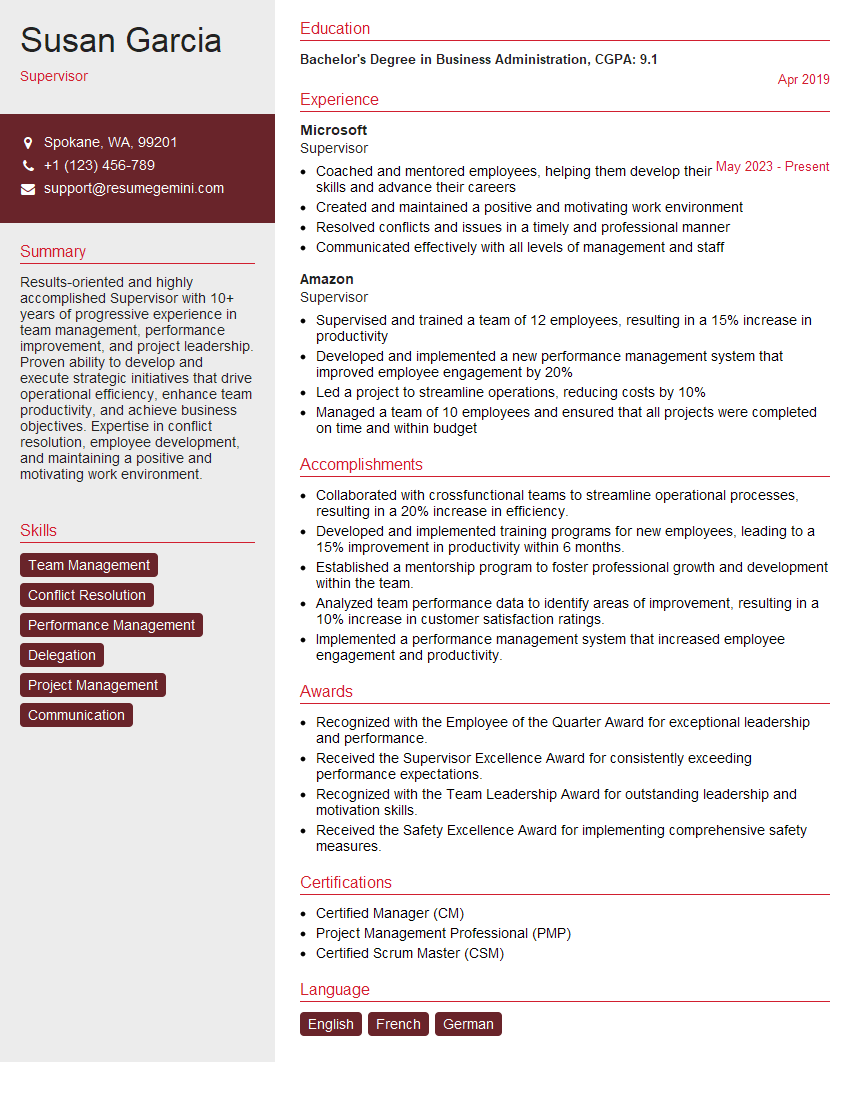
Supervisor Resume Sample
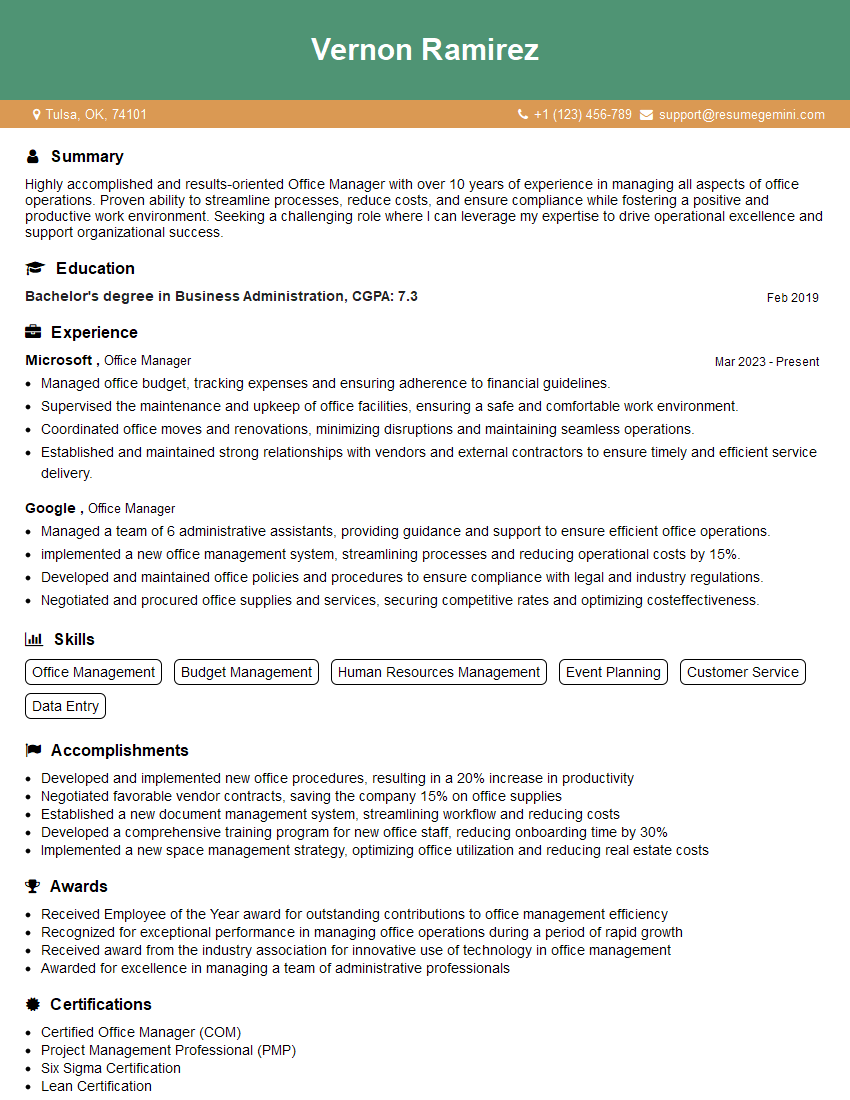
Office Manager Resume Sample

Operations Manager Resume Sample
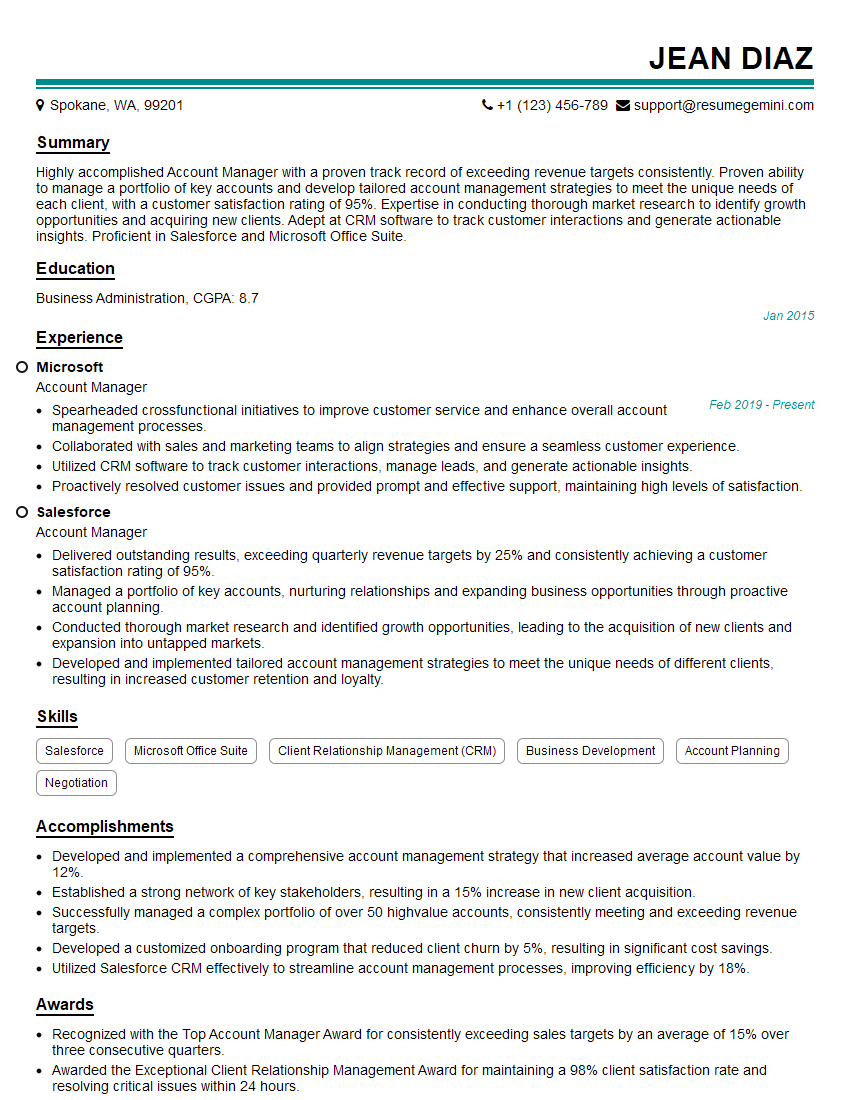
Account Manager Resume Sample
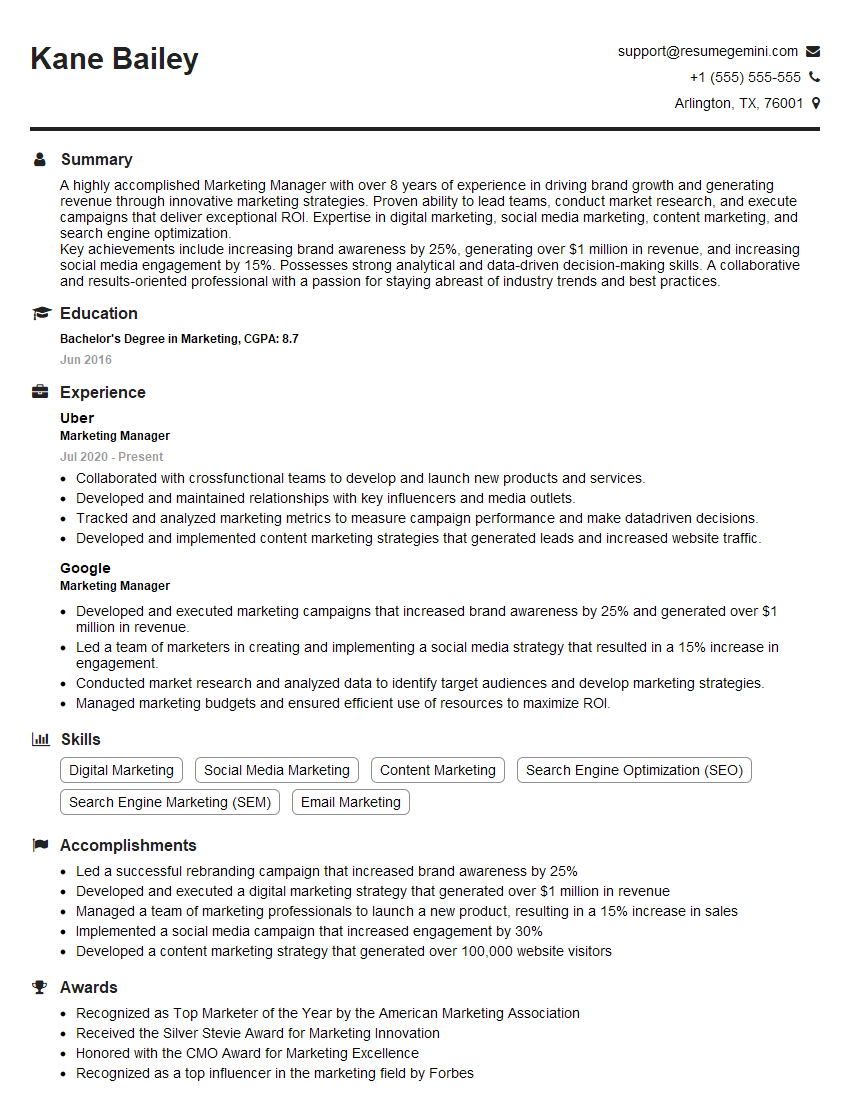
Marketing Manager Resume Sample
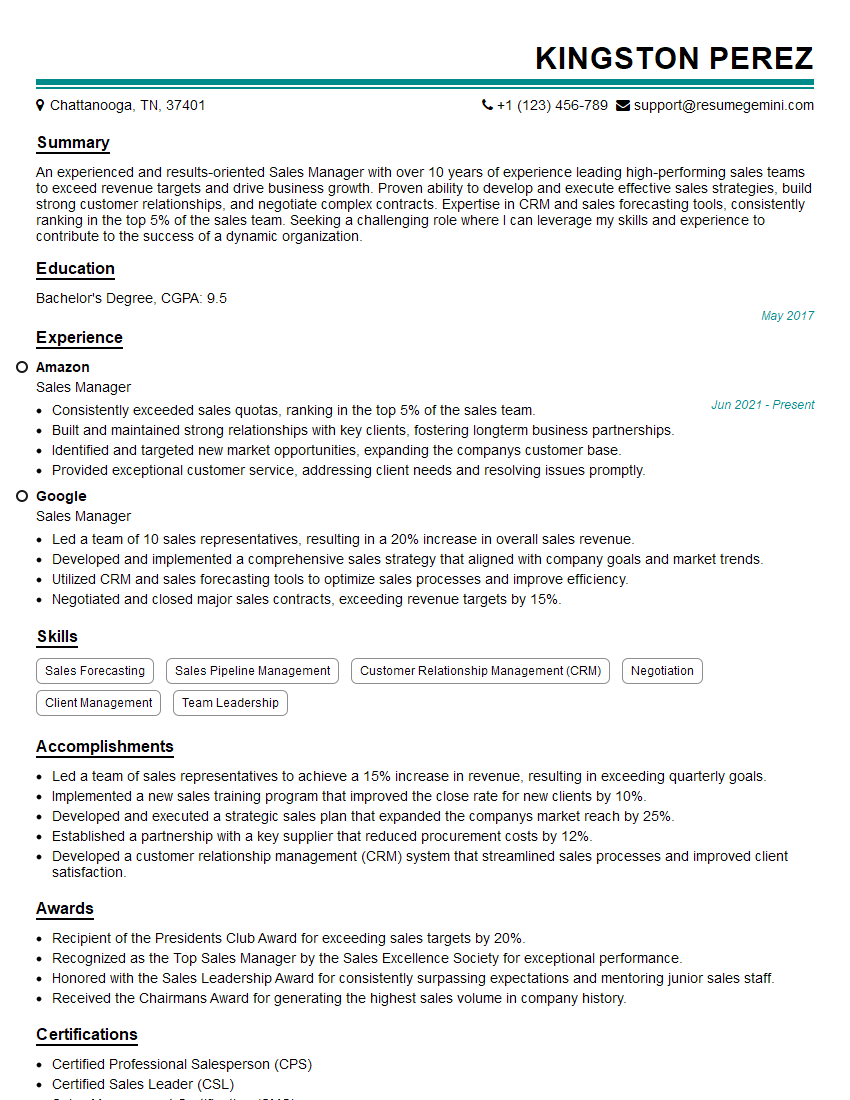
Sales Manager Resume Sample

Customer Service Manager Resume Sample
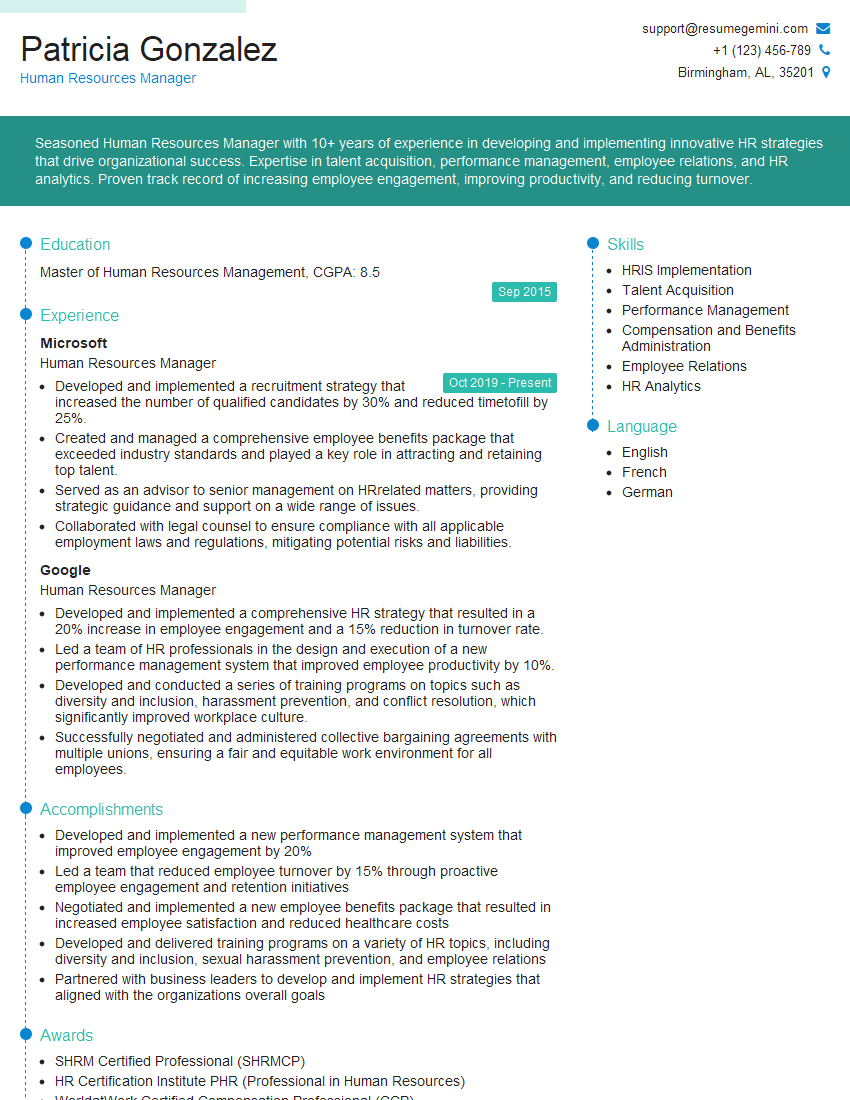
Human Resources Manager Resume Sample
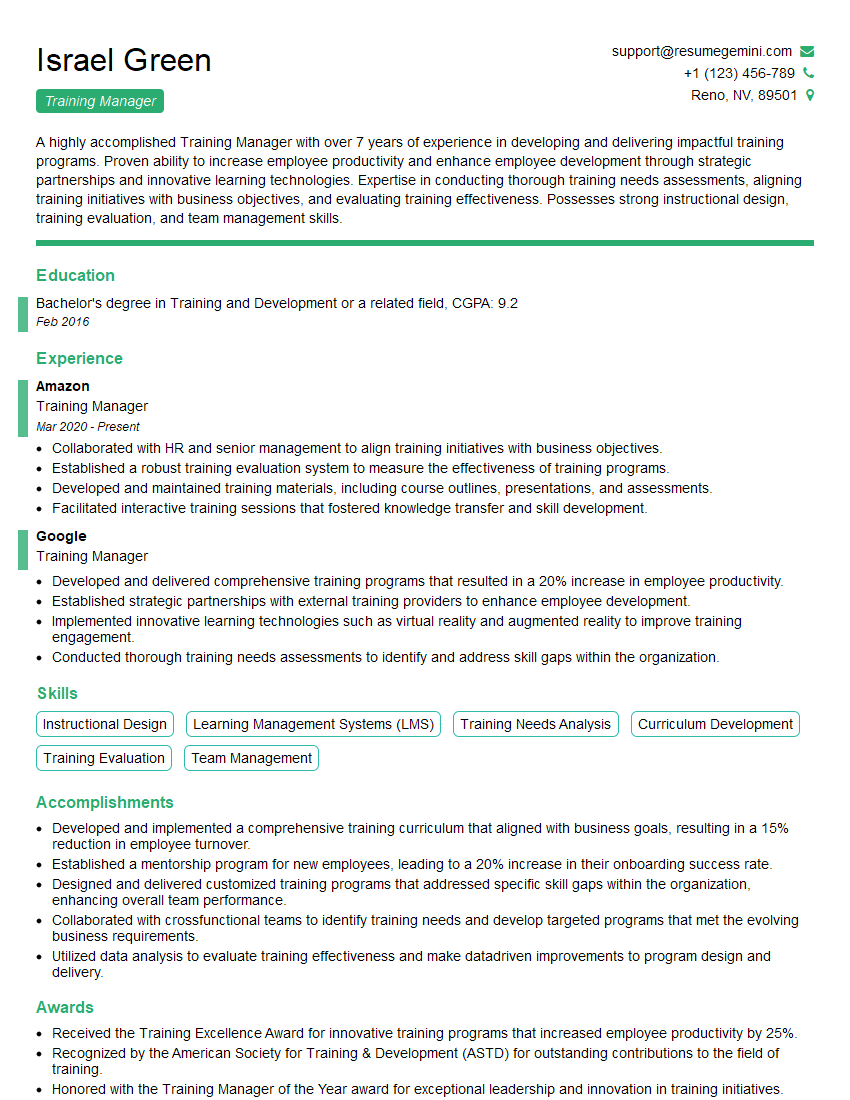
Training Manager Resume Sample

Project Manager Resume Sample
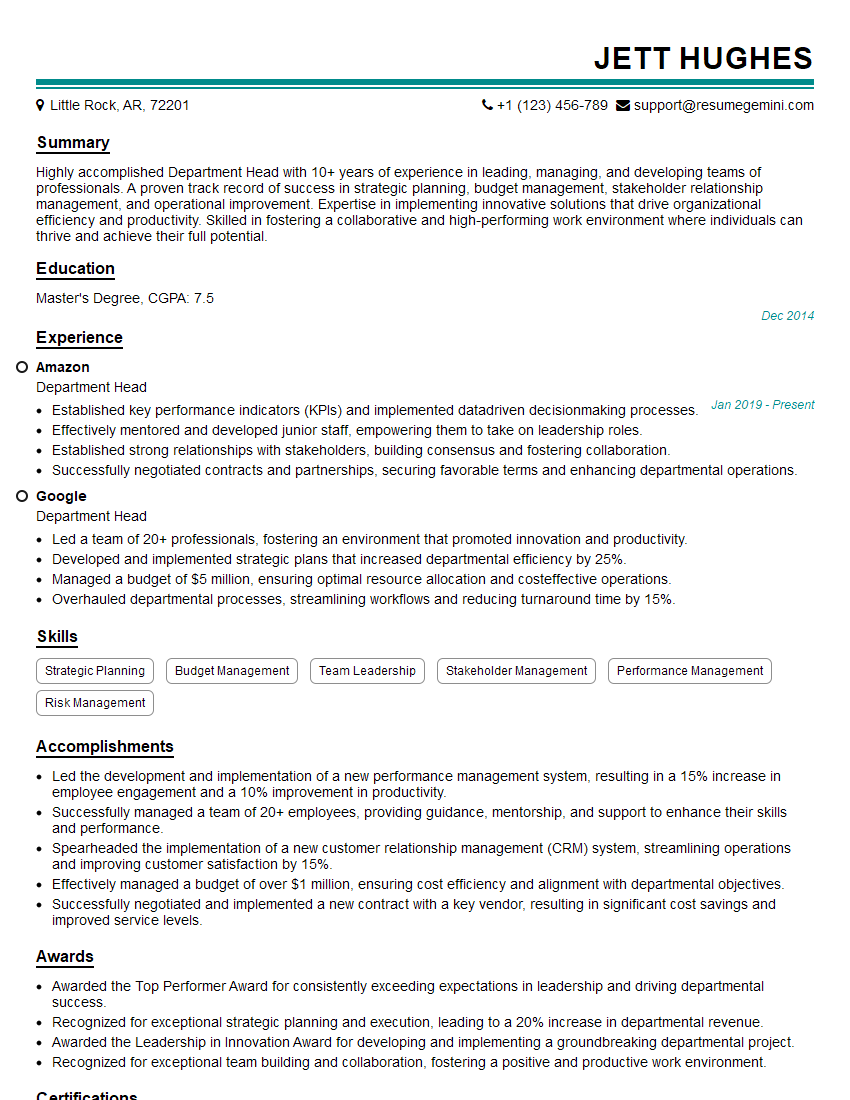
Department Head Resume Sample
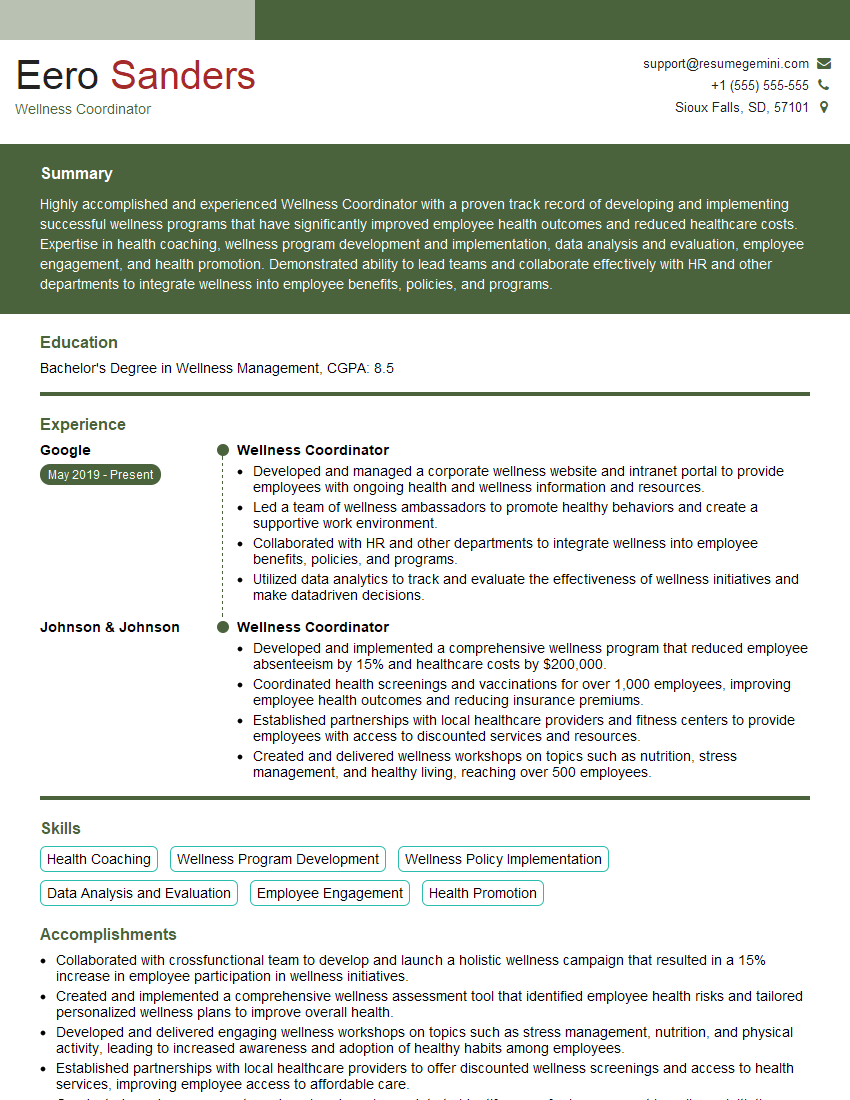
Wellness Coordinator Resume Sample
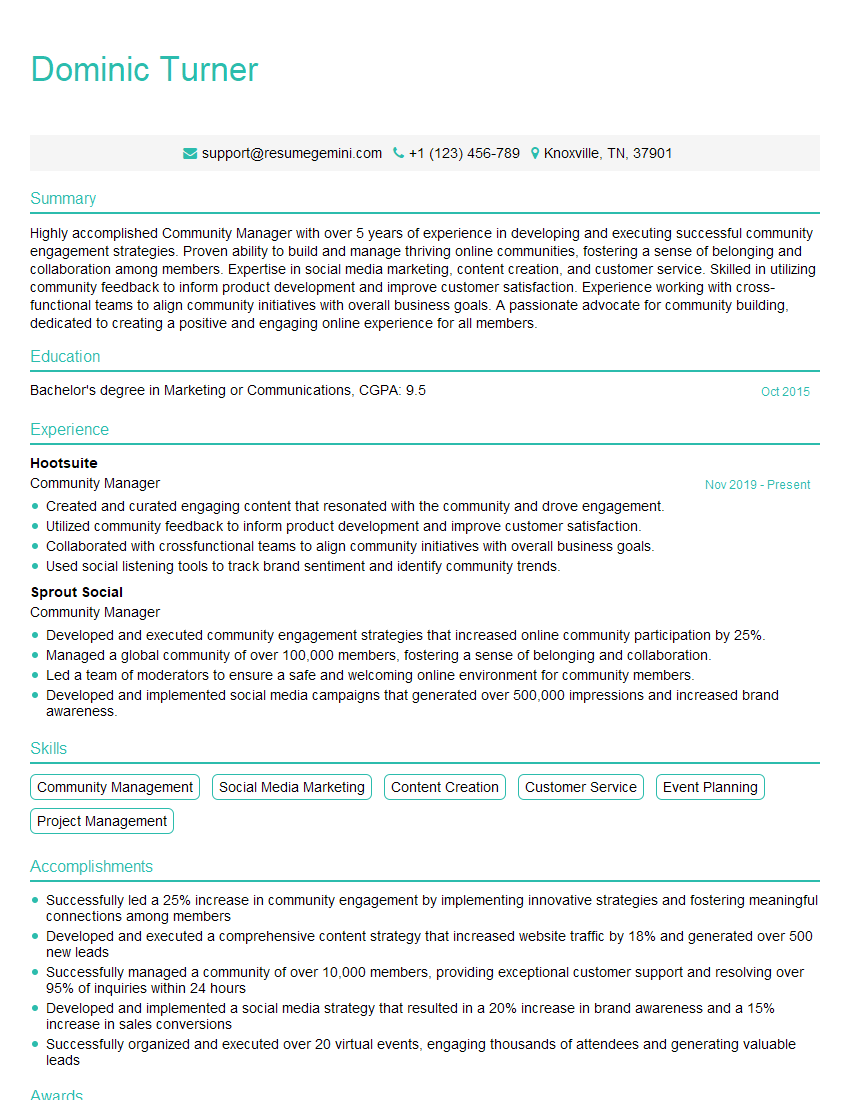
Community Manager Resume Sample
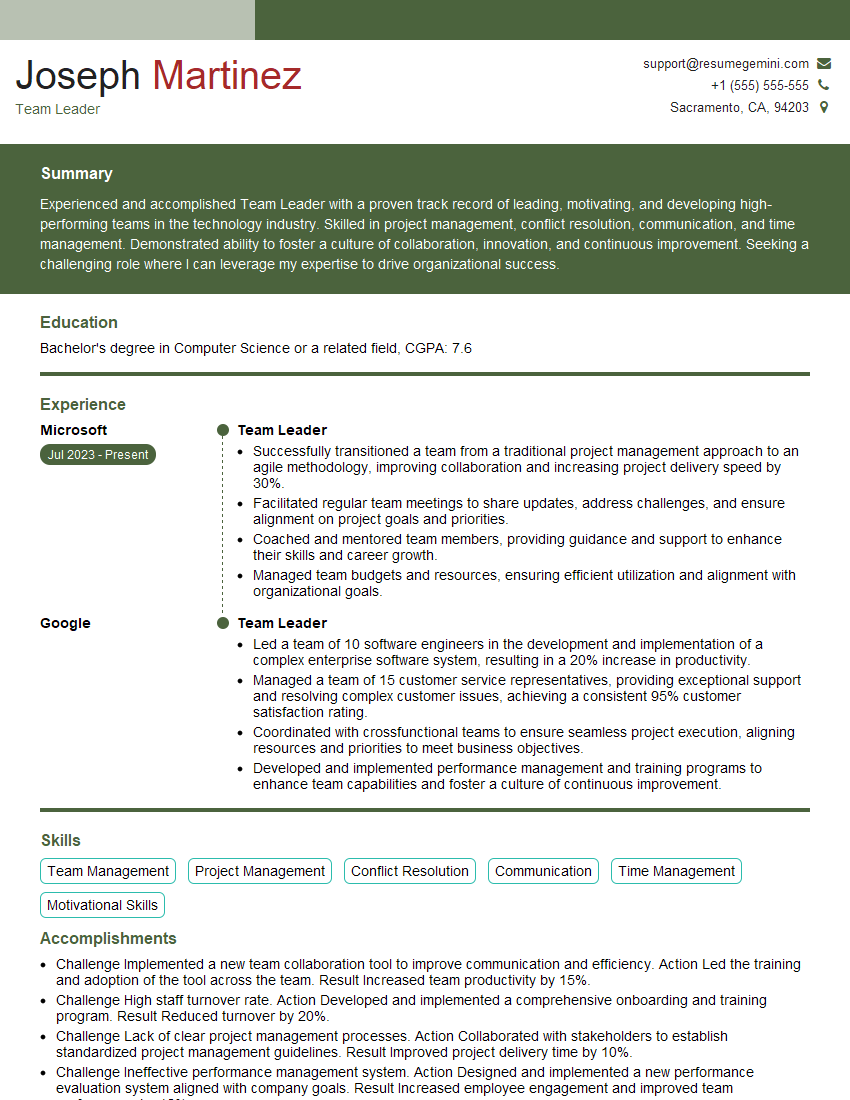
Team Leader Resume Sample

Compliance Officer Resume Sample
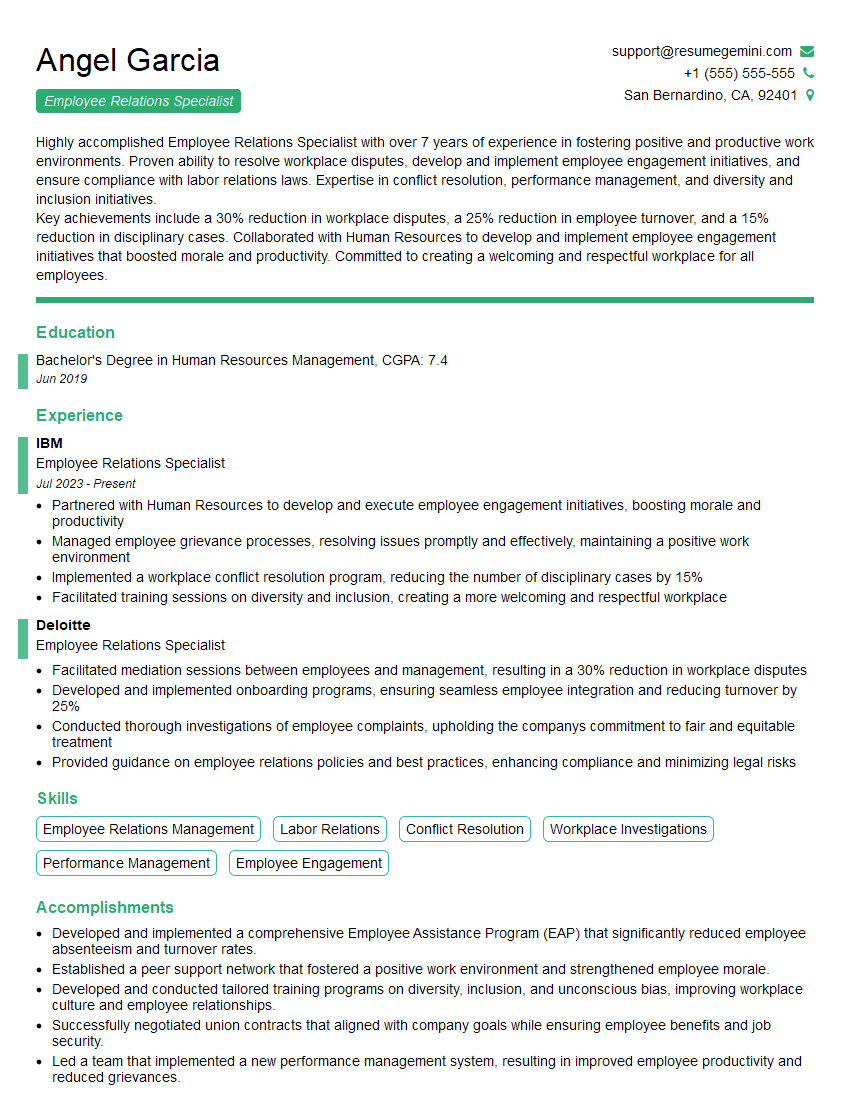
Employee Relations Specialist Resume Sample
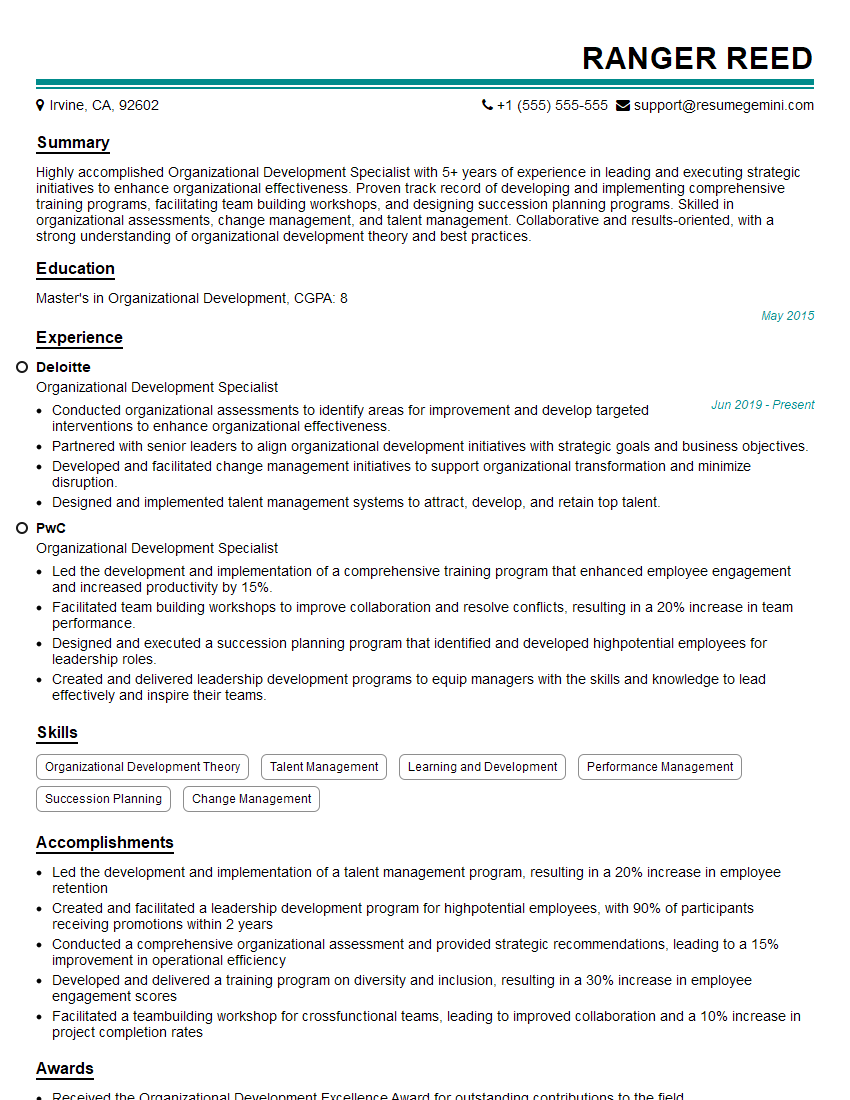
Organizational Development Specialist Resume Sample
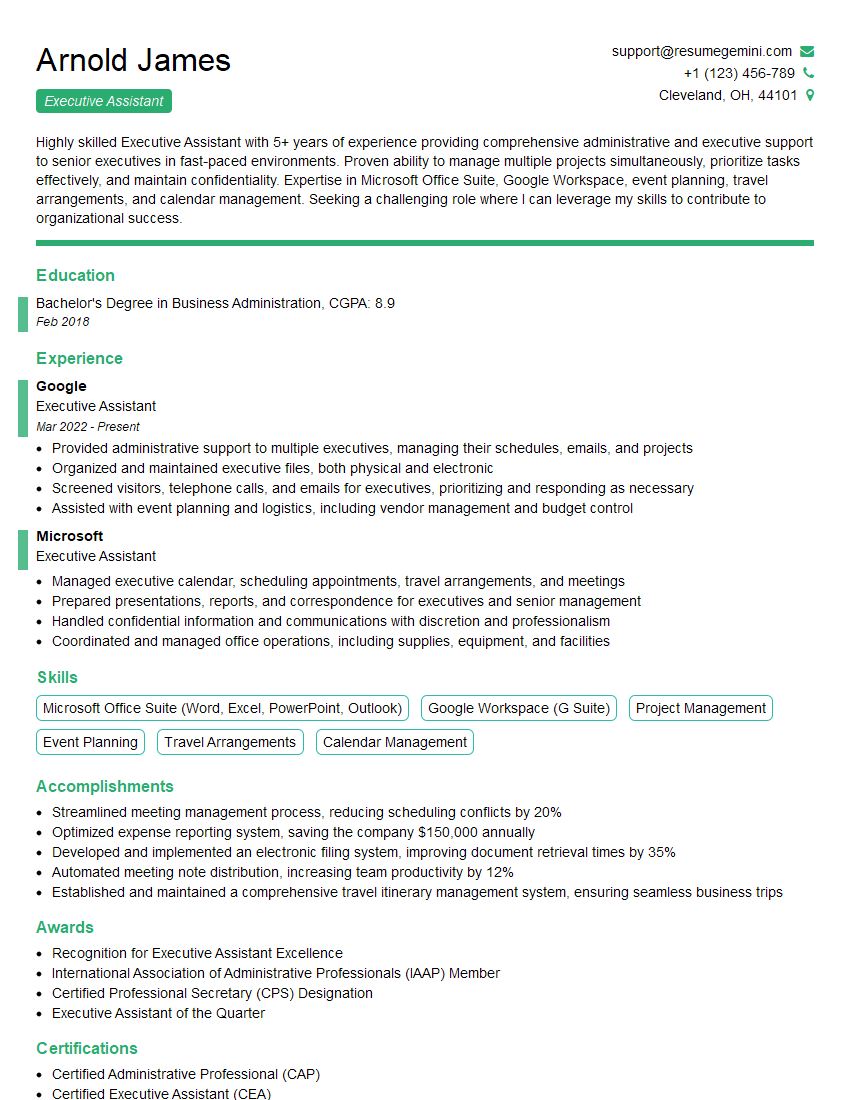
Executive Assistant Resume Sample
- Supervisor
- Office Manager
- Operations Manager
- Account Manager
- Marketing Manager
- Sales Manager
- Customer Service Manager
- Human Resources Manager
- Training Manager
- Project Manager
- Department Head
- Wellness Coordinator
- Community Manager
- Team Leader
- Compliance Officer
- Employee Relations Specialist
- Organizational Development Specialist
- Executive Assistant
Explore more articles
Users Rating of Our Blogs
Share Your Experience
We value your feedback! Please rate our content and share your thoughts (optional).
What Readers Say About Our Blog
To the interviewgemini.com Webmaster.
Very helpful and content specific questions to help prepare me for my interview!
Thank you
To the interviewgemini.com Webmaster.
This was kind of a unique content I found around the specialized skills. Very helpful questions and good detailed answers.
Very Helpful blog, thank you Interviewgemini team.