Interviews are opportunities to demonstrate your expertise, and this guide is here to help you shine. Explore the essential Building Code and Safety Regulations Adherence interview questions that employers frequently ask, paired with strategies for crafting responses that set you apart from the competition.
Questions Asked in Building Code and Safety Regulations Adherence Interview
Q 1. What are the key differences between IBC and IRC?
The International Building Code (IBC) and the International Residential Code (IRC) are both model codes developed by the International Code Council (ICC), but they govern different types of structures. Think of it like this: the IBC is the comprehensive rulebook for all manner of buildings – skyscrapers, hospitals, commercial complexes – while the IRC focuses specifically on one- and two-family dwellings and smaller structures.
- IBC: Covers a wider range of building types, including high-rises, commercial buildings, and industrial facilities. It’s more complex and detailed, addressing intricate structural, fire safety, and accessibility requirements.
- IRC: Is simpler and more streamlined, tailored to the construction of residential buildings. It incorporates many of the IBC’s fundamental principles but simplifies processes and requirements specific to residential construction.
For instance, the IBC will have detailed specifications for elevator safety and fire suppression systems in high-rises, whereas the IRC will focus on simpler aspects like smoke detectors and egress requirements for single-family homes. The key difference lies in the scale and complexity of the buildings they regulate.
Q 2. Explain the process for obtaining a building permit.
Obtaining a building permit is a crucial step ensuring your project complies with all relevant building codes and safety regulations. The process generally involves these steps:
- Submittal of Plans: You begin by submitting detailed architectural and engineering plans, along with specifications, to the local building department. These plans need to be meticulously prepared and clearly demonstrate compliance with the applicable building codes.
- Plan Review: The building department’s plan reviewers meticulously examine the submitted documentation. They check for adherence to building codes, zoning regulations, and other relevant requirements. This stage might involve back-and-forth communication to address any discrepancies or clarifications needed.
- Permit Issuance: Once the plans are approved and any necessary revisions are incorporated, the building department issues a building permit. This permit officially authorizes the commencement of construction.
- Inspections: Throughout the construction process, the building department conducts periodic inspections at various stages (foundation, framing, electrical, plumbing, etc.). These inspections ensure that the construction work remains consistent with the approved plans and adheres to the codes.
- Certificate of Occupancy: Upon completion and successful final inspection, the building department issues a certificate of occupancy. This document confirms that the building meets all safety and code requirements and is fit for its intended use.
The specific requirements and timelines may vary slightly depending on the jurisdiction, but this process generally reflects the typical approach.
Q 3. Describe your experience with plan review and code enforcement.
My experience in plan review encompasses over ten years of reviewing blueprints for residential, commercial, and mixed-use projects. I’ve become proficient in identifying potential code violations early in the design phase, preventing costly rework later. This involves meticulously examining plans for structural integrity, fire safety, accessibility compliance, and life safety measures. My expertise allows me to quickly pinpoint deviations and suggest solutions that meet code requirements without compromising the project’s design intent.
In code enforcement, I’ve conducted numerous site inspections, ensuring ongoing compliance during construction. I’ve handled situations ranging from minor discrepancies to significant code violations, requiring corrective actions and even stop-work orders when necessary. I always prioritize a collaborative approach, working closely with contractors and developers to resolve issues efficiently and safely. For example, in one instance I identified an improper installation of fire-resistant materials. Through collaboration, we were able to rectify the situation before significant delays or safety risks occurred.
Q 4. How do you handle discrepancies between design and code requirements?
Discrepancies between design and code requirements are common. My approach involves a systematic process focusing on finding solutions that maintain both safety and design aesthetics.
- Identify the Discrepancy: Clearly define the specific areas where the design deviates from the code.
- Evaluate Options: Analyze different solutions to bring the design into compliance. This may involve minor modifications, alternative materials, or a complete design revision, depending on the severity.
- Consult Relevant Parties: Collaborate with the architect, engineer, and contractor to explore viable options and weigh the pros and cons of each.
- Document the Changes: Any changes made to address the discrepancies must be thoroughly documented, approved by the building department, and reflected in updated plans.
- Ensure Compliance: Verify that the implemented solution fully resolves the conflict and satisfies all code requirements.
I strive to find practical solutions that don’t drastically alter the project’s overall design while still maintaining a high level of safety and code compliance. Effective communication is critical in resolving these issues to avoid delays and disputes.
Q 5. What are the common safety hazards on construction sites?
Construction sites are inherently hazardous environments. Common safety hazards include:
- Falls: Falls from heights are a leading cause of injuries on construction sites. This is often due to inadequate fall protection systems or unsafe work practices at heights.
- Struck-by Hazards: Workers can be struck by falling objects, swinging equipment, or vehicles.
- Caught-in/Between Hazards: Injuries can occur from being caught between objects or equipment (e.g., being crushed by collapsing trenches or machinery).
- Electrocution: Contact with exposed electrical wires or faulty equipment poses a significant risk.
- Fire Hazards: The use of flammable materials, welding activities, and potential ignition sources increase the risk of fire.
- Exposure to Hazardous Materials: Exposure to asbestos, lead, or other toxic substances is a major concern.
These are just some of the prevalent hazards, and the specific risks vary depending on the type of construction project.
Q 6. Explain your approach to mitigating construction site risks.
Mitigating construction site risks involves a proactive and multi-faceted approach that integrates safety into every phase of the project. My strategy includes:
- Hazard Identification & Assessment: Conducting thorough site-specific risk assessments to identify potential hazards and evaluate their severity.
- Implementing Safety Plans: Developing comprehensive safety plans that address specific hazards identified through risk assessments. These plans should outline preventative measures, emergency procedures, and worker training.
- Providing Training: Providing adequate training to all workers on safety procedures, equipment usage, and hazard awareness. This includes training on the proper use of Personal Protective Equipment (PPE).
- Implementing Controls: Implementing engineering controls (e.g., guarding machinery, installing fall protection) and administrative controls (e.g., implementing safe work procedures, establishing communication protocols) to minimize risks.
- Regular Inspections & Monitoring: Conducting regular safety inspections to identify and correct any hazards or violations. Close monitoring of worker performance is essential for maintaining a safe work environment.
- Incident Investigation & Reporting: Thoroughly investigating any accidents or incidents to identify their root causes and implement corrective actions to prevent recurrence.
A strong safety culture, where safety is a top priority for everyone on the site, is critical for effective risk mitigation.
Q 7. How familiar are you with OSHA regulations?
I am very familiar with OSHA (Occupational Safety and Health Administration) regulations. My understanding encompasses a broad range of standards relevant to construction, including fall protection, hazard communication, personal protective equipment, machine guarding, and lockout/tagout procedures. I have practical experience applying OSHA standards to ensure compliance on various construction projects. I regularly review updates to OSHA regulations to maintain my knowledge and ensure my practices are current.
I understand the importance of OSHA compliance not only from a legal perspective but also because it directly impacts worker safety. I actively incorporate OSHA requirements into safety plans, training programs, and site inspections to minimize workplace hazards and create a safer environment for all construction workers. For instance, I regularly ensure that proper fall protection systems are in place for workers at heights, in accordance with OSHA regulations.
Q 8. Describe your experience with fire safety codes and inspections.
My experience with fire safety codes and inspections spans over 10 years, encompassing various project types from residential to high-rise commercial buildings. I’m proficient in interpreting and applying codes like NFPA (National Fire Protection Association) standards, including NFPA 101 (Life Safety Code) and NFPA 5000 (Building Construction and Safety Code). This includes understanding requirements for fire detection and alarm systems, sprinkler systems, fire suppression systems, means of egress, and fire-resistant construction.
During inspections, I meticulously check for compliance with these codes, documenting any deficiencies with detailed reports and photos. For instance, I once discovered a missing fire damper in a critical HVAC shaft during a pre-occupancy inspection of a hospital. This was immediately addressed, preventing a significant life safety hazard. My experience also includes working with fire marshals and authorities having jurisdiction (AHJ) to ensure successful project completion and compliance.
I’m also adept at performing fire safety plan reviews, ensuring proper emergency procedures, evacuation plans, and staff training are in place. I understand the importance of regular inspections and maintenance to ensure continued compliance and operational readiness of fire safety systems.
Q 9. How do you ensure compliance with accessibility codes (ADA)?
Ensuring compliance with the Americans with Disabilities Act (ADA) Accessibility Guidelines is paramount in my work. I approach this systematically, reviewing the project plans meticulously against the ADA Standards for Accessible Design. This involves examining all aspects of the building, from site access and parking to interior spaces and restrooms.
I focus on ensuring proper ramp slopes, accessible routes, door widths, accessible restroom fixtures, signage, and clear communication systems. For example, I recently worked on a project where the original design lacked sufficient accessible parking spaces. I collaborated with the architects and contractors to revise the site plan, adding the necessary spaces while maintaining the project’s overall aesthetic appeal.
I also emphasize the importance of using tactile paving for visually impaired individuals, accessible elevators and emergency communication systems, and appropriate signage throughout the building. Using specialized accessibility checklists and software helps ensure no element is overlooked. Regular site visits and collaboration with accessibility consultants are crucial for thorough compliance.
Q 10. What are your strategies for addressing code violations?
Addressing code violations requires a systematic and collaborative approach. The first step is to identify the specific violation through a thorough inspection and documentation. Then, I determine the severity of the violation, considering its impact on life safety and overall building performance.
Minor violations might be addressed through corrective actions like minor repairs or adjustments, documented and approved by the AHJ. More serious violations may require substantial redesign, rework, or even temporary shutdowns. For example, I once encountered a structural issue where a load-bearing column was incorrectly sized. This required immediate action: the affected area was temporarily secured, structural engineers were consulted, and a plan for reinforcement was developed and implemented, all in close communication with the AHJ.
Throughout this process, clear communication with all stakeholders—owners, contractors, architects, and AHJs—is crucial. I utilize detailed reports, photos, and comprehensive plans to facilitate understanding and collaboration, driving efficient resolution.
Q 11. Explain your understanding of structural load calculations and code compliance.
Understanding structural load calculations is fundamental to ensuring building code compliance. This involves analyzing the forces acting on a structure, including dead loads (permanent weight of the building), live loads (occupancy loads, furniture), snow loads, wind loads, and seismic loads (earthquake). Accurate calculations are critical to prevent structural failure.
I use engineering software and principles to calculate these loads, ensuring the structural elements (beams, columns, foundations) are adequately designed to withstand them. Code compliance is achieved by referencing relevant building codes and standards, such as the International Building Code (IBC), which specify allowable stresses and design requirements. For example, I’ve worked on projects where specific wind load requirements were stringent due to the building’s location. The design was modified to incorporate extra reinforcement to meet these requirements.
A thorough understanding of these principles ensures the long-term safety and stability of the building, protecting lives and investments.
Q 12. How do you interpret and apply building code requirements to a specific project?
Interpreting and applying building code requirements to a specific project is a multifaceted process. It starts with a thorough understanding of the project’s scope, intended use, occupancy type, and location. Each building code has specific requirements based on these factors. For example, a high-rise residential building will have drastically different code requirements than a single-family dwelling.
I begin by reviewing relevant building codes (IBC, local amendments, etc.) to determine the applicable requirements. Then, I carefully examine the project plans, comparing them against the code requirements and flagging any potential discrepancies. This often involves using code check software and working closely with architects and engineers.
If there are conflicts between the design and the codes, I collaborate with the design team to develop solutions that achieve code compliance without compromising the project’s functionality or aesthetics. This might include design modifications or the submission of engineered solutions for review by the AHJ.
Q 13. Describe your experience with life safety systems.
My experience with life safety systems is extensive, covering a range of systems crucial for protecting building occupants. This includes fire alarm systems, sprinkler systems, emergency lighting, emergency power systems (generators), and evacuation planning.
I understand the importance of system design, installation, testing, and maintenance. I ensure that these systems are integrated and function seamlessly to provide a safe environment. For example, I’ve worked on projects where fire alarm systems needed to interface with building management systems and emergency notification systems to provide immediate alerts to occupants and emergency responders.
Furthermore, I’m knowledgeable about the inspection and testing procedures required for these systems, ensuring they are operational and compliant with the relevant codes and standards. Regular testing and maintenance are crucial for early detection of problems and ensure the systems function properly during an emergency.
Q 14. What software or tools do you use for building code compliance?
To ensure efficient building code compliance, I utilize several software and tools. These include:
- Code-checking software: These programs compare design plans against the relevant building codes, flagging potential violations automatically. This dramatically improves the efficiency of the review process.
- CAD software: I’m proficient with various CAD software applications for reviewing and analyzing architectural and engineering drawings.
- Spreadsheets and databases: I use spreadsheets for tracking code requirements, inspections, and corrective actions.
- Project management software: This helps to track progress, deadlines, and communicate effectively with stakeholders.
Beyond software, maintaining an updated collection of relevant building codes and standards and staying current with industry best practices are crucial for successful code compliance.
Q 15. How do you stay updated on changes and revisions to building codes?
Staying current with building code changes is crucial for maintaining safety and compliance. My strategy is multi-pronged and involves actively monitoring several key resources. This includes subscribing to official publications from organizations like the International Code Council (ICC), which publishes the International Building Code (IBC) and other model codes. I also regularly attend industry conferences and workshops to learn about the latest updates and best practices directly from code experts and fellow professionals. Additionally, I maintain memberships in relevant professional organizations, which often provide timely updates and educational materials on code revisions. Finally, I leverage online resources and legal databases to access the most recent versions of codes and related legal interpretations, ensuring that my understanding of the law is always up to date and legally sound. Think of it like a doctor staying current with medical advancements – continuous learning is essential.
Career Expert Tips:
- Ace those interviews! Prepare effectively by reviewing the Top 50 Most Common Interview Questions on ResumeGemini.
- Navigate your job search with confidence! Explore a wide range of Career Tips on ResumeGemini. Learn about common challenges and recommendations to overcome them.
- Craft the perfect resume! Master the Art of Resume Writing with ResumeGemini’s guide. Showcase your unique qualifications and achievements effectively.
- Don’t miss out on holiday savings! Build your dream resume with ResumeGemini’s ATS optimized templates.
Q 16. Explain your experience with the permitting process for complex projects.
My experience with complex project permitting is extensive. I’ve navigated the intricacies of obtaining permits for high-rise buildings, large-scale commercial developments, and intricate renovation projects. The process typically begins with a thorough review of the project plans against the applicable building codes, zoning regulations, and other relevant ordinances. This involves detailed calculations, specifications, and meticulous documentation. Then, I prepare and submit a comprehensive permit application, which often includes architectural drawings, structural engineering calculations, and fire protection system designs. The application is reviewed by the local authority having jurisdiction (AHJ). Throughout this process, I proactively address any questions or concerns raised by the AHJ, ensuring a seamless and timely approval. For instance, on a recent high-rise project, we had to meticulously demonstrate compliance with wind load calculations, which required extensive simulations and engineering expertise. Successfully obtaining the permits involved multiple revisions and extensive collaboration with the engineering and architectural teams. The key is proactive communication and detailed preparation.
Q 17. How do you ensure contractor compliance with building codes and safety regulations?
Contractor compliance is paramount. My approach is a blend of proactive measures and reactive oversight. Proactively, I ensure that all contractors are provided with clear and concise copies of the approved plans and specifications, highlighting relevant code sections. Regular site visits, scheduled in accordance with the project timeline, are essential. During these visits, I conduct detailed inspections, checking for adherence to the building codes and safety regulations. This includes verifying proper installation of structural elements, electrical systems, plumbing, and fire protection systems. Documentation of every visit is imperative, including photographic evidence. If non-compliance is found, I immediately address the issue with the contractor, detailing the violation and outlining the necessary corrective actions. For serious or repeated violations, I will escalate the matter to the project manager and, if needed, the AHJ. Think of it like a quality control process for safety. It requires vigilance and a consistent approach to prevent problems before they escalate.
Q 18. What is your experience with emergency response and evacuation procedures?
My experience with emergency response and evacuation procedures spans various project types. I’m well-versed in developing and implementing comprehensive emergency action plans (EAPs) that comply with all applicable regulations. This includes identifying potential hazards, establishing clear evacuation routes, designating assembly points, and providing appropriate training to building occupants. In high-rise buildings, for example, I’ve worked with fire safety professionals to ensure the effectiveness of the fire alarm systems, sprinkler systems, and stairwell designs. I’ve also participated in various emergency response drills to test and refine the EAPs. These drills help identify potential weaknesses and areas for improvement. Successful emergency response planning necessitates a collaborative effort between building owners, occupants, and emergency services. The aim is to ensure the safety of everyone in the event of an emergency.
Q 19. How do you conduct a thorough safety inspection of a construction site?
A thorough construction site safety inspection follows a structured approach. It begins with a review of the site’s safety plan, ensuring that it addresses potential hazards specific to the project. The inspection itself involves a visual assessment of the site, paying close attention to personal protective equipment (PPE) usage, proper scaffolding and fall protection systems, the storage and handling of materials, and the condition of machinery and tools. I also verify compliance with OSHA standards and any local regulations. Specific areas of focus include:
- Fall hazards
- Excavation safety
- Electrical safety
- Fire prevention
- Hazardous material handling
Q 20. Describe a situation where you had to resolve a code conflict.
In a recent project involving a historical building renovation, we encountered a code conflict between preservation requirements and modern fire safety standards. The existing building featured exquisite original woodwork, which did not meet current fire-resistant material specifications. The preservation commission mandated that the woodwork be preserved as much as possible. To resolve the conflict, we collaborated with both the preservation commission and the fire marshal to develop a compromise. This involved installing a state-of-the-art fire suppression system specifically designed to protect the woodwork while meeting the required fire safety standards. Furthermore, we implemented enhanced fire detection systems with early warning capabilities. The solution not only preserved the building’s historical integrity but also ensured its safety. This involved careful negotiation and demonstrating that the proposed solution met all safety codes while respecting the historical aspects.
Q 21. What are your strategies for effective communication about safety concerns?
Effective communication regarding safety concerns is critical. My strategy is built upon clear, concise, and proactive communication. I regularly use various channels to communicate effectively – briefings and toolbox talks at the start of each day, direct communication with contractors and workers, formal written reports, and updates shared with project management. When communicating a safety concern, I clearly explain the nature of the hazard, the potential consequences, and the necessary corrective actions. I utilize both verbal and visual aids (e.g., photographs and diagrams) to ensure understanding. Regular feedback sessions and open communication channels build trust and encourage reporting of concerns. In the case of a serious incident, I follow established reporting protocols and ensure all parties are informed in a timely and efficient manner. This multi-faceted approach ensures that safety concerns are addressed promptly and effectively, contributing to a culture of safety on the project site.
Q 22. How do you manage and document safety training programs?
Managing and documenting safety training programs requires a systematic approach ensuring all personnel receive adequate training and that records are meticulously maintained. This involves several key steps.
- Needs Assessment: First, I identify training needs through job hazard analyses (JHAs) and risk assessments, tailoring programs to specific job roles and hazards. For example, a carpenter needs different training than an electrician.
- Program Development: I create comprehensive training materials including presentations, handbooks, and practical exercises. These materials are aligned with relevant OSHA standards and local regulations. For example, fall protection training would cover proper harness usage, anchor points, and rescue techniques.
- Delivery and Participation: Training is delivered through a variety of methods—classroom instruction, online modules, and on-the-job training—to cater to different learning styles. Attendance is tracked diligently.
- Assessment and Evaluation: Participants are assessed to ensure understanding through quizzes, practical demonstrations, and observation. This helps measure the effectiveness of the training.
- Documentation: Comprehensive records are maintained for each employee, including training attendance, assessment results, and certifications. This ensures compliance with audit requirements and demonstrates a proactive safety culture. We use a digital system to streamline this process and ensure easy access to records.
This structured approach guarantees that safety training is not just a box-ticking exercise, but a continuous process of improvement, leading to a safer work environment.
Q 23. Explain your understanding of the different types of building inspections.
Building inspections come in various types, each serving a distinct purpose in ensuring safety and code compliance.
- Pre-construction Inspections: These verify that the site is properly prepared, that plans comply with codes, and that necessary permits are in place before construction begins. This prevents costly mistakes later on.
- During-Construction Inspections: These are routine checks throughout the construction process to monitor compliance with approved plans and codes. Inspectors check for proper installation of structural elements, electrical wiring, plumbing, and fire protection systems.
- Final Inspections: These are conducted once construction is complete to verify that the building meets all applicable codes and standards. This is often a multi-stage process, with inspections for different aspects of the building (electrical, plumbing, etc.) conducted separately before a final occupancy permit is issued.
- Re-inspections: These are conducted when deficiencies are found during previous inspections. They ensure corrections are made before the project moves forward.
- Special Inspections: These inspections are performed by specialized engineers or inspectors for specific building components or systems requiring specialized knowledge, such as structural steel or geotechnical aspects.
Each inspection type is crucial, collectively providing a robust system of oversight to ensure public safety and building integrity.
Q 24. Describe your experience with investigating accidents and incidents.
Investigating accidents and incidents requires a methodical approach, focusing on fact-finding, analysis, and preventive measures. My experience involves:
- Securing the Scene: The first priority is to ensure the safety of everyone involved and to preserve the accident site. This might include cordoning off the area and taking photographs.
- Gathering Evidence: This involves interviewing witnesses, collecting physical evidence (broken tools, damaged materials), and reviewing relevant documentation (safety procedures, training records). I pay close attention to detail and ensure the chain of custody for any collected evidence.
- Root Cause Analysis: I utilize techniques like the “5 Whys” or fault tree analysis to determine the underlying causes of the accident, going beyond simply identifying what happened to understanding why it happened. For example, a fall from height might be due to lack of fall protection, but the root cause could be inadequate training or a lack of enforcement of safety procedures.
- Reporting and Documentation: A detailed report is prepared, including findings, root causes, and recommendations for preventing future incidents. This report is crucial for legal purposes and for implementing corrective actions.
- Corrective Actions: Based on the findings, I help develop and implement corrective actions, including retraining, changes to procedures, and improved safety equipment. This might involve updating safety manuals, providing additional training, or modifying work practices.
The goal is not simply to determine fault, but to learn from the accident and prevent similar incidents from occurring again.
Q 25. How do you prioritize safety concerns in a fast-paced construction environment?
Prioritizing safety concerns in a fast-paced environment demands a proactive and decisive approach. It’s about embedding safety into every aspect of the project, not treating it as an afterthought.
- Regular Safety Meetings: Daily or weekly toolbox talks ensure safety is top of mind. These are not just announcements but opportunities for workers to raise concerns.
- Hazard Identification and Risk Assessment: A continuous process of identifying potential hazards before they become incidents. This involves worker participation.
- Leading Indicators: Monitoring leading indicators, such as the number of near misses, helps identify potential problems before they escalate into accidents. Addressing near misses promptly prevents future accidents.
- Stop Work Authority: Empowering workers to stop work if they see an unsafe condition. This creates a culture where safety is valued above speed.
- Safety Incentives: Recognizing and rewarding safe behavior reinforces a safety-first culture.
Even in a fast-paced environment, safety cannot be compromised. It’s not a matter of choosing between speed and safety; it’s about integrating safety into the process to enhance both efficiency and safety.
Q 26. How familiar are you with local, state, and national building codes?
My familiarity with local, state, and national building codes is extensive. I understand the nuances of each and the implications for construction projects.
I regularly consult codes such as the International Building Code (IBC), the International Residential Code (IRC), and their local amendments. I am also familiar with the Americans with Disabilities Act (ADA) standards for accessibility and OSHA regulations pertaining to workplace safety. Understanding these codes isn’t just about reading them; it’s about applying their principles to real-world scenarios. I routinely review updates to remain current with changes in regulations and best practices. I can navigate complex code requirements and interpret them accurately in order to provide safe and compliant construction solutions.
Q 27. What is your experience with sustainability and green building codes?
Sustainability and green building codes are increasingly important. I’m experienced with codes and standards such as LEED (Leadership in Energy and Environmental Design), and various local green building ordinances. My understanding covers:
- Energy Efficiency: Implementing energy-efficient building materials and design strategies, including insulation, windows, and HVAC systems.
- Water Conservation: Specifying low-flow fixtures and implementing water-harvesting systems.
- Material Selection: Using recycled and sustainably sourced materials, minimizing environmental impact.
- Waste Management: Implementing strategies to reduce construction waste and recycle materials.
- Indoor Environmental Quality: Prioritizing healthy indoor air quality and using low-VOC materials.
I recognize that green building practices aren’t just about environmental responsibility; they also frequently lead to long-term cost savings for building owners. I integrate these principles into my work, striving to create sustainable and environmentally responsible projects.
Q 28. Describe a challenging safety issue you faced and how you resolved it.
One challenging safety issue involved a subcontractor failing to properly install fall protection on a high-rise project. Despite repeated warnings and training, the issue persisted. My approach to resolving this involved:
- Immediate Action: I immediately stopped work on the affected area, emphasizing the critical safety risk. This involved a temporary shutdown for that part of the project.
- Root Cause Analysis: I investigated the root cause. It wasn’t simply negligence; the subcontractor lacked adequate resources (sufficient scaffolding) and felt pressured to meet deadlines.
- Collaboration and Communication: I worked collaboratively with the subcontractor’s supervisor, project manager, and safety officer to address the concerns. Open communication was key.
- Corrective Actions: We provided the subcontractor with additional resources (scaffolding, training) and adjusted the schedule to reduce pressure. We reinforced the importance of safety procedures. A detailed retraining session was conducted.
- Enhanced Oversight: We increased monitoring of the subcontractor’s work to ensure that safety protocols were followed. We implemented a daily safety check by a senior safety supervisor.
This situation highlighted the importance of proactive communication, collaboration, and the need to address the root causes of safety issues rather than just treating the symptoms. The result was improved safety practices and a safer work environment.
Key Topics to Learn for Building Code and Safety Regulations Adherence Interview
- Understanding Building Codes: Familiarize yourself with the different types of building codes (e.g., IBC, local codes) and their hierarchical structure. Focus on interpreting code language and identifying relevant sections for specific projects.
- Safety Regulations & Compliance: Learn about common safety regulations related to fire protection, electrical systems, plumbing, and structural integrity. Understand the implications of non-compliance and potential consequences.
- Plan Review and Inspection Processes: Become familiar with the process of reviewing building plans for code compliance and conducting inspections on-site. Understand the role of various stakeholders (e.g., architects, engineers, inspectors).
- Practical Application of Codes: Practice applying building codes to hypothetical scenarios. For example, be prepared to discuss how to address code violations, propose solutions, and ensure compliance within budget and timeline constraints.
- Problem-Solving and Decision-Making: Develop your ability to analyze complex situations, identify potential hazards, and propose effective solutions that comply with all relevant building codes and safety regulations.
- Emerging Technologies and Green Building Practices: Understand how new technologies and sustainable building practices influence code adherence and safety regulations. Be prepared to discuss their practical implications.
- Documentation and Record Keeping: Know the importance of meticulous documentation throughout the entire building process, from plan review to final inspection. Understand how to maintain accurate records and handle potential disputes.
Next Steps
Mastering Building Code and Safety Regulations Adherence is crucial for career advancement in the construction and engineering industries. It demonstrates a commitment to safety, professionalism, and legal compliance, significantly enhancing your value to any employer. To maximize your job prospects, create an ATS-friendly resume that clearly highlights your skills and experience. ResumeGemini is a trusted resource to help you build a professional and impactful resume. Examples of resumes tailored to Building Code and Safety Regulations Adherence are available to help you get started.
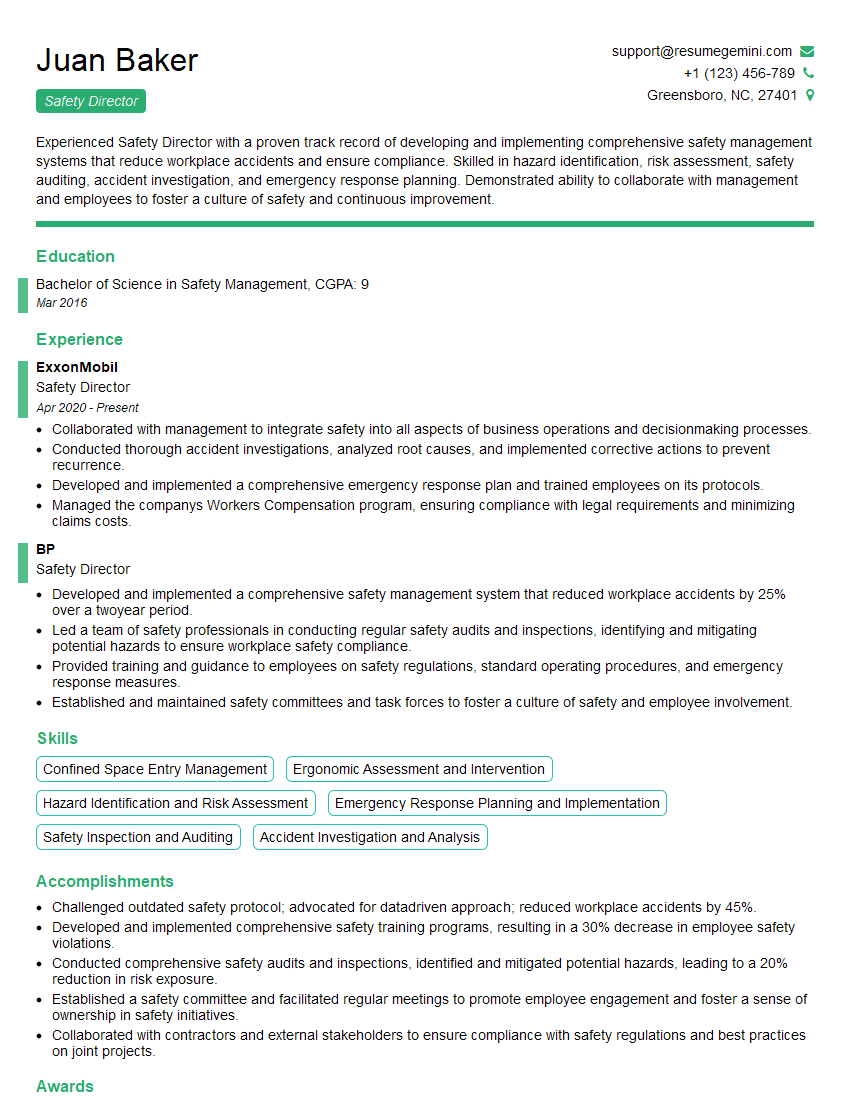
Safety Director Resume Sample
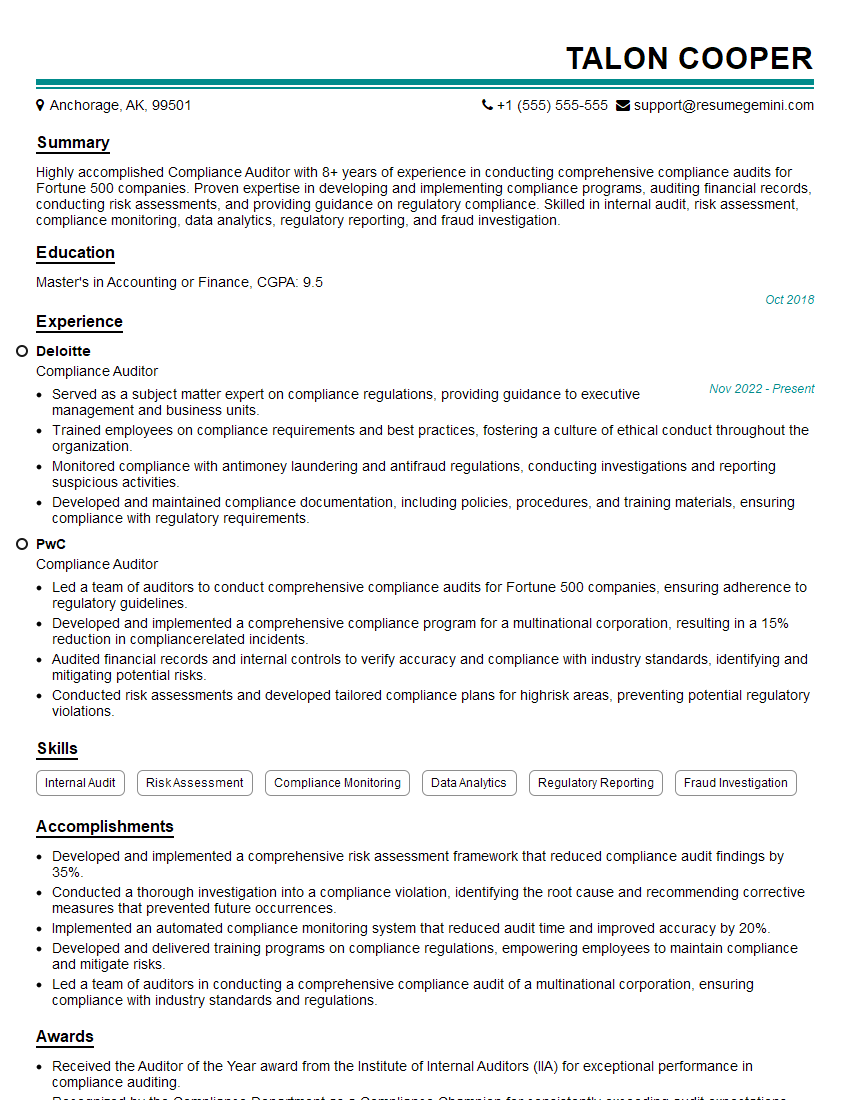
Compliance Auditor Resume Sample
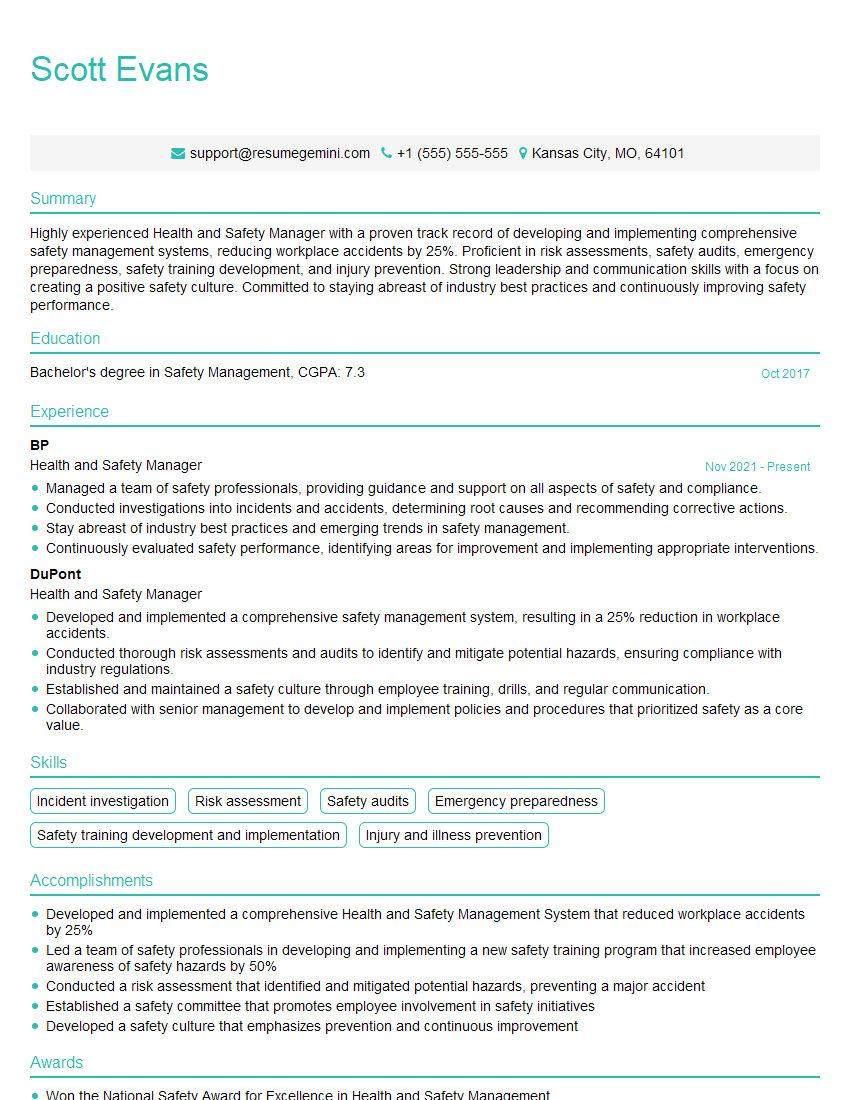
Health and Safety Manager Resume Sample
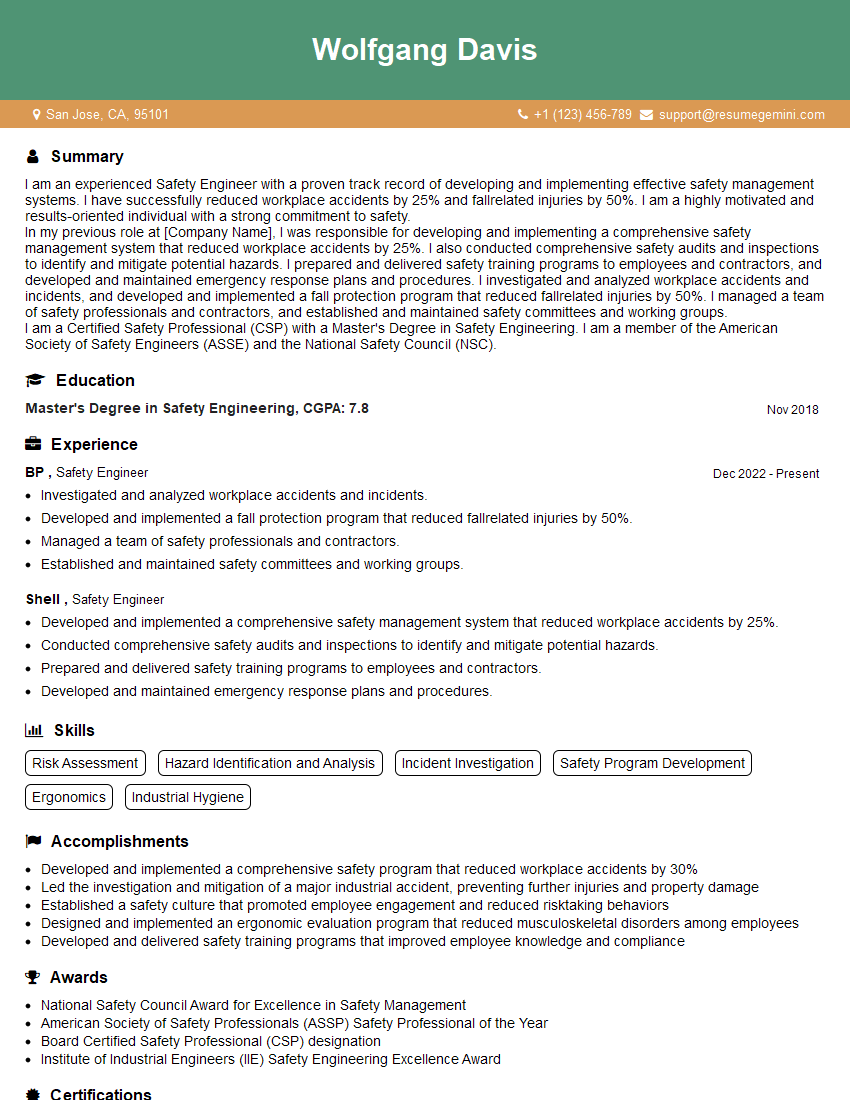
Safety Engineer Resume Sample
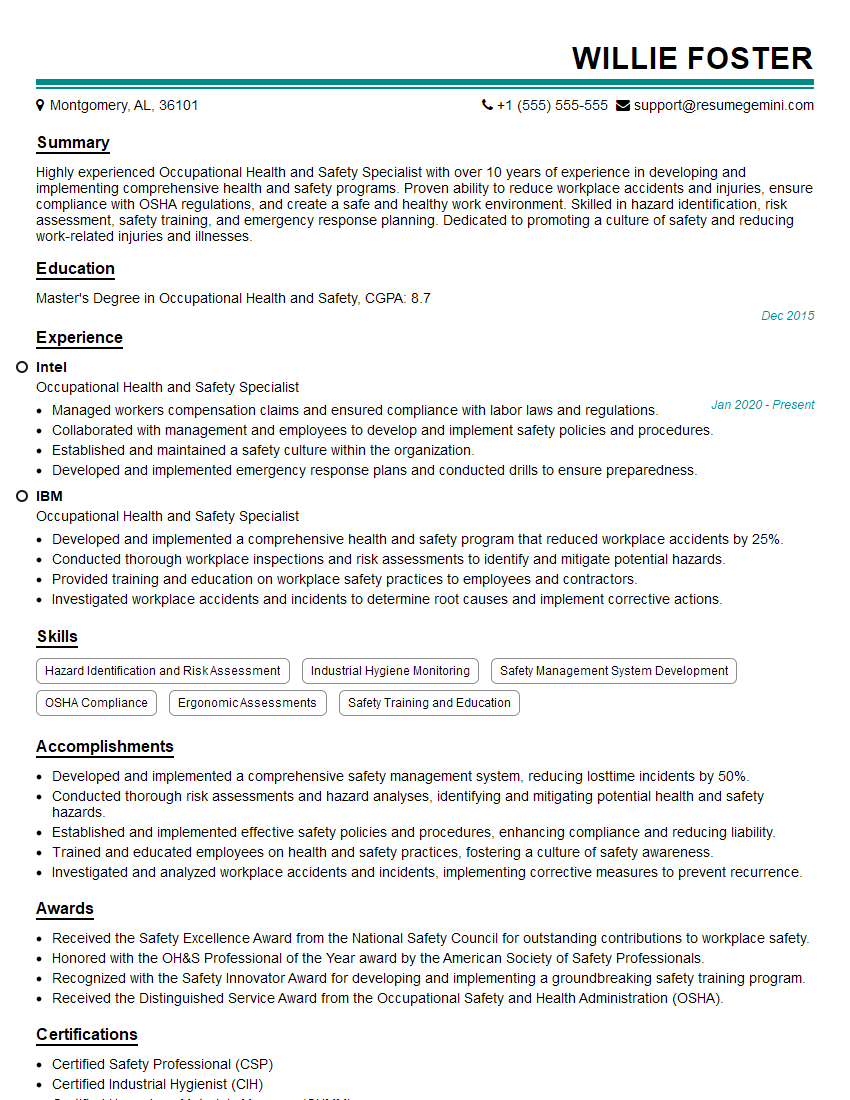
Occupational Health and Safety Specialist Resume Sample
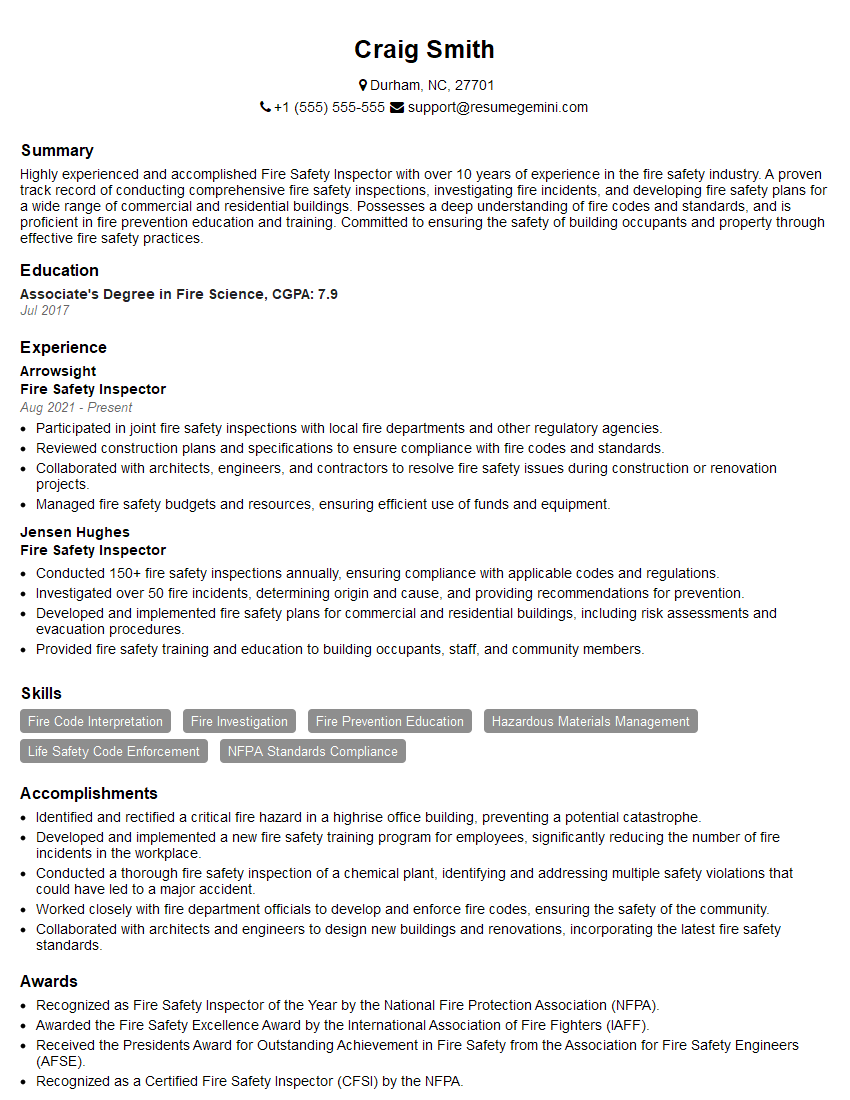
Fire Safety Inspector Resume Sample
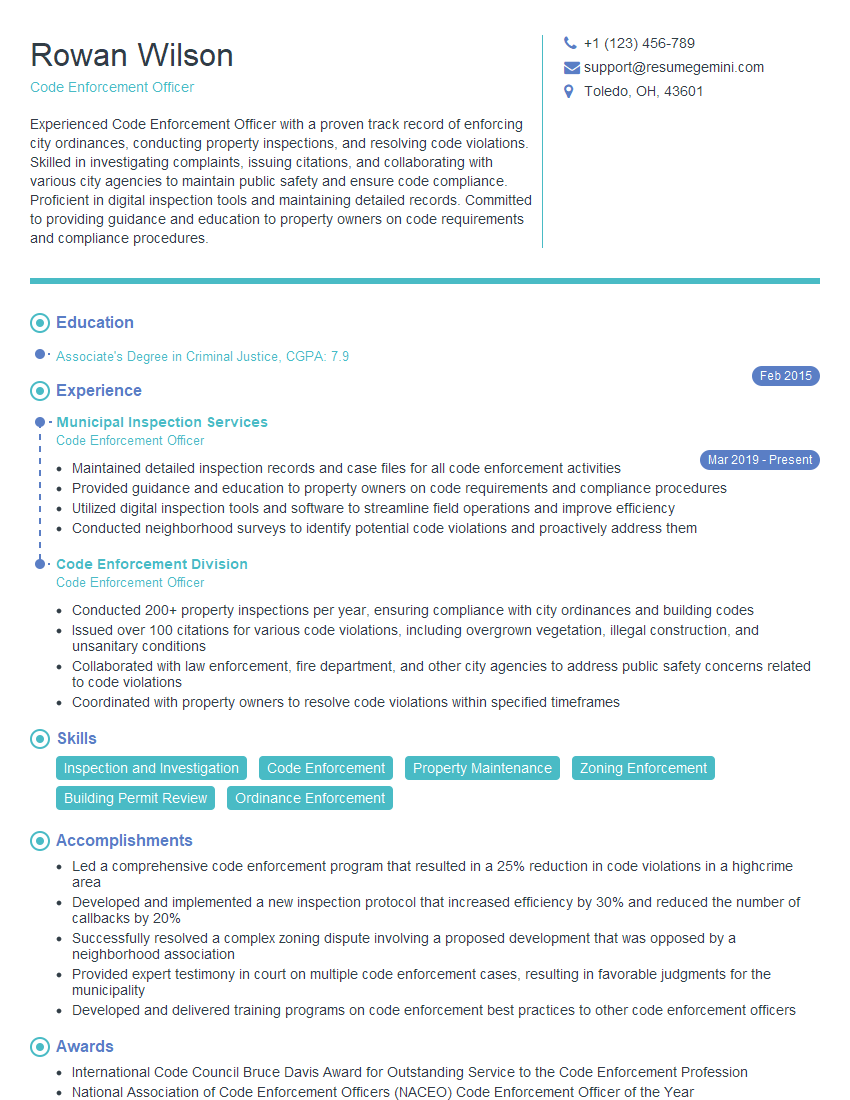
Code Enforcement Officer Resume Sample
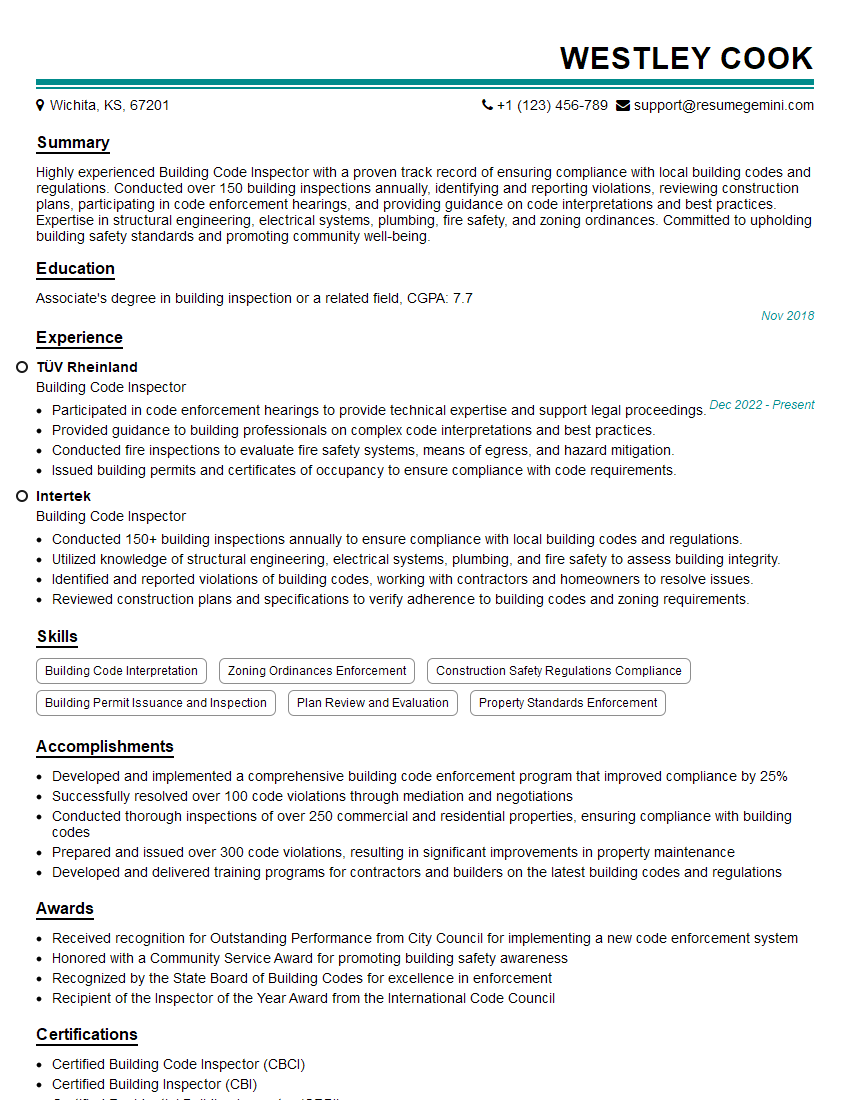
Building Code Inspector Resume Sample
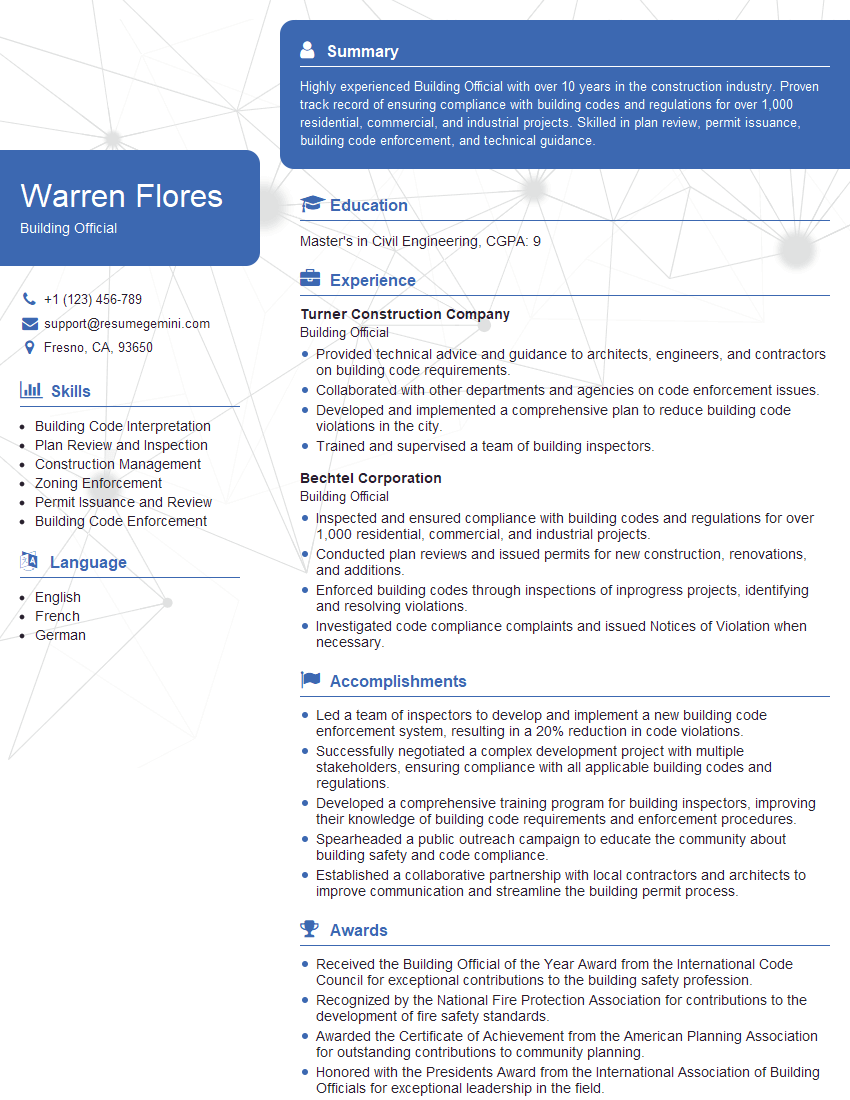
Building Official Resume Sample
Explore more articles
Users Rating of Our Blogs
Share Your Experience
We value your feedback! Please rate our content and share your thoughts (optional).
What Readers Say About Our Blog
To the interviewgemini.com Webmaster.
Very helpful and content specific questions to help prepare me for my interview!
Thank you
To the interviewgemini.com Webmaster.
This was kind of a unique content I found around the specialized skills. Very helpful questions and good detailed answers.
Very Helpful blog, thank you Interviewgemini team.