Cracking a skill-specific interview, like one for Proficient in Neuropsychological Test Batteries (e.g., WISC-V, WAIS-IV, NEPSY-II), requires understanding the nuances of the role. In this blog, we present the questions you’re most likely to encounter, along with insights into how to answer them effectively. Let’s ensure you’re ready to make a strong impression.
Questions Asked in Proficient in Neuropsychological Test Batteries (e.g., WISC-V, WAIS-IV, NEPSY-II) Interview
Q 1. Describe the key differences between the WISC-V and WAIS-IV.
The WISC-V (Wechsler Intelligence Scale for Children – Fifth Edition) and WAIS-IV (Wechsler Adult Intelligence Scale – Fourth Edition) are both widely used intelligence tests, but they assess different age groups. The WISC-V is designed for children aged 6 to 16 years, while the WAIS-IV is for individuals aged 16 to 90 years. Beyond the age range, subtle differences exist in the specific subtests and their organization. For example, while both assess verbal comprehension, perceptual reasoning, working memory, and processing speed, the specific tasks within each index may vary. The WISC-V places a greater emphasis on cognitive efficiency and processing speed, reflecting current neuropsychological understanding of these aspects of intelligence. The WAIS-IV, while updated from previous versions, retains some aspects of a more traditional approach. Furthermore, the standardization samples and normative data differ, meaning direct comparisons of scores between the two tests are not always valid. Imagine comparing apples and oranges – while both are fruits, their specific characteristics differ. Similarly, though both assess intelligence, they do so for different age groups, using slightly different metrics.
Q 2. Explain the purpose and interpretation of the NEPSY-II.
The NEPSY-II (NEuropsychological Assessment for Preschoolers, Second Edition) is a comprehensive neuropsychological test battery designed to assess a broad range of neuropsychological functions in children aged 3 to 16 years. Its purpose is to identify developmental delays, learning disabilities, and the effects of neurological conditions on cognitive functioning. Interpretation involves examining the individual’s performance on various subtests across different domains like attention, language, memory, visuospatial abilities, and executive functions. A profile of strengths and weaknesses is created, which aids in generating hypotheses about the underlying cognitive processes. For instance, if a child shows significant difficulties in tasks requiring sustained attention but performs well on other cognitive domains, it suggests a specific attention deficit. The NEPSY-II doesn’t provide a single IQ score like the WISC-V or WAIS-IV; instead, it offers a detailed qualitative analysis to guide interventions and treatment plans. Think of it as a comprehensive neurological checkup for a child’s cognitive system, revealing a detailed picture rather than a single summary score.
Q 3. How would you address inconsistencies between test results and clinical observations?
Inconsistencies between test results and clinical observations require careful consideration. The first step is to thoroughly review the testing procedure to ensure no errors occurred during administration or scoring. Next, explore potential explanations for the discrepancy. This could involve considering the individual’s motivation, anxiety levels during testing, or the presence of situational factors that influenced performance. For example, a child might underperform on a test due to test anxiety, yet display excellent cognitive skills in other settings. It’s also crucial to re-examine clinical observations, clarifying the context and the basis for the observations. Further assessments, such as additional neuropsychological tests or behavioral observations, may be needed to clarify the situation. A collaborative approach involving clinicians, teachers, and family members often provides valuable additional information. Ultimately, the goal is to develop a holistic understanding, integrating test data with other relevant information to create a comprehensive profile.
Q 4. What are the limitations of using only neuropsychological test batteries for diagnosis?
Relying solely on neuropsychological test batteries for diagnosis has significant limitations. These tests provide valuable information about cognitive functions but don’t encompass the full complexity of human behavior. They don’t directly measure personality traits, emotional functioning, social skills, or environmental influences. A diagnosis requires a multifaceted assessment approach that incorporates multiple sources of data, including clinical interviews, behavioral observations, collateral information (from family, teachers, etc.), and consideration of the individual’s cultural and social context. For instance, a low score on a verbal fluency test might indicate a language deficit, but it could also reflect cultural differences in language exposure or anxiety related to test-taking. Thus, a comprehensive approach using neuropsychological tests alongside other qualitative measures is crucial for accurate and holistic diagnoses.
Q 5. Discuss the ethical considerations in administering and interpreting neuropsychological tests.
Ethical considerations in neuropsychological testing are paramount. Confidentiality is crucial; results must be protected and only shared with authorized individuals. Informed consent is essential; individuals (or their legal guardians) must fully understand the purpose, procedures, and implications of testing before participating. Test results should be interpreted and communicated responsibly, avoiding technical jargon and ensuring the individual understands the implications of the findings. Furthermore, psychologists must be aware of their own biases and strive for objectivity in interpretation. Competence is key; only qualified professionals with appropriate training and experience should administer and interpret these tests. Misinterpretation can lead to incorrect diagnoses and interventions. Finally, the potential impact of test results on the individual’s life should be carefully considered, and appropriate support services should be offered.
Q 6. How do you adapt test administration for individuals with diverse cultural backgrounds?
Adapting test administration for individuals with diverse cultural backgrounds requires sensitivity and cultural competence. This may involve using culturally appropriate language and materials. It’s crucial to understand that cultural factors may influence test performance. For instance, unfamiliar test formats or instructions might disadvantage individuals from different cultural backgrounds. Moreover, some cultural groups might have different communication styles or approaches to problem-solving, potentially affecting test scores. Using interpreters when necessary is crucial, but the interpreter needs to be skilled in translating not just the words, but also the cultural nuances involved. It’s also important to consider the cultural context when interpreting results, avoiding biases in the evaluation process and seeking information about the individual’s cultural experiences. A qualified neuropsychologist familiar with cultural diversity will select tests and interpret results considering these potential cultural biases.
Q 7. Explain your understanding of standardization and norming in neuropsychological testing.
Standardization and norming are critical for valid neuropsychological testing. Standardization refers to the consistent administration and scoring of the test. This ensures that all individuals taking the test undergo the same procedures, reducing variability due to variations in administration. Norming involves establishing a baseline of performance against which individual scores are compared. This involves administering the test to a large, representative sample of the population to generate normative data, that is, average scores and ranges of scores for different age groups and demographics. This data is essential for interpreting an individual’s scores meaningfully. A score only becomes meaningful when you can compare it against how others have done. Without standardization and norming, test results would be essentially meaningless, lacking any objective basis for comparison and interpretation. Standardization and norming contribute to the reliability and validity of neuropsychological tests, allowing for more accurate interpretations and effective decision-making.
Q 8. Describe your approach to scoring and interpreting subtests within the WISC-V.
My approach to scoring and interpreting the WISC-V involves a multi-step process that goes beyond simply calculating raw scores. First, I meticulously score each subtest according to the WISC-V manual’s standardized procedures. This ensures accuracy and adherence to established norms. Then, I convert raw scores into scaled scores, which allow for comparison across different subtests and age groups. The next crucial step is calculating index scores: Verbal Comprehension, Visual Spatial, Fluid Reasoning, Working Memory, and Processing Speed. These indices provide a broader understanding of the child’s cognitive strengths and weaknesses. Finally, I generate a Full Scale IQ (FSIQ), which represents a general measure of cognitive ability. However, I emphasize that the FSIQ is only one piece of the puzzle. I carefully analyze the profile of index scores and individual subtest scores to understand the specific cognitive strengths and weaknesses. For instance, a child might have a strong Verbal Comprehension index but a weaker Visual Spatial index, suggesting a potential learning style preference or area needing support. I then integrate these findings with other clinical information, such as the child’s developmental history, academic performance, and observations during testing, to paint a comprehensive picture of their cognitive functioning.
For example, a child with a high Verbal Comprehension Index and a low Processing Speed Index might be identified as a child who comprehends information well but struggles with quick response times, which could influence their performance in timed academic assessments. This nuanced interpretation goes far beyond just presenting numbers; it helps create targeted interventions and recommendations.
Q 9. How do you identify and address potential test-taking biases during assessment?
Identifying and addressing test-taking biases is crucial for accurate neuropsychological assessment. I utilize several strategies to mitigate bias. First, I establish rapport with the examinee, creating a comfortable and non-threatening testing environment. This helps reduce anxiety, which can significantly impact performance. I carefully observe the examinee’s behavior throughout the testing process, noting any signs of fatigue, inattention, or unusual responses. For example, a child might exhibit frustration with a particular task, or an adult might display signs of depression or anxiety that influence their effort. If I observe such biases, I might adjust the testing schedule, provide brief encouragement (while avoiding leading questions), or note the potential impact of the bias in my report. I also consider cultural and linguistic backgrounds. If a language barrier exists, I may utilize interpreters or use culturally sensitive materials. I select appropriate tests considering the examinee’s background and experience. For instance, cultural differences in exposure to specific types of tasks could influence performance. This ensures the test accurately reflects cognitive abilities rather than cultural familiarity.
Moreover, I always refer to the test manuals for appropriate administration and scoring procedures, ensuring that any deviation from standard procedures is clearly documented and considered in my interpretation.
Q 10. Explain the concept of cognitive reserve and its role in neuropsychological interpretation.
Cognitive reserve refers to the brain’s resilience and ability to cope with injury or disease. It’s essentially the brain’s buffer against cognitive decline. Think of it like this: two people might experience similar levels of brain damage, but one might show minimal cognitive impairment while the other demonstrates significant deficits. The difference often lies in their cognitive reserve. Factors contributing to higher cognitive reserve include higher education levels, complex occupations, engaging hobbies (like playing musical instruments or learning new languages), and a stimulating social environment. These activities promote neuroplasticity, strengthening neural connections and building a more robust cognitive network. In neuropsychological interpretation, cognitive reserve is crucial because it helps explain the variability in cognitive outcomes among individuals with similar levels of brain pathology. For instance, an individual with a high cognitive reserve might compensate for brain damage more effectively, exhibiting fewer cognitive deficits compared to someone with lower cognitive reserve despite having comparable levels of brain injury. Therefore, it’s essential to consider cognitive reserve alongside other factors when interpreting neuropsychological test results to get a comprehensive understanding of the individual’s cognitive abilities and functional capacity.
Q 11. Describe a situation where you had to explain complex neuropsychological findings to a patient or family.
I once had to explain complex neuropsychological findings to a family following their loved one’s stroke. The patient demonstrated significant impairments in memory, attention, and executive functions as revealed by the WAIS-IV and other tests. Instead of diving straight into technical terms, I began by outlining the overall impact of the stroke on the brain. I used simple analogies, comparing the brain to a computer with some damaged components. I explained that some functions (like memory) were significantly affected while others were relatively intact. I presented the findings in a way that was easily understood, using visual aids like graphs and charts to illustrate the patient’s performance on specific cognitive domains. I avoided medical jargon, focusing on the practical implications of the deficits: potential challenges in daily living tasks (like remembering appointments or managing finances), and the need for rehabilitation and support. I also emphasized the patient’s strengths and areas of preserved cognitive function to maintain a sense of hope and optimism. The conversation was sensitive to their emotional state, providing space for their questions and concerns. It was a collaborative process, aimed at empowering the family to participate actively in the patient’s care and rehabilitation.
Q 12. How do you differentiate between cognitive deficits due to neurological damage versus psychiatric disorders?
Differentiating between cognitive deficits due to neurological damage and those stemming from psychiatric disorders can be challenging, requiring a comprehensive assessment. Neurological damage often results in focal cognitive deficits, impacting specific cognitive domains. For example, a stroke affecting a specific brain region might lead to selective impairments in language or visuospatial abilities. In contrast, psychiatric disorders often present with more diffuse cognitive dysfunction affecting multiple cognitive domains. For example, depression can lead to difficulties in attention, memory, and executive functions, whereas the cognitive impact of schizophrenia is often more complex and heterogeneous. Furthermore, the pattern of cognitive impairment often differs. Neurological disorders might show a stepwise pattern of impairment, while psychiatric disorders may involve more fluctuating cognitive states. A detailed clinical history, including medical records and interviews with the patient and their family, is essential. Neuropsychological testing is also vital. Certain patterns of test results can strongly suggest neurological damage versus a psychiatric disorder. For instance, a significant discrepancy between performance on verbal and visual-spatial tasks can indicate a focal neurological lesion, whereas a more uniform decrease across multiple cognitive domains may suggest a psychiatric disorder. However, it’s crucial to recognize that neurological damage and psychiatric disorders can co-occur, making the differential diagnosis even more complex. This highlights the importance of integrating information from multiple sources, including neuroimaging studies when available, to reach an accurate diagnosis.
Q 13. What specific indices on the WAIS-IV are most sensitive to traumatic brain injury?
On the WAIS-IV, several indices are particularly sensitive to traumatic brain injury (TBI). The Processing Speed index frequently shows significant impairment following TBI, reflecting difficulties in quickly and efficiently processing information. This is often manifested on subtests like Symbol Search and Coding. The Working Memory index also tends to be affected due to TBI’s disruption of the brain’s capacity to hold and manipulate information in mind. Digit Span and Arithmetic subtests are particularly informative in this regard. Impairments in the Perceptual Reasoning index are also common after TBI, reflecting difficulties with visual-spatial processing, problem-solving and abstract thinking, as seen in subtests like Block Design, Matrix Reasoning, and Visual Puzzles. The overall Full Scale IQ (FSIQ) score can be affected, but its sensitivity varies depending on the severity and location of the TBI. It is important to remember that the pattern of impairment is highly variable after TBI. A comprehensive analysis of the overall profile of scores, not simply isolated low scores, is crucial for drawing meaningful conclusions. Careful examination of the discrepancy between different indices can be very informative. For example, a significant discrepancy between Verbal Comprehension and Perceptual Reasoning may point toward specific types of injury and aid in localization.
Q 14. What are some common causes of false positives or false negatives in neuropsychological testing?
False positives (incorrectly identifying impairment) and false negatives (incorrectly identifying no impairment) in neuropsychological testing can arise from various factors. False positives might result from factors like:
- Suboptimal test performance due to non-cognitive factors: Anxiety, fatigue, medication side effects, pain, or inadequate effort can lead to underperformance, mimicking cognitive impairment.
- Cultural or linguistic biases: Unfamiliarity with test materials or cultural differences in problem-solving approaches can negatively influence scores.
- Medical conditions affecting performance: Undiagnosed medical conditions, such as sleep apnea or hormonal imbalances, can impact cognitive performance.
- Cognitive reserve: Individuals with high cognitive reserve might compensate for subtle cognitive deficits, resulting in scores within the normal range despite underlying impairment.
- Mild or focal impairment: Some mild cognitive deficits might not be detected by broad neuropsychological measures.
- Ceiling effects: If a test is too easy for the examinee, their true cognitive abilities might not be fully revealed.
- Test-retest variability: Performance can fluctuate across test occasions due to several factors.
Q 15. Describe your experience using neuropsychological software for scoring and reporting.
My experience with neuropsychological software for scoring and reporting is extensive. I’m proficient in using several commercially available programs, including but not limited to, those that accompany the WISC-V, WAIS-IV, and NEPSY-II. These programs automate the scoring process, reducing the risk of human error and significantly speeding up the turnaround time for report generation. For instance, I utilize the software’s raw score-to-scaled score conversion features, generating comprehensive profiles that visually represent the client’s performance across various cognitive domains. Beyond basic scoring, I leverage the software’s advanced features to create detailed reports including percentile ranks, standard scores, and interpretive statements. These reports provide a clear and concise summary of the client’s strengths and weaknesses, crucial for informing clinical decision-making.
Furthermore, I’m adept at using the software’s features for customizing reports to meet the specific needs of different referral sources. This could involve adapting the language used, highlighting specific findings relevant to a particular question, or adding supplementary interpretive information based on my clinical judgment and expertise.
Career Expert Tips:
- Ace those interviews! Prepare effectively by reviewing the Top 50 Most Common Interview Questions on ResumeGemini.
- Navigate your job search with confidence! Explore a wide range of Career Tips on ResumeGemini. Learn about common challenges and recommendations to overcome them.
- Craft the perfect resume! Master the Art of Resume Writing with ResumeGemini’s guide. Showcase your unique qualifications and achievements effectively.
- Don’t miss out on holiday savings! Build your dream resume with ResumeGemini’s ATS optimized templates.
Q 16. How do you ensure the confidentiality and security of neuropsychological test data?
Confidentiality and security of neuropsychological test data are paramount. I adhere to strict ethical guidelines and legal regulations, such as HIPAA (Health Insurance Portability and Accountability Act) and state-specific laws, regarding the handling of protected health information (PHI). This involves securing all testing materials in locked cabinets when not in use and using password-protected electronic storage for all client data.
All electronic files are encrypted and stored on secure servers, with access strictly limited to authorized personnel. Paper records are stored in locked file cabinets, appropriately labeled and secured in accordance with our organization’s policy. Furthermore, I always de-identify data whenever possible when discussing cases in supervision or for research purposes, maintaining client anonymity. I regularly update my knowledge of best practices in data security and confidentiality to ensure compliance with evolving standards.
Q 17. Explain your familiarity with different types of memory testing within the NEPSY-II.
The NEPSY-II offers a comprehensive battery of tests assessing various aspects of memory. My familiarity with these tests is thorough, encompassing both verbal and visual memory domains. For instance, the Auditory Memory subtest assesses verbal working memory and immediate recall through the repetition of digit sequences. The Memory for Faces subtest, on the other hand, explores visual memory and recognition abilities.
Further, the Verbal Memory subtest investigates the ability to learn and recall verbally presented information, while the Visual Memory subtest focuses on the learning and recall of visual stimuli. The Design Copying subtest, while not solely a memory test, taps into visual-spatial memory and visuomotor integration, providing additional insights into potential memory-related deficits. Understanding the nuances of each test and its contribution to the overall memory profile is essential for accurate interpretation.
I carefully analyze both immediate and delayed recall scores for each memory subtest, considering the potential impact of factors such as attention, processing speed, and executive function on performance. The combined interpretation of these measures provides a detailed picture of the client’s memory strengths and weaknesses, guiding appropriate intervention strategies.
Q 18. Describe your understanding of validity and reliability in neuropsychological assessments.
Validity and reliability are cornerstones of any psychometric assessment, including neuropsychological evaluations. Validity refers to the extent to which a test measures what it intends to measure. For example, a test of visual-spatial abilities should accurately reflect a person’s ability to process visual information spatially, not just their general intelligence. Different types of validity exist, including content validity (does the test adequately cover all aspects of the construct?), criterion validity (does the test correlate with other measures of the same construct?), and construct validity (does the test truly measure the theoretical construct?).
Reliability, on the other hand, refers to the consistency of the test’s measurements. A reliable test will yield similar results if administered repeatedly to the same individual under similar conditions. Different types of reliability include test-retest reliability (consistency over time), internal consistency (consistency of items within the test), and inter-rater reliability (agreement between different scorers). I always consider the validity and reliability evidence when interpreting neuropsychological test results, bearing in mind that test scores are only one piece of the clinical puzzle.
For example, if a test has low reliability, it means that the scores obtained might be influenced by factors other than the cognitive abilities being assessed, undermining the confidence in the interpretation. Similarly, if a test lacks validity, the interpretation of the test scores may not accurately reflect the construct of interest.
Q 19. How do you interpret the processing speed index on the WISC-V?
The Processing Speed Index (PSI) on the WISC-V is a composite score reflecting the efficiency and speed at which an individual can process information. It’s derived from subtests like Coding and Symbol Search. A low PSI may indicate difficulties with rapid information processing, which can affect various cognitive functions, including learning, academic performance, and daily living skills. A high PSI, conversely, suggests efficient information processing.
I interpret the PSI in the context of the individual’s overall cognitive profile. For example, a low PSI might be overshadowed by strong performance on other cognitive indices, suggesting specific processing speed deficits rather than a global cognitive impairment. Conversely, a low PSI combined with other low scores on indices such as Verbal Comprehension or Perceptual Reasoning, might indicate a more generalized cognitive impairment. I also consider the child’s age, developmental history, and any potential contributing factors (like ADHD or visual impairments) when interpreting the PSI. I never interpret the PSI in isolation but consider its relation to other scores within the WISC-V to obtain a comprehensive understanding of the child’s cognitive strengths and weaknesses.
Q 20. Explain the significance of verbal and performance IQ scores in the WAIS-IV.
The WAIS-IV provides both Verbal IQ (VIQ) and Performance IQ (PIQ) scores, representing different aspects of cognitive functioning. VIQ assesses abilities related to verbal comprehension, language processing, and knowledge acquisition, drawing from subtests like Vocabulary, Similarities, and Information. PIQ reflects abilities related to visual-spatial processing, perceptual organization, and nonverbal reasoning, as measured by subtests like Block Design, Matrix Reasoning, and Visual Puzzles.
The significance of these scores lies in their potential to reveal specific cognitive strengths and weaknesses. A significant discrepancy between VIQ and PIQ can indicate specific learning disabilities or neurological conditions affecting particular cognitive domains. For example, a significantly lower PIQ than VIQ might suggest a visuospatial processing deficit, while the opposite could indicate a weakness in verbal reasoning. It’s crucial to consider the full profile, including index scores and subtest performance, rather than solely relying on VIQ and PIQ for interpretation. For example, a low VIQ combined with low scores on verbal comprehension subtests might point towards a language processing disorder, while a low PIQ with weaknesses in visual-spatial tasks might suggest difficulties with visual-spatial organization.
In clinical practice, understanding the interplay between VIQ and PIQ is essential for developing targeted interventions and informing recommendations for educational support or rehabilitation.
Q 21. How do you integrate neuropsychological findings with other clinical information?
Integrating neuropsychological findings with other clinical information is crucial for a comprehensive understanding of the client’s condition. I don’t treat the neuropsychological assessment as an isolated entity. Instead, I actively incorporate information from various sources, including medical history, psychiatric evaluations, educational records, and collateral information from family members or teachers. This holistic approach enhances the accuracy and clinical utility of the assessment.
For example, if a client presents with memory difficulties, I would integrate the neuropsychological findings (e.g., specific memory deficits identified in the NEPSY-II) with information on their medical history (e.g., history of head trauma or substance abuse) and current medications. Similarly, if a child exhibits behavioral difficulties in school, I would combine the neuropsychological findings (e.g., attention and executive function deficits) with information from the teacher regarding classroom behavior, academic performance, and learning style. This comprehensive approach allows for a nuanced interpretation and minimizes the risk of misdiagnosis or incomplete understanding.
This integrated approach leads to more effective treatment planning, tailored interventions, and a clearer understanding of the patient’s overall functioning within their personal and social context.
Q 22. Describe your experience with different types of attention testing (e.g., sustained attention, selective attention).
Assessing attention involves understanding its different facets. Sustained attention refers to the ability to maintain focus on a task over time, while selective attention is the capacity to concentrate on a specific stimulus while ignoring distractions. My experience encompasses using various tests to evaluate both. For instance, the Continuous Performance Test (CPT) within the NEPSY-II is a gold standard for measuring sustained attention, assessing the ability to respond to target stimuli while inhibiting responses to non-targets. This helps identify inattentiveness, which is crucial in conditions like ADHD. Conversely, the Test of Variables of Attention (TOVA) is another excellent tool. To assess selective attention, I often utilize tasks like the Stroop Test, where individuals must name the color of ink used to print a word, while the word itself names a different color. This requires inhibiting the automatic response of reading the word and focusing on the color, highlighting selective attention abilities.
In practice, I’ve seen how a patient with a TBI might struggle significantly on sustained attention tasks, showing increased errors and response time variability over time on the CPT. Conversely, a patient with ADHD might exhibit more difficulties with selective attention, struggling to filter out irrelevant information on the Stroop Test or similar tasks. Understanding the nuances of these different attentional processes allows me to tailor my assessments and interpretations to the specific needs of each patient.
Q 23. Explain your familiarity with executive function measures in the NEPSY-II and their interpretation.
The NEPSY-II offers a comprehensive battery for assessing executive functions, including inhibition, shifting, and working memory. The Inhibition subtests, like the Inhibition/Cancellation, assess the ability to suppress impulsive responses. The Shifting subtest, like the Design Fluency, evaluates cognitive flexibility, or the ability to switch between tasks or mental sets. The Working Memory subtests, such as Auditory Memory and Visual Memory, assess the ability to hold information in mind and manipulate it. Interpretation involves comparing a patient’s performance on these subtests to normative data, considering age and educational level. A significant discrepancy between subtests, such as strong performance in working memory but weakness in inhibition, can suggest specific patterns of executive dysfunction.
For example, a child diagnosed with ADHD might show impairments in both inhibition (difficulty cancelling out certain stimuli) and shifting (trouble switching between tasks during the design fluency), while a patient with frontal lobe damage might show more pronounced deficits across the board, impacting all aspects of executive function. It’s crucial to consider the interaction between these different executive functions to build a comprehensive profile of the patient’s cognitive strengths and weaknesses.
Q 24. How would you choose the appropriate neuropsychological test battery for a specific patient presentation?
Choosing the appropriate neuropsychological test battery depends on several factors, including the patient’s age, presenting complaint, referral question, and suspected neurological condition. The process involves a collaborative approach.
- Referral Question: Clearly define the referral question. What specific cognitive abilities need to be evaluated? (e.g., memory, attention, executive functions, language)
- Patient History: A comprehensive review of medical, educational, and social history, alongside behavioral observations, will significantly influence test selection.
- Age and Education: Tests must be appropriate for the patient’s age and educational attainment.
- Suspected Condition: If a specific condition (e.g., TBI, dementia) is suspected, the battery can be tailored to focus on relevant cognitive domains.
- Time Constraints: Available testing time is often a critical factor.
For example, a patient with suspected mild cognitive impairment would need a different battery than a child suspected of having ADHD. The former might require comprehensive memory testing (e.g., WMS-IV), while the latter might involve a more focused assessment of attention and executive functions (e.g., NEPSY-II).
Q 25. Describe your experience working with patients with specific neurological conditions (e.g., ADHD, TBI, stroke).
My experience encompasses working with diverse patient populations experiencing neurological conditions.
- ADHD: I’ve extensively used tests like the NEPSY-II and WISC-V to assess attention, executive functions, and processing speed in children and adolescents with ADHD, helping to differentiate between ADHD subtypes and guide treatment planning.
- TBI: With TBI patients, my assessments often involve comprehensive batteries evaluating multiple cognitive domains, including attention, memory, executive functions, and processing speed (using tests like the WAIS-IV, WMS-IV, and NEPSY-II), to determine the extent and nature of cognitive deficits and track recovery.
- Stroke: Following a stroke, I assess cognitive impairments using specific tests tailored to the affected brain regions. This may involve tests focusing on language (e.g., Boston Naming Test), visuospatial skills, or memory. The goal is to identify areas of impairment and monitor recovery or the potential for rehabilitation.
Each condition presents a unique pattern of cognitive impairments. Understanding these patterns allows me to interpret test results accurately and inform treatment recommendations. For instance, while both TBI and stroke might impact memory, the specific type of memory impairment (e.g., verbal vs. visual) and the pattern of other cognitive deficits vary considerably, guiding the selection of therapeutic interventions.
Q 26. What are some common sources of error in neuropsychological assessment, and how can they be minimized?
Several sources can introduce error into neuropsychological assessment. Minimizing these errors is crucial for accurate interpretations.
- Patient Factors: Factors like medication, fatigue, anxiety, malingering, or low motivation can significantly impact performance. Addressing these factors through careful history-taking, observation, and utilizing validity indices is essential.
- Test Administration: Inconsistent administration, unclear instructions, or examiner bias can affect the validity of results. Strict adherence to standardized procedures and maintaining objectivity are paramount.
- Test Interpretation: Incorrect interpretation of scores, failing to consider patient history or other relevant information, or overreliance on single test scores can lead to inaccurate conclusions. A thorough understanding of the tests’ limitations and a holistic approach to interpretation are critical.
Minimizing these errors involves employing multiple assessment methods, using validity scales where available, conducting detailed interviews, incorporating collateral information, and critically evaluating all findings before reaching conclusions. For example, using multiple measures of memory rather than relying solely on one test provides a more robust assessment and minimizes the impact of a single ‘bad day’ or specific test weaknesses.
Q 27. How would you use neuropsychological test results to develop and monitor treatment plans?
Neuropsychological test results provide crucial information for developing and monitoring treatment plans. They help identify cognitive strengths and weaknesses, guiding interventions to target specific deficits. The data informs the type of therapy, its intensity, and the expected outcomes. For example, if a patient displays significant working memory impairments post-TBI, the treatment might involve cognitive rehabilitation focusing on strategies to improve working memory, like chunking information or using external memory aids.
Monitoring involves reassessing the patient at intervals to track progress and adapt the treatment plan as needed. This iterative process ensures the therapy remains relevant and effective. For example, if a patient’s performance on memory tests is not improving after a few months, the therapist may need to adjust the approach, possibly introducing new strategies or intensifying the therapy.
Q 28. Describe your understanding of the impact of medication on neuropsychological test performance.
Medication can significantly impact neuropsychological test performance. Some medications can enhance cognitive functions, while others can impair them, producing effects that can mimic neurological conditions. This makes it essential to understand the patient’s medication regimen and carefully consider these effects during interpretation.
Stimulants, for example, might improve attention and focus but could also increase impulsivity or anxiety, influencing test scores. Sedatives, on the other hand, can impair cognitive performance across several domains. Antidepressants may also affect cognitive processing speed, memory, and executive function in some individuals. Therefore, complete medication information is essential. If possible, I would attempt to test when the patient’s medication levels are stable to improve accuracy. Any changes in medication dosage should be documented as potential influencing factors on test performance when interpreting results.
Key Topics to Learn for Proficient in Neuropsychological Test Batteries (e.g., WISC-V, WAIS-IV, NEPSY-II) Interview
- Test Administration & Scoring: Mastering the precise procedures for administering each test, including standardized instructions and scoring protocols. Understand the nuances of scoring discrepancies and how to address them.
- Interpretation of Subtest Scores: Go beyond raw scores. Learn to interpret subtest patterns, identify strengths and weaknesses, and integrate findings across different test batteries. Understand the theoretical underpinnings of each subtest.
- Diagnostic Application: Practice applying your knowledge to hypothetical case studies. Learn to differentiate between various neurological and cognitive disorders based on test results. Develop your ability to integrate test findings with clinical observations and other assessment data.
- Ethical Considerations: Understand the ethical implications of neuropsychological testing, including confidentiality, informed consent, and cultural sensitivity. Be prepared to discuss these aspects in an interview setting.
- Strengths and Limitations of Each Battery: Critically analyze the strengths and weaknesses of the WISC-V, WAIS-IV, and NEPSY-II. Be able to explain when each battery is most appropriate to use based on the client’s age and referral question.
- Report Writing: Practice writing clear, concise, and clinically relevant reports summarizing findings, interpretations, and recommendations. Be prepared to discuss your report writing style and approach.
- Differential Diagnosis: Sharpen your skills in differentiating between various cognitive disorders and neurological conditions based on neuropsychological test findings. Develop a systematic approach to analyzing profiles.
Next Steps
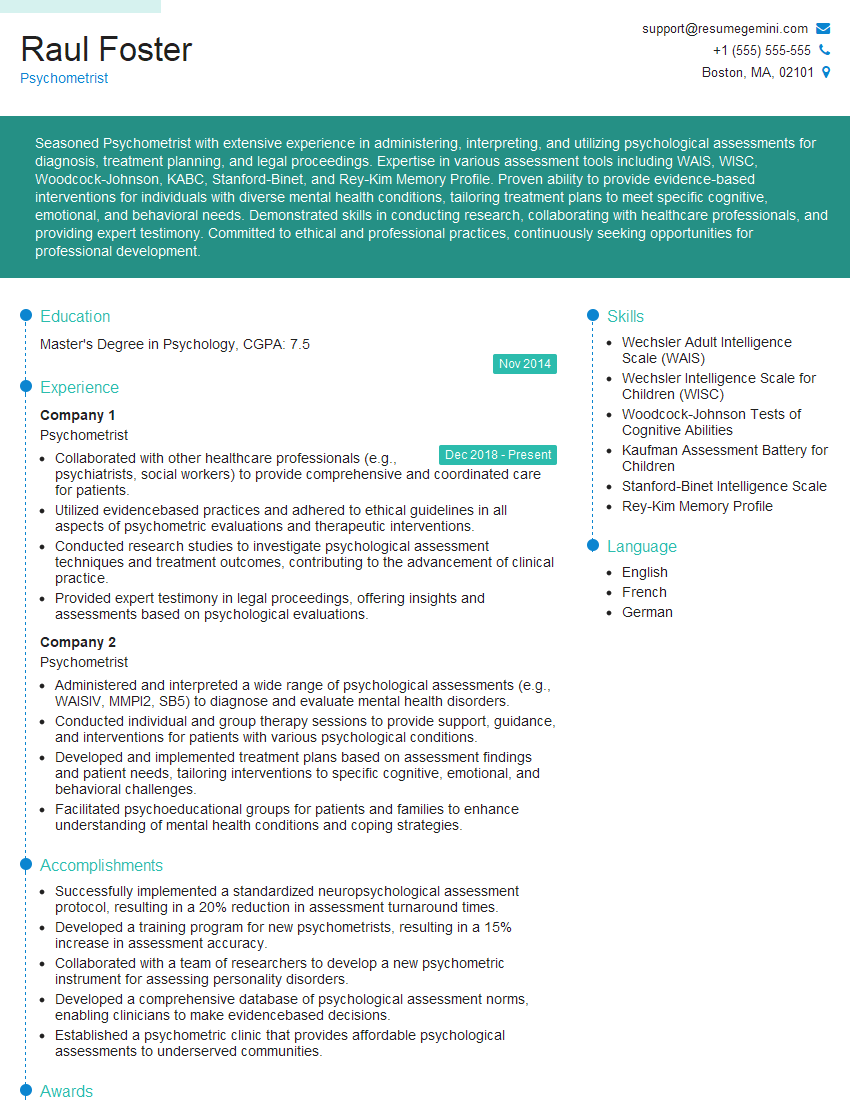
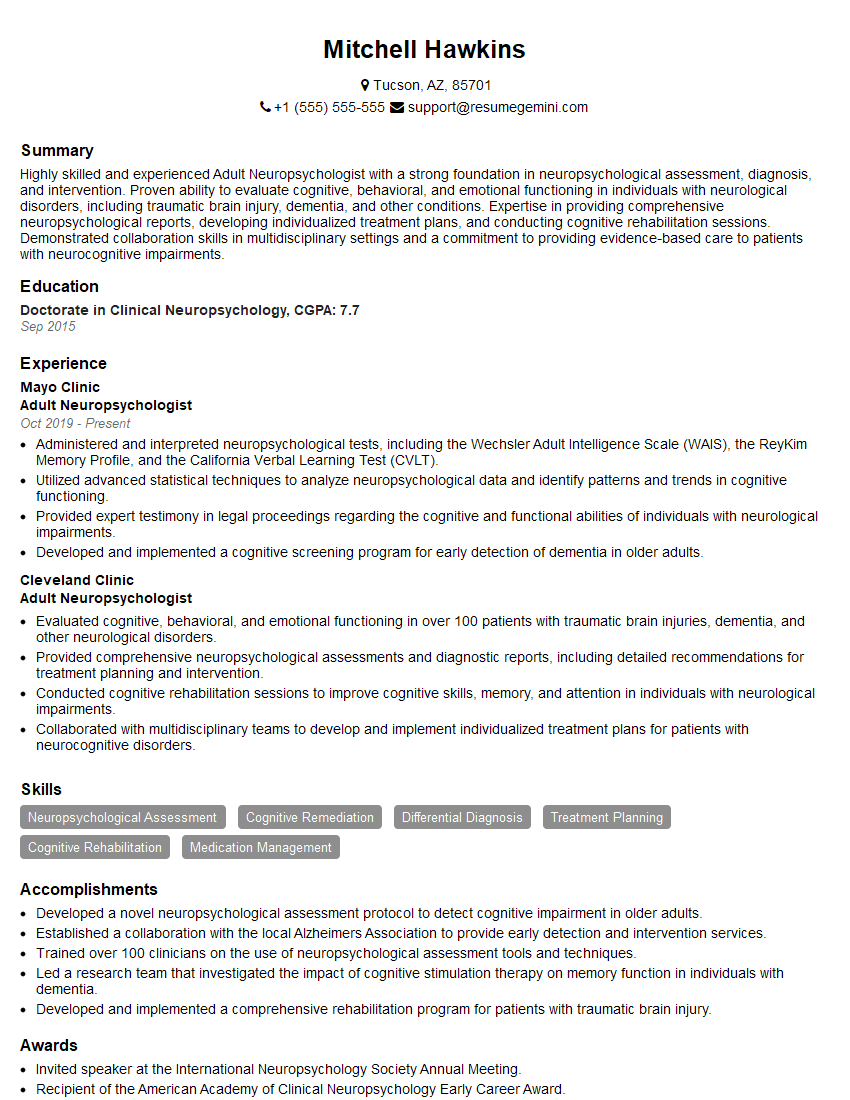
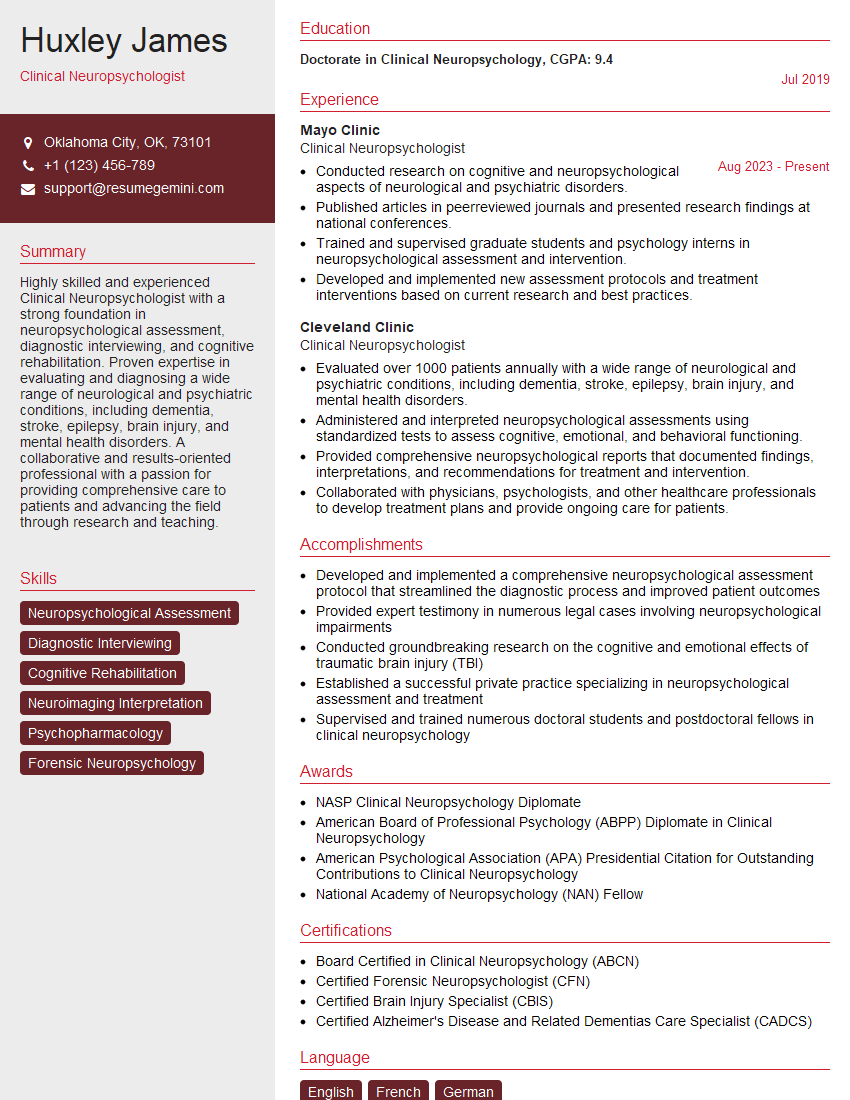
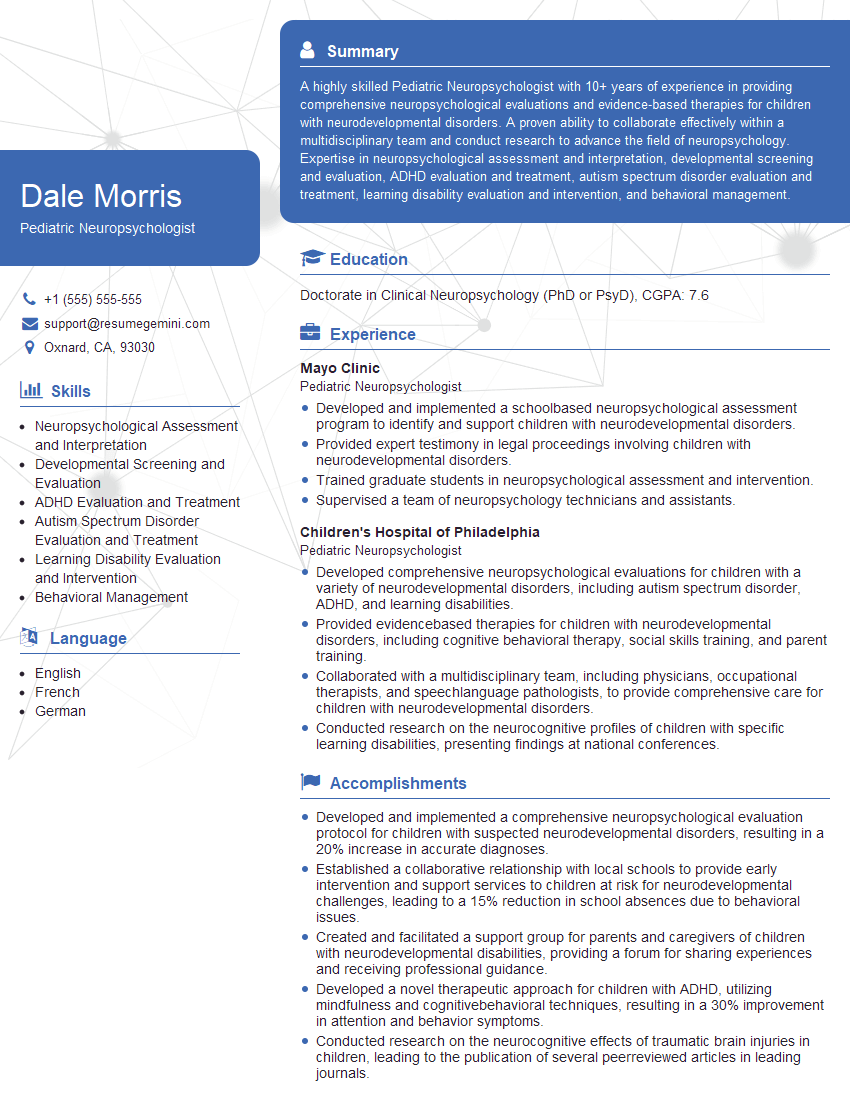
Mastering neuropsychological test batteries like the WISC-V, WAIS-IV, and NEPSY-II is crucial for career advancement in neuropsychology. It demonstrates a high level of expertise and opens doors to specialized roles and higher earning potential. To significantly improve your job prospects, creating a strong, ATS-friendly resume is essential. ResumeGemini is a trusted resource that can help you craft a compelling resume highlighting your skills and experience. We provide examples of resumes tailored to professionals proficient in these neuropsychological test batteries to help you get started. Invest time in building a resume that showcases your expertise and sets you apart from other candidates.
Explore more articles
Users Rating of Our Blogs
Share Your Experience
We value your feedback! Please rate our content and share your thoughts (optional).
What Readers Say About Our Blog
To the interviewgemini.com Webmaster.
Very helpful and content specific questions to help prepare me for my interview!
Thank you
To the interviewgemini.com Webmaster.
This was kind of a unique content I found around the specialized skills. Very helpful questions and good detailed answers.
Very Helpful blog, thank you Interviewgemini team.