Are you ready to stand out in your next interview? Understanding and preparing for Strong understanding of developmental neuroscience and neuroanatomy interview questions is a game-changer. In this blog, we’ve compiled key questions and expert advice to help you showcase your skills with confidence and precision. Let’s get started on your journey to acing the interview.
Questions Asked in Strong understanding of developmental neuroscience and neuroanatomy Interview
Q 1. Describe the stages of brain development from embryonic to adult stages.
Brain development is a remarkable journey, spanning from the embryonic stage to adulthood. It’s a complex process involving cell proliferation, migration, differentiation, and synapse formation, constantly refined through experience.
- Embryonic Stage (0-8 weeks): This period sees the formation of the neural tube, the precursor to the central nervous system. Neurogenesis, the birth of new neurons, begins, and the three primary brain vesicles (prosencephalon, mesencephalon, rhombencephalon) form, laying the groundwork for the forebrain, midbrain, and hindbrain.
- Fetal Stage (8 weeks – birth): Neuronal migration occurs, where neurons travel to their designated locations. Synaptogenesis (formation of synapses) begins, and glial cells, which support neurons, proliferate. Myelination, the formation of the myelin sheath around axons, also starts, significantly enhancing the speed of neural transmission. By birth, the brain has the majority of its neurons, but it is far from mature.
- Infancy and Childhood (birth – adolescence): This phase is characterized by rapid synaptogenesis, synaptic pruning (elimination of unnecessary synapses), and myelination. The brain is highly plastic, meaning it’s easily shaped by experience. Language development, motor skill acquisition, and cognitive abilities surge during this period.
- Adolescence (10-20 years): Synaptic pruning continues, leading to increased efficiency of neural networks. The prefrontal cortex, responsible for executive functions like planning and decision-making, undergoes significant development. This period also involves hormonal changes that influence brain structure and function.
- Adulthood (20+ years): While the rate of neurogenesis slows significantly in adulthood, the brain retains plasticity. Learning and experience continue to shape neural connections, although the brain’s capacity for change decreases compared to earlier stages. Maintaining a healthy lifestyle and engaging in cognitively stimulating activities can help support brain health throughout adulthood.
Understanding these stages is crucial for diagnosing and treating neurological disorders that arise at different developmental points.
Q 2. Explain the process of neuronal migration and its significance.
Neuronal migration is the remarkable journey neurons take from their birthplace in the ventricular zone to their final destinations in the developing brain. It’s a crucial process, ensuring the brain’s intricate structure and function. Imagine it like a city’s construction, where each cell needs to be placed precisely to build a functional community.
The process involves several mechanisms, including:
- Radial migration: Neurons move along radial glial fibers, acting as guides from the ventricular zone to the cortical surface. This is like using scaffolding to reach a specific floor in a building.
- Tangential migration: Neurons move laterally, often in streams, guided by various cues. This is similar to moving across the city from one neighborhood to another.
Errors in neuronal migration can lead to devastating consequences, such as lissencephaly (smooth brain), where the brain’s characteristic folds are absent, resulting in severe intellectual disability and epilepsy.
The significance of neuronal migration lies in its role in establishing the brain’s layered architecture, crucial for proper cortical functioning. Precise placement of neuronal populations is essential for the intricate connections and communication pathways necessary for all brain activities.
Q 3. Discuss the role of neurotrophic factors in neuronal survival and differentiation.
Neurotrophic factors are life-sustaining molecules that promote neuronal survival, growth, and differentiation. Think of them as nourishment and guidance signals for developing neurons, crucial for their journey towards maturity and functional integration.
Key neurotrophic factors include:
- Brain-Derived Neurotrophic Factor (BDNF): Promotes neuronal survival, growth, and differentiation. It’s involved in learning, memory, and synaptic plasticity.
- Nerve Growth Factor (NGF): Essential for the survival and differentiation of sympathetic and sensory neurons.
- Neurotrophin-3 (NT-3): Supports the survival and differentiation of motor neurons and some sensory neurons.
These factors bind to receptors on neuronal membranes, triggering intracellular signaling cascades that promote survival and influence the neuron’s fate (e.g., becoming a pyramidal cell versus an interneuron). Without sufficient neurotrophic support, neurons undergo apoptosis (programmed cell death).
In practical terms, understanding neurotrophic factors is crucial in neurodegenerative diseases such as Alzheimer’s disease, where neuronal loss is a major feature. Strategies aimed at boosting neurotrophic signaling are promising therapeutic avenues.
Q 4. What are critical periods in brain development, and why are they important?
Critical periods are specific time windows during development when the brain is particularly sensitive to environmental influences. Think of them as sensitive phases where the brain is primed to learn specific skills or adapt to environmental pressures.
These periods are characterized by heightened plasticity, allowing for rapid learning and adaptation. However, missing crucial input during these periods can lead to irreversible deficits.
Examples include:
- Language acquisition: Early childhood (0-7 years) is a critical period for language learning. Exposure to language during this time is crucial for proper language development. Learning a second language later in life is much harder.
- Visual development: Early visual experience is vital for proper visual system development. Conditions such as cataracts, if untreated during critical periods, can lead to permanent visual impairment.
The importance of critical periods highlights the need for early intervention in developmental disorders and the importance of providing appropriate sensory stimulation during sensitive developmental phases.
Q 5. Explain the concept of synaptic pruning and its implications for learning and memory.
Synaptic pruning is a natural process where the brain eliminates redundant or weak synaptic connections. It’s like a gardener trimming a bush to shape it into its most efficient form – removing unnecessary branches to ensure the healthiest growth.
This process is essential for refining neural circuits, enhancing the efficiency and speed of neural communication. Weak or infrequently used synapses are eliminated, while stronger, frequently used synapses are strengthened.
The implications for learning and memory are profound:
- Improved efficiency: Pruning removes unnecessary connections, leading to faster and more efficient processing of information.
- Specialization: Pruning allows for the specialization of neural circuits, making the brain more adept at performing specific tasks.
- Adaptation: Synaptic pruning allows the brain to adapt to changing environmental demands, reinforcing useful connections and eliminating less relevant ones.
Disruptions in synaptic pruning have been implicated in various neurological and psychiatric disorders, highlighting its importance in normal brain development and function.
Q 6. How does myelination affect neural transmission speed and efficiency?
Myelination is the process of forming a myelin sheath around axons, the long projections of neurons that transmit electrical signals. Myelin acts as an insulator, increasing the speed and efficiency of neural transmission – think of it like insulation around an electrical wire.
Myelin is produced by oligodendrocytes in the central nervous system and Schwann cells in the peripheral nervous system. The myelin sheath is not continuous; it’s segmented, with gaps called Nodes of Ranvier.
The impact on neural transmission is significant:
- Increased conduction velocity: Myelin allows action potentials (electrical signals) to jump between Nodes of Ranvier, a process called saltatory conduction, dramatically increasing the speed of signal transmission.
- Improved energy efficiency: Myelination reduces energy consumption during signal transmission.
Disorders affecting myelination, such as multiple sclerosis (MS), cause significant neurological impairments due to impaired signal transmission.
Q 7. Describe the major anatomical structures of the brain and their functions.
The brain is a complex organ with numerous interconnected structures. Here are some major anatomical structures and their functions:
- Cerebrum: The largest part of the brain, responsible for higher-level cognitive functions such as language, memory, and reasoning. It’s divided into two hemispheres, each with four lobes:
- Frontal Lobe: Executive functions, planning, decision-making, voluntary movement.
- Parietal Lobe: Sensory processing, spatial awareness, navigation.
- Temporal Lobe: Auditory processing, memory, language comprehension.
- Occipital Lobe: Visual processing.
- Cerebellum: Coordinates movement, balance, and posture.
- Brainstem: Connects the cerebrum and cerebellum to the spinal cord, controlling essential functions like breathing, heart rate, and sleep-wake cycles. It consists of the midbrain, pons, and medulla oblongata.
- Thalamus: A relay station for sensory information, routing it to the appropriate cortical areas.
- Hypothalamus: Regulates homeostasis (body temperature, hunger, thirst, etc.) and the endocrine system.
- Hippocampus: Crucial for learning and memory formation, especially long-term memories.
- Amygdala: Processes emotions, particularly fear and aggression.
These structures interact in intricate ways to generate the complex behaviors and cognitive abilities that characterize human beings. Damage to any of these areas can lead to significant impairments in specific functions.
Q 8. What are the differences between grey matter and white matter?
Grey matter and white matter are two distinct components of the central nervous system, differing primarily in their composition and function. Think of it like a computer: grey matter is the CPU (processing unit), while white matter is the wiring (communication pathways).
- Grey matter is primarily composed of neuronal cell bodies, dendrites, and unmyelinated axons. It’s where the majority of synaptic connections occur, making it the site of information processing. Imagine a bustling city center, full of activity and interactions.
- White matter consists mainly of myelinated axons, which are responsible for transmitting signals between different areas of the brain and spinal cord. Myelin, a fatty substance, acts as insulation, speeding up signal transmission. This is like the high-speed internet cables connecting different parts of the city.
The difference in color comes from the myelin: grey matter appears grey because of the high concentration of neuronal cell bodies, while white matter appears white due to the high concentration of myelin.
Q 9. Explain the organization of the cerebral cortex, including its different lobes.
The cerebral cortex, the outermost layer of the cerebrum, is organized into four distinct lobes, each with specialized functions:
- Frontal Lobe: Located at the front of the brain, it’s crucial for higher-level cognitive functions like planning, decision-making, problem-solving, and voluntary movement. Think of it as the brain’s executive control center. Damage to this area can result in impaired judgment and difficulty with planning.
- Parietal Lobe: Situated behind the frontal lobe, it processes sensory information, including touch, temperature, pain, and spatial awareness. It helps us understand our body’s position in space. Imagine trying to navigate a room in the dark; the parietal lobe is vital for this.
- Temporal Lobe: Located on the sides of the brain, it plays a key role in auditory processing, memory formation, and language comprehension. It’s involved in recognizing faces and objects. Damage can lead to problems with understanding speech or forming new memories.
- Occipital Lobe: Located at the back of the brain, it’s primarily responsible for visual processing. It receives information from the eyes and interprets it to create our visual perception. Imagine trying to read this text; the occipital lobe is crucial for that.
It’s important to note that these lobes work interdependently; they don’t function in isolation. Complex cognitive tasks involve coordinated activity across multiple lobes.
Q 10. Describe the major pathways of the basal ganglia and their roles in motor control.
The basal ganglia are a group of subcortical nuclei that play a critical role in motor control, learning, and habit formation. They don’t directly initiate movement, but rather modulate and refine movements initiated by the cortex.
Major pathways include:
- Direct Pathway: Facilitates movement by exciting the thalamus, which then excites the motor cortex.
- Indirect Pathway: Inhibits movement by inhibiting the thalamus, reducing unwanted movements.
These pathways work in a balanced manner; disruption of this balance can lead to movement disorders like Parkinson’s disease (characterized by difficulty initiating movement) or Huntington’s disease (characterized by excessive, involuntary movements). Think of a finely tuned engine; the basal ganglia ensure the smooth operation of the motor system.
Q 11. Discuss the role of the cerebellum in motor coordination and balance.
The cerebellum, located at the back of the brain, is essential for motor coordination, balance, and posture. It doesn’t initiate movement, but it fine-tunes and refines movements, ensuring they are smooth, accurate, and coordinated. Imagine trying to ride a bicycle; the cerebellum is responsible for maintaining balance and coordinating the movements of your legs and arms.
It receives input from the sensory systems, the motor cortex, and the brainstem, integrating this information to adjust motor commands and ensure precise movements. Damage to the cerebellum can lead to ataxia, characterized by uncoordinated movements, tremors, and difficulties with balance.
Q 12. Explain the limbic system’s involvement in emotion and memory.
The limbic system is a collection of brain structures involved in emotion, motivation, memory, and learning. It’s often referred to as the ’emotional brain’.
- Amygdala: Plays a crucial role in processing emotions, particularly fear and aggression. It’s involved in forming emotional memories.
- Hippocampus: Essential for the formation of new long-term memories, particularly declarative memories (facts and events).
- Hypothalamus: Regulates physiological responses associated with emotions, such as changes in heart rate, blood pressure, and hormone release.
The interaction between these structures allows us to experience and remember emotional events. For example, a traumatic experience might lead to strong emotional responses mediated by the amygdala and long-term memories stored in the hippocampus.
Q 13. What are the major neurotransmitters and their roles in brain function?
Neurotransmitters are chemical messengers that transmit signals between neurons. Different neurotransmitters have distinct roles:
- Glutamate: The primary excitatory neurotransmitter, involved in learning and memory. Think of it as the ‘gas pedal’ of the brain.
- GABA (gamma-aminobutyric acid): The primary inhibitory neurotransmitter, crucial for regulating neuronal activity and preventing overexcitation. It’s like the ‘brake pedal’.
- Dopamine: Involved in reward, motivation, and motor control. Imbalances are implicated in Parkinson’s disease and addiction.
- Serotonin: Plays a role in mood regulation, sleep, and appetite. Imbalances are linked to depression and anxiety.
- Acetylcholine: Involved in learning, memory, and muscle contraction.
The balance of these neurotransmitters is critical for normal brain function. Imbalances can lead to various neurological and psychiatric disorders.
Q 14. How do different imaging techniques (e.g., MRI, fMRI, EEG) contribute to studying brain development?
Different neuroimaging techniques offer unique insights into brain development:
- MRI (Magnetic Resonance Imaging): Provides high-resolution structural images of the brain, allowing researchers to study brain anatomy, including the size and shape of different brain regions. This is crucial for observing changes in brain structure during development.
- fMRI (functional Magnetic Resonance Imaging): Measures brain activity by detecting changes in blood flow. This allows researchers to study brain function during cognitive tasks and observe how different brain regions interact during development. For example, tracking language development by observing activity in Broca’s and Wernicke’s areas.
- EEG (Electroencephalography): Records electrical activity in the brain using electrodes placed on the scalp. It’s useful for studying brain waves and identifying abnormalities in brain activity, such as seizures. This is helpful for tracking changes in brain wave patterns during sleep and development.
By combining these techniques, researchers can gain a comprehensive understanding of brain development, identifying structural and functional changes that occur throughout life.
Q 15. Describe a common neurodevelopmental disorder, its symptoms, and potential causes.
Autism Spectrum Disorder (ASD) is a common neurodevelopmental disorder characterized by persistent difficulties in social communication and interaction, and restricted, repetitive patterns of behavior, interests, or activities. Symptoms can vary widely in severity and presentation, ranging from mild social awkwardness to severe impairments in language and social interaction. Some individuals with ASD may exhibit exceptional abilities in specific areas, such as memory or art.
The causes of ASD are complex and not fully understood, but research suggests a strong interplay between genetic and environmental factors. Genetic factors contribute significantly, with numerous genes implicated, although no single gene causes ASD. Environmental factors during pregnancy, such as exposure to certain toxins or infections, may also play a role. Furthermore, advanced parental age, particularly paternal age, is associated with an increased risk. It’s crucial to remember that ASD is not caused by vaccines, a misconception that has been widely debunked by scientific research.
Career Expert Tips:
- Ace those interviews! Prepare effectively by reviewing the Top 50 Most Common Interview Questions on ResumeGemini.
- Navigate your job search with confidence! Explore a wide range of Career Tips on ResumeGemini. Learn about common challenges and recommendations to overcome them.
- Craft the perfect resume! Master the Art of Resume Writing with ResumeGemini’s guide. Showcase your unique qualifications and achievements effectively.
- Don’t miss out on holiday savings! Build your dream resume with ResumeGemini’s ATS optimized templates.
Q 16. Explain the differences between genetic and environmental factors in brain development.
Genetic factors provide the blueprint for brain development, specifying the basic structure and function. Think of it like the architectural plans for a building. Genes influence the timing and location of neuron production, migration, and synaptogenesis (the formation of connections between neurons). Environmental factors act as the construction workers, modifying the blueprint’s execution and impacting the final structure. This includes factors like nutrition, exposure to toxins, stress levels, and social interactions. For example, a genetic predisposition to schizophrenia might not manifest without environmental stressors triggering its onset.
The interaction between genes and environment is crucial. Genes can influence how an individual responds to environmental factors, and the environment can switch genes on or off (gene expression). This intricate interplay shapes the individual’s brain architecture and functionality. It’s not a simple ‘nature versus nurture’ debate, but rather a complex ‘nature via nurture’ interaction.
Q 17. What are the ethical considerations in research involving human brain development?
Ethical considerations in research involving human brain development are paramount due to the vulnerable nature of children and the long-term implications of research findings. Key ethical considerations include:
- Informed consent: Obtaining informed consent from parents or guardians, and, when appropriate, assent from children themselves, is critical. This requires clear and understandable explanations of the research procedures, potential risks and benefits, and the child’s right to withdraw at any time.
- Minimizing risk: Research protocols must prioritize the safety and well-being of participants, minimizing potential risks both physical and psychological. This involves careful consideration of experimental designs and data collection methods.
- Confidentiality and data security: Protecting the privacy and confidentiality of participants’ data is vital. Strict procedures should be implemented to ensure that data is securely stored and used only for the intended research purposes.
- Equitable access to benefits: Research findings should be disseminated broadly and equitably, ensuring that the benefits of the research are available to all populations.
- Justice and fairness: Recruitment procedures should be designed to ensure that participants are not exploited or unfairly disadvantaged. Researchers must be mindful of potential biases in participant selection.
Ethical review boards (IRBs) play a crucial role in overseeing research involving human subjects, ensuring adherence to ethical guidelines and protecting the rights and welfare of participants.
Q 18. Discuss the impact of early life experiences on brain development.
Early life experiences profoundly shape brain development, influencing both brain structure and function. The brain exhibits remarkable plasticity during early development, meaning it is highly susceptible to environmental influences. Positive experiences, such as nurturing relationships and stimulating environments, promote healthy brain development, fostering robust neural connections and cognitive skills. Conversely, negative experiences, such as neglect, abuse, or trauma, can have detrimental effects, leading to altered brain structure and function, impacting cognitive, emotional, and social development. For instance, children who experience severe neglect may show impairments in language development, emotional regulation, and social skills. This highlights the critical role of early interventions in mitigating the negative effects of early adversity.
Examples include the impact of secure attachment on emotional regulation, or the detrimental effects of early childhood trauma on stress response systems. The brain adapts to its environment, and these early adaptations can have lasting consequences throughout life.
Q 19. How do epigenetic modifications influence gene expression in the brain?
Epigenetic modifications are alterations in gene expression that do not involve changes to the underlying DNA sequence. They act as molecular switches, turning genes on or off, thus influencing the production of proteins and ultimately shaping brain development and function. These modifications can be influenced by environmental factors, such as diet, stress, and exposure to toxins. For example, DNA methylation, a common epigenetic modification, involves the addition of a methyl group to DNA, which can repress gene transcription. Histone modification, another important epigenetic mechanism, involves altering the structure of histones, proteins around which DNA is wrapped. This can affect gene accessibility and thus gene expression.
These epigenetic changes can be passed down through generations, influencing the susceptibility of offspring to certain diseases or behavioral traits. Understanding epigenetic mechanisms is crucial for understanding how environmental factors interact with genetic predispositions to affect brain development and disease.
Q 20. What are some common experimental methods used in developmental neuroscience research?
Developmental neuroscience employs a diverse range of experimental methods to investigate brain development. These include:
- In vivo imaging techniques: such as magnetic resonance imaging (MRI), functional MRI (fMRI), and diffusion tensor imaging (DTI), provide non-invasive ways to visualize brain structure and function in living animals and humans.
- Electrophysiological recordings: techniques like electroencephalography (EEG) and magnetoencephalography (MEG) measure brain electrical activity, providing insights into neuronal communication and brain states.
- Genetic manipulation: techniques such as gene knockout or transgenic models allow researchers to investigate the roles of specific genes in brain development.
- In vitro studies: using brain slices or cell cultures, allow for controlled experimental manipulations and investigation of cellular and molecular mechanisms of brain development.
- Behavioral paradigms: assessing cognitive and behavioral functions through standardized tests can provide crucial information on how brain development impacts behavior.
The choice of method depends on the specific research question and the developmental stage being investigated.
Q 21. Describe the techniques used to study neuronal connectivity and circuits.
Studying neuronal connectivity and circuits is crucial for understanding brain function. Several techniques are used:
- Tracing studies: using fluorescent tracers or viral vectors, researchers can map the connections between neurons and identify neural circuits.
- Electrophysiological recordings: patch-clamp techniques allow recording the electrical activity of individual neurons, revealing their functional properties and interactions within circuits.
- In vivo imaging: techniques like two-photon microscopy allow visualization of neuronal activity and synaptic connections in living animals.
- Connectomics: this emerging field aims to create comprehensive maps of brain-wide neuronal connections, providing a detailed understanding of brain circuitry. This often involves high-resolution imaging and sophisticated computational methods.
- Optogenetics: using light-sensitive proteins, researchers can precisely manipulate the activity of specific neurons, enabling functional studies of neural circuits.
These techniques are increasingly used in combination to gain a more complete understanding of neuronal connectivity and its role in brain function and dysfunction.
Q 22. Explain the concept of plasticity in the developing brain.
Brain plasticity, also known as neuroplasticity, refers to the brain’s remarkable ability to reorganize itself by forming new neural connections throughout life. In the developing brain, this is particularly pronounced, shaping its structure and function in response to experiences and environmental influences. Think of it like a sculptor working with clay – the initial form is there, but the final shape is heavily influenced by the sculptor’s hand (experiences).
During development, plasticity allows the brain to adapt to a changing world. For example, a child learning a new language will see changes in brain regions associated with language processing, such as Broca’s and Wernicke’s areas. Conversely, a lack of stimulation can lead to diminished plasticity and underdeveloped brain regions. This highlights the critical role of early experiences in shaping brain architecture. The mechanisms underlying plasticity include synaptic pruning (eliminating weak connections), synaptogenesis (forming new connections), and neurogenesis (creation of new neurons). The timing of these processes is crucial, with critical periods during which certain skills are most easily acquired.
Q 23. How can we use knowledge of brain development to inform interventions for neurodevelopmental disorders?
Understanding brain development is paramount for designing effective interventions for neurodevelopmental disorders. For instance, knowing that the prefrontal cortex, responsible for executive functions like planning and decision-making, develops later than other brain regions, informs interventions for ADHD. Interventions might focus on strategies to support executive function development, rather than solely focusing on symptom management. Similarly, understanding the sensitive periods for language acquisition helps us understand the timing of interventions for language-based disorders like autism spectrum disorder. Early intervention during these sensitive periods often yields the best outcomes. We can use this knowledge to create targeted therapies that leverage the brain’s plasticity to strengthen weak connections, compensate for damaged areas, or even stimulate neurogenesis.
For example, targeted therapies like speech therapy for language delays or occupational therapy for motor skill challenges are informed by our understanding of developmental timelines and plasticity. The effectiveness of such interventions relies on understanding the specific developmental trajectory affected by the disorder and targeting interventions to the appropriate sensitive periods.
Q 24. What are some current research frontiers in developmental neuroscience?
Current research frontiers in developmental neuroscience are exciting and wide-ranging. One major area is the investigation of the interplay between genes and environment in shaping brain development. Epigenetics, the study of how environmental factors influence gene expression without altering the DNA sequence, is playing an increasingly significant role. Researchers are exploring how things like nutrition, stress, and social interaction modify gene expression and consequently impact brain development.
Another frontier involves advanced neuroimaging techniques, like fMRI and diffusion tensor imaging (DTI), which allow for increasingly precise measurements of brain structure and function in developing brains. These technologies are crucial for studying the subtle changes associated with neurodevelopmental disorders and for evaluating the efficacy of interventions. Finally, significant advances are being made in understanding the role of the gut microbiome in brain development. Emerging research suggests that the gut microbiome may significantly influence brain structure and function through the gut-brain axis.
Q 25. Describe a recent research study on brain development that impressed you.
A recent study that particularly impressed me investigated the impact of early-life stress on hippocampal development in rodents. The study demonstrated that exposure to stress during a critical period of hippocampal development resulted in long-lasting changes in hippocampal structure and function, impacting memory and learning abilities later in life. What struck me was the elegance of the design and the clear demonstration of how early environmental factors can have profound and lasting effects on brain architecture. Furthermore, the study identified potential therapeutic targets for mitigating the negative impacts of early-life stress, furthering our understanding of potential interventions for stress-related disorders.
Q 26. Explain your understanding of a specific brain region’s development (e.g., hippocampus, prefrontal cortex).
Let’s focus on the prefrontal cortex (PFC). The PFC is the brain region most associated with higher-order cognitive functions such as planning, working memory, decision-making, and inhibitory control. Its development is protracted, extending well into adolescence and even early adulthood. Early in development, the PFC undergoes a period of exuberant synaptogenesis, followed by a significant period of synaptic pruning, shaping the final neural architecture.
Genetic factors lay the groundwork, but environmental influences, like social interaction and learning experiences, profoundly shape its development. For example, enriched environments foster greater PFC development, while experiences of neglect or trauma can negatively impact its maturation. This prolonged development and its sensitivity to environmental factors explain why executive functions are still developing during adolescence, and why adolescents are more prone to impulsive behavior. Understanding the PFC’s protracted development helps us understand the vulnerabilities and opportunities during adolescence and allows for more informed interventions that promote healthy PFC development.
Q 27. Describe a method for assessing neuronal function in a developing brain.
Electroencephalography (EEG) is a relatively non-invasive method for assessing neuronal function in a developing brain. EEG measures electrical activity in the brain via electrodes placed on the scalp. Although it provides less spatial resolution than fMRI, it offers excellent temporal resolution, allowing us to monitor rapid changes in brain activity. In developing brains, EEG is often used to assess sleep patterns, monitor seizure activity, and evaluate brain maturation. Event-related potentials (ERPs), which are changes in EEG activity in response to specific stimuli, are also widely used to study cognitive processing in infants and children. For example, ERPs can be used to measure attention, language processing, and other cognitive functions.
Q 28. Discuss the challenges and limitations in studying the human brain.
Studying the human brain, especially the developing brain, presents numerous challenges. Ethical considerations are paramount, particularly when working with vulnerable populations like infants and children. Obtaining informed consent and ensuring the safety and well-being of participants is crucial. Moreover, the developing brain is constantly changing, making it difficult to capture a stable snapshot of its structure and function at any given time.
Another significant challenge is the complexity of the brain itself. The intricate interplay of different brain regions and the multitude of neural processes make it difficult to isolate the effects of specific factors. Furthermore, research methodologies are often limited. Neuroimaging techniques, while powerful, are not always feasible or appropriate for all age groups, and some methods carry inherent limitations in their spatial or temporal resolution. Finally, translating findings from animal models to humans requires caution due to the inherent differences in brain structure and function.
Key Topics to Learn for a Strong Understanding of Developmental Neuroscience and Neuroanatomy Interview
- Neural Development: Understand the stages of brain development, from neurulation to synaptogenesis, including key molecular and cellular mechanisms.
- Neuroanatomical Structures and Function: Master the anatomy of the developing brain, focusing on key regions and their roles in cognitive and behavioral development. Be prepared to discuss connections between structure and function.
- Developmental Plasticity: Explore the brain’s capacity for change throughout development, including critical periods and the impact of experience on neural circuitry.
- Genetic and Epigenetic Influences: Discuss the roles of genes and epigenetic modifications in shaping brain development and potential implications for neurological disorders.
- Neurodevelopmental Disorders: Gain a firm understanding of common neurodevelopmental disorders (e.g., autism spectrum disorder, ADHD) and their underlying neurobiological mechanisms. Be ready to discuss diagnostic criteria and potential therapeutic interventions.
- Research Methods in Developmental Neuroscience: Familiarize yourself with common research techniques used to study brain development, including neuroimaging, electrophysiology, and behavioral assays. Consider how these methods can be used to address specific research questions.
- Practical Application: Think about how your understanding of developmental neuroscience can be applied to research, clinical practice, or educational settings. Be ready to discuss examples.
- Problem-Solving: Practice applying your knowledge to hypothetical scenarios. Consider how you would interpret data, design experiments, or address challenges related to developmental neuroscience.
Next Steps
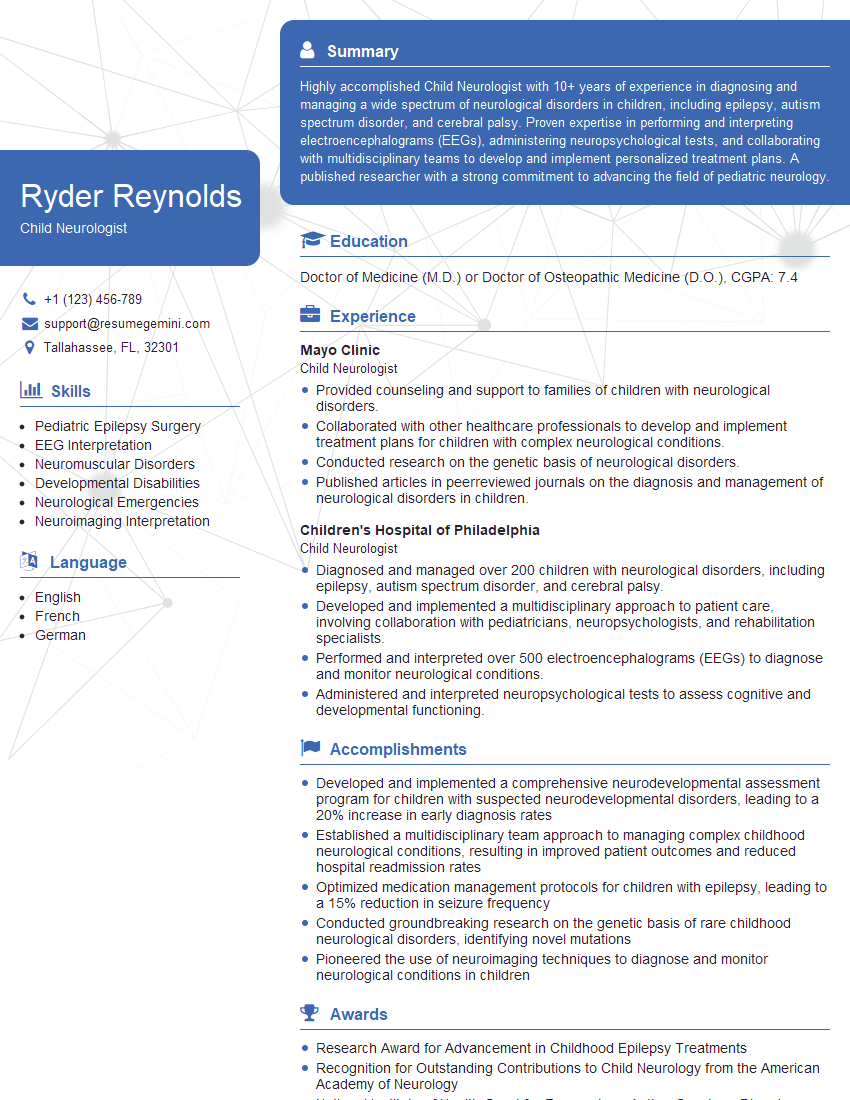
Mastering developmental neuroscience and neuroanatomy is crucial for career advancement in fields such as research, clinical neuropsychology, and educational neuroscience. A strong understanding of these areas will make you a highly competitive candidate. To maximize your job prospects, it’s essential to create an ATS-friendly resume that highlights your skills and experience effectively. We strongly recommend using ResumeGemini to build a professional and impactful resume. ResumeGemini provides tools and resources to craft a compelling narrative and offers examples of resumes tailored specifically to roles requiring a strong understanding of developmental neuroscience and neuroanatomy. Take the next step in your career journey today.
Explore more articles
Users Rating of Our Blogs
Share Your Experience
We value your feedback! Please rate our content and share your thoughts (optional).
What Readers Say About Our Blog
To the interviewgemini.com Webmaster.
Very helpful and content specific questions to help prepare me for my interview!
Thank you
To the interviewgemini.com Webmaster.
This was kind of a unique content I found around the specialized skills. Very helpful questions and good detailed answers.
Very Helpful blog, thank you Interviewgemini team.