The right preparation can turn an interview into an opportunity to showcase your expertise. This guide to Gas Troubleshooting interview questions is your ultimate resource, providing key insights and tips to help you ace your responses and stand out as a top candidate.
Questions Asked in Gas Troubleshooting Interview
Q 1. Explain the process of identifying a gas leak.
Identifying a gas leak requires a systematic approach, combining your senses with specialized tools. First, you should rely on your sense of smell. Natural gas often has a distinct, sulfurous odor (mercaptan) added for safety. However, some leaks may be odorless, especially with propane. Therefore, visual inspection is crucial. Look for signs like dead plants near gas lines, bubbling in puddles near pipes, or a hissing sound coming from gas appliances or lines.
For a more precise detection, use a gas detector. These instruments, discussed in the next question, are invaluable for pinpointing leaks. Remember, never use a flame to test for a leak; this is extremely dangerous. If you suspect a leak, evacuate the area immediately and contact your gas company.
Example: Imagine you notice a whistling sound near your gas meter. This, coupled with the smell of sulfur, strongly suggests a leak. Immediately turn off the gas supply at the meter (if you’re comfortable doing so – otherwise, evacuate and call the gas company), and contact emergency services.
Q 2. Describe different types of gas detectors and their applications.
Gas detectors come in various types, each suited for specific applications. The most common are:
- Combustible Gas Detectors: These detectors respond to the presence of flammable gases like natural gas, propane, and butane. They are widely used in homes, industrial settings, and for leak detection in vehicles. They usually employ a catalytic sensor or infrared sensor technology.
- Specific Gas Detectors: These are designed to detect specific gases such as carbon monoxide (CO), hydrogen sulfide (H2S), or methane, providing a more precise measurement.
- Multi-Gas Detectors: As their name suggests, these can simultaneously detect multiple gases, providing comprehensive monitoring in hazardous environments. They are often used in industrial applications.
Application example: A homeowner would use a combustible gas detector for routine checks around gas appliances. An industrial plant would utilize multi-gas detectors to monitor worker safety, ensuring the detection of multiple potential hazards. The choice of detector depends entirely on the specific application and potential hazards.
Q 3. How do you troubleshoot a gas appliance that won’t ignite?
Troubleshooting a gas appliance that won’t ignite involves a methodical process of elimination. First, ensure the gas supply is turned on both at the appliance and the main gas meter. Check that the pilot light is lit, if applicable. If not, follow the appliance’s instructions for relighting the pilot.
Next, examine the gas supply line for any visible blockages or damage. Check the gas valve for proper operation; it should turn smoothly and fully. A faulty thermocouple (a safety device that keeps the gas flowing) can prevent ignition. Cleaning or replacing this is often the solution.
If the appliance is still not igniting, the problem could be within the appliance itself. It might be a faulty igniter, a clogged burner, or a malfunctioning control module. At this point, professional intervention might be necessary. Never attempt repairs yourself if you lack the proper training and safety equipment.
Example: Your stove burner won’t ignite. Check the gas supply and pilot light. If those are okay, carefully inspect the burner for clogs using a stiff brush or compressed air. If this fails, it’s best to contact a qualified gas technician.
Q 4. What are the safety procedures for working with gas lines?
Safety is paramount when working with gas lines. Always turn off the gas supply at the main meter before beginning any work. Ensure proper ventilation to avoid the buildup of gas. Never use a flame or spark to check for leaks; use a dedicated gas detector.
Wear appropriate personal protective equipment (PPE), including safety glasses, gloves, and in some cases, a respirator. Understand the location of emergency shut-off valves and know how to use them. If you’re not qualified, never attempt gas line repairs; always call a qualified and licensed gas professional. Regular inspections by a professional are a key part of ensuring safe gas line operation.
Example: Before attempting any work on a gas appliance, such as replacing a gas hose, always turn off the gas supply at both the main meter and the appliance itself. Never leave a running appliance unattended.
Q 5. How do you determine the cause of low gas pressure?
Low gas pressure can stem from various sources. Check the gas meter for any signs of restrictions or damage. Inspect the gas line leading to your appliance for blockages, corrosion, or leaks. A partially closed valve either at the appliance or along the line can also reduce pressure.
Low pressure can also indicate problems with the gas company’s infrastructure, like a supply issue or problems with the main lines. It is important to contact your gas provider if you suspect a broader issue affecting multiple appliances or your neighbors. A pressure gauge can precisely measure the gas pressure to determine if it falls below the normal operating range specified in your appliance’s documentation. Low pressure might indicate a serious safety hazard and requires professional attention.
Example: Multiple appliances in your home have low gas pressure. This suggests a potential problem with the main gas line or your gas meter, requiring the intervention of a gas company professional.
Q 6. Explain the difference between natural gas and propane.
Natural gas and propane are both commonly used fuels, but they differ significantly in their composition and properties. Natural gas is primarily methane (CH4), extracted from underground reservoirs. Propane (C3H8), on the other hand, is a by-product of natural gas processing or crude oil refining. Propane is stored and transported as a liquid under pressure, while natural gas is delivered through pipelines under pressure as a gas.
Propane has a higher energy density than natural gas, meaning it contains more energy per unit volume. This makes propane a practical choice for areas where natural gas pipelines aren’t available. However, propane requires specialized storage tanks and regulators, unlike natural gas which is delivered directly to homes through pipelines.
Example: Natural gas is commonly used for heating homes and cooking in areas with extensive pipeline networks. Propane is popular for portable gas grills, RVs, and heating in areas without natural gas access.
Q 7. Describe the proper procedure for repairing a gas leak.
Repairing a gas leak is extremely dangerous and should only be attempted by qualified and licensed gas technicians. Attempting repairs without proper training and equipment can lead to serious injury, fire, or explosion.
The first step is to immediately evacuate the area and turn off the gas supply at the main meter. Contact your gas company or emergency services. A qualified technician will locate the leak, determine the cause, and make the necessary repairs, often involving replacing damaged sections of pipe or fittings, ensuring all connections are properly sealed, and conducting a thorough pressure test to confirm the integrity of the system.
Example: Never attempt to tighten a loose gas fitting yourself. Instead, contact your gas company immediately. They have the expertise and equipment to safely and effectively repair the leak, preventing potential hazards.
Q 8. How do you test for gas leaks using soapy water?
Detecting gas leaks with soapy water is a simple yet effective method. It relies on the principle that gas escaping under pressure will create bubbles when it comes into contact with a soapy solution. This is because gas is less dense than water, and the escaping gas forms bubbles within the soapy film.
Here’s how to do it:
- Mix the solution: Create a mixture of soapy water by adding a few drops of dish soap to a bowl of water. Avoid using harsh detergents, as they can damage the surface you’re testing.
- Apply the solution: Carefully apply the soapy water to all suspected leak points, including gas appliance connections, pipes, and fittings. Use a brush or spray bottle for even application.
- Observe for bubbles: Watch carefully for the formation of bubbles. If bubbles form and grow consistently, it indicates a gas leak. The larger and faster-growing the bubbles, the more significant the leak.
- Take action: If you detect a leak, immediately shut off the gas supply at the main valve. Ventilate the area by opening windows and doors. Avoid using any open flames or electrical devices until the leak is fixed by a qualified gas technician. Never attempt to repair a gas leak yourself.
Important Note: This method only works for leaks that are escaping at a noticeable pressure. Small leaks might not produce visible bubbles. Always use this test in conjunction with other methods for a thorough assessment, especially in critical situations.
Q 9. What are the common causes of gas appliance malfunctions?
Gas appliance malfunctions stem from a variety of causes, ranging from simple user errors to more complex internal issues. Understanding these causes is vital for effective troubleshooting and safe operation.
- Clogged or dirty burners or pilot lights: Over time, food spills, dust, and other debris can accumulate on burners, preventing efficient gas combustion and leading to yellow flames or incomplete burning.
- Faulty ignition systems: Problems with spark igniters, thermocouples, or gas valves can prevent the appliance from igniting correctly. This could manifest as an inability to light the appliance or intermittent flames.
- Blocked vents or chimneys: Improper ventilation can lead to incomplete combustion, potentially resulting in carbon monoxide buildup. Bird nests, debris, or ice can block vents.
- Low gas pressure: Insufficient gas pressure from the main supply line can cause weak flames or prevent the appliance from working. This often requires professional intervention to check the main gas line.
- Damaged or worn-out parts: Over time, parts like gas valves, regulators, and hoses can wear out or become damaged. This can lead to gas leaks or malfunctioning appliances. Regular maintenance and inspection are crucial.
- Improper installation or maintenance: Faulty installation, improper connection of gas lines or appliances, or lack of regular maintenance can significantly increase the risk of malfunction or accidents.
Troubleshooting should always begin with checking the simple things like ensuring adequate ventilation, checking for obvious obstructions, and verifying the gas supply. If these don’t solve the problem, then a qualified gas technician should be called.
Q 10. Explain the importance of gas line purging.
Gas line purging is a critical safety procedure that removes air and other non-combustible gases from a new or repaired gas line before it is put into service. This is crucial to prevent the formation of explosive mixtures and ensure the safe operation of gas appliances.
Air mixed with natural gas can create a highly explosive combination. Purging ensures the line contains only natural gas before ignition. The process usually involves opening the gas line valve and allowing gas to flow through the line for a certain period, ensuring all air is displaced. A qualified technician will use specialized equipment and procedures to safely purge the gas line, verifying the complete removal of air before lighting any appliances.
The importance of this procedure can’t be overstated. Failure to properly purge a gas line can lead to dangerous explosions.
Q 11. What are the regulations and codes governing gas installations?
Gas installations are strictly regulated to ensure public safety and prevent accidents. These regulations vary by location but generally adhere to codes established by organizations like the American Gas Association (AGA) and local building codes. Some key aspects include:
- Proper pipe sizing and materials: Gas lines must be of appropriate size and material to handle the gas pressure and flow requirements, preventing leaks and ensuring safety.
- Installation by licensed professionals: Only licensed and qualified gas fitters are allowed to install, repair, or modify gas lines and appliances. This ensures adherence to safety standards and prevents accidental damage.
- Regular inspections and maintenance: Gas lines and appliances are often subject to periodic inspections and maintenance to identify potential hazards and prevent malfunctions.
- Proper ventilation: Gas appliances need adequate ventilation to prevent the accumulation of combustion byproducts, particularly carbon monoxide.
- Leak detection and prevention: Gas lines and connections must be sealed and regularly tested for leaks. Regular inspections using soapy water and electronic leak detectors are vital.
- Emergency shut-off valves: Gas lines must have readily accessible shut-off valves to quickly stop gas flow in emergencies.
It’s crucial to consult local building codes and relevant standards for precise requirements specific to your area. Non-compliance can result in fines, and, more importantly, put lives at risk.
Q 12. How do you interpret gas meter readings?
Gas meter readings indicate the amount of gas consumed. Most residential meters use a dial-type system with multiple dials. Each dial rotates clockwise, and the numbers indicate the cubic feet or therms of gas used.
Interpreting the reading: Start with the dial on the far left, which represents the largest unit (e.g., thousands of cubic feet). Record the number it points to. Proceed to the next dial to the right, which indicates the next lower unit (e.g., hundreds of cubic feet), and so on. The reading should be read from left to right, taking the number the pointer is closest to (and rounding down if it’s between numbers). Do not read numbers that are pointing backwards past a 9 to 0.
Example: If the dials read 1, 2, 5, and 3, the reading would be 1253 cubic feet. Subtract the previous month’s reading from the current reading to determine the gas consumption for the billing period.
Some newer meters are digital and directly display the gas consumption in clear digits, making reading much simpler.
Q 13. What are the potential hazards of carbon monoxide poisoning?
Carbon monoxide (CO) is a colorless, odorless, and tasteless gas produced by the incomplete combustion of fuels such as natural gas. CO poisoning is incredibly dangerous because its presence is undetectable without specialized detectors. Even low concentrations can have serious health consequences.
Potential hazards:
- Headache, dizziness, nausea, and weakness: These are common initial symptoms, often mistaken for other illnesses.
- Shortness of breath, confusion, and impaired judgment: As CO levels increase, more severe symptoms appear, impairing cognitive function and judgment.
- Loss of consciousness and death: High levels of CO can lead to unconsciousness and ultimately death if not addressed promptly.
The insidious nature of CO poisoning makes it a significant health hazard. Early detection through CO detectors and proper ventilation are crucial preventative measures.
Q 14. How do you ensure the safe operation of gas appliances?
Ensuring the safe operation of gas appliances requires a multi-faceted approach, encompassing regular maintenance, careful usage, and appropriate safety measures.
- Regular inspections and maintenance: Schedule annual inspections by a qualified gas technician to check for leaks, worn parts, and proper combustion. This preventative maintenance can identify problems before they become hazards.
- Proper ventilation: Always ensure adequate ventilation in areas where gas appliances are used. Never block vents or chimneys. This prevents the buildup of CO and other combustion byproducts.
- CO detectors: Install CO detectors on every level of your home, especially near bedrooms and areas where gas appliances are located. These detectors provide early warning in case of a leak.
- Follow manufacturer’s instructions: Always read and follow the manufacturer’s instructions carefully when operating gas appliances. This includes lighting procedures, cleaning, and maintenance recommendations.
- Never attempt DIY repairs: If you suspect a problem with a gas appliance or line, never attempt DIY repairs. Contact a qualified gas technician immediately to avoid potential hazards.
- Proper shut-off procedures: Know the location of the main gas shut-off valve and how to use it in emergencies. This allows for quick action in case of a gas leak.
Safety should always be the top priority when handling gas appliances. Proactive measures and regular maintenance significantly reduce the risk of accidents and health issues.
Q 15. Describe the different types of gas piping materials.
Gas piping materials must withstand high pressure and temperature while ensuring safety and longevity. Several materials are commonly used, each with its own advantages and disadvantages.
- Black Iron Pipe (BIP): This is a strong, durable material that has been used for decades. However, it’s susceptible to rust and corrosion, requiring regular maintenance and potentially leading to leaks over time. It’s usually found in older installations.
- Galvanized Steel Pipe: A zinc coating on steel pipes offers better corrosion resistance than black iron. Still, the zinc coating can eventually wear away, leaving the steel exposed to rust. It’s a more common choice than BIP but still susceptible to issues with aging.
- Copper Tubing: A popular choice due to its excellent corrosion resistance, durability, and ease of installation. It’s more expensive than steel but offers a longer lifespan and reduced maintenance needs. It’s common in newer constructions.
- CPVC (Chlorinated Polyvinyl Chloride): A plastic piping material that offers good corrosion resistance and is relatively inexpensive. However, it has lower temperature and pressure ratings compared to metal pipes, limiting its application in high-pressure gas lines. It’s often used for lower-pressure gas lines.
- PEX (Cross-Linked Polyethylene): Another plastic tubing material known for flexibility and ease of installation. While suitable for some low-pressure gas applications, it may not be the best choice for all systems, and its suitability depends on local codes and regulations.
Choosing the right material depends on factors such as pressure requirements, the local climate, the age of the building, and cost considerations. Always consult local building codes and regulations for material specifications.
Career Expert Tips:
- Ace those interviews! Prepare effectively by reviewing the Top 50 Most Common Interview Questions on ResumeGemini.
- Navigate your job search with confidence! Explore a wide range of Career Tips on ResumeGemini. Learn about common challenges and recommendations to overcome them.
- Craft the perfect resume! Master the Art of Resume Writing with ResumeGemini’s guide. Showcase your unique qualifications and achievements effectively.
- Don’t miss out on holiday savings! Build your dream resume with ResumeGemini’s ATS optimized templates.
Q 16. How do you troubleshoot a gas water heater that’s not working?
Troubleshooting a gas water heater that isn’t working involves a systematic approach. Safety is paramount; always turn off the gas supply at the main valve before beginning any troubleshooting.
- Check the Gas Supply: Ensure the gas is turned on at the main shut-off valve and that there are no leaks. Listen carefully near the gas line for any hissing sounds. If unsure, use a commercially available gas leak detector.
- Examine the Pilot Light (if applicable): If the water heater uses a standing pilot, make sure it’s lit. If it’s out, follow the manufacturer’s instructions to relight it. A consistent flame indicates gas flow.
- Inspect the Thermocouple/Flame Sensor: The thermocouple (or flame sensor) is a safety device that senses the pilot light and allows gas to flow to the burner. If it’s dirty or damaged, it may prevent ignition. Clean it carefully or replace it if necessary.
- Check the Gas Control Valve: The gas valve controls gas flow to the burner. Make sure it’s fully open and operating correctly. A malfunctioning gas valve may require professional repair or replacement.
- Verify the Igniter: If the water heater has an electronic igniter, verify it is working correctly by checking the ignition sequence. A faulty igniter will need to be replaced.
- Inspect the Burner Assembly: Check for any obstructions or debris on the burner assembly that could be preventing proper gas combustion. Clean it thoroughly as needed.
- Inspect the Thermostat: A malfunctioning thermostat may prevent the water heater from turning on. You can usually check the thermostat’s functionality using a multimeter if you’re comfortable working with electrical components. Otherwise, call a professional.
If you’ve checked all these points and the water heater is still not working, it’s time to call a qualified gas technician for professional assistance. Attempting repairs beyond your expertise can be dangerous.
Q 17. Explain the principles of gas combustion.
Gas combustion is a chemical reaction between a fuel (natural gas or propane) and an oxidizer (oxygen) that produces heat and combustion products.
The principles are:
- Fuel and Air Mixing: Proper mixing of fuel and air in the correct ratio is crucial for efficient combustion. An insufficient amount of air (lean mixture) results in incomplete combustion, producing carbon monoxide and other harmful byproducts. Too much air (rich mixture) wastes fuel.
- Ignition Source: An ignition source (pilot light, electric spark) is necessary to initiate the combustion process. The ignition temperature of the gas must be reached for the reaction to start.
- Heat Release: The combustion reaction releases heat energy. This heat is used to heat water in a water heater, generate electricity in a power plant, or cook food in a stove.
- Combustion Products: The primary combustion products are carbon dioxide (CO2), water (H2O), and heat. Incomplete combustion produces carbon monoxide (CO), a deadly gas. Proper ventilation is crucial to remove combustion products safely.
Think of it like a campfire: you need wood (fuel), air (oxygen), and a spark (ignition) to get a fire going. The heat is the energy released, and the smoke and ash are the byproducts. Gas combustion works on the same principle, albeit more controlled and efficient.
Q 18. What is the role of a pressure regulator in a gas system?
A pressure regulator in a gas system maintains a constant, safe, and appropriate gas pressure downstream of the regulator, regardless of fluctuations in upstream pressure. Think of it as a valve that automatically adjusts to keep the pressure consistent. This is vital for the safe and efficient operation of gas appliances.
Imagine a garden hose: if the water pressure at the source fluctuates wildly, the flow of water at the nozzle would be erratic. The pressure regulator acts as a buffer, providing a steady flow even if the source pressure changes.
The regulator reduces high-pressure gas from the main line to a lower, safer pressure suitable for household appliances. Without it, appliances could be damaged by excessive pressure or operate ineffectively due to insufficient pressure.
Q 19. How do you identify and address gas leaks in different types of piping systems?
Identifying and addressing gas leaks requires careful attention to safety. Never use an open flame to check for leaks. Use a commercially available gas leak detector for accurate and safe detection.
Detection Methods:
- Soap Solution Test: Apply a soapy water solution to suspected leak points. Bubbles forming indicate a gas leak.
- Electronic Gas Leak Detector: These detectors are more sensitive and provide an audible or visual warning in the presence of gas.
Addressing Leaks:
- Small Leaks (in accessible areas): Small leaks in accessible areas might be temporarily sealed with specialized gas-rated sealant tape, after turning off the gas supply. However, this is a temporary fix; professional repair is necessary.
- Significant Leaks or Inaccessible Leaks: Immediately turn off the main gas supply and contact a qualified gas fitter or plumber. Significant leaks pose a serious fire and safety hazard and must be addressed by a professional.
The process varies slightly depending on the piping material. For example, leaks in copper tubing may require soldering, while leaks in plastic pipes might require replacement of the affected section. It’s vital to comply with all applicable safety regulations and local building codes when addressing gas leaks.
Q 20. Describe the process of installing a new gas appliance.
Installing a new gas appliance is a job best left to a qualified and licensed gas fitter. Improper installation can lead to dangerous gas leaks and safety hazards.
The process typically involves:
- Planning and Preparation: Ensure the location is suitable for the appliance, considering ventilation requirements and proximity to other appliances or flammable materials.
- Gas Line Connection: The gas fitter will connect the appliance to the gas supply line using appropriate fittings and ensuring a leak-free connection. This often includes installing a flexible gas connector and verifying pressure.
- Ventilation: Appropriate ventilation is crucial to remove combustion byproducts. The fitter will ensure adequate ventilation is in place, which may involve connecting to an existing venting system or installing a new one.
- Electrical Connections: The appliance may require electrical connections for ignition, controls, or other functions. These connections must be made safely and according to electrical codes.
- Testing and Inspection: After installation, the gas fitter will perform leak tests to ensure there are no gas leaks. They’ll also check the appliance’s functionality and ensure it operates correctly. The installation may require inspection and approval by local authorities.
Never attempt to install a gas appliance yourself unless you are a qualified and licensed gas fitter. Professional installation guarantees safety and compliance with regulations.
Q 21. What are the different types of gas valves and their functions?
Gas valves control the flow of gas to appliances and are crucial for safety and efficient operation. Various types exist, each designed for specific applications.
- Manual Valves: These are simple on/off valves controlled by a handle. They are often used as main shut-off valves or for controlling individual appliances with simple on/off operation. They’re basic but provide dependable shut-off in case of emergency.
- Pilot Valves: These are safety valves that control the flow of gas to the pilot light. They ensure that the pilot light remains lit and that gas flow to the main burner only occurs when the pilot is burning safely. They’re crucial for safety in pilot-ignited appliances.
- Thermostatic Valves: These valves automatically regulate gas flow based on temperature. For instance, in a gas furnace, a thermostatic valve will open and close to maintain the desired temperature. They are fundamental to regulating the functioning of temperature sensitive appliances.
- Pressure Regulators (as discussed earlier): These maintain a constant downstream pressure, preventing damage to appliances and ensuring consistent operation. Pressure regulators can also be considered a type of gas valve since they control the flow of gas, though their primary function is pressure regulation.
- Solenoid Valves: These electrically operated valves open and close using an electromagnetic coil. They are used in many modern appliances, providing precise control of gas flow. Their operation is typically dependent on a control system in the appliance.
The choice of gas valve depends on the specific application and the level of control required. Safety and compliance with local regulations are paramount considerations when selecting and installing gas valves.
Q 22. How do you maintain and service gas appliances?
Maintaining and servicing gas appliances is crucial for safety and efficiency. It involves regular checks and cleaning to prevent malfunctions and potential hazards. This process typically includes:
- Visual Inspection: Checking for any signs of damage, corrosion, or leaks around connections and pipes.
- Cleaning: Removing dust, debris, and cobwebs that can obstruct airflow or create fire hazards. For example, cleaning the burner ports on a gas stove is essential for optimal combustion.
- Component Checks: Inspecting and testing individual components like thermocouples, igniters, and gas valves for proper functioning. A malfunctioning thermocouple, for example, can prevent the gas from staying on.
- Pressure Testing: (Where applicable and permitted) Checking for leaks using soapy water or electronic leak detectors. This helps identify even minor leaks before they become major safety concerns.
- Calibration: Adjusting gas flow and pressure to ensure optimal performance and efficiency. This often involves using specialized tools to measure and fine-tune the gas-air mixture.
Remember, for complex tasks or if you are uncomfortable working with gas appliances, always contact a qualified gas technician. Improper maintenance can lead to serious safety risks.
Q 23. What are the common causes of gas meter malfunctions?
Gas meter malfunctions can stem from several causes, often related to age, wear, and external factors. Some common issues include:
- Internal Mechanical Failure: Over time, moving parts within the meter can wear out, leading to inaccurate readings or complete failure. Think of it like a clock’s gears wearing down.
- Corrosion: Exposure to moisture or harsh weather conditions can cause corrosion of internal components, affecting meter functionality. This is more prevalent in older meters or those not properly protected.
- Blockages: Debris or foreign objects can obstruct the meter’s internal mechanisms, leading to inaccurate readings or stoppage of gas flow. This can occur due to environmental factors or accidental damage.
- External Damage: Physical damage from accidents or vandalism can affect the meter’s accuracy and safety. This necessitates immediate repair or replacement.
- Overpressure: A sudden surge in gas pressure can damage the meter’s internal components. This usually indicates a problem upstream in the gas distribution system, requiring the intervention of the gas company.
If you suspect a gas meter malfunction, immediately contact your gas supplier. Never attempt to repair a gas meter yourself; it’s extremely dangerous.
Q 24. Explain the importance of regular gas system inspections.
Regular gas system inspections are paramount for safety and efficiency. They minimize risks associated with gas leaks, equipment malfunctions, and potential explosions or fires. These inspections typically cover:
- Leak Detection: Identifying gas leaks using specialized equipment before they pose a significant danger. Early detection is key to preventing accidents.
- Appliance Checkups: Ensuring gas appliances are operating efficiently and safely. This includes checking for proper ventilation and combustion.
- Pipe Integrity: Assessing the condition of gas pipes for signs of corrosion, damage, or leaks. Addressing these issues prevents potential leaks and future damage.
- Pressure Testing: Checking the gas pressure within the system to ensure it’s within the safe operating range. This is critical for preventing overpressure incidents.
- Ventilation Assessment: Verifying that proper ventilation is present to safely remove combustion byproducts. Insufficient ventilation can lead to dangerous carbon monoxide buildup.
The frequency of inspections depends on local regulations and the type of gas system, but annual inspections are generally recommended. Think of it as a regular health checkup for your gas system—preventative maintenance is far more cost-effective and safer than emergency repairs.
Q 25. Describe the emergency procedures for a major gas leak.
Emergency procedures for a major gas leak require immediate and decisive action. The primary steps are:
- Evacuate Immediately: Get everyone out of the building and a safe distance away. Do not use elevators; the risk of ignition is too high.
- Call Emergency Services: Contact your local emergency services (911 in the US) and your gas company immediately. Clearly state that you have a gas leak.
- Avoid Ignition Sources: Do not turn on any lights, appliances, or operate any electrical devices that might create a spark. Avoid using cell phones near the leak, as well.
- Ventilate the Area: If safe to do so, open windows and doors to help disperse the gas. However, prioritize your safety and do not risk entering a potentially explosive environment.
- Stay Away Until Cleared: Remain away from the area until emergency responders have declared it safe. They will determine the extent of the leak and take the necessary measures to secure the area.
Remembering the sequence – evacuate, call, avoid ignition, ventilate (if safe), and stay away – can save lives.
Q 26. How do you determine the appropriate size of gas piping for a particular application?
Determining the appropriate size of gas piping requires careful calculation based on several factors including:
- Gas Appliance Load: The total gas consumption of all appliances connected to the system. This is usually expressed in BTU/hr (British Thermal Units per hour) or cubic feet per hour (CFH).
- Pipe Length: Longer pipe lengths result in increased pressure drop, requiring larger diameter pipes to maintain adequate flow.
- Pipe Material: Different pipe materials (e.g., steel, copper, plastic) have varying internal friction coefficients, affecting pressure drop.
- Pressure Drop Allowance: A safety margin to account for potential pressure loss due to changes in elevation, bends, and fittings.
- Gas Pressure: The pressure of the gas supplied to the system. This is often specified by the gas utility company.
Specialized software or gas piping design manuals are typically used to calculate the appropriate pipe size. These calculations ensure adequate gas flow to all appliances while maintaining a safe operating pressure. Improper sizing can lead to insufficient gas flow or dangerously high pressures.
Q 27. What are the different methods of gas leak detection?
Several methods exist for gas leak detection, ranging from simple visual inspections to sophisticated electronic instruments:
- Soapy Water Test: Applying soapy water to gas connections and pipes. Bubbles will form if a leak is present. This is a simple and relatively inexpensive method, suitable for small-scale checks.
- Electronic Leak Detectors: Portable devices that use sensors to detect the presence of flammable gases. These detectors are much more sensitive than soapy water and can pinpoint the location of leaks more accurately.
- Ultrasonic Leak Detectors: These instruments detect the high-frequency sound waves produced by gas escaping under pressure. They are particularly useful for detecting leaks in hard-to-reach areas or buried pipes.
- Halide Torch: A specialized torch that burns with a distinctive color change in the presence of certain halogenated gases, which can be added to natural gas to aid detection.
- Pressure Testing: Monitoring pressure changes in a closed gas system. A drop in pressure over time indicates a leak.
The choice of method depends on the scale of the inspection and the sensitivity required. For instance, a soapy water test might suffice for a small appliance, whereas an electronic leak detector is preferred for a large-scale system check.
Q 28. Describe your experience troubleshooting complex gas system issues.
I have extensive experience troubleshooting complex gas system issues. One particular case involved a commercial kitchen where intermittent gas supply disruptions plagued the facility. Initially, the issue seemed random, affecting different appliances at various times. My systematic approach included:
- Thorough Inspection: I started with a detailed visual inspection of the entire gas system, checking for leaks, corrosion, and blockages in pipes, regulators, and meters.
- Pressure Testing: I performed pressure tests at various points in the system to identify pressure fluctuations or drops. This helped pinpoint the location of the problem.
- Component Testing: I meticulously checked each appliance’s gas valves, regulators, and other components for proper functioning. I found that one valve was faulty, causing erratic gas flow.
- Data Analysis: I reviewed gas usage data to correlate the disruptions with specific times and appliances. This helped identify patterns and narrow down the possible causes.
- Repairs and Replacement: The faulty valve was replaced, and any minor leaks were repaired. The system was then retested to ensure proper functioning.
Through careful analysis and a methodical approach, I successfully resolved the issue, restoring reliable gas supply to the commercial kitchen and preventing potential hazards. This highlights the importance of systematic troubleshooting, combining hands-on skills with data analysis to effectively tackle complex gas system problems.
Key Topics to Learn for Gas Troubleshooting Interview
- Gas Safety Regulations and Codes: Understanding and applying relevant safety standards and regulations in all troubleshooting scenarios.
- Gas Appliance Operation and Diagnostics: Thorough knowledge of how various gas appliances function and the methods used to diagnose malfunctions (e.g., furnaces, water heaters, stoves).
- Gas Metering and Pressure Regulation: Understanding gas pressure, flow rates, and the role of pressure regulators in safe and efficient gas delivery.
- Leak Detection and Repair Techniques: Proficiency in identifying gas leaks using various methods (e.g., soap solution, electronic detectors) and performing safe repairs.
- Gas Piping Systems: Familiarity with different types of gas piping, their installation, and potential issues (e.g., corrosion, leaks).
- Troubleshooting Common Gas Appliance Problems: Practical experience in diagnosing and resolving typical problems such as pilot light issues, burner malfunctions, and ventilation problems.
- Gas Combustion Analysis: Understanding the principles of gas combustion and using tools to analyze combustion efficiency and identify potential problems.
- Emergency Procedures and Safety Protocols: Knowledge of emergency procedures for gas leaks, including shut-off procedures and emergency contact information.
- Record Keeping and Documentation: Understanding the importance of accurate and complete documentation of troubleshooting procedures and findings.
- Problem-solving and Analytical Skills: Demonstrating a systematic approach to troubleshooting, using logic and deductive reasoning to identify the root cause of problems.
Next Steps
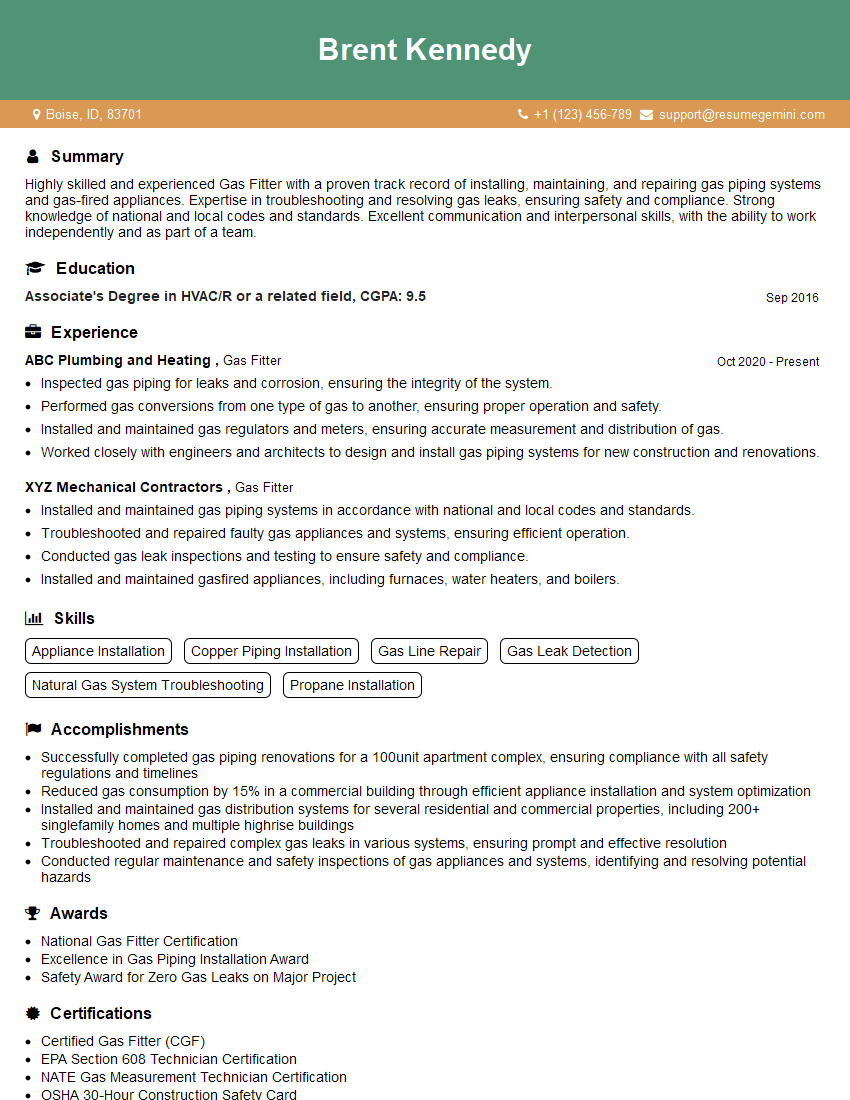
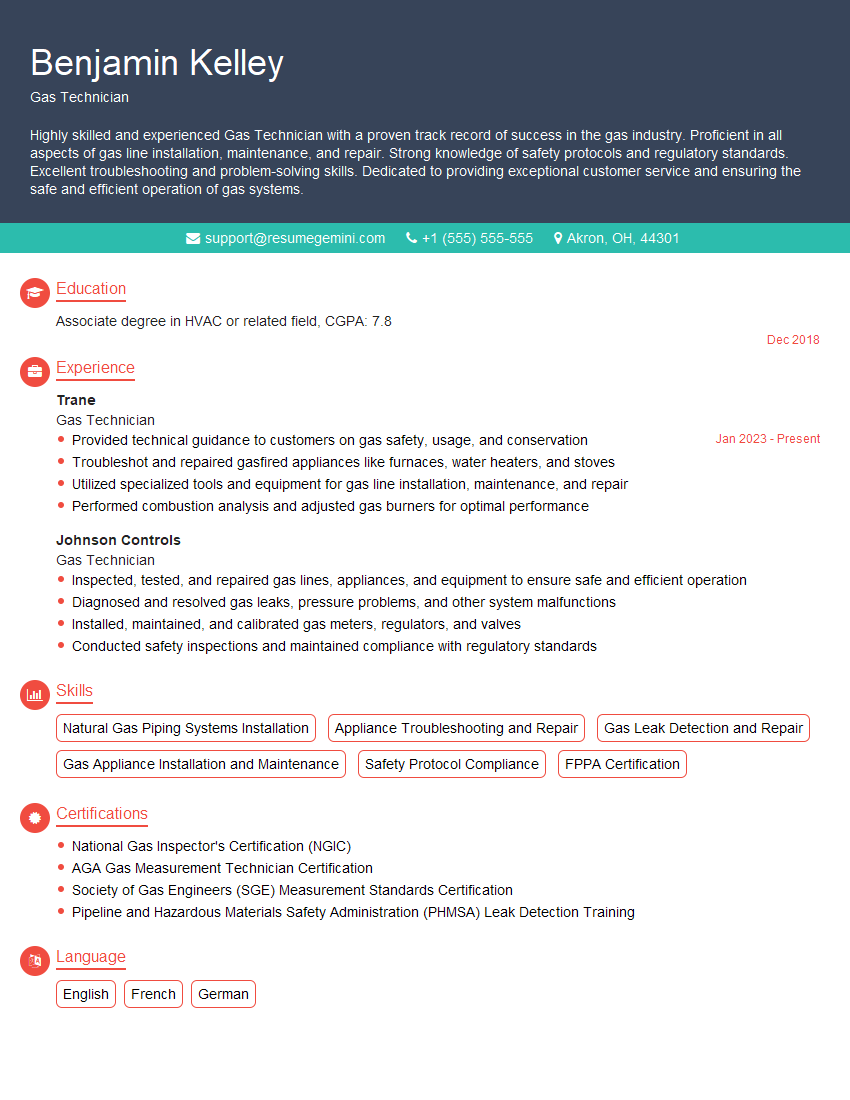
Mastering gas troubleshooting is crucial for a successful and rewarding career in this vital field. It opens doors to specialized roles, higher earning potential, and increased job security. To maximize your job prospects, creating a strong, ATS-friendly resume is essential. This ensures your skills and experience are effectively communicated to potential employers. We highly recommend using ResumeGemini to build a professional and impactful resume that highlights your expertise in gas troubleshooting. ResumeGemini provides helpful tools and resources, and examples of resumes tailored to Gas Troubleshooting are available to guide you.
Explore more articles
Users Rating of Our Blogs
Share Your Experience
We value your feedback! Please rate our content and share your thoughts (optional).
What Readers Say About Our Blog
To the interviewgemini.com Webmaster.
Very helpful and content specific questions to help prepare me for my interview!
Thank you
To the interviewgemini.com Webmaster.
This was kind of a unique content I found around the specialized skills. Very helpful questions and good detailed answers.
Very Helpful blog, thank you Interviewgemini team.