The right preparation can turn an interview into an opportunity to showcase your expertise. This guide to Gas Pipeline Operations interview questions is your ultimate resource, providing key insights and tips to help you ace your responses and stand out as a top candidate.
Questions Asked in Gas Pipeline Operations Interview
Q 1. Explain the difference between a compressor station and a metering station in a gas pipeline system.
Compressor stations and metering stations are both critical components of a gas pipeline system, but they serve very different purposes. Think of it like this: a compressor station is the engine, while a metering station is the measuring gauge.
Compressor Stations: These stations use powerful compressors to increase the pressure of natural gas as it travels through the pipeline. This is necessary because pressure naturally drops over long distances due to friction. Higher pressure ensures sufficient gas flow to meet demand. Imagine a long water slide – the compressor station acts like a pump to keep the water flowing uphill.
Metering Stations: Metering stations, on the other hand, precisely measure the volume and pressure of the gas flowing through the pipeline. This data is crucial for accounting, billing, and overall operational efficiency. Think of this as a highly accurate measuring cup, ensuring everyone gets the right amount of gas. They may also include devices to regulate pressure or control the flow.
In short: compressors maintain pressure, while metering stations measure flow and pressure.
Q 2. Describe the process of pipeline pigging and its importance in maintaining pipeline integrity.
Pipeline pigging is a crucial maintenance procedure that involves sending a device called a ‘pig’ through the pipeline. This pig is a cylindrical device, often made of polyurethane or other durable materials, that’s designed to clean, inspect, or even perform minor repairs inside the pipeline. It’s like a robotic plumber navigating the inside of the pipe.
The Process: A pig is inserted into the pipeline and propelled by the gas flow itself. Different types of pigs exist for different purposes. Cleaning pigs remove deposits such as wax, hydrates, or other contaminants. Inspection pigs use various sensors to detect internal corrosion, cracks, or other defects. Smart pigs can even perform in-line repairs in some cases.
Importance: Regular pigging helps maintain pipeline integrity by:
- Removing debris that can restrict flow and cause pressure imbalances.
- Detecting and assessing corrosion and other defects, allowing for timely repairs and preventing catastrophic failures.
- Improving pipeline efficiency by reducing friction and optimizing flow.
Ignoring pigging can lead to reduced capacity, increased maintenance costs, and even potentially dangerous leaks.
Q 3. What are the common causes of pipeline corrosion and how are they mitigated?
Pipeline corrosion is a significant concern, threatening the safety and longevity of the system. It’s essentially rusting on a grand scale. Several factors contribute to this:
- External Corrosion: This results from contact with soil, water, or other corrosive elements in the surrounding environment. Soil acidity, stray electrical currents, and poor coating are common culprits.
- Internal Corrosion: This occurs due to the interaction of the gas with the pipeline material. The presence of water, carbon dioxide, hydrogen sulfide, and other components in the gas can accelerate corrosion.
Mitigation Strategies: A combination of strategies is vital to minimize corrosion.
- Coating: Applying protective coatings to the pipeline’s exterior is a primary defense against external corrosion. Various coatings, such as epoxy and polyethylene, are used.
- Cathodic Protection: This electrochemical method uses an impressed current or sacrificial anodes to prevent corrosion by making the pipeline less susceptible to electrochemical reactions. It’s like giving the pipeline a protective shield.
- Dehydration and Desulfurization: Removing water and corrosive components, such as hydrogen sulfide (H2S), from the gas stream significantly reduces internal corrosion.
- Regular Inspections and Monitoring: This includes using inline inspection tools (pigs) and conducting regular visual inspections to detect and address any corrosion before it becomes severe.
Q 4. Explain the role of SCADA systems in gas pipeline operations.
Supervisory Control and Data Acquisition (SCADA) systems are the nervous system of a gas pipeline. They are crucial for monitoring and controlling the entire pipeline network remotely. Think of them as a sophisticated digital dashboard that provides real-time information and control over many aspects of the system.
Role in Gas Pipeline Operations:
- Real-time Monitoring: SCADA systems collect data from various points across the pipeline, including pressure, flow rate, temperature, and compressor performance. This allows operators to continuously monitor the system’s health and identify potential issues promptly.
- Remote Control: Operators can remotely control valves, compressors, and other equipment from a central control room. This enables rapid responses to changes in demand or unexpected events.
- Data Logging and Analysis: The system records vast amounts of data, facilitating historical analysis for performance optimization, predictive maintenance, and regulatory compliance.
- Alarm Management: SCADA systems trigger alarms if any parameter deviates from predefined limits, alerting operators to potential problems immediately.
Effective SCADA systems are essential for safe and efficient gas pipeline operations, providing the situational awareness needed to prevent accidents and optimize performance.
Q 5. How do you identify and respond to a pipeline leak?
Identifying and responding to pipeline leaks requires a swift and coordinated effort. The detection methods and responses depend on the type and severity of the leak.
Leak Identification:
- Automatic Leak Detection Systems (ALDS): These systems constantly monitor pipeline parameters to identify subtle pressure or flow rate changes that may indicate a leak.
- Regular Pipeline Patrols: Visual inspections along the pipeline route can identify visible signs of leaks, such as bubbling in bodies of water or unusual ground discoloration.
- Odorizers: Natural gas is often odorized with mercaptans, which provides an easily detectable smell. Reporting of gas odor is a crucial element in leak detection.
- Remote Sensing Technologies: Technologies like aerial surveys and ground-penetrating radar can be used to help detect leaks.
Leak Response:
- Emergency Shutdown: Once a leak is confirmed, the affected section of the pipeline is immediately shut down to prevent further gas release.
- Emergency Response Teams: Trained personnel are dispatched to the location to assess the situation and implement appropriate safety measures.
- Leak Repair: Once the area is secured, specialized crews conduct leak repairs. The approach depends on the nature of the leak and pipeline access.
- Environmental Monitoring: The affected area must be monitored to assess and mitigate any environmental impacts resulting from the leaked gas.
Effective leak response requires detailed procedures and well-trained teams to ensure safety and minimize environmental consequences.
Q 6. Describe the different types of pipeline materials and their respective applications.
Gas pipelines are constructed using a variety of materials, each with its own strengths and weaknesses, making material selection a critical design decision.
Common Pipeline Materials:
- Steel: The most common material due to its strength, durability, and relatively low cost. Various grades of steel are used based on pressure requirements and environmental conditions. However, it’s susceptible to corrosion.
- High-Density Polyethylene (HDPE): Used for lower-pressure applications, especially in areas with challenging soil conditions. HDPE offers excellent corrosion resistance and flexibility. It’s often used for smaller distribution pipelines.
- Cast Iron: Historically used, but now less common due to its lower strength and greater susceptibility to corrosion compared to steel. It’s found in older pipelines.
Material Selection Factors:
- Operating Pressure: Higher-pressure pipelines generally require stronger materials like high-grade steel.
- Environmental Conditions: Soil acidity and other environmental factors heavily influence material selection. Corrosion-resistant materials like HDPE might be preferred in aggressive environments.
- Pipeline Diameter and Length: Larger-diameter and longer pipelines necessitate materials capable of withstanding high stresses.
- Cost: The overall cost of the pipeline material, including installation and maintenance, plays a significant role in the decision-making process.
Careful material selection is critical to ensuring the safety, reliability, and economic viability of the entire pipeline system.
Q 7. What are the key safety regulations and compliance standards for gas pipeline operations?
Gas pipeline operations are governed by a complex web of safety regulations and compliance standards designed to minimize risk and protect the public and the environment. These regulations vary by country and region but generally focus on pipeline design, construction, operation, and maintenance.
Key Areas of Regulation:
- Pipeline Design and Construction: Standards specify material requirements, welding procedures, coating specifications, and testing procedures to ensure pipeline integrity.
- Pipeline Operation: Regulations dictate procedures for monitoring pipeline parameters, responding to emergencies, and performing routine maintenance. These often involve alarm systems, emergency shutdown procedures, and regular inspections.
- Pipeline Integrity Management (PIM): PIM programs require operators to regularly assess pipeline risk, implement leak detection and mitigation strategies, and perform integrity assessments using tools like in-line inspection (ILI) pigs.
- Emergency Response Planning: Operators must have detailed emergency response plans to deal with incidents such as leaks, fires, or explosions. These plans include communication protocols, evacuation strategies, and coordination with emergency services.
- Environmental Protection: Regulations address environmental protection and mitigation strategies during construction, operation, and in the event of an incident. This includes measures to prevent soil and water contamination.
Compliance with these standards is critical. Non-compliance can result in significant penalties, operational disruptions, and reputational damage.
Q 8. Explain the concept of pipeline capacity and how it’s calculated.
Pipeline capacity refers to the maximum volume of gas a pipeline can transport safely and efficiently within a given timeframe. It’s not simply about the physical size of the pipe; several factors influence its capacity.
- Pipe Diameter: Larger diameter pipes can obviously carry more gas.
- Pipe Length: Friction losses increase with length, reducing capacity.
- Gas Properties: Temperature, pressure, and gas composition (e.g., the presence of heavier hydrocarbons) affect density and flow.
- Pipeline Elevation Changes: Uphill sections require more pressure, reducing effective capacity.
- Compressor Station Capacity: Compressors boost pressure to overcome friction losses. Their capacity limits the overall throughput.
Calculating pipeline capacity involves complex engineering models using equations that consider all these factors. Software packages employing computational fluid dynamics (CFD) are often used to simulate flow and accurately determine the maximum permissible operating pressure (MAOP) and the resulting throughput. A simplified approach might involve using Weymouth’s equation, but real-world calculations require sophisticated software and consideration of various operational constraints.
For example, a pipeline designed for 100,000 cubic meters per day at a specific pressure might see its capacity reduced to 80,000 cubic meters per day during periods of high ambient temperature, as the gas expands.
Q 9. How do you manage pipeline pressure and flow rates?
Managing pipeline pressure and flow rates is crucial for safe and efficient operation. It involves a coordinated effort using various control systems and strategies.
- Compressor Stations: These strategically placed stations increase gas pressure to overcome friction losses and maintain desired flow rates along the pipeline.
- Control Valves: These valves regulate the flow of gas at various points in the system, allowing operators to adjust pressure and flow according to demand and pipeline conditions.
- Supervisory Control and Data Acquisition (SCADA) Systems: These systems monitor pressure, flow, and other parameters in real-time, providing operators with a comprehensive overview of the pipeline’s status. They allow for remote control of valves and compressors.
- Pipeline Simulation Software: This sophisticated software helps predict the impact of various operational changes on pressure and flow, allowing operators to make informed decisions.
For instance, during peak demand, operators might increase compressor speeds to maintain sufficient pressure and meet customer needs. Conversely, during periods of low demand, they would reduce compressor speeds and adjust control valves to avoid excessive pressure buildup.
Safety is paramount. Pressure and flow rate limits are rigorously enforced through automated safety systems that shut down the pipeline if predetermined limits are exceeded. This prevents over-pressurization which could lead to pipeline failure.
Q 10. Describe the process of pipeline maintenance and inspection.
Pipeline maintenance and inspection are vital for ensuring pipeline integrity and preventing incidents. This involves a multi-faceted approach combining preventative and reactive measures.
- Regular Inspections: This includes visual inspections, internal inspections (using smart pigs), and external inspections (aerial patrols, ground surveys).
- Preventative Maintenance: Scheduled maintenance of compressor stations, valves, and other pipeline equipment is crucial to prevent failures.
- Repair and Replacement: Damaged sections of pipeline are repaired or replaced as needed. This often involves digging up sections of pipeline, or using specialized techniques like in-line repair clamps.
- Cathodic Protection System Maintenance: Regular checks and adjustments are necessary to ensure the effectiveness of corrosion protection.
- Data Analysis: Data from inspections and monitoring systems is analyzed to identify potential issues and prioritize maintenance activities.
Imagine a scenario where an inspection reveals a section of the pipeline with signs of corrosion. This necessitates immediate action, which might involve isolating the affected section, conducting a detailed assessment, and scheduling repairs to prevent potential leaks or ruptures.
Q 11. What is the importance of cathodic protection in pipeline integrity management?
Cathodic protection is an electrochemical technique used to mitigate corrosion in pipelines. It’s a vital component of pipeline integrity management because corrosion can significantly weaken the pipeline, leading to leaks, ruptures, and environmental damage.
The process involves applying a negative electrical potential to the pipeline, making it the cathode in an electrochemical cell. This prevents the pipeline from becoming an anode and prevents the oxidation (corrosion) process. There are two main methods:
- Sacrificial Anodes: These are made of a more easily corroded metal (e.g., zinc or magnesium) and are electrically connected to the pipeline. They corrode preferentially, protecting the pipeline.
- Impressed Current Cathodic Protection (ICCP): This system uses an external power source to supply a controlled negative current to the pipeline, protecting it from corrosion.
Regular monitoring of the cathodic protection system’s performance is crucial to ensure its effectiveness. Potential readings along the pipeline are frequently measured to ensure adequate protection. If a section is not adequately protected, remedial action is required to prevent corrosion.
Failing to maintain adequate cathodic protection can lead to significant financial losses from repairs and potential environmental catastrophes. It’s a crucial preventative measure safeguarding both the pipeline and the environment.
Q 12. Explain the role of pipeline simulation and modeling in operational planning.
Pipeline simulation and modeling play a vital role in operational planning, allowing engineers and operators to predict the behavior of the pipeline under various scenarios without physically testing it.
These models use sophisticated software to replicate the physical characteristics of the pipeline, including its geometry, material properties, and operating conditions. They can then simulate various scenarios such as:
- Pressure and Flow Rate Predictions: Simulating different demand scenarios to determine optimal compressor settings and valve configurations.
- Emergency Response Planning: Simulating pipeline ruptures or other emergencies to identify potential consequences and develop effective response strategies.
- Optimization of Pipeline Operations: Identifying areas for improvement in terms of efficiency, safety, and environmental impact.
- Impact Assessment: Evaluating the effects of proposed changes, such as pipeline expansions or upgrades, before implementation.
Imagine planning an increase in gas throughput. Before making changes to the system, simulation software can predict pressure and flow profiles, identifying potential bottlenecks or areas where pressure could exceed safe limits. This allows for preemptive adjustments to the operating parameters, avoiding costly and potentially hazardous situations.
Q 13. How do you handle emergency situations such as pipeline ruptures?
Handling emergency situations, such as pipeline ruptures, requires a swift and coordinated response. A well-defined emergency response plan is crucial for minimizing damage and ensuring safety.
The response typically involves the following steps:
- Immediate Actions: Isolate the affected section of the pipeline by closing valves to prevent further gas leakage. Evacuate the surrounding area if necessary.
- Emergency Services Notification: Contact emergency services (fire department, police, etc.) and relevant regulatory authorities.
- Leak Repair: Once the gas is contained, begin the process of assessing and repairing the damage. This might involve temporary repairs to stabilize the situation followed by a more permanent solution.
- Environmental Remediation: If there is any gas release, environmental remediation efforts are necessary to mitigate any environmental impact.
- Incident Investigation: Conduct a thorough investigation to determine the root cause of the incident to prevent similar events in the future. This investigation often includes detailed analysis of the pipeline’s condition and operating parameters.
A real-world example would involve a sudden pressure drop detected by the SCADA system. This triggers an automated shutdown of the affected section and alerts operators to the potential for a leak. The emergency response plan is immediately activated, leading to rapid isolation of the section, emergency services notification and finally repair and investigation.
Q 14. Describe your experience with pipeline integrity assessment techniques.
Pipeline integrity assessment is a critical process used to evaluate the condition of a pipeline and identify potential risks. I have extensive experience with various techniques, including:
- In-line Inspection (ILI): This involves running intelligent “smart pigs” through the pipeline to inspect the internal condition. These pigs use various technologies (magnetic flux leakage, ultrasonic, etc.) to detect defects such as corrosion, cracks, and dents.
- External Corrosion Direct Assessment (ECDA): This method uses various non-destructive techniques like close-interval survey (CIS) and electromagnetic acoustic transducers (EMAT) to assess the external condition of the pipeline. It often targets areas with high corrosion risk.
- Leak Detection Systems: Advanced sensors and data analytics can detect subtle changes in pressure, flow rate, or temperature which can indicate the presence of a leak.
- Data Analysis and Risk Assessment: Data from various inspection techniques is analyzed to identify high-risk areas and prioritize maintenance activities. Risk assessment methods help determine the probability and severity of potential failures.
For example, In a recent project, we used a combination of ILI and ECDA to assess a section of pipeline identified as high risk due to its age and environmental conditions. The ILI detected a significant amount of internal corrosion, while ECDA revealed external corrosion in several areas. This data informed our repair and replacement plan, significantly enhancing the pipeline’s safety and longevity. This integrated approach minimizes risk and ensures proactive management of pipeline integrity.
Q 15. What are the common causes of pipeline failures?
Pipeline failures, while rare due to stringent regulations and robust maintenance, can stem from various sources. These can be broadly categorized into internal and external factors.
- Internal Factors: These relate to the pipeline itself and its components. Examples include corrosion (both internal and external), material defects from manufacturing or installation, and stress cracking from fluctuating pressures or temperatures. Imagine a rusty pipe gradually weakening – that’s internal corrosion. A manufacturing flaw creating a weak point is another example.
- External Factors: These are environmental or human-related. Third-party damage from excavation activities is a major concern. Soil movement, ground subsidence, and natural disasters like earthquakes or floods can also cause significant damage. Think of a construction crew accidentally hitting a pipeline with their excavator – that’s third-party damage.
- Operational Factors: Improper operation, inadequate maintenance, and lack of sufficient monitoring can also contribute to failures. For instance, not regularly inspecting and maintaining pressure relief valves could lead to overpressure and a rupture.
Understanding the root cause of a failure is critical for implementing corrective actions and preventing future incidents. This often involves thorough investigation, material testing, and comprehensive analysis of operational data.
Career Expert Tips:
- Ace those interviews! Prepare effectively by reviewing the Top 50 Most Common Interview Questions on ResumeGemini.
- Navigate your job search with confidence! Explore a wide range of Career Tips on ResumeGemini. Learn about common challenges and recommendations to overcome them.
- Craft the perfect resume! Master the Art of Resume Writing with ResumeGemini’s guide. Showcase your unique qualifications and achievements effectively.
- Don’t miss out on holiday savings! Build your dream resume with ResumeGemini’s ATS optimized templates.
Q 16. What is your experience with pipeline hydraulic modeling software?
I have extensive experience using several industry-standard pipeline hydraulic modeling software packages, including Synergi Pipeline Simulator and OLGA. My proficiency extends beyond simply running simulations; I’m adept at building complex models, calibrating them against real-world data, and interpreting the results to optimize pipeline operations and safety.
For example, I recently used Synergi to model the impact of a proposed new compressor station on the overall pipeline system. The model helped us predict pressure changes along the pipeline, identify potential bottlenecks, and ensure the project would not compromise system integrity. This involved defining pipeline characteristics (diameter, roughness, length), compressor specifications, and boundary conditions, followed by running transient simulations to analyze various operating scenarios.
This isn’t just about theoretical understanding; I’ve utilized these models to troubleshoot real-world issues, such as identifying the causes of unexpected pressure drops or determining the optimal operating parameters for different pipeline segments. The ability to translate complex simulation outputs into actionable insights is critical to effective pipeline management.
Q 17. Explain the principles of pipeline design and construction.
Pipeline design and construction adhere to strict safety and regulatory standards. The process involves several key stages:
- Route Selection & Surveying: Identifying the optimal path, considering factors like terrain, environmental impact, and proximity to infrastructure.
- Design Engineering: Determining the pipe diameter, wall thickness, material, and coating based on the transported gas properties (pressure, temperature, composition), and anticipated operating conditions. This involves sophisticated calculations using engineering principles and relevant codes (e.g., ASME B31.8).
- Material Selection & Procurement: Selecting appropriate materials (steel, polyethylene, etc.) that meet stringent quality standards and are resistant to corrosion and other environmental factors.
- Construction: This includes excavation, pipe laying, welding, coating application, and final inspection. Stringent quality control measures are critical at every stage to guarantee the pipeline’s integrity.
- Testing & Commissioning: Once construction is complete, the pipeline undergoes rigorous testing (hydrostatic, pneumatic) to verify its structural integrity and leak-tightness before going into operation.
A crucial aspect is the consideration of safety factors throughout the process. For instance, the design must account for potential pressure surges and fluctuations, ensuring the pipeline can withstand such events without failure. The entire process is heavily regulated to minimize risks and ensure public safety.
Q 18. How do you ensure compliance with environmental regulations related to pipeline operations?
Ensuring compliance with environmental regulations is paramount in pipeline operations. This involves a multi-faceted approach:
- Pre-Construction Environmental Impact Assessments (EIAs): These studies identify potential environmental impacts and mitigate them proactively. This includes assessing potential risks to air and water quality, wildlife habitats, and protected areas.
- Permitting and Regulatory Compliance: Obtaining necessary permits from relevant agencies (e.g., EPA, state environmental protection agencies) and adhering strictly to all applicable regulations.
- Spill Prevention, Control, and Countermeasure (SPCC) Plans: Developing comprehensive plans to prevent and respond to potential spills, minimizing environmental damage in case of an incident.
- Regular Monitoring and Reporting: Implementing a robust monitoring program to track pipeline integrity and environmental parameters (e.g., soil and water quality), submitting regular reports to regulatory agencies.
- Emergency Response Planning: Developing detailed emergency response plans to address various scenarios, including spills, leaks, and other incidents. This includes establishing clear communication protocols and procedures for containment and remediation.
Compliance isn’t just a checkbox exercise; it’s an ongoing process that requires vigilance and a commitment to environmental stewardship. It is crucial for maintaining a positive relationship with the community and safeguarding the environment.
Q 19. How do you manage pipeline risks associated with natural disasters?
Managing pipeline risks associated with natural disasters requires a proactive and layered approach.
- Hazard Identification and Risk Assessment: Conducting thorough risk assessments to identify potential threats (e.g., earthquakes, floods, hurricanes) specific to the pipeline’s location and its potential impact.
- Pipeline Design and Construction for Resilience: Designing and constructing pipelines to withstand anticipated loads and stresses from natural events. This might include using specialized materials, reinforcement, or anchoring systems.
- Monitoring and Early Warning Systems: Implementing real-time monitoring systems for pipeline integrity and environmental conditions (e.g., river levels, seismic activity). Integrating these systems with early warning systems for natural disasters enables proactive shutdown and mitigation efforts.
- Emergency Response Planning: Having well-defined emergency response plans in place to manage incidents and minimize damage during and after a natural disaster. This includes procedures for pipeline shutdown, isolation, and emergency repair.
- Post-Disaster Inspection and Repair: Conducting thorough post-disaster inspections to assess pipeline integrity, identify damage, and implement necessary repairs.
For example, pipelines in earthquake-prone areas might be designed with flexible joints to accommodate ground movement. Pipelines in flood-prone areas might be elevated or protected with flood barriers. This integrated approach is crucial to ensure the safety and reliability of the pipeline system amidst natural disasters.
Q 20. Explain the different types of pipeline valves and their functions.
Pipeline valves are critical safety and operational components. Different types serve specific functions:
- Gate Valves: These are used for on/off service, providing a complete shut-off. They’re simple and relatively inexpensive, but not suitable for frequent operation.
- Ball Valves: Offer quick on/off operation, making them suitable for frequent use. They provide a complete seal when closed.
- Globe Valves: Used for regulating flow, but not for on/off service due to higher wear and tear. They are effective for throttling.
- Plug Valves: Similar to ball valves but use a tapered plug instead of a ball. Offer good on/off service, but limited throttling capabilities.
- Butterfly Valves: Disc-shaped valves providing quick on/off service. Their compact design makes them suitable for smaller lines.
- Check Valves: These are non-return valves that automatically prevent reverse flow. They’re essential for protecting equipment and preventing backflow.
- Pressure Relief Valves (PRVs): Automatically open when pipeline pressure exceeds a predetermined limit, relieving excess pressure and preventing overpressure incidents. They’re crucial for safety.
The choice of valve type depends on various factors, including the pipeline’s diameter, operating pressure, flow rate, and the frequency of valve operation. Proper valve selection and maintenance are paramount for ensuring safe and reliable pipeline operation.
Q 21. Describe your experience with pipeline data acquisition and analysis.
My experience in pipeline data acquisition and analysis is substantial. I’m proficient in using Supervisory Control and Data Acquisition (SCADA) systems to collect real-time data from pipelines, including pressure, flow rate, temperature, and compressor performance. I’m also skilled in analyzing this data using various techniques and software.
For example, I’ve used historical SCADA data to identify trends and patterns, predict potential failures, and optimize pipeline operations. This includes using statistical methods to detect anomalies and developing predictive models to forecast future performance. I’m also familiar with using data analysis tools to perform root-cause analysis of incidents, helping determine corrective actions. I have experience using specialized software for pipeline integrity management, enabling the analysis of inspection data (e.g., inline inspection, pressure testing) to assess pipeline condition and prioritize maintenance activities.
The ability to effectively analyze pipeline data is essential for proactive maintenance, optimizing operational efficiency, and ensuring pipeline safety. My experience allows me to translate raw data into actionable insights that directly contribute to safe and reliable pipeline operation.
Q 22. How do you troubleshoot problems in a gas pipeline system?
Troubleshooting gas pipeline problems requires a systematic approach, combining real-time data analysis with a deep understanding of the system’s operational characteristics. It starts with identifying the problem – a pressure drop, unusual flow rates, or an alarm triggered by a monitoring system. Then, we systematically isolate the cause.
- Data Analysis: SCADA (Supervisory Control and Data Acquisition) systems provide real-time data on pressure, flow, and compressor performance. Analyzing this data helps pinpoint the affected section of the pipeline. For example, a sudden pressure drop in a specific segment suggests a leak or blockage in that area.
- Visual Inspection: Aerial surveys using drones or helicopters, coupled with ground patrols, can identify visible signs of damage, such as ground subsidence or pipeline corrosion. Infrared cameras can detect heat signatures associated with leaks.
- Pressure Testing: Isolating sections of the pipeline and conducting pressure tests helps identify leaks or pressure imbalances. This might involve temporarily shutting down a segment to carry out these tests.
- Smart Pigging: This technology uses instrumented devices (pigs) sent through the pipeline to detect internal corrosion, defects, or blockages. The pig gathers data as it travels, which provides a thorough internal assessment of the pipeline.
- Leak Detection Systems: Advanced leak detection systems use acoustic sensors, fiber-optic cables, or pressure-wave analysis to pinpoint the location and magnitude of leaks, even in remote or difficult-to-access areas. They are far superior to relying only on manual inspections.
Once the problem is identified, appropriate repair or mitigation strategies are implemented, prioritizing safety and minimizing disruption to gas service. A detailed post-incident analysis is conducted to identify the root cause and prevent future occurrences.
Q 23. What is your experience with pipeline regulatory reporting requirements?
My experience with pipeline regulatory reporting encompasses all aspects, from daily operational data to annual compliance reports. I’m proficient in navigating the complexities of regulations from agencies like the PHMSA (Pipeline and Hazardous Materials Safety Administration) in the US or equivalent bodies in other jurisdictions. This includes:
- Incident Reporting: Accurate and timely reporting of all incidents, including leaks, spills, and equipment failures, adhering to prescribed deadlines and reporting formats. This frequently involves using specific software programs or online portals established by regulatory bodies.
- Compliance Monitoring: Regular review and documentation of compliance with all applicable regulations, including those related to integrity management programs, operator qualifications, and emergency response plans. This often necessitates regular audits and internal reviews.
- Data Management: Maintaining comprehensive records of pipeline integrity assessments, maintenance activities, and operational data, ensuring data accuracy and ready accessibility for audits.
- Regulatory Audits: Preparation for and participation in regulatory audits, providing complete and accurate documentation to demonstrate compliance. This experience ensures that we remain compliant and proactively address any potential issues before they escalate into compliance problems.
I’ve been involved in developing and implementing internal systems to streamline regulatory reporting, ensuring accuracy and efficiency, minimizing the risk of non-compliance.
Q 24. Explain the concept of pipeline right-of-way and its management.
Pipeline right-of-way (ROW) refers to the land legally designated for the construction and operation of a pipeline. Effective ROW management is crucial for safe and efficient pipeline operations and minimizing environmental impact. It involves:
- Acquisition and Maintenance: Securing necessary land rights through easements or purchases, ensuring clear legal title and access rights. Ongoing maintenance includes vegetation management (to prevent interference with the pipeline), regular inspections for erosion or encroachment, and addressing any land disputes. This can involve coordinating with multiple landowners, local governments and agencies.
- Environmental Protection: Implementing environmental protection measures within the ROW, minimizing the pipeline’s environmental footprint, and complying with environmental regulations. This is crucial for minimizing the ecological impact of the pipeline and maintaining social license to operate.
- Third-Party Interference Prevention: Developing strategies and implementing measures to prevent third-party damage to the pipeline, such as excavation near the ROW without proper notification or damage caused by agricultural machinery. Implementing effective marking and notification systems is key.
- Access Management: Controlling and monitoring access to the ROW to ensure safety and security. This often entails putting in place controlled access gates and procedures for those who require access (e.g., maintenance crews, inspectors).
For example, regular ROW patrols can help detect potential issues like unauthorized access, encroachment, or signs of pipeline damage, which can be addressed promptly, thus preventing larger problems.
Q 25. What are the best practices for pipeline emergency response planning?
Effective pipeline emergency response planning is paramount for minimizing the impact of incidents. It requires a multi-faceted approach encompassing:
- Emergency Response Plan Development: Creating a detailed plan outlining procedures for various emergency scenarios, including leaks, fires, and equipment failures. This should be specific to the pipeline system and its location and regularly reviewed and updated.
- Emergency Response Team Training: Regular training for emergency response personnel on procedures, equipment use, and emergency communication protocols. This might involve training exercises using scenarios that realistically mimic real life emergencies.
- Communication Systems: Establishing reliable communication systems for rapid internal and external communication during emergencies, including dedicated communication channels and contact lists for stakeholders, emergency services, and regulatory bodies.
- Equipment and Resources: Maintaining adequate equipment and resources, including emergency repair kits, leak detection equipment, and spill response materials. Having easy access to these resources is crucial in any emergency.
- Community Outreach: Engaging with communities near the pipeline to educate them about emergency procedures and provide information about the emergency response plan. This is critical to maintaining trust and confidence.
A well-designed emergency response plan minimizes the impact of an emergency and increases the likelihood of a speedy and safe resolution. Regular drills and simulations are essential to ensure the effectiveness of the plan.
Q 26. How do you manage personnel and resources during pipeline maintenance and repairs?
Managing personnel and resources during pipeline maintenance and repairs requires meticulous planning and execution. This includes:
- Workforce Planning: Identifying and scheduling the right personnel with the necessary skills and experience, ensuring adequate staffing levels for the task. Proper training and certification for all workers is essential.
- Resource Allocation: Securing and allocating all necessary resources, including equipment, tools, materials, and transportation. This may involve coordinating with external contractors and suppliers.
- Safety Procedures: Implementing strict safety procedures, including lockout/tagout procedures, hazard assessments, and personal protective equipment (PPE) requirements. Safety is paramount and must be at the heart of all operations.
- Logistics: Coordinating logistics, including transportation of materials, personnel, and equipment to and from the worksite. This may include securing any necessary permits or approvals.
- Progress Tracking: Tracking progress against the planned schedule and budget, making any necessary adjustments to ensure timely completion. Utilizing management software to track schedules and resource allocation can be invaluable.
Effective management minimizes downtime, reduces costs, and enhances safety during maintenance and repair operations. Detailed planning and coordination are key to success.
Q 27. Describe your experience with pipeline leak detection and repair techniques.
Pipeline leak detection and repair techniques have advanced significantly. My experience encompasses a range of methods:
- Leak Detection Technologies: Utilizing advanced leak detection technologies such as smart pigs, acoustic sensors, and fiber optic sensing, which provide early warning signs of leaks before they become major incidents. These technologies are often combined to provide maximum effectiveness.
- Leak Location and Excavation: Precisely locating leaks, often using GPS and surveying techniques. Carefully excavating to expose the damaged section of the pipeline, minimizing the risk of further damage. This often involves minimizing damage to the surrounding environment and taking into consideration safety.
- Repair Techniques: Employing various repair techniques, including clamping, welding, and pipe replacement, depending on the severity and location of the damage. This includes selecting the correct technique and materials to ensure the longevity of the repair and the integrity of the pipeline.
- Post-Repair Testing: Thorough testing and inspection of the repaired section of the pipeline to ensure its structural integrity and leak-tightness before returning it to service. This is crucial for ensuring safety and reliability.
For example, we might use acoustic leak detection to pinpoint the location of a suspected leak, then use excavation and clamping to repair a minor leak, or replace a significant section of the pipeline if the damage is extensive.
Q 28. What is your familiarity with different types of pipeline compressors?
My familiarity with pipeline compressors extends to various types, each with its own strengths and applications:
- Reciprocating Compressors: These are well-suited for high-pressure applications and offer high efficiency at lower flow rates, though they can be noisy and require more maintenance.
- Centrifugal Compressors: Ideal for high-volume, lower-pressure applications. They are typically more efficient than reciprocating compressors at higher flow rates but may be less efficient at lower flow rates.
- Axial Compressors: Often used in large-scale gas transmission systems, offering high flow rates and efficiency at relatively high pressures, but they are more complex and expensive to maintain.
- Turboexpanders: These are used in cryogenic gas processing plants and can both compress and expand gases, recovering energy during the process and leading to significant efficiency gains.
The choice of compressor depends on several factors, including the required pressure, flow rate, gas properties, and overall cost considerations. Each compressor type comes with specific operational and maintenance requirements.
Key Topics to Learn for Gas Pipeline Operations Interview
- Pipeline Safety and Regulations: Understand federal and state regulations governing pipeline safety, including preventative maintenance procedures and emergency response protocols. Consider the practical application of these regulations in a real-world scenario, such as a pipeline leak detection and repair.
- Pipeline Design and Construction: Familiarize yourself with the engineering principles behind pipeline design, including material selection, construction techniques, and integrity management. Explore case studies of pipeline projects and the challenges faced during construction.
- Pipeline Operations and Control: Learn about the SCADA (Supervisory Control and Data Acquisition) systems used to monitor and control pipeline operations. Understand the practical applications of these systems in maintaining optimal pipeline pressure and flow rates, and troubleshooting potential issues.
- Pipeline Integrity Management: Study the various methods used to assess and manage pipeline integrity, including in-line inspection (ILI) techniques and risk-based assessments. Consider the practical implications of different integrity management strategies on pipeline safety and operational efficiency.
- Compressor Station Operations: Understand the principles of gas compression and the operation of compressor stations. Explore troubleshooting scenarios related to compressor malfunctions and their impact on pipeline operations.
- Gas Measurement and Metering: Become familiar with different gas measurement techniques and the importance of accurate metering for billing and operational efficiency. Understand the practical applications of different metering technologies and potential sources of error.
- Emergency Response and Incident Management: Study emergency response procedures for pipeline incidents, including leak detection, isolation, and repair. Understand the role of different stakeholders in emergency response and the importance of effective communication.
- Data Analysis and Reporting: Understand how data from SCADA systems and other sources is used to monitor pipeline performance and identify potential problems. Consider the practical applications of data analysis in optimizing pipeline operations and improving safety.
Next Steps
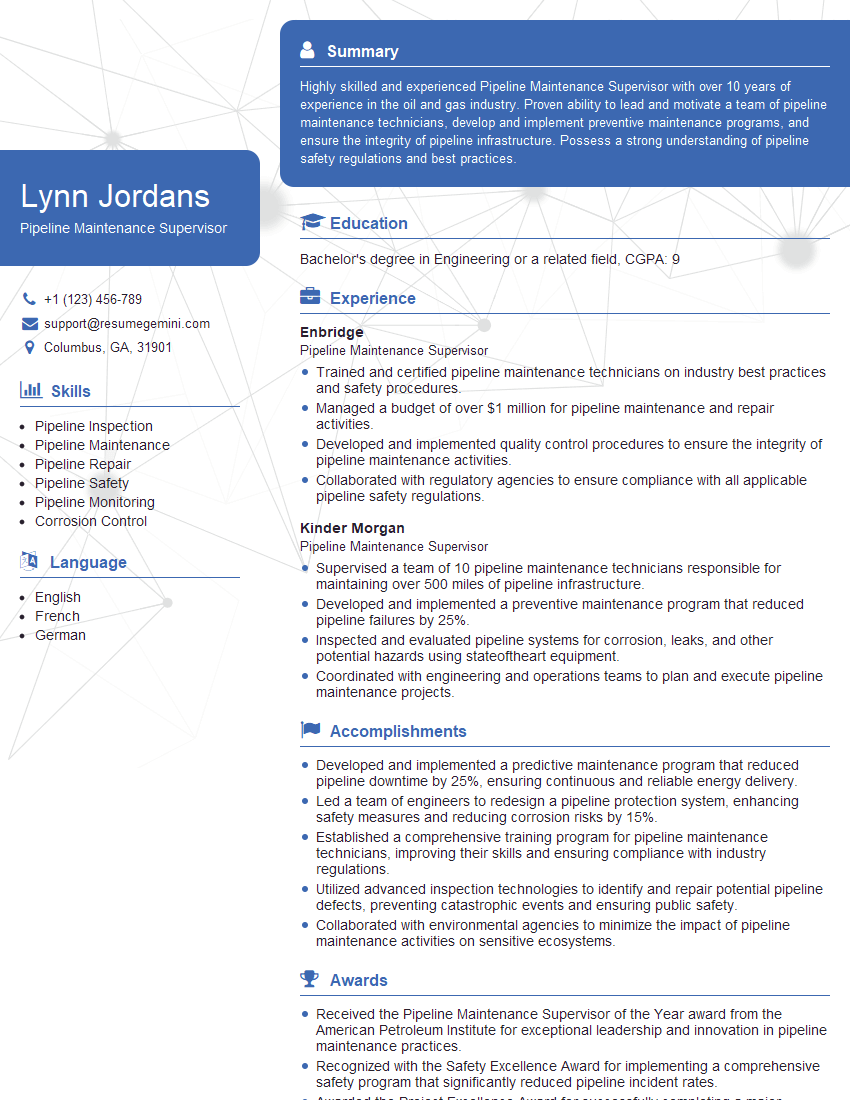
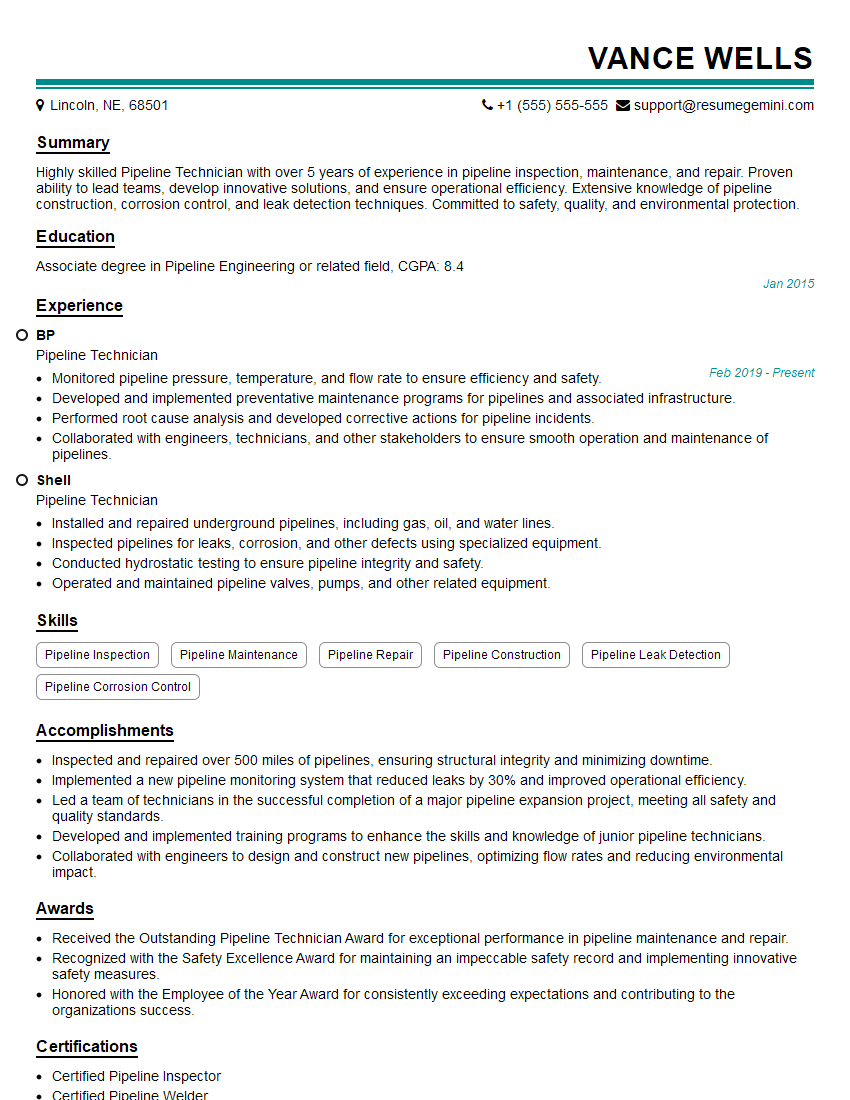
Mastering Gas Pipeline Operations opens doors to a rewarding and challenging career with significant growth potential. To maximize your job prospects, creating an ATS-friendly resume is crucial. ResumeGemini is a trusted resource that can help you build a professional and impactful resume tailored to the energy sector. Examples of resumes tailored to Gas Pipeline Operations are available to help you get started. Invest the time to craft a compelling resume – it’s your first impression and a key step in securing your dream job.
Explore more articles
Users Rating of Our Blogs
Share Your Experience
We value your feedback! Please rate our content and share your thoughts (optional).
What Readers Say About Our Blog
To the interviewgemini.com Webmaster.
Very helpful and content specific questions to help prepare me for my interview!
Thank you
To the interviewgemini.com Webmaster.
This was kind of a unique content I found around the specialized skills. Very helpful questions and good detailed answers.
Very Helpful blog, thank you Interviewgemini team.