The right preparation can turn an interview into an opportunity to showcase your expertise. This guide to Experience with research and data analysis interview questions is your ultimate resource, providing key insights and tips to help you ace your responses and stand out as a top candidate.
Questions Asked in Experience with research and data analysis Interview
Q 1. Explain your experience with different data visualization techniques.
Data visualization is crucial for communicating insights derived from data analysis. I’m proficient in a variety of techniques, tailoring my approach to the specific data and audience. For example, I use:
Bar charts and histograms for comparing categorical or numerical data distributions. In a recent project analyzing customer demographics, a histogram effectively showed the age distribution of our user base, revealing a key target segment.
Scatter plots to identify correlations between two numerical variables. For instance, I used a scatter plot to demonstrate the relationship between marketing spend and sales conversion rates, informing budget allocation decisions.
Line charts for visualizing trends over time. Tracking website traffic over several months with a line chart highlighted seasonal variations and informed content strategy adjustments.
Pie charts for showing proportions of a whole. A pie chart effectively visualized the market share of different competitors in a competitive analysis report.
Heatmaps to represent data density across two dimensions. A heatmap helped visualize customer churn across different demographics and product usage patterns, leading to targeted retention strategies.
Interactive dashboards using tools like Tableau or Power BI to allow dynamic exploration of data. This enabled stakeholders to interact with the data and derive their own conclusions based on their specific needs and interests.
Beyond these basic techniques, I also leverage more advanced visualizations like geographic maps (for spatial data), network graphs (for relationships between entities), and treemaps (for hierarchical data), always prioritizing clarity and effective communication.
Q 2. Describe your process for identifying and cleaning data anomalies.
Identifying and cleaning data anomalies is a critical step in ensuring the accuracy and reliability of my analysis. My process typically involves these steps:
Data profiling: I begin by thoroughly examining the data, calculating summary statistics (mean, median, standard deviation, etc.), and creating visualizations (histograms, box plots) to identify potential outliers or unusual patterns. This gives me a holistic view of the data quality.
Outlier detection: I use statistical methods like the Z-score or Interquartile Range (IQR) to identify outliers that deviate significantly from the rest of the data. A Z-score helps define whether a data point is outside a certain number of standard deviations from the mean. IQR identifies outliers based on the spread of the data.
Root cause analysis: Once anomalies are identified, I investigate the underlying reasons for their presence. Are they due to data entry errors, measurement issues, or genuinely unusual events? Understanding the ‘why’ is crucial for determining the appropriate handling approach.
Data cleaning: Depending on the root cause, I’ll either correct the errors (if possible and verifiable), remove the outliers (if they represent genuine errors), or handle them using imputation or other methods (discussed further in the next response).
Documentation: I meticulously document all data cleaning steps, including the methods used and the rationale for my decisions. This ensures transparency and reproducibility of the analysis.
For example, in a sales dataset, identifying unusually high or low sales figures may reveal fraudulent activity or data entry mistakes. A thorough investigation and appropriate handling are key to maintaining data integrity.
Q 3. How do you handle missing data in your analyses?
Missing data is a common challenge in real-world datasets. My approach to handling missing data depends on the nature and extent of the missingness, and always involves careful consideration of potential bias.
Deletion: If the missing data represents a small, random portion of the dataset, I might employ listwise deletion (removing entire rows with missing values). However, this method can lead to a significant loss of information if the missingness is not random.
Imputation: This involves filling in missing values with estimated values. Common techniques include:
Mean/Median/Mode imputation: Replacing missing values with the mean, median, or mode of the respective variable. Simple but can distort the data distribution if the missing data is not Missing Completely At Random (MCAR).
Regression imputation: Predicting missing values using a regression model based on other variables in the dataset. More sophisticated than mean imputation, but requires careful model selection and validation.
K-Nearest Neighbors (KNN) imputation: Using the values of the k nearest data points to estimate the missing value. This is useful for non-linear relationships.
Multiple Imputation: Creating multiple plausible imputed datasets and then analyzing each dataset separately, combining the results to account for uncertainty due to imputation.
The choice of method depends on the specific context. For example, in a medical study, simply removing incomplete records might lead to biased results, necessitating imputation techniques. I carefully evaluate each option and document my justification.
Q 4. What statistical methods are you most proficient in?
My statistical methods expertise covers a wide range, including:
Descriptive statistics: Calculating measures of central tendency (mean, median, mode), dispersion (standard deviation, variance), and skewness to summarize and describe the data.
Inferential statistics: Conducting hypothesis testing (t-tests, ANOVA, chi-square tests) and building confidence intervals to draw conclusions about populations based on sample data.
Regression analysis: Building linear and logistic regression models to predict outcomes based on predictor variables. I’m experienced in interpreting regression coefficients and assessing model fit.
Time series analysis: Analyzing data collected over time, identifying trends, seasonality, and other patterns. I’ve worked with ARIMA and other time series models to forecast future values.
Clustering analysis: Grouping similar data points together using algorithms like k-means or hierarchical clustering. This is helpful for identifying customer segments or discovering patterns in complex datasets.
Survival analysis: Analyzing time-to-event data, such as customer churn or product lifespan. I’ve worked with Kaplan-Meier curves and Cox proportional hazards models.
I’m also familiar with Bayesian statistical methods, which offer a powerful framework for incorporating prior knowledge into analyses.
Q 5. Explain your experience with A/B testing and experimental design.
A/B testing and experimental design are fundamental to evaluating the effectiveness of interventions, such as website changes or marketing campaigns. My experience encompasses all stages of this process:
Hypothesis formulation: Clearly defining the research question and formulating testable hypotheses. For example, “Increasing the size of the call-to-action button will result in a higher click-through rate.”
Experimental design: Developing a rigorous experimental design, including determining the sample size, randomization, and control group. It’s crucial to ensure the test is statistically powerful and minimizes bias.
Data collection: Implementing the A/B test and collecting data. This involves using appropriate tracking tools and ensuring data accuracy.
Data analysis: Analyzing the collected data using appropriate statistical tests (e.g., t-tests, chi-square tests) to determine statistical significance and practical significance.
Reporting: Communicating the results clearly and concisely, including visualizations and confidence intervals. In addition to simply reporting statistical significance, I emphasize the practical implications of findings and business recommendations.
I have used A/B testing to optimize website conversion rates, personalize email marketing campaigns, and evaluate the effectiveness of various ad creatives. A strong understanding of experimental design ensures reliable and actionable results.
Q 6. How do you choose appropriate statistical tests for different research questions?
Selecting the appropriate statistical test is crucial for drawing valid conclusions. My approach involves considering several factors:
Research question: Is the research question about comparing means, proportions, or associations?
Data type: Are the data continuous, categorical, or ordinal?
Number of groups: Are there two or more groups being compared?
Assumptions of the test: Does the data meet the assumptions of the chosen test (e.g., normality, independence)? If not, non-parametric alternatives may be required.
For example:
To compare the means of two independent groups, I would use an independent samples t-test (if data is normally distributed) or a Mann-Whitney U test (if data is not normally distributed).
To compare the means of three or more independent groups, I would use ANOVA (if data is normally distributed) or a Kruskal-Wallis test (if data is not normally distributed).
To test the association between two categorical variables, I would use a chi-square test.
I always carefully check the assumptions of the chosen test and consider potential violations. If assumptions are violated, I explore alternative, robust methods.
Q 7. Describe your experience with data mining techniques.
Data mining involves extracting knowledge and insights from large datasets. My experience encompasses various techniques, including:
Association rule mining: Discovering relationships between items in transactional data, often used in market basket analysis to identify products frequently purchased together. For example, analyzing grocery store data to discover that customers who buy diapers also tend to buy beer.
Classification: Building models to predict categorical outcomes. I’ve used algorithms like decision trees, support vector machines (SVMs), and naive Bayes to classify customers into different segments or predict customer churn.
Regression: Predicting continuous outcomes using techniques such as linear regression, polynomial regression, and support vector regression.
Clustering: Grouping similar data points based on their characteristics, using algorithms such as k-means, hierarchical clustering, and DBSCAN. This is useful for customer segmentation, anomaly detection, and discovering hidden patterns.
I also have experience with dimensionality reduction techniques like Principal Component Analysis (PCA) to reduce the number of variables while retaining important information, making the data easier to analyze and model.
My data mining projects have ranged from customer segmentation and fraud detection to predicting equipment failure and optimizing supply chains. I always prioritize selecting the appropriate technique based on the specific problem and available data.
Q 8. How do you interpret correlation coefficients?
Correlation coefficients quantify the strength and direction of a linear relationship between two variables. They range from -1 to +1. A coefficient of +1 indicates a perfect positive correlation (as one variable increases, the other increases proportionally), -1 indicates a perfect negative correlation (as one increases, the other decreases proportionally), and 0 indicates no linear correlation.
For example, a correlation coefficient of 0.8 between ice cream sales and temperature suggests a strong positive correlation: as temperature rises, ice cream sales tend to rise. A coefficient of -0.7 between hours spent exercising and body fat percentage suggests a strong negative correlation: as exercise increases, body fat tends to decrease. It’s crucial to remember that correlation doesn’t equal causation; other factors might be at play.
Interpreting the strength of the correlation is subjective but generally follows guidelines like: 0.8-1.0: Very strong, 0.6-0.8: Strong, 0.4-0.6: Moderate, 0.2-0.4: Weak, 0-0.2: Very weak or no correlation.
Q 9. Explain the difference between correlation and causation.
Correlation describes a relationship between variables; causation implies that one variable directly influences another. Just because two variables are correlated doesn’t mean one causes the other. There could be a third, confounding variable, or the relationship might be coincidental.
Example: Ice cream sales and drowning incidents are often positively correlated – both increase in summer. However, ice cream doesn’t cause drowning; the warmer weather is the confounding variable affecting both.
To establish causation, you need to demonstrate a mechanism linking the variables, rule out confounding factors, and ideally conduct controlled experiments (like A/B testing) that isolate the cause-and-effect relationship. Correlation is an important first step in investigating potential causal relationships, but it’s not sufficient on its own.
Q 10. How do you ensure data quality and validity in your research?
Ensuring data quality and validity is paramount. My approach involves several steps:
- Data Cleaning: This involves handling missing values (imputation or removal), identifying and correcting outliers, and dealing with inconsistencies in data formatting. I often use techniques like winsorizing or trimming for outlier treatment depending on the context and potential impact on analysis.
- Data Validation: This stage verifies data accuracy against known sources or expectations. For example, I might cross-reference data with other databases or compare it to industry benchmarks.
- Data Source Evaluation: Critical evaluation of data sources is crucial. I assess the reliability, credibility, and potential biases of each source, preferring reliable, peer-reviewed sources wherever possible.
- Documentation: Meticulous record-keeping is vital. I meticulously document all data cleaning and validation steps, including the rationale for decisions made.
For instance, in a project analyzing customer satisfaction, I would validate survey responses by checking for inconsistencies or unrealistic answers and compare the findings with other performance indicators like customer churn rate.
Q 11. Describe a time you had to deal with conflicting data sources.
In a project analyzing market trends for a new product launch, I encountered conflicting data from two sources: internal sales projections and external market research reports. The internal projections showed significantly higher potential sales than the external reports.
To resolve this, I first investigated the methodologies of each source. The internal projections were based on optimistic assumptions, while the external reports used a more conservative, data-driven approach. I then conducted a sensitivity analysis to determine how different assumptions would affect the results. Finally, I presented both sets of data along with my analysis of their strengths and weaknesses to the stakeholders, recommending a more cautious approach based on the weighted average of both sources, giving more credence to the external, statistically robust data.
This experience highlighted the importance of transparency, critical assessment, and considering the context and potential biases of different data sources.
Q 12. What are your preferred tools for data analysis and visualization?
My preferred tools for data analysis and visualization depend on the project’s scale and complexity. For statistical analysis and data manipulation, I frequently use R and Python (with libraries like pandas, scikit-learn, and statsmodels). For data visualization, I favor Tableau and Power BI for their interactive dashboards and ease of use, as well as ggplot2 in R for creating publication-quality graphics.
For smaller datasets or quick exploratory analysis, I might use spreadsheet software like Excel or Google Sheets. The choice of tools is driven by the need to balance efficiency, analytical capabilities, and ease of communication.
Q 13. Describe your experience with SQL or other database querying languages.
I have extensive experience with SQL, having used it extensively to query and manipulate data from relational databases. I’m proficient in writing complex queries involving joins, subqueries, aggregations, and window functions to extract and transform data for analysis. For example, I’ve used SQL to join customer transaction data with demographic information to identify key customer segments or to analyze sales trends over time.
Example: SELECT COUNT(*) FROM Customers WHERE Country = 'USA'; This simple query counts the number of customers from the USA in a ‘Customers’ table.
Beyond SQL, I’m familiar with other database querying languages such as NoSQL database query languages like MongoDB’s query language, depending on the data structure and the specific analytical needs of the project.
Q 14. How do you communicate complex data findings to non-technical audiences?
Communicating complex data findings to non-technical audiences requires translating technical jargon into plain language and focusing on the story the data tells. My approach involves:
- Visualizations: I heavily rely on charts and graphs (bar charts, line graphs, pie charts, etc.) to illustrate key findings. I choose visualizations carefully based on the type of data and the message I’m trying to convey.
- Storytelling: I frame the data analysis as a narrative, highlighting the key findings and their implications in a clear, concise manner, avoiding overly technical explanations.
- Analogies and Metaphors: To make complex concepts more relatable, I utilize analogies and metaphors to explain technical terms in simple language.
- Interactive Presentations: For larger audiences, interactive presentations with clear visuals and minimal text are effective.
For example, instead of saying “the coefficient of determination (R-squared) was 0.8,” I might say, “80% of the variation in sales can be explained by changes in advertising spending.”
Q 15. Explain your experience with regression analysis.
Regression analysis is a powerful statistical method used to model the relationship between a dependent variable and one or more independent variables. Think of it like this: you’re trying to figure out how much ice cream sales (dependent variable) are affected by factors like temperature (independent variable) and advertising spend (another independent variable). There are different types of regression, most commonly linear regression (where the relationship is assumed to be a straight line), but also polynomial, logistic, and many others, each suited to different types of data and relationships.
In my experience, I’ve extensively used linear regression to predict customer churn based on factors such as usage frequency, customer service interactions, and demographics. I’ve also employed multiple linear regression to model the impact of various marketing channels on sales conversions. For example, I once used regression analysis to determine the optimal pricing strategy for a new product by examining how price affected sales volume and profit margins. I used R and Python extensively, leveraging libraries like statsmodels and scikit-learn to perform the analysis, interpret coefficients, and assess model fit using metrics like R-squared and adjusted R-squared. The process always involves careful data cleaning, feature selection, and model validation to ensure robustness and avoid overfitting.
Career Expert Tips:
- Ace those interviews! Prepare effectively by reviewing the Top 50 Most Common Interview Questions on ResumeGemini.
- Navigate your job search with confidence! Explore a wide range of Career Tips on ResumeGemini. Learn about common challenges and recommendations to overcome them.
- Craft the perfect resume! Master the Art of Resume Writing with ResumeGemini’s guide. Showcase your unique qualifications and achievements effectively.
- Don’t miss out on holiday savings! Build your dream resume with ResumeGemini’s ATS optimized templates.
Q 16. Describe your experience with hypothesis testing.
Hypothesis testing is a cornerstone of statistical inference. It’s a structured process for determining whether there’s enough evidence to support a claim (hypothesis) about a population based on a sample of data. Imagine you’re testing a new drug; your hypothesis might be that it lowers blood pressure. You’d collect data from a sample group, and hypothesis testing helps determine if the observed reduction in blood pressure is statistically significant or just due to random chance.
My experience includes formulating hypotheses, selecting appropriate statistical tests (t-tests, ANOVA, chi-squared tests, etc.), calculating p-values, and interpreting the results. For instance, in a recent project, I used a two-sample t-test to compare the average customer satisfaction scores between two different customer service teams. The analysis showed a statistically significant difference, leading us to investigate the root causes of the discrepancy and implement targeted improvement strategies. Understanding the nuances of Type I and Type II errors is crucial in avoiding misleading conclusions.
Q 17. How do you handle outliers in your datasets?
Outliers are data points that significantly deviate from the rest of the data. They can skew your analysis and lead to inaccurate conclusions. Handling outliers requires a careful approach, starting with understanding why they exist. Are they errors in data entry? Are they truly exceptional cases, or something else?
My approach involves a multi-step process. First, I visually inspect the data using box plots, scatter plots, and histograms to identify potential outliers. Then, I investigate the reasons for their presence. If they’re due to errors, I correct or remove them. If they’re legitimate but highly influential, I might use robust statistical methods less sensitive to outliers, such as median instead of mean, or apply transformations like logarithmic transformations to reduce their impact. In some cases, I might even analyze the data both with and without outliers to assess their influence on the overall findings. A detailed investigation and justification is crucial in any outlier handling process.
Q 18. What is your experience with statistical modeling?
Statistical modeling involves creating mathematical representations of real-world processes to understand and predict outcomes. It goes beyond simple descriptive statistics; it allows us to make inferences and predictions. Think of it as building a miniature version of the system you are studying.
I have extensive experience in various statistical modeling techniques, including linear and generalized linear models (GLMs), time series analysis (ARIMA, Prophet), and survival analysis (Kaplan-Meier, Cox proportional hazards). For example, I developed a GLM to model customer purchase behavior, predicting the probability of a customer making a purchase based on various factors like website visits, email engagement, and past purchase history. This model helped optimize marketing campaigns and improve sales forecasting. Model selection, evaluation (using metrics like AIC, BIC, and cross-validation), and interpretation are key aspects I focus on to ensure the model is both accurate and insightful.
Q 19. Explain your experience with data warehousing or big data technologies.
Data warehousing and big data technologies are crucial for handling and analyzing massive datasets. A data warehouse is a centralized repository of structured data from various sources, optimized for querying and reporting. Big data technologies deal with datasets too large and complex for traditional databases. They enable distributed processing and storage, allowing for efficient analysis of massive amounts of information.
My experience includes working with various data warehousing tools and technologies, such as SQL Server, Snowflake, and Hadoop ecosystems (HDFS, Spark, Hive). I’ve designed and implemented ETL (Extract, Transform, Load) pipelines to move data from various sources into a data warehouse for analysis. I also have experience working with cloud-based data warehousing solutions like AWS Redshift and Google BigQuery, enabling scalability and efficient data management for large-scale analytical projects. This includes tasks like schema design, data optimization, and query tuning for improved performance.
Q 20. Describe a time you had to troubleshoot a data analysis problem.
During a project analyzing website traffic data, I encountered unexpected spikes in bounce rates during specific hours. Initial analysis pointed to a possible technical issue. However, further investigation revealed that these spikes coincided with large-scale promotional campaigns launched by a competitor. The initial assumption of a technical problem was incorrect; the increased bounce rate was actually a reflection of increased competition and changes in user behavior.
To troubleshoot, I first checked server logs for any technical errors, ruling out that possibility. Next, I cross-referenced the bounce rate data with competitor campaign schedules and discovered the correlation. This led to a revised analysis focusing on competitive impact rather than solely technical issues. The experience highlighted the importance of considering external factors and conducting thorough exploratory data analysis before drawing conclusions.
Q 21. How do you evaluate the reliability and validity of research findings?
Evaluating the reliability and validity of research findings is paramount. Reliability refers to the consistency of the findings; if you repeat the study, will you get similar results? Validity refers to the accuracy of the findings; are you actually measuring what you intend to measure?
I assess reliability through techniques like test-retest reliability (repeating measurements) and inter-rater reliability (comparing results from multiple observers). For validity, I consider different types: internal validity (ensuring the causal relationship is correctly interpreted), external validity (generalizability of the findings to a larger population), and construct validity (measuring the intended construct). I use statistical measures like Cronbach’s alpha for reliability and various techniques depending on the research design and measurement scales for validity. Thorough documentation, clear methodology, and appropriate statistical testing are crucial for establishing confidence in research conclusions. Rigorous data analysis and interpretation are critical to maintain the highest standards of research quality.
Q 22. Describe your experience with qualitative research methods.
Qualitative research delves into the ‘why’ behind phenomena, exploring in-depth meanings and interpretations rather than focusing solely on numbers. I have extensive experience using various qualitative methods, including:
- Semi-structured interviews: I’ve conducted numerous interviews, using open-ended questions to allow participants to express their thoughts and experiences freely. For instance, while researching customer satisfaction with a new software, I used semi-structured interviews to understand the users’ workflow and pain points beyond simple ratings.
- Focus groups: Facilitating focus groups allows for rich data collection by observing group dynamics and interactions. In a project analyzing brand perception, I used focus groups to identify common themes and opinions related to a company’s image.
- Thematic analysis: This is a crucial step in interpreting qualitative data. I’m proficient in identifying recurring themes and patterns across interview transcripts and other qualitative data sources. For example, during a study on employee engagement, I identified three major themes: work-life balance, recognition, and career growth opportunities.
- Content analysis: I’ve analyzed textual data such as social media posts, reviews, and open-ended survey responses to uncover trends and insights. Analyzing customer reviews helped me identify areas for product improvement in a recent project.
My approach emphasizes rigorous data collection, careful transcription, and systematic analysis to ensure the findings are credible and well-supported.
Q 23. How do you ensure the ethical considerations in your research?
Ethical considerations are paramount in my research. I strictly adhere to a framework that prioritizes:
- Informed consent: Participants are fully informed about the study’s purpose, procedures, and risks before they agree to participate. This includes explaining how their data will be used and protected.
- Confidentiality and anonymity: I employ strategies to protect participant identity and sensitive information, such as anonymizing data and using pseudonyms in reports. Data is securely stored and accessed only by authorized personnel.
- Data integrity and accuracy: I maintain meticulous records of data collection and analysis, ensuring the accuracy and reliability of the findings. This includes rigorous transcription and careful coding of qualitative data.
- Avoiding bias: I actively work to mitigate researcher bias by using standardized procedures, employing multiple data sources, and involving colleagues in the review process.
- Institutional Review Board (IRB) approval: I always seek approval from the relevant IRB before commencing research involving human subjects, ensuring that the study meets ethical standards.
Ethical considerations are not just a checklist; they’re integrated into every stage of the research process.
Q 24. What are some limitations of your chosen analytical methods?
The analytical methods I use, both qualitative and quantitative, have inherent limitations. For example:
- Qualitative research: Findings may not be generalizable to a larger population since they’re often based on smaller sample sizes. The subjectivity of interpretation also needs careful consideration.
- Quantitative research: Statistical significance doesn’t always equate to practical significance. Furthermore, relying solely on quantitative data might overlook important contextual factors or nuances.
- Specific methods: Regression models, for example, assume linearity and independence of variables, which might not always be true in the real world. Similarly, clustering techniques can be sensitive to the choice of distance metric and the number of clusters.
I acknowledge these limitations in my reports and strive to mitigate them by using mixed-methods approaches, triangulating data sources, and carefully interpreting results. Transparency regarding the limitations is key to responsible research.
Q 25. How do you prioritize tasks when working with multiple projects?
Managing multiple projects requires a robust prioritization strategy. I use a combination of methods:
- Prioritization Matrix: I use a matrix (e.g., Eisenhower Matrix) categorizing tasks by urgency and importance. This helps to focus on high-impact tasks first.
- Project Management Software: Tools like Jira or Asana help track progress, deadlines, and dependencies across different projects. This provides a clear overview of all tasks and their timelines.
- Time Blocking: Allocating specific time blocks for each project ensures focused work and minimizes context switching.
- Regular Review and Adjustment: I regularly review my schedule and adjust priorities as needed. Unexpected events or changes in deadlines require flexibility in task management.
This systematic approach ensures that I can efficiently manage multiple projects while delivering high-quality results on time.
Q 26. Explain your experience with data storytelling.
Data storytelling is about translating complex data into a compelling narrative that resonates with the audience. My experience encompasses:
- Visualizations: I utilize various charts, graphs, and dashboards to effectively communicate data insights. Choosing the right visualization is crucial for conveying information clearly and concisely.
- Narrative Structure: I structure my presentations and reports like a story, with a clear beginning, middle, and end. This makes the data more engaging and easier to follow.
- Audience Consideration: Understanding the audience and tailoring the narrative accordingly is crucial. For a technical audience, I might focus on detailed analysis, whereas for a business audience, I might emphasize key takeaways and recommendations.
- Interactive Elements: Incorporating interactive elements, such as dashboards or clickable maps, can make data storytelling more dynamic and engaging.
For example, in a presentation to executives, I used a compelling visual narrative to demonstrate the positive impact of a new marketing campaign on customer acquisition, highlighting key metrics with clear and concise visualizations.
Q 27. Describe your experience with predictive modeling.
Predictive modeling involves using statistical techniques to predict future outcomes based on historical data. My experience includes developing models using various techniques like:
- Regression analysis: I’ve used linear and logistic regression to predict continuous and categorical variables, respectively. For instance, I built a model to predict customer churn based on factors like usage patterns and demographics.
- Classification algorithms: I’ve implemented algorithms such as Support Vector Machines (SVM) and Random Forests to classify data. This was used in a project to classify customer feedback as positive, negative, or neutral.
- Time series analysis: I’ve used ARIMA and other time series models to forecast future values based on past trends. This was applied in forecasting sales figures for a product based on its historical performance.
The process typically involves data cleaning, feature engineering, model selection, training, evaluation, and deployment. Model evaluation is critical, using metrics appropriate for the problem (e.g., accuracy, precision, recall, RMSE). I’m proficient in interpreting model outputs and communicating their implications to stakeholders.
Q 28. How do you stay up-to-date with the latest trends in data analysis?
Staying current in the rapidly evolving field of data analysis is crucial. I employ several strategies:
- Online Courses and Workshops: Platforms like Coursera, edX, and DataCamp offer courses on advanced techniques and new technologies. I regularly enroll in relevant courses to update my skills.
- Conferences and Webinars: Attending industry conferences and webinars exposes me to the latest research and best practices. This helps to network with peers and learn about cutting-edge developments.
- Professional Journals and Publications: I regularly read journals such as the Journal of the American Statistical Association and others to keep abreast of new methodological developments and research findings.
- Online Communities and Forums: Engaging with online communities like Stack Overflow and Kaggle provides opportunities for learning from others and sharing knowledge.
- Experimentation and Practice: I actively seek opportunities to apply new techniques and tools in my projects, fostering continuous learning and practical experience.
This multi-faceted approach ensures that I remain at the forefront of data analysis trends and adapt my skills as needed.
Key Topics to Learn for Experience with Research and Data Analysis Interviews
- Research Design & Methodology: Understanding various research methodologies (qualitative, quantitative, mixed methods), experimental design, and data collection techniques. Practical application includes explaining the choice of methodology for a specific research question.
- Data Wrangling & Preprocessing: Mastering data cleaning, transformation, and preparation techniques. Practical application involves describing your experience with handling missing data, outliers, and inconsistencies in datasets.
- Statistical Analysis & Modeling: Proficiency in statistical software (e.g., R, Python, SPSS) and applying appropriate statistical tests (e.g., t-tests, ANOVA, regression analysis). Practical application includes interpreting statistical results and drawing meaningful conclusions.
- Data Visualization & Communication: Creating clear and effective visualizations (e.g., charts, graphs) to communicate findings to both technical and non-technical audiences. Practical application involves describing your approach to presenting complex data in an easily understandable manner.
- Data Interpretation & Insight Generation: Translating data analysis results into actionable insights and recommendations. Practical application includes providing examples of how you have used data analysis to solve problems or make informed decisions.
- Specific Software/Tools: Demonstrating proficiency in relevant software (SQL, Tableau, Power BI etc.) and libraries (Pandas, Scikit-learn etc.).
- Ethical Considerations in Data Analysis: Understanding and addressing potential biases in data and ensuring responsible data handling practices.
Next Steps
Mastering research and data analysis skills is crucial for career advancement in today’s data-driven world. These skills are highly sought after across diverse industries, opening doors to exciting and impactful roles. To maximize your job prospects, create an ATS-friendly resume that highlights your achievements and quantifies your impact. ResumeGemini can help you build a professional and effective resume that stands out. We offer examples of resumes tailored to showcase experience with research and data analysis, guiding you in presenting your skills and experience in the best possible light. Take advantage of these resources to craft a compelling resume that reflects your expertise and lands you your dream job.
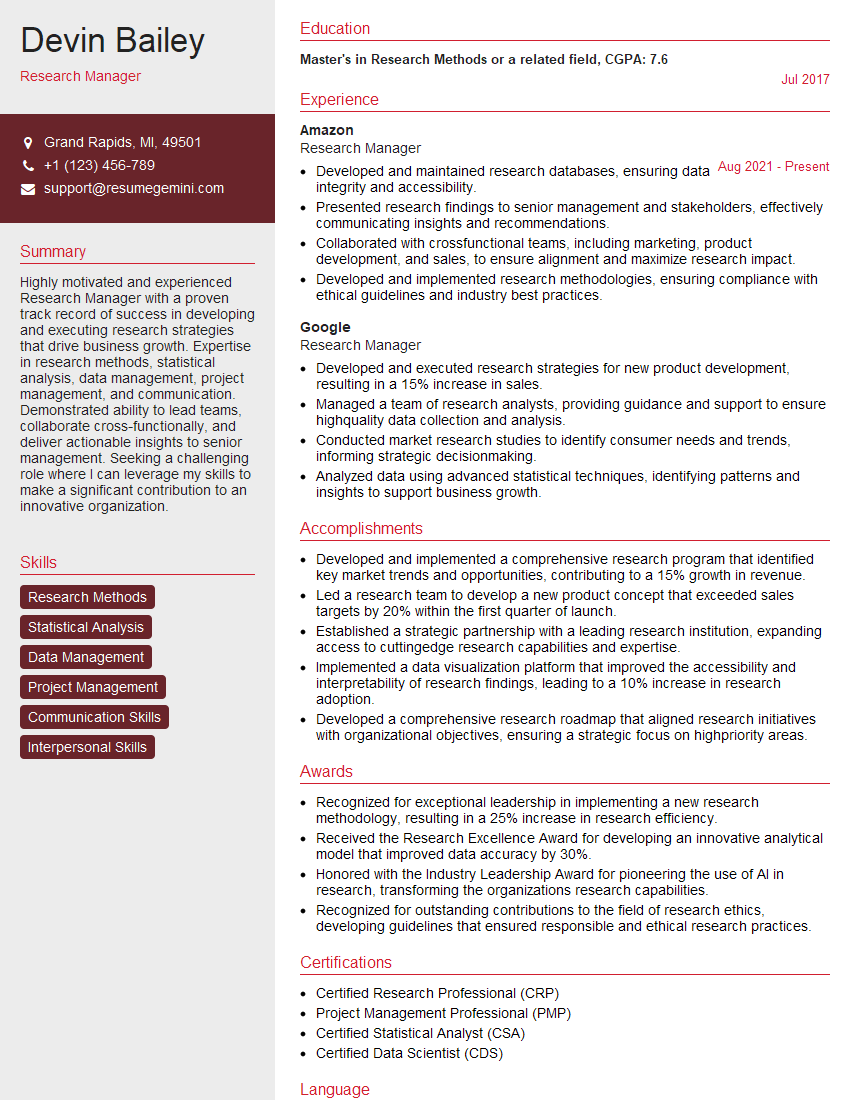
Research Manager Resume Sample
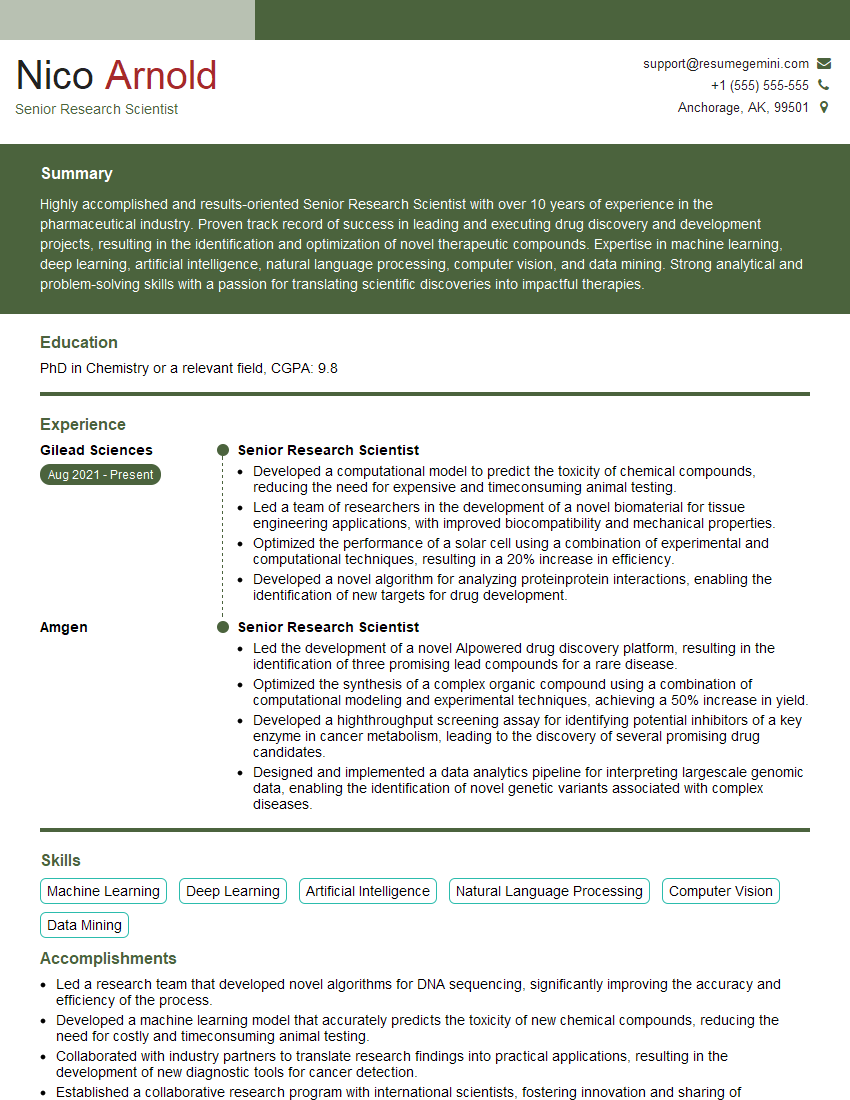
Senior Research Scientist Resume Sample
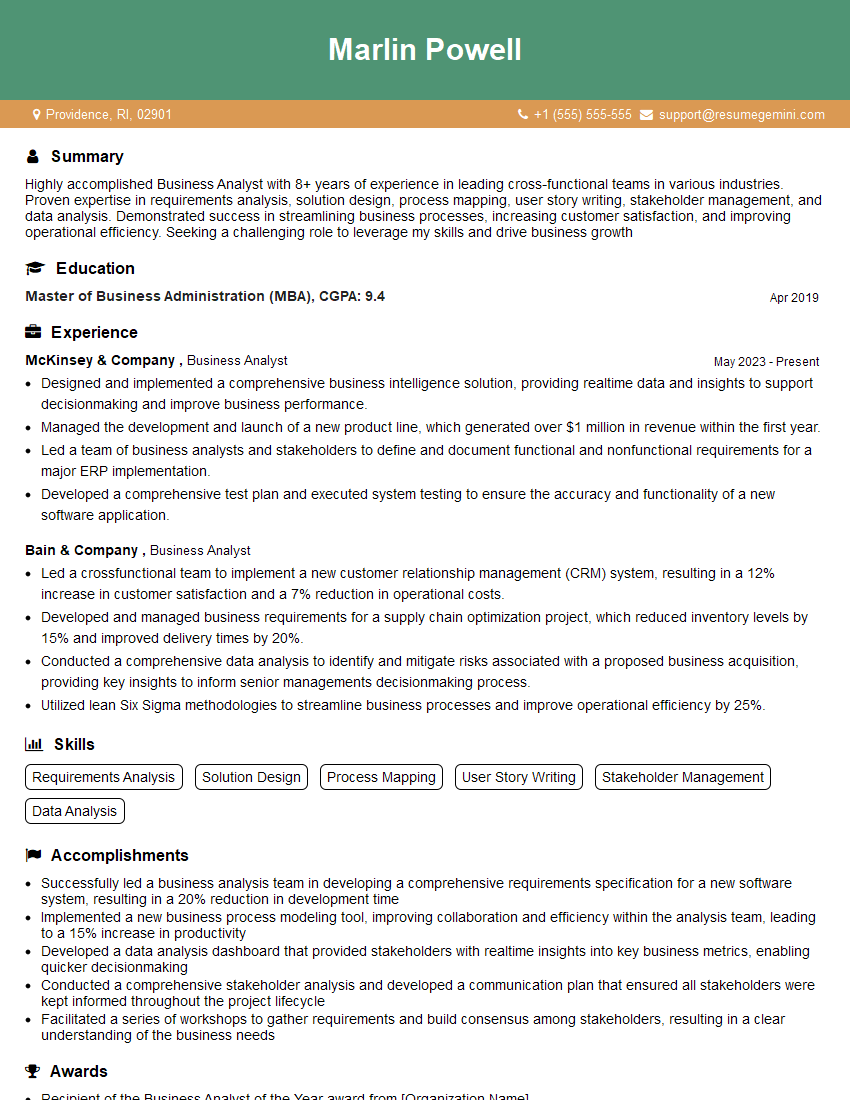
Business Analyst Resume Sample
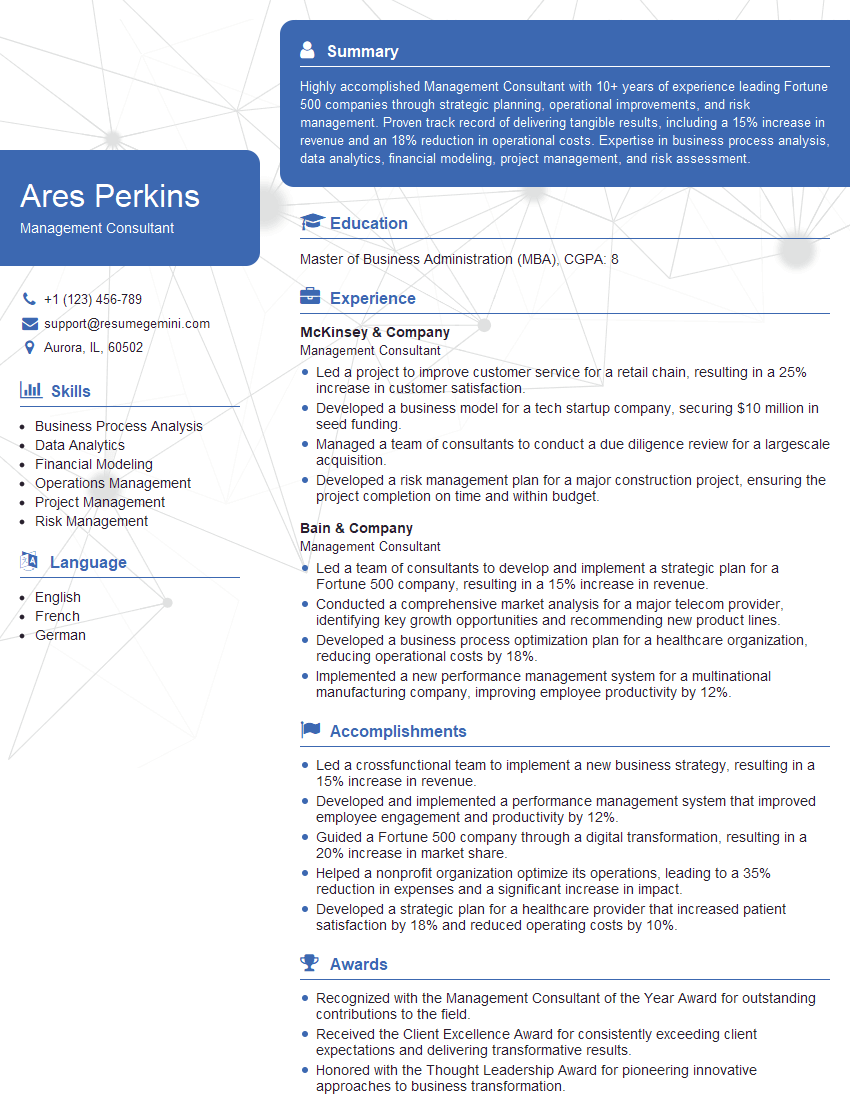
Management Consultant Resume Sample
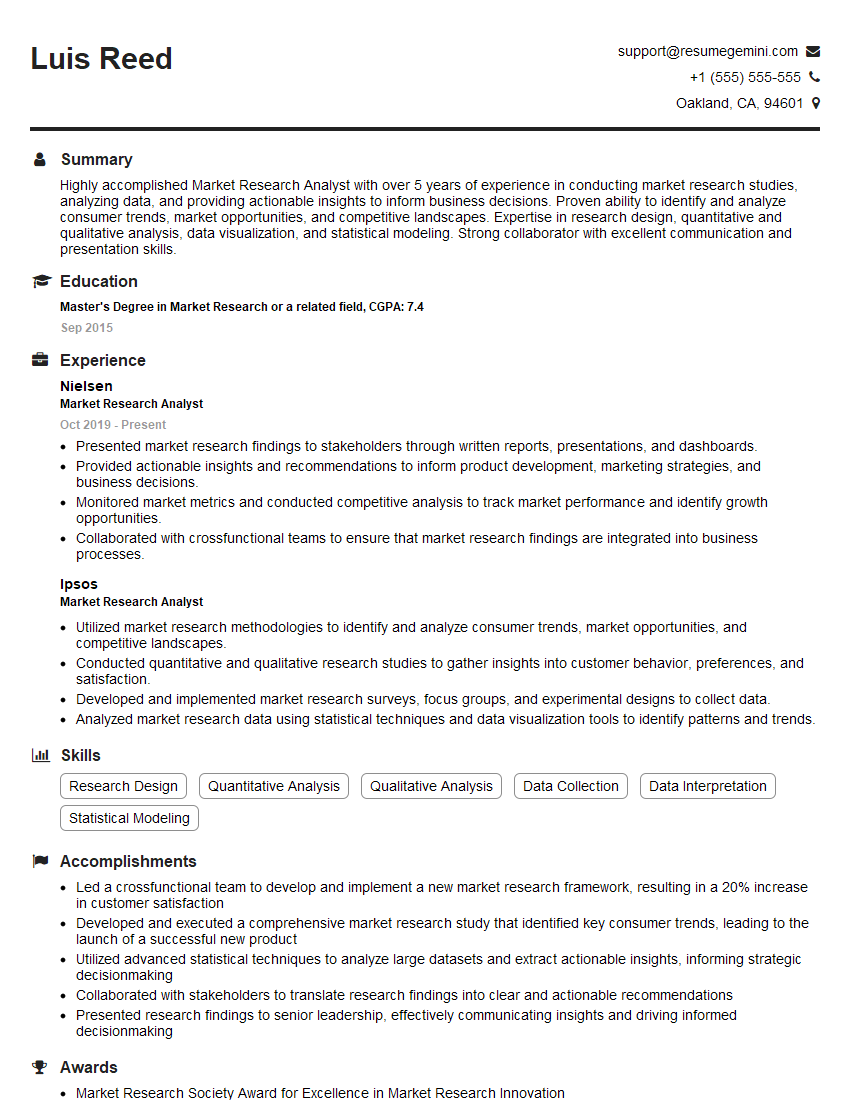
Market Research Analyst Resume Sample
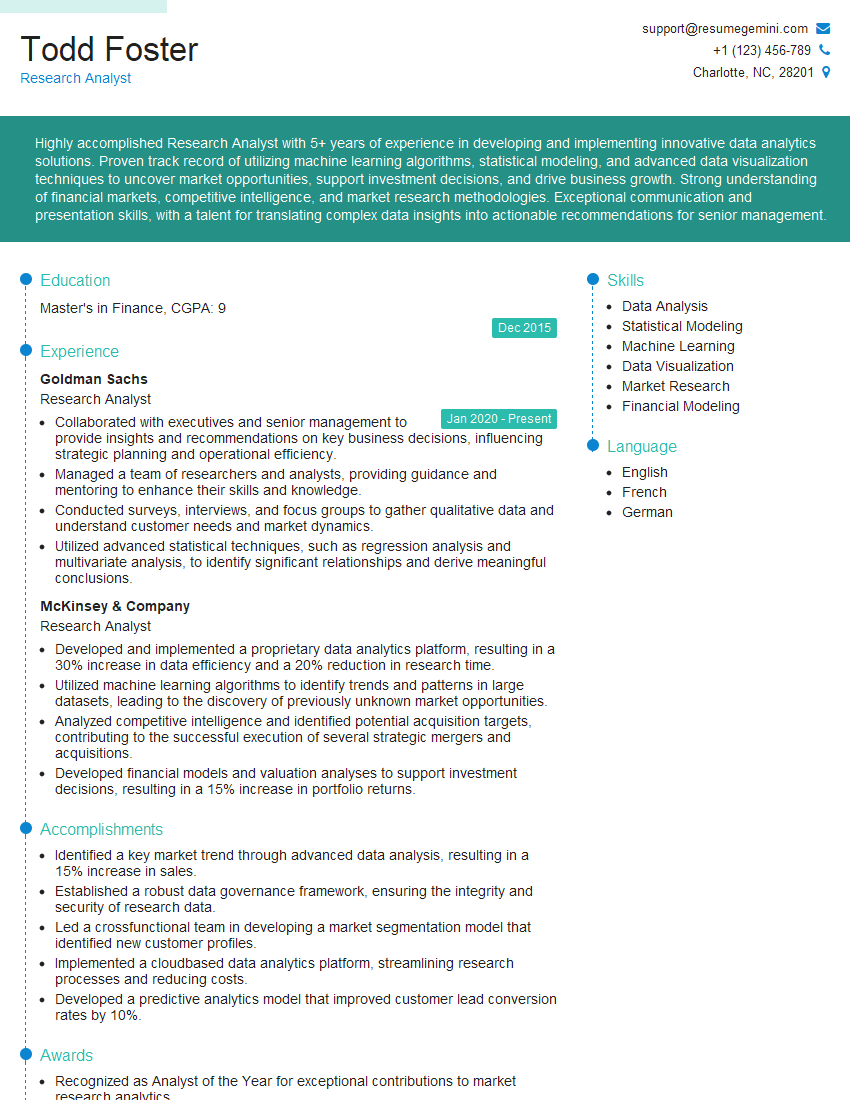
Research Analyst Resume Sample
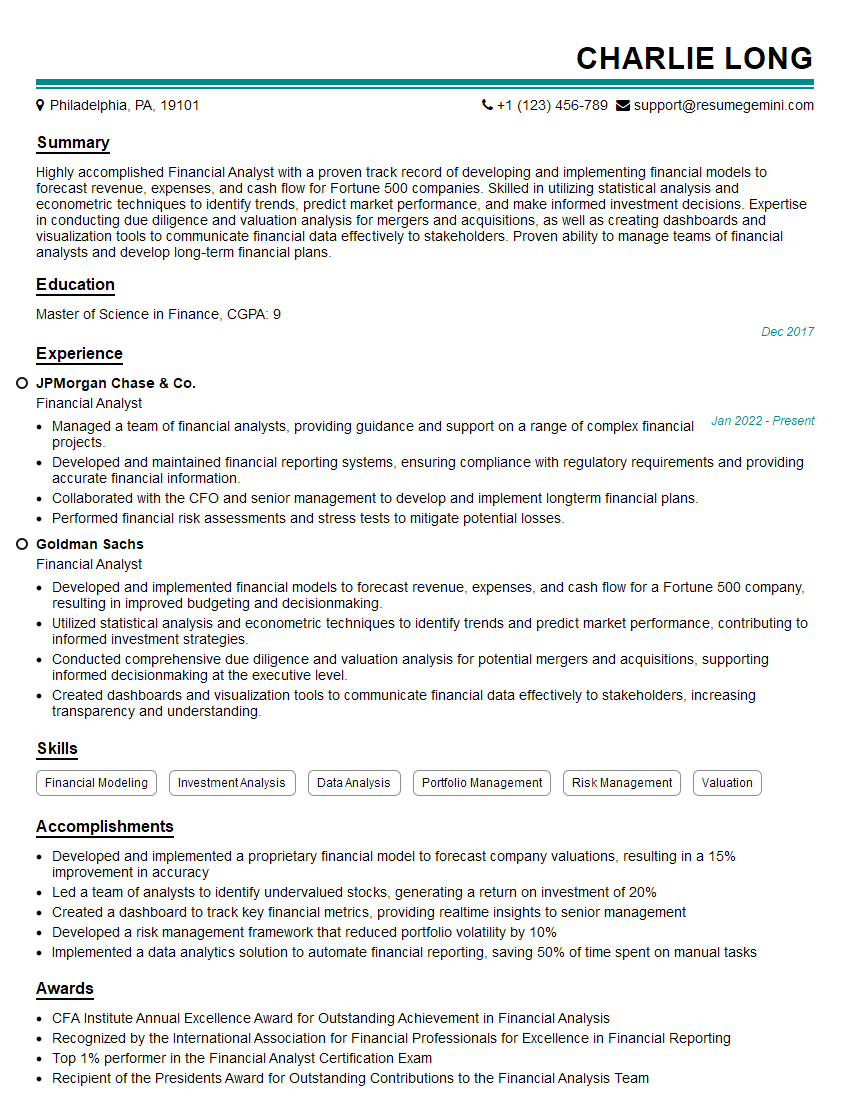
Financial Analyst Resume Sample
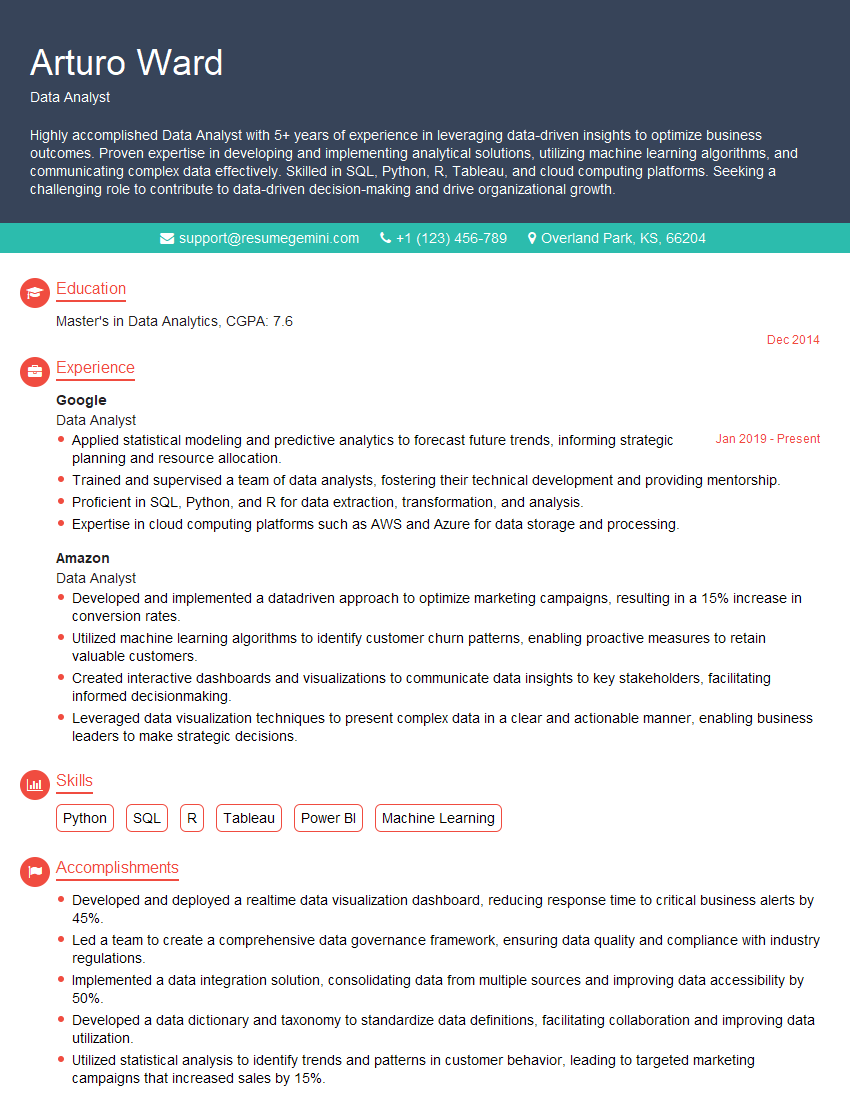
Data Analyst Resume Sample
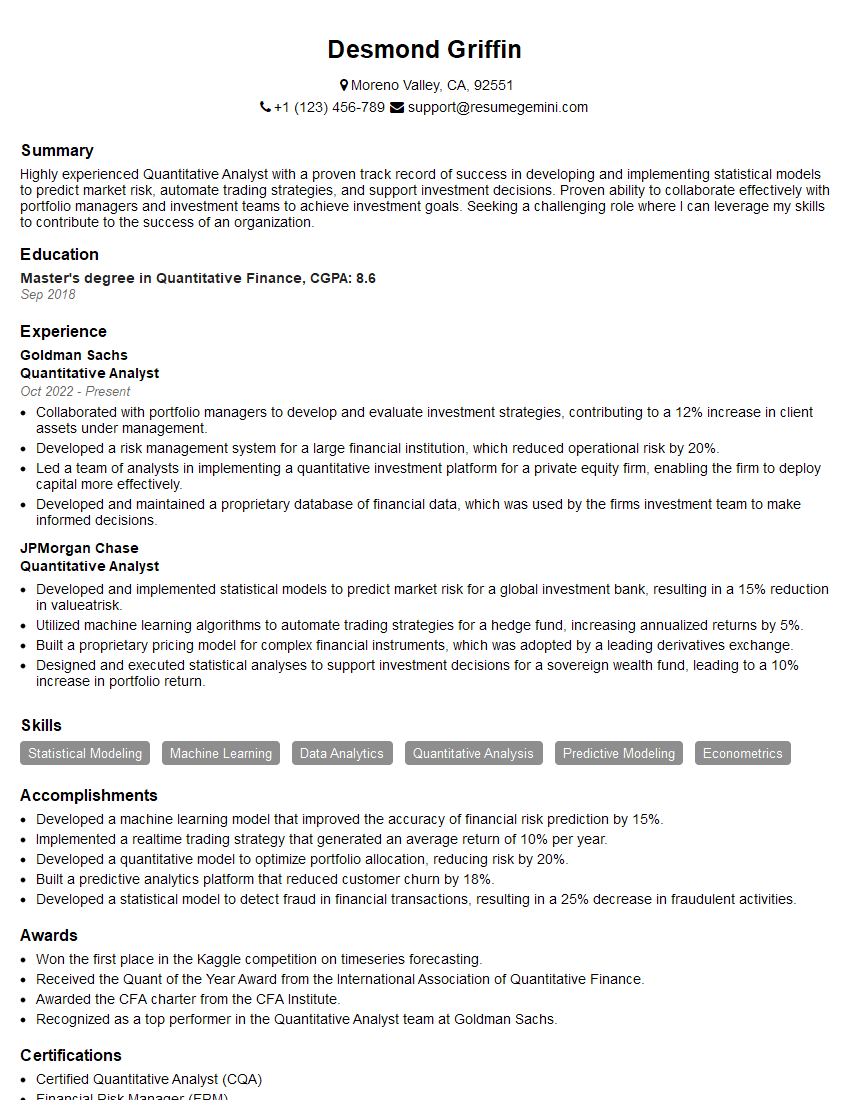
Quantitative Analyst Resume Sample
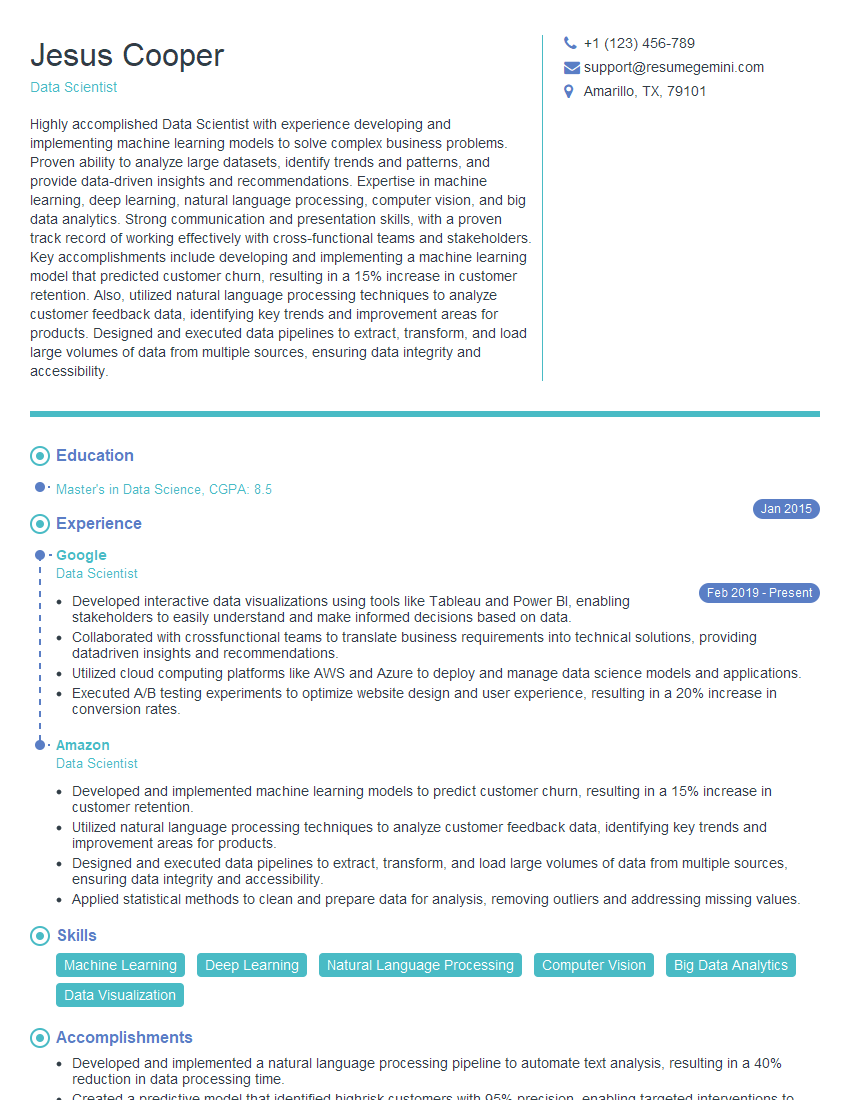
Data Scientist Resume Sample
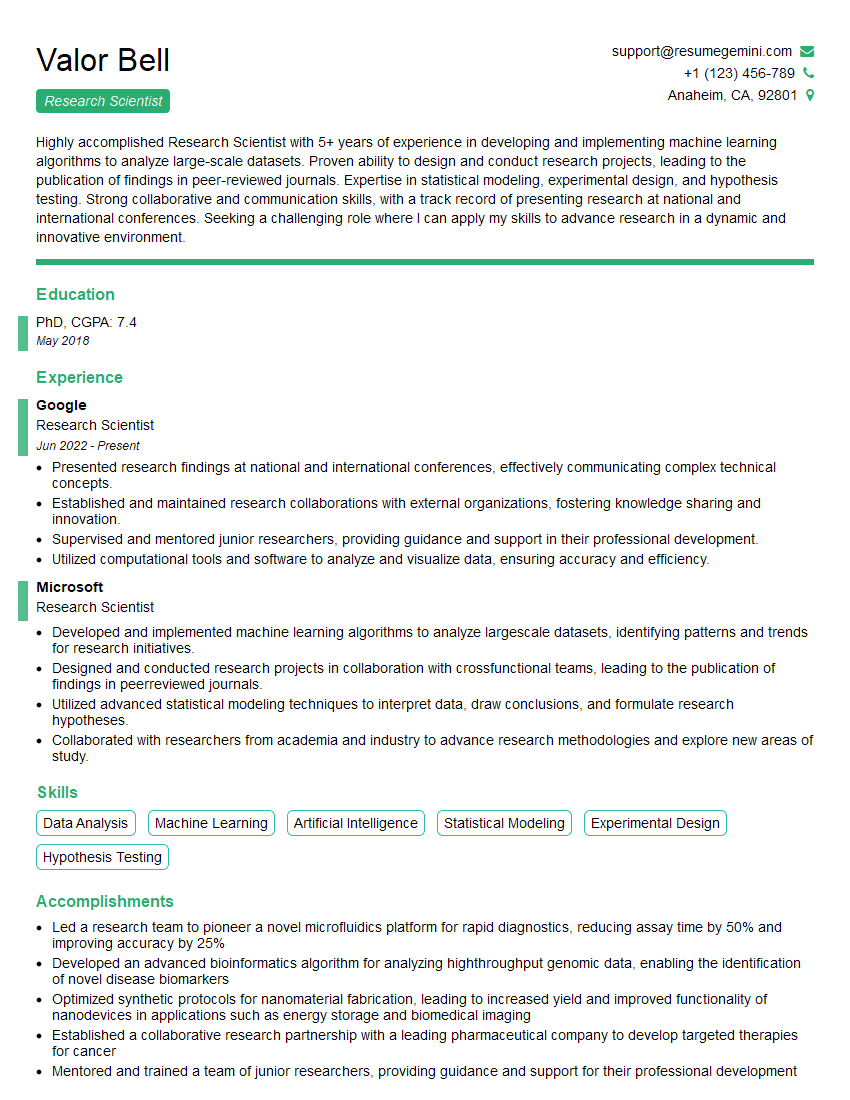
Research Scientist Resume Sample
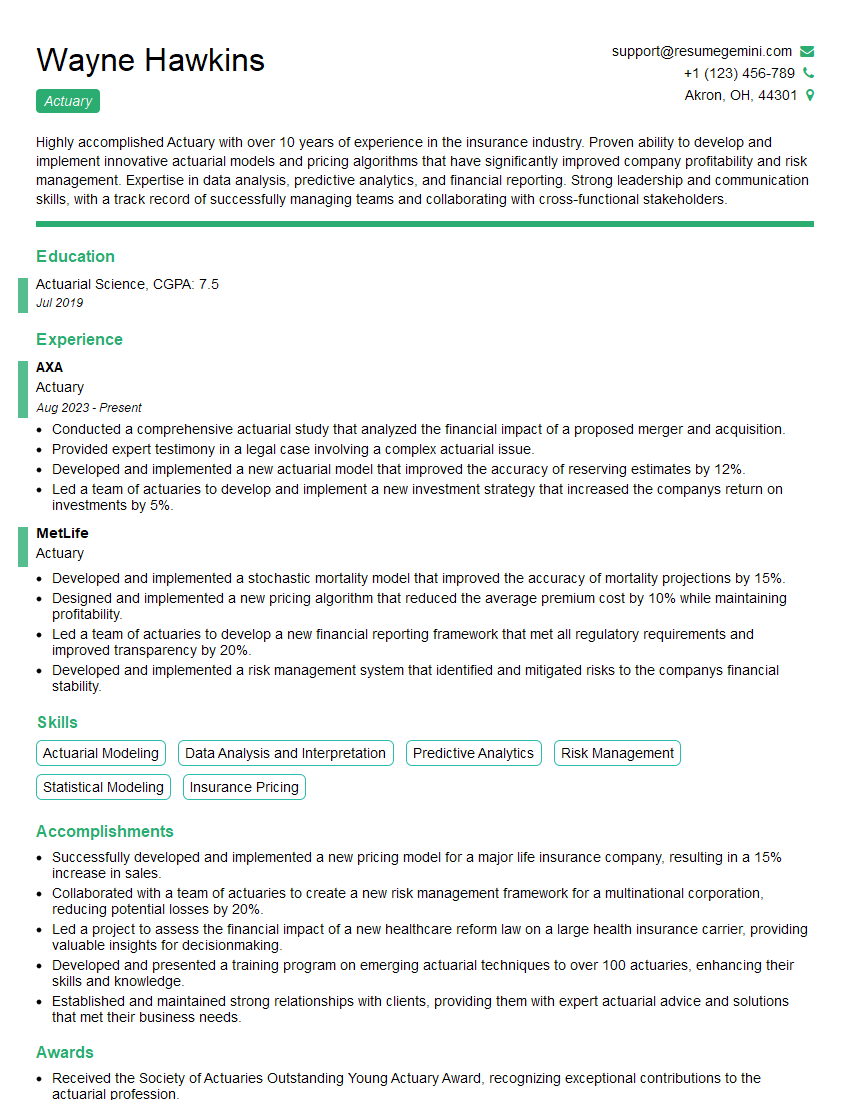
Actuary Resume Sample

Operations Research Analyst Resume Sample
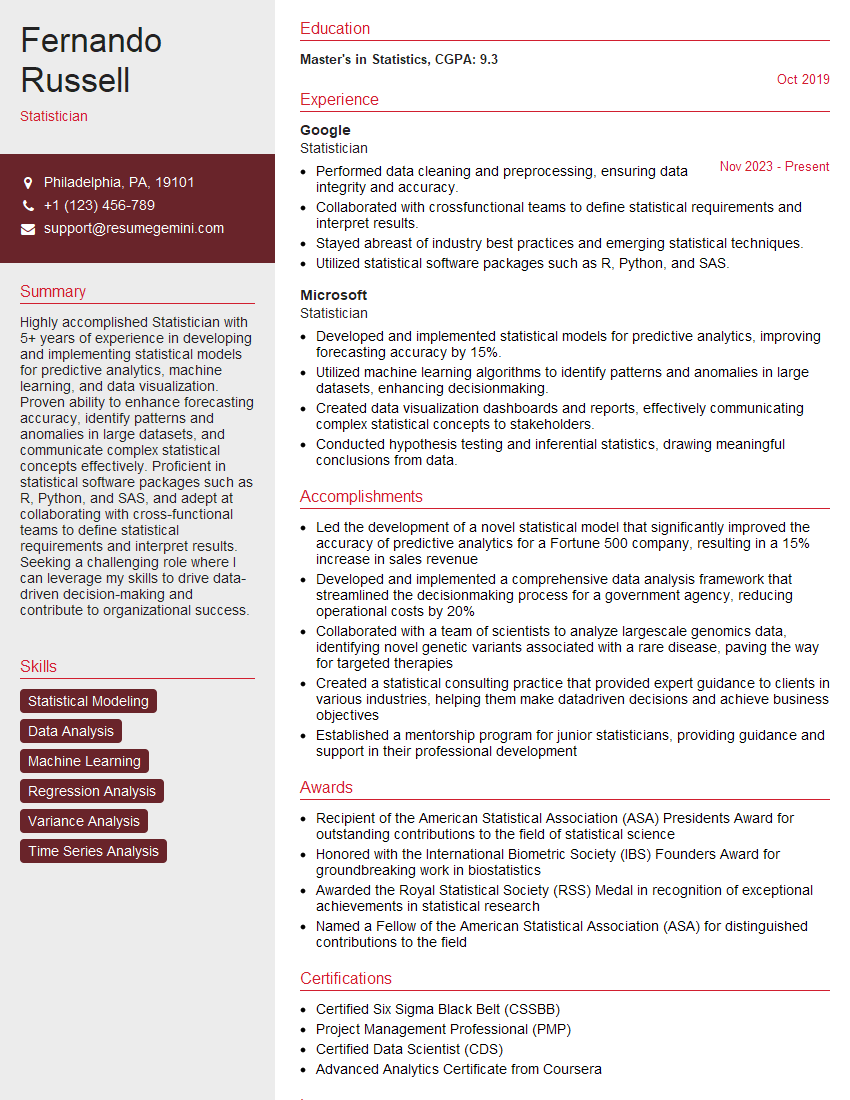
Statistician Resume Sample
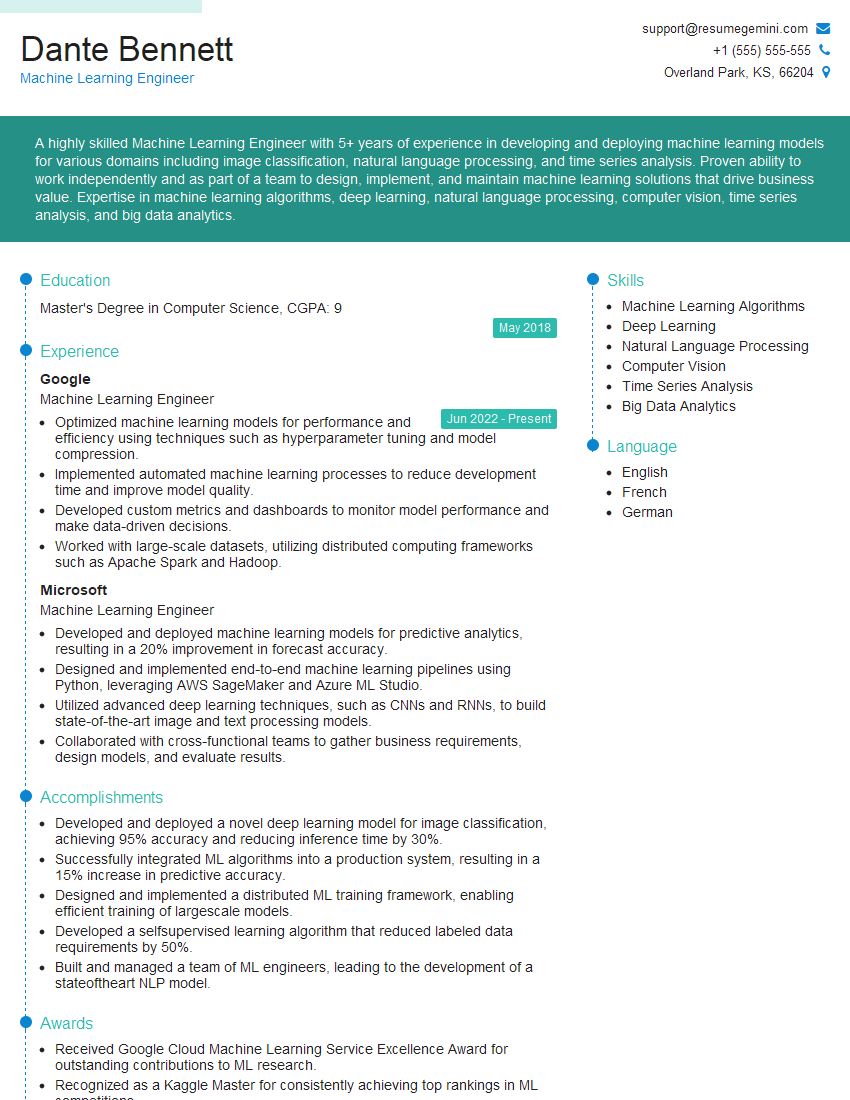
Machine Learning Engineer Resume Sample
Explore more articles
Users Rating of Our Blogs
Share Your Experience
We value your feedback! Please rate our content and share your thoughts (optional).
What Readers Say About Our Blog
To the interviewgemini.com Webmaster.
Very helpful and content specific questions to help prepare me for my interview!
Thank you
To the interviewgemini.com Webmaster.
This was kind of a unique content I found around the specialized skills. Very helpful questions and good detailed answers.
Very Helpful blog, thank you Interviewgemini team.