Interviews are opportunities to demonstrate your expertise, and this guide is here to help you shine. Explore the essential Pipe Insulation Installation interview questions that employers frequently ask, paired with strategies for crafting responses that set you apart from the competition.
Questions Asked in Pipe Insulation Installation Interview
Q 1. What types of pipe insulation materials are you familiar with?
I’m familiar with a wide range of pipe insulation materials, each chosen based on factors like temperature, application, and budget. Common types include:
- Fiberglass: A cost-effective option for moderate temperatures, offering good thermal performance and is readily available. Think of it as the ‘workhorse’ of pipe insulation.
- Mineral wool: Excellent for high temperatures and fire resistance, often used in industrial settings and for applications requiring superior fire safety. It’s more robust than fiberglass.
- Cellular glass: Ideal for extremely high temperatures and harsh environments, offering superior durability and longevity. This is the choice for demanding applications where other insulations would fail.
- Polyisocyanurate (Polyiso): A rigid foam insulation known for its high R-value per inch, making it space-saving and efficient, often used in commercial and industrial applications. Think of it as a high-performance option.
- Calcium Silicate: Excellent for high-temperature applications and offers good resistance to moisture and chemicals, making it suitable for challenging environments. This material excels in demanding conditions.
- Foam Rubber (EPDM, Neoprene, etc.): Used primarily for low-temperature applications and often for pipes carrying chilled water. This insulation is flexible and water resistant.
The selection depends heavily on the specific project requirements.
Q 2. Explain the different methods of pipe insulation installation.
Pipe insulation installation methods vary depending on the material and pipe configuration, but generally fall into these categories:
- Slip-on insulation: This is the most common method for pre-fabricated insulation sections that simply slip over the pipe. It’s quick and easy for straight pipe runs.
- Wrap-around insulation: Used with flexible materials like fiberglass or foam rubber. This involves wrapping the insulation around the pipe and securing it with tape or adhesive. This method is adaptable to more complex pipe shapes.
- Spray-on foam insulation: Ideal for irregular shapes and complex systems. A specialized contractor applies the foam directly to the pipe using a spray system. Offers a seamless, customized fit.
- Molded and Segmented Insulation: This method utilizes pre-molded or segmented pieces that are assembled around the pipe and secured in place. Commonly used for large diameter pipes and high-temperature applications.
Proper installation techniques, including correct fitting of sections, proper use of adhesive, and secure fastening, are crucial for effective thermal performance.
Q 3. Describe your experience with different insulation thicknesses and R-values.
My experience encompasses a wide range of insulation thicknesses and R-values. R-value, representing thermal resistance, dictates the insulation’s effectiveness. Thicker insulation generally means higher R-value and better energy savings. For example, I’ve worked with:
- 1-inch fiberglass insulation (R-3 to R-4): Common for smaller residential applications where energy savings are balanced against cost.
- 2-inch polyiso insulation (R-8 to R-10): Often used in commercial settings where higher efficiency is desired and space is less of a constraint.
- 3-inch mineral wool insulation (R-10 to R-12): This could be used in industrial applications requiring high temperature resistance and excellent thermal performance.
The correct thickness and R-value are determined by factors like climate, pipe temperature, and energy codes, as discussed in my next answer.
Q 4. How do you determine the appropriate insulation thickness for a given application?
Determining appropriate insulation thickness involves considering several key factors:
- Climate Zone: Colder climates require thicker insulation to prevent heat loss.
- Pipe Temperature: Higher temperature differences between the pipe and ambient air necessitate more insulation to minimize heat transfer.
- Energy Codes and Standards: Building codes often mandate minimum insulation requirements for specific applications.
- Economic Considerations: Thicker insulation provides better energy savings over time, but there’s a point of diminishing returns. A cost-benefit analysis helps determine the optimal thickness.
- Available Space: The available space around the pipe can limit the thickness of insulation that can be used.
I use industry-standard heat loss calculations and software, along with the above factors, to determine the optimal insulation thickness that maximizes cost-effectiveness and meets project specifications.
Q 5. What safety precautions do you take when installing pipe insulation?
Safety is paramount during pipe insulation installation. My routine safety precautions include:
- Personal Protective Equipment (PPE): Always wearing gloves, safety glasses, and appropriate respiratory protection to safeguard against dust, irritants, and potential hazards during installation.
- Working at Heights Safety: Using fall protection equipment when working at heights, ensuring proper scaffolding and harness use if necessary.
- Lockout/Tagout Procedures: Following strict procedures to ensure that pipes containing hazardous materials are properly isolated before starting work.
- Confined Space Entry Procedures: Implementing proper confined space entry protocols when working in enclosed areas around pipes.
- Proper Handling of Materials: Using appropriate lifting equipment and techniques to avoid injury, and careful handling of sharp or potentially hazardous insulation materials.
I prioritize safety training for myself and my team, and we adhere strictly to all relevant safety regulations.
Q 6. How do you handle challenging pipe configurations during insulation installation?
Challenging pipe configurations, such as elbows, tees, and valves, require specialized techniques. I address these using several methods:
- Pre-fabricated fittings: Using pre-molded insulation sections designed specifically for elbows, tees, and valves simplifies installation and ensures a snug fit. This is frequently used for standardized fittings.
- Custom-cutting and shaping: For unique configurations, I carefully measure and cut the insulation material to conform precisely to the pipe’s shape. This requires precision and attention to detail.
- Use of flexible insulation: Flexible materials like fiberglass or foam rubber are easier to conform to complex shapes than rigid materials. This adds flexibility in the installation process.
- Specialized adhesives and tapes: Employing high-quality adhesives and tapes to secure the insulation in place and create a smooth, continuous thermal barrier.
Careful planning and attention to detail are crucial for successful insulation of complex pipe systems, ensuring a complete and effective thermal seal.
Q 7. What are the common causes of insulation failure and how can they be prevented?
Insulation failure can stem from various causes:
- Improper Installation: Gaps, air infiltration, and incorrect fitting of insulation sections compromise its effectiveness. Proper training and adherence to manufacturer’s instructions are crucial.
- Moisture Ingress: Moisture can degrade insulation performance, leading to heat transfer and potential mold growth. A proper vapor barrier is essential in most installations.
- Mechanical Damage: Physical damage from impacts or abrasion can compromise the insulation’s integrity. Protecting the insulation during and after installation is vital.
- UV Degradation: Exposure to ultraviolet radiation can degrade some insulation materials over time. Protective coatings can help mitigate this in outdoor applications.
- Chemical Degradation: Exposure to certain chemicals can negatively impact some insulation materials. Choosing compatible materials for the specific environment is key.
Prevention involves proper installation techniques, selecting suitable materials for the environment, regular inspections, implementing moisture barriers, and choosing durable materials that are resistant to damage and degradation.
Q 8. Describe your experience with different types of insulation fasteners and adhesives.
My experience with insulation fasteners and adhesives is extensive, encompassing a wide range of materials suitable for various pipe diameters and insulation types. I’m proficient in using various methods, selecting the optimal approach based on the project’s specifics, including pipe material, insulation type, environmental conditions, and access limitations.
- Mechanical Fasteners: I regularly utilize metal bands, straps, and clips for securing insulation. The choice depends on the insulation thickness and the pipe’s surface. For example, thin fiberglass insulation on smaller pipes might use simple spring clips, while thicker, rigid foam on large-diameter pipes might require robust metal bands.
- Adhesives: I’ve worked with a variety of adhesives, including spray adhesives, contact cement, and specialized mastics designed for high-temperature applications or specific insulation materials like calcium silicate. Choosing the right adhesive is crucial for ensuring a secure bond and preventing gaps, considering factors like surface compatibility and thermal expansion.
- Combination Approach: Often, a combination of fasteners and adhesives offers the most secure and reliable installation. For instance, I might use adhesive to initially bond the insulation and then reinforce it with metal bands to ensure long-term stability.
For instance, on a recent project involving high-temperature steam pipes, we used a high-temperature mastic in conjunction with stainless steel bands to secure ceramic fiber insulation. The mastic provided the initial bond, while the bands ensured the insulation remained firmly in place despite thermal expansion and vibration.
Q 9. How do you ensure proper insulation coverage and avoid gaps?
Ensuring proper insulation coverage and eliminating gaps is paramount to achieving optimal thermal performance. This involves meticulous planning and execution, paying close attention to detail at every stage.
- Accurate Measurements: Precise measurements of the pipe diameter are essential to cut the insulation to the correct size. Using a measuring tape and ensuring accuracy is key. Inconsistent measurements lead to gaps.
- Proper Fitting: I use techniques like staggering joints and overlapping insulation sections to ensure a seamless and continuous layer. For example, when using segmented insulation, I ensure a 2-3 inch overlap at each seam to minimize heat transfer through the gaps.
- Filling Gaps: Despite careful cutting and fitting, minor gaps may still occur. I address these using appropriate caulking or sealant materials, ensuring compatibility with the insulation type and environmental conditions. This seals gaps preventing heat loss/gain and moisture ingress.
- Quality Control: Regular inspection during and after installation is crucial to identify any gaps or areas requiring attention. A thorough visual inspection, and in some cases thermal imaging, help identify any weaknesses.
Imagine trying to insulate a pipe like wrapping a present without any overlap. There would be large gaps. That’s why careful planning, precise cuts, and proper overlapping are crucial for a gap-free finish.
Q 10. What are your preferred methods for cutting and fitting insulation materials?
Cutting and fitting insulation materials requires precision and the right tools to avoid waste and ensure a snug fit. My preferred methods are based on the insulation type and the pipe’s dimensions.
- Knife Cutting: For flexible insulation like fiberglass, I use a sharp utility knife or specialized insulation cutting tools to create precise cuts. This requires a steady hand and a firm cutting motion to ensure clean edges.
- Saw Cutting: For rigid foam insulation, I prefer a hand saw or even a specialized insulation cutting saw with a fine tooth blade to prevent damage to the insulation and create clean cuts.
- Specialized Tools: For more complex cuts or shapes, I use specialized tools like pipe insulation cutters that help to create precise miter cuts for fitting around valves and elbows. This ensures an exact fit.
- Marking and Measuring: Before cutting, I always measure twice and cut once. Precise marking and measurement are key to ensuring the insulation fits correctly. This is especially important for more complex geometries.
In practice, I might use a utility knife for smaller diameter pipes with flexible insulation, but switch to a saw for larger pipes or rigid insulation to maintain control and prevent damage.
Q 11. What tools and equipment are essential for pipe insulation installation?
The tools and equipment required for pipe insulation installation vary depending on the project’s scale and complexity. However, some essentials are always included.
- Measuring Tools: Tape measure, calipers for accurate pipe diameter measurements.
- Cutting Tools: Utility knife, hand saw, specialized insulation cutters, depending on the insulation type.
- Fasteners: Metal bands, straps, clips, depending on the pipe size and insulation thickness.
- Adhesives: Spray adhesive, contact cement, or specialized mastics, again depending on the application.
- Safety Gear: Gloves, safety glasses, dust mask (especially when working with fiberglass insulation).
- Other tools: Utility knife, scissors, trowel (for applying adhesives), sealant.
In addition to the basic tools, I sometimes utilize specialized equipment such as thermal imaging cameras to verify the quality of the insulation application or scaffolding for working at heights.
Q 12. How do you maintain the cleanliness of the work area during insulation installation?
Maintaining a clean work area is critical for safety and efficiency. It minimizes the risk of accidents and allows for easier inspection of the work.
- Preparation: Before starting, I clear the area around the pipes of any debris or obstructions. I use drop cloths or plastic sheeting to protect the surrounding surfaces from dust and debris.
- Waste Disposal: I dispose of waste materials such as scrap insulation and packaging promptly and responsibly, following all relevant safety and environmental regulations.
- Regular Cleaning: During the installation process, I regularly sweep or vacuum up any fallen insulation or debris. Keeping the area tidy minimizes tripping hazards and makes it easy to inspect the work.
- Post-Installation Clean-up: After the installation is complete, I perform a thorough clean-up of the work area, removing all waste materials and ensuring the area is left clean and tidy.
A clean work area not only improves the quality of the work but also ensures safety. It is easy to make mistakes or injure oneself in a cluttered and messy environment.
Q 13. How do you identify and address potential fire hazards associated with insulation?
Fire hazards associated with insulation are a serious concern, and addressing them proactively is paramount. This requires understanding both the insulation materials and the environment.
- Material Selection: I carefully select insulation materials that meet fire safety standards and are appropriate for the application’s temperature and environment. Many modern insulation materials are inherently fire-resistant or treated to be so.
- Proper Installation: Correct installation techniques, including avoiding gaps and ensuring secure fastening, minimize the risk of fire spreading through the insulation. Properly sealed joints are important.
- Fire Stops and Barriers: When required, I install fire stops and barriers to prevent the spread of fire through penetrations or gaps in the insulation. These are essential in fire-rated areas.
- Compliance with Codes: I ensure that all installation practices comply with relevant fire codes and regulations.
For example, if working with flammable materials nearby, I would make sure to choose fire-resistant insulation. I never take shortcuts that could compromise fire safety.
Q 14. Describe your experience working with different types of piping materials (e.g., steel, copper, PVC).
My experience encompasses working with various piping materials, each requiring a slightly different approach to insulation installation. Understanding the properties of each material is key for a successful job.
- Steel Pipes: Steel pipes are common and typically require robust fastening methods to secure insulation, often employing metal bands or straps. Surface preparation might involve cleaning to ensure a good adhesive bond.
- Copper Pipes: Copper pipes often require careful handling to avoid scratching or damaging the surface. Gentle adhesive application is needed to avoid leaving residues.
- PVC Pipes: PVC pipes can be more delicate than steel, and care must be taken to avoid damaging them during insulation installation. Certain adhesives might need to be avoided to prevent chemical reactions.
Each piping material has specific properties that influence my insulation installation approach. For instance, the thermal expansion of different materials needs to be accounted for when choosing fasteners and adhesives to prevent problems over time.
Q 15. Explain the importance of proper vapor barriers in pipe insulation systems.
Vapor barriers are crucial in pipe insulation systems because they prevent moisture from entering the insulation. Moisture significantly reduces the insulation’s effectiveness, leading to heat loss (in the case of hot pipes) or heat gain (in the case of cold pipes), and potentially causing damage to the pipe itself through corrosion or freezing. Think of it like this: a vapor barrier is like a raincoat for your insulation, protecting it from the elements.
A properly installed vapor barrier creates a sealed envelope around the insulation, preventing water vapor from diffusing into the insulation material. This is particularly important in environments with high humidity or fluctuating temperatures. For example, in a cold climate, warm, moist air from inside a building can condense within the insulation if a vapor barrier isn’t present, rendering the insulation useless and potentially damaging the pipe.
- Types of vapor barriers: Common materials include polyethylene sheeting, aluminum foil, and specialized vapor-retardant coatings.
- Installation: Overlapping seams with proper sealing tape is critical to ensure a continuous, airtight barrier. Any gaps or holes compromise the entire system’s effectiveness.
Career Expert Tips:
- Ace those interviews! Prepare effectively by reviewing the Top 50 Most Common Interview Questions on ResumeGemini.
- Navigate your job search with confidence! Explore a wide range of Career Tips on ResumeGemini. Learn about common challenges and recommendations to overcome them.
- Craft the perfect resume! Master the Art of Resume Writing with ResumeGemini’s guide. Showcase your unique qualifications and achievements effectively.
- Don’t miss out on holiday savings! Build your dream resume with ResumeGemini’s ATS optimized templates.
Q 16. How do you handle pre-insulated piping?
Handling pre-insulated piping requires careful attention to avoid damaging the factory-applied insulation. These systems typically consist of a pipe already encased in insulation and a protective jacket. My approach involves:
- Careful handling: Using appropriate lifting equipment and techniques to prevent drops or impacts that could crack or crush the insulation.
- Protecting the insulation: Covering exposed ends of pre-insulated pipe with protective caps or tape to prevent moisture ingress during transportation or storage.
- Accurate cutting: Using specialized tools like a heated blade or fine-toothed saw to cut the pre-insulated pipe to the required length. Careless cutting can lead to damage to the insulation and compromise its integrity.
- Proper joining: Utilizing appropriate joining techniques and materials to connect sections of pre-insulated piping to ensure a sealed and properly insulated system.
I’ve worked on projects where pre-insulated pipes were used for chilled water lines in a large commercial building, and the careful handling was crucial to maintain the building’s energy efficiency.
Q 17. What are your skills in reading blueprints and technical drawings related to insulation?
I have extensive experience in reading and interpreting blueprints and technical drawings related to insulation. This involves understanding pipe dimensions, specifications, insulation material types and thicknesses, as well as the location of vapor barriers and support systems. I can identify and understand various symbols and abbreviations commonly used in such drawings, including those specifying insulation R-values or thermal conductivity.
For instance, I recently worked on a project where the blueprints showed a complex network of pipes requiring various thicknesses of insulation depending on the pipe’s diameter and operating temperature. My ability to accurately interpret these drawings was key to selecting the appropriate insulation materials and ensuring a successful installation. I am proficient in using both physical blueprints and digital versions using CAD software.
Q 18. Describe your experience with various insulation installation techniques (e.g., lagging, wrapping).
I’m proficient in various insulation installation techniques, including lagging and wrapping. Lagging involves applying pre-cut insulation sections to the pipe and securing them with various methods such as wire, straps, or adhesives. Wrapping, on the other hand, typically involves using rolls of insulation material to cover the pipe. The choice depends on factors like pipe size, insulation type, and job site conditions.
- Lagging: I’ve used this method extensively for larger diameter pipes, using segmental insulation and securing it with stainless steel bands to provide a robust and secure installation.
- Wrapping: This is often used for smaller pipes and involves carefully wrapping the insulation around the pipe, ensuring proper overlap and securing the ends. For example, I used this method on a project involving numerous small-diameter refrigerant lines.
- Other techniques: My experience also includes working with spray foam insulation in specific applications, utilizing its advantages for seamless coverage and filling irregular spaces.
Q 19. How do you manage your time effectively during an insulation project?
Effective time management on insulation projects is critical to meet deadlines and stay within budget. My approach includes:
- Detailed planning: Thorough review of blueprints, material quantities, and scheduling logistics to create a realistic project timeline.
- Efficient workflow: Optimizing the sequence of tasks, for example, preparing pipe surfaces before insulation application, to ensure minimal downtime. A well-organized work area helps increase efficiency.
- Teamwork: Clear communication and coordination with the team to ensure everyone understands their roles and responsibilities, preventing delays caused by miscommunication or conflicting tasks.
- Contingency planning: Identifying potential delays and having backup plans in place to address unforeseen challenges, like material shortages or equipment malfunctions.
For instance, on a recent project with a tight deadline, I pre-cut and staged insulation materials according to the blueprint specifications, allowing for a smooth and speedy installation. This minimized on-site delays and ensured the project was completed on time.
Q 20. What is your experience with different types of insulation jacketing and finishes?
My experience encompasses a range of insulation jacketing and finishes, each suited for different applications and environmental conditions. These include:
- Metal jacketing: Offers superior protection against physical damage, often used in industrial settings or where the pipe is exposed to harsh environments. Aluminum and galvanized steel are common choices.
- Plastic jacketing: Lightweight, provides good moisture protection, and is often more economical. PVC and polyethylene are commonly used.
- Fiberglass cloth and mastic: A common finishing method for pipe insulation providing moisture resistance and a more finished appearance.
- Other Finishes: Depending on the application, other finishes might be used. These could include paints specifically designed for insulation or even custom cladding for aesthetic or extra protection reasons.
In one project, we used aluminum jacketing for pipes in a high-traffic area of a manufacturing plant to ensure the insulation was protected from potential damage. In another, PVC jacketing was suitable for pipes in a less demanding environment.
Q 21. How do you troubleshoot common insulation installation problems?
Troubleshooting insulation installation problems requires systematic analysis and practical experience. Common issues I’ve encountered and addressed include:
- Gaps and voids in insulation: These are addressed by filling the gaps with additional insulation material, ensuring proper sealing and adhesion to prevent heat transfer.
- Improper vapor barrier installation: Tears or gaps in the vapor barrier necessitate repair or replacement of the affected sections with proper sealing techniques to prevent moisture penetration.
- Incorrect insulation thickness: If the installed insulation doesn’t meet specifications, it may require removal and re-installation with the correct thickness.
- Sagging insulation: This can be caused by improper support or inadequate adhesive. The solution involves providing additional support, possibly with straps or clips, or re-applying adhesive where necessary.
My problem-solving approach often involves carefully inspecting the affected area, identifying the root cause, and then taking corrective action while adhering to safety regulations and best practices. Accurate diagnosis is key to effective problem-solving in insulation installation.
Q 22. How do you ensure compliance with relevant building codes and regulations?
Ensuring compliance with building codes and regulations is paramount in pipe insulation installation. This involves a multi-step process starting with thorough research and understanding of the specific codes applicable to the project location and type of installation. For example, we’d consult the International Mechanical Code (IMC), International Building Code (IBC), and any local ordinances.
- Pre-installation review: Before starting any work, we meticulously review the project blueprints and specifications to identify potential conflicts with building codes. This includes verifying insulation thickness requirements based on pipe diameter, operating temperature, and the type of insulation material used.
- Material selection: We only use insulation materials that meet the required fire ratings and thermal performance standards outlined in relevant codes. This involves checking certifications and verifying compliance from manufacturers.
- Installation techniques: We adhere to strict installation procedures that ensure proper joint sealing to prevent heat loss or moisture ingress, and correct fastener placement to avoid structural damage.
- Documentation and inspections: We maintain comprehensive records of all materials used, installation techniques employed, and ensure that all inspections are passed. This documentation is crucial for demonstrating compliance.
Think of it like baking a cake: a recipe (building code) provides guidelines, but proper technique (installation) and the right ingredients (materials) are crucial for a successful outcome (compliant insulation).
Q 23. What is your experience working at heights or in confined spaces?
I have extensive experience working at heights and in confined spaces, always prioritizing safety. I’m certified in fall protection and confined space entry, and I’ve completed numerous projects requiring the use of scaffolding, harnesses, and specialized equipment like scissor lifts.
For example, on a recent petrochemical plant project, I oversaw the insulation of large-diameter process pipes situated on elevated platforms. We implemented stringent safety protocols including daily safety briefings, regular equipment inspections, and strict adherence to fall protection guidelines. In confined space scenarios, like insulating pipes inside equipment casings, we followed all necessary lockout/tagout procedures and employed proper ventilation and monitoring equipment to ensure the safety of my crew.
Safety isn’t just a procedure; it’s a mindset. I firmly believe that proactive risk management and rigorous training are fundamental to successful and safe high-altitude or confined space work.
Q 24. Describe a challenging insulation project you completed and how you overcame the obstacles.
One particularly challenging project involved insulating a network of chilled water pipes in a busy hospital operating during renovations. The primary obstacles were limited access, the need to minimize disruption to hospital operations, and maintaining stringent sterility standards.
To overcome these challenges, we implemented a phased approach, working during off-peak hours and coordinating closely with hospital management to minimize noise and disruption. We utilized lightweight insulation materials to facilitate easier handling in tight spaces and employed specialized cleaning procedures to maintain sterility. We also prefabricated as much of the insulation as possible off-site to reduce on-site installation time. Through meticulous planning, effective communication, and adaptability, we successfully completed the project on time and to the client’s complete satisfaction, without any disruption of critical hospital functions.
Q 25. What are your experience with different types of weatherproofing for pipe insulation?
My experience encompasses various weatherproofing techniques for pipe insulation, selected based on the specific environmental conditions and the type of insulation used. The goal is always to protect the insulation from the elements, extending its lifespan and maintaining its thermal efficiency.
- Jacketing: Aluminum or galvanized steel jacketing is commonly used to provide a durable, weather-resistant barrier. It also provides physical protection against damage.
- Water-resistant coatings: These coatings are applied directly to the insulation to create a waterproof seal. Different coating options exist, including elastomeric, acrylic, and polyurethane, each having different characteristics in terms of durability, flexibility, and UV resistance.
- Vapor barriers: Essential in preventing moisture condensation within the insulation, especially in cold climates or applications with temperature fluctuations. These can be films or coatings.
Choosing the right weatherproofing is crucial. For example, in a coastal environment, we might opt for a UV-resistant coating to protect against sun damage. In a humid environment, a high-quality vapor barrier is essential.
Q 26. How familiar are you with specialized insulation for cryogenic applications?
I’m well-versed in specialized insulation for cryogenic applications, which require materials capable of withstanding extremely low temperatures without significant heat transfer. This often involves the use of materials like vacuum insulated pipe (VIP), polyurethane foam with specific low-temperature additives, or perlite insulation.
Working with cryogenic insulation requires a deep understanding of material properties at very low temperatures, the potential for cold-induced embrittlement, and the critical need for preventing condensation and frost formation. I am experienced in handling and installing these specialized materials, ensuring compliance with strict safety protocols for handling cryogenic fluids. Proper installation is critical to maintain the integrity of the system and prevent costly leaks or failures.
Q 27. How do you maintain quality control throughout the insulation installation process?
Maintaining quality control is an ongoing process, not a single event. It begins with meticulous planning and continues throughout the installation process.
- Material inspection: We rigorously inspect all insulation materials upon delivery, checking for damage, verifying certifications, and ensuring they meet project specifications.
- Installation checks: We conduct regular quality checks during installation, verifying proper thickness, joint integrity, and adherence to specifications. This often includes visual inspections and the use of specialized measuring tools.
- Documentation: We maintain detailed records of all materials used, installation procedures followed, and inspection results. This provides a clear audit trail.
- Final inspection: A thorough final inspection is conducted upon completion, ensuring everything meets the project requirements and building codes before handover.
Quality control is not just about following instructions; it’s about anticipating potential issues and proactively addressing them to guarantee a high-quality, long-lasting installation.
Q 28. What are your salary expectations for this position?
My salary expectations are commensurate with my experience and expertise in pipe insulation installation. Considering my extensive background, certifications, and proven track record of successful project completion, I am seeking a salary range of [Insert Salary Range]. I am open to discussing this further based on the specifics of the position and benefits package.
Key Topics to Learn for Pipe Insulation Installation Interview
- Insulation Materials: Understanding the properties and applications of various insulation materials (fiberglass, foam, mineral wool, etc.) including their R-values and thermal conductivity.
- Installation Techniques: Mastering different pipe insulation installation methods, including adhesive application, securing with straps or bands, and handling various pipe diameters and shapes.
- Tools and Equipment: Familiarity with the tools and equipment used in pipe insulation installation, such as measuring tapes, knives, cutters, adhesives, and safety gear.
- Safety Regulations and Practices: Knowledge of relevant safety regulations, including OSHA standards, and best practices for working at heights, confined spaces, and with potentially hazardous materials.
- Joint Preparation and Sealing: Understanding the importance of proper joint preparation and sealing techniques to prevent heat loss and maintain the integrity of the insulation system.
- Troubleshooting and Problem-solving: Ability to identify and troubleshoot common problems encountered during pipe insulation installation, such as gaps, misaligned sections, and damage to insulation materials.
- Measuring and Cutting Techniques: Accurate measurement and precise cutting of insulation materials to ensure proper fit and minimize waste.
- Environmental Considerations: Understanding the environmental impact of different insulation materials and responsible disposal methods.
- Code Compliance: Knowledge of relevant building codes and regulations related to pipe insulation installation.
- Different Pipe Types: Experience with insulating various pipe types (steel, copper, PVC, etc.) and understanding the unique considerations for each.
Next Steps
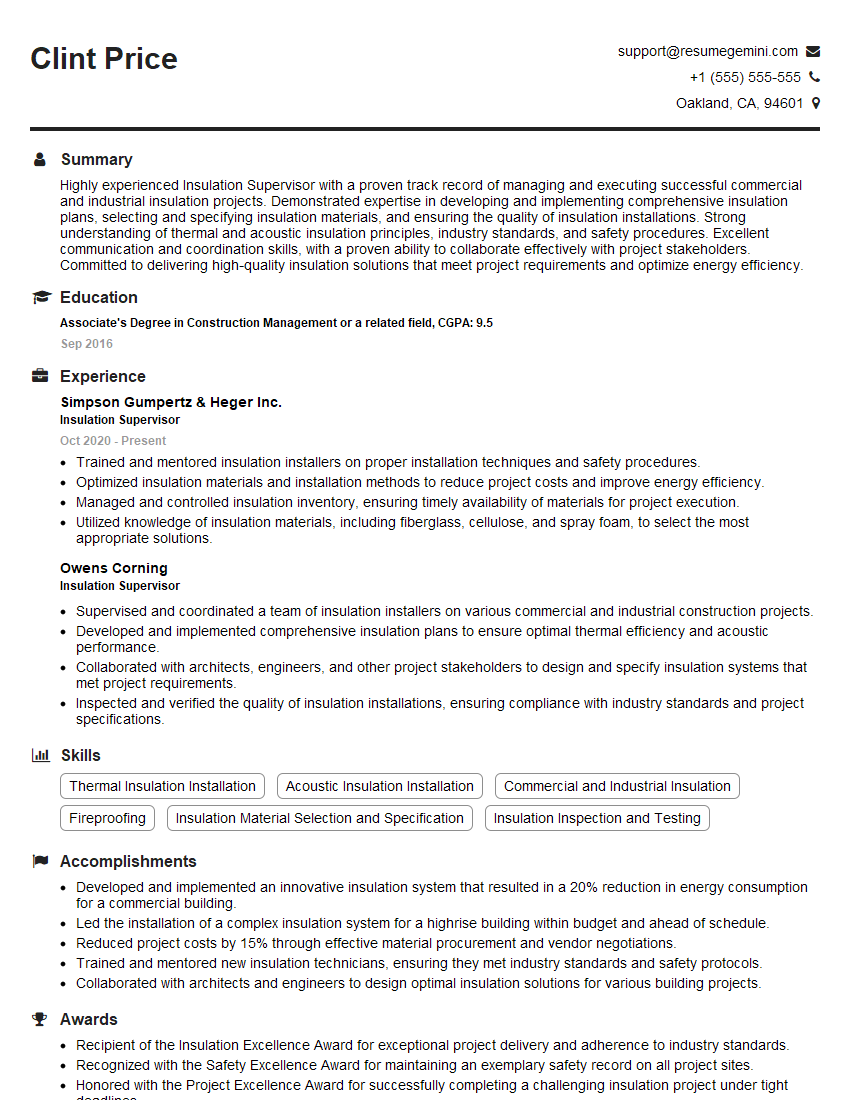
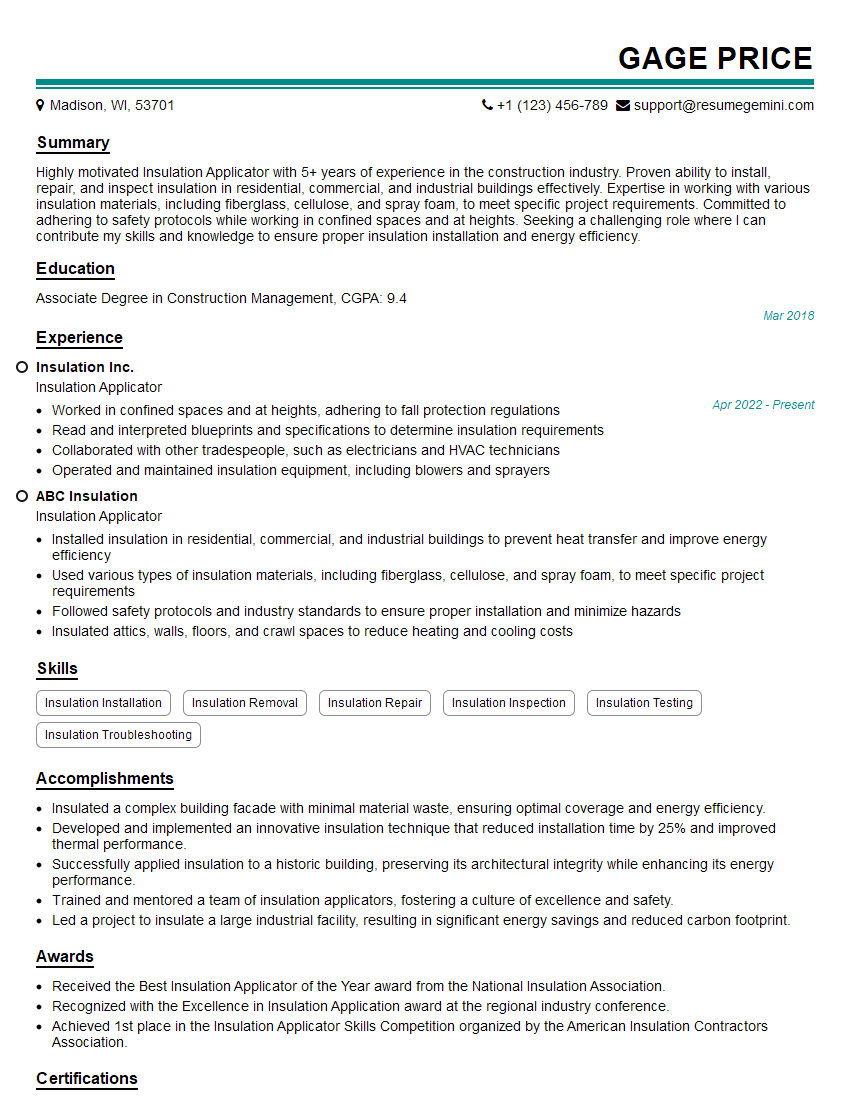
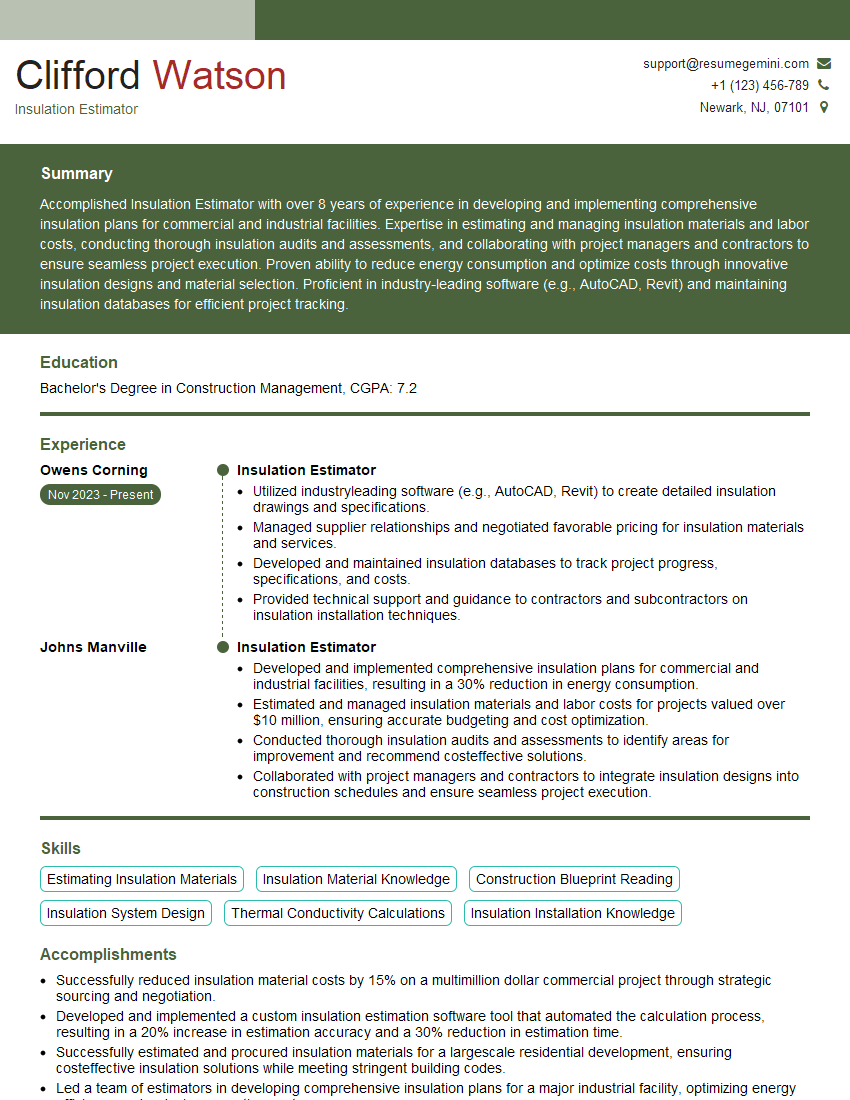
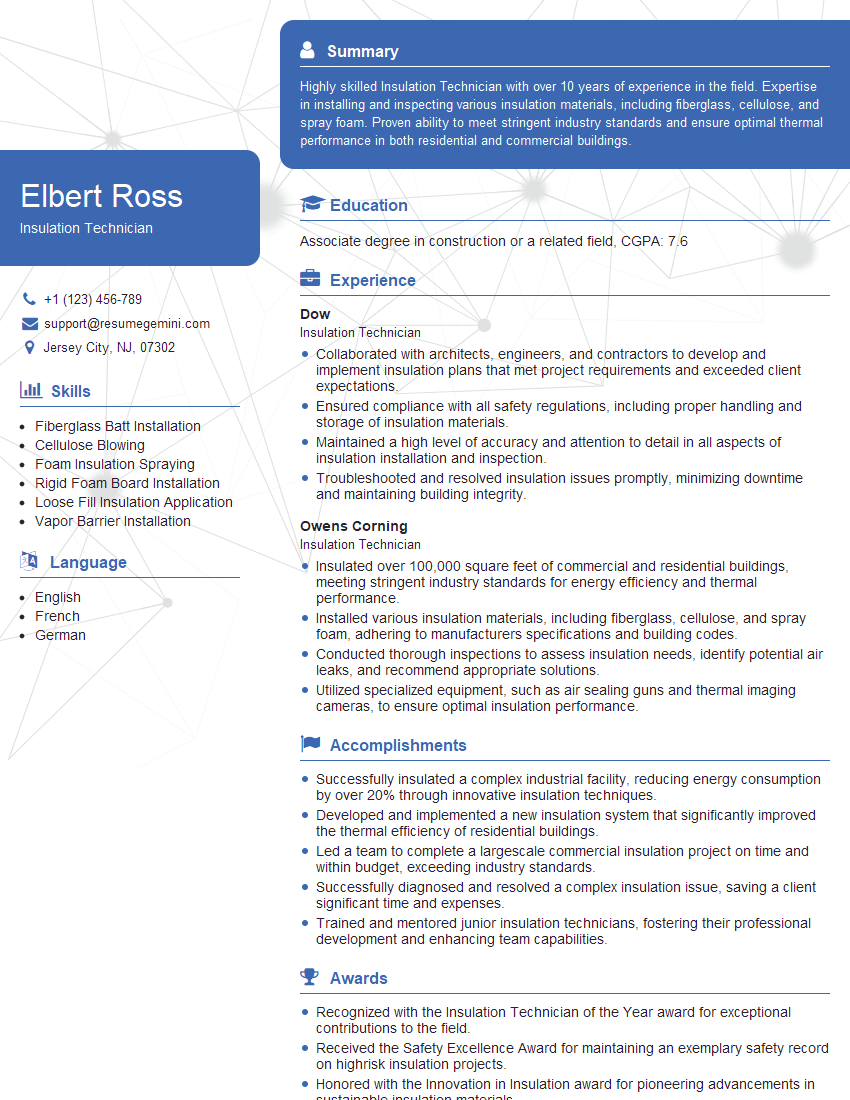
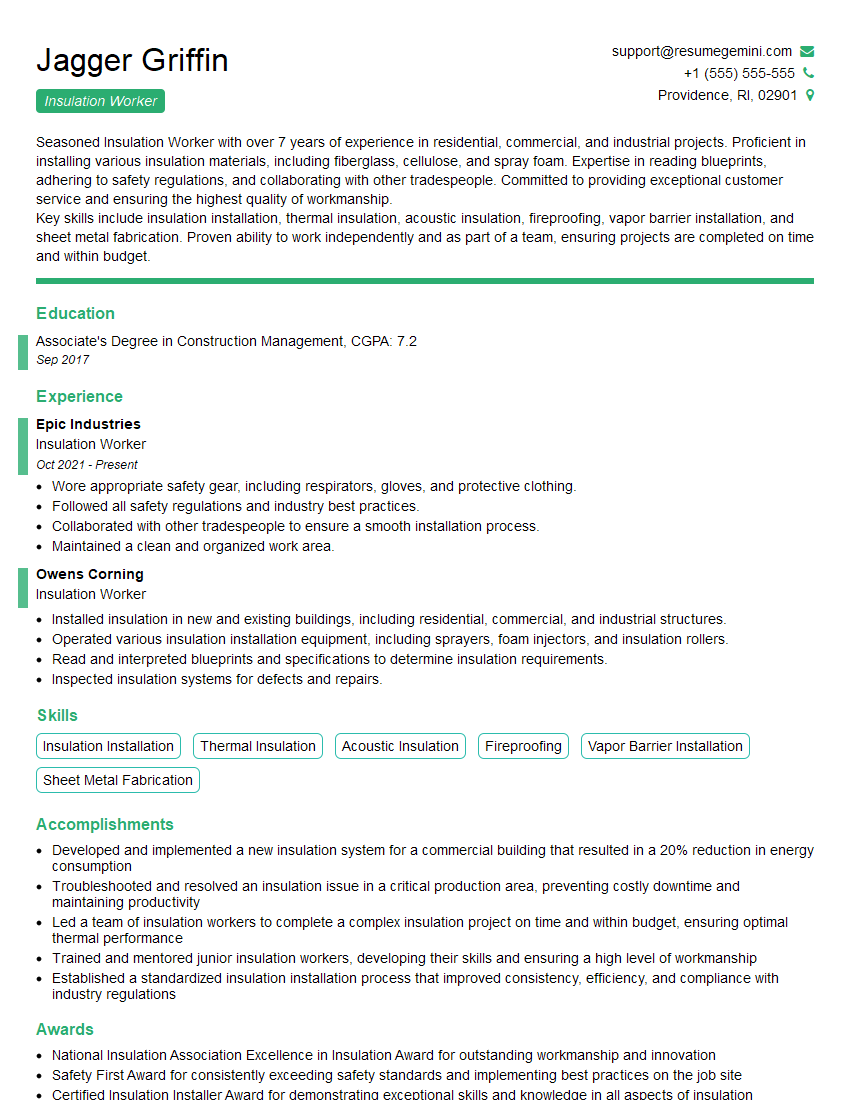
Mastering pipe insulation installation opens doors to a rewarding career with excellent growth potential in the construction and industrial sectors. To maximize your job prospects, creating a strong, ATS-friendly resume is crucial. ResumeGemini is a trusted resource to help you build a professional and effective resume that highlights your skills and experience. Examples of resumes tailored specifically to Pipe Insulation Installation are available to help you get started. Invest the time to craft a compelling resume – it’s your first impression with potential employers.

Explore more articles
Users Rating of Our Blogs
Share Your Experience
We value your feedback! Please rate our content and share your thoughts (optional).
What Readers Say About Our Blog
To the interviewgemini.com Webmaster.
Very helpful and content specific questions to help prepare me for my interview!
Thank you
To the interviewgemini.com Webmaster.
This was kind of a unique content I found around the specialized skills. Very helpful questions and good detailed answers.
Very Helpful blog, thank you Interviewgemini team.