Are you ready to stand out in your next interview? Understanding and preparing for Understanding of Research Dissemination and Impact interview questions is a game-changer. In this blog, we’ve compiled key questions and expert advice to help you showcase your skills with confidence and precision. Let’s get started on your journey to acing the interview.
Questions Asked in Understanding of Research Dissemination and Impact Interview
Q 1. Explain your understanding of the different stages in the research dissemination process.
Research dissemination isn’t a single event; it’s a multifaceted process. I see it unfolding in several key stages. First comes planning: defining the target audience, choosing appropriate dissemination channels, and setting measurable goals. This is crucial to ensure your research reaches the right people effectively. Next is creation: preparing materials like publications, presentations, or policy briefs tailored to the specific audience. This stage involves careful crafting of messages to maximize understanding and impact. Then comes distribution, which involves actively sharing your research through the chosen channels – journals, conferences, social media, etc. Engagement follows; this includes interacting with your audience, answering questions, and fostering discussions around your findings. Finally, there’s evaluation: analyzing the reach and impact of your dissemination efforts, measuring how many people accessed the research, how they used it, and what changes resulted. This feedback loop is critical for improving future dissemination strategies.
- Example: A research team studying climate change might plan dissemination targeting policymakers (policy briefs), the public (infographics), and the scientific community (peer-reviewed papers).
Q 2. Describe the key performance indicators (KPIs) you would use to measure the impact of a research project.
Measuring research impact requires a multi-faceted approach using a range of KPIs. These shouldn’t just focus on immediate outputs, but also long-term outcomes. Some key indicators I’d use include:
- Citations: Number of times the research is cited in other publications – a measure of academic influence.
- Downloads/Views: Number of downloads of publications or views of presentations – indicating reach.
- Media Mentions: Number of times the research is mentioned in news articles or blogs – reflecting public engagement.
- Policy Changes: Evidence of research influencing policy decisions or recommendations – demonstrating real-world impact.
- Changes in Practice: Evidence of changes in behaviour or practice influenced by the research (e.g., changes in healthcare protocols based on a medical study).
- Altmetric scores: Combining mentions across various online platforms (news, blogs, social media) providing a broader view of impact beyond traditional metrics.
It’s important to select KPIs appropriate to the research and its aims. A study focusing on policy impact will prioritize different metrics than one aimed at advancing fundamental understanding within a specific field.
Q 3. How do you tailor your communication strategies to different audiences (e.g., academic, public, policymakers)?
Tailoring communication to different audiences is paramount. Academic audiences require rigorous detail and technical language, while the public needs simplified explanations and relatable examples. Policymakers need concise, impactful summaries focusing on implications and recommendations. Here’s how I approach this:
- Academics: I would emphasize methodological rigor, detailed results, and implications for future research in peer-reviewed journals and conference presentations.
- Public: For the public, I would use accessible language, visuals (infographics, videos), and relatable stories to convey the research’s significance and relevance to their lives. Blog posts, social media, and popular science articles are effective here.
- Policymakers: I would create concise policy briefs that clearly state the problem, present key findings, and offer actionable recommendations. Direct engagement with policymakers through meetings and workshops can be effective.
In essence, I adapt the message, language, format, and channels to resonate with each audience’s background and needs.
Q 4. What are some common challenges in disseminating research findings, and how would you address them?
Disseminating research faces several hurdles. One major challenge is the complexity of the research itself – translating technical findings into easily digestible information requires skill and effort. Another is limited resources: securing funding for dissemination activities is often competitive. Competing priorities can also hinder progress, as researchers are often juggling multiple projects and responsibilities. Lack of engagement from target audiences is another concern; getting people to read or interact with research findings can be difficult. Finally, publication bias, where positive or impactful studies are more likely to be published, skews the overall knowledge landscape.
To address these, I focus on proactive engagement strategies: establishing collaborations with communicators, using diverse channels, developing impactful visualizations, and consistently monitoring engagement data. I prioritize clear communication and build strong relationships with key audiences. For resource limitations, I seek diverse funding sources and leverage free or low-cost dissemination channels.
Q 5. Explain your experience with various dissemination channels (e.g., publications, presentations, social media).
My dissemination experience spans various channels. I’ve published extensively in peer-reviewed journals, presenting research at national and international conferences. I’ve also utilized social media platforms like Twitter and LinkedIn to share research findings, engage with other researchers, and promote publications. I’ve prepared policy briefs for government agencies and created public-facing materials like infographics and blog posts. I’ve also given public lectures and participated in media interviews to communicate research to broader audiences. Each channel has its strengths, and the choice depends on the target audience and research objectives. For example, a complex statistical model would best be presented in a peer-reviewed journal, while a study on public health could be effectively shared through infographics on social media.
Q 6. How do you ensure the accuracy and accessibility of research information when disseminating it?
Accuracy and accessibility are paramount. To ensure accuracy, I rigorously review all dissemination materials before release, seeking feedback from colleagues and subject-matter experts. I use plain language and avoid jargon whenever possible. For accessibility, I adhere to guidelines for creating inclusive materials (e.g., using alt text for images, providing transcripts for videos, and offering various formats). I ensure that my materials are available in multiple languages where appropriate and consider the needs of individuals with disabilities. Making data and methods openly available (where feasible) strengthens the research’s transparency and allows others to verify and build upon the work.
Q 7. Describe a time you had to adapt your dissemination plan due to unforeseen circumstances.
During a study on the impact of a new educational technology, we planned a large-scale conference presentation as the primary dissemination channel. However, due to unforeseen circumstances (a significant, unexpected budget cut), we had to adapt our plan. We couldn’t afford the conference fees. We immediately pivoted to an open-access publication in a reputable journal and supplemented this with a series of shorter blog posts and social media announcements. We also utilized free webinar platforms to host online presentations, allowing for wider reach than the initially planned conference. While this wasn’t our ideal scenario, the alternative strategy still allowed us to effectively reach a large audience and achieve significant dissemination of the research findings.
Q 8. How do you measure the reach and engagement of your dissemination efforts?
Measuring the reach and engagement of research dissemination requires a multifaceted approach. It’s not just about how many people saw your work, but how they interacted with it. We use a combination of quantitative and qualitative methods.
Quantitative Measures: These focus on numbers. For publications, we look at downloads, views (on websites or platforms like ResearchGate), and altmetrics (mentions on social media, blogs, news articles). We track citations, of course, but understand these can lag significantly behind actual impact. For presentations, we might count attendees, survey feedback, and website traffic related to the presentation.
Qualitative Measures: These delve into the nature of engagement. We analyze feedback from surveys, social media comments, and informal conversations to understand how the audience perceived the research and whether it influenced their understanding or actions. We also track media coverage and look at the tone and focus of the articles to gauge the impact of the message.
Example: If we publish an article on climate change, we might track downloads of the PDF, mentions on Twitter using specific hashtags, and the number of media stories covering the research. The qualitative aspect involves analyzing the tone of those media stories – is it positive and encouraging action, or more neutral and observational? This gives a complete picture.
Q 9. How familiar are you with different bibliometric databases and citation analysis tools?
I’m very familiar with a wide range of bibliometric databases and citation analysis tools. My experience encompasses using tools like Web of Science, Scopus, Google Scholar, and PubMed to assess citation counts, h-indices, and other bibliometric indicators. I understand the nuances of each database, including their strengths and weaknesses in terms of coverage and indexing practices. Beyond simple citation counts, I use more sophisticated tools for co-citation analysis, which helps to identify key papers and influential researchers within a specific field. I also utilize tools that can assess altmetrics, capturing mentions of publications in social media and other online sources.
For instance, I’ve used VOSviewer to create visual maps of research collaborations and topic trends, and CiteSpace to analyze citation patterns over time. This deeper analysis helps understand not just the quantity but the quality and context of citations.
Q 10. What are some ethical considerations when disseminating research findings?
Ethical considerations are paramount in research dissemination. Transparency, accuracy, and responsible communication are crucial.
Data Integrity: Ensuring all data is presented accurately and avoiding misrepresentation is vital. We must avoid selective reporting and be open about any limitations of the study.
Confidentiality and Privacy: Protecting the privacy and confidentiality of participants is critical. Data should be anonymized where possible, and any identifiable information should be handled carefully.
Avoiding Misinterpretation: Research findings should be communicated clearly and avoiding sensationalism or oversimplification that could lead to misunderstanding or misuse of the results. Acknowledging limitations and uncertainties is essential.
Conflict of Interest: Any potential conflicts of interest – financial or otherwise – must be declared and addressed. Transparency builds trust and helps to avoid biased dissemination.
Accessibility and Equity: Dissemination plans must account for equitable access to research findings. This includes providing materials in accessible formats and considering language barriers.
Example: If our research involves sensitive personal data, we use techniques such as data masking or aggregation to protect participant identity. We also adhere strictly to ethical review board guidelines.
Q 11. How do you identify and engage key stakeholders in the research dissemination process?
Identifying and engaging key stakeholders is a strategic process. It involves understanding who will benefit from or be affected by the research findings.
Stakeholder Mapping: We begin by mapping out all relevant stakeholders, including researchers, policymakers, practitioners, the public, and other relevant groups.
Tailored Communication Strategies: We then develop tailored communication strategies for each stakeholder group. What resonates with policymakers might not resonate with the general public. Messages and channels need to be adapted accordingly. This often involves using different channels for different groups, from peer-reviewed journals to press releases to public engagement events.
Engagement Strategies: We engage stakeholders through various channels, including presentations, workshops, online forums, social media, and collaborations. Two-way communication is essential – understanding their feedback and adapting our approach where necessary.
Example: In a study on a new medical treatment, key stakeholders would include doctors, patients, regulatory bodies, and the pharmaceutical industry. We might present our findings to doctors at a medical conference, prepare a press release for the media, and create patient-friendly materials.
Q 12. Describe your experience working with media or journalists to communicate research findings.
I have extensive experience working with media and journalists. I understand their needs and deadlines, and I strive to provide clear, concise, and accurate information to the public through them.
Press Releases: I prepare well-written press releases summarizing key findings in a style that is accessible to a broader audience than an academic paper. These releases are strategically sent to relevant journalists.
Media Interviews: I’m comfortable participating in interviews with journalists, answering questions accurately and engagingly, always keeping in mind the need to balance scientific rigor with public understanding.
Media Training: In some cases, I provide media training to researchers to help them effectively communicate their work to journalists.
Relationship Building: Building strong relationships with science journalists is crucial. This involves networking and developing trust with those who report on my area of research.
Example: I recently worked with a journalist from a national newspaper on a story about our research into the effects of air pollution. We collaborated on a story that was both scientifically accurate and accessible to a large audience.
Q 13. How do you quantify the societal impact of research?
Quantifying societal impact is complex and goes beyond simple metrics like citations. We need a holistic approach that considers both direct and indirect effects.
Economic Impact: This can include cost savings from improved healthcare, new technologies, or increased productivity resulting from the research.
Social Impact: This considers changes in public awareness, behavior, or policy resulting from the research, for instance, changes in public health or environmental protection. We look at things like changes in policy, public attitudes, or behaviours.
Environmental Impact: This evaluates the research’s effect on environmental sustainability, conservation, or reduction of pollution.
Qualitative Measures: We also utilize qualitative methods like interviews and case studies to gather data on the experiences of individuals and communities affected by the research.
Example: The societal impact of research into vaccines is vast, including the prevention of disease, reduction in healthcare costs, and overall improvements in public health. While quantifying this is challenging, we can use data on disease incidence rates, economic models, and qualitative testimonials to understand its influence.
Q 14. Explain your understanding of different research impact frameworks (e.g., REF, NIH).
I understand various research impact frameworks, each with unique approaches to measuring and evaluating impact. These frameworks often differ in their scope, methodologies, and the types of impact they prioritize.
REF (Research Excellence Framework): Used in the UK, it evaluates the quality and impact of research across various universities. It focuses on the outputs (publications, patents), outcomes (economic or societal benefits), and the impact pathways that link them.
NIH (National Institutes of Health): In the US, the NIH emphasizes the translation of research findings into practice and their impact on health. They utilize a variety of metrics, including citations, patents, and changes in clinical practice.
Other Frameworks: Other frameworks exist, focusing on specific aspects of impact, like sustainability or equality. They often use a mix of quantitative and qualitative methods.
Understanding these frameworks is crucial for effectively communicating the value and impact of our research to different stakeholders. For example, preparing a submission to the REF requires a different approach than reporting impact to a funding agency or the general public.
Q 15. How do you incorporate feedback from stakeholders into the dissemination plan?
Incorporating stakeholder feedback is crucial for effective research dissemination. It ensures the research is relevant, accessible, and meets the needs of the intended audience. My approach involves a multi-stage process:
- Early Engagement: I actively involve stakeholders – including policymakers, practitioners, community members, and even the research participants themselves – from the initial planning stages of the dissemination strategy. This helps shape the messaging and formats used.
- Feedback Mechanisms: I utilize diverse feedback mechanisms such as surveys, focus groups, interviews, and online feedback forms. This allows for gathering diverse perspectives and insights.
- Iterative Refinement: The feedback collected is systematically analyzed and incorporated into the dissemination plan. This is an iterative process; the plan is constantly refined based on the feedback received.
- Transparency and Communication: Stakeholders are kept informed throughout the process, ensuring they understand how their feedback has been integrated and the rationale behind any decisions made. This builds trust and strengthens the relationship.
For example, in a project on improving healthcare access in rural communities, initial feedback from rural healthcare providers revealed a strong preference for concise, practical reports over lengthy academic publications. This feedback directly influenced the dissemination plan, leading us to prioritize the creation of easily digestible policy briefs and short videos.
Career Expert Tips:
- Ace those interviews! Prepare effectively by reviewing the Top 50 Most Common Interview Questions on ResumeGemini.
- Navigate your job search with confidence! Explore a wide range of Career Tips on ResumeGemini. Learn about common challenges and recommendations to overcome them.
- Craft the perfect resume! Master the Art of Resume Writing with ResumeGemini’s guide. Showcase your unique qualifications and achievements effectively.
- Don’t miss out on holiday savings! Build your dream resume with ResumeGemini’s ATS optimized templates.
Q 16. What strategies do you employ to make research accessible to non-specialist audiences?
Making research accessible to non-specialist audiences requires translating complex information into clear, engaging formats. This involves:
- Plain Language: Avoiding jargon and technical terms, using simple language and concise sentences.
- Visualizations: Employing charts, graphs, infographics, and images to convey information effectively.
- Storytelling: Presenting findings through narratives, focusing on relatable examples and real-world applications.
- Interactive Elements: Using interactive elements like quizzes, polls, or simulations to enhance engagement.
- Diverse Channels: Utilizing various dissemination channels such as social media, blogs, podcasts, and public talks, tailored to different audience preferences.
For instance, when disseminating research on climate change, instead of focusing on complex models and statistical data, I might create an infographic showing the projected impact on local communities, using relatable visuals and simple language.
Q 17. Describe your experience in developing a dissemination plan for a large-scale research project.
I recently developed a dissemination plan for a large-scale, multi-year research project investigating the impact of early childhood education programs. The plan involved:
- Audience Segmentation: Identifying key audience segments (policymakers, educators, parents, researchers) and tailoring communication strategies accordingly.
- Multi-Channel Approach: Developing a comprehensive strategy encompassing peer-reviewed publications, policy briefs, presentations at conferences, media outreach (press releases, interviews), and the creation of a dedicated project website.
- Timeline and Budget: Creating a detailed timeline outlining dissemination activities and a budget allocation for each activity (e.g., publication fees, website development, travel expenses for presentations).
- Metrics and Evaluation: Establishing key performance indicators (KPIs) to measure the impact of the dissemination efforts (e.g., website traffic, media coverage, policy changes).
- Team Collaboration: Working closely with a dedicated communications team, researchers, and stakeholders to ensure coordinated and effective dissemination.
The plan’s success was evaluated based on these KPIs, providing valuable insights for future dissemination activities.
Q 18. How do you ensure that research findings are translated into practical applications?
Translating research findings into practical applications requires a strategic approach. This includes:
- Identifying Key Stakeholders: Targeting the individuals or organizations that can most effectively implement the findings (e.g., policymakers, practitioners, businesses).
- Developing Practical Tools and Resources: Creating user-friendly tools and resources based on the research findings, such as guidelines, training materials, or software applications.
- Knowledge Transfer Activities: Organizing workshops, training sessions, and other knowledge transfer activities to disseminate the findings and support their implementation.
- Collaboration and Partnerships: Building strong collaborations with key stakeholders to ensure effective implementation and integration of research findings.
- Monitoring and Evaluation: Tracking the impact of the implementation activities and using this information to refine the approach.
For example, research on a new agricultural technique might lead to the creation of a field guide for farmers, workshops demonstrating the technique, and a partnership with agricultural extension services to support adoption.
Q 19. Explain your experience in creating visual representations of research data.
Creating effective visual representations of research data is crucial for enhancing understanding and engagement. My experience includes using various tools and techniques:
- Data Visualization Software: Utilizing software like Tableau, R, or Python with libraries such as Matplotlib and Seaborn to create charts, graphs, and maps.
- Infographics: Designing visually appealing infographics to present complex data in a simplified and engaging manner, often using tools like Canva or Adobe Illustrator.
- Interactive Data Dashboards: Creating interactive dashboards that allow users to explore data dynamically and gain a deeper understanding of the findings.
- Data Storytelling: Combining visual representations with narratives to create compelling stories that resonate with the audience.
- Accessibility Considerations: Ensuring that all visual representations are accessible to individuals with disabilities, following established accessibility guidelines.
In one project, we used interactive maps to show the geographical distribution of a particular disease, allowing users to explore data at different levels of detail and revealing patterns that were not apparent in traditional tabular data.
Q 20. How do you use social media platforms to disseminate research findings?
Social media platforms offer powerful tools for disseminating research findings to a wide audience. My strategy includes:
- Platform Selection: Choosing platforms relevant to the target audience (e.g., Twitter for quick updates, LinkedIn for professionals, Instagram for visually appealing content).
- Content Strategy: Developing a content calendar with a mix of text, images, videos, and infographics to keep the audience engaged.
- Hashtags and Keywords: Utilizing relevant hashtags and keywords to increase the visibility of posts.
- Community Engagement: Actively engaging with the audience by responding to comments and questions, fostering discussions, and building a community around the research.
- Data Analytics: Monitoring key metrics like reach, engagement, and website traffic to evaluate the effectiveness of the social media strategy.
For example, we used Twitter to share short summaries of research findings, accompanied by visually appealing infographics, and engaged with other researchers and relevant organizations in the field.
Q 21. Describe your experience with grant writing and securing funding for research dissemination activities.
Securing funding for research dissemination is essential for maximizing impact. My experience in grant writing involves:
- Identifying Funding Opportunities: Thoroughly researching funding agencies and opportunities relevant to the research and dissemination plan.
- Compelling Grant Proposals: Crafting well-structured and compelling grant proposals that clearly articulate the research findings, dissemination strategy, and expected impact.
- Strong Justification of Budget: Developing a detailed and justified budget that outlines the costs associated with each dissemination activity.
- Collaboration and Partnerships: Building collaborations with potential partners to strengthen grant applications and enhance the likelihood of success.
- Post-Award Management: Effectively managing awarded funds and submitting timely reports to the funding agency.
I have successfully secured funding from various sources, including government agencies, foundations, and private organizations, enabling the implementation of comprehensive dissemination plans for multiple research projects.
Q 22. How do you evaluate the effectiveness of different dissemination strategies?
Evaluating the effectiveness of research dissemination strategies requires a multifaceted approach. We can’t simply rely on a single metric; instead, we need a blend of quantitative and qualitative measures tailored to the specific dissemination goals.
Quantitative measures might include things like:
- Downloads/views: Tracking how many people access the research materials (papers, presentations, reports).
- Citations: Monitoring how often the research is cited in other publications, a key indicator of influence.
- Media mentions: Counting appearances in news articles, blogs, or other media outlets.
- Website traffic: Analyzing website analytics to understand user engagement with disseminated materials.
Qualitative measures are equally crucial and involve:
- Feedback surveys: Gathering direct feedback from audiences about the clarity, relevance, and impact of the research.
- Stakeholder interviews: Conducting in-depth interviews with key stakeholders (policymakers, practitioners, etc.) to understand how the research is being used.
- Social media engagement: Monitoring social media discussions and interactions related to the research.
- Impact assessments: Conducting rigorous assessments to determine the real-world effects of the research (e.g., changes in policy, practice, or public awareness).
For example, if we disseminated a research paper on climate change through open access and traditional journal publication, we would track downloads, citations, and media mentions for each channel to see which was more effective. We would also supplement that with surveys to understand audience comprehension and interviews with policymakers to assess its influence on policy decisions.
Q 23. What are your preferred methods for collecting feedback on research dissemination efforts?
Collecting feedback is paramount to refining dissemination strategies. My preferred methods utilize a mix of formal and informal approaches to gather comprehensive insights.
- Post-presentation/webinar surveys: Short, targeted surveys immediately after dissemination events help capture immediate reactions and identify areas for improvement.
- Online feedback forms: Embedding feedback forms on websites hosting research materials enables ongoing data collection.
- Focus groups: Engaging small groups of key stakeholders in discussions to explore their experiences and perceptions related to the research. This can reveal nuanced insights not always apparent in surveys.
- Social media monitoring: Tracking mentions, comments, and shares on relevant platforms offers a window into public perception and engagement.
- Email correspondence: Responding to individual inquiries and feedback helps build relationships and gather valuable, specific input.
For instance, after presenting research findings at a conference, I’d use a short online survey to assess audience understanding and identify areas requiring clarification. Following that, I’d analyze comments and engagement on social media to understand broader community response.
Q 24. How do you ensure the sustainability of research dissemination activities?
Ensuring the sustainability of research dissemination isn’t just about one-off events; it’s about building a robust, ongoing system. This involves several key strategies.
- Developing a long-term dissemination plan: This plan should detail goals, target audiences, strategies, and evaluation methods, and include a budget for ongoing activities.
- Building partnerships and collaborations: Engaging with other organizations and institutions can leverage their resources and expertise, expanding reach and impact. Collaboration extends the dissemination life cycle beyond initial efforts.
- Creating a repository of research materials: Establishing a central, easily accessible repository (website, institutional repository) makes materials consistently available.
- Utilizing open access publishing: Making research freely available expands potential readership and accelerates knowledge sharing, fostering sustainability. This also facilitates greater citations and impact.
- Training and capacity building: Equipping researchers with dissemination skills ensures they can effectively share their work throughout their careers. This approach fosters a culture of knowledge sharing within an institution.
For example, embedding dissemination training in a research grant program ensures the sustainability of disseminating the project’s findings even after the project’s funding concludes.
Q 25. Describe your experience with open access publishing and its impact on research dissemination.
Open access publishing has revolutionized research dissemination, significantly increasing its reach and impact. My experience shows a clear advantage of open access in several areas.
- Increased readership and citations: Open access makes research freely available to a far wider audience, globally, leading to a demonstrable increase in downloads and citations.
- Faster knowledge translation: Immediate access accelerates the application of research findings in policy, practice, and other fields.
- Enhanced collaboration: Open access fosters greater collaboration among researchers by making research materials readily accessible to a larger community.
- Greater societal impact: By removing financial barriers to access, open access ensures research benefits society as a whole, especially in areas like public health and environmental science.
I’ve witnessed firsthand how open access publications receive far more downloads and citations compared to subscription-based publications on similar topics. This underscores the impact open access has on accelerating the uptake of new knowledge.
Q 26. Explain your understanding of the role of research dissemination in policy-making.
Research dissemination plays a vital role in informing policy-making by bridging the gap between research findings and policy decisions. Effective dissemination ensures policymakers have access to the evidence they need to create informed, evidence-based policies.
- Providing evidence-based information: Research provides critical data and insights that support policy development. Well-disseminated research helps policymakers make sound decisions.
- Highlighting policy implications: Dissemination materials should clearly articulate the implications of research findings for policy and practice.
- Facilitating dialogue and engagement: Dissemination efforts should engage policymakers in discussions around research findings, fostering collaborative policy development.
- Monitoring and evaluating policy impact: Research can be used to assess the effectiveness of policies, providing feedback for improvement and future policy development.
For example, research on the effectiveness of different educational interventions can directly inform the development of educational policies. Effective dissemination ensures policymakers are aware of this research and can use it to shape their decisions.
Q 27. How do you build relationships with researchers to facilitate effective dissemination?
Building strong relationships with researchers is crucial for effective dissemination. It’s about fostering a collaborative environment where researchers view dissemination not as an afterthought but as an integral part of the research process.
- Active listening and understanding: Truly understanding researchers’ goals and motivations helps tailor dissemination strategies to their needs.
- Providing support and resources: Offering guidance on effective dissemination strategies, writing skills, and access to relevant networks.
- Celebrating successes and acknowledging contributions: Recognizing researchers’ efforts in dissemination boosts morale and encourages continued engagement.
- Building trust and transparency: Clearly communicating expectations, timelines, and the impact of dissemination efforts.
- Regular communication and feedback: Keeping researchers informed of dissemination activities and their impact fosters a strong working relationship.
I often start by having informal conversations with researchers early in their project, understanding their research goals and helping them to integrate a dissemination plan from the outset. This proactive approach leads to significantly better outcomes.
Q 28. Describe your experience in managing a research dissemination team or project.
I’ve managed several research dissemination projects, each requiring a unique approach. Successful management depends on clear planning, effective teamwork, and consistent evaluation. My experience includes:
- Defining clear goals and objectives: Establishing specific, measurable, achievable, relevant, and time-bound (SMART) goals for each project.
- Developing a detailed project plan: Outlining tasks, responsibilities, timelines, and budgets.
- Building and managing a diverse team: Assembling a team with complementary skills and expertise in areas like communications, writing, and data analysis.
- Utilizing project management tools: Employing tools such as project management software to track progress, manage tasks, and facilitate communication.
- Regular monitoring and evaluation: Continuously assessing progress against goals and making necessary adjustments.
In one project, we developed a comprehensive dissemination plan for a large-scale research program. This involved creating a dedicated website, producing various communication materials, and organizing multiple dissemination events. By utilizing project management tools and fostering effective team communication, we successfully disseminated the research findings to a wide range of audiences and achieved significant impact.
Key Topics to Learn for Understanding of Research Dissemination and Impact Interview
- Dissemination Strategies: Explore various methods for sharing research findings, including publications in peer-reviewed journals, conference presentations, public outreach initiatives, and online platforms. Consider the strengths and weaknesses of each approach and how to choose the most effective strategy for a given project.
- Impact Assessment: Learn how to measure the impact of research. This includes understanding different metrics (citations, media coverage, policy influence, societal impact), designing appropriate evaluation methods, and interpreting results to demonstrate the value of your research.
- Audience Engagement: Develop skills in communicating complex research findings to diverse audiences, adapting your message to different levels of expertise and interests. Practice translating technical jargon into clear, concise language.
- Ethical Considerations: Understand the ethical implications of research dissemination, including issues of data privacy, intellectual property, responsible communication, and avoiding misrepresentation of findings.
- Collaboration and Networking: Explore the importance of collaboration with other researchers, policymakers, and stakeholders in disseminating research findings and maximizing impact. Understand how to build and leverage professional networks.
- Open Science Practices: Familiarize yourself with principles of open access publishing, data sharing, and reproducible research, and their role in broadening the reach and impact of research.
- Grant Writing & Funding Proposals: Understand how to effectively communicate the potential impact of research in grant proposals to secure funding. This includes articulating the expected outcomes and demonstrating their value to potential funders.
Next Steps
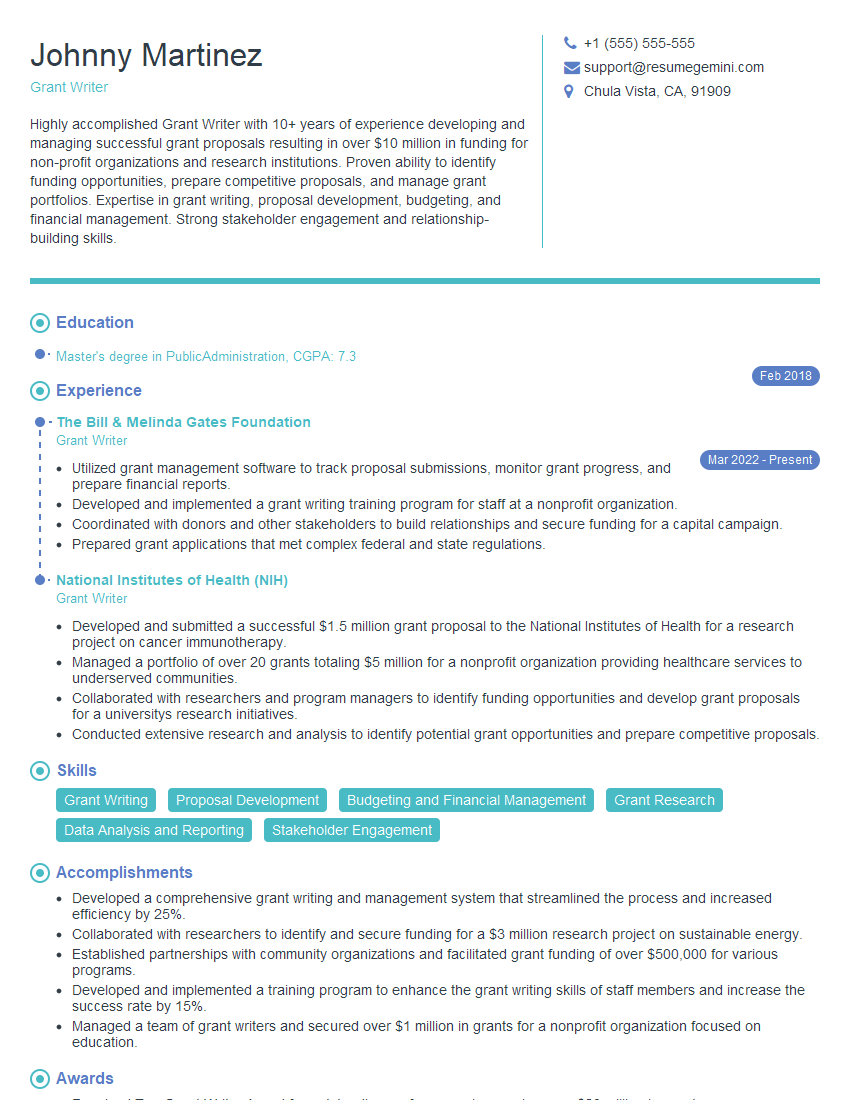
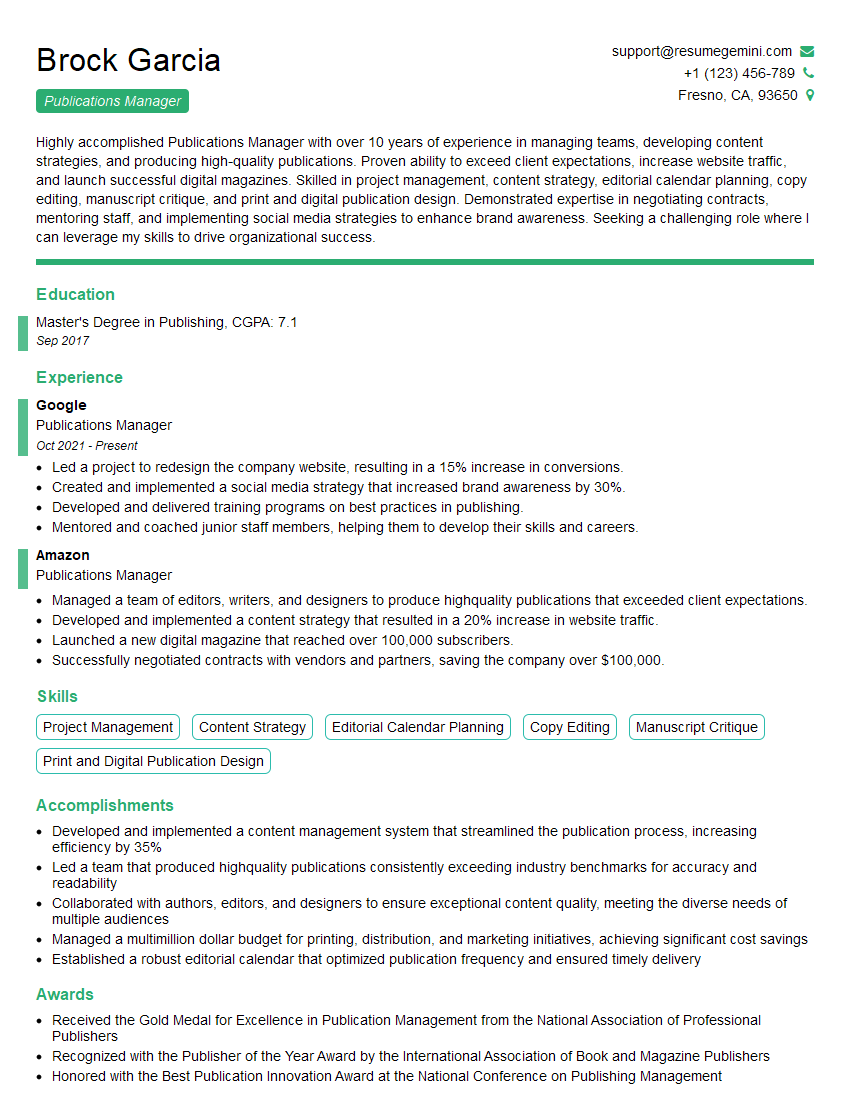
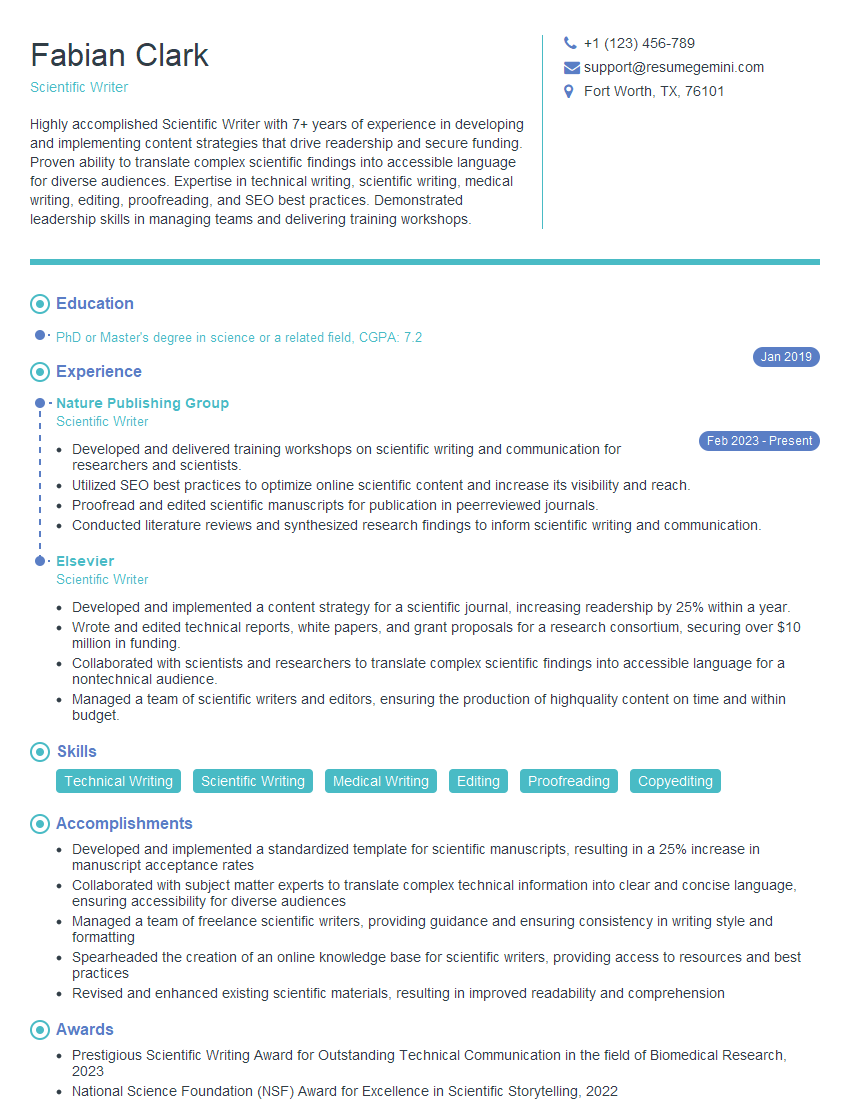
Mastering the understanding of research dissemination and impact is crucial for career advancement in academia, industry, and government. It demonstrates your ability to contribute meaningfully to the field and translate research into tangible benefits. To maximize your job prospects, focus on building an ATS-friendly resume that effectively highlights your skills and experience in this area. ResumeGemini is a trusted resource for crafting professional resumes tailored to your specific career goals. Examples of resumes tailored to showcasing expertise in Understanding of Research Dissemination and Impact are available through ResumeGemini to help guide your resume creation.

Explore more articles
Users Rating of Our Blogs
Share Your Experience
We value your feedback! Please rate our content and share your thoughts (optional).
What Readers Say About Our Blog
To the interviewgemini.com Webmaster.
Very helpful and content specific questions to help prepare me for my interview!
Thank you
To the interviewgemini.com Webmaster.
This was kind of a unique content I found around the specialized skills. Very helpful questions and good detailed answers.
Very Helpful blog, thank you Interviewgemini team.