Preparation is the key to success in any interview. In this post, we’ll explore crucial Historiology interview questions and equip you with strategies to craft impactful answers. Whether you’re a beginner or a pro, these tips will elevate your preparation.
Questions Asked in Historiology Interview
Q 1. Define historiography and its significance in historical research.
Historiography is essentially the study of how history is written, interpreted, and presented. It’s not just about the events themselves, but about the methods, perspectives, and biases that shape our understanding of the past. Its significance in historical research is paramount because it helps us critically analyze historical narratives, understand the evolution of historical thought, and avoid accepting any single account as definitive truth. Think of it like this: a single painting can depict a scene, but examining multiple paintings of the same scene, from different artists and eras, reveals a richer, more nuanced understanding.
For instance, studying the historiography of the American Civil War reveals how interpretations have shifted over time, from a focus on great men and military strategy to a deeper understanding of the social, economic, and racial factors that fueled the conflict. By understanding the historiographical context, we can appreciate the strengths and limitations of different historical accounts.
Q 2. Explain the difference between primary and secondary sources in historical research.
Primary sources are materials directly created during the time period being studied. They offer firsthand accounts or evidence. Think letters, diaries, government documents, photographs, artifacts—anything that was created by someone who lived through the events. Secondary sources, on the other hand, analyze, interpret, or comment on primary sources. They’re created after the event by scholars, historians, or others reflecting on the primary sources. Examples include textbooks, journal articles, biographies, and history books.
The difference is crucial because primary sources provide a more direct connection to the past, although they can be subject to bias or inaccuracy. Secondary sources offer broader context and interpretation but rely on the accuracy and interpretation of the primary sources they use. Historians strive to use both types of sources to build a comprehensive understanding.
Q 3. Discuss various historical methodologies and their applications.
Historical methodologies are the various approaches historians use to investigate and interpret the past. Several key methods include:
- Narrative History: This traditional approach focuses on storytelling and constructing a chronological account of events. It often emphasizes the human element and the flow of events.
- Social History: This focuses on the lives and experiences of ordinary people, exploring social structures, class relations, gender roles, and cultural practices.
- Political History: This approach centers on political institutions, leaders, and processes, analyzing power dynamics and governance.
- Economic History: This analyzes economic systems, trade, production, and distribution of resources in a specific historical context.
- Cultural History: This explores the beliefs, values, practices, and artistic expressions of a society, illuminating changes in intellectual and artistic trends.
- Cliometrics/Quantitative History: This methodology uses statistical methods and quantitative data to analyze historical trends and patterns.
The choice of methodology depends on the research question and the available sources. For example, studying the impact of the Black Death might employ quantitative methods to analyze population trends alongside social history to examine its impact on daily life.
Q 4. Analyze the impact of postmodernism on historical writing.
Postmodernism significantly impacted historical writing by challenging traditional notions of objectivity and grand narratives. Postmodern historians question the possibility of achieving a completely objective account of the past, emphasizing the role of the historian’s perspective and biases in shaping their interpretation. They often focus on deconstructing established narratives, highlighting marginalized voices and perspectives, and exploring the power dynamics inherent in historical writing.
This led to a greater emphasis on subjectivity and the understanding that historical accounts are always interpretations, not objective truths. It also encouraged a broader range of sources and perspectives to be considered, including oral histories, personal accounts, and marginalized voices, which enriched historical narratives.
However, this approach has also drawn criticism for potentially leading to relativism or a lack of clear standards for evaluating historical claims.
Q 5. Compare and contrast different historical interpretations of a specific event.
Let’s consider the interpretations surrounding the dropping of the atomic bombs on Hiroshima and Nagasaki. One interpretation emphasizes the necessity of the bombings to end World War II quickly and save American lives, framing it as a regrettable but necessary military decision. This perspective often relies on military documents and official accounts. Another interpretation focuses on the immense human cost and ethical implications, highlighting the civilian casualties and the long-term effects of radiation. This viewpoint frequently uses survivor testimonies and analyses of the broader context of wartime atrocities.
These interpretations aren’t mutually exclusive; they offer different perspectives that can be seen as complementary rather than contradictory. By examining multiple interpretations, a more comprehensive and nuanced understanding of this event emerges, acknowledging the complex interplay of military strategy, political motivations, and ethical concerns.
Q 6. How do you evaluate the credibility and reliability of historical sources?
Evaluating historical sources requires careful consideration of several factors:
- Authorship: Who created the source? What was their background, perspective, and potential biases?
- Context: When and where was the source created? What were the circumstances surrounding its creation?
- Content: What does the source say? Is the information consistent with other sources? Are there any discrepancies or inconsistencies?
- Purpose: Why was the source created? What was its intended audience? Was it meant to persuade, inform, or record events?
- Reliability: Does the source provide verifiable information? Can its claims be corroborated by other sources?
Cross-referencing sources is crucial to assessing credibility. If multiple independent sources support the same information, its reliability increases. Discrepancies might indicate problems with one or more sources, prompting further investigation.
Q 7. Describe your approach to conducting historical research.
My approach to historical research is iterative and multi-faceted. It begins with a clearly defined research question, often driven by a gap in existing scholarship or a need to re-examine established interpretations. Then, I identify and locate potential primary and secondary sources relevant to the question. This involves archival research, library work, and engaging with relevant scholarship. The next stage is critical analysis of the sources, using the methodologies described earlier, paying close attention to the factors that influence the reliability and credibility of the sources. This leads to a synthesis of the evidence, carefully weighing different interpretations, and drawing conclusions that are supported by the available evidence. This is often an iterative process; I may refine my research questions and adjust my methodology as my understanding evolves.
Finally, the results are presented in a clear, concise, and well-supported manner, acknowledging the limitations of the research and inviting further inquiry. Transparency is key—clearly stating my methods, sources, and biases allows others to assess the validity of my conclusions.
Q 8. Explain the importance of contextualizing historical events.
Contextualizing historical events is crucial because it allows us to understand them within their specific time, place, and circumstances. It moves beyond simply describing what happened to exploring why it happened and what its impact was. Imagine trying to understand the American Civil War without considering the issues of slavery, states’ rights, and economic disparities – you’d have a very incomplete picture.
We need to consider the social, political, economic, and cultural factors at play. For example, understanding the French Revolution requires examining Enlightenment ideals, the Ancien Régime’s weaknesses, and the economic hardship faced by the French people. Without this context, the events seem random and chaotic, rather than the result of a complex interplay of forces. Contextualization allows for a more nuanced and accurate interpretation of the past, preventing anachronistic judgments and simplistic narratives.
In my research on the early modern period, I frequently use contextualization to understand the religious upheavals of the Reformation. Simply stating that Martin Luther posted his Ninety-Five Theses is insufficient. We need to examine the socio-political climate, the existing tensions within the Catholic Church, the advent of the printing press, and the prevailing intellectual currents to fully grasp the significance of Luther’s actions and their lasting impact.
Q 9. Discuss the ethical considerations involved in historical research.
Ethical considerations in historical research are paramount. Historians have a responsibility to be accurate, objective, and to avoid perpetuating harmful stereotypes or biases. This includes acknowledging the limitations of sources, being transparent about methodological choices, and respecting the perspectives of marginalized groups.
- Accuracy: We must strive for factual accuracy, meticulously verifying information from multiple sources and acknowledging uncertainties where evidence is scarce or contradictory.
- Objectivity: While complete objectivity is an ideal, historians should strive to minimize personal bias. This involves critically examining our own assumptions and perspectives and being aware of potential biases within the sources themselves.
- Representation: Historians have a duty to represent diverse perspectives fairly and avoid perpetuating harmful stereotypes or narratives that reinforce existing inequalities. This might involve giving voice to marginalized communities who have been historically excluded from the historical record.
- Source Material: Ethical considerations extend to the responsible use of archival materials. This includes respecting the rules and regulations of archives and ensuring the preservation of documents for future research.
For instance, when researching colonialism, it’s crucial to avoid romanticizing or minimizing the atrocities committed and to give a voice to the colonized populations, rather than solely relying on colonial narratives. Failing to do so is not just ethically flawed but also produces a deeply inaccurate and incomplete historical understanding.
Q 10. How do you handle conflicting historical accounts?
Conflicting historical accounts are the norm, not the exception. Rather than seeing them as a problem, I view them as an opportunity for deeper understanding. The presence of conflicting narratives often reveals the complexities of the past and the multiple interpretations possible from limited evidence. My approach involves a multi-step process:
- Source Criticism: Critically analyzing each source’s context, authorship, purpose, and potential biases is paramount. Consider who wrote it, when, why, and for whom.
- Triangulation: Comparing and contrasting information from multiple sources helps to identify potential inaccuracies or biases. Finding corroborating evidence strengthens the narrative, while conflicting evidence necessitates further investigation.
- Contextualization: Understanding the historical context of each account is crucial for interpreting their differences. Conflicting accounts might arise from different perspectives, experiences, or interpretations of events.
- Nuance and Uncertainty: Acknowledging the limitations of historical evidence and accepting that some questions may remain unanswered is important. A balanced historical narrative doesn’t shy away from uncertainty.
For example, in studying the causes of World War I, historians have debated the relative importance of various factors, such as alliances, nationalism, and imperialism. By examining diverse sources and perspectives, I can construct a more comprehensive understanding, acknowledging the complexities and competing interpretations surrounding this pivotal event. I would then articulate these various perspectives, supporting each with evidence, to allow the reader to make an informed judgment.
Q 11. Describe your experience with archival research.
My experience with archival research is extensive. I’ve spent countless hours in various archives across several countries, delving into primary sources ranging from personal diaries and letters to government documents and legal records. This involves not just locating relevant material but also understanding archival systems, cataloging methods, and effectively utilizing various search tools.
I’ve worked extensively with both physical and digital archives. The meticulous nature of archival research is essential. This involves carefully examining documents for authenticity, understanding their context, and transcribing or digitizing materials as needed. For example, in my research on 18th-century migration patterns, I painstakingly transcribed hundreds of pages of passenger lists from ships’ logs held at the National Archives, extracting valuable data on the origins, destinations, and demographics of migrants.
One particularly challenging project involved deciphering faded and damaged manuscripts written in a historical dialect. This required not only careful handling of the fragile documents but also the application of paleography (the study of ancient handwriting) and linguistic skills to accurately interpret the content.
Q 12. Explain your proficiency in using digital tools for historical research.
I am highly proficient in using digital tools for historical research. My skills encompass a broad range of software and online resources. This includes:
- Digital Archives: I am adept at navigating online archives such as JSTOR, Project MUSE, and various national and university repositories. These resources provide access to a vast array of primary and secondary sources, digitized maps, and other relevant material.
- Database Management: I utilize database software (e.g., Microsoft Access, Filemaker Pro) to organize and analyze large datasets extracted from archives and other sources.
- Geographic Information Systems (GIS): I employ GIS software (e.g., ArcGIS, QGIS) to map historical events, migration patterns, and other spatial data, which enhances the visualization and understanding of historical processes. For example, I used GIS to map the spread of the Black Death in 14th century Europe.
- Digital Humanities Tools: I am familiar with various digital humanities tools such as text analysis software (e.g., Voyant Tools) and network analysis software which allow for complex analysis of large textual datasets and for visualizing relationships among historical actors.
The use of digital tools significantly enhances the efficiency and depth of historical research, enabling the analysis of vast datasets and the creation of innovative visualizations that convey historical information in engaging ways.
Q 13. How do you synthesize information from multiple sources to create a coherent narrative?
Synthesizing information from multiple sources to create a coherent narrative is a core skill for any historian. It’s a process that combines critical analysis, interpretation, and narrative construction. It’s not simply about summarizing different accounts; it’s about weaving them together into a cohesive and compelling story that accurately reflects the historical evidence.
My approach involves:
- Identifying Key Themes: I first identify the overarching themes or questions that unite the various sources. This could involve looking for patterns, contradictions, or recurring motifs.
- Organizing Evidence: I then organize the evidence chronologically or thematically, depending on the nature of the research question. This facilitates a clear and logical presentation of the information.
- Analyzing and Interpreting: I carefully analyze and interpret each piece of evidence, considering its context and potential biases, to build a comprehensive understanding.
- Reconciling Conflicts: When conflicts arise between sources, I carefully weigh the evidence, considering factors such as source credibility and corroborating evidence. I explicitly address the disagreements and offer interpretations based on the available evidence.
- Narrative Construction: Finally, I construct a narrative that integrates the evidence into a coherent and engaging story. This involves selecting the most important information and presenting it in a clear and accessible manner. It’s critical to avoid imposing anachronistic viewpoints or interpretations.
Creating a coherent narrative demands careful attention to detail and a deep understanding of historical context. The goal is not only to inform the reader but to engage them with a compelling and accurate account of the past.
Q 14. Discuss your experience presenting historical findings.
I have extensive experience presenting historical findings in a variety of formats, catering to different audiences. This includes:
- Academic Conferences: I regularly present my research at academic conferences, delivering papers that detail my methodologies and findings to fellow scholars. These presentations are typically highly detailed and focus on specific aspects of my research.
- Public Lectures: I’ve also presented my work to broader public audiences, tailoring my presentations to be accessible and engaging for non-specialists. This involves simplifying complex concepts without sacrificing accuracy.
- Workshops and Seminars: I’ve led workshops and seminars for students and professionals, teaching them research methodologies and critical thinking skills relevant to historical research.
- Published Articles and Books: My work has been published in peer-reviewed journals and books, reaching a wider academic audience. These publications are more formal and thorough, with comprehensive citations and detailed analysis.
My approach to presenting historical findings emphasizes clarity, accuracy, and engagement. Whether I’m addressing a group of experts or the general public, I strive to communicate my research findings in a manner that is both informative and captivating. I use visual aids, such as maps, charts, and images, to enhance the audience’s understanding and maintain their interest.
Q 15. Explain your understanding of bias in historical narratives.
Bias in historical narratives refers to the systematic distortion of the past due to the historian’s own perspectives, values, or the limitations of available sources. It’s crucial to understand that complete objectivity is arguably impossible in historical writing, as historians are always interpreting the past through a present-day lens. However, acknowledging and mitigating bias is a core tenet of good historical practice.
Bias can manifest in various ways. For instance, a historian might unconsciously emphasize evidence that supports their pre-existing hypothesis, while downplaying contradictory evidence. This could stem from their personal beliefs, their chosen methodology, or even the societal context in which they are working. Nationalist narratives, for example, often exhibit bias by selectively highlighting events that bolster a sense of national pride while ignoring or minimizing less flattering aspects of the nation’s history.
Another form of bias lies in source selection. Historians rarely have access to all the available evidence, and the sources they do choose often reflect existing power structures. For example, histories predominantly based on elite documents might neglect the experiences and perspectives of marginalized groups. Recognizing these limitations and actively seeking diverse sources is essential for reducing bias.
Career Expert Tips:
- Ace those interviews! Prepare effectively by reviewing the Top 50 Most Common Interview Questions on ResumeGemini.
- Navigate your job search with confidence! Explore a wide range of Career Tips on ResumeGemini. Learn about common challenges and recommendations to overcome them.
- Craft the perfect resume! Master the Art of Resume Writing with ResumeGemini’s guide. Showcase your unique qualifications and achievements effectively.
- Don’t miss out on holiday savings! Build your dream resume with ResumeGemini’s ATS optimized templates.
Q 16. How do you address limitations in historical data?
Limitations in historical data are a constant challenge. We often have to work with incomplete, fragmented, or biased sources. Addressing these limitations requires a multi-faceted approach.
- Source Criticism: This involves carefully evaluating the reliability and authenticity of sources. We consider the author’s background, intended audience, potential motivations for creating the source, and the time elapsed since the event. For example, a personal diary might provide intimate details but might also be influenced by the author’s subjective experiences and memory.
- Triangulation: Comparing information from multiple, independent sources helps to corroborate findings and identify potential biases. If several different sources consistently report the same event, it strengthens the credibility of that account.
- Contextualization: Understanding the historical context in which a source was produced is crucial. This involves analyzing social, political, economic, and cultural factors that influenced the creation and content of the source. For instance, a letter written during wartime might reflect the anxieties and propaganda of the time.
- Inferential Reasoning: When direct evidence is scarce, we might need to draw inferences based on circumstantial evidence. This requires careful consideration and acknowledgement of the inherent uncertainty involved.
Addressing these limitations is an iterative process; historians constantly refine their interpretations as new evidence emerges or new perspectives are developed.
Q 17. Describe your experience with qualitative and quantitative methods in historical research.
Both qualitative and quantitative methods are invaluable in historical research, often complementing each other. Qualitative methods focus on in-depth analysis of textual sources, oral histories, and other non-numerical data. This might involve close readings of literary texts, analyzing the themes and arguments in political speeches, or conducting interviews with individuals who experienced a particular historical event. A qualitative study of the American Civil War, for example, might analyze diaries and letters from soldiers on both sides to gain insights into their motivations and experiences.
Quantitative methods, on the other hand, involve the analysis of numerical data. This could include demographic statistics, economic data, or quantitative analysis of text using tools like computational linguistics. A quantitative approach to the same Civil War example might analyze casualty rates or economic output to understand the war’s impact on the nation.
My research often combines both approaches. For instance, I might use quantitative data to establish broad trends, and then use qualitative methods to provide a nuanced understanding of the human experiences behind those trends. This integrated approach provides a more comprehensive and balanced understanding of the past.
Q 18. How do you ensure accuracy and objectivity in your historical writing?
Ensuring accuracy and objectivity in historical writing is a continuous process, not a single event. It involves rigorous methodology, transparency, and a commitment to intellectual honesty.
- Rigorous Sourcing: Always meticulously cite sources, clearly indicating the provenance and limitations of the evidence used. This allows readers to evaluate the claims made and assess the potential for bias.
- Peer Review: Submitting work to peer review is crucial. Colleagues who specialize in the same field can identify potential errors, biases, or areas needing further clarification.
- Transparency of Methodology: Clearly articulating the research methods employed allows readers to assess the validity and reliability of the findings. This includes explaining the selection of sources, the interpretive framework adopted, and the limitations of the study.
- Acknowledging Uncertainties: Historians should openly acknowledge areas of uncertainty or debate within the field. Presenting a balanced view of different interpretations demonstrates intellectual honesty and avoids the presentation of history as a collection of incontrovertible facts.
Essentially, it’s about striving for intellectual humility and a commitment to the best possible representation of the past given the available evidence.
Q 19. Explain your understanding of historical periodization.
Historical periodization is the process of dividing history into distinct periods or eras. This is not a purely objective process; it’s a construct that historians use to organize and understand the past. Different periodization schemes emphasize different aspects of historical change.
The choice of periodization often reflects the historian’s theoretical framework and research interests. For example, a historian studying the rise of capitalism might divide history into pre-capitalist, early capitalist, and late capitalist periods. Another historian focusing on technological developments might use a periodization based on major technological innovations. The traditional periodization of Western history (Ancient, Medieval, Renaissance, Modern, Contemporary) is itself a product of historical interpretations and is subject to ongoing debate and revision.
Effective periodization requires identifying significant turning points or transformations that mark a distinct break with the past. These might be political revolutions, technological innovations, or significant shifts in social structures or cultural values. It’s crucial, however, to avoid overly simplistic or teleological narratives that portray historical change as a linear progression toward a predetermined endpoint.
Q 20. Discuss the role of narrative in historical interpretation.
Narrative plays a crucial role in historical interpretation. History isn’t just a collection of facts; it’s a story about the past. Historians use narrative structures to organize and present information, to create coherence, and to convey meaning. A well-crafted narrative helps to engage the reader and to make the past relevant to the present.
However, the choice of narrative can significantly influence the interpretation of the past. Different narrative structures can highlight different aspects of an event and can shape the reader’s understanding of cause and effect. For example, a narrative that emphasizes individual agency might portray historical change as the result of the actions of great individuals, while a narrative that emphasizes structural factors might highlight the role of social, economic, and political forces. A narrative focusing on the impact of World War I might center on the assassination of Archduke Franz Ferdinand, while another might focus on long-term tensions and rivalries between European powers. Both narratives would be incomplete without the other.
It’s important for historians to be aware of the influence of narrative on their interpretations and to strive for a balanced and nuanced presentation of the past, acknowledging the complexities and ambiguities inherent in historical events.
Q 21. How do you engage with diverse perspectives in historical research?
Engaging with diverse perspectives is paramount in historical research. This goes beyond simply including a range of voices; it requires a critical examination of power dynamics and the ways in which different groups have been represented (or misrepresented) in historical narratives.
- Seeking Out Marginalized Voices: Actively seeking out and incorporating the perspectives of marginalized groups – such as women, ethnic minorities, and the working class – is essential for a more complete and accurate understanding of the past. This often requires searching for alternative sources, such as oral histories, personal diaries, and community records.
- Critical Engagement with Dominant Narratives: Historians should critically examine dominant narratives and identify potential biases or omissions. This might involve challenging traditional interpretations and offering alternative explanations based on newly discovered evidence or different theoretical frameworks.
- Interdisciplinary Collaboration: Collaborating with scholars from other disciplines, such as sociology, anthropology, or literary studies, can broaden perspectives and introduce new approaches to historical research. An interdisciplinary study of the impact of colonialism, for instance, might incorporate insights from postcolonial theory, economics, and cultural studies.
- Reflexivity: Historians need to be aware of their own biases and perspectives and to consider how these might influence their interpretations. This involves self-reflection and a willingness to revise interpretations in light of new evidence or critiques.
By embracing diverse perspectives, historians can create a more inclusive and nuanced understanding of the past, challenging simplistic narratives and revealing the richness and complexity of human experience across time.
Q 22. Explain your understanding of the relationship between history and memory.
History and memory are intricately intertwined, yet distinct. Memory is personal and subjective, the individual’s recollection of past events, often shaped by emotion and perspective. It’s fluid, changing over time and influenced by cultural narratives. History, on the other hand, strives for objectivity, employing rigorous research methods to construct a narrative based on evidence. It aims to be a shared understanding of the past, but is always subject to interpretation and revision.
Think of it like this: memory is a photograph in your personal album, potentially faded, cropped, or even embellished over time. History is a meticulously researched museum exhibit, based on multiple verified artifacts and accounts, aiming for a comprehensive and accurate presentation, though always acknowledging the limitations of the sources.
The relationship is one of constant negotiation. Historians use evidence to interrogate and contextualize individual memories, recognizing collective memories can shape national identities and influence political discourse. Conversely, personal narratives and oral histories, though subjective, provide invaluable insights often overlooked in traditional archival research, enriching historical understanding.
Q 23. How do you use historical research to inform contemporary issues?
Historical research provides a crucial lens through which to analyze contemporary issues. By understanding past patterns of behavior, social structures, and political dynamics, we can identify recurring themes and anticipate potential outcomes. For instance, studying past economic crises helps policymakers develop strategies for mitigating future recessions. Examining historical instances of social injustice informs contemporary efforts towards social equity. Analyzing past conflicts aids in conflict resolution strategies.
One powerful example is the use of historical data to analyze climate change. Studying past climate fluctuations and human responses allows scientists to build more accurate models and predict future impacts. Similarly, studying past pandemics can inform public health policies and strategies during current outbreaks. In essence, history offers invaluable context and perspective, preventing us from repeating past mistakes and enabling informed decision-making for a better future.
Q 24. Describe your experience with collaborative historical research projects.
I’ve been fortunate to participate in several collaborative historical research projects. These projects typically involved diverse teams of scholars, each bringing unique expertise and perspectives. One project focused on the social impact of industrialization in a specific region. My role was to analyze demographic data, while others focused on oral histories, technological innovation, and political responses. The collaborative process enriched the research considerably, allowing for a more nuanced and comprehensive understanding than would have been possible through individual work.
The collaborative aspect involved regular meetings, shared document editing, and rigorous peer review, ensuring accuracy and diverse interpretations were considered. Challenges included managing differing research methodologies and ensuring all voices were heard and adequately represented in the final output. However, the synergistic benefits, including cross-fertilization of ideas and expanded research capabilities, far outweighed these challenges, resulting in a far richer and more impactful piece of historical scholarship.
Q 25. Explain your understanding of the public impact of historical research.
Historical research has a profound impact on the public, shaping our understanding of ourselves, our communities, and the world. It influences policy debates, informs public education, and fuels cultural narratives. By uncovering past injustices, for example, historical research can foster empathy and inspire social change. Similarly, by celebrating past achievements, it can inspire hope and promote civic pride.
Consider the public’s engagement with historical documentaries, museums, and memorial sites. These venues often present historical research in accessible formats, sparking discussions and encouraging critical thinking. The impact is tangible: historical research can lead to policy changes, influence educational curricula, inform public art projects, and shape our understanding of collective identity and national narratives. Responsible engagement with this research is crucial for informed citizenship and societal progress.
Q 26. Discuss the challenges and opportunities of digital history.
Digital history presents both immense opportunities and significant challenges. The opportunities include unprecedented access to vast amounts of data through digitized archives, online databases, and digital mapping tools. This allows for large-scale quantitative analysis and new forms of historical narrative, enabling researchers to uncover patterns and relationships previously inaccessible.
However, challenges include the preservation and access to digital materials which can be lost, corrupted, or become technologically obsolete. Ensuring the authenticity and reliability of online sources also poses a considerable challenge, particularly with the proliferation of misinformation and biased narratives. Addressing issues of digital equity, ensuring all have access to these technologies and the digital literacy to use them effectively, is crucial for the future of the field.
Q 27. How do you approach the interpretation of visual sources in historical research?
Interpreting visual sources requires a multi-faceted approach. It’s not enough to simply describe what is depicted. Historians must consider the context of the image’s creation, including the creator’s intentions, the intended audience, and the social, political, and cultural environment. Technical aspects of the image such as medium, style, and composition, are also crucial to analysis.
For example, analyzing a photograph requires understanding the photographer’s perspective, the subject’s pose and expression, and the overall setting. A seemingly simple image can reveal complex social dynamics, ideological messages, or power relationships. Thus, analyzing visual sources necessitates a careful interplay of close visual scrutiny with broader historical contextualization, ensuring the interpretation goes beyond surface-level description.
Q 28. Describe your experience with translating historical findings for different audiences.
Translating historical findings for different audiences requires adapting language, tone, and presentation to suit their knowledge and interests. Academic papers use specialized terminology and methodologies, targeting fellow specialists. Public presentations, on the other hand, require simplified language, engaging storytelling, and visually appealing formats. Similarly, educational materials for K-12 students must be age-appropriate and tailored to their developmental level.
I’ve adapted academic research into museum exhibits, public lectures, and articles for popular magazines. This requires careful consideration of the audience’s prior knowledge and expectations. It involves simplifying complex ideas without sacrificing accuracy, and finding effective ways to convey the significance of historical research to a broader, non-specialist audience, creating accessible and engaging narratives which connect with diverse interests and backgrounds.
Key Topics to Learn for Historiology Interview
- Historiographical Methods: Understanding different approaches to historical research (e.g., Annales School, post-structuralism, Marxist historiography) and their strengths and limitations. Be prepared to discuss how these methods shape historical narratives.
- Source Criticism and Analysis: Demonstrating proficiency in evaluating the reliability and biases of primary and secondary sources. Practice analyzing different types of historical evidence (e.g., written documents, artifacts, oral histories).
- Historical Contextualization: Ability to place historical events and figures within their broader social, political, economic, and cultural contexts. Think about the interconnectedness of historical processes.
- Historical Interpretation and Argumentation: Formulating clear and well-supported historical arguments. Practice constructing compelling narratives that engage with existing scholarship.
- Specific Historical Periods/Themes: Depending on the job description, focus on the periods or themes most relevant to the position. Demonstrate in-depth knowledge of a specific area of expertise.
- Ethical Considerations in Historiography: Discuss the ethical implications of historical research and interpretation, including issues of representation, bias, and the use of historical evidence.
- Digital Historiography: Familiarity with digital tools and methods used in historical research, such as digital archives, GIS, and data visualization techniques. This is increasingly important in the field.
Next Steps
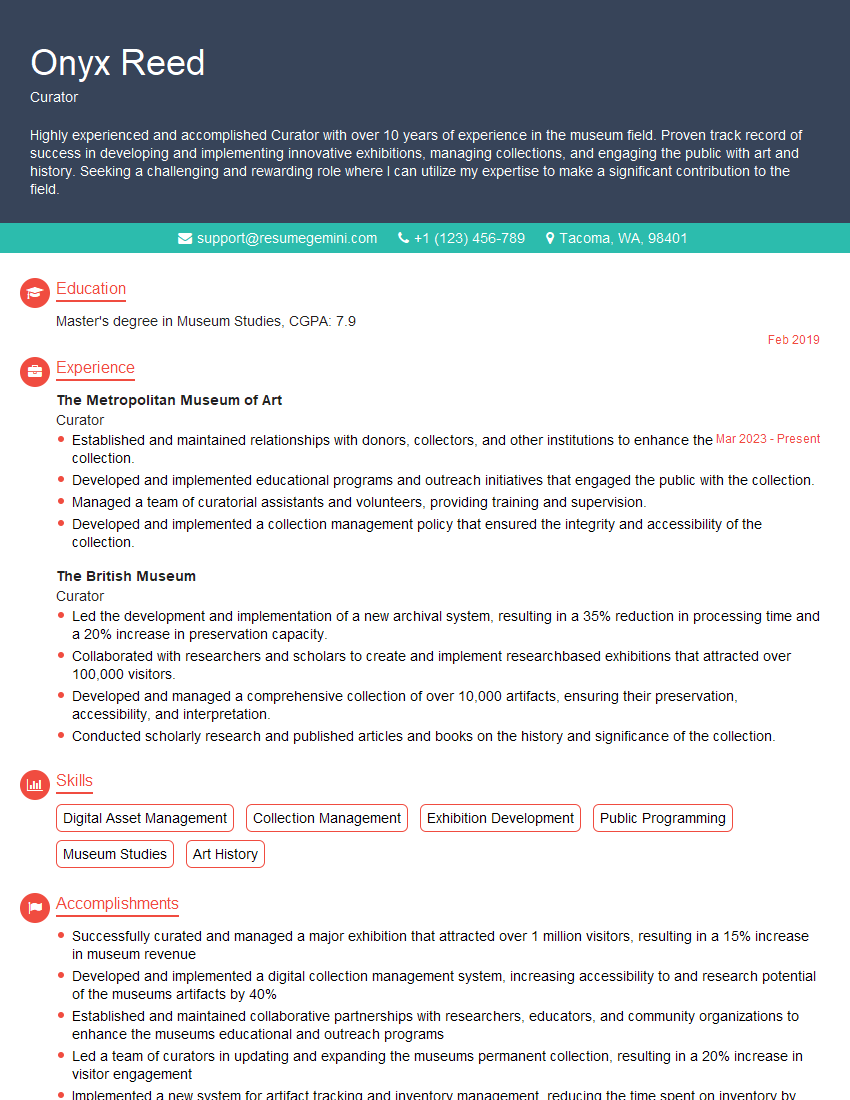
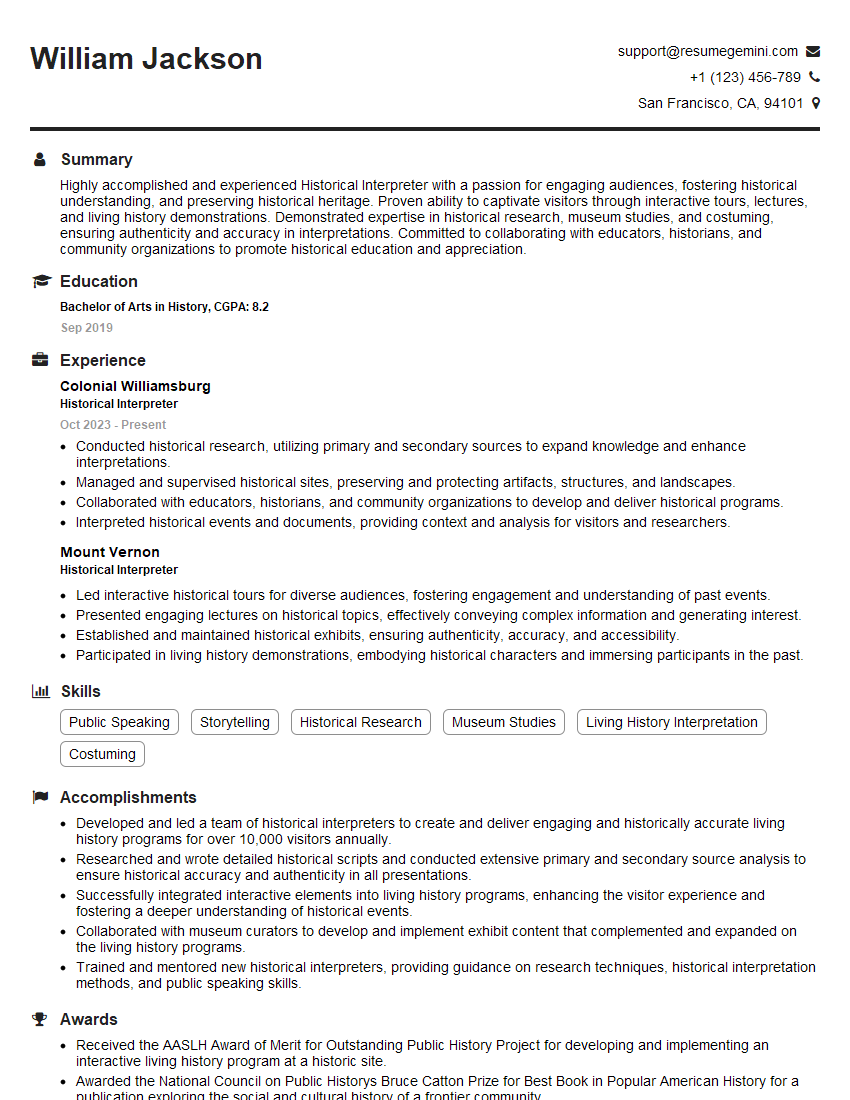
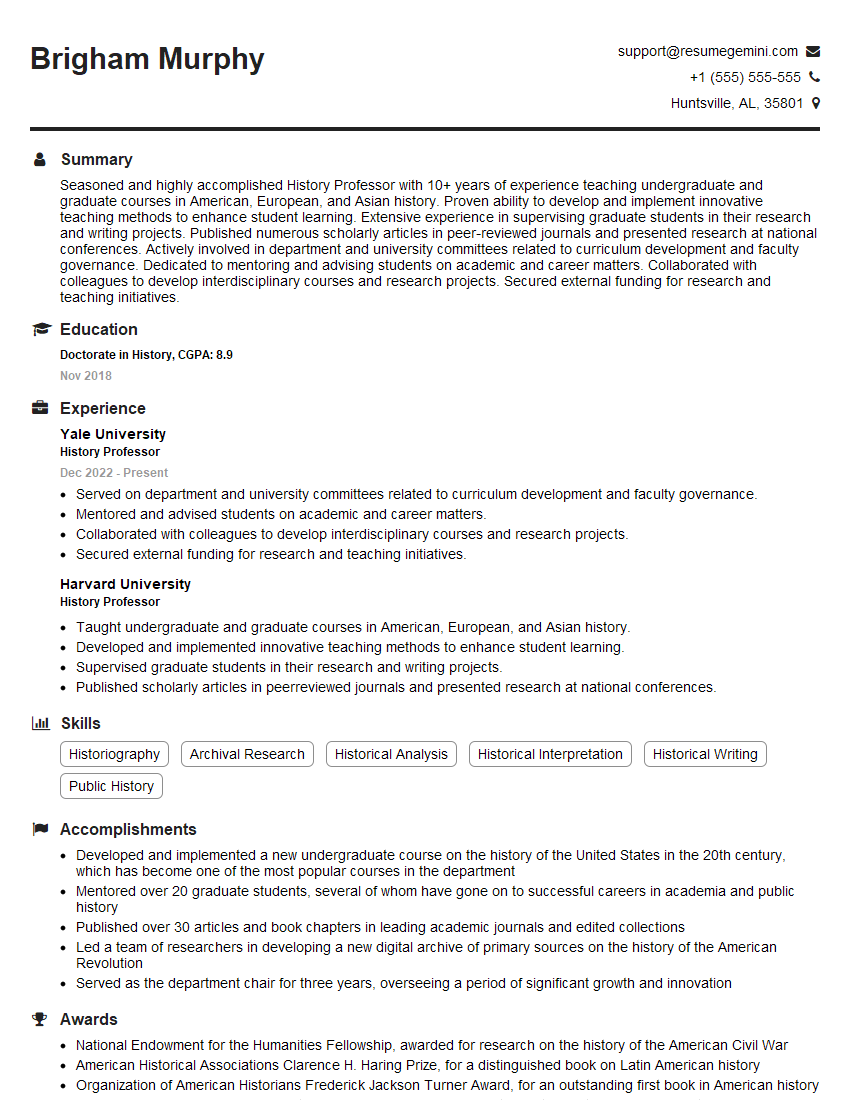
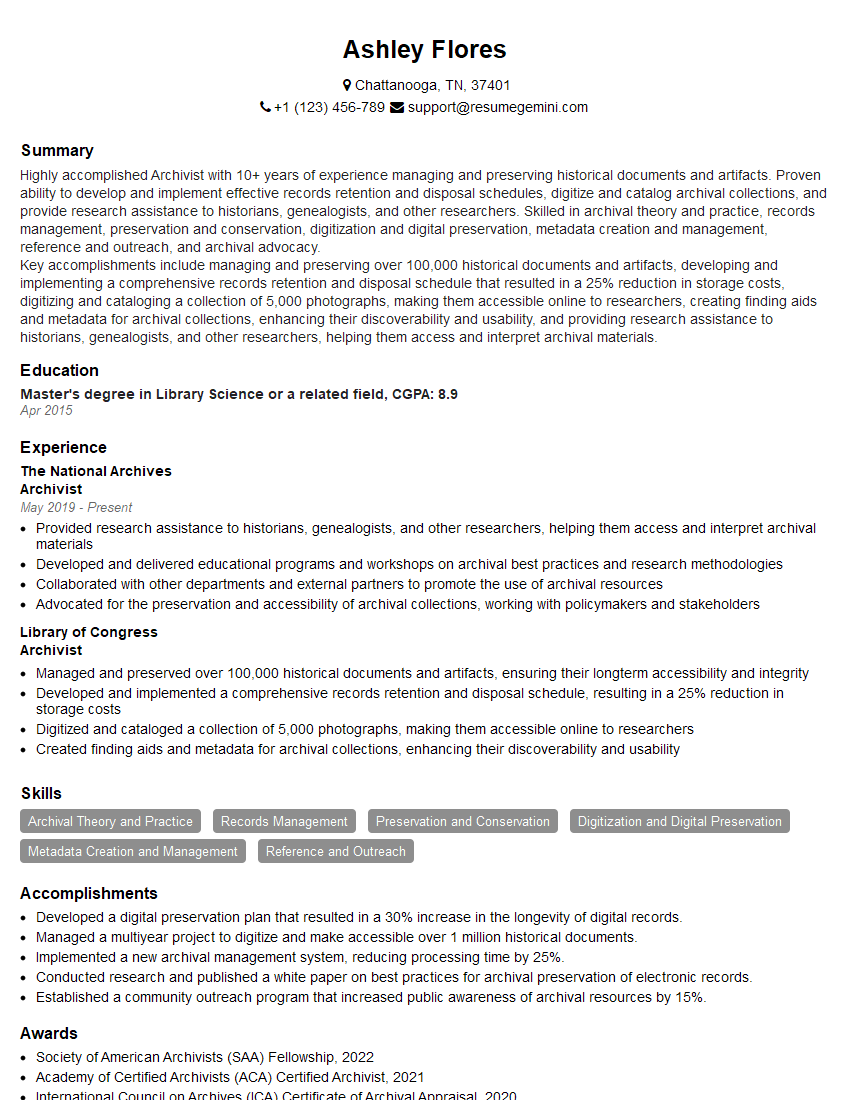
Mastering historiology opens doors to diverse and rewarding careers in academia, archives, museums, journalism, and government. A strong understanding of historical analysis and interpretation is highly valued across many sectors. To maximize your job prospects, crafting a compelling and ATS-friendly resume is crucial. ResumeGemini is a trusted resource that can help you build a professional resume that highlights your skills and experience effectively. Examples of resumes tailored specifically to historiology positions are available to guide you through the process. Invest time in building a strong resume – it’s your first impression on potential employers.
Explore more articles
Users Rating of Our Blogs
Share Your Experience
We value your feedback! Please rate our content and share your thoughts (optional).
What Readers Say About Our Blog
To the interviewgemini.com Webmaster.
Very helpful and content specific questions to help prepare me for my interview!
Thank you
To the interviewgemini.com Webmaster.
This was kind of a unique content I found around the specialized skills. Very helpful questions and good detailed answers.
Very Helpful blog, thank you Interviewgemini team.