Interviews are opportunities to demonstrate your expertise, and this guide is here to help you shine. Explore the essential Aircraft Communication interview questions that employers frequently ask, paired with strategies for crafting responses that set you apart from the competition.
Questions Asked in Aircraft Communication Interview
Q 1. Explain the principles of VHF communication in aviation.
VHF (Very High Frequency) communication is the backbone of short-range air-to-ground communication in aviation. It utilizes radio waves in the 118-136 MHz band, which propagate relatively well within line-of-sight. Think of it like shouting across a field – you can only be heard by those within a certain distance. The principle lies in the transmission and reception of modulated radio waves carrying voice and data. Aircraft radios transmit their calls, and ground stations (like Air Traffic Control towers) receive and respond, ensuring seamless coordination. The signal strength is crucial; mountainous terrain or significant distances can significantly impact communication reliability.
For instance, a pilot needs to request permission for landing. He/she will transmit this via VHF radio to the ATC tower, which responds with instructions and clearance, all done within the VHF frequency range.
Q 2. Describe the process of establishing communication with Air Traffic Control.
Establishing communication with Air Traffic Control (ATC) follows a standardized procedure. First, the pilot monitors the appropriate ATC frequency (provided in flight plans or charts). They then initiate contact by transmitting their call sign (e.g., ‘N12345’), followed by their location and request. For example, a pilot might say, ‘Atlanta Tower, Cessna 12345, five miles east, requesting landing.’ ATC will respond acknowledging the communication and providing instructions. Clear, concise language and precise location reporting are paramount for safety and efficiency.
Imagine a busy airport; many aircraft need to coordinate. ATC manages this using pre-defined frequencies and communication protocols. Clear communication avoids collisions and ensures that everyone knows where every aircraft is and what it’s doing. Any miscommunication can potentially be catastrophic.
Q 3. What are the different types of aircraft communication systems?
Aviation utilizes a variety of communication systems. VHF radio is the most common for short-range communication with ATC and other aircraft. HF (High Frequency) radio is used for long-range communication, often over oceans where VHF is ineffective. SATCOM (Satellite Communication) provides worldwide coverage, especially useful for flights over remote areas. Data link systems, such as ADS-B (Automatic Dependent Surveillance-Broadcast), transmit position and other data electronically, enhancing situational awareness. Finally, ACARS (Aircraft Communications Addressing and Reporting System) allows for text messaging between the aircraft and ground stations for maintenance or operational data transfer.
- VHF: Short-range, line-of-sight.
- HF: Long-range, global coverage.
- SATCOM: Global coverage, especially useful for oceanic flights.
- ADS-B: Data link for position reporting and situational awareness.
- ACARS: Data link for text messaging between aircraft and ground.
Q 4. Explain the role of ADS-B in aircraft communication.
ADS-B (Automatic Dependent Surveillance-Broadcast) revolutionized aircraft communication by providing real-time location and other data broadcasts from the aircraft to ground stations and other aircraft. It uses GPS to determine the aircraft’s position and transmits this information via radio signals. This allows ATC to track aircraft more accurately even in areas with limited radar coverage. ADS-B also enhances situational awareness for pilots by providing traffic information, weather updates, and other relevant data. Imagine a pilot getting real-time alerts about nearby aircraft without needing visual contact; ADS-B makes this possible, contributing significantly to collision avoidance.
For example, a pilot flying in an area with limited radar coverage would still receive traffic alerts from ADS-B equipped aircraft, helping them maintain safe separation from other planes.
Q 5. What are the limitations of VHF communication?
VHF communication has limitations primarily due to its line-of-sight propagation characteristics. Mountainous terrain, buildings, or significant distances can severely weaken or completely block the signal. Furthermore, VHF is susceptible to atmospheric interference, such as static, and it lacks the range of HF or satellite systems. This limitation is particularly evident in oceanic flights or over vast, unpopulated areas.
For example, flying over a high mountain range, the pilot might experience complete signal loss with the ATC tower, leading to temporary communication failure.
Q 6. How does satellite communication enhance aircraft safety?
Satellite communication (SATCOM) significantly enhances aircraft safety by providing reliable communication even in remote areas where VHF or HF are unreliable. This is especially vital during emergencies over oceans or sparsely populated regions. SATCOM enables rapid communication with ground control, allowing for prompt assistance in case of mechanical failure, medical emergencies, or other critical situations. The constant connectivity provided by SATCOM also facilitates the transmission of critical flight data in real-time, assisting in better decision-making and safety management.
For instance, if an aircraft experiences an emergency far out over the ocean, SATCOM ensures continuous communication with ground control, allowing rescuers to be dispatched rapidly.
Q 7. Describe the different communication protocols used in aviation.
Aviation communication employs various protocols depending on the system used. VHF communication relies on simple voice communication, following specific phraseology and procedures. Data link systems like ADS-B use standardized data formats for transmitting position, velocity, and other relevant information. ACARS uses a store-and-forward system for text messaging between aircraft and ground stations. SATCOM systems utilize various protocols depending on the specific satellite system and the type of communication (voice, data, or a combination). These protocols ensure efficient and reliable data transfer within each system, guaranteeing reliable and clear communication, which is critical for aviation safety.
The standardization of these protocols is crucial; without it, the information exchange across different systems would be impossible or unreliable.
Q 8. What are the challenges of integrating new communication technologies into existing systems?
Integrating new communication technologies into existing aircraft systems presents several significant challenges. The primary hurdle is ensuring seamless interoperability with legacy systems. Older aircraft may have communication systems that aren’t compatible with newer, more advanced technologies, requiring expensive and time-consuming retrofits. This is complicated by the need to maintain safety and regulatory compliance throughout the process. Another key challenge is certification. New technologies must undergo rigorous testing and certification to ensure they meet stringent aviation safety standards, a process that can be lengthy and costly. Finally, there’s the issue of training. Pilots and maintenance personnel need adequate training to operate and maintain these new systems, adding to the overall integration cost.
For example, integrating a new satellite-based communication system into a fleet of older aircraft might require replacing existing radios, upgrading onboard computers, and retraining pilots on the new system’s operation. This is a complex undertaking involving engineering, regulatory, and training aspects, all of which contribute to the challenge of integrating new technologies.
Q 9. Explain the concept of frequency hopping in aviation communication.
Frequency hopping is a technique used in aviation communication to enhance security and reduce interference. Instead of transmitting on a single frequency, the system rapidly switches between multiple frequencies according to a pre-determined pattern. Think of it like a conversation where you and your friend quickly switch between different channels to avoid eavesdropping or interference from other conversations. This makes it difficult for unauthorized listeners to intercept the communication because they don’t know the hopping pattern. The frequency hopping spread spectrum (FHSS) technique ensures that even if an unwanted signal interferes with one frequency, the communication can continue seamlessly on a different frequency. This is particularly useful in congested airspace where multiple aircraft are using the same frequency bands.
An example in aviation would be a secure data link between an aircraft and air traffic control using FHSS to transmit sensitive flight information, minimizing the risk of interception.
Q 10. How does data link communication improve efficiency?
Data link communication significantly improves efficiency in aviation by replacing voice communication with digital data transmission. This allows for faster and more accurate exchange of information between aircraft and air traffic control. Instead of relying on potentially ambiguous voice instructions, pilots receive precise flight plan updates, weather reports, and other critical information directly through the data link. This reduces pilot workload, minimizes communication errors, and allows for smoother, more efficient traffic flow management. Furthermore, it enables the automated exchange of flight data, reducing reliance on manual input and human error.
For instance, an aircraft using data link can receive a precise descent profile directly from Air Traffic Control, leading to less fuel burn and reduced delays compared to receiving instructions verbally. Similarly, real-time weather data transmitted via data link allows pilots to make informed decisions about rerouting to avoid turbulence or severe weather, further enhancing safety and efficiency.
Q 11. Describe the function of a transponder in aircraft communication.
A transponder is a vital component of aircraft communication, acting as a two-way radio that automatically responds to signals from ground-based radar systems. It receives interrogation signals from air traffic control radar and transmits a coded reply containing the aircraft’s identity (identification code), altitude, and other information. This allows air traffic controllers to track the aircraft’s position and altitude on their radar screens. Essentially, the transponder acts as the aircraft’s ‘voice’ on the radar, providing crucial information for safe and efficient air traffic management.
Imagine it like a digital license plate for aircraft. The radar system ‘asks’ for identification, and the transponder responds with the aircraft’s data, enabling ATC to track its movements safely and efficiently. A failure of the transponder is considered a serious issue requiring immediate attention.
Q 12. Explain the importance of clear and concise communication in aviation.
Clear and concise communication is paramount in aviation due to its critical role in maintaining safety. Ambiguity or misunderstandings in communication can have catastrophic consequences. Pilots must be precise and unambiguous in their transmissions, adhering to standardized phraseology to avoid any misinterpretations. This is essential for coordinating actions between pilots, air traffic controllers, and other personnel on the ground. The stakes are high; a simple miscommunication could lead to a collision or other serious incident.
Think of a situation where a pilot requests a specific altitude change but uses unclear language. If the controller misinterprets the request, the aircraft might end up on a collision course with another aircraft. The potential for accidents highlights the absolute necessity of clear, concise communication in every aviation context.
Q 13. What are the emergency communication procedures in aviation?
Emergency communication procedures in aviation vary depending on the nature of the emergency, but they generally involve the use of a designated emergency frequency (typically 121.5 MHz or 243 MHz), a standardized distress call (‘Mayday’), and a concise description of the emergency situation, aircraft identification, location, and nature of the problem. Pilots are trained to follow specific protocols for emergency communication, including notifying air traffic control immediately, transmitting relevant information, and following any instructions given by ATC. They may also utilize emergency locator transmitters (ELTs) to help search and rescue teams locate the aircraft in case of a crash.
These procedures are rigorously practiced in training to ensure that pilots can respond effectively in high-pressure situations. The consistent use of standardized phrases and procedures is crucial for rapid and accurate communication during emergencies.
Q 14. How do you troubleshoot communication problems in an aircraft?
Troubleshooting communication problems in an aircraft involves a systematic approach. The first step is to identify the nature of the problem: Is it a complete radio failure, intermittent signal loss, or poor audio quality? Once the problem is identified, the next step is to check the basic systems—power supply, antenna, and radio settings. A pilot might consult their aircraft’s checklist for troubleshooting communication issues, which might involve checking circuit breakers, verifying antenna connections, and testing the radio’s functionality. If the problem persists, further investigation may be needed, potentially involving specialized testing equipment or assistance from maintenance personnel.
For example, if a pilot experiences intermittent radio failure, they might first check the radio’s power supply, then check the antenna connection, and finally consult the aircraft’s maintenance manual for more advanced troubleshooting steps. If the issue can’t be resolved in flight, the pilot might declare an emergency and seek assistance from air traffic control and ground-based maintenance teams.
Q 15. Describe your experience with aviation communication equipment maintenance.
My experience encompasses a broad spectrum of aviation communication equipment maintenance, from troubleshooting basic VHF radios to performing complex repairs on sophisticated satellite communication systems. I’ve worked extensively with both line maintenance, addressing immediate operational issues, and base maintenance, which involves more in-depth overhauls and preventative measures. This includes diagnosing malfunctions, replacing faulty components, performing calibrations, and running comprehensive system tests. I’m proficient in using specialized test equipment to identify and resolve communication system issues. For example, I’ve successfully diagnosed and repaired a faulty transponder causing intermittent communication dropouts, preventing potential airspace conflicts. Another instance involved troubleshooting a faulty HF radio that resulted in prolonged communication delays with air traffic control during an overwater flight. Thorough understanding of maintenance documentation, adherence to strict safety protocols, and the ability to quickly analyze and resolve problems are key to my approach.
Career Expert Tips:
- Ace those interviews! Prepare effectively by reviewing the Top 50 Most Common Interview Questions on ResumeGemini.
- Navigate your job search with confidence! Explore a wide range of Career Tips on ResumeGemini. Learn about common challenges and recommendations to overcome them.
- Craft the perfect resume! Master the Art of Resume Writing with ResumeGemini’s guide. Showcase your unique qualifications and achievements effectively.
- Don’t miss out on holiday savings! Build your dream resume with ResumeGemini’s ATS optimized templates.
Q 16. Explain your knowledge of aviation communication regulations.
My understanding of aviation communication regulations is extensive and encompasses both national and international standards. I’m intimately familiar with regulations governing radio frequencies, communication procedures, and the mandatory use of standardized phraseology. This includes adherence to ICAO (International Civil Aviation Organization) standards and any relevant national regulations. For instance, I understand the strict protocols governing communication during emergencies, such as the use of specific distress calls and the reporting procedures for incidents. A solid grasp of these regulations is crucial for ensuring safe and efficient air operations. Failure to adhere to these regulations can lead to serious safety consequences, including collisions, airspace violations, and delays. Regular review of regulatory updates is part of my professional commitment.
Q 17. What are the safety implications of communication failures?
Communication failures in aviation have significant safety implications, potentially leading to disastrous consequences. Loss of communication with air traffic control (ATC) can result in mid-air collisions, runway incursions, and inaccurate navigation, especially in high-traffic areas. Communication breakdowns between pilots and crew can also compromise safety, leading to errors in flight operations. Think of a situation where a pilot experiences an engine failure and is unable to effectively communicate the emergency to ATC, delaying crucial assistance. Even minor communication hiccups can lead to delays and increased workload, potentially causing pilot fatigue and increasing risk. Therefore, robust communication systems and contingency plans are vital for mitigating these risks.
Q 18. How do you handle communication challenges during inclement weather?
Inclement weather often presents challenges to aviation communication, particularly with VHF radio signals being susceptible to atmospheric interference. In these situations, we rely on multiple communication strategies. This could involve switching to alternate frequencies, using backup communication systems like satellite communication (SATCOM), or employing alternative communication methods, such as pre-planned flight paths and reduced communication frequency to conserve bandwidth. The key is adapting and employing redundancy to ensure continued communication, even in severely degraded conditions. For example, if VHF communication becomes unreliable due to heavy rain, a pilot might switch to SATCOM for essential communication with ATC. The ability to anticipate these challenges and have backup systems in place is crucial.
Q 19. Explain the importance of communication coordination between pilots and ATC.
Communication coordination between pilots and ATC is paramount for maintaining a safe and efficient air traffic system. It’s a two-way street: pilots rely on ATC for instructions, clearances, and traffic information, enabling safe separation from other aircraft. ATC, in turn, needs clear and concise information from pilots to manage air traffic effectively. Accurate reporting of position, altitude, and intentions from the pilot is essential for ATC to make informed decisions. A breakdown in this coordination can lead to serious safety risks, including collisions and runway conflicts. Clear, concise, and standard phraseology is vital in this process, ensuring there’s no room for misunderstanding.
Q 20. What is your experience with various communication technologies (e.g., HF, VHF, SATCOM)?
My experience with various communication technologies is extensive. I’m proficient with HF (High Frequency) radio, used for long-range communication, particularly over oceans. I understand its limitations, such as susceptibility to atmospheric conditions and the need for skilled operators. VHF (Very High Frequency) radio is my daily bread and butter, used for short-range communication with ATC and other aircraft. I’m experienced in troubleshooting both the airborne and ground-based systems. Finally, I’m familiar with SATCOM (Satellite Communication), which provides reliable communication globally, particularly useful in remote areas or during emergencies. Understanding the strengths and weaknesses of each technology and knowing when to utilize each based on the situation is a critical skill.
Q 21. Describe a situation where effective communication prevented an incident.
During a night flight in mountainous terrain, the aircraft experienced a sudden and severe loss of electrical power, impacting several critical systems, including the primary communication radio. The pilot, despite the stressful situation, was able to utilize the emergency backup VHF radio and maintain clear communication with ATC. By accurately reporting the situation, the pilot was able to receive immediate guidance and vectoring to a suitable emergency landing site. The fact that the pilot could still communicate, even with limited functionality, saved the situation; a critical situation that would have likely turned catastrophic had communication been totally absent. Effective communication was instrumental in ensuring the safe landing of the aircraft and the wellbeing of everyone on board.
Q 22. How familiar are you with ACARS and its applications?
ACARS, or Aircraft Communications Addressing and Reporting System, is a vital data link communication system used in aviation. Think of it as email for airplanes – it allows for the transmission of text messages between aircraft and ground stations. It’s not just about simple messages; ACARS facilitates the automated exchange of critical operational data, such as flight plans, maintenance reports, and weather updates. This enhances operational efficiency and safety.
Its applications are numerous. For example, pilots can send messages requesting maintenance or reporting mechanical issues. Airlines can remotely monitor aircraft performance and optimize routing. In case of an emergency, ACARS provides a crucial channel for rapid communication of distress signals and critical information. ACARS is instrumental in reducing operational costs by streamlining communication and allowing for proactive maintenance scheduling.
- Flight Monitoring: Real-time tracking of aircraft position and parameters.
- Maintenance Reporting: Automated reporting of mechanical issues and required maintenance.
- Weather Updates: Receiving real-time weather information for improved flight planning.
- Flight Plan Changes: Communicating flight plan alterations to Air Traffic Control.
Q 23. Explain the difference between voice communication and data link communication.
The primary difference between voice and data link communication in aviation lies in the nature of the information transmitted. Voice communication, as the name suggests, relies on spoken words transmitted over radio frequencies. Imagine a phone call – it’s immediate, but limited in the amount of information that can be conveyed quickly and accurately. Air Traffic Control instructions, for example, are typically handled via voice communication.
Data link communication, on the other hand, uses digital data transmission to exchange pre-formatted information. Think of it as texting – it’s precise and allows for the transmission of larger quantities of data, including complex flight plans or maintenance records. Examples include ACARS, ADS-B (Automatic Dependent Surveillance-Broadcast), and CPDLC (Controller-Pilot Data Link Communications). Data link systems are more efficient for structured information transfer, reducing misunderstandings that can arise from voice communication. One key advantage is the ability to create an auditable record of the exchange.
Q 24. What are the key performance indicators (KPIs) for an aircraft communication system?
Key Performance Indicators (KPIs) for an aircraft communication system focus on reliability, efficiency, and safety. They are crucial for assessing the overall health and performance of the system.
- Message Delivery Rate: The percentage of messages successfully transmitted and received.
- Latency: The delay in message transmission and reception.
- Uptime/Availability: The percentage of time the system is operational and available for use.
- Message Integrity: The accuracy and completeness of the transmitted data.
- Throughput: The amount of data transmitted per unit of time.
- Security Incidents: Number of security breaches or attempted breaches.
- Mean Time To Repair (MTTR): Average time taken to resolve communication system malfunctions.
These KPIs help airlines and regulatory authorities track the performance and identify areas for improvement. For example, a low message delivery rate might indicate connectivity issues, while high latency could impact flight safety and efficiency.
Q 25. Describe your experience with testing and evaluating aircraft communication systems.
My experience in testing and evaluating aircraft communication systems involves a comprehensive approach. This includes both functional testing and performance testing. Functional testing validates that the system adheres to its specifications, correctly transmitting and receiving various types of messages. We use simulated aircraft environments to test these systems under various conditions.
Performance testing measures the system’s efficiency under different load conditions. We measure KPIs such as message delivery rate, latency, and throughput to identify bottlenecks. For example, during a recent project, we used a network simulator to reproduce high-traffic scenarios, revealing a vulnerability in our message handling protocol. This led to modifications that significantly improved system performance under stress.
I have extensive experience with various testing methodologies, including unit testing, integration testing, and system testing. Furthermore, compliance testing with international standards (like those from ICAO) is a fundamental part of the process, ensuring airworthiness and operational safety.
Q 26. How do you ensure compliance with international communication standards?
Ensuring compliance with international communication standards is paramount in aviation. The International Civil Aviation Organization (ICAO) sets the standards for aircraft communication, aiming for global interoperability and safety. My approach focuses on understanding and adhering to relevant ICAO Annex 10, which specifies communication systems’ technical requirements. We work closely with certification bodies to ensure that our systems meet all specified standards.
This includes rigorous testing, documentation, and adherence to regulatory processes. We maintain meticulous records of our testing procedures and results to demonstrate compliance. For example, we’ve successfully completed numerous certifications for our communication systems by implementing strict quality control measures throughout the entire development lifecycle. This commitment ensures that our systems are safe, reliable, and compliant with international best practices.
Q 27. Explain your understanding of cybersecurity threats to aircraft communication systems.
Cybersecurity threats to aircraft communication systems are a growing concern. Given the reliance on data links for critical operational data, security breaches could have devastating consequences. Potential threats range from data manipulation to denial-of-service attacks, and even unauthorized access to sensitive flight data.
The major threats include:
- Data breaches: Unauthorized access to sensitive flight information, compromising passenger privacy or operational security.
- Denial-of-service (DoS) attacks: Overwhelming the system to prevent legitimate communication, leading to operational disruptions or potential safety hazards.
- Data manipulation: Altering flight plans or other critical data, causing navigation issues or potential accidents.
- Malware infections: Compromising the integrity of the system through malicious software.
Mitigating these risks requires a multi-layered approach, including robust encryption, intrusion detection systems, regular security audits, and proactive threat monitoring. Staying up-to-date with emerging threats and best practices in cybersecurity is critical.
Q 28. Describe your experience with troubleshooting and resolving communication system malfunctions.
Troubleshooting and resolving communication system malfunctions require a systematic approach. My experience involves leveraging a combination of technical skills, diagnostic tools, and problem-solving methodologies.
A typical troubleshooting process includes:
- Identifying the problem: Determining the nature and extent of the malfunction, relying on error logs and diagnostic tools.
- Isolating the cause: Systematically checking various components and network elements to pinpoint the root cause.
- Implementing a solution: Addressing the problem through software updates, hardware replacements, or network configuration changes.
- Verification and validation: Testing the system to ensure the solution is effective and does not introduce further problems.
- Documentation: Recording the troubleshooting steps and resolution for future reference and knowledge sharing.
For instance, I once resolved a recurring communication outage by identifying a faulty network switch using network monitoring tools. Replacing the switch fully restored communication services. A systematic approach, combined with strong diagnostic abilities, is crucial for rapidly resolving issues and minimizing disruptions.
Key Topics to Learn for Aircraft Communication Interview
- Radiotelephony Procedures: Understand and apply standard phraseology, including common terms, abbreviations, and emergency procedures. Practice clear and concise communication.
- ATC Communication: Learn the different types of air traffic control communications, their purposes, and how to respond effectively to instructions and requests. This includes understanding various frequencies and their uses.
- Navigation Systems & Communication Integration: Explore the interplay between communication systems (e.g., VHF, HF) and navigation aids (e.g., VOR, GPS) and how they provide situational awareness and facilitate communication.
- Emergency Communication Protocols: Master procedures for handling emergencies, distress calls, and urgent situations. Understand the importance of clear and efficient communication under pressure.
- Aviation Meteorology & its impact on communication: Learn how weather conditions affect communication range, clarity, and potential delays. Understand how to adapt communication strategies based on weather.
- Aircraft Communication Systems: Familiarize yourself with the technical aspects of various aircraft communication systems, their capabilities, and limitations. Be prepared to discuss troubleshooting scenarios.
- Communication Security & Confidentiality: Understand the importance of secure communication practices and the regulations surrounding sensitive information transmitted during flight operations.
- Human Factors in Aviation Communication: Explore the impact of human factors (stress, fatigue, workload) on communication effectiveness and safety. Understand techniques for mitigating communication errors.
Next Steps
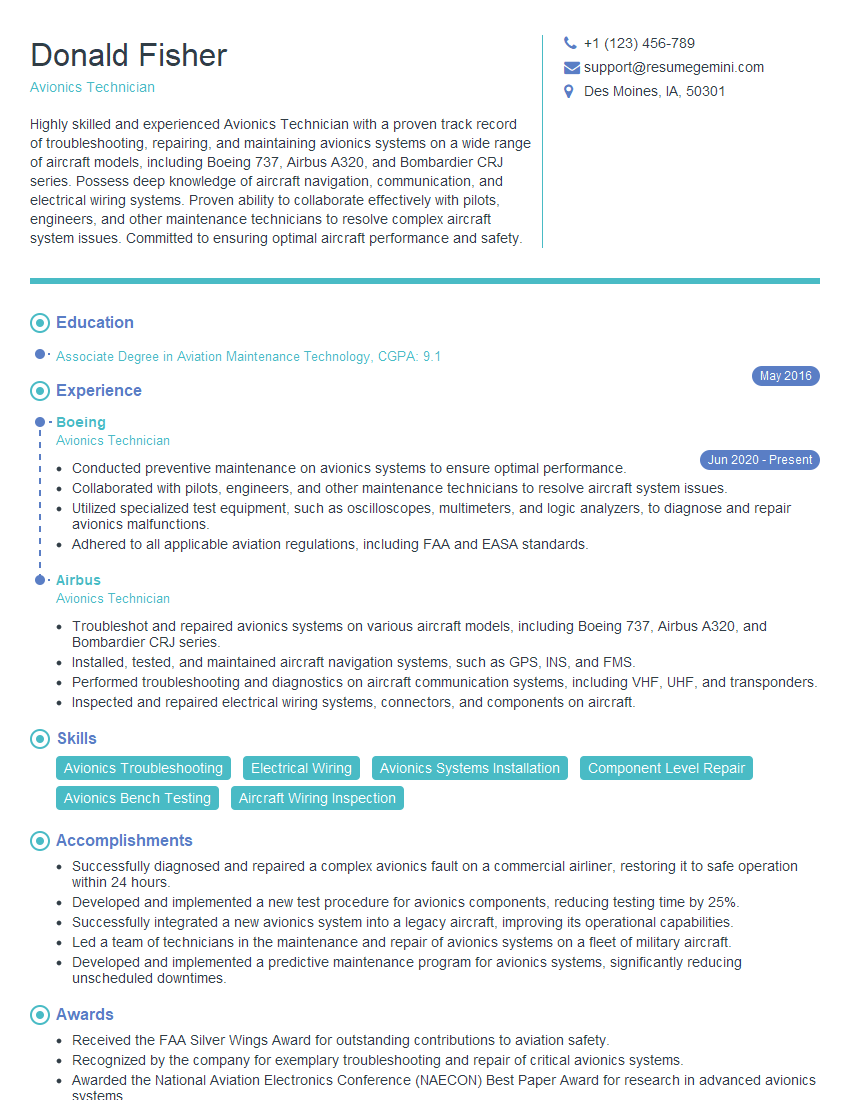
Mastering aircraft communication is crucial for a successful and fulfilling career in aviation. It’s a fundamental skill demonstrating your professionalism, safety consciousness, and ability to work effectively within a complex team environment. To significantly boost your job prospects, creating a strong, ATS-friendly resume is essential. ResumeGemini is a trusted resource to help you build a compelling and effective resume that highlights your skills and experience. Examples of resumes tailored specifically to Aircraft Communication roles are available within ResumeGemini to help guide you.
Explore more articles
Users Rating of Our Blogs
Share Your Experience
We value your feedback! Please rate our content and share your thoughts (optional).
What Readers Say About Our Blog
To the interviewgemini.com Webmaster.
Very helpful and content specific questions to help prepare me for my interview!
Thank you
To the interviewgemini.com Webmaster.
This was kind of a unique content I found around the specialized skills. Very helpful questions and good detailed answers.
Very Helpful blog, thank you Interviewgemini team.