Are you ready to stand out in your next interview? Understanding and preparing for Molecular pathology techniques (e.g., FISH, PCR) interview questions is a game-changer. In this blog, we’ve compiled key questions and expert advice to help you showcase your skills with confidence and precision. Let’s get started on your journey to acing the interview.
Questions Asked in Molecular pathology techniques (e.g., FISH, PCR) Interview
Q 1. Describe the principle of fluorescence in situ hybridization (FISH).
Fluorescence in situ hybridization (FISH) is a cytogenetic technique that uses fluorescently labeled DNA probes to detect the presence or absence of specific DNA sequences within a cell or tissue. Imagine it like searching for a specific book (DNA sequence) in a library (cell) using a brightly colored bookmark (fluorescent probe). The probe binds to its complementary sequence on the chromosome, allowing visualization under a fluorescence microscope. The intensity and location of the fluorescent signal indicate the copy number and location of the target sequence.
Q 2. Explain the steps involved in a standard FISH procedure.
A standard FISH procedure generally involves these steps:
- Sample Preparation: Cells or tissues are fixed and prepared onto microscope slides. This process preserves the cellular structure and makes the chromosomes accessible to the probe.
- Probe Denaturation: The fluorescently labeled DNA probe is denatured (the double helix is separated into single strands) to allow it to hybridize with its complementary sequence on the target DNA.
- Hybridization: The denatured probe is added to the prepared sample, and the mixture is incubated under specific conditions (temperature and salt concentration) to promote binding between the probe and its target sequence. This process is like two puzzle pieces fitting together perfectly.
- Post-Hybridization Wash: The slide is washed to remove unbound probes, ensuring only specific binding is detected.
- Microscopic Analysis: The slide is examined under a fluorescence microscope to visualize the location and intensity of the fluorescent signals. The number of signals indicates the copy number of the target DNA sequence. A skilled cytogeneticist interprets these signals to make a diagnosis.
Q 3. What are the limitations of FISH?
FISH, while powerful, has limitations:
- Resolution: FISH has limited resolution, meaning it might not be able to detect small deletions or insertions.
- Technical Expertise: It requires specialized equipment and highly trained personnel for optimal results and accurate interpretation.
- Cost: The probes and equipment can be expensive, limiting accessibility.
- Limited Target Sequences: You need a specific probe for each target sequence you wish to analyze; it can’t detect unknown rearrangements.
- Tissue Quality: The quality of the tissue sample is crucial; poorly preserved samples can affect the results.
Q 4. What are the different types of FISH probes?
Various types of FISH probes exist, tailored for different applications:
- Centromeric Probes: These target repetitive DNA sequences at the centromere of chromosomes, used for chromosome counting in aneuploidy detection (e.g., detecting an extra chromosome 21 in Down syndrome).
- Locus-Specific Probes: These target unique DNA sequences at specific chromosomal locations, helpful for detecting deletions, duplications, or translocations. For example, detecting a deletion in the BRCA1 gene in breast cancer.
- Whole Chromosome Painting Probes: These label an entire chromosome with a unique fluorescent color, allowing visualization of whole chromosome abnormalities like translocations.
- Telomeric Probes: These probes target telomeres (ends of chromosomes), used to study telomere length changes associated with aging and disease.
Q 5. How is the specificity and sensitivity of a FISH assay determined?
Specificity and sensitivity in FISH assays are determined through several approaches:
- Specificity: Refers to the probe’s ability to bind only to the intended target sequence and not to other similar sequences. It’s assessed by controls, using probes with known sequences and comparing results with other established methods.
- Sensitivity: Refers to the assay’s ability to detect even small amounts of the target sequence. This is assessed by using samples with varying known copy numbers of the target sequence. The detection limit (lowest number of copies reliably detected) helps define sensitivity.
Proper controls, including positive and negative controls, are essential for validating specificity and sensitivity and ensuring reliable results.
Q 6. Explain the principle of Polymerase Chain Reaction (PCR).
Polymerase Chain Reaction (PCR) is a technique used to amplify a specific DNA sequence exponentially. Think of it as making millions of copies of a specific gene from a tiny starting sample. This is achieved through a cyclical process involving heating and cooling, using an enzyme called DNA polymerase which synthesizes new DNA strands complementary to the target sequence. This allows detection of even minute quantities of DNA.
Q 7. Describe the different types of PCR (e.g., qPCR, RT-PCR).
Several types of PCR exist, each with its own applications:
- Quantitative PCR (qPCR): Measures the amount of DNA or RNA in a sample during the amplification process, providing quantitative information about the target sequence. This is crucial for gene expression studies or viral load quantification. For instance, monitoring HIV viral load during treatment.
- Reverse Transcription PCR (RT-PCR): Starts with RNA instead of DNA. RNA is first converted into complementary DNA (cDNA) using reverse transcriptase before PCR amplification. This allows analysis of gene expression levels, as gene expression is often measured via RNA transcripts.
- Nested PCR: Involves two rounds of PCR amplification, using nested primers. It increases sensitivity and specificity, useful when the starting material is limited or the target sequence is poorly represented.
- Real-Time PCR: Also known as qPCR, it monitors the amplification process in real time, allowing the quantification of the initial template amount. This is widely used in clinical diagnostics and research.
Q 8. What are the components required for a PCR reaction?
A successful PCR reaction requires several key components working in harmony, much like a well-oiled machine. These components are:
- DNA Template: This is the genetic material you want to amplify. It could be genomic DNA, cDNA, or even a plasmid.
- Primers: These are short, single-stranded DNA sequences that are complementary to the regions flanking your target DNA sequence. They act as starting points for DNA synthesis.
- dNTPs (deoxynucleotide triphosphates): These are the building blocks of DNA – adenine (A), guanine (G), cytosine (C), and thymine (T). They are added to the growing DNA strand during the PCR process.
- DNA Polymerase: This enzyme is responsible for synthesizing new DNA strands. A heat-stable polymerase, like Taq polymerase, is crucial because it can withstand the high temperatures used in PCR.
- Buffer Solution: This maintains the optimal pH and provides essential ions (like magnesium ions) required for the DNA polymerase’s activity.
Think of it like baking a cake: you need the right ingredients (template, primers, dNTPs) and the right tools (polymerase, buffer) to get a good result (amplified DNA).
Q 9. How does qPCR differ from standard PCR?
While both standard PCR and qPCR (quantitative PCR) amplify DNA, qPCR provides a way to measure the amount of DNA amplified in real-time. Standard PCR is an end-point assay, meaning you only assess the amount of DNA at the end of the reaction. qPCR, on the other hand, uses fluorescent dyes or probes to monitor DNA amplification during each cycle. This allows you to quantify the starting amount of DNA and get results much faster.
Imagine comparing taking a photograph at the end of a race (standard PCR) versus filming the entire race and analyzing the runners’ positions throughout (qPCR). qPCR gives you a much more detailed and informative analysis.
Q 10. Explain the concept of cycle threshold (Ct) in qPCR.
The cycle threshold (Ct) in qPCR is the cycle number at which the fluorescence signal crosses a predefined threshold. This threshold is set above the background noise and represents the point at which the amplified product becomes detectable. The lower the Ct value, the higher the initial amount of target DNA.
For example, a Ct of 15 indicates a much higher starting concentration of the target DNA than a Ct of 25. This allows us to quantify the amount of DNA, which is essential in applications like pathogen detection or gene expression analysis.
It’s important to note that Ct values are relative, and proper normalization and calibration are critical for accurate quantification.
Q 11. What are the potential sources of error in PCR?
PCR, while incredibly powerful, is susceptible to various errors. These can be broadly categorized as:
- Contamination: This is a major concern. Even tiny amounts of contaminating DNA can lead to false-positive results. This can arise from airborne DNA, reagents, or previous samples.
- Primer-dimer formation: Primers can anneal to each other, consuming reagents and producing non-specific products.
- Incorrect annealing temperature: Too low, and primers bind non-specifically; too high, and they don’t bind at all.
- DNA degradation: If the DNA template is degraded, amplification will be inefficient or fail altogether.
- Reagent quality: Poor quality reagents can significantly impact PCR performance.
It’s like baking with expired ingredients – you won’t get the expected outcome.
Q 12. How do you troubleshoot a failed PCR reaction?
Troubleshooting a failed PCR reaction involves a systematic approach. I’d start with checking the basics:
- Verify reagents and template quality: Ensure reagents aren’t expired or degraded and the template DNA is intact (check DNA concentration and purity).
- Optimize annealing temperature: Gradient PCR can help determine the optimal annealing temperature for your primers.
- Check primer design: Poorly designed primers are a common cause of failure. Look for issues like self-complementarity, hairpin formation, or low specificity.
- Increase MgCl2 concentration (carefully): Magnesium ions are essential for DNA polymerase activity. However, excessive amounts can increase non-specific amplification.
If the problem persists, repeat the entire procedure paying very careful attention to each step.
Q 13. What are the applications of FISH in clinical diagnostics?
Fluorescence In Situ Hybridization (FISH) is a cytogenetic technique that uses fluorescently labeled probes to detect specific DNA sequences within cells or chromosomes. This has important applications in clinical diagnostics, including:
- Cancer diagnosis and prognosis: FISH can detect chromosomal abnormalities (e.g., translocations, deletions, amplifications) associated with various cancers, aiding in diagnosis and predicting prognosis.
- Prenatal diagnosis: Detecting chromosomal aneuploidies (e.g., Down syndrome) in fetuses through analysis of amniotic fluid or chorionic villus samples.
- Microbial identification: Identifying specific microorganisms by detecting their unique DNA sequences directly in a patient sample.
- Gene mapping: Locating specific genes on chromosomes for research purposes.
For example, FISH is commonly used to detect the presence of the HER2 gene amplification in breast cancer, influencing treatment decisions.
Q 14. What are the applications of PCR in clinical diagnostics?
PCR’s versatility makes it a cornerstone of clinical diagnostics. Its applications are vast and include:
- Infectious disease diagnosis: Detecting the presence of viral, bacterial, or parasitic DNA or RNA in patient samples (e.g., COVID-19 testing, tuberculosis detection).
- Genetic disease diagnosis: Identifying mutations or variations in genes associated with inherited diseases (e.g., cystic fibrosis, sickle cell anemia).
- Cancer diagnostics: Detecting cancer-specific mutations or gene rearrangements (e.g., detection of BCR-ABL fusion gene in chronic myeloid leukemia).
- Monitoring disease progression: Measuring viral load in HIV or hepatitis infections or tracking minimal residual disease in cancer patients.
- Pharmacogenomics: Identifying genetic variations that can predict drug response or susceptibility to adverse drug effects.
PCR’s speed, sensitivity, and specificity make it an indispensable tool across numerous clinical settings.
Q 15. Compare and contrast FISH and PCR techniques.
Both FISH (Fluorescence In Situ Hybridization) and PCR (Polymerase Chain Reaction) are powerful molecular pathology techniques used to detect specific DNA or RNA sequences, but they differ significantly in their approach and application. FISH is a cytogenetic technique that uses fluorescently labeled probes to visualize specific DNA sequences directly on chromosomes within a cell, providing spatial information. PCR, on the other hand, is a molecular technique that amplifies a specific DNA sequence exponentially, allowing for detection of even minute amounts of target DNA, but without the spatial context of FISH.
- FISH: Imagine searching for a specific book in a library by visually inspecting the shelves. You’re looking for the book’s physical location. FISH does something similar; it directly visualizes the target DNA sequence on chromosomes.
- PCR: Think of PCR as photocopying a specific page from a book millions of times. You end up with many copies of that page (your target DNA sequence), allowing for easier detection, but you lose the information about where that page originally resided in the book.
In summary, FISH is ideal for visualizing chromosomal abnormalities like translocations or deletions, while PCR is better suited for detecting specific gene mutations or measuring gene expression levels. The choice between the two depends on the specific research question or diagnostic need.
Career Expert Tips:
- Ace those interviews! Prepare effectively by reviewing the Top 50 Most Common Interview Questions on ResumeGemini.
- Navigate your job search with confidence! Explore a wide range of Career Tips on ResumeGemini. Learn about common challenges and recommendations to overcome them.
- Craft the perfect resume! Master the Art of Resume Writing with ResumeGemini’s guide. Showcase your unique qualifications and achievements effectively.
- Don’t miss out on holiday savings! Build your dream resume with ResumeGemini’s ATS optimized templates.
Q 16. Explain the process of probe design for FISH.
Probe design for FISH is critical for successful hybridization. A well-designed probe ensures specific binding to the target DNA sequence and minimizes non-specific binding, resulting in clear and interpretable results. The process typically involves several steps:
- Target Sequence Selection: The first step is to identify the specific DNA sequence to be targeted. This information is often obtained from the literature or from prior genetic analysis.
- Probe Design and Synthesis: Once the target sequence is selected, a probe of appropriate length (typically 10-50 kb for whole chromosome painting, and shorter for specific genes) is designed. The probe is then synthesized using techniques such as PCR or enzymatic cloning. It is crucial to ensure that the probe sequence has high specificity and minimal homology to other regions of the genome.
- Labeling: The probe is labeled with a fluorescent dye (e.g., fluorescein, rhodamine, or Cy dyes) to allow for visualization under a fluorescence microscope. The choice of dye depends on the specific application and the desired color combination.
- Validation: Before use, the probe needs to be validated to ensure its specificity and sensitivity. This typically involves testing the probe on control samples with known positive and negative results.
For example, designing a probe for detecting a specific gene translocation might involve selecting a DNA sequence unique to each participating chromosome and designing probes labeled with different fluorophores. The co-localization of these differently colored signals would confirm the translocation.
Q 17. How do you interpret FISH results?
Interpreting FISH results involves careful visual examination of the hybridized cells under a fluorescence microscope. The number of signals per cell, their location on the chromosomes, and their intensity are all important parameters.
- Signal Count: The number of signals observed indicates the number of copies of the target sequence present in the cell. For example, two signals would suggest a normal diploid state, while one signal could indicate a deletion, and three or more signals might indicate amplification.
- Signal Location: The location of the signals on the chromosomes provides important information about chromosomal rearrangements. For example, the fusion of signals from different chromosomes would indicate a translocation.
- Signal Intensity: The intensity of the fluorescent signal can reflect the copy number of the target sequence. However, it’s important to consider potential artifacts and variations in labeling efficiency.
A pathologist with expertise in FISH analysis needs to assess the results in conjunction with the patient’s clinical history and other diagnostic data. Establishing a clear scoring system, including the number of cells to be analyzed, is vital for reproducible and reliable results. A report will often include the percentage of cells with different signal patterns, which is key to clinical interpretation.
Q 18. How do you interpret qPCR results?
qPCR (quantitative PCR) results are typically analyzed by measuring the amount of amplified DNA at each cycle. This is expressed as a Ct (cycle threshold) value, which represents the cycle number at which the amplified signal crosses a predefined threshold. Lower Ct values indicate higher initial amounts of target DNA.
Data analysis often involves:
- Ct Value Comparison: The Ct values from the samples are compared to a standard curve or to a calibrator sample. The standard curve is generated using known concentrations of the target DNA. This allows for absolute quantification of the target DNA in the samples.
- Relative Quantification: Alternatively, relative quantification can be performed by comparing the Ct values of the samples to a reference gene or a control group. This method is commonly used to measure changes in gene expression.
- Data Normalization: To account for variations in RNA or DNA extraction efficiency and sample input, data is often normalized to a reference gene, which is ideally a housekeeping gene with stable expression levels.
Software packages specifically designed for qPCR data analysis are used to perform these calculations and generate graphs, facilitating the interpretation of results. For instance, a significantly higher Ct value in a cancer sample compared to a normal control might indicate downregulation of a particular tumor suppressor gene. This, combined with other evidence, may be a significant finding for diagnosis or prognosis.
Q 19. What are the quality control measures used in FISH and PCR assays?
Quality control (QC) is paramount in both FISH and PCR assays to ensure the reliability and accuracy of the results. QC measures are implemented at every stage of the workflow.
- FISH QC: This includes using positive and negative controls on each slide, careful probe preparation and optimization, and experienced microscopic evaluation with stringent criteria for scoring. Pre-hybridization steps such as tissue processing and slide preparation are equally critical to ensure successful hybridization. Poor tissue quality or inadequate probe penetration can significantly impact results.
- PCR QC: This involves using positive and negative controls in each PCR run, validating primer and probe specificity, using appropriate reagents and equipment, and implementing strategies to prevent contamination (e.g., separate pre- and post-PCR work areas). Monitoring the amplification curve for non-specific amplification or primer dimers is also an important QC step. Internal controls are vital to monitor for inhibition of the reaction.
Regular calibration and maintenance of equipment are vital to both techniques. Documentation of all QC steps is crucial for traceability and regulatory compliance.
Q 20. Explain the role of internal controls in PCR assays.
Internal controls in PCR assays are crucial for monitoring the overall quality of the reaction and detecting any potential inhibitors present in the sample. They act as a benchmark, providing confidence in the results obtained. Several types of internal controls are used:
- Positive Control: A sample containing the target DNA sequence ensures that the PCR reaction is working correctly. A positive control should always produce a signal.
- Negative Control: A sample without the target DNA sequence helps to detect contamination or non-specific amplification. A negative control should not produce a signal.
- Internal Control (IC): An IC is a separate DNA or RNA sequence that is added to each sample before PCR. The IC is amplified simultaneously with the target sequence. If the IC is not amplified, it suggests a problem with the reaction such as the presence of inhibitors in the sample.
For example, if the internal control fails to amplify in a patient sample, this indicates that the sample contains inhibitors preventing the amplification of the target. The results for the patient sample would then be considered unreliable and retesting may be needed after appropriate treatment of the sample to remove any inhibitors.
Q 21. How is data analyzed for FISH and PCR experiments?
Data analysis for FISH and PCR experiments varies based on the type of experiment and the specific research question. Dedicated software packages simplify data analysis, offering statistical analysis and visualization tools.
- FISH Data Analysis: Involves manually scoring the number of signals per cell (usually a minimum of 200 cells are scored) under the microscope, followed by statistical analysis. This analysis may determine the percentage of cells with different signal patterns (e.g., two copies, one copy, three copies), providing insights into gene amplification or deletions. The data is often presented as histograms or tables.
- PCR Data Analysis: qPCR data analysis software packages calculate Ct values, relative quantification, and perform statistical analysis to determine the significance of differences between groups. The data is usually visualized using graphs, such as standard curves, amplification plots and scatter plots. Software also automates the calculation of relative expression levels and performs statistical tests to determine the significance of changes.
Regardless of the technique, accurate data analysis is vital for drawing biologically relevant conclusions. Careful consideration of potential biases and artifacts is essential for proper interpretation.
Q 22. Discuss the safety precautions associated with FISH and PCR techniques.
Safety in molecular pathology labs is paramount. Both FISH (Fluorescence In Situ Hybridization) and PCR (Polymerase Chain Reaction) involve handling potentially hazardous materials. For FISH, the primary safety concern revolves around the use of chemical agents, such as formaldehyde in fixation processes, and potentially mutagenic fluorescent probes. Proper ventilation, personal protective equipment (PPE) including gloves, lab coats, and eye protection, and adherence to established waste disposal protocols are crucial. We always work under a biosafety hood when handling these reagents. For PCR, the major safety consideration is the potential for amplification of infectious agents. To prevent this, we strictly adhere to aseptic techniques, use dedicated reagents and equipment for each assay to avoid cross-contamination, and employ appropriate decontamination procedures using UV light and appropriate cleaning solutions. Proper training is essential for all personnel to mitigate risks. For example, a spill of a fluorescent dye would require immediate containment, cleanup with a designated spill kit, and thorough documentation. This ensures both the safety of personnel and the integrity of the results.
Q 23. What are the ethical considerations in molecular pathology testing?
Ethical considerations in molecular pathology testing are multifaceted. Firstly, patient confidentiality is paramount. All patient data, including test results, must be handled according to HIPAA regulations and other relevant guidelines. This involves secure storage of physical and digital information, and restricting access to authorized personnel only. Secondly, ensuring the accuracy and reliability of results is crucial. This necessitates rigorous quality control and quality assurance measures throughout the testing process. Reporting and interpretation must be transparent and unbiased. A third crucial ethical aspect is informed consent. Patients need to be fully informed about the purpose, process, limitations, and potential implications of the test before consenting to it. Genetic testing, especially, raises complex questions about potential implications for family members, genetic discrimination, and the emotional burden of receiving potentially life-altering information. Finally, it is crucial to use the technology responsibly. We should actively strive to prevent any misapplication of genetic information, promoting responsible data stewardship.
Q 24. Describe your experience with data analysis software used in molecular pathology.
I have extensive experience with various data analysis software packages used in molecular pathology. My proficiency includes using software such as CytoVision (for FISH image analysis), and specialized bioinformatics tools like Geneious Prime and CLC Genomics Workbench for sequence analysis and interpretation. In CytoVision, for instance, I’m adept at setting thresholds, defining regions of interest, and generating quantitative data on the number of signals per cell. This is essential in diagnosing chromosomal abnormalities. With bioinformatics software, I’m proficient in analyzing PCR data, such as qPCR and sequencing data, looking for sequence variants (SNVs), insertions, deletions, and copy number variations. For example, I have used Geneious Prime to align sequencing reads, identify mutations in cancer-related genes, and interpret the results in the context of the patient’s clinical information. Data interpretation always takes place within the framework of established clinical guidelines and quality control metrics.
Q 25. Explain your experience with different types of microscopes used in FISH analysis.
My experience encompasses a range of microscopes commonly used in FISH analysis. I’m proficient with both fluorescence microscopes and specialized systems such as those with automated image acquisition and analysis capabilities. Standard fluorescence microscopes allow for visualization of the fluorescent probes bound to the target DNA sequences, but using automated systems significantly increases the efficiency and accuracy of data acquisition and analysis, particularly when dealing with high-throughput studies. I’m familiar with both epifluorescence and confocal microscopy techniques. Confocal microscopy offers superior resolution and minimizes out-of-focus fluorescence, resulting in sharper images and more accurate signal quantification, particularly important when visualizing intricate chromosomal arrangements. The choice of microscope depends heavily on the complexity of the assay, throughput requirements, and budget.
Q 26. How do you maintain the quality and integrity of reagents used in FISH and PCR?
Maintaining reagent quality and integrity is critical for accurate and reliable results in both FISH and PCR. This involves strict adherence to manufacturers’ storage and handling instructions. Reagents are stored according to the specific requirements for temperature, light exposure, and humidity. We carefully track expiration dates and ensure proper rotation of stock. Regular visual inspections are carried out to detect any signs of degradation or contamination, such as precipitation, discoloration, or microbial growth. For PCR, master mixes are typically prepared fresh on the day of use to minimize the risk of contamination. Positive and negative controls are included in every run to monitor for contamination, inhibition, and assay performance. Documentation is meticulously maintained, recording lot numbers, storage conditions, and usage dates. Any deviation from established protocols is meticulously documented and investigated. For example, if a reagent appears cloudy or discolored, it will be discarded immediately and replaced with a fresh batch.
Q 27. What are the regulatory requirements for molecular diagnostic testing?
Regulatory requirements for molecular diagnostic testing are stringent and vary depending on the specific test, the country, and the intended use. In the US, the Clinical Laboratory Improvement Amendments (CLIA) regulations govern the quality of laboratory testing. The FDA regulates the approval and clearance of commercial molecular diagnostic tests. These regulations include requirements for quality control, quality assurance, personnel qualifications, proficiency testing, and laboratory accreditation. Furthermore, we must comply with HIPAA regulations regarding patient privacy and data security. For example, if we develop a novel molecular diagnostic test, it needs to go through a rigorous validation process, including analytical and clinical validation, to demonstrate its accuracy, precision, and clinical utility before it can be offered for routine clinical testing. Documentation of all procedures and quality control measures is crucial for audits and inspections. Maintaining compliance is an ongoing process requiring constant vigilance and updates as regulatory guidelines evolve.
Q 28. Describe a situation where you had to troubleshoot a complex molecular pathology issue.
I once encountered a situation where FISH results for a particular chromosomal translocation were consistently weak and inconsistent across multiple replicates. Initial troubleshooting steps, such as checking reagent integrity, optimizing hybridization conditions, and verifying probe quality, yielded no immediate resolution. The problem was intermittent, occurring only with certain samples. I systematically investigated potential contributing factors, including sample preparation techniques, fixation quality, and potential interference from other cellular components. After careful examination of the microscopy images and comparing them with samples showing robust signal, it became apparent that inconsistencies in the tissue processing procedure were affecting the accessibility of the target DNA sequences in specific samples. By refining the tissue processing and optimizing the antigen retrieval step, we eliminated inconsistencies, improving signal strength and reproducibility of our FISH results. The entire troubleshooting process was meticulously documented, leading to improved standardized operating procedures in the lab.
Key Topics to Learn for Molecular Pathology Techniques (e.g., FISH, PCR) Interview
Ace your interview by mastering these fundamental concepts and their practical applications. Remember, demonstrating a deep understanding and problem-solving abilities is key!
- FISH (Fluorescence In Situ Hybridization):
- Principles of FISH: DNA probe design, hybridization, signal detection.
- Applications of FISH: Detecting chromosomal abnormalities, gene amplifications, translocations in cancer diagnostics.
- Troubleshooting common FISH issues: Non-specific binding, weak signals, interpretation challenges.
- PCR (Polymerase Chain Reaction):
- Fundamentals of PCR: DNA replication, primer design, amplification cycles.
- Types of PCR: Real-time PCR (qPCR), Reverse transcription PCR (RT-PCR), multiplex PCR.
- Applications of PCR: Infectious disease diagnosis, genetic testing, forensic science.
- Interpreting PCR results: Understanding Ct values, amplification curves, positive/negative controls.
- General Molecular Techniques:
- DNA/RNA extraction and purification methods.
- Gel electrophoresis principles and applications.
- Understanding quality control measures in molecular diagnostics.
- Safety protocols and best practices in molecular biology labs.
Next Steps
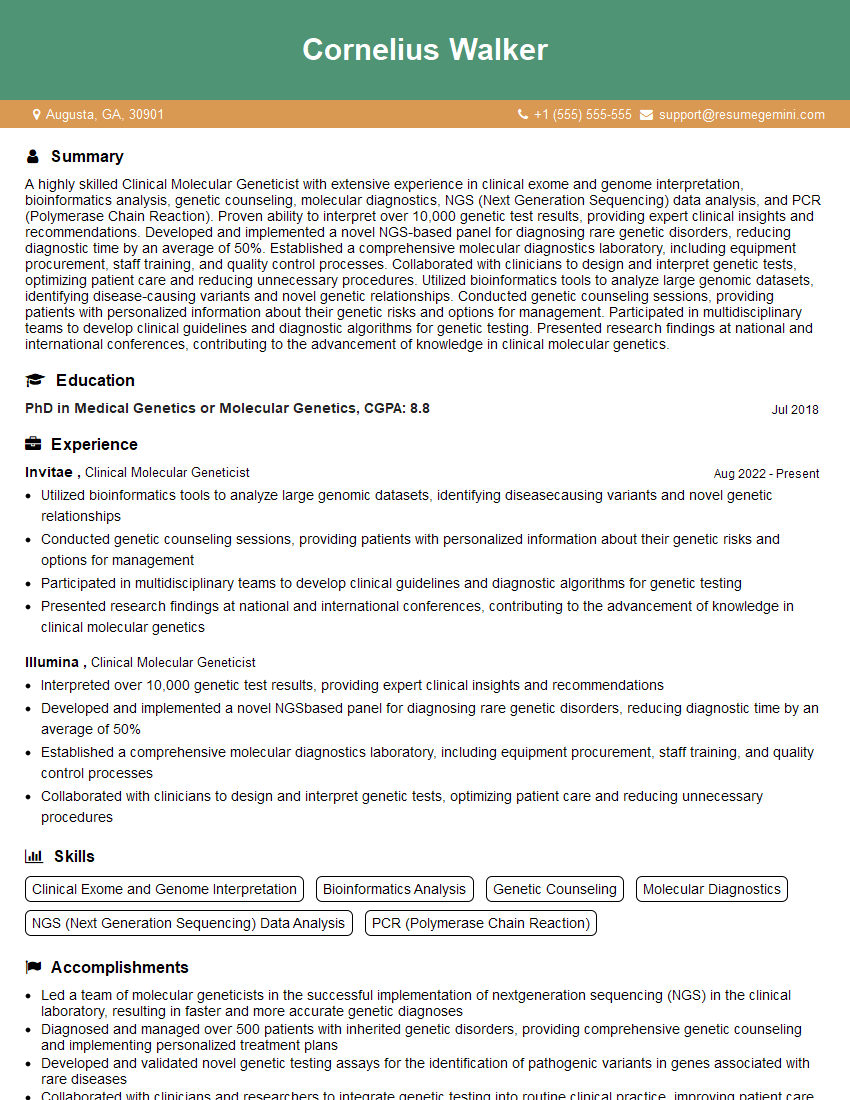
Mastering molecular pathology techniques like FISH and PCR significantly enhances your career prospects in diagnostics, research, and pharmaceuticals. A strong resume is your key to unlocking these opportunities. Building an ATS-friendly resume that highlights your skills and experience is crucial. We recommend using ResumeGemini to create a professional and impactful resume that gets noticed. ResumeGemini offers examples of resumes tailored to molecular pathology techniques, including FISH and PCR, to help you get started.

Explore more articles
Users Rating of Our Blogs
Share Your Experience
We value your feedback! Please rate our content and share your thoughts (optional).
What Readers Say About Our Blog
To the interviewgemini.com Webmaster.
Very helpful and content specific questions to help prepare me for my interview!
Thank you
To the interviewgemini.com Webmaster.
This was kind of a unique content I found around the specialized skills. Very helpful questions and good detailed answers.
Very Helpful blog, thank you Interviewgemini team.