Cracking a skill-specific interview, like one for Barge Loading, requires understanding the nuances of the role. In this blog, we present the questions you’re most likely to encounter, along with insights into how to answer them effectively. Let’s ensure you’re ready to make a strong impression.
Questions Asked in Barge Loading Interview
Q 1. Describe your experience with different barge loading methods.
My experience encompasses a wide range of barge loading methods, tailored to the specific cargo and environmental conditions. This includes:
- Gravity Loading: This simple method relies on the cargo’s own weight to move it into the barge. Think of bulk materials like grain or aggregates flowing from a silo or hopper directly into the barge’s hold. It’s cost-effective but can be slower and less precise than other methods.
- Conveyor Belt Loading: For larger volumes and faster loading rates, conveyor belts are frequently employed. These systems can be configured to manage a variety of materials, offering better control over the loading process and minimizing manual labor. I’ve worked extensively with this method for loading coal and minerals.
- Crane Loading: Heavy or palletized cargo, such as steel containers or large machinery, usually requires crane loading. Precise placement and secure fastening are crucial. Safety protocols are paramount in this operation.
- Bucket Loading: This involves using a mechanical bucket to scoop and transfer the cargo, frequently used for loose materials or those requiring careful handling. I’ve supervised bucket loading operations for sand and gravel.
- Pumping: Liquids and slurries are obviously loaded using pumps. The pump type is selected based on the cargo’s viscosity and properties. Careful monitoring of flow rates and pressure is essential.
The choice of method hinges on factors like cargo type, volume, handling characteristics, and available infrastructure at the loading site.
Q 2. What safety procedures are crucial during barge loading operations?
Safety is paramount in barge loading. We follow stringent protocols that include:
- Pre-loading Inspection: A thorough inspection of the barge, its securing mechanisms, and the loading equipment is mandatory before commencing operations. This checks for structural integrity, ensuring all equipment functions correctly and that any hazards are identified and mitigated.
- Personal Protective Equipment (PPE): All personnel involved wear appropriate PPE, such as hard hats, safety glasses, safety vests, and steel-toed boots, depending on the specific tasks.
- Environmental Protection: Procedures must be in place to prevent spills and environmental contamination. This often involves containment systems and proper waste disposal methods.
- Communication Protocols: Clear communication channels are crucial between operators, crane drivers, and spotters. Hand signals and radio communication are standard.
- Emergency Response Plan: A well-defined emergency response plan is essential to handle potential accidents or spills. Personnel are trained in emergency procedures, including first aid and evacuation protocols.
- Load Limits and Stability: Adherence to load limits and ensuring barge stability are essential to prevent accidents. This requires careful planning and monitoring of the loading process.
Safety briefings are conducted before every operation, reinforcing the importance of safe practices and risk mitigation.
Q 3. How do you ensure the stability of a barge during loading?
Maintaining barge stability during loading is critical. It involves a combination of careful planning and real-time monitoring. We use several techniques:
- Load Distribution: Cargo is distributed evenly across the barge’s deck to prevent overloading in any single area. This can require careful planning using weight distribution charts and software, to optimize the balance.
- Real-time Monitoring: Throughout the loading process, we constantly monitor the barge’s stability using instruments such as inclinometers, which measure the angle of the barge relative to the horizontal. This allows for immediate corrective action if necessary.
- Ballasting: If necessary, ballast water is added to adjust the barge’s trim and stability. Ballast water helps counteract the weight distribution of the cargo.
- Securing Cargo: Properly securing the cargo to the barge is essential to prevent shifting during transit. This may involve the use of straps, chains, or other fastening mechanisms.
- Weather Conditions: Adverse weather conditions can significantly affect barge stability. Operations are often suspended during strong winds or storms to maintain safety.
Think of it like balancing a scale – carefully adding weight to each side to maintain equilibrium. Failure to maintain stability can lead to capsizing or shifting of cargo.
Q 4. Explain your experience with load planning and weight distribution on barges.
Load planning and weight distribution are fundamental to safe and efficient barge loading. My experience involves:
- Cargo Manifest Review: I start by reviewing the cargo manifest to determine the type, quantity, and weight of each item. This provides a basis for the load plan.
- Software Utilization: I use specialized software to create detailed load plans, which show the optimal placement of cargo to ensure weight distribution and barge stability. These programs take into account the barge’s dimensions, load capacity, and center of gravity.
- Weight Distribution Charts: These charts visually depict how the weight is spread across the barge, assisting in visualizing and managing the center of gravity.
- Compartmentalization: If possible, cargo is loaded into compartments, optimizing weight distribution and improving the structural integrity of the load.
- Density Calculations: For bulk materials, accurate density calculations are critical for determining the weight and volume of cargo that the barge can safely carry.
For example, when loading heavy containers, strategic placement is crucial. Distributing heavier items evenly prevents instability. The software helps in visualizing the effect of every added unit to avoid exceeding limits.
Q 5. What are the common challenges you’ve encountered during barge loading?
Common challenges in barge loading include:
- Weather Delays: Strong winds, rain, or fog can significantly delay loading operations, impacting schedules and potentially causing damage.
- Equipment Malfunctions: Failures in cranes, conveyors, or pumps can lead to downtime and increased costs.
- Cargo Damage: Improper handling or inadequate securing can result in cargo damage, leading to financial losses.
- Insufficient Infrastructure: Lack of adequate loading facilities, such as docks and storage areas, can impede the efficiency of the loading process.
- Safety Incidents: Despite safety protocols, incidents can occur, requiring immediate response and investigation.
- Inconsistent Cargo Quality: Variations in cargo quality, such as moisture content, can affect weight and volume calculations, potentially causing overloading.
Effective risk management strategies are necessary to minimize these challenges, including proactive maintenance of equipment and contingency planning for weather-related delays.
Q 6. How do you handle unexpected delays or issues during loading?
Handling unexpected delays or issues involves a multi-pronged approach:
- Immediate Assessment: The first step is to quickly assess the nature and severity of the issue. This involves identifying the root cause and potential impact.
- Communication: Immediately communicate the delay to all stakeholders, including the shipper, receiver, and any relevant authorities.
- Problem Solving: Depending on the issue, implement contingency plans or explore alternative solutions. This may involve seeking repairs, adjusting the loading schedule, or re-evaluating the loading strategy.
- Documentation: Meticulously document all incidents, including the cause, corrective actions taken, and any resulting delays or changes.
- Reporting: Prepare a detailed report summarizing the incident, its impact, and any recommendations to prevent similar occurrences in the future.
For instance, a sudden equipment malfunction requires immediate repair coordination. While repairs are underway, we may adjust the loading sequence to focus on other tasks to minimize overall delays.
Q 7. Describe your experience with different types of cargo and their specific loading requirements.
My experience includes handling various cargo types, each with unique loading requirements:
- Bulk Cargo (e.g., grains, coal, aggregates): These require efficient flow management, minimizing dust generation, and ensuring even distribution across the barge’s hold.
- Liquid Cargo (e.g., petroleum products, chemicals): This necessitates specialized pumping systems, leak prevention measures, and adherence to strict safety protocols. I’ve managed loading operations for several petroleum products, each with its own handling precautions.
- Containerized Cargo: Careful placement and securing of containers are crucial to prevent shifting during transit. Proper stacking techniques and lashing methods are essential.
- Project Cargo (e.g., oversized machinery, heavy equipment): Requires careful planning, lifting equipment with sufficient capacity, and robust securing mechanisms.
- General Cargo: This diverse category requires adaptability, careful handling to prevent damage, and consideration for individual item loading requirements.
Understanding the properties of each cargo type – density, fragility, hazardous nature – is paramount for developing safe and efficient loading plans. Proper documentation and communication with involved parties are fundamental throughout the process.
Q 8. How do you ensure compliance with environmental regulations during barge loading?
Ensuring environmental compliance during barge loading is paramount. It involves a multi-faceted approach focusing on preventing spills, minimizing air emissions, and managing waste responsibly. This begins with pre-loading checks of the barge and its cargo securing systems to identify any potential leaks. We meticulously inspect all equipment to make sure there are no leaks or malfunctioning components that might cause a spill. During loading, we utilize containment booms around the loading area to catch any accidental spills. We closely monitor the loading process for any signs of leakage and immediately address any issues. Regularly scheduled equipment maintenance is crucial, preventing equipment failure. Furthermore, we adhere to all relevant regulations concerning discharge permits and waste disposal, ensuring all waste materials are handled and disposed of according to environmental standards. For example, if we’re loading coal, we have procedures to minimize dust dispersion during transfer, such as using water sprays and enclosed conveyor systems. Finally, thorough post-loading inspection is vital to ensure no residue or spills remain.
Q 9. What are your strategies for maximizing efficiency in barge loading operations?
Maximizing barge loading efficiency requires a streamlined, well-coordinated process. This begins with optimized planning, including precise scheduling of barge arrivals, efficient loading sequences, and accurate cargo forecasting. We use advanced software to simulate loading operations and identify potential bottlenecks. The use of high-capacity loading equipment, such as high-speed conveyors and powerful cranes, significantly reduces loading time. Regular equipment maintenance ensures uptime, preventing delays. Effective communication between the loading team, the barge crew, and other stakeholders is essential to avoid confusion and delays. Efficient material handling practices, such as pre-positioning materials and organizing the loading area, minimize wasted time and movement. For instance, we may use a system of colored markers to indicate different cargo types and their designated loading areas. Continuous monitoring of the loading process and data analysis allow us to identify areas for improvement and adjust our strategies accordingly. Lean principles and Kaizen methodology are implemented to continuously enhance our efficiency.
Q 10. Describe your experience with barge securing and mooring techniques.
Barge securing and mooring are critical for safety and preventing damage. My experience encompasses various techniques, adapting to different barge types, cargo weights, and environmental conditions. We use a combination of mooring lines, fenders, and anchors to ensure the barge is securely fastened to the dock. The number and placement of mooring lines depend on factors such as wind speed, current, and barge size. Fenders protect the barge and dock from damage during loading and unloading. We always follow a step-by-step process, carefully inspecting each line and fitting before securing it. The process includes tensioning lines evenly to avoid strain on any single point. In high-wind conditions, we may deploy additional mooring lines or even use additional anchoring systems to maintain stability. For example, when working with a heavy cargo such as grain, extra attention is paid to securing the cargo within the barge to prevent shifting during transit and to the use of multiple and reinforced mooring lines to prevent the barge from breaking free from the dock. Regular inspections are critical to identify any wear or tear, ensuring the safety of both the barge and the crew.
Q 11. How do you monitor the condition of barges before, during, and after loading?
Barge condition monitoring is crucial for safety and operational efficiency. Before loading, we conduct a thorough inspection of the barge’s hull, decks, and securing mechanisms. We look for any signs of damage, leaks, or structural weaknesses. This often includes a visual inspection, supplemented with non-destructive testing methods if necessary. During loading, we constantly monitor the barge’s stability and stress levels, ensuring it can safely handle the weight of the cargo. Instruments may be used to measure stress and strain on different parts of the barge. We are vigilant about signs of potential problems, such as excessive list or creaking. After loading, we perform another inspection to confirm that the cargo is properly secured and that the barge is seaworthy. This includes checking for any damage caused during loading and ensuring that the barge’s loading capacity has not been exceeded. Detailed records are kept of all inspections, including any repairs or maintenance performed. This data is used to identify trends and potential problems, helping us to predict and prevent future issues.
Q 12. Explain your knowledge of relevant maritime regulations and safety standards.
My knowledge of maritime regulations and safety standards is extensive. I am familiar with regulations such as those set forth by the International Maritime Organization (IMO), as well as local and national regulations specific to the areas where we operate. This includes SOLAS (Safety of Life at Sea) conventions, MARPOL (International Convention for the Prevention of Pollution from Ships) standards relating to cargo handling, and relevant port authority regulations. I understand the importance of compliance with these regulations, which includes aspects of crew training, emergency procedures, and safe working practices. We maintain comprehensive documentation related to all aspects of our compliance. Regular training programs for personnel keep everyone updated on current regulations and best practices. A key part of my role involves ensuring all equipment and procedures meet or exceed these standards. For example, we strictly enforce regulations concerning the storage and handling of hazardous materials, using appropriate safety equipment and procedures. Non-compliance can lead to serious penalties and safety risks.
Q 13. How do you communicate effectively with barge crews and other stakeholders?
Effective communication is the cornerstone of safe and efficient barge loading. I utilize a multi-pronged approach, employing both written and verbal communication methods. Clear, concise instructions are given to the barge crew before, during, and after loading. This includes confirming weight limits, ensuring a clear understanding of the loading plan, and emphasizing safety procedures. We use two-way radios and other communication technologies to facilitate real-time communication during the loading process, resolving any immediate issues promptly. Regular meetings with stakeholders, such as port authorities, are held to address any concerns and coordinate operations. Comprehensive documentation, including loading plans, safety protocols, and inspection reports, ensures that everyone is on the same page. We encourage open communication, ensuring that all team members feel comfortable raising any safety concerns. For instance, a daily pre-loading briefing ensures that all personnel are aware of the day’s activities and potential hazards. This fosters a collaborative environment where everyone prioritizes safety and efficiency.
Q 14. Describe your experience with using various loading equipment (cranes, conveyors, etc.).
My experience with various loading equipment is extensive. I’m proficient in operating and overseeing the use of different types of cranes, such as mobile harbor cranes and gantry cranes, each suited for different cargo types and handling needs. I’m equally experienced with conveyor systems, from belt conveyors to bucket elevators, understanding their capacities, maintenance requirements, and safety protocols. I can assess the suitability of each type of equipment based on the specific characteristics of the cargo and the barge’s capabilities. For instance, when loading bulk materials like grain, high-capacity belt conveyors are preferred for their speed and efficiency. For packaged goods, cranes are often necessary for precise placement. Regular maintenance and inspection of all loading equipment are essential. Safety features, such as emergency stops and load limiters, are regularly checked. My experience also covers troubleshooting equipment malfunctions and coordinating repairs efficiently to minimize downtime. We also keep track of equipment performance data, allowing us to optimize loading operations and select the most appropriate equipment for each project.
Q 15. How do you manage inventory and track cargo during barge loading?
Managing inventory and tracking cargo during barge loading requires a meticulous system. It’s like running a highly organized warehouse, but on the water! We typically use a combination of digital and physical tracking methods. This begins with a detailed manifest, listing each item, its weight, dimensions, and destination. This manifest is then cross-referenced with the actual loading process. We employ barcode or RFID scanners to track each piece of cargo as it’s loaded onto the barge, ensuring accuracy and preventing discrepancies. Real-time software updates the manifest, providing constant visibility of the cargo’s location and quantity. For instance, if we’re loading steel beams, each beam would be scanned, and its location on the barge recorded in the system. This data is accessible to all stakeholders, from the loading crew to the client, providing transparency and accountability. Physical checks are also conducted to validate the digital data.
Furthermore, weight scales are strategically placed to ensure accurate weight recording at various loading stages. This prevents overloading and maintains the barge’s stability. Any discrepancies between the manifest and actual loaded cargo are immediately investigated and reconciled. This comprehensive system minimizes errors, optimizes loading times, and prevents costly delays.
Career Expert Tips:
- Ace those interviews! Prepare effectively by reviewing the Top 50 Most Common Interview Questions on ResumeGemini.
- Navigate your job search with confidence! Explore a wide range of Career Tips on ResumeGemini. Learn about common challenges and recommendations to overcome them.
- Craft the perfect resume! Master the Art of Resume Writing with ResumeGemini’s guide. Showcase your unique qualifications and achievements effectively.
- Don’t miss out on holiday savings! Build your dream resume with ResumeGemini’s ATS optimized templates.
Q 16. What is your experience with documentation and reporting related to barge loading?
Documentation and reporting in barge loading are crucial for compliance and efficiency. Imagine it like keeping meticulous medical records – every detail matters. We generate various documents throughout the loading process. These include the loading manifest (as discussed earlier), weight certificates from the scales, safety checklists to confirm hazard assessments were completed, and reports on the barge’s condition before and after loading. We also create bills of lading, which are legal documents acknowledging receipt of cargo and outlining transportation details. For hazardous materials, additional permits, MSDS (Material Safety Data Sheets) and special handling procedures are meticulously documented.
Reporting is equally important. We provide regular updates to clients on the loading progress, highlighting any potential delays or issues. Detailed reports are generated post-loading, summarizing the entire operation, including quantities loaded, weight verification, and any incidents or near misses. This information is vital for future planning, identifying areas for improvement, and ensuring continuous compliance with regulations. All documentation is stored securely, both digitally and physically, and is readily accessible for audits or future reference. A robust filing system, both physical and digital, is essential.
Q 17. How do you identify and address potential hazards during barge loading?
Hazard identification and mitigation are paramount in barge loading. It’s like being a firefighter – preventing fires is much better than fighting them! We start with a thorough risk assessment before any loading begins. This involves evaluating potential hazards like unstable cargo, weather conditions, equipment malfunctions, and human error. We use checklists and safety audits to ensure all safety protocols are followed. For example, if we’re loading heavy machinery, we’d assess the weight distribution to prevent the barge from capsizing. We’d also have securement plans in place to prevent cargo shifting during transit. Proper lighting is crucial, especially at night or in low visibility conditions. We implement safety training for all personnel, emphasizing safe lifting techniques, emergency procedures, and communication protocols.
Regular inspections of equipment are essential. This includes checking cranes, winches, and loading ramps for any defects or signs of wear and tear. Personal Protective Equipment (PPE) is mandatory, and we provide training on its proper use. We also establish clear communication channels between the loading crew, the barge operator, and other stakeholders to ensure timely response to any unforeseen events. Incident reporting and investigation are integral parts of our safety management system. We document all incidents, analyzing their causes and implementing corrective actions to prevent recurrence. This proactive approach ensures a safe and efficient loading process.
Q 18. How familiar are you with different types of barge designs and their capacities?
My experience encompasses a wide range of barge designs and capacities. Think of it like knowing the difference between a sedan, an SUV, and a truck – each has its own capabilities. I’m familiar with different types, including hopper barges (used for bulk materials), deck barges (for general cargo), tank barges (for liquids), and integrated tug-barges (a tugboat permanently attached to a barge). Each design has specific load limitations and stability characteristics. For instance, a hopper barge designed for carrying grain will have different structural requirements and capacity compared to a tank barge carrying oil. I understand the importance of understanding each barge’s load capacity, draft (depth of the barge submerged in water), and freeboard (the distance between the waterline and the deck) to ensure safe operation and avoid overloading. I’ve worked with barges ranging in capacity from a few hundred tons to several thousand tons, and I’m proficient in calculating the appropriate load based on the barge’s specifications, cargo characteristics, and environmental factors such as water level and weather conditions.
Q 19. What is your experience with handling hazardous materials during barge loading?
Handling hazardous materials during barge loading demands strict adherence to safety regulations and procedures. This is like working with precision instruments in a surgical operation – the slightest mistake can have severe consequences. We follow stringent protocols, including specialized training for personnel involved in the handling of such materials. We use specialized equipment, such as intrinsically safe tools and explosion-proof containers, to prevent accidents. Detailed planning is crucial, involving precise cargo securing methods, spill containment procedures, and emergency response plans. The correct documentation for these materials is critically important and must be compliant with all federal, state and local regulations. This includes maintaining accurate records of the materials being handled, their quantities, and their transportation details. Prior to loading, we ensure that all the necessary permits and approvals are in place, and the barge is suitably equipped to handle the materials safely. We conduct regular safety inspections and drills to prepare for potential emergencies. Post-loading, a thorough cleanup and inspection is performed to minimize residual hazards.
Q 20. How do you calculate the load capacity and stability of a barge?
Calculating the load capacity and stability of a barge is a complex process, combining engineering principles and practical experience. Think of it like building a house – you need to ensure it’s structurally sound and won’t collapse. We begin with the barge’s specifications, including its dimensions, weight, and structural design. We then consider the characteristics of the cargo, including its weight, density, and center of gravity. The weight distribution is crucial for stability, and we use specialized software and calculations to ensure the load is evenly distributed, preventing imbalances that could lead to capsizing. We use formulas and software that consider factors such as the barge’s draft, freeboard, and metacentric height (a measure of the barge’s stability). We also consider environmental factors, such as water level and weather conditions, which can significantly affect the barge’s stability. These calculations ensure that the barge remains stable and within its safe operational limits, preventing accidents. Detailed load plans are created, outlining the precise placement of cargo to ensure optimal weight distribution. The plans are reviewed by qualified personnel before loading commences.
Q 21. Describe your experience with troubleshooting equipment malfunctions during loading.
Troubleshooting equipment malfunctions during loading is a critical skill, requiring both technical knowledge and problem-solving abilities. It’s like being a mechanic – quickly identifying and fixing the problem to minimize downtime. I’ve encountered various equipment malfunctions, from crane failures to winch problems and hydraulic system leaks. My approach is systematic. First, I prioritize safety, ensuring the area is secured and personnel are out of harm’s way. Then, I conduct a thorough assessment of the problem, using diagnostic tools and my technical knowledge to identify the root cause. Depending on the complexity of the problem, I either repair the equipment myself or call in specialized technicians. My experience includes using various types of equipment and their maintenance and repair requirements. I’m adept at preventative maintenance, scheduling regular checks and inspections to minimize the risk of malfunctions. Good communication with the maintenance crew is vital to ensure timely repairs. Effective communication is also crucial to keep the client informed about delays and provide realistic timelines for getting back on track.
Q 22. How do you ensure the integrity of cargo during transportation on a barge?
Ensuring cargo integrity during barge transport is paramount. It involves a multi-layered approach starting even before loading. We begin with meticulous pre-loading inspections of the barge itself, checking for structural soundness, water tightness, and the condition of any securing mechanisms. Next, we carefully assess the cargo itself, considering its weight, dimensions, and susceptibility to damage from moisture, shifting, or impact. Proper dunnage (protective material between cargo and barge) and bracing are crucial; we strategically place it to prevent shifting and absorb shock during transit. For fragile or sensitive items, we utilize specialized containers and padding. Finally, throughout the journey, regular monitoring is essential, especially during inclement weather. This might involve visual checks or even the use of sensors to detect any shifts or problems. Think of it like packing for a long road trip – careful planning and attention to detail are key to arriving with everything intact.
For example, transporting heavy machinery on a barge requires secure lashing and bracing systems. We utilize chains, straps, and other specialized equipment to firmly secure the cargo to the barge, preventing any movement during transit. For loose materials like grain, we ensure the barge’s hatches are properly sealed and the cargo is evenly distributed to maintain stability.
Q 23. What is your approach to managing conflicts or disagreements during loading operations?
Conflicts during loading operations are inevitable, but a proactive approach can minimize disruptions. My strategy begins with clear and open communication – making sure all parties involved (crew, stevedores, inspectors, etc.) understand their roles and responsibilities. Establishing a well-defined chain of command helps to quickly resolve disagreements. If a conflict does arise, my approach involves active listening to understand all perspectives. We then work collaboratively to find a mutually acceptable solution, using facts and data to support our decisions. If a resolution can’t be reached immediately, I facilitate a structured discussion and, if necessary, involve higher management to help mediate. Documentation is critical – recording all decisions and agreements to avoid future misunderstandings. It’s about fostering a collaborative environment where everyone feels heard and respected, even when disagreements arise.
For example, a disagreement might arise over the order of loading different cargo types due to weight distribution concerns. In this situation, we’d consult the barge’s stability calculations and the individual cargo specifications to find a safe and efficient loading sequence that accommodates everyone’s concerns.
Q 24. Describe your experience with emergency response procedures in a barge loading environment.
Emergency response in a barge loading environment requires thorough preparation and swift action. We conduct regular safety drills to ensure everyone is familiar with emergency procedures, including fire, flooding, or medical emergencies. This includes knowing the location of safety equipment like fire extinguishers, first-aid kits, and emergency communication systems. We also conduct risk assessments to identify potential hazards and develop contingency plans. In the event of an emergency, we follow established protocols, prioritizing the safety of personnel and the environment. This might involve activating emergency services, evacuating the area, or implementing damage control measures. Clear communication channels are vital, ensuring everyone understands their roles and responsibilities during the crisis. Post-incident reviews are essential to identify areas for improvement and prevent future occurrences. It’s like having a fire drill at home – you hope you never need it, but knowing the plan could save lives.
For instance, if a fire breaks out during loading, we immediately activate the emergency response plan, which includes calling emergency services, containing the fire using available extinguishers, and safely evacuating personnel to a designated assembly point. Post-incident, we investigate the cause and implement corrective measures to prevent future incidents.
Q 25. How do you ensure the accuracy of cargo manifests and documentation?
Accurate cargo manifests and documentation are the bedrock of efficient and compliant barge operations. We use a combination of manual checks and digital systems to ensure accuracy. Every item loaded is meticulously recorded, including details like weight, volume, description, and destination. We double-check these details against the original shipping documents and confirm that everything matches. Digital systems often provide real-time tracking and updates, minimizing errors and improving overall transparency. We also maintain detailed records of all transactions and related documentation, ensuring compliance with relevant regulations. Think of it as a detailed shopping list, but far more critical for ensuring the correct cargo is transported safely and efficiently.
For example, we use barcode scanners to verify cargo against the manifest during loading, reducing manual data entry errors and ensuring a high degree of accuracy. The system automatically generates updates to the manifest as items are loaded, providing real-time tracking.
Q 26. How do you contribute to a safe and productive work environment during barge loading?
Contributing to a safe and productive work environment is a top priority. This involves several key elements: proactive safety training, adhering to all safety regulations, and fostering a culture of safety awareness. Regular safety meetings are held to discuss potential hazards, review procedures, and address safety concerns. We ensure that all equipment is properly maintained and inspected. Clear communication is essential, making sure everyone understands safety procedures and feels comfortable reporting hazards. We encourage teamwork and mutual respect, creating a positive and supportive work environment that values safety. It’s not just about following rules; it’s about creating a culture where everyone takes ownership of safety.
For example, before commencing any loading operation, we conduct a toolbox talk to review safety procedures, discuss potential hazards specific to that day’s operations, and reiterate the importance of wearing appropriate personal protective equipment (PPE).
Q 27. What are your strategies for continuous improvement in barge loading processes?
Continuous improvement in barge loading processes is an ongoing commitment. We utilize data analysis to identify bottlenecks and areas for improvement. For example, we track loading times, identify causes of delays, and analyze the efficiency of different loading techniques. This data-driven approach helps us to optimize processes and reduce waste. We regularly review our safety procedures, incorporating lessons learned from near misses and incidents. We actively seek feedback from our team, incorporating suggestions for improvements in efficiency and safety. We also stay updated on the latest technologies and best practices in barge loading, adopting new methodologies whenever appropriate. It’s a cycle of continuous learning and refinement, always striving to do better.
For example, by analyzing loading time data, we identified that a specific step in the process was consistently causing delays. We then implemented a new procedure that streamlined this step, significantly reducing overall loading time and increasing efficiency.
Q 28. How do you stay updated on changes in regulations and best practices in barge loading?
Staying updated on changes in regulations and best practices is crucial for compliance and operational excellence. We subscribe to industry publications and participate in professional development activities to keep abreast of the latest developments. We attend conferences and workshops, network with other professionals, and actively monitor changes in regulatory requirements from relevant agencies. We also maintain a strong internal knowledge-sharing system, ensuring that all team members are aware of any significant changes. This is an ongoing process, essential for maintaining a safe and compliant operation. It’s like keeping a car maintained – regular checks and updates ensure everything runs smoothly and safely.
For example, we regularly check the website of the relevant regulatory authority for updates on changes to barge safety regulations or cargo handling procedures. Any changes are immediately implemented into our operational procedures.
Key Topics to Learn for Your Barge Loading Interview
- Safety Procedures and Regulations: Understanding and applying relevant safety protocols, including those related to cargo securing, personal protective equipment (PPE), and emergency response procedures.
- Cargo Handling and Securing Techniques: Mastering the practical skills of loading and unloading various types of cargo onto barges, ensuring stability and preventing damage during transit. This includes understanding different lashing techniques and weight distribution principles.
- Barge Types and Characteristics: Familiarizing yourself with different barge designs, their load capacities, and limitations. Understanding the factors that influence barge selection for specific cargo and transport routes.
- Logistics and Planning: Developing a strong understanding of the logistical aspects of barge loading, including scheduling, coordination with other teams (e.g., trucking, warehousing), and efficient workflow management.
- Documentation and Record Keeping: Understanding the importance of accurate documentation, including cargo manifests, loading plans, and safety inspections. Knowing how to maintain detailed records for compliance and traceability.
- Problem-Solving and Troubleshooting: Developing the ability to identify and resolve potential issues during the loading process, such as cargo shifting, equipment malfunctions, or weather-related delays. Understanding contingency plans.
- Environmental Considerations: Familiarizing yourself with environmental regulations and best practices related to barge loading, including minimizing spills and waste disposal.
Next Steps
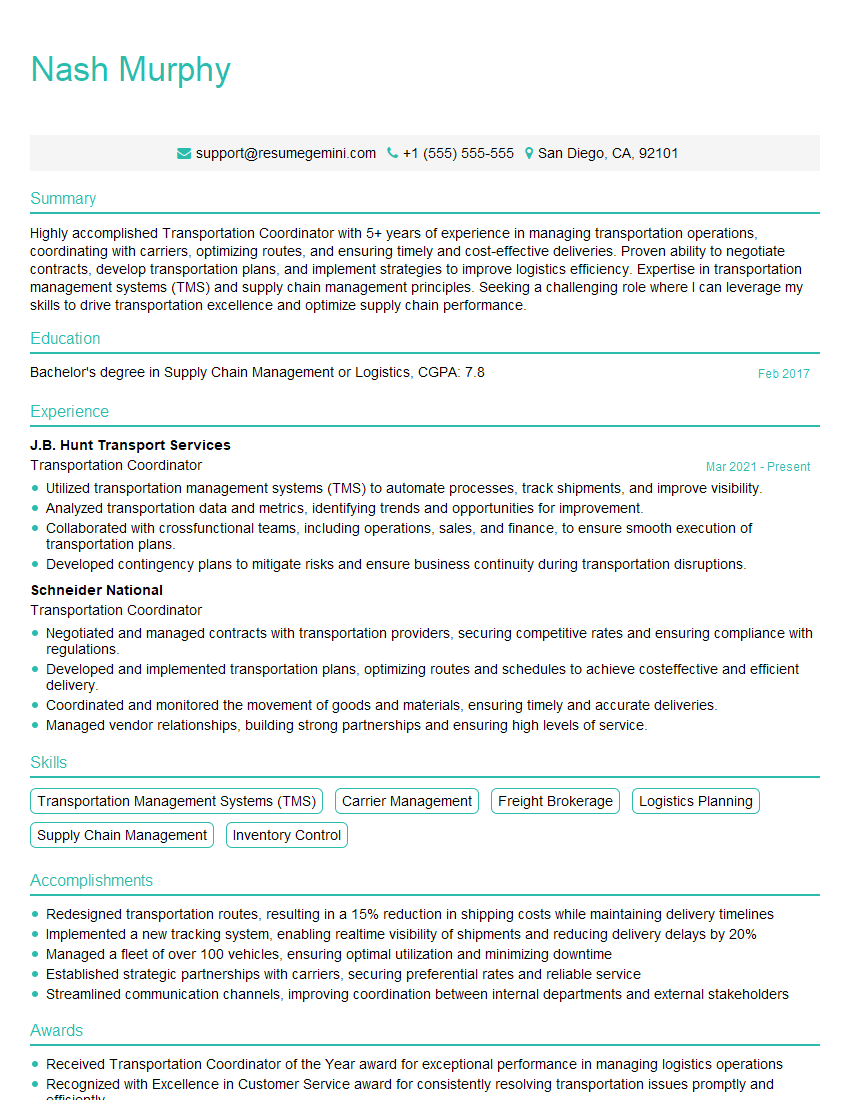
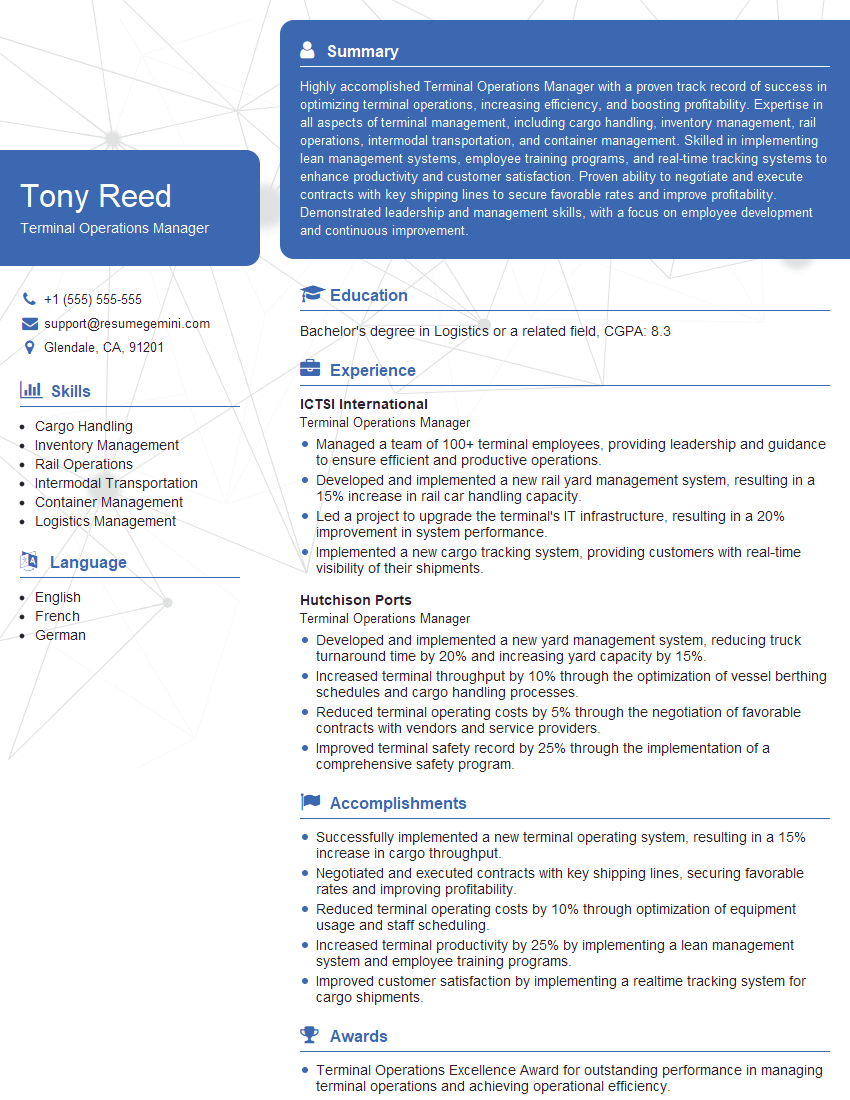
Mastering barge loading opens doors to exciting career opportunities within the maritime and logistics industries, offering growth potential and competitive salaries. To significantly increase your chances of landing your dream job, it’s crucial to create an ATS-friendly resume that highlights your skills and experience effectively. We strongly recommend using ResumeGemini to build a professional and impactful resume. ResumeGemini provides the tools and resources to create a compelling document, and we offer examples of resumes tailored to the Barge Loading industry to help you get started.

Explore more articles
Users Rating of Our Blogs
Share Your Experience
We value your feedback! Please rate our content and share your thoughts (optional).
What Readers Say About Our Blog
To the interviewgemini.com Webmaster.
Very helpful and content specific questions to help prepare me for my interview!
Thank you
To the interviewgemini.com Webmaster.
This was kind of a unique content I found around the specialized skills. Very helpful questions and good detailed answers.
Very Helpful blog, thank you Interviewgemini team.