Cracking a skill-specific interview, like one for Fire Extinguishing Equipment Operation, requires understanding the nuances of the role. In this blog, we present the questions you’re most likely to encounter, along with insights into how to answer them effectively. Let’s ensure you’re ready to make a strong impression.
Questions Asked in Fire Extinguishing Equipment Operation Interview
Q 1. What are the different classes of fires and which extinguisher type is appropriate for each?
Fires are classified into different types based on the materials involved, requiring specific extinguisher agents for effective suppression. Understanding these classifications is crucial for selecting the right extinguisher and ensuring safety.
- Class A: These fires involve ordinary combustible materials like wood, paper, cloth, and plastics. Water-based extinguishers (e.g., Type A) are typically effective because they cool the burning material.
- Class B: Class B fires involve flammable liquids like gasoline, oil, grease, and paint. Extinguishers containing agents that interrupt the chain reaction (like carbon dioxide (CO2), dry chemical, or foam) are used as they smother the flames and prevent reignition.
- Class C: Class C fires involve energized electrical equipment. Never use water on these fires! CO2 and dry chemical extinguishers are suitable choices as they are non-conductive. Always de-energize the equipment before attempting to extinguish the fire if possible.
- Class D: These fires involve combustible metals like magnesium, titanium, and sodium. These fires require specialized extinguishers containing dry powders designed to cool and smother the burning metal. Improper extinguishment attempts can be extremely dangerous due to the potential for explosions.
- Class K: Class K fires involve cooking oils and fats. These require specialized wet chemical extinguishers that saponify (turn into soap) the cooking oils, interrupting the combustion process.
For example, a grease fire in a kitchen (Class B or K) would require a CO2 or wet chemical extinguisher, while a trash can fire (Class A) could be tackled with a water extinguisher. Remember to always check the extinguisher label for its classification rating.
Q 2. Describe the PASS method for operating a fire extinguisher.
The PASS method provides a simple yet effective framework for operating a fire extinguisher. It stands for:
- P – Pull: Pull the pin from the extinguisher. This activates the safety mechanism and allows you to discharge the agent.
- A – Aim: Aim the nozzle at the base of the fire, not the flames themselves. This ensures you extinguish the fuel source. Think of it like aiming at the roots of a plant rather than just its leaves.
- S – Squeeze: Squeeze the handle to discharge the extinguishing agent. A steady and controlled squeeze is important to prevent wasting the extinguisher’s contents.
- S – Sweep: Sweep the nozzle from side to side, covering the base of the fire until it’s fully extinguished. This ensures complete coverage of the burning area and prevents re-ignition.
Imagine a small wastebasket fire: Pull the pin, aim at the base of the burning paper, squeeze the handle to release the agent, and sweep the nozzle back and forth until the fire is out. Practice is key to mastering this technique. Many fire departments offer training programs to develop proficiency in using fire extinguishers.
Q 3. What are the limitations of a fire extinguisher?
Fire extinguishers are invaluable for small, incipient fires but have inherent limitations. They are not designed for large-scale fires or situations that require professional firefighting intervention.
- Limited Extinguishing Capacity: The extinguishing agent in a portable extinguisher is finite. Attempting to extinguish a large, rapidly spreading fire with a small extinguisher could be futile and even dangerous.
- Risk of Re-ignition: Extinguishing the fire doesn’t eliminate the source of ignition. Without addressing underlying causes, re-ignition is possible.
- User Risk: Improper use can expose the user to injury from heat, flames, toxic fumes, or even electric shock.
- Not Suitable for All Fire Types: A given extinguisher is only effective against certain fire classes (A, B, C, D, K). Using the wrong type can be ineffective, or even harmful.
- Agent Depletion: Even a seemingly minor use can reduce the extinguisher’s capacity substantially.
For example, a small kitchen fire might be effectively extinguished with a properly chosen extinguisher, but a large building fire would necessitate calling the fire department immediately, as a handheld extinguisher is wholly inadequate for such a situation.
Q 4. How often should fire extinguishers be inspected and maintained?
Regular inspection and maintenance are essential to ensuring fire extinguishers are ready for use in an emergency. The frequency varies depending on local regulations and the type of extinguisher, but a minimum of monthly visual inspections and annual professional servicing is generally recommended.
Monthly Inspections: During monthly checks, look for obvious damage, corrosion, missing parts, a low pressure gauge (if present), or signs of tampering. This visual check can significantly improve the odds of early detection of issues.
Annual Servicing: This should be performed by a qualified technician who will internally inspect the extinguisher, refill the agent (if necessary), test the pressure gauge, and ensure all components are functioning correctly. This ensures the extinguisher’s readiness and adherence to safety standards.
Maintaining a regular schedule ensures that potential issues are identified and rectified promptly before they become an emergency.
Q 5. Explain the importance of regular fire extinguisher training.
Regular fire extinguisher training is paramount for several reasons:
- Safe and Effective Use: Knowing how to correctly identify fire classes, select the appropriate extinguisher, and utilize the PASS method is crucial for safety and effectiveness.
- Response Time: Rapid and appropriate response to a fire can minimize damage and prevent injuries.
- Confidence in Emergency Situations: Training instills confidence in handling emergency situations, reducing panic and allowing for clear decision-making.
- Compliance with Regulations: Many workplaces mandate fire safety training for employees as part of their health and safety procedures. This ensures workplace preparedness and reduces liability.
- Reduced Risk: Proper knowledge and skills enhance the safety of personnel and mitigate potential losses.
Imagine a scenario where a small fire starts in an office. Employees who have received training will likely respond calmly and effectively, potentially preventing the situation from escalating. Conversely, untrained personnel might panic or use the extinguisher incorrectly, worsening the situation.
Q 6. What are the signs of a malfunctioning fire extinguisher?
Several signs indicate a malfunctioning fire extinguisher, warranting immediate attention from a qualified technician:
- Damaged Nozzle or Hose: Any visible damage (cracks, dents, or leaks) could compromise the extinguisher’s performance.
- Low Pressure Gauge Reading: A pressure gauge below the acceptable range indicates a loss of pressure, meaning the extinguisher may not discharge properly.
- Pin Missing or Damaged: A missing or damaged safety pin renders the extinguisher easily accessible and potentially prone to accidental discharge.
- Corrosion or Rust: Severe corrosion can weaken the cylinder and compromise its structural integrity.
- Leaks or Damaged Seal: Any visible leaks around the valve or cylinder indicate a potential failure of the sealing mechanism.
- Difficult Handle Operation: A stiff or unresponsive handle could signify an internal mechanical problem.
If any of these signs are observed, the extinguisher should be immediately taken out of service and professionally inspected and serviced. Ignoring these signs could result in the extinguisher failing to function when needed.
Q 7. How do you identify the type and rating of a fire extinguisher?
Fire extinguisher identification involves understanding the markings and labels on the unit. These markings typically include:
- Type and Class Rating: This indicates the types of fires the extinguisher is designed to combat (e.g., 2-A:10-B:C indicates it’s suitable for Class A, B, and C fires). The numbers represent the extinguisher’s relative extinguishing capacity.
- Manufacturer’s Information: This includes the manufacturer’s name and contact details.
- Pressure Gauge (if present): This shows the pressure within the cylinder, indicating if it’s properly charged.
- Agent Type: This specifies the extinguishing agent used (e.g., CO2, dry chemical, foam, water).
- Weight: This indicates the overall weight of the extinguisher.
By carefully examining the label, one can readily determine the extinguisher’s type and suitability for a particular fire scenario. Always refer to the label before attempting to use an extinguisher to confirm its appropriateness and usage instructions.
Q 8. Describe the proper procedures for replacing a fire extinguisher.
Replacing a fire extinguisher isn’t a DIY project; it requires professional servicing. While you might visually inspect an extinguisher for damage, the internal components require specialized knowledge and tools to ensure functionality. Attempting a replacement yourself could render the extinguisher ineffective or even dangerous.
The proper procedure involves contacting a certified fire extinguisher service company. They’ll conduct a thorough inspection, assess the extinguisher’s condition (including pressure, agent level, and valve functionality), and replace necessary components or the entire unit as needed. They will also provide certification that the extinguisher is compliant with safety regulations. Think of it like getting your car serviced – you wouldn’t attempt a major engine repair without professional training and the right equipment.
Q 9. What safety precautions should be taken when using a fire extinguisher?
Safety when using a fire extinguisher is paramount. Remember the acronym PASS: Pull the pin, Aim at the base of the fire, Squeeze the lever, and Sweep from side to side.
- Assess the situation: Before approaching a fire, ensure it’s manageable and you have an escape route. If the fire is too large or spreading rapidly, evacuate immediately and call emergency services.
- Wear appropriate protection: If possible, use a fire-resistant blanket or cover exposed skin to prevent burns.
- Maintain a safe distance: Keep a safe distance from the flames and hot gases.
- Never use on electrical fires (unless specifically rated): Water extinguishers conduct electricity and can cause electrocution.
- Always have an escape route: Never fight a fire alone; ensure someone else is aware of your actions and can call for help.
Following these precautions significantly reduces the risks associated with fire extinguisher use. Consider regular training sessions to build confidence and proficiency.
Q 10. What are the legal requirements for fire extinguisher maintenance in your area?
Legal requirements for fire extinguisher maintenance vary depending on location and specific regulations, but most jurisdictions have stringent rules to ensure public safety. These regulations are typically outlined in local fire codes and enforced by fire marshals or similar authorities. They often mandate regular inspections, hydrostatic testing (periodic pressure testing of the cylinder), and servicing based on the type and size of the extinguisher, and the level of risk in the environment. Common regulations include annual inspections and more frequent maintenance for high-risk areas such as industrial facilities. Failure to comply with these regulations can result in hefty fines and legal penalties.
It’s crucial to consult your local fire department or a fire safety professional to determine the precise legal requirements in your specific area. They can also recommend certified service providers to ensure your extinguishers are legally compliant.
Q 11. What should you do if a fire extinguisher fails to operate correctly?
If a fire extinguisher fails to operate correctly, your immediate priority is to evacuate the area and call emergency services. Do not attempt to repair or troubleshoot the malfunctioning extinguisher yourself.
- Report the incident: Document the malfunctioning extinguisher’s details (type, serial number, etc.) and report it to your supervisor or the responsible authority.
- Tag and remove: Clearly mark the extinguisher as out of service and ensure it’s safely removed from its location to prevent accidental use.
- Schedule professional service: Contact a certified fire extinguisher service provider for immediate inspection, repair, or replacement of the extinguisher.
Ignoring a malfunctioning extinguisher poses significant safety risks. Prompt action is vital for ensuring the safety of your workplace and those around you.
Q 12. How do you handle a fire extinguisher after use?
After using a fire extinguisher, even if it appears successful in extinguishing the fire, it’s crucial to handle it responsibly:
- Do not tamper with it: Leave the extinguisher in place until emergency services arrive.
- Report its use: Inform the emergency services and your supervisor about its use and the fire incident.
- Schedule servicing: Even after a successful fire suppression, a used extinguisher needs to be thoroughly inspected and serviced by a qualified professional. The extinguisher may need recharging or replacement of the extinguishing agent.
- Document the event: Maintain records of extinguisher use and any associated incidents for insurance purposes and compliance with fire safety regulations.
Proper post-use handling is critical for ensuring future preparedness. A discharged extinguisher left unattended can pose a safety hazard, and failure to document its use could result in regulatory non-compliance.
Q 13. Explain the difference between a water extinguisher and a CO2 extinguisher.
Water and CO2 extinguishers are distinct types of fire suppression systems, each suited for different classes of fire.
- Water extinguishers use water as the extinguishing agent. They’re effective on Class A fires (ordinary combustibles like wood, paper, cloth). They cool the burning material and prevent reignition. However, they’re unsuitable for Class B (flammable liquids) or Class C (electrical) fires, as water can spread the fire or cause electrocution.
- CO2 (carbon dioxide) extinguishers use carbon dioxide gas to displace oxygen and smother the fire. They’re suitable for Class B and C fires. Because they don’t leave any residue, they’re often preferred for sensitive equipment. They’re ineffective on Class A fires because they don’t cool the material effectively.
The choice of extinguisher depends entirely on the type of fire you’re trying to extinguish. Using the wrong type can be ineffective at best and dangerous at worst.
Q 14. What are the risks associated with using the wrong type of extinguisher?
Using the wrong type of fire extinguisher can have serious consequences. The risks depend on the mismatch between the extinguisher and the fire class:
- Ineffective fire suppression: The wrong extinguisher might fail to put out the fire, allowing it to spread and potentially cause significant damage or injury.
- Increased risk of injury: Some extinguishers can exacerbate the situation. For example, using a water extinguisher on an electrical fire could cause electrocution. Using a CO2 extinguisher on a large Class A fire may not be effective.
- Property damage: The wrong extinguisher could damage equipment or the surrounding area. For instance, using a foam extinguisher on electronics could damage sensitive components.
- Regulatory non-compliance: Using the wrong extinguisher could violate workplace safety regulations and lead to penalties.
Proper fire extinguisher selection and training are crucial for ensuring efficient and safe fire suppression. Always select the extinguisher matching the fire class and follow safety procedures diligently.
Q 15. Describe the different types of fire suppression systems.
Fire suppression systems are broadly categorized into two main types: portable fire extinguishers and fixed fire suppression systems. Portable extinguishers, like the ones you see in offices and homes, are manually operated and suitable for small, contained fires. Fixed systems, however, are automatically activated and designed for larger areas or specific hazards. Let’s delve deeper into the various types within each category.
- Portable Fire Extinguishers: These come in various classes (A, B, C, D, K) depending on the type of fire they’re designed to extinguish (ordinary combustibles, flammable liquids, electrical fires, combustible metals, and kitchen fires respectively). For instance, a Class A extinguisher is effective on wood and paper, while a Class B is for grease fires.
- Fixed Fire Suppression Systems: These are more complex and generally installed professionally. Examples include:
- Water Sprinkler Systems: These use water to suppress fires, highly effective for Class A fires.
- Foam Systems: Foam is used to smother fires, particularly effective on flammable liquids (Class B).
- CO2 Systems: Carbon dioxide systems displace oxygen, extinguishing fires by starving them of their fuel source. These are frequently used in server rooms and other areas with sensitive electronics.
- Halon Systems: (While increasingly less common due to environmental concerns) Halon systems were effective for Class B and C fires because they didn’t leave a residue. They are now largely replaced with clean agents.
- Clean Agent Systems: These utilize various chemical agents that suppress fire without causing environmental damage. They are commonly used in areas with sensitive equipment where water or other agents could cause harm.
Choosing the right system depends on the specific fire risks present in a given location. A thorough risk assessment is crucial before implementing any fire suppression system.
Career Expert Tips:
- Ace those interviews! Prepare effectively by reviewing the Top 50 Most Common Interview Questions on ResumeGemini.
- Navigate your job search with confidence! Explore a wide range of Career Tips on ResumeGemini. Learn about common challenges and recommendations to overcome them.
- Craft the perfect resume! Master the Art of Resume Writing with ResumeGemini’s guide. Showcase your unique qualifications and achievements effectively.
- Don’t miss out on holiday savings! Build your dream resume with ResumeGemini’s ATS optimized templates.
Q 16. How do you ensure the safety of others during a fire emergency?
Ensuring the safety of others during a fire emergency is paramount and involves a structured approach. My top priority is always to protect life. This begins with:
- Raising the Alarm: Immediately activating the nearest fire alarm and contacting emergency services (911 or your local equivalent).
- Evacuation: Guiding individuals to safe assembly points using established escape routes, ensuring no one is left behind. Assisting those with mobility issues is especially crucial.
- Containing the Fire (if safe to do so): Only attempt to use a fire extinguisher if you are trained, the fire is small and contained, and it doesn’t pose an immediate threat to your safety. Never put yourself at risk.
- Accountability: Once everyone is safely evacuated, conducting a headcount to ensure everyone is accounted for. This prevents tragic accidents where someone might be missed.
- Cooperation with Emergency Services: Providing clear and concise information to the emergency services when they arrive on the scene regarding the location and extent of the fire, as well as the number of people involved.
Remember, your personal safety is equally important. Never risk your life to save property. Effective communication and swift action are key to minimizing casualties and damage.
Q 17. What is the role of a fire safety officer?
A fire safety officer plays a vital role in protecting lives and property. Their responsibilities are multifaceted and often involve:
- Risk Assessment: Identifying and evaluating fire hazards within a building or facility. This includes identifying potential ignition sources, flammable materials, and escape routes.
- Developing and Implementing Fire Safety Plans: Creating comprehensive plans that outline procedures for fire prevention, detection, and emergency response. This also includes training employees on these procedures.
- Inspection and Maintenance: Regularly inspecting fire protection equipment (extinguishers, alarms, sprinklers) to ensure they are in good working order and conducting necessary maintenance.
- Fire Safety Training: Educating staff on fire safety procedures, including the proper use of fire extinguishers and evacuation procedures. This often involves practical demonstrations and drills.
- Compliance: Ensuring compliance with all relevant fire safety regulations and codes. This may involve interacting with fire marshals and other regulatory bodies.
- Record Keeping: Maintaining detailed records of inspections, maintenance, training, and any incidents. This documentation is crucial for audits and insurance purposes.
In short, a fire safety officer is a proactive guardian, working to prevent fires and ensuring the safety of everyone in the building or facility.
Q 18. What are the common causes of fire extinguisher malfunctions?
Fire extinguisher malfunctions can stem from various causes, often preventable through proper maintenance and inspection. Here are some common issues:
- Low Pressure: A common problem, especially if the extinguisher hasn’t been used or inspected recently. This can render the extinguisher ineffective.
- Damaged Hose or Nozzle: Physical damage to these components can prevent the extinguisher from dispensing the agent properly.
- Clogged Nozzle: Dust, dirt, or corrosion can block the nozzle, hindering the release of the extinguishing agent.
- Internal Corrosion: Over time, internal components can corrode, especially in humid environments, leading to malfunctions.
- Improper Storage: Storing extinguishers in extreme temperatures or direct sunlight can degrade their components and reduce their effectiveness.
- Faulty Pressure Gauge: A malfunctioning pressure gauge provides a false sense of security, giving an inaccurate reading of the extinguisher’s pressure.
Regular inspections and maintenance are vital in preventing these malfunctions and ensuring the extinguisher’s readiness in an emergency.
Q 19. How would you address a situation where a fire extinguisher is missing or damaged?
Discovering a missing or damaged fire extinguisher is a serious issue requiring immediate action. My response would involve:
- Immediate Reporting: Report the missing or damaged extinguisher to the appropriate authority (e.g., building manager, fire safety officer). This ensures the issue is documented.
- Temporary Replacement (if necessary): If the missing or damaged extinguisher poses an immediate safety risk, find a temporary replacement from a safe location while awaiting a permanent solution.
- Investigation: Determine the cause of the missing or damaged extinguisher. Was it stolen? Was it damaged during an incident? This helps in preventing similar occurrences in the future.
- Replacement: Arrange for a replacement extinguisher of the correct type and size to meet the specific fire hazards in the area.
- Documentation: Record all actions taken, including the date of discovery, the type of extinguisher, the reason for replacement, and any other relevant information. This documentation is crucial for compliance and insurance purposes.
Ignoring a missing or damaged extinguisher increases the risk of injuries and property damage during a fire emergency.
Q 20. What are the steps involved in conducting a fire extinguisher inspection?
Conducting a thorough fire extinguisher inspection is essential for ensuring its readiness in an emergency. The steps typically involve:
- Visual Inspection: Check the extinguisher for any visible damage, such as dents, rust, or corrosion. Examine the hose and nozzle for cracks or blockages.
- Pressure Gauge Check: Verify the pressure gauge reading is within the acceptable range indicated on the extinguisher. A gauge in the red zone indicates low pressure requiring immediate attention.
- Pin and Handle Check: Ensure the safety pin is in place and the handle is securely attached. Try gently moving the handle to ensure it’s not stuck or damaged.
- Weight Check: Compare the extinguisher’s weight to a known good one (if possible). A significant weight difference might indicate a leak or agent loss.
- Check for Leaks: Carefully inspect the extinguisher for any signs of leaks, particularly around the valve and connections.
- Documentation: Record all observations during the inspection, including the date, extinguisher type, and any defects or maintenance actions needed. This is essential for compliance.
Regular inspections, ideally monthly, are crucial for preventing malfunctions and ensuring the extinguisher’s effectiveness during a fire emergency.
Q 21. What documentation is required for fire extinguisher maintenance?
Proper documentation is vital for maintaining compliance and demonstrating due diligence regarding fire extinguisher maintenance. Required documentation typically includes:
- Inspection Records: Detailed records of each inspection, including the date, time, inspector’s name, extinguisher identification number, and any defects found or maintenance performed.
- Maintenance Records: Documentation of any maintenance, repairs, or servicing carried out on the extinguisher, including the date, type of service, and the technician’s certification.
- Training Records: Proof of training for personnel responsible for using and inspecting fire extinguishers. This typically includes the date, attendees’ names, and the training provider.
- Hydrostatic Test Records: For certain types of extinguishers, periodic hydrostatic testing is required to ensure the cylinder’s integrity. Records must include the date of testing, testing facility, and the results.
- Service Tags or Labels: Extinguishers should have visible tags or labels indicating their last inspection and maintenance dates.
These records are essential for audits, insurance purposes, and demonstrating a commitment to fire safety. Maintaining accurate and up-to-date records is crucial.
Q 22. Describe your experience with various types of fire extinguishers.
My experience encompasses a wide range of fire extinguisher types, from the common ABC dry chemical extinguishers to more specialized units like CO2, foam, and wet chemical extinguishers. I’ve worked extensively with both portable and wheeled extinguishers, understanding their unique applications and limitations. For instance, I’m familiar with the differences in extinguishing agent effectiveness against Class A (ordinary combustibles), Class B (flammable liquids), Class C (electrical fires), Class D (combustible metals), and Class K (kitchen fires) fires. I’ve also handled extinguishers of varying sizes and pressures, understanding the implications for range and duration of discharge. This broad experience allows me to assess fire scenarios accurately and select the appropriate extinguisher for the situation.
- ABC Dry Chemical: Versatile, suitable for multiple fire classes, but leaves a residue.
- CO2: Clean, leaves no residue, excellent for electrical fires, but limited range and effectiveness.
- Foam: Effective on Class A and B fires, creates a blanket to suppress flames.
- Wet Chemical: Specifically designed for Class K kitchen fires involving cooking oils and fats.
Q 23. How do you stay updated on the latest fire safety regulations?
Staying current on fire safety regulations is crucial. I actively participate in professional development courses offered by organizations like the National Fire Protection Association (NFPA). I regularly review updated NFPA codes and standards, particularly NFPA 10 (Standard for Portable Fire Extinguishers) and other relevant publications. I also subscribe to industry newsletters and journals to stay informed about changes in technology and best practices. Attending industry conferences and workshops allows me to network with peers and learn about emerging trends in fire safety.
Q 24. What are some common mistakes people make when using fire extinguishers?
Several common mistakes hinder effective fire extinguisher use. A major one is approaching a fire that’s already too large. People often underestimate the rapid growth of fires. Another common error is using the wrong type of extinguisher for the class of fire. For example, using a water extinguisher on an electrical fire is extremely dangerous. Improper aiming and insufficient discharge duration also often occur. Finally, many people fail to properly inspect the extinguisher before use, ensuring it’s charged and ready. Think of it like this: approaching a large fire with a small extinguisher is like trying to put out a bonfire with a water pistol. You’ll need the right tool for the job, and you need to use it correctly.
Q 25. How do you prioritize safety during fire extinguisher maintenance?
Safety is paramount during fire extinguisher maintenance. I always follow a strict protocol: first, I visually inspect the extinguisher for any damage, corrosion, or leaks. I then check the pressure gauge to ensure it’s within the acceptable range. During the maintenance process, I wear appropriate personal protective equipment (PPE), including safety glasses and gloves, to prevent accidental injury from exposure to the extinguishing agent or any potential damage. I work in a well-ventilated area to avoid inhalation hazards. Proper handling and disposal of any discharged or depleted extinguishing agents are also critically important, following all local and national regulations.
Q 26. Explain the importance of knowing the location of fire extinguishers in a building.
Knowing the location of fire extinguishers is vital for rapid response in emergencies. They are the first line of defense in a fire incident, providing precious seconds before professional firefighters arrive. Clearly marked and easily accessible extinguishers allow occupants to quickly locate and deploy them, potentially containing small fires before they escalate. Imagine a scenario where a fire starts in a kitchen: knowing where the closest extinguisher is could make all the difference between a minor incident and a significant property loss or injury.
Q 27. How would you train others on the proper use of fire extinguishers?
Training others involves a combination of theoretical and practical instruction. I begin with an explanation of different fire classes and the types of extinguishers suited to each. I then demonstrate the PASS method (Pull, Aim, Squeeze, Sweep) using a training extinguisher. Participants practice aiming and discharging the extinguisher under supervision. I emphasize the importance of maintaining a safe distance and only fighting fires that are small and manageable. Hands-on practice is essential; a classroom-only lecture is insufficient. The training also includes extinguisher inspection and maintenance procedures.
Q 28. Describe a time you had to troubleshoot a fire extinguisher issue.
I once encountered a situation where a fire extinguisher failed to discharge. After a visual inspection, I determined the issue was a clogged nozzle. Following safety procedures, I carefully disassembled the nozzle and cleared the obstruction. I then reassembled the nozzle, checked the pressure gauge, and tested the discharge. This highlighted the importance of regular inspection and maintenance, as a seemingly minor issue can render an extinguisher useless during an emergency. This experience underscored the necessity of thorough training and an understanding of potential malfunctions.
Key Topics to Learn for Fire Extinguishing Equipment Operation Interview
- Types of Fire Extinguishers: Understanding the different classes of fires (A, B, C, D, K) and the corresponding extinguisher types. Knowing their limitations and appropriate applications is crucial.
- PASS Method: Mastering the practical application of the PASS method (Pull, Aim, Squeeze, Sweep) and its importance in effective fire suppression. Be prepared to demonstrate your understanding through scenarios.
- Inspection and Maintenance: Discuss the regular inspection procedures for fire extinguishers, including checking pressure gauges, nozzle functionality, and overall condition. Explain the importance of proper maintenance for optimal performance.
- Safety Procedures: Demonstrate a thorough understanding of safety regulations and procedures related to fire extinguisher use and handling. This includes personal protective equipment (PPE) and safe distances.
- Emergency Response Procedures: Explain your knowledge of evacuation procedures and the role of fire extinguishers within a broader emergency response plan. Be prepared to discuss your actions in different fire scenarios.
- Different Extinguisher Agents: Detail the properties and applications of various extinguishing agents (water, foam, CO2, dry chemical, etc.). Be ready to explain when each agent is most effective.
- Troubleshooting Common Issues: Prepare to discuss common problems encountered with fire extinguishers, such as malfunctions or low pressure, and how to address them safely and effectively.
Next Steps
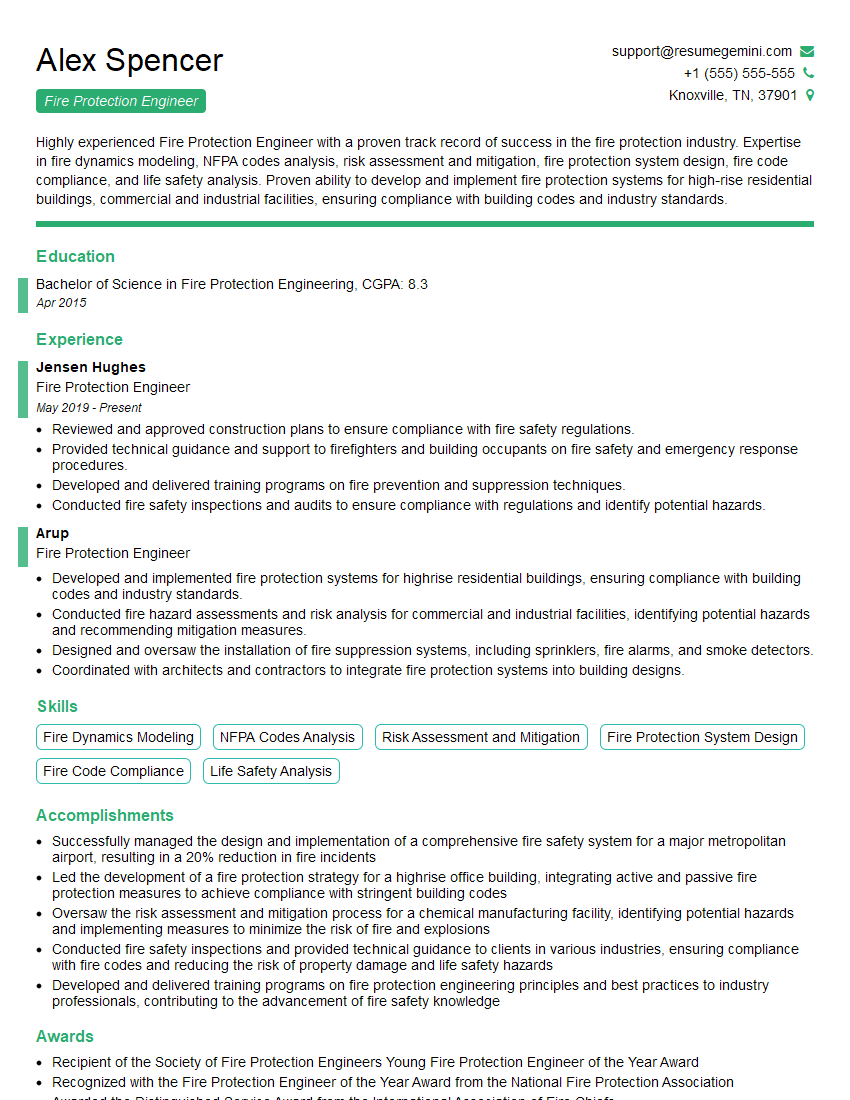
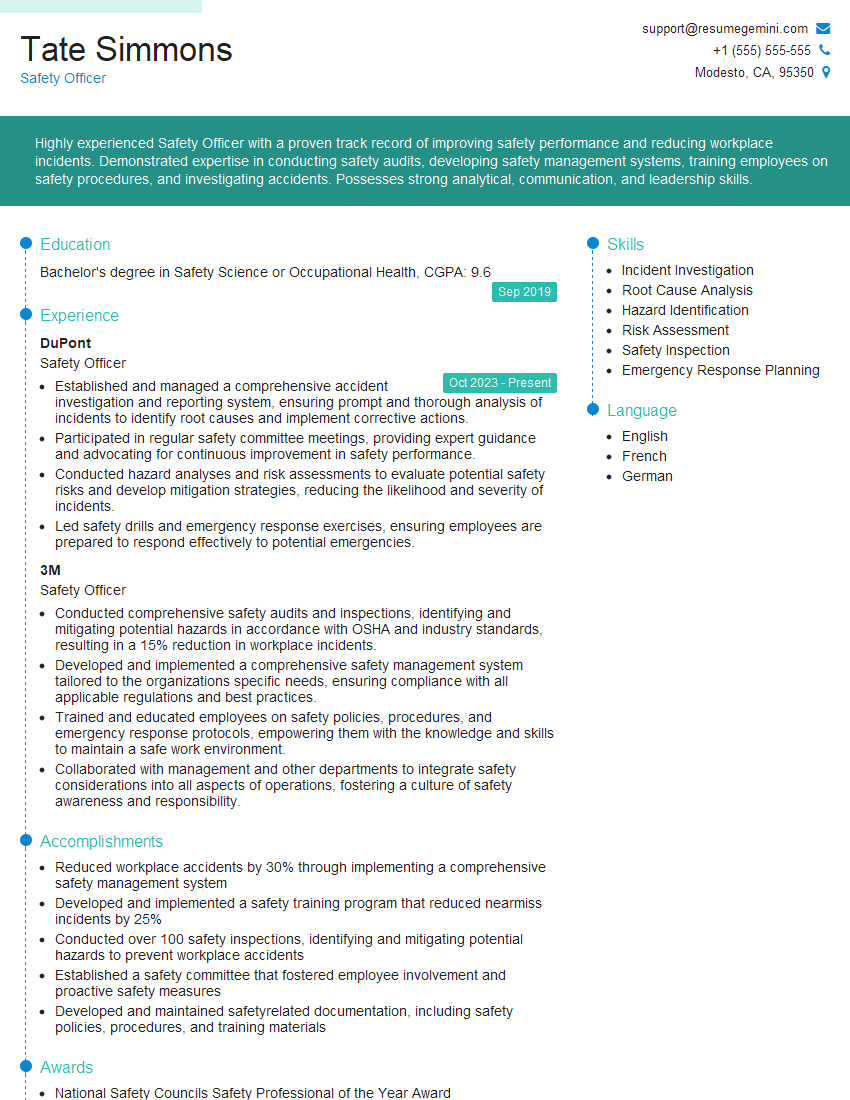
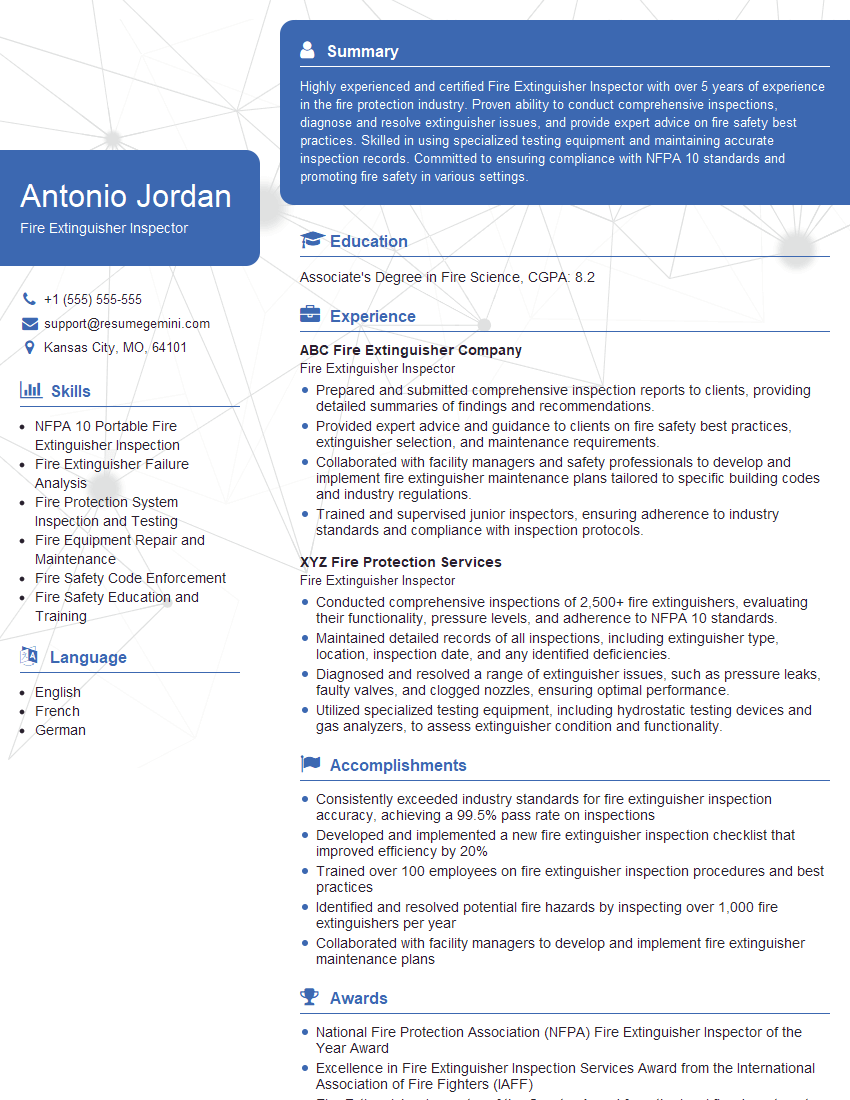
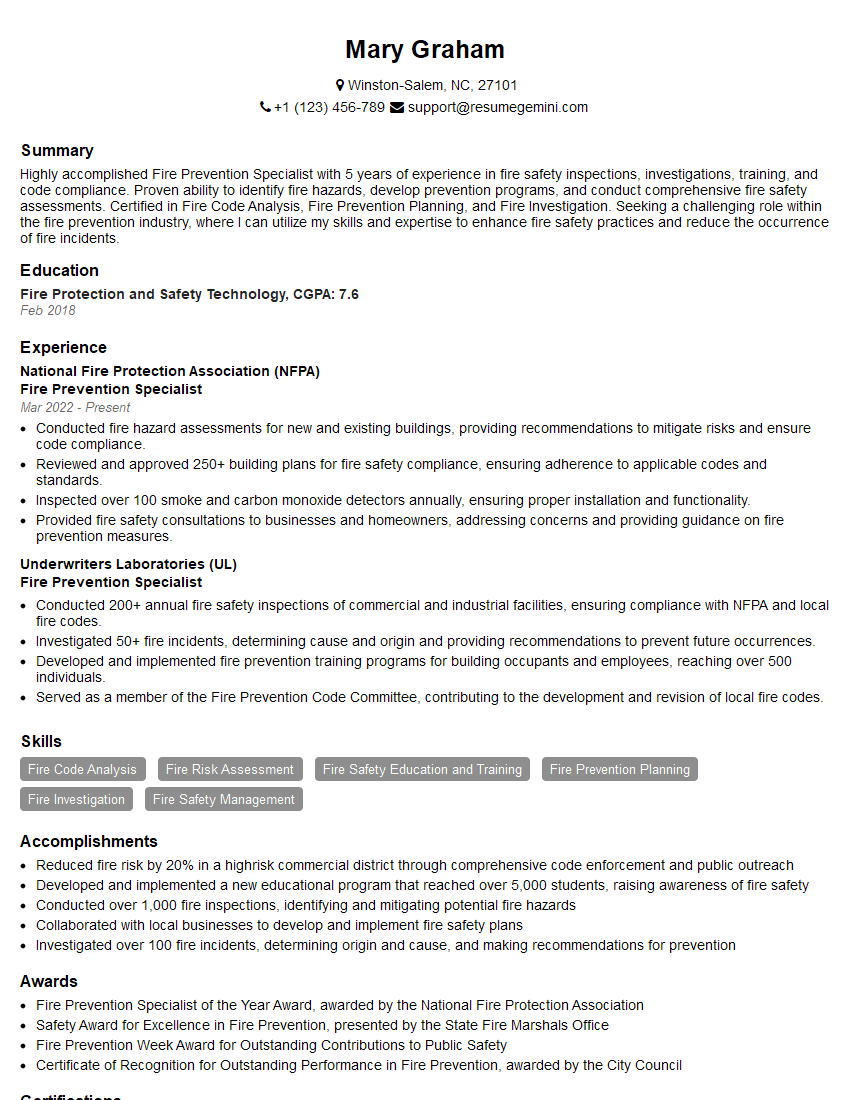
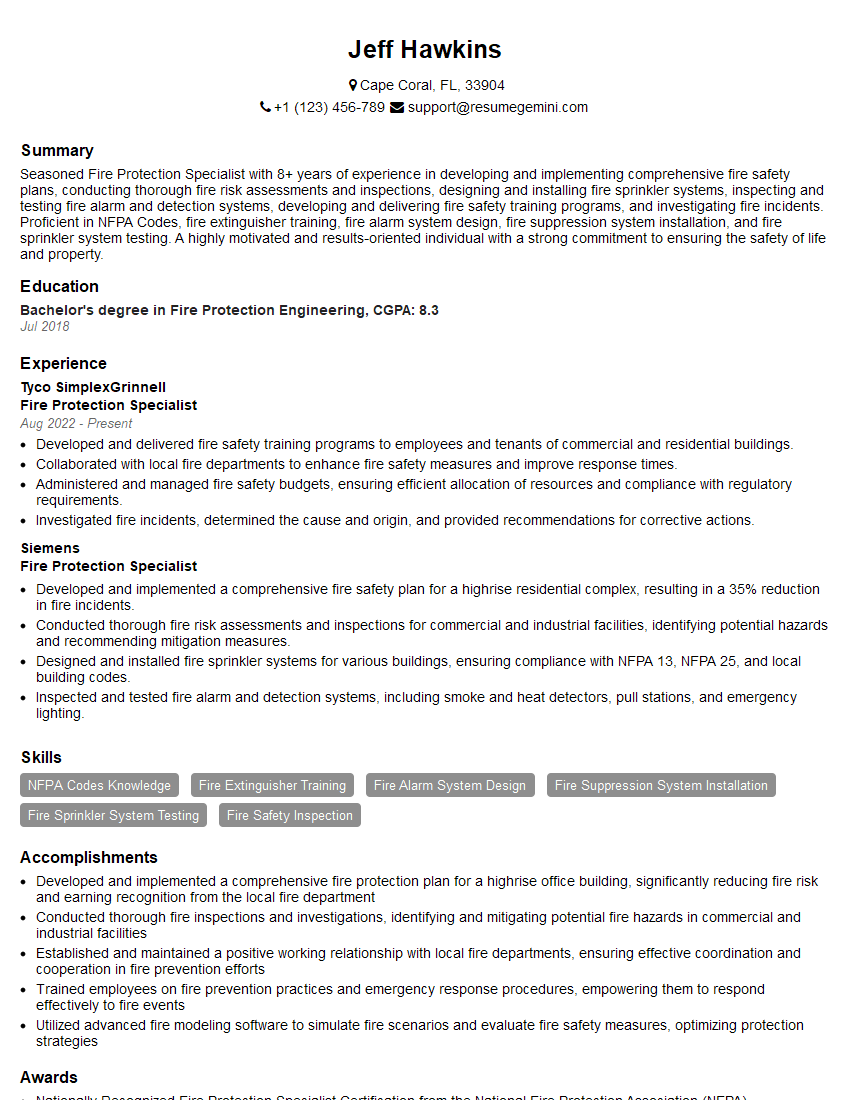
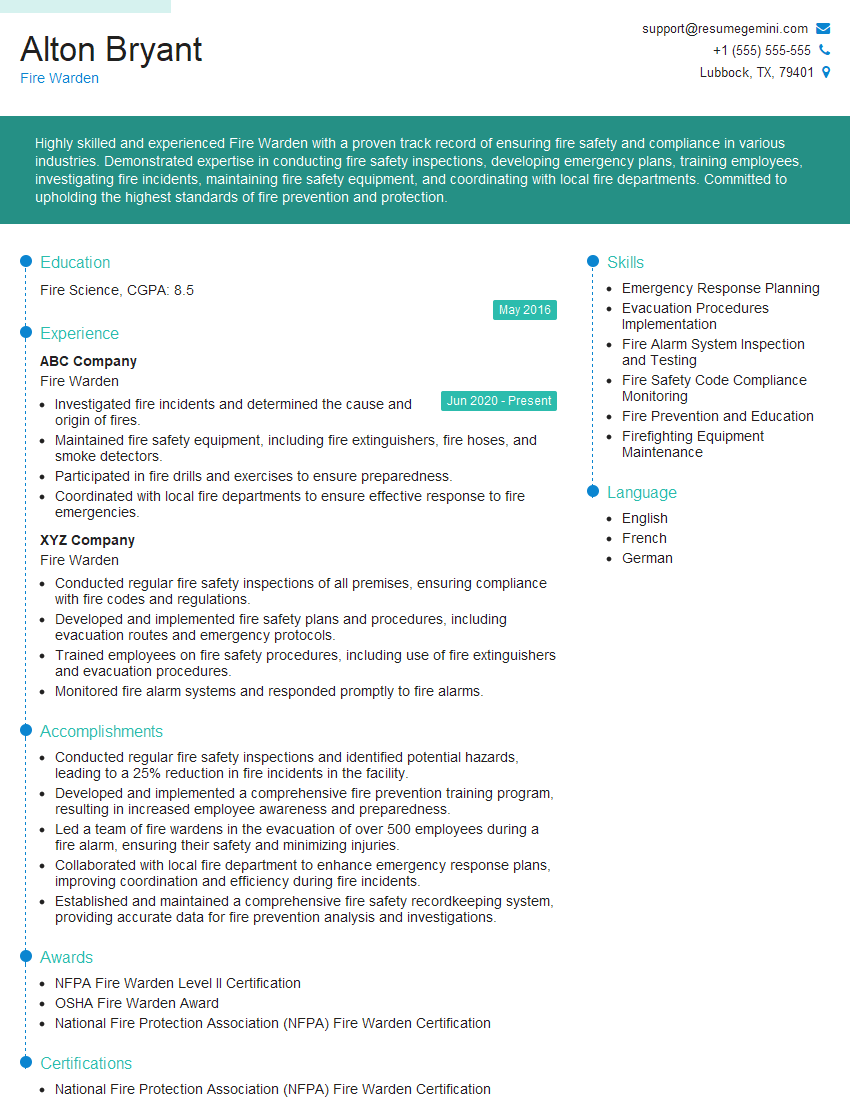
Mastering Fire Extinguishing Equipment Operation is vital for career advancement in safety-conscious industries. A strong understanding of these crucial skills demonstrates your commitment to safety and your ability to handle critical situations effectively. To significantly boost your job prospects, create a compelling and ATS-friendly resume that highlights your expertise. We strongly recommend using ResumeGemini to build a professional resume that showcases your skills and experience in the best possible light. ResumeGemini offers examples of resumes tailored to Fire Extinguishing Equipment Operation to help you craft a winning application.
Explore more articles
Users Rating of Our Blogs
Share Your Experience
We value your feedback! Please rate our content and share your thoughts (optional).
What Readers Say About Our Blog
To the interviewgemini.com Webmaster.
Very helpful and content specific questions to help prepare me for my interview!
Thank you
To the interviewgemini.com Webmaster.
This was kind of a unique content I found around the specialized skills. Very helpful questions and good detailed answers.
Very Helpful blog, thank you Interviewgemini team.