Interviews are opportunities to demonstrate your expertise, and this guide is here to help you shine. Explore the essential Sprinkler Systems interview questions that employers frequently ask, paired with strategies for crafting responses that set you apart from the competition.
Questions Asked in Sprinkler Systems Interview
Q 1. Explain the difference between wet pipe and dry pipe sprinkler systems.
The core difference between wet pipe and dry pipe sprinkler systems lies in how they handle water. In a wet pipe system, water is constantly present in the pipes. When a sprinkler head activates due to heat, water immediately flows. Think of it like a constantly filled water balloon – ready to burst at a moment’s notice. This is the most common type, ideal for areas that are always above freezing.
A dry pipe system, on the other hand, keeps the pipes filled with compressed air or nitrogen. When a sprinkler head activates, the air pressure drops, triggering a valve to release water into the system. This is necessary in areas prone to freezing, like unheated warehouses or exterior structures. Imagine it as a water balloon that’s only filled when you need to throw it – preventing freezing and potential damage to the pipes.
Q 2. Describe the components of a typical fire sprinkler system.
A typical fire sprinkler system comprises several key components working in concert. First, there’s the water supply, which could be a municipal water main, a fire pump, or a water tank. This is the lifeblood of the system. Next comes the piping network, a system of interconnected pipes distributing water throughout the protected area. These pipes are carefully sized and designed to ensure adequate water pressure and flow.
Then we have the sprinkler heads themselves – these are the heat-sensitive devices that release water when the temperature reaches a critical point (usually around 165°F or 74°C). A control valve is critical; this allows for the system to be isolated for maintenance or repairs. Lastly, there are often backflow preventers and alarm systems to monitor the system’s pressure and signal any issues.
Q 3. What are the different types of sprinkler heads and their applications?
Sprinkler heads are designed with various features for different applications. Standard response heads are the most common; they activate quickly once a critical temperature is reached. Pendent heads hang down from the ceiling, ideal for high ceilings or open spaces. Upright heads are mounted on the ceiling and project water downwards. Then there are sidewall heads, used when sprinkler heads need to be mounted on walls.
More specialized heads include early suppression/fast response (ESFR) heads for high-value areas like warehouses. These release water faster and in greater volume to control fires in their early stages. There are also concealed heads, which are aesthetically pleasing and blend into the ceiling until activation. The choice of head type depends on factors like ceiling height, occupancy type, and the risk level of the protected area.
Q 4. How do you calculate the water flow requirements for a sprinkler system?
Calculating water flow requirements for a sprinkler system is a complex process requiring engineering expertise and adherence to relevant fire codes. It’s not something easily done without specialized software and knowledge of hydraulic calculations. However, the general process involves:
- Determining the hazard classification of the building: This dictates the level of fire protection needed.
- Calculating the design area: This is the area that needs to be protected by sprinklers.
- Selecting the appropriate sprinkler head type: Different heads have different flow rates.
- Applying hydraulic calculations: This complex process accounts for pipe friction, elevation changes, and the number and type of heads.
- Considering the water supply: Ensuring the water supply can deliver sufficient water pressure and flow.
Specialized software programs are usually employed to perform these calculations, ensuring compliance with national and local building codes.
Q 5. What are the safety precautions when working with sprinkler systems?
Working with sprinkler systems involves several crucial safety precautions. Always treat the system as if it were live and under pressure, even when it’s supposedly shut off. Before working on any component, ensure the system is properly isolated and depressurized. Wear appropriate personal protective equipment (PPE), including safety glasses, gloves, and possibly a hard hat, especially when dealing with high-pressure systems.
Never tamper with or modify the system without proper training and authorization. Proper lockout/tagout procedures must be followed before performing maintenance or repair. Be aware of the potential for water damage, both to the structure and electrical equipment. Follow all relevant safety guidelines and regulations specified by your local authorities.
Q 6. Explain the process of testing and inspecting a sprinkler system.
Testing and inspection of sprinkler systems are critical for ensuring their functionality. This involves regular visual inspections to check for any damage, corrosion, or obstructions. Annual inspections are often required by code, involving checking for leaks, proper valve operation, and the overall condition of the system.
Flow testing involves activating a small number of heads to verify water flow rates and pressure. Hydraulic testing, done less frequently, checks the system’s ability to deliver water throughout the entire network under pressure. Proper documentation is crucial, recording the findings of each inspection and test. Any repairs or replacements should be done by qualified professionals and properly documented.
Q 7. How do you troubleshoot a malfunctioning sprinkler system?
Troubleshooting a malfunctioning sprinkler system requires a systematic approach. Start with a visual inspection, checking for obvious problems like leaks, damaged heads, or clogged pipes. Then, check the water supply, ensuring adequate pressure and flow. Examine the control valve, verifying that it’s open and operating correctly.
If the problem persists, consider using specialized tools to check pressure and flow rates at various points in the system. Identifying the location of the malfunction will narrow down the potential causes. Remember to isolate the affected section before attempting any repairs. If the issue isn’t readily apparent, call a qualified sprinkler technician to diagnose and repair the problem.
Q 8. What are the common causes of sprinkler system leaks?
Sprinkler system leaks are a common problem, stemming from a variety of causes. Think of your sprinkler system as a network of tiny pipes; any weakness can lead to a leak. The most frequent culprits include:
- Pipe damage: This can range from small cracks due to age, frost heaves, or root intrusion to larger breaks caused by digging or heavy equipment. I’ve seen countless systems damaged by tree roots forcing their way through PVC pipes.
- Faulty fittings and connections: Loose or improperly sealed connections are prime leak locations. Think of it like a leaky faucet; a loose nut can cause a significant drip over time. Regular inspection of these connections is crucial.
- Backflow preventer issues: These devices prevent contaminated water from flowing back into the potable water supply. Leaks in or around these devices are relatively common and often require professional attention.
- Sprinkler head damage or wear: Sprinkler heads can become cracked or worn, leading to leaks. This is often due to impact damage or simple wear and tear from constant use. A good example is a sprinkler head hitting a rock or a child’s toy.
- Improper installation: Poor initial installation is a significant contributor to long-term leakage issues. Things like improper pipe depth or insufficient bedding can create stress points and lead to cracking.
Identifying the specific cause requires careful inspection and testing of the entire system, often involving pressure testing individual sections.
Q 9. Describe your experience with different types of sprinkler system pumps.
My experience encompasses a wide range of sprinkler system pumps, from small, residential booster pumps to large, commercial centrifugal pumps. The choice of pump depends heavily on the system’s size, water pressure requirements, and the source of water. Let’s look at a few examples:
- Centrifugal pumps: These are the workhorses of larger systems, providing high flow rates at relatively constant pressure. I’ve used these extensively on large-scale landscaping and agricultural projects. Their ability to handle high volumes makes them ideal for such tasks.
- Submersible pumps: These pumps are submerged directly into the water source (like a well), making them ideal for situations where space is limited. They are quieter and easier to maintain compared to other pump types.
- Booster pumps: These pumps increase water pressure in systems where the existing pressure is insufficient. I often use these in residential settings to ensure adequate water pressure for irrigation across the whole property.
- Positive displacement pumps: While less common in sprinkler systems, these pumps provide a constant flow rate regardless of pressure changes. They are more robust but may be less energy efficient than centrifugal pumps. I’ve used them in specialized situations requiring very consistent water delivery.
Choosing the right pump involves careful consideration of factors such as flow rate (gallons per minute or GPM), pressure (measured in PSI), and head (the vertical distance the water needs to be pumped). Incorrect pump selection can lead to inadequate water pressure or unnecessary energy consumption.
Q 10. What are the relevant codes and standards for sprinkler system installation?
Sprinkler system installation is governed by a variety of codes and standards, ensuring safety and performance. These vary by location but often incorporate elements from:
- NFPA 13: This is the National Fire Protection Association standard for the installation of sprinkler systems for fire protection. While not directly relevant to irrigation systems, many aspects, particularly regarding piping, pressure testing, and safety, overlap and inform best practices.
- ASPE (Associated Sprinkler Professionals) standards: ASPE provides guidelines and standards focused on irrigation systems. These deal with water conservation, system design, and best practices for installation.
- Local building codes: These are crucial and often more restrictive than national standards. Local codes account for specific climate conditions and regional requirements.
- Manufacturer specifications: The guidelines provided by manufacturers for their specific equipment and components are also vital to follow for proper installation and warranty compliance.
Ignoring these standards can lead to system failures, safety hazards, and potential legal issues.
Q 11. Explain your understanding of sprinkler system hydraulic calculations.
Hydraulic calculations are the backbone of sprinkler system design. They’re essential to ensure that each sprinkler head receives the correct amount of water at the desired pressure. This involves:
- Determining system demand: This involves calculating the total water flow rate required to irrigate the entire area, considering factors like sprinkler head type, spacing, and the area’s water requirements.
- Pipe sizing: This ensures that pipes of appropriate diameter are used to carry the required flow rate without excessive pressure loss. Using undersized pipes can lead to reduced sprinkler performance.
- Pressure calculations: These ensure that the pressure at each sprinkler head is within the manufacturer’s specifications. Inadequate pressure can lead to uneven watering or sprinkler malfunction.
- Friction loss calculations: As water flows through the pipes, friction causes pressure loss. Accurate calculation of this loss is vital for ensuring correct pressure at the sprinkler heads. Ignoring friction loss can result in insufficient pressure at the end of long pipe runs.
Software tools and online calculators help significantly in these calculations, but a thorough understanding of the underlying principles is vital for accurate and efficient design. I typically use specialized hydraulic calculation software to aid in this process.
Q 12. How do you determine the appropriate sprinkler spacing for a given area?
Sprinkler spacing is critical for uniform water distribution. It depends on several factors:
- Sprinkler type: Different sprinklers have different throw distances and precipitation rates. Rotational sprinklers, for example, cover a larger area than spray heads.
- Local rainfall: In areas with frequent rainfall, wider spacing might be acceptable. Conversely, arid regions may require closer spacing.
- Plant type and density: Water needs vary greatly depending on the plant species and their density. For instance, a lawn requires more frequent, lighter watering compared to deeply rooted shrubs.
- Soil type: Soil texture affects water infiltration rates. Sandy soils drain quickly, requiring more frequent but lighter watering, while clay soils retain water longer and require less frequent but potentially heavier watering.
Determining appropriate spacing often involves consulting manufacturer’s specifications for the chosen sprinkler head and making adjustments based on site-specific factors. I usually refer to sprinkler manufacturer’s guidelines and also conduct field tests to fine-tune the spacing for optimal water distribution.
Q 13. What is your experience with CAD software for sprinkler system design?
CAD software is indispensable for modern sprinkler system design. I’m proficient in several programs, including AutoCAD and various landscape design software packages with integrated sprinkler design capabilities. CAD allows for:
- Precise mapping of the site: Creating accurate representations of the area to be irrigated, incorporating features like buildings, walkways, and existing vegetation.
- Detailed sprinkler layout: Placement of sprinkler heads with precise coordinates and adjustments for overlapping coverage.
- Pipe routing and sizing: Efficient and practical planning of the pipe network, optimizing pipe lengths and minimizing costs.
- Hydraulic calculations: Many CAD programs offer integrated hydraulic calculation tools, streamlining the design process and ensuring system performance.
- Generating detailed drawings and specifications: Creating professional-quality documentation for contractors and clients.
Using CAD significantly improves accuracy, reduces design errors, and enhances communication between designers and installers.
Q 14. Describe your experience with different types of piping materials used in sprinkler systems.
Various piping materials are used in sprinkler systems, each with its own advantages and disadvantages:
- PVC (Polyvinyl Chloride): A common and cost-effective choice for its durability and resistance to corrosion. However, it’s susceptible to damage from freezing temperatures if not properly protected.
- CPVC (Chlorinated Polyvinyl Chloride): Offers superior resistance to high temperatures and pressure compared to PVC, making it suitable for hot water systems or higher-pressure applications. I frequently specify CPVC for hot water systems or applications with challenging environmental conditions.
- Polyethylene (PE): Flexible and resistant to freezing, making it ideal for areas prone to frost heaves. It’s also lightweight and easy to install.
- Galvanized steel: While more expensive and susceptible to corrosion, galvanized steel offers high strength and durability. I’ve seen this used for underground main lines in demanding conditions.
Material selection depends on factors like budget, climate, water quality, and pressure requirements. Choosing the wrong material can lead to leaks, system failures, or reduced lifespan.
Q 15. How do you handle a sprinkler system emergency?
Sprinkler system emergencies require immediate and decisive action. My approach involves a three-pronged strategy: Locate, Isolate, and Repair/Replace.
- Locate: Pinpoint the source of the emergency. This might involve visually inspecting the system for leaks, broken pipes, or malfunctioning heads. Listening for unusual sounds like gushing water can also be helpful. If it’s a fire sprinkler activation, the location is often obvious due to water discharge.
- Isolate: The next critical step is to quickly shut off the water supply to the affected area. This could involve closing a main shutoff valve, a zone valve, or even individual sprinkler heads, depending on the severity and location of the problem. This prevents further water damage.
- Repair/Replace: Once the water is shut off, I assess the damage and initiate repairs or replacements. This might involve fixing a broken pipe, replacing a damaged sprinkler head, or even calling in a plumber or specialist for more extensive work. For fire sprinkler systems, a thorough inspection and potential system repressurization are necessary following activation.
For instance, I once responded to a burst pipe in a residential sprinkler system during a freeze. Quickly locating the break, shutting off the main valve, and then temporarily patching the pipe prevented significant water damage while awaiting a professional repair the following day.
Career Expert Tips:
- Ace those interviews! Prepare effectively by reviewing the Top 50 Most Common Interview Questions on ResumeGemini.
- Navigate your job search with confidence! Explore a wide range of Career Tips on ResumeGemini. Learn about common challenges and recommendations to overcome them.
- Craft the perfect resume! Master the Art of Resume Writing with ResumeGemini’s guide. Showcase your unique qualifications and achievements effectively.
- Don’t miss out on holiday savings! Build your dream resume with ResumeGemini’s ATS optimized templates.
Q 16. What is your experience with backflow preventers?
Backflow preventers are crucial safety devices that safeguard potable water supplies from contamination. My experience encompasses installation, inspection, testing, and maintenance of various types, including double check valves and reduced pressure zone backflow preventers. I understand the importance of regular testing, as mandated by most local plumbing codes, to ensure they function correctly and prevent potentially harmful backflow.
I’m proficient in performing annual backflow preventer tests, accurately documenting the results, and recommending repairs or replacements as needed. I’m familiar with different testing methods and understand the importance of using appropriate testing equipment. I’ve also worked on projects involving the selection and sizing of backflow preventers based on the specific demands of the sprinkler system and local regulations.
For example, I recently identified a failing double check valve during a routine test at a commercial property. Replacing this faulty device prevented the potential contamination of the drinking water supply from the sprinkler system.
Q 17. Explain the importance of regular sprinkler system maintenance.
Regular sprinkler system maintenance is paramount for several reasons: efficiency, longevity, safety, and water conservation.
- Efficiency: Regular inspections identify and correct minor issues before they escalate into costly repairs. This ensures the system operates at peak efficiency, providing consistent and adequate coverage.
- Longevity: Proper maintenance extends the lifespan of the system by preventing premature wear and tear on components. This translates to significant long-term cost savings.
- Safety: For fire sprinkler systems, regular maintenance is crucial to ensure the system functions reliably in an emergency. It prevents malfunctions that could compromise life safety.
- Water Conservation: A well-maintained system delivers water efficiently, minimizing water waste and reducing operational costs.
Imagine a sprinkler head clogged with debris; it can lead to uneven watering, potential overwatering in other areas, and wasted water. Regular maintenance, including cleaning sprinkler heads and inspecting for leaks, directly addresses such issues.
Q 18. What are the different types of fire sprinkler system activation devices?
Fire sprinkler system activation devices are designed to initiate water discharge in response to a fire. Common types include:
- Fusible Links: These melt at a specific temperature, releasing a pin that opens the sprinkler head.
- Frangible Bulbs: These contain a liquid that expands and breaks the bulb when exposed to high temperatures.
- Electronic Sprinklers: These are activated by heat detectors or other fire detection systems.
- Quick Response Sprinklers: These are designed to activate at lower temperatures and faster than standard sprinklers, allowing for quicker fire suppression.
The choice of activation device depends on the specific fire hazards present and the desired response time. For example, quick-response sprinklers are often preferred in areas with high-value assets or rapid fire growth potential.
Q 19. Describe your experience with different types of sprinkler system controllers.
My experience with sprinkler system controllers encompasses various types, including:
- Basic timer controllers: These offer simple on/off scheduling based on time.
- Weather-based controllers: These adjust watering schedules based on weather data, optimizing water use and preventing overwatering.
- Smart controllers: These integrate with smartphone apps and offer advanced features like remote control, customized watering zones, and soil moisture sensing capabilities.
- Centralized controllers: These manage multiple zones and systems from a single interface.
Each controller type offers distinct advantages. I’ve worked on projects requiring both simple timer-based systems for smaller residential applications and complex centralized controllers for large commercial properties with multiple zones and diverse water requirements. Understanding the capabilities and limitations of each type is essential for selecting the appropriate controller for a given project.
Q 20. How do you ensure the proper water pressure in a sprinkler system?
Maintaining proper water pressure in a sprinkler system is crucial for consistent and effective operation. This is achieved through a combination of factors:
- Proper pump selection and sizing: The pump must provide sufficient pressure to reach the furthest sprinkler heads.
- Regular pressure checks: Using a pressure gauge, I verify that pressure is within the recommended range for the specific system.
- Pipe sizing and layout: Properly sized pipes minimize friction loss, ensuring adequate pressure throughout the system.
- Adjusting pressure regulators: Regulators are used to control pressure in specific zones or sections of the system.
Insufficient pressure leads to reduced sprinkler performance and uneven water distribution, while excessive pressure can damage the system. I regularly inspect for pressure related issues and work to adjust the system to ensure optimal performance. For instance, pressure drops may indicate a clogged filter or a leak in the system.
Q 21. What are the environmental considerations when designing a sprinkler system?
Environmental considerations are integral to sprinkler system design, focusing primarily on water conservation and minimizing environmental impact.
- Water conservation: Utilizing water-efficient sprinkler heads, weather-based controllers, and proper system design minimizes water waste. This is crucial in arid and semi-arid regions where water resources are scarce.
- Water quality: Selecting appropriate materials that are resistant to corrosion and prevent water contamination is essential.
- Energy efficiency: Opting for energy-efficient pumps and controllers reduces the system’s overall environmental footprint.
- Ecosystem protection: Designing the system to avoid disrupting sensitive habitats or impacting local flora and fauna is crucial, particularly in ecologically sensitive areas.
For example, when designing a system for a golf course, I would incorporate water-efficient nozzles and a weather-based controller to reduce water consumption, while also ensuring the system’s placement minimizes disruption to the surrounding natural environment.
Q 22. Describe your experience with pressure testing a sprinkler system.
Pressure testing a sprinkler system is crucial for ensuring its integrity and functionality before it goes live. It involves pressurizing the entire system to a specified level above its operating pressure to identify any leaks or weaknesses. Think of it like pressure-testing a tire – you inflate it beyond normal driving pressure to find any punctures.
My experience includes using various testing methods, from utilizing a dedicated air compressor with pressure gauges to employing specialized water-testing pumps. The process typically involves isolating sections of the system, slowly increasing the pressure to the required level (often 150-200 PSI, depending on the system design and local codes), and then monitoring for pressure drops. Any significant pressure drop indicates a leak, and the location needs to be identified and repaired before proceeding. I’ve worked on systems ranging from small residential installations to large commercial complexes, and the methodology remains consistent, though the scale changes considerably.
For example, on a recent high-rise project, we used a sophisticated digital pressure gauge to precisely monitor pressure throughout the entire system, recording the data to create a comprehensive report. This allowed us to pinpoint a leak in a relatively inaccessible section of the piping far more efficiently than relying on visual inspection alone.
Q 23. What is your experience with designing sprinkler systems for different building types?
Designing sprinkler systems requires a deep understanding of building codes, fire protection requirements, and the unique characteristics of each building type. My experience encompasses diverse projects, from residential homes to high-rise office buildings, warehouses, and educational facilities.
- Residential: These systems are often simpler, utilizing smaller pipes and fewer heads. The design emphasizes adequate coverage of each room and ease of installation.
- Commercial: Commercial buildings necessitate more complex designs due to their size and occupancy. They often require different sprinkler head types (depending on the ceiling height and other factors) and incorporate features like fire pumps and pressure-reducing valves.
- High-Rise Buildings: These pose significant challenges. We need to consider water pressure limitations at higher elevations, the need for multiple risers and pumps, and compliance with strict fire codes concerning evacuation strategies. The design incorporates sophisticated hydraulic calculations to ensure sufficient water pressure reaches all floors.
- Warehouses and Industrial Facilities: These buildings typically require systems designed to withstand high temperatures, potential chemical hazards, and the specific protection requirements of flammable materials.
In each scenario, I collaborate closely with architects, engineers, and contractors to ensure seamless integration of the sprinkler system with the overall building design, always prioritizing life safety and minimizing disruption during construction.
Q 24. How do you manage a project timeline and budget for a sprinkler system installation?
Managing a project’s timeline and budget requires meticulous planning and execution. I use a project management approach that integrates critical path scheduling, resource allocation, and regular progress reviews.
Timeline Management: I start by creating a detailed project schedule, breaking down the installation process into smaller, manageable tasks. This includes permitting, material procurement, installation, testing, and final inspections. Critical path analysis helps identify tasks that directly impact the project completion date, and we prioritize those. Regular progress meetings, involving all stakeholders, ensure that the schedule is on track and any potential delays are addressed proactively.
Budget Management: A comprehensive budget is established at the outset, accounting for labor costs, materials, equipment rentals, permits, and contingency. I use cost estimation software to accurately price materials and labor, and regular cost tracking throughout the project helps identify any potential cost overruns. Value engineering plays a vital role; we explore options for cost optimization without compromising on safety and quality. For example, using prefabricated piping sections can reduce installation time and labor costs, while careful material selection can balance cost and longevity.
Maintaining transparent communication with clients throughout the process is key to ensuring mutual understanding of the project’s progress and potential adjustments.
Q 25. Explain your understanding of water conservation techniques in sprinkler system design.
Water conservation is a paramount consideration in modern sprinkler system design. We strive to create systems that provide adequate fire protection while minimizing water usage.
Several techniques are employed:
- High-efficiency nozzles: These nozzles deliver the same level of fire protection with lower water flow rates compared to traditional nozzles. They are designed to optimize water distribution and coverage.
- Weather-based irrigation controllers: These controllers adjust sprinkler operation based on real-time weather data, preventing unnecessary watering during rain or periods of high humidity.
- Smart irrigation systems: These use sensors to monitor soil moisture and adjust watering schedules accordingly, preventing overwatering.
- Proper hydraulic design: This ensures that the right amount of water is delivered to each sprinkler head, avoiding overspray or under-watering.
- Regular maintenance: Checking for leaks, clogged nozzles, and broken sprinkler heads is essential in preventing water waste.
Implementing these strategies not only reduces water consumption but also lowers operating costs and environmental impact. On a recent project, the use of high-efficiency nozzles and a smart controller resulted in a 30% reduction in water usage compared to a traditional system.
Q 26. Describe your experience with working with different types of valves in sprinkler systems.
Sprinkler systems utilize a variety of valves for controlling water flow and isolating sections of the system for maintenance or repairs. My experience encompasses various valve types, including:
- Check valves: Prevent backflow of water into the system. Think of them as one-way valves.
- Gate valves: Provide a complete on/off flow control. They’re used for isolating sections of the piping.
- Globe valves: Allow for precise flow regulation. They are used less frequently in main lines but are common in smaller branch lines for fine-tuning water pressure.
- Ball valves: Offer quick on/off flow control. They’re relatively simple and easy to maintain.
- Pressure-reducing valves (PRVs): These valves maintain a consistent downstream pressure, even if the upstream pressure fluctuates. This is critical in high-rise buildings where pressure needs to be regulated at higher elevations.
- Alarm valves: These valves activate an alarm when the system is activated, alerting the fire department and building occupants.
Selecting the appropriate valve type depends on the specific application and system requirements. For instance, PRVs are essential in high-rise buildings, while check valves are a fundamental safety feature in almost every system to prevent backflow contamination. I ensure that all valves are properly sized, installed, and tested to ensure their correct functionality and longevity.
Q 27. How do you coordinate with other trades during a sprinkler system installation?
Coordinating with other trades during a sprinkler system installation is paramount for a smooth and efficient project. This requires proactive communication, clear planning, and a collaborative approach.
Before the installation begins, I schedule pre-construction meetings with all relevant trades, including electricians, plumbers, HVAC technicians, and drywall installers. This ensures that everyone understands the sprinkler system’s layout, potential conflicts, and the sequence of work. For example, we need to coordinate with electricians for the installation of alarm valve switches and with plumbers to avoid conflicts with other piping systems. During the installation process, regular communication, often daily, helps resolve any unforeseen issues that arise. Open communication lines with the general contractor are maintained to ensure that the project stays on schedule and within budget. A collaborative, respectful approach promotes teamwork and helps to overcome challenges efficiently.
Thorough documentation of all coordination efforts, including drawings and meeting minutes, ensures that everyone remains informed and that potential problems are addressed proactively. This collaborative approach creates a safe and effective environment, leading to a successful project completion.
Q 28. What is your experience with using specialized tools and equipment for sprinkler system installation and maintenance?
My experience includes the use of a wide range of specialized tools and equipment, essential for efficient and safe sprinkler system installation and maintenance. These include:
- Pipe threading machines: These tools create precise threads on pipes for fittings.
- Pipe cutters and benders: Efficiently cutting and shaping pipes to meet the specific needs of the system.
- Welding equipment: Used for joining specific types of pipes, particularly in larger systems.
- Pressure testing equipment: Air compressors, gauges, and pumps to rigorously test the integrity of the system.
- Sprinkler head installation tools: Specialized tools that ensure the correct placement and orientation of sprinkler heads.
- Leak detection equipment: Tools to accurately locate leaks within the piping system, including electronic leak detectors.
- Hydraulic calculation software: Software packages to ensure proper sizing of piping and water flow based on the fire protection needs of the building.
Regular maintenance of this equipment is crucial for accuracy and safety. Proper training and certifications are essential for safe and efficient operation. For example, when working with welding equipment, understanding safety procedures and proper ventilation techniques is critical to prevent accidents.
Key Topics to Learn for Your Sprinkler Systems Interview
- System Design & Layout: Understanding the principles of water flow, pressure, and hydraulic calculations; designing systems for various building types and fire protection needs.
- Component Selection & Specification: Knowledge of different sprinkler head types, piping materials, pumps, and backflow preventers; selecting appropriate components based on project requirements and codes.
- Installation & Testing Procedures: Familiarity with proper installation techniques, including pipefitting, connection methods, and testing procedures to ensure system functionality and compliance.
- NFPA Codes & Standards: Thorough understanding of relevant NFPA codes and standards related to fire sprinkler systems, ensuring compliance and safety.
- Troubleshooting & Maintenance: Identifying and resolving common system issues, performing routine maintenance tasks, and understanding preventative measures to extend system lifespan.
- Water Supply & Hydraulic Calculations: Analyzing water supply sources, performing hydraulic calculations to determine pipe sizing and pump requirements, and ensuring adequate water pressure for effective fire suppression.
- Fire Protection Strategies: Understanding the role of sprinkler systems within a broader fire protection strategy, including its integration with other fire safety measures.
- System Inspection & Reporting: Conducting thorough system inspections, documenting findings, and preparing reports to meet regulatory requirements.
Next Steps: Unlock Your Sprinkler Systems Career
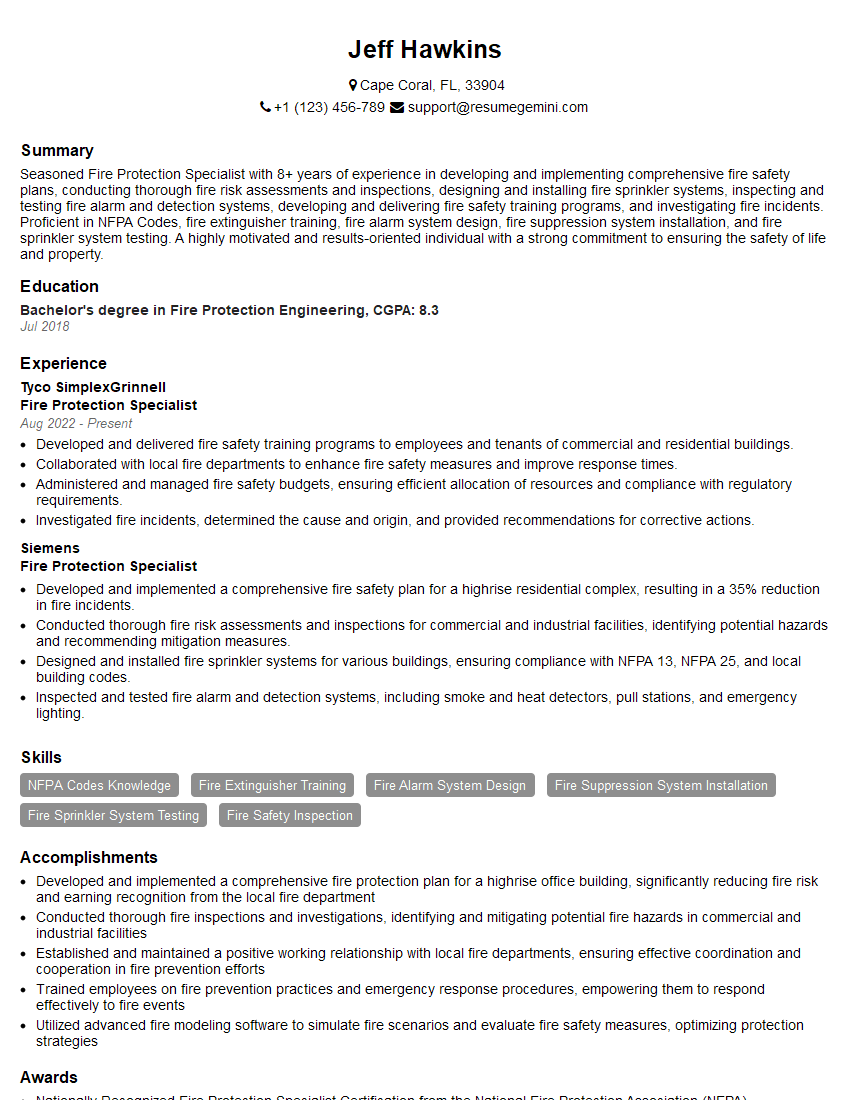
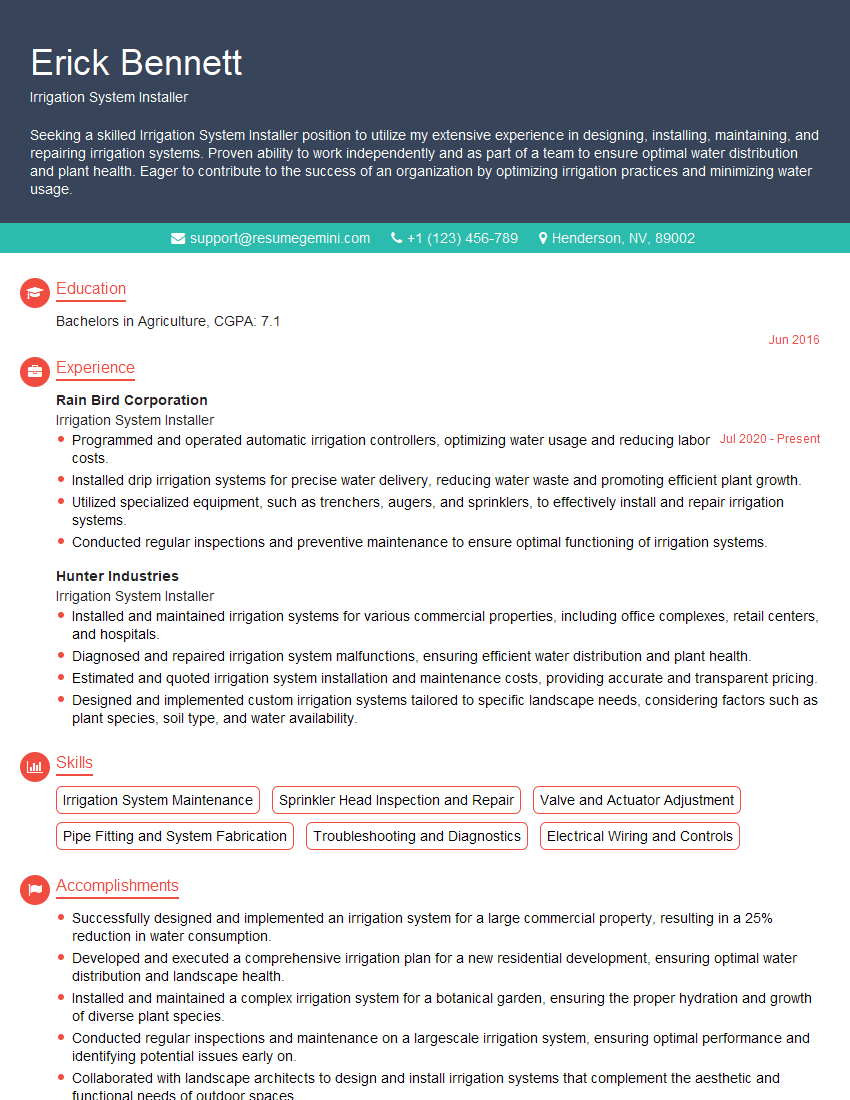
Mastering sprinkler systems opens doors to exciting career opportunities in a vital industry. Demonstrating a strong understanding of these systems is crucial for securing your dream role. To make the most of your job search, create an ATS-friendly resume that highlights your skills and experience effectively. ResumeGemini can help you build a powerful resume that catches the eye of recruiters. We offer examples of resumes tailored specifically to the Sprinkler Systems industry, giving you a head start in showcasing your expertise. Take the next step towards your career success today!
Explore more articles
Users Rating of Our Blogs
Share Your Experience
We value your feedback! Please rate our content and share your thoughts (optional).
What Readers Say About Our Blog
To the interviewgemini.com Webmaster.
Very helpful and content specific questions to help prepare me for my interview!
Thank you
To the interviewgemini.com Webmaster.
This was kind of a unique content I found around the specialized skills. Very helpful questions and good detailed answers.
Very Helpful blog, thank you Interviewgemini team.