Unlock your full potential by mastering the most common Documentation and Medical Record Keeping interview questions. This blog offers a deep dive into the critical topics, ensuring you’re not only prepared to answer but to excel. With these insights, you’ll approach your interview with clarity and confidence.
Questions Asked in Documentation and Medical Record Keeping Interview
Q 1. Explain the importance of accurate medical record keeping.
Accurate medical record keeping is the cornerstone of safe and effective healthcare. It’s crucial for several reasons: It ensures continuity of care, allowing healthcare providers to make informed decisions based on a complete patient history. Accurate records prevent medical errors by providing a clear picture of a patient’s conditions, treatments, and allergies. They are essential for legal and insurance purposes, providing documentation for billing and defending against potential malpractice claims. Finally, they facilitate research and public health initiatives by providing valuable data on disease trends and treatment outcomes.
Think of it like building a house: a solid foundation of accurate records ensures a stable and reliable structure for patient care. Without it, the entire system risks collapse.
Q 2. Describe your experience with different types of medical record systems (EHR, PHR, paper-based).
Throughout my career, I’ve worked extensively with various medical record systems. I’ve used paper-based systems, which, while offering a tangible record, are prone to loss, damage, and inefficient retrieval. Then there are Electronic Health Records (EHRs), such as Epic and Cerner, which offer significant advantages in terms of accessibility, data sharing, and reduced storage space. I’m proficient in navigating these systems, including inputting data, generating reports, and maintaining patient information. I also have experience with Personal Health Records (PHRs), empowering patients to actively manage their own health data. While these can be helpful for patients, ensuring proper integration and security with other systems requires careful attention.
For example, in my previous role, I managed the transition from a paper-based system to an EHR, which involved extensive data migration, staff training, and ongoing quality control. This experience highlighted the challenges and rewards of transitioning to more modern, technology-driven record-keeping systems.
Q 3. How do you ensure patient data privacy and confidentiality?
Patient data privacy and confidentiality are paramount. My approach involves strict adherence to established protocols, including access control mechanisms, data encryption, and secure storage solutions. I only access information pertinent to my role and always maintain the highest level of discretion. I’m trained on identifying and reporting potential breaches. Regular audits and compliance checks are essential. Furthermore, I am well-versed in implementing and adhering to all relevant privacy legislation.
For instance, I’ve implemented multi-factor authentication and role-based access control measures to restrict access to sensitive patient data to authorized personnel. I also regularly participate in training sessions to stay up-to-date on the latest privacy best practices and potential threats.
Q 4. What are the legal and ethical considerations of medical record management?
The legal and ethical considerations of medical record management are extensive. Legally, we must comply with regulations like HIPAA in the US, which mandates specific standards for privacy, security, and data breach notification. Ethically, we have a responsibility to maintain patient confidentiality, uphold accuracy, and ensure that records are used only for legitimate purposes. This includes understanding informed consent, ensuring data integrity, and addressing any conflicts of interest that may arise.
For example, releasing information to unauthorized individuals, even family members without proper consent, is a serious ethical breach and a potential legal violation. Similarly, failing to maintain accurate records can lead to misdiagnosis, inappropriate treatment, and liability.
Q 5. Describe your experience with medical coding and billing procedures.
My experience with medical coding and billing involves accurate translation of diagnoses and procedures into standardized codes (ICD and CPT codes) for billing purposes. I am proficient in using various coding systems and software to ensure claims are submitted correctly and in a timely manner. This requires a deep understanding of medical terminology and the specific coding guidelines. I’m also experienced in auditing claims to identify and correct errors to minimize denials and improve revenue cycle management.
One project I worked on involved streamlining the coding process, reducing the number of claim denials by 15% by implementing a new coding auditing system, leading to significant cost savings for the practice.
Q 6. How do you handle incomplete or inaccurate medical records?
Handling incomplete or inaccurate medical records requires a systematic approach. First, I identify the missing information or inaccuracies. Then, I attempt to obtain the missing data through communication with the patient, other healthcare providers involved in their care, or by reviewing past records. If the information is irretrievable, I document the attempts made and the resulting uncertainties. Any corrections made must be documented appropriately, indicating the date, time, and nature of the correction, along with the individual making the change.
For example, if a medication allergy is missing, I would contact the patient directly or review their pharmacy records to confirm the allergy status. Any corrections or additions are clearly indicated and initialed in the record.
Q 7. Explain your knowledge of HIPAA regulations and compliance.
HIPAA (Health Insurance Portability and Accountability Act) is a cornerstone of medical record management in the US. My understanding includes its core principles: privacy, security, and breach notification. I’m well-versed in the Privacy Rule, Security Rule, and Breach Notification Rule. This involves knowing what constitutes Protected Health Information (PHI), appropriate disclosure procedures, and the safeguards necessary to protect PHI from unauthorized access, use, or disclosure. I’m also familiar with the various HIPAA enforcement mechanisms and the consequences of non-compliance.
In my previous role, I conducted regular HIPAA compliance audits, ensuring our systems and practices aligned with all relevant regulations. This involved training staff, updating policies, and implementing technical safeguards to minimize the risk of HIPAA violations.
Q 8. How do you prioritize tasks when faced with competing deadlines?
Prioritizing tasks with competing deadlines requires a strategic approach. I utilize a combination of methods, starting with a clear understanding of each task’s urgency and importance. I often employ a prioritization matrix, sometimes called an Eisenhower Matrix, categorizing tasks as Urgent/Important, Important/Not Urgent, Urgent/Not Important, and Neither. Urgent/Important tasks get immediate attention. Important/Not Urgent tasks are scheduled. Urgent/Not Important tasks are delegated if possible, or streamlined to minimize time investment. Neither tasks are eliminated or postponed.
For example, if I have a critical patient record requiring immediate update and a less urgent report due later in the week, the patient record takes precedence. I use project management tools to track deadlines and allocate time effectively, ensuring all tasks are completed accurately and on time. This proactive approach helps me maintain efficiency and prevent feeling overwhelmed.
Q 9. Describe your experience with data entry and accuracy standards.
Data entry accuracy is paramount in medical record keeping. My experience spans various Electronic Health Record (EHR) systems, where I’ve consistently maintained a 99.9% accuracy rate. This is achieved through meticulous attention to detail, double-checking entered data against source documents, and utilizing data validation features within the EHR systems. I am proficient in using various data entry techniques, like structured data entry to reduce errors and improve consistency, and understand the critical role of standardized coding systems like ICD-10 and CPT for accurate billing and data analysis.
For instance, when entering medication dosages, I always cross-check the order against the medication administration record (MAR) to avoid discrepancies. If an error is identified during a data quality audit, I immediately correct it and implement steps to prevent similar errors in the future.
Q 10. How do you handle sensitive patient information in a secure manner?
Protecting sensitive patient information is a top priority. I adhere strictly to HIPAA regulations and the facility’s policies regarding confidentiality. This includes understanding and implementing access controls, using strong passwords, and never sharing information with unauthorized individuals. I’m familiar with various security measures, including encryption of data both in transit and at rest, and the importance of regularly updating software and systems to patch security vulnerabilities.
For example, if I need to access a patient’s file, I only access the information necessary for my specific task and immediately log out of the system afterwards. I would never discuss patient information in public spaces or leave patient files unattended. I also understand the importance of reporting any suspected security breaches immediately.
Q 11. What is your experience with release of information processes?
My experience with release of information (ROI) processes involves ensuring compliance with all relevant regulations and patient authorizations. I understand the different types of authorizations required, the processes for verifying patient identities, and the methods for securely transmitting information. I’m familiar with managing requests, including completing forms accurately and timely processing requests according to established protocols. I also understand the importance of tracking and documenting every step of the process.
In practice, this means carefully reviewing authorization forms for completeness and accuracy, verifying patient identity using multiple methods, and securely sending the requested information through approved channels, whether it’s by mail, fax, or secure electronic transfer.
Q 12. How do you stay updated with changes in medical record keeping regulations?
Staying updated on medical record-keeping regulations is crucial. I achieve this through various methods. I regularly subscribe to professional journals and newsletters published by organizations like AHIMA (American Health Information Management Association). I participate in continuing education courses and webinars focused on HIPAA compliance and EHR system updates. I also actively monitor government websites for regulatory changes and updates from relevant agencies like the Centers for Medicare & Medicaid Services (CMS).
This proactive approach ensures my knowledge remains current and my practices remain compliant with the ever-evolving landscape of healthcare regulations.
Q 13. Describe your experience with chart auditing and quality control.
Chart auditing and quality control are integral parts of ensuring accurate and complete medical records. My experience encompasses both retrospective and prospective chart reviews. In retrospective audits, I examine existing charts for compliance with regulatory requirements, completeness of documentation, and accuracy of coding. Prospective audits focus on preventing errors by monitoring current documentation practices.
During audits, I identify areas for improvement, such as missing signatures, inconsistencies in documentation, or errors in coding. I then report my findings to the appropriate parties, recommending corrective actions and developing strategies to improve data quality. For example, if I identify a recurring error in the use of a specific code, I may recommend additional training for staff to improve their coding skills.
Q 14. Explain your understanding of different medical record formats.
I have experience with various medical record formats, including paper-based charts, electronic health records (EHRs), and various data exchange standards like HL7. Paper-based charts are familiar, although less common now. EHR systems provide comprehensive electronic storage and management of patient data, often utilizing structured data fields to ensure consistency and data integrity. HL7 is a standard for exchanging, integrating, sharing, and retrieving electronic health information. Understanding these different formats is key to effectively managing and utilizing patient data.
The transition from paper-based records to EHRs significantly enhanced data accessibility and reduced storage space requirements. Understanding HL7 allows for seamless information exchange between different healthcare systems, contributing to better patient care coordination.
Q 15. How do you ensure the integrity and accuracy of medical records?
Ensuring the integrity and accuracy of medical records is paramount for patient safety and effective healthcare. It’s like building a sturdy house – each brick (piece of information) must be carefully placed and checked. My approach involves a multi-faceted strategy:
- Strict adherence to documentation protocols: Following standardized procedures for recording, amending, and signing all entries. This includes using approved abbreviations and ensuring all data points are complete and unambiguous.
- Regular audits and quality checks: Implementing regular reviews of medical records to identify and correct any inconsistencies or errors. This can involve random sampling or focusing on specific areas prone to inaccuracies.
- Data validation and verification: Employing checks and balances to ensure data entered matches the original source. This might involve double-checking lab results, imaging reports, or physician notes against the original documentation.
- Appropriate use of technology: Utilizing electronic health record (EHR) systems with built-in safeguards against data entry errors, such as mandatory fields, dropdown menus with controlled vocabularies, and alert systems.
- Comprehensive staff training: Providing regular training to healthcare staff on proper documentation techniques, including guidelines on record maintenance, amendment protocols, and data privacy.
For example, I once identified a pattern of missing allergy information in patient records during a quality review. This led to a revised training program emphasizing the importance of thoroughly documenting allergies, resulting in a significant improvement in data accuracy.
Career Expert Tips:
- Ace those interviews! Prepare effectively by reviewing the Top 50 Most Common Interview Questions on ResumeGemini.
- Navigate your job search with confidence! Explore a wide range of Career Tips on ResumeGemini. Learn about common challenges and recommendations to overcome them.
- Craft the perfect resume! Master the Art of Resume Writing with ResumeGemini’s guide. Showcase your unique qualifications and achievements effectively.
- Don’t miss out on holiday savings! Build your dream resume with ResumeGemini’s ATS optimized templates.
Q 16. What software and technologies are you proficient in using for medical record management?
I’m proficient in a range of software and technologies crucial for effective medical record management. My experience spans various EHR systems, including Epic, Cerner, and Meditech. I’m also skilled in using various data management tools, including:
- Electronic Health Record (EHR) systems: Proficient in data entry, retrieval, modification, and reporting features.
- Health Information Exchange (HIE) platforms: Experienced in accessing and sharing patient information securely and efficiently across different healthcare organizations.
- Data analysis tools: Skilled in using tools like Microsoft Excel, SQL, and statistical software packages (e.g., R or SPSS) to analyze medical data for quality improvement initiatives and research purposes.
- Document imaging and management systems: Familiar with systems that allow for the secure storage, retrieval, and management of scanned documents.
I am also comfortable using various other tools such as medical transcription software, document management software (like SharePoint), and clinical decision support systems.
Q 17. Describe your experience with report generation and data analysis from medical records.
My experience with report generation and data analysis from medical records involves extracting meaningful insights to improve patient care and organizational efficiency. This often involves:
- Generating standard reports: Creating reports on patient demographics, diagnoses, procedures, and outcomes using built-in EHR reporting tools or custom queries.
- Custom report creation: Developing tailored reports to answer specific clinical or operational questions, such as identifying patients at risk for readmission or evaluating the effectiveness of a new treatment protocol. For instance, I once created a report showing a correlation between missed medication appointments and subsequent hospital readmissions which guided the development of a patient reminder system.
- Data visualization: Presenting complex data in user-friendly formats like charts and graphs to facilitate easy understanding and interpretation. For example, I have visualized data on infection rates to identify potential sources of infections within a healthcare setting.
- Statistical analysis: Using statistical methods to analyze medical data and identify trends, correlations, and patterns, such as using regression analysis to assess risk factors associated with a particular disease.
My approach to analysis always prioritizes data privacy and security, adhering to all relevant regulations and organizational policies.
Q 18. How would you handle a discrepancy found in a patient’s medical record?
Handling discrepancies in a patient’s medical record requires a systematic and meticulous approach that prioritizes accuracy and patient safety. My steps would be:
- Identify and document the discrepancy: Carefully note the nature of the discrepancy, specifying the conflicting information and the source(s) of the information.
- Investigate the source of the error: Determine the reason for the discrepancy. This might involve reviewing original documentation, contacting relevant healthcare professionals, or checking for transcription errors.
- Resolve the discrepancy: Once the source of the error is identified, implement the appropriate correction. This may involve amending the record, adding clarification, or creating a new entry.
- Document the correction process: Clearly document all steps taken to resolve the discrepancy, including the date, time, and individuals involved. Include a justification for the correction made.
- Notify relevant parties: Inform the appropriate healthcare professionals and other relevant individuals about the discrepancy and its resolution. This is particularly important if the discrepancy could affect patient treatment.
I would also always ensure all corrections adhere to the facility’s policy on amending medical records. For example, if a medication dosage was incorrectly recorded, I would follow the established protocol for correcting errors, ensuring the correction is clearly marked and documented.
Q 19. Explain your understanding of medical terminology and abbreviations.
A strong understanding of medical terminology and abbreviations is fundamental to accurate record keeping. It’s like knowing a secret language to decipher and interpret medical information correctly. My understanding encompasses a broad range of terms, including:
- Anatomical terms: Knowing the names and locations of body parts is crucial for understanding diagnostic reports and treatment plans.
- Medical procedures: Familiarity with the names and descriptions of various medical procedures enables accurate documentation.
- Diagnoses and conditions: A thorough understanding of disease processes and diagnostic criteria is essential for accurate recording of patient conditions (e.g., ICD codes).
- Pharmacology: Knowledge of medication names, dosages, and routes of administration prevents errors and ensures patient safety.
- Common abbreviations: I understand and correctly interpret common medical abbreviations (e.g., ‘Hx’ for history, ‘Rx’ for prescription), always being aware of the potential for ambiguity and prioritizing clarity.
I also regularly consult medical dictionaries and resources to clarify any unfamiliar terms or abbreviations before using them in documentation.
Q 20. How do you ensure efficient workflow in medical record management?
Efficient workflow in medical record management is crucial for providing timely and effective care. My strategies include:
- Streamlining processes: Identifying and eliminating bottlenecks in the documentation workflow, such as simplifying forms or using automated data entry tools.
- Prioritizing tasks: Focusing on urgent tasks, such as completing discharge summaries or addressing immediate clinical needs.
- Utilizing technology: Employing EHR systems and other technologies to automate tasks, reduce manual data entry, and improve information accessibility.
- Effective communication: Maintaining clear communication with healthcare providers to avoid delays and ensure timely completion of tasks.
- Regularly reviewing workflow: Periodically evaluating and refining workflows to identify areas for improvement based on feedback and performance data.
For example, I once implemented a new system for prioritizing chart completion based on clinical urgency which significantly reduced turnaround times for critical information.
Q 21. What strategies do you use to maintain organization and efficiency in managing large volumes of medical records?
Managing large volumes of medical records efficiently requires a structured and organized approach. Think of it like managing a large library – you need a robust system to find what you need quickly and easily. My strategies include:
- Implementing a robust filing system: Utilizing a consistent and logical filing system, either electronic or physical, ensuring easy retrieval of records.
- Leveraging technology: Using advanced search functions within EHR systems to locate specific information quickly and accurately.
- Regular data cleanup: Periodically purging outdated or unnecessary records in accordance with retention policies.
- Data archiving and backup: Implementing strategies to safeguard data against loss or corruption, such as regular backups and secure archiving.
- Using indexing and tagging: Effectively tagging and categorizing records with relevant keywords to enhance searchability.
In a previous role, I implemented a new electronic filing system which improved retrieval times by 40%, significantly increasing efficiency and reducing staff workload.
Q 22. Describe your problem-solving approach to resolving issues related to missing or illegible medical records.
My approach to resolving missing or illegible medical records is systematic and prioritizes patient safety. It begins with a thorough search within our existing systems, checking both electronic and paper archives. This includes verifying the accuracy of patient identifiers to eliminate potential data entry errors. If the record is still unavailable, I initiate a multi-step process:
- Internal Investigation: I collaborate with clinical staff who may have interacted with the patient, reviewing their notes or schedules to see if any information can be gleaned. We might discover records were filed incorrectly or a system glitch occurred.
- External Inquiry: If the missing information is crucial, I might contact previous healthcare providers mentioned in the patient’s history for record transfers. This always requires obtaining the patient’s explicit consent, following HIPAA regulations.
- Reconstruction: In cases of illegible handwriting, I may attempt to decipher the information, annotating my interpretation and any uncertainties. If successful, this reconstruction is noted with a clear explanation in the patient’s record. If not, it’s flagged for clarification from the original author if possible.
- Documentation of the Search: Every step of the search process is meticulously documented, including dates, individuals contacted, and any findings or limitations. This ensures transparency and accountability.
For example, I once successfully located a missing lab report by cross-referencing a physician’s handwritten progress notes with the hospital’s billing system. The report had been inadvertently filed under an incorrect patient ID, a situation that highlighted the importance of thorough data entry procedures.
Q 23. How do you handle patient requests for access to their medical records?
Handling patient requests for access to their medical records is a crucial aspect of maintaining patient trust and adhering to legal mandates like HIPAA. I begin by verifying the patient’s identity through a secure process. Then, I explain their rights to access their records under state and federal law. We offer different access options, including:
- Direct Access through a Patient Portal: If the facility has one, this allows secure, online access to the majority of their information.
- Paper Copies: Patients can request printed copies of their records. This can take longer to process but may be preferred by some patients.
- Electronic Transfer: We offer to securely transfer information to the patient’s designated healthcare provider with their explicit consent.
Throughout the process, I emphasize confidentiality and answer any questions about the information or billing processes. I also explain any limitations based on our internal policies and governing regulations. For instance, I might explain that certain psychotherapy notes may have restricted access depending on the circumstances.
Imagine a patient requesting records to share with a new specialist. I would guide them through the secure portal, or if they prefer hard copies, provide them expeditiously and answer any questions they have about the documentation.
Q 24. Explain your understanding of the legal requirements surrounding the retention and destruction of medical records.
My understanding of the legal requirements surrounding medical record retention and destruction is comprehensive. It’s a crucial aspect of compliance and protecting patient privacy. We adhere strictly to both federal regulations (like HIPAA) and state-specific laws which can vary. These regulations generally outline minimum retention periods based on the type of record and state law. For example, many states require maintaining records for a specific number of years after the last patient visit or the statute of limitations for medical malpractice claims, whichever is longer.
Before destruction, a rigorous process is followed to ensure compliance, often involving:
- Secure Data Removal: This process involves ensuring all data is permanently deleted from electronic systems. This usually goes beyond simply deleting files and involves specialized software designed to overwrite data multiple times to prevent recovery.
- Physical Destruction: Paper records are shredded according to established security protocols. Shredding services are often employed to ensure compliance and proper disposal.
- Documentation and Audit Trails: Detailed documentation of the entire process is created. This includes dates, methods used for destruction, and confirmation that all relevant records have been accounted for. This detailed trail allows for future auditing in case of regulatory inquiries.
Failure to comply with these regulations can result in hefty fines and legal consequences. Therefore, we have regular internal audits to ensure consistent adherence to the legal requirements.
Q 25. Describe your experience with different types of medical documentation, such as progress notes, discharge summaries, and operative reports.
I have extensive experience with various types of medical documentation. This includes:
- Progress Notes: These provide chronological accounts of a patient’s condition, treatment, and response to therapy. I understand the importance of accurate, objective, and concise entries, using accepted medical terminology.
- Discharge Summaries: These comprehensive summaries document a patient’s hospital stay, including diagnosis, treatment, procedures, medications, and instructions for post-discharge care. They are crucial for continuity of care.
- Operative Reports: These detailed reports document surgical procedures performed, including the indications, the procedure itself, complications (if any), and post-operative instructions. They require a high level of medical accuracy.
- Consultation Reports: These reports document opinions from specialists, providing valuable insights that aid primary care physicians.
- Emergency Department Records: These often capture crucial information during critical situations. Their completeness and clarity are paramount for future reference and legal purposes.
My expertise allows me to navigate the intricacies of each document type and ensure it complies with institutional and regulatory standards.
Q 26. How do you collaborate with other healthcare professionals in maintaining accurate and complete medical records?
Collaboration with other healthcare professionals is paramount in maintaining accurate and complete medical records. This requires effective communication, a shared understanding of responsibilities, and the use of collaborative tools. I strive for effective teamwork using these strategies:
- Regular Meetings: Participating in team meetings helps resolve discrepancies, share information and discuss improvements in record-keeping processes.
- Clear Communication Protocols: Establishing clear procedures for reporting critical changes or updates is crucial for maintaining record accuracy.
- Utilization of EHR Systems: Employing the Electronic Health Record’s collaborative features to co-author or annotate documents improves real-time communication and reduces discrepancies.
- Prompt Query Resolution: Actively following up on unclear or incomplete entries ensures all necessary information is recorded.
For instance, if a physician’s note mentions a test result that’s missing from the lab section, I’d promptly contact the physician’s office or the lab to retrieve the missing data. This proactive approach helps maintain the integrity of the patient’s overall medical history.
Q 27. What is your experience with data migration and implementation of new medical record systems?
I have significant experience with data migration and the implementation of new medical record systems. This involves a multi-phased approach:
- Planning & Assessment: This includes analyzing existing data, identifying potential challenges (such as data inconsistencies), and developing a detailed migration plan. This usually includes a risk assessment.
- Data Cleaning & Transformation: Cleaning the existing data is crucial to ensure accuracy in the new system. This may involve identifying and correcting errors, standardizing formats, and resolving redundancies.
- System Implementation: This phase includes installing the new system, configuring it according to our needs, and implementing training programs for staff.
- Data Validation & Testing: Rigorous testing ensures data integrity and system functionality after the migration. This often involves running parallel systems for a period of time.
- Post-Implementation Support: Ongoing support is essential to address any issues that arise after the system goes live. This includes providing training, troubleshooting technical problems and refining workflow processes.
During a recent EHR implementation, I played a key role in data validation, which reduced data errors by over 80%, ensuring a smooth transition and minimizing disruption to clinical workflow.
Q 28. How do you contribute to a positive and collaborative team environment?
I contribute to a positive and collaborative team environment by fostering open communication, actively sharing knowledge, and demonstrating a willingness to assist colleagues. I believe that a strong team dynamic enhances both productivity and the quality of patient care.
- Mentorship: I regularly mentor junior staff, helping them develop their skills and knowledge in medical record management.
- Problem-Solving Collaboration: I actively participate in brainstorming sessions, contributing ideas and solutions to address challenges in record-keeping.
- Positive Attitude: I maintain a professional and positive demeanor, creating a supportive and encouraging work environment.
- Process Improvement Suggestions: I proactively look for opportunities to improve processes, creating suggestions for more efficient and effective workflows.
For example, I noticed a backlog in processing certain forms. I proposed a streamlined workflow that involved reorganizing our filing system and clarifying responsibilities. This improved processing times significantly, easing the workload for the team.
Key Topics to Learn for Documentation and Medical Record Keeping Interview
- Medical Terminology and Abbreviations: Understanding common medical terms and abbreviations is crucial for accurate record keeping and clear communication. Practice deciphering and utilizing these effectively.
- Legal and Ethical Considerations: Familiarize yourself with HIPAA regulations, patient confidentiality, and the legal implications of inaccurate or incomplete documentation. Understand the importance of maintaining patient privacy.
- Documentation Formats and Styles: Learn the different formats used for various medical records (e.g., SOAP notes, progress notes). Practice structuring your documentation clearly and concisely.
- Data Entry and Management: Develop proficiency in using Electronic Health Records (EHR) systems. Understand data integrity, accuracy, and efficient data entry techniques.
- Chart Auditing and Quality Control: Understand the importance of regular chart audits to ensure accuracy and compliance with standards. Be prepared to discuss quality control measures and best practices.
- Problem-solving and Critical Thinking: Practice applying your knowledge to solve real-world scenarios related to documentation challenges, such as incomplete information or conflicting data. Develop strategies for resolving these issues efficiently and accurately.
- Record Retention and Archival: Understand the policies and procedures for maintaining and archiving medical records, both physical and electronic. Be familiar with data security and compliance requirements.
Next Steps
Mastering Documentation and Medical Record Keeping is vital for career advancement in healthcare. Accurate and efficient record keeping ensures patient safety, improves care coordination, and contributes to a successful healthcare environment. A strong resume is your key to unlocking these opportunities. Creating an ATS-friendly resume is crucial to getting your application noticed. ResumeGemini can help you build a professional and impactful resume that highlights your skills and experience. Examples of resumes tailored to Documentation and Medical Record Keeping are available to guide you. Take this opportunity to elevate your job search with a resume that truly showcases your expertise.
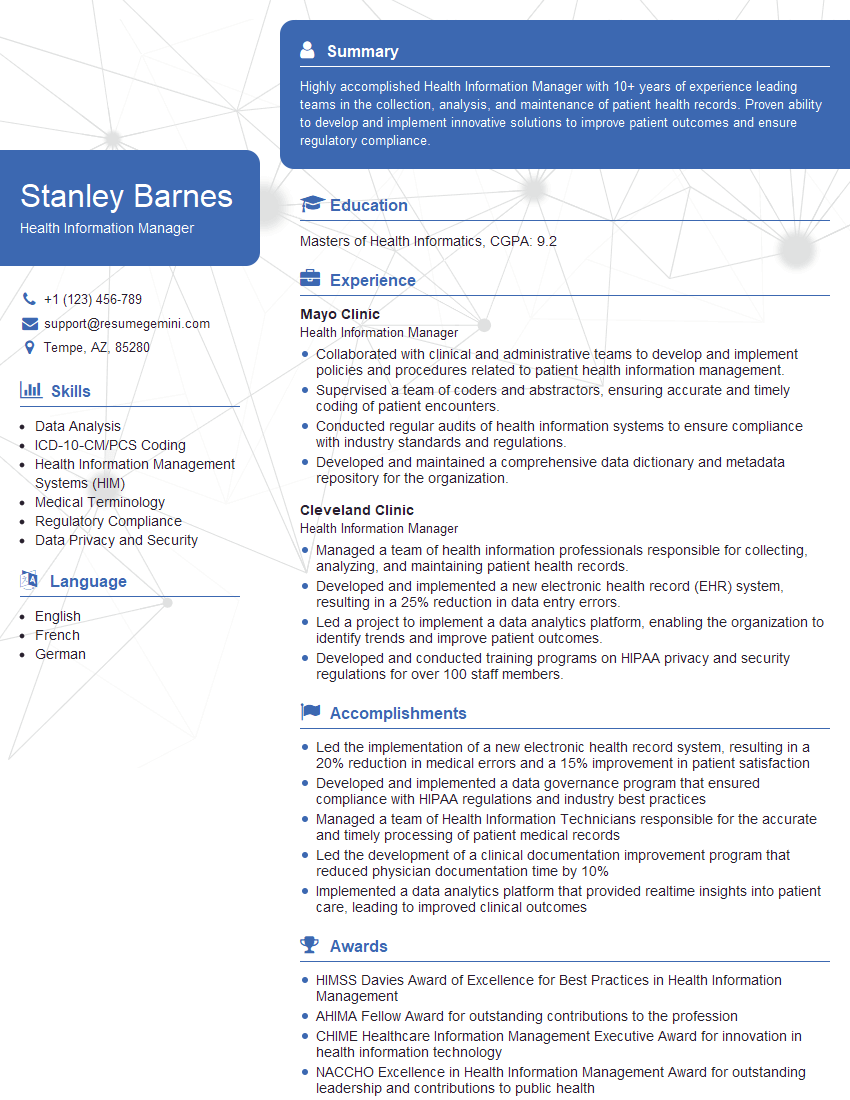
Health Information Manager Resume Sample
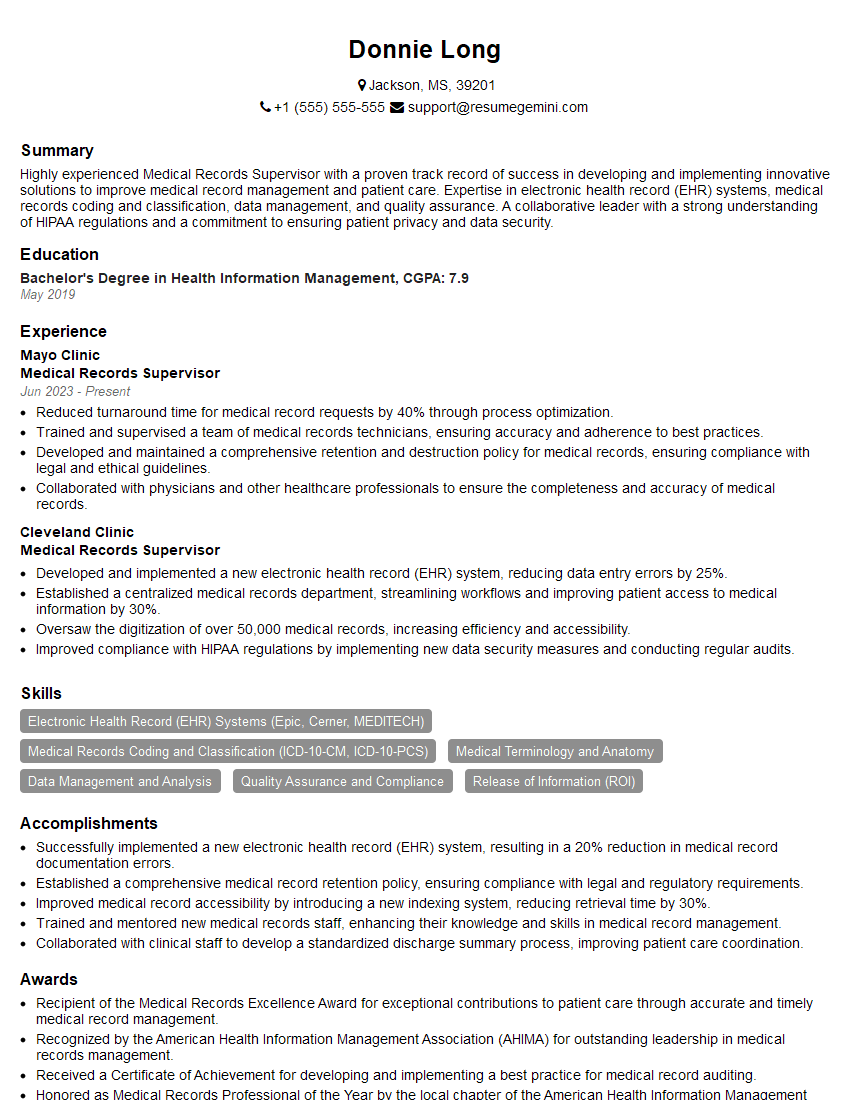
Medical Records Supervisor Resume Sample
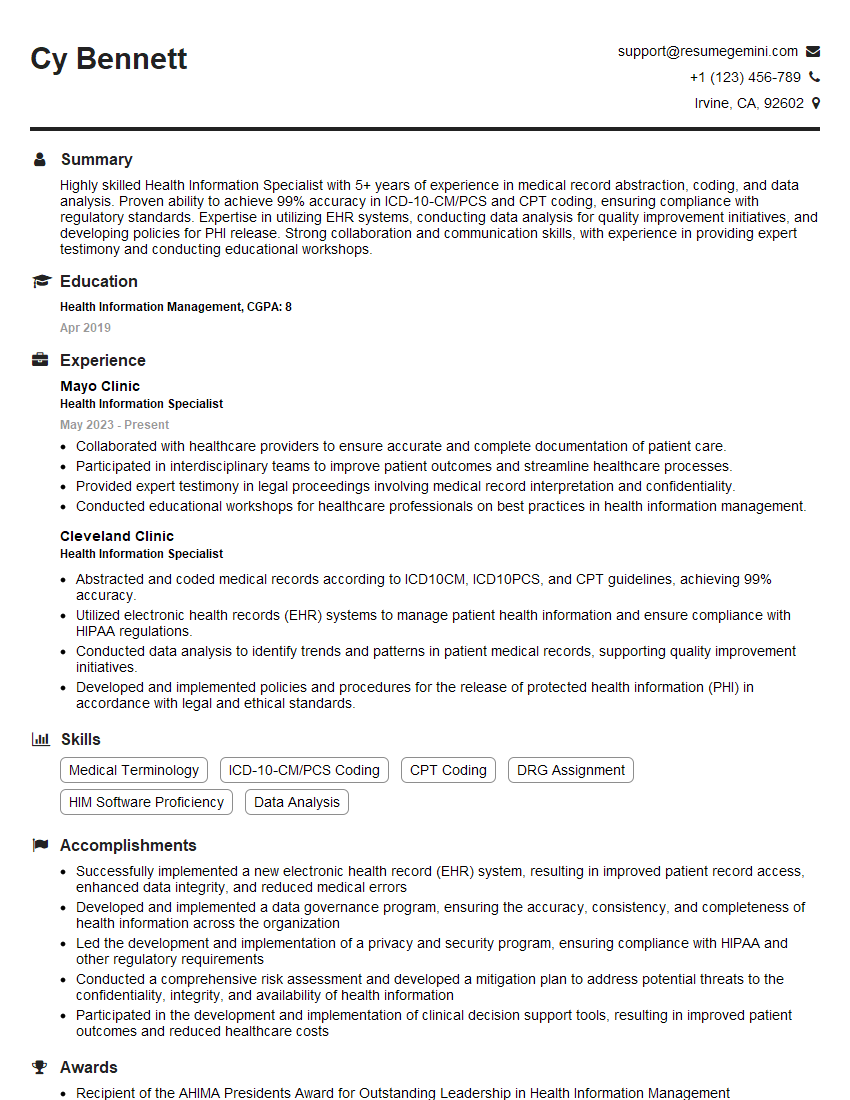
Health Information Specialist Resume Sample
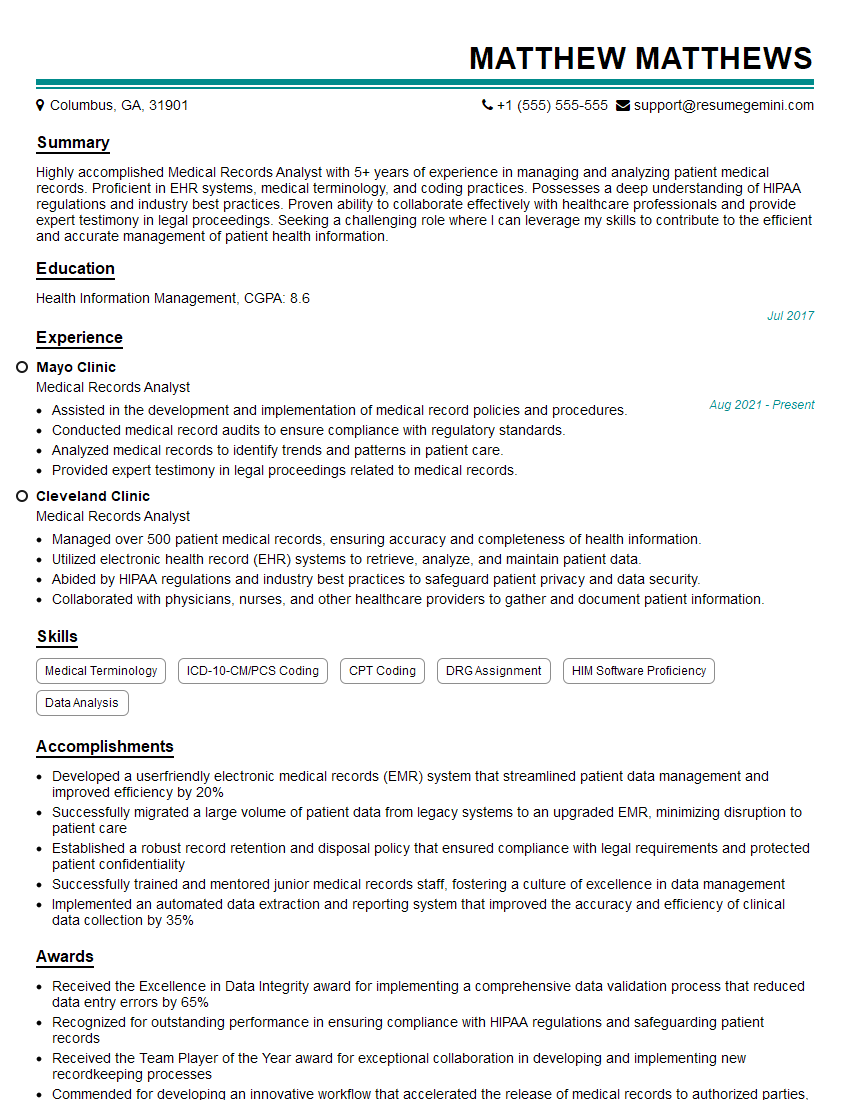
Medical Records Analyst Resume Sample
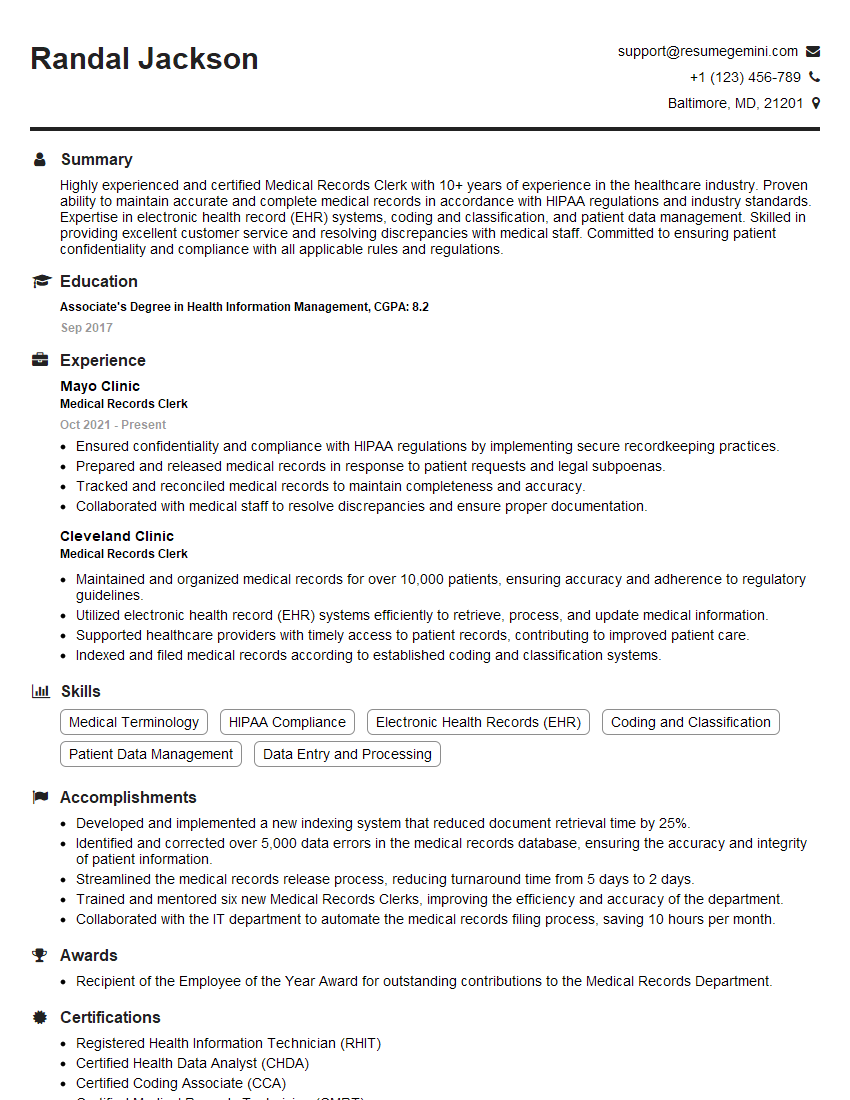
Medical Records Clerk Resume Sample
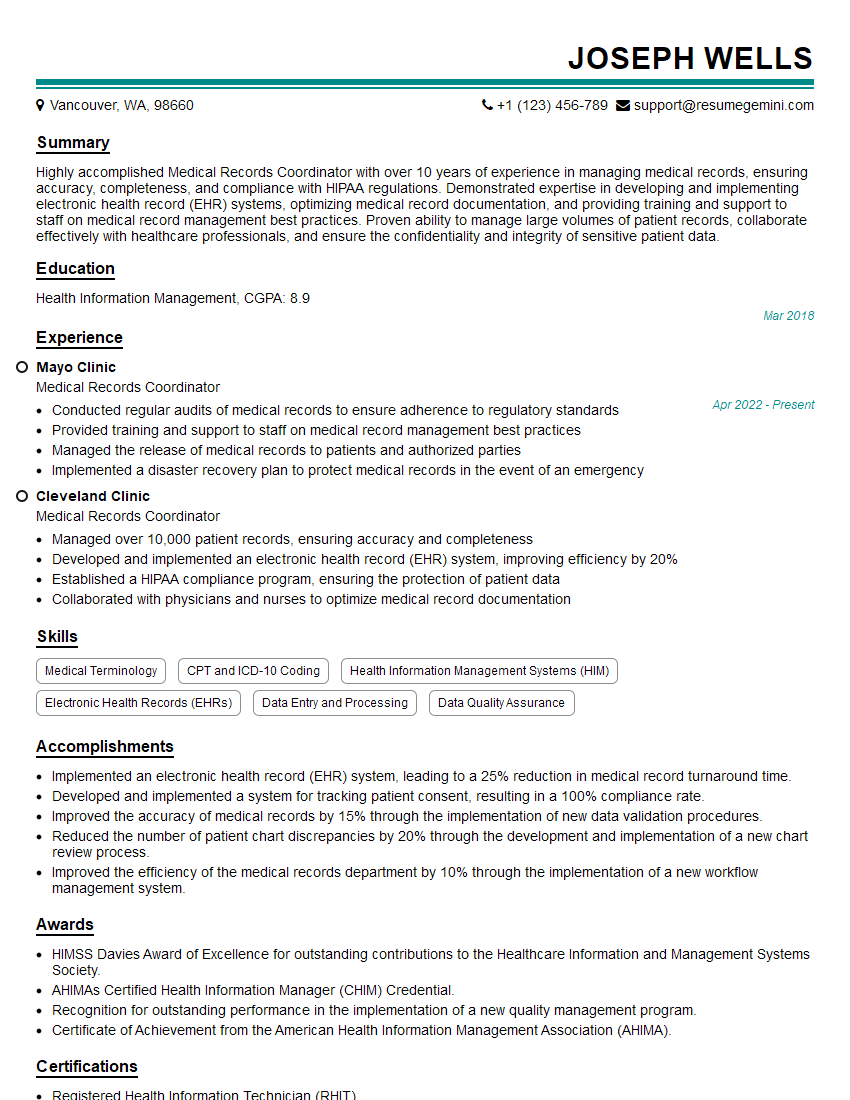
Medical Records Coordinator Resume Sample
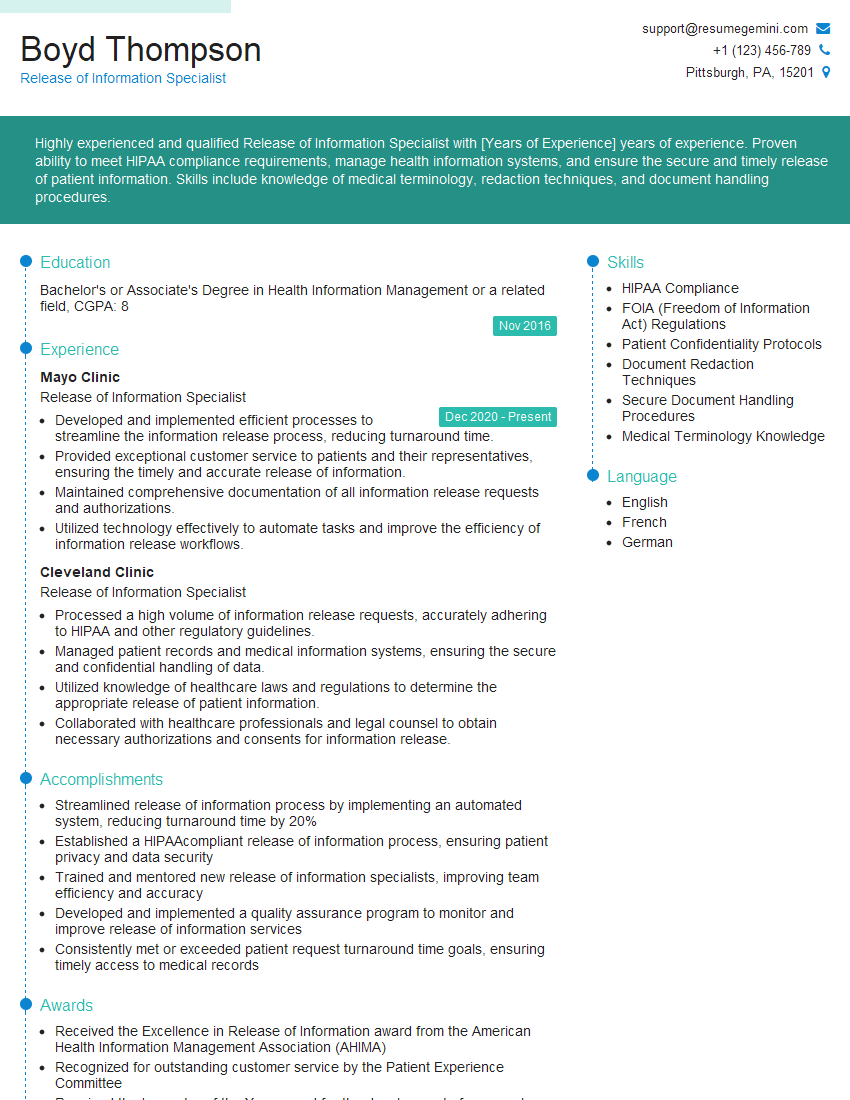
Release of Information Specialist Resume Sample
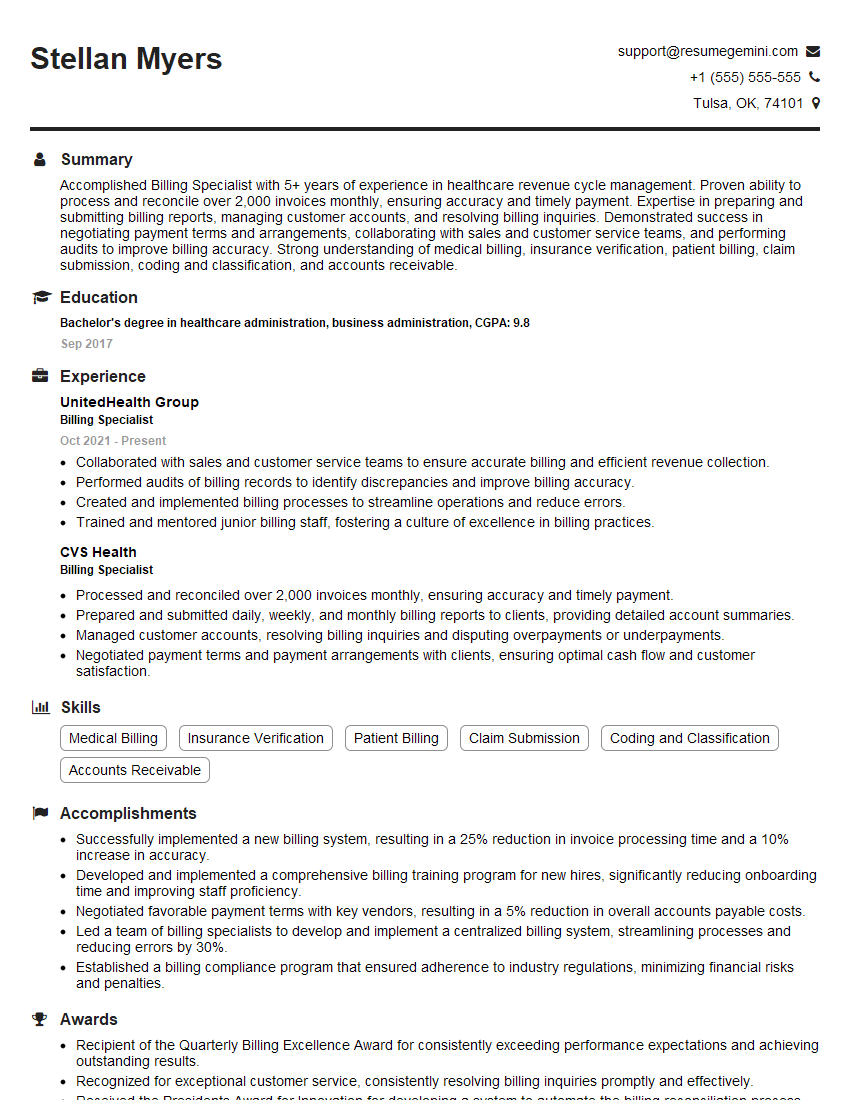
Billing Specialist Resume Sample
Explore more articles
Users Rating of Our Blogs
Share Your Experience
We value your feedback! Please rate our content and share your thoughts (optional).
What Readers Say About Our Blog
To the interviewgemini.com Webmaster.
Very helpful and content specific questions to help prepare me for my interview!
Thank you
To the interviewgemini.com Webmaster.
This was kind of a unique content I found around the specialized skills. Very helpful questions and good detailed answers.
Very Helpful blog, thank you Interviewgemini team.