Cracking a skill-specific interview, like one for Rail Transit Planning, requires understanding the nuances of the role. In this blog, we present the questions you’re most likely to encounter, along with insights into how to answer them effectively. Let’s ensure you’re ready to make a strong impression.
Questions Asked in Rail Transit Planning Interview
Q 1. Explain the different types of rail transit systems (e.g., light rail, subway, commuter rail).
Rail transit systems are categorized based on factors like capacity, speed, technology, and level of service. Think of it like choosing the right vehicle for a journey – a bicycle for short trips, a car for longer distances, and a train for mass transportation. Here are some key distinctions:
- Subway (Heavy Rail): High capacity, high speed, typically underground or in elevated structures. They utilize extensive infrastructure and large, heavy trains, making them ideal for densely populated areas needing high ridership. Think of the New York City Subway or London Underground.
- Light Rail: Lower capacity than subways, often operating on street-level tracks or dedicated rights-of-way. They are more flexible and cost-effective to implement than subways, suitable for medium-density areas and connecting to suburban areas. San Francisco’s Muni Metro is a good example.
- Commuter Rail: Primarily designed for longer-distance travel between suburban areas and city centers. They often use existing railway lines and have larger trains with longer headways (time between trains) than subways or light rail. The Metrolink system in Southern California is a classic example.
- Monorail: Runs on a single elevated rail, often used in specific applications or tourist attractions due to its unique visual appeal and lower land acquisition cost. However, capacity is often limited compared to other rail systems.
- Automated Guided Transit (AGT): Uses small, driverless vehicles operating on dedicated guideways, often found in airports or smaller transit networks. They are efficient for shorter routes and smaller passenger volumes.
The choice of system depends on various factors, including population density, geographical constraints, budget, and projected ridership.
Q 2. Describe your experience with transit demand modeling and forecasting techniques.
Transit demand modeling is crucial for predicting future ridership and optimizing system design. My experience encompasses a wide range of techniques, from simple regression models to sophisticated agent-based simulations. For instance, I’ve utilized trip generation models to estimate the number of trips originating from and terminating at different zones, followed by trip distribution models (like gravity models or logit models) to allocate these trips among various origins and destinations. Mode choice models then help determine the share of trips using the rail transit system compared to other modes like cars or buses. These are often combined with assignment models to predict traffic flows and congestion.
Forecasting involves extrapolating past trends and accounting for future land use changes, economic growth, and policy initiatives. I’ve extensively used software packages like TransCAD and Cube to perform these analyses and validate the models against historical data. One project involved forecasting ridership for a proposed light rail extension, where I incorporated factors like population density, employment growth, and proximity to major attractions. The results were used to justify the project’s economic viability and inform the design of train frequencies and station locations.
Q 3. How do you assess the environmental impact of a proposed rail transit project?
Assessing the environmental impact of a rail transit project requires a comprehensive approach, encompassing several key areas. This is a crucial aspect, as environmental considerations are increasingly a primary factor in project approval.
- Greenhouse Gas Emissions: We evaluate the reduction in greenhouse gas emissions achieved by shifting travel from cars to rail. Life-cycle assessments (LCAs) are utilized to quantify emissions associated with construction, operation, and maintenance of the system.
- Air Quality: Improvements in air quality resulting from reduced reliance on private vehicles are examined. This includes modeling the reduction of pollutants like particulate matter and nitrogen oxides.
- Noise Pollution: Noise impact assessments are conducted along the proposed alignment, using noise modeling software to predict noise levels and assess potential impacts on nearby residents and businesses.
- Water Quality: Potential impacts on water resources during construction and operation are studied. This may involve evaluating stormwater runoff and potential contamination.
- Land Use and Habitat: The impacts on land use, including habitat loss and fragmentation, are evaluated. Mitigation strategies, such as habitat restoration or the creation of green spaces, are often incorporated into the project design.
- Energy Consumption: We analyze the energy consumed throughout the project’s life cycle, from material production to operational energy needs. Renewable energy sources might be incorporated to minimize the overall environmental footprint.
These assessments often involve collaboration with environmental consultants and the use of specialized software. The findings are then used to inform mitigation strategies and shape the project’s design to minimize environmental impacts.
Q 4. What are the key factors to consider when designing a rail station?
Rail station design is critical for passenger experience and operational efficiency. It’s about creating a safe, comfortable, and accessible space while maximizing throughput. Key factors include:
- Accessibility: Stations must be accessible to all users, including people with disabilities, adhering to ADA guidelines (Americans with Disabilities Act) or equivalent standards. This includes ramps, elevators, tactile paving, and clear signage.
- Capacity and Layout: The design should accommodate projected ridership, with sufficient space for queuing, ticketing, and passenger flow. Efficient layouts minimize congestion and improve safety.
- Integration with Other Modes: Seamless integration with other transportation modes (buses, bikes, ride-sharing) is essential to enhance accessibility and multimodal travel. This often involves dedicated bus bays, bike storage facilities, and clear wayfinding.
- Safety and Security: Security measures, such as CCTV cameras, lighting, and emergency systems, are crucial to ensure passenger safety. Clear signage and emergency exits are also necessary.
- Aesthetics and Amenities: Stations should be aesthetically pleasing and offer amenities such as waiting areas, restrooms, retail spaces, and information kiosks to enhance the passenger experience.
- Sustainability: Sustainable design principles, such as using energy-efficient lighting and materials, are incorporated to minimize environmental impact.
Effective station design involves close coordination between architects, engineers, and transit operators to balance functional requirements with aesthetic considerations and user needs.
Q 5. Explain your understanding of transit-oriented development (TOD).
Transit-Oriented Development (TOD) is an urban planning approach that focuses on creating vibrant, walkable communities centered around high-quality public transportation. Imagine a town where you can easily walk or bike to work, school, shops, and entertainment without relying on a car. That’s the essence of TOD.
It involves integrating residential, commercial, and recreational uses within easy walking distance of transit stations. This reduces car dependency, promotes sustainable living, and enhances the overall quality of life. Key components include:
- High-Density Development: Concentrating development around transit stations to maximize density and minimize sprawl.
- Mixed-Use Zoning: Allowing a variety of uses (residential, commercial, retail) within a single area to create a lively and diverse environment.
- Walkable Streetscapes: Designing streets that are pedestrian-friendly, with ample sidewalks, landscaping, and shaded areas.
- Bike Infrastructure: Providing safe and convenient bike lanes and parking facilities to encourage cycling.
- Green Spaces and Open Areas: Incorporating parks and green spaces to enhance the livability and environmental quality of the area.
Successful TOD initiatives create thriving communities with reduced traffic congestion, improved air quality, and a stronger sense of place. Examples include many successful developments around light rail stations in cities across the US and Europe.
Q 6. How do you determine the optimal frequency and headway of rail services?
Determining the optimal frequency and headway of rail services is a complex process involving balancing several competing factors. The primary goal is to provide efficient and reliable service while minimizing operational costs.
Key considerations include:
- Predicted Ridership: Higher ridership demands more frequent service. Demand forecasting models (as discussed earlier) are crucial for accurately estimating ridership throughout the day and on different days of the week.
- Headway Variability: Maintaining consistent headways is crucial for predictability and user satisfaction. However, some variation might be necessary to address peak demand or operational challenges.
- Capacity Constraints: The number of trains available, track capacity, and signaling systems impose constraints on service frequency.
- Operational Costs: Increasing service frequency increases operational costs. A cost-benefit analysis is often performed to determine the optimal balance between service level and cost.
- Passenger Waiting Time: Headway should be short enough to minimize passenger waiting time, while considering the tradeoff with operational costs.
Simulation software is often used to model different service scenarios and evaluate their impact on passenger waiting times, crowding, and operational efficiency. Iterative adjustments are typically made to optimize the schedule based on the simulation results and feedback from stakeholders.
Q 7. Describe your experience with Geographic Information Systems (GIS) in rail transit planning.
Geographic Information Systems (GIS) are indispensable tools in rail transit planning. They provide a powerful platform for visualizing, analyzing, and managing spatial data related to transportation networks, land use, demographics, and environmental features.
My experience with GIS in rail transit planning includes:
- Network Modeling: GIS is used to create and manage digital maps of the rail network, including tracks, stations, and surrounding infrastructure. This enables efficient analysis of network performance and identification of potential bottlenecks.
- Spatial Analysis: GIS allows for sophisticated spatial analysis, including proximity analysis to identify areas well-served by transit, service area mapping to define the reach of different lines, and overlay analysis to integrate various data layers (e.g., population density, land use, environmental features) to inform decision-making.
- Route Optimization: GIS supports the optimization of rail routes, considering factors such as distance, topography, land costs, and environmental constraints.
- Visualization and Communication: GIS is used to create maps and visualizations to communicate project plans and results to stakeholders, making complex information more accessible and understandable.
- Data Management: GIS serves as a central repository for spatial data related to the rail transit system, enabling efficient data management and sharing among project teams.
I have utilized GIS software like ArcGIS extensively in various projects, including route planning, station location optimization, and environmental impact assessments. The ability to visualize and analyze spatial data has been crucial in making informed decisions and effectively communicating project plans.
Q 8. How do you evaluate the financial feasibility of a rail transit project?
Evaluating the financial feasibility of a rail transit project is a complex process involving a thorough cost-benefit analysis. We need to project both capital costs and operating costs over the project’s lifespan, typically 30-50 years. Capital costs include land acquisition, track construction, station building, rolling stock procurement, and signaling systems. Operating costs encompass maintenance, energy consumption, staffing, and fare collection.
On the benefit side, we estimate ridership based on population density, travel patterns, and land-use models. We then assess the value of time saved by commuters, reduced traffic congestion, and potential economic development spurred by the transit line. This is often expressed in terms of Value of Time (VOT) and other economic impact studies. We also consider indirect benefits such as reduced air pollution and improved public health.
Financial feasibility hinges on demonstrating a positive net present value (NPV), meaning the present value of benefits exceeds the present value of costs, typically discounted at a rate reflecting the risk involved. Sensitivity analyses are critical, testing the robustness of the project to variations in key assumptions, such as ridership projections or construction costs. Funding models, including government subsidies, private investment, and fare revenue, are also carefully considered to create a sustainable financial plan.
For example, when evaluating a light rail line in a growing suburban area, we would model population growth, projected housing developments, and the resulting increase in commuting trips. This would inform our ridership forecasts and consequently our revenue projections. A crucial aspect is considering alternative transportation solutions and comparing their costs and benefits to justify the rail project’s viability.
Q 9. What are the common challenges in rail transit project implementation?
Implementing rail transit projects presents numerous challenges. One major hurdle is securing funding, as these projects are capital-intensive. Delays in obtaining permits and approvals from various governmental agencies also cause significant setbacks. Unexpected geological conditions or utility conflicts during construction can lead to cost overruns and schedule delays.
Managing stakeholder expectations is another crucial challenge. Balancing the needs of residents, businesses, environmental groups, and other stakeholders requires careful planning and effective communication. This includes proactively addressing concerns about noise pollution, property values, and disruption during construction. The complexity of coordinating various contractors and ensuring the safe and efficient integration of different systems (track, signaling, power, etc.) also adds complexity.
Furthermore, attracting and retaining skilled labor for construction and operation can be problematic, particularly in specialized areas like signaling and control systems. Finally, adapting to changing technology and incorporating innovations in rolling stock, signaling, and fare collection systems requires ongoing evaluation and planning. In short, successful implementation demands meticulous project management, strong community engagement, and a flexible approach to addressing unforeseen challenges.
Q 10. Explain your understanding of different fare collection systems.
Fare collection systems are evolving rapidly. Traditional methods include magnetic stripe tickets and token systems, which are relatively simple but can be inefficient and prone to fraud. Contactless smart cards (like Oyster cards in London or CharlieCards in Boston) offer improved efficiency and security, allowing for various fare structures and integrated ticketing across multiple transit modes.
Mobile ticketing apps are increasingly prevalent, enabling passengers to purchase and validate tickets using their smartphones. Open payment systems allow passengers to use credit/debit cards or mobile payment platforms directly at fare gates, eliminating the need for separate transit cards. This simplifies the user experience, offering seamless integration with existing payment habits.
Each system has its own advantages and disadvantages. Smart card systems offer better control over fare evasion and allow for more sophisticated fare structures, but require a significant upfront investment in infrastructure. Mobile ticketing offers convenience but can be vulnerable to technology failures and necessitates robust network connectivity. Open payment systems are user-friendly, but raise concerns about data security and require interoperability agreements with payment providers. The choice of system depends on factors like cost, technology infrastructure, passenger demographics, and security requirements.
Q 11. How do you address accessibility concerns in rail transit planning?
Accessibility is paramount in rail transit planning. We must ensure that the system is usable by people of all abilities, including those with visual, auditory, mobility, and cognitive impairments. This involves designing stations and trains with features that comply with accessibility standards, such as ramps, elevators, tactile paving, audible announcements, and visual aids.
Station design should incorporate features like level boarding platforms to eliminate steps between trains and platforms. Trains must have designated spaces for wheelchairs and other mobility devices, along with accessible restrooms. Signage should be clear, concise, and available in multiple formats (e.g., Braille, large print). Real-time information displays, including audible announcements, are critical for passengers to navigate the system effectively.
We also need to consider accessibility beyond the physical environment. This includes providing accessible information and assistance to passengers, such as dedicated customer service lines and staff trained to assist passengers with disabilities. Effective communication strategies, including multilingual signage and announcements, are essential to ensure inclusivity.
Furthermore, planning must account for the evolving needs of an aging population and the growing demand for accessible transportation. Implementing Universal Design principles from the project’s inception ensures that accessibility is considered throughout the planning and design process, rather than being addressed as an afterthought.
Q 12. Describe your experience with stakeholder engagement in rail projects.
Stakeholder engagement is crucial for the success of any rail project. My experience involves establishing effective communication channels with diverse stakeholders, including residents, businesses, community groups, environmental organizations, and government agencies. This involves public meetings, workshops, online surveys, and individual consultations.
I’ve found that proactive engagement, beginning early in the planning phase, is key to building trust and addressing concerns before they escalate. Transparency in decision-making and a willingness to listen to feedback are essential. This often involves presenting multiple design options and allowing stakeholders to provide input on their preferred solutions. Effective communication strategies use multiple media, including newsletters, social media, and website updates, to keep stakeholders informed about project progress.
In one project, we utilized a participatory GIS (Geographic Information System) platform to allow community members to directly input their feedback on proposed station locations and transit routes. This tool enhanced engagement and transparency, leading to a more collaborative and ultimately more successful project outcome. Managing expectations and addressing potential conflicts proactively requires strong communication and conflict-resolution skills. Successful stakeholder engagement is about building consensus and fostering a sense of shared ownership in the project.
Q 13. How do you incorporate safety considerations into rail transit planning?
Safety is paramount in rail transit planning. We must consider safety at every stage, from initial design to ongoing operations. This starts with robust risk assessments, identifying potential hazards and developing mitigation strategies. This includes aspects such as track design, signaling systems, emergency response plans, and train control technologies.
Signal systems must be designed to prevent collisions and ensure safe train spacing. Positive train control (PTC) technologies, where applicable, are essential to enhance safety by automatically stopping trains in hazardous situations. Emergency evacuation plans and procedures need to be developed and regularly tested. Station design should incorporate features to prevent falls, ensure clear sightlines, and facilitate quick evacuation.
Furthermore, ongoing maintenance and inspection programs are crucial to identify and address potential safety issues proactively. This includes regular track inspections, rolling stock maintenance, and system-wide safety audits. Employee training and safety protocols are also essential, ensuring that all personnel are aware of and adhere to safety procedures. A strong safety culture, where safety is considered the top priority, is fundamental to minimizing risks and ensuring a safe and reliable transit system.
For instance, incorporating features like platform screen doors (PSD) can significantly reduce the risk of passenger falls onto tracks. Similarly, implementing advanced warning systems to alert drivers of potential hazards ahead can prevent accidents.
Q 14. What are the key performance indicators (KPIs) used to evaluate rail transit performance?
Key Performance Indicators (KPIs) are crucial for evaluating rail transit performance. These metrics provide insights into various aspects of the system, enabling informed decision-making and continuous improvement.
On-Time Performance (OTP) measures the percentage of trains arriving at stations on schedule, reflecting the reliability and punctuality of the service. Ridership quantifies the number of passengers using the system, indicating its popularity and effectiveness in meeting travel demand. Passenger satisfaction is measured through surveys and feedback mechanisms, providing insights into passenger experiences. Safety incidents such as accidents, derailments, and injuries per passenger-mile traveled are critical safety indicators. Operating costs per passenger-mile reflects the efficiency of the system’s operations.
Maintenance costs provide insights into the state of the system’s infrastructure and equipment. Farebox recovery ratio shows the proportion of operating costs covered by fare revenue. Accessibility compliance assesses the extent to which the system meets accessibility standards. Environmental impact metrics like energy consumption and greenhouse gas emissions are increasingly important for evaluating sustainability. Regularly monitoring and analyzing these KPIs helps in identifying areas needing improvement and optimizing the system’s efficiency, safety, and overall performance.
Q 15. Explain your understanding of different rail signaling systems.
Rail signaling systems are the brains of a rail network, ensuring safe and efficient train operations. They dictate train speed, spacing, and routing. Different systems vary in complexity and technology, ranging from simple track circuits to sophisticated computer-based systems.
- Track Circuits: These are the most basic, using electrical circuits embedded in the track to detect the presence of a train. A simple analogy is a light switch – a train acts as a switch, interrupting the circuit and signaling its presence to the control system.
- Automatic Train Control (ATC): ATC systems go beyond simple train detection. They actively control train speed, often using communication-based systems to transmit instructions to the train’s onboard computer. This ensures trains adhere to speed limits and maintain safe distances from other trains. For instance, the European Train Control System (ETCS) and the US’s Positive Train Control (PTC) are examples of sophisticated ATC systems.
- Centralized Traffic Control (CTC): CTC systems centralize the control of signals and switches, giving dispatchers a comprehensive overview and control of the entire network. Imagine a traffic controller in a large city directing vehicles; CTC is the equivalent for trains.
- Automatic Train Operation (ATO): ATO is the highest level of automation, where the train’s movements are fully automated. This reduces human intervention and can significantly increase efficiency and capacity, especially in high-density metro systems. Many modern metros use ATO systems.
The choice of signaling system depends on factors such as network size, density, speed, and safety requirements. For example, a high-speed rail line requires a more advanced system like ETCS compared to a low-speed commuter line that may suffice with a simpler track circuit based system.
Career Expert Tips:
- Ace those interviews! Prepare effectively by reviewing the Top 50 Most Common Interview Questions on ResumeGemini.
- Navigate your job search with confidence! Explore a wide range of Career Tips on ResumeGemini. Learn about common challenges and recommendations to overcome them.
- Craft the perfect resume! Master the Art of Resume Writing with ResumeGemini’s guide. Showcase your unique qualifications and achievements effectively.
- Don’t miss out on holiday savings! Build your dream resume with ResumeGemini’s ATS optimized templates.
Q 16. How do you manage risk in rail transit projects?
Risk management in rail transit projects is paramount, encompassing various aspects from design and construction to operations and maintenance. A robust risk management framework typically involves:
- Identification: Thorough identification of potential risks through hazard studies, stakeholder consultations, and historical data analysis. For example, this might include risks associated with land acquisition, environmental impact, construction delays, or operational failures.
- Assessment: Evaluating the likelihood and potential impact of each identified risk. This often involves assigning risk scores and prioritizing higher-risk items.
- Mitigation: Developing and implementing strategies to reduce the likelihood or impact of identified risks. This might include redundancy in systems, stringent quality control, comprehensive safety training programs, or contingency planning.
- Monitoring and Review: Continuously monitoring the effectiveness of mitigation strategies and reviewing risks throughout the project lifecycle. Adaptations and updates to the plan are needed to respond to emerging risks.
For instance, during a tunnel construction project, a major risk might be groundwater ingress. Mitigation strategies could include advanced ground investigation, specialized construction techniques (like tunnel boring machines with effective groundwater control), and emergency response plans.
Q 17. What is your experience with rail network optimization techniques?
Rail network optimization involves strategically improving the efficiency and effectiveness of a rail system. This includes techniques like:
- Schedule Optimization: Using advanced algorithms to create efficient train schedules that maximize capacity, minimize delays, and reduce operational costs. This often involves simulations and optimization models.
- Rolling Stock Optimization: Determining the optimal number and type of trains needed to meet passenger demand and service requirements. This often involves considering factors such as train capacity, maintenance requirements, and energy efficiency.
- Network Topology Optimization: Evaluating and improving the layout of the rail network to enhance connectivity, reduce travel times, and improve overall efficiency. This might involve analyzing different routing strategies or evaluating the need for new lines or stations.
- Data-Driven Approaches: Utilizing real-time data from various sources (e.g., passenger information systems, GPS tracking) to optimize operations dynamically and make data-informed decisions. This allows for better responsiveness to changing conditions and improved service delivery.
For example, in a congested urban rail system, we could use simulation software to model different scheduling options and identify the one that minimizes delays and maximizes passenger throughput while considering platform capacities and track availability. This might also involve optimizing the allocation of trains to different lines based on passenger demand and service frequency.
Q 18. Describe your familiarity with relevant regulations and standards for rail transit.
My familiarity with rail transit regulations and standards is extensive. I’m well-versed in regulations concerning safety, accessibility, environmental protection, and operational efficiency. These vary by jurisdiction, but commonly include:
- Safety Regulations: Standards for track maintenance, signaling systems, train control, and emergency response procedures. Examples include regulations from organizations like the Federal Railroad Administration (FRA) in the US or the European Union Agency for Railways (ERA).
- Accessibility Standards: Regulations mandating accessibility for passengers with disabilities, such as wheelchair ramps, elevators, and accessible train design.
- Environmental Regulations: Rules concerning noise pollution, air emissions, and the impact on natural habitats. This often involves environmental impact assessments and mitigation measures.
- Operational Standards: Rules concerning train operations, maintenance schedules, and safety procedures.
Understanding and adhering to these regulations is crucial for ensuring the safety, reliability, and sustainability of rail transit systems. Non-compliance can lead to significant penalties, operational disruptions, and even safety incidents.
Q 19. How do you integrate rail transit with other modes of transportation?
Integrating rail transit with other modes of transportation is crucial for creating a seamless and efficient multi-modal transport system. Key strategies include:
- Transit-Oriented Development (TOD): Developing high-density, mixed-use areas around rail stations to encourage walking, cycling, and the use of public transit. This reduces reliance on private vehicles and improves accessibility.
- Intermodal Transfer Facilities: Creating seamless transfer points between rail and other modes such as buses, light rail, subways, and even ferries. This includes well-designed stations with clear signage, adequate waiting areas, and convenient connections.
- Integrated Ticketing Systems: Implementing systems that allow passengers to use a single ticket or card for multiple modes of transportation. This simplifies travel and encourages multi-modal journeys. Examples include contactless payment systems or smart cards.
- Last-Mile Connectivity: Addressing the challenges of connecting rail stations to residential areas and workplaces that are not within walking distance. This might involve improved bus services, bike-sharing programs, or ride-sharing options.
For example, a well-designed intermodal station might seamlessly connect a suburban rail line with a light rail network and numerous bus routes. Integrated ticketing allows passengers to easily travel across all three modes using a single fare card.
Q 20. How do you address potential disruptions to rail services?
Addressing potential disruptions to rail services requires a multi-faceted approach that includes proactive measures and reactive responses.
- Proactive Measures:
- Redundancy and Backup Systems: Designing systems with backup power supplies, redundant signaling systems, and alternative routes to minimize the impact of failures.
- Predictive Maintenance: Using data analytics and predictive modeling to identify potential equipment failures before they occur, enabling proactive maintenance and reducing disruptions.
- Regular Inspections and Maintenance: Implementing rigorous inspection and maintenance programs to identify and address potential problems early.
- Reactive Responses:
- Emergency Response Plans: Developing detailed emergency response plans to address various scenarios, including track incidents, power failures, and security threats.
- Real-time Monitoring and Control: Using real-time data to monitor service conditions, identify disruptions, and adjust operations as needed.
- Effective Communication: Communicating promptly and effectively with passengers about disruptions and providing alternative travel options.
For example, a planned track closure for maintenance could be communicated to passengers well in advance to allow them to plan alternative routes. In the event of an unexpected disruption, real-time monitoring allows dispatchers to reroute trains and minimize the impact on service.
Q 21. Explain your experience with cost-benefit analysis in rail transit planning.
Cost-benefit analysis (CBA) is a crucial tool in rail transit planning, enabling informed decision-making by comparing the costs of a project with its benefits. This involves:
- Identifying Costs: This includes capital costs (e.g., land acquisition, construction, equipment), operating costs (e.g., energy, maintenance, staffing), and potential environmental costs.
- Identifying Benefits: This includes reduced travel times, increased accessibility, economic benefits (e.g., job creation, increased property values), environmental benefits (e.g., reduced emissions), and social benefits (e.g., improved quality of life).
- Quantifying Costs and Benefits: Expressing costs and benefits in monetary terms, often using techniques like discounted cash flow analysis. This requires careful consideration of time value of money.
- Calculating Net Present Value (NPV): The NPV compares the present value of benefits to the present value of costs. A positive NPV suggests the project is financially viable.
- Sensitivity Analysis: Evaluating the impact of changes in key variables (e.g., ridership, construction costs) on the project’s NPV. This helps assess the robustness of the CBA.
For instance, when planning a new light rail line, a CBA would analyze the construction costs, operating costs, and potential benefits like reduced congestion, increased property values, and improved access to employment centers. This helps determine whether the project is a worthwhile investment.
Q 22. Describe your understanding of different rail maintenance strategies.
Rail maintenance strategies are crucial for ensuring the safety, reliability, and longevity of rail transit systems. They range from preventative measures to corrective actions, and can be categorized in several ways.
- Preventative Maintenance: This involves regular inspections and servicing to identify and address potential issues before they become major problems. Think of it like regular check-ups at the doctor – better to catch things early! Examples include routine track inspections, lubrication of moving parts, and scheduled cleaning of trains. This approach minimizes unexpected downtime and extends the lifespan of assets.
- Corrective Maintenance: This addresses problems as they arise. It’s the equivalent of going to the doctor when you’re already sick. Examples include repairing a broken rail, replacing a faulty signal, or fixing a damaged train door. While necessary, it’s more costly and disruptive than preventative maintenance.
- Predictive Maintenance: This uses data analysis and advanced technologies like sensors and machine learning to predict when maintenance is needed. It allows for more targeted interventions and optimizes resource allocation. Imagine having a smart watch that alerts you to potential health issues before they become serious – that’s the power of predictive maintenance. This approach is becoming increasingly popular due to its efficiency.
- Condition-Based Maintenance: This approach focuses on the actual condition of assets, rather than a fixed schedule. Maintenance is triggered when an asset’s condition deteriorates below a predetermined threshold. This is a more data-driven approach, similar to predictive maintenance, optimizing maintenance schedules based on real-time asset health data.
The choice of strategy often depends on factors like budget, available technology, and the age and condition of the infrastructure. A balanced approach, combining preventative, predictive, and corrective maintenance, is often the most effective.
Q 23. How do you incorporate sustainability principles into rail transit planning?
Sustainability is paramount in modern rail transit planning. It’s not just about building trains; it’s about creating a system that minimizes its environmental impact and promotes social equity. We incorporate sustainability through various strategies:
- Energy Efficiency: We prioritize the use of regenerative braking systems, lightweight materials in train construction, and energy-efficient signaling systems. We also explore the use of renewable energy sources to power rail operations.
- Reduced Emissions: We promote the adoption of electric trains and explore the potential of hydrogen fuel cell technology to reduce reliance on fossil fuels. We also assess the carbon footprint of construction materials and strive to minimize emissions during the construction phase.
- Resource Management: We aim to minimize waste generation during construction and operations. We prioritize the use of recycled and sustainable materials, and we explore innovative approaches to waste management. For instance, exploring reclaimed water for track cleaning.
- Community Engagement: We actively involve local communities in the planning process to ensure that the rail system serves their needs and minimizes disruption to their lives. This includes considering noise and vibration mitigation strategies.
- Accessibility: We strive to create a rail system that is accessible to all users, regardless of age, ability, or socioeconomic status. This includes ensuring accessibility for people with disabilities.
Sustainability is not just an add-on; it is integral to all aspects of planning, from initial feasibility studies to the operational phase.
Q 24. What is your experience with data analysis and reporting in rail transit?
Data analysis is the backbone of effective rail transit planning and operation. My experience includes using data to:
- Performance Monitoring: Analyzing ridership data, train punctuality, and equipment performance to identify areas for improvement and optimize service delivery.
- Predictive Modeling: Using historical data and advanced analytics to forecast future demand, predict potential disruptions, and optimize resource allocation. For example, predicting peak hour crowds to adjust train schedules.
- Safety Analysis: Analyzing accident and incident data to identify safety hazards and implement mitigation strategies. This includes using data to identify areas prone to derailments or other safety issues.
- Capacity Planning: Using data on passenger demand and infrastructure capacity to plan for future expansion and upgrades. This helps to determine where new lines are needed or how existing lines can be improved.
- Reporting and Visualization: Creating clear and concise reports and visualizations to communicate findings to stakeholders. This could involve creating dashboards to show key performance indicators (KPIs) or detailed reports on the effectiveness of maintenance strategies.
I am proficient in various statistical software packages and data visualization tools, enabling me to extract valuable insights from complex datasets and translate them into actionable strategies.
Q 25. Describe your experience with using simulation software for rail transit planning.
Simulation software is invaluable for evaluating different rail transit scenarios before implementation. My experience includes using software like AnyLogic, Simio, and other specialized rail simulation packages to:
- Network Design Optimization: Simulating different network layouts, track configurations, and station designs to optimize passenger flow and minimize travel times.
- Train Scheduling and Routing: Simulating train movements to optimize schedules, minimize delays, and maximize capacity utilization. This includes simulating the effects of different signaling systems and train control technologies.
- Capacity Analysis: Evaluating the capacity of the rail system under different scenarios, including peak demand and potential disruptions. For instance, simulating the impact of a sudden influx of passengers during a major event.
- Emergency Response Planning: Simulating emergency scenarios, such as evacuations or derailments, to evaluate emergency response plans and identify areas for improvement.
Through simulation, we can identify potential bottlenecks, test different operational strategies, and make data-driven decisions to optimize the rail system’s performance and safety. It’s like a virtual test track allowing us to experiment without the risk and cost of real-world implementation.
Q 26. How do you evaluate the effectiveness of different rail transit technologies?
Evaluating rail transit technologies requires a multi-faceted approach considering various factors:
- Performance Metrics: We assess speed, capacity, reliability, and energy efficiency. For example, comparing the passenger throughput of different signaling systems or analyzing the energy consumption of various train models.
- Cost-Effectiveness: We evaluate the capital and operating costs, considering factors like initial investment, maintenance expenses, and lifecycle costs. A technology that is initially cheaper might prove more expensive in the long run due to high maintenance costs.
- Safety and Reliability: We analyze safety records, failure rates, and the availability of safety systems. For example, comparing the safety records of different automatic train protection systems.
- Environmental Impact: We assess the environmental impact of the technology, considering emissions, energy consumption, and noise pollution. We often use Life Cycle Assessment (LCA) to thoroughly evaluate this.
- Maintainability: We consider the ease of maintenance, the availability of spare parts, and the expertise required to maintain the system. A system that is difficult to maintain could lead to costly downtime.
- Integration with Existing Infrastructure: We analyze the compatibility of the new technology with existing infrastructure and systems. It is critical to ensure seamless integration.
A holistic evaluation is crucial, considering both technical and economic factors alongside environmental and social impacts. A weighted scoring system can be used to compare different technologies objectively.
Q 27. Explain your understanding of the lifecycle cost of rail transit infrastructure.
The lifecycle cost of rail transit infrastructure encompasses all costs associated with the project, from planning and construction to operation, maintenance, and eventual decommissioning. It’s vital to consider this comprehensive view, rather than focusing solely on initial capital costs.
Components of lifecycle cost include:
- Planning and Design: Costs associated with feasibility studies, environmental impact assessments, and detailed design.
- Construction: Costs of materials, labor, and equipment used in building the infrastructure.
- Operation and Maintenance: Ongoing costs of running and maintaining the system, including energy, staffing, repairs, and renewals.
- Decommissioning: Costs associated with the eventual dismantling and removal of the infrastructure at the end of its useful life.
Accurate lifecycle cost assessment requires sophisticated modeling and forecasting techniques. Failing to adequately consider lifecycle costs can lead to unforeseen budgetary issues and operational challenges later in the project. We use specialized software and discounted cash flow analysis to accurately predict these costs over the infrastructure’s lifespan (often 50-100 years).
Q 28. How do you manage conflicts between different stakeholder interests in rail projects?
Managing stakeholder conflicts is a critical aspect of successful rail projects. Stakeholders often have diverse and sometimes competing interests. My approach involves:
- Early and Ongoing Engagement: Establishing open communication channels with all stakeholders from the outset of the project. This includes regular meetings, workshops, and public forums to foster transparency and build trust.
- Stakeholder Analysis: Identifying key stakeholders, their interests, and potential points of conflict. This allows for proactive conflict management and tailored communication strategies.
- Mediation and Negotiation: Facilitating constructive dialogue and negotiation to find mutually acceptable solutions. This might involve compromise, trade-offs, and creative problem-solving.
- Dispute Resolution Mechanisms: Establishing clear procedures for resolving disputes, including formal arbitration if necessary.
- Transparency and Accountability: Ensuring transparency in decision-making and accountability for actions taken. This helps to build trust and reduce suspicion.
- Documentation: Meticulously documenting all communication and agreements reached to avoid misunderstandings and future conflicts.
Successful stakeholder management requires strong communication, negotiation skills, and a commitment to finding equitable solutions that benefit all involved parties. It is crucial to remember that building consensus and managing expectations are key to project success.
Key Topics to Learn for Rail Transit Planning Interview
- Demand Forecasting & Analysis: Understanding methodologies for predicting future ridership, including population growth, land use patterns, and travel behavior modeling. Practical application: Evaluating the feasibility of a new rail line based on projected demand.
- Network Planning & Design: Designing efficient and effective rail networks, considering factors like route optimization, station placement, and integration with other modes of transport. Practical application: Proposing improvements to an existing rail network to increase capacity and reduce travel times.
- Transit-Oriented Development (TOD): Understanding the principles of TOD and its impact on urban planning and development. Practical application: Analyzing the potential for TOD around proposed new stations.
- Financial Planning & Cost-Benefit Analysis: Evaluating the financial viability of rail projects, including capital costs, operating expenses, and revenue projections. Practical application: Justifying a rail project based on its economic benefits to the community.
- Environmental Impact Assessment: Understanding the environmental considerations of rail projects, including noise pollution, air quality, and habitat disruption. Practical application: Developing mitigation strategies to minimize the environmental impact of a new rail line.
- Project Management & Implementation: Understanding the different phases of a rail project, from planning and design to construction and operation. Practical application: Developing a realistic project schedule and budget.
- GIS and Data Analysis: Utilizing Geographic Information Systems (GIS) and other data analysis techniques to support decision-making in rail transit planning. Practical application: Visualizing and analyzing spatial data to optimize station locations and route alignments.
Next Steps
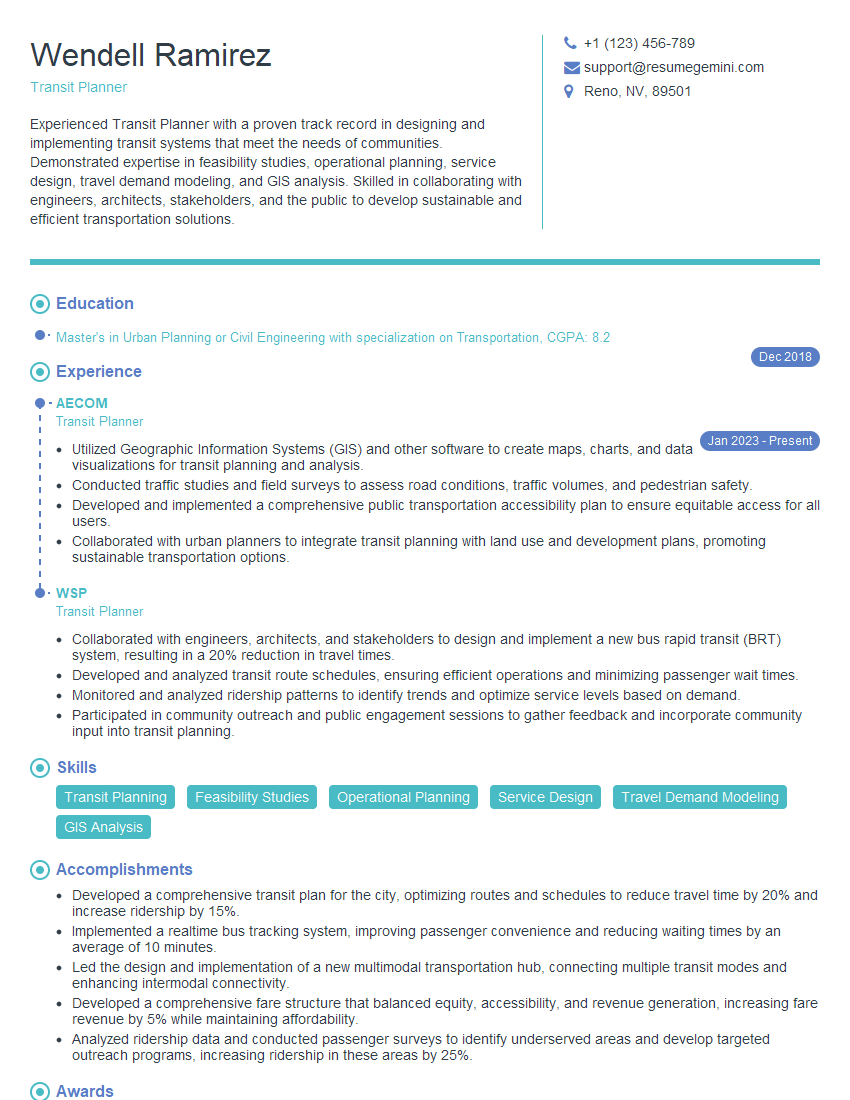
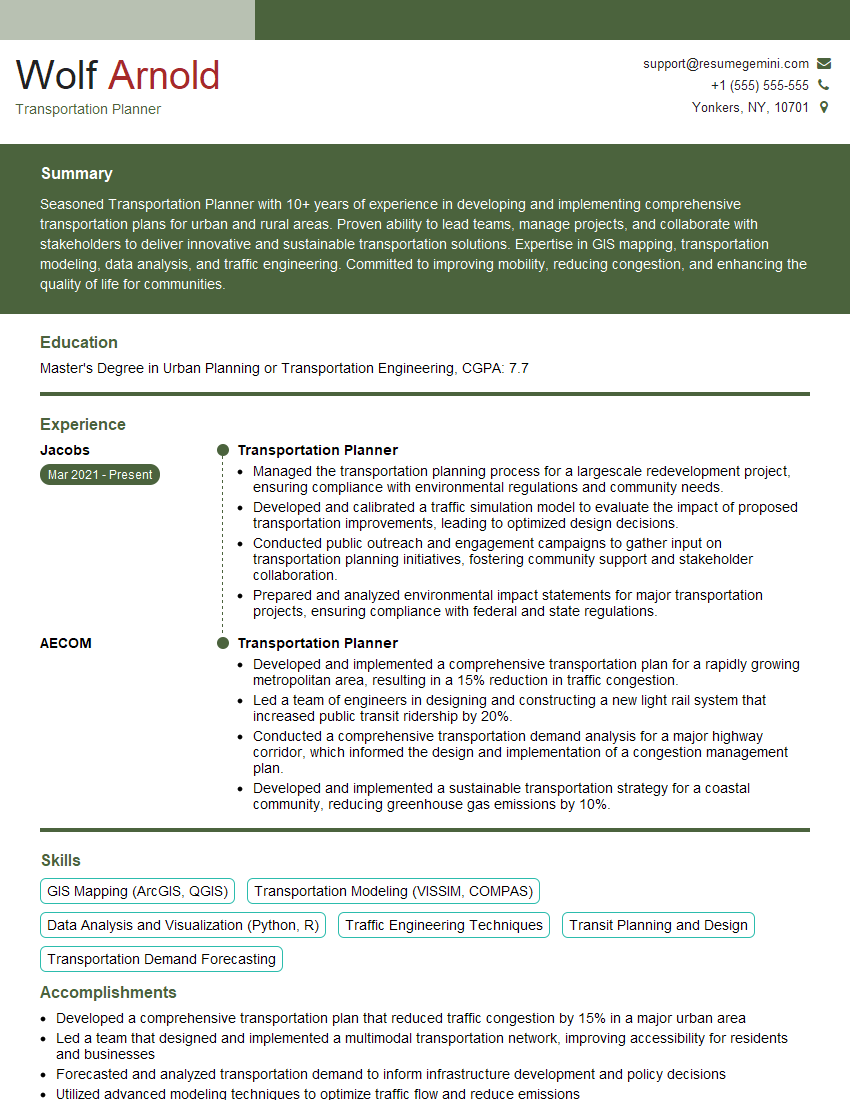
Mastering Rail Transit Planning opens doors to rewarding and impactful careers, allowing you to shape the future of urban mobility. To maximize your job prospects, crafting a compelling and ATS-friendly resume is crucial. ResumeGemini is a trusted resource to help you build a professional and effective resume that highlights your skills and experience. We provide examples of resumes tailored to Rail Transit Planning to help guide you. Take the next step towards your dream career – invest in your resume today.
Explore more articles
Users Rating of Our Blogs
Share Your Experience
We value your feedback! Please rate our content and share your thoughts (optional).
What Readers Say About Our Blog
To the interviewgemini.com Webmaster.
Very helpful and content specific questions to help prepare me for my interview!
Thank you
To the interviewgemini.com Webmaster.
This was kind of a unique content I found around the specialized skills. Very helpful questions and good detailed answers.
Very Helpful blog, thank you Interviewgemini team.