Cracking a skill-specific interview, like one for Water Well Maintenance, requires understanding the nuances of the role. In this blog, we present the questions you’re most likely to encounter, along with insights into how to answer them effectively. Let’s ensure you’re ready to make a strong impression.
Questions Asked in Water Well Maintenance Interview
Q 1. Describe the different types of water well pumps.
Water well pumps are the heart of any water well system, responsible for lifting groundwater to the surface. There are several types, each suited to different well depths and water yields.
- Submersible Pumps: These pumps are completely submerged in the well, ideal for deep wells. They’re quieter and more efficient than other types because they don’t need to lift water up a long column. Think of them as underwater vacuum cleaners, sucking water up from below.
- Jet Pumps: These pumps sit above ground and use a venturi effect to create suction, drawing water from the well. They’re typically used in shallower wells where the water table is relatively high. They’re simpler to maintain and cheaper initially but less efficient for deep wells.
- Centrifugal Pumps: These pumps use rotating impellers to increase water pressure and lift it to the surface. They’re often found in larger well systems and can handle high volumes of water. Think of a water park’s powerful pumps that get you up those crazy water slides.
- Suction Pumps: These pumps rely on atmospheric pressure to lift water. They’re typically only suitable for shallow wells where water can be drawn up without exceeding atmospheric limitations. They are mostly used in small domestic systems.
The choice of pump depends on factors like well depth, water yield (how much water the well produces), required flow rate, and budget. A professional well installer will assess these factors to recommend the most appropriate pump for your specific situation.
Q 2. Explain the process of well development.
Well development is a crucial post-construction process that aims to optimize well performance and water yield. It involves removing drilling debris, fines (small sediment particles), and other materials from the well screen and surrounding aquifer. This increases the permeability of the aquifer, allowing water to flow more easily into the well. Think of it as cleaning the filter of a very large water bottle.
The process typically involves a series of surging and/or air-lifting techniques:
- Surging: A plunger is repeatedly moved up and down within the well, dislodging sediment. Imagine using a plunger to clear a clogged drain – same principle.
- Air-lifting: Compressed air is injected into the well to create turbulence and dislodge sediments. This is like blowing bubbles to loosen up sediment clinging to something.
- Development Pumping: The well is pumped for an extended period, removing loosened sediments. This is the final cleaning process ensuring that you’re not getting debris after the well is installed.
Proper well development is vital for ensuring a long-lasting and productive well. Neglecting this step can lead to reduced yield, increased maintenance, and ultimately, well failure.
Q 3. How do you diagnose a failing submersible pump?
Diagnosing a failing submersible pump requires a systematic approach. It’s crucial to prioritize safety and never attempt repairs without proper training and safety equipment.
- Listen for Unusual Noises: Grinding, squealing, or humming sounds can indicate mechanical problems.
- Check Power Supply: Verify that power is reaching the pump by checking voltage at the well head. A simple voltmeter is crucial.
- Measure Water Pressure and Flow: Low water pressure or flow indicates a pump problem. You’ll need a pressure gauge to check this.
- Inspect the Control Panel: A malfunctioning pressure switch or other components could be the cause. Most submersible pumps have a panel to check these settings.
- Check Water Level: Low water levels can also reduce pressure and flow. A water level sensor is a useful tool in a permanent installation.
If the issue isn’t obvious, you might need to pull the pump for a thorough inspection. This usually involves specialized equipment and expertise. A professional well service technician can diagnose the problem accurately and efficiently and perform necessary repairs or replacements.
Q 4. What are the common causes of well water contamination?
Well water contamination can stem from various sources, posing serious health risks. Prevention is key!
- Surface Runoff: Rainwater carrying pollutants like fertilizers, pesticides, and animal waste can infiltrate the groundwater. A proper well casing and distance from possible contaminants is paramount.
- Septic Systems and Sewage: Failing septic systems or leaking sewer lines can contaminate groundwater. Regular septic tank inspection and well maintenance is crucial.
- Industrial and Agricultural Activities: Chemicals, heavy metals, and other pollutants from industrial sites or farms can seep into the groundwater. Regulatory compliance and careful chemical handling is key.
- Improper Well Construction: Poorly constructed wells with inadequate sealing can allow surface water or contaminants to enter. Professional well construction is critical.
- Natural Occurrences: Certain geological formations can contain naturally occurring contaminants like arsenic or radon. Well testing is needed to evaluate.
Regular water testing and well maintenance can help prevent contamination. The surrounding land should be assessed for potential sources of contamination.
Q 5. Describe the steps involved in repairing a leaking well casing.
Repairing a leaking well casing is a complex procedure that often requires specialized equipment and expertise. The approach depends on the location and extent of the leak.
Minor leaks near the surface might be addressed by applying a sealant or patching material. However, major leaks or those deeper in the well usually require more extensive repairs and might necessitate temporarily halting the use of the well. Safety and caution are crucial.
- Assessment: Locate the leak precisely, determining its size and depth using specialized tools and techniques.
- Preparation: Properly dewater the well or isolate the affected section.
- Repair: Depending on the leak, methods can range from applying epoxy resin or concrete to replacing damaged sections of the casing. This might require specialized equipment to access the damaged areas.
- Testing: After the repair, the well should be thoroughly tested to ensure the leak is sealed and the well is structurally sound.
It’s imperative to hire a licensed and experienced well contractor for this type of repair. Attempting such repairs without the necessary expertise can lead to more significant damage and compromise the well’s integrity.
Q 6. How do you test for water quality parameters such as pH, iron, and manganese?
Testing for water quality parameters like pH, iron, and manganese requires specific testing kits or laboratory analysis. It’s crucial to follow the instructions of the testing kit carefully, which is included with the kit.
- pH: pH tests measure the acidity or alkalinity of the water using a pH meter or test strips. A pH of 7.0 is neutral; below 7.0 is acidic, and above 7.0 is alkaline. Ideal pH for drinking water is typically 6.5 to 8.5.
- Iron: Iron levels are often tested using a colorimetric test kit which measures the intensity of the color change to determine the iron concentration. High iron can cause staining and discoloration.
- Manganese: Manganese is similar to iron; testing typically involves a colorimetric method as well and can result in staining issues if too high.
For accurate results and a comprehensive analysis of other potential contaminants, it’s advisable to send a water sample to a certified laboratory. Professional labs can provide accurate data on various parameters, helping you determine if your water is safe and meets drinking water standards. This is highly recommended as home testing kits are sometimes not precise.
Q 7. Explain the process of disinfecting a newly constructed well.
Disinfecting a newly constructed well is essential to eliminate bacteria and other microorganisms that might have entered during the drilling or construction process. The most common method uses chlorine.
The process typically involves:
- Chlorination: Calculate the required amount of chlorine based on the well’s volume and water depth. This will usually be outlined in any professional well drilling instructions.
- Mixing: Dissolve the chlorine in water to create a chlorine solution. The concentration needed will be explained in the instructions.
- Introduction: Add the chlorine solution to the well. The well needs to be filled with the solution.
- Circulation: Circulate the solution throughout the well for a specific period. This usually involves pumping the chlorinated water out and back into the well.
- Testing: After the circulation period, test the water for residual chlorine. The chlorine level needs to be maintained above the required level.
- Flushing: Once the residual chlorine reaches an acceptable level, flush the well thoroughly to remove the chlorine. This is imperative to ensure no chlorine remains in the water that will be consumed.
It’s crucial to follow guidelines set by your local health authorities to ensure proper disinfection. A professional well installer will usually handle this task as part of the well construction process. Don’t drink water from a well until it has been thoroughly disinfected.
Q 8. What are the safety procedures you follow when working in a confined space (e.g., well pit)?
Working in a confined space like a well pit presents significant safety hazards. Before entering, we always obtain a permit-to-enter, ensuring proper ventilation and atmospheric testing for oxygen deficiency, toxic gases (like hydrogen sulfide, often found in groundwater), and explosive vapors. We utilize a harness and lifeline system, with a spotter on the surface maintaining constant communication. A rescue plan must be in place, and a confined space entry training certificate is mandatory. We also implement lockout/tagout procedures to prevent accidental energy release from pumps or electrical equipment. Finally, we always utilize appropriate personal protective equipment (PPE), including respiratory protection if necessary, safety helmets, gloves, and protective clothing.
Think of it like this: entering a well pit is akin to entering a mine shaft. Every precaution must be taken because the environment can be unpredictable and dangerous.
Q 9. How do you interpret a well log?
A well log is a record of the geologic formations encountered during well drilling. It’s crucial for understanding the aquifer characteristics and well construction. Interpretation involves analyzing data like lithology (rock type), depth, water levels, and any drilling difficulties. For example, a log showing alternating layers of sand and clay indicates a possible stratified aquifer with varying permeability. A sudden increase in drilling rate might signify encountering a fractured zone, potentially boosting water yield. Logs also include data from other tools like gamma ray logs (for identifying shale and other formations), and caliper logs (measuring borehole diameter to detect wellbore instability).
Imagine it like a detailed geological map of the underground area, specific to the well. This information guides decisions about well completion, pump selection, and future maintenance.
Q 10. What are the different methods for measuring water level in a well?
Several methods exist for measuring water levels in wells. The most common is using a water level meter, a simple device with a weighted tape or cable and a float. The float indicates the water surface elevation. For deeper wells or those with highly corrosive water, electronic water level sensors are preferred. These utilize pressure transducers that convert hydrostatic pressure to an electronic signal representing the water depth. Alternatively, we can use a data logger which stores readings over time, providing a detailed record of fluctuations. Acoustic methods are also available, using sound waves to determine the water level, especially useful in wells with difficult access.
Each method offers advantages depending on well characteristics and budgetary constraints. The simplest method might suffice for a shallow, low-maintenance well, while electronic methods are preferred for continuous monitoring or in wells with complex hydrogeology.
Q 11. Describe the various types of well screens and their applications.
Well screens are crucial for protecting the well from damage and maintaining water quality. Various types exist, each suited for specific geological conditions. Slotted screens are made from perforated metal pipes, with slots of varying widths to control sediment entry. Wire-wrapped screens consist of a central pipe wrapped with wire, creating a continuous filter layer. Johnson screens utilize a series of small, precisely-spaced V-shaped wires, offering superior filtration. Gravel-packed screens are often used in sandy aquifers, with gravel surrounding the screen to prevent fine-grained sediments from entering the well. The choice of screen depends on factors such as the grain size distribution of the aquifer, the presence of corrosive water, and the well’s expected yield.
Choosing the wrong screen type can lead to rapid clogging and reduced well performance. For instance, a slotted screen in a fine-grained aquifer would likely clog very quickly, whereas a gravel-packed screen is ideal for preventing sand infiltration.
Q 12. Explain the concept of drawdown and its significance in well performance.
Drawdown refers to the difference between the static water level (the water level when the well is not pumping) and the pumping water level. It’s a crucial indicator of well performance and aquifer characteristics. A small drawdown indicates a highly productive aquifer, while a large drawdown suggests a less productive aquifer or a poorly-designed well. Excessive drawdown can lead to well damage, reduced yield, and even well failure. It’s often used in well tests to assess aquifer parameters like transmissivity and storage coefficient.
Imagine a straw in a drink. The initial level of the drink is the static water level. When you suck, the level drops, that’s drawdown. A large drawdown indicates difficulty in drawing the liquid, similar to a low-yield well.
Q 13. How do you troubleshoot a problem with low water pressure?
Low water pressure can stem from various issues. The first step is to check the well pump itself. Is it running? If not, check the power supply. If it is running, listen for unusual noises, which could indicate bearing wear or impeller problems. Next, assess the water level in the well. Significant drawdown can indicate reduced aquifer productivity or well clogging. Inspect the well screen for potential blockages. Check the pressure tank for proper air pressure – inadequate air pressure reduces pump efficiency. Finally, review the entire piping system from the well to the house for leaks, blockages, or corrosion.
Troubleshooting low water pressure is a systematic process of elimination. We start with the most straightforward solutions and progress to more complex investigations as needed.
Q 14. What are the signs of a failing well pump motor?
Signs of a failing well pump motor include unusual noises like grinding, humming, or squealing. Overheating is another critical indicator, often accompanied by a burning smell. Reduced water pressure or flow is a common symptom. The motor might fail to start or repeatedly trip breakers. Increased electrical current draw suggests an internal motor problem. Visible signs of damage, such as leaking oil or frayed wires, also indicate the need for immediate attention.
Ignoring these signs can lead to complete pump failure and costly repairs. Regular inspections and preventative maintenance are key to prolonging the pump’s lifespan and avoiding unexpected disruptions to water supply.
Q 15. How do you perform a well yield test?
A well yield test determines the amount of water a well can produce over a period of time. It’s crucial for understanding the well’s capacity and ensuring it meets your water needs. We perform this test by first establishing the static water level (the water level when the pump isn’t running). Then, we run the pump at its maximum capacity for a sustained period, usually several hours, continuously measuring the water level as it drops. This drop is called drawdown. We also measure the flow rate. By plotting the drawdown against time, we can create a graph that helps determine the well’s specific capacity and recovery rate. For example, a well that shows a significant drawdown and slow recovery might indicate a need for a larger-diameter well or a more powerful pump.
The test also provides information about the aquifer’s response to pumping. A steep drawdown curve might suggest a less productive aquifer, while a gradual drawdown may signal a more abundant water source. The results are critical for sizing pumps, predicting long-term sustainability, and making informed decisions about water usage.
Career Expert Tips:
- Ace those interviews! Prepare effectively by reviewing the Top 50 Most Common Interview Questions on ResumeGemini.
- Navigate your job search with confidence! Explore a wide range of Career Tips on ResumeGemini. Learn about common challenges and recommendations to overcome them.
- Craft the perfect resume! Master the Art of Resume Writing with ResumeGemini’s guide. Showcase your unique qualifications and achievements effectively.
- Don’t miss out on holiday savings! Build your dream resume with ResumeGemini’s ATS optimized templates.
Q 16. Explain the difference between static and dynamic water levels.
The static water level (SWL) and dynamic water level (DWL) are key indicators of a well’s health and productivity. The static water level is the water level in the well when the pump is not operating. Think of it as the water’s natural resting point. It represents the equilibrium between the groundwater in the aquifer and the water in the well. The dynamic water level, on the other hand, is the water level when the pump is actively drawing water from the well. It’s always lower than the static water level due to the pump’s extraction. The difference between the SWL and DWL is called the drawdown, as mentioned before. A large drawdown indicates a high demand on the aquifer and might suggest a need for management strategies.
Imagine a swimming pool. The SWL is like the normal water level when no one is swimming or using the pump. When the pump starts (like people swimming), the DWL decreases. The difference is how much water is being used relative to the pool’s capacity (the aquifer’s capacity). A small difference suggests a healthy aquifer, while a large one signals potential issues. Regularly monitoring both levels is crucial for well management and avoiding over-pumping.
Q 17. What are the regulatory requirements for water well construction and maintenance in your area?
Regulatory requirements for water well construction and maintenance vary significantly depending on location (state and even county). Generally, however, you’ll find regulations focusing on several key areas:
- Well Construction: Regulations dictate the materials allowed (e.g., casing type and diameter, sealing of the well, grout requirements), the depth of the well, and the distance from other structures or sources of contamination. These rules ensure the well is properly constructed to prevent contamination and maximize lifespan.
- Well Permits: In most jurisdictions, you need permits before drilling a new well or making significant alterations to an existing one. These permits often involve site assessments and specifications for well design to ensure compliance with local regulations.
- Water Quality Testing: Regular testing of well water for contaminants (bacteria, nitrates, etc.) is often mandated to protect public health. The frequency of testing might depend on the intended use of the water (domestic, agricultural, industrial).
- Well Abandonment: Regulations clearly define the procedure for properly abandoning a well when it’s no longer in use. This usually involves sealing the well to prevent contamination of groundwater.
It’s crucial to contact the local environmental agency or water resources department to obtain the specific regulations for your area before undertaking any well-related activities.
Q 18. Describe your experience with different types of drilling methods.
I have extensive experience with several drilling methods, each suited to different geological conditions and project requirements:
- Cable Tool Drilling: This older method uses a cable and bit to lift and drop the bit to crush and lift the material. It’s effective in softer formations but can be slow and challenging in harder rock. It’s less common now but still used in specific applications.
- Rotary Drilling: This is the most common method, employing a rotating drill bit to bore through the ground. Various types of bits are used depending on the formation: roller bits for softer formations, diamond bits for hard rock. Mud is often circulated to help remove cuttings, cool the bit, and stabilize the borehole. I’ve used this extensively for a variety of well projects.
- Air Rotary Drilling: Similar to rotary drilling, but compressed air is used instead of mud to remove cuttings. This method is faster and more efficient in dry or less consolidated formations. I’ve found it particularly suitable when ground water contamination is a major concern.
- Auger Drilling: This technique employs a large auger (screw-like device) to excavate the hole. It is suitable for shallower wells in softer formations and can be effective and relatively efficient.
The choice of drilling method depends heavily on factors such as soil composition, depth required, groundwater level, and budget. I always conduct thorough site assessments to choose the most appropriate and cost-effective approach for each project.
Q 19. What are the common problems associated with aging well pumps?
Aging well pumps experience several common problems:
- Bearing Failure: Constant use and potential water intrusion cause bearings to wear out, leading to noise, vibration, and eventual pump failure.
- Seal Leaks: The seals preventing water from entering the pump motor tend to deteriorate over time, leading to reduced efficiency and eventual motor burnout.
- Corrosion: Exposure to water can cause corrosion in the pump components, especially in areas with high mineral content or corrosive water chemistry.
- Impeller Wear: The impeller, the part that moves the water, wears down due to friction and abrasion over time, reducing its pumping efficiency.
- Motor Winding Failure: Repeated starts and stops, and exposure to moisture, can damage the motor windings, ultimately preventing the pump from working.
Regular inspections, preventative maintenance (lubrication, etc.), and timely replacement of worn parts are essential to prolong the lifespan of well pumps and avoid costly emergency repairs. I recommend preventative maintenance every few years based on the pump type and water usage to catch these problems early.
Q 20. How do you handle a well that is producing muddy or discolored water?
Muddy or discolored water from a well typically indicates a problem with the well’s construction, the surrounding aquifer, or the pump itself. The first step is to identify the cause. This involves:
- Inspecting the well casing: Look for cracks or damage that could allow sediment to enter. Sometimes a simple repair can resolve the issue.
- Checking the well screen: A clogged well screen can restrict water flow, causing turbulence and drawing sediment into the well. Cleaning or replacing the screen might be necessary.
- Investigating the pump: A faulty pump can agitate sediment in the well, causing muddy water. A pump repair or replacement might be needed.
- Analyzing the water quality: Water testing will identify the type of sediment and potentially reveal other contamination issues (e.g., high iron content). The type of sediment will help diagnose the problem more precisely.
- Evaluating the aquifer: In some cases, natural changes in the aquifer can temporarily or permanently affect water clarity. A hydrogeologist might be needed to assess the aquifer condition.
The solution depends entirely on the cause identified. It could range from simple repairs to more extensive interventions, possibly involving well redevelopment or even drilling a new well.
Q 21. How do you prevent well contamination?
Preventing well contamination requires a multi-faceted approach starting with proper well construction and ongoing maintenance:
- Proper Casing and Grouting: The well casing and the grout (cement-like material) around it seal the well, preventing surface contaminants from entering the groundwater. Using quality materials and adhering to strict construction standards are critical.
- Protective Well Cap: A secure well cap prevents surface water and debris from entering the well. Regular inspection and repair of the well cap are crucial.
- Proper Distance from Potential Sources of Contamination: Wells must be located a safe distance from septic systems, chemical storage tanks, landfills, and other potential sources of contamination. Local regulations dictate these distances.
- Regular Water Quality Testing: Monitoring water quality reveals potential contamination issues early, allowing for prompt remediation.
- Proper Well Maintenance: Regular maintenance reduces the risk of mechanical failures that might lead to contamination (e.g., leaks in the pump or casing). A well-maintained pump is less likely to introduce contamination.
- Surface Protection: Maintaining a sanitary environment around the wellhead prevents surface contamination from reaching the groundwater. This can include proper landscaping and drainage control.
Preventing well contamination is crucial for ensuring a safe and reliable source of drinking water. A proactive approach through careful well construction, maintenance, and monitoring is essential.
Q 22. Describe your experience with various types of well casing materials.
Well casing is the protective pipe inserted into the borehole during well construction. Different materials offer various advantages and disadvantages. My experience encompasses a wide range, including:
Steel Casing: This is a common and durable option, often galvanized to resist corrosion. I’ve worked extensively with various steel grades, selecting the appropriate one based on factors like depth, water chemistry, and potential for ground shifting. For instance, in areas with highly corrosive groundwater, I’ve specified high-grade stainless steel casing to extend the well’s lifespan.
PVC Casing: PVC is lightweight and relatively inexpensive, making it suitable for shallower wells with less aggressive groundwater. However, it’s less robust than steel and vulnerable to damage from heavy equipment during installation or ground settling. I’ve encountered situations where PVC casing required replacement due to cracks or collapses, highlighting the importance of proper installation and site assessment.
Fiberglass Casing: Fiberglass offers a good balance of strength and corrosion resistance. It’s a preferable choice in areas with highly corrosive or acidic groundwater where steel casing would deteriorate quickly. I’ve utilized fiberglass casing in several projects, particularly in wells serving agricultural irrigation, where long-term durability is crucial.
My experience extends to understanding the compatibility of different casing materials with well screens and the overall well design. Selecting the correct casing is crucial for maximizing the well’s longevity and ensuring safe, reliable water extraction.
Q 23. What is your experience with troubleshooting and repairing pressure tanks?
Pressure tanks are essential for maintaining consistent water pressure in a well system. Troubleshooting and repairing them requires a good understanding of their mechanics. My experience includes:
Diagnosing Air Pressure Issues: I routinely check the air pressure using a tire gauge, ensuring it’s within the manufacturer’s recommended range. Low air pressure leads to inadequate water pressure and frequent cycling of the pump, reducing its lifespan. I’ve repaired many tanks by simply re-pressurizing them with an air compressor.
Identifying Leaks: Leaks in pressure tanks can be challenging to find. I use a variety of methods, including listening for hissing sounds, visual inspection for cracks, and even submerging the tank in water to detect escaping bubbles. I’ve repaired leaks ranging from small pinholes (which can be patched) to larger cracks (requiring tank replacement).
Addressing Bladder Issues: The bladder inside a pressure tank isolates the water from the air. A ruptured bladder requires tank replacement, which is something I’ve done many times. Often, the failure of the bladder can result in air mixing with the water, leading to decreased pressure and rusty water.
Pump Cycling Problems: If the pump cycles on and off too frequently, it’s not always a pressure tank issue, but a problem with the pressure tank can often be the cause. This can point towards low air pressure, a faulty pressure switch, or a leaky tank. I systematically investigate each component to isolate the root cause.
Understanding the interaction between the pressure tank, pump, and well is crucial for effective troubleshooting. A systematic approach, using diagnostic tools, allows me to efficiently identify and resolve problems.
Q 24. What are the signs of a failing well seal?
The well seal, or grout, is critical for preventing surface water contamination. A failing seal manifests in several ways:
Turbid Water: Cloudy or murky water suggests surface water is entering the well through cracks or gaps in the seal. This is a significant health concern.
Rapid Water Level Fluctuation: Unexpected changes in the water level, especially after rainfall, might indicate surface water intrusion.
Presence of Surface Contaminants: Finding surface-level contaminants like pesticides, fertilizers or other chemicals in your well water points to a compromised seal.
Unusual Odors or Tastes: Well water should be generally neutral in taste and smell. Unexpected odours or tastes could result from the presence of surface contaminants.
Identifying these signs early is crucial for prompt action. Ignoring a failing seal can lead to severe water contamination, requiring extensive and costly remediation.
Q 25. Describe your experience with using various well testing equipment.
Well testing equipment is vital for assessing well performance and identifying potential problems. My experience includes the use of:
Water Level Meters: These devices measure the static (water level at rest) and dynamic (water level while pumping) water levels to determine well yield and drawdown. I use both electronic and manual water level meters, choosing the most appropriate tool depending on well depth and conditions.
Flow Meters: Flow meters precisely measure the volume of water produced by the well, providing crucial data for evaluating well efficiency and identifying potential blockages.
Pressure Gauges: Used to monitor pressure at various points in the well system, pressure gauges help diagnose pump and pressure tank issues. I employ pressure gauges to assess the overall health of the well system, including the pump and piping.
Water Quality Testing Kits: I regularly use water quality testing kits to analyze water for various parameters like pH, bacterial contamination, and the presence of dissolved minerals. This ensures the water meets safety standards and helps identify issues stemming from the well construction or surrounding geology.
The proper use and interpretation of data from these instruments are key to providing informed recommendations for maintenance or repairs.
Q 26. What is your experience with well rehabilitation techniques?
Well rehabilitation aims to restore or enhance a well’s performance. My experience spans various techniques including:
Acidification: I’ve used acidification to dissolve mineral deposits that reduce well yield, essentially cleaning the well screen. The process involves carefully introducing a controlled amount of acid into the wellbore under specific conditions to avoid damage.
Well Screen Cleaning: Using specialized brushes or air injection, I’ve removed sediment and debris buildup around well screens to improve water flow. The choice of method depends heavily on the nature of the clogging material.
Gravel Pack Replacement: In cases of extensive gravel pack degradation, I’ve replaced it to restore proper filtration and maintain water quality. This is a complex procedure requiring precise installation.
Seal Repair or Replacement: If a well seal is compromised, I have performed repairs, sometimes requiring partial or full well casing replacement depending on the severity of the damage.
The selection of the appropriate rehabilitation technique depends on a thorough well assessment, including water quality analysis and a detailed understanding of the well’s construction and the geological formation.
Q 27. Describe a time you had to solve a challenging water well problem.
One particularly challenging case involved a well exhibiting erratic water levels and diminished yield. Initial tests indicated no obvious mechanical issues with the pump or pressure tank. After exhaustive testing, we discovered a significant amount of sand intrusion into the well screen. This wasn’t a simple clog; the sand had significantly reduced the screen’s permeability. The well was relatively deep (over 300ft), presenting additional difficulties.
We initially attempted to flush out the sand using high-velocity air injection, but it proved ineffective. We then developed a multi-step solution: First, we carefully lowered a specialized brush to physically remove the sand buildup near the screen, followed by a series of chemical treatments to disperse residual fine sediment. Finally, we performed a comprehensive water quality test to ensure the integrity of the water. The combination of mechanical and chemical interventions successfully restored the well’s yield and water quality, highlighting the importance of a methodical approach and adaptability when solving complex well problems.
Key Topics to Learn for Your Water Well Maintenance Interview
- Well Pump Systems: Understanding different pump types (submersible, jet, etc.), their operation, common malfunctions, and troubleshooting techniques. Practical application: Diagnosing a low-pressure situation and identifying the likely cause (pump failure, leaks, etc.).
- Water Quality Testing and Treatment: Familiarize yourself with common water contaminants, testing methods, and treatment solutions (e.g., filtration, disinfection). Practical application: Explaining how to interpret water quality test results and recommend appropriate treatment strategies.
- Well Construction and Components: Know the different parts of a well (casing, screen, gravel pack) and their functions. Practical application: Describing the purpose of the well casing and explaining potential problems associated with casing damage.
- Preventive Maintenance Schedules and Procedures: Understanding the importance of regular inspections and maintenance tasks to extend well lifespan and prevent failures. Practical application: Developing a maintenance schedule for a specific well based on its age, usage, and water quality.
- Safety Regulations and Procedures: Demonstrate knowledge of safety protocols related to well maintenance, including confined space entry, handling chemicals, and working with electricity. Practical application: Describing the proper safety measures to take when working near a wellhead.
- Troubleshooting and Repair Techniques: Develop problem-solving skills to diagnose and repair common well problems efficiently. Practical application: Detailing the steps involved in repairing a leaking well casing or replacing a damaged pump.
- Well Disinfection and Sanitization: Understanding the importance of well disinfection and the procedures involved. Practical application: Describing methods for disinfecting a newly installed well or one contaminated by surface water.
Next Steps
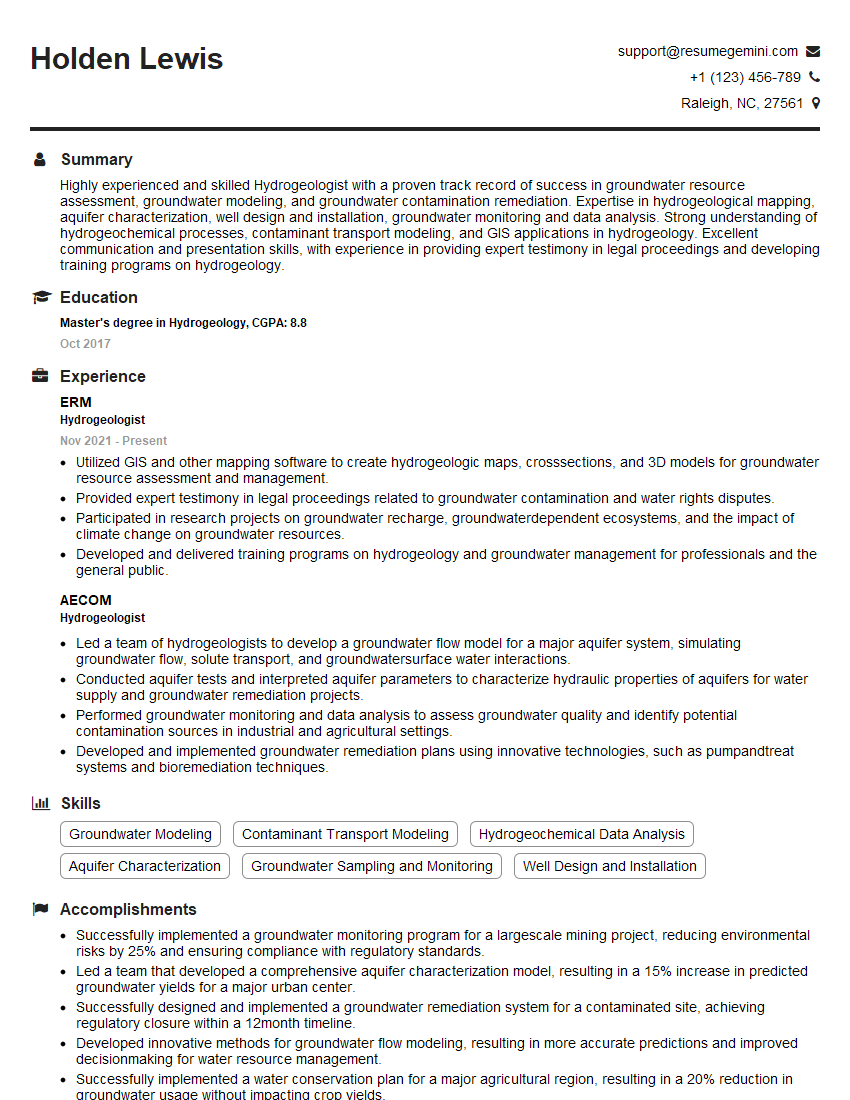
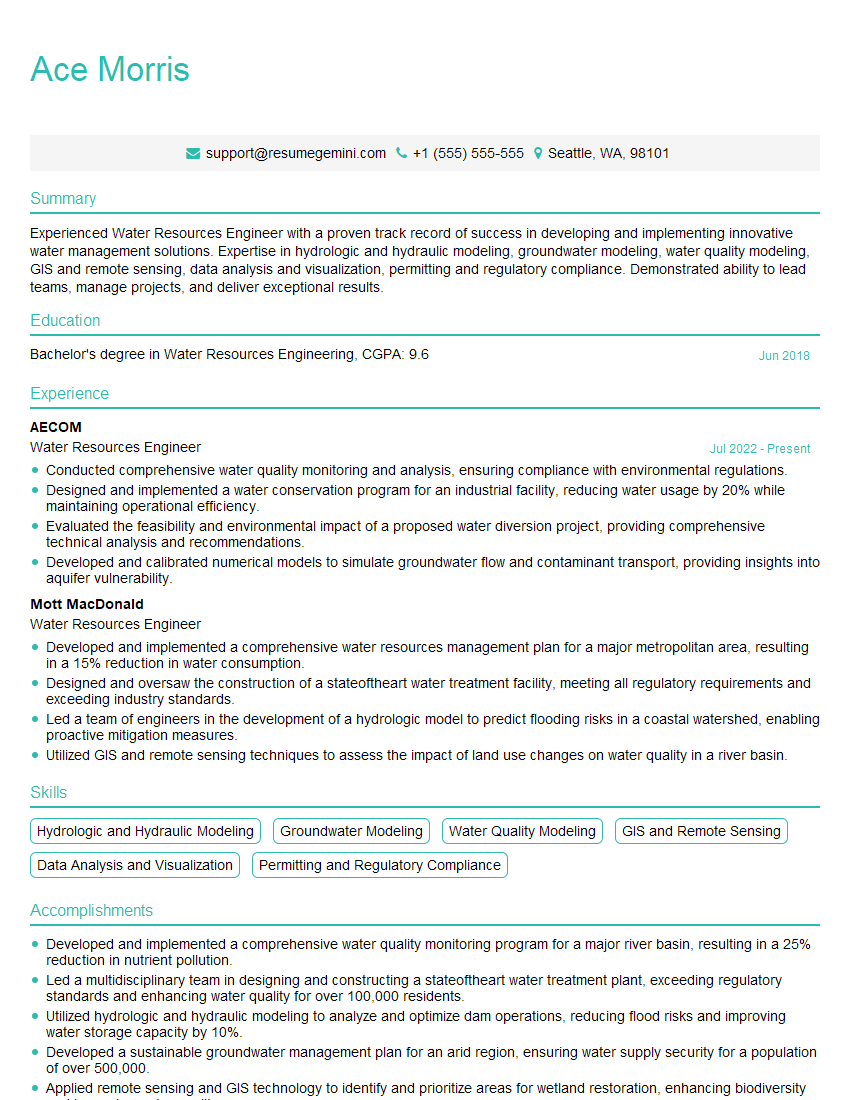
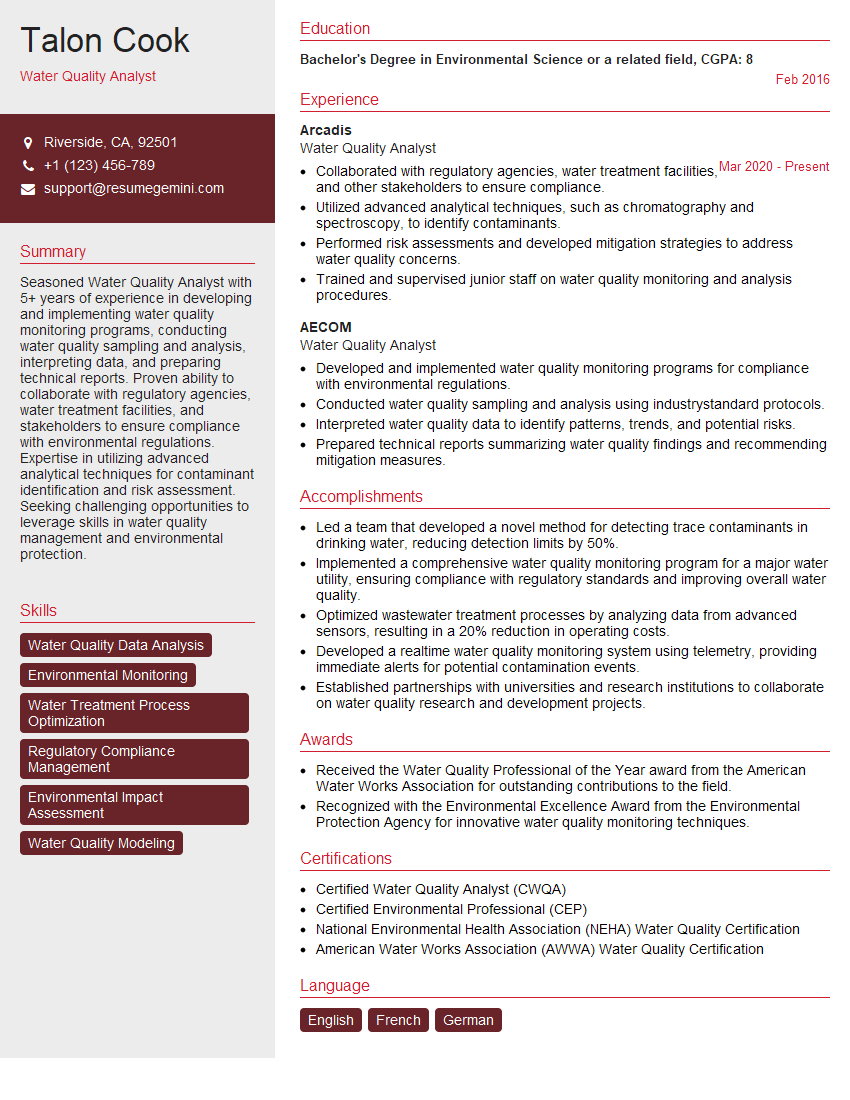
Mastering Water Well Maintenance opens doors to a rewarding career with excellent growth potential. This specialized skillset is highly sought after, and demonstrating your expertise through a strong resume is crucial. An ATS-friendly resume is essential for getting your application noticed by recruiters. To create a compelling and effective resume that highlights your skills and experience, we strongly recommend using ResumeGemini. ResumeGemini provides a user-friendly platform and offers examples of resumes tailored specifically to Water Well Maintenance positions to help you showcase your qualifications effectively.
Explore more articles
Users Rating of Our Blogs
Share Your Experience
We value your feedback! Please rate our content and share your thoughts (optional).
What Readers Say About Our Blog
To the interviewgemini.com Webmaster.
Very helpful and content specific questions to help prepare me for my interview!
Thank you
To the interviewgemini.com Webmaster.
This was kind of a unique content I found around the specialized skills. Very helpful questions and good detailed answers.
Very Helpful blog, thank you Interviewgemini team.