Preparation is the key to success in any interview. In this post, we’ll explore crucial Piping and Welding interview questions and equip you with strategies to craft impactful answers. Whether you’re a beginner or a pro, these tips will elevate your preparation.
Questions Asked in Piping and Welding Interview
Q 1. Explain the different types of pipe fittings and their applications.
Pipe fittings are crucial components connecting pipes of various sizes, shapes, and orientations. They’re essential for changing direction, connecting different pipe sizes, or adding branches to a piping system. Think of them as the joints and connectors in a complex plumbing network.
- Elbows: Used to change the direction of a pipe. 45-degree and 90-degree elbows are common. Imagine needing to turn a corner with your pipe – an elbow facilitates this.
- Tees: Create a branch connection, allowing for splitting or joining pipe lines. Like a road intersection allowing traffic to split.
- Reducers/Adapters: Connect pipes of different diameters. A crucial component when transitioning from larger to smaller pipes, ensuring a smooth flow.
- Couplings: Join two pipes of the same diameter end-to-end. This is like joining two segments of train track together to create a longer path.
- Flanges: Used for joining pipes using bolts and gaskets, allowing easy disassembly for maintenance. Picture a large bolt-on connection, commonly seen in industrial settings.
- Unions: Similar to couplings but easily disassembled, making them useful for maintenance and repairs. They allow for easy separation without cutting or welding.
- Caps: Used to close the end of a pipe. Essential for sealing off lines or containers.
The choice of fitting depends on factors like pressure, temperature, fluid type, and application requirements. For instance, high-pressure systems would require fittings made of stronger materials and with higher pressure ratings.
Q 2. Describe the various welding processes used in piping systems.
Welding is a fundamental process in piping construction, creating strong, permanent joints. Several processes are used depending on the material, application, and access. Think of each process as a unique tool for a specific welding job.
- Shielded Metal Arc Welding (SMAW): A common process using a consumable electrode coated with flux to protect the weld from atmospheric contamination. Relatively inexpensive and portable, it’s suitable for various pipe materials.
- Gas Metal Arc Welding (GMAW): Also known as MIG welding, this uses a continuous wire electrode fed into the weld pool with a shielding gas. It offers higher deposition rates and better quality compared to SMAW.
- Gas Tungsten Arc Welding (GTAW): Often called TIG welding, it’s known for its precision and high-quality welds. Using a non-consumable tungsten electrode, it’s ideal for critical applications needing excellent appearance and integrity, commonly used for thin-walled pipes.
- Submerged Arc Welding (SAW): A highly productive process using a consumable electrode submerged in a granular flux. It’s best suited for large-diameter pipes and high-volume production due to its high deposition rates.
The selection of the welding process depends on several factors including the pipe material (carbon steel, stainless steel, etc.), thickness, joint design, and the required weld quality. Specific welding codes and standards (e.g., ASME Section IX) dictate the acceptable procedures and qualifications for welders.
Q 3. What are the common pipe materials used in different industries?
Pipe materials vary widely depending on the application’s demands, such as pressure, temperature, and the fluid being transported. Think of choosing the right material as selecting the right tool for a specific job.
- Carbon Steel: The most common material due to its strength, cost-effectiveness, and weldability. Widely used in general-purpose applications.
- Stainless Steel: Offers excellent corrosion resistance, making it ideal for handling chemicals, food products, and aggressive environments. Various grades exist (304, 316, etc.) depending on corrosion resistance requirements.
- Ductile Iron: Offers good strength and corrosion resistance, often used in water and wastewater systems.
- Copper: Excellent for potable water applications due to its corrosion resistance and hygienic properties.
- Plastics (PVC, HDPE, CPVC): Suitable for lower-pressure applications where corrosion resistance is critical. Often used for chemical and water distribution.
The industry determines the material selection. The oil and gas industry might favor high-strength steel alloys, while the food processing industry would favor stainless steel for hygienic reasons. Choosing the wrong material could lead to leaks, corrosion, or even catastrophic failure.
Q 4. How do you perform a visual inspection of a weld?
Visual inspection is the first and most crucial step in weld assessment. It’s like a quick visual check-up before any more in-depth testing. It involves a thorough examination of the weld to identify surface defects.
The process involves using appropriate lighting and magnification tools (like a magnifying glass) to observe the weld for any visible defects. Look for:
- Undercut: A groove melted into the base metal at the edge of the weld.
- Overlap: Excess weld metal extending beyond the weld joint.
- Porosity: Small, gas-filled cavities within the weld metal.
- Cracks: Breaks or fissures in the weld metal.
- Incomplete Fusion/Lack of Penetration: Weld metal not properly fused with the base metal.
- Burn-through: Weld metal has penetrated completely through the pipe.
Proper documentation, including photos, is crucial. Visual inspection is non-destructive, meaning it doesn’t damage the weld, but it often guides the need for more thorough inspection methods such as radiographic or ultrasonic testing.
Q 5. What are the different types of weld defects and their causes?
Weld defects are imperfections that compromise the weld’s integrity. Understanding their causes is vital for preventing them. Each defect is a sign of something that went wrong during the welding process.
- Porosity: Caused by gas entrapment during welding. Poor shielding gas coverage or contaminated materials are common causes.
- Cracks: Result from excessive stresses, rapid cooling, or insufficient preheat. Hydrogen cracking is a common problem in steels.
- Incomplete Fusion/Lack of Penetration: Indicates insufficient heat or improper welding technique. Not enough energy was applied to melt and fuse the base materials together.
- Undercut/Overlap: Improper welding technique or incorrect parameters are typically to blame.
- Slag Inclusion: Trapped flux or other foreign material within the weld. Poor cleaning procedures are the primary culprit.
- Lack of Fusion: Failure of the weld metal to properly fuse with the base metal.
Defect severity is crucial. Minor defects may be acceptable, while major defects necessitate repairs or replacement. Welding codes and standards set acceptance criteria for weld imperfections.
Q 6. Explain the importance of pipe supports and hangers.
Pipe supports and hangers are essential for preventing stress and strain on piping systems. They’re like the skeleton that supports the body of your piping system. Think of a large bridge – without adequate supports, it would collapse under its own weight.
Their importance lies in:
- Stress Reduction: They prevent excessive stress and strain on the pipes caused by weight, thermal expansion, and fluid pressure. This prevents pipe failure and leakage.
- Vibration Dampening: They help reduce vibrations caused by fluid flow or equipment operation, extending the piping system’s lifespan.
- Alignment Maintenance: Proper support maintains alignment, preventing misalignment that could cause problems.
- Preventing Sagging: They prevent pipes from sagging over long distances. A sagging pipe could cause strain and lead to failure.
The design of supports and hangers needs to account for factors such as pipe size, material, fluid pressure, temperature, and seismic activity. Incorrect support can lead to pipe failure, leaks, and even safety hazards.
Q 7. Describe the process of hydro testing a piping system.
Hydrotesting is a critical non-destructive testing method for verifying the integrity of piping systems. Think of it as a pressure test, ensuring the system can withstand its designed operating pressure.
The process involves:
- System Preparation: The system is thoroughly inspected and cleaned. All valves are closed except for the vent and test connection.
- Pressurization: The system is filled with water and pressurized to a specified test pressure, usually 1.5 times the design pressure. This is a controlled, gradual pressurization.
- Pressure Holding: The system is held at the test pressure for a specified duration (typically 30 minutes or longer). Leaks are observed during this stage.
- Pressure Release: After the holding period, the pressure is slowly released.
- Inspection: A post-test inspection checks for any leaks or other signs of weakness.
Hydrotesting is a crucial step in ensuring the safety and reliability of a piping system before it goes into operation. It detects any leaks or weaknesses before they cause problems, preventing potential failures and ensuring safety.
Q 8. What are the different types of pipe insulation and their applications?
Pipe insulation protects pipes from heat loss or gain, preventing energy waste and ensuring efficient operation. Different materials cater to specific needs and environmental conditions.
- Fiberglass: A common and cost-effective choice for moderate temperature applications. It’s lightweight, easy to install, and provides good thermal insulation. Think of it like a cozy sweater for your pipes.
- Calcium Silicate: Suitable for high-temperature applications, offering superior fire resistance and thermal performance. Imagine it as a fire-resistant jacket for pipes in demanding environments like power plants.
- Polyurethane Foam: Excellent for cryogenic applications (extremely low temperatures) and offers high R-value (resistance to heat flow). Think of it as a specialized thermal blanket for pipes transporting very cold substances.
- Mineral Wool: Provides good thermal and acoustic insulation, often used in industrial settings. It’s like a soundproof blanket for pipes, dampening noise and heat.
- Aerogel: A high-tech material offering exceptional insulation properties, ideal for very demanding applications where space is limited. It’s like a super-insulating material, extremely effective but also more expensive.
The selection of insulation depends on factors like operating temperature, environmental conditions, budget, and the specific application. For instance, a chilled water pipe in a commercial building might use polyurethane foam, while a steam pipe in a power plant would require calcium silicate.
Q 9. Explain the concept of pipe stress analysis.
Pipe stress analysis is a crucial process in piping design that assesses the stresses and strains within a piping system due to various factors like pressure, temperature changes, weight, and external forces (like wind or seismic activity). It ensures the system’s integrity and prevents failures.
The analysis typically involves using specialized software to model the piping system and apply loads. The software calculates stresses at critical points and confirms that they are within allowable limits based on material properties and design codes (like ASME B31.1 or B31.3).
Imagine a network of pipes carrying hot fluid. Temperature changes will cause expansion and contraction. Without stress analysis, these stresses could lead to pipe failure—a leak, rupture, or even a catastrophic incident. The analysis helps determine the optimal support locations and pipe routing to mitigate these stresses.
This process involves considering:
- Internal Pressure: Pressure within the pipe causes hoop stress (circumferential tension).
- Thermal Loads: Temperature changes lead to expansion or contraction, generating thermal stresses.
- Dead Load: Weight of the pipe and its contents.
- Live Load: External forces like wind, snow, or seismic activity.
- Support Conditions: The arrangement and type of pipe supports influence stress distribution.
The results guide decisions on support design, material selection, and pipe routing to ensure the piping system operates safely and reliably.
Q 10. What are the safety precautions to be followed during welding?
Welding is inherently risky, and safety must be paramount. Failure to follow precautions can lead to serious injuries or fatalities. Here are essential safety precautions:
- Proper Personal Protective Equipment (PPE): Always wear appropriate PPE, including welding helmet with appropriate shade lenses, welding gloves, flame-resistant clothing, safety shoes, and respiratory protection (depending on the welding process and materials). Think of PPE as your armor against hazards.
- Fire Safety: Ensure that flammable materials are removed from the vicinity. Have fire extinguishers readily available and know how to use them. A fire blanket is also a good addition to the safety toolkit.
- Ventilation: Weld fumes can be toxic. Ensure adequate ventilation or use local exhaust ventilation (LEV) systems to remove fumes. Think of this as preventing the accumulation of dangerous invisible gases.
- Eye and Skin Protection: Welding arcs generate intense ultraviolet (UV) and infrared (IR) radiation, which can damage eyes and skin. Always use appropriate protective equipment. Think of it like protecting your eyes from the sun’s powerful rays but exponentially more dangerous.
- Safe Handling of Materials: Use proper lifting techniques for heavy components. Store cylinders safely and follow the manufacturer’s guidelines. Think of it as preventing injuries from falling objects or improper gas handling.
- Emergency Preparedness: Establish a clear emergency plan and ensure everyone involved in the welding operation is aware of it. Know the location of safety showers, eyewash stations, and first-aid kits.
- Training and Certification: Welders should be properly trained and certified in the specific welding processes they perform.
Safety is not an option, but an absolute requirement in welding. By adhering to these precautions, we can significantly reduce the risk of accidents and ensure a safe working environment.
Q 11. How do you interpret welding symbols?
Welding symbols are a standardized graphical language used on engineering drawings to convey welding requirements. They provide concise information on the type of weld, size, length, and other critical details. Understanding these symbols is essential for welders and inspectors.
A welding symbol typically includes:
- Reference Line: A horizontal line from which other elements are referenced.
- Arrow Side: Indicates the side of the joint where the weld is located.
- Other Side: Specifies weld requirements on the opposite side if different from the arrow side.
- Basic Weld Symbols: Represent different weld types (e.g., fillet weld, groove weld).
- Dimensional Information: Specifies weld size, length, spacing, etc.
- Weld Process: Indicates the welding process to be used (e.g., SMAW, GMAW).
- Contour Symbol: Defines the weld’s shape.
For example, <img src="welding_symbol_example.png" alt="Welding Symbol Example"> (Imagine a simple illustrative welding symbol here, showing a basic fillet weld with dimensions). Each element of the symbol is defined and interpreted according to specific codes (like AWS D1.1).
Misinterpreting a welding symbol can lead to incorrect welds and potential failure. So, mastering this language is crucial for successful projects.
Q 12. What are the different types of pipe joints and their advantages/disadvantages?
Pipe joints connect different pipe sections, and several types are used, each with its own advantages and disadvantages:
- Butt Joint: Pipes are butted together end-to-end.
- Advantages: Strong, smooth internal flow.
- Disadvantages: Requires precise preparation and skilled welding.
- Lap Joint: Pipes overlap each other.
- Advantages: Relatively simple to assemble; requires less precision than a butt joint.
- Disadvantages: Lower strength than a butt joint, potential for flow restriction.
- Socket Weld Joint: One pipe end fits into the socket of the other.
- Advantages: Relatively strong, suitable for high-pressure applications.
- Disadvantages: Limited in size.
- Flanged Joint: Uses flanges bolted together.
- Advantages: Easy to disconnect and reconnect, suitable for various applications.
- Disadvantages: Can be bulky and expensive.
- Threaded Joint: Uses threaded pipes and fittings.
- Advantages: Easy assembly and disassembly for smaller diameter pipes.
- Disadvantages: Prone to leakage if not properly tightened, not suitable for high-pressure applications.
The choice of pipe joint depends on factors like pipe size, pressure, temperature, material, and ease of assembly/disassembly. For instance, flanged joints are common in applications requiring frequent access for maintenance, while butt welds are preferred for high-pressure applications needing strength and minimal flow restriction.
Q 13. Explain the importance of proper pipe alignment and support.
Proper pipe alignment and support are crucial for the safe and efficient operation of any piping system. Improper alignment and inadequate support can lead to a variety of problems including:
- Stress Concentrations: Misalignment causes uneven stress distribution, increasing the risk of failure.
- Leaks: Misaligned joints are prone to leakage.
- Vibrations: Inadequate support can cause excessive vibrations, leading to fatigue failure.
- Sagging: Unsuitable support can cause sagging of pipes, affecting flow and potentially causing damage.
- Corrosion: Improper drainage can lead to stagnant fluid and accelerate corrosion.
Imagine a long pipe carrying hot fluid. Without proper support, the pipe might sag under its weight and the weight of the fluid, causing stress concentrations at the sagging points. This could lead to cracks and ultimately failure. Therefore, support design, including the type, spacing, and location of supports, is critical.
Proper alignment ensures that joints fit accurately, minimizing stress and leakage. Careful planning and execution of alignment and support during installation are essential to prevent these problems and ensure the system’s longevity and safety.
Q 14. What are the different types of non-destructive testing (NDT) methods used for welds?
Non-destructive testing (NDT) methods are used to evaluate weld quality without damaging the weld. Several methods are commonly employed:
- Visual Inspection (VT): The simplest method, visually checking for surface defects like cracks, porosity, or incomplete fusion. It’s like a thorough visual examination of the weld’s surface.
- Dye Penetrant Testing (PT): A liquid dye is applied to the surface to reveal surface-breaking defects. It’s similar to using a highlighter to make cracks easier to see.
- Magnetic Particle Testing (MT): Used for ferromagnetic materials, it involves magnetizing the weld and applying magnetic particles to detect surface and near-surface defects. It’s like using a metal detector to find hidden defects within the welded metal.
- Ultrasonic Testing (UT): High-frequency sound waves are used to detect internal defects like cracks, porosity, or lack of fusion. It’s like using sonar to ‘see’ inside the weld.
- Radiographic Testing (RT): X-rays or gamma rays are used to create an image of the weld, revealing internal defects. It’s like taking an X-ray of the weld to find hidden defects.
The choice of NDT method depends on the weld type, material, and the type of defects expected. Often, a combination of methods is used to provide comprehensive evaluation. This ensures that welds are of high quality and meet the required standards, and helps prevent failures in service.
Q 15. Describe the procedure for performing a destructive test on a weld.
Destructive testing of welds is a crucial step in ensuring structural integrity. It involves deliberately breaking a weld sample to analyze its properties under stress. This allows for a precise evaluation of the weld’s strength, ductility, and overall quality, far beyond what non-destructive tests can offer. The procedure typically involves several steps:
Sample Preparation: A representative weld sample is carefully cut from the pipeline, ensuring the cut doesn’t compromise the integrity of the remaining structure. The size and shape of the sample depend on the specific test being performed and relevant standards.
Test Selection: The type of destructive test (e.g., tensile test, bend test, impact test) is chosen based on the requirements of the project specifications and the type of weld. Each test evaluates different aspects of weld quality.
Test Execution: The sample is subjected to controlled forces or impacts within a specialized testing machine. For instance, a tensile test applies a gradually increasing force until the sample breaks. Data, such as yield strength and ultimate tensile strength, is meticulously recorded.
Fracture Analysis (optional): The fractured surface of the sample is examined under a microscope to determine the cause of failure and identify any defects, such as porosity, cracks, or incomplete fusion. This microscopic analysis helps in understanding the weld’s microstructure and identifying potential weaknesses.
Reporting: A comprehensive report is generated documenting all aspects of the test, including sample preparation, test parameters, results, and fracture analysis (if conducted). This report forms a crucial part of the project documentation.
Example: A tensile test on a fillet weld might reveal if the weld is strong enough to withstand the anticipated loads in a pipeline. A low tensile strength indicates a potential problem, requiring corrective actions, such as improved welding techniques or material selection.
Career Expert Tips:
- Ace those interviews! Prepare effectively by reviewing the Top 50 Most Common Interview Questions on ResumeGemini.
- Navigate your job search with confidence! Explore a wide range of Career Tips on ResumeGemini. Learn about common challenges and recommendations to overcome them.
- Craft the perfect resume! Master the Art of Resume Writing with ResumeGemini’s guide. Showcase your unique qualifications and achievements effectively.
- Don’t miss out on holiday savings! Build your dream resume with ResumeGemini’s ATS optimized templates.
Q 16. What are the common codes and standards used in piping and welding?
Numerous codes and standards govern piping and welding to ensure safety and quality. Some of the most common include:
ASME B31.1: Power Piping – This code provides rules for the design, materials, fabrication, erection, and testing of power piping systems. It’s widely used in power plants and other high-pressure applications.
ASME B31.3: Process Piping – This code covers the design, materials, fabrication, erection, and testing of process piping systems in chemical, petrochemical, and other process industries.
ASME Section IX: Welding and Brazing Qualifications – This section provides detailed specifications for welder qualification, welding procedure specifications (WPS), and procedure qualification records (PQR). It’s essential for ensuring consistent weld quality.
API 650: Welded Tanks for Oil Storage – This standard covers the design, fabrication, erection, and testing of welded steel tanks for storing oil.
AWS D1.1: Structural Welding Code – This code provides guidelines for the welding of structural steel.
Choosing the right code and standard is crucial for ensuring compliance and maintaining the safety and integrity of the piping system. The choice depends on the application, industry, and relevant regulations.
Q 17. How do you calculate pipe flow rate and pressure drop?
Calculating pipe flow rate and pressure drop requires understanding fluid dynamics principles. Several methods exist, ranging from simple empirical equations to complex computational fluid dynamics (CFD) simulations. One common approach uses the Darcy-Weisbach equation:
ΔP = f * (L/D) * (ρ * V²/2)
Where:
ΔP= Pressure dropf= Darcy friction factor (dependent on Reynolds number and pipe roughness)L= Pipe lengthD= Pipe diameterρ= Fluid densityV= Fluid velocity
The flow rate (Q) is related to velocity and pipe area (A):
Q = V * A = V * (π * D²/4)
To calculate, you’ll typically:
Determine fluid properties: Density, viscosity, etc.
Calculate Reynolds number (Re): To determine the flow regime (laminar or turbulent) and find the friction factor.
Determine the friction factor (f): Using Moody chart or correlations based on Re and pipe roughness.
Apply Darcy-Weisbach equation: To calculate pressure drop.
Calculate flow rate: Using the calculated velocity and pipe area.
Example: For a specific pipeline with known dimensions, fluid properties, and desired pressure drop, we can use these equations to calculate the allowable flow rate. Conversely, given a flow rate, we can determine the pressure drop, which is essential for pump selection and system design.
Q 18. Explain the concept of thermal expansion and its impact on piping systems.
Thermal expansion refers to the change in length or volume of a material due to temperature changes. In piping systems, this is a significant consideration, as temperature fluctuations can cause significant movement. Materials expand when heated and contract when cooled. This expansion and contraction can place immense stress on the pipe, its supports, and connected equipment, leading to potential failures if not properly managed.
Impact on Piping Systems:
Stress and Strain: Unrestrained thermal expansion can create significant stress and strain in the pipe, potentially causing fatigue failures over time.
Pipe Movement: The expansion and contraction can cause the pipe to move, potentially damaging supports, valves, or other equipment.
Leaks: Excessive movement can cause leaks at joints or connections.
Equipment Damage: The movement of the pipe can also damage connected equipment, such as pumps or heat exchangers.
Mitigation Strategies:
Expansion Loops: These loops provide flexibility to accommodate thermal expansion.
Expansion Joints: These specialized joints allow for controlled expansion and contraction.
Anchors and Guides: These restrain the pipe movement to prevent excessive stress and strain.
Example: In a long pipeline carrying hot fluids, expansion loops are crucial to prevent buckling or other damage due to thermal expansion. Without proper management, the pipeline could become dangerously stressed and potentially fail.
Q 19. How do you handle pipe corrosion and erosion?
Corrosion and erosion are significant challenges in piping systems, leading to leaks, reduced efficiency, and potential safety hazards. They involve the degradation of the pipe material, often leading to significant maintenance and repair costs.
Corrosion: This is a chemical or electrochemical attack on the pipe material, often caused by the fluid being transported or environmental factors. Different types of corrosion exist, including uniform corrosion, pitting, crevice corrosion, and stress corrosion cracking.
Erosion: This is a mechanical process that removes material from the pipe’s surface due to high-velocity fluid flow, often containing suspended solids. It’s particularly problematic in bends and restrictions where flow velocities are highest.
Handling Corrosion and Erosion:
Material Selection: Choosing corrosion-resistant materials, such as stainless steel or specialized alloys, is crucial.
Protective Coatings: Applying internal and external coatings can create a barrier against corrosive fluids and environmental factors.
Corrosion Inhibitors: Adding chemicals to the fluid being transported can slow down or prevent corrosion.
Cathodic Protection: This electrochemical technique protects the pipe from corrosion by making it a cathode.
Flow Optimization: Reducing flow velocity in high-velocity areas can mitigate erosion.
Regular Inspection and Monitoring: Regular inspections help detect corrosion and erosion early, allowing for timely repairs or replacements.
Example: In a pipeline transporting acidic fluids, selecting a corrosion-resistant material like stainless steel and implementing cathodic protection are essential measures to prevent corrosion and ensure safe operation.
Q 20. What are the different types of valves and their applications?
Valves are essential components of piping systems, controlling the flow of fluids. They come in various types, each with specific applications:
Gate Valves: These valves provide full, unobstructed flow when open and are suitable for on/off service. They’re generally not recommended for throttling (regulating flow).
Globe Valves: These valves offer good throttling capabilities but have higher pressure drops than gate valves when fully open. They are often used for flow regulation.
Ball Valves: These valves are quick-acting, on/off valves with a rotating ball to control flow. They’re widely used due to their simplicity and compactness.
Butterfly Valves: These valves use a rotating disc to control flow, providing good throttling and are often used in larger diameter pipelines.
Check Valves: These valves allow flow in one direction only, preventing backflow. They are commonly used to protect pumps and other equipment.
Control Valves: These valves are used for precise flow regulation, often incorporating automated control systems. They are used in various process control applications.
Applications: The choice of valve depends on factors such as the fluid being transported, pressure, temperature, required flow control, and maintenance requirements. For example, a high-pressure steam line would require a robust gate or globe valve, while a low-pressure water line might use a ball valve.
Q 21. Describe your experience with different welding positions.
Welding proficiency involves mastery of various positions, each presenting unique challenges. My experience encompasses the following welding positions:
1G (Flat): This is the easiest position, with the weld being made on a horizontal surface. It’s a good starting point for learning fundamental welding techniques.
2G (Horizontal): The weld is made on a vertical surface, with the weld bead being horizontal. This position requires more control and skill to prevent sagging.
3G (Vertical): The weld is made on a vertical surface, with the weld bead being vertical. This demands precision and consistent travel speed to achieve proper penetration.
4G (Overhead): This is the most challenging position, requiring exceptional skill and control to prevent weld bead sagging and ensure proper penetration. Maintaining a stable arc while working overhead demands experience and steadiness.
5G (Pipe): Welding in the pipe position necessitates a high level of skill and expertise. It involves working within confined spaces, often with different pipe diameters and welding angles. Different techniques are often required depending on whether the weld is circumferential or longitudinal.
In my previous roles, I have consistently demonstrated proficiency in all these positions, having executed numerous welds across diverse projects. I regularly undergo recertification to ensure my skills remain up-to-date and meet the industry’s highest safety and quality standards.
Q 22. Explain the importance of maintaining proper weld penetration.
Proper weld penetration is crucial for the structural integrity of a pipe joint. It ensures a complete fusion between the base metal and the weld metal, creating a strong, leak-proof connection. Insufficient penetration leaves unfused base metal, creating a weak point prone to cracking or leakage under pressure. Think of it like trying to glue two pieces of wood together – if you only apply glue to one edge, the bond will be weak. Conversely, excessive penetration can lead to burn-through and weakening of the pipe wall.
Maintaining proper penetration requires careful control of welding parameters like amperage, voltage, travel speed, and electrode type. The type of joint design also plays a significant role. For instance, a full penetration groove weld in a thick-walled pipe will require different settings compared to a fillet weld in a thin-walled pipe. Regular monitoring through visual inspection and potentially non-destructive testing (NDT) methods, such as radiographic testing (RT), ensures the weld meets the specified penetration requirements.
Q 23. How do you address welding defects discovered during inspection?
Addressing welding defects involves a systematic approach. First, the defect must be accurately identified and classified using relevant standards like AWS D1.1 (for structural welding). Common defects include porosity, lack of fusion, undercutting, and cracking. The severity of the defect determines the corrective action.
Minor defects, if permissible by the code and within allowable tolerances, might be acceptable after careful evaluation. However, significant defects require repair. This involves removing the defective weld area using grinding or machining, cleaning the surface thoroughly, and re-welding to the specified standard. Post-repair inspection is crucial to confirm the integrity of the repair. In some cases, the entire joint may need replacement depending on the severity and location of the defect. Maintaining detailed records of the defect, repair process, and inspection results is critical for traceability and quality control.
Q 24. Describe your experience with different types of piping systems (e.g., high-pressure, cryogenic).
My experience encompasses a wide range of piping systems, including high-pressure, cryogenic, and low-temperature applications. I’ve worked on projects involving high-pressure steam lines where the welds needed to withstand extremely high pressures and temperatures, demanding meticulous attention to detail and precise welding techniques to prevent leaks and failures.
In cryogenic applications, such as those involving liquefied natural gas (LNG), the challenge lies in selecting appropriate materials and welding procedures that can withstand extremely low temperatures without becoming brittle. This requires specialized knowledge of material behavior at cryogenic temperatures and the use of specific welding consumables. I’ve also worked on projects involving various pipe materials, including carbon steel, stainless steel, and nickel alloys, each requiring specific welding procedures and post-weld heat treatments (PWHT).
Q 25. What software are you proficient in for piping design and analysis?
I am proficient in several software packages used for piping design and analysis. My experience includes using AutoCAD for 2D drafting and 3D modeling of piping systems, allowing for visualization of the layout and efficient identification of potential clashes and routing issues. I am also experienced in using CAESAR II for stress analysis of piping systems under various operating conditions, helping to ensure the design can withstand the expected loads and pressures. Additionally, I have worked with PV Elite for pressure vessel design and analysis, ensuring that pressure vessels within the piping system meet safety and regulatory requirements. Finally, I have experience using specialized software for weld procedure qualification and welding process simulations.
Q 26. Explain your understanding of different types of welding electrodes and their applications.
Welding electrodes are the heart of the shielded metal arc welding (SMAW) process. They are classified based on their chemical composition, which determines their mechanical properties and suitability for different applications. For example, E6010 electrodes are known for their deep penetration and are often used in the root pass of a weld, particularly in difficult-to-access areas. E7018 electrodes are low-hydrogen electrodes, ideal for high-strength steels where minimizing hydrogen embrittlement is crucial.
The selection of an electrode depends on factors such as the base metal, required weld strength, position of welding (vertical, overhead, flat), and environmental conditions. Each electrode type has a specific application, and choosing the wrong one can significantly impact the weld quality. For instance, using an E6010 electrode for a critical weld in a high-pressure system where low hydrogen content is necessary is not a wise choice.
Q 27. How do you ensure compliance with safety regulations during piping and welding projects?
Ensuring compliance with safety regulations is paramount in piping and welding projects. This involves a multi-faceted approach starting with thorough risk assessment. We identify potential hazards such as arc flash, burns, falls, and confined space entry, and implement appropriate control measures. This includes utilizing proper personal protective equipment (PPE), such as welding helmets, gloves, and fire-resistant clothing. Adherence to relevant codes and standards, like ASME B31.1 and B31.3, is crucial. These codes provide guidelines for the design, fabrication, inspection, and testing of piping systems.
Furthermore, regular safety training for all personnel is critical. This covers topics such as lockout/tagout procedures, emergency response plans, and safe handling of welding equipment. We also ensure proper ventilation in confined spaces to prevent exposure to harmful fumes. Detailed documentation of all safety procedures, inspections, and training records is vital for demonstrating compliance and continuous improvement of our safety culture.
Q 28. Describe your experience with troubleshooting piping and welding issues in the field.
Troubleshooting piping and welding issues in the field requires a systematic and analytical approach. Often, it involves tracing the root cause of a problem, whether a leak, a crack, or a failure. I begin by carefully observing the affected area, noting visible signs of damage or distress, like cracks, corrosion, or misalignment. This is followed by a thorough review of welding procedures, inspection records, and design drawings to pinpoint the source of the issue.
For instance, I was once involved in a project where a leak developed in a high-pressure steam line. Through careful investigation, we discovered that the weld had insufficient penetration due to improper welding parameters. We corrected the issue by carefully removing the defective section and re-welding using the correct parameters and meticulous inspection. In other instances, problems might stem from design flaws, material degradation, or even external factors like ground movement. Understanding the overall system and its components is key to solving the issue effectively and permanently.
Key Topics to Learn for Your Piping and Welding Interview
- Piping Systems Design: Understand principles of piping system layout, including considerations for flow, pressure, and material selection. Think about practical applications like designing a system for a chemical plant or refinery.
- Welding Processes: Master the theory and practical application of various welding techniques (e.g., SMAW, GMAW, GTAW). Be prepared to discuss their suitability for different materials and applications.
- Welding Codes and Standards: Familiarize yourself with relevant codes like ASME Section IX and AWS D1.1. Understand how these standards ensure safety and quality in welding practices.
- Material Selection: Know the properties of common piping materials (e.g., carbon steel, stainless steel) and their suitability for different applications. Consider factors like corrosion resistance and strength.
- Inspection and Testing: Understand the importance of non-destructive testing (NDT) methods like visual inspection, radiography, and ultrasonic testing in ensuring weld integrity.
- Safety Procedures: Demonstrate a thorough understanding of safety regulations and best practices in piping and welding environments. This is crucial for any role.
- Troubleshooting and Problem-Solving: Practice analyzing common piping and welding problems and outlining potential solutions. Be ready to discuss your approach to tackling challenges on the job.
- Blueprint Reading and Interpretation: Develop your ability to accurately read and interpret piping and welding blueprints, understanding symbols and specifications.
Next Steps: Level Up Your Career
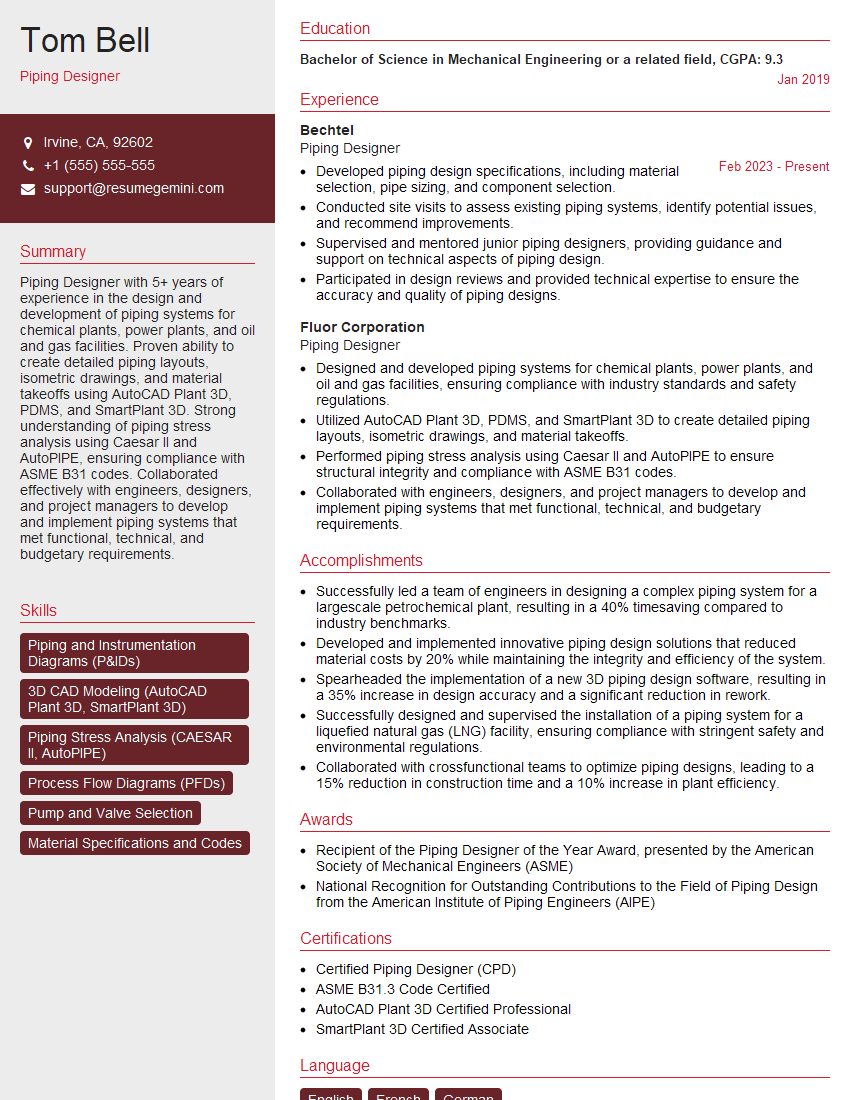
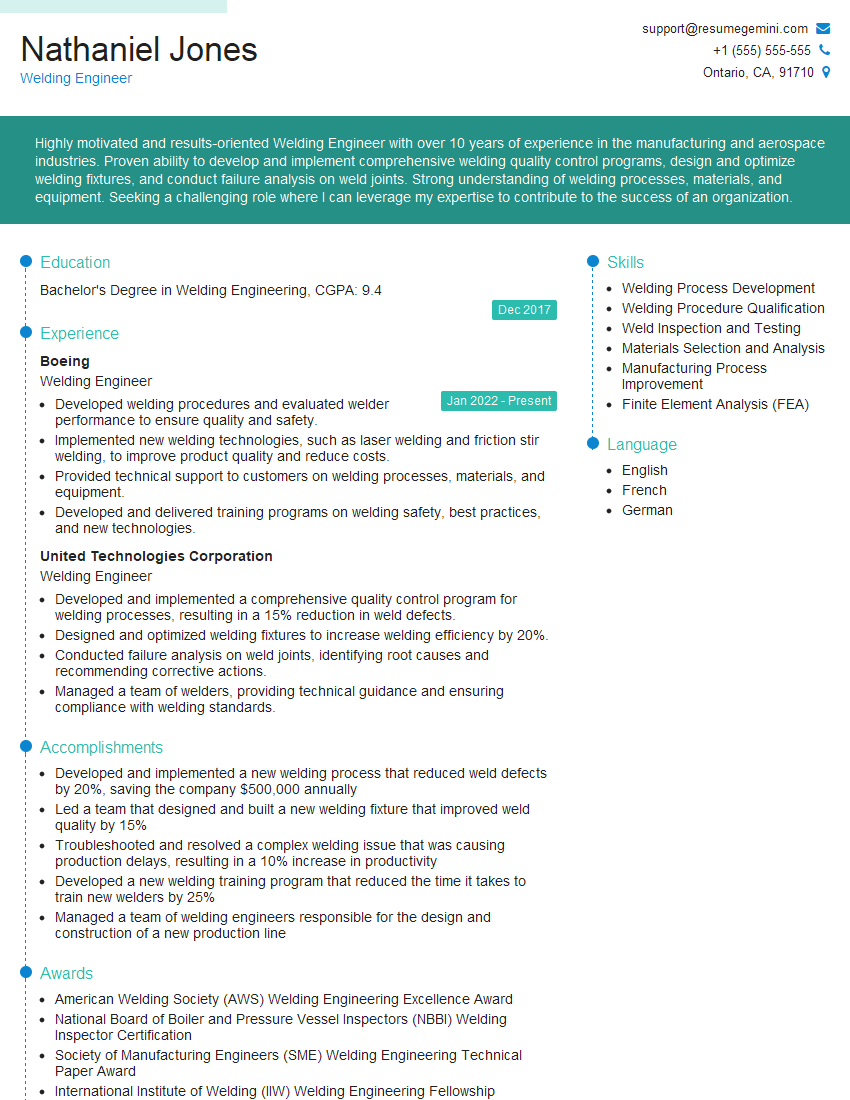
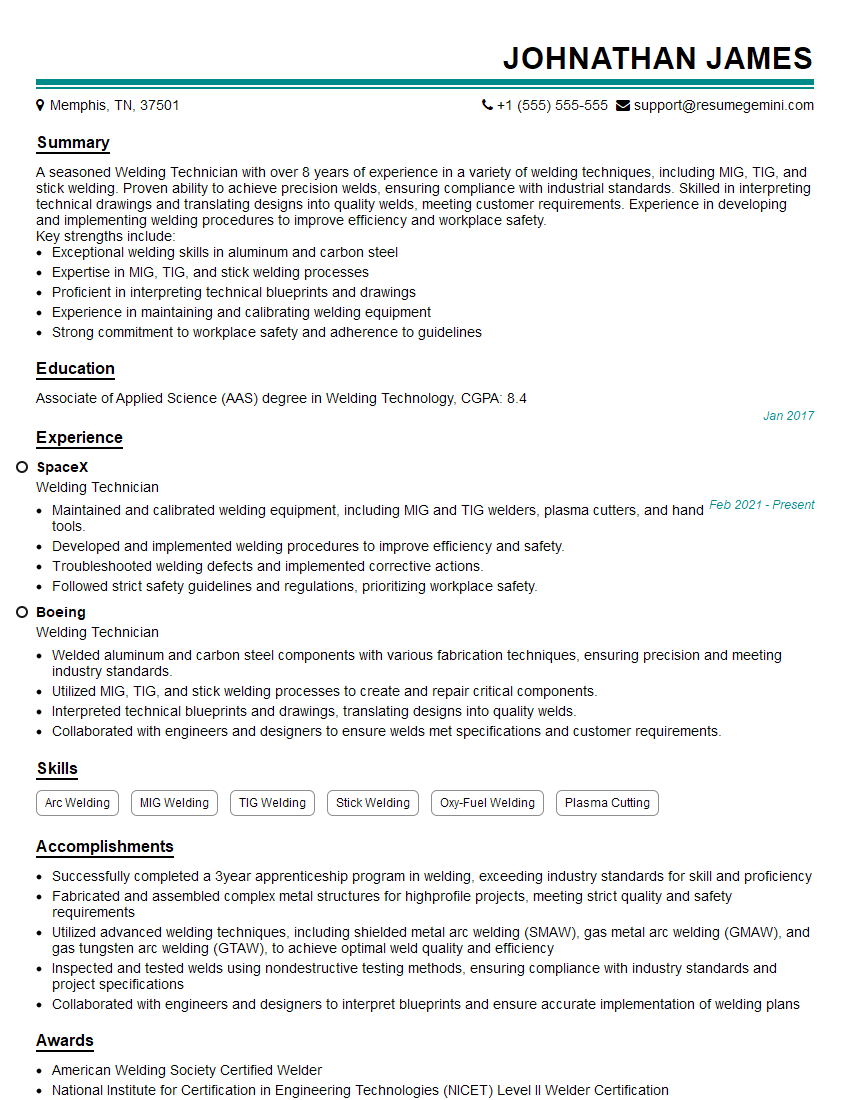
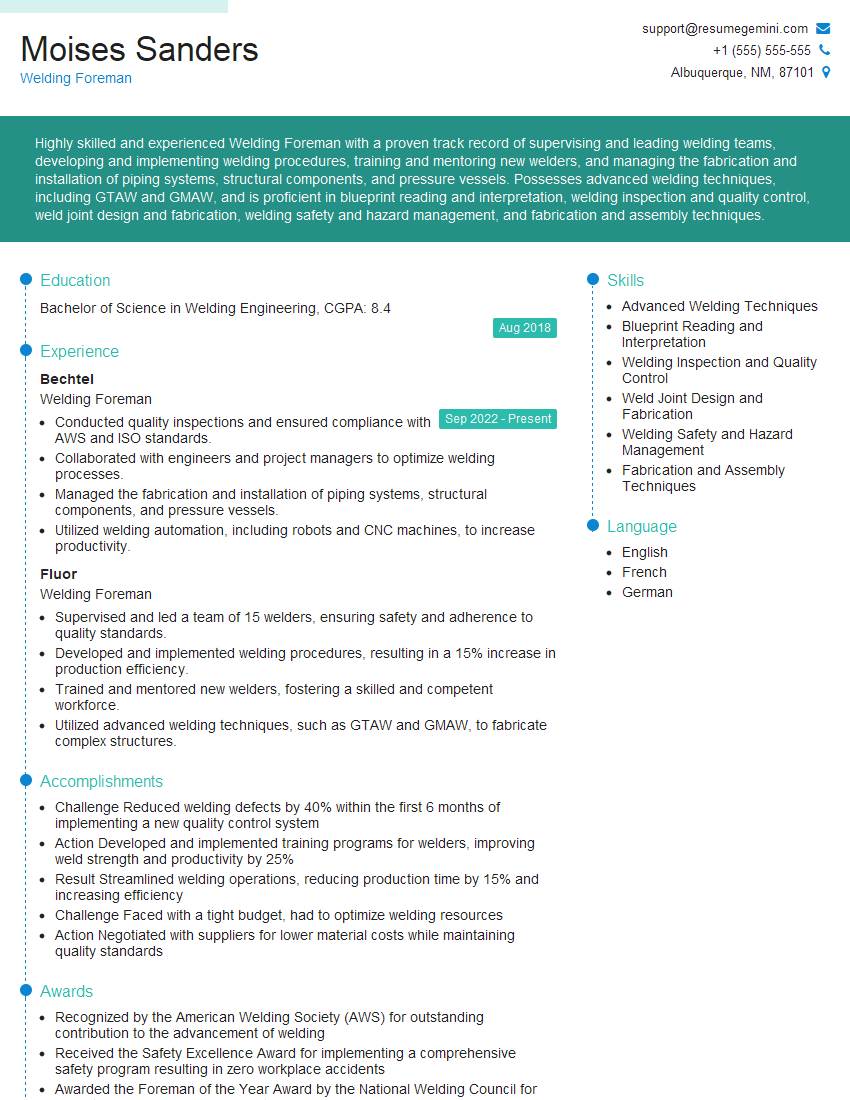
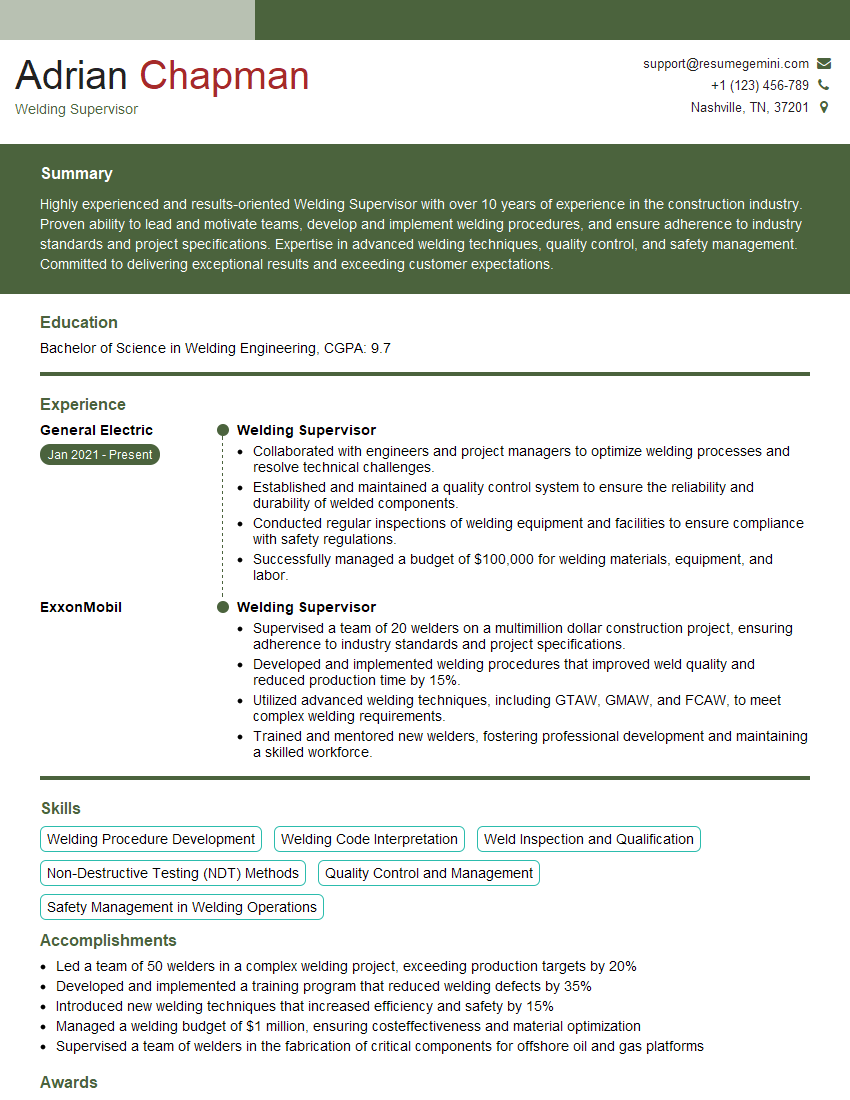
Mastering Piping and Welding opens doors to exciting and rewarding careers in various industries. To maximize your job prospects, invest time in creating a strong, ATS-friendly resume that highlights your skills and experience effectively. ResumeGemini is a trusted resource to help you build a professional and impactful resume that gets noticed. We provide examples of resumes tailored specifically to the Piping and Welding field to guide you. Take advantage of these resources and showcase your expertise!
Explore more articles
Users Rating of Our Blogs
Share Your Experience
We value your feedback! Please rate our content and share your thoughts (optional).
What Readers Say About Our Blog
To the interviewgemini.com Webmaster.
Very helpful and content specific questions to help prepare me for my interview!
Thank you
To the interviewgemini.com Webmaster.
This was kind of a unique content I found around the specialized skills. Very helpful questions and good detailed answers.
Very Helpful blog, thank you Interviewgemini team.