Preparation is the key to success in any interview. In this post, we’ll explore crucial Proficient in microscopy techniques, including bright-field, dark-field, and phase-contrast interview questions and equip you with strategies to craft impactful answers. Whether you’re a beginner or a pro, these tips will elevate your preparation.
Questions Asked in Proficient in microscopy techniques, including bright-field, dark-field, and phase-contrast Interview
Q 1. Explain the principles of bright-field microscopy.
Bright-field microscopy is the most basic form of light microscopy. It works by transmitting light through a specimen. The image is formed by the differential absorption of light by different parts of the sample. Think of it like shining a flashlight through a translucent object; denser areas will appear darker, while less dense areas will appear brighter.
Specifically, light from the illuminator passes through the condenser, which focuses the light onto the specimen. The light then passes through the specimen. Some light is absorbed, some is scattered, and some passes directly through. The objective lens then magnifies the transmitted light, creating an image that is viewed through the eyepiece.
For example, visualizing stained bacteria under a bright-field microscope reveals them as dark objects against a bright background due to the absorption of light by the stain.
Q 2. What are the limitations of bright-field microscopy?
While simple and versatile, bright-field microscopy has limitations. One major drawback is its low contrast, especially when viewing transparent specimens like living cells. Many biological samples lack sufficient inherent contrast to be clearly visualized. The subtle differences in refractive index between different cellular components often don’t lead to enough light absorption to produce a clear image.
Additionally, bright-field microscopy can suffer from issues with glare and scattering, especially at higher magnifications. This can reduce the clarity and resolution of the image.
For instance, attempting to observe unstained cells in bright-field microscopy results in a faint, almost invisible image because the light passes through the mostly transparent cells with little absorption.
Q 3. Describe the advantages of dark-field microscopy over bright-field microscopy.
Dark-field microscopy provides significantly improved contrast, particularly for unstained specimens, compared to bright-field microscopy. Instead of directly illuminating the specimen, dark-field microscopy uses a special condenser to illuminate it only with oblique light. This light does not directly enter the objective lens. Only the light scattered or diffracted by the specimen reaches the objective, making the specimen appear bright against a dark background.
This technique is especially useful for visualizing very small objects or transparent structures that are difficult to see using bright-field microscopy because their presence is revealed by the light they scatter rather than the light they absorb.
For example, observing live spirochetes, which are very thin bacteria, is far easier with dark-field microscopy as they appear bright against the dark background, due to their scattering of oblique light, unlike in bright-field where they would be almost invisible.
Q 4. How does phase-contrast microscopy enhance image contrast?
Phase-contrast microscopy enhances contrast in transparent specimens by converting differences in refractive index into differences in brightness. It exploits the fact that light passing through different parts of a specimen will undergo phase shifts due to differences in the refractive index of those components. These phase shifts are imperceptible to the naked eye.
A phase-contrast microscope uses special optical components, including a phase ring in the condenser and a complementary phase plate in the objective lens, to convert these phase differences into amplitude differences. The phase shifts are converted into variations in light intensity, resulting in a high-contrast image. Essentially, it makes the invisible phase shifts visible.
Imagine waves of water; while you might not see subtle differences in their phase, phase contrast microscopy ‘translates’ these differences into visible variations in wave height (brightness).
Q 5. What are the applications of phase-contrast microscopy in cell biology?
Phase-contrast microscopy is invaluable in cell biology because it allows visualization of living cells and their internal structures without the need for staining, which can kill or damage the cells. This is crucial for studying dynamic cellular processes in real-time.
Applications include observing:
- Cytoplasmic streaming in plant cells
- Cell division and mitosis
- Movement of organelles within cells
- Cellular morphology and structure of unstained tissue samples.
Since staining artifacts are avoided, researchers get a more accurate representation of the cell’s natural state.
Q 6. Compare and contrast bright-field, dark-field, and phase-contrast microscopy.
Here’s a comparison of the three microscopy techniques:
| Feature | Bright-field | Dark-field | Phase-contrast |
|---|---|---|---|
| Illumination | Direct transmission of light | Oblique illumination, light does not directly enter objective | Direct transmission of light, modified by phase rings and plates |
| Contrast | Low, particularly for transparent specimens | High, transparent specimens appear bright | High, converts phase shifts to brightness differences |
| Specimen | Stained or unstained | Usually unstained | Usually unstained |
| Applications | Stained specimens, general observation | Observing unstained specimens, particularly small particles | Observing living, unstained cells and their internal structures |
In essence, bright-field is the simplest, while dark-field excels at visualizing small, transparent objects. Phase-contrast offers high contrast for unstained specimens, especially living cells, making it ideal for observing dynamic cellular processes.
Q 7. Explain how resolution is affected by numerical aperture and wavelength.
Resolution, the ability to distinguish between two closely spaced objects, is fundamentally limited by the wavelength of light used and the numerical aperture (NA) of the objective lens. The numerical aperture is a measure of the lens’s ability to gather light.
The relationship is described by the Abbe diffraction limit: d = λ / (2 * NA), where ‘d’ is the minimum resolvable distance between two points, ‘λ’ is the wavelength of light, and ‘NA’ is the numerical aperture.
This equation tells us that smaller wavelengths (e.g., blue light compared to red light) and higher numerical apertures lead to better resolution (smaller ‘d’). In other words, a higher NA objective lens can resolve finer details because it collects more light and has a shorter focal depth.
For example, using a shorter wavelength blue light source in a high NA objective lens leads to greater resolution and sharper images because of the smaller ‘d’ value.
Q 8. How do you calibrate a microscope?
Microscope calibration ensures accurate measurements and consistent image quality. It involves verifying the magnification and stage micrometer readings. This is crucial for quantitative analysis and reliable results. The process typically involves using a stage micrometer, a slide with precisely spaced lines of known distance (e.g., 0.01 mm).
Step-by-Step Calibration:
- Place the stage micrometer: Carefully position the stage micrometer on the microscope stage.
- Focus on the micrometer: Use the appropriate objective lens (e.g., 10x or 40x) and focus sharply on the micrometer’s lines.
- Count the divisions: Count the number of micrometer divisions that fit within a known number of ocular micrometer divisions (the scale in the eyepiece).
- Calculate the calibration factor: Divide the known distance of the stage micrometer divisions by the number of ocular micrometer divisions counted. This gives you the calibration factor (e.g., micrometers per ocular division).
- Record the factor: Record this calibration factor for the specific objective lens used. You’ll repeat this for each objective.
- Verification: Regularly repeat this process to ensure accuracy over time.
Example: If 10 stage micrometer divisions (each 0.01 mm) fit within 20 ocular micrometer divisions, the calibration factor for that objective would be 0.005 mm/ocular division (0.01 mm * 10 / 20).
Q 9. Describe the process of preparing a sample for bright-field microscopy.
Sample preparation for bright-field microscopy depends heavily on the sample type. The goal is to create a thin, translucent specimen that allows light to pass through, revealing its structure. For biological samples, this often involves fixation, embedding, sectioning, and staining.
- Fixation: This preserves the sample’s structure by killing cells and preventing degradation (e.g., using formalin or glutaraldehyde).
- Embedding: The sample is embedded in a medium (e.g., paraffin wax or resin) to provide support during sectioning.
- Sectioning: The embedded sample is thinly sliced (microtomes are used) to create sections thin enough for light to penetrate.
- Staining: Staining enhances contrast by highlighting specific structures or cellular components (e.g., Hematoxylin and Eosin, Gram stain). This step is crucial because many biological samples are naturally transparent.
- Mounting: Finally, the section is mounted on a glass slide with a coverslip for protection and improved observation.
For non-biological samples, preparation might involve simply creating a thin section or creating a suspension on a slide. Always ensure the sample is clean and free of debris.
Example: Preparing a plant leaf involves fixing it in formalin, embedding it in paraffin, sectioning it using a microtome, staining it with safranin and fast green to highlight cell walls and other components, and finally mounting it on a slide with a coverslip.
Q 10. What are the different types of microscope objectives and their uses?
Microscope objectives are the lenses closest to the sample, dictating magnification and resolution. Different types are designed for various applications.
- Achromatic objectives: Correct for chromatic aberration (color distortion) for two wavelengths (typically red and blue). These are common and suitable for many applications.
- Plan achromatic objectives: Correct for both chromatic and field curvature aberrations, providing a flat field of view that is sharply focused across the entire image.
- Fluorite objectives: Provide superior correction for chromatic aberration across a broader range of wavelengths, enhancing resolution and image quality compared to achromatic lenses. They are often used for fluorescence microscopy.
- Apochromatic objectives: Offer the highest level of correction for chromatic and spherical aberrations, providing exceptional image sharpness and clarity over a wide range of wavelengths. These are frequently used in demanding applications requiring high resolution.
- Oil immersion objectives: Utilize immersion oil to increase numerical aperture and resolution, particularly useful for high-magnification observations. This oil bridges the gap between the objective lens and the coverslip, improving light transmission.
Use Cases: Achromatic objectives are ideal for general observation; plan achromats are suited for photomicrography; fluorite and apochromatic objectives are crucial for high-resolution and fluorescence imaging, and oil immersion objectives are essential for resolving fine details at high magnification.
Q 11. How do you choose the appropriate magnification for a specific application?
Choosing the right magnification is vital for effective microscopy. It depends on the sample’s size and the detail you want to observe. Too low a magnification will lack detail, and too high a magnification will result in blurry images due to limitations in resolution and depth of field.
Start with a lower magnification (e.g., 4x or 10x) to survey the sample’s overall structure. Gradually increase magnification to focus on specific areas or features of interest. The quality of the image, not just the magnification, should guide your selection. Consider the resolution limits of your microscope and objective lenses. Numerical aperture (NA) is a critical indicator of resolution; higher NA objectives resolve finer details.
Example: When observing a tissue sample, I’d start with a 10x objective to identify different tissue types. Then I’d switch to a 40x or even 100x (oil immersion) objective to examine the cellular structures within a region of interest.
Q 12. Explain the concept of depth of field in microscopy.
Depth of field refers to the vertical distance within the sample that remains in sharp focus. It’s the thickness of the specimen that appears clear at a particular focus setting. A large depth of field implies that a thicker section of the sample is in focus, while a small depth of field means only a very thin slice is sharply defined. The depth of field is inversely proportional to magnification and inversely proportional to the numerical aperture (NA) of the objective lens. Higher magnification and higher NA generally result in a shallower depth of field.
Practical Implications: A shallow depth of field is advantageous for visualizing fine details within a thin sample. It reduces the blurring that occurs when multiple layers are in focus simultaneously. However, it also necessitates careful focusing to capture the entire structure of interest. A large depth of field is needed to observe the overall structure and relationships of components in a thick sample.
Example: When observing a diatom (a single-celled alga), a high-magnification objective with a shallow depth of field will be needed to clearly visualize the fine surface structures of the diatom’s shell. However, when observing a whole-mount specimen of a small organism, a lower magnification objective with a larger depth of field would be necessary to see the organism’s entire shape and arrangement of its internal components.
Q 13. How do you deal with artifacts in microscopy images?
Microscopy images can be affected by artifacts – features that are not part of the actual sample but appear in the image due to various factors. These can confound interpretation and lead to inaccurate conclusions.
- Dust and debris: These show up as dark spots or streaks and are easily removed by proper cleaning of slides and coverslips.
- Air bubbles: Trapped air between the coverslip and the sample appears as bright circular spots. Proper mounting techniques minimize this.
- Optical artifacts: These can be caused by imperfections in the lenses (e.g., lens flare) or by the microscope’s settings.
- Sample preparation artifacts: Poor fixation, sectioning, or staining can lead to distortions of the sample’s structure.
Dealing with Artifacts: Identifying and addressing artifacts require careful observation and critical thinking. Proper cleaning procedures, careful sample preparation, and using high-quality optical components are preventative measures. Image processing software can help to remove or reduce some artifacts (e.g., dust removal tools), however, it is essential to be cautious not to alter the original image inappropriately. Multiple images taken with different focusing planes and careful examination of the sample itself during and after preparation are key steps in avoiding misinterpretation.
Q 14. What are the common sources of error in microscopy?
Errors in microscopy can stem from various sources, affecting the quality and accuracy of the observations.
- Improper sample preparation: Poor fixation, staining, or sectioning can distort the sample, leading to misinterpretations.
- Lens contamination or defects: Dirty or damaged lenses will produce blurry images or artifacts.
- Incorrect illumination: Inadequate or uneven lighting can make it difficult to view the sample clearly.
- Incorrect focusing: Poor focus leads to blurry images and inaccurate observations.
- Calibration errors: Incorrectly calibrated microscopes will yield inaccurate measurements.
- Observer bias: Preconceived notions or expectations can influence interpretation of the images.
Minimizing Errors: Regular maintenance, including cleaning lenses and calibrating the microscope, is vital. Careful sample preparation and proper lighting techniques are crucial. Using appropriate magnification and objective lenses for the sample being studied will improve the quality of images. Multiple observations and comparison with controls are important for reducing bias.
Q 15. Describe your experience with image analysis software.
My experience with image analysis software is extensive, encompassing both basic and advanced techniques. I’m proficient in various packages, including ImageJ/Fiji, which I use regularly for tasks like particle analysis, measurement of fluorescence intensity, and 3D reconstruction. I’ve also worked with more specialized software such as Imaris for complex 3D datasets and CellProfiler for high-throughput image analysis of cell cultures. For example, in a recent project analyzing bacterial biofilm formation, I used ImageJ to quantify biofilm thickness and surface area from microscopy images, allowing for a quantitative comparison of different experimental conditions. My skills extend to processing images to improve contrast, remove noise, and correct for artifacts, ensuring data accuracy and reliability. I’m comfortable adapting to new software as needed, focusing on efficient workflow and robust data analysis.
Career Expert Tips:
- Ace those interviews! Prepare effectively by reviewing the Top 50 Most Common Interview Questions on ResumeGemini.
- Navigate your job search with confidence! Explore a wide range of Career Tips on ResumeGemini. Learn about common challenges and recommendations to overcome them.
- Craft the perfect resume! Master the Art of Resume Writing with ResumeGemini’s guide. Showcase your unique qualifications and achievements effectively.
- Don’t miss out on holiday savings! Build your dream resume with ResumeGemini’s ATS optimized templates.
Q 16. How do you troubleshoot common microscope problems?
Troubleshooting microscope problems requires a systematic approach. I begin by visually inspecting the entire system – checking for obvious issues like loose connections or damaged components. For example, a blurry image often points to problems with focus, the condenser, or even a dirty objective lens. A dark image could indicate problems with the light source, the condenser aperture, or a blocked light path. I then systematically check the following:
- Illumination: Ensure the light source is working correctly and the field and condenser diaphragms are appropriately adjusted (Kohler illumination).
- Optics: Clean the objectives, eyepieces, and condenser lenses with lens paper and appropriate cleaning solutions. Check for any misalignment or damage to the optics.
- Focus: Verify proper focusing using the coarse and fine focus knobs.
- Sample Preparation: Ensure the sample is correctly mounted and positioned on the stage. A poorly prepared slide will often produce poor-quality images.
- Condenser Alignment: Ensure the condenser is properly aligned and focused. This is critical for optimal illumination.
If the problem persists, I’ll consult the microscope’s manual and potentially contact technical support. Keeping detailed records of troubleshooting steps is essential for both efficient problem-solving and preventative maintenance.
Q 17. Explain the principles of Kohler illumination.
Köhler illumination is a crucial technique for achieving optimal image quality in microscopy. Its goal is to evenly illuminate the sample, minimizing glare and maximizing contrast and resolution. This is achieved by ensuring that the light source is precisely imaged onto the specimen plane, and not directly onto the objective lens. Imagine shining a flashlight directly at a book; you won’t see the details well. Köhler illumination is like using a focused light to illuminate the book evenly and clearly.
The steps involved are:
- Close the field diaphragm: This creates a sharp image of the light source within the field of view.
- Focus the condenser: Adjust the condenser’s height until the edges of the field diaphragm are sharply defined.
- Center the condenser diaphragm: Using the condenser centering screws, align the diaphragm image so it’s centered in the field of view.
- Adjust the condenser aperture diaphragm: This controls the light entering the condenser, affecting contrast and resolution. Open it just enough to obtain optimal image quality.
- Open the field diaphragm: Fully open the field diaphragm to fill the field of view with evenly illuminated light.
Proper Köhler illumination is critical for achieving consistent and high-quality images across different magnifications and samples.
Q 18. Describe the different types of condenser lenses and their functions.
Microscopes utilize different condenser lenses, each serving a specific purpose. The most common are:
- Abbe condenser: This is a standard condenser, relatively simple and widely used for bright-field microscopy. It provides a good compromise between resolution and image brightness.
- Achromatic condenser: This type corrects for chromatic aberration, improving the quality of the image, particularly at higher magnifications. Chromatic aberration is a distortion of the image caused by different wavelengths of light being focused at slightly different points.
- Aplanatic condenser: This type corrects for both spherical and chromatic aberration. Spherical aberration is a distortion that occurs because light rays passing through different parts of the lens focus at slightly different points. Aplanatic condensers provide the highest image quality.
- Darkfield condenser: This specialized condenser is designed for darkfield microscopy, illuminating the sample from the side rather than from below. This creates a bright image against a dark background, ideal for visualizing unstained specimens with high contrast.
- Phase contrast condenser: This type of condenser is designed for phase contrast microscopy, enabling visualization of transparent specimens by manipulating the phase of light waves. This allows for observation of living cells and other transparent samples without staining.
The choice of condenser depends on the type of microscopy being performed and the desired level of image quality.
Q 19. What is the role of immersion oil in microscopy?
Immersion oil is used in microscopy to improve resolution at high magnifications. High-power objective lenses have a very short working distance, the distance between the objective lens and the specimen. When using these lenses, air between the lens and the specimen creates significant light refraction, reducing resolution and image quality. Immersion oil has a refractive index similar to glass, effectively eliminating this air gap and maximizing light transmission through the objective lens.
Think of it like this: Imagine trying to look at something underwater without a clear viewing mask. The water distorts your view. Immersion oil is like the mask; it creates a clear path for the light, improving the image’s clarity and resolution.
Using immersion oil increases the numerical aperture (NA) of the objective, allowing for better resolution and higher magnification capabilities.
Q 20. Explain the concept of refractive index and its importance in microscopy.
The refractive index (RI) is a measure of how much a substance slows down light passing through it. It’s a crucial parameter in microscopy because it determines how light bends as it passes from one medium to another (e.g., from glass to air, or from glass to immersion oil). A higher RI means light slows down more.
In microscopy, the RI difference between the specimen, the mounting medium, and the objective lens affects image quality. Matching the RI of the mounting medium to the RI of the specimen minimizes light refraction, improves resolution, and reduces artifacts. For example, using a mounting medium with a RI similar to the RI of a biological sample helps to ensure accurate visualization of internal structures.
The RI of immersion oil is carefully selected to match the RI of glass, maximizing light transmission through the objective lens and improving resolution at high magnifications.
Q 21. How does the choice of mounting medium affect image quality?
The choice of mounting medium significantly impacts image quality. The mounting medium’s RI, viscosity, and chemical properties all play a role. For example, a mounting medium with a RI different from that of the specimen can introduce refractive artifacts, blurring the image. Similarly, a mounting medium that’s too viscous might make it difficult to achieve sharp focus, while a medium that’s too thin might not support the specimen properly.
Ideally, the mounting medium’s RI should be close to that of the specimen. Furthermore, the mounting medium should not react with the specimen, preserving its structure and integrity. For fluorescence microscopy, the choice is even more critical, as certain mounting media can quench fluorescence, reducing signal intensity.
In practice, I carefully consider the RI, viscosity, and chemical compatibility of the mounting medium with the specimen and the intended microscopy technique. For instance, in immunofluorescence microscopy, I often use specialized mounting media that minimize fluorescence quenching and preserve the fluorescent signal.
Q 22. What are the safety precautions you should follow when using a microscope?
Microscopy, while a powerful tool, demands careful attention to safety. Prioritizing safety prevents accidents and ensures the longevity of both the equipment and the user.
- Eye Protection: Always wear appropriate eye protection, such as safety glasses, to shield your eyes from potential damage from broken glass or flying debris.
- Proper Handling: Handle microscope slides and other glassware with care to avoid cuts or breakage. Use appropriate gloves when handling potentially hazardous specimens.
- Electrical Safety: Ensure the microscope is properly grounded and connected to a stable power source. Avoid using the microscope in damp or wet environments.
- Cleaning and Disinfection: Clean the microscope lenses and stage with lens cleaning solution and appropriate cleaning materials. Disinfect the microscope after each use, especially when handling potentially infectious samples.
- Specimen Handling: Exercise caution when handling biological specimens, always treating them as potentially hazardous. Dispose of samples appropriately according to established protocols.
- Ergonomics: Adjust your seating and the microscope’s height to maintain proper posture. Prolonged use can lead to discomfort; take breaks to prevent strain.
For example, in my previous role, we had a strict protocol requiring a safety inspection before each use and logging all potential hazards, like the type of stain used or if the specimen involved potentially harmful bacteria.
Q 23. How would you prepare a sample for dark-field microscopy of bacteria?
Preparing a bacterial sample for dark-field microscopy requires careful attention to detail to ensure the bacteria are suitably illuminated against a dark background. The goal is to maximize contrast and visualize the bacteria without staining, preserving their live state.
- Sample Preparation: Begin with a clean glass slide. Place a small drop of the bacterial suspension onto the slide. Using a coverslip, gently lower it onto the suspension to prevent air bubbles from forming. A very thin specimen layer is crucial for better resolution.
- Dark-field Condenser: The key to dark-field microscopy is the condenser. It’s designed to block direct light from reaching the specimen. You’ll need to adjust the condenser so that only light scattered by the specimen enters the objective lens. This creates the bright bacteria against a dark background.
- Immersion Oil (Optional): High-magnification dark-field observation may benefit from immersion oil, enhancing image clarity and resolution, similar to how it’s used in oil-immersion bright-field microscopy. However, careful application is needed to avoid contaminating the condenser.
- Focusing: Begin focusing at a low magnification and gradually increase it as needed. Dark-field images can be more challenging to focus than bright-field images. Remember the objective should be very close to the slide.
Imagine shining a flashlight on a dust particle in a dark room. The particle scatters the light, making it visible, while the surrounding darkness is the background. Dark-field microscopy works on this principle.
Q 24. Explain how you would use a phase-contrast microscope to study living cells?
Phase-contrast microscopy is an excellent technique for studying living cells without the need for staining, which can kill or distort cells. The method manipulates light to create contrast, revealing the internal structures of transparent specimens.
- Sample Preparation: Preparing a sample for phase-contrast microscopy is relatively straightforward. A thin layer of cells suspended in a suitable medium (usually saline or culture medium) is placed on a clean glass slide and covered with a coverslip. Avoid air bubbles. You can use a hanging drop slide for more delicate samples.
- Microscope Setup: The phase-contrast microscope has special optical components. Select the correct objective lens (phase-contrast objectives are marked accordingly). Then adjust the phase annulus (ring) in the condenser to match the objective lens. This aligns the light waves correctly.
- Focusing: Start focusing with a low-power objective, then increase the magnification as required. Adjust the contrast using the phase contrast knobs if the microscope has these. Usually, it’s a dial to adjust brightness and the phase ring.
- Observation: Observe the cell’s structures. You’ll see variations in gray scale indicating differences in refractive index, representing cell structures like the nucleus, cytoplasm, and organelles.
In essence, phase-contrast microscopy converts differences in refractive index into differences in brightness, making transparent structures visible. This allows for dynamic observations of living cells over time.
Q 25. What are the differences in specimen preparation for bright-field and phase-contrast microscopy?
Bright-field and phase-contrast microscopy differ significantly in specimen preparation because they utilize contrasting principles for visualization.
- Bright-field Microscopy: This technique often requires staining the sample to enhance contrast. Staining, however, kills the cells. The sample is usually prepared as a thin smear or section mounted on a slide and may require fixing and staining steps. The dyes used absorb light, making certain structures appear darker than others against a bright background.
- Phase-contrast Microscopy: In contrast, phase-contrast microscopy does not need staining, preserving the sample’s natural state (alive). The sample preparation is minimal; it’s a thin layer of cells in a suitable medium mounted on a slide. The contrast is generated through manipulating the light waves passing through the specimen, rather than by using stains.
Think of it like taking a photo. Bright-field is like taking a photo with a flash, highlighting features with dyes, while phase-contrast is like taking a photo without a flash in a low light environment, revealing structures based on their different light-refractive indices.
Q 26. Describe a time you had to troubleshoot a complex microscopy issue. What was the problem and how did you solve it?
One time, I was using a confocal microscope to image fluorescently labeled cells. The images were unexpectedly blurry, with a significant halo effect around the fluorescent spots. This indicated a problem with the microscope’s optical system or settings.
- Systematic Troubleshooting: I started by ruling out the easiest possibilities: checking the objective lens for cleanliness, ensuring the immersion oil (if used) was properly applied, and verifying the correct settings for the confocal pinhole and scanning parameters.
- Identifying the Problem: After checking these, the issue persisted. I then checked the alignment of the laser and the detectors. I discovered that the pinhole was slightly misaligned causing the blurry halo effect.
- Solution: The solution was carefully realigning the pinhole using the microscope’s internal alignment tools. I found detailed instructions for precise pinhole realignment in the instrument’s manual. This involved several steps including using specific alignment markers and adjusting the optics in small increments. After making these adjustments and running some test scans, the images were dramatically improved with sharp, clear fluorescent signals free from the halo effect.
This experience underscored the importance of systematic troubleshooting and careful attention to detail when using complex imaging systems. Consulting the instrument’s manual and understanding the underlying principles of operation are critical for resolving such technical difficulties.
Q 27. What type of microscopy would you choose to observe unstained, transparent specimens?
For observing unstained, transparent specimens, phase-contrast microscopy is the ideal choice. Its ability to generate contrast from variations in refractive index makes it perfect for visualizing these specimens without the need for staining which often kills or distorts cells.
Other suitable techniques include differential interference contrast (DIC) microscopy, which also enhances contrast in transparent specimens by exploiting differences in refractive index. However, phase-contrast is generally more accessible and easier to use.
Q 28. What are the limitations of phase-contrast microscopy?
While phase-contrast microscopy is a powerful technique, it does have certain limitations:
- Halo Effect: Bright specimens often appear surrounded by a bright halo, which can obscure details, especially at higher magnifications. This is a characteristic artifact of the technique.
- Sensitivity to Specimen Thickness: Very thick specimens can produce confusing images due to overlapping phase shifts and resulting loss of contrast and resolution.
- Limited Resolution: While it improves contrast, phase-contrast microscopy does not improve the resolution compared to bright-field microscopy. Fine details still might be difficult to discern.
- Potential for Noise: The sensitivity to small refractive index changes can increase noise in the image if the sample isn’t well-prepared or environmental conditions are unfavorable.
These limitations highlight the need for appropriate sample preparation and careful interpretation of the results. Understanding these limitations helps in choosing the right microscopy technique based on the specific application and the quality required of the resulting images.
Key Topics to Learn for Proficient in microscopy techniques, including bright-field, dark-field, and phase-contrast Interview
- Bright-field Microscopy: Understand the principles of light transmission and image formation. Know how to adjust condenser aperture and light intensity for optimal results. Be prepared to discuss applications in cell biology and histology.
- Dark-field Microscopy: Explain how dark-field illumination enhances contrast, particularly for unstained specimens. Discuss its applications in visualizing live cells and microorganisms. Be ready to compare and contrast its advantages and limitations compared to bright-field.
- Phase-contrast Microscopy: Detail the principles of phase shifting and image contrast generation. Understand the use of phase rings and their importance. Discuss its application in observing living cells and their internal structures without staining.
- Sample Preparation: Describe various sample preparation techniques for each microscopy type, including fixation, staining (where applicable), and mounting. Be able to troubleshoot common issues in sample preparation.
- Microscope Operation and Maintenance: Demonstrate knowledge of proper microscope handling, cleaning, and maintenance procedures. Be prepared to discuss common troubleshooting steps for resolving technical issues.
- Image Analysis and Interpretation: Explain how to interpret images obtained from different microscopy techniques. Discuss techniques for image capture and processing. Be able to critically assess image quality and identify artifacts.
- Applications and Limitations: Discuss the specific applications of each technique and their limitations. Be prepared to justify the choice of a particular technique based on the research question or application.
Next Steps
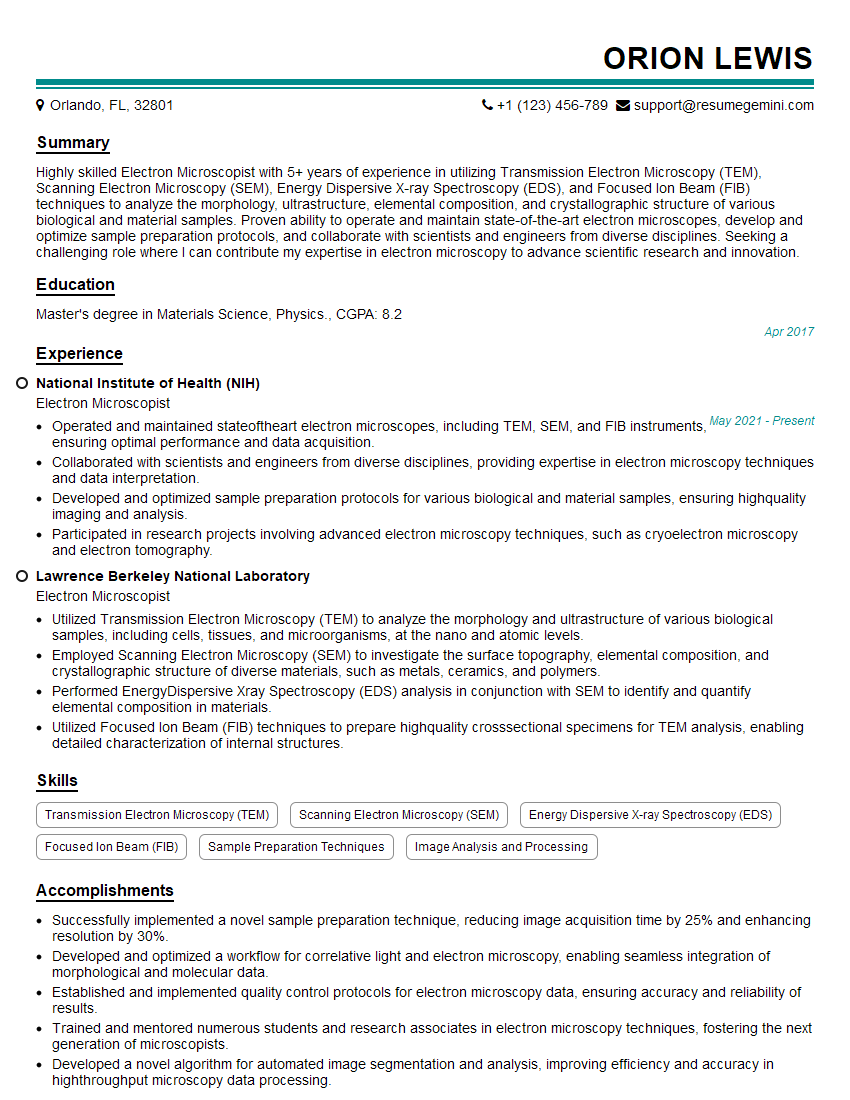
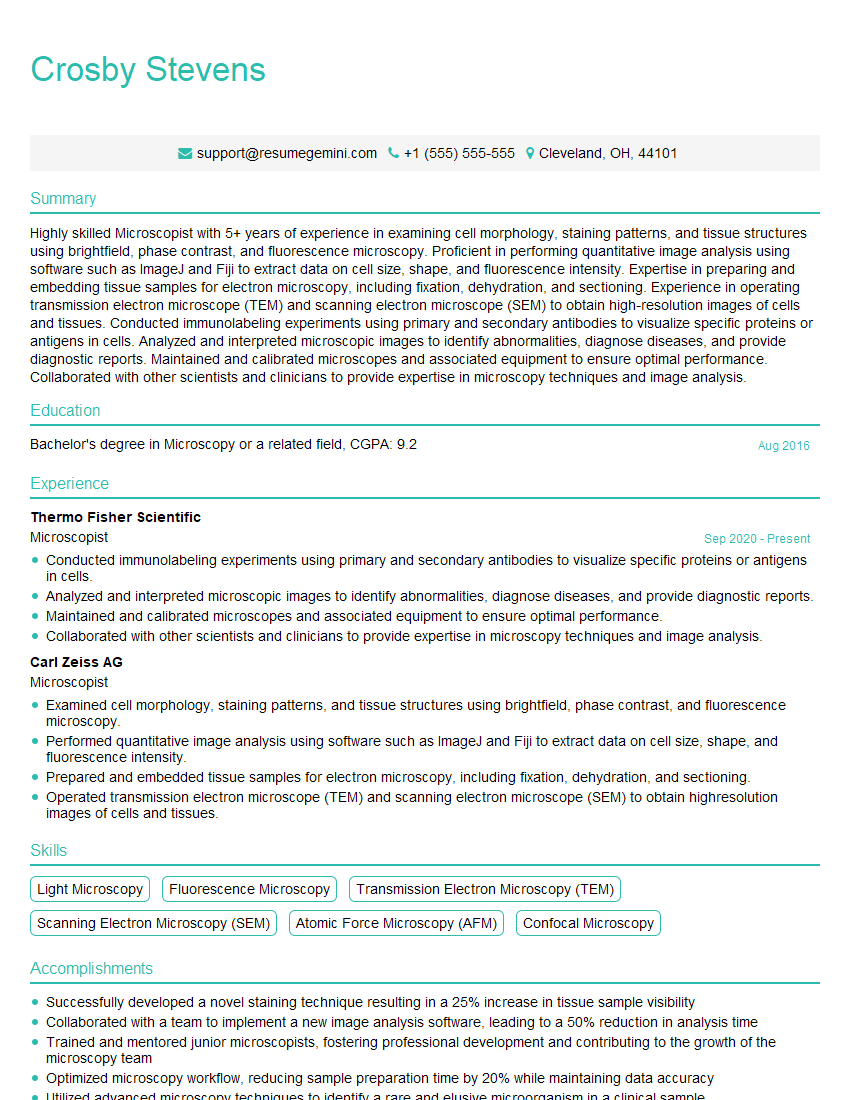
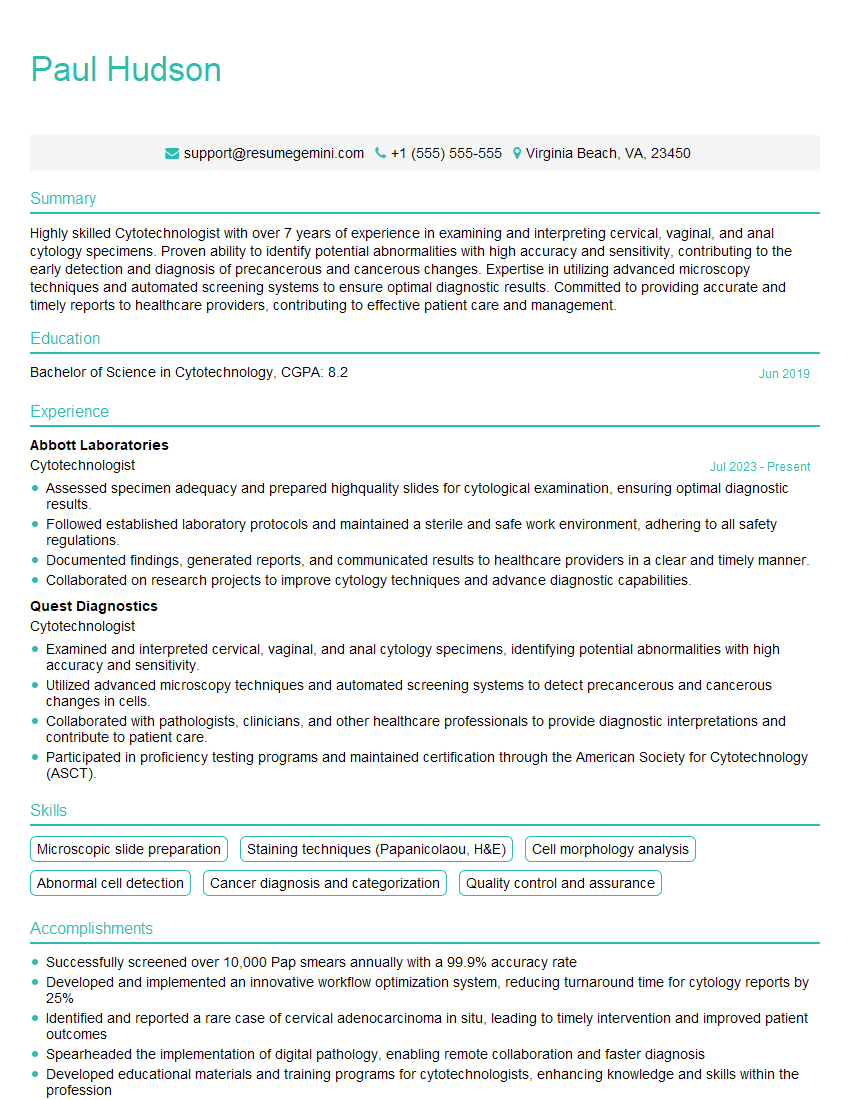
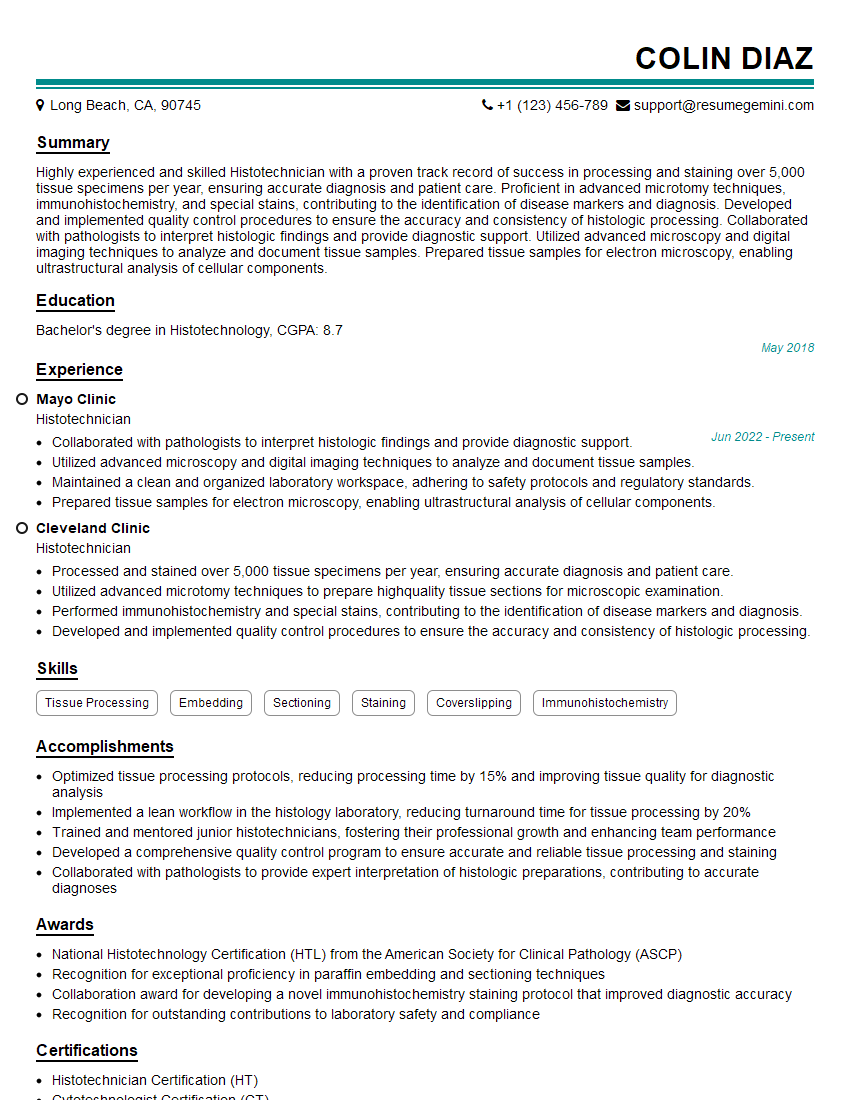
Mastering microscopy techniques is crucial for career advancement in various scientific fields, opening doors to exciting research opportunities and specialized roles. A strong resume is essential for showcasing your skills effectively to potential employers. Creating an ATS-friendly resume significantly improves your chances of getting noticed by recruiters. ResumeGemini is a trusted resource to help you build a professional and impactful resume that highlights your proficiency in microscopy techniques. Examples of resumes tailored to microscopy expertise are available to guide you. Invest time in crafting a compelling resume; it’s your first impression and a key to unlocking your career aspirations.
Explore more articles
Users Rating of Our Blogs
Share Your Experience
We value your feedback! Please rate our content and share your thoughts (optional).
What Readers Say About Our Blog
To the interviewgemini.com Webmaster.
Very helpful and content specific questions to help prepare me for my interview!
Thank you
To the interviewgemini.com Webmaster.
This was kind of a unique content I found around the specialized skills. Very helpful questions and good detailed answers.
Very Helpful blog, thank you Interviewgemini team.