The thought of an interview can be nerve-wracking, but the right preparation can make all the difference. Explore this comprehensive guide to Cheese Production Techniques interview questions and gain the confidence you need to showcase your abilities and secure the role.
Questions Asked in Cheese Production Techniques Interview
Q 1. Explain the different types of milk used in cheesemaking and their impact on the final product.
The type of milk used significantly impacts the final cheese characteristics. Different milk types offer varying fat content, protein composition, and mineral profiles, all contributing to the cheese’s flavor, texture, and overall quality.
- Cow’s milk: The most common, offering a wide range of cheese possibilities, from the creamy texture of cheddar to the firm structure of parmesan. The protein casein, abundant in cow’s milk, is crucial for coagulation.
- Goat’s milk: Produces cheeses with a unique tangy flavor and often a slightly crumbly texture. Goat milk has a higher acidity than cow’s milk, influencing the coagulation process and resulting in a faster cheesemaking process.
- Sheep’s milk: Results in rich, creamy cheeses with a characteristically complex flavor. Sheep’s milk cheeses often have a higher fat content, leading to a denser, more intense flavor profile.
- Buffalo milk: Used to create cheeses with a distinctive creamy texture and intense flavor, often with a slightly sweet undertone. The high fat content contributes to a luxurious mouthfeel.
For instance, the high fat content of sheep’s milk is ideal for creating rich cheeses like Manchego, while the lower fat content and higher acidity of goat’s milk are better suited for cheeses like chèvre.
Q 2. Describe the process of cheese coagulation, including the role of rennet and starter cultures.
Cheese coagulation is the process of transforming liquid milk into a solid curd, the foundation of cheese. This crucial step involves two primary components: rennet and starter cultures.
Rennet: A natural enzyme (or its microbial equivalent) that breaks down the milk protein casein, causing the milk to clot. Traditionally derived from calf stomachs, today microbial rennet is commonly used, offering a vegetarian alternative. Rennet’s action is highly specific, cleaving particular bonds in the casein molecules, resulting in a smooth, cohesive curd.
Starter Cultures: These are specific bacteria and/or fungi added to the milk before rennet. They are responsible for several key functions: they lower the milk’s pH, increasing its acidity. This acidification helps the rennet work more efficiently and also impacts the flavor development. They also contribute to the development of characteristic flavors and aromas in the final cheese through metabolic processes. Different starter cultures contribute unique profiles, influencing the cheese’s character.
The process generally involves adding starter cultures to the milk, allowing them to ferment, then adding rennet to initiate coagulation. The resulting curd is then carefully handled, determining the cheese’s final texture.
Consider the difference between using a mesophilic starter (optimal at moderate temperatures) for cheeses like cheddar, and thermophilic starter (thriving at higher temperatures) used for cheeses like parmesan. The choice impacts not only the coagulation process but also the final flavor and texture.
Q 3. What are the key factors influencing the texture of cheese?
Cheese texture is a complex interplay of several factors, primarily determined during the manufacturing and aging process.
- Milk composition: The fat and protein content of the milk directly affect the curd’s structure and the final texture. Higher fat content typically leads to creamier cheeses.
- Coagulation and curd treatment: The method of coagulation (acid, rennet, or a combination), the size and consistency of the curd, and the handling techniques during cutting and stirring all influence the final texture. For instance, gentle cutting results in a smoother texture.
- Moisture content: The amount of moisture retained in the cheese significantly impacts its texture. High moisture cheeses are typically softer, while low moisture cheeses are harder and drier.
- Salting and aging: Salting affects moisture removal and contributes to texture development. Aging influences protein breakdown and the growth of microorganisms which affect the texture over time. The process of whey expulsion and pressing also influence the structure. The more whey is expelled, the denser the cheese will be.
Think of the difference between a soft, creamy Brie and a firm, crumbly Parmesan; this vast variation is a result of the interplay of these factors. A cheesemaker carefully controls each of these parameters to achieve the desired texture.
Q 4. Explain the different methods of cheese aging and their effect on flavor and texture.
Cheese aging is a critical step that profoundly impacts flavor and texture, transforming the initial product into a mature cheese. Different aging methods are employed, each with specific effects.
- Cave aging: Traditionally used, cave environments provide consistent temperature and humidity, allowing for slow, even aging. The natural microflora in caves can also contribute to unique flavor development.
- Controlled environment aging: Modern cheesemaking utilizes controlled temperature and humidity chambers, ensuring consistent aging conditions irrespective of external factors. This allows for greater precision in controlling the aging process.
- Surface aging: Involves regular washing or brushing of the cheese rind, influencing the growth of surface microorganisms, thus contributing to complex flavor profiles. This method is often used for washed-rind cheeses.
During aging, enzymatic and microbial processes break down proteins and fats, resulting in changes in flavor, aroma, and texture. For example, the sharp, pungent flavor of aged cheddar is the result of proteolytic and lipolytic activities during aging. The longer the aging period, the more intense the flavors become, and the firmer the texture (usually).
Q 5. How do you monitor and control the moisture content during cheesemaking?
Moisture control is paramount in cheesemaking, as it directly impacts texture, shelf life, and microbial growth. Several methods are employed to monitor and control moisture content.
- Whey drainage: Efficient whey removal during curd processing is the first crucial step. The amount of whey retained influences the final moisture content.
- Pressing: After whey drainage, pressing removes further moisture, compressing the curd and shaping the cheese. The pressure and duration of pressing are carefully controlled.
- Salting: Salt draws out moisture from the cheese, reducing moisture content and inhibiting microbial growth. The method of salting (dry salting, brine salting) and the salt concentration impact moisture removal.
- Regular monitoring: Moisture content is monitored throughout the process using various methods, including weight loss measurements and direct moisture determination using laboratory techniques. A moisture meter is typically employed in a professional setting.
Maintaining the right moisture level is crucial. Too much moisture can lead to spoilage, while too little can result in a dry, hard cheese. A skilled cheesemaker uses a combination of these techniques to fine-tune the moisture content, achieving the optimal balance for the desired cheese type.
Q 6. Describe the process of cheese salting and its importance.
Salting is a crucial step in cheesemaking, influencing flavor, texture, and preservation. It involves adding salt to the cheese, either through dry salting or brine salting.
- Dry salting: Involves rubbing salt directly onto the cheese surface. This method is slower but allows for better control over salt penetration.
- Brine salting: Submerging the cheese in a saturated salt solution (brine). This method is faster and ensures more uniform salt distribution.
The importance of salting lies in several key areas:
- Flavor development: Salt enhances and balances the cheese’s flavor profile.
- Moisture control: Salt draws out moisture, inhibiting microbial growth and contributing to texture development.
- Preservation: Salt acts as a natural preservative, extending the cheese’s shelf life.
- Texture development: Salt influences the rate of protein breakdown and fat hydrolysis during aging, contributing to the final texture.
The amount and method of salting vary depending on the type of cheese being produced. Over-salting can lead to a salty, unpalatable cheese, while under-salting can result in spoilage.
Q 7. What are the common defects encountered in cheese production and how are they prevented?
Several defects can occur during cheese production, often arising from poor hygiene, improper handling, or variations in environmental conditions.
- Late blowing: Caused by gas-producing bacteria, resulting in internal holes or cracks in the cheese. This can be prevented by using appropriate starter cultures and controlling environmental conditions during aging.
- Early blowing: Similar to late blowing but occurring early in the aging process, often indicating contamination. Strict hygiene and control of starter cultures are crucial.
- Souring: Excessive acidity caused by uncontrolled bacterial growth. Maintaining proper pH control during the process helps to prevent souring.
- Bitter flavors: Can result from enzymatic breakdown of proteins, often associated with aging. Careful control of aging conditions and selection of appropriate enzymes can minimize this defect.
- Mold growth: Can occur due to improper hygiene or high humidity during aging. Strict sanitary conditions and proper environmental control are essential.
- Gas pockets: Can occur during the cheesemaking process due to improper handling or mixing. Careful attention to process techniques will reduce defects.
Preventing defects requires a meticulous approach to hygiene, precise control of processing parameters, and diligent monitoring throughout the production process. Regular testing and quality control measures are essential for identifying and addressing potential problems before they significantly affect the cheese quality.
Q 8. How do you ensure the safety and quality of cheese throughout the production process?
Ensuring cheese safety and quality is paramount, demanding a meticulous approach throughout the entire production process. It starts with sourcing high-quality, safe milk and continues through every step, from processing to packaging. We implement rigorous quality control measures at each critical control point (CCP), as defined by HACCP principles (explained further in question 7). This involves regular testing for bacterial contamination, monitoring temperature and humidity throughout the process, and employing strict hygiene protocols.
- Milk Testing: Before processing, milk undergoes rigorous testing for bacterial counts, somatic cell counts (indicating udder health), and antibiotic residues. This ensures that we are starting with a clean and safe base material.
- Process Monitoring: Temperature is constantly monitored during pasteurization, fermentation, and aging, as it significantly impacts the growth of beneficial and harmful bacteria. We use calibrated instruments to ensure accuracy.
- Sensory Evaluation: At various stages, trained personnel perform sensory evaluations, assessing the aroma, texture, and taste of the cheese. This helps us detect any off-flavors or defects early on.
- Traceability: A robust traceability system is crucial for identifying and addressing any potential contamination sources. Each batch is meticulously tracked from milk reception to final packaging.
By adhering to these procedures, we can guarantee the safety and consistency of our cheese, fulfilling both legal requirements and customer expectations. For example, a deviation in temperature during aging could lead to undesirable microbial growth, potentially ruining the entire batch and posing health risks.
Q 9. Explain the importance of hygiene and sanitation in a cheese production facility.
Hygiene and sanitation are cornerstones of safe and high-quality cheese production. Think of it like this: cheesemaking is essentially controlled fermentation—we want the *right* bacteria to thrive, not harmful ones. Contamination can ruin a batch, leading to spoilage, off-flavors, and even health risks for consumers. Our facility follows strict protocols to prevent this.
- Cleaning and Sanitizing: All equipment and surfaces come into contact with milk or cheese must be thoroughly cleaned and sanitized regularly using approved food-grade detergents and sanitizers. We often employ a two-step process: cleaning to remove organic matter, followed by sanitizing to kill any remaining microorganisms.
- Personal Hygiene: Employees undergo regular hygiene training, and are required to wear clean uniforms, gloves, and hairnets at all times. Handwashing facilities are readily available throughout the facility.
- Pest Control: A comprehensive pest control program is implemented to prevent insects and rodents from entering the production area. This includes regular inspections and preventative measures.
- Air Quality: Air quality is also monitored to minimize dust and airborne contaminants.
Maintaining a sanitary environment isn’t merely about following regulations; it’s about producing a consistently delicious and safe product that customers can trust. A single lapse in hygiene can cause significant financial losses and reputational damage.
Q 10. What are the different types of cheese presses and their applications?
Cheese presses are essential for expelling whey from the curd, shaping the cheese, and achieving the desired texture. Different types of presses cater to different cheese varieties and production scales.
- Traditional Basket Presses: These are simple, often manually operated, presses made from wood or plastic. They’re suitable for small-scale production and specific cheeses that require a less intense pressing process. Examples include some soft cheeses.
- Frame Presses: These presses utilize a series of frames to hold multiple cheese molds simultaneously, allowing for increased efficiency. They are commonly used in larger-scale operations.
- Automatic Presses: These high-capacity presses automate the pressing cycle, offering precise control over pressure and time. They are found in large commercial cheesemaking facilities. They often incorporate features like programmable pressure profiles for optimal curd consolidation.
- Membrane Presses: These use a membrane to apply pressure evenly to the curd, resulting in a more uniform cheese shape and texture. This type of press minimizes whey loss and allows for the gentle pressing of delicate cheeses.
The choice of press depends on factors like cheese type, production volume, and budget. A small artisan cheesemaker might use a basket press, while a large industrial facility would likely utilize automatic or membrane presses. The selection of the right press is critical for achieving the desired quality and consistency of the final product.
Q 11. Describe the role of starter cultures in cheese ripening.
Starter cultures are carefully selected microorganisms (bacteria, yeasts, or molds) that initiate and control the fermentation process during cheesemaking. They are essential for the development of flavor, aroma, texture, and overall quality of the cheese. These cultures convert lactose (milk sugar) into lactic acid, which lowers the pH, leading to curd coagulation.
Different starter cultures result in vastly different cheeses. For example:
- Lactococcus lactis is a common bacterium used in many cheeses, contributing to acidification and flavor development.
- Penicillium roqueforti is a mold used in blue cheeses, imparting its characteristic blue veining and pungent flavor.
- Propionibacterium freudenreichii is a bacterium responsible for the characteristic eye formation and nutty flavor in Swiss cheeses.
Beyond acidification, starter cultures impact ripening by influencing the activity of other microorganisms and enzymes, contributing to the unique characteristics of each cheese variety. The selection of the appropriate starter culture is paramount for achieving the desired cheese characteristics and ensuring consistent quality.
Q 12. How do you manage and control temperature and humidity during cheese aging?
Temperature and humidity control during cheese aging are critical for optimizing the ripening process and achieving the desired flavor profile and texture. These parameters affect the growth of beneficial microorganisms, enzyme activity, and moisture loss. Improper control can lead to spoilage, off-flavors, or unwanted changes in texture.
Aging cellars or rooms are typically designed with controlled environmental systems to maintain precise temperature and humidity levels. These systems often include:
- Temperature Control: Refrigeration systems maintain the desired temperature range, typically between 4°C and 15°C depending on the cheese type and aging stage. Precise temperature control is essential, especially during crucial stages of ripening.
- Humidity Control: Humidity levels are controlled through humidifiers or dehumidifiers to prevent excessive moisture loss (drying) or undesirable moisture accumulation (mold growth). Optimal humidity usually ranges from 85% to 95%.
- Air Circulation: Proper air circulation ensures even temperature and humidity distribution throughout the aging chamber, preventing uneven ripening and spoilage. This also helps control the spread of unwanted microorganisms.
- Monitoring: Continuous monitoring of temperature and humidity is crucial to ensure consistent conditions and detect any deviations immediately.
Maintaining the correct environment during aging is crucial to the cheese’s final quality and is arguably one of the most important stages.
Q 13. What are the different packaging methods used for cheese and their advantages?
Cheese packaging plays a crucial role in preserving quality, extending shelf life, and enhancing the overall consumer experience. Different packaging methods cater to various cheese types, shelf-life requirements, and marketing strategies.
- Vacuum Packaging: This removes air from the package, inhibiting the growth of aerobic bacteria and extending shelf life. It’s commonly used for softer cheeses.
- Modified Atmosphere Packaging (MAP): This involves replacing air with a mixture of gases (e.g., nitrogen, carbon dioxide) to inhibit microbial growth and oxidation. This method is particularly effective for extending the shelf life of sliced cheese.
- Paraffin Wax Coating: A traditional method used for certain cheeses to create a protective barrier against moisture loss and prevent surface mold growth. Commonly seen on hard cheeses.
- Rigid Containers: Containers such as plastic tubs or wooden boxes offer protection against damage and maintain the cheese’s shape. Ideal for cheeses that require more robust protection during transport.
- Flow Wrap: A common method for individual portions or slices of cheese.
The choice of packaging material depends on factors such as the type of cheese, the desired shelf life, and the cost considerations. For example, a delicate soft cheese might require vacuum packaging to prevent damage and mold growth, whereas a hard cheese might only need a simple paraffin wax coating. Proper packaging ensures the cheese arrives in optimal condition for the consumer.
Q 14. Explain the principles of HACCP (Hazard Analysis and Critical Control Points) in cheese production.
HACCP (Hazard Analysis and Critical Control Points) is a systematic, preventative approach to food safety that identifies and controls potential hazards throughout the production process. In cheesemaking, this is crucial for ensuring product safety and preventing foodborne illnesses.
The HACCP principles applied to cheese production involve:
- Hazard Analysis: Identifying potential hazards that could compromise the safety of the cheese (e.g., bacterial contamination, chemical contamination, physical hazards). This includes considering all stages of production.
- Critical Control Points (CCPs) Identification: Determining the steps in the process where control is essential to prevent or eliminate identified hazards (e.g., pasteurization, cooling, aging temperature, sanitation).
- Critical Limits: Establishing measurable limits for each CCP that must be met to ensure safety (e.g., pasteurization temperature, pH level, bacterial counts).
- Monitoring Procedures: Defining procedures for monitoring each CCP to ensure critical limits are met (e.g., temperature monitoring, microbiological testing).
- Corrective Actions: Developing procedures to follow when deviations from critical limits are detected (e.g., discarding contaminated batches, repeating processes).
- Verification Procedures: Implementing procedures to verify the effectiveness of the HACCP plan (e.g., regular audits, employee training).
- Record Keeping: Maintaining complete records of all monitoring, corrective actions, and verification procedures. This documentation ensures traceability and accountability.
Implementing HACCP is not just about compliance; it’s a proactive approach to ensuring consistent food safety and customer trust. It helps to prevent problems before they occur, reducing the risk of foodborne illnesses and protecting the reputation of the cheesemaking facility. A well-defined HACCP plan is a vital part of any professional cheesemaking operation.
Q 15. How do you troubleshoot common equipment malfunctions in a cheese plant?
Troubleshooting equipment malfunctions in a cheese plant requires a systematic approach. It starts with understanding the specific equipment and its operational parameters. For instance, a malfunctioning pasteurizer could stem from several issues: a faulty heating element, a problem with the temperature sensor, or a blockage in the flow system. My approach involves a series of steps:
- Identify the problem: What exactly is malfunctioning? Is there an error code? Are there any unusual sounds or smells?
- Safety first: Always prioritize safety. Turn off power to the affected equipment before attempting any repairs.
- Check basic parameters: Verify power supply, water pressure, and gas supply (if applicable). Simple issues often get overlooked.
- Consult manuals and diagrams: Equipment manuals are essential troubleshooting guides. They provide schematics, error codes, and potential causes.
- Systematic checks: If the problem persists, systematically check components. For example, in the pasteurizer issue, I would test the heating element’s resistance, the sensor’s calibration, and the flow system for blockages.
- Call for specialized assistance: If the problem is beyond my expertise or involves complex components, I immediately contact a qualified technician.
For example, during my time at a large-scale cheese plant, we experienced a sudden drop in pressure within our cheese vats during the curd setting process. After systematically checking valves and pumps, we discovered a small leak in a pipe. A quick repair prevented significant production delays and potential cheese loss. Prevention is also key; regular equipment maintenance, including thorough cleaning and inspections, minimizes the likelihood of malfunctions.
Career Expert Tips:
- Ace those interviews! Prepare effectively by reviewing the Top 50 Most Common Interview Questions on ResumeGemini.
- Navigate your job search with confidence! Explore a wide range of Career Tips on ResumeGemini. Learn about common challenges and recommendations to overcome them.
- Craft the perfect resume! Master the Art of Resume Writing with ResumeGemini’s guide. Showcase your unique qualifications and achievements effectively.
- Don’t miss out on holiday savings! Build your dream resume with ResumeGemini’s ATS optimized templates.
Q 16. Describe your experience with different cheesemaking techniques (e.g., cheddar, mozzarella, brie).
My experience encompasses a variety of cheesemaking techniques, from the relatively simple production of fresh cheeses like mozzarella to the more complex aging processes involved in cheddar and brie.
- Cheddar: I’m proficient in the traditional cheddar-making process, including cheddaring, milling, and pressing. I understand the importance of controlling moisture content and achieving the desired texture. For example, the length of the cheddaring process directly impacts the final texture of the cheese – longer cheddaring results in a firmer cheese.
- Mozzarella: Producing fresh mozzarella requires precise control of temperature and coagulation. I have expertise in stretching and shaping curds to achieve the characteristic texture of this cheese. Understanding the delicate balance of acidity and moisture is crucial for high-quality mozzarella.
- Brie: Brie production involves careful inoculation with specific mold cultures and meticulous control of humidity and temperature during aging. I understand the importance of maintaining a consistent environment to encourage proper mold growth and achieve the desired creamy texture and aromatic profile.
Each cheese type presents unique challenges and rewards. The ability to adapt to different techniques and maintain consistency is vital in cheesemaking.
Q 17. What is your understanding of milk standardization and its importance in cheese production?
Milk standardization is a crucial step in cheese production, involving adjusting the fat and protein content of the milk to achieve consistent cheese quality. It’s like creating a recipe – you need the right proportions of ingredients to achieve the desired result.
The fat content influences the yield, texture, and flavor of the cheese. Higher fat content generally leads to richer, creamier cheese. Protein content is essential for curd formation and firmness. Standardization ensures that each batch of cheese will have a predictable outcome, despite natural variations in the composition of the incoming milk.
This is typically done using a combination of methods, including adding cream to increase fat content or skim milk to reduce it. Precise measurements and calculations are necessary to achieve the target composition, and sophisticated equipment is often used for efficient and accurate standardization. Without standardization, cheesemakers risk inconsistent product quality, leading to unpredictable yields and potential defects in the finished product.
Q 18. How do you determine the ripeness of cheese?
Determining cheese ripeness is a multi-sensory evaluation that involves several factors. It’s not just about age, but also about the desired characteristics of the specific cheese type.
- Visual inspection: The appearance of the rind and the interior texture can provide clues about ripeness. For instance, a bloomy rind on a brie should exhibit a certain velvety texture and color. The interior should be creamy and supple.
- Texture assessment: The texture is crucial. Is it firm, creamy, or crumbly? This depends on the cheese and its stage of ripening.
- Aroma evaluation: The smell can indicate the progress of ripening. Certain aromas signify specific stages and can help gauge readiness. For example, a pungent aroma in a cheddar is characteristic of its aging process.
- Taste analysis: The final assessment is the taste. Is the flavor profile fully developed and balanced? Over-ripened cheese may taste bitter or sharp, while under-ripened cheese might lack depth of flavor.
Experience and a keen sense of smell and taste are critical in assessing ripeness. This skill is honed over time through continuous observation and testing. I often use standardized scoring systems and record detailed observations to monitor the ripening process and ensure consistency.
Q 19. What are your experience with different types of rennet and their characteristics?
Rennet is an enzyme crucial for cheese coagulation. Various types are available, each with its characteristics.
- Animal rennet: Traditionally derived from the stomachs of calves, lambs, or kids, animal rennet produces a firm, clean-flavored curd and is prized for its traditional characteristics.
- Vegetable rennet: Extracted from plants like thistle or fig, vegetable rennet provides a similar coagulating function but might result in a slightly softer curd and a different flavor profile. It’s a popular choice for vegetarians.
- Microbial rennet: Produced by fermentation using microorganisms, this rennet is a reliable alternative to both animal and vegetable rennets and offers consistent performance. It produces a clean curd and is suitable for most cheese types.
The choice of rennet depends on the desired cheese characteristics and the manufacturer’s preferences. Each type will subtly impact the final product’s taste, texture, and yield. For example, the use of animal rennet is often preferred for traditional cheese types due to its contribution to the flavor profile. I have extensive experience working with all three types and understand how to adjust production parameters to compensate for the slight variations in coagulation times and curd characteristics. Knowing the nuances of each rennet allows for targeted fine-tuning of the production process.
Q 20. Explain the concept of psychrotrophic bacteria and their impact on cheese quality.
Psychrotrophic bacteria are microorganisms that can grow at refrigeration temperatures. This is crucial in cheesemaking because these bacteria can significantly impact cheese quality, particularly if present in the raw milk.
In cheese production, psychrotrophic bacteria can produce enzymes that break down proteins and fats. This leads to defects such as bitter flavors, soft textures, and shorter shelf life. They can also contribute to undesirable off-flavors and influence the ripening process negatively. To mitigate the risks, good hygiene practices throughout the milk handling and production process are essential. Rapid cooling of raw milk after milking is important to limit the growth of these bacteria. Effective cleaning and sanitization of equipment also prevents their multiplication. Stringent quality control measures, including regular testing for psychrotrophic bacteria count, play a vital role in maintaining the safety and quality of cheese.
For example, in a previous role, we experienced a batch of cheese with a pronounced bitter taste. Investigation revealed a higher-than-normal level of psychrotrophic bacteria in the milk used for production. This led to a review of our cooling procedures and a strengthening of our sanitation protocols.
Q 21. Describe your experience with different cheese aging rooms and their environmental controls.
Cheese aging rooms are controlled environments designed to provide specific conditions essential for successful cheese ripening. The environmental parameters – temperature, humidity, and airflow – significantly influence the cheese’s texture, flavor, and overall quality.
I have experience with different aging room designs, ranging from smaller, temperature-controlled rooms using basic refrigeration and humidification systems to larger, sophisticated facilities employing advanced climate control technology and automated monitoring systems.
The optimal conditions vary widely depending on the cheese type. For example, soft cheeses like brie may require higher humidity levels to prevent desiccation, while hard cheeses like cheddar may need lower humidity to promote proper rind development. Temperature control is similarly important, influencing the rate of ripening and enzymatic activity. Airflow is managed to ensure uniform temperature and humidity distribution throughout the aging room to avoid any inconsistencies in cheese maturation. The rooms are also frequently cleaned and sanitized to maintain optimal hygiene and prevent mold growth. Monitoring systems play a critical role, providing data that aids in fine-tuning the environmental parameters and ensuring consistent cheese quality.
Q 22. How do you perform quality control checks throughout the cheesemaking process?
Quality control in cheesemaking is a continuous process, starting from milk reception and ending with the final product’s distribution. It’s not just about catching defects; it’s about ensuring consistent quality and safety.
Milk Testing: We begin by rigorously testing incoming milk for fat content, protein levels, acidity, and bacterial contamination. This is crucial, as milk quality directly impacts the cheese’s final characteristics.
Process Monitoring: Throughout cheesemaking—coagulation, cutting, draining, salting, aging—we monitor temperature, time, and moisture levels meticulously. Deviations are recorded and analyzed to identify and correct potential problems. For example, inconsistent curd cutting can lead to variations in texture. We use calibrated instruments to ensure accuracy and consistency.
Sensory Evaluation: At various stages, trained personnel perform sensory evaluations. We assess aroma, texture, and flavor profiles, comparing them to established standards for the particular cheese type. This subjective evaluation is crucial, as it captures aspects that instruments might miss.
Microbial Analysis: Regular microbial analysis of cheese samples ensures the absence of harmful bacteria. This is particularly important during aging, as unwanted microbial growth can significantly affect taste and safety. We use standard microbiological techniques and follow strict hygiene protocols.
Final Product Inspection: Before packaging, each cheese undergoes a visual inspection to check for defects, such as cracks, mold growth (unless intentionally cultured), or discoloration. This ensures that only high-quality cheeses reach the consumer.
Implementing a robust quality control system not only enhances product quality but also strengthens our brand reputation and consumer trust.
Q 23. What are your experiences with different types of cheese molds and their effect on flavor and texture?
Different cheese molds dramatically influence flavor and texture. The selection of mold depends heavily on the desired cheese characteristics.
Penicillium candidum: This white mold is commonly used in cheeses like Camembert and Brie, creating a soft, creamy texture and earthy, mushroomy notes. The mold’s growth contributes to the characteristic rind.
Penicillium roqueforti: This blue mold, characteristic of Roquefort and Gorgonzola, grows inside the cheese, giving it a pungent, sharp flavor and characteristic marbling. The mold’s development requires specific conditions, including careful aeration.
Geotrichum candidum: This mold produces a white, velvety rind on cheeses like Crottin de Chavignol, contributing to a slightly yeasty aroma and a slightly firm texture.
Brevibacterium linens: This bacterium, often referred to as an ‘orange mold’, is used in many washed-rind cheeses. It’s not a true mold but contributes to an orange-red rind and a complex, pungent aroma. It thrives on the regular washing of the cheese’s surface during the aging process.
My experience encompasses using a wide array of molds, each with its own challenges and rewards. Understanding the nuances of mold growth and its impact on the final product is paramount for successful cheese production.
Q 24. Explain your understanding of the legal requirements and regulations for cheese production.
Cheese production is heavily regulated to ensure food safety and prevent fraud. Regulations vary by country and region, but common themes include:
Hygiene and Sanitation: Strict adherence to Good Manufacturing Practices (GMP) and Hazard Analysis and Critical Control Points (HACCP) is mandatory. This involves maintaining hygienic conditions throughout the facility, ensuring proper cleaning and sanitation procedures, and controlling potential hazards.
Milk Quality: Regulations specify acceptable levels of bacterial contamination and other quality parameters for the milk used in cheesemaking. Traceability of milk sources is often required.
Labeling: Accurate labeling is crucial, including information on ingredients, allergens, nutritional values, and any health claims.
Packaging: Regulations stipulate appropriate packaging materials that maintain food safety and prevent contamination. This includes specific requirements for shelf life and labeling.
Traceability: Comprehensive traceability systems are necessary to track cheese from the raw materials to the final consumer, enabling rapid identification and response in case of a food safety incident.
Staying abreast of these evolving regulations and adhering to them strictly is critical for legal compliance and consumer safety. Non-compliance can lead to significant penalties and reputational damage.
Q 25. Describe your experience with different types of cheese packaging materials and their properties.
The choice of packaging material significantly impacts cheese shelf life, flavor preservation, and consumer experience.
Wax Coatings: Traditional wax coatings provide a barrier against moisture loss and oxygen penetration, extending shelf life and maintaining texture, particularly for hard cheeses.
Plastic Films: Various plastic films (e.g., PVC, polyethylene) offer different levels of permeability to gases and moisture. They are frequently used for both hard and soft cheeses, offering protection and visual appeal.
Vacuum Packaging: Vacuum packaging removes air, extending shelf life by inhibiting microbial growth and preventing oxidation. This method is particularly beneficial for soft cheeses.
Modified Atmosphere Packaging (MAP): MAP involves packaging the cheese in a controlled atmosphere (e.g., high nitrogen, low oxygen) to further extend shelf life and maintain quality.
Wooden Boxes: Traditional wooden boxes, especially for aged cheeses, offer aesthetic appeal and can influence flavor development.
My experience dictates that selecting the optimal packaging depends on the specific cheese type, its shelf life requirements, and intended market. For example, a delicate soft cheese needs different packaging compared to a hard, long-aged cheddar. Sustainability concerns are also increasingly influencing packaging material choices.
Q 26. How do you manage inventory and track cheese production yields?
Efficient inventory and yield tracking are essential for cost control and optimized production. We employ a combination of methods:
Production Records: Detailed records of each production batch include milk quantity used, cheese yield, processing parameters, and aging times. This data is crucial for yield analysis and process optimization.
Inventory Management System: We utilize a computerized inventory management system to track cheese quantities at various stages—from aging rooms to finished goods storage. This system provides real-time insights into stock levels and helps prevent shortages or spoilage.
Yield Calculations: Yield is calculated as the ratio of finished cheese weight to the weight of milk processed. We regularly monitor yields to identify any inefficiencies in the production process. Variations in yield can indicate problems with the milk, the process, or equipment.
First-In, First-Out (FIFO): We follow a FIFO system for aging cheeses to ensure that older cheeses are processed or sold first, minimizing the risk of spoilage.
Accurate inventory and yield tracking provide valuable data for decision-making, enabling us to optimize production, reduce waste, and maintain profitability.
Q 27. How do you handle customer complaints regarding cheese quality or defects?
Customer complaints are taken very seriously, as they provide valuable feedback and identify potential quality issues. Our approach is as follows:
Acknowledge and Investigate: We promptly acknowledge the complaint and gather all relevant information, including the batch number, purchase date, and details of the defect.
Analyze the Complaint: We thoroughly investigate the cause of the complaint. This might involve examining the cheese sample, reviewing production records, and checking for any deviations from standard procedures.
Take Corrective Action: Depending on the cause, we take appropriate corrective action, which might include adjusting production parameters, enhancing quality control measures, or recalling a specific batch.
Respond to the Customer: We provide the customer with a prompt and courteous response, explaining our findings and outlining the steps taken to address the issue. We aim to resolve the issue to the customer’s satisfaction.
Prevent Recurrence: We review our procedures to identify and implement changes that prevent similar complaints in the future. This is a critical aspect of continuous improvement.
Our goal is to turn negative experiences into opportunities for improvement, enhance customer trust, and maintain a strong reputation.
Q 28. Describe your experience with implementing and maintaining food safety programs in a cheesemaking facility.
Food safety is paramount in cheesemaking. Implementing and maintaining a comprehensive food safety program is a continuous process requiring diligence and attention to detail.
HACCP Plan: We have a detailed HACCP plan that identifies potential hazards at each stage of the production process and establishes critical control points (CCPs) to prevent or eliminate these hazards.
Good Manufacturing Practices (GMP): We strictly adhere to GMP, ensuring hygiene, sanitation, and appropriate personnel practices throughout the facility. Regular training for all employees is essential.
Allergen Management: We have robust allergen management protocols to prevent cross-contamination and clearly label products containing allergens.
Pest Control: A comprehensive pest control program minimizes the risk of pest infestation, which can compromise food safety and product quality.
Temperature Control: Maintaining appropriate temperatures throughout the production process is critical. We use calibrated thermometers and temperature monitoring systems to ensure consistency and safety.
Regular Audits and Inspections: We undergo regular internal audits and external inspections to ensure compliance with all relevant food safety regulations and standards. Continuous improvement is an ongoing process.
Food safety is not merely a checklist; it is an ingrained culture that permeates every aspect of our operations. This commitment ensures the safety and quality of our products and protects our consumers.
Key Topics to Learn for Cheese Production Techniques Interview
- Milk Selection and Handling: Understanding the impact of milk quality (fat content, protein levels, bacterial counts) on cheese characteristics. Practical application: Troubleshooting issues arising from substandard milk.
- Coagulation and Curd Formation: Mastering the process of transforming liquid milk into solid curds using rennet and other coagulants. Practical application: Adjusting coagulation parameters to achieve desired curd texture and yield.
- Curd Cutting and Cooking: Learning the techniques of cutting curds to the appropriate size and cooking them to achieve the desired whey expulsion and texture. Practical application: Problem-solving scenarios related to whey drainage and curd firmness.
- Whey Processing and Management: Understanding whey composition and its potential uses (e.g., whey protein concentrate). Practical application: Implementing sustainable whey management practices.
- Salting and Brining: Exploring different salting techniques and their impact on cheese flavor, texture, and preservation. Practical application: Calculating salt concentration for optimal preservation and flavor development.
- Aging and Ripening: Understanding the biochemical changes that occur during cheese aging and their impact on flavor, texture, and aroma. Practical application: Troubleshooting issues related to mold growth or undesirable flavor development during aging.
- Hygiene and Sanitation: Mastering sanitation protocols to prevent contamination and ensure food safety throughout the cheesemaking process. Practical application: Implementing HACCP (Hazard Analysis and Critical Control Points) principles in a cheesemaking facility.
- Cheese Defects and Troubleshooting: Identifying common cheese defects and understanding the causes and solutions. Practical application: Analyzing cheese samples to identify defects and implement corrective actions.
- Quality Control and Assurance: Understanding quality control measures and implementing strategies to ensure consistent cheese quality. Practical application: Using sensory evaluation techniques to assess cheese quality.
- Equipment and Technology: Familiarizing yourself with various cheesemaking equipment and technologies (e.g., automated curd handling systems). Practical application: Understanding the functionality and maintenance of common cheesemaking equipment.
Next Steps
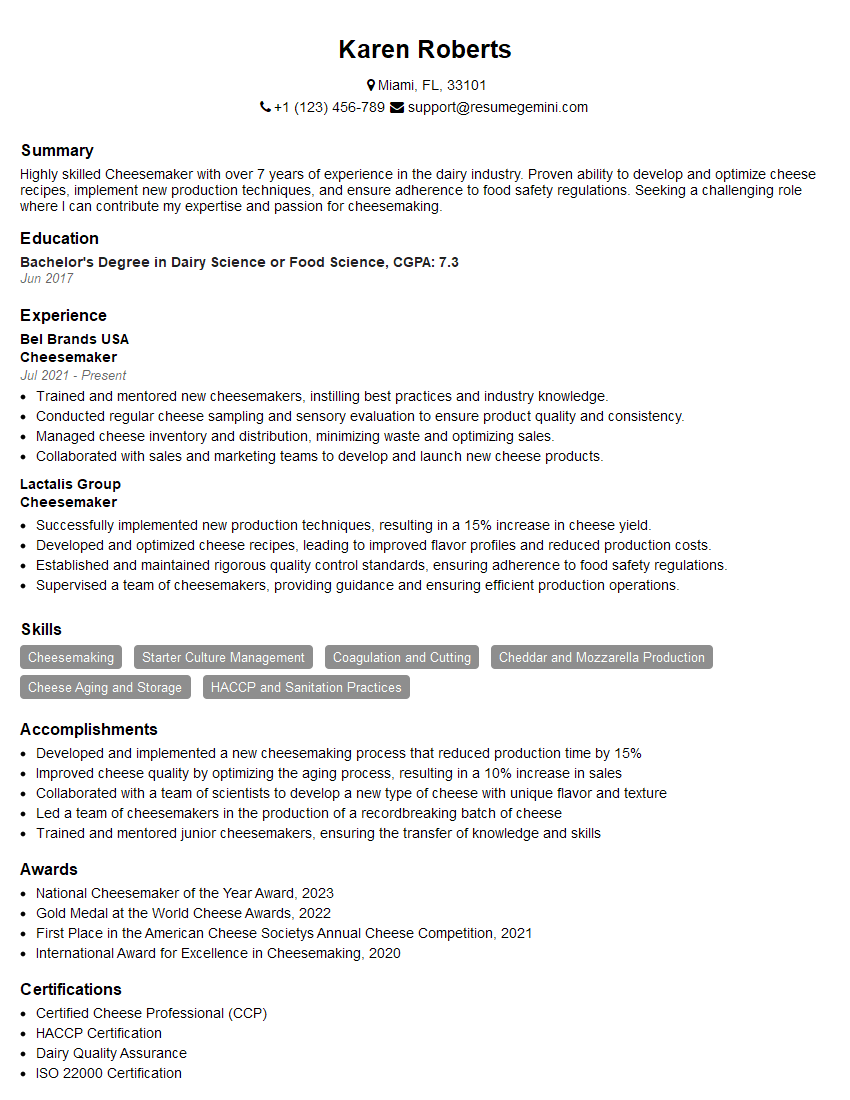
Mastering Cheese Production Techniques opens doors to exciting career opportunities in the food industry, offering diverse roles with excellent growth potential. To maximize your job prospects, creating a strong, ATS-friendly resume is crucial. ResumeGemini is a trusted resource that can help you build a professional resume that highlights your skills and experience effectively. Examples of resumes tailored to Cheese Production Techniques are available to guide you. Take the next step towards your dream career today!

Explore more articles
Users Rating of Our Blogs
Share Your Experience
We value your feedback! Please rate our content and share your thoughts (optional).
What Readers Say About Our Blog
To the interviewgemini.com Webmaster.
Very helpful and content specific questions to help prepare me for my interview!
Thank you
To the interviewgemini.com Webmaster.
This was kind of a unique content I found around the specialized skills. Very helpful questions and good detailed answers.
Very Helpful blog, thank you Interviewgemini team.