Interviews are more than just a Q&A session—they’re a chance to prove your worth. This blog dives into essential Animal Cell Culture interview questions and expert tips to help you align your answers with what hiring managers are looking for. Start preparing to shine!
Questions Asked in Animal Cell Culture Interview
Q 1. Describe the process of subculturing adherent cells.
Subculturing adherent cells, also known as passaging, is the process of transferring cells from a confluent monolayer to a new culture vessel to allow continued growth. Think of it like transplanting a garden – you’re moving your thriving plants to a bigger, more spacious pot.
- Trypsinization: Adherent cells are attached to the culture vessel’s surface. We use trypsin, a protease enzyme, to detach them. The trypsin solution is added to the culture flask, gently swirled, and incubated to allow the cells to detach. It’s crucial to monitor this step closely, as over-trypsinization can damage cells.
- Neutralization: Once detached, the trypsin is neutralized by adding a complete growth medium containing serum. Serum contains trypsin inhibitors that stop the enzymatic activity and protect the cells.
- Cell Counting and Dilution: A cell counter, often using Trypan Blue exclusion (explained later), determines cell concentration and viability. The cells are then diluted to the desired seeding density in fresh growth medium. This is crucial to avoid over-crowding the new flask.
- Seeding: The cell suspension is then added to a new, sterile culture flask containing fresh growth medium, ensuring even distribution. The flask is gently swirled to distribute the cells evenly.
- Incubation: The flask is returned to the incubator under optimal conditions for cell growth (e.g., 37°C, 5% CO2).
For example, if your cells are 90% confluent, it’s a good time to subculture. Delaying subculturing leads to nutrient depletion, waste accumulation, and reduced cell viability. Conversely, subculturing too early wastes resources and slows down overall growth.
Q 2. Explain the principles of sterile technique in cell culture.
Sterile technique is paramount in cell culture to prevent contamination and ensure reliable, reproducible results. It’s like operating in a surgical theater – every precaution must be taken to maintain a clean and sterile environment.
- Aseptic Environment: All work should be performed in a laminar flow hood or biosafety cabinet, which provides a sterile airflow to prevent airborne contamination. Surfaces are routinely cleaned with 70% ethanol.
- Sterile Reagents and Supplies: Only sterile reagents, media, and disposables should be used. Proper handling and storage are crucial to maintain sterility.
- Proper Technique: Hands are thoroughly washed and gloves are worn. All materials are carefully inspected for any signs of contamination before use. Careful handling of pipettes and other instruments prevents accidental contamination. Any spills should be immediately cleaned with appropriate disinfectants.
- Regular Monitoring: Regularly examine cultures under a microscope for any signs of contamination, such as turbidity, unusual morphology or color change in the medium.
Failure to maintain sterile technique can lead to bacterial, fungal, or mycoplasma contamination, rendering your cell cultures unusable and potentially jeopardizing research findings.
Q 3. What are the common contaminants found in cell culture and how are they detected?
Common contaminants in cell culture include bacteria, yeast, fungi, and mycoplasma. Detecting these contaminants requires careful observation and appropriate testing methods.
- Bacteria: Often cause turbidity (cloudiness) in the culture medium and rapid changes in pH. They are easily detected under a light microscope.
- Yeast and Fungi: Appear as distinct, larger particles in the culture, often showing budding or filamentous structures. Again, microscopy is essential.
- Mycoplasma: These are very small bacteria that are more difficult to detect. They often don’t cause obvious visual changes in the culture but can alter cellular function and affect experimental results. Detection usually requires specialized tests, such as PCR or DAPI staining.
Regular microscopic examination is the first line of defense. Changes in media color, pH, or the presence of unusual particles should trigger further investigation using appropriate detection methods. A contaminated cell line is a significant problem, and usually necessitates discarding the culture to prevent contamination of other cultures.
Q 4. How do you assess cell viability using Trypan Blue exclusion?
Trypan Blue exclusion is a simple yet effective method to assess cell viability. Trypan Blue, a dye, enters cells with compromised cell membranes, staining them blue. Viable cells with intact membranes exclude the dye and remain unstained.
- Mix Cells with Trypan Blue: A small sample of the cell suspension is mixed with an equal volume of Trypan Blue.
- Load Hemocytometer: The mixture is loaded into a hemocytometer, a specialized counting chamber.
- Count Cells: Under a light microscope, both stained (non-viable) and unstained (viable) cells are counted in several squares of the hemocytometer.
- Calculate Viability: The percentage of viable cells is calculated using the formula:
(Number of unstained cells / Total number of cells) x 100%
For example, if you count 100 cells and 80 are unstained, the viability is 80%. This provides a quick and easy assessment of the health of the cell population, crucial for experimental design and interpretation.
Q 5. Explain the difference between primary and immortalized cell lines.
Primary cell lines are derived directly from tissues and have a limited lifespan in vitro. They retain the characteristics of the original tissue, making them valuable for specific research. Think of them like a fresh cut flower – beautiful and vibrant, but with a limited life span.
Immortalized cell lines, on the other hand, have undergone genetic modifications (such as the introduction of telomerase), allowing them to proliferate indefinitely. They can be more readily available and easier to work with. They are more like a long-lasting plant.
The choice between primary and immortalized cell lines depends on the research question. Primary cells are more representative of the in vivo state but are more challenging to maintain, while immortalized lines offer convenience and reproducibility but may have altered characteristics.
Q 6. What are the critical parameters to monitor during cell culture (e.g., pH, temperature, CO2)?
Several critical parameters must be meticulously monitored during cell culture to ensure optimal cell growth and health. These are the environmental factors that dictate cell survival and function.
- Temperature: Cells are typically cultured at 37°C, reflecting the human body temperature. Deviations can significantly impact cell viability and function.
- pH: A slightly alkaline pH (around 7.2-7.4) is ideal for most cell types. The pH is maintained using a buffering system in the growth medium, and often monitored by a pH meter or color change indicator in the media itself.
- CO2: A 5% CO2 atmosphere is usually required to maintain the desired pH of the bicarbonate-buffered medium. CO2 incubators control the atmosphere.
- Osmotic Pressure: The correct osmotic pressure (tonicity) of the cell culture medium is crucial. Maintaining the right tonicity is essential to prevent cell damage or lysis.
- Oxygen: Most mammalian cells require oxygen for growth. Incubators provide adequate oxygen levels, though some cells grow better in a low oxygen environment.
Consistent monitoring of these parameters ensures the cell culture environment remains suitable for optimal cell growth and experimental consistency. Inconsistencies in these factors can lead to experimental variability and flawed results.
Q 7. Describe your experience with cryopreservation of cells.
Cryopreservation, or the process of freezing cells, is a vital technique to preserve cell lines for long-term storage. It’s like putting your precious plants into a state of suspended animation during the winter months.
My experience includes using a controlled-rate freezer to reduce the formation of ice crystals, which can damage cells. The cells are suspended in a cryopreservation medium containing a cryoprotective agent like DMSO (dimethyl sulfoxide) to protect them from freezing-induced damage. The vials are then slowly frozen down to -80°C and subsequently transferred to liquid nitrogen for long-term storage. For thawing, vials are removed from liquid nitrogen, rapidly thawed in a 37°C water bath, and the cells are carefully resuspended in appropriate growth medium. We routinely monitor the viability of cells post-thaw to ensure the efficacy of the process.
I have extensive experience with various cell types, and my focus is always on maximizing cell viability and maintaining their functionality after cryopreservation. Successful cryopreservation ensures that valuable cell lines are preserved, preventing the need to repeat time-consuming primary cell isolations or the risk of losing irreplaceable cell lines.
Q 8. How do you troubleshoot cell culture contamination?
Troubleshooting contamination in cell culture is crucial for reliable experimental results. Contamination can be bacterial, fungal, mycoplasma, or even cross-contamination from other cell lines. The first step is visual inspection under a microscope. Bacterial contamination often presents as turbidity in the media, while fungal contamination might show filamentous structures. Mycoplasma contamination is trickier and requires specific detection methods.
- Visual Inspection: Cloudy media, unusual cell morphology, or an unusual color often indicate a problem.
- Microscopic Examination: Gram staining can differentiate bacterial types. Fungal contamination is usually visible directly under a microscope.
- Mycoplasma Detection: PCR, ELISA, or DNA staining are often required as mycoplasma are difficult to see.
- Discarding Contaminated Cultures: Immediately discard contaminated cultures according to institutional biosafety guidelines to prevent spreading. Thoroughly disinfect the incubator and work area with appropriate disinfectants.
- Preventive Measures: Proper aseptic technique is critical; this includes sterile media preparation, working in a laminar flow hood, and regularly checking the incubator for cleanliness.
For example, I once had a cell culture contaminated with yeast. The media became noticeably cloudy, and microscopic examination revealed budding yeast cells. We immediately discarded the culture and sterilized the incubator to prevent further issues. Implementing stricter aseptic techniques in subsequent experiments prevented recurrence.
Q 9. What are the different types of cell culture media and their applications?
Cell culture media are complex mixtures providing essential nutrients and maintaining physiological conditions for cell growth. The choice of media depends largely on the cell type and experimental goals.
- Basal Media: These form the base of most media formulations. Examples include Eagle’s Minimum Essential Medium (EMEM), Dulbecco’s Modified Eagle Medium (DMEM), and RPMI 1640. These typically lack some components like serum.
- Serum-Supplemented Media: Serum, typically fetal bovine serum (FBS), is added to basal media to supply growth factors, hormones, and other essential components. FBS is widely used but carries variability and potential contamination risks.
- Serum-Free Media: Designed to eliminate FBS, these media contain defined components and are crucial for reproducible results and reducing the risk of contamination. They are however more expensive and require optimized formulations for each cell type.
- Specialty Media: These are tailored for specific cell types with specialized needs. For example, some media are formulated for neuronal cells, stem cells, or hybridoma cells, which may require unique growth factors or other additives.
For instance, when culturing hybridoma cells to produce monoclonal antibodies, a specialized serum-supplemented medium containing hypoxanthine-aminopterin-thymidine (HAT) is used to select for hybrid cells. In contrast, stem cells often require more complex serum-free media containing specific growth factors.
Q 10. Explain the concept of cell passage and its significance.
Cell passage, also known as subculturing or splitting, is the process of transferring cells from a confluent culture (when cells have reached a high density) to a new culture vessel with fresh media. This process is critical for maintaining cell viability and preventing contact inhibition, where cell growth ceases due to cell-to-cell contact.
Significance:
- Maintaining Cell Growth: Prevents contact inhibition and ensures continued cell proliferation.
- Preventing Cell Death: Confluent cultures deplete nutrients and accumulate waste products, leading to cell death. Passage replenishes nutrients and removes waste.
- Experimental Consistency: Using cells at a consistent passage number ensures experimental reproducibility.
- Expanding Cell Cultures: Allows for the propagation of large numbers of cells for research or production purposes.
The passage number (P) reflects the number of times a cell population has been subcultured. Keeping track of the passage number is vital to maintain the quality of the cell line, as cell characteristics can change with repeated passages (e.g., senescence or genetic drift).
Q 11. Describe your experience with different cell culture vessels and their suitability for various cell types.
The choice of cell culture vessel significantly impacts cell growth and health. The surface area, material, and treatment influence cell attachment, proliferation, and differentiation.
- Tissue Culture Flasks: These are widely used for adherent cells and provide a large surface area for growth. They are typically made of polystyrene and can be treated to enhance cell attachment (e.g., tissue culture treated).
- Petri Dishes: Used for both adherent and suspension cells, they offer easy access for microscopic observation and manipulation. They are typically used for short-term cultures or specific assays.
- Multi-well Plates: These are useful for high-throughput experiments and allow for parallel cultures in multiple wells, each serving as an independent culture. They come in different formats (6-well, 12-well, 96-well, etc.)
- Roller Bottles: High surface area vessels ideal for large-scale production of adherent cells. They are continuously rotated to keep cells in suspension and ensure uniform growth.
- Cell Culture Inserts: Used to create co-cultures or for studying cell permeability and transport.
For example, when culturing primary cells, which often have low proliferative capacity and are sensitive to the culture environment, I prefer using tissue culture treated flasks to enhance cell adhesion and survival. For transient transfection experiments, I might use multi-well plates for efficient manipulation and analysis of multiple samples simultaneously.
Q 12. How do you quantify cell numbers using a hemocytometer?
A hemocytometer is a specialized counting chamber used for quantifying cells in a suspension. It has a grid etched into the glass, allowing for precise cell counting and subsequent calculation of cell concentration.
- Prepare the cell suspension: Gently trypsinize and resuspend cells in media.
- Dilute the cell suspension: If the cell density is too high, dilute the suspension with appropriate media to obtain a countable number of cells within the hemocytometer grid.
- Load the hemocytometer: Using a pipette, carefully load the cell suspension into the hemocytometer chamber, ensuring it fills the chamber without bubbles or overflows.
- Count the cells: Under a microscope, count the cells in multiple squares of the hemocytometer grid. Typically, four corner squares are counted for greater accuracy.
- Calculate the cell concentration: Using the following formula, the cell concentration can be determined:
Cell concentration (cells/mL) = (Average number of cells per square) * (Dilution factor) * 104
The factor 104 accounts for the volume of the counted area and the dilution (if any).
For example, if I count an average of 50 cells per square after a 1:10 dilution, the cell concentration would be (50 cells/square) * 10 * 104 = 5 x 10⁶ cells/mL.
Q 13. What are the ethical considerations in using animal cells in research?
Ethical considerations in animal cell research are paramount. The use of animals or animal-derived materials raises concerns about animal welfare and the potential for suffering.
- 3Rs: Researchers must adhere to the 3Rs principle: Replacement (using alternative methods when possible), Reduction (minimizing the number of animals used), and Refinement (minimizing animal suffering).
- Source of Cells: The source of animal cells should be carefully considered. Cells from ethically sourced animals (e.g., those raised under humane conditions) are preferred. The use of immortalized cell lines avoids continuous animal sacrifice but also raises considerations of genetic stability and potential for artifacts.
- Institutional Animal Care and Use Committee (IACUC) Approval: All animal research must receive approval from an IACUC, which reviews protocols to ensure they align with ethical standards and guidelines.
- Minimizing Animal Distress: Researchers must implement procedures to minimize pain, distress, and suffering during the collection and handling of animal cells.
- Waste Disposal: Proper and safe disposal of biological waste according to institutional guidelines is vital.
For example, if considering a project requiring fetal bovine serum (FBS), we would carefully consider alternative sources which prioritize minimizing harm to animals, such as FBS from farms with high welfare standards and transparent sourcing.
Q 14. Explain the principle of flow cytometry and its applications in cell culture.
Flow cytometry is a powerful technique used to analyze the physical and chemical characteristics of single cells in a fluid suspension. It works by passing cells individually through a laser beam, which detects light scattering and fluorescence emitted by labeled cells.
Principle:
Cells are labeled with fluorescent antibodies specific to particular cell surface markers or intracellular proteins. As cells pass through the laser, the scattered light provides information about cell size and granularity, while the fluorescence emission reveals the expression of specific markers. This information is then used to generate dot plots and histograms to characterize cell populations.
Applications in Cell Culture:
- Cell cycle analysis: Detecting the proportion of cells in different phases of the cell cycle (G0/G1, S, G2/M) using DNA-binding dyes.
- Cell sorting: Separating different cell populations based on their surface markers (e.g., isolating specific immune cell subsets).
- Apoptosis detection: Identifying apoptotic cells using Annexin V or caspase activity assays.
- Cell viability assays: Measuring cell viability using dyes such as trypan blue or propidium iodide.
- Intracellular protein analysis: Analyzing the expression of specific intracellular proteins using fluorescent antibodies.
In my research, I have used flow cytometry to analyze the expression of specific surface markers on immune cells, allowing me to characterize the immune response following various treatments. Furthermore, it was instrumental in purifying particular immune cell populations for further downstream analysis.
Q 15. Describe your experience with different microscopy techniques used in cell culture.
Microscopy is fundamental to animal cell culture, allowing visualization of cell morphology, growth patterns, and intracellular processes. My experience encompasses a range of techniques, including:
Bright-field microscopy: A basic technique used for observing cell density and overall morphology. It’s like looking at a landscape with your naked eye – you get a general view but miss the fine details. I use this routinely for assessing cell confluence before passaging.
Phase-contrast microscopy: This enhances the contrast of transparent cells, allowing for better visualization of internal structures without staining. It’s like adding depth to that landscape – you can now distinguish hills and valleys, representing different cell structures.
Fluorescence microscopy: This is a powerful technique employing fluorescent probes to target specific cellular components or processes. It’s like using night-vision goggles on that landscape – you can see details otherwise hidden in the dark, such as the location of specific proteins within the cells. I’ve used this extensively for studying intracellular localization of tagged proteins.
Confocal microscopy: An advanced form of fluorescence microscopy that provides high-resolution 3D images by reducing background noise. This is like getting an aerial view of our landscape, allowing us to better understand the relationship between different cellular elements in three dimensions. I’ve used this for studying complex cellular structures.
Each technique offers unique advantages and is selected based on the specific research question. For instance, bright-field is perfect for quick assessments, while confocal is essential for intricate analyses of protein localization.
Career Expert Tips:
- Ace those interviews! Prepare effectively by reviewing the Top 50 Most Common Interview Questions on ResumeGemini.
- Navigate your job search with confidence! Explore a wide range of Career Tips on ResumeGemini. Learn about common challenges and recommendations to overcome them.
- Craft the perfect resume! Master the Art of Resume Writing with ResumeGemini’s guide. Showcase your unique qualifications and achievements effectively.
- Don’t miss out on holiday savings! Build your dream resume with ResumeGemini’s ATS optimized templates.
Q 16. What are the different types of cell death and how are they identified?
Cell death is a complex process with several distinct types, each with characteristic morphological and biochemical features. The two main categories are necrosis and apoptosis:
Necrosis: This is a passive, accidental form of cell death typically caused by external factors such as trauma, infection, or toxic substances. Necrotic cells often exhibit swelling, membrane rupture, and release of intracellular contents, leading to inflammation. Microscopically, this appears as a loss of cell membrane integrity and cell lysis.
Apoptosis: This is a programmed, active form of cell death crucial for development and tissue homeostasis. Apoptotic cells shrink, condense their chromatin, and form apoptotic bodies that are then phagocytosed by neighboring cells, minimizing inflammation. Microscopically, this shows characteristic features like membrane blebbing and nuclear fragmentation. Specific staining techniques like Annexin V/PI staining can be used for flow cytometry to quantitatively measure apoptosis.
Other types of cell death include autophagy (self-digestion) and pyroptosis (inflammatory cell death), each with distinct markers and mechanisms. Identification typically involves a combination of microscopy (morphological changes), biochemical assays (detecting specific markers), and flow cytometry (quantitative analysis). For example, observing membrane blebbing under a microscope suggests apoptosis, while caspase activity assays provide biochemical confirmation.
Q 17. How do you validate a new cell line?
Validating a new cell line is crucial to ensure its identity and suitability for research. This process involves several steps:
Identity confirmation: This confirms that the cell line is what it claims to be through techniques like short tandem repeat (STR) profiling (DNA fingerprinting). This is analogous to a person’s fingerprint – it uniquely identifies the cell line. We compare the STR profile to known databases to confirm its identity and detect any potential cross-contamination.
Mycoplasma testing: Mycoplasma contamination is a common problem in cell culture and can significantly affect experimental results. Regular testing using PCR or ELISA is essential. This is like ensuring the cleanliness of your lab – any contamination can negatively impact the experiment.
Morphology and growth characteristics analysis: This involves observing cell morphology, growth rate, and doubling time under a microscope and measuring cell viability and proliferation using techniques like trypan blue exclusion or cell counting. This is like studying a plant’s growth – observing its rate of growth, size, and overall health.
Functional characterization: Depending on the cell type, specific functional assays are performed to validate the cell line’s expected properties. For example, testing hormone secretion in endocrine cells or drug response in cancer cells. This is like testing a product for its intended use – verifying it actually performs its function.
These steps ensure the cell line is authentic, contamination-free, and exhibits expected characteristics, thereby ensuring the reliability and reproducibility of subsequent experiments.
Q 18. Describe your experience with cell line authentication techniques.
Cell line authentication is paramount for the reliability of research findings. My experience centers on:
STR profiling: This is the gold standard for cell line authentication. It involves analyzing the DNA of the cell line to identify specific short tandem repeat sequences which are highly variable between cell lines. The resulting profile is compared to databases, confirming the cell line’s identity and detecting potential cross-contamination. Think of it as a genetic fingerprint for the cell line.
Karyotyping: This technique analyzes the number and structure of chromosomes within the cell line. Deviations from the expected karyotype can indicate genetic instability or contamination. This gives us insight into the cell line’s overall genetic health.
Isoenzyme analysis: Certain enzymes have variants (isoenzymes) with differing electrophoretic mobility. Comparing the isoenzyme profiles to reference profiles can help identify the cell line.
These techniques are not mutually exclusive; a combination often provides the most comprehensive authentication. For instance, STR profiling is routinely coupled with mycoplasma testing to provide a comprehensive assessment of cell line identity and health.
Q 19. Explain the principles of designing a cell culture experiment.
Designing a successful cell culture experiment requires careful planning and consideration of several factors:
Defining the research question: What specific question are you trying to answer? This determines the experimental design, cell type, and assays required.
Choosing the appropriate cell line: The cell line should be relevant to the research question and have the appropriate characteristics. For example, studying neuronal function would require a neuronal cell line.
Designing the treatment groups: This involves determining the experimental conditions, including controls, treatments, and concentrations. Having appropriate controls is essential for data interpretation.
Selecting appropriate assays: Choose assays that accurately measure the desired outcomes. These can range from simple cell counting to complex molecular assays.
Determining sample size and replication: Sufficient sample size and replication are crucial for statistical power and reproducibility.
Data analysis plan: Consider how you will analyze the data before the experiment begins. This includes choosing appropriate statistical tests.
A well-designed experiment ensures that the data obtained is valid, reliable, and can accurately answer the research question. For instance, if studying drug efficacy, the experiment should include a control group receiving no drug and treatment groups receiving varying drug concentrations.
Q 20. How do you interpret cell culture data and draw conclusions?
Interpreting cell culture data involves critical analysis and statistical evaluation. The process usually involves:
Data visualization: Plotting the data using graphs and charts helps to identify trends and patterns.
Statistical analysis: Appropriate statistical tests (e.g., t-tests, ANOVA) are used to determine the significance of the results. This helps determine whether the observed differences are real or due to chance.
Considering experimental controls: Comparing treatment groups to controls helps determine the effect of the experimental manipulation.
Assessing variability: Examining the variability within and between groups provides insight into the reliability of the results.
Drawing conclusions: Based on the statistical analysis and consideration of experimental controls, conclusions are drawn about the research question.
For instance, if studying the effect of a drug on cell proliferation, a statistically significant difference in cell numbers between the treatment and control groups would indicate that the drug has an effect on cell growth. The magnitude of the effect and the variability within the data would inform the strength and reliability of this conclusion.
Q 21. What are the challenges associated with scaling up cell culture processes?
Scaling up cell culture processes from small-scale laboratory experiments to large-scale bioproduction presents significant challenges:
Maintaining consistent cell growth and product quality: As the scale increases, maintaining uniform environmental conditions (e.g., temperature, oxygen levels, pH) becomes more difficult. This is akin to growing a single plant in a pot versus managing a large field – the latter requires more sophisticated infrastructure and monitoring.
Increased cost and complexity: Large-scale bioreactors require significant investment and specialized expertise to operate and maintain. This is analogous to the difference in cost and effort between home gardening and industrial farming.
Shear stress and oxygen transfer limitations: Higher cell densities in larger bioreactors can lead to increased shear stress (damaging cells) and limitations in oxygen transfer. This is like having a large crowd in a room – oxygen supply might become insufficient for everyone.
Waste management: Large-scale bioproduction generates considerable waste, necessitating careful planning for efficient waste management and disposal. This is like the increase in waste produced when going from household cleaning to large-scale industrial cleaning.
Process validation and regulatory compliance: Scaling up requires rigorous process validation to ensure consistent product quality and regulatory compliance. This is like ensuring a product adheres to rigorous standards before being sold on a larger scale.
Addressing these challenges requires careful process development, optimization, and the use of appropriate bioreactor designs and control systems.
Q 22. What are the different types of bioreactors used in large-scale cell culture?
Large-scale animal cell culture relies on bioreactors to provide a controlled environment for cell growth. The choice of bioreactor depends on factors like cell type, culture volume, and desired product yield. Several types are commonly used:
- Stirred-tank bioreactors: These are the workhorses of the industry, using impellers to mix the culture, ensuring uniform oxygenation and nutrient distribution. They’re versatile and suitable for a wide range of cell types, but can cause shear stress on more delicate cells.
- Airlift bioreactors: These use air bubbles to mix the culture, minimizing shear stress. They are well-suited for sensitive cells but may have limitations in scaling up.
- Fixed-bed bioreactors: Cells are immobilized on a support matrix within the bioreactor, offering high cell densities and reduced downstream processing. However, mass transfer can be a challenge.
- Hollow fiber bioreactors: Cells are cultured outside the fibers, and nutrients and waste products are exchanged through the porous membranes of the fibers. These are ideal for high cell densities and continuous culture, often used for producing therapeutic proteins.
- Perfusion bioreactors: These systems continuously remove waste products and replenish nutrients, enabling longer culture periods and higher cell densities. They are particularly useful for producing large quantities of secreted proteins.
The selection of a specific bioreactor often involves careful consideration of the specific cell line’s requirements and the overall production goals.
Q 23. Describe your experience with GMP (Good Manufacturing Practices) in cell culture.
My experience with GMP (Good Manufacturing Practices) in cell culture is extensive. I’ve been involved in all aspects, from designing and implementing GMP-compliant cell culture processes to ensuring compliance with regulatory guidelines. This includes meticulous documentation, rigorous quality control testing, and adherence to strict procedures for environmental monitoring, equipment qualification, and personnel training. For instance, in a previous role, we developed a GMP-compliant process for producing a therapeutic antibody, which involved validating every step of the process, from cell banking to final product purification, ensuring the safety and efficacy of the final product. We implemented a robust quality management system, including regular audits and deviations investigations, to ensure continued compliance and product quality. Understanding and applying GMP principles is critical to ensuring the safety and efficacy of any cell-based therapeutic.
Q 24. How do you ensure the quality and consistency of cell culture products?
Ensuring quality and consistency in cell culture products is paramount. We employ a multi-pronged approach:
- Strict quality control testing: This includes regular testing for sterility, mycoplasma contamination, and cell line identity and stability. We use various assays, including PCR, ELISA, and flow cytometry, to ensure the quality and purity of the product.
- Standardized procedures: We adhere to strict SOPs (Standard Operating Procedures) for all aspects of the cell culture process, ensuring consistency in media preparation, cell passaging, and harvesting. This reduces variability and improves reproducibility.
- Environmental monitoring: Continuous monitoring of environmental parameters like temperature, humidity, and air quality is essential to maintaining a consistent culture environment. Deviations from set points are promptly investigated.
- Qualified equipment: All equipment used in cell culture is properly qualified and calibrated to ensure accurate and reliable performance. Regular maintenance and preventative measures are also followed.
- Cell bank management: We maintain a well-characterized cell bank to ensure consistency in cell line identity and performance. Cryopreservation techniques are employed to maintain the genetic stability and viability of the cells.
By implementing these measures, we can confidently produce high-quality and consistent cell culture products suitable for research, development, and commercial applications.
Q 25. Explain your experience with cell-based assays.
I have extensive experience designing and performing various cell-based assays, including:
- Cytotoxicity assays: MTT, LDH, and neutral red assays to assess the toxic effects of compounds on cells.
- Proliferation assays: WST-1, BrdU, and cell counting assays to measure cell growth and proliferation.
- Apoptosis assays: Annexin V/PI staining and caspase assays to detect programmed cell death.
- Reporter gene assays: Luciferase and β-galactosidase assays to measure gene expression.
- Calcium flux assays: To study intracellular calcium signaling.
My experience extends to both established and novel assay development, optimization, and validation. For example, I once developed a novel high-throughput assay to screen for compounds that inhibit a specific kinase involved in cancer progression. This involved careful optimization of assay conditions, validation using positive and negative controls, and statistical analysis of the results. The assay proved invaluable in identifying potential drug candidates.
Q 26. What are the regulatory requirements for working with animal cell cultures?
Regulatory requirements for working with animal cell cultures are stringent and vary depending on the intended use of the cells and products. Key regulations include:
- Good Manufacturing Practices (GMP): For producing cell-based therapeutics, adherence to GMP guidelines is mandatory to ensure product safety and quality.
- Biosafety regulations: Depending on the cell line and potential biohazards, appropriate biosafety levels (BSL) must be followed to prevent contamination and protect personnel.
- Animal welfare regulations: Regulations governing the ethical treatment of animals from which cells are derived must be strictly adhered to.
- Environmental regulations: Safe disposal of cell culture waste is crucial to protect the environment.
- Specific agency guidelines: Agencies like the FDA (in the US), EMA (in Europe), and similar regulatory bodies in other countries have specific guidelines for the production and use of cell-based products.
Understanding and complying with these regulations is crucial for responsible and legal operation of any animal cell culture facility.
Q 27. Describe a time you had to troubleshoot a significant problem in cell culture. What was the problem, and how did you solve it?
In one instance, we experienced a significant drop in cell viability during a large-scale culture of a hybridoma cell line producing a monoclonal antibody. The cells started exhibiting signs of stress, including reduced growth rate, morphological changes, and increased apoptosis.
Our troubleshooting involved a systematic approach:
- Visual inspection: We carefully examined the cells under a microscope to identify any morphological abnormalities.
- Media analysis: We tested the media for pH, nutrient levels (glucose, lactate, glutamine), and endotoxin contamination.
- Mycoplasma testing: We ruled out mycoplasma contamination as a cause.
- Bioreactor parameters: We reviewed bioreactor parameters such as dissolved oxygen, temperature, and agitation rate to ensure they were within optimal ranges.
Our investigations revealed that the problem stemmed from a batch of media with significantly higher levels of endotoxins than usual. This batch had passed initial quality control but the levels exceeded a threshold critical for this sensitive cell line. The solution was to discard the contaminated media batch, use a fresh batch of certified media, and implement stricter quality control checks for incoming media materials. This highlighted the importance of rigorous quality control at every stage of the process.
Q 28. Explain the difference between serum-containing and serum-free media and when each is preferred.
The key difference between serum-containing and serum-free media lies in the presence or absence of fetal bovine serum (FBS), a common supplement in cell culture media. FBS provides growth factors, hormones, and attachment factors crucial for cell survival and proliferation. However, it introduces variability due to batch-to-batch differences and poses risks of contamination (viruses, prions).
Serum-containing media: This is simpler, often less expensive, and supports the growth of many cell types. However, the undefined nature of serum makes it less reproducible and potentially introduces variability in experimental results. It’s often preferred in initial cell culture steps where rapid expansion is needed, or for less demanding applications.
Serum-free media: This is defined media formulated to contain all the necessary components for cell growth in the absence of serum. It enhances reproducibility and reduces the risk of contamination. The defined composition allows for better control over cell growth and differentiation, making it ideal for manufacturing biopharmaceuticals and high-quality research involving cell-based assays, as the response of cells can be more confidently attributed to the experimental manipulations rather than media variation. Serum-free media is more expensive and sometimes requires optimization for specific cell types.
In summary, the choice depends on the application. Serum-containing media is often chosen for its simplicity and cost-effectiveness in some research settings or during initial cell expansion, while serum-free media is preferred for biopharmaceutical production, high-throughput screening, and other research applications where reproducibility and contamination control are paramount.
Key Topics to Learn for Animal Cell Culture Interview
- Aseptic Techniques: Mastering sterile techniques is paramount. Understand the principles behind laminar flow hoods, sterilization methods (autoclaving, filtration), and contamination prevention strategies. This is fundamental to successful cell culture.
- Cell Culture Media: Learn about the composition of different media types (e.g., DMEM, RPMI), their roles in supporting cell growth, and how to adjust parameters like pH and osmolarity. Consider practical applications like troubleshooting media-related growth issues.
- Cell Line Selection and Maintenance: Understand the characteristics of different cell lines (adherent vs. suspension, primary vs. immortalized) and their specific culture requirements. Be prepared to discuss cell passaging techniques, cryopreservation, and cell line authentication.
- Cell Growth and Kinetics: Familiarize yourself with cell growth curves, cell cycle regulation, and factors influencing cell proliferation. Be able to interpret growth data and troubleshoot situations involving slow or aberrant growth.
- Bioreactor Technology: If applicable to the role, understand the principles of bioreactor operation, including different types of bioreactors, process control parameters (temperature, pH, dissolved oxygen), and scale-up considerations.
- Troubleshooting and Problem Solving: Prepare to discuss common issues encountered in cell culture (e.g., contamination, cell death, low viability) and your strategies for identifying and resolving them. Highlight your analytical and problem-solving skills.
- Applications of Animal Cell Culture: Be ready to discuss the wide range of applications, such as production of therapeutic proteins, vaccine development, drug discovery and testing, and regenerative medicine. This showcases your broader understanding of the field.
Next Steps
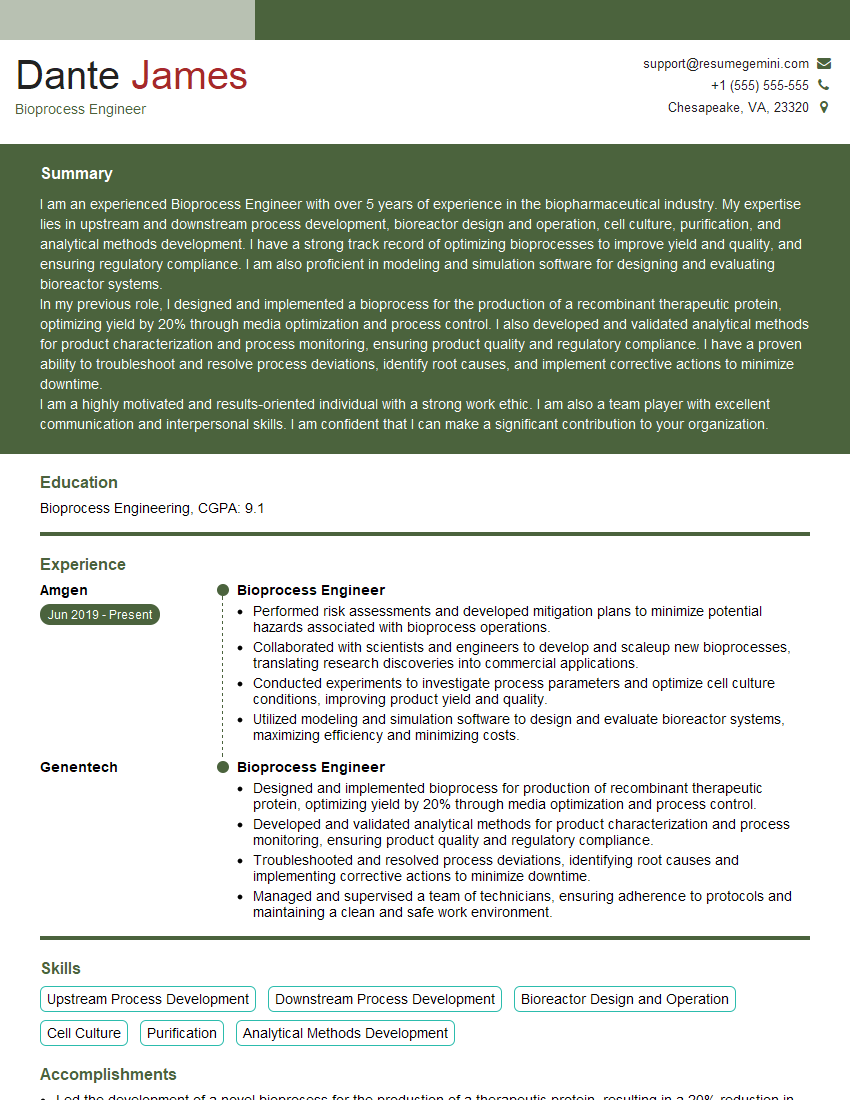
Mastering animal cell culture opens doors to exciting and impactful careers in biotechnology, pharmaceuticals, and academic research. A strong foundation in this area significantly enhances your job prospects. To maximize your chances, creating an ATS-friendly resume is crucial. This ensures your application gets noticed by recruiters and hiring managers. We strongly recommend using ResumeGemini to build a professional and impactful resume tailored to your specific skills and experience. ResumeGemini provides examples of resumes specifically designed for Animal Cell Culture professionals, giving you a head start in crafting a compelling application.
Explore more articles
Users Rating of Our Blogs
Share Your Experience
We value your feedback! Please rate our content and share your thoughts (optional).
What Readers Say About Our Blog
To the interviewgemini.com Webmaster.
Very helpful and content specific questions to help prepare me for my interview!
Thank you
To the interviewgemini.com Webmaster.
This was kind of a unique content I found around the specialized skills. Very helpful questions and good detailed answers.
Very Helpful blog, thank you Interviewgemini team.