The thought of an interview can be nerve-wracking, but the right preparation can make all the difference. Explore this comprehensive guide to Resource Conservation and Protection interview questions and gain the confidence you need to showcase your abilities and secure the role.
Questions Asked in Resource Conservation and Protection Interview
Q 1. Describe your experience with different resource management techniques.
My experience spans a wide range of resource management techniques, encompassing both theoretical understanding and practical application. I’ve worked extensively with integrated resource management (IRM), a holistic approach that considers the interconnectedness of various resources like water, land, and forests. For instance, in a recent project involving a watershed, we utilized IRM to optimize water allocation for agriculture, domestic use, and environmental protection, balancing the needs of different stakeholders.
I’m also proficient in command-and-control methods, like setting pollution limits and enforcing regulations, but I advocate for market-based approaches whenever feasible. For example, I’ve successfully implemented cap-and-trade systems for managing greenhouse gas emissions from industrial facilities. Finally, I have significant experience with participatory resource management, working closely with local communities to develop sustainable resource use plans that are culturally sensitive and economically viable. This involved community-based forest management in a rural area, where participatory decision-making processes significantly improved forest health and local livelihoods.
Q 2. Explain the principles of sustainable development.
Sustainable development rests on three core pillars: environmental protection, economic growth, and social equity. It’s not just about meeting the needs of the present generation but also ensuring that future generations have the resources they need to thrive. Think of it like a three-legged stool; if one leg is weak (e.g., neglecting environmental concerns), the entire system is unstable.
In practice, this means integrating environmental considerations into all aspects of decision-making. For example, a sustainable city would prioritize public transport to reduce emissions (environmental), create green jobs (economic), and ensure equitable access to affordable housing (social). It requires a long-term perspective, careful resource management, and a commitment to intergenerational fairness.
Q 3. How do you assess the environmental impact of a project?
Assessing the environmental impact of a project involves a systematic process. I typically employ a life cycle assessment (LCA), which evaluates the environmental burdens associated with a product or project throughout its entire life cycle, from raw material extraction to disposal.
This involves identifying potential impacts like greenhouse gas emissions, water pollution, and habitat destruction. We use tools like Environmental Impact Assessments (EIAs) and strategic environmental assessments (SEAs) to quantify these impacts and explore mitigation strategies. For instance, in a proposed highway project, an EIA would assess potential impacts on air and water quality, noise levels, and habitat fragmentation, providing data to inform decisions on project design and mitigation measures, such as noise barriers or wildlife crossings.
Q 4. What are the key challenges in water resource management?
Water resource management faces numerous challenges globally. Water scarcity, driven by population growth and climate change, is a major concern in many regions. This scarcity leads to competition for resources, especially between agriculture, industry, and domestic uses.
Pollution from industrial discharge, agricultural runoff, and untreated sewage further degrades water quality, impacting human health and ecosystems. Inefficient irrigation techniques and aging infrastructure contribute to water loss. Finally, lack of effective governance and transboundary water issues complicate management efforts. Addressing these requires integrated water resource management plans that balance competing demands, promote water conservation, and invest in sustainable infrastructure.
Q 5. Discuss your knowledge of various pollution control methods.
Pollution control methods vary depending on the pollutant and source. For air pollution, strategies include installing scrubbers in industrial smokestacks (Example: removing SO2 from power plant emissions), promoting cleaner energy sources, and implementing vehicle emission standards.
Water pollution control involves wastewater treatment plants (Example: biological treatment followed by disinfection), reducing agricultural runoff through best management practices, and implementing stricter regulations on industrial discharge. Soil contamination can be remediated through techniques like bioremediation (using microorganisms to break down pollutants) or phytoremediation (using plants to absorb contaminants). The selection of the appropriate method requires careful analysis of the specific pollution source and its impact on the environment.
Q 6. How do you approach the conservation of biodiversity?
Biodiversity conservation involves protecting the variety of life on Earth at all levels, from genes to ecosystems. My approach is multifaceted and incorporates habitat protection and restoration, species-specific conservation programs, and sustainable resource management practices.
I’ve been involved in projects that established protected areas, implemented reforestation programs to restore degraded habitats, and worked with local communities to develop sustainable agriculture practices that minimize habitat loss. Furthermore, I focus on combating illegal wildlife trade and invasive species, which threaten biodiversity. A successful example includes working with a local community to develop eco-tourism initiatives linked to preserving a unique wetland ecosystem, creating both economic opportunities and biodiversity protection.
Q 7. Explain your understanding of climate change mitigation and adaptation strategies.
Climate change mitigation focuses on reducing greenhouse gas emissions to slow down the rate of climate change. This includes transitioning to renewable energy sources, improving energy efficiency, adopting sustainable land use practices, and implementing carbon capture and storage technologies.
Adaptation, on the other hand, involves adjusting to the impacts of climate change that are already happening or are expected to occur in the future. This could include building seawalls to protect coastal communities from rising sea levels, developing drought-resistant crops, or improving water management systems to cope with increased variability in rainfall. Both mitigation and adaptation are crucial for building resilience to climate change and safeguarding the environment and human well-being. A comprehensive strategy must combine both approaches to achieve long-term sustainability.
Q 8. Describe your experience with environmental impact assessments (EIAs).
Environmental Impact Assessments (EIAs) are crucial tools for evaluating the potential environmental consequences of proposed projects. They systematically identify, predict, evaluate, and mitigate the biophysical, social, and other relevant effects of development activities. My experience spans various sectors, including infrastructure development, mining, and energy projects. I’ve been involved in all stages of the EIA process, from scoping and baseline data collection to impact prediction, mitigation strategy development, and monitoring and reporting. For instance, in a recent highway project EIA, we used sophisticated modelling software to predict changes in air and water quality due to increased traffic and construction activities. We then developed mitigation strategies, such as noise barriers and sediment control measures, to minimize negative impacts. This involved close collaboration with engineers, ecologists, and social scientists to ensure a comprehensive and balanced assessment.
I’m particularly adept at incorporating stakeholder engagement into EIAs, ensuring that local communities and affected parties have their concerns addressed effectively. Furthermore, I’m experienced in navigating complex regulatory frameworks and ensuring compliance with national and international environmental standards. My skills include the application of various impact assessment methodologies and techniques, ensuring robust and reliable assessments.
Q 9. How do you prioritize competing resource demands?
Prioritizing competing resource demands requires a structured approach that considers ecological, social, and economic factors. It’s not simply about choosing the ‘most important’ demand but rather finding a balance that maximizes overall well-being. Think of it like allocating a budget – you need to distribute resources wisely to achieve the greatest good. I typically use a multi-criteria decision analysis (MCDA) approach which involves identifying all competing demands, assigning weights to each based on its importance and urgency, and evaluating the potential impacts of allocating resources to each. This involves considering factors such as sustainability, social equity, and economic viability.
For example, when deciding between water allocation for agriculture and urban consumption, an MCDA might consider factors such as the economic value of agricultural production, the needs of a growing urban population, and the ecological consequences of reduced water flows in rivers. The process isn’t always simple; it often requires navigating conflicting priorities and making difficult trade-offs. Effective communication and stakeholder engagement are essential to ensure that decisions are transparent and equitable.
Q 10. What are the ethical considerations in resource management?
Ethical considerations are paramount in resource management. It’s about ensuring fairness, justice, and sustainability across generations. Key ethical principles include:
- Intergenerational equity: Meeting the needs of the present without compromising the ability of future generations to meet their own needs.
- Intragenerational equity: Ensuring fair distribution of resources among different groups within the current generation.
- Precautionary principle: Taking preventative action in the face of uncertainty, particularly when there’s a risk of significant environmental harm.
- Polluter pays principle: Holding those responsible for pollution accountable for the costs of remediation and cleanup.
Consider the challenge of managing a shared water resource amongst multiple communities. Ethical resource management demands a transparent and equitable allocation process, ensuring that each community receives a fair share, considering their needs and vulnerabilities. Ignoring these ethical considerations can lead to social unrest, environmental degradation, and long-term damage.
Q 11. Explain your understanding of circular economy principles.
The circular economy is a model of production and consumption that aims to minimize waste and maximize resource utilization. Instead of a linear ‘take-make-dispose’ model, it emphasizes closing loops and keeping resources in use for as long as possible. Key principles include:
- Design out waste and pollution: Products should be designed for durability, repairability, and recyclability from the outset.
- Keep products and materials in use: Through reuse, repair, refurbishment, and remanufacturing.
- Regenerate natural systems: Supporting ecosystem restoration and biodiversity conservation.
Imagine a clothing company adopting circular economy principles. They might use recycled materials, design clothes for easy repair, offer clothing rental services, and establish take-back programs for end-of-life garments. This minimizes waste, reduces the need for virgin materials, and keeps resources in circulation, reducing the overall environmental footprint.
Q 12. How do you monitor and evaluate the effectiveness of conservation efforts?
Monitoring and evaluating conservation efforts is crucial for determining their effectiveness and making necessary adjustments. This involves a combination of quantitative and qualitative methods. Quantitative methods include measuring changes in biodiversity, habitat area, water quality, or pollutant levels using data from monitoring programs. For example, tracking the population size of an endangered species over time would be a key quantitative indicator. Qualitative methods involve assessing changes in stakeholder perceptions, community participation, and policy implementation. This might involve conducting interviews, surveys, or focus groups to evaluate the social impacts of conservation interventions.
Adaptive management is a crucial aspect of this process. It involves using monitoring data to adapt management strategies in response to unexpected events or changing conditions. For example, if monitoring reveals that a particular conservation strategy is not producing the desired outcomes, then managers need to be flexible and willing to adjust or replace that strategy.
Q 13. Describe your experience with GIS software for resource management.
Geographic Information Systems (GIS) software is an indispensable tool for resource management. I have extensive experience using GIS to manage spatial data related to land use, biodiversity, water resources, and pollution. GIS allows for efficient mapping, spatial analysis, and visualization of environmental data. For instance, I’ve used GIS to create maps showing the distribution of endangered species, identify suitable habitat for restoration projects, and model the impact of climate change on water resources. Furthermore, I’ve used GIS to create interactive dashboards that help stakeholders visualize and understand complex environmental data, facilitating informed decision-making.
Specific software packages I’m proficient in include ArcGIS and QGIS. I can use these tools to perform a variety of tasks, including creating maps, performing spatial analysis, managing geodatabases, and integrating data from various sources. The ability to integrate data from various sources, such as satellite imagery, field surveys, and census data, is particularly powerful. This allows for a more holistic understanding of the environmental system under consideration.
Q 14. What are the key indicators of environmental health?
Key indicators of environmental health vary depending on the specific ecosystem or issue being considered, but some common indicators include:
- Biodiversity: Species richness, abundance, and evenness; presence of indicator species.
- Water quality: Levels of dissolved oxygen, nutrients, pollutants, and pathogens.
- Air quality: Concentrations of particulate matter, ozone, and other pollutants.
- Soil health: Soil organic matter content, nutrient levels, and erosion rates.
- Climate change indicators: Temperature, precipitation, sea level rise, and glacier melt.
- Human health indicators: Incidence of respiratory diseases, waterborne illnesses, and other health problems linked to environmental factors.
Monitoring these indicators over time can provide valuable insights into the overall health of an ecosystem and the effectiveness of conservation and management strategies. For example, a decline in the number of indicator species or a deterioration in water quality might signal environmental problems requiring attention.
Q 15. Discuss your experience with waste management strategies.
Waste management is a crucial aspect of resource conservation, encompassing the collection, transport, processing, recycling, and disposal of waste materials. My experience spans various strategies, focusing on a holistic approach that prioritizes waste reduction at the source.
Waste Audits and Reduction Plans: I’ve led numerous waste audits for both industrial and municipal settings, identifying waste streams and developing tailored reduction plans. For example, in a recent project with a food processing facility, we identified opportunities to reduce packaging waste by 25% through improved sourcing and process optimization.
Recycling and Composting Programs: I’ve designed and implemented comprehensive recycling and composting programs, focusing on maximizing diversion from landfills. This includes public awareness campaigns and training programs for waste handlers to ensure proper sorting and processing.
Hazardous Waste Management: My expertise includes the safe management of hazardous waste, complying with all relevant regulations and ensuring proper disposal or treatment. I’ve worked on several projects involving the remediation of contaminated sites.
Waste-to-Energy Technologies: I’ve explored the feasibility and implementation of waste-to-energy technologies, such as anaerobic digestion, to recover energy from organic waste and reduce landfill burden. This approach is particularly effective in reducing greenhouse gas emissions.
Career Expert Tips:
- Ace those interviews! Prepare effectively by reviewing the Top 50 Most Common Interview Questions on ResumeGemini.
- Navigate your job search with confidence! Explore a wide range of Career Tips on ResumeGemini. Learn about common challenges and recommendations to overcome them.
- Craft the perfect resume! Master the Art of Resume Writing with ResumeGemini’s guide. Showcase your unique qualifications and achievements effectively.
- Don’t miss out on holiday savings! Build your dream resume with ResumeGemini’s ATS optimized templates.
Q 16. How do you engage stakeholders in conservation projects?
Engaging stakeholders is paramount to successful conservation projects. It requires a multi-faceted approach that fosters trust, transparency, and shared ownership.
Community Engagement: I utilize participatory methods like workshops, public forums, and surveys to understand community concerns and preferences. This ensures that projects are culturally sensitive and address local needs.
Collaboration with Businesses and Industries: I work with businesses to develop sustainable practices and explore opportunities for collaboration. This can involve implementing cleaner production technologies or developing partnerships to support conservation initiatives.
Building Partnerships with NGOs and Government Agencies: Strong partnerships are crucial for leveraging resources and expertise. I actively collaborate with NGOs and government agencies to build consensus and secure funding for projects.
Communication Strategies: Effective communication is key. I use various channels, including social media, public presentations, and educational materials, to raise awareness and build support for conservation projects.
For instance, in a recent community-based project focused on water conservation, we successfully engaged stakeholders through a series of workshops and community meetings, resulting in a significant reduction in water consumption.
Q 17. Explain your understanding of renewable energy technologies.
Renewable energy technologies are crucial for mitigating climate change and ensuring energy security. My understanding encompasses various technologies, each with its strengths and weaknesses.
Solar Energy: Photovoltaic (PV) cells convert sunlight directly into electricity, while concentrated solar power (CSP) uses mirrors to focus sunlight onto a receiver to generate heat for electricity generation. I have experience evaluating the feasibility of solar energy projects considering factors such as solar irradiance, land availability, and grid connectivity.
Wind Energy: Wind turbines convert wind energy into electricity. I’ve worked on wind farm assessments, considering factors like wind speeds, turbine technology, and environmental impacts.
Hydropower: Utilizing the energy of flowing water to generate electricity. My expertise includes assessing the environmental impacts of hydropower projects, such as dam construction, on aquatic ecosystems.
Geothermal Energy: Harnessing heat from the Earth’s interior. I’ve evaluated the feasibility of geothermal projects, considering factors such as geological conditions and resource availability.
Biomass Energy: Utilizing organic matter to generate energy. This includes assessing the sustainability of biomass sources and minimizing environmental impacts.
Q 18. Describe your experience with soil conservation techniques.
Soil conservation is vital for maintaining agricultural productivity, preventing erosion, and protecting water resources. My experience encompasses a range of techniques.
Contour Farming: Planting crops along the contours of slopes to reduce water runoff and erosion. This technique is highly effective in hilly and mountainous regions.
Terracing: Creating level platforms on slopes to reduce erosion and improve water retention. This is a labor-intensive method but highly effective in steep areas.
Strip Cropping: Planting alternating strips of crops with different soil-erosion properties. This helps to break the force of wind and water, minimizing erosion.
Cover Cropping: Planting crops that cover the soil to prevent erosion, improve soil health, and suppress weeds. Cover crops also enhance nutrient cycling.
No-Till Farming: Minimizing soil disturbance during planting to reduce erosion and improve soil structure. This technique also helps to improve soil health by reducing compaction.
For example, in a project focused on improving soil health in a degraded agricultural landscape, we implemented a combination of no-till farming, cover cropping, and contour farming resulting in a significant improvement in soil fertility and reduced erosion.
Q 19. How do you address conflicts between conservation and economic development?
Balancing conservation and economic development is a complex challenge requiring careful planning and stakeholder engagement. The key is to find sustainable solutions that benefit both the environment and the economy.
Integrated Resource Management: This approach integrates environmental considerations into development planning, ensuring that economic activities are environmentally sustainable.
Environmental Impact Assessments (EIAs): Conducting thorough EIAs to identify potential environmental impacts of development projects and explore mitigation strategies. This ensures that projects are designed to minimize their environmental footprint.
Payments for Ecosystem Services (PES): Implementing PES schemes to compensate landowners and communities for providing ecosystem services such as carbon sequestration or water purification. This incentivizes conservation and sustainable land management.
Sustainable Tourism: Developing ecotourism initiatives that generate economic benefits while protecting natural resources. This approach helps to balance conservation and economic development in areas with significant natural attractions.
For instance, in a project involving the development of a hydropower project, we collaborated with local communities and environmental agencies to develop a mitigation plan that addressed concerns about the impact on fish populations and water quality.
Q 20. What are the different types of environmental permits and licenses?
Environmental permits and licenses are legal authorizations required to undertake activities that may impact the environment. The specific permits vary depending on the jurisdiction and the nature of the activity.
Air Quality Permits: These permits are required for activities that emit air pollutants, such as industrial facilities and power plants. They often specify emission limits and monitoring requirements.
Water Discharge Permits: These permits regulate the discharge of wastewater into surface waters or groundwater. They specify limits on pollutants and require regular monitoring of water quality.
Waste Management Permits: These permits govern the handling, storage, treatment, and disposal of various types of waste, including hazardous waste. They often specify stringent safety and environmental protection measures.
Construction Permits: These permits are needed for construction activities that may impact the environment, such as deforestation or wetland alteration. They often require adherence to specific environmental protection measures during construction.
Mining Permits: These permits are needed for mining activities, regulating the extraction of minerals and associated environmental impacts. They typically include reclamation and rehabilitation plans.
The specific requirements and application processes vary considerably depending on local and national regulations. Obtaining these permits requires a thorough understanding of applicable environmental laws and regulations.
Q 21. Explain your experience with environmental regulations and compliance.
Environmental regulations and compliance are crucial for protecting the environment and preventing pollution. My experience encompasses a range of compliance activities.
Environmental Audits: Conducting regular environmental audits to assess compliance with environmental laws and regulations. This involves reviewing operational practices, monitoring environmental parameters, and identifying areas for improvement.
Environmental Management Systems (EMS): Implementing and maintaining EMS, such as ISO 14001, to ensure ongoing compliance with environmental regulations and improve environmental performance. This involves establishing clear environmental objectives, monitoring performance, and implementing corrective actions.
Reporting and Record Keeping: Maintaining accurate records of environmental data and preparing reports for regulatory agencies. This is essential for demonstrating compliance and identifying trends in environmental performance.
Incident Response: Developing and implementing procedures for responding to environmental incidents, such as spills or emissions. This minimizes environmental damage and ensures compliance with reporting requirements.
For example, I have worked with various industries to implement ISO 14001, resulting in improved environmental performance and reduced regulatory risks. A thorough understanding of applicable regulations and effective implementation of compliance measures are vital for minimizing environmental liabilities.
Q 22. How do you communicate complex environmental information to different audiences?
Communicating complex environmental information effectively requires tailoring the message to the audience’s background and understanding. I employ a multi-pronged approach.
- For scientific audiences: I use precise language, detailed data visualizations (charts, graphs, maps), and cite peer-reviewed research. For instance, when presenting findings on deforestation rates, I’d use statistical models and satellite imagery to support my claims.
- For policymakers: I focus on concise summaries, highlighting key findings and policy implications. I use clear visuals and emphasize the economic or social consequences of inaction. A presentation on water resource management might emphasize the economic costs of water scarcity on local businesses.
- For the general public: I use simple language, relatable analogies, and compelling storytelling. I might compare carbon emissions to household energy use or illustrate biodiversity loss with compelling images of endangered species. For example, explaining climate change impacts through the lens of local weather patterns and its effect on agriculture makes it more relevant.
- For stakeholders: I use interactive workshops, consultations, and feedback mechanisms to foster a collaborative approach. This ensures understanding and buy-in from those directly impacted by conservation efforts. A community-based conservation project requires constant dialogue with residents to ensure their needs are addressed.
Ultimately, effective communication is about clarity, relevance, and engagement. I always prioritize ensuring the audience understands the message and its implications.
Q 23. Describe your experience with data analysis in resource management.
Data analysis is fundamental to my work in resource management. I’ve extensively used various techniques to analyze environmental data sets, including:
- Spatial analysis: Using GIS software (e.g., ArcGIS) to map and analyze spatial patterns of deforestation, pollution, or species distribution. For example, identifying deforestation hotspots using satellite imagery and overlaying it with protected areas helps prioritize conservation interventions.
- Statistical analysis: Applying statistical methods (e.g., regression analysis, ANOVA) to identify trends, correlations, and causal relationships between environmental variables. Analyzing the correlation between pollution levels and fish mortality in a river helps understand the environmental impact of industrial discharge.
- Time series analysis: Monitoring changes in environmental indicators over time (e.g., water quality, air quality, species populations) to assess trends and evaluate the effectiveness of management strategies. Tracking changes in water quality parameters over several years allows us to assess the impact of a river restoration project.
- Remote sensing and image processing: Analyzing satellite imagery and aerial photographs to monitor changes in land cover, vegetation health, and other environmental parameters. Assessing the impact of a wildfire on forest cover using before-and-after satellite images is a crucial aspect of post-fire management.
My experience includes programming in languages like R and Python for data manipulation and statistical modelling. I’m adept at interpreting the results and communicating them effectively to diverse stakeholders.
Q 24. What are the best practices for minimizing your environmental footprint?
Minimizing my environmental footprint is a personal and professional responsibility. My approach involves a holistic strategy encompassing several key aspects:
- Reducing energy consumption: Using energy-efficient appliances, minimizing heating and cooling needs, and relying on renewable energy sources (solar, wind) whenever possible.
- Sustainable transportation: Utilizing public transport, cycling, walking, or carpooling to reduce reliance on private vehicles and their associated carbon emissions.
- Waste reduction and recycling: Implementing a comprehensive recycling program, composting organic waste, and minimizing the use of single-use plastics. I aim for zero-waste as much as possible.
- Sustainable consumption patterns: Buying locally sourced, sustainably produced food and products, avoiding excessive packaging, and supporting businesses committed to environmental sustainability. I actively choose products with minimal environmental impact.
- Carbon offsetting: Contributing to carbon offsetting programs to neutralize the unavoidable carbon emissions from my activities.
These actions are not just individual choices but also reflect a conscious effort to live in harmony with the environment and promote sustainable practices.
Q 25. How do you identify and assess environmental risks?
Identifying and assessing environmental risks involves a systematic approach. I typically follow these steps:
- Hazard identification: Identifying potential environmental hazards (e.g., pollution, climate change impacts, natural disasters). This involves reviewing existing literature, conducting field surveys, and consulting with experts.
- Vulnerability assessment: Evaluating the susceptibility of environmental resources and human communities to these hazards. This might involve analyzing population density, ecosystem sensitivity, and infrastructure resilience.
- Risk estimation: Combining hazard likelihood and vulnerability to estimate the potential impact of each risk. This often involves quantitative risk assessment methodologies.
- Risk management: Developing and implementing strategies to mitigate, adapt to, or transfer the identified risks. This may include implementing pollution control measures, developing early warning systems, or establishing insurance mechanisms.
- Monitoring and evaluation: Continuously monitoring environmental conditions and evaluating the effectiveness of risk management strategies. This ensures that the chosen strategies are working and allows for adjustments based on new information.
For example, assessing the risk of coastal erosion requires analyzing sea-level rise projections, coastal geomorphology, and the vulnerability of coastal communities and infrastructure. This assessment would then inform coastal management strategies.
Q 26. Discuss your experience with environmental restoration projects.
I’ve been involved in several environmental restoration projects, focusing on different ecosystems. One notable project involved the restoration of a degraded wetland area. The process involved:
- Site assessment: Characterizing the extent of degradation, identifying the underlying causes (e.g., pollution, habitat loss), and establishing restoration goals.
- Planning and design: Developing a restoration plan based on ecological principles, incorporating stakeholder input, and securing necessary permits.
- Implementation: Executing the restoration plan, which might involve removing invasive species, replanting native vegetation, improving water quality, and restoring hydrological processes.
- Monitoring and evaluation: Tracking the progress of restoration efforts, assessing the effectiveness of implemented measures, and making adjustments as needed. This included monitoring water quality, plant growth, and wildlife populations.
- Adaptive management: Adjusting the restoration plan based on monitoring results and unforeseen circumstances. This iterative approach is crucial for successful restoration.
This project resulted in a significant improvement in water quality, increased biodiversity, and enhanced ecosystem services. The success was partly due to a strong collaborative effort with local communities and government agencies.
Q 27. How do you adapt your approach to resource management in diverse ecosystems?
Adapting my approach to resource management across diverse ecosystems necessitates a deep understanding of ecological principles and local context. I adopt a flexible and adaptive management approach that considers:
- Ecosystem-specific characteristics: Understanding the unique ecological features, species composition, and environmental conditions of each ecosystem is crucial. A management plan for a desert ecosystem would differ significantly from one for a rainforest.
- Stakeholder engagement: Engaging with local communities, indigenous groups, and other stakeholders to understand their perspectives and incorporate their knowledge into management plans. This ensures that management actions are culturally appropriate and socially acceptable.
- Climate change considerations: Incorporating climate change projections into resource management strategies. This might involve developing strategies for climate change adaptation and mitigation.
- Data availability and limitations: Recognizing the limitations of available data and using adaptive management strategies to adjust management actions based on new information and monitoring results. Some ecosystems might have limited data availability requiring a more flexible approach.
- Technological innovations: Incorporating technological advancements (e.g., remote sensing, GIS, modelling) to enhance data collection, analysis, and management effectiveness. This improves accuracy and efficiency.
This flexible approach allows for effective and sustainable resource management across diverse ecological settings.
Q 28. Explain your understanding of the precautionary principle in environmental management.
The precautionary principle in environmental management emphasizes proactive action to prevent environmental harm even in the absence of complete scientific certainty. It essentially states that where there are threats of serious or irreversible damage, lack of full scientific certainty should not be used as a reason for postponing cost-effective measures to prevent environmental degradation.
In practice, this means that when facing potential environmental risks, even if the exact consequences are not fully understood, it’s prudent to implement preventative measures. For example, if a new chemical is suspected to be harmful to aquatic life, even without conclusive evidence, precautionary measures might involve restricting its use or conducting more thorough testing before widespread use.
The precautionary principle guides decision-making by prioritizing prevention over cure, promoting proactive and sustainable resource management. This principle recognizes the potential for irreversible damage and underscores the importance of acting early to safeguard the environment and human health.
Key Topics to Learn for Resource Conservation and Protection Interview
- Sustainable Resource Management: Understanding principles of sustainable yield, carrying capacity, and ecosystem services. Explore various management strategies for renewable and non-renewable resources.
- Pollution Control and Remediation: Knowledge of air, water, and soil pollution sources, their impacts, and effective mitigation and remediation techniques. Consider practical applications like waste management strategies and pollution prevention technologies.
- Environmental Impact Assessment (EIA): Familiarize yourself with the EIA process, including scoping, baseline studies, impact prediction, mitigation measures, and reporting. Practice applying EIA principles to hypothetical case studies.
- Conservation Biology and Biodiversity: Understand the importance of biodiversity, threats to biodiversity (habitat loss, climate change, invasive species), and conservation strategies (protected areas, habitat restoration, species recovery programs). Consider practical examples of conservation efforts.
- Climate Change Mitigation and Adaptation: Grasp the science of climate change, its impacts on natural resources, and strategies for mitigation (reducing greenhouse gas emissions) and adaptation (adjusting to the effects of climate change). Explore examples of successful climate change initiatives.
- Policy and Legislation: Familiarize yourself with relevant environmental laws, regulations, and policies at local, national, and international levels. Understand the role of policy in resource conservation and protection.
- Data Analysis and Interpretation: Develop your skills in interpreting environmental data, using statistical methods, and communicating findings effectively. Practice analyzing datasets related to resource use and environmental impacts.
- Problem-Solving and Critical Thinking: Prepare to tackle complex environmental challenges by demonstrating your ability to analyze problems, develop solutions, and consider the ethical implications of your actions. Think about how you approach challenges creatively and collaboratively.
Next Steps
Mastering Resource Conservation and Protection is crucial for a rewarding and impactful career. It opens doors to diverse roles with significant contributions to environmental sustainability. To maximize your job prospects, crafting an ATS-friendly resume is essential. ResumeGemini can help you build a professional and effective resume that highlights your skills and experience. ResumeGemini provides examples of resumes tailored to Resource Conservation and Protection to guide you through the process. Invest the time to create a compelling resume – it’s your first impression on potential employers.
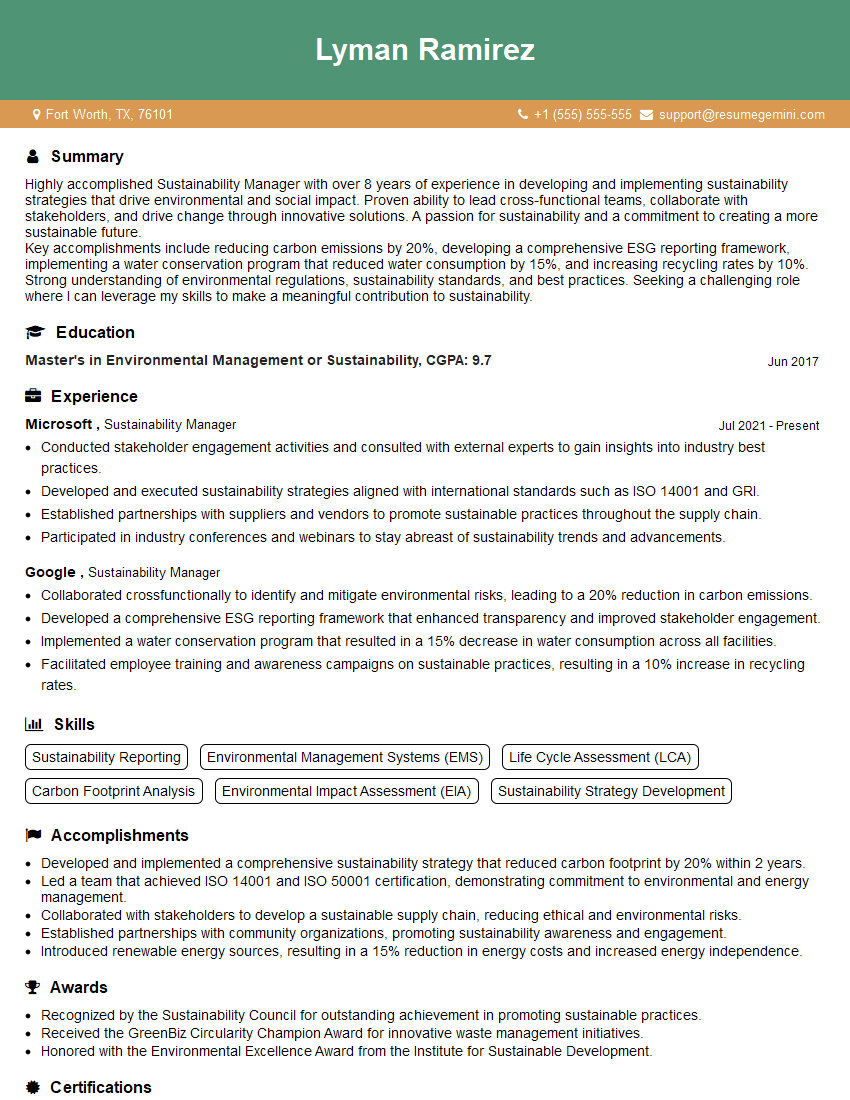
Sustainability Manager Resume Sample
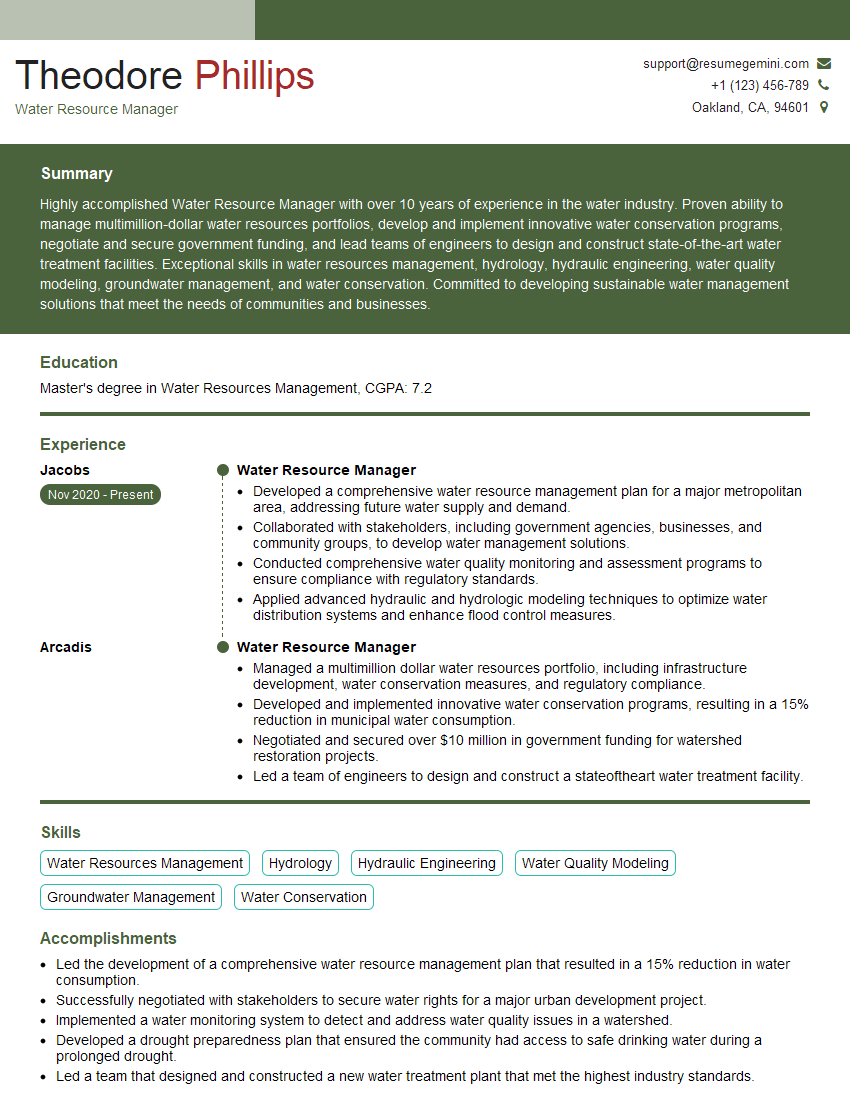
Water Resource Manager Resume Sample
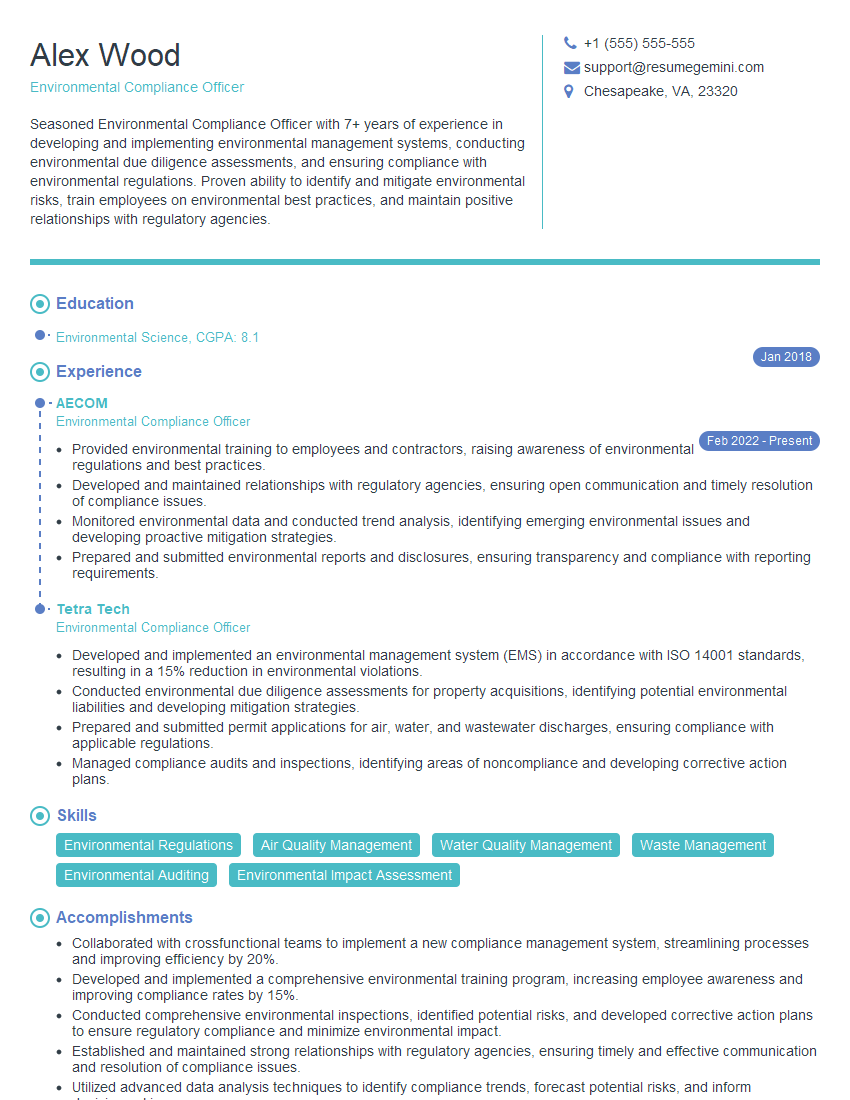
Environmental Compliance Officer Resume Sample
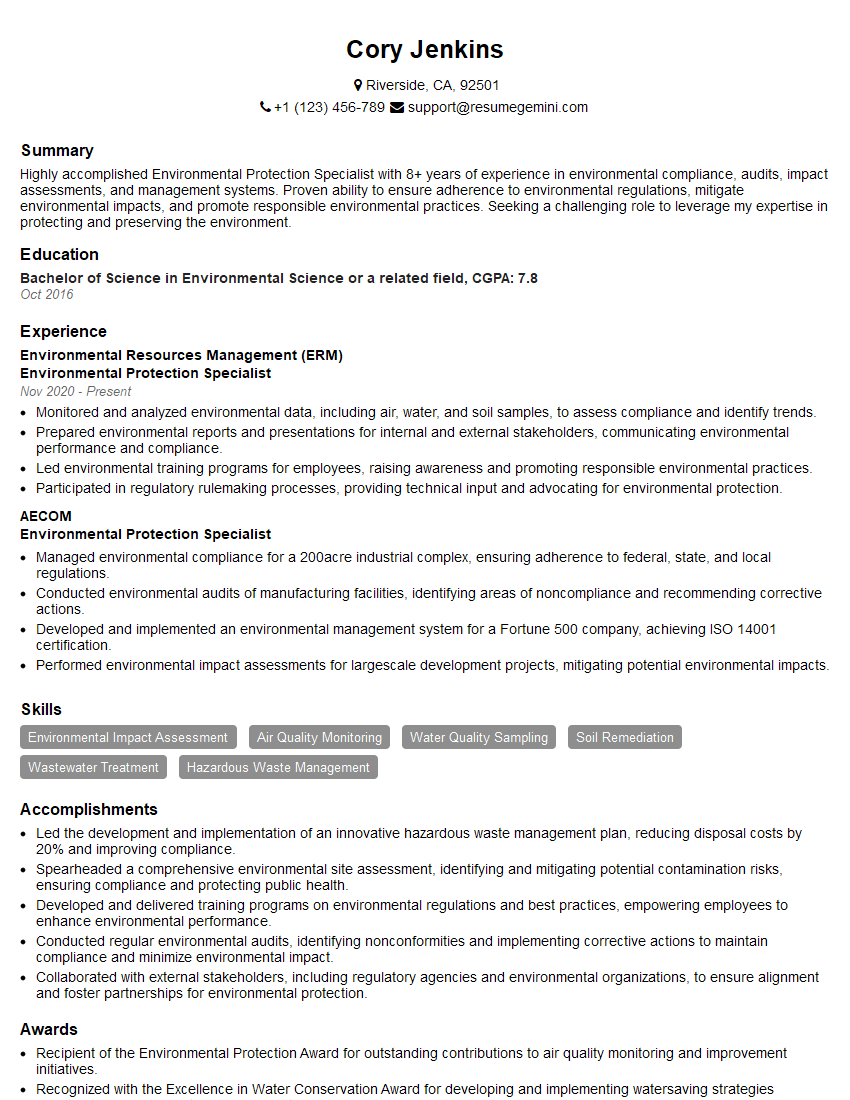
Environmental Protection Specialist Resume Sample
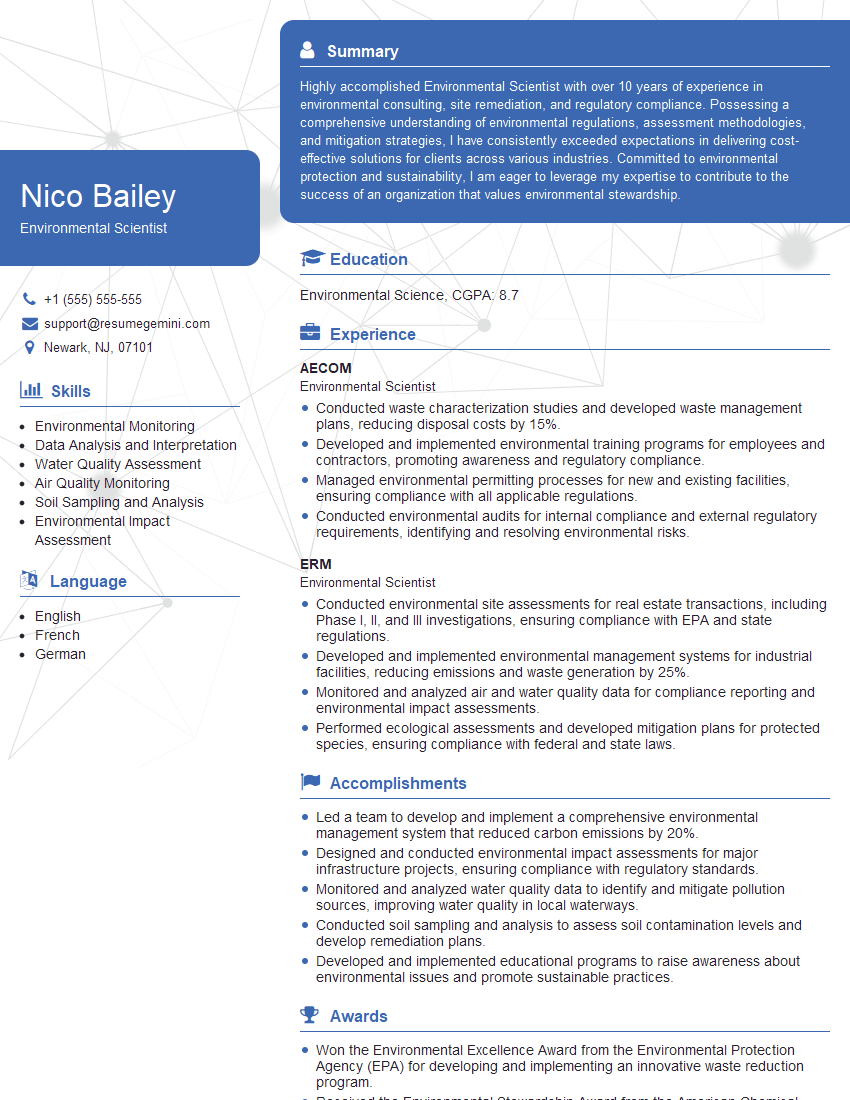
Environmental Scientist Resume Sample
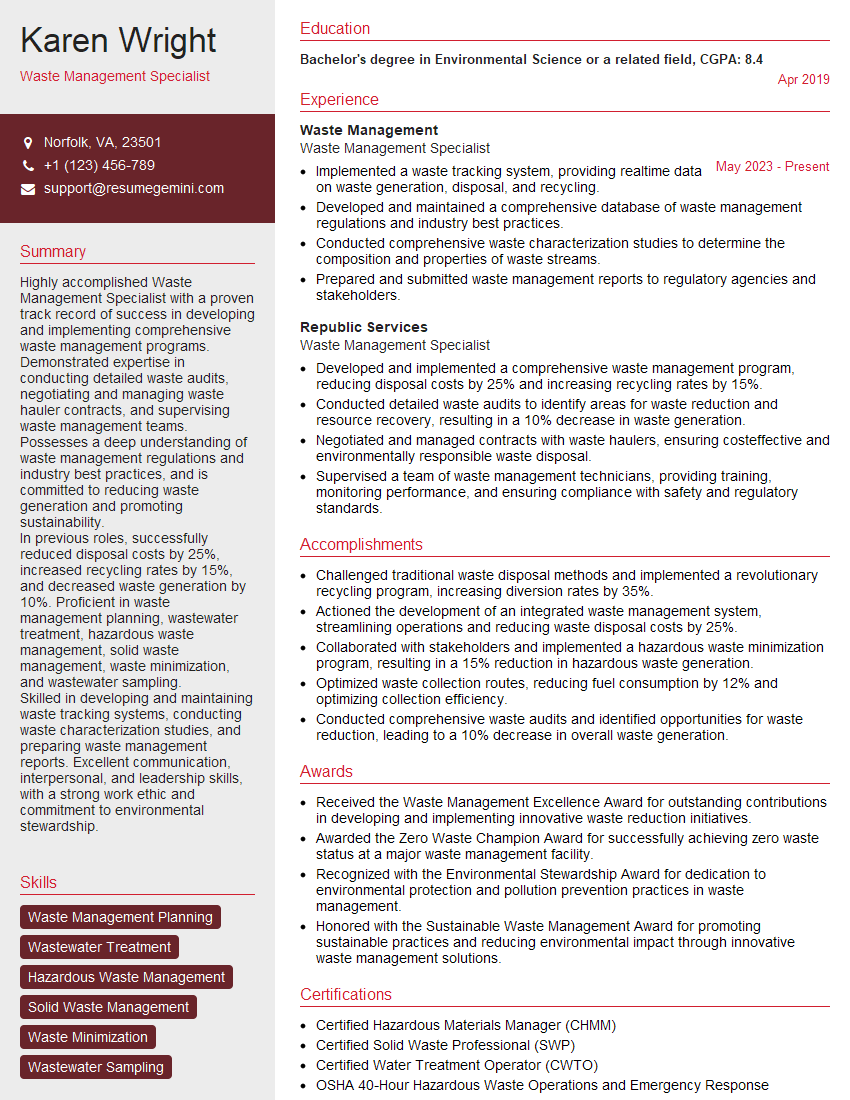
Waste Management Specialist Resume Sample
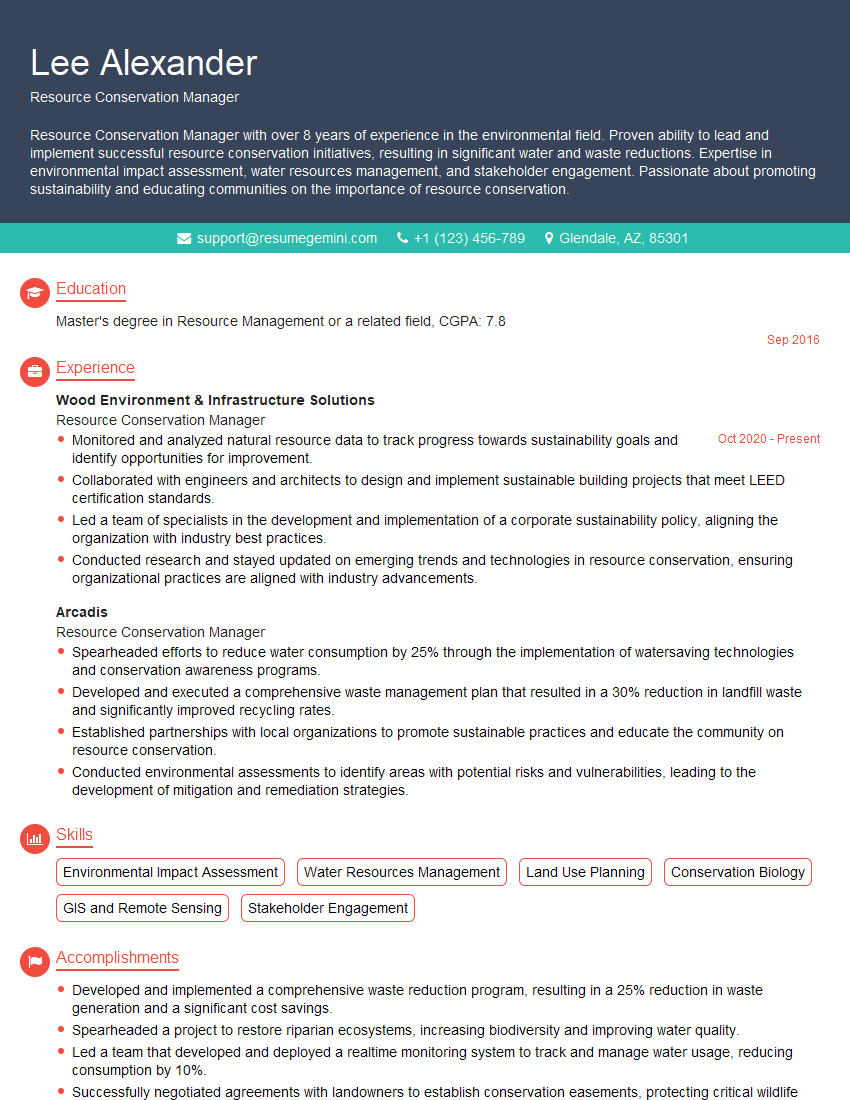
Resource Conservation Manager Resume Sample
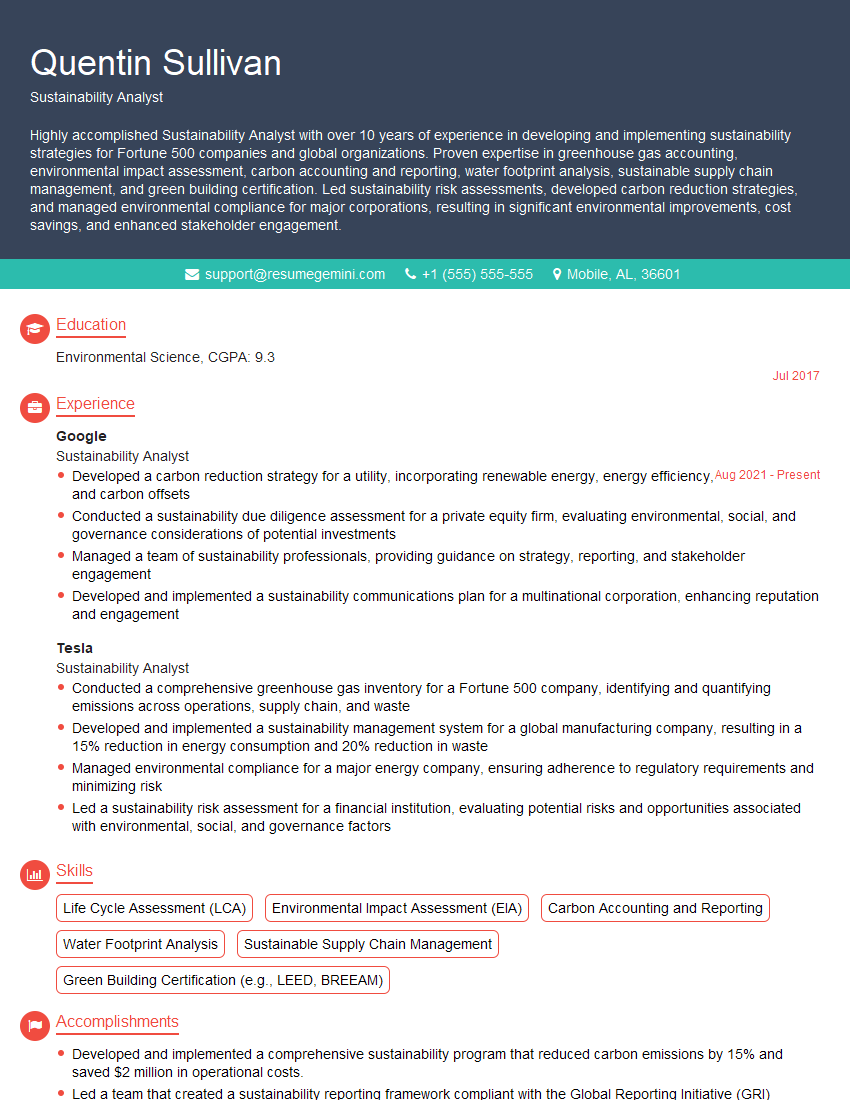
Sustainability Analyst Resume Sample
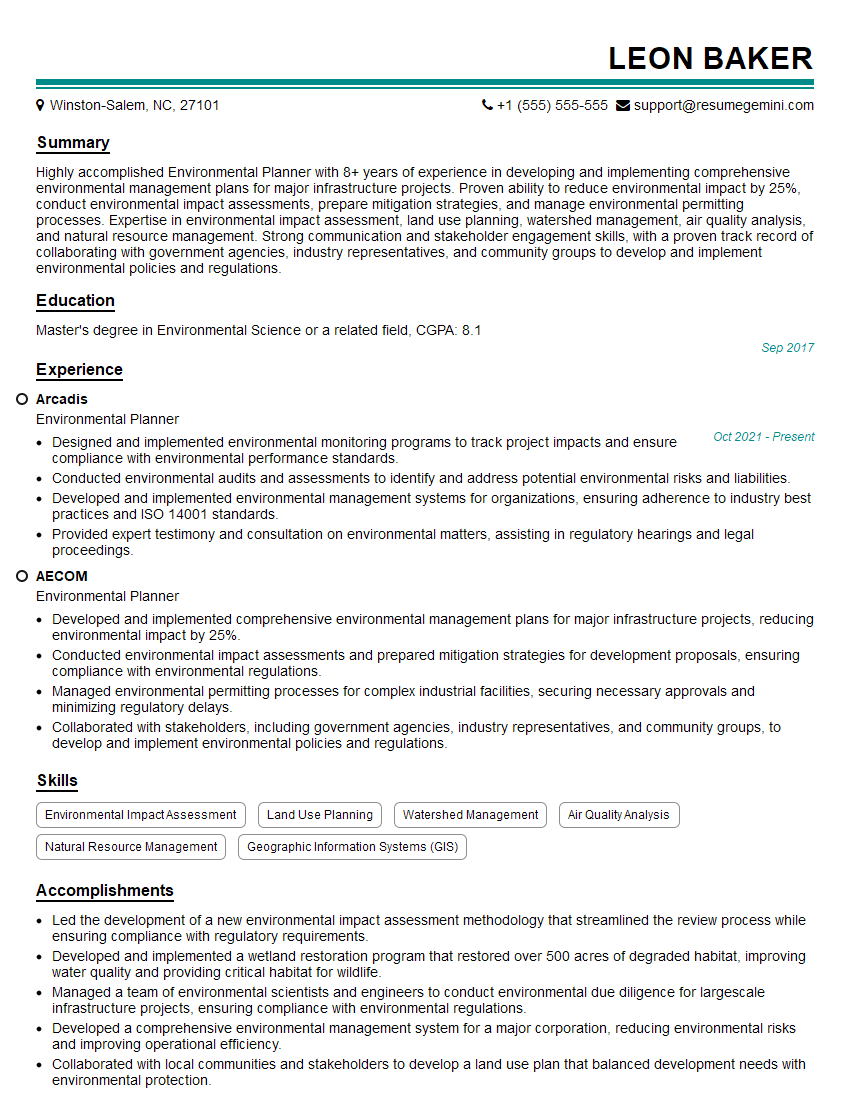
Environmental Planner Resume Sample
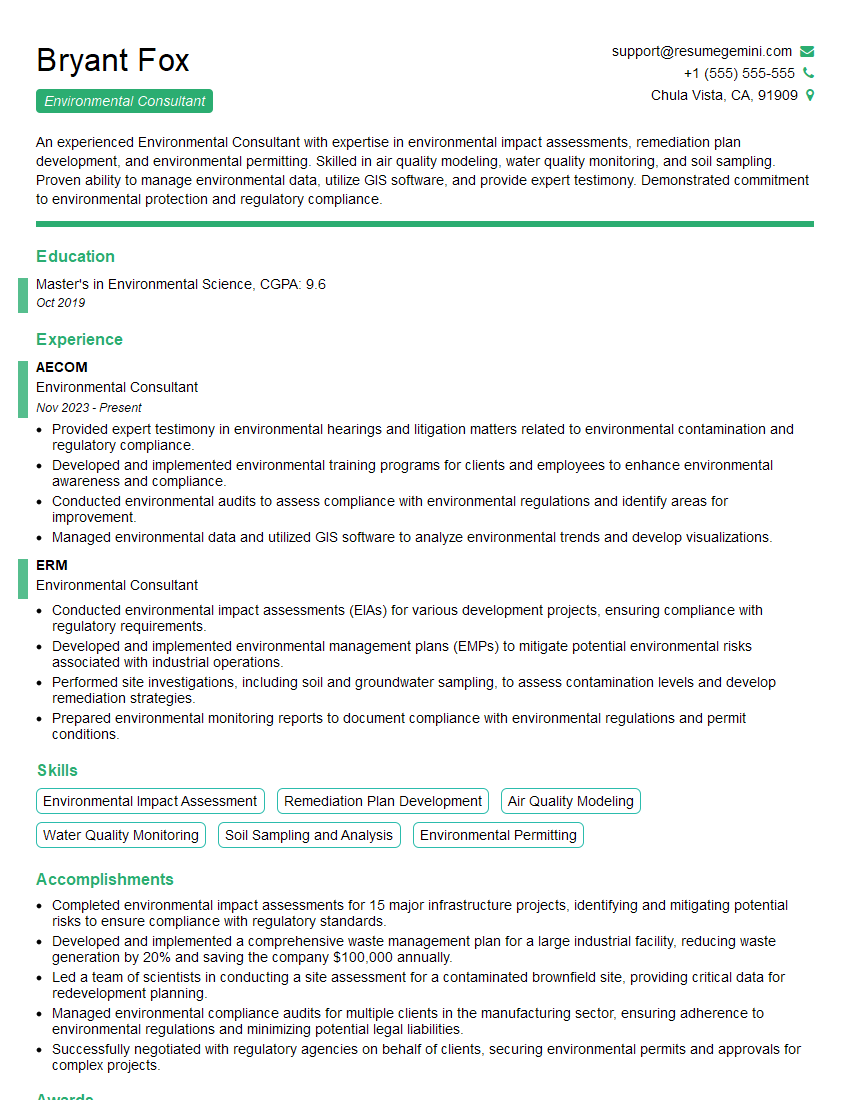
Environmental Consultant Resume Sample
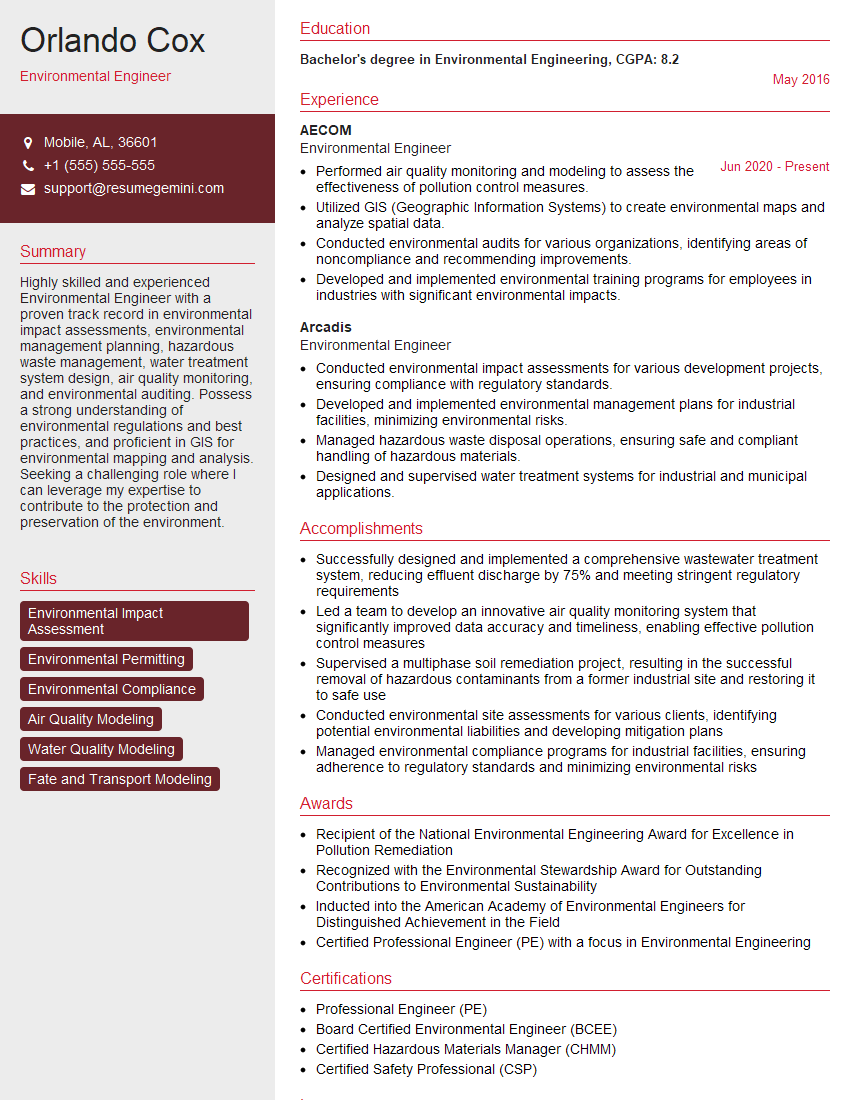
Environmental Engineer Resume Sample
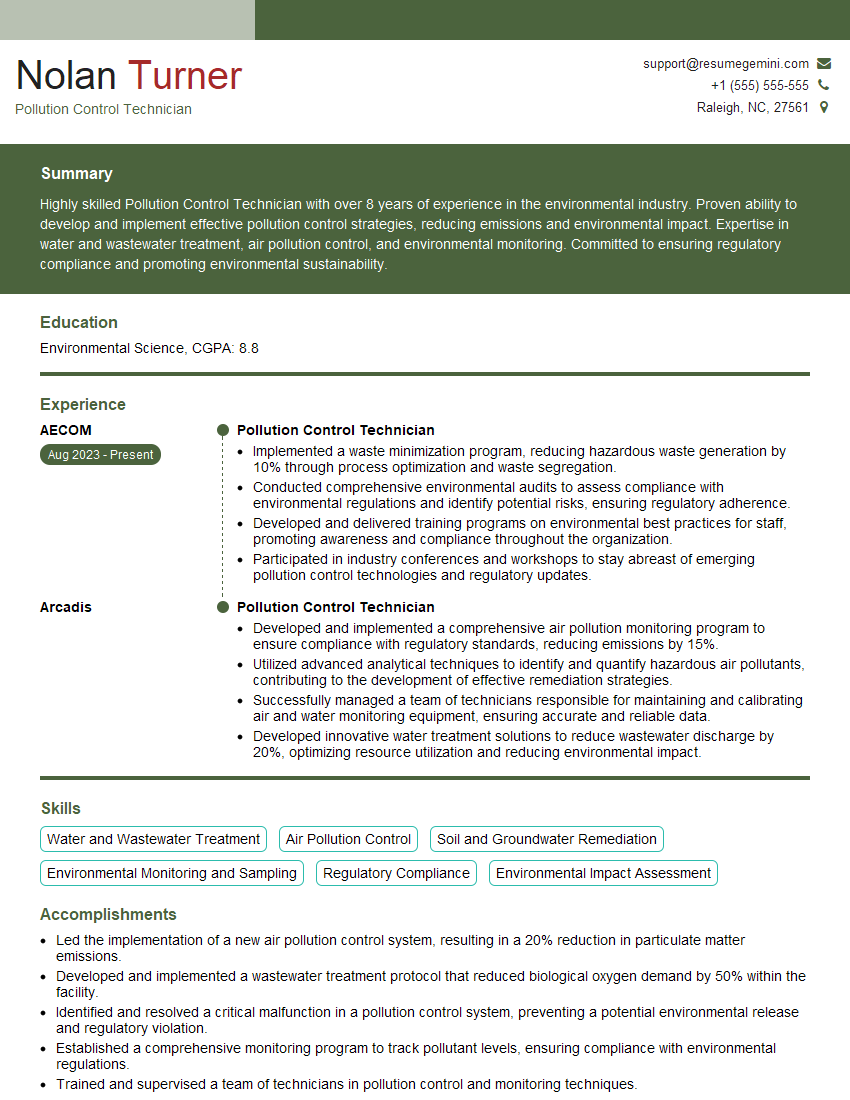
Pollution Control Technician Resume Sample
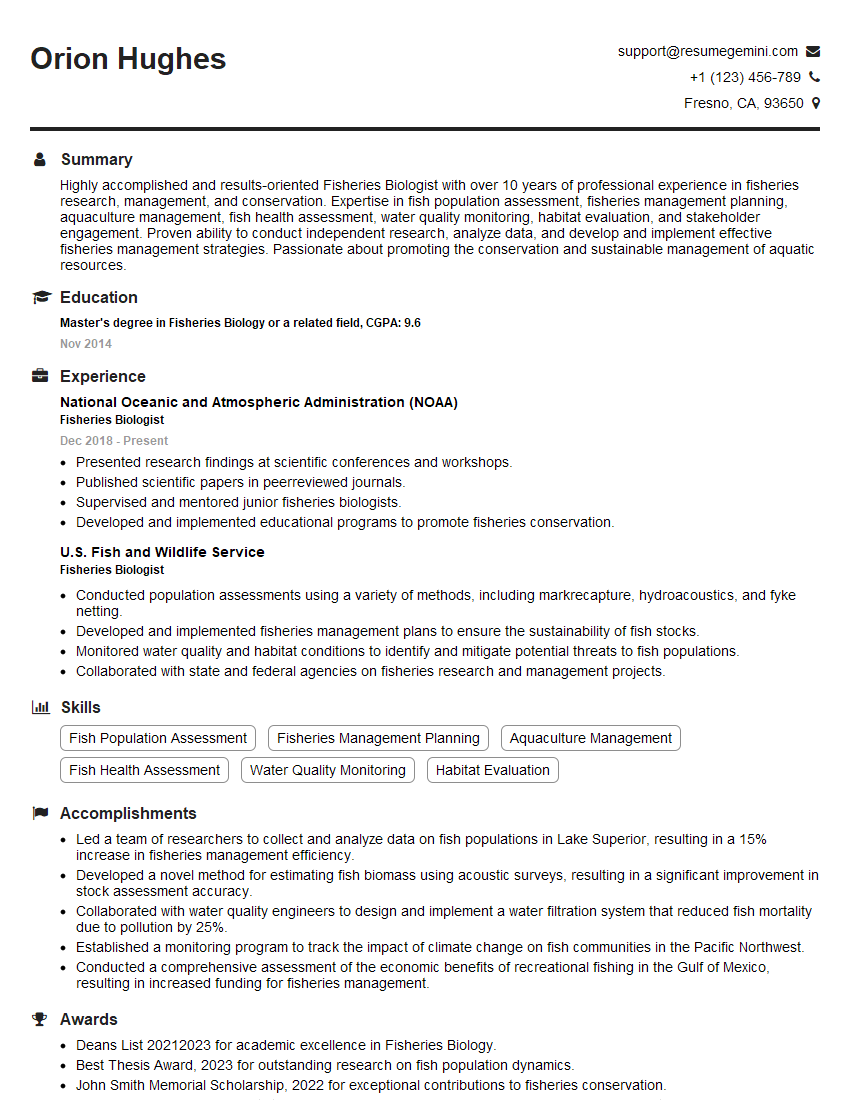
Fisheries Biologist Resume Sample

Wildlife Biologist Resume Sample
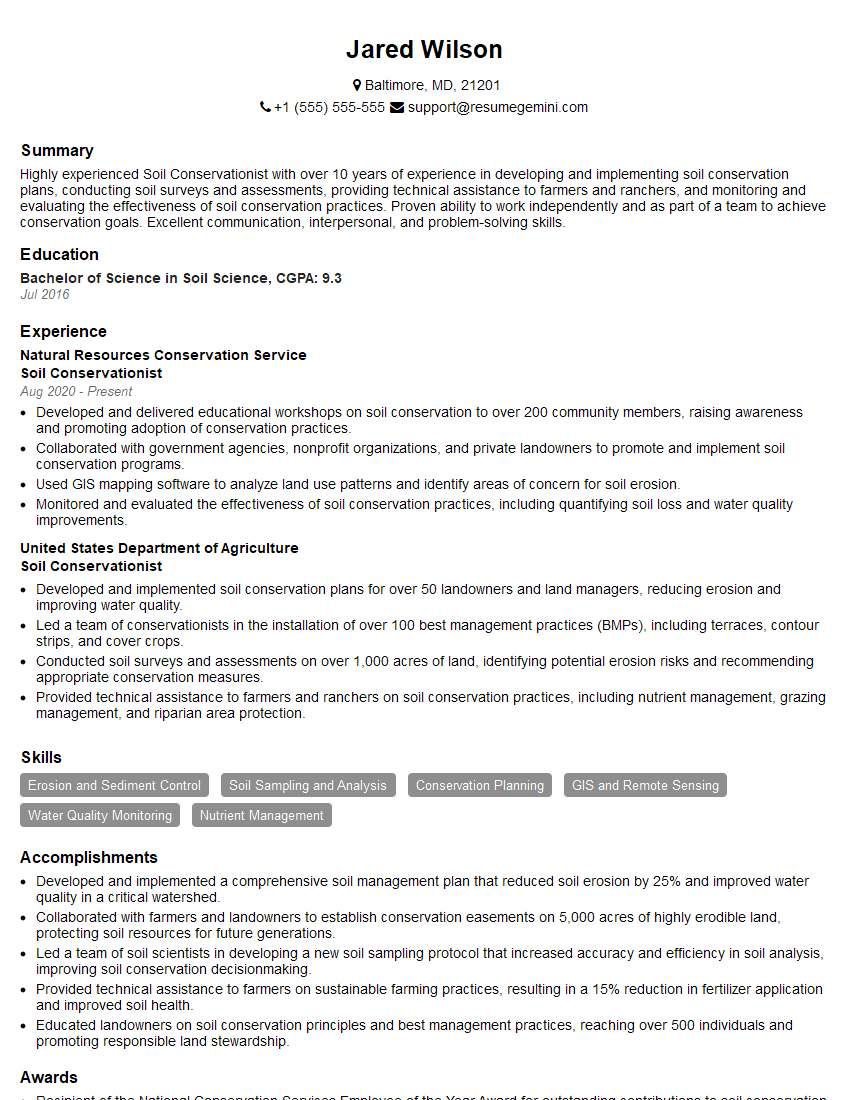
Soil Conservationist Resume Sample
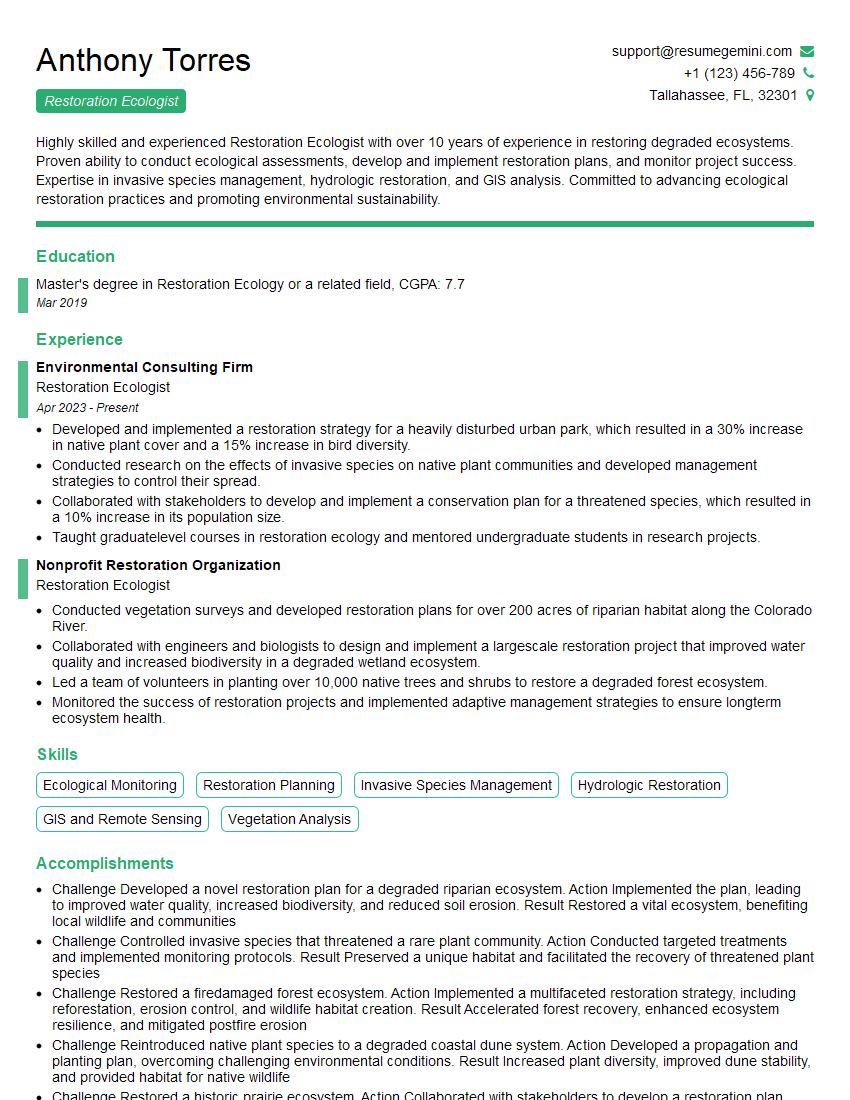
Restoration Ecologist Resume Sample
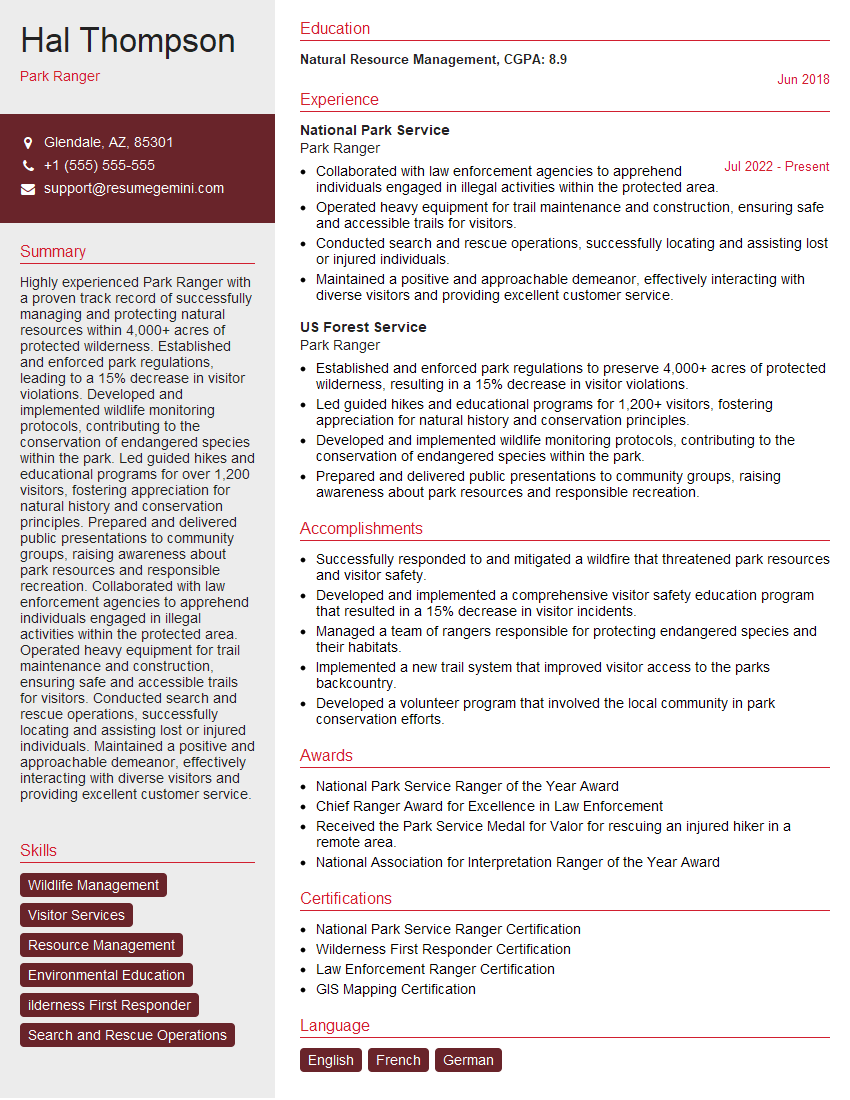
Park Ranger Resume Sample
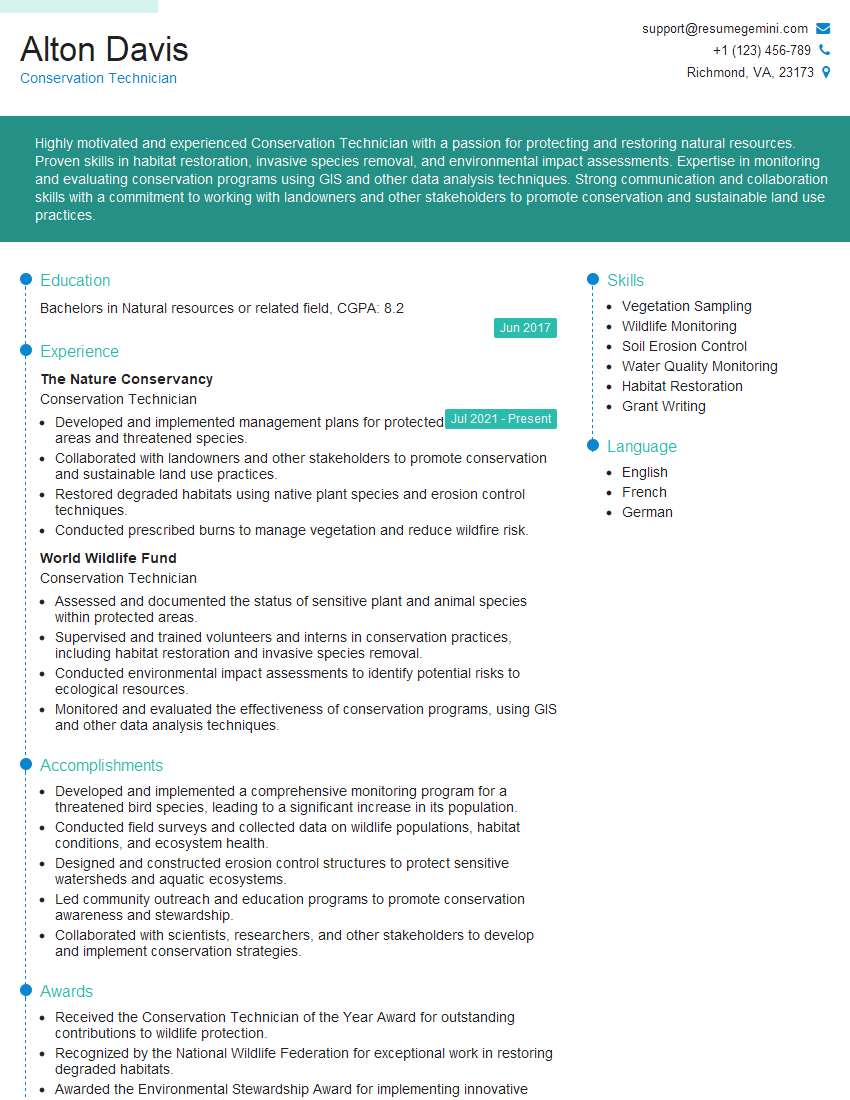
Conservation Technician Resume Sample
- Sustainability Manager
- Water Resource Manager
- Environmental Compliance Officer
- Environmental Protection Specialist
- Environmental Scientist
- Waste Management Specialist
- Resource Conservation Manager
- Sustainability Analyst
- Environmental Planner
- Environmental Consultant
- Environmental Engineer
- Pollution Control Technician
- Fisheries Biologist
- Wildlife Biologist
- Soil Conservationist
- Restoration Ecologist
- Park Ranger
- Conservation Technician
Explore more articles
Users Rating of Our Blogs
Share Your Experience
We value your feedback! Please rate our content and share your thoughts (optional).
What Readers Say About Our Blog
To the interviewgemini.com Webmaster.
Very helpful and content specific questions to help prepare me for my interview!
Thank you
To the interviewgemini.com Webmaster.
This was kind of a unique content I found around the specialized skills. Very helpful questions and good detailed answers.
Very Helpful blog, thank you Interviewgemini team.